Hodges' Model: Welcome to the QUAD: human resources

Hodges' model is a conceptual framework to support reflection and critical thinking. Situated, the model can help integrate all disciplines (academic and professional). Amid news items, are posts that illustrate the scope and application of the model. A bibliography and A4 template are provided in the sidebar. Welcome to the QUAD ...

Showing posts with label human resources. Show all posts

Thursday, August 21, 2025

South Sudan Medical Journal. August 2025 18:3.
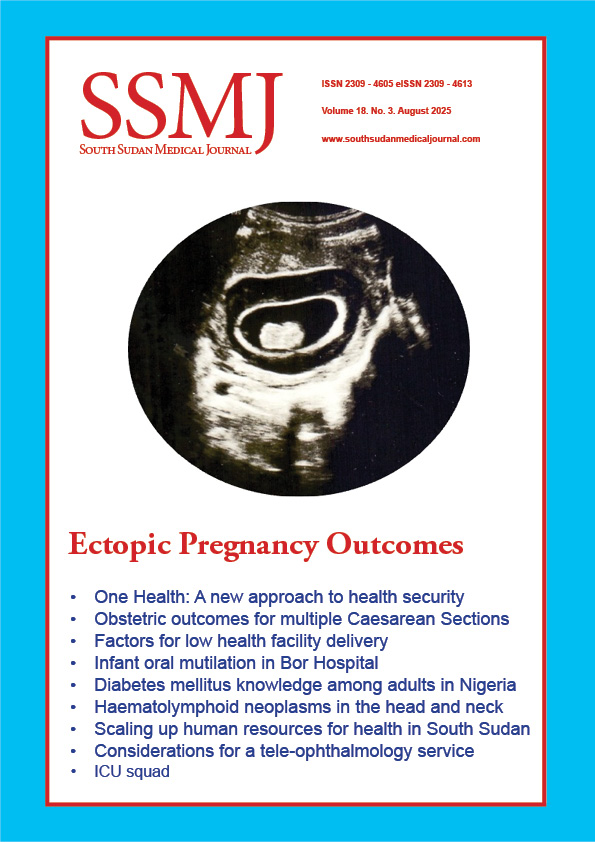
Dear Reader,

The full issue of our August 2025 issue is now available online here; the articles are listed below.

Also note that SSMJ is looking for a volunteer with time and interest in South Sudan, and experience in academic editing to join our Editorial team.

Editorial

Research Articles

Review Articles

  • A review of recent publications on haematolymphoid neoplasms in the head and neck region Karthik Shunmugavelu and Arun Vijaianandh A.
  • Scaling up human resources for health in South Sudan: A strategic imperative for achieving universal health coverage Gabriel Loi
  • Eyes in the sky: Considerations for a tele-ophthalmology service in South Sudan Garang M. Dut

Case Reports

  • Ectopic gestational-sac encapsulated in an ovarian cyst: A case report  Adam Moyosore Afodun, Alain Jabo, Mecthilde Mukangendo, Akeem Ayodeji Okesina, Olivier Mizero, Emmanuel Adeyemi Odumeru and Khadijah Kofoworola Quadri
  • Death due to ruptured tubal pregnancy: A case report P. Vinod Kumar 
  • ICU Squad: A possible solution for critical care service in low-resource areas Esraa Suliman Omer Abdelmageed and Ihab B Abdalrahman

Short Communications

  • The role of government in advancing private hospitals to improve healthcare services in South Sudan Jok Thikuiy Gang
  • 10th East African Health and Scientific Conference
  • Letter to the Editor: Self-medication Thomas Akuith Ngong 
  • Obituaries: Dr Baba Allan Ngachigoi Lanyanga and Dr Abdu Mohammed Abdudrbo Gilo
  • Call for Abstracts: Association of Surgeons of South Sudan First Scientific Conference

We thank the copyeditors and reviewers who helped prepare these papers. 

Articles in SSMJ are indexed by Scopus African Journals Online (AJOL), and the  Directory of Open Access Journals (DOAJ), and as well as being on our websiteSSMJ is included in the EBSCO scientific research collection.
 
Thanks to everyone who supports SSMJ. Invite your colleagues to join our mailing list here.
 
The SSMJ team
Email: southsudanmedicaljournal AT gmail.com 
Website: http://www.southsudanmedicaljournal.com
Follow us on X  @SSMedJournal and our Facebook Group,

SSMJ is published by the Health and Social Science Research Institute of South Sudan (HSSRI-SS)
All links provided at - 
https://www.southsudanmedicaljournal.com/archive/august-2025/

Wednesday, August 28, 2024

Call for Participation in NHS Survey

ARE YOU WORKING IN THE NHS? IF SO, HELP NEEDED URGENTLY! Please read this email. 

Glasgow Caledonian University is inviting NHS Staff across the UK to participate in this doctoral research survey to analyse the impact of responsible leadership on improving well-being and organisational trust among NHS Staff members. 


To be eligible, you must be an NHS staff member from any area of the UK in any job role. The survey collects no recognisable information and is wholly anonymised to protect participant privacy and confidentiality. It has received full ethical approval, will take around 10 minutes and will help provide an improved understanding of the area of well-being in the profession.


Please forward this survey link to everyone in your contacts working for NHS. This will help gain more responses, increasing the study's reach and validity. Your help is highly appreciated, and we thank you in advance.


Here's the link for the participant information sheet and survey: 

https://app.onlinesurveys.jisc.ac.uk/s/caledonian/impact-of-responsible-leadership-on-employee-well-being-and-org


Warm wishes
Umm E Habiba Tariq (Chief Investigator)


Umm E Habiba Tariq (she/her) | PhD Candidate, MSc, BBA (Hons)

Occasional Lecturer | Department of HRM | Glasgow School for Business and Society (GSBS)


Glasgow Caledonian University is a registered Scottish charity, number SC021474

My source: Nurse-Philosophy List.

Monday, June 03, 2024

Implementing the primary health care approach: A primer

Overview

This Primer is about the 'how' of primary health care (PHC) and brings together best practices and knowledge that countries have generated through 'natural experiments' in strengthening PHC with the best available research evidence. Despite the progress made towards PHC globally, the concept is still often misunderstood, even within the public health community. The Primer offers a contemporary understanding of PHC and more conceptual clarity for strengthening PHC-oriented health systems. It does so by consolidating both scientific evidence and an extensive sample of practical experiences across countries for the needed evidence to address practical implementation issues. 

The Primer is organized in three parts. Part I explains the PHC approach, its history, core concepts and rationale, and draws out lessons for transformation. Part II addresses operational and strategic levers that make PHC work. It covers governance, financing and human resources for health, medicines, health technology, infrastructure and digital health, and their role in implementing change. Part III concludes with a cross-cutting view of the impacts of PHC on the health system, efficiency, quality of care, equity, access, financial protection and health systems resilience, including in the face of climate change. 


Rajan D, Rouleau K, Winkelmann J, Kringos D, Jakab M, Khalid F, editors. Implementing the Primary Health Care approach: a primer. Geneva: World Health Organization; 2024 (Global report on primary health care). Licence: CC BY-NC-SA 3.0 IGO. 
https://www.who.int/publications/i/item/9789240090583

Tuesday, April 23, 2024

Call for participation in a Doctoral Research Study

ARE YOU WORKING IN THE NHS? IF SO, HELP NEEDED URGENTLY

Please read this email. 

Glasgow Caledonian University is inviting NHS Staff across the UK to participate in this doctoral research survey to analyse the impact of responsible leadership on improving well-being and organisational trust among NHS Staff members. 


To be eligible, you must be an NHS staff member from any area of the UK in any job role. The survey collects no recognisable information and is wholly anonymised to protect participant privacy and confidentiality. It has received full ethical approval, will take around 10 minutes and will help provide an improved understanding of the area of well-being in the profession.


Please forward this survey link to everyone in your contacts working for NHS. This will help gain more responses, increasing the study's reach and validity. Your help is highly appreciated, and we thank you in advance.


Here's the link for the participant information sheet and survey: 

https://app.onlinesurveys.jisc.ac.uk/s/caledonian/impact-of-responsible-leadership-on-employee-well-being-and-org


Warm wishes

Ummey Tariq (Chief Investigator)


Umm E Habiba Tariq (she/her) | PhD Candidate, MSc, BBA (Hons)

Occasional Lecturer | Department of HRM | Glasgow School for Business and Society (GSBS)

Glasgow Caledonian University is a registered Scottish charity, number SC021474


My source: NURSE-PHILOSOPHY list
https://www.jiscmail.ac.uk/cgi-bin/webadmin?A0=NURSE-PHILOSOPHY

Tuesday, January 23, 2024

"Registered Nurse RN": What is in a Title?

or, Here is Saturday's Multidisciplinary Team selection;
Registered Nurses on the subs bench;
On the Roll, or Roll with the Times?

While never a union/professional body (formal) representative, I have as a nursing assistant then student nurse been aware of the 'political' in health. Once again perhaps another way in which I was primed to the reality of staff as a key (the) resource and hence the centrality of the workforce. Abbreviations are ever present and I remember RAWP - Resource Allocation Working Party; which also drew attention to geography and scale. Unfortunately, the vitality of the workforce has suffered with workforce planning inconsistently exercised.

Once again, I also recall a presentation by Derek Hoy on the need for information systems (data - information - knowledge . . .) through nurse informatics to help make nursing visible. It seems this is still an issue, for example:
Lyu, XC., Huang, SS., Ye, XM. et al. What influences newly graduated registered nurses’ intention to leave the nursing profession? An integrative review. BMC Nurs 23, 57 (2024). https://doi.org/10.1186/s12912-023-01685-z

Leamy, M., Sims, S., Levenson, R. et al. Intentional rounding: a realist evaluation using case studies in acute and care of older people hospital wards. BMC Health Serv Res 23, 1341 (2023). https://doi.org/10.1186/s12913-023-10358-1

Stadnicka, S.K., Zarzycka, D. Perception of the professional self-image by nurses and midwives. Psychometric adaptation of the Belimage questionnaire. BMC Nurs 22, 412 (2023). https://doi.org/10.1186/s12912-023-01564-7

 
Last month on a trip to Hay-on-Wye I picked up some back-issues of London Review of Books. Needless to say, in light of space and the clearing exercise I was very selective. The pearl of an essay cited below prompted me to wonder on the silence, quietness, lack of noise - invisibility even - of certain wards where registered nurses are present: or not? How and what data is captured and interpreted for reporting purposes and how meaning is gleaned and by whom? Making a difference in terms of patient safety and the quality of care:

LRB 45:18
"Call​ it the Jaap Stam conundrum. The story is told in Rory Smith’s entertaining book about the use of data in football, Expected Goals. Stam was a very talented but ageing central defender who had for three years been crucial to the success of Alex Ferguson’s Manchester United. Stam got into Ferguson’s bad books, and Ferguson decided to get rid of him, backed by data showing that Stam was now making fewer tackles. Stam was sold to Lazio for £16.5 million. Simon Kuper, co-author of Soccernomics (2009), about the use of numbers in football, wrote that this might have been the first deal in football based partly on data. It was, as Ferguson later admitted, a ‘bad decision’. Stam went on to have several productive years at the top of Italian football. The mistake was based on the fact that the data were Delphic. The question Man U wanted to have answered was ‘Should we keep Stam?’ Instead, the oracle answered the question ‘How many tackles is Stam making?’ But, as Smith writes,
'the best defenders do not need to make many tackles. The tackle itself is an act of last resort; great defenders intervene long before anything so tawdry is required. That Stam was making fewer tackles was not a sign that he was getting worse; if anything, it may have been a sign that his anticipation and his positioning and his reading of the game were all improving.'
Football, like Mao’s China, has discovered that getting hold of the data is one thing, interpretation of the data is another. The terms ‘data’ and ‘analytics’ are used interchangeably in sport, Smith points out, but in fact the gathering of data, fuelled by surging interest from sports teams and professional gamblers, has tended significantly to outpace the intelligent analytic use of that data."
("Delphic. It answers the question you ask, but it doesn’t tell you what to do.")

John Lanchester. Get a rabbit. Vol. 45 No. 18 · 21 September 2023.
https://www.lrb.co.uk/the-paper/v45/n18/john-lanchester/get-a-rabbit 

See also:

Gorsky M, Millward G. Resource Allocation for Equity in the British National Health Service, 1948-89: An Advocacy Coalition Analysis of the RAWP. J Health Polit Policy Law. 2018 Feb 1;43(1):69-108. doi: 10.1215/03616878-4249814. PMID: 28972019; PMCID: PMC6312698.

RAWP
https://www.kcl.ac.uk/sspp/assets/icbh-witness/rawp.pdf

Saturday, November 10, 2018

South Sudan Medical Journal - November 2018

 http://www.southsudanmedicaljournal.com/

Dear SSMJ Reader,

The November 2018 issue of the South Sudan Medical Journal is now on online and includes articles on Ebola, Caesarean Section and Obstetric fistula. You can download the complete issue as a pdf here or the individual articles listed below.

Please share this notice with your colleagues.

EDITORIAL
Keeping an eye on Ebola Virus Disease Edward Eremugo Kenyi
Between June and November 1976, the medical world was baffled by an outbreak of a ferocious haemorrhagic disease in Nzara, South Sudan (then part of Sudan). This became known as Ebola Virus Disease (EVD). The West African outbreak in Guinea, Liberia and Sierra Leone in 2014 was devastating.  A new outbreak in DR Congo in 2018 is a warning to South Sudan to be on high alert.

ORIGINAL RESEARCH
Knowledge of type 2 diabetes mellitus and adherence to management guidelines: a cross-sectional study in Juba, South Sudan Alexandre Ali M. Bili and Longying Zha
Inadequate education and the lack of efficient diabetes care centres compounded by high costs are common barriers for diabetes care. This study assesses the level of knowledge and adherence to guidelines for management of type 2 diabetes in South Sudan.

Knowledge, attitude and willingness to accept Caesarean Section among women in Ogbomoso, southwest Nigeria Olumuyiwa A Ogunlaja, Idowu P Ogunlaja, Samuel E Akinola, Olufemi O Aworinde
Caesarean Section (CS) is a common procedure in obstetrics and has contributed immensely to improving maternal and foetal outcome. The study which seeks to assess the level of knowledge, attitude and acceptance of women about CS in Ogbomoso, Nigeria, concludes that mothers should be educated on the process involved in Caesarean delivery.

Obstetric fistulae, birth outcomes, and surgical repair outcomes: a retrospective analysis of hospital-based data in Dodoma, Tanzania Athanase Lilungulua, Balthazar Gumodokab, Mzee Nassoroc, Patrice Sokac and Kibusi Stephen
Obstetric Fistula (OF) among pregnant women remains a widespread condition with devastating consequences and poses a significant challenge in a community as well as globally. The study concludes that timely fistula repair by experienced fistula surgeons will improve outcomes and limit the clinical insult and distress that OF invariably causes.

CLINICAL GUIDANCE
How to repair a vesico-vaginal fistula Brian Hancock
Most fistulae are caused by ischaemic necrosis of the genital tract and adjacent organs through prolonged obstructed labour. This article provides a brief overview and refers the reader to resources that cover the practical aspects of the surgery and holistic care of the patient.

MAIN ARTICLES
Ebola Virus Disease: epidemiology, management, prevention and control Gasim Abd-Elfarag
Ebola Virus Disease (EVD) is part of the group of illnesses known as viral haemorrhagic fevers, and was previously known as Ebola haemorrhagic fever. Infection with EVD is acute, severe and often fatal in humans. The paper provides an outline of what is known about EVD.

Ebola on our doorstep: Ebola Virus Disease preparedness in South Sudan Richard Lako and Otim Patrick Cossy Ramadan
South Sudan has previously experienced three EVD outbreaks in 1976, 1979 and 2004. With recent outbreaks in DR Congo, it is possible that a sporadic outbreak can happen in South Sudan, and so the country is always at risk. Preparedness is key.

COMMENTARIES
Internship training in South Sudan: the challenges and way forward Jessry Pasquali Oboya
The House Officer is the professional whom the patient meets most often when entering hospital and will remember for a long time. The extraordinary commitment and work load of the House Officers at Juba Teaching Hospital has received little recognition by the authorities despite the challenges they face in the course of their training.

The current crisis of human resource for health in Africa Brian Madison
Brain drain has been a source of despair for developing countries, and the healthcare sector arguably bears the biggest brunt imposed by this growing problem. The author argues that if Africa is to counter the healthcare human resources crisis, member states may need to adopt radical reforms in the healthcare sector.

SHORT ITEMS
Caesarean Section acceptability and rate in South Sudan
Call for submissions
Obituaries

BACK COVER
Neonatal resuscitation chart
This chart is designed with the ‘Helping Babies Breath’ training in mind. However, it incorporates external cardiac massage, which can be effective in some cases.

All previous issues of the journal are in the Archive section, and you can ‘search’ for particular articles.

Please support the journal by submitting items for future issues. We are interested in articles on your research, case reports, and clinical guidance, as well as news of projects, and relevant photographs. We can help you prepare these for publication (see our ‘Authors’ Guidelines’). We welcome letters to the editor and questions. Send your contributions to the Editor-in-Chief, Dr Edward Luka admin@southernsudanmedicaljournal.com

If you are not already a member, join our Facebook Group and share your news and experiences and ideas.

You can follow us on twitter: @SSMedJournal. Other people can be added to our mailing list by clicking here.

SSMJ is a member of African Journals Online – see who is downloading SSMJ abstracts and articles here. We are listed in the Directory of Open Access Journals (DOAJ), you can find and search DOAJ for SSMJ articles here.

Kind regards
The SSMJ team

Tuesday, April 17, 2018

Enough Nurses - Special Collection c/o Journal of Research in Nursing

http://journals.sagepub.com/page/jrn/collections/virtual-special-issues/enough-nurses


"JRN is pleased to introduce this online special collection of papers. Edited by Jane Ball, this collection comprises previously published papers and reviews that give a taste of the constellation of issues that contribute to having 'enough nurses'. They illustrate the complexity and interdependency of the many elements that must be addressed to achieve the elusive goal of having the right staff, in the right place, at the right time."


My source: https://twitter.com/JRN_latest/status/985889478882578432

Saturday, July 08, 2017

Money and Mental Health [ii] OVERSTRETCHED, OVERDRAWN, UNDERSERVED

Following on from - Money and Mental Health [i] Impact of Mass Unemployment Events (MUEs)

I have been familiar with the relationship between mental health and finance since student days in the late 1970s. Debt was and remains a profound and common problem. This can exacerbate existing mental health problems or it be the trigger - the straw that breaks the camel's back. From the report:

One in four people with a mental health problem is also in problem debt, and half of people in financial difficulties have a mental health problem (p. 13).
Finance still has this impact whether it is a lack of basic financial skills (literacy), life chances and opportunity or attributed to bad luck. Speaking of 'luck': I have frequently felt angry and frustrated with government policy. It is common sense and statistically inevitable that within the population there will be people who are vulnerable to addiction of many sorts. Why make it easier for those who are vulnerable to potentially loose everything? Not only that but money impacts all those in vulnerable groups, not just people in work. When we talk of health inequality what is the biggest factor? I've come across instances of elderly people receiving scam mail and not just the 'odd' post. While within Hodges' model below I have family as a resource, sadly this can also be part of a problem.

'Productivity' looms large in the report and draws a rueful smile here. In the NHS productivity and its increase is a constant requirement. In the general economy UK productivity is low and seemingly stuck. Successive governments have failed and now with Brexit productivity is still on life-support.

In the report 'financial fragility' is a very useful construct (as with circumstantial, rather than careless overspending). The public sector is also highlighted in this regard:
Forecasts suggest that 5.4 million public sector workers, one in six of the UK workforce, will be worse off in 2020 than they were in 2010 (p.16).
Before you view the report itself and the small conceptual sampling in Hodges' model, the report refers to the hidden epidemic that this report seeks to highlight and represent. This government and successive, nationally and globally need to get to grips - somehow - with the hidden economy - parts of which are blatantly obvious in the subterfuge around tax avoidance. This is another relationship that operates upon us all - employed, unemployed, young and aged - and which Hodges' model can also help illuminate.


Evans, K., Holkar, M., Murray, N. (2017) OVERSTRETCHED,OVERDRAWN, UNDERSERVED: financial difficulty and mental health at work, The Money and Mental Health Policy Institute, May 2017.

What follows is drawn from the report above - with a couple of additions:

individual
|
INTERPERSONAL : SCIENCES
humanistic ----------------------------------------- mechanistic
SOCIOLOGY : POLITICAL
|
group - population
[May THE KNOWLEDGE ECONOMY
(including nursing)

MENTAL HEALTH

hidden epidemic

... over two thirds (67%) of employees who are struggling financially report at least one sign of poor mental health that could affect their

ability to function at work
loss of sleep,
poor concentration,
reduced motivation,
preoccupation

Increased risk taking
(impact - occupation...?)

Guilt/shame Anxiety Low self-esteem Anger Frustration Fear Low mood Self-harm Suicidal ideation Insomnia Panic attacks Depression, Lethargy/apathy Substance misuse

[... starts here!]
PRODUCTIVITY

Physical effects of anxiety, stress, alcohol, smoking (increase, relapse), other
substance misuse

physical fragility
(lack of resilience)

Nearly half (45%) of all working days
lost to ill health were a result of stress
in 2015/16 – adding up to
11.7 million days
across the economy.

work access to:
  "on-site exercise facilities, healthy
 food and rest spaces"

hidden morbidity

Influence of individual mental health on colleagues,
team morale
and cohesiveness

fear of bailiffs
- seen by others at my door

pressure on relationships

conflict at work

family breakdown

shame, guilt, stigma

social support,
friends, family, colleagues

WORK
THE ECONOMY

"Money and Mental Health will set out the case for employers to provide practical support to employees experiencing financial difficulty, and how this could boost the mental health, wellbeing and resilience of their workforce."


"financial fragility"

Creditor action

poor performance, punctuality, reliability
disciplinary action

OCCUPATION HEALTH
services - counselling / advice

Individual's awareness of Rights

the hidden economy


Thanks and Acknowledgement to The Money and Mental Health Policy Institute

Saturday, August 17, 2013

High quality nursing care: Staff numbers + Management + Complexity = Goat (Rabbit or Duck)?

When did someone last get your goat?

For me I owe a vote of thanks to Mr Harry Cayton in the (print) Health Service Journal, 2012
 The wrong answer to the wrong question. 

I know it's hard to believe, but I've been simmering for a year and a half; especially watching, listening and reading about the NHS and the state of nursing in the media.

The subtitle of this short opinion piece (p. 16-17) reads:  

"There is no direct link between staff numbers and care quality, 
so a minimum staff ratio is a fig leaf performance measure." 

Online it is: 15 March 2012 'Mandating staffing levels is not the answer to reducing poor care'
 - so you get the gist...?

As a nurse, the subtitle did its trick, it rubbed against the whole tree of experience, not just a branch or two.

It is a long time since I was a deputy charge nurse on what was then 'psychogeriatrics'. Relatives would arrive on the ward for the first time and start to weep. We had to reassure and demonstrate that we cared not just in words, but actions: nursing care. We got things wrong: teeth, clothing. ... A variety of 'lists' and books signified institutional care. That Victorian institution is no more, this is progress. The change has been amazing. It is also a long time since I was a charge nurse on acute female admission. The thing is numbers always counted. How many times did we, the team, wonder what we could have done with another two, or four hands? Within mental health care risk is a positive and negative companion to all our patient contacts. There may be confusion in numbers, but there is safety too.

You know that numbers do count.

As Mr Cayton points out - poor management is a primary factor in poor care. He quite rightly refers to the complexity that arises. As I have posted here several times, staff attitudes and skills are central to the quality of care that follows. Mr Cayton highlights the same.

If evidence based health care is so powerful why are we still deliberating upon this?

This isn't just complex, it's complex as in complexity science. In the late 70s - 80s and even today there is discussion of dependency and workload measures. There is a real illusion at work.

As a nurse in this context you recognised the limitations of know thyself. You have to know yourself, especially: can I delegate effectively? Am I a manager's manager? How can I balance the office and the ward?

The limitation is: do I know my team? Since the 1980s I wonder how well ward managers know their team. What is the impact of agency workers - nursing and medical? How has this workforce development influenced the work and performance of the FY1s (foundation - first year doctors)?

We ensured we had covered the 'basics' as comprehensively as we could. Everyone was safe, warm, clean, skin clean and intact, dressings completed, fed, watered, given a smile, (if possible) gave a smile and as much reassurance as could be provided. Any care outstanding was reported to the next shift to ensure it was completed as a priority.

Returning to the question of evidence and the illusory, chimeric character of this debate. There is a great post-grad student essay on the relative and normative dimensions of nursing staffing to be written. Health services must wrestle with standards, local responsiveness, person-centredness, outcomes and umpteen other requirements in care delivery. If funding (staffing!) results in nurses having an arm tied behind their back, perhaps mandated staffing levels does the same for managers?

There is undoubtedly much to consider in relation to the equations that abound in staffing numbers and quality of care. As we think of trees of knowledge,  experience and branches, let's remember the leaves; everyone unique.

Update: 24 Aug 2013
News, Health Service Journal, 23 August 2013, Minimum safe staffing work yet to begin, 123, 6364, p.7. 123
"We need tools that are relevant to the care environment; we need leadership locally that has the resources and responsibility to meet the levels the tools are demanding and we need some degree of professional responsibility and decision making at ward level."
(Prof. Jim Buchan)
Additional links:

Policy Unit. Royal College of Nursing (2010) Guidance on safe nurse staffing levels in the UK
http://www.rcn.org.uk/__data/assets/pdf_file/0005/353237/003860.pdf

Safe Staffing Alliance

Kay, J. (2013). Making the case for more nurses, Health Service Journal, 123, 6355, 30-31.

NHS pays £1,600 a day for nurses as agency use soars, The Telegraph, 14 Jul 2012.

http://hodges-model.blogspot.co.uk/2013/03/bbc-horizon-ii-processes-step-this-way.html

26/02/2014:
New [Lancet] study shows degree level nursing education cuts unnecessary hospital deaths
http://www.councilofdeans.org.uk/2014/02/new-study-shows-degree-level-nursing-education-cuts-unnecessary-hospital-deaths/#comment-28

Thursday, November 10, 2011

The Care Campaign


The Care campaign is a joint drive by the Patients Association and Nursing Standard magazine to improve fundamental patient care across the UK.


CARE stands for:

C – communicate with compassion
A – assist with toileting, ensuring dignity
R – relieve pain effectively
E – encourage adequate nutrition


The campaign recognises that everyone who goes into a care setting is entitled to these four fundamental aspects of care – they are a human right.

We hope patients, relatives and nurses will use this Care slogan as a care checklist. Patients and relatives can use it to pinpoint shortcomings in care; nurses can use it to articulate a case to their managers for more support, for example, more staff.

The Care campaign asks all nurses, nursing directors, chief executives and non-executive directors of NHS trusts to sign up to the Care Challenge so that ‘Care’ becomes a universal expectation for patients.

The campaign’s aims are:
  • For nursing staff to adopt the Care Challenge, based on our four-point tool.
  • To highlight obstacles nurses face in delivering the Care Challenge.
  • For organisations to sign up to the Care Challenge.
  • For patients to recognise the Care checklist and to use it to challenge poor care.
  • To support nurses who expose failures to deliver the fundamentals of care.
Contact The Care Campaign: carecampaign AT rcnpublishing.co.uk

===========
Some thoughts:
What is crucial of course is what the above C. A. R. E. depends upon - and this has been considered within the campaign:

C: Attitude, self-awareness, professionalism and training in theory and practice.
A: Time and adequate staff assignment to enable patient - person-centred care not task allocation.
R: Time to observe and interact with patients and relatives - acknowledging patient reports and training in the recognition of pain and management. Pain management should not be incidental - neither should dignity and respect.
E: Too posh to wash - Too senior to help feed a patient, ensure they have a drink?

Monday, October 10, 2011

WHO Mental Health Atlas 2011

Forwarded to the GANM from Ana Lucia Ruggiero at PAHO


Available online PDF [82.p] at: http://bit.ly/rocbFH

10 October 2011 – “…..New figures from the WHO Mental Health Atlas 2011 indicate that while the need for mental health care is large, with up to 25% of the population requiring it at some point in their lives, there is underinvestment in the sector.

The Atlas shows average global spending on mental health is still less than US$ 3 per capita per year and as little as US$ 0.25 per person per year in low-income countries.

It presents data from 184 WHO Member States, covering 98% of the world’s population. Facts and figures presented in Atlas indicate that resources for mental health remain inadequate.

The distribution of resources across regions and income groups is substantially uneven and in many countries resources are extremely scarce. Results from Atlas reinforce the urgent need to scale up resources and care for mental health within countries….”

Brochure: http://bit.ly/qvV9jN

My source: GANM (Global Alliance for Nursing and Midwifery)

Saturday, September 03, 2011

Recast: The NHS Future Forum's four workstreams

This week's Health Service Journal HSJ is in my laptop bag.

In last weeks issue (25 August 2011) was an editorial mention
and news item (p. 6-7) on the NHS Future Forum's four workstreams.
 Apparently, the new addition on a further round of consultation is integration. It may be new for this government and in this context, but the issue of integration has been on the policy table before. 
I've set the four workstreams within Hodges' model:

INTERPERSONAL : SCIENCES
SOCIOLOGY : POLITICAL
Education and training
Public (mental) health
IntegrationInformation


There is a lot of overlap, perhaps that is why integration proves so problematic? Yes, integration is SO political; there are budgets, management, teams, leadership... but it's SOCIAL! Professionals are socialised - trained into practice. Maybe that is the place to start - a mash-up?

Education and training are with the individual - the self. The same issue reports the "shocking" finding of staff who have had no professional development through their careers. Staff must be sufficiently motivated, engaged to seek professional development themselves.

Public health is social too, especially when it comes to non-academic transmission. Public health though relies on evidence - science, but let's not forget the inclusion of that mental component.

Information: so many people await the new information strategy. Despite decades of focus on information, information technology, the benefits of information for clinicians, commissioning there is still so much to learn and get right.

It isn't that the three domains of SCIENCES (medicine, nursing), INTERPERSONAL (mental health, learning disability) and SOCIOLOGY (social care, social work) seek to surround and confound the POLITICAL (managers, policy makers). The ongoing challenges highlight the sheer complexity of it all. It also illustrates the immaturity of our knowledge and lack of understanding of this stuff that is information. This next week I am looking forward not only to giving a brief presentation on h2cm and engaging with information, but listening to a very varied interdisciplinary programme:

The Difference that Makes a Difference:
an interdisciplinary workshop on information and technology
The Open University, Milton Keynes, UK

If the strategy groups need a tool to help them find and integrate answers to the big questions might I suggest they adopt a suitably scalable framework.

Additional links:
NHS Future Forum recommendations to Government
http://www.gopetition.com/petitions/mental-health-is-a-global-urgent-issue/signatures.html

Sunday, June 05, 2011

Public vs. Private health care: sustainable integrated health and social care

OK the title here is a cheat as the focus is social care not health. That said given the overlap -  dependencies - and appeals for health and social care 'integration' this basically makes the terms synonymous - at least in this context.

The debate about the merits between public and private care provision in the residential and nursing home sector is a constant dialogue. At the moment it is once again a cacophony. It will die down. It will be back. I've never worked for the private sector and of course as with the events of the past week in Bristol both public and private sector have their horror stories to tell.

The debate is supposed to be about quality, but the noise of the dialogue and terrible events disrupts and distracts us from the real issues of training, motivation, personal ethics, values, human resources, pay, care environments and yes - quality of care.

We live in evidence based times and yet the weight of evidence seems to lie in the interpersonal and science care domains, not necessarily in that order.

There is evidence in the social care domain and the political care domain:

the news catches it. 

There is a test though - call it ultimate viability. This is what must support those real issues.

This test is the same one that allows us to say how disgusted we remain with the financial institutions that adorn our lives. Whether in the form of a necklace ("on credit"), or a ball and chain ("already in debt") there is a tab to pick up.

If the private sector is failing in some quarter, or in jeopardy where is the pressure felt? The government, local authorities ... will be on stand by. As with the banks, health and social care are also grounded in the social and political care domains (you could call that the public bottom line).

Reliance on private equity might prove the basis of corporate undoing in the residential and nursing care sector. There must be evidence of economic - financial care management standards that can provide assurance? When we talk about sustainable health care, we must assure that the social care service is itself sustainable. Surely care of older adults, care of the vulnerable is mission critical? Then those other vital care issues can be addressed (and urgently!):


funding, statusinvestment, training, recruitment and retention, human resources,
pay, finance, economics, 
human rights

People talk about there being a bigger picture.
There is always a bigger picture.

Friday, January 21, 2011

Nursing: magnetic Force 5

Back in 2009 I came across a post - Nurse magnets crucial for recruitment and retention about the 14 Forces of Magnetism:

In 1983, the American Academy of Nursing conducted a survey of 163 hospitals to learn why some hospitals attracted and retained well-qualified nurses who were devoted to quality patient care.
The 14 Forces are listed and described by the ANCC. The forces themselves include:
  • Force 1 Quality of Nursing Leadership
  • Force 2 Organizational Structure
  • Force 3 Management Style
  • Force 4 Personnel Policies and Programs
  • Force 5 Professional Models of Care
  • Force 6 Quality of Care
  • Force 7 Quality Improvement
  • Force 8 Consultation and Resources
  • Force 9 Autonomy
  • Force 10 Community and the Hospital
  • Force 11 Nurses as Teachers
  • Force 12 Image of Nursing
  • Force 13 Interdisciplinary Relationships
  • Force 14 Professional Development

The professional, organizational, and political (policy) emphasis of the 14 forces is obvious and becomes clear when each is weighed in terms of where it sits within the domains of h2cm.

Try it as an exercise. ...

Recruitment is ALL about magnetism.

If you are unsure, ask a magnet about the meaning of retention.

Demographics are already applying pressure upon these forces of magnetism. Not just when referred to explicitly in the USA within organizational media; but globally. Demographics is another magnet - it approaches with increasing force.

From here in the UK (and readers elsewhere) we have to exercise care when models are mentioned. While the theorists and philosopher's of nursing nail their definitions to the mast (h2cm?) there remains a models muddle, not just in the variety of models of care, but in the levels at which they operate. This is not a criticism, it's an observation - consider Force 5:
Force 5: Professional Models of Care
There are models of care that give nurses the responsibility and authority for the provision of direct patient care. Nurses are accountable for their own practice as well as the coordination of care. The models of care (i.e., primary nursing, case management, family-centered, district, and holistic) provide for the continuity of care across the continuum. The models take into consideration patients’ unique needs and provide skilled nurses and adequate resources to accomplish desired outcomes.
In the US in particular 'models of care' (moc) often refer to finance and accountability of costs (the market process), in the UK moc might refer to commissioning. In Force 5 the addition of 'Professional' (as the original author's no doubt recognized) is crucial. If you repeat the above exercise, plotting Force 5 on the Health Care Domains Model then you see how Force 5 works for nursing and remains to this day a great achievement as a yardstick for quality, assurance and retentive power.

In the almost 30 years since the research on the 14 Forces, I do wonder though if there is a need to imbue the following with magnetic properties:
  • person-centred care;
  • self-care;
  • carers and public engagement;
  • prevention;
  • public (mental) health
  • and informatics?
Yes, many of the above can be assumed to lie within the existing Forces 1-14. Health and social care are not static. Nursing has much to contend with from the level of the individual practitioner through to the group within an organization. The 14 Forces of Magnetism are well established in the USA and deservedly so, they clearly deliver.

In the political and economical heat of an economic recession, however; magnets may reach their particular* Curie point. Then they cease to work.

The constant bangs and knocks of change, the incessant hammering of party politics and the 'market' on the door of "high quality nursing care" can also take its toll on magnetism.

Nursing needs to take care.

Related post on Healthcare IT News:

Top 10 trends for 2011 include IT, new care models

*OK it should be constant, but like our patients these magnets are not all the same - they have varying levels of vulnerability.

To follow some definitions from an olde book.

Tuesday, August 10, 2010

Achieving the health-related MDGs. It takes a workforce!

Dear colleagues,

With reference to the upcoming MDG Summit and the UN Global Strategy for Women's and Children's Health, Dr Manuel Dayrit would like to share with you the above-mentioned page that was published today on the HRH website, which highlights the human resources for health situation in the 49 focus countries.

Achieving the health-related MDGs. It takes a workforce!


Density of doctors, nurses and midwives in the 49 priority countries

Please note that the link to the chart is:
http://www.who.int/hrh/fig_density.pdf

Kind regards,

Rebecca Bailey on behalf of Dr Manuel Dayrit
Rebecca J. Bailey, MSPH, CEd
Technical Officer
Health Workforce Education and Production
WHO/HSS/HRH

My source:
Ellen BONITO: bonitoe at wpro.who.int
GANM (Global Alliance for Nursing and Midwifery): GANM at ibp.wa-research.ch


<->

In Mevagissey, Cornwall last month browsing in Hurley Books, I came across a copy of Maps and Diagrams: Their Compilation and Construction by F.J. Monkhouse, et al. (1967). At three pounds - a historical bargain. Prompted by the charts above I will scan the cover and share some of the text/ideas here in the near future.

I was saddened to see that in Padstow The Strand Bookshop has closed - apparently in January 2009. As a listed building who knows perhaps it might smell of books once again!

Tuesday, June 29, 2010

Knowledge Management & E-Learning: An Int. Journal (KM&EL)

As Editors-in-Chief of Knowledge Management & E-Learning: An International Journal (KM&EL), we are very pleased to announce the release of the special issue "E-Health: Accessing Knowledge for Global Health". Please see below for a detailed description of the contents.

A FREE copy of this Issue can be downloaded at Knowledge Management & E-Learning: An Int. Journal (KM&EL)

http://www.kmel-journal.org/ojs/index.php/online-publication


KM&EL Lab
http://kmel-lab.org/website/index.html

******************************
The contents of the special issue
******************************

Editorial: E-Health: Accessing Knowledge for Global Health
By Patricia Abbott

The Relevance of Telehealth across the Digital Divide: The transfer of knowledge over distance
By Ton AM Spil, Roel W Schuring, Margreet B Michel-Verkerke, Reuben Mugisha, Peter JB Lagendijk

Knowledge Networking for Family Planning: The Potential for Virtual Communities of Practice to Move Forward the Global Reproductive Health Agenda
By Megan O'Brien, Catherine Richey

Developing Nursing and Midwifery Communities of Practice for Making Pregnancy Safer
By Jody Rae Lori, Debbie Diaz Ortiz, Sandra Oyarzo, Patricia Abbott, Sandra Land

Managing knowledge across boundaries in healthcare when innovation is desired
By Mats Edenius, Christina Keller, Staffan Lindblad

The use of synchronous video-conference teaching to increase access to specialist nurse education in rural KwaZulu-Natal, South Africa
By Jennifer Chipps

Learning AIDS in Singapore: Examining the effectiveness of HIV/AIDS efficacy messages for adolescents using ICTs
By Arul Indrasen Chib, May O. Lwin, Zhuomin Lee, Victoria W. Ng, Priscilla H. P. Wong

Development of an online sleep diary for physician and patient use
By Jacqueline Blake, Don Kerr

************************************
Forthcoming Issue Vol.2, No.3, Sep 2010
Special Issue on "Advanced Learning and Performance Technologies, Open Contents, and Standards" - Best Papers Selected from the Conference ICCE C3 2009

Table of Contents

Editoral: Advanced Learning and Performance Technologies, Open Contents, and Standards
By Kiyoshi Nakabayashi, Fanny Klett (IEEE Fellow), Stephen J.H. Yang

Automatic Generation System of Multiple-choice Cloze Questions and its Evaluation
By Takuya GOTO, Tomoko KOJIRI, Toyohide WATANABE, Tomoharu IWATA, Takeshi YAMADA

The Effects of Blended Instruction on Oral Reading Performance and their Relationships to Five-Factor Model of Personality
By Noritake Fujishiro, Isao Miyaji

Design and Implementation of Extensible Learner-adaptive Environment
By Kiyoshi Nakabayashi, Yosuke Morimoto, Yoshiaki Hada

Specifying Cases for TEL in an SME
By Vladan Devedžić, Sonja Radenković, Jelena Jovanović, Viktor Pocajt

The Design of a Sustainable Competency-Based Human Resources Management : A Holistic Approach
By Fanny Klett (IEEE Fellow)

Building Virtual Collaborative Research Community Using Knowledge Management Approach
By Ju-Ling Shih, Jussi Nuutinen, Gwo-Jen Hwang, Nian-Shing Chen

Situational Language Teaching in Ubiquitous Learning Environments
By Angus F.M. Huang, Stephen J.H. Yang, Gwo-Jen Hwang, Chin-Chung Tsai

Understanding Retailers' Acceptance of Virtual Stores
By Irene Y.L. Chen

*******************************
Call for Papers:
http://www.kmel-journal.org/ojs/index.php/online-publication/announcement
*******************************

Editors-in-Chief
Maggie M. Wang (magwang at hku.hk)
Stephen Yang (jhyang at csie.ncu.edu.tw)

Knowledge Management & E-Learning: An International Journal (KM&EL)
http://www.kmel-journal.org/ojs/index.php/online-publication

My source: GANM (Global Alliance for Nursing and Midwifery) list

Wednesday, February 18, 2009

The 'Health Career' - records and symmetry breaking: Admin vs Clinical needs?

In my nursing career to date and over the past 18 months I've been involved in some complex clinical cases involving profound physical, mental and social aspects of care.

Such complexity given the rise of long-term chronic medical conditions, multiple diagnoses and an ageing population is not uncommon. What is more remarkable is simultaneously reading on the records management and other informatics mail lists questions regarding the retention of specific types records within health care, social care, schools and the human resource departments of other organisational settings.

From the perspective of Hodges' model and the notion of a health career you wonder about the efficiency of administration - and legislation - versus the potential future utility of 'archived' clinical records. Clinical records from 20 years ago and less have frequently been destroyed and you are left to consider the possible relevance of that information to the care delivered in the here and now? This is particularly acute for reasons of the following:

  • the increase in dementia and an individual's capacity to account for their past care;
  • the increase in fractured family histories;
  • the likelihood of significant past care episodes and medical events relevant to future episodes: 1) cancers; 2) psychological problems; 3) negative life experiences;
  • the use of the medical record (health career) to inform someone's life story (and not just as a 'therapeutic intervention').
Is there an argument for a re-appraisal of retention schedules? Factors to consider might include:
  • the shift to digital collection, storage, archiving and ever improving retrieval technologies;
  • the use of semantic search - and intelligent (context - discipline-based) applications;
  • the ability of the individual to decide on the longevity of their records;
  • the advice of specific patient groups - Alzheimer's; Multiple Sclerosis; HIV / Aids...;
  • the transition of an individual record to an item of historical interest;
  • the ongoing emphasis upon collaborative care, self-care and personal health records;
  • Archiving - shift from paper-centric to inclusion of digital media?
What do you think?

Additional links:

DoH Records Management - Information Policy

DoH (2006) Records management: NHS code of practice

Personal Health Record

Friday, November 28, 2008

The Gretta Foundation - Increasing the Global Nurseforce

I was asked recently if I could assist a nurse in Tanzania regards training in the UK. As ever things are not straight forward in terms of funding and opportunities for overseas students. Several UK university schools did kindly respond with information about the current situation. Not unrelated then, I noticed this announcement on the GANM (Global Alliance for Nursing and Midwifery) list:


I wanted to distribute the link to the Gretta Foundation to the GANM membership.

As you all know, one of the biggest requests that we get in the GANM are those that involve education. This includes not only requests for online continuing education, but also opportunities for nurses to obtain advanced nursing degrees without leaving their countries, their families and their communities.

Gretta Styles

I came across this today on the web and I forward on to all of you. The Gretta Foundation (named after Gretta Styles) has - as its mission -

"Our mission is to increase the global “Nurseforce” by providing full nursing scholarships to impoverished persons living in disease-burdened nations.

Nursing scholarship recipients, or Gretta Scholars, attend in-country nursing programs. In repayment for the scholarship assistance, graduating scholars serve for a predetermined period of time in their country’s clinics and hospitals."

For more information, visit: http://grettafoundation.org

My source: GANM - Global Alliance for Nursing and Midwifery list; images from Gretta Foundation.

Thursday, October 30, 2008

Help for NHS.jobs and job hunters with standard file names

NHS.jobs is a marvellous web resource. Once you have entered your personal and career details you can save time and focus on what matters....

One thing I've noticed is that should you download assorted 'job descriptions', 'person specifications' and other essential guidance the files become meaningless when listed.

Browsers and operating systems do behave differently, but on my PC extra characters are appended to differentiate one 'jobdescription.doc (or pdf)' file from another.

There must be a way to define a standard across the NHS (and dare we suggest the social care sector)? Then prospective job-hunters can see from the file name the organisation, the job title, closing date or other combination of details? Given the redundancy in our language(s), the need for equality (in access) it would not take much to achieve this?

There are some points of note: what's the shelf (directory!) life of these files? "If you have not heard from us within four weeks of the closing date then please assume your application has been unsuccessful on this occasion."... Plus, the semantic web and an intelligent file system may overtake this problem and perceived requirement, but until then...?

Even if only gifted a recommended convention, then perhaps this could quickly emerge as a standard, because it makes a difference, affords an early advantage in the 'market place' and assists everyone.

Surreal door handle
As the demographic squeeze tightens its grip this might even help HR departments, students, returnees, and the middle-aged-mid-career-crises-smitten.

Until then NHS.jobs and job hunters can only handle the files they 'receive'.

NHS.jobs does very well in helping to open doors... in the meantime I'll keep knocking ... and anyway what date did I save that person spec?


Image source - previously at: http://www.ectomo.com
