Hodges' Model: Welcome to the QUAD: neonatal

Hodges' model is a conceptual framework to support reflection and critical thinking. Situated, the model can help integrate all disciplines (academic and professional). Amid news items, are posts that illustrate the scope and application of the model. A bibliography and A4 template are provided in the sidebar. Welcome to the QUAD ...

Showing posts with label neonatal. Show all posts

Saturday, July 19, 2025

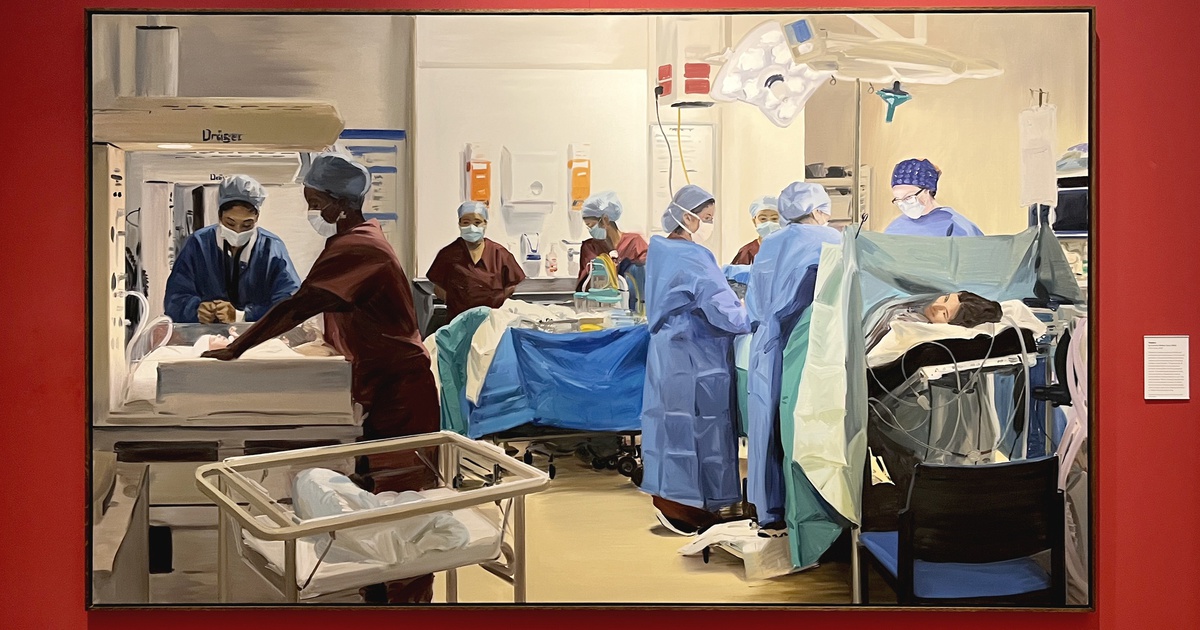
'Theatre' by Caroline Walker

Individual
|
      INTERPERSONAL    :     SCIENCES               
HUMANISTIC  --------------------------------------  MECHANISTIC      
 SOCIOLOGY  :    POLITICAL 
|


Image source: 
https://www.inglebygallery.com/news/7465-caroline-walker-the-scottish-national-portrait-gallery-theatre/

line of sight (seeing is believing) : 'care' : 'community' : 'theatre'

My source:
Harriet Baker, PAINT, FEED & PLAY, FT Weekend, Magazine. July 12 2025.  #1,133, pp.46-52.
https://www.ft.com/content/6e50181b-689e-4cd5-b084-37b311446e94

Great read too. The exhibition moves to Pallant House Gallery, Chichester from November 22nd.

Wednesday, June 18, 2025

FINAL CALL: Have your say about evidence-based implementation! c/o HIFA

PARTICIPATE TO WIN PRIZES

View this email in your browser <https://mailchi.mp/nest360/improve-health-worldwide-complete-this-short-survey-10147215?e=f1722a9293>

LAST CHANCE TO INPUT - CLOSING ON 27TH JUNE!

Do you work on improving health and equity in low-and middle-income countries (LMICs)?

Have YOUR chance to: -Democratise research and evidence for implementation! -Ensure your setting is represented! -Win a £50 voucher in the prize draw!

Palestine, Uganda, and Peru shared the most replies so far!

BETTER HEALTH WORLDWIDE!

Complete this 10 minute survey about evidence-based implementation

You could win a £50 voucher!

Click here <https://newborntoolkit.us5.list-manage.com/track/click?u=7a4ba8643fabeb1b06801b973&id=99accaa2ac&e=f1722a9293> and submit for a chance to win!

[content removed as not supported by HIFA]

English Do you work on improving health outcomes around the world?

Have your say! Why? To accelerate evidence-based implementation, with equity, for better health worldwide.

Who? People involved in any aspect of health service implementation and strengthening at any level of the system (e.g. health care provider, data analyst, policy maker).

How? Click here<https://newborntoolkit.us5.list-manage.com/track/click?u=7a4ba8643fabeb1b06801b973&id=a29ce2fd65&e=f1722a9293> to have your say!

What? Participant information<https://newborntoolkit.us5.list-manage.com/track/click?u=7a4ba8643fabeb1b06801b973&id=7579d3a077&e=f1722a9293> is attached to this message.

Evidence-based Implementation: Many life-saving interventions are not implemented effectively, with wide gaps between what is known and what is done, especially in low- and middle-income countries.

We are keen to hear perspectives and realities from implementers in all low- and middle-income contexts. 

We are seeking your insights to help close the gap from evidence to implementation!

We hope you will take a few minutes to complete this brief survey.<https://newborntoolkit.us5.list-manage.com/track/click?u=7a4ba8643fabeb1b06801b973&id=422f1a8283&e=f1722a9293>

Answers can be anonymous and there is no requirement to provide identifying information.


This survey is being conducted as part of the Lancet Commission on Evidence-Based Implementation in Global Health<https://newborntoolkit.us5.list-manage.com/track/click?u=7a4ba8643fabeb1b06801b973&id=ef480cd254&e=f1722a9293>. This study was funded by the Children’s Investment Fund Foundation.

A member of the study team can be contacted via ImplementersVoices AT gmail.com

Please share across your networks!! Let’s begin, click here!<https://newborntoolkit.us5.list-manage.com/track/click?u=7a4ba8643fabeb1b06801b973&id=63a8e4c758&e=f1722a9293>

[content removed as not supported by HIFA - and my source.]

From Harriet Ruysen - Harriet.Ruysen AT lshtm.ac.uk

Saturday, November 25, 2023

South Sudan Medical Journal - November 2023 Gender-Based Violence

Dear reader,

Our November issue on gender-based violence (GBV) is online here. See details below; we thank the many people who contributed to this important topic.
 
Please share this issue with your colleagues and promote it through your social platforms.


For example: “The South Sudan Medical Journal’s November issue tackles gender-based violence @SSMedJournal #SouthSudan #SSOT” or retweet from @SSMedJournal
 

EDITORIAL


RESEARCH ARTICLES
  • Maternal socio-economic and neonatal medical characteristics associated with survival of preterm neonates in Torit State Hospital, South Sudan: a descriptive cross-sectional study Beatrice Doki, Pontius Bayo and Ronald Jada
  • Factors associated with maternal deaths in Bongor Provincial Hospital, Chad Gabkika Bray Madoué, Allarehene Noudjalbaye, Saleh Abdelsalam, Kainba Passoret, and Diguisna Kadam

FOCUS ON GENDER-BASED VIOLENCE
  • Gender-Based Violence: How South Sudan is fighting back Nyakomi Adwok
  • Clinical management of rape survivors Koma Akim
  • One Stop Centre for the survivors of sexual and gender-based violence at Juba Teaching Hospital Busiri Julius Korsuk
  • SSMJ talks to Data Gordon about Men4Women Ann Burgess and Data Gordon
  • Ask the GBV experts Koma Akim and Nyakomi Adwok
  • The reality of GBV: The story of a South Sudanese girl child in Kenya Nyajuok Tongyik
  • 16 Days of Activism Against GBV Rita Martin Lopidia  
  • Resources on gender-based violence/violence against women and girls related to South Sudan
  • GBV Educational/Training Resources

SHORT COMMUNICATIONS
  • Applications for postgraduate Training Gordon Memorial College Trust Fund (GMCTF)
  • Letter to the Editor
  • Obituary: Dr Bashir Aggrey Abbas Meseka 
  • Obituary: Dr Peter Lado Aggrey Jaden


FRONT AND BACK COVERS IMAGES: From Tales of Lala, No to GBV (Credit: Crown the Woman, South Sudan)
 
Our articles are listed by African Journals Online (AJOL) and the Directory of Open Access Journals (DOAJ) as well as being on our websiteSSMJ is included in the EBSCO scientific research collection.

The SSMJ team
Email: southsudanmedicaljournal AT gmail.com
Website: http://www.southsudanmedicaljournal.com
Follow us on Twitter/X @SSMedJournal and our Facebook Group

Wednesday, March 08, 2023

Invitation to participate in research: Supporting midwives to provide emergency maternal & neonatal care in rural communities with limited resources

The challenges of providing quality midwifery care in rural and remote communities are significant, particularly in low and lower-middle-income countries. I am excited to invite midwives, midwifery educators, health service managers and Ministry of Health personnel from the focus countries listed below to participate in a PhD research study. Our research team aims to identify ways to better support midwives providing emergency maternal & neonatal care in rural communities with limited resources. Insights gained from these different perspectives will help us provide evidence for policy, education and practice.

Please consider participating in the study and/or sharing the link with your colleagues.

To participate in our online surveys, please use the following links:

Midwife/nurse-midwife survey: https://lnkd.in/eD4YSQnn

Educator/Manager/Ministry of Health survey: https://lnkd.in/gphj-i4D

If you would like more information, or if you are interested in participating in an online in-depth interview to discuss these issues, please email: Kristen.Graham AT anu.edu.au

Further information is also available at https://nceph.anu.edu.au/research/projects/strengthening-primary-care-midwives-preparedness-readiness-emergency-maternal

Focus countries: Sub-Sahara Africa: Burundi, Eswatini, Eritrea, Ethiopia, Gambia, Ghana, Kenya, Lesotho, Liberia, Malawi, Nigeria, Rwanda, Sierra Leone, South Sudan, Sudan, Tanzania, Uganda, Zambia, Zimbabwe, South & SE Asia: India, Pakistan, Philippines, Pacific: Kiribati, Papua New Guinea, Samoa, Solomon Islands, Tuvalu and Vanuatu

This study has ANU ethics approval (Protocol 2022/492)

Thank you Kristen

Kristen Graham PhD candidate

National Centre for Epidemiology & Population Health ANU College of Health and Medicine The Australian National University Canberra ACT 2600

HIFA profile (and my source): Kristen Graham is a PhD Candidate at the Australian National University, Australia. Professional interests: Sexual, reproductive, maternal, newborn, child and adolescent health; Midwifery; Workforce capacity building in rural and remote low resource settings. kristen.graham AT anu.edu.au

#iwd2023 #internationalwomensday
Ack. All midwives. PJ

Sunday, December 27, 2020

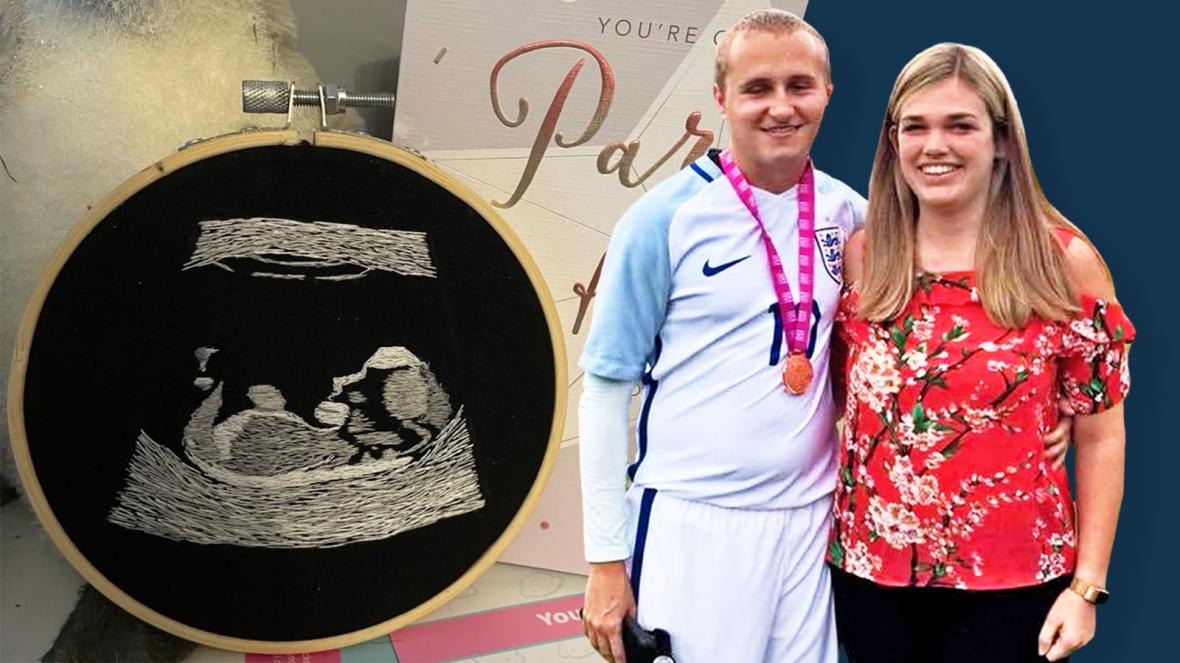
Personal 'Felt' Service

individual
|
INTERPERSONAL : SCIENCES
humanistic ----------------------------------------------- mechanistic
SOCIOLOGY : POLITICAL
|
group


Embroidered scan lets blind father 'see' baby. The Time, 15 December 2020, p.27.

https://www.thetimes.co.uk/article/embroidered-scan-lets-blind-father-see-bab fathery-378jq82qb

Saturday, September 19, 2020

Book: "Cornerstones of Attachment Research"

individual
|
INTERPERSONAL : SCIENCES
humanistic ----------------------------------------------- mechanistic
SOCIOLOGY : POLITICAL
|
group - population

attachment?
 

attachment?
 
attachment?


Make sure you consider all the corners - including the spiritual ... 

My source: OUP twitter 


Wednesday, July 15, 2020

Invitation to participate in Round 2 of the global survey of maternal and newborn health providers during COVID-19

ENGLISH

Subject line: ...

Dear colleague

Thank you for participating in the first round of the research study on the response to COVID-19 among maternal and newborn health providers. Your responses and those of nearly 2,000 others have contributed to a better understanding of how maternal and newborn care is affected by the pandemic. We summarised and published the first findings here.

As the COVID-19 pandemic evolves, we need to keep tracking and responding to the needs of health professionals, and women and their families. At this time, we would like to invite you to answer the second round of this survey available here in 11 languages. It takes 15 to 30 minutes to complete.

Additionally, we would appreciate it if you could distribute this email and survey link to your colleagues (in your facility, community, country, professional association etc.), who are welcome to respond to this survey, whether they participated in the previous round or not.

We thank you for the care you provide to women, babies and their families in these difficult times. Please feel free to get in touch with the research team at the Institute of Tropical Medicine in Antwerp Belgium should you have any questions or suggestions. This study was approved by an ethics committee, and is led by Dr. Lenka Benova (lbenova AT itg.be).

With our very best wishes and many thanks

The COVID-19 maternity survey team


FRENCH

Sujet: Invitation à participer au deuxième volet de l'étude sur la réponse au COVID-19 au sein des prestataires de soins de santé maternels et néonataux.

Chères et chers collègues,

J’espère que vous vous portez bien. Nous vous remercions chaleureusement pour votre participation dans le premier volet de l'étude sur la réponse au COVID-19 au sein des prestataires de soins de santé maternels et néonataux. Vos réponses et celles de près de 2,000 autres prestataires ont contribué à une meilleure compréhension de la façon dont les soins maternels et néonatals sont affectés par la pandémie. Nous avons résumé et publié les résultats préliminaires ici.

À mesure que la pandémie de COVID-19 évolue, nous devons continuer à suivre et répondre aux besoins des prestataires de santé, des femmes et de leurs familles. Pour le moment, nous vous invitons à répondre au deuxième volet de cette enquête disponible en 11 langues ici. L’enquête en ligne prend environ 15 à 30 minutes à compléter.

De plus, nous vous remercions de bien vouloir distribuer ce message, ainsi que le lien du questionnaire, à vos collègues (dans votre hôpital, communauté, pays, association de professionnels etc.), qui sont invités à répondre à ce questionnaire, qu'ils aient participé ou non au volet précédent.

Nous vous remercions pour les soins que vous apportez aux femmes, aux nouveaux-nés et leurs familles dans ces moments difficiles.

Vous pouvez à tout moment prendre contact avec l’équipe de recherche de l’Institut de Médecine Tropicale d’Anvers (Belgique) si vous deviez avoir des questions ou des suggestions à propos de l’enquête. Cette étude a été approuvée par un comité d’éthique et est dirigée par Dr. Lenka Benova (lbenova AT itg.be).

Nous vous remercions d’avance pour votre aide précieuse,

L’équipe d’enquête COVID-19 -maternité.


PORTUGUESE

Subject line: Convite para participar da segunda rodada da pesquisa global com profissionais de saúde materna e neonatal durante o COVID-19

Caro colega

Obrigado pela sua participação na primeira ronda da pesquisa sobre a resposta ao COVID-19 entre os profissionais de saúde materna e neonatal. As suas respostas e as de outras quase 2.000 pessoas contribuíram para uma melhor compreensão de como os cuidados maternos e de recém-nascidos estão sendo afectados pela pandemia. Resumimos e publicamos os primeiros resultados aqui.

À medida que a pandemia do COVID-19 evolui, precisamos de manter o acompanhamento da situação e responder às necessidades dos profissionais de saúde e das mulheres e suas famílias. Neste momento, gostaríamos de convidá-lo para participar na segunda ronda desta pesquisa disponível aqui em 11 idiomas. Demora entre 15 à 30 minutos para responder o questionário.

A equipa da pesquisa agradeceria o seu apoio em distribuir este e-mail e o link da pesquisa para seus colegas (na sua Unidade de Saúde, comunidade, País, Associação Profissional etc.), que possam responder a esta pesquisa, independentemente de terem participado da ronda anterior ou não.

Agradecemos pelos cuidados de saúde prestado às mulheres, bebês e suas famílias nestes tempos difíceis. Caso tenha alguma dúvida ou sugestão, sinta-se à vontade para entrar em contacto com a equipe da pesquisa liderado pelo Instituto de Medicina Tropical em Antuérpia na Bélgica. Este estudo foi aprovado por um comitê de ética e é liderado pela Dra. Lenka Benova (lbenova AT itg.be).
Com os nossos melhores votos e muito obrigado

A equipe de pesquisa de COVID-19 e maternidade


SPANISH

Asunto: Invitación a participar en la segunda ronda de la encuesta mundial de proveedores de salud materna y neonatal durante COVID-19

Querido(a) colega

Les agradecemos su participación en la primera ronda del estudio de investigación sobre la respuesta a COVID-19 entre los proveedores de salud materna y neonatal. Sus respuestas y las de 2000 personas más han contribuido a una mejor comprensión de cómo la pandemia afecta la atención materna y neonatal. Hemos resumido y publicado los siguientes primeros hallazgos.

A medida que evoluciona la pandemia de COVID-19, debemos seguir respondiendo a las necesidades de los profesionales de la salud, las mujeres y sus familias. En este momento, nos gustaría invitarle a responder a la segunda ronda de esta encuesta, disponible aquí en 11 idiomas. Estimamos que necesitará de 15 a 30 minutos para completar la encuesta.

Además, le agradeceríamos que pudiera distribuir este correo electrónico y el enlace de la encuesta a sus colegas (en sus unidades de servicio, comunidad, país, asociación profesional, etc.), a quienes pudiesen responder a esta encuesta, ya sea que hayan participado en la ronda anterior o no.

Agradecemos la atención que brindan a las mujeres, los bebés y sus familias en estos tiempos difíciles. Si tiene alguna pregunta o sugerencia, no dude en ponerse en contacto con el equipo de investigación del Instituto de Medicina Tropical de Amberes, Bélgica.

Este estudio dirigido por la Dra. Lenka Benova (lbenova AT itg.be) ha sido aprobado por un Comité de Etica.

Muchas gracias,

El equipo de encuesta de maternidad COVID-19

Saturday, November 10, 2018

South Sudan Medical Journal - November 2018

 http://www.southsudanmedicaljournal.com/

Dear SSMJ Reader,

The November 2018 issue of the South Sudan Medical Journal is now on online and includes articles on Ebola, Caesarean Section and Obstetric fistula. You can download the complete issue as a pdf here or the individual articles listed below.

Please share this notice with your colleagues.

EDITORIAL
Keeping an eye on Ebola Virus Disease Edward Eremugo Kenyi
Between June and November 1976, the medical world was baffled by an outbreak of a ferocious haemorrhagic disease in Nzara, South Sudan (then part of Sudan). This became known as Ebola Virus Disease (EVD). The West African outbreak in Guinea, Liberia and Sierra Leone in 2014 was devastating.  A new outbreak in DR Congo in 2018 is a warning to South Sudan to be on high alert.

ORIGINAL RESEARCH
Knowledge of type 2 diabetes mellitus and adherence to management guidelines: a cross-sectional study in Juba, South Sudan Alexandre Ali M. Bili and Longying Zha
Inadequate education and the lack of efficient diabetes care centres compounded by high costs are common barriers for diabetes care. This study assesses the level of knowledge and adherence to guidelines for management of type 2 diabetes in South Sudan.

Knowledge, attitude and willingness to accept Caesarean Section among women in Ogbomoso, southwest Nigeria Olumuyiwa A Ogunlaja, Idowu P Ogunlaja, Samuel E Akinola, Olufemi O Aworinde
Caesarean Section (CS) is a common procedure in obstetrics and has contributed immensely to improving maternal and foetal outcome. The study which seeks to assess the level of knowledge, attitude and acceptance of women about CS in Ogbomoso, Nigeria, concludes that mothers should be educated on the process involved in Caesarean delivery.

Obstetric fistulae, birth outcomes, and surgical repair outcomes: a retrospective analysis of hospital-based data in Dodoma, Tanzania Athanase Lilungulua, Balthazar Gumodokab, Mzee Nassoroc, Patrice Sokac and Kibusi Stephen
Obstetric Fistula (OF) among pregnant women remains a widespread condition with devastating consequences and poses a significant challenge in a community as well as globally. The study concludes that timely fistula repair by experienced fistula surgeons will improve outcomes and limit the clinical insult and distress that OF invariably causes.

CLINICAL GUIDANCE
How to repair a vesico-vaginal fistula Brian Hancock
Most fistulae are caused by ischaemic necrosis of the genital tract and adjacent organs through prolonged obstructed labour. This article provides a brief overview and refers the reader to resources that cover the practical aspects of the surgery and holistic care of the patient.

MAIN ARTICLES
Ebola Virus Disease: epidemiology, management, prevention and control Gasim Abd-Elfarag
Ebola Virus Disease (EVD) is part of the group of illnesses known as viral haemorrhagic fevers, and was previously known as Ebola haemorrhagic fever. Infection with EVD is acute, severe and often fatal in humans. The paper provides an outline of what is known about EVD.

Ebola on our doorstep: Ebola Virus Disease preparedness in South Sudan Richard Lako and Otim Patrick Cossy Ramadan
South Sudan has previously experienced three EVD outbreaks in 1976, 1979 and 2004. With recent outbreaks in DR Congo, it is possible that a sporadic outbreak can happen in South Sudan, and so the country is always at risk. Preparedness is key.

COMMENTARIES
Internship training in South Sudan: the challenges and way forward Jessry Pasquali Oboya
The House Officer is the professional whom the patient meets most often when entering hospital and will remember for a long time. The extraordinary commitment and work load of the House Officers at Juba Teaching Hospital has received little recognition by the authorities despite the challenges they face in the course of their training.

The current crisis of human resource for health in Africa Brian Madison
Brain drain has been a source of despair for developing countries, and the healthcare sector arguably bears the biggest brunt imposed by this growing problem. The author argues that if Africa is to counter the healthcare human resources crisis, member states may need to adopt radical reforms in the healthcare sector.

SHORT ITEMS
Caesarean Section acceptability and rate in South Sudan
Call for submissions
Obituaries

BACK COVER
Neonatal resuscitation chart
This chart is designed with the ‘Helping Babies Breath’ training in mind. However, it incorporates external cardiac massage, which can be effective in some cases.

All previous issues of the journal are in the Archive section, and you can ‘search’ for particular articles.

Please support the journal by submitting items for future issues. We are interested in articles on your research, case reports, and clinical guidance, as well as news of projects, and relevant photographs. We can help you prepare these for publication (see our ‘Authors’ Guidelines’). We welcome letters to the editor and questions. Send your contributions to the Editor-in-Chief, Dr Edward Luka admin@southernsudanmedicaljournal.com

If you are not already a member, join our Facebook Group and share your news and experiences and ideas.

You can follow us on twitter: @SSMedJournal. Other people can be added to our mailing list by clicking here.

SSMJ is a member of African Journals Online – see who is downloading SSMJ abstracts and articles here. We are listed in the Directory of Open Access Journals (DOAJ), you can find and search DOAJ for SSMJ articles here.

Kind regards
The SSMJ team
Saturday, March 23, 2013

Inaugural issue open-access journal: Global Health - Science and Practice

Dear HIFA members,

The inaugural issue of the open-access journal Global Health: Science and Practice, is now available here:
http://www.ghspjournal.org/content/current

Below are extracts from the editorials:
'USAID and the Schools of Public Health at JHU and GWU welcome you to the inaugural issue of GHSP­an open-access, peer-reviewed journal for the global health community, particularly program implementers, to contribute to and benefit from a dialogue based on science and practical programmatic experience...'
'We foresee that public health practitioners, university colleagues, donors, and other development partners will be able to contribute to and benefit from a dialogue based on science and experience of what works for field programs.... GHSP will take a multidisciplinary approach to the science and practice of global health... We look forward to your engagement and feedback.'
Ariel Pablos-Méndez, Michael Klag, Lynn Goldman
Glob Health Sci Pract 2013;1(1):1-2
http://dx.doi.org/10.9745/GHSP-D-13-00012
'Formal research definitely helps. But it is not enough. We also need programmatic know-how, including experience-based knowledge and 'lessons learned.'.
James D Shelton, Ronald J Waldman
Glob Health Sci Pract 2013;1(1):3-4
http://dx.doi.org/10.9745/GHSP-D-13-00001

Best wishes,
Neil

My source: HIFA2015