Hodges' Model: Welcome to the QUAD: inclusion

Hodges' model is a conceptual framework to support reflection and critical thinking. Situated, the model can help integrate all disciplines (academic and professional). Amid news items, are posts that illustrate the scope and application of the model. A bibliography and A4 template are provided in the sidebar. Welcome to the QUAD ...

Showing posts with label inclusion. Show all posts

Thursday, January 01, 2026

NEW YEAR: Ongoing support for the 17 SDGs UN

Individual
|
     INTERPERSONAL    :     SCIENCES               
HUMANISTIC  --------------------------------------  MECHANISTIC      
 SOCIOLOGY  :    POLITICAL 
|
Group

security & peace

security & peace
security & peace


See also:
Jones P, Wirnitzer K. Hodges’ model: the Sustainable Development Goals and public health – universal health coverage demands a universal framework. BMJ Nutrition, Prevention & Health 2022;5: doi:10.1136/bmjnph-2021-000254 
https://nutrition.bmj.com/content/5/2/358
 

Source: https://x.com/UNDP/status/2006591346522599746?s=20

See also: 'SDGs' : 'security' : 'poverty' : 'nutrition' : 'water'

Wednesday, October 29, 2025

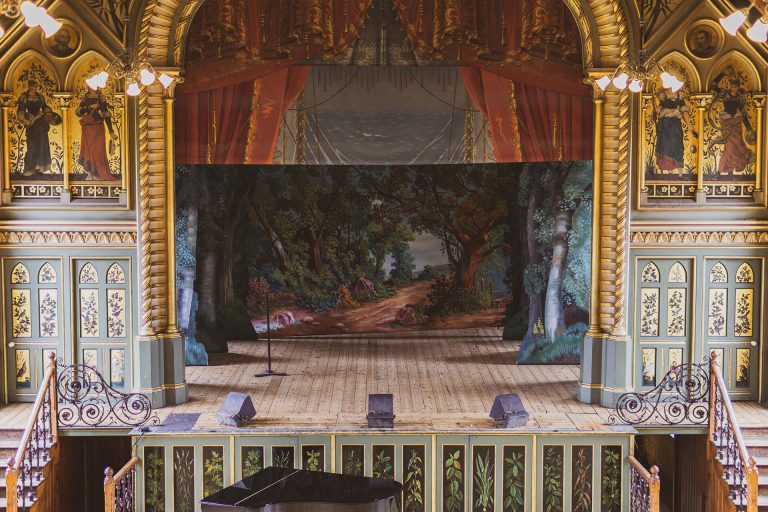
Normansfield Theatre in Teddington

Normansfield Theatre in Teddington

'My favourite building is the amazing Normansfield Theatre in Teddington that John Langdon Down (1828-1896) built to provide positive and stimulating education for learning disabled people (Down syndrome is named after him). At a time when most disabled people would have been shut away in horrific asylums, Down adapted his own house as a residential home, and built a beautiful theatre for creative rehabilitation. It's one of the few surviving private theatres from the period, with original painted scenery and other ornate fixtures, recently remodelled. For me, it's also a reminder of how the wealthy often used their money for good causes, which feels less common now. Jos Boys, guest curator and co-director of The DisOrdinary Architecture Project'


My source: The pick of London Open House. House&Home, FTWeekend. 6/7 September 2025. p.8.

Image: Langdon Down Centre

Previously: 'learning disability' : 'theatre' : 'architecture'

Tuesday, October 14, 2025

ERCIM News No. 142 Special theme: "Inclusive Digital Futures: Intersectionality, Accessibility, and Responsible Innovation"

Dear ERCIM News reader,

The October 2025 issue of ERCIM News (Number 142) is now online! The special theme of this issue looks at how Computer Science can help build more inclusive and diverse communities. This includes both the digital world and its own research and work environments. The issue features contributions from diverse fields of research and innovation, as well as reports on applied initiatives and policies that promote inclusion and diversity.

This special theme was coordinated by our guest editors Magdalini Chatzaki (FORTH-ICS) and Anna Szlávi (Johannes Kepler University)

Next Issue

No. 143 – January 2025
Special Theme: AI for Science

Call for Contributions

Announcements in this issue
  • Dagstuhl Seminars & Workshops – Call for Proposals
  • ERCIM Forum “Beyond Compliance” – 4th Edition | 29–31 October 2025 | Registration still open
  • 33rd IEEE International Conference on Software Analysis, Evolution, and Reengineering (SANER 2026) | Tracks Call for Papers
  • Welcome to the 45th SAFECOMP 2026 | Call for Papers
  • 21st International Workshop on Dependable Smart Embedded Cyber-Physical Systems and Systems-of-Systems (DECSoS 2026) | Pre-Announcement
  • ERCIM “Alain Bensoussan” Fellowship | Next application deadline: 30 April 2026
    This issue includes:

Introduction to the Special Theme 
  • p.8 Inclusive Digital Futures: Intersectionality, Accessibility, and Responsible Innovation
Inclusive Digital Futures – Intersections of Technology, Security, Discrimination, and Bias
  • p.10 Securing Open Source for a Trusted and Inclusive Digital Future
  • p.11 The Role of AI-Based Age Estimation in Promoting Safer Digital Environments for Children: Ethical and Accessibility Considerations 
  • p.13 SafeLine.gr - The First Official Trusted Flagger Organisation under the Digital Services Act (DSA) in Greece
Education & Training, Interventions, Policies, Protocols, and Tools 
  • p.27 When Used Outdoors, Augmented Reality Amplifies Situational Disabilities 
Research and Innovation
  • p.40 Forecasting Air Pollution at Construction Sites: A New Framework for Environmental and Social Sustainability
Thank for reading ERCIM News. If you’ve enjoyed this issue, please feel free to forward it to colleagues who may find it interesting and help us reach even more by sharing it on LinkedIn.

If you’re considering an even deeper partnership, advertising in ERCIM News not only helps sustain our publication but also puts your message in front of an expert, highly qualified audience.
My source with thanks: 
Peter Kunz
ERCIM
https://www.ercim.eu
https://ercim-news.ercim.eu

Join the ERCIM LinkedIn Group: https://www.linkedin.com/groups/81390/
Follow us on X: https://x.com/ercim_news

Sunday, April 13, 2025

In 'health' can health itself be treated as aPOLITICAL?

That is, across medicine, nursing, social work, psychology, allied health professionals, public health . . . in theory, practice, management, policy and education ...?

- with all the talk of the biomedical model,
the bio-psycho-social model -
you do do you wonder?


individual
|
INTERPERSONAL : SCIENCES
humanistic ------------------------------- mechanistic
SOCIOLOGY : POLITICAL
|
group

INTRA- INTERPERSONAL


SCIENCES

SOCIOLOGY
freedom

the science
of snowflakes

coherence

unilateral
power

POLITICAL


Thursday, March 13, 2025

NIHR Global Health Research - collecting diversity data

NIHR invites you to help shape their approach to diversity and inclusivity within NIHR Global Health Research (GHR) funding.

NIHR wants to make sure that their approach to collecting diversity data from applicants, award holders, and committee members is effective, appropriate, and reflects the settings where global health research takes place.


Please complete NIHR’s survey on the collection of diversity data in Global Health Research to be part of informing our approach. The value of your insights and your time are greatly appreciated.

Please note: this survey is not about collecting data from research participants (research volunteers or subjects). Please answer the questions thinking about collecting data from those who apply or receive research funding and those who take part in our committees. 

More details & background from survey page:

Diversity data of global health stakeholders

The National Institute for Health Research (NIHR) is committed to promoting equality, diversity and inclusion and addressing inequalities. One key theme of our Research Inclusion strategy is to develop an evidence-led approach to our equalities and inclusion work.

One of the most important ways to make progress in this work is to collect diversity data and evidence. Only by collecting and analysing our diversity data can we identify the bias and under representation in our systems, and set priorities for future work. 

Diversity means being reflective of the wider community. Having a diverse community, with people from a broad range of backgrounds represented in all areas and at all levels. Diversity data is data collected directly from individuals that allows them to self describe aspects of their identity. 

Understanding of the concepts of equality, diversity and inclusion may differ between the UK and other countries. We want to improve the way we ask our applicants, award holders, and committee members about their diversity data.

Please note: this survey is not about collecting data from research participants (research volunteers or subjects). Please answer the questions thinking about collecting data from those who apply or receive research funding and those who take part in our committees. [Repeated above PJ].

This is your chance to shape what data we collect about you and how we categorise it.  

Please complete by the 30th April 2025.

A note on language:
Throughout this document we will be referring to Low and Middle Income Countries. Every three years, the Organisation for Economic Cooperation and Development’s Development Assistance Committee updates its list of countries eligible for overseas development assistance. We refer to these countries as Low and Middle Income Countries (LMICs). ... continued on survey page...


The link to the survey is embedded in the above text, but, in case helpful, the full link is

https://eur03.safelinks.protection.outlook.com/?url=https%3A%2F%2Fnihr.us14.list-manage.com%2Ftrack%2Fclick%3Fu%3D299dc02111e8a68172029095f%26id%3D662b9becdb%26e%3D62ea777216&data=05%7C02%7Ct.a.beare%40soton.ac.uk%7C8d81ac29e6874c273dfd08dd580f5e35%7C4a5378f929f44d3ebe89669d03ada9d8%7C0%7C0%7C638763545225554700%7CUnknown%7CTWFpbGZsb3d8eyJFbXB0eU1hcGkiOnRydWUsIlYiOiIwLjAuMDAwMCIsIlAiOiJXaW4zMiIsIkFOIjoiTWFpbCIsIldUIjoyfQ%3D%3D%7C0%7C%7C%7C&sdata=%2FvfF7r285V4z0imxcHqDV9KsvYwjGA22On2RIF2zl1w%3D&reserved=0

Many thanks in advance.

Kind regards,
Tom

Thomas Beare  He/Him

Research Manager, Global Health Research | NIHR Coordinating Centre

 NIHRLogo

 e. thomas.beare AT nihr.ac.uk
 a. National Institute for Health and Care Research
Evaluation, Trials and Studies Coordinating Centre, Alpha House, Enterprise Road, Chilworth, Southampton SO16 7NS

My source: HIFA

Wednesday, March 12, 2025

Ambulances, Bikes, Cars and Dennis

There are many rites of passage. Some are universal, others culture specific, or a facet of religious identity. Perhaps there are rites of passage that change over time, or are as yet unclear. When should a young person have their own mobile phone, especially when that phone is 'smart'? Perhaps that is a step too far, to see a phone as a rite of passage? Or, perhaps it signifies an erosion of the human experience of growing-up. 

Mastering a bicycle is, if not a rite of passage, an experience I remember so well. An experience revisited and enjoyed even more as an adult with my own children. It really is something when the hand-lets-go, a signifier of more transitions to follow. 

I learned to ride on two-wheels, in the cobbled backs that ran behind and between the rows of terraced houses. When I was aged 9-10, out on my bike I skidded and came off, trying to stop for a car. It was my fault, the driver was pretty upset too and carried me home. An X-Ray revealed I had hairline fractured of my tibia. I can remember being up so late 'The Untouchables' were on B&W TV. Back then a full-length 'pop' and crutches were required. After the pain subsided, a knitting needle was very useful. The plaster was well-scribed too. I had to attend the fracture clinic at Walton Hospital, Liverpool and still recall Dennis the ambulance gent. He was a great laugh.

I was reminded of this on BBC Radio 4's Today programme, 07:24:35 & 08:55:25, 11 March. Two guests recounted the start of their cycling careers, as adult and a child. British Cycling has started a campaign having found:

Apparently, 97% of children from the richest backgrounds can ride a bike.

While only 86% of children from the poorest backgrounds are able.

This equates to 350,000 children, who would like to ride a bike but can not.


Individual
|
      INTERPERSONAL    :     SCIENCES               
HUMANISTIC  --------------------------------------  MECHANISTIC      
 SOCIOLOGY  :    POLITICAL 
|
Group
Experiences, skills
MENTAL HEALTH
Memory - of 'taking flight'
Life skill: "It's like riding a bike!"
Healthcare role model
Ambulance staff 'Dennis'

Sustainability
PHYSICAL HEALTH
Accessibility
350,000 children
would like to ride a bike.

Fracture clinic Tibia

Childhood - Friends
Adult - Parenthood
Cycling clubs
Socialisation
Social Justice
Engagement - Play


Inequality
97% of children
richest backgrounds can ride a bike.

Only 86% of children from
the poorest backgrounds


When there is a new link I will add it here. In the meantime, can you get on your bike!


Previously: APPG : Cycling : Sport

Monday, March 03, 2025

Finding a space for Lived Experience

Individual
|
      INTERPERSONAL    :     SCIENCES               
HUMANISTIC  --------------------------------------  MECHANISTIC      
 SOCIOLOGY  :    POLITICAL 
|
Group

Whatever your personal - emotional - journey, your experience, ongoing expectations ... hope: hope-fully this is you. You can, or have discovered the potential here. Whether or not the strengths you possess, are recognised due to what others see elsewhere. 


Lived experience brings so many pathways. So many rooms and spaces to explore. Whatever the physical challenges: whether well: 'all-good thanks'; or dealing with one or more diagnoses - acutely, in recovery, relapse, may all points of the compass be open to you.


Whatever your life experience: your health career began down here [and across there ->], shaped by your life chances. These days they call them the determinants. They are many, and can influence your social network, whether you have one ...


As you (literally) negotiate - even if you fail repeatedly - the systems, that the system throws your way, trying to make ends-meet; in work or out, never under-estimate what a person can do. Here lived experience can pay dividends, across the divides that really matter.


Welcome to your space ...
and may it include hope shared and delivered ...

Wednesday, February 26, 2025

Feb 2025 Black History Month - Maths & Nursing

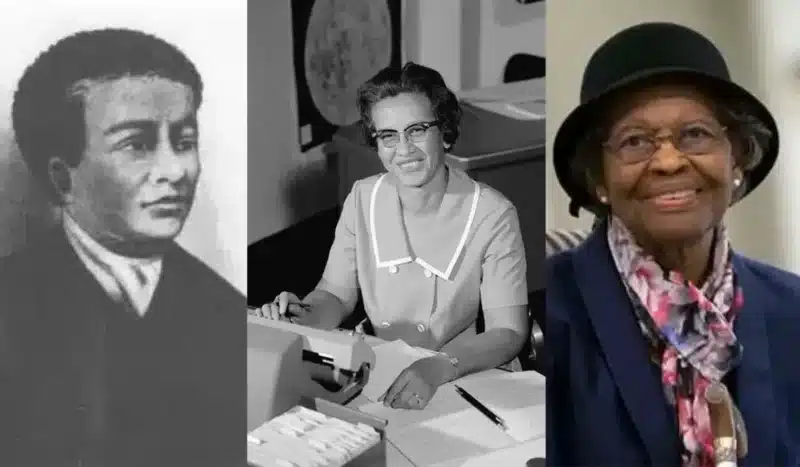
 Contributions of Famous Black Mathematicians

Image c/o https://mathandmovement.com/

and Major Nancy Leftenant-Colon

'Trailblazing black nurse who made national news by being the first to join the regular US army'.

Leftenant-Colon, above centre - joined the regular military in 1948 as
a member of the US Army Nurse Corps. Her work had to be outstanding

Nancy Leftenant-Colon


My source: print copy -
Register, Major Nancy Leftenant-Colon. Obituaries. The Times, 15 February 2025, pp.70-71.
and photograph plus caption.

Tuesday, December 31, 2024

Call for Abstracts (for Publication): "Visual Narratives, Aesthetics, and Decoloniality: Imagery and the Construction of the Other"

Mappæmundi is pleased to announce a call for papers for a collective publication on 

"Visual Narratives, Aesthetics, and Decoloniality: Imagery and the Construction of the Other"

Please find all the details below.

We invite contribution proposals for the edited volume Visual Narratives, Aesthetics, and Decoloniality: Imagery and the Construction of the Other. The book aims to critically examine the persistent influence of colonialism in shaping modern subjectivities, tracing its historical roots in the formation of Western modernity and interrogating its continued implications in contemporary contexts. It positions media and visual narratives as central discursive spaces where colonial legacies are both perpetuated and, potentially, contested. This volume conceptualizes and critically interrogates aesthetics as a foundational condition that establishes a visual lexicon integral to Western modernity. The aesthetic framework not only shapes the development of visual narratives but also plays a crucial role in the construction and perpetuation of varied subjectivities.

In particular, we focus on the critical analysis of the role of visual narratives within the framework of epistemological colonialism. Visual narratives have been central in defining, reinforcing, and legitimizing colonial ideologies by shaping perceptions and controlling representations of colonized peoples and cultures. These visual narratives have played a fundamental role in constructing colonial time and space, which were systematically controlled by Western epistemologies. This volume positions itself as a counterpoint to this colonial legacy, offering critical perspectives that challenge and re/deconstruct the visual lexicon of Western modernity. Through this lens, the book seeks to uncover pathways for alternative visual expressions that resist colonial frameworks and promote inclusive, decolonized understandings of identity and, more broadly, cultural production.

The arts, the media, and communication are powerful forces that can either perpetuate or challenge colonial legacies. Addressing and dismantling these legacies is essential for the creation of just, inclusive, and equitable societies - i.e., societies that value, embrace and benefit from the diversity of reason. From a decolonial lens, the book seeks not only to question the validity of established forms of knowledge but also to question the very criteria by which knowledge is defined. The objective is to contribute to critical discourses on potential pathways forward by amplifying cultural voices marginalized within the colonial matrix of power.  To this aim, we invite contributions that engage with scholarship in diaspora studies, subaltern and postcolonial studies, critical race studies, decolonial aesthetics, visual culture, and visual practices, with a particular emphasis on non-hegemonic epistemologies.

When bringing together these critical issues and perspectives, the book shall offer a comprehensive and interconnected framework for understanding postcolonial experiences in the 21st century. It will explore the role of aesthetics in shaping modern subjectivities, tracing the roots of domination in multiple paths toward modernity. This book intends to serve as an essential resource for scholars, researchers, activists, and the general public, encouraging deeper engagement with colonial histories that continue to shape contemporary life.

We especially encourage contributions from scholars, artists, and practitioners from the Global South that:

  • Engage in theoretical discussions on aesthetics and visual narratives from a decolonial perspective.
  • Combine theoretical frameworks with analyses that directly engage with visual arts, such as photography and other forms of artistic expression.
  • Discuss case studies that examine individual works of art, archives, photojournalistic projects, or other forms of visual narratives.
  • Explore media as a space for resisting and challenging colonial legacies.
  • Offer comprehensive analyses of how media and art contribute to the perpetuation or disruption of colonial ideologies.
  • Provide practical strategies and share lived experiences that contest colonial-rooted narratives.
  • Critique prevailing ideologies within the discursive spaces of media and art production and consumption.

Submission Details

The volume Visual Narratives, Aesthetics, and Decoloniality: Imagery and the Construction of the Other will be part of the Mappæmundi series published by Ventura Edizioni. It will be edited by Dr. Tomás Cajueiro (Universitat Autònoma de Barcelona) and Dr. Estevão Bosco (American College of the Mediterranean and the Latin American Social Science Faculty). The final publication will be exclusively in English. However, abstracts may be submitted in Portuguese, English, Spanish, or Italian. Once a proposal is accepted, authors will be responsible for translating their final chapters into English. Chapters should range from 20,000 to 40,000 characters, including spaces, and must incorporate visual materials to support the analysis of visual works. 

Proposals must be submitted to tomaskju AT gmail.com by April 4, 2025.

Theoretical and Textual Articles

Chapters may integrate theoretical insights with practical interventions or focus solely on theoretical exploration. Contributions can draw on real experiences from individuals, communities, and organizations. Potential research methods include literature reviews, case studies, comparative analyses, discourse analyses, and analyses of photographs and visual works. Abstracts should have a maximum of 5,000 characters, including references. Chapters should fall between 35,000 and 40,000 characters.

Visual narratives

For contributions focusing on the analysis of visual content, the textual component must range from 10,000 to 15,000 characters. The abstract, while limited to a maximum of 5.000 words, should also include an overview of the visual material being analyzed.

Important Dates 

Abstract Submission Deadline: April 4, 2025
Notification of Proposal Acceptance: May 11, 2025
Full Chapter Submission Deadline: September 11, 2025 
For more info: tomaskju AT gmail.com
--
Departamento de Filosofia, Comunicação e Informação
Faculdade de Letras da Universidade de Coimbra
3004-530 Coimbra, Portugal ... (and my source).

Wednesday, December 18, 2024

Hornberger (1989) 'Continua of Biliteracy'. Review of Educational Research

The axes of Hodges' model present a problem in:

  • theory
  • practice
  • evidence - research terms (data!).

The easiest to resolve is practice, which is were Hodges' model can lay claim to being a pragmatic solution. Of course, it isn't the axes that are the difficulty, it is the labels that Brian Hodges originally applied in the early-mid 1980's, followed by other users of the model since. From:

INDIVIDUAL <> GROUP - variations here in 'Welcome to the QUAD' [W2tQ] Patient <> Carer - Family : Client <> Health professional. You can progress to the "patient zero" and a population in an pandemic.

These are fundamental elements in clinical encounters, whether face-to-face, online, and across settings.

The same applies to the horizontal axis: HUMANISTIC <> MECHANISTIC.

As presented - in the sidebar, and the two-by-two table found in many posts - the model has a distinct dichotomous quality. It seems to set up, or invite opposition, or polarities. Sometimes I've viewed the axes as continua, but they are not graduated, incremental in a quantitative sense.

Do the axes of Hodges' model serve a need (do their work) by allowing the user to differentiate through opposition and relational appraisal (testing)? Perhaps, qualified in a respective profession / subject area, the user of Hodges' is employing other axes?

This brings us to intersectionality and the cognitive work of placing the person (couple, family, community ... biosphere) at the centre of our deliberations.

In biliteracy studies, Hornberger (1989) is perhaps more accurate in seeing a series of multidimensional and interrelated continua (p.273) which form a framework.

There are three figures in this paper and many other points of use:

"Contexts of biliteracy are defined, then, by these three continua. Any particular instance of biliteracy is located at a point of intersection among the three." p.280.

In health care this is readily understood given the varied contexts of the centre, the nexus of Hodges' model. When we say Hodges' model is situated, the centre of the model is the sweet and sour spot. For Hornberger, the context determines the use and significance of the continua.

This opens up Hodges' model as a potential tool to better understand the dimensions of diversity, inclusion and intersectionality.

Hornberger, N. H. (1989). Continua of Biliteracy. Review of Educational Research, 59(3), 271–296. https://doi.org/10.2307/1170183

No! This post hasn't been in draft since 1990. ;-)

Saturday, November 30, 2024

"Integrated - care": What's in a word, or two?

This blog post was sat in 'drafts' since 28/01/2007 (yes, I know what that suggests). It concerns an issue, or more properly a theoretical and experiential aspiration in health AND social care that should in truth have provoked many papers for Hodges' model by now.

In the almost 18 years since, I wonder about the total number of papers devoted to this subject, the service's delivery, policy, outcomes, reviews and reports on integrated care? In nursing theory, philosophy and the start of many 'learned papers', it is customary to begin with a definition of terms. What happens when we divide 'integrated care' and first treat integrated and care separately? Does this aid our understanding? Do we divide and conquer? Is there a difference in results? Conceptual analysis would see us do both, and conduct a literature search.

In practice, (and clinical - especially) we often use words in rather lackadaisical way. Not surprising really, after all we've got a job to do! When pronouncements are made regards health and social policy I hear it as good intentions. I also reach for my soap box. It is often hyperbole, rhetoric. The same applies to the related idea and ideal(?) of holistic care, and person-centredness. I'm biased, of course, but I believe that Hodges' model can help to scope, and define these idealised features of health and social care (and education). As noted, people don't have the luxury of time to stop and deliberate on the precise meaning of the language they routinely use. As noted, at the end of the day - if it gets the job done then that's sound.

In a poll of words that are both much used and the meaning taken for granted integrated must be near the top for several reasons:
  • its seniority: it has been around for decades.
  • its scope across sectors and day-to-day life.
  • our dependence on its fulfillment.
N-Gram suggests some possible insights into integrated and related forms of care:


https://books.google.com/ngrams/graph?content=integrated+care,holistic+care,person-centered+care&year_start=1800&year_end=2022&corpus=en&smoothing=3 
[Trying to embed, results in 1/3 white space at the bottom?]

It seems that integrated care [IC] has been a standing agenda item in health and social care media, education, the workforce, conference, exhibition and policy for several decades. Perhaps, things have calmed somewhat? So either IC is either very important, complex, a hard thing in practice or maybe it's all of these and more besides? IC is a undeniably a compound concept. Is this a cop-out though? You declare something 'compound' then sit back - job-done? I've suggested the same of threshold concepts in health (and probably other contexts?). Time will tell. In the meantime I have reflected on 'integrated care' across the domains of Hodges' model:
self
|
INTERPERSONAL : SCIENCES              
humanistic ------------------------------- mechanistic
SOCIOLOGY : POLITICAL   
|
other
INTEGRATION OF:
PRACTITIONER; Team; service; org... Philosophy*
assessments
threshold for acceptance into service
(referral criteria)
patient experience & engagement
health education / literacies programmes
spiritual
research involvement

INTEGRATION OF:
health record (e- or paper)
location - team base
care disciplines
geographical area
referral sources
assessments - tools/scales
data and statistics
research involvement


INTEGRATION OF:
HEALTH & SOCIAL CARE
public engagement
hospital 
carer (parent/guardian) experience
community services
social care - NHS
family experience
public engagement in research
Patient / Public Community Advocacy
Treat demand :: Support prevention


INTEGRATION OF:
funding
leadership / management
accountability - complaints
(not the same thing!)
outcome measures
ILLNESS - PREVENTION / education
self-care <> planetary care - 
Sustainability
assisted dying! palliative care!
Public - Private - Voluntary Sectors
Provider :: Purchaser [Systems]
All-Party Parliamentary Groups^


*ethics, values.
^One aspect of so-called 'joined-up government'.

Wednesday, October 16, 2024

2025 6th edition of "Seed Projects for Interdisciplinary Research"

Para quem possa ter interesse. / To whom it may concern.

Caros/as Coordenadores/as das Unidades I&D da UC,  

Caros/as Gestores/as de Ciência, 


A pedido do Vice-reitor para a Investigação e Diretor do Instituto de Investigação Interdisciplinar (IIIUC), Professor João Ramalho-Santos, i
nformamos que estão abertas as candidaturas para a 6ª Edição de financiamento dos "Projetos Semente de Investigação Interdisciplinar", com o apoio da Fundação Santander, promovido pelo Núcleo das Áreas Estratégicas da UC (NAE), em colaboração com o Instituto de Investigação Interdisciplinar (IIIUC). 


Com este concurso, a UC pretende continuar a apoiar o desenvolvimento inicial de projetos de investigação originais e interdisciplinares com um financiamento semente que permita aos investigadores e às investigadoras da UC tornarem as suas propostas científicas mais robustas, de forma a assegurar financiamento competitivo no futuro e o desenvolvimento de novas linhas de investigação que cruzam áreas do saber na Universidade de Coimbra.


Irão ser financiados até cinco projetos de investigação interdisciplinar, uma em cada Área Estratégica da Universidade de Coimbra:  Saúde; Clima, Energia e Mobilidade; Recursos Naturais, Agroalimentar e Ambiente; Digital, Indústria e Espaço; Património, Cultura e Sociedade Inclusiva.


Poderão concorrer a este financiamento investigadores/as integrados/as nas Unidades I&D (ou noutras estruturas da Universidade de Coimbra) que desenvolvam investigação na UC e que obtiveram o doutoramento após 1 outubro de 2014. A equipa do projeto deve incluir de três a seis Investigadores/as da UC, de pelo menos duas Unidades I&D de
domínios científicos distintos. 


As candidaturas podem ser submetidas até 6 de dezembro de 2024, às 17h na página web do concurso:
 

https://www.uc.pt/iii/iiiuc-apoia/seedprojects-uc/edicao-2025/  


Estão disponíveis nesta página as normas do concurso, modelo para submissão de candidatura e a lista de júri nomeado para esta edição.


Atenciosamente,
 

O Núcleo das Áreas Estratégicas 


Isabel Neves 
 

Maria João Neves   

Natacha Leite   

Shiva Saadatian   


*******************

On behalf of the Vice-rector for Research and Director of the Institute for Interdisciplinary Research (IIIUC), Professor João Ramalho-Santos, we would like to inform you that applications are now open for the 6th edition of "Seed Projects for Interdisciplinary Research", with the support of Santander Foundation, promoted by the UC Strategic Areas Unit (NAE), in collaboration with the Institute for Interdisciplinary Research (IIIUC).  


Through this call, the UC intends to provide support for the initial development of original and interdisciplinary research projects with seed funding that will allow UC researchers to make their scientific proposals more robust, ensuring competitive funding in the future and the development of new research lines that cross areas of knowledge at the University of Coimbra. 


There will be funding for up to five interdisciplinary research projects, one in each of the UC Strategic Areas: Health; Climate, Energy and Mobility; Natural Resources, Agri-food and Environment; Digital, Industry and Space; Heritage, Culture and Inclusive Society. 


Researchers of the R&D Units (or other structures of the University of Coimbra), who carry out research at the UC and who obtained their doctorate after 1 October 2014 are eligible to apply for this funding. The project team must include three to six researchers from the UC, from at least two R&D Units in
different scientific fields 


The applications can be submitted until 6 December 2024 at 5pm on the call website: 
 

https://www.uc.pt/en/iii/iiiuc-supports/seedprojects-uc/2025-edition/  


The call guidelines, proposal template and the list of juries appointed for this edition are available on this page. 


Yours sincerely,  

Strategic Areas Unit 


Isabel Neves   

Maria João Neves    

Natacha Leite    

Shiva Saadatian 

Universidade de Coimbra • Reitoria • Administração | University of Coimbra • Rectory • Administration

Serviço de Promoção e Gestão da Investigação | Research Management Service

Núcleo das Áreas Estratégicas | Strategic Areas Unit

Polo I | Rua Larga • Edifício da FMUC (1º piso) • 3004-504 COIMBRA • PORTUGAL

Polo II | Casa Costa Alemão • Rua Dom Francisco de Lemos • 3030-789 COIMBRA • PORTUGAL

https://www.uc.pt/spgi/nae/ 

Tuesday, March 12, 2024

Landscapes, Maths, Line of Sight c/o Penteado & Skovsmose Eds. (2022)


The care / knowledge domains of
Hodges' model as landscapes:
as 'initial sketches'?

'Line of sight/thought?'


Individual
|
      INTERPERSONAL    :     SCIENCES               
HUMANISTIC  --------------------------------------  MECHANISTIC      
 SOCIOLOGY  :    POLITICAL 
|
Group

reflection

critical reflection

cognitive/conceptual landscapes


maths and sciences =

hard subjects ?


"We understand that mathematics is especially relevant in knowledge processing, and operates in the process of globalisation,4 i.e., it interferes in several aspects that integrate with society. We admit that globalisation refers to all aspects of life and that, depending on how it is questioned and operationalised, it may or may not be beneficial. Therefore, globalisation “has to do with the construction, codification, and distribution of knowledge that turns into goods for sale” (Skovsmose, 2014, p. 130). This way, mathematical knowledge is involved as part of the foundations of society, making it necessary to question its position in this laborious civilising equation (Civiero and Bazzo, 2020). In this context we delegate some power to critical mathematics education (CME) by considering that it can contribute to the formation of critical individuals by promoting reflection on this process. Bazzo (2019) considers us to experience a civilising equation whose variables need to be discussed in schools." pp.296-297.

"The word citizenship, a contested concept, emerges in different discourses that can hide contrasting interests. Differences in its meanings are enhanced with the changes in society through history. This chapter presents a discussion about mathematics education for citizenship and its outcomes. School presents itself as a stage of dispute and a space for expressing different ideologies that can configure ways of thinking and structuring an education on the topic of citizenship. Mathematics education is shown to be supportive of different citizenship discourses. In a globalised world with deep inequalities, a type of mathematics education for citizenship that matches with inclusion and diversity is required; one which considers global issues. The proposed landscape of investigation Global Visibility Matters is a possible support aid for mathematics classes, based on enabling students to develop global citizenship. By reading and interpreting a social situation as being open to change, it becomes possible for the students to be recognised as—and to act as—global citizens." p.133.


Chapter 8 Global Citizenship, Manuella Carrijo, pp. 133-147.

Chapter 18 Critical Mathematics Education in Action:  To Be or Not to Be. Paula Andrea Grawieski Civiero and  Fátima Peres Zago de Oliveira. pp. 295-321.

Penteado, M. & Skovsmose, O., editor. (2022) Landscapes of Investigation: Contributions to Critical Mathematics Education. Cambridge, UK: Open Book Publishers. [Pdf] Retrieved from the Library of Congress, https://www.loc.gov/item/2021385926/

landscape
https://hodges-model.blogspot.com/search?q=landscape

sketch
https://hodges-model.blogspot.com/search?q=sketch

'line of sight'
https://hodges-model.blogspot.com/search?q=line+of+sight

Thursday, March 07, 2024

Book: Landscapes of Investigation [open access]

"Creating landscapes of investigation is a primary concern of critical mathematics education. It enables us to organise educational processes so that students and teachers are able to get involved in explorations guided by dialogical interactions. It attempts to address explicit or implicit forms of social injustice by means of mathematics, and also to promote a critical conception of mathematics, challenging the assumption that the subject represents objectivity and neutrality. Landscapes of Investigation provides many illustrations of how this can be done in primary, secondary, and university education. It also illustrates how exploring landscapes of investigation can contribute to mathematics teacher education programmes. 

This edited volume is the result of a collaboration established through the Colloquium in Research in Critical Mathematics Education, which took place in 2016, 2018, and 2019 in Brazil. Its twenty-eight contributors are young researchers from Brazil, Chile, Colombia, India, Mexico and the USA, who are dedicated to the further development of critical mathematics education. 

Organised in eighteen chapters, the volume presents examples of engaging students from a diversity of social and economic backgrounds, age ranges, and abilities across different countries. The chapters present original findings on the social aspects of all levels of mathematics education. Landscapes of Investigation is of particular relevance to those with an interest in the potential of mathematics education to challenge social injustices."

Penteado, M. & Skovsmose, O., editor. (2022) Landscapes of Investigation: Contributions to Critical Mathematics Education. Cambridge, UK: Open Book Publishers. [Pdf] Retrieved from the Library of Congress, https://www.loc.gov/item/2021385926/

Review:

David M. Bowers
"Book Review: Landscapes of Investigation: Contributions to Critical Mathematics Education (2022) (M. G. Penteado & O. Skovsmose, Eds.)". Journal for Theoretical & Marginal Mathematics Education, vol. 2, no. 1, 2023. doi:10.5281/zenodo.10440243

My source:
https://x.com/dylanwiliam/status/1602776823225540610?s=20

Previously
https://hodges-model.blogspot.com/search?q=mathemacy

Tuesday, February 27, 2024

Information and Records Management Society [IRMS] Conference Bursaries

Dear list,

Apologies for the cross-posting. I am forwarding this on behalf of the Information and Records Management Society.

If you think you can’t afford to attend the IRMS Conference or that it’s not the place for someone like you, it could be time to think again! That’s because we’re offering FREE bursary places that will give 3 people from under-represented groups an all-inclusive ticket to IRMS24 in Brighton on 12-14 May.

But you’ll need to be quick – the deadline is less than 2 weeks away!

There are 3 categories of bursary available:
  1. New Generation – open to anyone aged 30 or under at the start of the conference on 12 May 2024
  2. Diversity and Inclusion – offered to an information professional or student from an ethnic minority background, or who has a disability (or both)
  3. International – available to IRMS members based outside of the UK and Ireland
Each bursary provides 1 fully-funded place at the whole event, including all conference sessions, food and refreshments, evening social events, and two nights’ luxury B&B accommodation at the conference venue, the DoubleTree by Hilton Brighton Metropole hotel. Please note we are unable to cover any travel costs.

You must meet certain criteria to be eligible for a bursary. If you do, then to apply, all you have to do is tell us who you are, which bursary you are applying for and why, and how you will benefit from being at the IRMS Conference 2024 – including which speakers or topics you are most excited about! We also ask how you would share your experience at the event.

You haven’t got long - the deadline for applications is Sunday 10 March.
For full details and to apply, go to www.IRMSConference.org.uk/Bursaries.

And spread the word - we want these bursaries to be available to the widest possible audience, so please share with friends, colleagues and contacts.

Thank you, and good luck! Joe
Joe Chapman IRMS Conference Director

Best Regards,
Ren

Reynold Leming
Managing Director
reynold AT informu-solutions.com
https://www.informu-solutions.com/


My source: Records Management List - Archive
https://www.jiscmail.ac.uk/cgi-bin/webadmin?A0=RECORDS-MANAGEMENT-UK