Hodges' Model: Welcome to the QUAD: Search results for line of sight

Hodges' model is a conceptual framework to support reflection and critical thinking. Situated, the model can help integrate all disciplines (academic and professional). Amid news items, are posts that illustrate the scope and application of the model. A bibliography and A4 template are provided in the sidebar. Welcome to the QUAD ...

Showing posts sorted by relevance for query line of sight. Sort by date Show all posts

Tuesday, March 12, 2024

Landscapes, Maths, Line of Sight c/o Penteado & Skovsmose Eds. (2022)


The care / knowledge domains of
Hodges' model as landscapes:
as 'initial sketches'?

'Line of sight/thought?'


Individual
|
      INTERPERSONAL    :     SCIENCES               
HUMANISTIC  --------------------------------------  MECHANISTIC      
 SOCIOLOGY  :    POLITICAL 
|
Group

reflection

critical reflection

cognitive/conceptual landscapes


maths and sciences =

hard subjects ?


"We understand that mathematics is especially relevant in knowledge processing, and operates in the process of globalisation,4 i.e., it interferes in several aspects that integrate with society. We admit that globalisation refers to all aspects of life and that, depending on how it is questioned and operationalised, it may or may not be beneficial. Therefore, globalisation “has to do with the construction, codification, and distribution of knowledge that turns into goods for sale” (Skovsmose, 2014, p. 130). This way, mathematical knowledge is involved as part of the foundations of society, making it necessary to question its position in this laborious civilising equation (Civiero and Bazzo, 2020). In this context we delegate some power to critical mathematics education (CME) by considering that it can contribute to the formation of critical individuals by promoting reflection on this process. Bazzo (2019) considers us to experience a civilising equation whose variables need to be discussed in schools." pp.296-297.

"The word citizenship, a contested concept, emerges in different discourses that can hide contrasting interests. Differences in its meanings are enhanced with the changes in society through history. This chapter presents a discussion about mathematics education for citizenship and its outcomes. School presents itself as a stage of dispute and a space for expressing different ideologies that can configure ways of thinking and structuring an education on the topic of citizenship. Mathematics education is shown to be supportive of different citizenship discourses. In a globalised world with deep inequalities, a type of mathematics education for citizenship that matches with inclusion and diversity is required; one which considers global issues. The proposed landscape of investigation Global Visibility Matters is a possible support aid for mathematics classes, based on enabling students to develop global citizenship. By reading and interpreting a social situation as being open to change, it becomes possible for the students to be recognised as—and to act as—global citizens." p.133.


Chapter 8 Global Citizenship, Manuella Carrijo, pp. 133-147.

Chapter 18 Critical Mathematics Education in Action:  To Be or Not to Be. Paula Andrea Grawieski Civiero and  Fátima Peres Zago de Oliveira. pp. 295-321.

Penteado, M. & Skovsmose, O., editor. (2022) Landscapes of Investigation: Contributions to Critical Mathematics Education. Cambridge, UK: Open Book Publishers. [Pdf] Retrieved from the Library of Congress, https://www.loc.gov/item/2021385926/

landscape
https://hodges-model.blogspot.com/search?q=landscape

sketch
https://hodges-model.blogspot.com/search?q=sketch

'line of sight'
https://hodges-model.blogspot.com/search?q=line+of+sight

Thursday, January 06, 2011

2011... looking ahead: Line of sight - Lines of insight

LINE OF SIGHT:


LINES OF INSIGHT:

Fractal Drum


Image sources:

Wilkinson, F.J., Monkhouse, H. R. (1967). Maps and Diagrams; Their Compilation and Construction [Paperback], Methuen & Co Ltd. Intervisibility, Line of sight. p. 125 [scanned].
(Book purchased in Mevagissey, Cornwall, Hurley Books July 2010)

Fractal drum. Lines of INsight: http://classes.yale.edu/fractals/panorama/ManuFractals/FractalDrums/FractalDrums.html

Health and social care - listen!

Wednesday, April 26, 2023

Life, Literacy, Oppositions, Complexity and Information

Literacy in Traditional Societies


"Durkheim's work on primitive classification is being applied to societies within the orbit of major civilizations. The polarities and oppositions of la pensée sauvage turn up in ancient Greece, and tools developed in the study of the narratives of American societies are applied to the Oedipus story, the Book of Genesis and even contemporary literature, with little sense of the basic incongruity involved.

Polarities of some sort are of course present in all societies; their significance, however, varies widely. Aristotle describes one Pythagorean theory in the following terms:


Others of this same school say that there are ten principles, which they arrange in ten columns, namely:

limit unlimited
odd even
one plurality
right left
male female
at rest moving
straight crooked
light darkness
good bad
square oblong

. . . How these principles maybe brought into line with the causes we have mentioned is not clearly explained to them [quoted Guthrie 1962: 1, 245]."


Goody, J. (1968) Literacy in Traditional Societies, Cambridge: CUP. pp.10-11.


Taking each of these in-turn as may relate to Hodges' model (I may update/edit these):

limit  unlimited

As a template the model invites both a limit (boundaries) and some-thing unlimited.

odd  even

There is a symmetry - evenness to the model, but the invitation noted above is also a prospect for odd-ness. This may extend to the frustration experienced when a phenomena, account (patient's narrative . . .) defies explanation and classification.

one  plurality

This polarity is key in Hodges' model. 'One' refers to the person, patient, carer, any - individual who the model is applied to. In respect of plurality this can include the dyad of patient - nurse, couple, family, team, community, national or global population (and Biosphere).
 
right  left
 
The horizontal axis is not the last word in Hodges' model, as intra-domain we also find right and left. Of course, the vertical axis (indeed, the whole model if required?) can also be repeated in a domain.
 
male  female
 
You quickly recognise the potential for disagreement* which is fundamental in dichotomous situations, a point further reinforced below.

at rest  moving
 
The model is 'at rest' as a snap-shot, but as a frame it can represent the change over time and so has its own dynamic potential.
 
straight  crooked
 
The axes as continua are 'straight' but this distinction (as noted above) has distinct psycho-socio-political connotations. In the model, line-of-sight is acknowledged, while 'crooked' might suggest what is uncertain, and unseen?
 
light  darkness & good  bad
 
Again, these two oppositions seem 'loaded': especially socially - politically.

Tread carefully. If you have light, that's good, but if lost: bad.
 
square  oblong
 
Viewed as containers, or sets the model's domains can be represented as several shapes, as long as the axes are retained as part of the structure. The adopted rectilinear form is an affordance of the (underlying) HTML, and the traditional (paper-based) tabular format. From the domains being of equal area, the point where the axes intersect could be shifted, such that a single domain is enlarged (prioritised?), at the expense of another.

*Incredible harmony too!

Then prior to an anticipated move, and sorting through books and papers:

Complexity:
Life on the edge of chaos
“The discovery that universal computation is poised between order and chaos in dynamical systems was important in itself, with its analogies to phase transitions in the physical world. It would be interesting enough if adaptive complex systems inescapably were located at the edge of chaos, the place of maximum capacity for information computation. The world could then be seen to be exploiting the creative dynamics of complex systems, but with no choice in the matter. But what if such systems actually got themselves to the edge of chaos, moved in parameter space to the place of maximum information processing?” p.54.


Lewin, R. (1993) Complexity: Life on the edge of chaos. London: Phoenix.

The conclusion? 

Perhaps, the ubiquity of polarity, opposition and dichotomy is that they anticipate and presage an increase in information processing (for good or ill: there we go again!). 

This is also a ( the ) function of Hodges' model.

Previously:

Opposition  . . . See also - Polarity , Dichotomy , Literacy . . .

Wednesday, December 02, 2020

Book review: "After Ethnos" i

A great believer in serendipity, this played a part in my discovering this book. From the FT Weekend's 'How to Spend It' I noticed the book and its cover in 'the aesthete' Anicka Yi (pp.17-18):
 
The best book I've read in the past year is After Ethnos by Tobias Rees. He's mapped out the evolutionary transformation of humans and I think it's an important book for the next stages of our species. p.17.
Looking up the book and the publisher's blurb - a request for a review copy was rewarded.

Two points, first I wondered about the meaning of  'ethnos'. A small word, it seemed to have instant gravitas. It does: being Greek for "a people" (p.1). The quote above does not mention 'anthropology' specifically, but this is very much the book's focus. Once delivered, and making a start I got a taste of what was to follow; and did wonder if I had bitten-off more than I could chew.
 
As a nurse, I thought I'm not an anthropologist, but as a member of humanity we are all in a sense anthropologists. Surely, it isn't a far stretch from 'people skills', social skills, interpersonal skills to anthropology? Perhaps, if you work in mental illness - health this connection, relatedness is accentuated? Anthropology is of course a specialist subject and the book has helped me 'place' it on the book shelf in relation to cultural studies. The view from Wigan Pier does not get you far, even if it has stretched to within 2.5 degrees of the equator and Amman, Jordan. Anthropology is fieldwork as well as a repository for theories.
 
Any qualms were quickly put aside. The book while anthropologically technical and philosophical is an easy read. The main text is 121 pages. So a couple of days and you are after ethnos too. I've still to read the notes as I passed-them-by, recording the numbers of several to look up later.

The project of the book on the DUP site includes:
In After Ethnos Tobias Rees endeavors to decouple anthropology from ethnography—and the human from society and culture—and explores the manifold possibilities of practicing a question-based rather than an answer-based anthropology that emanates from this decoupling. What emerges from Rees's provocations is a new understanding of anthropology as a philosophically and poetically inclined, fieldwork-based investigation of what it could mean to be human when the established concepts of the human on which anthropology has been built increasingly fail us.
There is much to savour here, at least in my reading. Rees refers to:

lines of thinking
lines of escape
lines of research
line of flight

A preoccupation for me is 'line(s) of sight' and insight. Much space is given to differentiating anthropology and ethnology. The role of curiosity (key for Rees) about the human and hence the difference between anthropology that is answer-based to one that is question-based.

 individual 
|
INTERPERSONAL : SCIENCES
humanistic ----------------------------------------------- mechanistic
SOCIOLOGY : POLITICAL
|
group
questions
answers
a people
the people


Clearly, the book is a challenge to classical, established, traditional views of  anthropology. What is taught, the curriculum and its future.

Rees seeks to disrupt, derail, depart and break free from what is current thinking, to seek escapes. I like reference to chaos, turbulence; the book is nonprogrammatic and all this without resort to a place at which to arrive.

In chapter 1 the sentence: Classical modern ethnology has come to an end.
 
prompted me - to substitute terms:

Classical and modern nursing (theory and practice?) has come to an end? p.8

Chapter 1 asks: what is anthropology? What is anthropology's job? What's it's domain? The book covers the history of anthropology, ethnology to facilitate a general reader's understanding.

More to follow ... 
 
and thank you to Duke University Press for the review copy.


After Ethnos - acknowledgements

Rees, Tobias. After Ethnos, (2018): Durham and London. Duke University Press.

Thursday, November 16, 2023

Book review iii. General Psychotherapy: Principles and Common Theoretical Aspects - Rediscovering Humanity

   General Psychotherapy

In chapter 3 neurophysiological development is explored and epigenetic influences (3.2). For a decade or so I've highlighted to students the need for them to be aware of 'omics' which will clearly impact their future careers and subsequent learning. This is detailed also outlining limbic development, through to cognitive-linguistic functioning; and not just learning but forgetting. It is easy to take the self for granted, but here is a description of a self in formation, the neocortex, imagination and role of the pineal gland. Biological radiation of living beings (there is a error in the heading I believe*) is fascinating for reasons already acknowledged. Then it is as if time begins and psychological development can begin (life chances permitting). From the author's practice two cycles are illustrated - growth and transformation drawing on Gestalt thought and all referenced. 

Ever since reading on Goethe's part-whole thought I've been aware of mereology. Chapter 3 also examines intrapsychic and social space in respect of part-whole relationships. I'm continuing this journey so it helpful to find the distinction here also.

"According to the resonance principle, identification with key partial aspects can very quickly lead to an unresolved, formative core conflict. In an individual setting, empty chairs or symbolic locations may serve as backdrops for projection. Distance, posture and line of vision are highly relevant in this regard. In a group setting, forms of constellation work with representatives may be more helpful." p.155.
The book's philosophical content is well realised, fused with history and the development of psychology and neurosciences. Plato's cave is explained and related to tabula rasa: the blank slate (3.6.3). I feel I'm in Plato's cave in trying to look at Hodges' model as a mathematical object. There is encouragement too in Hartmann-Kottek identifying the role of blank slate. Hodges' model is also about forgetting, unconditional positive regard hence a blank slate. Chapter 3 concentrates on approaches to explain our development and personality, quantum-theoretic, Far-Eastern traditions, and Western working towards how we achieve coherence as an integral individual, building and relying on inner and external social and interpersonal resources (Fig. 3.4: Tower of consciousness. p.212.). Energy a key in this part of the book, is summarised in a further figure on background dimensions - combining two-axes of Whole-Parts and Space-time - Spaces of possibilities (p.222).

Chapter 4 is a welcome discussion of systems, interspaces, self, communication again through a cultural lens. Chapter 5 would benefit all healthcare students - an understanding of health and illness. While not tackled here - how we integrate and simultaneously address both requirements in service delivery is the challenge of 21st Century health provision? This is higher level from the outset: Attempts at Classification (5.1). While a  traditional book, reading had an immersive feel for me (with many posts on W2tQ): Diagnostic tools, 2-sided understanding of health and illness, the diagnostic, therapeutic (always kept in sight) reversal of symptoms, fields of tension and resources at various stages of development.

For readers looking for actual therapies, chapter 6 is the practical center of the text. The current state of psychotherapy is likened to the blind people trying to find an elephant in the dark. 'Many paths' in a subtitle is welcome, almost suggesting there is scope for all approaches and perhaps they can meet 'somewhere'? Motivations and politicisation aside, the variety of psychotherapeutic are indeed a treasure. They are listed, comprehensively as far as I can see, including many new to me. They are further sub-divided and considered: clusters through time, behavioural, then considered as per depth and effect levels, verbal - non-verbal, emotions, breathing and meditation, variations in consciousness. 

I've considered blind-spots before and highlight Hodges' model as having a role in situational awareness - hence safety and care assurance. Hartmann-Kottek remains grounded in how blind-spots can affect therapists and patients - individually and in alliances. The therapeutic relationship, transference and countertransference are emphasised once again. Compassion too - as part of a credible relationship - with selective authenticity. Technical points are raised too, the use of counterpart in Gestalt therapy. Some 40 pages of chapter 6 are very practical, with exercises and examples of conversations between patient and therapist to illustrate specific approaches and situations. This is far from a specific therapy manual but there is this quality to the content.

 
 'I' - 'Individual' 'SELF' 'Patient' 'Client'
  |
    INTERPERSONAL    :     SCIENCES               
HUMANISTIC --------------------------------------  MECHANISTIC      
SOCIOLOGY  :   POLITICAL 
|
dyad / couple  family  GROUP community population
psycho-


symbolic
personal meaning
emotion
lived experience
emotional distance

-somatic


*Living near Manchester in NW England, the city's symbol is a bee (industry..). It appears in the text that 'Being' has become 'Beeing' in some instances - so an extra homely feel here.

Many thanks to Prof. Hartmann-Kottek and Springer for the review copy.

One more post to follow.

Hartmann-Kottek, L. (2022). General Psychotherapy, Principles and Common Theoretical Aspects - Rediscovering Humanity. Springer. https://doi.org/10.1007/978-3-030-87466-7

Empty chair image:
https://www.mentalhelp.net/blogs/gestalt-therapy-the-empty-chair-technique/

Sunday, February 27, 2022

Endurance: Trapped in the ice (and other thoughts ..?)

"'What the ice gets, the ice keeps,'*

... said Ernest Shackleton of his ship Endurance as he saw it lost to the Antarctic. History came eerily close to repeating itself on Monday when the Endurance 22 expedition, which is searching for Shackleton's lost ship, became stuck in the Weddell Sea. The mission ran into trouble overnight when the SA Agulhas II, a South African icebreaker, became trapped and the temperature plummeted to minus 10C. The historian Dan Snow, who is on the expedition, said it happened on the spot where Shackleton's ship was last seen in 1915.

Unlike Endurance, which sank after months stuck in the ice, modern technology allowed Agulhas II to escape in hours. Its crane held a container full of aviation fuel over the side and swung it back and forth to wriggle the ship free.

It is late summer in Antarctica and winter is coming, meaning the team's time is limited. 'In a few weeks, it all starts freezing up,' said Mensun Bound, the director of exploration. 'In a few days we have to get our tails out of here.'" p.23.
<>

When person-centred, integrated, and holistic care is the mission; care that takes into account physical and mental health, demands additional degrees of freedom to assure success. If we get stuck, by a blank page, or too much information then swinging the axes into thought plus the dichotomies inherent in the health career model, can come to our rescue and facilitate creativity and progress.


     Self - NORTH - Person

|
 INTERPERSONAL    :     SCIENCES               
EAST - HUMANISTIC -----------------------------------  MECHANISTIC - WEST^    
SOCIOLOGY  :   POLITICAL 
|
Community - SOUTH - Population   

'south'

https://hodges-model.blogspot.com/search?q=south


My sources:

Image: The Times.

22 February 2022, BBC Radio 4, PM, 1743 Dan Snow interviewed by Evan Davis, Antarctica expedition to discover Endurance.

Plus: Blackburn, J. Shackleton quest stuck in ice that sank Endurance, The Times, 23 February, 2022, p.23. https://www.thetimes.co.uk/article/endurance-22-nearly-meets-same-fate-as-shackleton-ship-after-becoming-trapped-in-ice-wxmjbtxbk

* Is climate change going to subvert many timeless quotations?
^
'Proper' east and west in relation to Hodges' model [discuss]?

Monday, December 09, 2024

Baseball: One of the games people play ... Fisher (2001) ii

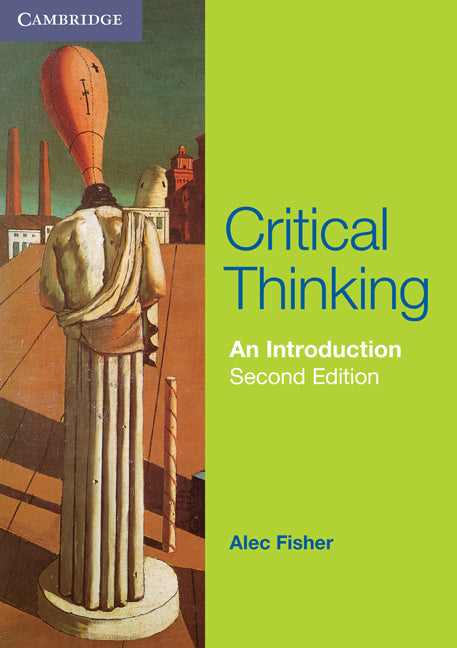
Critical Thinking 
2nd Ed. Cover

Returning to Fisher's excellent book I mentioned an analogy from basket ball in discussion about Richard Paul's definition of critical thinking and 'thinking about your thinking'.
'Critical thinking is that mode of thinking - about any subject, content or problem - in which the thinker improves the quality of his or her thinking by skilfully taking charge of the structures inherent in thinking and imposing intellectual standards upon them. (Paul, Fisher and Nosich,1993, p. 4).' pp.4-5.
Fisher's daughter aged eleven wanted to learn how to play basket ball and attended coaching sessions. At the first the raw recruits were divided into two teams and with simplified rules set to play. Initially, getting the ball and in a position to score: shoot.

After the chaos, the coach had them practice shooting after he demonstrated how they had been playing. He explained and pointed out the basics of technique and 'drew attention to how he held the ball, where he looked, how he stood and so on.' p.5. Acknowledging their efforts, they subsequently moved on to passing, then guarding, or marking - practising each skill. 

This is a great analogy and can be applied to health, social care, medicine, nursing and other novices. Hodges' model is the basket ball, tennis, squash court, football, hockey pitch. You might move to a position to obtain an advantageous point of view. In reflective, critical thinking terms, additional data to support or negate a line of thought.

The axes of Hodges' model, serve as a scaffold to help structure our 'game player', and possibly better co-ordinate a group or team's efforts. The domains of Hodges' model cover the knowledge or subject bases that will relate to any context. Hodges' model is situated. If there is need to consider spiritual matters - experiences, then a conceptual journey ... at least, as befits an individual's or group's beliefs and purpose can be made. So forms if intelligence (emotional, cultural, spiritual ...) can also be factored in, as necessary.
 
Are there relational, logical, even mathematical standards that can be applied (formally, in theory) to our thinking? Does 'subject, content or problem' equate with 'situated'? Another book to pass on.

Fisher, A. (2001) Critical Thinking: An Introduction. Cambridge University Press, Cambridge, England. PB. 


Post: ... 'anyone for tennis'.

Friday, March 20, 2015

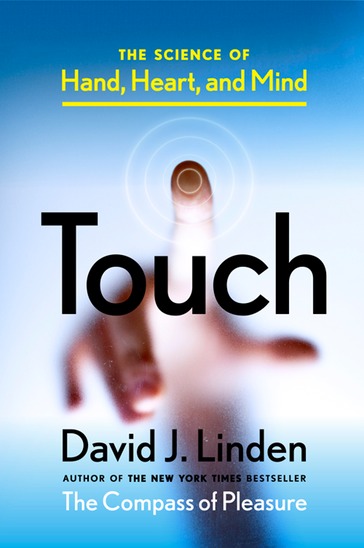
Book: "Touch" - Line of sight, light touch, looking for (care) assurance if not truth

Sometimes things become clearer
- resolved -
when they touch,
even if as lines they cross
and all is rendered more complex...

individual
INTERPERSONAL : SCIENCES
humanistic ------------------------------------------- mechanistic
SOCIOLOGY : POLITICAL
group

Learning of self and other
greetings, friendship, relationships, intimacy
the POLITICS of touch
power


See also:
Reading between the lines...

2011... looking ahead: Line of sight - Lines of insight

Image source:
http://davidlinden.org

Saturday, December 14, 2024

The Science of Conceptual Systems - and Hodges' model

Wallis, S.E. The Science of Conceptual Systems: A Progress Report. Found Sci 21, 579–602 (2016). https://doi.org/10.1007/s10699-015-9425-z

From the conclusion:
'The approaches presented here do not provide a ‘‘map’’ for advancing the sciences. Indeed, none is available because we are advancing across that new terrain. What it does provide is a compass suggesting a new and potentially exciting direction to travel. Historically/traditionally, scholars have travelled about the countryside of the social/behavioral land making useful observations and gathering interesting data. They have often staked claims regarding the importance of their terrain. They could not advance more purposefully because they were guided only by intuition. So, they did not know what direction was ‘‘forward’’ although it seemed to have something to do with empirical analysis. Today, with the creation of a new science, we have a new direction.

When we do have a choice between theoretical maps, generally, and metaphorically, this paper suggests that we should choose to create and use roadmaps with many dots connected by many lines; not maps with few disconnected dots.' p.594.

There is also a glossary [pp.594-599] that includes:
'Integral thinking

Understanding (or attempting to understand) the world from a transdisciplinary perspective where those many perspectives are interrelated'
'Integrative propositional analysis (IPA)

Combined processes of qualitative and quantitative analysis involving rigorous hermeneutic deconstruction of propositions found in formal texts including the rigorous reintegration of propositions from those texts following a structured methodology. Also a process of meta-analysis for investigating conceptual systems to determine the Complexity of conceptual systems (diversity of concepts) and the Systemicity of the conceptual system (connectedness between concepts)'

'Mental model 

A representation within one’s mind about how the world works. Useful for understanding and engaging the world and for making predictions'

'Parsimony 

Generally, the understanding that a theory is better when it is smaller. Or, as small as possible while including ideas that are necessary or useful. Ockham’s Razor is a common example'

INDIVIDUAL
|
INTERPERSONAL : SCIENCES              
humanistic ---------------------------- mechanistic
SOCIOLOGY : POLITICAL   
|
GROUP

more SUBJECTIVE

more OBJECTIVE
QUALITY

QUANTITY


'Reflexive dimensional analysis (RDA) 

A process for creating a unified conceptual system from multiple conceptual systems through a process of categorization, abstraction, dimensionalization, and the identification of causal connections'
'Theory 

An ordered set of assertions. Weick (1989, p. 517. Drawing on Southerland)'
Cited above: 
Weick, K. E. (1989). Theory construction as disciplined imagination. Academy of Management Review, 14(4), 516–531.

Previously:
terrain : landscape : line-of-sight (with overlap; of interest in itself)

Monday, November 04, 2024

Paths, lines, corners, edges and axes . . .

'If a farmer has made a path, he is able to saunter easily up and down it. That is what the path was made for. But the work of making the path was not a process of sauntering easily, but one of marking the ground, digging, fetching loads of gravel, rolling, and draining. He dug and rolled where there was yet no path, so that he might in the end have a path on which he could saunter without any more digging or rolling. Similarly a person who has a theory can, among other things, expound to himself, or the world, the whole theory, or any part of it; he can, so to speak, saunter in prose from any part to any other part of it. But the work of building the theory was a job of making paths where as yet there were none.' 
Gilbert Ryle, The Concept of Mind (1949; Penguin, 1999), p. 272.

path
https://hodges-model.blogspot.com/search?q=path

line (line of sight)
https://hodges-model.blogspot.com/search?q=line

corners
https://hodges-model.blogspot.com/search?q=corners

edges
https://hodges-model.blogspot.com/search?q=edges

axes: STRUCTURE
domains: CONTENT

Frayn, Michael (2006). The human touch: our part in the creation of a universe. Notes. London: Faber & Faber. p.425.

Previously: 'Frayn on maths'

I will keep this book a bit longer - chapter 'Home Address' (the self) a good read.

Sunday, April 18, 2010

Musings in the nursing domain (specific language)

It is one giant leap from the humanistic world of nursing, health and social care to the m(a-e)chismo of information technology. It is no Earth-bound chasm that greets us in considering the vaguest possibility that nursing could ever be captured, distilled and represented in a domain specific language (DSL). Given the full title of Hodges' model my attraction to DSLs should be obvious, but how realistic is this fascination?

Here are some links to definitions / resources on DSLs:

I am not advocating DSLs as a real time clinical software application, there is neither time here, nor on the wards. Since the sky above is clear blue with not a contrail in sight I am indulging in a little blue sky thinking, a reverie...

Nursing already has its concept analysis, but taken at face value this says nothing about domains as per h2cm (other than the context / application is nursing). To avoid confusion with career in the job-work sense, I have emphasized the notion of domains. By this I mean a partition of specific knowledge about a discipline or subject. This disciplinary focus or subject is often the province of expert practitioners. My forte then in Hodges' model are the INTERPERSONAL and SOCIAL care domains. This is my rationale for the musings here, as all experts were learners once upon a time, and are still as lifelong learners. It is an educational application that I have in mind.

I have come across a paper by Reinhartz-Berger, who describes the movement - Towards automatization of domain modeling. The author refers to domains artifacts and domain analysis:
(I have removed the reference numbers and inserted from prev para*)

A domain in this context [Domain engineering, also known as software product line engineering]* can be defined as a set of applications that use common concepts to describe requirements, problems, capabilities, and solutions. Domain artifacts are built and reused through domain analysis, which identifies the domains and captures their ontology to assist and guide system developers with particular applications in those domains. Despite the rapid growth of technologies and technical solutions, domain analysis models usually remain valid longer than domain designs and implementations, potentially justifying the cost and effort required for their development. Domain analysis artifacts may also serve as the basis for defining Domain-Specific Languages (DSL). Reinhartz-Berger (2010), p.491.
As the previous post - Reading the signs... Idealised Care - amongst several revealed, the domains within the health career model are broad to say the least. So broad that from the INDIVIDUAL-GROUP axis the left-hand margin of the INTRAPERSONAL-SOCIOLOGY# care domains are but distant horizons (with no curvature in-sight). It's no surprise that I keep wondering about how to get a grasp on that 'space', for reasons of a website, a potential community of explorers, educational objectives and sheer enthusiasm for trying to mix IT up. Reinhartz-Berger continues:
Several domain analysis methods have been proposed over the years. However, they all can be criticized as making the domain engineer alone responsible for developing correct, complete, and consistent domain analysis artifacts. Since domains may cover broad areas and are usually understood only during the development process, creating domain models can be a very demanding task. It requires expertise in the domain, reaching a very high level of abstraction, and providing flexible, yet formal, artifacts. Reinhartz-Berger (2010), p.491.
Also in the literature Chavarriaga and Macías (2009) highlight two approaches that are the focus more generally to help get a grip and the big wide world of knowledge: The Semantic Web and Web 2.0.:
... However, in spite of its semantic power, one of the main underlying problems with this [semantic] paradigm is the explicit representation and visualization of information, mainly focused on ontologies and the complex relationships that these code. This has made the Semantic Web inaccessible and unmanageable by most designers that are not expert on ontological representations and languages, but on domain specific applications and creative design.
On the contrary, the Web 2.0 paradigm provides a rather pragmatic vision. It is based on the use of wikis, folksonomies and protocols like SOAP, mainly intended to the automatic management of services and the collaborative maintenance of (mainly) syntactic knowledge-based information. Moreover, Web 2.0 can be considered an end-user paradigm. ... Chavarriaga and Macías (2009), p.1329.
The Semantic Web, Web 2.0 will (at some point) figure in the new site. A folksonomy can be quite broad by definition, as there is no strict control on the definition of terms. As to DSLs in Hodges' model, there we have four VERY broad domains. Exactly how domain analysis proceeds and what domain artifacts might emerge from this model would no doubt depend on reducing each of the domains, sub-dividing, being more specific.

If nothing else at present the health career model is a hybrid cognitive domain specific language.

References: (my source: Science Direct)

Iris Reinhartz-Berger (2010) Towards automatization of domain modeling, Data & Knowledge Engineering, Volume 69, Issue 5, May 2010, Pages 491-515. doi:10.1016/j.datak.2010.01.002

Enrique Chavarriaga, José A. Macías (2009) A model-driven approach to building modern Semantic Web-Based User Interfaces, Advances in Engineering Software, Volume 40, Issue 12, December 2009, Pages 1329-1334. doi:10.1016/j.advengsoft.2009.01.016

Friday, September 14, 2007

Bottom line: The parts informatics does not reach

I really must get on board the bus: there are many assumptions that people make, what a nurse does, the role of a social worker and such like. I'd assumed that the private health sector - in this case a provider of residential nursing care would automatically invest in administration and clinical information systems. Silly me.

I don't know if the home I visited is an exception or typical of this particular group, but the staff are not only struggling to provide the best quality care for their residents, they are struggling with paper. Where's the I.T.?

2007 heading fast towards 2008 why I.T.'s in plastic folders, pinned on the office walls, on the office desks, semi-scrunched into pockets.

There is nothing wrong with paper and after all these staff are expert in handling several types.

What I was told, is that when a home (or two) is acquired and there are examples of good practices in documentation these will be adopted by the new parent. That is good; nothing wrong with that, surely this is a key part of what acquisition is all about.

The problem is that amid these additions the whole documentation system is not reviewed and rationalised; so the paper-burden grows literally with the organisation. Conclusions:

  1. There is a records management consultancy opportunity there for someone (race you!).
  2. I did not have to wait to see and discuss my client. There were no clinical information system vendors cueing up to demonstrate their wares. So good news for clinical informatics suppliers: you have of course not yet covered the (w)hole market!
  3. If this particular organisation is successful financially, how much more successful could it be if it embraced clinical and organisational informatics?
  4. Does the Commission for Social Care Inspection (and other regulatory agencies) take informatics capability into account in their assessments? If the benefits of effective informatics are real then they must be represented in inspection reports: shouldn't they?
  5. 'Success' what does this mean in a nursing home? Well, let's try marks out of ten -
  • the bottom line in the Financial Times;
  • the bottom line in the nursing home main office;
  • the bottom line on that top floor with its residents, staff and relatives/visitors.
So, what is the real bottom line?

Out of sight....

Wednesday, September 30, 2020

Is this a Domain or a Door? Rethink: Behaviour Change

When is a domain really a door to insight, understanding and change?


individual
|
INTERPERSONAL : SCIENCES
humanistic ----------------------------------------------- mechanistic
SOCIOLOGY : POLITICAL
|
group - population
Rethink: Behaviour Change - BBC Radio 4

10 children


The  garden is littered with inside doors. 

'Line of sight'

Family Intervention Unit. 
 or
Family 'Interference' Unit 

Mother, ten children
 Several partners

Many people in the community 
know the family, know the house.
Housing:
Eviction notice


Housing have to keep calling to the house to replace the doors as they keep being removed.

The family is known to the schools, social services, the doctors, the police ...


See also:

'Line of sight'

Friday, December 11, 2015

"The Revolving Boy" - and Girls 'one day soon'?

individual
|
INTERPERSONAL : SCIENCES
humanistic --------------------------------------- mechanistic
SOCIOLOGY : POLITICAL
|
group

"Derv soon discovers that he has an extraordinary sense of direction: he is also acutely uncomfortable unless he is able to "unwind" before going to bed each night the number of times he has turned during the day. Some of all this he understands when he learns how he had been born - weightless - in space. But it is not until a friendly teacher gains the family's confidence and takes him to a group of scientists that he begins to fathom the true explanation of his unique capabilities." (sleeve notes, 1967).

space medicine, birth in space,
 radiation sources,
DNA-RNA,
safety, low Earth orbit, high Earth orbit, weightlessness, microgravity, birth,
conception, speculation,
sex in space: apogee-perigee?
Why? Love?
Newton's Laws of Motion?
Einstein: Line of Sight?
"Where there's a will...."
 minerals, growth - development,
bones, diet, mobility,
space-Earth: 'Home'?
Species - Homo ?


Book cover: Friedberg, The Revolving Boy, 1967
human rights, unborn child,
guardianship,
non-nationality: Citizen of the World,
parenthood,
friendship
freedom
choice
Law:
Individual:Group
Earth challenges:
Space & Antarctica Treaties...
'top and tail' - Arctic


Additional links:

Sagan, C. (1973) Communication With Extraterrestrial Intelligence (Ceti). M.I.T. Press.

Vakoch, D.A. (ed.) (2011) Communication with Extraterrestrial Intelligence, New York: NY, State University of New York Press.

Ack. Thanks to my friend Paul Brown who told me about this book c.1973.

Saturday, January 01, 2011

2010-2011 posts, papers, studies and Drupal

Happy New Year everyone!

2010 saw 211 posts, 183 in 2009. As ever a mix of original material concerning h2cm, conferences and call for papers. Fingers x'd 2011 should run to approx 150 posts as I focus on work, studies and Drupal. The good thing for me is that all three of these can run along together and I intend to forge a union if at all possible.

At work my full-time role is clinical - nursing; Nursing Home Liaison. Increasingly we are finding what nurses on the ground have recognized for a long time. With this job comes an educational role, despite efforts to upscale the skills and knowledge of the residential care / nursing home sectors. H2cm is a gift in these quarters, in prompting and facilitating reflection, holistic and person-centred care.

Studies: On this front I'm trying to identify a research question from a bewildering mix of possibilities. Previously I've referred to the relevance and my interest in conceptual spaces:

Hodges' model: Background - Foreground and the Space Between

The socio-tech and conceptual space papers

Next paper? Conceptual Spaces and Hodges' model

Nursing theory - conceptual spaces: Where's my T-shirt?

Gardenfors' book - a quote and can that be, surely not ...h2cm?


That other 2nd-hand book - 'Conceptual Spaces'

This is definitely a worthwhile focus. I'm making enquiries to try to find a mentor. Strange, or maybe not actually, that I am a nurse mentor and sign-off mentor too and here I am coughing and spluttering in need of a mentor myself to help sort the wheat from the chaff. The 10K words on conceptual spaces is now 13K.

The co-authored h2cm and forensic nursing paper is completed with two revisions, but still needs a home.

I missed an opportunity with the h2cm and substance misuse paper. Trying to complete it in the summer of 2009 before my eye surgery I did not stick to the brief. I'm hoping a co-author can take the 5K words and help re-frame the content from a practice and service perspective. It really is refreshing to work with other people. I look forward to providing an update here later in the Winter - Spring.

As to Drupal - I've hit the wall that has "styling" written all over it. It seems if you start with a basic theme like Zen you are rewarded with an easy to negotiate palette, that is - you do it yourself. With more complete themes you need to read and orientate yourself with somebody else's handiwork. This is the next job and then move to Drupal 7 - released on the 5th.

In October I received an invitation to present at an international nursing conference in Colombia. I've submitted a presentation and have offered to do a workshop too. This was accepted. It all depends on travel and confirmation of arrangements so we will have to see.

More to follow on all the above and wherever you are
may I wish you a very happy, healthy, 
peaceful and prosperous 2011!

To follow: Line of sight, lines of insight ...

Thursday, August 05, 2021

The view from Wigan Pier* ...

or, Greetings from WN4.

Camilla Cavendish's focus in the weekend FT is health, social care and related policy. In a recent opinion piece on junk food she writes:

"Which is more Orwellian, I wonder: adding 1p to a bag of crisps, or letting companies go on turning us all into junk food addicts, while the cost of treating diet-related diseases soars? Long before we were engulfed in a torrent of junk, George Orwell wrote in The Road to Wigan Pier: 'The peculiar evil is this, that the less money you have, the less inclined you feel to spend it on wholesome food.' Now, processing techniques have made unhealthy food cheaper than many healthy alternatives."
Several months ago, reading a book review: Doom looped, by Douglas Alexander on Niall Ferguson's Doom: The Politics of Catastrophe, (Life&Arts, 1-2 May, 2021, p.9) the conclusion closes:

"The inherent unpredictability of what lies in wait for us all around the next corner means that, notwithstanding Ferguson's brilliance and breadth of scholarship, this immensely readable book is a better lens than it is a compass."
From the local and national to the international and beyond - we must encompass  planetary health.  Even on a rainy day, the view from Wigan Pier is clear: Hodges' model can provide a compass and a lens.

Cavendish, C. (2021) It is time to stem the tide of junk that reaches British plates, A tax on sugar and salt in food would be a global first and is more necessary than ever. Opinion, FTWeekend, 17-18 July, p.12.

'lens' on W2tQ 

'compass' 

'corner(s)' [ How many corners are there in Hodges' model? How many when you add 'the spiritual'? ]

'line-of-sight'

*You can have your pie and eat it! ;-)

Sunday, July 26, 2026

The Line(s)

Foresight, hindsight, sight itself and that illusory association with the line of time is a fascination for us all. No doubt, as a result of the hardwired analogue found in the lifeline and our ultimate fate. Hodges' model acknowledges all these lines; concrete and abstract. The work and health careers, an individual's education career (where accessible / permitted) now lifelong learning.

Abstract things seem tenuous, indistinct, maybe lost somewhere in theory. Concrete on the other hand, is physical, tangible. 

Hodges' model can cover paper with lines, two of them ideally. The model can then be applied in practice.

There is then an interplay between abstract and concrete; between which data, information and knowledge flows, uncertainty reduced. Scope and scale become clearer once assessment, planning, intervention and evaluation are concurrent.

This applies to all lines, if they are not destined to be covered in sand.

My source:  
End of The Line: how Saudi Arabia’s Neom dream unravelled, FTWeekend: 
https://ig.ft.com/saudi-neom-line/
 
See also: 'design' : 'architecture' : 'line'

Saturday, July 19, 2025

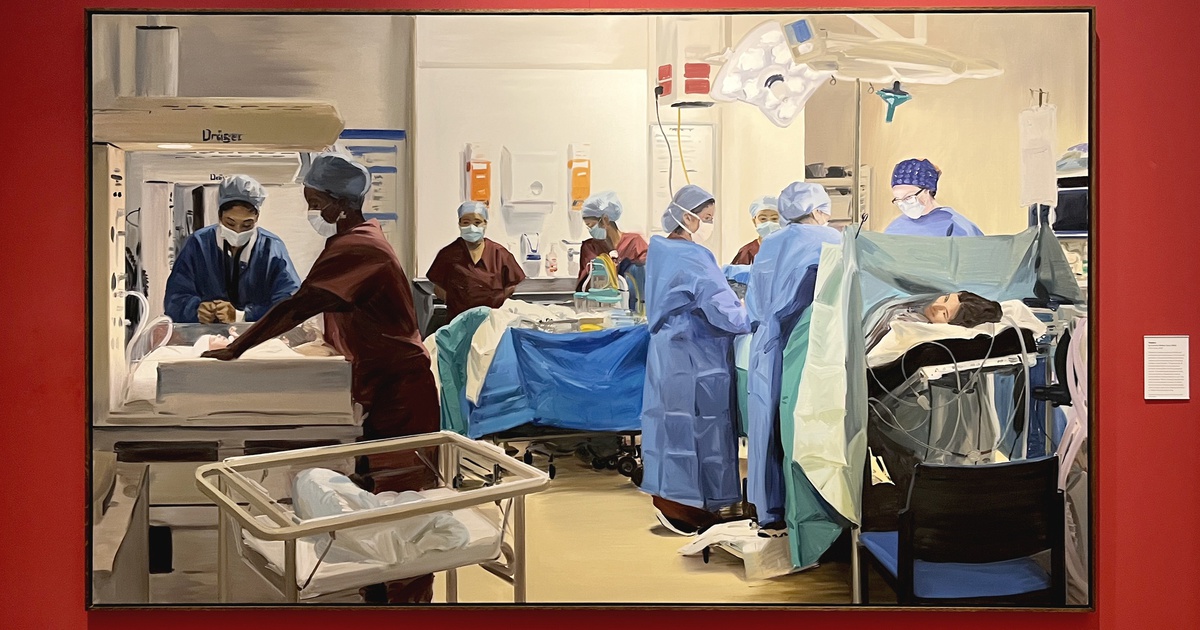
'Theatre' by Caroline Walker

Individual
|
      INTERPERSONAL    :     SCIENCES               
HUMANISTIC  --------------------------------------  MECHANISTIC      
 SOCIOLOGY  :    POLITICAL 
|


Image source: 
https://www.inglebygallery.com/news/7465-caroline-walker-the-scottish-national-portrait-gallery-theatre/

line of sight (seeing is believing) : 'care' : 'community' : 'theatre'

My source:
Harriet Baker, PAINT, FEED & PLAY, FT Weekend, Magazine. July 12 2025.  #1,133, pp.46-52.
https://www.ft.com/content/6e50181b-689e-4cd5-b084-37b311446e94

Great read too. The exhibition moves to Pallant House Gallery, Chichester from November 22nd.