Hodges' Model: Welcome to the QUAD: housing

Hodges' model is a conceptual framework to support reflection and critical thinking. Situated, the model can help integrate all disciplines (academic and professional). Amid news items, are posts that illustrate the scope and application of the model. A bibliography and A4 template are provided in the sidebar. Welcome to the QUAD ...

Showing posts with label housing. Show all posts

Saturday, June 27, 2026

‘Prevention Demonstrator’ - GM Live Well

England’s First Prevention Demonstrator: Opportunities for Greater Manchester and its VCFSE sector

Greater Manchester has been chosen as England’s first Prevention Demonstrator, an initiative announced in the Government’s 10-Year Health Plan earlier this year. It marks a step toward transforming public services with a more ‘preventative’ approach.

The Greater Manchester Combined Authority (GMCA) was named as the first prevention demonstrator in the UK Government’s 10 Year Plan for Health in July. It will take a community-led preventative approach to the provision of public services which means fixing the foundations of a person’s life – such as housing, and access to education and employment opportunities – as a means of preventing ill health from social and economic detriment and improving lives, as well as reducing pressure on acute and crisis services.

The Prevention Demonstrator will be building on the Live Well Model of service delivery, which brings together services such as health, employment support and debt advice at a neighbourhood level working with the voluntary, community, faith and social enterprise (VCFSE) sector, providing a blueprint for the rest of the country.

Warren Heppolette has been appointed to lead this work, seconded from NHS Greater Manchester where he was Chief Officer for Strategy, Innovation and Population Health. Warren has been closely involved in the GMVCFSE Leadership Group’s Commissioning and Investment sub-group which aims to improving standards and practices for the benefit of the VCFSE sector.

Continued ...


Lucy North, Communications and Policy Officer. Published: December 5, 2025


'Sustainability' and 'sufficiency' (as per the previous post) are words of the moment. Policymakers want change to have a permanent quality, which ironically means individuals within a population benefitting from initiatives like this have a mindset that makes them flexible to future changes and challenges.

As Camilla Cavendish notes in 'Andy Burnham will need to play a new card now', Manchester's prevention demonstrator has echoes of David Cameron's Big Society and the Troubled Families project. There are two other words that can work for individuals and populations: impetus and momentum. Within this through Hodges' model we can equip people and communities for lifelong learning. We can also highlight, as Prof. Kevin Fong did at RCN Congress 2026 in his marvellous keynote - that resilience is found between people, not within individuals.
 

See also: Presentation - Prevention, Health and Good Growth: Realising Our Prevention Ambitions

Philip Britteon, Alfariany Fatimah, Stephanie Gillibrand, Yiu-Shing Lau, Laura Anselmi, Paul Wilson, Matt Sutton, Alex J. Turner, (2024) The impact of devolution on local health systems: Evidence from Greater Manchester, England, Social Science & Medicine, Volume 348, 116801,
ISSN 0277-9536, https://doi.org/10.1016/j.socscimed.2024.116801.

My source: Camilla Cavendish, Opinion: Andy Burnham will need to play a new card now, FTWeekend, 20-21 June, 2024. p.12.

Previously: 'prevention' : 'big society' : 'troubled families' : 'social prescribing'
Friday, February 13, 2026

{ Humanise } ARChITECTURE

INDIVIDUAL
|
    INTERPERSONAL    :     SCIENCES               
HUMANISTIC --------------------------------------  MECHANISTIC      
SOCIOLOGY  :   POLITICAL 
|
GROUP


ARChITECTURE


Humanise.org


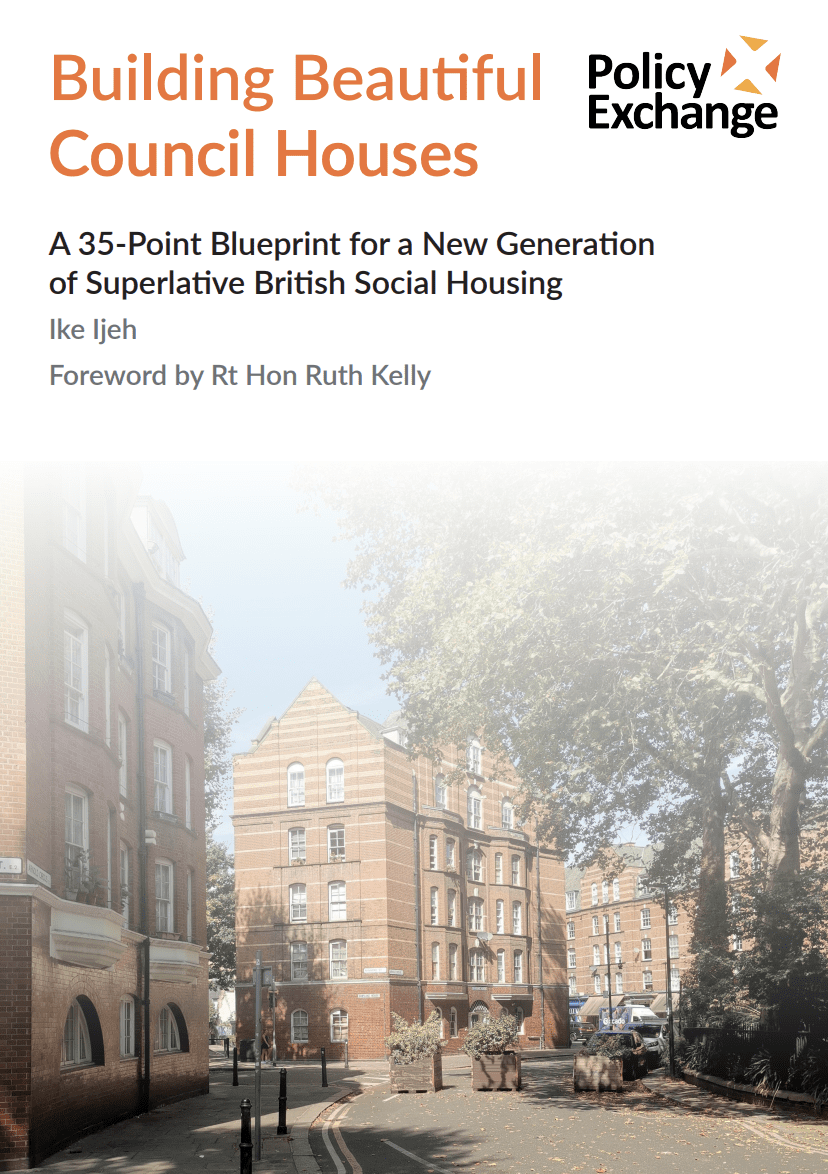
My source: Francesca Specter, Which is the fairest of them all? House&Home, FTWeekend, 11-12 October, 2025. pp.1-2.  

Spector refers to the Policy Exchange publication above, and other works:

McAdams P, Svobodova S, Newman T-J, Terry K, Mather G, Skelton AE, et al. (2025) The edge orientation entropy of natural scenes is associated with infant visual preferences and adult aesthetic judgements. PLoS ONE 20(2): e0316555. https://doi.org/10.1371/journal.pone.0316555

Valentine, C.; Wilkins, A.J.; Mitcheltree, H.; Penacchio, O.; Beckles, B.; Hosking, I. Visual Discomfort in the Built Environment: Leveraging Generative AI and Computational Analysis to Evaluate Predicted Visual Stress in Architectural Façades. Buildings 2025, 15, 2208.
https://doi.org/10.3390/buildings15132208

Calder, B. (2016). Raw Concrete: The Beauty of Brutalism. London: William Heinemann. 

Previously: 'housing' : 'homeless' : 'architecture'

Monday, January 05, 2026

Primary & Secondary Health Care - How long...?

THE DAWSON REPORT

MINISTRY OF HEALTH.

CONSULTATIVE COUNCIL ON MEDICAL AND ALLIED SERVICES.

Presented to Parliament by Command of His Majesty. [... selected extracts]

3. The general availability of medical services can only be effected by new and extended organisation, distributed according to the needs of the community. This organisation is needed on grounds of efficiency and cost, and is necessary alike in the interest of the public and of the medical profession. Measures for dealing with health and disease become, with increasing knowledge, more complex, and, therefore, less within the power of the individual to provide, but rather require combined efforts. Such combined efforts to yield the best results must be located in the same institution. As complexity and cost of treatment increase, the number of people who can afford to pay for a full range of service diminishes. Moreover, enlightened public opinion is appreciating the fact that the home does not always offer the best hygienic conditions for dealing with serious illness, which requires special provision in order to give the patient a full chance of recovery.

4. In days gone by such conditions as appendicitis were treated with poultices and drugs in the patient’s home. Now they are treated by operation, which is more effective, but requires more equipment, a team of workers, and a larger expenditure. Such conditions as diseases of the lungs formerly received clinical examination and treatment by drugs. They now may require, in addition, the attention of the pathologist and the radiologist. This means greater efficiency, but more organisation and higher cost.

5. Preventive and curative medicine cannot be separated on any sound principle, and in any scheme of medical services must be brought together in close co-ordination. They must likewise be both brought within the sphere of the general practitioner, whose duties should embrace the work of communal as well as individual medicine. It appears that the present trend of the public health service towards the inclusion of certain special branches of curative work is tending to deprive both the medical student and the practitioner of the experience they need in these directions.

6. Any scheme of services must be available for all classes of the community, under conditions to be hereafter determined. In using the word “available,” we do not mean that the services are to be free; we exclude for the moment the question how they are to be paid for. Any scheme must further be such that it can grow and expand, and be adapted to varying local conditions. It must be capable of comprising all those medical services necessary to the health of the people.

7. The foregoing are some of the considerations which have guided us in drawing up the scheme outlined below.

The services maybe classified into-

Those which are Domiciliary as distinct from those which are Institutional.

Those which are Individual as distinct from those which are Communal.

1. We begin with the home, and the services, preventive and curative, which revolve round it, viz., those of the doctor, dentist, pharmacist, nurse, midwife, and health visitor. These we style domiciliary services, and they constitute the periphery of the scheme, the remainder of which is mainly institutional in character. A Health Centre is an institution wherein are brought together various medical services, preventive and curative, so as to form one organisation. Health Centres may be either Primary or Secondary, the former denoting a more simple, and the latter a more specialised service.

2. The domiciliary services of a given district would be based on a Primary Health Centre -an institution equipped for services of curative and preventive medicine to be conducted by the general practitioners of that district, in conjunction with an efficient nursing service and with the aid of visiting consultants and specialists. Primary Health Centres would vary in their size and complexity according to local needs, and as to their situation in town or country, but they would for the most part be staffed by the general practitioners of their district, the patients retaining the services of their own doctors.

3. A group of Primary Health Centres should in turn be based on a. Secondary Health Centre. Here cases of difficulty, or cases requiring special treatment, would be referred from Primary Centres, whether the latter were situated in the town itself or in the country round. The equipment of the Secondary Centres would be more extensive, and the medical personnel more specialised. Patients entering a Secondary Health Centre would pass from the hands of their own doctors under the care of the medical staff of that centre. Whereas a Primary Health Centre would be mainly staffed by general practitioners, a Secondary Health Centre would be mainly staffed by consultants and specialists. It would be a consultant service in function and would be carried out by specialists or by general practitioners acting in a consulting capacity.

4. Secondary Health Centres must of necessity be situated in towns, where alone an efficient consultant service and adequate equipment could be expected, and the necessary means of communication exist. The selection of these towns will need careful consideration, and full information will be required as to the extent of existing provision of hospital and allied facilities, and of its distribution in relation to population and means of public conveyance. In rural areas the natural currents of traffic and business and existing medical facilities will usually indicate the town or towns in which a Secondary Health Centre may best be placed. In this connection we would like to point out the importance of carrying out a “Hospital Survey” at an early date. The results of this survey would afford data for recognising the areas in which the existing provision is inadequate, and the degree of the inadequacy. The Secondary Health Centres would vary in size and elaboration according to circumstances.

5. Secondary Health Centres should in turn be brought into relation with a Teaching Hospital having a Medical School. This is desirable, first in the interest of the individual patient, that in difficult cases he may have the advantages of the highest skill available, and secondly in the interest of the medical men attached to the Primary and Secondary Centres, that they may have the opportunity to follow the later stages of an illness in which they have been concerned at the beginning, to make themselves acquainted with the treatment adopted, and to appreciate the needs of a patient after his return to his home. In those towns where Teaching Hospitals exist, Secondary Health Centres would sometimes be merged in them. 

Continued at: 

https://sochealth.co.uk/national-health-service/healthcare-generally/history-of-healthcare/interim-report-on-the-future-provision-of-medical-and-allied-services-1920-lord-dawson-of-penn/

LONDON PUBLISHED BY HIS MAJESTY'S STATIONERY OFFlCE

1920. Price 2s. Net. Cmd. 693

See also:
https://www.adph.org.uk/resources/175th-anniversary-timeline/ 

My emphasis.

Wednesday, October 22, 2025

Single, dual aspect in architecture. What of care?

'The challenge of overheating in Britain is our buildings are built to retain heat in our temperate climate. Energy efficiency regulations for new dwellings now require high insulation and few drafts to reduce the need for heating in winter, but broadly make it harder to cool homes in summer. Residents of cities are particularly vulnerable to overheating due to urban heat island effects.

There are two ways buildings can be cooled – mechanical methods (primarily air conditioning) and passive cooling methods that use the design of the building to limit heat gain and retain cooler air inside the dwelling.

Passive cooling is much easier in dual-aspect dwellings with windows on multiple external facades, which as shown in Figure 1, are contrasted to single-aspect flats that face out on to only one external facade. Dual aspect allows breezes to blow through dwellings and easily exchange stuffy indoors air for cooler air from the outdoors. Even if outside temperatures are high, cross-ventilation or overnight air exchange and limits to solar gain (daylight indoors) can keep indoor environments cooler than the outdoors.'

https://www.centreforcities.org/reader/breaking-the-bottlenecks/overheating-and-dual-aspect/


individual
|
INTERPERSONAL : SCIENCES
humanistic -------------------------------------------  mechanistic
SOCIOLOGY : POLITICAL
|
group-population
In Hodges' model at least, we seem to have dual aspect covered. 

That's why we say the model is situated.


Image source: https://www.centreforcities.org/reader/breaking-the-bottlenecks/overheating-and-dual-aspect/

My source:  Plimmer, G., Pickard, J., Steinberg, J., London planning rules face tweak in bid to build more homes. FTWeekend. 18/19 October 2025, p.2.

Previously on W2tQ: 'architecture' : 'situated' : 'housing'

Friday, October 03, 2025

'National Care Service' - Casey Commission

'Casey Commission tasked with producing plan for ‘national care service’ by 2026

Government remit also asks independent commission to consider services for older people and disabled adults separately and to ensure recommendations stick to government spending settlement

By Mithran Samuel on May 2, 2025 in Adults, Social work leaders

The Casey Commission has been tasked with producing a plan next year for delivering a “national care service” over the course of a decade.

The 2026 report will be followed by a further report, due by 2028, setting out longer-term recommendations for the sector, according to the Department of Health and Social Care’s (DHSC) terms of reference for the commission, published today.

The Independent Commission into Adult Social Care, headed by crossbench peer and renowned government troubleshooter Baroness (Louise) Casey, started its work this week.

The plan to set up the commission sparked criticism from social care organisations, after it was announced in January, due to its three-year timeframe being seen as far too long to develop a plan for a sector under under severe immediate pressures and facing significant future challenges.' 
continued...
https://www.communitycare.co.uk/2025/05/02/casey-commission-tasked-with-producing-plan-for-national-care-service-by-2026/

The Casey Commission


... so many people ...

Individual
|
      INTERPERSONAL    :     SCIENCES               
HUMANISTIC  --------------------------------------  MECHANISTIC      
 SOCIOLOGY  :    POLITICAL 
|
Group


 ... watching this space.


My prompt: Letters to the Editor, The Sunday Times. 12th January 20025. p.22.

https://www.thetimes.com/comment/letters-to-editor/article/sunday-times-letters-labours-national-care-service-proposal-ghx22kzt2

Tuesday, July 29, 2025

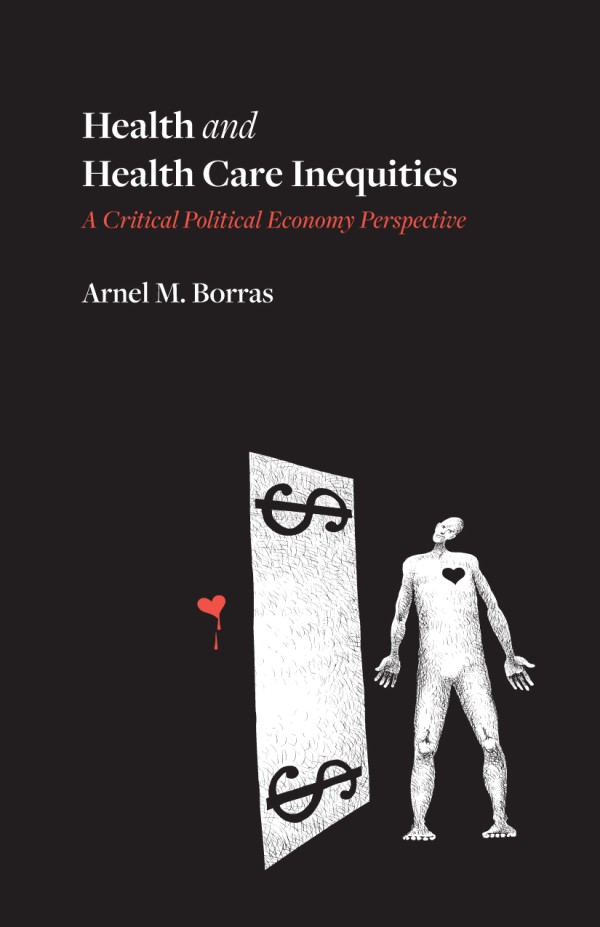
Book: iii 'Health and Health Care Inequities'


This book, or similar should be read by 3rd year student nurses and other healthcare learners. I wondered if, for students, a brief glossary might be useful. But key terms are explained and clearly, with typologies numbered and expanded when needed. There seems an aversion in nursing academia to avoid the acutely 'political'. Even though of course in psychiatry, the need for considersation of human rights, consent, capacity, law, personal and public safety, risk is inevitable. Should we only learn of the politics of our role on a post-registration/license course of learning? As mentioned in post i, Borras duly notes the asymmetric impact COVID. The disproportinate deaths of frontline healthcare workers from ethnic minority groups (UK). A sign of the impact, is reflected in COVID recurring through the text.

The device of using axes, e.g. Class-Gender-Health (p.11) rightly draws in commentary on nutrition, pay gaps - heterosexual white men, terms of employment, and design and occupational health for woman. Gender politics is also reflected in the text. The relational dimensions of this discussion also stands out. The Class-Race-Health axis (had me return to the question of parity, but beyond the mental - physical divide. 

These axes employed by Borras seemingly traverse a path and are extensible (across pages). Briefly, in Hodges' model the domains and axes act as stepping stones: 

We can ‘walk’ the model:

Humanistic INTERPERSONAL Individual SCIENCES Mechanistic: adding - Humanistic SOCIOLOGY Group POLITICAL Mechanistic 

A global perspective is matained, even though the focus is Canadian health, government, policy and policy. The press have often highlighted the global nature of the housing crisis. Canada is not immune; as discussed in chapter 2. For what is in many nations a 'housing disaster', Borras covers the history too. Reflecting on: 
'Around the world, neoliberal programs have resulted in over a billion people living in slums (Davis 2017, 23). In wealthier countries, there was rampant privatization of social housing units.' p.25. 
- you feel like a nodding dog toy. Where is the leadership, the strategy and integrity to provide housing for all? Arnel also stresses the link between mental health status and housing. The SDGs place emphasis on security (yes, at the level of what is happening in Ukraine, Gaza, South Sudan...), then housing follows. And with climate refugees to follow ...! I have seen gentrification, and listened to an account in 2007 as Manchester started to experience high-rise growth. I used to try to walk to community visits with students when possible. Observational skills come in many forms, safety still depends upon them. With no place to call home, safety and security is a stark issue for people. A foundation for health, wellbeing and ironically productivity. The rise of foodbanks is also damning. 

Gambling is not indexed, but there appears a denial in the UK government, with other nations 'folding' to the influence of lobbying and corporate influence reducing or removing restrictions in gambling and crucially: advertising. What's the denial you say? Yes, well governments seem to be in denial that there are vulnerable groups in their respective populations. It is laudable that they bestow upon the citizenry the freedom of choice, but that can spell trouble.

If Canada - Ontario has its housing scandal:
'Housing insecurity and homelessness occur because the state and its goencies support real estate and banking corporations that continuously increase housing prices. This setup is a huge problem because these enti- ties focus on generating profit and capital accumulation. The Greenbelt Scandal in Ontario revealed how the government made decisions that served the interests of big companies instead of the public (McGrath 2023; Office of the Auditor General of Ontario 2023). This scandal is an example of neoliberalism and a corrupt style of governance (Moscrop 2023). We need to stop using neoliberal strategies and focus on socialized housing.' p.27.

So does the UK: Grenfell Tower Inquiry No doubt, other nations have their tragic examples. It seems 'international Standards', quality, integrity can never be taken for quality. They too are precarious, vulnerable. Borras's work in chapter 2 on housing security, and differenciation of core housing need is laudable, informative and welcome. Re-reading Arnel's point: 'There is no doubt that housing insecurity affects health'. p.28. His book as a whole makes the point that of course more evidence will always be needed. In healthcare for decades the basics of public health have been identified, studied, established, placed in models and frameworks. Yet we find we are found wanting (UK - Awaab's Law) dragged back to the first steps; and despite the urgent issues we now face.

"Universal health care" is not exactly new:

The Canadian Association of Social Workers. (1961). The Social Worker, Volume 29, Numbers 1 to 2. 29(1to2), 1to78. The Canadian Association of Social Workers. The Social Worker - Le travailleur social. Canadian Association of Social Workers. https://jstor.org/stable/community.39672572.

Borras is correct to write of 'The Continuing Private War against Universal Health Care' (p.36). Looking at NGRAM it appears the private sector has been winning in recent decades. Working previously as a community mental health nurse for older adults, chapter 3 explores Canada's health care systems. Table 3.1 compares the ownership of long-term care homes in figures. The discussion deals with the quality of care and variation. Policy intentions, plans, research and what follows in practice is also debated. Is there any comfort  in learning that Canada is not alone in being skilled at kicking-can-down-the-road. To be fair many developed nations face the same demographic cliff (whichever way you it!), just one of the urgent issues noted above. The contribution of informal carers is also highlighted.

Here in the UK the commissioner - provider split and models of care at the finance level are a maze: amazing in their bureaucracy. Borras does a marvellous job, in providing enough detail without weighing the narrative flow, and losing the reader. The close of chapter 3 offers hope that Hodges' model will continue to be found:
'Therefore, shifting away from neoliberalism toward a new societal system where health care is seen as a fundamental human need and a universal right, not a profit-driven commodity, is crucial. This alternative system requires a new societal framework built on solidarity, fairness, and humanity, prioritizing health over financial and personal gain.' p.50.
See also: Post i : Post ii : Post iv : Post v (to follow)

Arnel M. Borras. (2025) Health and Health Care Inequities - A Critical Political Economy Perspective. Fernwood Publishing.

In addition:

Messing, K., & de Grosbois, S. (2001). Women Workers Confront One-Eyed Science: Building Alliances to Improve Women’s Occupational Health. Women & Health, 33(1–2), 125–141. https://doi.org/10.1300/J013v33n01_08  (Borras - pp.11-12).

https://nhsrho.org/news/tender-maternal-and-neonatal-image-library/

Sunday, May 04, 2025

NHS & Politics: You don't have to do 'The Hokey Cokey'

c/o Lunch with the FT - Amanda Pritchard
Life&Arts :: FTWeekend


individual
|
INTERPERSONAL : SCIENCES
humanistic ------------------------------- mechanistic
SOCIOLOGY : POLITICAL
|
group
'Another question that she says will become increasingly pressing is what "the core business" of the health service should be at a time when parts of the state and voluntary sectors have been squeezed, leaving the NHS to pick up the slack. GPs tell her that between one in four and one in five of their patients come to them for help with non-health problems.

A colleague in a mental health service recently told her it employs a housing team to support patients who couldn't otherwise be discharged from hospital. "You wouldn't say the core business of the health service is as a housing provider, but that's where we've ended up."'

She adds: "Think about how long it takes to train a doctor - you can't change your mind every five minutes. . . Think about what it requires to put new [digital] systems in place. It's not buying the tech - that's the easy bit. It's the implementation . . . and some consistency of leadership is really helpful."

'The NHS contributes between 10 and 
20 per cent to people's health, she says - a figure I find startlingly low. "The rest is what we would recognise as the wider [social] determinants, including housing, and meaningful employment, but also smoking, diet, alcohol and lack of exercise. "I know there's an anxiety sometimes about being too nanny stateish about this . . But it is going to take really bold action to set the conditions for people to then live healthier lives."'


'The abolition of NHS England marks the end of an attempt to take the politics out of the health service by placing its day-to-day running in the hands of an arm's-length body. But Pritchard suggests that if this was the intent, it was probably never realistic. "It's too important to the country [and] we spend too much public money for ... the politics not to be part of it."'


My source:
Sarah Neville, Lunch with the FT Amanda Pritchard, Life&Arts, FTWeekend, 26-27 April, 2025, p.3.

Previously: 'Nye' : 'SOCIO-technical' : 'housing'

Thursday, December 05, 2024

iii 'Our Housing Disaster'

'Our Housing Disaster'
Image: Goodreads

Here on W2tQ many posts have referred to 'common sense' over the years. Apparently, there is no such thing - which may be another blog post).

https://www.psychologytoday.com/gb/blog/too-many-goals/202005/theres-no-such-thing-common-sense

In 'Our Housing Disaster' Julian Richer is simultaneously analytic in identifying problems and potential solutions, logical and to me commonsensical. There is a need for debate and decisions at a political level. Residents, must also be involved, have a say. Chapter 10 lists shorter-term actions and longer-term. 

The history of this disaster is tackled in chapter 3. Chapter 4 links very well explaining the rise of renting. If there was ever to be another edition - which the book and issue well-deserve; it would be good to a nod to evidence-based housing policy? This is suggested, as is integrating the many threads of housing; work, transport, infrastructure, shops, water and services. I've posted here about the number of All-Party Parliamentary Groups and talk of joined-up government. Housing is anything but joined-up. You could argue all MPs and Lords should read this book. 

Overall, the book is well produced, the text very readable, large size and well laid out. The 'references' for each chapter are in the form of links. Needless to say, I have only tried a few. The book seems smaller - narrower than a standard paperback, so may have fewer words / line. For posts i & ii, I extracted text from photos, which is a challenge without stressing the book's spine (as I've written before no doubt, I'm squeamish when it comes to books).

In the UK, the Right to Buy and Help to Buy, have long been a feature of housing policy. Of Help To Buy, it has 'cost taxpayers £29 billion in cash terms by 2023' (p.45) and has additional consequences. Milton Keynes is the 'right-to-buy-to-let' capital of England (2017, p.48). Surely, it is time to move on -  and quickly. The history of how we got here is fascinating, like a slow car-crash with critical events that accelerated the inevitable. Taxpayers and citizens all: we have missed out. There is mention of preventing corruption (but yes, more effort on money-laundering and tax evasion please!). The need for buildings inspection, standards of construction and materials and responding to the climate crisis and high energy costs are also stressed.

Richer's stance is tempered, and sets an effective tone. He is not preaching, even as he points to land owned by the Church of England. I remember the NHS selling estate, and yet there is more. While the book is not long, an index would help. I like the final summarising and concluding sentences for each chapter. Physically, they are bound to be there obviously, but there's a welcome sensible thread to these imho. With an index, perhaps I could check back to look up 'productivity, reduced', a problem that has plagued the UK economy. To what extent does housing contribute to this now; since the 1960s? The King's Fund and many other organisations and commentators advocate daily for social care. While it is acknowledged, social care is not one of the government's 5 key 'missions', and now (5th Dec.) there are milestones. Richer refers to the problem of bed-blocking in the NHS, and the need for suitable future housing so older adults can continue to 'live' in their homes.

So often in health we are taught, and learn to assess, plan, intervene, and evaluate a person-centred set of needs, a patient's needs, and a carer's needs. It is welcome to see a collective - population-based focus on needs. The book delivers on the title. So there are no details of nations (or cities) that have a  much better housing system and controls. Over the years it's been interesting and encouraging to read about Vienna in the FT. Below I have mapped/associated selected concepts to the care / knowledge domains of Hodges' model:

INDIVIDUAL
|
INTERPERSONAL : SCIENCES              
humanistic ------------------------------- mechanistic
SOCIOLOGY : POLITICAL   
|
GROUP
psychological security
mental health
'my' home, my space
identity
peace of mind when costs met
facilitate well-being
memories
LAND - the 'hope' value
sense of continuity / permanence
children being safe making friends
access to 'GREEN' spaces
my life course - personal history
Cognitive assurance: my area -
family & friends / pets /school / work -
attachment

LAND - UK geography
physical shelter
physical health (NO damp, mould, noise...)
House building targets/programmes
my space/room
having an address - identity
displacement
public/environment health
eviction
house building - infrastructure
land - costs
transport links
bed-blocking in hospitals
Climate Change

place to make a home
raise a family
belonging
sense of community
friends & neighbours
 anti-social behaviour by tenants
social care - older adults
social care disabled
access to work, schools
resources to service a community
lack of spare capacity to support people & families in need/crisis

the economy: interest/mortgage rates
indebtedness - poverty
housing POLICY :: COSTS
national housing & land assets
inspection and building standards
forms of tenure: private, rented, housing assoc.
LAW - housing & land legislation
housing rights
migration, refugees
independent advocacy / NGOs
compulsory purchase


Thank you Mr Richer for an excellent read and synopsis. I do hope the government listens! My daughter's partner works in estate agency, so I know where my copy is heading: a new home!


Wednesday, December 04, 2024

'Our Housing Disaster' ii

'Our Housing Disaster'
Image: Goodreads

Late to reading about economics, apart from the 'quality press' and an 'O' level in social history (which has actually been really useful in my nursing career), this book can ground and crystallize 'housing' as heard and viewed in the news.

I've a love for hi-fi that I share with Julian Richer, but my wealth lies elsewhere and is decidedly non-monetary. Reading his column in The Sunday Times, I'm impressed with Mr Richer's insight and the extent of his philanthropy. The book notes several initiatives and collaborations, e.g. TaxWatch -https://www.taxwatchuk.org/

On the news you hear of 'intervention' in the market - usually equity or bonds. You - the government - can intervene, or let the market, a market by implication, look after itself. Markets find their own equilibrium, shift to stability ultimately; and this despite economic crises, billion-busting scandals and political parties totally screwing-up.

So, it appears governments have allowed the housing market, to make its own moves.

It's back to the future, the 18th century of laissez-faire: the market has spoken, and its a utter mess.

The book's contents are well structured and delivered in full.
Introduction
1 Disaster? What Housing Disaster?
2 A Housing Crisis That Harms
3 Where Did Housing Go Wrong?
4 The Rise of Renting
5 The Shrinking of Social Housing
6 Underregulated and Oversubscribed
7 Land and Planning: The Price of Permission
8 Making Better Use of Buildings and Land
9 Building a Solution
10 Time for Action - My Housing Manifesto
Conclusion

OHD covers the population as a whole, but 'health' is very well represented in terms of personnel and the impacts of lack of housing and poor quality, unregulated housing: 

'Inability to afford housing is one of the grievances feeding into strikes by public sector workers - even better-paid ones. A survey by the British Medical Association (BMA) in December 2022 found that nearly half (45.3%) of junior doctors had struggled to afford their rent or mortgage in the past year. To earn more, some were taking on extra shifts and the BMA said this added to its concerns around junior doctor exhaustion and burnout. 

The consequences reach out to the public at large, as housing problems hit staff recruitment in health services, education and so on. The NHS visibly cant cope: basic structures are crumbling.' p.25.
We can imagine the anxiety and depression this might provoke. Even for people you might think (assume) would be ordinarily resilient. These are clearly extraordinary times. An email - RCN Magazine - today supports the same conclusion:


The relationship between health and housing is not limited to chapter 2. In chapter 2 though damp and mould (yes a specific case), unsanitary conditions the loss of environment health officers and skilled personnel, reminded me of decades ago an article in HSJ, or in that 'quality press' about the community health councils - CHCs having their teeth extracted. Public (MENTAL) health has taken a stunning fall and desperately needs to be put back together.

More to follow...

Tuesday, December 03, 2024

'Our Housing Disaster'

Our Housing Disaster

I must finish the spring and summer's reading as pictured, with another two books in the wings. While the smallest text Our Housing Disaster is cheap to buy, an important read and insightful.

Politically, in the UK and many other nations, housing and its opposite -  homelessness, and the supply and cost of housing are ongoing issues.

Julian Richer's book is low cost £4.99 post free with a promo-code; even as I obtained a free copy, learning of the book in Business section of The Sunday Times. 


Our Housing Disaster gets off to a flying start:

'Falling or stagnant house prices are seen as national 'ill' that we must recover from but, in fact, fast-rising house prices and interest rates have proved to be the real ill, destroying the dream of a property-owning democracy that was supposed to benefit all.

Britain's housing policy, such as it is, has failed on its own terms.' p.9.

I remember when Grand Designs appeared on our TVs. Especially the episode with the wood-frame eco-house by Ben Law. This seemed sustainable and time-limited too. Julian Richer really nails the housing problem without delay. Unfortunately, the audience appeal of TV programmes like Grand Designs, Location, ... seem to me symptomatic of the issue Richer raises above. I used to think that the 'middle class' were shooting themselves in the foot; as house prices rose and rose. There was a collapse at one point with the trap of negative equity that my family almost got caught in (had we bought a new home). Richer corrects this view, with a national perspective across ten chapters and 180 pages.

 If the link between health and housing needs to amplified Richer ably achieves this, and quickly:

'Poor housing is harming the nation's health. The housing ombudsman, Richard Blakeway, whose office deals with complaints from social housing tenants about disrepair and mould and damp in their homes, problems recognised now to be a threat to health, has found the situation to be so bad that he has called for a Royal Commission to look at the links between housing, health, and welfare. Too often, the various agencies in housing, health and social care tend not to link up, or even know what the others are doing. which can end up making people's housing situation worse. Someone who has been homeless or who has mental health needs, for example, can require a lot of support once they are housed so that they can pay the rent and maintain the tenancy. If they just get housed and then left to cope on their own, they can struggle, lose the tenancy, become homeless and whole cycle starts again, with all that waste of money and damage to lives.' p.16.
'In addition to the 8m, there must be millions more who are not in crisis, but who have a blight on their future: typically, young, working people, perhaps with children, who are living in private rented accommodation, with a roof over their heads but always worrying they might be evicted. The insecurity and uncertainty that they experience is not good for them or their children. Just as job insecurity makes it hard for people to build a career, housing insecurity makes it hard for people to establish a life.' p.19.
The statistics flow thick and fast but as readable as they are focussed they weave an effective narrative referring to the history of just how we got to this point. The text make stark the dire crisis and need for action and an urgent government response. 

More to follow.

Saturday, May 11, 2024

Summer reading and books for review

I look forward to reading and reviewing these books. Many thanks to:

  • Tom Griffiths - Julian Richer's office
  • CUP
  • Springer Nature Customer Service

Julian Richer (Author), Kate Miller (Editor) (2024) Our Housing Disaster: - and what we can do about it. London: Richer Publishing and Media. 
https://www.richersounds.com/our-housing-disaster.html

Joaquim Braga & Mário Santiago de Carvalho (eds.) (2021) Philosophy of Care - New Approaches to Vulnerability, Otherness and Therapy. Cham: Springer Verlag.
https://link.springer.com/book/10.1007/978-3-030-75478-5

I will advise on how / whether informs my online presentation this coming week at:


Fritjof Capra, Pier Luigi Luisi (2014) The Systems View of Life - A Unifying Vision. Cambridge: Cambridge University Press. 
https://www.cambridge.org/gb/universitypress/subjects/life-sciences/genomics-bioinformatics-and-systems-biology/systems-view-life-unifying-vision?format=HB&isbn=9781107011366 

All three could have a role to play?

Tuesday, April 02, 2024

Ukraine we see you - RD4U

"The Register of Damage Caused by the Aggression of the Russian Federation against Ukraine (RD4U) is proud to announce a major milestone in its mission to address the consequences of the war and bring justice and reparations to Ukraine and its people. On 2 April 2024, RD4U will officially open the claims submission process for compensation of damage, loss or injury caused by Russian aggression against Ukraine.

The historic launch will take place in The Hague as part of the Ministerial Conference "Restoring Justice for Ukraine", in the presence of the Secretary General of the Council of Europe, Marija Pejčinović Burić, heads of international organisations, ministers and senior officials from more than 60 states, underlining the global support for Ukraine's quest for justice and reparation.

The RD4U Board decided to open the Register for the submission of claims, evidence and related information after confirming that the formal and technical framework is in place. This step follows the approval by the Conference of Participants of RD4U of the rules and regulations of the Register, including the rules for the submission, processing and recording of claims and the list of categories of claims eligible for inclusion in the Register.

“Our decision to start the process of submission of claims is an important first step in this process. Success moving forward will require continued support from all stakeholders. The Register of Damage for Ukraine will continue its work with dedication and resolve to deliver justice to the Ukrainian people in conformity with its mandate”, said the Chair of the Board, Robert Spano.  

The initial launch on 2 April will focus on one critical category, namely damage or  destruction of residential property. The destruction of homes in war has an immense impact on people's lives. Between 300,000 and 600,000 claims are expected in this category. The claim form for submission of this category of claims has also been approved." . . .

Continued . . .


Individual
|
      INTERPERSONAL    :     SCIENCES               
HUMANISTIC  --------------------------------------  MECHANISTIC      
 SOCIOLOGY  :    POLITICAL 
|
Group

Loss of belongings

Trauma

Stress - Anxiety

Injury - deaths

Damage / Loss of homes / Infrastructure

Displacement 
Loss of family members

Livelihood

Education

Loss of whole communities


Palestine!: Your turn next? 

Israel - Palestine: utter despair personified.

Previously:
From - https://hodges-model.blogspot.com/search?q=ukraine

My source: 
BBC World Service, World Business Report. 2 April 2024
https://www.bbc.co.uk/programmes/w3ct606r

Tuesday, January 30, 2024

"Maslow's hierarchy of needs hides housing horror" c/o Gary Backler in FTWeekend

"John Burn-Murdoch sets out graphically the intergenerational horror story of housing in Britain since 1980 (Opinion, January 13). ...
Abraham Maslow, the American psychologist, placed the need for "shelter" at the very bottom of his famous hierarchy of needs. 
We used to know this. I have a photo of my newly married parents' first rentbook for the council house into which they moved in 1953. It is clear on the cover that after the "accountant to the council", the next most responsible officer is the "medical officer of health". ...
Individual
   |
      INTERPERSONAL    :     SCIENCES               
HUMANISTIC  --------------------------------------  MECHANISTIC      
 SOCIOLOGY  :   POLITICAL 
|
Group

mental health

emotional needs

physical health

shelter/physical security

social needs - belonging

social care

society
Rentbook for council house in 1953 © Gary Backler


Backler, Gary, Maslow's hierarchy of needs hides housing horror, Letters. FT Weekend, 20-21 January 2024, p.8.
Ack. Financial Times. https://www.ft.com/content/3b8719f6-d8e9-4997-b9b5-7dd7ba96fc08

Previously: Maslow.

Sunday, December 10, 2023

Tower blocks: Challenge young and older - Courtesy the Artist © Stephen Willats (Revisited)

LIVING WITH PRACTICAL REALITIES, 1978

"Stephen Willats aimed to explore the realities of living in a British tower block. The work centres on Mrs Moran, an elderly woman who lived at Skeffington Court in Hayes, West London. Willats photographed and interviewed Mrs Moran over the course of six months. The text in the work is based on these interviews. In his composition, Willats highlights the physical, social and economic constraints that she faced. Each panel also features a question. These invite the viewer to participate directly in Mrs Moran’s lived experiences."

Gallery label, September 2023


Tower blocks are an integral, defining structure in urban and city life. Governance, effective policy, accountability, high standards, public safety and duty of care must not be an after-thought. 

 Individual
  |
     INTERPERSONAL    :     SCIENCES               
HUMANISTIC --------------------------------------  MECHANISTIC      
SOCIOLOGY  :   POLITICAL 
|
GROUP
© Stephen Willats
© Stephen Willats
© Stephen Willats

Grenfell Tower Inquiry

Housing policy
Housing provision
Housing market

'Mobility'

Ownership

Private, rented
Housing Assoc. ...

Tower Blocks

Life chances -
'Health career'


My source: notebook, as with -

https://hodges-model.blogspot.com/2023/08/rational-concepts-dilworth-1977.html

Plus, a previous post:
https://hodges-model.blogspot.com/2014/03/living-with-practical-realities-1978.html

5th March at Tate Liverpool, the exhibition: "Keywords. Art, Society and Culture in 1980s Britain" from 28 Feb 2014 to 11 May 2014.

See also (listed in the bibliography):
Iris Lohja, Yves Demazeau, Christine Verdier. A multi-agent system approach to dynamic ridesharing for older people: State-of-the-art work and preliminary design. 18èmes Rencontres des Jeunes Chercheurs en Intelligence Artificielle, RJCIA’20, Jun 2020, Angers, France. pp.52-59. ⟨hal-02897446

Wednesday, March 29, 2023

'Health' is a Many-Splendoured Thing c/o BBC Radio 4

BBC Radio 4 - Money Box Live: Rental Health Special


 INDIVIDUAL
|

 INTERPERSONAL    :     SCIENCES               
HUMANISTIC --------------------------------------  MECHANISTIC      
SOCIOLOGY  :   POLITICAL 
|
GROUP
Mental health, Well-being
Quality of Life
Lived experience
Anxiety, Stress, Distress
Debt fear
Individual vulnerability

Life in Cities
Built environment - Urbanisation
Human Geographies
(Social) Housing
Air Pollution, Repair, Damp, Mould, Noise
Access to Green S pac es

Land-
Social Housing
Community - Family, Social cohesion
Social inclusion - Social justice
Group - Population vulnerability
Socio-Economic - Determinants of Health
Social poverty
'Living' Wage
Good/Bad Tenants/Landlords?
-Lords

"Felicity Hannah and Winifred Robinson take questions on the legal rights of renters with experts Jasmine Basran from the housing and homelessness charity Crisis and Tessa Shepperson founder of the The Landlord Law Services she advises landlords of their legal rights and responsibilities.

The number of people renting across England, Wales and Scotland has more than doubled in the last decade.

The picture in Northern Ireland is similar with the numbers of people renting is up by nearly 2 thirds in the last 20 years."


See also: Rental Health

Read in FT Weekend - hopefully the link will work for you:
Lessons from Vienna: a housing success story 100 years in the making

Previous posts: 'Homeless'

Thursday, December 22, 2022

Global Learning for Health Equity Network: Call for Proposals

Dear Colleagues,

I hope you have been well! I’m reaching out to share that the University of Maryland Baltimore, School of Nursing’s Global Learning for Health Equity Network recently opened a call for proposals that might be of interest to you and your network.

With support from Robert Wood Johnson Foundation, we are awarding planning grants to help US communities find inspiration from low and middle income countries around the world for advancing equity in health, housing, education, and more.

Whether your organization already has a country it wants to learn from in mind or it’s just curious to explore global ideas that may advance health equity, this opportunity will provide grantees at any stage of their global learning journey with mentorship, resources and funding.

Potential applicants are invited to submit applications  the deadline is February 8, 2023. 

Would you be open to helping us amplify our call? We would love it if you could forward the link to our CFP to your network.

Let me know if you have any questions.  Want to learn more about global learning……See our webpage for more information. https://www.umaryland.edu/gl4hen/


Thanks so much.

Best regards and greetings of the season,

Yolanda Ogbolu

ogbolu AT umaryland.edu

Global Learning for Health Equity Network

University of Maryland, Baltimore
655 W. Lombard Street
Baltimore, MD 21201

My source: GANM