Hodges' Model: Welcome to the QUAD: genetics

Hodges' model is a conceptual framework to support reflection and critical thinking. Situated, the model can help integrate all disciplines (academic and professional). Amid news items, are posts that illustrate the scope and application of the model. A bibliography and A4 template are provided in the sidebar. Welcome to the QUAD ...

Showing posts with label genetics. Show all posts

Friday, February 27, 2026

Rare Disease Day 2026 Official Video

28 February is 
Rare Disease Day


'Raising awareness and generating change for the 300 million people worldwide living with a rare disease, their families and carers.'

Manchester, UK https://www.rarediseaseday.org/event/light-up-for-rare-2/

Continued ... https://www.rarediseaseday.org/

Sunday, January 04, 2026

Biology, axioms, teleology and knowledge c/o Cox & Forshaw (2012)

'Teleological ideas generally have a rather bad reputation in science, and it's easy to see why. In biology, a teleological explanation for the emergence of complex creatures would be tantamount to an argument for the existence of a designer, whereas Darwin's theory of evolution by natural selection provides a simpler explanation that fits the available data beautifully. There is no teleological component to Darwin's theory - random mutations produce variations in organisms, and external pressures from the environment and other living thing determine which of these variations are passed on to the next generation. This process alone can account for the complexity we see in life on Earth today. In other words, there is no need for a grand plan and no gradual ascent of life towards some sort of perfection. Instead, the evolution of life is a random walk, generated by the imperfect copying of genes in a constantly shifting external environment. The Nobel-Prize-winning French biologist Jacques Monod went so far as to define a cornerstone of modern biology as "the systematic or axiomatic denial that scientific knowledge can be obtained on the basis of theories that involve, explicitly or not, a teleological principle".
As far as physics is concerned, there is no debate as to whether or not the least action principle actually works, for it allows calculations to be performed that correctly describe Nature and it is a cornerstone of physics. It can be argued that the least action principle is not teleological at all, but the debate is in any case neutralized once we have a grasp of Feynman's approach to quantum mechanics. The ball flying through the air 'knows' which path to choose because it actually, secretly, explores every possible path.' pp.52-53.


Cox, Brian, and Jeff Forshaw. (2012) Quantum Universe, the: Everything That Can Happen Does Happen. London: Penguin Books Ltd.

See also: 

Jacques Monod - https://www.informationphilosopher.com/solutions/scientists/monod/

Harrison, Peter. 2022. 'The History of Science and Theology', St Andrews Encyclopaedia of Theology. Edited by Brendan N. Wolfe et al. https://www.saet.ac.uk/Christianity/TheHistoryofScienceandTheology

Greslehner GP. "Molecular Biology"- Pleonasm or Denotation for a Discipline of Its Own? Reflections on the Origins of Molecular Biology and Its Situation Today. Biomolecules. 2023 Oct 12;13(10):1511. doi: 10.3390/biom13101511. PMID: 37892193; PMCID: PMC10605324.

Previously: 'axiom' : 'biology' : 'corner'

Saturday, March 01, 2025

Paper: Human social genomics i

Abstract

'The exciting field of human social genomics provides an evolutionarily informed, multilevel framework for understanding how positive and negative social–environmental experiences affect the genome to impact lifelong health, well-being, behavior, and longevity. In this review, we first summarize common patterns of socially influenced changes in the expression of pro-inflammatory and antiviral immune response genes (e.g., the Conserved Transcriptional Response to Adversity), and the multilevel psychological, neural, and cell signaling pathways by which social factors regulate human gene expression. Second, we examine how these effects are moderated by genetic polymorphisms and the specific types of social–environmental experiences that most strongly affect gene expression and health. Third, we identify positive psychosocial experiences and interventions that have been found to impact gene expression. Finally, we discuss promising opportunities for future research on this topic and how health care providers can use this information to improve patient health and well-being.'

Slavich GM, Mengelkoch S, Cole SW. Human social genomics: Concepts, mechanisms, and implications for health. Lifestyle Med. 2023; 4:e75. https://doi.org/10.1002/lim2.75
 

Lifestyle Medicine
For ongoing study of Hodges' model this is an interesting paper, especially in seeking to bridge the humanistic and mechanistic axis, and the social (soft) sciences and (hard) sciences. In trying to view Hodges' model as a mathematical object (categories, objects, relations ..) and extend the bio-psycho-social model (as needed urgently) of medicine (health and social care) the focus of this paper can help us explore the determinants.

It may be possible using Hodges' model, to identity (isolate) some specific ways in which conceptual models are idealised. They can reveal the nature and extent of situations - compositions, formulations and relationships (scope of practice?), but in practice of course we cannot set a situation* in aspic.


This may be important (essential) when we consider the determinants of health globally (across all the domains of Hodges' model).


Individual
|
      INTERPERSONAL    :     SCIENCES               
HUMANISTIC  --------------------------------------  MECHANISTIC      
 SOCIOLOGY  :    POLITICAL 
|
Group


Genomics

Social Genomics


*Hodges' model is situated.

To revisit ..

Friday, July 22, 2022

Henrietta Lacks' 'immortal cells'

INDIVIDUAL
|
 INTERPERSONAL    :     SCIENCES               
HUMANISTIC --------------------------------------  MECHANISTIC      
SOCIOLOGY  :   POLITICAL 
|
GROUP

Henrietta


'immortal cells'

Lacks


No consent
No family knowledge

Harm to trust of African American communities
Damage to trust in medical research generally


Thanks to Ilaria Galasso, for reminding me about HeLa cells - Henrietta Lacks in a presentation at:

https://vitalcirculations.org/

15:00-15:30 Genetic data and the collective good: participants as leaders to reconcile individual and public interest | Ilaria Galasso

https://www.eventbrite.co.uk/e/vital-circulations-vital-data-symposium-tickets-365908681717


Wednesday, March 30, 2022

Re-Inventing Schizophrenia: Updating the Construct

INDIVIDUAL
|
 INTERPERSONAL    :     SCIENCES               
HUMANISTIC --------------------------------------  MECHANISTIC      
SOCIOLOGY  :   POLITICAL 
|


Re-Inventing Schizophrenia: Updating the Construct. Edited by Rajiv Tandon, Matcheri Keshavan, Henry Nasrallah. Schizophrenia Research. Volume 242, Pages 1-150 (April 2022).

My source:
https://twitter.com/JeroticStefan/status/1508898715473530888?s=20&t=X61DSrPzEyLvX-FhzY5r-A

Need for bio-psycho-socio-POLITICAL perspectives - spiritual too.

Previously on W2tQ: DSM


Monday, February 28, 2022

Rare Diseases Day 2022 - and the FIVE domains

     Self - INDIVIDUAL - Person
|
 INTERPERSONAL    :     SCIENCES               
HUMANISTIC -----------------------------------  MECHANISTIC    
SOCIOLOGY  :   POLITICAL 
|
           Family - Community - GROUP - Organisations - Populations


"Learning from the rare disease community

Europe’s pharmaceutical entrepreneurs are taking the lessons learned from this community to develop health innovation which would not have been dreamt of a few decades ago."


Yes, they do! 

The sciences (all of them) are a vital domain, but as ever of course we must not let this limit the scope of our collective aspirations when it comes to rare diseases and innovation.

We need to take into account the four domains of Hodges' model plus the spiritual as we address local and global health with rare diseases and disability an intrinsic part of health systems and services whether in delivery or development.

In this way we also acknowledge the role of the social determinants of health and the SDGs.

RARE DISEASES DAY 2022

Image:
https://twitter.com/Parlimag/status/1497156923610836995?s=20&t=dvO5GlugrN185L3Z98k5PA

Previously:

'disease'

https://hodges-model.blogspot.com/search?q=disease

'rare'

https://hodges-model.blogspot.com/search?q=rare

'domain'

https://hodges-model.blogspot.com/search?q=domain


Thursday, February 03, 2022

Lewy Body Society - funding opportunity

Dear CHAIN member,

We would like to draw your attention to the following funding opportunity. Please pass on as appropriate. Thank you.
 ------------

Lewy Body Society

We are pleased to announce that the call for applications to our 2022 grant round is now open.

We welcome applications for projects that will increase our understanding of Lewy body dementia as well as improving care for people living with this condition and their families and carers.

Deadline for applications: Thursday 14h April 2022 at 12 noon

Decisions and Start Dates: Most funding decisions will likely be communicated in October 2022.

For more details please see: https://www.lewybody.org/research/lbs-research-strategy/

Regards,

Irina Johnston

CHAIN Administrative Assistant

My source:

CHAIN - Contact, Help, Advice and Information Network – is an online international network for people working in health and social care. For more information on CHAIN and joining the network please visit website: www.chain-network.org.uk

@CHAIN_Network


Friday, April 16, 2021

Tracking the Alzheimer's-Down syndrome connection

individual
|
INTERPERSONAL : SCIENCES
humanistic ----------------------------------------------- mechanistic
SOCIOLOGY : POLITICAL
|
group

Communication, speech
self expression
personhood
identity
memory
personality
mood
Extend meaningful quality of life
Age 40
most people with Down syndrome develop beta amyloid plaques in the brain — a key characteristic of Alzheimer’s disease. Scientists believe this is because they have an extra copy of chromosome 21, which carries an amyloid-producing gene.Major international research effort, (ages 25+) plus siblings over five years.
Multisite Alzheimer’s Biomarkers Consortium — Down Syndrome (ABC-DS) study
Biomarkers, genetic background, environmental, metabolic and other physiological factors

Intergenerational angst
if parent/family member a primary carer?
Help families prepare for what’s going to happen potentially with their loved one

Funded by a $109 million grant
from the National Institutes of Health

 My source:

 Learn more about the study at mind.uci.edu/adrc/about


Saturday, July 04, 2020

Science domain: Why upper Right?

individual
|
INTERPERSONAL : SCIENCES
humanistic ----------------------------------------------- mechanistic
SOCIOLOGY : POLITICAL
|
group - population


"Scientists have theorised why DNA curls to the right. A study at New York University has found that when cosmic rays hit the atmosphere, they produce a cascade of cosmic particles. Among these are muons, which have a magnetic polarisation, which causes more right handed mutations, according to a paper in Astrophysical Journal Letters."

...


My source: News, The Times, 3 July, 2020, p.8.

Wednesday, July 01, 2020

Mutation maps and Genograms in ...

the Health Career Model


individual
|
INTERPERSONAL : SCIENCES
humanistic ----------------------------------------------- mechanistic
SOCIOLOGY : POLITICAL
|
group - population

Mutation map - Ian Bott
Medical Family Genogram - ConceptDraw


Mutation map
Is part of a larger illustration created by Ian Bott for an article in the FT:
Cookson, C. (2020) Mutations map holds key to pandemic fight, FTWeekend, 22 April, p.6.

The full illustration is accessible below:
https://twitter.com/ian_bott_artist/status/1252923754457563136?s=20

Ian's website:
http://www.ianbottillustration.co.uk/
Thank you Ian for your help.

Genogram example:
https://www.pinterest.co.uk/pin/510454939014812330/

Tuesday, January 14, 2020

'Dumping': Waste and Ethics?

individual
|
INTERPERSONAL : SCIENCES
humanistic ----------------------------------------------- mechanistic
SOCIOLOGY : POLITICAL
|
group - population
Individual:
general literacy
health literacy
economic literacy ...
...
Individual:
morality, values, integrity ...


"South Africa's Northern Cape is one of the most ethnographically unique locations on Earth. It is home to the San people, a nomadic hunter-gatherer group that carries some of the oldest human DNA." p.90.


The SAN people


"Our knowledge has been taken by clever
people who come and tempt us -


TRUST Project

'National' ethics standards

-  with 10 rand or five rand." p.90.


The Centre for Professional Ethics, UCLAN.

Perryer, S. Foreign Bodies, The New Economy, Spring/Summer 2019, pp.90-93.

Knowles, T. Ancestry firm uses DNA of customers to develop drug. The Times, January 14th, 2020. p.4.

Tuesday, December 18, 2018

c/o BBC Radio 4: Inherited Fear

individual
|
INTERPERSONAL : SCIENCES
humanistic ----------------------------------------------- mechanistic
SOCIOLOGY : POLITICAL
|
group

 
Inherited Fear

"Scared - but not named."


 The ghost of a ghost or
the memory of a

Biology
Germ cells
Neuro-epigenetics
PAG or periaqueductal gray -
the primary control centre for pain modulation

Know your surroundings
Facial recognition

shadow


Transmission of trauma across generations

Who is Who


All around the World
War, Perpetual Conflict
Ethnic cleansing
Refugees
Climate migrants ...

The Past
The Present
The Future


My source: BBC Radio 4: Inherited Fear

Tuesday, February 27, 2018

Yesterday..? Now..? Rare Diseases Day (really*) is Tomorrow

https://www.rarediseaseday.org/

Just imagine - whether thinking about a nursing career, already a student nurse studying and learning how to practice, qualified or returning to nursing ... the range of real differences you - we can make!

*[see also - Yes: Rare Diseases Day was yesterday! oops!! ]
 

Monday, January 29, 2018

Friday, September 02, 2016

Book: SUPERHUMANS bio-enhancement

individual
|
INTERPERSONAL : SCIENCES
humanistic -------------------------------------------  mechanistic
SOCIOLOGY : POLITICAL
|
group-population

My source: July 9 2016, The Times

Wednesday, March 02, 2016

Maja Daniels with Jill Mueller: See Me Through This

individual
|
INTERPERSONAL : SCIENCES
humanistic ---------------------------------------  mechanistic
SOCIOLOGY : POLITICAL
|
group


Medical photograph being taken before reconstructive surgery, 2012 (stitch-work added 2014)
Copyright: Maja Daniels with Jill Mueller


Links and copyright:
http://majadaniels.com/

Jill Mueller: SEE ME THROUGH THIS

My source: FT Weekend Magazine, January 2/3 2016. SEE ME THROUGH THIS. pp.34-37.

Monday, January 18, 2016

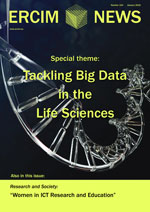
ERCIM News No. 104 Special theme: "Tackling Big Data in the Life Sciences"

Dear ERCIM News Reader,

ERCIM News No. 104 has just been published at http://ercim-news.ercim.eu/en104

This issue features a special theme on "Tackling Big Data in the Life Sciences"
coordinated by the guest editors Roeland Merks (CWI) and Marie-France Sagot (Inria) and a section "research and society" about "Women in ICT Research and Education", coordinated by Lynda Hardman (CWI)

This issue is also available for download in pdf and EPUB.

Thank you for your interest in ERCIM News. Feel free to forward this message to others who might be interested.

Next issue: No. 105, April 2016 - Special Theme: "Planning and Logistics" (see Call for contributions)

Best regards,
Peter Kunz
ERCIM News central editor

Monday, June 16, 2014

Book: Mapping It Out An - Alternative Atlas of Contemporary Cartographies

Published today [UK ]

Mapping It Out

An Alternative Atlas of Contemporary Cartographies

https://thamesandhudson.com/catalog/product/view/id/3005/s/mapping-it-out-9780500239186/category/2/
Mapping It Out


http://89plus.com/

My source:
Jobey, J.  The Shape of Things, FT Weekend Magazine, May 31 / June 1 2014,26-29.

Image source:
www.fastcodesign.com

Saturday, May 10, 2014

Genetic disorder: belief's a-gender

individual
INTERPERSONAL : SCIENCES
humanistic ------------------------------------------- mechanistic
SOCIOLOGY : POLITICAL
group

Y
I tell you what you will believe and IF you can have an education!
X
Wither women in science and engineering?
X
Whose place is this?
'Who' is the community?
#BringOurGirlsBack
Y
Human Rights for Girls and Boys

Friday, February 28, 2014

Rare Disease Day 28 February 2014

INTERPERSONAL : SCIENCES
humanistic ------------------------------------------- mechanistic
SOCIOLOGY : POLITICAL
individual

Source: http://www.rarediseaseday.org/
I am honored to stand, in her graceful place, and shine a light on a delicate group of individuals who, nevertheless, in sheer numbers are a force to be reckoned with.
Thank you,

Sean Hepburn Ferrer
A disease or disorder is defined as rare in Europe when it affects fewer than 1 in 2000.
A disease or disorder is defined as rare in the USA when it affects fewer than 200,000 Americans at any given time. One rare disease may affect only a handful of patients in the EU (European Union), and another touch as many as 245,000. In the EU, as many as 30 million people alone may be affected by one of over 6000 rare diseases existing.
  • 80% of rare diseases have identified genetic origins whilst others are the result of infections (bacterial or viral), allergies and environmental causes, or are degenerative and proliferative.
  • 50% of rare diseases touch children.
In the words of Audrey Hepburn,

We cannot save everyone… but the knowledge that someone is coming to their rescue… that we care as a society is ultimately as important…”.

It is in this spirit that we invite you, alongside Sean Hepburn Ferrer, to Join Together for Better Care.
group - population