Hodges' Model: Welcome to the QUAD: Search results for biology

Hodges' model is a conceptual framework to support reflection and critical thinking. Situated, the model can help integrate all disciplines (academic and professional). Amid news items, are posts that illustrate the scope and application of the model. A bibliography and A4 template are provided in the sidebar. Welcome to the QUAD ...

Showing posts sorted by relevance for query biology. Sort by date Show all posts

Sunday, January 04, 2026

Biology, axioms, teleology and knowledge c/o Cox & Forshaw (2012)

'Teleological ideas generally have a rather bad reputation in science, and it's easy to see why. In biology, a teleological explanation for the emergence of complex creatures would be tantamount to an argument for the existence of a designer, whereas Darwin's theory of evolution by natural selection provides a simpler explanation that fits the available data beautifully. There is no teleological component to Darwin's theory - random mutations produce variations in organisms, and external pressures from the environment and other living thing determine which of these variations are passed on to the next generation. This process alone can account for the complexity we see in life on Earth today. In other words, there is no need for a grand plan and no gradual ascent of life towards some sort of perfection. Instead, the evolution of life is a random walk, generated by the imperfect copying of genes in a constantly shifting external environment. The Nobel-Prize-winning French biologist Jacques Monod went so far as to define a cornerstone of modern biology as "the systematic or axiomatic denial that scientific knowledge can be obtained on the basis of theories that involve, explicitly or not, a teleological principle".
As far as physics is concerned, there is no debate as to whether or not the least action principle actually works, for it allows calculations to be performed that correctly describe Nature and it is a cornerstone of physics. It can be argued that the least action principle is not teleological at all, but the debate is in any case neutralized once we have a grasp of Feynman's approach to quantum mechanics. The ball flying through the air 'knows' which path to choose because it actually, secretly, explores every possible path.' pp.52-53.


Cox, Brian, and Jeff Forshaw. (2012) Quantum Universe, the: Everything That Can Happen Does Happen. London: Penguin Books Ltd.

See also: 

Jacques Monod - https://www.informationphilosopher.com/solutions/scientists/monod/

Harrison, Peter. 2022. 'The History of Science and Theology', St Andrews Encyclopaedia of Theology. Edited by Brendan N. Wolfe et al. https://www.saet.ac.uk/Christianity/TheHistoryofScienceandTheology

Greslehner GP. "Molecular Biology"- Pleonasm or Denotation for a Discipline of Its Own? Reflections on the Origins of Molecular Biology and Its Situation Today. Biomolecules. 2023 Oct 12;13(10):1511. doi: 10.3390/biom13101511. PMID: 37892193; PMCID: PMC10605324.
Previously: 'axiom' : 'biology' : 'corner'

Tuesday, October 01, 2024

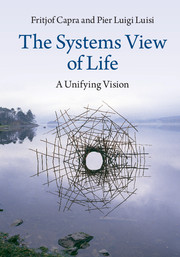
[iv] Book: The Systems View of Life - A Unifying Vision

The Systems View of Life -
A Unifying Vision


If you are about to start studying biology, Part 3 'A new conception of life'  is an excellent introduction to some broad and yet pivotal concepts. I haven't checked the 'current' curricula for biology or human biology, but I suspect there is content provided that may be missing? How are biology curricula characterised? If the 'subject' is comprehensively covered at school - college, there may still be value in the way in which they are presented in TSVoL. And, yes the book is a decade old. There's a step-wise development, that is coherent and fascinating.

The opening sentences to chapter 7, which asks 'What is Life?' :

'7.1 How to characterize the living

It is a common understanding that it is impossible to provide a scientific definition of life which is universally accepted. This stems from the fact that the background of scientists dealing with the question - biologists, chemists. computer scientists, philosophers, astro-biologists, engineers, theologians, social scientists, ecologists differs considerably from one another, depending on one's conceptual framework. In this book, we will not dwell so much on the question of a unique definition of life a single sentence catching all the various aspects of life - but rather, we will consider the more general question: what are the essential characteristics of a living system?' p.129.

- for some reason puts me in Plato's Cave? Maturana and Varela would (and do) have very broad shoulders by now. Autopoiesis is described with structure, systems (of course), self-maintenance, nonlocalization, coupling, and emergent properties. 'Life is a factory that makes itself from within'. p.132. Well that will do me. Even though we talk of political, social and psychological processes, I've always associated the SCIENCES domain of Hodges' model with processes. This includes whether the processes are biological, manufactured by human hand/intellect, such as, industrial working, project management and planning.

For life, initial descriptions concern the cell, DNA, RNA, cell walls and the cellular logic of life. Key is life's interaction with the environment. This is emphasised 7.2.4 and 7.4. I gained a lot of encouragement from:

'According to Maturana and Varela (1980, 1998), the organism interacts with the environment in a "cognitive" way whereby the organism "creates" its own environment and the environment permits the actualization of the organism.' p.134.

It is not just mind - but 'embodied mind'. The joy (for Hodges' model) continues with the impact of social autopoiesis in the social sciences.  

'While behaviour in the physical domain is governed by the "laws of nature,' behavior in the social domain is governed by rules generated in the social system itself.
Thus, two questions arise: is it meaningful to apply the concept of autopoiesis to these domains at all, and, if so, to which domain should it be applied?' pp.136-37.

It's almost like Descartes has taken on a quantum property. We don't know when life is physical (time, space, velocity) and when it is mental - cognitive? Contemplating life, death is never far behind (taxes p.419 if you're wondering). The ethics of death and dying are acknowledged in medical intervention (or not) and religious beliefs and edicts. Again the figures are helpful, illustrating the dynamic modes of an autopoietic unit: homeostasis, reproduction, and death of a cell (p.138). The trilogy of life then is also illustrated as environment, cognition, and autopoietic unit (p.142). When it comes to knowledge domains (social science & ecology) are clearly ubiquitous too.

Concepts of Modern Mathematics
Ian Stewart, 1975

It is Chapter 8 that delivers the biological goods. Beginning with a fascinating account of molecular, or prebiotic evolution, giving rise to biological structures and the interplay of soaps and lipids - "amphiphilic" substances, with molecules that contain a hydrophilic (water loving) head group, and long hydrophobic (water-hating) chains. Well illustrated too, box 8.1 describes 'Surfactants, lipids, and liposomes'. Self-organization, emergence are skillfully threaded together and with creativity - the generation of new forms. Unsurprisingly, Gaia is highlighted 8.3.3 and in a guest essay 'Daisyworld' by Stephen Harding of Schumacher College; which also reminded me of the 1970's BBC drama 'Edge of Darkness'. Maths has another turn in the text; a chiral one. Biomathematics is posited as a new mathematics frontier: here - the numerology of plant growth, the golden section (there's one primary context?), nature's spirals, and symmetry breaking. This helps my current return to maths (the struggle!) trying to get to grips with basic concepts. Ian Stewart is cited, later work than 1975's 'Concepts' I must seek out the 'Mathematics of Life' 2011/12.

Darwin, the resulting biological revolution, history, polymers, peptides and proteins plus DNA and RNA continue a suitably in-depth treatment of 'life' in chapter 9. The conclusion on Darwinism today and the status of genes in science and relation to our identity, being and the effect of chance and contingency is worth being reminded of. In mental illness - psychiatry and psychology a sometimes vitriolic debate continues.  Commercial realities are also apparent, the extent of their influence described: the race to map the human genome. In the text protein folding has advanced markedly since the book's original publication. Now new commercial pressures allied with artificial intelligence make you wonder how the author's would deal with this new 'content'? Exobiologists will enjoy chapter 10 as the focus is planetary: the origins of life on Earth. Useful, basic chemistry figures here - informational and functional (concentration). The notion of 'cognitive' is raised again - information carrying. 

While we are concerned for all life, chapter 11 takes in the human adventure, including the determinants of being human. 'Determinants' have taken on more import today. Chapter 12 in addressing 'Mind and consciousness' is helpful in the approach, the easy and hard problems of consciousness, types of consciousness, schools study. There is another guest essay. Chapters 13-15 deal with spirituality (inc. eco-literacy); life mind and society (I wonder if topology does have a role in the mental realm? (p.311). Chapter 15 is a gift for healthcare professionals - 'The systems view of health' with the question, 'What is health?'. Not to diminish this statement, but I will return to this subsequently; whether in the closing post for this 'review,' or afterwards. This completes part III of what is a great read.

Many thanks again to CUP for the paperback copy, much easier on the eyes. While this copy is new, I do make extensive use of secondhand books.

Fritjof Capra and Pier Luigi Luisi (2014) The Systems View of Life - A Unifying Vision. Cambridge: Cambridge University Press.

https://www.cambridge.org/gb/universitypress/subjects/life-sciences/genomics-bioinformatics-and-systems-biology/systems-view-life-unifying-vision?format=HB&isbn=9781107011366


Thursday, November 02, 2017

Humanistic + Mechanistic = Organicistic? c/o Vernon

"Holistic Biology ... 

Philosophy Now #122
In recent years biology has been moving beyond a biochemically reductive view of life. The days when we could regard ourselves as lumbering robots for our genes, to recall Richard Dawkins’ resonate phrase, are numbered, if not already over. Life for the biologist has become a lot more complex, and arguably, in its intricacy, more beautiful. ... 
I recently attended a conference on what is sometimes called ‘holistic biology’ or the ‘extended evolutionary synthesis’. ... 
These developments have led the philosopher Michael Ruse to pose a fundamental question. In biology, there has long been two ways of looking at life: as a mechanism, which can be broken down into parts; and as an organism, which can be explained only by considering the way the whole system works. Organicism is the more ancient approach, while the machine metaphor has come to dominate in modern times. Ruse suggests that perhaps it’s time for organicism to make a comeback. 
Its origins reach all the way back to Plato." p.7.
The links here provide access to one of four complimentary articles for non-subscribers.

Vernon, M. Rediscovering Plato's Vision. Philosophy Now. Issue 122. Oct/Nov 2017. pp.6-8.

Mark Vernon is the author of The Idler Guide to Ancient Philosophy (Idler Books, 2015).
For more, see www.markvernon.com.

Wednesday, September 18, 2024

Book: 'The Systems View of Life - A Unifying Vision' [i]

The Systems View of Life -
A Unifying Vision
Published in 2014; I needed this book in the early 1990s, as did we all.

As a review request I'm grateful to CUP for forwarding a copy - that is much easier on the eyes than a screen. This book deserves a much longer-tail.

Reading Resurgence for many years, joining The Ecology Party before they turned Green, and aware of systems, cybernetics this book has brought a great deal together. It has helped me in further thought and formulation about Hodges' model: A system of systems? 

Since 2014 clearly much has changed, I will highlight points where a new edition would be welcome. Although CUP and the authors could find themselves frenetic, such we hope is the pace of change now - or from now on, especially pre-COP29?

Come on petro-states it's time to really deliver.

Even in paperback this book is a reassuring handful, running to 452 pages, excluding the bibliography and index. Part 1 reinforced the encouraging signs in the introduction:
'The basic tension is one between the parts and the whole. The emphasis on the parts has been called mechanistic, reductionist, or atomistic; the emphasis on the whole, holistic, organismic, or ecological. In twentieth-century science, the holistic perspective has become known as "systemic" and the way of thinking it implies as "systems thinking,'' as we have mentioned.

In biology, the tension between mechanism and holism has been a recurring theme throughout its history. At the dawn of Western philosophy and science, the Pythagoreans distinguished "number," or pattern, from substance, or matter, viewing it as something which limits matter and gives it shape. The argument was: do you ask what it is made of - earth, fire, water, etc. - or do you ask what its pattern is?' p.4.
  • Preface
  • Acknowledgements
  • Introduction: paradigms in science and society
  • Part I. The Mechanistic World View:
    • 1. The Newtonian world-machine
    • 2. The mechanistic view of life
    • 3. Mechanistic social thought
  • Part II. The Rise of Systems Thinking:
    • 4. From the parts to the whole
    • 5. Classical systems theories
    • 6. Complexity theory
  • Part III. A New Conception of Life:
    • 7. What is life?
    • 8. Order and complexity in the living world
    • 9. Darwin and biological evolution
    • 10. The quest for the origin of life on Earth
    • 11. The human adventure
    • 12. Mind and consciousness
    • 13. Science and spirituality
    • 14. Life, mind, and society
    • 15. The systems view of health
  • Part IV. Sustaining the Web of Life:
    • 16. The ecological dimension of life
    • 17. Connecting the dots: systems thinking and the state of the world
    • 18. Systemic solutions
  • Bibliography
  • Index
This is an excellent primer for students of biology - human biology, including eager learners in secondary school - there is technical discussion that can serve as initial exposure to new terminology, extending vocabulary. The scope of the book however covers all academic subjects, chemistry, physics, anthropology, sociology, general studies, economics and of course ecology, environmental studies.

The book is clearly well-designed and presented. Readable generally and when dealing with technical concepts. Each chapter benefits from illustrations and use of boxes, with short guest essays introduced throughout. There is less reliance on tables. Each chapter is well referenced, and towards the end chapters 17-18 urls are provided. Obviously, the references and urls are dated now; a matter we will return to. Despite the passing decade, the quality of the book still shines through.

I just noticed the cover is attributed to Andy Goldsworthy 1988, Derwent Water, Cumbria and remember out with the family, coming across Goldsworthy's work in Grizedale forest.

I will share news of my reading over several posts and many other connections.

Many thanks to CUP for the hard copy - which has been an informative companion - over the past 4-6 weeks.

Fritjof Capra and Pier Luigi Luisi (2014) The Systems View of Life - A Unifying Vision. Cambridge: Cambridge University Press.

https://www.cambridge.org/gb/universitypress/subjects/life-sciences/genomics-bioinformatics-and-systems-biology/systems-view-life-unifying-vision?format=HB&isbn=9781107011366

Saturday, December 28, 2024

Master Philosophy in Biology and Medicine (for Sept 1, 2025)

The Master Philosophy in Biology and Medicine at Bordeaux is looking for interested candidates for the next academic year (starting September 1, 2025).

This program (presented here: www.philinbiomed.org/teaching) is aimed at philosophy students who have a strong interest in working with scientists, or scientists who have a strong interest in working with philosophers, especially - but not exclusively - in the fields of cancer, immunology, microbiota, systems biology, nutrition, neuroscience and aging. Students will have the opportunity to be involved in research in scientific labs and to be integrated into a very dynamic international community of philosophers and scientists.

Please keep in mind that the Master's program is exceptionally inexpensive but very competitive (as we only recruit 5 students per year). The program is 100% in English.

A letter of motivation, CV, and a writing sample (~10 pages) concerning a relevant topic should be sent to mael.lemoine AT u-bordeaux.fr by March 24, 2025. Late applications may be accepted but will not be eligible for regular consideration.

Shortlisted candidates will be offered Zoom interviews during the month after the deadline.

Candidates will be informed of their acceptance by May 28th 2025 at the latest.

Interested students can contact us from now on or at their earliest convenience, using the following address: mael.lemoine AT u-bordeaux.fr.

Thanks for forwarding this information to anyone you think might be interested, and thanks again to those who have already done so!

Best wishes,

Université de Bordeaux

Fridolin GROSS
fridolin.gross AT u-bordeaux.fr
Maître de conférences (associate professor)
Laboratoire IMMUNOCONCEPT
Bâtiment Bordeaux Biologie Santé
2, Rue Dr Hoffmann Martinot

https://www.u-bordeaux.fr

My source:
Philos-L "The Liverpool List" is run by the Department of Philosophy, University of Liverpool https://www.liverpool.ac.uk/philosophy/philos-l/ Messages to the list are archived at http://listserv.liv.ac.uk/archives/philos-l.html.

Follow the list on Twitter @PhilosL. Follow the Department of Philosophy @LiverpoolPhilos 

Sunday, September 22, 2024

Book: [iii] 'The Systems View of Life - A Unifying Vision'

The Systems View of Life -
A Unifying Vision


Part 2 addresses the title - the rise of systems thinking.

The part - whole distinction is not only the root of the reductionism - holism and analysis - synthesis debates, but you feel clever knowing what mereology means ;-). This book is jargon free, even while being detailed and technical when necessary. Terms are defined when needed.

You see (possibly?) the power of advertising given the prominence of vitality in marketing. Meanwhile, vitalism a key to life seems to be an unknown, ever present but in the shadows, until our attention is drawn to it (health: life-death). Capra and Luisi explore mechanism and vitalism, and in turn organismic biology. Whether dealing with science, economics, biology..., I like the way the authors draw in the initial thinkers, the pioneers: whose lives, work and influence often spanned the 19th and 20th centuries. 

The proof of my opening statement in post (i) can be found on page 66:

'Systems thinking is "contextual," which is the opposite of analytical thinking. Analysis means taking something apart in order to understand it; systems thinking means putting it into the context of a larger whole.' p.66.

Ever user(s)-determined (context-based), Hodges' model can readily identify, relate, incorporate the - linear, non-linear, serial, parallel, simple, complex, poor, rich, narrow, broad, static, dynamic, person, service and so on. Also on page 66, Ehrenfrels (1859-1932) is an example, the first to use the term gestalt to denote an 'irreducible perceptual pattern'. There are many potentials within Hodges' model, one of which is that of gestalt. Yes, in healthcare we need to see the whole. We need to see the person, but also see the person in their social, political and spiritual contexts ('determinants)'. Now the global context is critical.

Chapter 4 charts the new physics atomic phenomena, mysticism, uncertainty, probability, causality, space, time, energy, and E=mc2. As per the book's subtitle, the search for a unifying theory in physics is noted, and ongoing. Box 4.1 briefly outlines the characteristics of systems thinking; including parts-whole, from objects to relationships and measuring to mapping. Within box 4.1, figure 4.1 reminds me of a Voronoi tessellation.^ From chapter 5 can I claim that Hodges' model is tektological - contributing to the science of structures? One day perhaps this Russian contribution to systems thinking can be looked at anew? Chapter 5 continues to reveal classical systems theories, general systems, cybernetics, feedback - in social systems too, and homeostasis - self-regulation. It's less than a page spanning 92-93,  but 'information theory' is duly noted, closing with cybernetics in the brain, and the emergence of self-organization. Shannon showed that even when there is noise in a communication channel, signals can be transmitted (coding). Is this why training and competence in interpersonal skills and self-awareness are so important, to help health professionals to attend, actively listen, and observe?*

An old T-shirt 'Art Matrix'


Chapter 6 on complexity theory, inevitably describes mathematical ideas providing equations. Unsurprisingly chapter 6 has figures galore. When I unpack the boxes and crates, I must sit down with The Beauty of Fractals ... (p.124!) and check the graphic capabilities of the latest software and hardware. The 'The Systems View of Life' definitely stimulates further enquiry. The baker transformation anyone (Box 6.2, p.107)? Exploration of non-linear dynamics, and abstract spaces also helpful in studies of relations and maths. This completes part II.


Many thanks again to CUP for the pb copy, much easier on the eyes. While this copy is new, I do make extensive use of secondhand books.

Fritjof Capra and Pier Luigi Luisi (2014) The Systems View of Life - A Unifying Vision. Cambridge: Cambridge University Press.

https://www.cambridge.org/gb/universitypress/subjects/life-sciences/genomics-bioinformatics-and-systems-biology/systems-view-life-unifying-vision?format=HB&isbn=9781107011366

^See: https://blogs.helsinki.fi/fcai-sig-lsc/files/2022/04/Peter-Gardenfors.pdf and 'conceptual spaces'

*Jones, P. (1996) Humans, Information, and Science, Journal of Advanced Nursing, 24(3),591-598.

Jones, P. (1996) An overarching theory of health communication? Health Informatics Journal,2,1,28-34.

Monday, July 12, 2010

ERCIM News No. 82 Special theme "Computational Biology"

Dear ERCIM News Reader

ERCIM News No. 82 has just been published at http://ercim-news.ercim.eu/

Special Theme: "Computational Biology"

- coordinated by: Gunnar Klau, CWI, The Netherlands and Jacques Nicolas, INRIA, France

- featuring a keynote by Dirk J. Evers, Director, Computational Biology, Illumina, Inc.

Next issue: October 2010 - Special Theme: "Cloud Computing Platforms, Software, and Applications"

(see call for articles)

Thank you for your interest in ERCIM News.

Feel free to forward this message to others who might be interested.

Best regards,

Peter Kunz
ERCIM News central editor


Of specific interest to me pages 59-60:

Graph Transformation for Consolidation of Creativity Sessions Results
by Peter Dolog
idSpace

Sunday, April 03, 2022

MEMO TO: New College of Humanities and London Interdisciplinary School

Re. "Introduction to Lifelong Learning 101"

Since 1998, when I first went 'online' I've always been conscious of etiquette and note how this has changed - developed - over the years. The email associated with the former website domain p-jones.demon.co.uk saw a lot of emails to quite a diverse range of mail lists. Should I? Should I not? These questions remain a key consideration in trying to spread the thought and word on Hodges' model.

Stepping on toes a couple of times, someone also asked about links to blog posts on LinkedIn. Not had those queries recently so I think readers understand the 2x2 table is critical to the post in representing the model. Twitter presents its own challenges [ #WasteOfTime ]. So please pardon my shouting, but there's an important message here about an important resource.

I've lapsed again with no progress on the new site - maybe it is not just vapourware but a dream.

The creation of new education institutions: 

the New College of Humanities and London Interdisciplinary School

- is encouraging for the work here:

"The London Interdisciplinary School wants its students to be problem solvers with a wide range of academic interests."
(Nicola Woolcock, Polymaths plan to teach universities a thing or two. The Times, October 2, 2021. p.17.)

Does it, really - and by implication the NCH, plus New Model Institute for Technology and Engineering (NMITE) and others?

The Times Education Commission with proposals for reform due in June, adds further impetus and evidence ...

I read this evidence as supporting the argument that education and health are and always will be 'legacy issues', that is in need of change, investment, policy. All disciplines of study and knowledge are always dynamic and should be challenging, personally and collectively.

If institutions can distract themselves from fiscal incentive of the bums on seats for a few moments and policy makers look up from the dotting of  I's and crossing of T's then student's learning can be energised by Hodges' model: a generic bootstrap for lifelong learning.

Just to be clear. This model is NOT about boxes, it is about being aware of boundaries and being prepared to cross and use these journeys.

In the 21st century we are humbled by what now constitutes the pantology - the system of all knowledge. No individual can take in - apprehend and master it all, but we should have a means to at least conceptually touch this incredible gift.

INDIVIDUAL
|
 INTERPERSONAL    :     SCIENCES               
HUMANISTIC --------------------------------------  MECHANISTIC      
SOCIOLOGY  :   POLITICAL 
|
GROUP
Education
Philosophy (Ethics, Logic)
Psychology: (Applied, Child, Clinical,
Criminal - Forensic,
Occupational,
Artificial Intelligence ...
Cognitive Sciences
Theology
Arts
Creativity and Design
Eco-Anxiety
Happiness - Metrics
...

Sciences: Biology, Physics, Chemistry*
Health: (Medicine, Nursing ...)
Occupational Professions
Computer Science, Information
Mathematics
[macro - nano] Engineering
Architecture
Design and Creativity
Environmental Studies
Hydrology
Land use: Forestry ...

Arts (Music, Dance, Drama ...)
Literature
Anthropology, Archaelogy
Languages
Ancient-History, History
Future Studies
Social Work
Sociology (Culture, Ethnography ...)
Anthropology
Gender Studies
Philanthropy
...

Politics, Government
Security
Law & Crime - Fraud/Corruption
Policing - Law Enforcement
News and Media studies
Political Science - Citizenry
Economics
Socio-Economics
International Development
Peace Studies
Administration
Leadership and Management
War and Conflict ...


I am pleased to see that the post re. Nicholas Maxwell's work is popular here:

"How Universities Have Betrayed Reason and Humanity—And What's to Be Done About It" c/o Nicholas Maxwell 

*So many sub-disciplines: Climate studies, Epidemiology, Marine biology, Quantum Computing / Physics, Exobiology, Astronomy, Materials, Demographics, Geology, Genomics, Cybernetics, Systems, Epigenetics, Exobiology, Neuroscience, Public (Mental) Health, Allied Health Professions ...


Saturday, March 24, 2012

Alcohol: Messages in bottles, domains and anagrams

The perennial health news item that is alcohol has bubbled and overflowed this week. In 1987-88 I visited several nearby alcohol services in Blackburn, Preston and Salford with a questionnaire to compare and contrast with Chorley which at the time had no dedicated alcohol services. There was Alcoholics Anonymous AA and Al-Anon, but nothing specific through health beyond community psychiatric nurses. The project was for the CPN(Cert.).

Back then I remember a Consultant Psychiatrist saying that the level of alcohol consumption is directly related to cost. The literature I read also drew attention to historical comparisons. I think it was Alcohol Concern who supported this view and called for urgent action. Of course all that was some 24 years ago. Incredible that there is some movement in 2012. In 2007 the taxi driver from Elounda to Heraklion airport described the movement and horizontal stasis that adorns the pavements (and spills onto the roads) of Malia as we zipped by. The Brits do have a problem. A Consultant physician highlighted this from a hospital ward on BBC Radio 4 news today.

Don't get me wrong: I like an occasional drink but my enjoyment of alcohol has been tempered over the years by several experiences:
  • An early party aged 15 (and at a church social club) preloading was already in vogue. No sooner were a group of us sat at a table than someone threw up on the table. It was alcohol.
  • Biology and human biology lessons helped instil the impacts of alcohol.
  • Having to say 'goodbye' to clients with a drink problem, duly referred by their GP. I cannot support them in their drinking after several attempts to effect change.
  • Appreciating the link between drink and risk behaviours.
  • Working with people whose 'ill-health career' has seen them having to live with, but not themselves recognise Korsakoff's syndrome.
  • Seeing people over three decades who cannot be supported in the community with their family, relatively young for residential care, but given a lack of specialised facilities - there they frequently are.
Hopefully the policy turn will have a positive impact extending beyond news headlines:

Minimum alcohol price planned for England and Wales
http://www.bbc.co.uk/news/uk-17482035

Alcohol pricing: politics under the influence 
http://www.guardian.co.uk/commentisfree/2012/mar/23/alcohol-pricing-politics-under-influence?newsfeed=true

With the prospect of an alcohol and a new NHS information strategy in England you hope that some dots can be joined. Here are a few:

INTERPERSONAL : SCIENCES
SOCIOLOGY : POLITICAL
Motivation    Psychological effects
Attitudes to risk         Predisposition
Personality     Education    Vulnerability
Data     Evidence      Public health
Physical effects    Dual diagnosis
Research       Violence - statistics
Social contradictons and attitudes - 'image'
Upbringing       Cultural attitudes
 Marketing          Media
Cost per unit      Services        Funding  
Cost to health budget      Reporting
Policy   Lobbying   Taxes   Commissioning


Beer label c/o http://www.beerlabelizer.com/

'Real Stout' = 'Sale Tutor'

Monday, May 14, 2007

What is a 'domain'? II

Last week I referred to a definition of domain that included mention of:

1. A territory over which rule or control is exercised.
2. A sphere of activity, concern, or function; a field: the domain of history. See synonyms at field.
3. Physics. Any of numerous contiguous regions in a ferromagnetic material in which the direction of spontaneous magnetization is uniform and different from that in neighboring regions.
4. Law.
a) The land of one with paramount title and absolute ownership.
b) Public domain.
The remaining definitions -

5. Mathematics.
a) The set of all possible values of an independent variable of a function.
b) An open connected set that contains at least one point.
6. Biology. Any of three primary divisions of living systems, consisting of the eukaryotes, bacteria, and archaea, that rank above a kingdom in taxonomic systems that are based on similarities of DNA sequences.
7. Computer Science. A group of networked computers that share a common communications address.

[Source: Answers.com]


- I suggested were connected by language....

There are some very formal definitions of domain from the world of 5. maths. Pulling other words out of the hat isn't the answer, but the idea of mapping between 'domains' is (I think) very important in Hodges' model; even though any mapping is subjective and - in this instance - not evidence based. Is it possible to be presented by an insurmountable edifice - something that terrifies you and yet fascinates at the same time? Well that's maths for me. I'll return to this another time.

Maths, 6. biology and computer science (to follow) are as noted in the first post domains of study. In health care and especially within medicine 'formal languages' has been and remain a major preoccupation in the form of coding and classification schemes. If you follow the links above you'll see they are listed in the SCIENCES page - since they are formal and structured. In order to report on activity locally and epidemiology at a global level, classification and coding is essential.

The links also include examples of languages of nursing. Nurses spend quite some time writing and computers still choke when it come to analysing and reporting on reams of narrative text. Computers still love codes. Although they are becoming ever more versatile, they still crunch numbers or 'data'.

As for computer science 7: in the 1980s I remember seeing graphs depicting 'languages' from microcode and assembler language at the heart of the machine, through to the fuzzy world of written and spoken language. In between there's quite a spectrum covering logic and a huge range of computer programming languages.

Searching the web I suppose I was bound to come across domain specific languages (DSL). There's a couple of videos and Ruby's in the frame. Funny that, I had noticed in Starbucks how some people like to show off their DSL expertise.
One things for sure this really focuses the mind in terms of defining a domain.

Thursday, March 31, 2022

Mechanisms, Individuals and Collective

Last week I joined a webinar:
 
https://www.biokoinos.org/events
BioKoinos Research Seminar

Saúl Pérez González & Elena Rocca - 
Evidence-based and patient-centred clinical practice. The bridging role of evidence of mechanism.
  
I have mapped some of the concepts to Hodges' model. A link to the paper is included below. The session was very helpful, especially with ongoing developments in genomics and personalised medicine.
 
INDIVIDUAL
|
 INTERPERSONAL    :     SCIENCES               
HUMANISTIC --------------------------------------  MECHANISTIC      
SOCIOLOGY  :   POLITICAL 
|
GROUP
patient-centred
evidence
safety of a certain intervention
for a particular patient
safety
efficacy

individual - epidemiology - population
patient-centred
evidence
safety of a certain intervention
for a particular patient
biology
pathophysiological mechanism
prediction

... confirming and disconfirming -
depending on whether or not it supports that certain epidemiological results apply
to the single patient.

evidence
safety
efficacy

evidence
safety
efficacy


Pérez-González, S., & Rocca, E. (2022). Evidence of Biological Mechanisms and Health Predictions: An Insight into Clinical Reasoning. Perspectives in Biology and Medicine 65(1), 89-105.  

http://philsci-archive.pitt.edu/20364/1/Postprint%20Evidence%20of%20biological%20mechanisms%20and%20health%20predictions.pdf


Thursday, May 10, 2007

What is a 'domain'?

With visitors to the website confusing the title Hodges' Health Career Model for job careers; the addition of 'Care Domains' was intended to reduce confusion.

I think this has helped, but because the future beckons and this blog plus the website appear to have a multidisciplinary readership more clarity may be of help, especially the use of this word 'domain'.

The dictionary is a good place to start:

do·main

1. A territory over which rule or control is exercised.
2. A sphere of activity, concern, or function; a field: the domain of history. See synonyms at field.
3. Physics. Any of numerous contiguous regions in a ferromagnetic material in which the direction of spontaneous magnetization is uniform and different from that in neighboring regions.
4. Law.
a) The land of one with paramount title and absolute ownership.
b) Public domain.
5. Mathematics.
a) The set of all possible values of an independent variable of a function.
b) An open connected set that contains at least one point.
6. Biology. Any of three primary divisions of living systems, consisting of the eukaryotes, bacteria, and archaea, that rank above a kingdom in taxonomic systems that are based on similarities of DNA sequences.
7. Computer Science. A group of networked computers that share a common communications address.

[Source: Answers.com]

1. A territory over which rule or control is exercised: can apply in Hodges' model from a theoretic perspective by a curriculum, a scheme of work, and consequently in practice. We refer to the clinical domain, medical domain or social domain. This latter usage overlaps with 2. we often speak of fields of study and practice.

Place (territory) is the vital ingredient here; specific wards, clinics, treatment centres and even community may be described as a domain of care. The way 'domain' is used in day-to-day language may vary markedly. On some occasions the domain in question may be at an even higher level: clinical domain versus management domain.

3. Is interesting because although they are not exactly magnetic, there are several polarities* at work in Hodges' model.

On the borders between Hodges' domains, what is the 'switch' (context, situation, person focus ...) that determines the placement and direction of care concepts: for example - humanistic or mechanistic?

Sticking with physics there are undoubtedly several chaotic attractors within the bounds of Hodges' model. From the behaviour of the heart to the role of psychosocial stress in risk of relapse. If several variables are linked chaotically, what risks are run if one or more domains (however defined) are deemed non-relevant or out of scope?

4. This legalistic definition of 'domain' also applies. Hodges' model is person-centred, but although focused on the individual the model acknowledges the need to reconcile the diametric opposition that is the law that prevails for the one [INTERPERSONAL] and the law, justice and systems of the many [SOCIAL] and [POLITICAL].

Hodges' model is also in the public 'domain' all that is needed is an acknowledgement.

The remaining definitions 5, 6 and 7 - maths, biology and computer science - are all connected.

The connection?

Language?

More to follow.... Hope to return over the weekend...
*Will post about polarities, when I take a certain photo over in Manchester.
Just hope they don't pull it down before I get there! Bye for now...

Friday, September 20, 2024

Book: [ii] 'The Systems View of Life - A Unifying Vision'

The introduction highlights the oscillation through history between reductivism, holistic and integrative perspectives; the relationship between theology and the claims for and crystallisation of knowledge and the sciences. The development of cybernetics and systems theory in the 1950s and 1960s does not have it all its own way: 

'The eclipse of systems thinking from pure science had become so complete that it was not considered a viable alternative. In fact, systems theory began to be seen as an intellectual failure in several critical essays. One reason for this harsh assessment was that Ludwig von Bertalanffy (1968) had announced in a rather grandiose manner that his goal was to develop general systems theory into "'a mathematical discipline, in itself purely formal but applicable to the various empirical sciences.'' He could never achieve this ambitious goal because in his time no mathematical techniques were available to deal with the enormous complexity of living systems.' p.11.

(With Zeeman's book on Catastrophe Theory on-loan at present the above is helpful.)

I've picked up a book of Arne Naess's, put it down again: or did I buy 'The Ecology of Wisdom'? I can't check at present (the books I've left are all boxed / created), but Naess sets the scene for the mechanistic worldview.

'Care flows naturally if the 'self" is widened and deepened so that protection of free Nature is felt and conceived as protection of ourselves. .. Just as we need no morals to make us breathe... [so] if your "self" in the wide sense embraces another being, you need no moral exhortation to show care.. . You care for yourself without feeling any moral pressure to do it. (quoted by Fox, 1990, p. 217)
'What this implies, according to the eco-philosopher Warwick Fox (1990), is that the connection between an ecological perception of the world and corresponding behavior is not a logical but a psychological connection. Logic does not lead us from the fact that we are an integral part of the web of life to certain norms of how we should live.' p.14.
Science fiction gives you an appreciate of 'deep', even if not initially the philosophical connotations. Deep space, A.C. Clarke's Deep Range, and more recently deep time brought me to consider deep care on the old website and here on W2tQ with Hodges' model a means of navigation. Naess refers to shallow and deep ecology. Now we also have deepfakes, although the climate change deniers may struggle to believe their deepfake - that is: reality.  Although the book was published pre-sustainable development goals, sustainable development is discussed in detail. For me, the climate change and the SDGs demand we consider ecology, ecosystems, life, and the Earth across the domains of Hodges' model and the spiritual explored in chapter 13.
 
individual
|
INTERPERSONAL : SCIENCES
humanistic ------------------------------- mechanistic
SOCIOLOGY : POLITICAL
|
group


shallow
|
DEEP


A table on page 13 contrasts several opposites across thinking and values:


As usual, I can't shift beyond the book's introduction, but these points for me underscore the value of the book and Hodges' model. Throughout the blog and papers various dichotomies, polarities, oppositions arise. The structure of Hodges' model lends itself to this, and consequently finding the middle. All the above can be reflected upon in relation to Hodges' model, and also searched.

Chapter 1 explains how the discoveries of Galileo, Descartes, Bacon, Newton and Darwin contributed to the world and life - in biology being viewed mechanistically. The focus of the book is 'Western' and the developed nations; as the main contributor to the current state of the planet. The Cartesian divide - mind & matter/body distinction (p.24) is implicit within Hodges' model:

individual
|
INTERPERSONAL : SCIENCES
humanistic ------------------------------- mechanistic
SOCIOLOGY : POLITICAL
|
group

res cogitans


res extensa


Newton's work is described and the limitations of Newtonian physics - the social sciences presented a challenge(!). Thermodynamics is introduced helpful for subsequent chapters.

For general science students the book provides a historical primer, and even an introduction to the philosophy of science. Chapter 2 is short but conjoins cells, molecules, genes (Mendel, Watson & Crick; Franklin & Wilkins, and others), and mechanistic medicine. 

'This will not change until medical science relates its study of the biological aspects of illness to the general physical and psychological condition of the human organism and its environment, The conceptual problem at the center of contemporary healthcare is the confusion between disease processes and disease origins. Instead of asking why an illness occurs and trying to remove the conditions that led to it, medical researchers try to understand the mechanisms through which the disease operates, so that they can then interfere with them. These mechanisms, rather than the true origins, are seen as the causes of disease in current medical thinking. In the process of reducing illness to disease, the attention of Physicians has moved away from the patient as a whole person.' p.43.

Thinking about this in basic instrumentalist terms the reliance on optics, the craft of telescopes and microscopes to discover the very large (our Milky Way as 'a' galaxy) and the invisible - germs, bacteria must have been a profound factor.

If you are selecting subjects for age 16 exams, do not underestimate the value of SOCIO-ECONOMIC history. It has helped me as a community mental health nurse. Especially in light of austerity (UK), the cost of living and energy crisis and the 'housing disaster' (book 2024 with) posts to follow. Chapter 3 uses b&w illustrations of key figures, such as, Locke, Adams, and Marx. I remember in the media, economics education being questioned. That is part 1: concise (p.59!) and yet still relevant today.

Many thanks again to CUP for the pb copy.

Fritjof Capra and Pier Luigi Luisi (2014) The Systems View of Life - A Unifying Vision. Cambridge: Cambridge University Press.

https://www.cambridge.org/gb/universitypress/subjects/life-sciences/genomics-bioinformatics-and-systems-biology/systems-view-life-unifying-vision?format=HB&isbn=9781107011366

Sunday, February 16, 2025

Book review: #4 - Handbook on the Ethics of AI

Chapter 7 is no doubt one of the engine rooms of this book. In AI Ethics and Machine Ethics, John-Stewart Gordon follows preceding authors citing Nyholm and others. This probably helps the overall coherence of the book, and underlines what is a dynamic and emerging field. Reading 'What is AI ethics?' (p.98), I made a note about our humanity's cognitive house-keeping (and other life-forms?) executed through sleep, the ability to unlearn, and forget. Efforts to mitigate machine bias are provided in a list 1-5 (p.100). As observed previously, this author is also thinking on their feet (and very well too) with 'Source: Author's own' in a figure for the systemic place of machine ethics and another (table) 7.1 'Four approaches to machine ethics'.

3.4 considers the challenges involved in developing ethical AI systems. As in healthcare, we see where the (problem of) 'many hands' emerges from:
'Developing ethical AI systems requires collaboration between computer scientists, ethicists, and other stakeholders, which can be challenging due to differences in expertise, terminology, and perspectives. Computer scientists bring technical expertise to the table, while ethicists provide insights on moral principles and values that should guide AI behavior. However, these experts often operate within their own domains and may lack a common language to effectively communicate and collaborate. 
Other stakeholders, such as policymakers, industry professionals, and end-users, also play vital roles in shaping the ethical development of AI systems. They bring diverse perspectives, needs and expectations that need to be considered and balanced during the design, implementation, and regulation of AI technologies. For instance, policymakers are responsible for creating guidelines and regulations that ensure the safe and responsible use of AI, while industry professionals must adhere to these standards and navigate the practical challenges of integrating ethical considerations into their AI-driven products and services.' p.104.
The solution includes having interdisciplinary and ethnically diverse teams, cross-disciplinary training, and a more holistic and comprehensive approach to AI development. Unintended consequences (a news item today (13th Feb 2025) are discussed, the dual-use nature of AI and technological 'delivery' surveillance acting for good and potentially ill (China's - Social Credit Point System).

AI ethics is also itself apparently a conceptual framework (p. 99,107).

What is permitted by law in a State clearly varies. Chapter 8 deals with From Ethics to Law: Why, When, and How to Regulate AI. Collingridge is another recurring citation, and presents a dilemma no-less (Section 3. p.116); one to follow up  (Coeckelbergh too, chap 9). I've always felt that some knowledge of social and economic history is a good foundation. History is reflected here in resort to 'masterly inactivity' (p.118) and regulatory approaches - as debated this past week at an AI Action Summit in France. 

I can still recall the sense of competition in having time in the sandpit at infants school.* Software developers will use sandboxes to develop and revise code in an isolated environment, before it goes live, or wild. With AI the book refers to mishaps, projects that have gone wrong. We need to take care regards the nature of the 'sandboxes' that are used. In a way this speaks to the utility of Hodges' model as a resource for lifelong learning, a learner being fully socialised into a profession and its evolving disciplines:

INDIVIDUAL
|
      INTERPERSONAL    :     SCIENCES               
HUMANISTIC  --------------------------------------  MECHANISTIC      
 SOCIOLOGY  :    POLITICAL 
|
GROUP
box
sand-
box
box

I had to look up the CREEPER (Curbing Realistic Exploitative Electronic Pedophilic Robots) ACT (p.121). We are accustomed to outsourcing, and its perverse effects facilitated through globalisation, with nations transferring their pollution - plastics, and e-wastes. There are efforts as Chesterman writes to limit outsourcing to AI in terms of the decisions (pp.122-123). I enjoyed the nods to Isaac Asimov too. 

Gellers in chapter 9 AI, Design, and More-than-Human Justice provides another cylinder to drive the text not just forward but acknowledges the future for all: organic and inorganic. Gellers is argues for attention to AI and justice, not merely the moral and legal status of AI. Reading of  'communities of justice' (p.128) the established notion of 'communities of practice' or the collective of users - socio-technically. Gellers highlights our being in the anthropocene and how the environment and nature is figuring in law. So, not just legal questions for humans but natural 'things' and entities also (posted previously: Person & Sense of Place: A River runs through it ...).


INDIVIDUAL
|
      INTERPERSONAL    :     SCIENCES               
HUMANISTIC  --------------------------------------  MECHANISTIC      
 SOCIOLOGY  :    POLITICAL 
|
GROUP
person-
[what >]
'Who'
-hood (p.129)

algorithmic
collective

communities of practice
justice

communities of justice

I don't think we are there yet? Even, accepting that built-in obsolescence is an established and legal thing. But AI could turn materialism on its head. Looking at the materials, metals, rare earth elements ... that goes in how long do they last and how are the materials recovered? AI, computing desperately needs the doughnut economy, must epitomize the doughnut. Looking for a place to live, you notice the way probably quite serviceable bathrooms and kitchens are ripped out. The suites on a skip. That is quite a scene on the rubbish tip in the film: 'A.I. Artificial Intelligence'. The amount of energy in total production and materials is still not wholly valued, even before other values are 'added'? The focus on design here is integral to such questions. It has brought me to care design, and care architecture. Socio-technical aspects are highlighted again by Gellers (for me, as noted on W2tQ, that hyphen matters). 

Unsurprisingly, Descartes also figures in this chapter, section -Technology in the anthropocene:

'First, for philosophers of technology, the Anthropocene obliterates the nature/culture divide intrinsic to Cartesian thinking (Conty, 2017) that altered the course of history by rebranding technical objects as artificial and thus divorced from nature (Hui, 2017).' p.131.
It is encouraging that there is now recognition that 'we are nature too'. While we can record thought - brain activity on an EEG, from the outset (school studies of biology, then human biology) I've always associated intelligence, mind, thought, emotion, hope, dreams and cognition .. with the intra- interpersonal domain. If you adopt a socio-technical approach (overview - mindset) then invariably the technosphere will straddle the HUMANISTIC <-> MECHANISTIC axis of Hodges' model:
'So far, I hope to have established that technology plays a prominent, if complicated, role in the Anthropocene. But how does this relate to justice? Technology's relationship to ecological systems holds important implications for determining who belongs to communities of justice. To begin, the Earth system consists of interrelated biological, physical, and mental "worlds" (Kotzé, 2020, p. 80). The mental world, also referred to as the "technosphere," is an autonomous amalgamation of energy, communication, transportation, and financial systems, along with cities, governments, factories, farms, and other built systems and their constituent parts (Haff, 2014, P. 127). Technological artifacts such as AI are therefore part of the technosphere.' p.132.

Hodges' model: axes and care domains

We read of robots-in-ecology and robots-for-ecology. I was reminded of the SF film 'Silent Running' here. The real merit and encouragement for me in Geller's contribution, is section 4 which compares how we can approach more-than-human justice. Total eclipses are supposed to be rare, irrespective of what they might portend, now AI, the climate and life on Earth keep eclipsing each other: thus far partially. 4.1 Multispecies justice - Peter Singer really is ahead of his time (chapter 11 - here!); following socio-ecological justice 4.2, we arrive at planetary justice. Note (in Hodges' model) the 'distance' of what is generally deemed social and where the ecological in reality - physically resides. In the margin I'd scribbled 'Less a case of "take me to your leader" and more a case of "show me all your cards!"'. The synthesis and closing section on the design of robots specifically for more-than-human-justice helps here by including relationality, intersectionality and and contexts. 'Design justice' is something the book prompts me to carry forward (p.137).

One final post on HEoAI to follow ...

Handbook on the Ethics of Artificial Intelligence. David J. Gunkel (ed.). Cheltenham, UK: Edward Elgar Publishing Ltd. ISBN: 978 1 80392 671 1245
https://www.e-elgar.com/shop/gbp/handbook-on-the-ethics-of-artificial-intelligence-9781803926711.html

Related previous posts: 'general + AI'

*That early streak of competitiveness was clearly educated out of me.

Tuesday, June 20, 2017

Pointing to the gap: Social Determinants of Health in Hodges' model

Recent discussion on a HIFA forum included mention of the Social Determinants of Health SDH and inequality. Revising the draft paper on h2cm and threshold concepts (abstract to follow soon) social determinants arose in references there also (Aronsson, 2016).

I realised that I have not stressed enough how readily (and obviously) Hodges' model facilitates reflection and critical thinking about SDH. Hodges' model can really come into its own in this particular application.

So, just in case I take Hodges' model for granted in its potential utility, below I have drawn on the following figure (the findings within will no doubt vary over time and with further research).

By Jsonin - Created this open source diagram for our research into standard human data elements Previously published: http://determinantsofhealth.org, CC BY 4.0, Link
I have mapped the main percentage items to Hodges' model below. Clearly there is great deal of overlap; what for example, is the effect of the physical environment upon individual behaviours? Medicine and medical care does not just rest upon several sciences, but it is inherently political and about power.

Throughout my career and many others I am sure, there is an accompanying gap. It follows us around from the initial educational encounters through to our very latest mandatory training and CPD exercises. Whilst educational in being the theory-practice gap, applying SDH to Hodges' model reveals a much greater gap that politically is still being fought over...

individual
|
INTERPERSONAL : SCIENCES
humanistic ----------------------------------------- mechanistic
SOCIOLOGY : POLITICAL
|
group - population
38%
individual behaviour


7% 
physical environment
11%
medical care
21% 
genetics and biology

SOCIAL DETERMINANTS OF HEALTH

23%
social
circumstances


As if we needed to be 'told':

This space suggests that there really is 
still much more to do.

To those who would say: 
"We have done so much!" 
I would say: 
"But, we have only 
scratched the surface of 
the three 'easiest' care domains."


The 38% attributed to an individual's behaviour is a further source of evidence for Hodges' model as a resource for education and personal change.

Aronsson, J. (2016). Transformative sustainability learning within the undergraduate nursing curriculum. Community Practitioner, 89(1), 20-21.


Tuesday, September 03, 2024

HC@AIxIA: AI&Health Seminar Series (2024) - 16 September

Generative AI in sequencing: enhancing models by synthetic omics data

 
16 September 2024 - 04:30PM CET

Speaker
: Giuseppe Jurman, Head of DSH (Data Science for Health) Unit, Fondazione Bruno Kessler – FBK (Trento, Italy)

Title
: Generative AI in sequencing: enhancing models by synthetic omics data.

  • Abstract: Synthetic data have recently gained momentum in several scientific areas as an effective solution to dealt with several aspects of data poverty and missingness. In translational medicine, biomedical images and EHR data have been the first to benefit from synthetic augmentation techniques through generative AI algorithms such as GANs or, more recently, Diffusion-like models. Extension of these methods to omics data poses further challenges due to the nature of the signal, such as the need of taking into account sample variability and multilevel omics coherence. In this talk, we will present an overview of the state-of-the-art of the synthetic data in the omics universe, including the generative methodologies, the future perspectives, and the related caveats, concluding with some applicative use cases. (joint work with Marco Chierici and Silvia Menchetti)
  • Short Bio: Giuseppe Jurman is a mathematician, with a PhD in Algebra, currently Head of the Data Science for Health (DSH) Unit at FBK. His main interest is the development and the application of artificial intelligence, machine learning and complex network models for diagnosis, prognosis and prediction in medicine, life science and computational biology, starting from EHRs, omics data and biomedical images, including digital pathology, with a particular emphasis on reproducibility and explainability. He is also interested in scientific programming with Python and other computing languages, and he teaches Data Visualization at the M.Sc. in Data Science at the University of Trento. 
  • Flyer: link
  • Link for participating: webex link + details
  • VIDEO: available afterwards
c/o: Francesco Calimeri, Mauro Dragoni, Fabio Stella
(coordinators of the HC@AIxIA working group)
