Hodges' Model: Welcome to the QUAD: Search results for crossroads

Hodges' model is a conceptual framework to support reflection and critical thinking. Situated, the model can help integrate all disciplines (academic and professional). Amid news items, are posts that illustrate the scope and application of the model. A bibliography and A4 template are provided in the sidebar. Welcome to the QUAD ...

Showing posts sorted by relevance for query crossroads. Sort by date Show all posts

Thursday, August 27, 2009

Basic Nursing Care @ the X-roads?

Basic nursing care:

It sounds straight forward enough doesn't it?

And yet according to news today here in the UK (The Independent) some nurses it seems fail to deliver safe, effective and efficient care of the required standard. This sorry news was reported by The Patients Association. The cases cited are upsetting and represent the care and behaviour of a minority of nurses, although there was a debate as to the 'true' numbers the report findings may represent.

The worrying point here though is this highlights not just a lack of basic nursing skills and knowledge, but a blatant disregard for the needs of vulnerable individuals and a sense of humanity. Even with NVQ's in the UK and equivalent programmes elsewhere when it comes to high standards of care we can take nothing for granted.

A commentator on the radio asked if the nursing profession is at a crossroads?
It is.
This crossroads is also a target that nursing must hit -
not most of the time -
but every time and for every person.


In truth of course, all professionals should constantly find themselves at the crossroads.

So, where next for nursing and who has the map?

Original image source:
http://www.thesignlady.net/signs/images/warningsigns/W2-118X18CrossRoad.jpg

Tuesday, January 27, 2026

c/o Intima 'Reflect on the World' . . .

CARE/of Intima:

REFLECT ON THE WORLD WITH US EVERY FRIDAY AT NOON.

No pressure, but we want to remind you that every Friday, around noon EST, we post a Crossroads blog—a short reflection that contributors from our current issue do on something from our archives.

Think of “Friday at noon” as a blip in your busy life where you take time to yourself to reflect on our small part of the universe. Pause and spend 5 minutes reading one each Friday — it’s the equivalent of a deep-breathing exercise, a short yoga stretch, a tiny palate cleanser of lemon sorbet between the complex courses served up to us every day, or a moment stolen between patients or in a waiting room when you step out of your routine. Read the titles of recent ones below, then go and read a few. If you like what you read, set up a reminder alert.

◇

INDIVIDUAL
|
    INTERPERSONAL    :     SCIENCES               
HUMANISTIC --------------------------------------  MECHANISTIC      
SOCIOLOGY  :   POLITICAL 
|
GROUP


My source: Intima (and image) - mail list.

See also: 'reflect' : 'crossroads'

Thursday, February 08, 2018

Grid Corrections at a Crossroads


or Grid Care Corrections at a Crossroads?


GERCO DE RUIJTER

My source:
https://twitter.com/Rainmaker1973/status/961542009193402368

Saturday, May 19, 2007

"Where are we?" Take Two, Three, F.... (witheringcare?)

In Five Senses, Serres does not overtly discuss mortality, loss, depletion and omission (Connor, 1999). Management consultants advise that to succeed ‘think outside the box’, but the population pyramid is casting an ever larger shadow, highlighting an ageing population and the box is frequently found full and yet empty? Plaques disconnect, disable the memory; the critical biological box no longer registers and connects. The noise that counts, the background bioelectrical hum is disrupted or absent. Memories once ready to roll downhill, surfing the wave of potential are inaccessible, if marshalled at all. Wither the neural crossroads; the informatique mote in Hermes’ eye?

Our older people, those not yet ephemeral have become peripheral, their personal space an adjunct to furniture. New quantities in life, beg questions of quality, especially quality of care and what it means to care. The concept of self, person-hood is a prime distinguishing factor in terms of describing the attitudes of cultures and communities to older adults and memory loss. In the developed nations the debate continues: is this the price of a long life, or a way of life? In a search for the locus of informatics: the sign on this door reads deep informatics. Listen carefully, as inside the seniors are cared for at home (touched*) remotely courtesy of telecare solutions. The values here of course extend from inappropriate use of informatics to lack of access to such services (Barlow et al., 2006). ...

Remotes


*For Serres touch is the interface.


We must ensure remote care is not a total substitute for face-to-face interaction.


Barlow, J., Bayer, S., Curry, R.
(2006). Implementing Complex Innovations in Fluid Multi-Stakeholder Environments: Experiences of ‘Telecare’, Technovation, 26, 3, pp.396-406.

Connor, S. (1999). Michel Serres’ Five Senses.
Retrieved May 19, 2007, from http://stevenconnor.com/5senses.html

From submitted chapter: Exploring Serres’ Atlas, Hodges’ Knowledge Domains and the Fusion of Informatics and Cultural Horizons - forthcoming...

P.S. Sorry about the two posts today - trying to figure some things out...

Monday, December 22, 2025

Contexto Int. [Newsletter] - Special Issue 47.2 Where is the Sea in Int. Relations?

Dear Colleagues,

We hope this correspondence finds you well.

We are delighted to formally announce the publication of the latest special issue of Contexto Internacional, entitled "Where is the Sea in IR?," which I had the distinct honour of co-editing with Dr Flavia Guerra (Federal University of Rio de Janeiro).

The overarching objective of this Special Issue is to address a central scholarly lacuna within International Relations (IR) scholarship: the historical and theoretical marginalisation of the oceanic domain. In pursuing this fundamental inquiry—why and how does the ocean recede from scholarly and political attention?—the assembled contributions collectively prompt a sustained, rigorous examination of two key analytical challenges:

  1. The specific mechanisms through which IR has historically relegated the oceanic domain to the periphery of its dominant analytical frameworks.
  2. The subsequent broader political and theoretical implications that stem from this systematic exclusion.

The volume is structurally organised around three distinct, yet interconnected, thematic axes, each seeking to contribute to a deeper engagement with the marine sphere:

  1. The Marginalisation of the Ocean in IR: Conceptual and empirical explorations of how the sea is actively rendered absent or subordinate within core theoretical debates.
  2. Complex Entanglements between the Ocean and Ontological Security: Analyses focusing on the relationship between maritime spaces, existential anxieties, and state identity formation.
  3. Ocean Governance as Regulatory Mechanism and Platform for Political Discourse: Critical assessments of regulatory frameworks and their role in structuring political contestation over the maritime commons.

We sincerely hope that you find the contributions within this volume to be a compelling and theoretically relevant read that stimulates further research and critical reflection within the discipline.

Special Issue: Where is the Sea in IR?

Where is the Sea in International Relations?
  Francisco Eduardo Lemos de Matos; Flávia Guerra Cavalcanti

Abstract | Full text

Table of Contents: https://www.scielo.br/j/cint/i/2025.v47n2/

Includes - Addressing 'Maritime Aphasia' in International Relations
  Bruno Sowden-Carvalho; Marcelo M. Valença

Between Nuclear Tests and Rising Sea Levels
  Beatriz Rodrigues Bessa Mattos

Carl Schmitt on the Move: Spatial Politics and the (political) Sacrifice of the Sea
  Francisco Eduardo Lemos de Matos

Thinking Ontological (In)Security with Water: The Place of the Ocean in Boat Migration
  Flávia Guerra Cavalcanti

What is the Place of Mar de Timor in Timorese Geopolitics, Culture and Education?
  Silvia Garcia Nogueira; Betina Lopes; Ângelo Ferreira; Samuel de Souza Freitas

Fluid Boundaries: Reassessing Maritime Spaces and Nomadic Waves in International Relations Theory
  Henrique Campos de Oliveira

The Third Bank of the Sea: Maritime Traces of Constitutive Outside(r)s and International Ontopolitical Lines
  Roberto Vilchez Yamato; Gustavo Alvim de Góes

Ocean Governance, Maritime Security, and International Relations
  Daniele Dionisio da Silva; Gilberto Carvalho Oliveira

Sailing on Waves beyond National Sovereign Land Borders: On the Crossroads between International Ocean Relations and the Blue Economy
  Thauan Santos

Regards,
chico

Francisco Eduardo Lemos de Matos
Doutor em Relações Internacionais pelo IRI/PUC-RIO.
Pesquisador de Pós-Doutorado em Relações Internacionais no IRI/PUC-RIO pela FAPERJ.

Rede IPS Brasil - https://www.ipsbrasil.com/
Lattes: https://lattes.cnpq.br/9338374067089166
Orcid: https://orcid.org/0000-0003-4214-5382

My source: DOINGIPS list - https://www.doingips.org/

Friday, July 13, 2007

Soc. Philosophy & Technology Conf: Charleston, S.C. 8-11 July 2007

Home - safe and sound and really pleased I travelled despite the air-miles.

Charleston is beautiful and the heat was actually refreshing given June in the UK. I passed by New York in the day going, and at night coming home - it was an amazing sight.

The Society conference is biennial and alternates between the USA and Europe.

So, if jet-lag has not fogged my recall the 2009 conference will be at the University of Twente and I certainly plan to attend, even if I don't present.

The organisers, session chairs and assistants did a great job. I really do hope to meet again the fellow delegates I managed to speak to and share ideas - China, Netherlands, South Korea, UK, USA, Portugal...

I did not get to meet everyone and while I wish more people attended my presentation that's par for the course. I was prepared for that. You learn patience if not anything else riding the h2cm quad bike. Those who did attend appreciated the content and more people are aware of Hodges' model. I'm really grateful to Hugh the session Chair and the assistant for their help.

What did I learn?

Well, it was the 1980s when I first studied philosophy, so the conf-vocab was a good reminder and prompt (get the books out).

While a lot of effort had obviously been put into all the presentations, the plenary sessions stood out for me as a learning experience:

  1. Friedman's The World Is Flat: The Globalized World in the Twenty-first Century (noticed new updated copy at Newark airport).
  2. Repo-Tech - Reproductive Technologies and Risks of Commodification in the Global Context
The morning session on Aesthetic Computing - infovis was also of particular interest. I've many notes to reflect upon and follow up from the whole event. It was gratifying that I was able to ensure that some issues for older adults and memory loss were represented.

The Society members were all very friendly and supportive. This certainly isn't surprising, but as acknowledged at the conference close there was a real collegiate atmosphere.

Deliberations at the conference close included whether to publish Techné: Research in Philosophy and Technology - the Society journal as a paper journal as well as electronic.

As an independent scholar I gather you can currently join the Society for $15. Yet another sub, but it's high time I rationalised. I'm at a crossroads and looking at and pursuing other avenues. And who knows - might meet you in 2009!

P.S. Coming home and reading of the U-turn regards the UK supercasino struck a cord with good vibrations - thanks Prime Minister!

Tuesday, June 13, 2023

Book - Free and Equal: What Would a Fair Society Look Like

INDIVIDUAL
|
INTERPERSONAL    :     SCIENCES               
HUMANISTIC --------------------------------------  MECHANISTIC      
SOCIOLOGY  :   POLITICAL 
|
GROUP
psychology

Subjective experience:
of freedom and being equal

self-interest


"Rawls transformed political philosophy, Chandler says. But his thought can be used to transform and reimagine 'progressive politics for the twenty-first century', too. After a half-decade of populist insurgency, the democratic world is at a 'crossroads', he contends, and we are in desperate need of new ideas to renovate a tattered social contract. That's where Rawls comes in." Derbyshire, p.9.

"Imagine being asked to cut a cake into five slices without knowing which slice you'll end up with. Rational self-interest dictates you'd cut slices of roughly equal size. Similarly, the participants in Rawl's thought experiment, behind the veil of ignorance, choose two fundamental principles of justice: a 'basic liberties principle', which says that every one has an equal claim to a suite of fundamental rights and liberties, obviously a precondition of liberal democracy; and a 'difference principle', according to which social and economic inequalities can only be justified to the extent that they benefit the worst off." p.9

trickle-down   ||  'drip'

Society
Social Justice
Fairness
Social contract


     economics    ||  'pricing' 

Free and Equal


Derbyshire, J. (2023) Justice, fairness and why Rawls still matters today. FT Weekend, Life&Arts, Books, 22-23 April. p.9.

Chandler, D. (2023) Free and Equal: What Would a Fair Society Look Like? London: Penguin.

Saturday, October 22, 2011

Information Prescriptions: Just don't say "job done" or "next!"

The information prescription (IP) is not new. It is what should be a routine intervention that benefits from such initiatives as the specific IP project in 2007, which also produced a final report in 2008.

If people today are expected to self-care, there are recognized problems when they self-information prescribe (or is that paternalism at work?). The provenance of information on the web is a key concern.

In the 1980s and 90s the prescriptions and the management of benzodiazepines in community mental health gradually emerged as a problem. Today (for our children and their children) there's an acute problem with the frequency of antibiotic prescribing. Listen to the informative and sobering BBC Radio 4 programme:


As people are directed to validated and creditable information resources we need to consider the bigger picture that a prescription ('plan') of any sort represents.

A response in the form of a drug/treatment or information prescription does (of course) not mean "job done".

Some follow up may be needed (duh!) as to what has been done with said information. When we speak to people we quickly make global assumptions about their understanding, literacy, motivation and the constraints within which they can operate when outside the clinical encounter. General Practitioners usually have the benefit, and in this context - a great benefit, of having known the patient and the family for many years. Other practitioners may not have that informational reservoir upon which to draw. General practice may itself see changes - pressures on the established patient - family doctor relationship.

The quote below is from the information prescription website:
Information prescriptions contain a series of links or signposts to guide people to sources of information about their health and care – for example information about conditions and treatments, care services, benefits advice and support groups.

Information prescriptions let people know where to get advice, where to get support and where to network with others with a similar condition. They include addresses, telephone numbers and website addresses that people may find helpful, and show where they can go to find out more. They help people to access information when they need it and in the ways that they prefer.
Working in nursing homes I know how demanding and challenging information exchange can be. While the above quote lists suggested content, I've had to signpost in person, once, twice, three times before the time was right for a carer to approach a specific agency for a resource.

Whatever your lingo, personalised information prescriptions are really cool - and hot. We need them.

After all isn't a prescription for drugs just another form of information prescription, molecular, biochemical? One that is also destined to become more personalised and yet on a different informational (genetic) level. More than anything else though we need a public, citizenry who can understand the value, potency of the infoscript in their hand. Is there an antidote for advertising?


 Although the informational exchanges in nursing homes and elsewhere are challenging: we keep trying. To do that the prescriptions should not be used as a means to say "Next!".

Crossroads have historically been meeting places. A space of choices (information) and signposts, make the right choice don't hurry.

Quality outcomes take time, but then I would say that ...

Friday, September 04, 2026

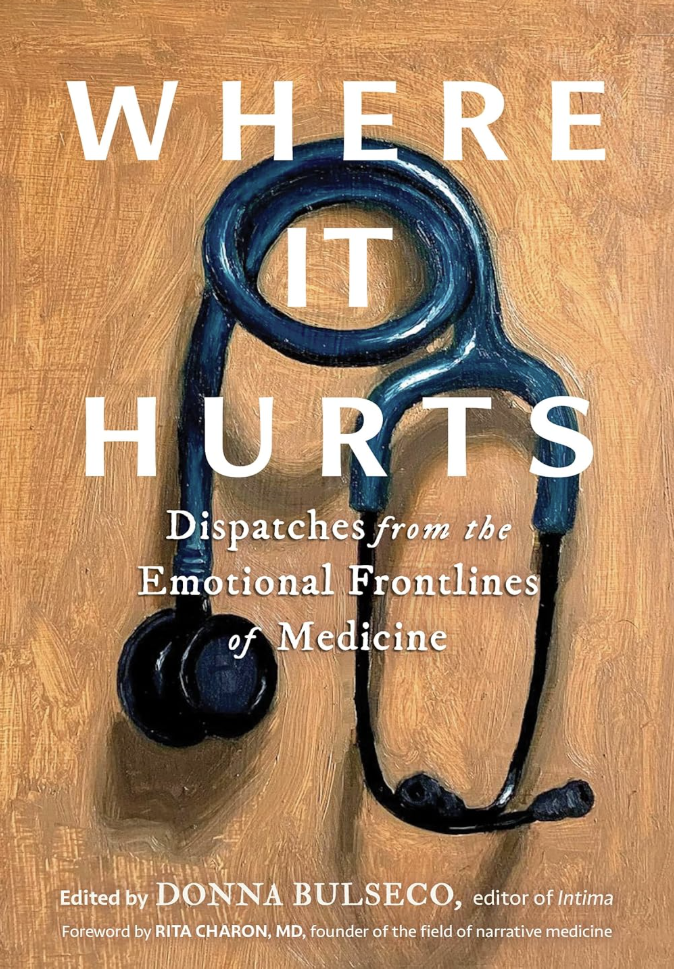
Call for Submissions: Fall-Winter 2026 Intima Journal of Narrative Medicine


OUR CALL FOR SUBMISSIONS  FOR OUR FALL-WINTER 2026
JOURNAL IS OPEN. SUBMIT YOUR WORK TODAY.


Intima: A Journal of Narrative Medicine
is a literary journal dedicated to promoting the theory and practice of narrative medicine, an interdisciplinary field that enhances healthcare through the effective communication, empathy and understanding between clinicians, caregivers and patients. Our name Intima has a specific resonance in the field: For us, narrative involves the intimate interface between people, who yield and gain from the experience of stories involving the clinical encounter.

 The word itself has an anatomical reality: intima is  the thin layer lining a blood vessel, speeding blood to the heart and brain, an apt analogy for the kind of narratives we publish that speak to the emotions and the intellect, the feelings and facts that engage the senses in stories with meaning and impact..


individual
|
INTERPERSONAL
: SCIENCES             
humanistic ------------------------------- mechanistic
SOCIOLOGY : POLITICAL   
|
group


©The Art of Anatomy by Khalil Harbie.
Intima, Fall 2013


Art - https://www.theintima.org/missionandvison also reminded of Escher and Byte Magazine.

My source: Intima list

Previously: 'creativity' : 'crossroads' : 'narrative'

Friday, January 02, 2009

Road safety vs Patient safety

For effective road and rail safety the advice is....

Sometimes though looking "both ways" isn't good enough...


In health and social care and other situations in
addition to utilising holistic frameworks like Hodges' model,

we also need to look inside and outside of ourselves
- the 5th 'spiritual' domain.

Have a safe and happy 2009!!

Acknowledgement:
Photo used with permission (and thanks): Portland Ground

Crossroads sign from commons.wikimedia.org.

Friday, May 01, 2009

GIS a look (and learn)!

Starting work yesterday my colleagues and I had a real surprise.

The boss greeted us as positive, jovial, forward thinking and smiling as ever. Something seemed strange, but as we got to our floor we were handed some note paper and briefed - very briefly - about a "local surprise for you hard-working, dedicated clinicians".

So it was off to the desk and on with the log-in. The surprise came with the provision of a series of maps and questions and exercises. The maps just like google maps, multimaps and other variants provided various views and choices of emphasis; street, satellite and several boundaries: our organization's borders the frontiers of partner PCTs, GP practices, social services. After all these decades GIS had arrived on the clinician's desktop.

Ordnance Survey graphicThere was more to follow though. My mug-shot was there in addition to my colleagues (ah... I'd wondered what that recent (online*) form was for). Drag and dropping this beautiful pic on the map the nursing homes pulsed (as if to confirm that I am alive at least clinically) and changed colour. I know something about drill down, aggregation and such like and there they were: caseload parameters: gender, referral source, diagnosis (if known), drug classes, MMSE. I was getting heady as it was possible to look at clients living at home AND/OR residential care. I nearly flipped when there was more available about the referrers and not just the frequency of referrals but the expected frequencies too. There was going to be quite a compare and contrast exercise there post-2011 Census.

On another map I suddenly thought of 'use the bus Ethel': a carer who when she could went everywhere and also used the trains. Active body : Active mind and there it was - the travel logistics and public transport routes across the patch. This was not just GIS on the clinician's desktop it was GIS for the caseload manager. What proportion of my caseload was within 2, 4, 6, 8 and 10 .... miles of base?

Individual insight aside there was team oversight too, a tool to engage in peer group supervision - with (and get this) tools for the 'integrated health and social care team' to investigate local commissioning and how that factors in geographically. Amazing! Yes there are tools to do all this now, but they are not in the hands of the people they should be. Reports are just for managers? What a waste!!

I was just really getting ready to do that piano-playing-finger-flexing thing that you do when you are about to be extraordinarily creative. I mean I had waited for this, public MENTAL health.... my mouth was dry and here it was - GIS nirvana...

Then it happened....

It was time to wake up and get to work.

I won't stop dreaming though....

*I should have recognised it was a dream at this point.

Additional links:

Welcome to the GIS Files

Free Our Data

ESRI

Mapinfo


Image sources: Ordnance Survey

Crossroads - was c/o http://www.photochart.com/photo_1189_Crossroads.html
and Copyright Olga Dunaeva

Thursday, August 11, 2022

True (group) therapy for the masses ...

Draft thoughts ...

 INDIVIDUAL
|

   INTERPERSONAL    :     SCIENCES               
HUMANISTIC --------------------------------------  MECHANISTIC      
SOCIOLOGY  :   POLITICAL 
|
GROUP
 
 SPIRITUAL

MENTAL MAPS

PSYCHO-THERAPIES


MAPS

PHYSICAL-THERAPIES


SOCIAL
THERAPY?


POLITICAL
THERAPY?

SITUATED - META-COGNITION

'Social therapy' is very much a thing - an invaluable therapy and intervention for patients / clients and  option for the multidisciplinary team. In form it may differ from the social therapy, industrial therapy encountered in 1977, with occupational therapy. Today, can I suggest that it has been diminished? Even as (in the UK) we have social prescribing, and very welcome it is too.

I still wonder if social therapy has been tainted politically, by its proximity to community?

Back in the 80s ... 90s ... I remember the mini-bus arriving with day care patients, people who had attended for years. Dependency was often a fact of life, for them, their family, or the choices were stark. and I've seen hints of dependency again. Psychological therapies were not offered as readily back then, and lack of engagement would have been the gate-keeper then and for many patients now. Day care is much diminished now, if provided at all. As a response to dependency, stasis this may not be a 'bad' thing, but what replaced it? How and where did people move on to?

Community, the original home and origin of the forum, the market place, and town crier has been left by successive governments to market forces. Now the High Street footfall is a sepia-coloured snapshot. Passers-by now, can read 'for sale' signs, 'units to let', see shutters, litter, pigeons on their break from 'being' online. The Ubers and e-food delivery enterprises now clog the roads, previously trodden by the clogs themselves (I've been told you could here them outside).

I realise there is a continuum at work here (and as 'group' in h2cm suggests - it does its work). A crossroads, hamlet, village, town, community, neighbourhood - with the exact position of some terms - 'community'  (on the IND-GRP axis) for example, subject to debate. 

The post back in May, concerning an individual therapy - New book: "Talking with a Map"

- has me thinking about the GROUP related domains of SOCIOLOGY and POLITICAL. 

About therapy not individually, but a need to address the idea of therapy at the community level. You might call this a 'root and branch' review, and yes, this is the sentiment. 

It is clearly more than 'levelling up'.

Stepping outside of the boxes (outside of #h2cm - the clinical context ...); this isn't a person with an illness. Neither is it an effort to instantaneously medicalise society (that's another post). The community (UK*) is also not best placed to self-care, to prosper - which would be quite a feat if it were possible.

Back in June, I saw tweet about WHO and the need to strengthen primary care; and the global role for primary care was highlighted in the previous post. I can't find the tweet now, but I think it was a global health call, as so many nations are still developing, even creating primary care.

Here in the UK (USA?) - like the longevity stats - we appear to be going backwards. Therapy here is not going to improve access to primary care, or correct the dental desertification the UK NHS is experiencing.

If I am true to the model - #h2cm - here as displayed above, then there must be group therapy equivalents. Not group therapy in the usual - psychological / psychotherapy - sense, but a real transition from the individual to the group as found in social and political terms. Perhaps, this can be summed up as the need to revisit and re-negotiate the social contract - if it were ever agreed? This is were healthcare and time must coalesce: the past, present and future. Our health systems need to change.

I need to work on this muddle!

*If I may be so bold.

The model is encompassed within situated cognition - meta-cognition and the spiritual.

Saturday, June 24, 2017

Evidence for simplicity, genericity, openness and holistic competence

N-th mover to Integrated, Person-Centered and Holistic Care

walk the talk, sour grapes, or holistic humbug?

Although, sadly (and all down to me) I stepped off the PhD programme with an MRes, the intention was not to bring my journey with Hodges' model to a close. The joke of course with this model is that you are always presented with a crossroads. As I've written previously (even in draft!) this model is a baton to pass on to others. If the workforce of the 1970s to date evaluates its contribution to health care change and progress, then while the achievements speak for themselves, the challenges* that remain still shout out:
  1. parity of esteem 
  2. integrated - co-ordinated and collaborative care
This week I received an email, purely as a list member I must add:
NHS Innovation Accelerator 
Applications for the 2017 NHS Innovation Accelerator (NIA) are now open. For 2017, the NIA is seeking local, national and international innovations that address the following NHS priorities:

·         Mental Health
·         Urgent and Emergency Care
·         Primary Care

The above is now closed but I immediately thought about Hodges' model, given that from the information provided mental health is a priority and a top priority for citizens. Plus, the things that can make a difference to problems:
  • Suicide and relapse prevention
  • Access and availability with a focus on perinatal, children and young people, dementia and psychological therapies
  • Early identification and intervention to minimise the impact on a person’s life, the likelihood of escalation and, in some cases, the chances of survival
  • Care closer to home including self-care and access to services at home, in a primary or community setting
  • Holistic care of both mental and physical health needs including prevention, screening and treatment for those at greatest risk of poor physical health   
"There are many innovations available to improve mental health services, however they are not always used..."

There are however a series of requirements, which present a stumbling block as high impact evidence is lacking.

The purpose of NHS Innovation Accelerator lies in the name. The target is established initiatives and projects that would benefit the NHS and others from a boost of further momentum and leadership support including funding and mentoring. Hodges' model is far from this, but the call is interesting nonetheless.

Reading the details I can argue, for example, that Hodges' model is immediately applicable across the life-span. The model is already designed, but in use the model could be said to meet the requirement of being co-designed with people (including carers, where appropriate). I have used the model with patients and carers (young and adult) who have lived experience of mental illness. With some consideration of the patient, carer, as I have stressed here before on W2tQ the model is accessible to a diverse population. Critically, the delivery of the most significant benefit in terms of outcomes and cost savings needs proof.

It seems that many of the world's problems could be ameliorated through education. This has been evidenced for decades and yet globally there are those who politicise their respective educational system, or even worse deny sections of a society access to education.

In healthcare how can we demonstrate the effectiveness of what is basically a back-of-an-envelope tool? While not a solution Hodges' model helps us to resolve the constituents of healthcare demand and supply, to critically analyse and synthesize - what is going on? I'm sure Hodges' model is just one of many local 'innovations' (in this case created in NW England) that are not evidenced and are therefore missed. Why is this? It may be that the model needs to be re-discovered since being invented somewhere else, by somebody else makes it a non-starter. Similarly, reading the information 'model of care' always grabs my attention:

Your innovation can be a device, digital app or platform, 
a service, process, pathway or model of care. 

But as is often the case, this is framed in service commissioning, funding, delivery and yes patient outcomes terms. Devices, apps, platforms and services can be specified to a high degree. This is essential to success in research (as is dissemination). Aims and objectives can then be clearly defined, outcomes can be recognised and measured. Processes and pathways are perhaps more fuzzy? These are all important tools, aspects and contexts in health care.

My frustration is that this and similar research formulations seem to exclude tools and resources that are by their nature intentionally simple, holistic, generic and cognitive-reflective. The "model of care" is broken. A whole systems approach# is needed that incorporates education and with it prevention and staying well; plus caring for those affected by illness and disease. We have to honour the legacy problems that the political, education and health systems have 'delivered'. Even if not broken the model of care is missing its twin, the model of life-style choices'.

I still believe there is a model - a conceptual framework - that must precede the (politicised?) model of care, if health and social care are to be truly transformed. Without this, well yes the NHS can accelerate, staff have demonstrated this repeatedly while negotiating all sorts of obstacles. The line of travel will however be circular; circular, but without the discoveries and change gifted to the particle physicists.

individual
|
INTERPERSONAL : SCIENCES
humanistic ----------------------------------------- mechanistic
SOCIOLOGY : POLITICAL
|
group - population

education

mental health

cognitive access

benefits - outcomes

subjective

Evidence

process

primary care, accident and emergency

physical access

objective
qualitative

home

social care

co-design

public engagement


quantitative

strategy

'model of care'

education system

citizens

cost savings

My source: 
Irina Johnston
CHAIN Administrative Assistant

If you wish to publicise information on the CHAIN Network please email your request to: enquiries AT chain-network.org.uk

CHAIN - Contact, Help, Advice and Information Network – is an online international network for people working in health and social care. For more information on CHAIN and joining the network please visit website: www.chain-network.org.uk

*
  1. parity of esteem (a very broad interpretation - the comparison and contrasts between mental health and physical care on several levels - demand, supply, funding, research, integration, staffing, policy, outcomes, evidence-base, social determinants...)
  2. integrated - co-ordinated and collaborative care (this is not one thing, but several. These terms are sometimes used interchangeably. Care that is truly integrated will also be co-ordinated and collaborative.
# This is not recourse to jargon, Hodges' model implies several systems from the outset.

Tuesday, November 21, 2006

Advocacy No. 1

What’s your view on nurses as advocates?

For nurses advocacy is seen as a constant facet of the role. It may not be as pronounced these days, but it is always present. If a person (patient or carer) needs an advocate in that 'non-legal' sense, then as nurses we are ready and willing to assist and present the patient's views. Quite a few years ago there was much navel-gazing that questioned the appropriateness of nurses as advocates. Where are the boundaries and how do you define non-legal? How independent can nurses be?

This no doubt presaged the advent of formal and dedicated advocacy worker schemes, a development reinforced by the emphasis on human rights over the past decade. Rather than travelling along the care pathway WITH the patient, carer(s) and health care team, advocacy workers are ready to get involved - independently - as the care situation reaches a crossroads (and pauses momentarily). In my experience though it is not easy to find longer-term independent advocacy input. Sometimes it is the very need to call 'time' - to seek space to reflect and weigh pros and cons - that is an issue.

Unless their role is radically changed, nurses will always be an initial advocate. Nurses are in the midst of care, their privileged relationship and proximity to the patient, their knowledge of the issues, diagnosis, interventions and prognosis makes advocacy a natural (caring!) response. I raise this because if advocacy is a political concept and the nurse’s role as advocate is less than it used to be, then what is left - beyond the political essentials of pay & pensions?

This blog is in danger of becoming a litany of examples by which I reveal my age. ... Back in the late 1970s and 1980s nursing was far more political and in the UK those were certainly employee-employer troubled times. They had quite an effect did those Union badges! Metallic drops of red, blue and green that adorned so many lapels, instant decoration for the grey suit with waistcoat that I used to wear (my mum thought I looked smart for once). Mental health always seemed more, shall we say union-attuned, than general nursing and yes the power of the unions had a lot to answer for in the UK; but where are we today?

Acting as an advocate you really can make a difference. Individual needs are nursing's bread & butter; but why stop at one person, when the needs of the many...?

Perhaps my view on this is a personal illusion, brought on by the purchase of Jane Salvage's ‘Politics in Nursing’ (1985)? Did this book, like most, merely reflect the times? I must confess the book did not 'activate' me. (Although, as the website may demonstrate, my head was lost above the clouds.)

In my student and early years the advice was keep your nose clean; deposit your assignments on time into the school of nursing's coffers and get through the current placement. There were exceptions as might be expected in a huge aged asylum, though thankfully when necessary action did not fall upon the conscience of one individual (that takes real conviction, courage & dedication). The issue was 'public' witnessed by several colleagues, all dedicated to high quality care. A case of a problem shared…...

The point of all this: If nursing has largely withdrawn from the role of advocate, than what is left politically? Maybe for you nursing is still there, the sparks flying as the activists sharpen advocacy's edge? The nursing pioneers Nightingale, Seacole, Makiwane, Breckinridge, Walking Bear Yellowtail, Peplau; and many others set an agenda. To what extent have we (nurses) addressed this? What remains to be done and what new challenges do we face?

The pioneers made a real difference. Not only did they build the ship, they set us on a course. If I were a student I'd be shouting "Are we there yet!" Has nursing arrived? If not, why not, how can we correct course and where - in the time of constant re-invention - is the new horizon?

Saturday, March 24, 2007

Holistic care No. 2: Definitions - pushing the envelope checking the corners?

Last month I posted about holistic care; where was I up to? Yes, of course definitions...

I came across this article that includes reference to Jan Smuts (1926) who is generally attributed with coining the term holism. The article also highlights that holism is often associated with alternative medicine. I'd like to suggest here that holism extends far beyond any specific school of medicine or new ageist theme. A conclusion reached from contemplating the state of the World and using Hodges' model. So let's consider holism as a feature, characteristic or principle of care theory, practice and policy. What follows may well apply generally.

To begin, if health and social care (plus pastoral) is to be person-centred and situated then agency (who) must be a central factor in defining holism - holistic care. Then I would add the concept of information followed closely by knowledge. Stepping back slightly 'holistic' in h2cm denotes openness, inclusiveness and comprehensiveness.

AGENCY: In Hodges' model I think there are four aspects to agency:

  1. The person who is the 'patient';
  2. The health / social care agent;
  3. Others associated with the patient (family/friends as carers);
  4. The population at large (local, national through global).
The definition of the health care agent can be described as idealised or actualised; implicit or explicit; indirect or direct(?)

EnvelopePlease pardon the verbiage here both that last sentence and the volume. I'm still trying to figure this out. If you hadn't noticed I'm scribbling all this on an envelope. Any assistance or suggestions gratefully received.

A definition needs to account for the way it [holistic care] is used in day-to-day language, across various settings and contexts. To explain a bit more: imagine there is a community service with a multidisciplinary team that is 'holistic' in that it includes all professional (qualified and unqualified) disciplines, and voluntary practitioners of care. In combination this holistic service bring with them a range of knowledge and skills that is comprehensive. There are distinct pools of specialisation, with the inevitable overlap of some skills - otherwise how could people co-work? So on paper this team could - idealistically - be said to be 'holistic'.

If, however, all of these agencies were to be involved in a single case, then another definition of 'holistic care' emerges. This highlights the importance of context on working definitions derived from the service (agent) side, in contrast to definitions from the patient (subject) perspective and policy (Government). If you need some indication for the level at which Hodges' model operates look no further. At this level the patient and informal (family) carers are also agents, supporting the notion of self care.

It could well be that the whole team are legitimately required to respond to a referral, but if not this would constitute a huge waste of resources. The actualised sense of holistic care is expressed in policy - interventions must be commensurate with need. We cannot divorce health care from governance and economics. In fact there may be a case of abuse to answer for. You really can have too much of a good thing.

Point #4 above may seem to stretch the concept of agency too far. Problems first launched in the 19th century are coming home to roost. There is (currently) nowhere to run or fly. The inclusion of local through global sense of agency is a MUST. Patient care is de rigueur, self care is a major challenge*, both are insufficient in terms of achieving holistic care:

Staff: "Always observe discretely and check the welfare and safety of the quiet, withdrawn patients in your care."

Student: "Who's that sat in the corner?"

Staff: "Where? You mean the lady sat in the other corner don't you?"

Student: "Hold on .. why - she's in all four corners, in fact she's everywhere..."

Staff: "Oh, yes that's right her name's Mrs Green and actually she's not so quiet these days. It's all very sad. We're trying to include her in things."

Student: "What's the problem?"

Staff: "Some very complicated and damaging relationship problems, gross personal assaults of the worst kind that we can't discuss here, but the lawyers are talking about crimes against humanity.... All her children are threatened. Goodness is that the time! Is it time for your break? Perhaps you could go try and speak to her. Better still maybe just listen..."


INFORMATION: If agency is primarily centred on the left side of h2cm namely the humanistic axis with the INTERPERSONAL & SOCIOLOGAL domains - then this needs to be counterbalanced if the model is to mean something. ICT (information and communication technology) IS an essential factor.

Digital KnotFor our purposes though we need to fracture this union and separate out information, communication and technology (Intensely Confusing Terminology?).

If we untie the digital knot, then we can better reflect upon the sociotechnical dimensions of holistic care.

KNOWLEDGE: This brings us to the next definition that can be built on conceptual and prepositional foundations. A definition of holistic care relating to knowledge can (surprise-surprise) also utilise Hodges' model.

I've to pull-the-plug somewhere - sorry info and know are very brief. Thanks for stopping by awhile, safe travels until we meet again at this crossroads.

I hope you'll be back and that these reflections are helpful?

More to follow: Holistic care No. 3: Location

holism: Smuts, J.C. (1926) Holism and evolution. New York: Macmillan.

*The real challenge is avoiding the need for self-care!