Hodges' Model: Welcome to the QUAD: loss

Hodges' model is a conceptual framework to support reflection and critical thinking. Situated, the model can help integrate all disciplines (academic and professional). Amid news items, are posts that illustrate the scope and application of the model. A bibliography and A4 template are provided in the sidebar. Welcome to the QUAD ...

Showing posts with label loss. Show all posts

Wednesday, September 24, 2025

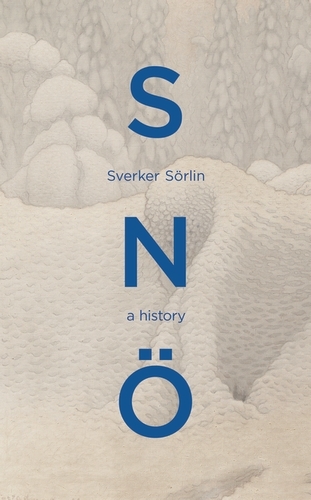
Book: SNÖ

'Snow. A single word, for an infinite variety of water formulations, frozen in air. The study of snow is physics, chemistry, meteorology, anthropology, geography, poetry and art. It is hope – annually renewed. And it is history, too.

Earth saw its first snowfall 2.4 billion years ago. The world's oldest skis, made by hand five thousand four hundred years old, pre-date the pyramids of ancient Egypt. To humanity, snow has variously been an ally and an adversary; an inspiration to countless artists and a place of breathtaking tragedy and survival. But it’s always been there. And now it is melting. 
In 1927, the snow was already more than nine metres deep on Japan's Mount Ibuki when a remarkable 230cm fell in 24 hours, bringing about the greatest depth of snow - 11.82m - ever recorded. Yet it is a fact today that, ironically not only has this mountain's resort been forced to close due to lack of snow, most people in the world have never been near snow: never felt the soft crunch of snow underfoot, never held snow to see it melt in their hands, let alone stood on a pair of skis.'  continued ...
Individual
|
      INTERPERSONAL    :     SCIENCES               
HUMANISTIC  --------------------------------------  MECHANISTIC      
 SOCIOLOGY  :    POLITICAL 
|
Group


compass defined

compass unified

mental expanse

beauty

memory

lived experience

signature of change

sadness

signifier
SNÖ by Sverker Sörlin

culture

poetry - arts

social history

shared loss

recreation - leisure

Two kids.
Uncles! In car, drenching
us driving through slush in the gutter 😎


Sverker Sörlin, Elizabeth DeNoma (Translator) (2025). SNÖ - A History. London: Doubleday.
https://www.penguin.co.uk/books/467833/sno-by-sorlin-sverker/9781529947878


My source: Clark, P. A gear shift to adapt to a warming world. Books. Genre Round-Up, Environment.  Life&Arts. FT Weekend. 23/24 August 2025. p.10.

John Denver - Season Suite (Full) The Suite is in this order:
  1. Summer
  2. Fall
  3. Winter
  4. Late Winter, Early Spring (When Everybody Goes to Mexico)
  5. Spring

Wednesday, July 17, 2024

'Land Back' - Owens Valley, California

"The vast territory known as Owens Valley in California was home for centuries to Native Americans who lived along its rivers and creeks fed by snowmelt that cascaded down the eastern slopes of the Sierra Nevada. Then came the European settlers, and over time, the Native Americans tribes lost access to nearly all of that land. Eventually, the water was lost too: ...
Less familiar is what happened to the Owens Valley, and the people who lived there, after most of the water was sent south. Owens Lake is now a patchwork of saline pools covered in pink crystals and wetlands studded with gravel mounds designed to catch the dust. And today, the four recognized tribes in the area have less than 2,000 acres (800 hectares) of reservation land, estimated Teri Red owl, a local Native American leader. 
But things are changing, tribal members say. They have recently reclaimed corners of the valley, buoyed by the growing momentum across the United States to return land to Indigenous stewardship, also known as the "Land Back" movement." p.7.

Individual
|
      INTERPERSONAL    :     SCIENCES                   
HUMANISTIC  --------------------------------------  MECHANISTIC      
 SOCIOLOGY  :    POLITICAL 
|
Group


LAND
culture

indigenous peoples

history
BACK


justice


Cowan, J. Native Americans reclaim lost land in California, The New York Times International Edition, June 18, 2024. p.7.

Friday, April 26, 2024

Buses, Eddie Stobart, Lego and Laughing Boy

Individual
|
   INTERPERSONAL   :     SCIENCES               
HUMANISTIC  --------------------------------------  MECHANISTIC      
 SOCIOLOGY  :    POLITICAL 
|
Group

person - personality
personal duty of care
emotional care
experience

buses - Eddie Stobart - Lego
space - time
1-day Physical care  Another day
the sound of laughter


Source: Twi/X + image:

Friday, April 05, 2024

CALL FOR PAPERS i - Lagoonscapes 4 | 2 | 2024

Special Issue's Title: Ecologies of Life and Death in the Anthropocene

Guest editors: Professor Peggy Karpouzou, National and Kapodistrian University of Athens, Greece & Dr. Nikoleta Zampaki, National and Kapodistrian University of Athens, Greece

Both life and death are natural states of humans and non-humans, coexisting and at the same time in an implicit ‘conflict’. The perception and mostly the experiences of death have varied through different local communities historically, often aiming to explain death through philosophical or religious interpretations of human and non-humans’ afterlife (e.g. Merchant 1979).

In the present condition of a precarious planetary time when environmental crises, wars, violence and pandemics are before us, entire ecosystems are annihilated or even destroyed. Human and more-than-human world’s vulnerabilities get amplified as death and loss become urgent environmental concerns, manifested in many cultural connotations, e.g. literary, artistic, philosophical etc., seeking to explore and explain death matter in nature as well as the consequences of death on species’ behavior and psychology. “It is about recognizing our shared vulnerabilities to human and non-human bodies, and embracing our complicity in the death of these other bodies- however painful that process may be” (Cunsolo 2017, 3-4).

Writers and artists have explored the representations of death matters beyond the human, the mourning for past, present and future ecological loss (Barnett 2022), while attempting to visualize and express ecological grief, mourning and melancholia, carve out memorial spaces and also imagine practices of the afterlife. For example, in literature, the poetic subgenre of elegy found as (anti-)pastoral elegy, eco-elegy or “ecological lament” (Morton 2009) is built on the poet’s acceptance of “death as natural […], in line with the season pattern and rebirth” (Twiddy 2012). Here death is not only synonymous with a biological end, but a rebirth, a state of a new being. However, the loss of nature itself, turning it into a ‘mirror’ of human loss, redefines the traditional elegy’s search for consolation (Sacks 1987).

Grounded in the theoretical framework of death studies, this special issue explores life and death eco-imaginaries and engagements, as they are interwoven through the study of the human and more-than-human world. It is there where an ontology of ecologies of life and death is being exposed and where the ethical territories of eco-grief and eco-mourning unfold. Therefore, the possibility of studying the ecology of life and death is questioned: How do we come up with death issues in nature? Is nature grievable? How do we mourn for it? How about the circular and linear way between life and death in nature’s spatiality and time? How about writers and artists’ perception of ecologies of life and death and how are they represented in texts and artworks? How do ecologies of life and death affect the way of writing or artistic outcome? How about the posthuman perspective on dead bodies and afterlife issues? What will it mean to live and die in the Anthropocene? (e.g., Scranton, 2016; Stiegler 2018).

While the ecologies of life and death give way to ‘decentralize’, even ‘deconstruct’ concepts like melancholy, grief and mourning, also ‘view’ the last ones as an approach of resilience and symbiosis between them, even a ‘spur’ to act. In this sense, there is a need to re-organize what is holding humanity back, such as the fear of humans' destructive power, and take action to achieve life’s preservation in order to build sustainable futures. We particularly welcome submissions that revolve around, but are not limited to, the following axes and concepts:

  • ecologies of life and death in ecocriticism, ecopsychology, eco/bio-philosophies, bioethics, plant humanities, animal studies, etc.
  • eco-anxiety, eco-grief, eco-mourning, solastalgia, toxic environments, extinction studies, political ecology of death
  • ecologies of life and death in -cene, e.g., Anthropocene, Neganthropocene, Necrocene, Symbiocene etc.
  • the genre of elegy (e.g., eco-elegy, “ecological lament”, (anti-)pastoral elegy etc.
  • ecologies of life and death in continental philosophy
  • ecologies of life and death in posthumanities (e.g., posthumanism, transhumanism, a-humanism, meta-humanism, anti-humanism, super-humanism etc.)
  • ecologies of life and death in medical humanities (e.g., pandemics, epidemics, plagues, biotechnology etc.)
  • ecologies of life and death in religious studies and anthropology
  • postcolonial narrations of death
  • “necropolitics” (Mbembe), “bare life” (Agamben), “slow death” (Berlant)
  • ecologies of life and death in indigenous studies
  • human and more-than-human world in queer death studies and gothic studies
  • ecologies of life and death in disability studies
  • ecologies of life and death in arts and aesthetics / ars moriendi
  • ecologies of life and death in visual studies, media studies, film studies
  • memorials, ways of remembering, rituals of eco-mourning
  • images, tools and practices of the afterlife in literature, philosophy and arts (e.g., mummification, cryonics, end-of-life applications, 3D printing for facial reconstruction etc.)

Deadline for full articles’ submissions: Kindly submit a full article of no more than 50,000 characters (spaces and references included), an abstract of no more than 650 characters spaces included, and at least five keywords by 31 of July 2024 at the latest.

Should your article be accepted for inclusion in the upcoming December issue, you will receive an email containing instructions on how to upload your final version within 15 days from receipt. Such articles must be suitable for blind peer review.

Please make sure to obtain the necessary reproduction rights documentation if you need to include photos in your text.

Articles must be written in English. In case you have further queries, you are welcome to send an e-mail to the Editors’ e-mails: pkarpouzou@phil.uoa.gr and nikzamp@phil.uoa.gr.


Best regards, 
on behalf of the Editors

Nikoleta
--
Dr. Nikoleta Zampaki
Postdoctoral Researcher
Faculty of Philology, National and Kapodistrian University of Athens, Greece
E-mail: nikzamp@phil.uoa.gr

Series co-Editor of "Posthumanities and Citizenship Futures" at Rowman & Littlefield: https://rowman.com/Action/Series/_/LEXPCF
Assistant and Managing Editor of “Brill Research Perspectives in Critical Theory”: https://brill.com/display/serial/RPCTS?contents=about
Wednesday, December 06, 2023

COP 28: The water runs deep and broad - Solastalgia for all?

me - you INDIVIDUAL - the few
  |
     INTERPERSONAL    :     SCIENCES               
HUMANISTIC --------------------------------------  MECHANISTIC      
SOCIOLOGY  :   POLITICAL 
|
others - GROUP - many
climate anxiety

eco grief

... as yet unforeseen impacts ...

[personal and collective]
Raise A Paddle
© Fenton Lutunatabua / 350.org
Underwater Cabinet Meeting in the Maldives


political malaise?


"'Solastalgia' was first coined by the philosopher Glenn Albrecht almost two decades ago; it is a blend of the Latin word "solacium" (comfort) and the Greek root "-algia" (pain or grief). Solastalgia, argued Albrecht, was a way to convey the idea of distress caused by irreversible environmental transformation. It is 'the homesickness we feel while still at home', he writes."


Where exactly do politicians and capitalists 'live'?


Frankopan, P., How to avert an 'eco grief' epidemic, The Daily Telegraph, 12 August 2023, pp.6-7.

Maldives image c/o:
https://sos.noaa.gov/education/phenomenon-based-learning/underwater-cabinet-meeting/

Raise A Paddle c/o NMS:
https://media.nms.ac.uk/resources/raise-a-paddle-fenton-lutunatabua-350-org

Monday, September 12, 2022

Endangered - so many things ...

INDIVIDUAL
|
 INTERPERSONAL    :     SCIENCES               
HUMANISTIC --------------------------------------  MECHANISTIC      
SOCIOLOGY  :   POLITICAL 
|
GROUP


Songs of Disappearance

Musics Lost and Found


Musics Lost and Found image:

https://www.amazon.co.uk/Musics-Lost-Found-Collectors-Tradition/dp/178327607X


My source:

Lagan, B. Endangered birds on song in album chart, The Times, December 21, 2021, p.43.

Hewett, I. Your mission: to find the most endangered song in the world, Books, The Daily Telegraph, 30 October 2021, p.18.

Saturday, April 16, 2022

"A Peculiar Shade of Blue" c/o Rowan Jacqueline

 
INDIVIDUAL
|
 INTERPERSONAL    :     SCIENCES               
HUMANISTIC --------------------------------------  MECHANISTIC      
SOCIOLOGY  :   POLITICAL 
|
GROUP

personal grief ..

the facts of life, death and place ..


Rowan Jacqueline: https://www.spiderflower.org/


My source: https://twitter.com/artdotearth

Tuesday, March 29, 2022

Peine Perdue, Lost Cause* c/o Anaïs Charras

INDIVIDUAL
|
 INTERPERSONAL    :     SCIENCES               
HUMANISTIC --------------------------------------  MECHANISTIC      
SOCIOLOGY  :   POLITICAL 
|
GROUP


Peine Perdue/Lost Cause (2021) Drypoint on copper,
chine
collé (Bunkoshi paper), 340 x 500 mm. Edition: 12


My source: Anaïs Charras [image], Artist's Eye. Printmaking Today, Vol 31, Issue 121, Spring 2022, p.50.

*We - the people - can, must and will prevail.

Related post: https://hodges-model.blogspot.com/2020/11/self-care-tree-girl.html


Tuesday, February 08, 2022

"Room 5" BBC Radio 4

 
The Health Career Model has four obvious care (knowledge) domains,
but of course there is a 5th.

This is even clearer when 'health career' is seen as 'life chances'.

 
  Self - Individual - Person
|

INTERPERSONAL : SCIENCES
humanistic ------------------------------------------ mechanistic
SOCIOLOGY : POLITICAL
|
Community - Group - Population
Personal meaning / sense-making

Whatever your beliefs there is a spiritual domain.

*Who exactly 'were' you before?

diagnosis
(as category, classification, ...)

prognosis
(... TI:ME .... into the future ..?)

pre-morbid*


What does this <diagnosis> mean to others?


school span
work span
healthspan
lifespan

What sense do governments
make of the above?


Saturday, December 05, 2020

"All in the Mind" (and model): Ambiguous Loss

"Have you ever lost a loved one who was still a part of your life in some way? Did it leave you feeling confused or frozen about how to continue with life? Claudia Hammond examines the distressing phenomenon known as ambiguous loss – the enormous challenge of dealing with a loss when you aren’t sure what’s happened, leaving you searching for answers, unable to move on." 
BBC Radio 4 "All in the Mind" 1st December, 2020 (Available for one year)
 individual
|
INTERPERSONAL : SCIENCES
humanistic ----------------------------------------------- mechanistic
SOCIOLOGY : POLITICAL
|
group

psychological ambiguous loss


ambivalence, grief, loss

guilt, reality, meaning

BOTH-AND thinking -

physical ambiguous loss


a body is missing


head injury

- the impact of dementia on a person


Sunday, June 07, 2020

The Greatest Wealth: In Celebration of the NHS

4 Jun – 1970s: Sister Susan, by Moira Buffini, performed by Dervla Kirwan

Which is your decade?

What of the Future ...?

individual
|
INTERPERSONAL : SCIENCES
humanistic ----------------------------------------------- mechanistic
SOCIOLOGY : POLITICAL
|
group - population
For you,
and you,
and you,
...
it's your safety net.

That's why
we should all take 
care
of it ...


[Video no longer available]

So, for you
and you,
and you,
who Occupy 
this space here;
the Public 
have been 
waiting, waiting, waiting ...
oft silent minorities suffering,
but all are
listening,
watching and willing
for a semblance of rational
 leadership with security
in national and global 
Politics:
Now.

Thursday, April 23, 2020

c/o Boccioni - "Empty and Full Abstract of a Head"

"The destruction, in 1927, of a number of plaster and mixed-media sculptures by the Futurist artist Umberto Boccioni (1882-1916) was a tragic loss for avant-garde art. Of the many ground-breaking sculptures he created between c.1913 and 1915, only a handful remain in existence today. Now, using a combination of vintage photographic material and cutting-edge 3D printing techniques, digital artists Matt Smith and Anders Rådén have recreated four of Boccioni’s destroyed works: a volumetric study of a human face titled Empty and Full Abstracts of a Head, and three of the artist’s iconic striding figures. This ground-breaking display enables modern audiences to ‘see’ these lost masterpieces for the very first time."

https://www.estorickcollection.com/exhibitions/boccioni-recreating-the-lost-sculptures

individual
|
INTERPERSONAL : SCIENCES
humanistic ----------------------------------------------- mechanistic
SOCIOLOGY : POLITICAL
|
group - population
Umberto Boccioni
Study for ‘Empty and Full Abstracts of a Head’, 1912
Matt Smith and Anders Rådén
Digital rendering (contour) of
Empty and Full Abstracts of a Head


Coin - Boccioni


See also:

https://www.ardi.se/ 

https://www.uniqueforms.net/


Art Images:
https://www.widewalls.ch/boccioni-recreated-sculptures-estorick-collection/

Coin:
https://twitter.com/CorriereQ/status/1252646124898398209?s=20

Cuttings, Back to the Futurism, Printmaking Today, 2019, 28: 112, p.6.

Sunday, March 22, 2020

Exhibition: "Library of Exile"

individual
|
INTERPERSONAL : SCIENCES
humanistic ----------------------------------------------- mechanistic
SOCIOLOGY : POLITICAL
|
group - population


"A roofless pavilion about the size of a shipping container, it is lined with shelves holding some 2,000 books ...

"The scope of "exile" is certainly wide.
The World Health Organisation estimates that 1bn people - almost one in eight of the global population - are living as migrants, of whom 68m have been forcibly displaced." p.8.

by exiled writers. ... The library represents a kind of communal autobiography of the displaced person through history, from Cicero to Dante to the European émigrés of the 20th century and present-day author-exiles such as Elif Shafak and Aleksander Hemon.
The installation is itself migratory, having arrived in London following sojourns in Venice and Dresden. From here it will travel to Mosul, Iran, where it will remain." p.8


My sources:
Atkins, W. (2020) You can't go home again, Life&Arts, FT Weekend. 14-15 March, p.8
and British Museum.

Monday, January 13, 2020

a Book by two Fathers on "Grief, Guilt and Hope"


Il Nous Reste Les Mots (We Still Have Words) 

individual
|
INTERPERSONAL : SCIENCES
humanistic ----------------------------------------------- mechanistic
SOCIOLOGY : POLITICAL
|
group - population


My source:
BBC Radio 4, PM, 13 January 2020.

Wednesday, July 25, 2012

Olympic Torches, History and Nostalgia for the Light


I never got to see the Olympic torch procession,  although I crossed its path on a couple of occasions.

This for me has much significance    +

In Euxton, Lancashire and more recently I found myself ahead of the relay in Oxford.


I saw a torch at the Disability Awareness Day in Warrington.


A prized possession: a keepsake of a lifetime.


Image source: http://www.warringtonguardian.co.uk/news/9825966.Disability_Awareness_Day_marks_21st_event_with_Olympic_glow/


Over the weekend I went to see the film - Nostalgia for the Light. A documentary that is simultaneously challenging, troubling, poetic and beautiful. A journey through history in its multiple forms; astronomy, and archaeology - ancient and modern. The setting is the Atacama desert. The astronomers using various telescopes explore celestial bodies, taking advantage of the elevation and transparency of the sky. The extremely low humidity that also supports such observations also preserves human bodies. Not just those thousands of years old, but human bodies from more recent times. Those of Chile's "disappeared" those who have been found and those still lost to their families.

Skeletons abounded. Ancient mummies, more recent explorers and miners. I noticed how these skeletons can give up their secrets from belongings, clothing, identified by relatives.

How telescopes themselves are skeletized in their design to save weight, cost. Today the affluent can purchase a skeletized watch - to make a statement. Mechanism. To mark their personal history. History.

What legacy? What cost? 

Around the world : dictatorship.

The search of the few for the many against the sun and the turn of stars.
Light seeking light, seeking peace and a final release.

Tuesday, January 05, 2010

Your odds on favourite: Hodges' model

HAYDOCK PARK 3:00

The Hodges-Jones Classic Integrated, Holistic &
Multidisciplinary Care Chase


Going: heavy
26m 1.75f
4REALPOLITIK250225


3SOCIAL SHENANIGANS3325


1INTERPERSONAL SKILLS534

2HARD SCIENCEEvs10-115-610-115-6
5SPIRITUAL LEANINGS75504550
6SOCIO-TECH NEGLECT7501000


Additional links:
Gamblers Anonymous

Gam-Anon

Gambling Commission

Inspired by BBC News and living by Haydock Park Racecourse

Ref info:
http://www.ukhorseracing.co.uk

Thursday, September 11, 2008

BBC R4 Today - NHS productivity

Following the post yesterday - Don't waste energy - use a care plugin... - there was an item this morning on BBC R4 Today:

0815
A report published by the Office for National Statistics suggests that NHS productivity has been falling by 2% a year. Martin Weale of the National Institute of Social and Economic Research, and Shadow Health Secretary Andrew Lansley discuss the efficiency of the NHS.
There's no transcript of the interview so maybe I was (still) dreaming? At some stage though this a.m. a point was also made about the public (as tax payers and patients) either wanting to go into hospital to be treated and cured (quickly and efficiently) OR have a 'good' (positive) patient experience.

Why can't the two go hand-in-hand -
especially with all the emphasis on 'partnerships'?

Martin Weale highlighted how efficiency is not everything - people may have other requirements. If a patient is treated very efficiently and quickly - all evidence based, latest and greatest interventions - but their experience is at best neutral, or at worst negative, then how will that experience affect their recovery, staying well - relapse prevention - and any future care episodes and admissions? Complex indeed ...

- and Remembering...

Saturday, May 19, 2007

"Where are we?" Take Two, Three, F.... (witheringcare?)

In Five Senses, Serres does not overtly discuss mortality, loss, depletion and omission (Connor, 1999). Management consultants advise that to succeed ‘think outside the box’, but the population pyramid is casting an ever larger shadow, highlighting an ageing population and the box is frequently found full and yet empty? Plaques disconnect, disable the memory; the critical biological box no longer registers and connects. The noise that counts, the background bioelectrical hum is disrupted or absent. Memories once ready to roll downhill, surfing the wave of potential are inaccessible, if marshalled at all. Wither the neural crossroads; the informatique mote in Hermes’ eye?

Our older people, those not yet ephemeral have become peripheral, their personal space an adjunct to furniture. New quantities in life, beg questions of quality, especially quality of care and what it means to care. The concept of self, person-hood is a prime distinguishing factor in terms of describing the attitudes of cultures and communities to older adults and memory loss. In the developed nations the debate continues: is this the price of a long life, or a way of life? In a search for the locus of informatics: the sign on this door reads deep informatics. Listen carefully, as inside the seniors are cared for at home (touched*) remotely courtesy of telecare solutions. The values here of course extend from inappropriate use of informatics to lack of access to such services (Barlow et al., 2006). ...

Remotes


*For Serres touch is the interface.


We must ensure remote care is not a total substitute for face-to-face interaction.


Barlow, J., Bayer, S., Curry, R.
(2006). Implementing Complex Innovations in Fluid Multi-Stakeholder Environments: Experiences of ‘Telecare’, Technovation, 26, 3, pp.396-406.

Connor, S. (1999). Michel Serres’ Five Senses.
Retrieved May 19, 2007, from http://stevenconnor.com/5senses.html

From submitted chapter: Exploring Serres’ Atlas, Hodges’ Knowledge Domains and the Fusion of Informatics and Cultural Horizons - forthcoming...

P.S. Sorry about the two posts today - trying to figure some things out...

Thursday, March 29, 2007

Rag dolls and empty bottles

Grief is a frightening character.

A thief who can steal you away and get away with it....
Why?

Because grief cannot be denied. We must leave that small window ajar, the spare key under the mat, best wear your collar loose for when you're grabbed by the scruff of the neck...

Sometimes he finds you 'in' when you wish he hadn't.

Like when you're driving on the motorway and the windscreen wipers don't work somehow. He strikes and turns the sensible into a non-sensible rag doll.

Spring last year I found myself with a choice - head North for home from the Midlands or head back in time. The time traveller with a penchant for the past won out.

I headed West past Telford then Shrewsbury into and across mid-Wales. The weather was strange. There was lightening, but no thunder as I crossed the border and headed into Wales.

Rain then sunshine. Through Welshpool, stopping in Aberdovey through Tywyn, I worked my way around the coast then inland towards Cadre Idris and Llanegryn.

Another Home.

It's no wonder time has mythic status. In the village I imagined, the house standing there, the worn step. The many passing feet, tiny hands growing day by day.

There was the former hotel, the school and old chapel. I could hear voices from yesteryear. And remembered my grandfather's steel stomach from working in the slate quarry. True grit. True work.

Heading NE I came to Bird's Rock.

I made my way to the top.

Walking and running alone.


The valley there stretched out before me was like so many in Wales, green, beautiful and timeless.


I could trace out my journey, along the Dysynni valley and see the bay in the far distance, sunlit and misty.

I stood reflected, remembered and rejoiced.

Savouring some deep breathes and that space, I noticed the strong breeze cutting across the Rock and my face. If my mouth was open I found I had become an open yet empty bottle. A special bottle - one of those human ones - full of raw emotion thinking about a lost other.

I've no idea where it came from but I'm still there


My lips moved but I did not speak.

The wind spoke my words for me.

"It's ok son I'm right here and always will be...."
