Hodges' Model: Welcome to the QUAD: 3D

Hodges' model is a conceptual framework to support reflection and critical thinking. Situated, the model can help integrate all disciplines (academic and professional). Amid news items, are posts that illustrate the scope and application of the model. A bibliography and A4 template are provided in the sidebar. Welcome to the QUAD ...

Showing posts with label 3D. Show all posts

Saturday, September 05, 2026

UN votes to adopt new world map to reflect Africa's true size | BBC News

UN tells the world: Stop making Africa look small

'By 164 votes to one, Member States on Friday endorsed a resolution promoting map projections that more accurately reflect the true size of continents – the culmination of an African-led campaign against the 16th-century Mercator projection, still the most widely used map in the world. 

The United States cast the sole vote against, dismissing the initiative as part of a “radical ideological project.” 

Six countries – Estonia, Georgia, Lithuania, Moldova, Serbia and Ukraine – abstained. 

The resolution does not ban the Mercator projection or impose a replacement. Instead, it encourages governments, schools, international organizations and technology companies to use the Equal Earth projection and other so-called equal-area maps when relative size matters, and to teach the limitations of any flat map in representing a spherical planet.'

Continued ... UN


Previously: 'cartography'

Sunday, July 05, 2026

Degree Award in Reflective :: Reflexive Theory and Practice

Joint Hons. Running the Gauntlets in OverThinking

individual
|
INTERPERSONAL
: SCIENCES             
humanistic ------------------------------- mechanistic
SOCIOLOGY : POLITICAL   
|
group 
Photo: Peter Jones - Somerset House


See previous: 6th June 2010 - 'As one chapter closes another opens ...'

 
My source: Somerset House - 1st July 2026 M.C. Escher The Exhibition

Friday, January 30, 2026

ERCIM News No. 143 Special theme: "AI for Science"

 
Dear ERCIM News reader,

ERCIM News 143 is now online! The articles in this special theme show that AI is no longer a peripheral tool in science, but a central part of research practice across disciplines. AI for Science is reshaping how research is organised, understood, and conducted, while also raising important questions about trust, transparency, energy use, and the evolving role of human expertise.

Read the January 2026 Issue


This issue in PDF


This special theme was coordinated by our guest editors Edina Nemeth (SZTAKI) and Alexandre Termier (University of Rennes – Inria/IRISA).


My source:
Peter Kunz ERCIM https://www.ercim.eu https://ercim-news.ercim.eu

Sunday, December 07, 2025

AI - World Models

'What Is a World Model?

World models are neural networks that understand the dynamics of the real world, including physics and spatial properties. They can use input data, including text, image, video, and movement, to generate videos that simulate realistic physical environments. Physical AI developers use world models to generate custom synthetic data or downstream AI models for training robots and autonomous vehicles.'

https://www.nvidia.com/en-us/glossary/world-models/

In healthcare a 'world model' is slightly more expansive, hence the importance of experienced humans. We call these - nurses, doctors, physiotherapists, occupational therapists, social workers and many other professions, support workers and disciplines. They learn and train for many years and must continue to learn and unlearn throughout their careers. Their work and engagement is shaped and directed by human values, which are in turn informed by social change, evidence-based research, professional guidance, policy and law.

individual
|
INTERPERSONAL : SCIENCES
humanistic -------------------------------------------  mechanistic
SOCIOLOGY : POLITICAL
|
group-population


WORLD MODEL


Monday, October 27, 2025

Health, planet, self: after - 'Can molecular Lego save the planet?'

Ack: © Johan Jarnestad /
The Royal Swedish Academy of Sciences

'This morning’s Nobel Prize in Chemistry is one that’s been anticipated for several years now: it goes to Susumu Kitagawa of Kyoto, Richard Robson of Melbourne, and Omar Yaghi of Berkeley for metal-organic frameworks.'
'So what’s a MOF? This goes back to the idea of “coordination chemistry”, a huge topic in the inorganic and metal-organic fields.'


The 2025 Nobel Prize in Chemistry: Metal-Organic Frameworks 


Can conceptual Lego - 'human-metal organic frameworks' -
save healthcare, planetary and self-care?

'One astonishing characteristic is the amount of surface area locked away in these new materials: a MOF weighing one gramme can have an internal surface area the size of a football pitch^. MOFs are often likened to Hermione Granger's bottomless handbag in the Harry Potter books: a tiny exterior concealing a seemingly infinite interior. Rice University chemist Stavroula Alina Kampouri has called MOFs "magical sponges", describing them as "not just elegant crystals you'd admire under a microscope; they're an entire universe of structures, each like a miniature city of tunnels and rooms waiting to be filled."'
Anjana Ahuja, Can molecular Lego save the planet?, Opinion Science. Financial Times, 15 October 2025, p.22.

individual
|
INTERPERSONAL : SCIENCES
humanistic -------------------------------------------  mechanistic
SOCIOLOGY : POLITICAL
|
group-population


'This is not an ivory-tower sort of topic, though: the importance of these sorts of complexes cannot be overstated. They were the basis for the first Nobel awarded in inorganic chemistry (1913, Alfred Werner) and metal coordination is how the iron atoms in hemoglobin carry oxygen to the cells of your body to keep you alive, for starters. You can say the same thing about photosynthesis in plants, and about the actions of the many crucial enzymes in every living creature on the planet that have metal-ion centers in them. Outside of biology and biochemistry, the structures of minerals similarly cannot be understood without a knowledge of coordination chemistry.'


The 2025 Nobel Prize in Chemistry: Metal-Organic Frameworks

Popular information. NobelPrize.org. Nobel Prize Outreach 2025. Mon. 27 Oct 2025. <https://www.nobelprize.org/prizes/chemistry/2025/popular-information/>

^Is this a question for BBC Radio 4 More or Less?

Of course, I keep posting about the Nobel Prize in the hope of a prize - due recognition for Hodges' model. Discretely of course, given a limited readership. 
Go figure: in 3D naturally.

Wednesday, July 02, 2025

Did 'to a T' find its inspiration in Rio de Janeiro?

... or somewhere else?

to a T

A new game from Keita Takahashi
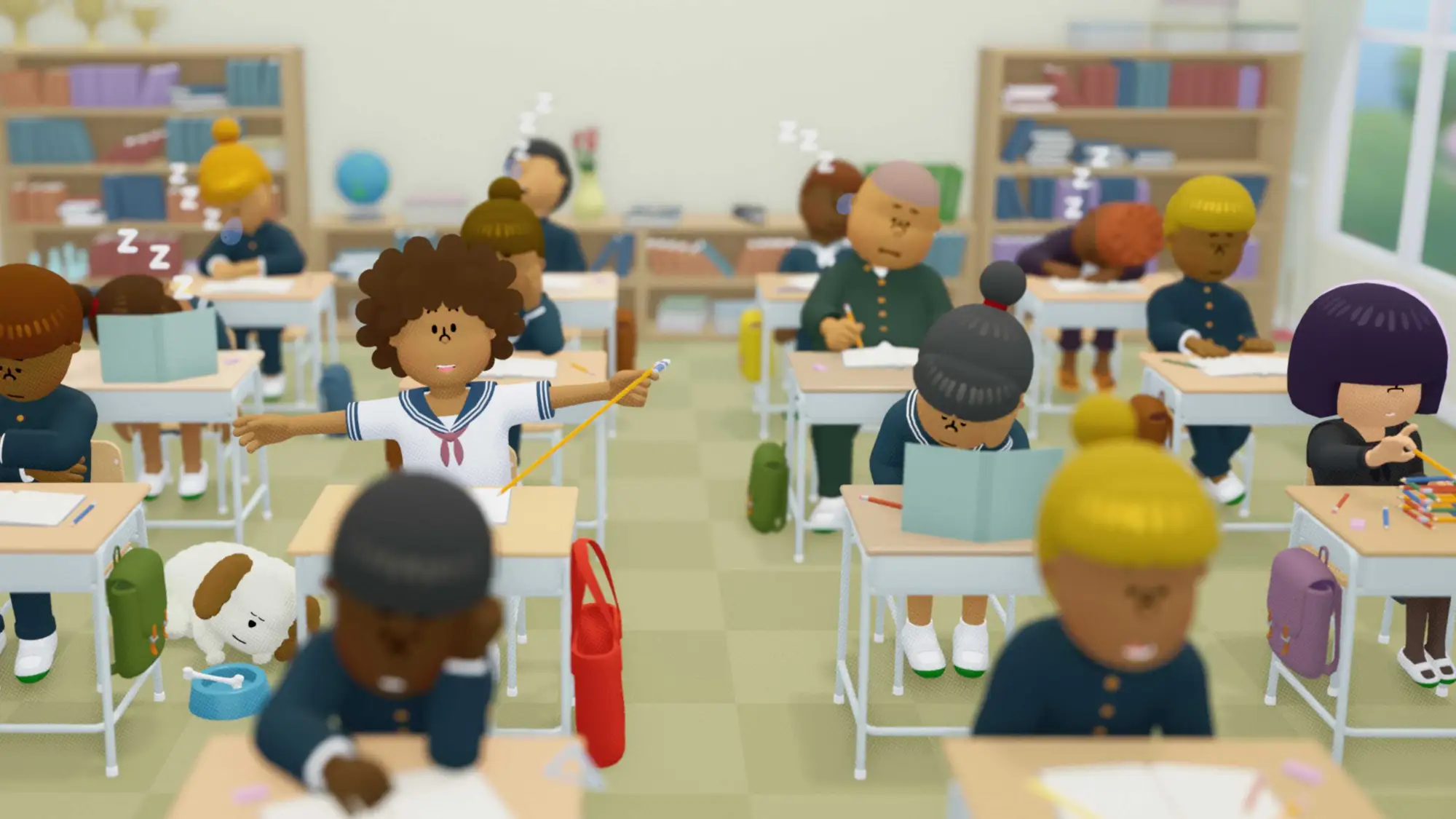
"'to a T' is an episodic 3D adventure game developed by Keita Takahashi and the uvula team, with a strong focus on character, interaction, story and exploration. Play as a teenager (Teen), with a unique posture just trying to live a normal life in a small coastal town. Explore the town along with the help of Teen’s loyal dog and loving mother. While going to school and contending with bullies, Teen discovers a new ability granted to them by their extraordinary posture, and they start to uncover more about their mysterious lineage."
'to a T' - image https://annapurnainteractive.com/en/games/to-a-t

Developer - https://uvula.jp/

I have never been as far south as Rio de Janeiro. It would be marvellous to visit Tijuca National Park - Alto da Boa Vista, Rio de Janeiro - RJ.

But then ... 🌍🌎🌏🌐

My source: Tom Faber, In praise of gaming's auteurs. Financial Times, 11 June, 2025, p.18.

Monday, June 23, 2025

Entry to the Theatre of Nursing & Space

I do understand that reading theatre related texts, joining a theatre group, my writing a play is still pi in the sky. It's the journey, that's all. In Hodges' model I've differentiated between structure and content. This is the center of the stage about which Hodges' model turns. In the guided discovery by which students and audiences can discover the model,  these are the bases to touch in turn.


Sir Alan's focus on construction in writing: is narrative, time, location, characters (p.12). The overall message for me is, the frequently uttered - less is more. I must take heed and listen. During Ayckbourn's career, he has encountered the full retinue of writers and directors young and 'experienced'. Reading this, it is nice to be both 'new old-er' -
'Then there is the new old playwright. Far more difficult to deal with. They have probably nursed this script for twenty-five years and they're damned if you're going to mess it up for them when they've waited so long. Especially someone your age who wasn't even born when their harrowing play about World War Two was still raging, dammit.' p.110. (My emphasis in bold.)
Thinking about 1959 and the start of Sir Alan's career, his reference to WWII, made me recall nursing assistant and student nurse studies and placements at Winwick Hospital in 1977. On the geriatric wards for entertainment it was WWI songs were often sung, or records played. Long players, indeed.

In health we are usually accustomed to stopping before the 'true' end, with the exception of palliative care, although even then the ending should be 'better' than what it would otherwise have been.

If I am nursing Hodges' model, I've been doing so ever since 1987-88. As Sir Alan also observes of writers, while passionate about the utility of the model - my project - not my model; I am filled with self-doubt. Is this an over-valued idea - in my hands (and mind!)?

In other reading - Stagecraft. The Complete Guide To Theatrical Practice, by Griffiths Trevor R. 1982, I came across the word 'proscenium'.

'Incidentally, when we came to stage [the play in question is 'Woman in Mind' PJ] the London proscenium version this was far more difficult to achieve. Proscenium theatres generally make scenic statements whether they want to or not; the round makes none unless called upon to do so.' p.32. 

There are many insights into sets, design, and the various pros and cons. In May and earlier this month, with three other cast members I performed a role 8-9mins in a Living Newspaper (40-50 mins in total). It was fascinating to watch the various aspects developing from the initial reading in January. With Hodges' model an idea, the question of set design is not straight forward. But as with over-valued ideas, I am probably over-thinking (as usual) making things more complicated than necessary.

One golden nugget of advice, is if you are the writer and write well, well you don't have to think the set design. That is a problem for someone else to solve. Hopefully you will be impressed by the interpretation and realisation (often in film credits) of your work.

That is, unless you're unlucky and find yourself on the receiving end of Obvious Rule No. 13:

Beware of competitive set designers, particularly those with a 'concept'.

The name Ayckbourn is synonomous with The Stephen Joseph Theatre, which is in the round:

'The Round provides a truly unique experience as the audience is seated all around the stage. Not only does the audience see the performance from every angle, it also brings the actor into the same space as the audience.'

"Let’s have the actors in the same room as the audience, let’s have four front rows, let’s get really excited about this acting business!"

Stephen Joseph, 1959 - https://sjt.uk.com/about-us

From the mid-1980s and 90s I used to visit Bolton's Octagon quite regularly. Performances were frequently in the round. Last month, Abigail's Party was too (the last night).

Whatever, the staging, set, I'd be interested to see the 'concept'. On directing:

'As regards interpretation. you may need to tread more warily. As I said earlier, many playwrights are not naturally theatre creatures - certainly they are rarely visual theatre creatures, I have seen them sit there and watch their play physically anfold with a look of total amazement. pordering sometimes on delight, sometimes on dismay. What was in their head has been made three-dimensional flesh.' p.111.

Space has been and remains fundamental to my thinking about Hodges' model. Even pushing the envelope to topology, this is well beyond my ken. But not other gifted researchers. Hodges' model provides inter- multi- transdisciplinary bridges: we need to Before the time of schools becoming fenced and patrolled sites, we used to play cricket, tennis and football. There was a large wall at front of a former school, great for tennis, but not return of serve. Now a projection shared in the round - so everyone sees the same thing (yes, another rule!) might hold potential. There's acknowledgement that technology moves on too (p.123). And room for comedy, Ayckbourn's starting point. 

'Designers, it has been said, even the best of them, sometimes get hold of the wrong end of the stick. ... Always get to look at drawings, ground plans and, most helpfully, scale models of what they intend.' p.120.

The Crafty Art of Playmaking by Alan Ayckbourn. Faber, 2004, softcover, ISBN 0571215106.

https://www.concordtheatricals.co.uk/s/45898/the-crafty-art-of-playmaking

Friday, May 03, 2024

ERCIM News No. 137 Special Theme "Extended Reality (XR)"

 Dear ERCIM News reader,

A new ERCIM News issue (Number 137) is online with a special Extended Reality (XR). This special theme on XR highlights the innovative ways researchers are addressing complex challenges and transforming our interaction with information and the world through immersive experiences and advanced data analytics.

You can access the issue at https://ercim-news.ercim.eu/

This special theme was coordinated by our guest editors Ioannis Chatzigiannakis (Sapienza University of Rome and CNIT), Holger Graf (Fraunhofer IGD), Manos Kamarianakis (University of Crete), and Aris Lalos (ISI).

Thank you for reading ERCIM News!

Please share this issue with anyone who might find it interesting. You can also support us on Twitter (@ercim_news) and LinkedIn (https://www.linkedin.com/company/ercim). Let's keep the conversation going and share the latest updates together!

Next issue:

No. 138, July 2024
Special Theme: "Sustainable Cities". Submissions are welcome! See call for contributions.

Announcements in this issue:

  • Call for Proposals: Dagstuhl Seminars and Perspectives Workshops - Schloss Dagstuhl – Leibniz-Zentrum für Informatik is accepting proposals for scientific seminars/workshops in all areas of computer science.
  • ERCIM "Alain Bensoussan" Fellowship Programme - Postdoctoral fellowships available at leading European research institutions. Simple application procedure. Next application deadline: 30 September 2024.
  • Call for Papers: Forum Beyond Compliance 2024: Research Ethics in the Digital Age
  • 43rd SAFECOMP 2024 and 19th DECSoS Workshop - Florence, Italy, 17-20 September 2024
  • Call for Papers: Edge AI Meets Swarm Intelligence - Dubrovnik, Croatia, 18 September 2024

ERCIM News is published quarterly by ERCIM, the European Research Consortium for Informatics and Mathematics. With the printed and online edition, ERCIM News reaches more than 10000 readers.
All issues published to date are available online.


About ERCIM

ERCIM - the European Research Consortium for Informatics and Mathematics - aims to foster collaborative work within the European research community and to increase cooperation with European industry. Leading European research institutes are members of ERCIM. ERCIM is the European host of W3C.

Peter Kunz                      	
ERCIM Office
2004, Route des Lucioles
BP93
F-06902 Sophia Antipolis Cedex

https://www.ercim.eu
https://ercim-news.ercim.eu

Thursday, April 23, 2020

c/o Boccioni - "Empty and Full Abstract of a Head"

"The destruction, in 1927, of a number of plaster and mixed-media sculptures by the Futurist artist Umberto Boccioni (1882-1916) was a tragic loss for avant-garde art. Of the many ground-breaking sculptures he created between c.1913 and 1915, only a handful remain in existence today. Now, using a combination of vintage photographic material and cutting-edge 3D printing techniques, digital artists Matt Smith and Anders Rådén have recreated four of Boccioni’s destroyed works: a volumetric study of a human face titled Empty and Full Abstracts of a Head, and three of the artist’s iconic striding figures. This ground-breaking display enables modern audiences to ‘see’ these lost masterpieces for the very first time."

https://www.estorickcollection.com/exhibitions/boccioni-recreating-the-lost-sculptures

individual
|
INTERPERSONAL : SCIENCES
humanistic ----------------------------------------------- mechanistic
SOCIOLOGY : POLITICAL
|
group - population
Umberto Boccioni
Study for ‘Empty and Full Abstracts of a Head’, 1912
Matt Smith and Anders Rådén
Digital rendering (contour) of
Empty and Full Abstracts of a Head


Coin - Boccioni


See also:

https://www.ardi.se/ 

https://www.uniqueforms.net/


Art Images:
https://www.widewalls.ch/boccioni-recreated-sculptures-estorick-collection/

Coin:
https://twitter.com/CorriereQ/status/1252646124898398209?s=20

Cuttings, Back to the Futurism, Printmaking Today, 2019, 28: 112, p.6.

Wednesday, April 03, 2019

Navigating Health and Social Care: We are on a mission - aren't we ...?*


"Before the introduction of instrument navigation, an aircraft pilot had to give up his mission whenever weather conditions worsened to a degree where visual orientation did not allow for secure landing at his destination airfield. This is situation of today's surgery." p.43.

Adams L, Krybus W, Meyer-Ebrecht D, Rüger D, Gilsbach JM, Mösges R, Schlöndorff G (1990)
Computer assisted surgery. IEEE Computer Graphics and Applications. 10:43–51.

*All together.

Monday, September 25, 2017

ERCIM News No. 111 Special Theme "Digital Humanities"

Dear ERCIM News Reader,

ERCIM News No. 111 has just been published at https://ercim-news.ercim.eu/

The Special Theme "Digital Humanities" is dedicated to new projects and trends in the interdisciplinary domain between computer science and the humanities.
Guest editors: George Bruseker (ICS-FORTH), László Kovács (MTA-SZTAKI), Franco Niccolucci (University of Florence)

https://twitter.com/ercim_news/status/912300776676118529


This issue is also available for download in pdf and ePUB


Thank you for your interest in ERCIM News. Feel free to forward this message to others who might be interested.

Next issue:
No. 112, January 2018 - Special Theme: "Quantum Computing" ...

Best regards,
Peter Kunz
ERCIM News editor in chief

Sunday, February 19, 2017

Space, Memory, Home, Organisation I - Do Ho Soh

individual
|
INTERPERSONAL : SCIENCES
humanistic -------------------------------------------  mechanistic
SOCIOLOGY : POLITICAL
|
group-population

"... Suh creates architecturally scaled, fabric installations informed by his personal experiences, that recreate specific domestic spaces where he has lived, including his childhood home (a traditional hanok-style Korean house), a house in Rhode Island where he lived as a student, and his apartment in New York. Suh weaves translucent structures made of monochrome polyester, at once architectural, and ephemeral, inviting viewers to wander through their dreamlike interior passageways (often complete with details such as light switches and door handles). ..." 
Rubbing/Loving Project: Apartment A, 348 West 22nd Street, New York, NY 10011, USA


Do Ho Suh

Text: http://www.lehmannmaupin.com/

Image: TimeOut - An artist's house is not a home: It's a bunch of drawings
https://www.timeout.com/newyork/blog/an-artists-house-is-not-a-home-its-a-bunch-of-drawings

My source: Bloomberg - Brilliant Ideas
https://www.bloomberg.com/news/videos/2016-10-10/do-ho-suh-on-brilliant-ideas

Thursday, April 14, 2016

Book: LEARNING IN VIRTUAL WORLDS: RESEARCH AND APPLICATIONS

Announcing the release of:

LEARNING IN VIRTUAL WORLDS: RESEARCH AND APPLICATIONS

Edited by:
Sue Gregory, University of New England, Australia,
Mark J.W. Lee, Charles Sturt University, Australia,
Barney Dalgarno, Charles Sturt University, Australia, and
Belinda Tynan, The Open University, UK

With a Foreword by Chris Dede, Harvard University, USA

Part of the "Issues in Distance Education" series
(Series Editor: Terry Anderson, Athabasca University, Canada)

Published by Athabasca University Press as an open-access publication—
Free PDF download available at: http://www.aupress.ca/index.php/books/120254
Also available for purchase in Paperback and ePub formats

*** Description ***

Three-dimensional (3D) immersive virtual worlds have been touted as being capable of facilitating highly interactive, engaging, multimodal learning experiences. Much of the evidence gathered to support these claims has been anecdotal but the potential that these environments hold to solve traditional problems in online and technology-mediated education—primarily learner isolation and student disengagement—has resulted in considerable investments in virtual world platforms like Second Life, OpenSimulator, and Open Wonderland by both professors and institutions. To justify this ongoing and sustained investment, institutions and proponents of simulated learning environments must assemble a robust body of evidence that illustrates the most effective use of this powerful learning tool.

In this authoritative collection, a team of international experts outline the emerging trends and developments in the use of 3D virtual worlds for teaching and learning. They explore aspects of learner interaction with virtual worlds, such as user wayfinding in Second Life, communication modes and perceived presence, and accessibility issues for elderly or disabled learners. They also examine advanced technologies that hold potential for the enhancement of learner immersion and discuss best practices in the design and implementation of virtual world-based learning interventions and tasks. By evaluating and documenting different methods, approaches, and strategies, the contributors to Learning in Virtual Worlds offer important information and insight to both scholars and practitioners in the field.

*** For More Information ***

A flyer containing further details about the book, including a copy of the Table of Contents, is attached. The full text of the entire book and of individual chapters can be downloaded for free in PDF format at http://www.aupress.ca/index.php/books/120254 . The PDF and ePub versions can also be purchased from this site.
_______________________________________________
My source:
open-education mailing list [closed?]


Wednesday, September 30, 2015

ERCIM News No. 103 Special Theme: "Augmented Reality"

Dear ERCIM News Reader,

ERCIM News No. 103 has just been published at

Special Theme: "Augmented Reality"
http://ercim-news.ercim.eu/en103/special

Guest editors:
- Constantine Stephanidis, ICS-FORTH, Greece
- Eija Kaasinen, VTT Technical Research Centre of Finland Ltd

This issue is also available for download in pdf and ebpub

Thank you for your interest in ERCIM News. Feel free to forward this message to others who might be interested.

Next issue: No. 104, January 2016 - Special Theme: "Life Science"

Best regards,
Peter Kunz
ERCIM News central editor

Monday, August 03, 2015

SEMEOTICONS: Reflecting self-care

individual
|
INTERPERSONAL : SCIENCES
humanistic --------------------------------------- mechanistic
SOCIOLOGY : POLITICAL
|
group


Reflection


SEMEOTICONS

My source:
Dean, J. Smart mirror will reflect the state of your health. The Times, July 29 2015. p.13.

Thursday, February 11, 2010

Topicscape Care Domain links in 3D - for the PC

Topicscape Hodges modelFollowing the post on Sunday, January 24, 2010 I have tried Topicscape and the 3D rendition of my links pages which is for the PC only. Unfortunately, for me the experience is very slow as my 7 year, 2 month old Pentium 4 2.6Ghz with its equally aged graphics card is really not up to the task. If you have a recent PC with a suitably endowed graphics card*, perhaps you will see what I sadly - for the time being - am missing.


Thanks again to Roy Grubb for recognising the organisation and effort behind the four links pages I have compiled from 1998 to date. There's a great irony in my viewing the links as a 'monster', then here they are rendered by GPU's that more commonly play host to a variety of game monsters. Recently people# have let me know of their surprise and pleasure to see that there is still a role for a human hand (and reflective mind) to weave something beyond raw Google. Of course the developments in the semantic web and RDF ... can take this even further.

Additional links:

Hodges' model links in 3D with Topicscape


*I plan to correct this in the near future with a new PC sporting a CUDA capable graphics card - also for SETI @ Home et al.

#Dear Peter

Many thanks for this, I look forward to reading the material and learning more on what seems to be an interesting model.
I’ve added a link on our site to yours – the wealth of links available on your site is phenomenal!

Many thanks and kind regards

Charley
---------
Charley Baker
Madness & Literature Network

Research Associate
Fellow of the Institute of Mental Health
University of Nottingham
School of Nursing, Midwifery and Physiotherapy
Education Centre,
London Road Community Hospital,
Derby, DE1 2QY

Monday, May 07, 2007

ERCIM news latest issue "The Digital Patient"

Hello everyone

This research publication c/o European Research Consortium for Informatics and Mathematics is excellent - especially the latest issue:

Introduction to the Special Theme: The Digital Patient

View online.

Enjoy - a marvellous publication.