Health, planet, self: after - 'Can molecular Lego save the planet?'
Ack: © Johan Jarnestad /
The Royal Swedish Academy of Sciences
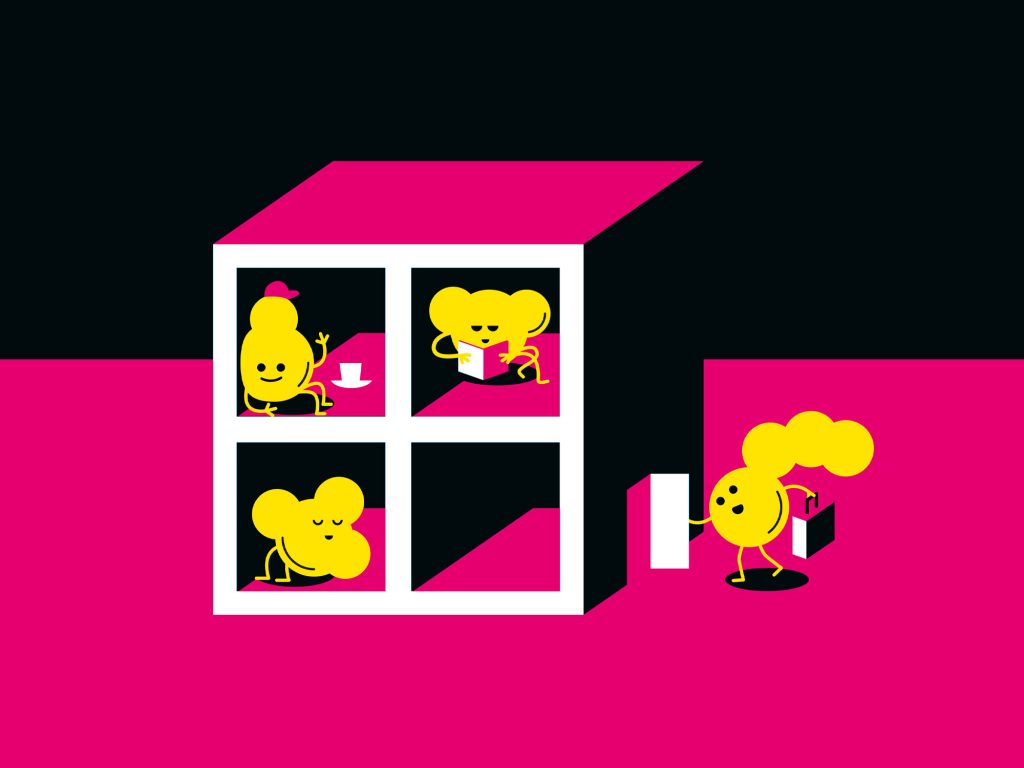
'This morning’s Nobel Prize in Chemistry is one that’s been anticipated for several years now: it goes to Susumu Kitagawa of Kyoto, Richard Robson of Melbourne, and Omar Yaghi of Berkeley for metal-organic frameworks.'
'So what’s a MOF? This goes back to the idea of “coordination chemistry”, a huge topic in the inorganic and metal-organic fields.'
The 2025 Nobel Prize in Chemistry: Metal-Organic Frameworks
Can conceptual Lego - 'human-metal organic frameworks' -
save healthcare, planetary and self-care?
'One astonishing characteristic is the amount of surface area locked away in these new materials: a MOF weighing one gramme can have an internal surface area the size of a football pitch^. MOFs are often likened to Hermione Granger's bottomless handbag in the Harry Potter books: a tiny exterior concealing a seemingly infinite interior. Rice University chemist Stavroula Alina Kampouri has called MOFs "magical sponges", describing them as "not just elegant crystals you'd admire under a microscope; they're an entire universe of structures, each like a miniature city of tunnels and rooms waiting to be filled."'
individual
|
INTERPERSONAL : SCIENCES
humanistic ------------------------------------------- mechanistic
SOCIOLOGY : POLITICAL
|
group-population
'This is not an ivory-tower sort of topic, though: the importance of these sorts of complexes cannot be overstated. They were the basis for the first Nobel awarded in inorganic chemistry (1913, Alfred Werner) and metal coordination is how the iron atoms in hemoglobin carry oxygen to the cells of your body to keep you alive, for starters. You can say the same thing about photosynthesis in plants, and about the actions of the many crucial enzymes in every living creature on the planet that have metal-ion centers in them. Outside of biology and biochemistry, the structures of minerals similarly cannot be understood without a knowledge of coordination chemistry.' | |||
The 2025 Nobel Prize in Chemistry: Metal-Organic Frameworks
Popular information. NobelPrize.org. Nobel Prize Outreach 2025. Mon. 27 Oct 2025. <https://www.nobelprize.org/prizes/chemistry/2025/popular-information/>
Popular information. NobelPrize.org. Nobel Prize Outreach 2025. Mon. 27 Oct 2025. <https://www.nobelprize.org/prizes/chemistry/2025/popular-information/>
^Is this a question for BBC Radio 4 More or Less?
Of course, I keep posting about the Nobel Prize in the hope of a prize - due recognition for Hodges' model. Discretely of course, given a limited readership.
Go figure: in 3D naturally.
Go figure: in 3D naturally.


 orcid.org/0000-0002-0192-8965


