Hodges' Model: Welcome to the QUAD: interior

Hodges' model is a conceptual framework to support reflection and critical thinking. Situated, the model can help integrate all disciplines (academic and professional). Amid news items, are posts that illustrate the scope and application of the model. A bibliography and A4 template are provided in the sidebar. Welcome to the QUAD ...

Showing posts with label interior. Show all posts

Saturday, February 21, 2026

London: 'The Weight of Being: Vulnerability, Resilience and Mental Health in Art'
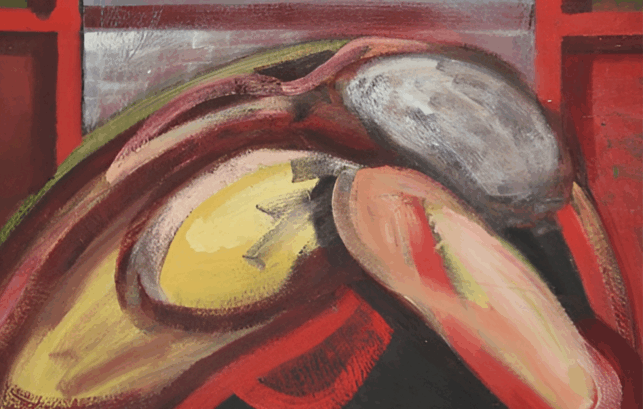
In London currently, 20th - 23rd I was on my way to Bankside Gallery and walking by Temple Place, #2 to be precise, on a board outside I read:

'The Weight of Being: Vulnerability, Resilience and Mental Health in Art'

Taking in the mental health and illness of artists, gender, domesticity, industrial and political struggle, COVID, and Gaza I spent and enjoyed a two hour detour. The building is also amazing. The exhibition is on until 19 April 2026, closed on Monday's and today 21st February. Before I share some text from their website, the interior of the building was a 'virtual' experience, but without the technology. Helpfully, the exhibition is spread across several rooms.

'Curated by Angela Thomas, this new exhibition explores artistic expression and mental health. Through depictions of deeply personal and collective experiences, it examines the powerful ways in which artists capture vulnerability, resilience, and their search for solace.

Including the work of a diverse range of twentieth century and contemporary artists and their varying perspectives, The Weight of Being showcases how artists have captured the psychological and emotional impact of societal pressures, resilience in the face of adversity, and existential uncertainty.

Alongside dozens of artworks drawn from galleries and collections across the UK, the portraits, landscapes, and figurative studies of the lesser-known artist John Wilson McCracken (1936–1982) are woven throughout. Denied the opportunity to return to the Slade School of Art following a period of hospitalisation for mental health reasons, McCracken spent much of his career in Hartlepool, producing work that reflects a profound sensitivity to the emotional and social pressures of his time. Shaped by personal and collective struggles, his art offers a deeply human perspective on the exhibition’s themes, revealing how external forces imprint themselves on the mind, body, and creative spirit.' Continued . . .

The building as a whole - Two Temple Place is owned and run by a registered charity, the Bulldog Trust

I will definitely (hopefully!) visit again, on the way or returning from the South Bank of the Thames. The video below presents key aspects of the building's amazing interior and history:
Monday, October 27, 2025

Health, planet, self: after - 'Can molecular Lego save the planet?'

Ack: © Johan Jarnestad /
The Royal Swedish Academy of Sciences

'This morning’s Nobel Prize in Chemistry is one that’s been anticipated for several years now: it goes to Susumu Kitagawa of Kyoto, Richard Robson of Melbourne, and Omar Yaghi of Berkeley for metal-organic frameworks.'
'So what’s a MOF? This goes back to the idea of “coordination chemistry”, a huge topic in the inorganic and metal-organic fields.'


The 2025 Nobel Prize in Chemistry: Metal-Organic Frameworks 


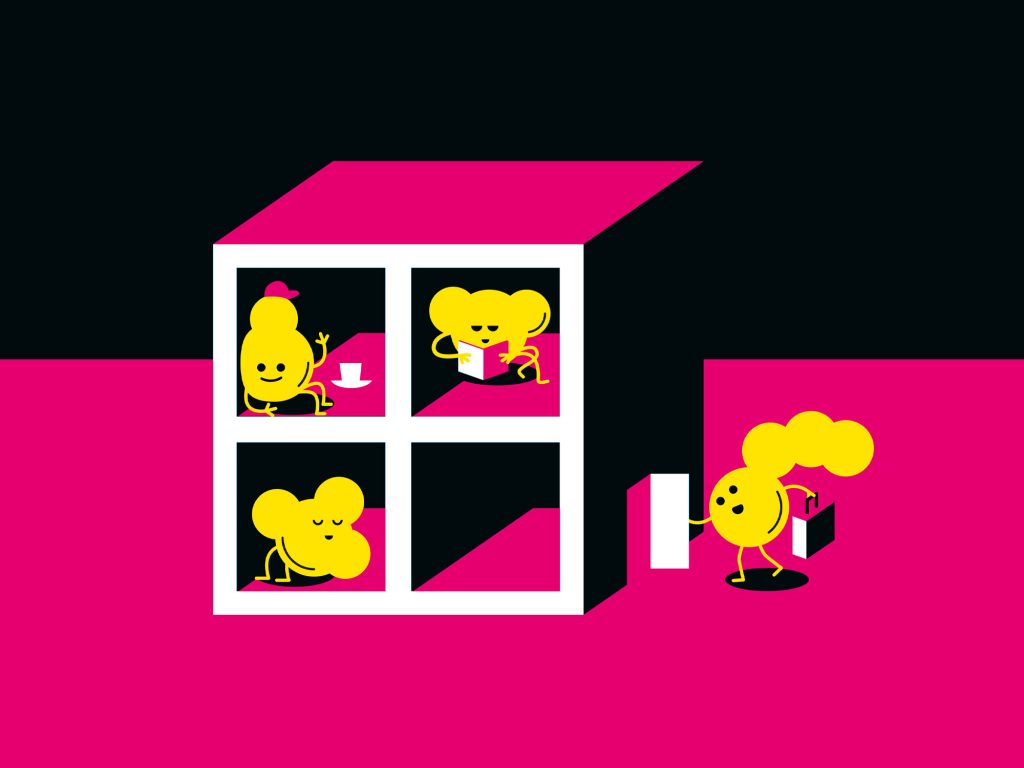
Can conceptual Lego - 'human-metal organic frameworks' -
save healthcare, planetary and self-care?

'One astonishing characteristic is the amount of surface area locked away in these new materials: a MOF weighing one gramme can have an internal surface area the size of a football pitch^. MOFs are often likened to Hermione Granger's bottomless handbag in the Harry Potter books: a tiny exterior concealing a seemingly infinite interior. Rice University chemist Stavroula Alina Kampouri has called MOFs "magical sponges", describing them as "not just elegant crystals you'd admire under a microscope; they're an entire universe of structures, each like a miniature city of tunnels and rooms waiting to be filled."'
Anjana Ahuja, Can molecular Lego save the planet?, Opinion Science. Financial Times, 15 October 2025, p.22.

individual
|
INTERPERSONAL : SCIENCES
humanistic -------------------------------------------  mechanistic
SOCIOLOGY : POLITICAL
|
group-population


'This is not an ivory-tower sort of topic, though: the importance of these sorts of complexes cannot be overstated. They were the basis for the first Nobel awarded in inorganic chemistry (1913, Alfred Werner) and metal coordination is how the iron atoms in hemoglobin carry oxygen to the cells of your body to keep you alive, for starters. You can say the same thing about photosynthesis in plants, and about the actions of the many crucial enzymes in every living creature on the planet that have metal-ion centers in them. Outside of biology and biochemistry, the structures of minerals similarly cannot be understood without a knowledge of coordination chemistry.'


The 2025 Nobel Prize in Chemistry: Metal-Organic Frameworks

Popular information. NobelPrize.org. Nobel Prize Outreach 2025. Mon. 27 Oct 2025. <https://www.nobelprize.org/prizes/chemistry/2025/popular-information/>

^Is this a question for BBC Radio 4 More or Less?

Of course, I keep posting about the Nobel Prize in the hope of a prize - due recognition for Hodges' model. Discretely of course, given a limited readership. 
Go figure: in 3D naturally.
