Hodges' Model: Welcome to the QUAD: Search results for reflex

Hodges' model is a conceptual framework to support reflection and critical thinking. Situated, the model can help integrate all disciplines (academic and professional). Amid news items, are posts that illustrate the scope and application of the model. A bibliography and A4 template are provided in the sidebar. Welcome to the QUAD ...

Showing posts sorted by relevance for query reflex. Sort by date Show all posts

Monday, December 18, 2006

Beware Reflex Moves and the Triple Whammy

In the past working as a community mental health nurse, I had several referrals in which a house move proved a key contributing factor to mental health problems. I'm surprised that moving residence is not ranked higher in terms of most stressful life events. For older people though an often initial trigger to ensuing chaos is bereavement and the degree of stress this causes is obvious and well documented. It was Simmel the sociologist who highlighted the vulnerability of the dyad - the couple:

"for its life, the dyad depends on both its members; but for its death, the dyad depends upon only one"

Whether marital partners or not, we often take this relationship for granted. Key really is the word of choice here, because listening to the 'patient' tell their story you really wonder what prompts such a vulnerable person to put their keys on the market and re-locate? Often still in grief and depressed they are certainly not able to think clearly and make effective decisions.

If you work in health and social care this scenario will not be news to you. Whatever your employment status though you may (sadly) have personal experience when a parent has died leaving your mother or father alone. For many decades now families are tending to live further and further apart, fifty miles or more - transcontinental even.

Following bereavement the cry goes up “come and live near us, we’ll look after you!” Usually for reasons of longevity that call is to 'mum'. Statutory services don’t hear about the instances when this move is the best thing since sliced-bread, but they certainly do when it goes wrong. We can describe it in many ways, but the importance of place, space, geography, community, in short - home has repeatedly been stressed.

Helping pick up the pieces on many occasions three features stood out:

1. The changing demographic – ageing population
2. The highly personal, subjective, narrative, and qualitative content that arose in session
3. The special circumstances of the older person and their capacity to negotiate this critical conjunction

Plus: my need in 1997 to learn HTML.

Given population trends surely this problem will become more common? What do we know about this dislocation? How frequent does it happen, what are the time-scales, personal and family outcomes, what are the socioeconomic consequences?

Surely it is nothing other than pure sentimentality to say:

"I miss the squeaky garden gate, the GP (family doctor) I knew for twenty years, the people who stopped and chatted on the front, even that nuisance-dog-next-door-but-one?"

Is there a double whammy effect? 1. People previously very well medically for their age suffer acute anxiety and depression. Suddenly pathological age = chronological age; and the negative impacts this can bring. 2. While people who may have had stable longer-term chronic conditions develop additional emotional problems, possibly resulting in hospital admission?

Could there be a triple whammy? [Surely not. Enough already!]

Well, that re-location also means of course that it is a new health and social care team who must help this person and their family make sense of the situation and find their feet again. This 3rd whammy will have its own subtleties. The former doctor-patient relationship may not previously have been tested to this extent. The situation can also impact the health of other relatives. The case for electronic health records also comes to the fore.

Beware Reflex Moves website title imageAll this resulted in the [former] website ‘Beware Reflex Moves'. The title announced itself and captures the situation precisely. Creating the site helped me learn HTML and check out the use of frames. It is not maintained, although I really would like to follow this up!

Being able to air this pet research question at the Ideas Factory in October, other people were certainly interested. Their research questions concerned the quality of care and support that follows 'sudden' versus 'anticipated' deaths in palliative, primary care and related care environments.

I must do a Hodges' matrix. One aspect to highlight would be INTERPERSONAL: counselling, psychotherapy POLITICAL: access to counselling services for >65s. Can anyone help out? Any tutors with a class of students who could take the existing website content and do an update - re-design?

At this time of year loved ones and the rest of humanity are always in our thoughts. Take care and beware those reflex moves ....

Saturday, November 29, 2014

Reflexive strategy realised in policy: from hokey cokey to hocus pocus

Strategy is usually about the longer term, as such it needs to be reviewed, but it is hardly a matter of reflex. Crisis management within a strategy should be an operational contingency, the implementation of contingency plans.

As posted several years ago, I've been fascinated by the need for vulnerable people to 'beware of reflex moves'. The example I have comes across repeatedly is due to the people community mental health services encounter. Older adults who are newly bereaved (and suddenly become vulnerable) and for whom it is (also) suddenly judged by well-meaning family members that they should move their home to be nearer the family. This decision is often made quickly, when the grieving if it is ongoing, has only just started and decision-making is impaired to say the least.

It is a bit of stretch, but we can relate this to health, social care and policy. Let's see ...

As an evidence-based activity health care is far removed from "hokey cokey". To be precise its Levenshtein distance (or edit distance) is 8 :-)

Unfortunately, a recent HSJ/Serco Commission on Hospital Care for Frail Older People concluded that health and social care integrated care is a "myth" in terms of being the "silver bullet" for the NHS's financial difficulties (Barnes, 2014).

I'd been wondering about the problems that have been solved and those still ongoing since I began my nursing career in the late 70s. You could call the latter personal legacy career issues. The commission's report describes the current flagship project the better care fund, as having been planned in a "hokey cokey" fashion.

Of course, integration is as many-splendored in its transformational promise, as it is many tentacled in its complexity. What is being integrated? To what extent does this include disciplines, finances (budgets), philosophy, location, record systems, management, policy, accounting, reporting and accountability ...? How do we measure and recognise success?

On a positive side the Levenshtein distance for "hocus pocus" from "health care" is 10, so that maybe reassuring?

The worry is that there is form elsewhere, also highlighted in HSJ (Illman, 2014).

The 3 Million Lives telehealth programme has been scrapped. If it is a measure at the time of this post, the last tweet was 18 March 2013.

Given the major upheaval that the NHS has been through this is hardly the ideal environment for policy making that must engage staff and the public.

Engagement - crucial!

Barnes, S. (2014) Landmark report criticises integration policy. Health Service Journal, 21 November, 124: 6424; pp. 4-5.
Illman, J. (2014) NHS England outlines telehealth successor, Health Service Journal, 26 September, 124: 6416; p.13.


Thursday, February 05, 2026

c/o Jayne Wilton: Reflex-ive :: Reflection - Breathe : DO - REPEAT - WHILE

INDIVIDUAL
|
    INTERPERSONAL    :     SCIENCES               
HUMANISTIC --------------------------------------  MECHANISTIC      
SOCIOLOGY  :   POLITICAL 
|
GROUP

'Many of us will have experienced playing with the interaction of our breath on shiny surfaces such as windows and mirrors, allowing us temporary fields of condensation in which to doodle thoughts or messages. In emergency situations a mirror or shiny surface is held in front of the mouth of a subject to confirm whether or not they are breathing. The Breathe series makes use of these dynamics.

The breath of a series of  individuals was captured on a shiny copper surface and then etched to create a negative of the breath where it sat on the copper plate. The result is a series of evocative landscapes. This work employs and yet subverts traditional printing processes. The inscription of spent breath onto precious metal immortalises a discharge and presents an alternative to portraiture.'

Jayne
Reflection - Reflexive
 
Resuscitation 

 
mirror
Wilton

- is a visual artist who explores the breath as a unit of exchange between people and their environments. Her practice uses darkroom processes with drawing, photography, video and sound to capture the usually invisible trace of breath as it moves across a surface. www.jaynewilton.com


My source and thanks to Jayne Wilton: 

Jayne Wilton. Breathe, Artist's Statement. Resurgence & Ecologist, July/August2023: 339: p.47 & (p.49 image).

Previously: 'breathing' : 'reflex' : 'reflection' : 'art'

Wednesday, June 24, 2009

Bee in my bonnet and a place to call home

http://www.flickr.com/photos/lelonopo/2378726643/
For some years (over a decade) I've had a bee in my bonnet about the impact of relative-ly sudden house moves that older adults often make following sudden bereavement.

This prompted a first and no longer available website 'Beware Reflex Moves'.

This rather silent issue still stands and is arguably growing in volume.

There are surely a series of studies to be made here. Like most forms of life, the patient-nurse encounters of all those years ago have evolved: the ability of Jo(e) Public and their families to independently visit, select and move their relative into residential care is a new factor.

Self-funding frees up valuable resources as people can essentially circumvent the formal assessment processes of social services (and health), negotiating directly with the home of their choice for a place. This place may be many, many miles away from what was home. Amid increasing demand this arrangement works well much of the time. When it fails though, the impact is a personal and social catastrophe that can also reverberate across two health and social care economies. The person's original social services and their new location - that of their family.

Here the 'diagnosis' may not just be bereavement reaction / depression, but dementia too.

So, the advice remains beware of reflex moves.

Wish those bees had stayed in that bonnet - they might be safe now.....


Image source with thanks: http://www.flickr.com/photos/lelonopo/2378726643/

Tuesday, June 13, 2017

Boxing 'II'

As young children we may encounter 'boxing' quite early on. This first experience, which we may or may not wholly remember is undoubtedly critical to our personality and subsequent psyche. Such early experiences influence our ability to 'look after ourselves', how we deal with bullies, anxiety, the potential for conflict and develop assertiveness skills. When a 'scrap' happens it can be quite sudden, that total impact of everything out of control, sheer danger and literal impacts. The environment might be nursery, playground, cloak room and the presence of peers as onlookers can be another key factor.

In the late 1960s early 70s I found some old boxing gloves under the stairs at my nan's. I had a handful of uncles on mum's side (just two now - Uncles Tom and Ken!) and the gloves had clearly been swung and jabbed down the line. I don't count myself as a fighter, unless someone tries to push their beliefs - without invitation - down my throat. Then it will be more a case of a reflex action. The 'arc' being comprised of vomit. In the school playground I learned to talk my way out of trouble, resorting to humour at times; as you learn to deploy whatever intellect you might have judiciously. Legs are essential to a boxer:

“First your legs go. Then you lose your reflexes. Then you lose your friends”
Willie Pep

My legs helped me a time or two.

Not too many years ago, so a new generation is in the frame and a nephew had boxing gloves of his very own. He trained with a local club and had some fights. I didn't go watching, but didn't make too big a big fuss either. He doesn't box now as it happens; he's married with family and busy earning a living. Over four decades I've cared for several gentleman, former boxers who developed dementia. Hence, my lack of enthusiasm. (Although the selective literature listed below does not reflect it, women's boxing is of course also well established.) The extent to which boxing caused their dementia is not the point here. It's trying to acknowledge the ongoing debate: the risks, the history (Ancient Greece 688BC), the discipline, sense of belonging and self-respect it can instill. Of course a great many sports can do this. Of course, I listened very attentively as one gent could still relate how perhaps he had been 'used' in terms of the fights and purses back in the 50s-60s. Vulnerable adults of today and yesteryear. Today American Football is concerned about head injuries, in football heading the ball repeatedly is in the news. Technology should be able to reduce the risks even more and protect individuals from injury that is obvious and more insidious in nature.

Some of these points I've considered in Hodges' model as follows:

individual
|
INTERPERSONAL : SCIENCES
humanistic ---------------------------------------  mechanistic
SOCIOLOGY : POLITICAL
|
group

SELF

self-awareness
Identity
self-belief

way-finding

dementia - cognitive damage

personality change

aggression

tactics  strategy

motivation training attitude

self-discipline

ethics

mental health - mental capacity
emotions

mood

Personal safety

boxing technique

reflexes speed movement balance

punching fitness

weight, reach, statistics

THE RING

stamina nutrition hydration

concussion
sub-concussive

exposure models

unconscious knockout

Head - Brain injuries

physics: force time (duration) momentum

technology - sensor equipped gloves

Sports Medicine Research
Headgear
Safety - Evidence

Medical risks

OTHER

Ethnographics
Coaches <-> Boxers
Mentors

Support network

THE STREET

personal history-family
History
sports history

trainer friends club

Sporting behaviour

family friends
Socio-
Rules (changes)

Conflict Power

promotion media finance

codification rules

Amateur Professional

Refereeing

Regulating bodies

Governance

Law

Contracts

Economics


Selective reading:

Sacha, J. (2017). Fighting Feelings. Sociological Perspectives, 60(1), 77-94.

Erlanger, D. (2015). Exposure to sub-concussive head injury in boxing and other sports. Brain Injury, 29(2), 171-4.

Falvey, &., & Mccrory, P. (2015). Because not all blows to the head are the same. British Journal of Sports Medicine, 49(17), 1091.

Mcintosh, A., & Patton, D. (2015). Boxing headguard performance in punch machine tests. British Journal of Sports Medicine, British Journal of Sports Medicine, 14 July 2015.

http://www.welshboxers.com/quotes/

See related post 2016: 'Boxing' I


Saturday, July 11, 2026

"Train midwives as nurses" - Ockenden

Re. Ockenden Report

Catching up on the newspapers, I noticed in the Times reporting of Ockenden calling for midwives to train as nurses first. Provoking debate about nurse education.

Within maternity services there are problems with continuity of care and skills in dealing with complex cases:

'Maternal Deaths 

60. The Review examined 27 maternal deaths that occurred between 2006-2024. Five cases fell outside of the Terms of Reference of the Review. Of the 22 remaining cases, reviewers identified failures in care that may have or substantially impacted on the outcome in six deaths. 

61. The profile of maternal deaths at NUH over this period broadly aligned with the known demographics and causes as identified by MBRRACE. 11 of the deaths occurred to women living in the most deprived areas of the city and 14 occurred amongst women who were not white British.

62. The common failures reviewers identified that might prevent future maternal deaths included: listening to women and families and acting promptly on concerns; continuity of care particularly for those with additional social/medical complexities; robust clinical governance to ensure timely information sharing across organisations and prompt access to imaging for women presenting with concerning neurological symptoms.' xiv

AI Overview (Ecosia) suggests that although direct entry to midwifery has always been possible(?), the English National Board created the pathway some 39 years ago.

The Ockenden Report describes how in combination health systems, culture, leadership and training can contribute to compassion fatigue (p.313).

When you look at Hodges' model and our languages, a great many challenges for curricula, training and education programmes can be found. The most powerful of what can be progressive, or threats are invariably mechanistic:

  • shorten
  • bypass
  • shortcut
  • cutting corners
  • short-circuit

Nursing must always move forward, continuous professional development is built on this principle. In the late 70s and 1980s post-registered qualifications were held in high esteem. Especially midwifery, paediatrics, health visiting, emergency and intensive care. 

Clearly, decision and policymakers can underestimate the value of basic nurse training. Having an idea since childhood is brilliant, but at interview saying you're compassionate and want to make a difference will soon be tested. Sometimes as a student rather bluntly, as with a first placement in forensic nursing. I wonder how many students have been lost there? I'm sure the majority will cope, manage, enjoy and prosper, but I've seen the student peers who miss these cohort members on subsequent learning experiences. What preparation is employed?

Basic nurse training, is just that. Demonstrating competence in communication, awareness of basic needs and how these are expressed behaviourally. What interpersonal skills and knowledge are needed. As highlighted before, the director of nurse education worried about those of us who worked as nursing assistants risked being trained in poor care. Not recognising 'bad practice', a 'poor attitude', not using observation and most important of all listening: to what is said and unsaid. When I started I remember thinking about not responding - as individually programmed to do so, through a reflex action. That was a worry back then. 

While the news in the Ockenden Report is bleak. The depth of the report (for me) is manifest in identification of not only socioeconomic factors, but sociotechnical too (with five mentions) and the critical interplay of seeing (and hearing!) the individual amid the collective:

'2. Fetal monitoring

Rather than reflecting simple failures of individual interpretation, growing evidence suggests that intrapartum fetal monitoring is best understood as a complex sociotechnical practice, shaped by system design, workload, team dynamics, guideline variability and organisational culture.119 Continuous CTG itself has well-recognised limitations, including poor specificity for predicting long-term neonatal outcomes and substantial inter- and intra-observer variation in interpretation.5 Reviews of intrapartum care are therefore unavoidably influenced by retrospective bias, with greater apparent clarity afforded by knowledge of the outcome than was available to clinicians at the time. 

However, despite this, a sociotechnical understanding does not negate the importance of examining individual cases in which intrapartum monitoring was demonstrably substandard. National inquiries and confidential reviews repeatedly describe cases involving sustained failure to recognise pathological fetal heart-rate patterns, delayed escalation despite repeated triggers, and missed opportunities for timely intervention. 2,3,120,121 These cases cannot be explained solely by the inherent limitations of CTG or by hindsight bias.' p.143.

It is quite shocking to hear this conclusion: the need to train as a nurse first. Counterarguments: where is the evidence(?!) - have followed. But then if you undervalue and miss the fundamentals (see Hodges' model!) then individuals, families, communities, students, practitioners, services and systems suffer.

Previously: 'maternity' : 'report' : 'safety'

Thursday, January 07, 2016

Dualistic- thinking checks and balances [III] (or: The-hyphen)

While dualistic thinking is positive as a means to explain Hodges' model, if a form of thinking (reasoning as ego-defence) is relied upon to excess and not balanced by other evidence then this can contribute to psychological problems. As Johnson (1994) also indicates, the three forms of thinking we are discussing in this series of posts are progressive. Compared to dualistic, Johnson states that multiplistic and relativistic thinking represent a more complex level. Appreciating that there are other sources for answers, possibly more than one answer and a need to relate things together.

Dualistic thinking epitomizes the categorical invitation that Hodges' model affords. In its most primitive form it has to be ready to hand and with the mind in an instant it is: the duality of fight or flight. A reflex arc circumvents the dualistic in an effort of instant reduction to survival.

Of course, the model is not intended to encourage thinking in extremes, polarised and absolutist. This property*, however, affirms the model's potential as a health promoting, educational and self-care resource.

There is another form of dualism that is given to us by life not model. It is the dichotomous variety that often influences and shapes attitudes to others, discourse and debate within our many cultures, politics and religious affairs.

The additional set of axes related to disciplines, for example, psych-social - referred to in the previous post [II] tempers the risks above in two ways:

  1. by virtue of the learner expanding their knowledge and hence the number of concepts they understand and in-form their community of practice.
  2. there is a space between the disciplines and concepts that might further support the structure, content and utility of Hodges' model.
The space lies in the '-', the hyphen, which can represent a middle ground (Assad, 1999). The axes of Hodges' model could be said to present a continuous hyphen. A cognitive pause (check): a token to collect as we reflect, especially if we cross disciplinary thresholds consciously or unconsciously. This can counter the aforementioned excesses of dualistic thinking with the addition of assessment and supervision.

I started these posts with what Hodges' model declares from the outset. This is the model's structure, the configuration of the axes the appearance of the (empty) quadrants. But as experience is gathered so the axes fade into the distance. They become grey and blue as in a background, a template we start to take for granted and work around, with and within. Content in the form of concepts and associated meaning can then populate the foreground that holds the promise of becoming increasingly more integrated which is stimulated by a shift from dualistic thinking to more pluralistic thought.

Assad, M.L. (1999). Reading with Michel Serres: An Encounter with Time. Albany, NY: State University of New York Press.

Johnson, D.D. (1994) Dualistic, Multiplistic, and Relativistic Thinking as it Relates to a Psychology Major. Honors Theses. Paper 202.
http://opensiuc.lib.siu.edu/uhp_theses/202/

*There are many tools that permit us to compare another duality: the binary. The presence or absence of phenomena, for example, a bone injury, or a new star, comet or asteroid.

See previous posts: Michel Serres

See also bibliography item:

Jones, P. (2008) Exploring Serres’ Atlas, Hodges’ Knowledge Domains and the Fusion of Informatics and Cultural Horizons, IN Kidd, T., Chen, I. (Eds.) Social Information Technology Connecting Society and Cultural Issues, Idea Group Publishing, Inc. Chap. 7, pp. 96-109.

Friday, July 17, 2020

Ecovisionaries: The Royal Academy - Nov 23 - Feb 23 2020

Late autumn I received news of an exhibition that sounded right-up my street - down in London.

Eco-Visionaries at The Royal Academy.

Without wishing to sound grandiose, I see myself as an 'eco-visionary' in several respects:

  • yes, as a white, middle-class male and would-be environmental do-gooder;
  • yes, as this is the perspective that Hodges' model fosters;
  • yes, because now we all need to be eco-visionaries.

As this post's title shows, the exhibition had a short run. Probably a norm in London, but from the NW of England not straightforward but then there was great news and a golden opportunity.

The RA was organising a symposium:

Confronting a Planet in a State of Emergency: Eco-Visionaries Symposium

Sat 22 Feb, 10am-6pm
From futuristic visualisations of a world without humans, to innovative ways of measuring toxicity in cities, creative research into the climate crisis is proving essential for imagining solutions. Join us for a full day of presentations and discussions looking at how we can protect and understand our environment now and in the future. 

And! There was a call for abstracts. Just the thought of a symposium makes me go wobbly, so could I imagine this: actually being an eco-visionary and presenting at the RA! Goodness me.


On twitter I read of many people's efforts to present and publish. I've tried for the Planetary Health event and been unsuccessful but will try again. To those people who try, I say: If you've a message, a resource - keep trying.

Previously on W2tQ [ Waste not, want not ... ], I recycled an 'Item for discussion' that was not accepted last year for RCN Congress, so once again:

Abstract:

In healthcare we are and must be in permanent readiness for emergency situations. Education, continuing professional development, theory and practice are all predicated on lifelong learning and safety. Triage is applied in a practised, reflex manner. This paper will explain how we can better critique the climate emergency and debate solutions using a resource created in healthcare. Healthcare must not only respond to extreme levels of demand, but it is itself demanding. Practitioners and learners must provide safe, high quality care; which must be holistic to achieve a person-centred focus, a positive lived-experienced and integrated outcome. Health is a dedicated Social Development Goal (3), this paper reveals a map of all seventeen.

Despite the proclamations of technophiles, technology alone cannot deliver solutions, a socio-technical perspective is essential. Health and health care systems achieve this by being situated. The climate change emergency highlights not just the interdependency of people to the-ir environment, but the biosphere as a whole. We take health for granted until something goes 'wrong' and now the weather is 'wrong'. This paper addresses: “Creative approaches to conveying information on climate change, air pollution or other environmental issues” but can potentially represent all the symposium's themes. Does this matter? It does in terms of finding not only solutions, but reconciling socio-economic, political groups, global dependencies, issues and vested interests.

The environment needs nursing now.

Health professions will not take kindly to the 'system' placing the climate crisis at their feet and proclaiming “triage this!” Ironically, (bar mass-extinction events) since life emerged the 'system' that really matters is self-regulating. The first example of self-care is vested in Gaia. Eco-vision calls for vision of scale. This paper will share a care architecture worthy of eco-vision and the visionaries we must all aspire to be ...

Title:

A Unique Space: a Care Architecture for Person, Population and a Planet

I'm sure the above can be re-purposed, since alas, it was also unsuccessful. I knew the chances were slim. Hearing the speakers and panel discussions, this is clearly their forte and all very well qualified as Eco-Visionaries. The organisers were very gracious and encouraging, which helped to temper the disappointment. I was offered a complimentary place at the symposium and and was informed there would be Q&A, so I would have chance to highlight the model behind the abstract.

I arrived in London on the Thursday before and visited the exhibition Friday 21st - the last day. It was stimulating, challenging, thought-provoking and upsetting - a video of a giraffe being shot. If shock was the intention: it worked.

With a white rhino in the exhibition and an elephant in the lecture theatre called 'COVID' the symposium appeared full the day after.

I will defer to The Guardian's Oliver Wainwright's review of the exhibition:

Eco-Visionaries review – the salt flats will die and the jellyfish shall rise

I asked several questions / raised points at the symposium, but I suspect for many of us the weeks and months of disruption since disrupted the positive momentum that I at least left with - which is a pity.

I hope the RA Architecture team re-visit this theme. Not so much that I can try to submit again, but more to perfect the technique of framing Hodges' model within a question.

The exhibition and symposium were very good for learning and I really appreciate the opportunity to attend.

Saturday, July 04, 2009

Relationships matter: Society Guardian & The WSJ

Re. Charles Leadbeater's State of Loneliness, The Guardian, Society, 01.07.09

The cover of this weeks Society Guardian immediately caught my eye with its picture (I wonder which corner of which care domain this lady is sat in?):

The text initially passed me by; then yesterday I caught up, it seems the business model quest in one sector is having a domino effect with new models needed elsewhere including health and social care.

Leadbeater's piece reminded me of Lean thinking the improvement process with its drive to identify value, reduce waste and repetition. ... His text points out that:

More efficient services quickly move in and out of people's lives, but they don't really change how people live. That is one reason why we have not made deep inroads into the most deprived communities, the most troubled families, the most intractable social problems. Services manage and process people and problems, but only rarely allow people to change their lives. Service solutions are ill-suited to the emerging challenges of the rise of long-term health conditions, diseases linked to lifestyle and diet, ageing or climate change. You cannot deliver a solution to an epidemic of diabetes the way that DHL delivers a parcel.
So any model, method that is primarily process centered may find itself compromised - providing just one cylinder's worth of power in a four cylinder engine. In Hodges' model I have identified the 4Ps. PROCESS, PURPOSE, POLICY, and PURPOSE (to which we must now add PROBITY). It will be interesting to see how value is defined across service forms of engagement, intervention (including signposting) and the new set of outcome measures to follow whether local, national, service-reported or patient reported outcome measures. Leadbeater continues:
The key will be to redesign services to enable more mutual self-help, so that people can create and sustain their own solutions. The best way to do more with less is to enable people to do more for themselves and not need an expensive, professionalised public service. Enabling people to come together to find their own, local solutions should become one of the main goals of public services. Services do a better job when they leave behind stronger, supportive relationships for people to draw on and so not need a service.
So Jo(e) Public needs to reflect, compare, evaluate, learn, collaborate and make informed decisions in order to stay well amongst many other things. They need to be engaged holistically.

Where is the model for this...?
I believe I know.

The Wall Street Journal has something to add here The Doctor Will Text You Now and relating to my earlier posts on 'Beware Reflex Moves'. Relationships matter, but if nurses are out there assessing, assessing, assessing who is doing the education, dividend added therapy outcome focused?

If e-health is going to make a real contribution in augmenting and freeing high value care resources then this in turn depends on the value invested in relationships.
Louis Petrillo, 57, a psychologist in Westfield, N.J., says he regularly turns to his family’s doctor, Robert Eidus, for online advice about his frail 90-year-old mother, who finds office visits difficult. His son who is away at college also used an online visit when he had sinus problems. “I can get into his virtual office anytime,” says Dr. Petrillo. He feels the online care works well largely because Dr. Eidus knows his family members’ regular health complaints.
If older adults move home and need new primary care services, what are most probably(?) well established patient - doctor (patient - primary care team!) relationships are not just undermined they are undone! A person's sense of community is fractured. ...

Yes that image speaks volumes.

Image source: Guardian

Mathews, A.W., The Doctor Will Text You Now, JULY 1, 2009, The Wall Street Journal Interactive Edition

Tuesday, April 08, 2014

From local field to global arena: the rough and tumble of conceptual sport

Jo hit the deck. it was a foul tackle, an apt description for a move that Jo did not see coming.

Talk about a change of perspective!! Sheesh! Was it bone crunching, did I hear something?

It could have been worse. At least the ground knows it’s March and not January.

There was no anticipation, no reflex adjustment, no ability to shift, just in time, no poetry in motion this time.

The coach and physio dashed on to the field. Jo looked up and said “OK, tell me straight, what’s the damage?”

Coach looked down. "Well you're talking that's a start." Assessing rapidly though and through gritted teeth he replied:

“It’s not looking good Jo.”
“Wha..?

[Silence]

Oh come on tell me…”

“Well, kid it’s bad, yes, really bad.

You’ve got an academic detachment.”

Jo groaned, "Oh no, not that! What about the future!!"

<->

OK, sorry about that and I do realise that a great many world class athletes are very well educated people.

The tendency of young and promising athletes to relinquish contact with their academic side and really be the best they can be - remains a challenge for some, but this post concerns academic detachment as in - educational institutions and students with the world.

Call it a paradox, a contradiction in this hyper-connected world, what with gap years, travel opportunities.... that there seem so many examples of a lack of awareness of the bigger picture that is the international stage. Not just in students, in education, but the wider citizenry.

Does this matter. Well it does, at least according to the 2012 Conference of The Association of International Education Administrators (AIEA) which included:

Academic detachment is not an option in the 21st Century

on the theme “Building a Secure World through International Education.”

The point I’d like to make is that Hodges’ model is fit to assist in some of the objectives that the AIEA outlines in this context:
Keynote speaker Abiodan Williams, Senior Vice ‐ President of the US Institute for Peace, offered remarks at the opening plenary. Mr. Williams said that his own international education began with post ‐ secondary level study at the Lester B. Pearson College, United World College of the Pacific, in Victoria, BC. To develop graduates committed to peace and security, he urged educational institutions to teach:
  • Knowledge – including greater interdisciplinarity and learning about conflict prevention
  • International outlook – to shape the attitudes and outlook of a new generation, encourage all students to spend at least six months studying abroad, learn at least one new language and take at least one course about another country
  • Sensibility – alluding to Fielding’s definition of ‘good nature’, developing people of benevolent and amiable temper of mind, who sympathize with the problems of others and who enjoy the happiness of others
“Academic detachment from the world is not an option in the 21st Century,” he said. Globalization is here to stay, and international education is playing a key role in contributing positive answers to many of the challenges that it presents.

Many institutions are actively engaged in programs that further environmental and energy sustainability, broader access to health care and education, resolution of conflicts, pursuit of fundamental human rights, economic development, and greater cross‐cultural understanding around the world. Harnessing the collective effort, and lessons learned, from each of these individual initiatives is important in moving internationalization forward. [AIEA conference website]
With thanks to Katy Rosenbaum:
27 March 2014:
Good morning,
Thank you for your email. I will check with my colleagues to see if they have any suggestions for someone who might be able to provide more information on work within this theme, and if they have any insights on this, I will certainly forward these on to you.
In the meantime, all conference session materials that presenters made available to download are available at the link below. The zip files include multiple presentations and handouts; underneath are links to these materials hosted on other websites: http://www.aieaworld.org/2012-conference#Presentations
The article you referred to mentioned Abiodan Williams' keynote address, which is available here: http://www.aieaworld.org/assets/docs/Conference_Materials/2012/abiodunwilliamsspeech2012.pdf
Thank you for your interest; I hope this information is useful. If my colleagues have other suggestions, I will certainly pass them on.

Best,
Katy Rosenbaum
Program Associate - AIEA
Association of International Education Administrators
www.aieaworld.org
kathryn.rosenbaum AT duke.edu

Additional link:
http://www.ruthnestvold.com/tomjones.htm
Thanks Dad.

Saturday, February 09, 2008

Early spring PC clean: Eclipse, Drupal, PHP & Ruby

My PC is over 5 years old, that's no problem as I like to squeeze every bit out of them.

I've recognised for a quite a while that there are obvious connections between Drupal, PHP, MySQL, HTML, CSS and Javascript. There are additional connections though when Ruby and Protege are thrown into the mix. The common thread seems to be the Eclipse IDE integrated development environment. This presents the biggest challenge at present and it is clear what I have to do: So long Dreamweaver - I really DO need to adopt Eclipse.

The Smalltalk* V DIGITALK package is sat on my shelf laughing at me and that's a really scary, dusty grin. The Smalltalk IDE was so tantalising and yet I couldn't get past base. Borland's Prolog (later PDC Prolog) plus Delphi also failed to take off for me (although PDC Prolog did help with my studies at the time).

Clearing the PC cobwebs today (have you checked your PC's air vents recently?) I found an old Eclipse 2 folder and have deleted version 3.1 and finally downloaded 3.3. Aptana and the Ruby development tools were installed, so there are now plug-ins to chase. Apparently, there's a plug-in for PHP too, which is why I wonder whether Eclipse can do it all? That is of course if I can learn enough to hear the harmony.

I've found a good series of tutorials, but my reflex book search suggests there are not many general intro books on Eclipse 3.x:

http://eclipsetutorial.sourceforge.net/workbench.html


I won't delete Dreamweaver MX just yet...

*Currently, reading about early interface and interaction development in Bill Moggridge's Designing Interactions, which includes Smalltalk - p.69 a great book in weight and content. More to follow...

Thursday, July 10, 2025

ii 'Thinking outside the box ...' by Amber Javis

Second reply to a blog post by Amber Jarvis on The Mental Elf:

Thinking outside the box: alternatives to standard inpatient mental health care

Amber's post considers a study by:

Griffiths, J. L., Baldwin, H., Vasikaran, J., Jarvis, R., Pillutla, R., Saunders, K. R., … & Johnson, S. (2025). Alternative approaches to standard inpatient mental health care: development of a typology of service models. International Journal of Mental Health Systems, 19(1), 1-13: https://pubmed.ncbi.nlm.nih.gov/40247283/

Jarvis highlights concern within inpatient services of:
'use of coercive practices ... (Nyttingnes et al., 2018; Belayneh et al., 2024). These include physical restraint (physically holding a person), seclusion (holding a person in a locked room) and chemical restraint (the use of sedating medication to manage distress or behaviour, sometimes administered “as needed” rather than as part of any planned treatment). Poor relationships between staff and service users have also been noted, ...'
Reflecting since the previous post, I realise that I encountered efforts to prevent admission and treat in the community prior to going part-time. A short stay unit at a general hospital. Being a member of Intermediate Support for older adults; shifts ran 0800-2000 - early or late. Then working part-time, there were short-stay placements in the community that the recovery team would visit providing support.

Mental distress is distressing (a truism of course), both as lived experience (with or without self-awareness in-situ/crisis) and for others in the vicinity. Family, friends - who see a person they thought they knew, perhaps even thought they were a friend, a person who loved them; but now!? They present as distant, aggressive, subdued, agitated, unpredictable, inconsolable and possibly expressing thoughts of self-harm, threats to harm others, or totally bizarre, 'psychotic' ideas. This is not the person they thought they knew. For the person affected, familiars are strangers. A relational breakdown. We forget the severely mentally ill at our peril. A pervasive sense of helplessness is readily transferred: the reflex conclusion that help is needed - and fast.

To say we are creatures of habit, is to also acknowledge that change our environment results in a change in our behaviour. When relatives did arrive on the psychogeriatric ward I mentioned previously, they cried. Apologising for the environment, yes; efforts to reassure ensued and eventually family, friends were won over. They shouldn't have been. Unless we're in a game, play, or movie, who wants to find themselves in a Victorian era institution?

I've posted previously (or is it in draft?) on the importance of design in the design of care environments. It was a relative's visit to a care home, that resulted in a nursing home design business (Sunday Times). 
A person who is severely mentally ill needs service-centred care, not purely person-centred care. Person-centredness is key, but safety of self, and the public soon makes itself known. We also forget this at our peril. The problem is that control, and law literally take over. Plus, it's our place not yours. Loss of power the person struggling, ill, in crisis then follows. Amber continues:
'The concerns described above chime uncomfortably with modern mental health agendas of prioritising autonomy, compassion, trauma-informed and person-centred care. In light of these tensions, and the growing number of crisis alternatives – ranging from crisis cafes to intensive home treatment services – researchers  at the NIHR Policy Research Unit in Mental Health set out to map current alternatives to traditional inpatient care, both nationally and internationally. Griffiths and Baldwin’s findings raise important questions about how mental health services could evolve to better suit people’s needs, providing a valuable starting point for service planners considering developments in care.'
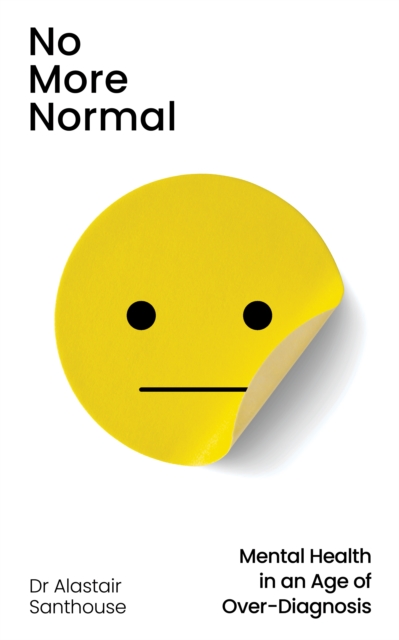
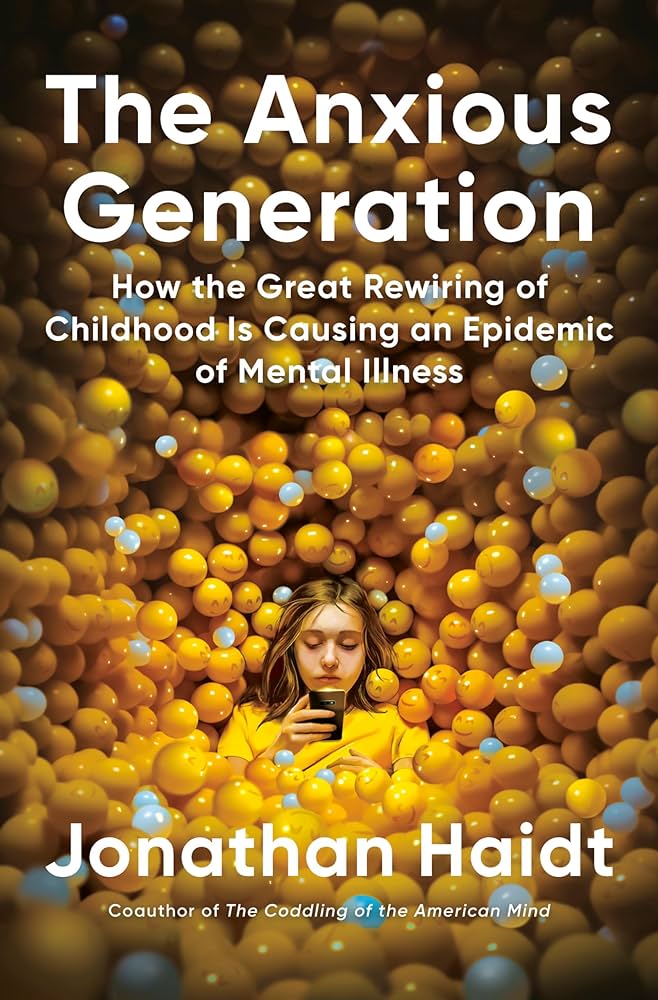
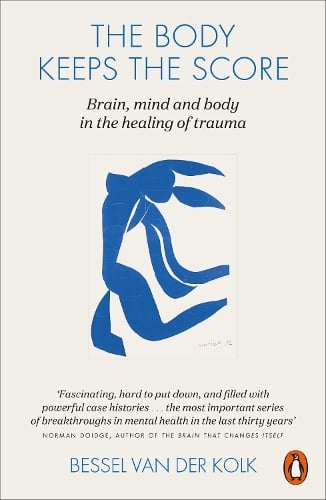
Hodges' model is ideal to help reflect and critique the relation-ship between 'a person' and 'the service'. I passed two gentlemen in London over the weekend. Clearly unkempt, standing but gesticulating, freely verbalising, incoherent on passing. Neither appeared intoxicated ( but I wasn't that close) or 'stoned'. That's the other question; passing-by what was I going to do? Does the 'community' care? On 'X' you encounter the extremes of debate. Anti-psychiatry, resort to and risks of dependence on medication - anti-depressants, anxiolytics; the damage from anti-psychotic drugs and atypical antipsychotics. The continuous debate about ECT. A dizzying stream of texts about mental health, over-diagnosis and wellbeing:


Medical prescribing has a partner. Social prescribing is well established, with organisations, events, publications and research emerging. People, have scoffed at the suggestion that gardening can help; or going for a run. Especially when you can't get out of bed. Chronic fatigue syndrome, long-COVID are seemingly monolithic in their resistance to change. A real challenge and so counter to the person's 'pre-morbid' personality and lifestyle.

For several years the state of mental health nursing as a specialty has been questioned. Is the mental health nursing curriculum being genericised? Enrollment of students nurses in learning disability has also dropped.

Medical prescribing has a partner. Social prescribing is well established, with organisations, events, publications and research emerging. People, have scoffed at the suggestion that gardening can help; or going for a run. Especially when they can't get out of bed. Chronic fatigue syndrome, long-COVID are seemingly monolithic in their resistance to change. A real challenge and so counter to the person's 'pre-morbid' personality and lifestyle. As a conceptual framework Hodges' model is ideal as a semantic net, to reflect and critique concepts that stretch and so disrupt (for a time) out norms. Concepts with a dual character. If social prescribing is one example, take crisis cafe mentioned by Jarvis above. If you think in physical - environmental terms where do you envisage a crisis occuring or playing out? What about a cafe? What is the ambience of these places?

I noticed a little visual game, an animation of characters running, jumping, climbing over an obstacle course. You focus on one figure and follow them for a time. This makes a difference, called distraction. In psychosocial intervention and managment of psychosis and anxiety audio - music, poetry, repetition has also bee used. The essence here must be when the intervention begins. Recognising relapse triggers, requires preparatory work. The Griffith reference is provided, but Jarvis begins to describe the results:
'Researchers identified 65 alternative service models to standard inpatient care. These were organised broadly organised according to the setting (e.g., community-based, hospital-based, or cross-setting) and the target population (e.g., adults versus children). Across these categories, ‘community-based alternatives’ were the most common category of alternative service models, followed by hospital-based and cross-setting approaches. We’ll explore each of these in more detail below.'
In post (i) and here I suppose I am advocating for mental health nursing as a distinct programme of study, practice and proven competence. For several years the state of mental health nursing as a specialty has been questioned. Is the mental health nursing curriculum being genericised? Enrollment of students nurses in learning disability has also dropped. 


There is a saying: 'You get what you pay for'. There is a sense that there are people who would like to ignore, deny, erase 'mental health'. After all, the truth really is that you can 'see' a broken leg. This isn't an issue if you can afford a private psychotherapist, or a psychoanalyst.

The elephant here (well, there always is one) is education and the literacies. For prevention: the ultimate change - this is where we must focus. But of course for the problem at hand - and mind it is too late.

(Post iii likely to follow.)

Individual
|
      INTERPERSONAL    :     SCIENCES               
HUMANISTIC  --------------------------------------  MECHANISTIC      
 SOCIOLOGY  :    POLITICAL 
|
Group
subjectivity         
mental state - crisis - mind
quality
objectivity
hand - physical state - crisis
quantity
Social prescribing
Cafe

Housing - crisis
Cost of living - crisis

See also: 'literacy' : 'prevention' : 'service' : 'severe' : 'change'


Thursday, September 09, 2010

Gardner's 5 Minds for the Future (and the Question)

In order to pursue post graduate study you need a project, which demands a question. Formulating a research question is central. I wonder however whether there remains a bias - hard sciences vs humanities (and triangulation) - towards a class of questions that are closed and so can be answered in X-words : Y-time : with Z-funding? Thereby passing through the necessary academic hoops. Of course I realise that if there are no constraints then chaos would ensue. I just wonder if the journey (creativity, discovery ...) might be lost for the sake of assuring the end product?

My questions (apart from 'beware reflex moves') tend to be framed in broad terms. You could say that as yet I am not disciplined (specific) enough to come up with a question that passes "GO!"

In Howard Gardner's Five Minds for the Future the issue of educational programmes is raised and I read the following:

The second antidote entails the creation of educational programs directed specifically at certain individuals of promise - for example, leaders of tomorrow. Chief executives and general managers are expected to be able to see the big picture - to look beyond their own background and specialization; to understand the various components in their organization or constituency; to think systematically about what is working, what is not working, and how goals can be more effectively achieved. ...

Other individuals - for example, those exhibiting a "searchlight" or "bricoleur" intelligence - might be attracted to such programs as well. They would make use of their enhanced skills even if they do not occupy explicit leadership roles. Perhaps, as educator Vartan Gregorian has suggested, we need a specialization in becoming a generalist. p.75.

Gardner, H. (2008) Five Minds for the Future, Harvard University Press.

Saturday, June 29, 2024

Book for review: iv "Philosophy of Care - New Approaches to Vulnerability, Otherness and Therapy"

Don't worry this is not a chapter-by-chapter review. Having cast the stone that is Hodges' model we will skip a few times.

The use of footnotes varies from chapter to chapter. They inform the text, in several instances being quite illuminating. Beside the footnote (1/3 of a page) I noted - 'baby, cacophony, perception - brain - not overwhelmed but can't ignore' (p.41). Stoicism is the focus in chapter 3; perception, fields, manifold, circles of care, self, time, situation! We have field, subfields, domains.
"Perception is always about a diagnosis of the situation in which the living being finds itself. ...

... perception is always about finding one's "whereabouts" or one's "location" in life's journey." p.42.

On the features of perception, 4/4: "might be termed the breadth or width of the perceptual field." p.42. 

"As pointed out above, all perception has the structure of a compact, continuous, and uninterrupted manifold. In other words, it forms what we have termed a field. But the perceptual field  could contain nothing but the "bare bones" of "inert" qualia, (a manifold of simple qualities impinging themselves upon the perceiver)." p.42. 

The author, Jorge de Carvalho continues another view of qualities that take place in "each given moment". This is the challenge of salience, what is significant? How to 'read' in care: the spoken, the unspoken? 

Developing notes on Hodges' model as a mathematical object, Hodges' model in its basic form as a template, I'm proposing as an empty set. The structure of Hodges' model, its two axes instantiate the "bare bones". In programming/instruction terms ... Hodges' model provides INITIALISATION. A reset. This can act as a prompt for learners to acknowledge the person - the other and consider 'unconditional positive regard'. There's polarity too (p.46) and each living being lives in its own global field, in its own global 'map' - in its own geography" (p.49). Physical geography and the change 'there' is giving rise to cogeographical (a neologism?) disruption - eco-anxiety and climate-angst. 

Psycho-geography: the polarity of our times?

Another note, amongst Hierocles' circles is 'reflex arc'. So many feedback loops, cascades to worry about. 

As Jorge de Carvalho writes: 'what we are talking about is a very complex field of fields. ... described both as a compass rose and as a framework of concentric circles" (p.51). [There's a relay race, a torch relay in ancient terms p.54. Care is the object that is passed on. I've a dual-shaped baton to pass on.]

Care is more than perception (p.52), care presupposes a degree of activity or action. I like the acknowledgement of 'vigilant waiting' too. For me this draws in the importance of communication; Watzlawick's Five Axioms of Communication. After all, what happens to all these perceptions? There's vulnerability, fragility and care for the sheer existence and the whole content of a given being (p.56). Jorge de Carvalho, deploys a series of numbered points which helps reading. Page 60's footnote had me drawing circles, unborn at the centre: as one. But the collective unborn in another rough circle. Eachtimeness: I like this Stoic formulation through circles. Fourthly, we arrive at pure care. I'm still pondering on ".. there is no absolute either/or dichotomy between care and its opposite" (p.61). Integration is also here, an issue for modern times, a legacy problem from ancient times?

Luis Mendes's chapter I must read again. The abstract includes:
"Three fundamental aspects will be identified: (a) the need to consider self-existence from a global point of view; (b) the need for an axis for that life-view; (c) the need for correspondence between self-existence and life-view. Apparently, this structure is formal and arbitrary. Secondly, I will analyse the structure of despair. Three fundamental aspects will be analysed: (α) the requirement for a life-view which can be applied to the totality of subjective existence; (β) the requirement for an unconditioned instance of meaning; (γ) the requirement for the exclusion of the possibility of failure." p.79.
I'm sure Kierkegaard has featured in Philosophy Now, and The Philosophers' Magazine. Mendes' focus is arbitrariness. The hypothesis is well explained (p.80) structure of care. There's much for me here: care, life-view (health career - life chances), "a global understanding maps the world" (p.81), existential map, fulfilment, meaning (of course!). Reading -
"So, a life-view needs to be stabilized, to have unity. It needs an instance that works as an axis and as a point of support. We need something to support our life" (p.83).
I could have jumped up, waved and shouted "OVER HERE!" Would Kierkegaard have been pleased? Perhaps I should have read Kierkegaard, not Michel Serres (please see bibliography in the sidebar)? Still time (fingers x'd); especially if there's any interest in the form of co-author(s)? Care is full of ideals. Mendes through Kierkegaard gives my  project encouragement: "Truth is to live for an idea." p.84. Not necessarily truth but the idealism in care, including identity. It is helpful in care to be reminded of the ideal as a calling, hence motivation (intrinsic and extrinsic) is still key. If you're intrinsically motivated, devoted to your chosen vocation, is your pay that important - to the government/organisation that employs you? A shame this is so often lost to political leaders; who, given their chosen vocation, exhibit a markedly short memory.

Braga, J. & Santiago de Carvalho, M. (Eds.), (2021) Philosophy of care: New approaches to vulnerability, otherness therapy. Springer. 

Many thanks again to Springer for my copy, especially given a follow-up request, well post-publication date.

Individual
|
      INTERPERSONAL    :     SCIENCES                   
HUMANISTIC  --------------------------------------  MECHANISTIC      
 SOCIOLOGY  :    POLITICAL 
|
Group

personal courage

relational - (emotional) care

despair - fulfilment

motivation

ideals

unity - stability

maps

compass - orientation

models - frameworks

geography

life as a whole

society - community of practice

external validation

extrnisic motivation


sustainable development goals

policy

accountability

failure (courage here - political convictions?)


See also:

body & soul - Book: Philosophy of care: New approaches to vulnerability, otherness therapy


Book for review: iii "Philosophy of Care - New Approaches to Vulnerability, Otherness and Therapy"