Hodges' Model: Welcome to the QUAD: counselling

Hodges' model is a conceptual framework to support reflection and critical thinking. Situated, the model can help integrate all disciplines (academic and professional). Amid news items, are posts that illustrate the scope and application of the model. A bibliography and A4 template are provided in the sidebar. Welcome to the QUAD ...

Showing posts with label counselling. Show all posts

Thursday, May 07, 2026

Interviews, playwriting, and clinical encounters: pause for breath - Roger Lewin

It can be surprising how you know something. Something that should be obvious to you. It's your 'Bread and Butter' as the saying goes. And yet for a variety of reasons, you persist in not seeing it, or you frame it in a way that ultimately reveals a bias, influence, and may even mask several aspects of truth. It might be the influence of work over four decades plus. Sitting down, or frequently finally getting out for a walk after several weeks of nudging, in a one-to-one therapeutic context. Or, ever since secondary school, that distant performed encounter with the Crucible. And, more recently as 'Ken', a Post Office subpostmaster and his wife (a brief 10-12 mins), and over the years a desire to write dialogue.

Reviews of Roger Lewin's Complexity, vary in their conclusions about the book's quality. No surprise there, but reading the book it was a revelation to see the method: a series of interviews and the resulting dialogues. 

'In this revision of his book originally published in 1992, Roger Lewin explains what the science of complexity is all about through interviews with some of its most important practitioners (and critics) organized around some of the central ideas. As such this is both a fine introduction to the subject and an interesting read. Lewin includes 16 pages of photos of the scientists he interviewed captioned with a significant quote from each. He has added an afterword on the application of complexity science to business, and an appendix about John Holland, whom he dubs, "Mr. Emergence."

"Everything works toward an ecology" is an old dictum of mine. I have the sense that I came up with that myself, but I probably read it somewhere years ago. At any rate, what is being said here is that complex systems work toward a state of equilibrium near a transition phase, near "the edge of chaos." This equilibrium can be an ecology (Darwin's "tangled web"); indeed it can be the entire planet, as in the concept of Gaia in which "the Earth's biological and physical systems are tightly coupled in a giant homeostatic system" (quoting Stuart Kauffman on page 109).'

Source: https://www.goodreads.com/en/book/show/384547.Complexity

There's nothing profound in this post, and yet this melange of interviews, playwriting, and clinical encounters gives me pause for breath.

Previously: 'Our broken sticks' c/o Roger Lewin "Complexity: life at the edge of chaos"
Sunday, March 01, 2026

Definition: Individual and Group Counselling

INDIVIDUAL
|
    INTERPERSONAL    :     SCIENCES               
HUMANISTIC --------------------------------------  MECHANISTIC      
SOCIOLOGY  :   POLITICAL 
|
GROUP
"Counsellor"


"Counsellor of state"


My source: Robert Wright, Starmer eyes succession law change for Andrew, FTWeekend, 21-22 February, 2026, p.2.

Previously: 'counselling' : 'therapy'

Monday, October 13, 2025

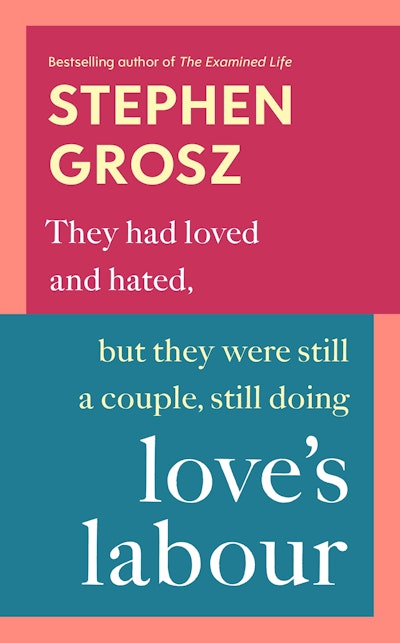
Book: Love's Labour by Stephen Grosz

They had loved and hated,
but they were still a couple, 
still doing love's labour ...

Luminous and necessary stories from the psychoanalyst's consulting room; on desire, heartbreak and learning how to love.

When it comes to love why do we find things so difficult? Drawing on over forty years of candid and surprising conversations with his patients, Stephen Grosz asks, what gets in the way of our falling in love? And what must we do to stay there? Penguin UK.
<>
'Ravi, a maths lecturer, is tormented by his wife Sonal's supposed infidelity, but won't look at the CCTV - even though that might reveal her to be innocent. This chapter has a sting in its tail when 19 years later Grosz is contacted by Sonal. She is dying of cancer and Ravi is cruelly neglecting her. Grosz feels that he missed a vital clue all those years ago, concerning Ravi's ingratitude and envy.

This moment of "failure" on Grosz's part forms an aspect of this small book's power. It shows that the psychoanalyst is not a machine, and the process is fallible. But it is also a testament to human complexity. When he hasn't understood the patient sufficiently, Grosz brings the case to his supervisor, and we, the reader, are witness to their exchange.' Life&Arts, FTWeekend.
Individual
|
      INTERPERSONAL    :     SCIENCES               
HUMANISTIC =========================  MECHANISTIC      
 SOCIOLOGY  :    POLITICAL 
|
My source: Kathy O'Shaughnessy. The hard work of seeing ourselves. Books, Life&Arts, FTWeekend, 27-28 September 2025, p.11.


Iamge: https://cdn2.penguin.com.au/covers/400/9780701188979.jpg

Tuesday, September 16, 2025

Chatbot therapists c/o The Sunday Times

It wasn't that long along ago, I tweeted about the prospect of our clinical information systems 'listening' and autotranscribing one-to-one clinical contacts and even formal psychotherapy sessions. How time flies!


Individual
|
      INTERPERSONAL    :     SCIENCES               
HUMANISTIC  --------------------------------------  MECHANISTIC      
 SOCIOLOGY  :    POLITICAL 
|
Group

AI therapy chatbots

'Conventional' 
Counselling / Psychotherapies

Mental health - illness

Issue of: 'Titles'
I can call myself ...
therapist, nurse ...


(New) Evidence-based

Workflow:
intake, assesses needs,
booking into care,
offers CBT based on guidelines.

Uses a person's details,
asks questions to identify
the likely problem ...

clinical
Empathy: Human - Machine

Public safety

DEMAND <-> supply

Access to Therapy: Untreated?

Other AI solutions -

validation

Regulatory approval


unvalidated 'solutions'

risk of a huge industry setback


My source: Danny Fortson, Chatbot therapists are here. But who's keeping them in line? The Sunday Times, August 17, 2025, p.4.

The online article is behind a paywall, but there is a related podcast (with advertising):


See also: 'AI' : 'ethics' : 'expert system, language'

Sunday, January 12, 2025

C/o FT 'Inside the rise of the mental-health volunteer movement'

INDIVIDUAL
|
   INTERPERSONAL : SCIENCES              
humanistic ------------------------------- mechanistic
 SOCIOLOGY : POLITICAL   
|
GROUP

'Amid a surge in demand for psychological support that has been exacerbated by the Covid-19 pandemic, Blue is one of many people without formal psychiatric qualifications — including volunteers and health workers — who are stepping in to deliver interventions.'

'Sangath became one of the first projects to run a randomised control trial (RCT) of task-sharing in mental health in 2007. “It’s not a compromise,” said Nadkarni, “it’s an idea backed by solid research evidence.”' [FT]

'Known as task-shifting or task-sharing, the trend has grown across healthcare as services grapple with a stark mismatch between resources and demand. The World Health Organization estimates that there is a global average of 13 mental health workers per 100,000 people, but in low-income countries this can fall to fewer than two.

But a number of studies suggest that simple interventions, such as benches where people can sit with a sympathetic listener, can be at least as powerful as expensive clinical approaches, easing the burden on specialist workers.' [FT]

'About us - Sangath: Our vision is a world where every person has access to quality and affordable mental health care.

Our signature principles are to leverage community and health system resources to deliver psychosocial interventions for the prevention and care of mental health problems. We address a wide range of mental health concerns across the life course, from cognitive development in childhood to self-harm and depression in youth, to drinking problems, psychoses and dementia in adults.  ...

Our name: ‘Sangath’ (सांगात) means togetherness and consensus. It signals our mission – to take an integrated and participatory approach to addressing mental health challenges.'


'Health policymakers are increasingly seeking to replicate projects pioneered in the developing world, a process that has been dubbed “frugal innovation”.'

'“Every $1 invested in a service like this gives you about $9 in return — both for the individual and the society combined,” he added.'

'Initiatives such as the Friendship Bench and the Common Elements Treatment Approach devised by Johns Hopkins University, a mental health intervention that can be delivered by trained and supervised lay providers in low and middle-income countries, are collectively reaching millions of people and have proved their worth in multiple studies.

But funders still tended to focus on setting up clinical projects rather than bringing about systemic change in resource allocation or medical payment models that would drive widespread adoption.' [FT]

My source:
Sarah Neville, India inspires project saving lives in Texas. FTWeekend, 21-22 December 2024. p.4.
https://ft.com/content/a187719c-ccbb-4af9-8d22-8e70b65098cf

n.b. While these efforts are ongoing, there is a crisis and a crisis of confidence in student mental health nursing as a specialty: 


Virtual 1200-1830 25th March 2025. (Too expensive for me.)

Sunday, October 01, 2023

Ear of Dionysus :: Ear(s) of a Mental Health Nurse*


INDIVIDUAL
|
     INTERPERSONAL    :     SCIENCES               
HUMANISTIC --------------------------------------  MECHANISTIC      
SOCIOLOGY  :   POLITICAL 
|
GROUP


Interpersonal Communication Skills

Active listening
Ear of Dionysus - Syracuse, Peter Jones 29th Sept 2023
   
 The Socio-Politics of 'information'

Secrets, States and Power


Ear(s): we all need to listen; not just in stereo but quadraphonic.

https://www.italia.it/en/sicilia/siracusa/cultural-places/neapolis-archaeological-park

Friday, August 23, 2019

Barber's model of hairdressing - "Care in the Community"?

Through the 1980s and 90s when models of nursing and nursing theory were flavour of the month, I remember a conversation that being so numerous, there was no doubt a "Model of Hairdressing" too. This is not to denigrate hairdressing in anyway (not at all Sis!).  I've actually considered this as a demonstration of the scope of Hodges' model. This post even prompted me to check the previous 2379 to see if I've been here before on W2tQ, but it appears not. (I do have an article somewhere - a parody on 'models of care'.)

There is a developmental tale here though, that is itself interesting. The story runs from the late 90s early 2000s thinking about hair, its qualities, scalp problems, nits (and diplomacy), health and safety at work, the equipment, the pictures displayed - advertising, ingredients, person-centredness, position - comfort and mobility, safety with some preparations and processes, gender and cultural aspects, the history of barbers and of the other 'services': ("Something for the weekend sir?"). So clearly hairdressing like all employment can be complex and rewarding. In addition: there are hosts of medical conditions and psychological factors (for example, self neglect*, phobias, children's reactions) that can affect the hair; its care, management, loss and compensating for this (with specialist help) as needed.

The social event that a visit to the hairdressers / barbers invites, was apparent as a child recalling my mother's former visits and the local 'news' that followed afterwards. In the later 2000's the need for dementia friendly communities was a further development. Business owners can see changes in their regular customers too. Many businesses seek to sustain this awareness and sensitivity in their approach and business. On my visits, the whole process is very relaxing. A further invitation as we shift from the sinks to the chair and mirror. There we are reflected in a before and after. The banter may also include the aspirations and educational options as students work through part-time work. As you may also have heard, over the past few years the actual and potential role of barber's in mental health has been more formally recognised:

https://www.thelionsbarbercollective.com/about-us/

https://www.independent.co.uk/life-style/hairdresser-suicide-prevention-mental-health-tom-chapman-safe-space-torquay-a7644021.html

Recognised also in the arts:

individual - SELF
|
INTERPERSONAL : SCIENCES
talk - HUMANISTIC - chat ----------------------------------------------- snip - MECHANISTIC - buzz..
SOCIOLOGY : POLITICAL
|
OTHERS - population

Mental health

Physical health

Public mental health policy


*What are the thresholds that pertain here - no doubt there are several - compounded?

Monday, January 28, 2019

Book review: i Critical Mental Health Nursing: observations from the inside

If the book's title does not suggest the challenge to come then perhaps the editor's "Our apology" just might.

https://www.pccs-books.co.uk/products/critical-mental-health-nursing-observations-from-the-insideThe editors declare the limitations of their apology as mental health nurses (mhn) given the precariousness of life, the environmental situation, the power of global corporations and how the industrial-military complex can also affect and define the role and work of mental health nurses. It is clear, that for example, the past decade (at least) of mental health service provision and development has been impacted by political and socioeconomic trends. The reduced number of mental health beds; the subsequent phenomena of out of area referrals (that also redefine 'area'). This past month, commentators have pointed to the lack of a work-force plan that should precede NHS Long Term Plan.

From the start the vocabulary here is rings of 'anti-psychiatry' and seeks, if not redress, then redesign of formal mental health services. Anyone putting the book down at this stage would be doing themselves, patients, carers, health and social care and their own learning a great disservice. Clearly, it is not only that existing services are reductionist, invalidating, self-serving, drug-pushing and re-traumatising; but the editors stress it is how they are all too often experienced.


As a mental health nurse the introduction and apology gets to heart of the matter, if not the mind. All of what mhn's do is tinged with coercion; whether with people on locked wards or those in their own home. The list of what mental health nurses are party to is a long one and makes difficult reading: the detention and restraint of people and administration of antipsychotic depot medications. The profession hides behind the ethics of acting in a person's 'best interests'. The negative impact of this experience is not just limited to a vulnerable minority who are in most marked emotional distress, but others as the book attests. If this suggests a caveat, there are several, as I hope this review across several posts will reveal. That custard cream shared with a patient (person, householder, tenant, citizen...) in their home will never taste the same. So, more on that to follow and not just to address any sense of trivialisation, but the many caveats that apply.

The editor's frame their apology outlining the basis for mhn: as a profession, a university degree, codes of conduct and accountability. p.viii As a 'profession in our own right' the critical thinking we espouse (yes - here too) and are supposed to exercise has failed to question and counter the increase in detention and the assault on mental health services themselves. At one stage I believed there was some coherence to mental health policy development, but if it is there now - it is intangible in its quality. MHS have not developed progressively as might have been anticipated if not exactly predicted. As a new Community Psychiatric Nurse in 1985 I am now a 'Community Mental Health Nurse', what else might my colleagues and I have become? At the end of the day we may longer return to the hospital (Winwick, Eaves Lane, Ribbleton - all gone), but what are we returning to when we go back to the office, the base? There is an office move in this book; and the final chapter considers the profession's very title.

The editor's apology does not just set the scene, it places mhn and all practitioners on the stage - front and center. This RMN (SRN) (to be ageist for a moment) is all too aware that despite all the talk about the need for integrated, holistic, person-centred care they are, more often than not, still lacking. I've come to see these as 'legacy issues', but that is another 'book'?

The book itself has 260 pages in total. The cover of my (softback - as above) is a pleasing contemporary design. The mainly white cover is already a suffering grey as it's been on numerous trips. Thirteen chapters follow the apology and an introduction. There are notes on the editors and contributors. The print is an excellent size and the overall format easy on the eye. Even if lightly edited, the editors have done a good job as the chapters cohere. Two indices cover names and subjects and are sufficient. So with chapter 1 beckoning I was all-eyes and ready page turning...

Thanks to PCCS Books for my review copy.

Part ii

Part iii

Part iv


Bull, P., Gadsby, J., Williams, S. (Eds.) (2018) Critical Mental Health Nursing: observations from the inside, Monmouth: PCCS Books. ISBN 9781910919408

Wednesday, January 09, 2019

"The Ball and the Box"

individual
|
INTERPERSONAL : SCIENCES
humanistic ----------------------------------------------- mechanistic
SOCIOLOGY : POLITICAL
|
group

coming to terms with
loss - bereavement
pain
awareness
insight
understanding
communication

https://twitter.com/laurenherschel/status/946888282444460033?lang=en


See also:
Colin Murray Parkes, Brenda Bridgeman, Annie Flower, Margaret Foster, Peter Speck & Colin Murray Parkes (1995) REVIEWS, Bereavement Care, 14:2, 22-23,  

https://www.tandfonline.com/doi/abs/10.1080/02682629508657361?journalCode=rber20

Monday, November 05, 2018

Social prescribing: c/o @TheKingsFund - Three questions

individual
|
INTERPERSONAL : SCIENCES
humanistic ----------------------------------------------- mechanistic
SOCIOLOGY : POLITICAL
|
group

Does it work?


What is it?


And how does it fit in 
with wider health and care policy?


Social prescribing is not a quick fix, a social distraction from a clinical problem. How this is approached - negotiated - will be a clear factor in the shared success of social prescribing as an effective, intervention for the person concerned, the NHS AND society.

Sunday, July 16, 2017

How Do I Give Bad News? c/o HospiceFoundation.ie

individual
|
INTERPERSONAL : SCIENCES
humanistic -------------------------------------------  mechanistic
SOCIOLOGY : POLITICAL
|
group-population

Level of knowledge and understanding

empathy and rapport
self-care
Losses ... many forms ...
shattered hopes, dreams, aspirations

patient's reaction -
anger, anxiety, blame, shock,
helplessness, misinterpretation

Acknowledge reaction
diffusing anger...
Respect denial of bad news

awareness - understanding

vulnerability

It is good to use non-verbal cues to
 convey warmth, sympathy, 
encouragement or reassurance 
to the patient. p.10.

Bad news = information that
affects the individual's
identity - very existence - 
Correct patient and family

Plans to give - convey bad news -
Multidisciplinary Team informed
Records
Telephone

Bad news = information that affects the individual's future

When to inform?
As soon as information is known.

Ensure environment - time protected, no interruptions, mobile phones ...
At bedside, curtains closed, eye-level, volume of voice, deafness?

Proceed at person's pace
Give information in chunks

Be prepared to 'fire warning shot' -
'telegraph' what may follow

Diagnosis FUTURE prognosis
Time and 'space' often need to be
created and then protected (respected)
or that of a loved one.

shock of others -
family and risk of being overheard
awareness - understanding

social support strengths

Shared resilience with acceptance

A standard to use:
If the person was my relative would I
 have been happy with how the
 news was given? p.6.

How Do I Give Bad News?

CULTURE & LANGUAGE
INTERPRETER SERVICES


Sick child? p.16.

Sudden death? p.20.

Age of consent - 16 years old - 18?

Right to:
  • accurate and true information
  • receive or not receive information
  • decide how much information
  • decide who should be present at consultations
  • decide who should be informed about their diagnosis and what information they should receive
Under no circumstances should you hand over personal belongings in a plastic bag. p.23.


Source:
http://hospicefoundation.ie
http://hospicefoundation.ie/wp-content/uploads/2013/04/How-Do-I-Break-Bad-News.pdf


Tuesday, April 19, 2016

Pigeonholes and a Matrix 4 Care


The structure of Hodges' model is 
not an invitation to pigeonhole. 
It is an equation: a matrix for care. 
What is done in one quadrant, 
needs to be counter-balanced 
in the other care domains. 
The operations here are not mathematical,
 but reflective, reflexive and ideally communicative.

Saturday, March 26, 2016

Hodges' model: Evidence-Based Integrated Healthcare - Policy, Mental Health & Research Funding

individual
|
INTERPERSONAL : SCIENCES
humanistic ---------------------------------------  mechanistic
SOCIOLOGY : POLITICAL
|
group

Mental health research 3%
Quarter of all health costs


Medical Research...
2011-2014 
33% rise in mental health related incidents dealt with by the police
Council..

£801.4 million for projects -
mental health allocated £21.8 million

Funding also via other bodies -
National Inst. for Health Research


My source: Bennett, R. (2016) Research fund spends 3% on mental health. The Times, 25 March 2016. p.24.
