Territories of Belief, Community, Nature and Technology i
SOCIO - TECHNICAL
The Digital Human BBC Radio 4 Aleks Krotoski | The TERRITORY | ||
|
Image: The Territory - https://www.enprimeur.ca/photos/english/the-territory/163889/movie-poster/
Hodges' model is a conceptual framework to support reflection and critical thinking. Situated, the model can help integrate all disciplines (academic and professional). Amid news items, are posts that illustrate the scope and application of the model. A bibliography and A4 template are provided in the sidebar. Welcome to the QUAD ...
SOCIO - TECHNICAL
The Digital Human BBC Radio 4 Aleks Krotoski | The TERRITORY | ||
|
Posted by Peter Jones at 3:46 pm | PERMALINK
Labels: activism , adoption , Amazon , beliefs , community , democracy , environment , film , humanity , Indigenous rights , land , land defenders , media , nature , preservation , protection , religion , socio-technical , technology
With visitors to the website confusing the title Hodges' Health Career Model for job careers; the addition of 'Care Domains' was intended to reduce confusion.
I think this has helped, but because the future beckons and this blog plus the website appear to have a multidisciplinary readership more clarity may be of help, especially the use of this word 'domain'.
The dictionary is a good place to start:
do·main
1. A territory over which rule or control is exercised.
2. A sphere of activity, concern, or function; a field: the domain of history. See synonyms at field.
3. Physics. Any of numerous contiguous regions in a ferromagnetic material in which the direction of spontaneous magnetization is uniform and different from that in neighboring regions.
4. Law.
a) The land of one with paramount title and absolute ownership.
b) Public domain.
5. Mathematics.
a) The set of all possible values of an independent variable of a function.
b) An open connected set that contains at least one point.
6. Biology. Any of three primary divisions of living systems, consisting of the eukaryotes, bacteria, and archaea, that rank above a kingdom in taxonomic systems that are based on similarities of DNA sequences.
7. Computer Science. A group of networked computers that share a common communications address.
[Source: Answers.com]
1. A territory over which rule or control is exercised: can apply in Hodges' model from a theoretic perspective by a curriculum, a scheme of work, and consequently in practice. We refer to the clinical domain, medical domain or social domain. This latter usage overlaps with 2. we often speak of fields of study and practice.
Place (territory) is the vital ingredient here; specific wards, clinics, treatment centres and even community may be described as a domain of care. The way 'domain' is used in day-to-day language may vary markedly. On some occasions the domain in question may be at an even higher level: clinical domain versus management domain.
3. Is interesting because although they are not exactly magnetic, there are several polarities* at work in Hodges' model.
On the borders between Hodges' domains, what is the 'switch' (context, situation, person focus ...) that determines the placement and direction of care concepts: for example - humanistic or mechanistic?
Sticking with physics there are undoubtedly several chaotic attractors within the bounds of Hodges' model. From the behaviour of the heart to the role of psychosocial stress in risk of relapse. If several variables are linked chaotically, what risks are run if one or more domains (however defined) are deemed non-relevant or out of scope?
4. This legalistic definition of 'domain' also applies. Hodges' model is person-centred, but although focused on the individual the model acknowledges the need to reconcile the diametric opposition that is the law that prevails for the one [INTERPERSONAL] and the law, justice and systems of the many [SOCIAL] and [POLITICAL].
Hodges' model is also in the public 'domain' all that is needed is an acknowledgement.
The remaining definitions 5, 6 and 7 - maths, biology and computer science - are all connected.
The connection?
Language?
More to follow.... Hope to return over the weekend...
*Will post about polarities, when I take a certain photo over in Manchester.
Just hope they don't pull it down before I get there! Bye for now...
Posted by Peter Jones at 10:00 pm | PERMALINK
Labels: boundaries , care domains , chaos , complexity , concept maps , concepts , definitions , disciplines , domains , Hodges' Model , knowledge , meaning , physics , relational , semantics , space
'Greeno (1991) argued that students develop understanding when"a domain is thought of as an environment, with resources at various places in the domain. In this metaphor, knowing is knowing your way around ir the environment and knowing how to use its resources. This includes knowing what resources are available in the environment as well as being able to find and use those resources for understanding and reasoning. Knowing includes interactions with the environment in its own terms - exploring the territory appreciating its scenery and understanding how its various components interact. Knowing the domain also includes knowing what resources are in the environment that can be used to support your individual and social activities and the ability to recognize, find, and use those resources productively. Learning the domain, in this view, is analogous learning to to live in an environment: learning your way around, learning what resources are available, and learning how to use those resources in conducting your activities productively and enjoyably. (p. 175)"In particular, in chapter 8, Nemirovsky et al. use the metaphor of becoming familiar with a new place (e.g., a town, a train station) and the process of learning a new mathematical concept.' p.7.
Posted by Peter Jones at 10:22 pm | PERMALINK
Labels: adults , argumentation , book , children , concepts , definitions , domains , education , environment , learning , literacy , mathematics , navigation , reasoning , resources , science , students , teenagers , understanding
Viewing this debate and SDGs both as information spaces, and mental health/illness can provide some insights.
'Learned helplessness' is an established phenomenon in psychological studies and history.
Adam Grant in Life&Arts, FTWeekend 29-30 March 2025, p.2.
'Many people believe that in a world of echo chambers and misinformation, it's not possible to talk anyone out of their convictions. They`re wrong. Even a bot can do it.Also helpful, as per discussion to consider AI as a new / emerging 'information space' as a literal frontier, a new territory with unknowns that businesses wish to conquer and the public must learn to trust - even as users. What knowledge - understanding is needed of what is happening in the 'box'?
In recent experiments psychologists recruited thousands of Americans who believed in unfounded conspiracy theories ranging from the moon landing being faked to 9/11 being an inside job. After the participants described their views, the psychologists randomly assigned some of them to discuss these views with an AI chatbot that was prompted to refute them.
After less than 10 minutes of conversation with a ChatGPT-based LLM, more than a quarter of participants felt uncertain about their views - and those doubts persisted two months later. Short exchanges were even enough to move the opinions of strong believers.
Why? It's not just that ChatGPT has access to infinite knowledge. It turns out that AI chatbots are better listeners than the average human. The researchers found that chatbots were persuasive because they presented information that directly challenged the reasons behind people's beliefs.'
Posted by Peter Jones at 8:33 pm | PERMALINK
Labels: behaviour , care design , case studies , complexity , design , EMR , healthcare , methods , patients , practice , research , services , symposium , systems , systems thinking , theory , transdisciplinary , workshop
deadline for submissions: 30th September 2024
I) Examinations of various philosophical perspectives and frameworks for understanding disability, including the social model, the cultural model, the relational model and the capabilities approach.Intersectional analyses, which explore how disability interacts with, and impacts, other social categories such as race, gender identity, sexuality, and class, would be greatly welcomed. Furthermore, contributions could cover a wide array of historical and geographical frameworks, from Ancient Philosophy towards Contemporary Philosophy – not only from a Western perspective.
II) Ethical considerations concerning disability, such as questions related to autonomy, dignity, justice, violence, and the ethics of care.
III) Epistemology inquiries into how disability affects knowledge, perception, and cognition.
IV) Explorations of disability's influence on art, aesthetics, and the perception of beauty.
V) Discussions on disability rights, social policies, and disabled people’s participation or exclusion from citizenship.
VI) Phenomenological analyses of lived experiences, that include the embodiment of disability and the material encounters with the world. Philosophers’ first-person experiences and accounts would also be positively valued in this regard.
VII) Analyses of the role of disability in language, in the discursive realm, in the creation of meaning, and in the construction of metaphors, including the investigation of how philosophical language and theorization could contribute to ableism, disablism, and disabled’s people exclusion.
VIII) Investigation of disability through the lens of humanism and/or its critical stances (Anti-Humanism, Philosophical Posthumanism, Transhumanism, New Materialisms, and so on).
Information
Deadline for submissions: 30 September 2024
Publication of the Special Issue: July 2025
We anticipate that submissions will come both through solicitations and this open Call. Papers should be between 8000 and 10,000 words (including abstracts, footnotes, and references). Only papers in English will be accepted. For further information do not hesitate to contact the editors (brunella.casalini[at]unifi.it; chiara.montalti[at]unisalento.it).Posted by Peter Jones at 2:56 pm | PERMALINK
Labels: ableism , art , autonomy , call , capabilities , disability , disablism , ethics , frameworks , humanities , journal , justice , language , literature , philosophy , policy , post-human , quality of life , rights , sexuality
My copy of Harris (2015) is secondhand, £8.50 from 'Green Ink' in Hay-on-Wye last November.
Apparently, the (professional - high-level) study of mathematics is a relaxed field. McCleary reviews the book and the good, truth, and beauty of mathematics; 'relaxed field' relates to the latter:
"That leaves beauty, the deepest source for Hardy, and the most challenging motivation for mathematical activity. Challenging because it calls into question how external support of mathematics is justified. Hardy tells us that “a mathematician, like a painter or poet, is a maker of patterns.” Throwing mathematicians in with the painters and poets leads to justification of mathematics as an art. Harris situates his discussion of beauty in the notion of play. Play needs to take place in a “relaxed field,” a notion introduced by ethologist Gordon Burghardt to describe animal behavior when not preoccupied with food, mating, territory, or predators—'the opposite of stress.'"
Mathematics without Apologies:
Portrait of a Problematic Vocation
John McCleary, Book Review, NOTICES OF THE AMS VOLUME 65, NUMBER 10 pp.1280-1283. https://www.ams.org/journals/notices/201810/rnoti-p1280.pdf
Talk of absolutes is common in mathematics. There is absolutely no mathematician involved in the writing of this post and others. That said, I have been privileged to work in a 'relaxed' manner.* When I trained mental health and then general nursing, we were part of the 'numbers' on the duty-rota. Your presence was not just a matter of learning, there were concrete things - tasks - to do. Completing the Community Psychiatric Nursing Certificate course 1987-8, involved a secondment to another community team (thank you Bolton!). My caseload was left to the support of colleagues, so I could concentrate on the course. A course in which Brian Hodges (not Wilfred Hodges - the logician) taught his eponymous model. Post-Project 2000 with nurse education an undergraduate pursuit, students were designated supernumerary. Student nurse finances are precarious, worthy of a post in itself.
If relaxed and stress are opposites, nurses would seek to be 'relaxed'** suffice to have the time and resources to deliver care safely, professionally and to a high standard. Adequate time + resources also brings a dividend: person-centredness, health promotion and education, preventing relapse. As it stands, however, for nurses be they students or qualified, nursing is far from relaxed.
tbc... ii
Harris, M. (2015) Mathematics without Apologies: Portrait of a Problematic Vocation. Princeton University Press.
*But without the charisma Harris describes.
**The notion of slack resource could be applied, space for creativity and innovation in assessment, planning, interventions (case formulation) and evaluation.
See also: 'Four Fields'
Posted by Peter Jones at 5:51 pm | PERMALINK
Labels: arts , beauty , book , dichotomy , disciplines , ethology , field , healthcare , human rights , mathematics , nursing , philosophy , play , precarity , progress , relaxed , stress , students , truth
'The sociological viewpoint can be taken on many different subjects. Thus, political sociology has to do with people's voting behaviour and their reactions to the processes of government, while the sociology of education takes into account the influence of various social factors upon educational opportunities and achievements. In addition, social psychology, social psychiatry and social medicine are all related to medical sociology. These terms all imply the use of sociological methods and insights in different areas of human behaviour, and the divisions between them are a convenient way of dealing with what is a very wide territory. Such divisions may suggest that events and things in the real world are already separated in themselves, whereas the divisions are actually in the minds of the people who make them. It is easier to regard sociology generally as being the study of people's behaviour in groups, groups of all kinds, large and small, casual or permanent, groups of which people are very conscious as well as those of which they may scarcely be aware. Thus, much of sociology is concerned with the human family, a group whose form and composition varies from one part of the world to another and from one set of people to another but which does have common features and functions wherever it is studied. The family will be referred to repeatedly in this book, since not only does it affect all our lives but it profoundly influences the way in which people react in relation to illness.' pp.8-9. |
'In the first place, the illness must be outside the patient's control, in no sense his own fault. Second, the sick role will allow him exemption from his other roles. with their associated obligations and duties. For example, a man can legitimately give up work and leave his usual family 'responsibilities to his wife. But, third, the sick role requires that the patient should positively desire to get well, he should not relish the relinquishment of responsibility and, fourth, he has the obligation to seek competent medical help.' p.25.
the sick role requires that the patient should positively desire to get well
| the illness must be outside the patient's control, in no sense his own fault. |
the sick role will allow him exemption from his other roles. with their associated obligations and duties
|
he has the obligation to seek competent medical help |
Posted by Peter Jones at 6:43 pm | PERMALINK
Labels: academia , book , categories , change , contacts , demographics , friends , groups , history , Hodges' model , illness , medical sociology , nursing , Parsons , patiency , population , sick role , sickness , society , sociology
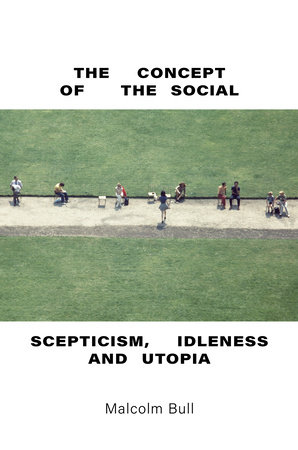
| The Concept of the Social |
'From one sentence in Aristotle derive two arresting theoret- ical discourses of the twenty-first century: Michel Foucault's biopolitics, provocatively reformulated by Giorgio Agamben in terms of the relationship between sovereignty and the body, and the capabilities approach developed by Amartya Sen and Martha Nussbaum as a means of evaluating and promoting development, justice and freedom. Both are characterized by deep reflection on the sources of Western political thought, and by urgent engagement with contemporary social and legal problems. Both are in some sense biopolitical in that they are shaped by the interplay of the same Aristotelian categories the human and the animal, politics and nature. But they are on opposite sides of the divide that has opened up in the human sciences since the 1960s, and there currently seems no optic through which they might simultaneously be viewed, no way of integrating or comparing their insights.
In part, this reflects a situation in which political debate appears to have fragmented into a multiplicity of single issues. The ancient 'Who will rule?' and the modern 'Who shall have what?' have been supplemented by an array of questions that deal with matters once exclusively cultural, personal or natural. For previous eras, the relative integrity and unmalleability of cultures, bodies and environments rendered such questions redundant. Now they frequently appear unanswerable from within established political traditions, and incommensurable in relation to each other. Within this expanded field, biopolitics and the capabilities approach have unusual salience and potential, for both bundle together issues otherwise assumed to be distinct. If they, in turn, could be coordinated, perhaps we could begin to map the new territory.' p.68.
'Who shall have what?'
| nature human - animal |
| culture | political 'Who will rule?' |
Posted by Peter Jones at 2:50 pm | PERMALINK
Labels: animal , authority , biopolitical , body , book , coordination , cultural , human , integration , mapping , mind , nature , political , possessions , relations , resource allocation , salience , social , State , vectors
Last week I referred to a definition of domain that included mention of:
1. A territory over which rule or control is exercised.
2. A sphere of activity, concern, or function; a field: the domain of history. See synonyms at field.
3. Physics. Any of numerous contiguous regions in a ferromagnetic material in which the direction of spontaneous magnetization is uniform and different from that in neighboring regions.
4. Law.
a) The land of one with paramount title and absolute ownership.
b) Public domain.The remaining definitions -
5. Mathematics.
a) The set of all possible values of an independent variable of a function.
b) An open connected set that contains at least one point.
6. Biology. Any of three primary divisions of living systems, consisting of the eukaryotes, bacteria, and archaea, that rank above a kingdom in taxonomic systems that are based on similarities of DNA sequences.
7. Computer Science. A group of networked computers that share a common communications address.
[Source: Answers.com]
- I suggested were connected by language....
There are some very formal definitions of domain from the world of 5. maths. Pulling other words out of the hat isn't the answer, but the idea of mapping between 'domains' is (I think) very important in Hodges' model; even though any mapping is subjective and - in this instance - not evidence based. Is it possible to be presented by an insurmountable edifice - something that terrifies you and yet fascinates at the same time? Well that's maths for me. I'll return to this another time.
Maths, 6. biology and computer science (to follow) are as noted in the first post domains of study. In health care and especially within medicine 'formal languages' has been and remain a major preoccupation in the form of coding and classification schemes. If you follow the links above you'll see they are listed in the SCIENCES page - since they are formal and structured. In order to report on activity locally and epidemiology at a global level, classification and coding is essential.
The links also include examples of languages of nursing. Nurses spend quite some time writing and computers still choke when it come to analysing and reporting on reams of narrative text. Computers still love codes. Although they are becoming ever more versatile, they still crunch numbers or 'data'.
As for computer science 7: in the 1980s I remember seeing graphs depicting 'languages' from microcode and assembler language at the heart of the machine, through to the fuzzy world of written and spoken language. In between there's quite a spectrum covering logic and a huge range of computer programming languages.
Searching the web I suppose I was bound to come across domain specific languages (DSL). There's a couple of videos and Ruby's in the frame. Funny that, I had noticed in Starbucks how some people like to show off their DSL expertise.
One things for sure this really focuses the mind in terms of defining a domain.
Posted by Peter Jones at 11:00 pm | PERMALINK
Labels: care domains , definitions , Hodges Model , programming , Ruby
"5 An early reference to topology in psychology has been developed by Kurt Lewin, Principles of Topological Psychology (McGraw-Hill, New York, 1936). Linking literature and topology, Angus Fletcher, The Topological Imagination: Spheres, Edges, and Islands (Harvard University Press, Cambridge, MA, 2016). For an overview of philosophical approaches related to topology, see Daniel Parrochia, Mathematics and Philosophy (Wiley, Chichester, 2018) Ch 11. Using a topological approach to law, Müller-Mall (n 4). This last contribution constructs a topological approach for assessing perspectives in law (such as reflected in judicial decisions on a certain legal question) and situating them within ‘reference frames’ (in particular 117 et seq)." p.520. | "Law is fragmented ‘along issue-specific rather than territorial lines’, as exemplified by regulatory regimes for environmental and health issues or the private regulation of the cyberspace and of transnational commercial activities.20 Some authors have described this as a ‘deterritorialization’ of law.21 One reason for such a deterritorialization is the increasing amount of regulatory objects that cannot, or can only with difficulty, be linked to any territory – particularly salient in the case of digitalized data and its fluid location." p.522. | ||
"... the notion of legal space suggested here comprises various features that are guided by concepts from topology, a branch of mathematics that analyses the qualitative nature of spaces. This approach has been adopted in an interdisciplinary manner, including in various disciplines of social science."5(See above). pp.519-520. |
|
Posted by Peter Jones at 6:18 pm | PERMALINK
Labels: boundaries , categories , commerce , constitution , data , global , Hodges' model , law , legal , logic , maths , national , paper , political , regulation , sets , space , systems , territory , topology
"The vast territory known as Owens Valley in California was home for centuries to Native Americans who lived along its rivers and creeks fed by snowmelt that cascaded down the eastern slopes of the Sierra Nevada. Then came the European settlers, and over time, the Native Americans tribes lost access to nearly all of that land. Eventually, the water was lost too: ...
Less familiar is what happened to the Owens Valley, and the people who lived there, after most of the water was sent south. Owens Lake is now a patchwork of saline pools covered in pink crystals and wetlands studded with gravel mounds designed to catch the dust. And today, the four recognized tribes in the area have less than 2,000 acres (800 hectares) of reservation land, estimated Teri Red owl, a local Native American leader.
But things are changing, tribal members say. They have recently reclaimed corners of the valley, buoyed by the growing momentum across the United States to return land to Indigenous stewardship, also known as the "Land Back" movement." p.7.
LAND | |
culture indigenous peoples history | BACK justice |
The problem of bugs in software is an ongoing problem across all IT industries. For application that are safety critical we are still reminded of the risk implications and consequences if bugs are software is not tested and bugs - errors identified and corrected.
Back in the 90s during BA(Joint Hons. Philosophy & Computing) studies, I was introduced to the formal specification language 'Z'. It was designed for definition, and modelling of computer software, working from specification to implementation, as per these images:
![]() |
| https://personalpages.bradley.edu/~young/CS592M120_OLD/handoutZed.pdf |
![]() |
| https://personalpages.bradley.edu/~young/CS592M120_OLD/handoutZed.pdf |
To be clear I've never worked as part of a software project and my 'tinkering' - Drupal, Pharo, online groups, hosting platform - reveals how the development stack and work processes have developed apace. The challenge is keeping up. Simultaneously, there is the sense of being on the bank of deep water; or, a vertiginous cliff:
A little learning is a dang’rous thing;
Drink deep, or taste not the Pierian spring:
There shallow draughts intoxicate the brain,
And drinking largely sobers us again.
Fir’d at first sight with what the Muse imparts,
In fearless youth we tempt the heights of arts,
While from the bounded level of our mind,
Short views we take, nor see the lengths behind,
But more advanc’d, behold with strange surprise
New, distant scenes of endless science rise!
Pope. https://interestingliterature.com/2021/09/a-little-learning-is-a-dangerous-thing-meaning-analysis-origin/
Acknowledging the need for an 'evidence-base' and theoretical underpinning the effort to 'push' Hodges' model forward is ongoing. Maths remains an alien territory to me, but the 'secret garden' is as tantalizing as ever. Over the years I have posted - with much overlap about:
Posted by Peter Jones at 7:36 pm | PERMALINK
Labels: assurance , domain specific languages , errors , formalism , function , health , languages , logic , maths , mechanistic , metrics , programming , purpose , risk , safety , software , specification , testing , universal , Z
Dear reader,
The February 2024 issue is online here.
Please share this issue with your colleagues
and promote it through social media.
For example: “See the South Sudan Medical Journal’s February issue for articles related to stroke in Africa here @SSMedJournal #SouthSudan #SSOT” or retweet from @SSMedJournal.
Editorial
Notice Board (Back Cover): Advertise in the South Sudan Medical Journal
Front Cover Image: Brain CAT scan of a stroke patient showing acute right non-haemorrhagic infarct in posterior middle cerebral artery territory as well as right basal ganglia with mass effect. (Credit: Eluzai Hakim)
The SSMJ team
Email: southsudanmedicaljournal AT gmail.com
Website: http://www.southsudanmedicaljournal.com
Follow us on Twitter/X @SSMedJournal and our Facebook Group
Posted by Peter Jones at 2:49 pm | PERMALINK
Labels: Africa , blood tests , cancer , development , global health , journal , low and middle income , medicine , models , open access , prevention , rehabilitation , remote , respiration , risk , rural , South Sudan , stroke , students
A personal journey The 'wounded healer' - Halifax (1982) ".. it is the experience of our own wounding that will enable us to engage with our clients in a healing process". p.15. | "Therefore we can begin to understand that rather than the drama being the chaos, the drama is both the container of the chaos and the means of exploring it. Accompanying our groups through such dangerous territory may seem too frightening for the dramatherapist to contemplate, let alone the client". p.15. |
"The attributes of liminality or of liminal personae (threshold people) are necessarily ambiguous, since this condition and these people elude or slip through the network of classifications that normally locate places and position in cultural space. Liminal entities are neither here nor there: they are betwixt and between the positions assigned and arrayed by law, custom, convention and ceremonial. As such their ambiguous and indeterminate attributes are expressed by a rich variety of symbols in the many societies that ritualise social and cultural transitions. This liminality is likened frequently to - death, being in the womb, to invisibility, to darkness, to bisexuality, to the wilderness and to an eclipse of the sun or the moon". p.14. | "The 'illness/treatment' model has by its nature to emphasise what the patient cannot do rather than what he might be able to do; to emphasise that what requires to be done is carried out by others rather than what the patient might do for him/herself". p.262. Power as exercised (degrees of freedom?) through the therapeutic turn: the history of therapies; social, industrial, occupational, physical, drama, psychotherapy et al. ... |
Posted by Peter Jones at 9:16 pm | PERMALINK
Labels: arts , change , clinical , culture , dramatherapy , healing , health , Hodges' model , identity , journey , liminality , modality , place , psychotherapy , recovery , space , theatre , theory , therapy , thresholds
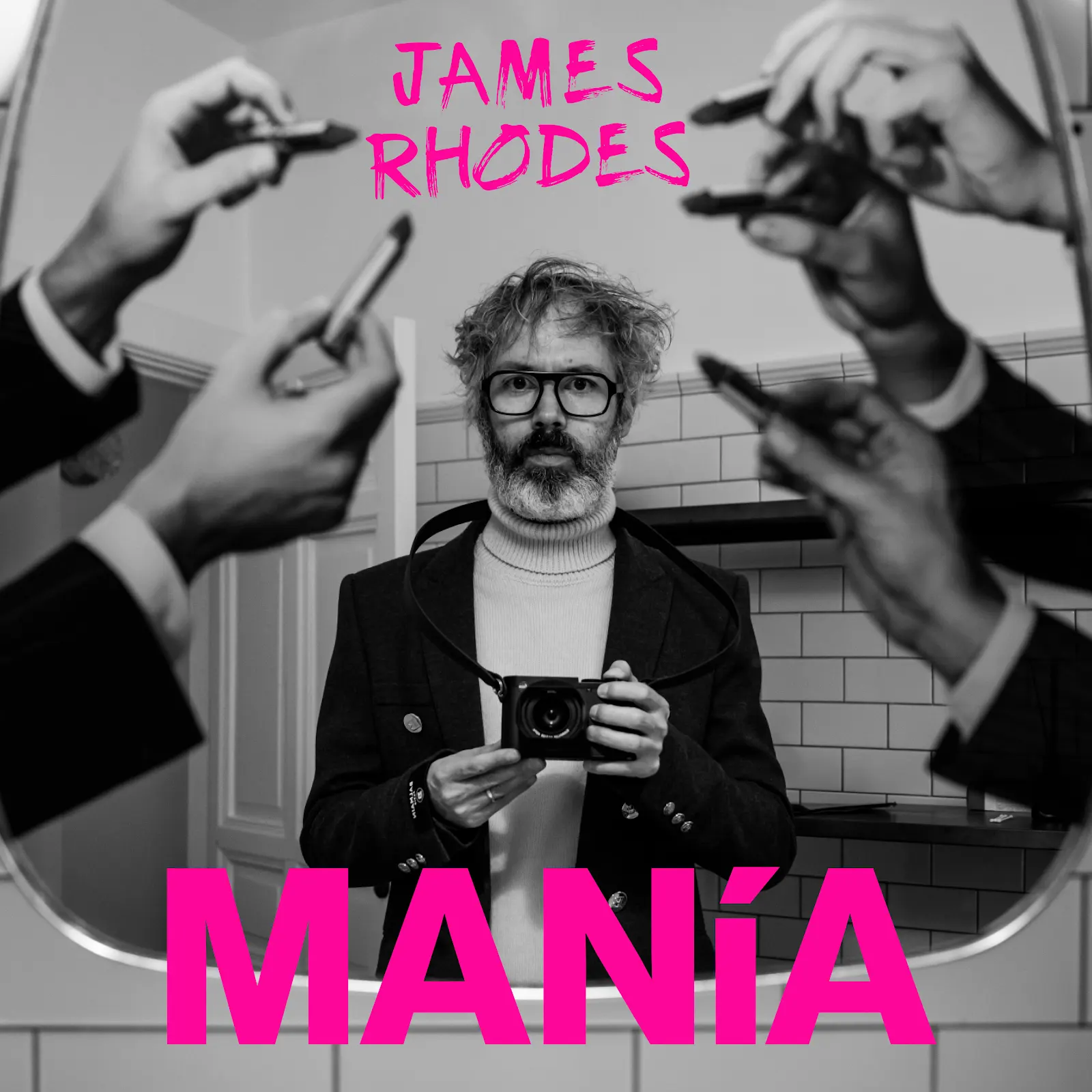
'By now we're all familiar with the idea of music as therapy. For James Rhodes, however, music can be equivalent - at times even preferable - to medication in the management of mental health. "Obviously, I am in favour of medication when it is necessary to save lives," says the 49-year-old British-Spanish classical pianist, when I meet him at Peregrine's, an upmarket piano shop in Clerkenwell, central London. "I was on medication and it genuinely saved my life. What I'm not in favour of is medication as a kind of easy option instead of doing other things that will also have the same effect. And there's no question that music [can]."Manía, Rhodes's new album, is driven by that philosophy. Traversing swaths of classical territory, from JS Bach to 20th-century Argentine composer Alberto Ginastera, it is an attempt to profile the therapeutic properties of music from all angles, "I've always loved this idea of prescribing pieces," says Rhodes. As someone who has struggled with his own mental health, he says he has selected works that "accompany me and my insomnia, my anxiety, my desperation and my fears in the middle of the night"'. p.13.
My source:
Nepilová, H. Music on prescription, Arts, Life&Arts, FTWeekend. 8-9 March 2025. p.13.
Posted by Peter Jones at 5:35 pm | PERMALINK
Labels: art , FT , individual , mania , media , medication , medicine , meditation , mental health , music , prescribing , psychiatry , reflection , relaxed , support , therapy , trauma , treatment
Created in the early 1980s, Hodges' model is clearly not a -
![]() |
| 'New Invention' P. Halling |
Posted by Peter Jones at 8:06 pm | PERMALINK
Labels: assurance , cogneography , cognition , data , experience , health , health service , history , Hodges' model , holistic bandwidth , information , life , lifelong learning , maps , metaphor , nursing , nursing process , social care
Continuing in the vein of challenging and stimulating ....
It seems there are several people attributed with the saying "the map is not the territory". The debate around maps and territories came up in discussion and is frequently raised on psychology and therapy discussion lists. At DTMD I referred to h2cm as a cognitive periplus, which I came across in Cunliffe's book The Voyages of Pytheas. Basically, ancient mariners would draw a map, a periplus of the coastlines for navigation and an outline of land masses. During the meeting I came to equate the basic features on the coast as data; buildings or smoke as information; and the conclusions derived as knowledge. Whether to proceed inland well, that is about pioneering, courage and wisdom.
A challenge comes with the DTMD talk of information theories. The DTMD workshop was promoted as a forum to discuss and expand our collective understanding of what we mean by information in our different disciplines.
What would an information theory based on the knowledge domains look like? Given the presence of the SCIENCES domain then the mathematical and logic-based theories are already determined for us, are the specific information theories and models that relate to the physicality, the entropic journey of the body? What information theories can we identify for the other domains:
Posted by Peter Jones at 12:37 am | PERMALINK
Labels: care domains , cognition , comms , conference , definitions , Hodges Model , holistic bandwidth , information , information theory , interdisciplinary , media , philosophy , presentation , research , science , systems , theory
Born in Liverpool, NW England, UK.
Community Mental Health Nurse NHS, Part-time Lecturer,
Researcher Nursing & Technology Enhanced Learning
Registered Nurse - Mental Health & General
Community Psychiatric Nursing (Cert.) MMU
PG Cert. Ed.
BA(Joint Hons.) Computing and Philosophy - BIHE - Bolton
PG(Dip.) Collaboration on Psychosocial Education [COPE] Univ. Man.
MRES. e-Research and Technology Enhanced Learning, Lancaster Univ.
Live and work in NW England - seeking a global perspective.
The views expressed on W2tQ are entirely my own, unless stated otherwise.
Comments are disabled.
If you would like to get in touch please e-mail me at
h2cmng AT yahoo.co.uk
orcid.org/0000-0002-0192-8965-=<>=-