Hodges' Model: Welcome to the QUAD: Search results for maths

Hodges' model is a conceptual framework to support reflection and critical thinking. Situated, the model can help integrate all disciplines (academic and professional). Amid news items, are posts that illustrate the scope and application of the model. A bibliography and A4 template are provided in the sidebar. Welcome to the QUAD ...

Showing posts sorted by relevance for query maths. Sort by date Show all posts

Tuesday, February 25, 2025

So, I can proceed, fall flat on my face - [ concepts-maths iii/iii ]

- and utilise the inevitable!

'Decades after struggling to understand math as a boy, Alec Wilkinson decides to embark on a journey to learn it as a middle-aged man. What begins as a personal challenge—and it's challenging—soon transforms into something greater than a belabored effort to learn math. Despite his incompetence, Wilkinson encounters a universe of unexpected mysteries in his pursuit of mathematical knowledge and quickly becomes fascinated; soon, his exercise in personal growth (and torture) morphs into an intellectually expansive exploration.' 
https://us.macmillan.com/books/9781250168580/adivinelanguage/
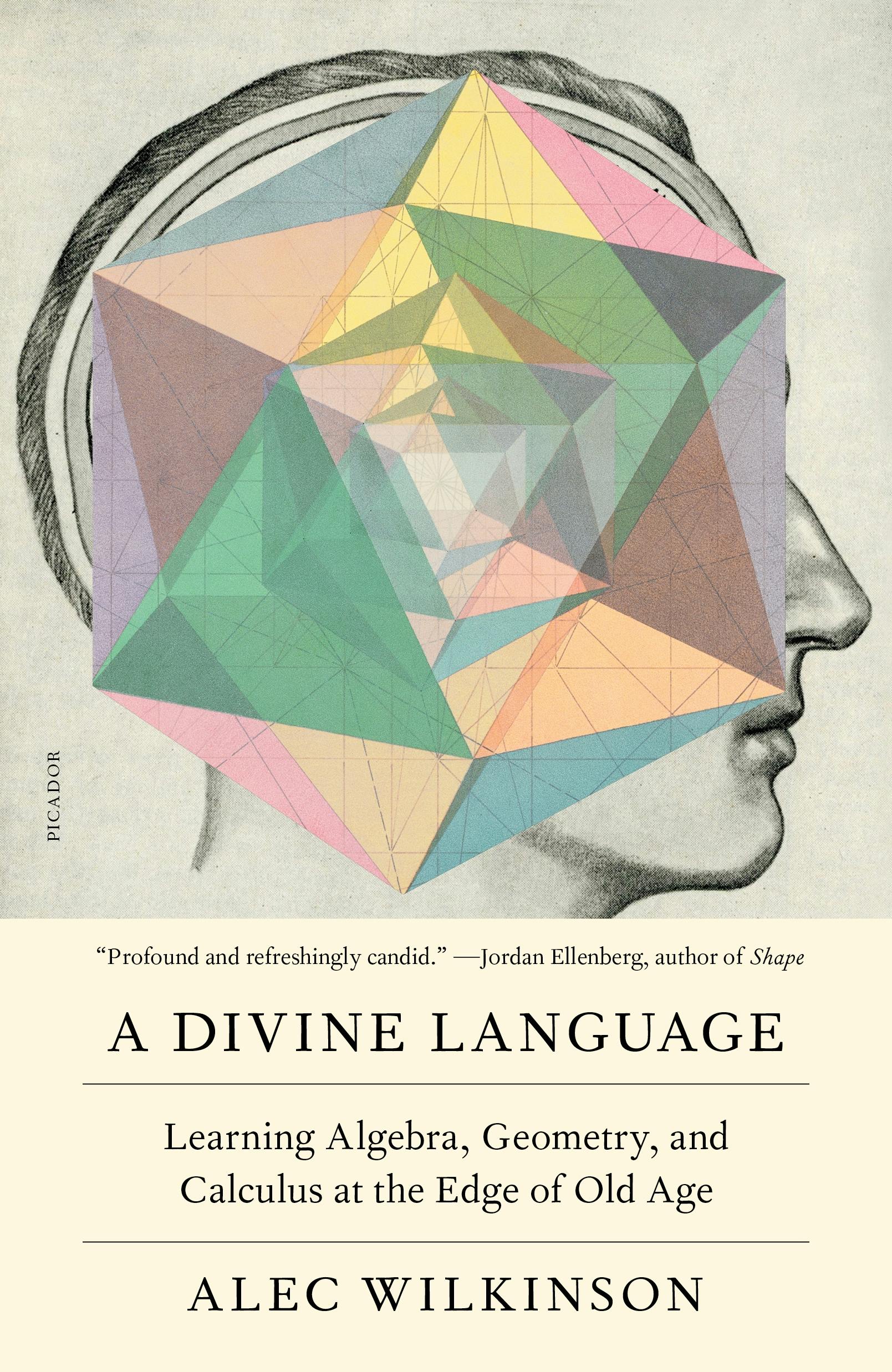
 

A Divine Language

As observed many times in the literature and here on W2tQ writing about Hodges' model, healthcare - medicine and nursing are both a science and art. Hodges' model is an invitation to the arts in liberal form, with an emphasis on practice: social sciences, humanities, physical sciences and even mathematics. 

There is now quite a bank of posts on W2tQ tagged art/arts and more specifically prints. I still plan to attend a workshop on printing. As ever, in my head, my mind's eye - I've an amazing, brilliant .. (!?) arts project, just waiting to be released. A true collage of the care concepts.

If Hodges' model is 'simple' in its basic form, then it is clearly possible for other people to create their own artistic impressions, interpretation of Hodges' model. My effort would of course be unique, as would theirs. There could be a competition and I end-up missing out. Not even short-listed for a prize; a victm of familiarity perhaps? 

Quite 'naturally' in a way, or at least by way of childhood experiences, a need for therapy and validation; I have also arrived at a belief that there is a mathematical project here (Oh, for goodness sake! Is there no end to this?). 

As posted before, like Alec Wilkinson I am no mathematician. Embarrased, shamed to a husk at school on many occasions, I encountered math teachers who must have empathised. Well, that's one way to explain the appreciation of maths I have always felt. Or more accurately, a love of knowledge; of which maths and logic are a part? Since I can hardly understand, I am more in love with the idea of maths, than mathematics itself. I have always been in awe of maths and people who 'get it', even if that is only  mastery of the high school mathematics curriculum.

Convinced that there is more to Hodges' model than meets the eye, I have thought of following Wilkinson - who tries to be systematic - to underpin a book - back into the nightmare lands of my youth. Should I retake GCSE maths? 'There be dragons', without a doubt. The heat can be recalled, like it was yesterday. This isn't just a dragon, it is a chimera. At times it wants to be a friend, providing familiar terms, domain, set, and group. Wilkinson's quest is structured and seeks a reasoned and disciplined approach. Why am I bothering? I have a choice surely? Nursing, health, global health can all collectively furnish many items of epistemological fruit. No need for calculative flagellation. Through Hodges' model you can productively span the disciplinary bridges once again: call in - sociology, economics, policy and more. How many Königsberg bridges do you need?

While the artist in me, might waste time. In pointing to Hodges' model as a potential mathematical object, this little seed might fall on fertile and (much) more capable ground(?), as Wilkinson describes:

'Mathematics might be the only creative pursuit in which inevitability figures. Other artists might be defeated by a task beyond their capabilities, but they do not live with knowing that sooner or later, if their work is consequential, someone will do what they haven't been able to do. Mathematicians work within a discipline in which, so long as their suppositions are correct, there is always a precise and irrefutable answer, even if they can't find it.' p.135.

I can hope for this at least.

Alec Wilkinson. (2022) A Divine Language. Learning Algebra, Geometry, and Calculus at the Edge of Old Age. New York: Farrar, Straus and Giroux. https://us.macmillan.com/books/9781250168580/adivinelanguage/

Previously: How 'divine' is the language of care?

n.b. At some point I will go though all the posts and unpublish/delete items that add little to the core.

Wednesday, March 24, 2010

Lovelace, women's IT and QUADratic equations

When you stop and think about it - really stop and think, the foresight of Charles Babbage was astonishing, even though he did not quite achieve his objectives. What is even more amazing then is the role that Ada Lovelace played in the development of computing and scientific computing.

This post is to celebrate Ada Lovelace Day. As per this post 12 months ago, I am and always will be celebrating Enid Mumford and her work on the need and importance of socio-technical insights when we attempt to apply IT in the work place*. Her work also exemplifies what women can and do contribute to IT.

In terms of the 3R's I am 'literate', but real maths evades me at least the level of ability I wish I had. Namely, the expertise to exercise some of puzzles in the social sciences.

BBC radio 4's Woman's Hour has regularly featured maths education for women and girls, bemoaning the maths abilities of the female population. Some maths has come to me through programming in BASIC, sorting, recursion, functions and using SPSS (DOS version!).

They should teach more programming in schools. Computing and maths are often equated (sorry!) and fittingly the BBC have also featured the genius of Ada Lovelace.

So all these things are connected: the pioneering insights of Ada Lovelace, the state of mathematics education for girls and how girl's are engaged in IcT today globally.

Additional links:

Gender IT: https://www.genderit.org/
Association for Progressive Communications: http://www.apc.org/
Alice innovative 3D programming environment

Image source:
http://www.bbc.co.uk/radio4/womanshour/01/2010_07_mon.shtml


* Jones, P. (2009) Socio-Technical Structures, the Scope of Informatics and Hodges’ model, IN, Staudinger, R., Ostermann, H., Bettina Staudinger, B. (Eds.), Handbook of Research in Nursing Informatics and Socio-Technical Structures, Idea Group Publishing, Inc.

Saturday, December 15, 2007

Bell jars and bell curves

To those who do not know Mathematics it is difficult to get across a real feeling as to the beauty,
the deepest beauty of nature. ... If you want to learn about nature, to appreciate nature,
it is necessary to understand the language that she speaks in.
Richard Feynman. 1918-1988. American physicist.

As those of us who can - work through school, college and those who are gifted (in both senses) take the university detour we identify, refine and utilise our intellectual strengths. This entails that we must also come to recognise our limitations. Looking heaven wards the day dawns that the "way of the astronaut" is a step too far, that's OK others can fly for me. ... At some point and usually much too early in academic careers specific aptitudes, intelligence and abilities crystallise into that form of diamond known as yea or nay. Statistics have it that there are many average scholars out there. Some people are average in maths AND English (languages), a smaller proportion excel in one or the other. So, how is your essay writing? Or should I ask how is your number theory?

The bell curve has its say, but having that bell jar placed over you is just the start of the story. Minds should be constantly enquiring. The result is coming across things you cannot fully comprehend and yet you have this real sense - you know - that "there is a tool here I could use - if only...."

At work we will naturally share many abilities with our peers - including befuddlement when it comes to maths. The nursing literature includes an ongoing parade of titles dedicated to explaining maths and stats to the numerically challenged.

In the mid 80s the dichotomy between the SCIENCES and HUMANITIES was illustrated for me in a working paper from the school of geography at University of Leeds. I still have it, saving it for a rainy day:
Galois stampMacgill, S.M. (1984). Structural Analysis of Social Data, A Guide to Ho's Galois Lattice Approach and A Partial Re-Specification of QAnalysis, Working Paper 416, School of Geography, University of Leeds.
Abstract 1985


I came across this like a moth to a flame (thankfully I found an egg-carton to hide under). I began to work through the paper and had a puncture before even leaving the lay-by. My '84 A5 copy is rather basic in terms of print quality. Showing it to a few people at the time they thought perhaps there were some printing errors. They may well be right although may be they were also being kind. It wasn't just a 'NO ENTRY' sign, it was a brick wall I had met before. Some teachers reinforced this wall; while there were many others who did their level best to help me find a way through, or around. The truth is my cognitive wiring just ain't up to it. Referencing a paper is one thing, plumbing its depths and applying it is another.

So the obvious conclusion from this mathematical close encounter (more like a distant approach really) is that I'm challenged when it comes to maths. I've worked my may through (IBM) SPSS descriptive stats and some 'real' stats; implemented BASIC search algorithms. But away from the lecture-IT room the knowledge quickly evaporates. I'm utterly fascinated looking at the world-universe within and around me, but I'm knee deep in a river and dying of thirst. There are millions of people haunted by the spectre of their ineptitude with numbers.

This is one of the main points of Macgill's text. The paper highlights an approach of great potential to social science researchers (including health and social care?) and yet the people most in need of such methods are frequently disadvantaged being unable to fully understand, grasp and apply these tools.

So tantalising, so frustrating - the glass is very frosted for this 'average student' (lifelong learner!).

Is it just about opportunities or opportunities to break the frosted glass?

Monday, May 14, 2007

What is a 'domain'? II

Last week I referred to a definition of domain that included mention of:

1. A territory over which rule or control is exercised.
2. A sphere of activity, concern, or function; a field: the domain of history. See synonyms at field.
3. Physics. Any of numerous contiguous regions in a ferromagnetic material in which the direction of spontaneous magnetization is uniform and different from that in neighboring regions.
4. Law.
a) The land of one with paramount title and absolute ownership.
b) Public domain.
The remaining definitions -

5. Mathematics.
a) The set of all possible values of an independent variable of a function.
b) An open connected set that contains at least one point.
6. Biology. Any of three primary divisions of living systems, consisting of the eukaryotes, bacteria, and archaea, that rank above a kingdom in taxonomic systems that are based on similarities of DNA sequences.
7. Computer Science. A group of networked computers that share a common communications address.

[Source: Answers.com]


- I suggested were connected by language....

There are some very formal definitions of domain from the world of 5. maths. Pulling other words out of the hat isn't the answer, but the idea of mapping between 'domains' is (I think) very important in Hodges' model; even though any mapping is subjective and - in this instance - not evidence based. Is it possible to be presented by an insurmountable edifice - something that terrifies you and yet fascinates at the same time? Well that's maths for me. I'll return to this another time.

Maths, 6. biology and computer science (to follow) are as noted in the first post domains of study. In health care and especially within medicine 'formal languages' has been and remain a major preoccupation in the form of coding and classification schemes. If you follow the links above you'll see they are listed in the SCIENCES page - since they are formal and structured. In order to report on activity locally and epidemiology at a global level, classification and coding is essential.

The links also include examples of languages of nursing. Nurses spend quite some time writing and computers still choke when it come to analysing and reporting on reams of narrative text. Computers still love codes. Although they are becoming ever more versatile, they still crunch numbers or 'data'.

As for computer science 7: in the 1980s I remember seeing graphs depicting 'languages' from microcode and assembler language at the heart of the machine, through to the fuzzy world of written and spoken language. In between there's quite a spectrum covering logic and a huge range of computer programming languages.

Searching the web I suppose I was bound to come across domain specific languages (DSL). There's a couple of videos and Ruby's in the frame. Funny that, I had noticed in Starbucks how some people like to show off their DSL expertise.
One things for sure this really focuses the mind in terms of defining a domain.

Monday, June 02, 2008

ERCIM News No. 73 Special theme: "Mathematics for Everyday Life"

Cover ERCIM News April 2008
The latest ERCIM News is available and since the last issue highlighted on W2tQ I've been looking forward to this one. The copy covers Everyday Maths with articles on health and the human body pp.12-18, society pp.31-36 and much more. I was tantalised by The Continuum Hypothesis: A Mystery of Mathematics, p.37, which had me thinking - surely that is a mystery of the social sciences? ;-)

Something to contemplate in retirement that - reliving the pain of mathematical encounters as a youngster. I do plan to go back to school for maths - if granted the time. ...

What would it be like to see the world with true mathematical vision?
I wonder....?

P.S. Don't miss p.26 listed under Water and Weather 'Maths Improves Quality of Life: An Early-Warning System for Environmental Effects on Public Health'.

ERCIM: European Research Consortium for Informatics and Mathematics

Friday, February 21, 2025

Rediscovering nursing ...? [ concepts-maths i/iii ]

   Individuals


'In the Introduction to his landmark book, Individuals Peter Strawson talked of the “massive central core” of human thinking that has no history … categories and concepts which, in their most fundamental character, change not at all”.'

'Strawson’s central core revolved around the need for us to identify persistent objects in a unified framework of space and time. He was not troubled that with the arrival of special and general relativity our concepts of space and time had changed, nor that our concept of middle-sized dry goods had changed to accommodate what we suppose to be their constitution by quantum particles.'


Blackburn, S. Rediscovering the Past, The Philosopher's Magazine, 1st Quarter 2018. 80: 72-73. 
https://archive.philosophersmag.com/rediscovering-the-past/

Strawson, P.F. (1964). Individuals (1st ed.). Routledge. https://doi.org/10.4324/9780203221303

https://www.taylorfrancis.com/books/mono/10.4324/9780203221303/individuals-strawson

See also:

How 'divine' is the language of care?


Saturday, September 10, 2011

After'math' of... The Difference that Makes a Difference: an interdisciplinary workshop on information and technology

Here's my take on this workshop 7-9th September in Milton Keynes at the Open University. It was a really challenging and stimulating event. How so? Well...

Challenging: The first day's theme - What is information? and Thursday a.m. included presentations on quantum information. Trying to keep up with such ideas, to keep up with the progress of science and its philosophical implications demands effort, as does putting the ideas, concepts and applications in a form the public can understand. Given the academic calibre of the keynote speakers and organisers several books were held aloft and referred to:

Perspectives on Information 
Edited by Magnus Ramage, David Chapman
Decoding Reality
  Vlatko Vedral


Stimulating: Revisiting information theories with one slide c/o Paolo Rocchi, LUISS Univ. / IBM, The Concepts of Signifier and Signified Revisited listing 25 examples. The vast majority were new to me and of course as was also pointed out the list was not comprehensive.


Challenging: The maths on display here were way beyond me. With the talk about hard and soft sciences though I recalled a previous post Bell Jars and Bell Curves and how many mathematical techniques remain off limits to would-be users in the humanities. The maths didn't help my note taking - do I assume that lack of notes is shorthand for befuddled?

Stimulating and Challenging: Exposing Hodges' model and my vision of the model as a conceptual space (whether one ... four, or five) helps me focus on how best to lift a foot, and envisage the next steps. In the workshop I've found a few puzzle pieces for the draft text I have on h2cm as a conceptual space. It's a mix of nursing, informatics, Gärdenfors' definitions, ICT and aspects of education. Next month I'll post a draft content listing - adding to it as it takes shape.

Stimulating: On Wednesday evening there was a screening of a documentary film narrated by Nora Bateson An Ecology of Mind a portrait of her father Gregory. The film was quite a delight - in content and style - covering the central themes of Bateson's life and work with insights from his daughter and recognised commentators and colleagues:
"Gregory Bateson’s theories, such as “the double bind” and “the pattern which connects”, continue to impact the fields of anthropology, psychiatry, information science, cybernetics, urban planning, biology, and ecology, challenging people to think in new ways."
I remember double bind from mental health and reference to Bateson in family therapy circles. The title of the workshop - the difference - stems from Bateson as quoted on the DTMD2011 website:
Kant, in the Critique of Judgment – if I understand him correctly – asserts that the most elementary aesthetic act is the selection of a fact. He argues that in a piece of chalk there are an infinite number of potential facts. ... I suggest that Kant’s statement can be modified to say that there is an infinite number of differences around and within the piece of chalk. There are differences between the chalk and the rest of the universe, between the chalk and the sun or the moon. And within the piece of chalk, there is for every molecule an infinite number of differences between its location and the locations in which it might have been. Of this infinitude, we select a very limited number, which become information. In fact, what we mean by information – the elementary unit of information – is a difference which makes a difference Gregory Bateson (1972).
Not unexpectedly some speakers did challenge the views of Kant and Bateson. I found the recurring discussion on objects, subjects and relationships very enlightening. After the first day and the film I took Shannon's communications model SENDER, RECEIVER, CHANNEL, MESSAGE and NOISE and extended reference to this in my slides. Being situated and encompassing four care - knowledge domains h2cm can represent several contexts.  From a systems perspective we can consider the nurse, patient and carer as sender and receiver. Disease becomes 'noise', or according to Canguilhem life as the background noise with disease as (an inevitable) manifestation? The philosophical talk prompted me to cast health care practitioners as 'existential informaticians' (although the majority see themselves as assistants to a higher power).
<->

Unless speakers have indicated otherwise slides and audio will eventually appear on the DTMD website. I've uploaded my DTMD presentation comprising 13 slides:


The workshop was a great experience, the organisers and  participants were very friendly, a very inclusive community; essential for all events clearly, but critical for one with interdisciplinary aspirations. I was not the only NHS employee there and now have a new NHS contact on Linkedin from finance / information governance. After Drupalcon this is great - as networking is of course a key objective. At Druplcon I was told about another nurse and Drupaller in Manchester and now we plan to meet up next month. You can learn to play the guitar on your own, but it helps to learn with others.


The organisers have applied for funding to support research and three further events tentatively proposed for 2013, 2014 and 2015. Speakers and attendees are also encouraged to submit to a special issue of tripleC - Cognition, Communication, Co-operation The Open Access Journal for a Global Sustainable Information Society.

I will add more in another post (on sessions) as time permits.

Thanks to: the Committee for being able to present and the Open University Department of Communication and Systems (http://cands.open.ac.uk/) and the ESRC Centre for Research on Socio-Cultural Change (http://www.cresc.ac.uk/) who supported the workshop.

Tuesday, March 12, 2024

Landscapes, Maths, Line of Sight c/o Penteado & Skovsmose Eds. (2022)


The care / knowledge domains of
Hodges' model as landscapes:
as 'initial sketches'?

'Line of sight/thought?'


Individual
|
      INTERPERSONAL    :     SCIENCES               
HUMANISTIC  --------------------------------------  MECHANISTIC      
 SOCIOLOGY  :    POLITICAL 
|
Group

reflection

critical reflection

cognitive/conceptual landscapes


maths and sciences =

hard subjects ?


"We understand that mathematics is especially relevant in knowledge processing, and operates in the process of globalisation,4 i.e., it interferes in several aspects that integrate with society. We admit that globalisation refers to all aspects of life and that, depending on how it is questioned and operationalised, it may or may not be beneficial. Therefore, globalisation “has to do with the construction, codification, and distribution of knowledge that turns into goods for sale” (Skovsmose, 2014, p. 130). This way, mathematical knowledge is involved as part of the foundations of society, making it necessary to question its position in this laborious civilising equation (Civiero and Bazzo, 2020). In this context we delegate some power to critical mathematics education (CME) by considering that it can contribute to the formation of critical individuals by promoting reflection on this process. Bazzo (2019) considers us to experience a civilising equation whose variables need to be discussed in schools." pp.296-297.

"The word citizenship, a contested concept, emerges in different discourses that can hide contrasting interests. Differences in its meanings are enhanced with the changes in society through history. This chapter presents a discussion about mathematics education for citizenship and its outcomes. School presents itself as a stage of dispute and a space for expressing different ideologies that can configure ways of thinking and structuring an education on the topic of citizenship. Mathematics education is shown to be supportive of different citizenship discourses. In a globalised world with deep inequalities, a type of mathematics education for citizenship that matches with inclusion and diversity is required; one which considers global issues. The proposed landscape of investigation Global Visibility Matters is a possible support aid for mathematics classes, based on enabling students to develop global citizenship. By reading and interpreting a social situation as being open to change, it becomes possible for the students to be recognised as—and to act as—global citizens." p.133.


Chapter 8 Global Citizenship, Manuella Carrijo, pp. 133-147.

Chapter 18 Critical Mathematics Education in Action:  To Be or Not to Be. Paula Andrea Grawieski Civiero and  Fátima Peres Zago de Oliveira. pp. 295-321.

Penteado, M. & Skovsmose, O., editor. (2022) Landscapes of Investigation: Contributions to Critical Mathematics Education. Cambridge, UK: Open Book Publishers. [Pdf] Retrieved from the Library of Congress, https://www.loc.gov/item/2021385926/

landscape
https://hodges-model.blogspot.com/search?q=landscape

sketch
https://hodges-model.blogspot.com/search?q=sketch

'line of sight'
https://hodges-model.blogspot.com/search?q=line+of+sight

Sunday, December 28, 2025

Feedback on Hodges' model in 'mathematical' terms

Through HIFA, I noticed an introduction by a new subscriber - Mr James Twahirwa; and noted a maths-oriented skillset:

'HIFA profile: James Twahirwa works on Research and data analysis in Rwanda. He is deeply interested in contributing to the global effort to improve health equity through reliable, accessible information. His background in statistics, data analysis, and research methods equips him to support evidence-based decision-making and strengthen health systems.

By email, I got in touch seeking an independent reading of the draft h2cm-maths paper (part 1).

Prior to this, Mr Twahirwa kindly made the following observations on Hodges' model which he is happy for me to post here:

==============

Dear Peter Jones 

I find your work interesting and really well-positioned.

Overall impression

Your work is intellectually ambitious and unusually well-positioned. You are attempting something that many disciplines struggle with: creating a unifying conceptual framework that can bridge practice, theory, and abstraction without collapsing into reductionism. The fact that Hodges’ model originates in nursing and has sustained relevance across decades already gives it credibility as a practice-informed epistemic structure, not just a diagram.

Your effort to reinterpret it through mathematics and category theory is especially interesting, because health economics often suffers from exactly the fragmentation your work seeks to address: disconnected models of behavior, outcomes, ethics, and systems.

1. The 2x2 structure aligns naturally with health systems thinking

Health economics constantly balances dualities such as:

  • Individual vs population
  • Clinical outcomes vs social value
  • Quantitative evidence vs lived experience
  • Efficiency vs equity

A 2x2 framework provides a powerful way to hold these tensions without collapsing them into a single metric. This is one reason cost-effectiveness frameworks often feel incomplete. Hodges’ model appears capable of holding multiple dimensions of value simultaneously.

2. Conceptual clarity over mathematical dominance

Health economics has increasingly recognized that mathematical rigor alone does not guarantee insight. Your attempt to treat Hodges’ model as a conceptual object rather than a predictive algorithm is aligned with modern critiques of over-formalization in economics and health policy.

Where your work could be strengthened

1. Clarify the “mathematical” claim carefully

From a health economist’s perspective, the risk is not that the model lacks mathematics, but that readers may misunderstand what kind of mathematics is being invoked.

You may want to explicitly distinguish between:

  • Mathematics as computation or formal proof
  • Mathematics as structural reasoning (relations, mappings, constraints)

Making this distinction early will help avoid criticism that the model is “not really mathematical,” while still defending its rigor.

2. Connect to applied decision-making

To attract health economists and policy researchers, it may help to show how Hodges’ model could:

  • Frame health technology assessment decisions
  • Structure evaluations of complex interventions
  • Support mixed-methods research designs

Even one concrete example (e.g., health service redesign, chronic disease management, or resource allocation) would strengthen its practical relevance.

3. Position the work in relation to existing frameworks

Your work resonates with, but is distinct from:

  • Systems thinking in health
  • Capability approach (Sen, Nussbaum)
  • Complex adaptive systems
  • Multi-criteria decision analysis

Explicitly stating how Hodges’ model complements or improves upon these will help readers locate it intellectually.

I hope this feedback may be of help

Happy festive season.

=================

Thank you Mr James Twahirwa. These comments are very helpful. You have identified the many strengths of Hodges' model and its uses. On the mathematics, you make many points for me to address and balance in terms of the overall intent and content of this 'project'.

Mr Twahirwa is now in possession of the draft paper. Any further thoughts are always welcome. While rather remote from clinical practice (a debate in itself) health economics is ultimately grounded in health services and health systems development. So this perspective provides a critical counterbalance to my clinical (business) as usual approach.

Point #1 is a primary motivating factor for this 'project'. I'm sure I can use structure as an anchor, while acknowledging that Hodges' model is a conceptual model, an idealisation. Additional feedback regards reasoning, decision making and Bayes also apply here:
[ ii Learn your lines and the hyperplanes will follow ].

In Point #2 I may be able to leverage research, drawing from #1:

'Mathematics as structural reasoning (relations, mappings, constraints)'.

Point #3 will be considered in-part through April's complexity conference; and revisiting former work on systems.

Both points #2 and #3 may find their home in a second paper (part 2), but this is fine, as it may support a step-wise workflow, and something akin to a logical progression(?).

As posted before any assistance greatly appreciated.

Friday, February 08, 2008

ERCIM News No. 72 Special theme: The Future Web


Continuing the research thread ERCIM News has arrived.


Next issue- April 2008 special theme: Maths for Everyday Life
This promises to be very interesting despite the challenge here to understand maths.

ERCIM: European Research Consortium for Informatics and Mathematics

Sunday, November 13, 2022

Head-Smashed-In ... Maths

In 1979, with a friend and still one of four (yes - I know!) we went to Calgary, Alberta for three weeks.

This was a key holiday, one to remember. I was able to return in 1989, with my then wife, eldest son and the (very) youngest - at the time - as we learned. With a new edition of the same tourist map, it was amazing to see the change in the cities footprint across a decade.

Our travels supported by the love and hospitality of two Brits who emigrated to Canada, sadly no longer with us. We talked of migrating for a time: Canada, or New Zealand.

In Alberta, one trip took us past:

Head-Smashed-In Buffalo Jump (and photo source)

Ever since school, it is maths that has head-smashed-in mine. The (personal) history here revolves around the Eleven-plus exam [ https://en.wikipedia.org/wiki/Eleven-plus ] which I failed.

Yes, that's -'11+' - I'm sure you can see the irony?

Perhaps, in the near future the future will resolve around the diagrammatic form of Hodges' model and the model's acting as a baton to pass to others with the knowledge and skills to apply mathematics and logic to Hodges' model.

Here is some of the history of this geophysical feature:

https://www.audleytravel.com/canada/places-to-go/alberta/head-smashed-in-buffalo-jump

"The buffalo jump was used for 5,500 years by the indigenous peoples of the plains to kill bison by driving them off the 11 metre (36 foot) high cliff. Before the late introduction of horses, the Blackfoot drove the bison from a grazing area in the Porcupine Hills about 3 kilometres (1.9 mi) west of the site to the "drive lanes", lined by hundreds of cairns, by dressing up as coyotes and wolves. These specialized "buffalo runners" were young men trained in animal behavior to guide the bison into the drive lanes. Then, at full gallop, the bison would fall from the weight of the herd pressing behind them, breaking their legs and rendering them immobile. The cliff itself is about 300 metres (1000 feet) long, and at its highest point drops 10 metres (33 ft) into the valley below. The site was in use at least 6,000 years ago, and the bone deposits are 12 metres (39 feet) deep. ... The importance of the site goes beyond just providing food and supplies. After a successful hunt, the wealth of food allowed the people to enjoy leisure time and pursue artistic and spiritual interests. This increased the cultural complexity of the society.

In Blackfoot, the name for the site is Estipah-skikikini-kots. According to legend, a young Blackfoot wanted to watch the bison plunge off the cliff from below, but was buried underneath the falling animals. He was later found dead under the pile of carcasses, where he had his head smashed in."
https://en.wikipedia.org/wiki/Head-Smashed-In_Buffalo_Jump

With COP27 on-going we are all participants in a 'drive' ...

Wednesday, August 14, 2024

There is this thing - 'universal construction'

The problem of bugs in software is an ongoing problem across all IT industries. For application that are safety critical we are still reminded of the risk implications and consequences if bugs are software is not tested and bugs - errors identified and corrected.

Back in the 90s during BA(Joint Hons. Philosophy & Computing) studies, I was introduced to the formal specification language 'Z'. It was designed for definition, and modelling of computer software, working from specification to implementation, as per these images:

https://personalpages.bradley.edu/~young/CS592M120_OLD/handoutZed.pdf

https://personalpages.bradley.edu/~young/CS592M120_OLD/handoutZed.pdf

To be clear I've never worked as part of a software project and my 'tinkering' - Drupal, Pharo, online groups, hosting platform - reveals how the development stack and work processes have developed apace. The challenge is keeping up. Simultaneously, there is the sense of being on the bank of deep water; or, a vertiginous cliff:

A little learning is a dang’rous thing;
Drink deep, or taste not the Pierian spring:
There shallow draughts intoxicate the brain,
And drinking largely sobers us again.
Fir’d at first sight with what the Muse imparts,
In fearless youth we tempt the heights of arts,
While from the bounded level of our mind,
Short views we take, nor see the lengths behind,
But more advanc’d, behold with strange surprise
New, distant scenes of endless science rise! 
Pope. https://interestingliterature.com/2021/09/a-little-learning-is-a-dangerous-thing-meaning-analysis-origin/

 Acknowledging the need for an 'evidence-base' and theoretical underpinning the effort to 'push' Hodges' model forward is ongoing. Maths remains an alien territory to me, but the 'secret garden' is as tantalising as ever. Over the years I have posted - with much overlap about:

  • maths
  • relation
  • logic
- and more recently:
  • isomorphism
  • category theory
  • and as previously posted - laws of form.
In an effort to get to grips with the above, I'm following various online videos, books and papers. Bartosz Milewski's videos, blog and publications are aimed at programmers, but are very interesting nonetheless. The first video provides an introduction to the motivation and philosophy of category theory. In another, Milewski refers to 'universal construction' on YouTube and in a blog post about 'Function Types'.

The 'universal' figures in healthcare too: universal health access, and universal health coverage appear to over-shadow 'universal health care'. The quality of 'universal' also creeps into assessment. Data gathering is not merely complete, it is comprehensive. It has to be, to contribute not just to a care plan, for one that is (supposedly) person-centred, with risks identified, strengths, weaknesses - needs, history, social network, and much more. The care plan informs and orchestrates the interventions; then evaluation follows. Are we delivering? What is the patient's (client's, carer's) level of satisfaction. Have care stages and actions been completed as per policy (in time!)? (More on this to follow later this year in light of UK mental health/illness news.)

So as I consider (wrestle with...) initial, and terminal objects, sets and categories … I can hopefully, especially with help, extend the number of posts tagged 'universal' here on W2tQ. In this vein, is Hodges' model a universal construction? There may not be a universal truth to reveal, but it will prove a marvellous learning journey.

Thursday, February 15, 2024

Questions in eclipse

 Last Friday 9th I had a Zoom chat for 30 mins, regards Hodges' model with faculty in the USA.

We touched upon:

  • background to Hodges' model
  • courses taught across the water and interests
  • overlaps, inc. person-centered care - socio-technical
  • informatics & literacies
  • maths/logic

As an outcome it was suggested I forward some questions I'm currently of Hodges' model. Questions that for me, are challenging, put me in the dark, and may not even be valid?

Going through my draft notes I picked out 20, beginning with the working title:

Hodges’ Model as a mathematical object and relational ontology:
category theory or category mistake?

  1. Can it be argued there is what amounts to a care locus - that can 'locate' person-centredness?

  2. Can the model's domains be seen as functions?

  3. Are the domains placeholders?

  4. Is there a case to test, and if logical implement co-domains (e.g. parity of esteem)?

  5. Are there other 'structures' in Hodges' model,  for example L-shaped forms, that is relations that involve three domains and (seemingly) omit one?

  6. Are there practical - case studies - that can be associated with such structures?

  7. Can Hodges' model be considered as a single conceptual space (Gärdenfors), or a series of four? (blog posts)

  8. Can Hodges' model be used to identify and apply threshold concepts (Meyer & Land)? (blog posts)

  9. Can we argue that the structure of Hodges’ model as defined by the axes extent, provides and invites inverse relations?

  10. Is Hodges' model as a structure only (a template) equivalent to an empty set (empty set as an initial object)?
  11. Is this a mathematical analogue (being neutral) to a practitioner's unconditional positive regard?

  12. Taking its axes and four (care/knowledge) domains can Hodges' model be reduced to a graph?

  13. If Hodges' model acknowledges/incorporates Cartesian duality, are there Cartesian products?

  14. In these Cartesian products are critical operations, e.g. relating to psychotropics - physical health; eating disorder - physical/mental health; complex emotional needs - policy (evidence-based care)?

  15. If the model is inverted, mirrored ... what follows: is the structure - function - consistency retained?

  16. Is Hodges' model 'closed' in comparison with Buzan's (open?) approach to mind-mapping?

  17. There is an 'equation of time': is there an 'equation of care'?

  18. Thought experiments: (semantic distance... cognitive linguistics)

    Which concept (INTERPERSONAL :: SCIENCES) is closer to the ‘INDIVIDUAL’ axes; which is closest to the ‘GROUP’ (SOCIOLOGY :: POLITICAL)?

    Which concept (SOCIOLOGY :: INTERPERSONAL) is closer to the HUMANISTIC axes; which is closest to the MECHANISTIC (SCIENCES :: POLITICAL)?

  19. Role of 'types' in Hodges' model - that is, patient / model as a whole as objects (with identity)?

  20. What significance can be gleaned given commonality between several mathematical terms, e.g. group, object, (co-)domain and Hodges' model?

I can no doubt structure - group these questions, and I've not picked out many concerned with Hodges' model as a set, or, as yet, those venturing into category theory. I am wondering, what the commutative law might tell us about holistic, integrated care, and parity of esteem when applied through Hodges' model? Also refining 3-4 case examples to explore and illustrate the same?

While it is maths that prompts this diversion, perhaps ultimately health care disciplines can determine its own formal approach that can produce its own context-sensitive rules, that straddle mathematics/logic and the humanities?

In initial emails, I'd noted the forthcoming eclipse across the USA. Checking, my interlocutor is just N of the path of totality (I wish!) for April's total eclipse. I'm enjoying the darkness here too.

https://science.nasa.gov/eclipses/future-eclipses/eclipse-2024/where-when/

#TotalEclipse2024 #SolarEclipse2024

Friday, March 09, 2018

Book Review: An introduction to Health Research Methods 2nd Ed. [i]

An introduction to Health Research Methods
For this review, the preface says it all in the purpose of this book as a: "necessary foundation for meaningful improvements in clinical and public health practice." From an outcomes based view, to the research process itself the book is organised through five - very recognisable - steps:
  1. The Research Question 5-43
  2. Study approaches 35-100
  3. Study design and data collection 101-211
  4. Analysis 213-271
  5. Dissemination 273-345
I have included the page numbers across the steps to give you an idea of the weighting. The text cuts across the various methods, disciplines and credentials of the researcher.

If you are looking for whitespace this book is not for you. As a result though this adds of course to value-for-money. As evidence of packing-it-in the publishers have packed the pages, which for a research book is welcome. The execution while dense with ink on the page, is well delivered in presentation. The font is large, clear, distinct and readable. The adopted format is established very quickly. The first paragraph refers to a figure which is also on the first page. Figures are used to good effect throughout the book, shaded tones not colour.

As per the steps outlined above, two structures to help formulate a general research topic and question are described Exposure, Disease, Population [EPD] and PICOT. Mental health represented here encouraged my reading early on. Literature is also explored, the process of reviewing and systematic revires and meta-analysis in chapters 3 & 22.

With so much research being conducted the matter of originality and gaps in the literature are included. Figure 3-1 provides useful "Ideas for new studies" p.18, the issue of gaps also earns a figure of its own. Chapter 4 quite rightly brought pangs of guilt here dealing with "Focusing the research question" - primary (new data), secondary (existing data), tertiary (review and synthesise the literature). I have struggled to finalise a goal and set specific objectives. This did give me something to ponder upon which I will save for the end.

Each chapter begins with a pithy sentence of advice. Some chapters are very short, e.g. chapters 5 and 6 but this is justified and not suggestive of a need for an alternative structure. Step 2 signifies the arrival at more technical content; time frames, population selection, case definitions, cohort studies, cross sectional surveys, case control studies - with odds rations. This is all framed in accord with the introductory theme. Even an introductory book cannot avoid maths and Jacobsen deploys the figures to very good effect, for example Incidence in figure 11-5. Chapter 12 may be less heavy on the maths but it is a vocabulary expander for the uninitiated in research, as figure illuminate random control trial approaches, randomisation efficacy, numbers needed..., flows of participants and screening a diagnostic test results (positives and negatives). The author's picking out Qualitative Research - Chapter 13 gave me hope for Hodges' model which can readily differentiate between quant and qual. And yes, brainstorming and mapping are mentioned at the start of the book.

TO BE CONTINUED...

Sunday, December 15, 2019

Take just one care (knowledge) domain ...

... and reflect upon the holistic bandwidth of Hodges' model.


INDIVIDUAL
|
INTER-PERSONAL : SCIENCES
HUMANISTIC -------------------------------------------------- MECHANISTIC
SOCIOLOGY : POLITICAL
|
GROUP


"Maths is often described as the language in which the laws of nature are written. Most physicists can get by in this language, but it’s still a foreign tongue and important distinctions are sometimes lost in translation. Maths and theoretical physics remain distinct disciplines, with largely different methods and priorities, and — with some exceptions — pursued by separate communities."


My source:

Nature | Editorial, All shook up over topology. Physicists and mathematicians have bonded over their shared explorations of bizarre states of matter.  19 July 2017. Nature 547, 257–258 () doi:10.1038/547257b
https://www.nature.com/news/all-shook-up-over-topology-1.22322

Plus - updated:


Friday, May 22, 2020

Book Review: Mathematics and Art: A Cultural History

Spotting this book really hurt my face. The resulting contortion: the half-smile - half-grimace was painful, but I had to approach the publisher for a review copy.

In the email I was honest. I fessed-up to being a mathematical hopeless lover of the discipline. So many maths teachers, so many broken pieces of chalk, so much pain and anxiety. In the early 1970s my late uncle Doug (Engineering, Liverpool University) provided some tuition at weekends. This did not translate into exam success, but he did not diminish my wonder and awe of this subject.

I mention this to set some personal background and give you a sense of my gratitude to Princeton University Press for the privilege of this tome with its 576 pages and 9.5 x 12 in. The email included my work in mental health nursing and having this blog with a small readership and twitter. I've already posted highlighting this book, but thanks to PUP and your faith.

In Waterstones, Gower St, London in February I saw a copy downstairs, so although published in 2016 this book still has currency. The hardback, sat on your knee, you know it's there. That isn't a problem, but sometimes the clearly high production standards and quality literally 'shone' in certain lighting. The quality, high legibility and art reproductions are not to be missed: 444 color + 102 b/w illustrations.

Maybe there are a few math (maths?) teachers who will pass this way and think about their teaching methods, a child's ability, aptitude and sense of wonder. Even if the mind before them doesn't 'get it', please leave that sense of wonder intact. Nurture it, nudge it as best you can to inform the other literacies and provide the momentum for lifelong learning.

There's a word missing from the title, philosophy, which Gamwell combines in a balanced, almost formulaic manner, that had me captured - enraptured from chapter 1. No! Wrong again. Even the preface works indicating the global scope to follow soon. ...

Mathematics and Art: A Cultural History


Lynn Gamwell (2016) Mathematics and Art: A Cultural History. Princeton, New Jersey: Princeton University Press. ISBN: 9780691165288. p.283.

(Thank you to PUP for the review copy - more to follow.)

Wednesday, August 26, 2020

Book Review: v Mathematics and Art: A Cultural History

Mathematics + Art
Mathematics + Art

Running since May, I need to wrap this review up. As already noted this is a marvellous read and not just as a supportive friend through lockdown. Conscious of more reading and a new part-time clinical role, I could write so much more and read so much more into the text.

 Gestalt and patterns are described and illustrated, which prompt me to 'see' fields of knowledge, care domains and blank/blanc space (p.263). Amid this physical and psychological data can assume their simplest forms? Piaget is significant too in the thought on whole-part distinction and our preoccupation (science's) with a unified world view. This fits with future reading on Hodges' model and how learners categorise and develop their disciplinary and professional vocabularies.

If the mathematics might deter further reading on group theory, perhaps symmetry in art and sociology might be persuasive (chap. 7)? Does chapter 8, 'Utopian Visions after World War I mean that introspection and with it reflection are futile (p.288)? There could be another model/theory of nursing here: with Psi waves, Bohr Kierkegaard (p.281 Either-Or 1843), ideas, observation and competition in physics interpreting physics the uncertain times continue. I do get a (vague?) sense that the notion of consistency is very important and of use here too (p.322). As in healthcare and science the search for evidence is relentless, it is sobering to read (again) of the limits of language and hence mathematics (p.326, Wittgenstein's tower of meaning, Figure 9.3). The book is multicultural yet reminded me of the feats of navigation, observation and collective memory across Oceania.

In my notes, I picked out Karl Gerstner's, Aperspective 1: The Endless Spiral of a Right Angle and looking for an image to post here found an Aeon post:

How physics and maths helped create modernist painting

If you visit the post above the relevance of Aperspective 1 to me is not necessarily obvious, yet Hodges' model is full of axes, right-angles, symmetries and asymmetries. Recently, working through a little angst, I've been writing about Hodges' model from a definitive perspective. If there was a manual what would it 'say'? The center of the model is a fusion of right angles and disciplinary domains. What is involved, implied, communicated in the many forms of crossings (p.386)?


A.R. Penck: 'The Crossing' (1963)

Michel Serres is quoted:

"The ordered structure blew up." p.410.

With a long-standing interest in visualisation in the humanities, I had written Levi Strauss - maths in social sciences in my notes.

Bourbaki, Sontag the names come thick-and-fast - more reading.


This is an amazing book, the content, quality, index, references. I'm going to close here, but may return in future (there's 556 pages and the end notes are excellent too). As I pick up another book, a great find is another disciplinary bridge (Fechner, Psychophysics, 1860) more recently rediscovered in Buddhism and neuroscience?

individual
|
INTERPERSONAL : SCIENCES
humanistic ----------------------------------------------- mechanistic
SOCIOLOGY : POLITICAL
|
group - population
Psycho-
-Physics


The Crossing image: 
https://www.dw.com/en/exhibition-utopia-and-demise-shows-tensions-in-east-german-art/a-50303887

Lynn Gamwell (2016) Mathematics and Art: A Cultural History. Princeton, New Jersey: Princeton University Press. ISBN: 9780691165288. p.283.

(Sincere thanks to PUP and John Wiley for the review copy.)

Sunday, May 24, 2026

Glossaries - calques, standards and what is, or can be canonical?

Post Marrakech and WCCS26 I'm still contemplating on matters 'complex' and 'complexity', across complex systems and complex care. We humans (and this one in-particular) have a penchant for compunding complexity, adding complications. Our languages are a case in point. 

As the conference demonstrated mathematical is central to the discovery of chaotic and complex systems. Maths itself preempted the discovery of the Lorenz System, and the Mandelbrot Set.

Efforts to look at Hodges' model mathematically has resulted in a small draft comparative glossary (4-5 terms). In addition to the history of chemistry and its adaptation of mathematical symbols, I soon came across complex numbers, complex dynamics, complex mathematics (don't worry I know my limits). But, symplectic geometry! What is that?

Apparently, 'The term "symplectic" is a calque of "complex" introduced by Hermann Weyl in 1939.'
(https://en.wikipedia.org/wiki/Symplectic).

So, over decades of ward meetings, reviews, care plans it was symplectic patients, symplectic care and situations all the time? Where am I heading with this? Probably nowhere in particular. There's still the risk of a meeting c/o gravity with the floor. I've been fascinated with the way words such as design and architecture are conjoined and added to things that do not qualify, at least from the purists perspective. This is joy of languages, they change constantly. 

Familiar with 'standard' in the clinical and informatics sense; 'canonical (form)' has come up within maths. It occurs in health too:

Graham, M., Winter, A. K., Ferrari, M., Grenfell, B., Moss, W. J., Azman, A. S., Metcalf, C. J. E., & Lessler, J. (2019). Measles and the canonical path to elimination. Science, 364(6440), 584–587. https://www.jstor.org/stable/26649426 

Sepehri, A. (2015). A Critique of Grossman’s Canonical Model of Health Capital. International Journal of Health Services, 45(4), 762–778. http://www.jstor.org/stable/45140527
Lee, H.-S., Paik, M. C., & Lee, J. H. (2009). Estimating a Multivariate Familial Correlation Using Joint Models for Canonical Correlations: Application to Memory Score Analysis from Familial Hispanic Alzheimer’s Disease Study. Biometrics, 65(2), 463–469. http://www.jstor.org/stable/25502307 
Voit, E. O. (2000). Canonical Modeling: Review of Concepts with Emphasis on Environmental Health. Environmental Health Perspectives, 108, 895–909. https://doi.org/10.2307/3454323 
 
Goddu, A. (1985). The Effect of Canonical Prohibitions on the Faculty of Medicine at the University of Paris in the Middle Ages. Medizinhistorisches Journal, 20(4), 342–362. http://www.jstor.org/stable/25803849
 In drawing up a glossary, and starting with a blank sheet (that is not Hodges' model) this is all worth consideration. Could Hodges' model find a place as a canonical form - even clinically?

Sunday, February 23, 2025

Care concept engineering - anyone? [ concepts-maths ii/iii ]

"Concepts are the building blocks for thought, and from Socrates onward one of the goals of philosophers in the Western tradition has been to analyse important philosophical concepts like knowledge, justice, beauty and freedom. For some, the motive was just to get clearer about these fundamental units of thought. For others, the goal was more ambitious. Not content to analyse our concepts, these philosophers hoped to improve them - an old project that has recently acquired a new name: "conceptual engineering". p.98.

"Well, good conceptual engineers, like good engineers in other domains, should start with as much information as possible about which options have already been tried and how well they have worked. If we are going to build a better concept of knowledge, or justice, or moral permissibility, or freedom, we would do well to begin by seeing how these concepts (or their closest analogs) are constructed in cultures around the world, and how well existing varieties work. We would also do well not to restrict ourselves to the millennia old method of cases in studying concepts. Over the last century, linguists, anthropologists, psychologists and neuro-scientists have developed many new methods and technologies for studying concepts. Philosophers who are serious about conceptual engineering should embrace these methods." p.100.


Stich, S., Machery, E., A Possible Future For Philosophy, The Philosopher's Magazine, 1st Quarter 2018. 80: 98-100. 
https://www.stephenstich.com/_files/ugd/0ad9d7_2679b985ce0e43b693d197c775c08e46.pdf

You can call it [conceptual engineering] whatever you wish; in nursing, concept analysis is well established for example. However described, you may find that Hodges' model useful. If you can demonstrate that Hodges' model is not suited to the task, due to its undoubted Cartesian credentials (baggage'), then this would also be progress.

There are no doubt many previous posts this one can be connected to. Most immediately is:

- to follow iii.

This issue of TPM is long gone. In the clear out, I'd drafted these posts.

Tuesday, October 01, 2024

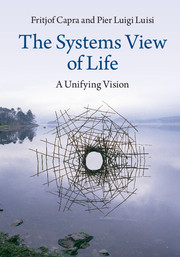
[iv] Book: The Systems View of Life - A Unifying Vision

The Systems View of Life -
A Unifying Vision


If you are about to start studying biology, Part 3 'A new conception of life'  is an excellent introduction to some broad and yet pivotal concepts. I haven't checked the 'current' curricula for biology or human biology, but I suspect there is content provided that may be missing? How are biology curricula characterised? If the 'subject' is comprehensively covered at school - college, there may still be value in the way in which they are presented in TSVoL. And, yes the book is a decade old. There's a step-wise development, that is coherent and fascinating.

The opening sentences to chapter 7, which asks 'What is Life?' :

'7.1 How to characterize the living

It is a common understanding that it is impossible to provide a scientific definition of life which is universally accepted. This stems from the fact that the background of scientists dealing with the question - biologists, chemists. computer scientists, philosophers, astro-biologists, engineers, theologians, social scientists, ecologists differs considerably from one another, depending on one's conceptual framework. In this book, we will not dwell so much on the question of a unique definition of life a single sentence catching all the various aspects of life - but rather, we will consider the more general question: what are the essential characteristics of a living system?' p.129.

- for some reason puts me in Plato's Cave? Maturana and Varela would (and do) have very broad shoulders by now. Autopoiesis is described with structure, systems (of course), self-maintenance, nonlocalization, coupling, and emergent properties. 'Life is a factory that makes itself from within'. p.132. Well that will do me. Even though we talk of political, social and psychological processes, I've always associated the SCIENCES domain of Hodges' model with processes. This includes whether the processes are biological, manufactured by human hand/intellect, such as, industrial working, project management and planning.

For life, initial descriptions concern the cell, DNA, RNA, cell walls and the cellular logic of life. Key is life's interaction with the environment. This is emphasised 7.2.4 and 7.4. I gained a lot of encouragement from:

'According to Maturana and Varela (1980, 1998), the organism interacts with the environment in a "cognitive" way whereby the organism "creates" its own environment and the environment permits the actualization of the organism.' p.134.

It is not just mind - but 'embodied mind'. The joy (for Hodges' model) continues with the impact of social autopoiesis in the social sciences.  

'While behaviour in the physical domain is governed by the "laws of nature,' behavior in the social domain is governed by rules generated in the social system itself.
Thus, two questions arise: is it meaningful to apply the concept of autopoiesis to these domains at all, and, if so, to which domain should it be applied?' pp.136-37.

It's almost like Descartes has taken on a quantum property. We don't know when life is physical (time, space, velocity) and when it is mental - cognitive? Contemplating life, death is never far behind (taxes p.419 if you're wondering). The ethics of death and dying are acknowledged in medical intervention (or not) and religious beliefs and edicts. Again the figures are helpful, illustrating the dynamic modes of an autopoietic unit: homeostasis, reproduction, and death of a cell (p.138). The trilogy of life then is also illustrated as environment, cognition, and autopoietic unit (p.142). When it comes to knowledge domains (social science & ecology) are clearly ubiquitous too.

Concepts of Modern Mathematics
Ian Stewart, 1975

It is Chapter 8 that delivers the biological goods. Beginning with a fascinating account of molecular, or prebiotic evolution, giving rise to biological structures and the interplay of soaps and lipids - "amphiphilic" substances, with molecules that contain a hydrophilic (water loving) head group, and long hydrophobic (water-hating) chains. Well illustrated too, box 8.1 describes 'Surfactants, lipids, and liposomes'. Self-organization, emergence are skillfully threaded together and with creativity - the generation of new forms. Unsurprisingly, Gaia is highlighted 8.3.3 and in a guest essay 'Daisyworld' by Stephen Harding of Schumacher College; which also reminded me of the 1970's BBC drama 'Edge of Darkness'. Maths has another turn in the text; a chiral one. Biomathematics is posited as a new mathematics frontier: here - the numerology of plant growth, the golden section (there's one primary context?), nature's spirals, and symmetry breaking. This helps my current return to maths (the struggle!) trying to get to grips with basic concepts. Ian Stewart is cited, later work than 1975's 'Concepts' I must seek out the 'Mathematics of Life' 2011/12.

Darwin, the resulting biological revolution, history, polymers, peptides and proteins plus DNA and RNA continue a suitably in-depth treatment of 'life' in chapter 9. The conclusion on Darwinism today and the status of genes in science and relation to our identity, being and the effect of chance and contingency is worth being reminded of. In mental illness - psychiatry and psychology a sometimes vitriolic debate continues.  Commercial realities are also apparent, the extent of their influence described: the race to map the human genome. In the text protein folding has advanced markedly since the book's original publication. Now new commercial pressures allied with artificial intelligence make you wonder how the author's would deal with this new 'content'? Exobiologists will enjoy chapter 10 as the focus is planetary: the origins of life on Earth. Useful, basic chemistry figures here - informational and functional (concentration). The notion of 'cognitive' is raised again - information carrying. 

While we are concerned for all life, chapter 11 takes in the human adventure, including the determinants of being human. 'Determinants' have taken on more import today. Chapter 12 in addressing 'Mind and consciousness' is helpful in the approach, the easy and hard problems of consciousness, types of consciousness, schools study. There is another guest essay. Chapters 13-15 deal with spirituality (inc. eco-literacy); life mind and society (I wonder if topology does have a role in the mental realm? (p.311). Chapter 15 is a gift for healthcare professionals - 'The systems view of health' with the question, 'What is health?'. Not to diminish this statement, but I will return to this subsequently; whether in the closing post for this 'review,' or afterwards. This completes part III of what is a great read.

Many thanks again to CUP for the paperback copy, much easier on the eyes. While this copy is new, I do make extensive use of secondhand books.

Fritjof Capra and Pier Luigi Luisi (2014) The Systems View of Life - A Unifying Vision. Cambridge: Cambridge University Press.

https://www.cambridge.org/gb/universitypress/subjects/life-sciences/genomics-bioinformatics-and-systems-biology/systems-view-life-unifying-vision?format=HB&isbn=9781107011366