Hodges' Model: Welcome to the QUAD: numeracy

Hodges' model is a conceptual framework to support reflection and critical thinking. Situated, the model can help integrate all disciplines (academic and professional). Amid news items, are posts that illustrate the scope and application of the model. A bibliography and A4 template are provided in the sidebar. Welcome to the QUAD ...

Showing posts with label numeracy. Show all posts

Friday, January 03, 2025

How 'divine' is the language of care?
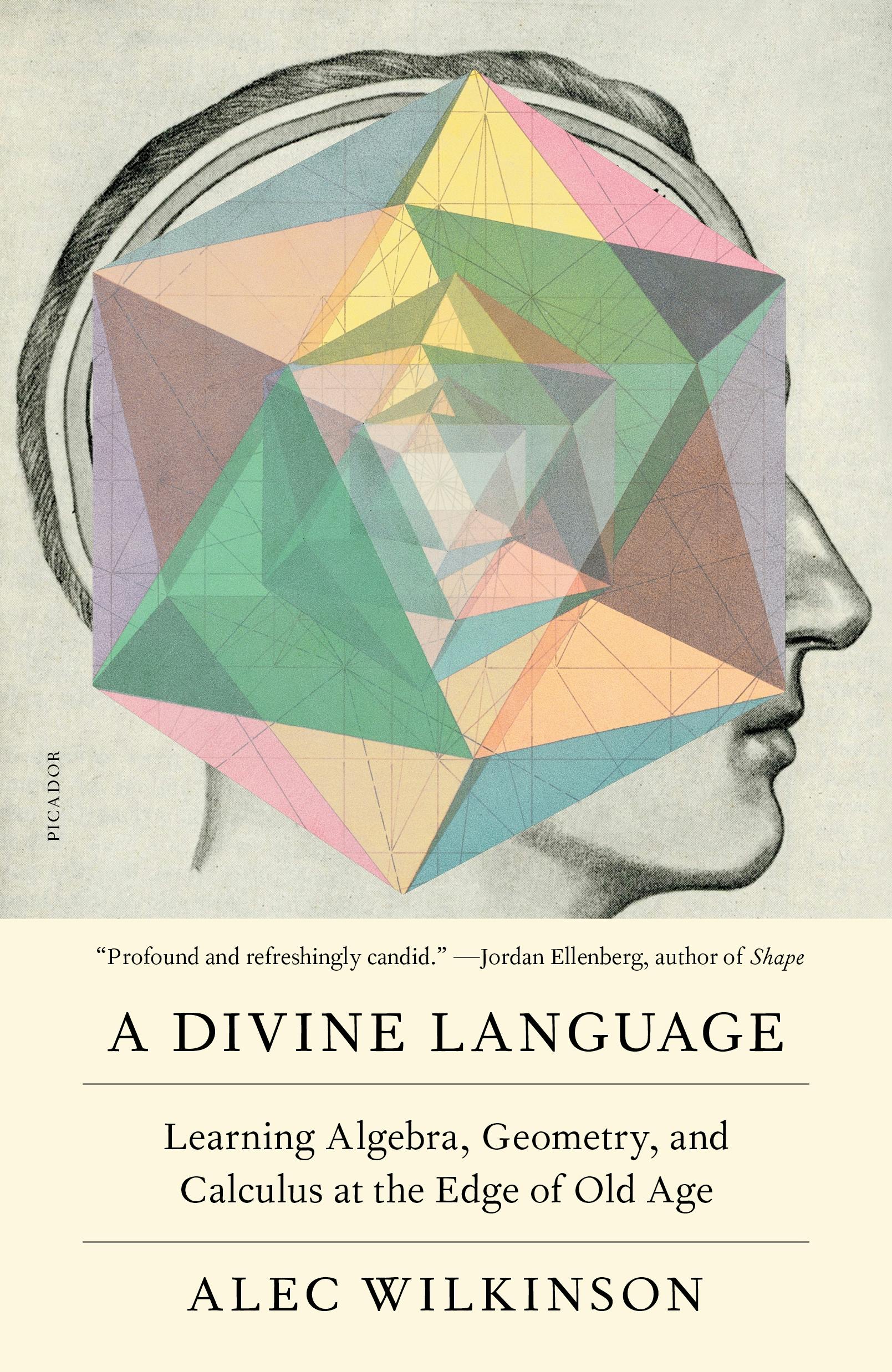
'My impression was that algebra was less a subject than a practice into which one was inducted by the algebra priests after a series of mortifications. The letters and equations that the teacher drew on the board did not seem related to the numbers I had handled in other classrooms. For one thing, a problem in arithmetic was vertical, one number beneath another, and a problem in algebra, an equation, was horizontal. I felt as if in a permanent present, unable to see how the past and the future were joined. In Ulysses James Joyce writes that the present is the drain that the future goes down on its way to becoming the past.' p.12.
'The mathematician Alonzo Church, who taught Alan Turing, told another of his students, David Berlinski, "Any idiot can learn anything in mathematics. It requires only patience." I would sit with a pencil and paper trying to solve an algebra problem and sometimes go only so far before my mind would halt, because I had could used up what little I knew that might apply. It hadn't occurred to me to think of algebra as the bright boys and girls I had been among had thought of it, as a series of related procedures. They were constructing a map. I was collecting postcards from places where anxiety or incuriousness had kept me from leaving my hotel.' p.31.
(my emphasis)


Alec Wilkinson. (2022) A Divine Language. Learning Algebra, Geometry, and Calculus at the Edge of Old Age. New York: Farrar, Straus and Giroux. https://us.macmillan.com/books/9781250168580/adivinelanguage/

Previously: math :: logic

Monday, May 29, 2023

Humanistic motivations for study - c/o Harris et al.

 "Asking '[I]n what sense . . . can mathematics be considered a democratic regime . . .' open to all, Pimm and Sinclair quote (Supergiant) Henri Poincaré to the effect that 'only mathematicians are privy to the aesthetic sensibilities that enable' the decision of 'what is worth studying.' The article, published in a journal for educators, is motivated by the 'view that mathematics can do something for me in a humanistic sense that repays the the careful attention and deep engagement it may require; one that may expose students to a fundamental sense and experience of equality . . . and provide them with another sense of human commonality.'" p.33.  

Harris, M. (2015) Mathematics without Apologies: Portrait of a Problematic Vocation. Princeton University Press.

Hodges' model - Axes - Structure :: Domains - Content

Thursday, June 25, 2009

'Information' a definition

Exactly what information is (at least one very useful technical definition of it) is answered by the mathematical theory of information. A rich field with many applications to biology, linguistics, and electronics, the theory is couched in the language of bits, each bit of information conveying one binary choice. [Hence 5 bits, for example, convey 5 such choices and are sufficient to distinguish from among 32 (or 25) alternatives, there being 32 (25) possible yes-no sequences of length 5.] Bits serve too as units in the numerical measure of such notions as the entropy of information sources, the capacity of communication channels, and the redundancy of messages.
Source: Paulos, J.A., (1991) Binary numbers and codes, Beyond Innumeracy, p.26.

Additional links:

W2tQ 'information'

W2tQ 'Ye Olde paper: 1996 "Humans, information and science'

Friday, February 08, 2008

ERCIM News No. 72 Special theme: The Future Web


Continuing the research thread ERCIM News has arrived.


Next issue- April 2008 special theme: Maths for Everyday Life
This promises to be very interesting despite the challenge here to understand maths.

ERCIM: European Research Consortium for Informatics and Mathematics
