Hodges' Model: Welcome to the QUAD: Search results for law

Hodges' model is a conceptual framework to support reflection and critical thinking. Situated, the model can help integrate all disciplines (academic and professional). Amid news items, are posts that illustrate the scope and application of the model. A bibliography and A4 template are provided in the sidebar. Welcome to the QUAD ...

Showing posts sorted by relevance for query law. Sort by date Show all posts

Friday, May 08, 2015

'How to Build a New Global Health Framework': Gostin & Friedman in The Lancet

http://us5.campaign-archive1.com/?u=5556647df8c0be7cf0da07db2&id=2fa83f37fc&e=2b5ede61fe

http://www.law.georgetown.edu

May 7, 2015 - Can a true, robust global health framework be created to help prevent tragedies like Ebola while at the same time allow countries to meet everyday health needs?

Georgetown University global health and law experts say it can be done, and in a special issue of “The Lancet” focusing on global health security, they propose specific priorities to transform a fragmented health system into a “purposeful, organized” framework with national health systems at its foundation and an empowered World Health Organization at its apex.

“The Ebola epidemic in west Africa raised the critical question of who is in charge,” says Lawrence O. Gostin, JD (http://www.law.georgetown.edu/oneillinstitute/faculty/Lawrence-Gostin.cfm) , faculty director of the O’Neill Institute for National and Global Health Law (...) at Georgetown University Law Center (http://www.law.georgetown.edu/) . He and his O’Neill Institute colleague, Eric A. Friedman, JD (...) , published an analysis of global health security today in The Lancet (“A retrospective and prospective analysis of the west African Ebola virus disease epidemic: robust national health systems at the foundation and an empowered WHO at the apex.” (https://www.thelancet.com/journals/lancet/article/PIIS0140-6736(15)60644-4/fulltext) )

“The world is ill-prepared for the next epidemic,” Gostin says. “The need for advance funding, planning and coordination from the national health system up to WHO is at the heart of preparedness, not only for epidemic disease, but also naturally occurring disasters such as the crisis precipitated by the Nepal earthquake.”

In their review, Gostin and Friedman offer a retrospective analysis of the recent Ebola outbreak and the “profound harms posed by fragile national health systems.”

In creating a new framework, the authors say, “The scope of the reforms should address failures in the Ebola response, and entrenched weaknesses that enabled the epidemic to reach its heights.”

They propose a new global health framework that has national health systems as its foundation and an empowered WHO as the “global health leader envisaged at its creation.”

To reach the goal of having an empowered WHO to lead a global health framework, Gostin and Friedman outline priorities for reform:

  • Funding: commensurate with global mandate under WHO Director-General’s control,
  • Technical excellence: diverse staff with multisectoral capabilities,
  • Operational capacities: rapid deployment of economic and human resources,
  • Normative standards: setting priorities and ensuring compliance,
  • Regional offices: regional knowledge and consistency with headquarters, and
  • Engaging non-state parties: harnessing the potential of civil society.
Gostin and Friedman say another critical component to a global health framework are key stakeholders such as the United Nations, The World Bank and NGOs. “In a well functioning global health system, all parties would perform functions suited to their mandate, working cooperatively, and supporting national ownership.”

In addition, the authors point out the need for a strong legal framework to enforce international health regulations: “International law and national implementing legislation can be powerful means for a more effective global health system,” Gostin and Friedman write.

Another key component to a global health framework is to shore up the national health capacities in preparation for a crisis that would better ensure health security, regionally and globally.

“Planning for rapid mobilization should be combined with strengthening health systems to build country capacity,” they say and propose reforms including a global health workforce reserve, and emergency contingency fund, a pandemic emergency facility (like that suggested by The World Bank) and an international health system fund.

“Action now on WHO and other reforms to the global health system is crucial, before the political moment passes,” Gostin and Friedman conclude.  “These reforms would not only keep populations secure against pandemic threats, but would also ensure health and safety for all needs through rights-based universal health coverage.  This is a global health framework that is achievable in the aftermath of a tragic epidemic that needlessly took 10,000 lives in one of the world’s poorest regions.”

About the O’Neill Institute for National & Global Health Law

The generous philanthropy of Linda and Timothy O’Neill established the O’Neill Institute in 2007 to respond to the need for innovative new solutions to the most pressing national and international health concerns. Housed at Georgetown University Law Center in Washington D.C., the O’Neill Institute reflects the importance of public and private law in health policy analysis. The O’Neill Institute draws upon the University’s considerable intellectual resources, including the School of Nursing & Health Studies, the School of Medicine, the McCourt School of Public Policy, and the Kennedy Institute of Ethics.

http://www.oneillinstituteblog.org/ 

http://www.twitter.com/oneillinstitute 
====
Copyright © 2015 The O’Neill Institute for National and Global Health Law at Georgetown University. All rights reserved.


My source: O’Neill Institute for National and Global Health Law via HIFA2015

Below I have related the above to Hodges' model:

individual
INTERPERSONAL : SCIENCES
humanistic ------------------------------------------- mechanistic
SOCIOLOGY : POLITICAL
group
Concepts - Understanding
Global Health Conceptual Framework,
Beliefs, Belief systems,
Education,
Individual Action
Critical Thinking
Access to Health Information
Impact of disease/disaster on survivors
Psychological health needs
Pre-vent
Ebola..., Epidemic - Pandemic,
Natural disasters
Emergency response,
Critical Action
Timeliness - Surveillance, Readiness,
(National-) capacity,
Physical health needs,
Health systems, (Infra)Structures,
Technical, Operational, Processes,
Coordination, Mobilisation
Scales: Local, Regional, National, Global
Social Empowerment, Engagement
Poverty
Communities
Critical Communications
Concordance
Local Leadership, Cooperation
Behaviour of groups amid Fear / Uncertainty
Socio-Technical
Community-Social-Urban... Informatics
Pre-empt
UN, World Bank, WHO, NGOs,
Reform, Policy, Standards
Rights-Based Universal Health
Global Health Framework
Funding, Law, Legislation
Priorities, Compliance, 'HQ'
Critical Governance & Assurance
Civil Society, Citizenry

Wednesday, October 01, 2025

Julian Tudor-Hart 'The Inverse Care Law' - c/o The Lancet

On the bottom of my notes re. Giarchi and 'distance decay' I'd written:

'Inverse Care law - p.60. - Giarchi. "those who suffer more ill health are less likely to be assisted."

It made me wonder about the origin of this law having posted about it in 2020.

The Lancet has an editorial and an associated podcast:

50 years of the inverse care law. The Lancet, Volume 397, Issue 10276, 767. February 27, 2021.

'“The availability of good medical care tends to vary with the need for it in the population served. This inverse care law operates more completely where medical care is most exposed to market forces, and less so where such exposure is reduced.”

These understated opening lines of Julian Tudor Hart's paper, The Inverse Care Law, are as relevant now (50 years to the day since publication) as in 1971. The paper is one of the landmark publications in The Lancet's near 200-year history, and the resonance of Tudor Hart's definition of the inverse care law has global and timeless importance. Simply expressed, Tudor Hart observed that disadvantaged populations need more health care than advantaged populations, but receive less.
Tudor Hart's life and career took him from highly privileged beginnings in London and Cambridge to decades spent in the deprived and deeply socialist Welsh valleys. His experience and work has inspired a generation of influential health-care leaders including Andrew Haines, Allyson Pollock, Cesar Victora, and Graham Watt. Today's anniversary issue of The Lancet explores both the global reach of the inverse care law and primary care initiatives in deprived areas around the UK.
Although inequality in health and its many causes are widely understood, inequity in health-care service provision is enduring and fundamental: an intractable concept that lies at the heart of the inverse care law. The inverse care law is primarily about inequity (injustice) in health care that results in unfair social inequalities (imbalances) in health. Since the inverse care law was published, the UK's National Health Service (NHS) has strived to reduce inequity with mixed success. Notably, long-lasting progress was achieved through the 1970s resource allocation formula, which reduced geographical inequality in hospital and institutional expenditure. In the early 2000s, the NHS strengthened primary care provision in disadvantaged areas, leading to a temporary reduction in social inequality, although this progress has reversed following shifts in funding, a slowing of spending, and years of living with austerity.'

See also: 

https://en.wikipedia.org/wiki/Julian_Tudor-Hart

https://www.chpi.org.uk/blog/julian-tudor-hart-and-the-essence-of-primary-care/

Monday, May 10, 2021

Book: iii "Foundations of Global Health & Human Rights"

When you've several books to get to, a steady stream of figures and tables can help give the illusion of a speed-read. There could be many such breaks in this book, but what there are are focused, informative and fit the COVID situation in being prime for take-away purposes. It is here that the educational, learning and teaching utility of the book is found, and in the references.

Reading this book I thought about the way healthcare is situated and how care-of global politics health is local, national, international and glocal. The global health workforce are joined in the books they read. Then they apply their learning in their respective corners of the world, seeking to put the patient, the person, the public at the center. As such Section 1 is essential reading for all health and social care professionals:

Introduction: Global Health & Human Rights

Lawrence O. Gostin & Benjamin Mason Meier
I. The Human Rights Movement: International Norms and Principles 

Chapter 1. The Birth and Development of Human Rights for Health
Benjamin Mason Meier, Thérèse Murphy & Lawrence O. Gostin

Chapter 2. Global Health Law: Legal Foundations for Social Justice in Public Health
Lawrence O. Gostin, Matiangai V. S. Sirleaf & Eric A. Friedman

Chapter 3. The Right to Health and Health-Related Human Rights
John Tobin & Damon Barrett

Chapter 4. The Rights-Based Approach to Health
Flavia Bustreo & Curtis F.J. Doebbler

individual
|

INTERPERSONAL : SCIENCES
humanistic ----------------------------------------------- mechanistic
SOCIOLOGY : POLITICAL
|
group


"Given the integral link between global health and human rights, global health law necessarily works in synergy with human rights. Accordingly, global health law includes not only the scope of law for global health, but also a normative perspective, with global health law seeking to enable all people to realize the right to health (Magnusson, et al. 2017). This normative perspective is not uncommon in law: environmental law is concerned with protecting the environment, trade law is concerned with a free and fair system of trade, and human rights law is concerned with protecting and promoting rights. The particular force of global health law's normative perspective comes in how it is not confirmed to laws directly related to health, but rather has significant implications for a wide range of laws in other legal regimes, requiring a focus on health in all policies." p.59.

Chapter 3. The Right to Health and Health-Related Human Rights
John Tobin & Damon Barrett

 
More to follow...

Foundations of Global Health & Human Rights. (2020) Lawrence O. Gostin and Benjamin Mason Meier (Eds.), Oxford: OUP. ISBN: 9780197528303.
 

Monday, June 09, 2025

🗣️Solving or Resolving Palestinian Human Rights Issues: Relationship "Normalization" | Mohamed ‘Arafa


🗣️ Solving or Resolving Palestinian Human Rights Issues: Relationship "Normalization" | Mohamed ‘Arafa

This session will be the first in the series of conferences “Jurisprudential Dialogues on Human Rights”, which is designed to promote exchanges on topical issues involving human rights and the role of the courts of justice.


The aim of this session is to reflect on the violations of the human rights of the Palestinian people — an enduring state of affairs that transcends political or religious lines of judgement. Over the decades, the Israeli-Palestinian conflict has been marking the international landscape, sparking divisions, human misery, and far-reaching geopolitical consequences.


This session will be led by Professor Mohamed ‘Arafa, Professor of Law at the University of Alexandria and Adjunct Professor of Law & the Clarke Initiative Visiting Scholar at Cornell Law School. Joining in will be Professor Rita Ribeiro, from the Institute of Social Sciences at the University of Minho, and Zaina Awartani, PhD researcher at the School of Law of the University of Minho and the School of Researchers of the Research Centre for Justice and Governance (JusGov). The event will be chaired by Sergio Ruiz Díaz Arce, Doctoral Integrated Researcher at JusGov.


📍June 13th, 2025 | 4.00 p.m. Online


Scientific Commission

Sergio Ruiz Díaz Arce

Joaquim Freitas da Rocha

Robert Junqueira


Organisation

JusGov (JusLab – DH)

School of Law of the University of Minho


Support

FCT - Foundation for Science and Technology


Yours respectfully,

Robert Junqueira

Executive Coordinator | Research and Scientific Careers Bureau


Research Centre for Justice and Governance

School of Law of the University of Minho

Gualtar Campus
4710-057 Braga - Portugal


T: (+351) 253 60 18 75

E: martinsjunqueira AT direito.uminho.pt

Tuesday, April 14, 2026

The 8th International Conference on Law Enforcement & Public Health

Vulnerability, policing and public health

6 - 9 September 2026
University of Leeds, UK

About the Conference

The Global Law Enforcement and Public Health Association (GLEPHA) and the ESRC Vulnerability & Policing Futures Research Centre will jointly host the 8th International Law Enforcement and Public Health Conference, LEPH2026 in Leeds, West Yorkshire, UK from 6-9 September 2026.

Following highly successful conferences in North America, Africa and Europe, the 2026 global event in Leeds presents a unique opportunity to spotlight global research and world-leading practice across law enforcement and public health. The 2026 overarching theme will be vulnerability, policing and public health.

The conference will be open to law enforcement and public health agencies, national and local governments, relevant research bodies, academic institutes, policy makers as well as the commercial sector and other partner organisations. Bringing these diverse communities and perspectives together, the conference presents an ideal space for sharing and learning about new approaches, instigating and developing real change in practice, based on the best available evidence internationally.

Full details - conference website ...

My source: Culling followers on Twitter '0 posts', last post years ago ...X may have been accepted legally as a signature, but it might denote injury, illness, or illiteracy. Twitter diehards really are in a 'graveyard'. And yet, amidst the tombstones, I found a POLITICAL care domain gem in @LEPH2026, which led me to @GLEPHAssoc. I will follow when allowed.

Previously: 'law' : 'vulnerability' : 'public health'

Friday, October 06, 2023

Committing Ecocide to Hodges' model ...

INDIVIDUAL
|
     INTERPERSONAL    :     SCIENCES               
HUMANISTIC --------------------------------------  MECHANISTIC      
SOCIOLOGY  :   POLITICAL 
|
GROUP


Psychological -

 "Shock of the NewS"

Anxiety

Eco-anxiety - Climate anxiety

Anti-natalism


Polly

No planet B


Where Might We Find Ecologically Intact Communities?

How much of Earth's land is ecologically intact, in a pre-industrial and pristine state?

The answer: 3% [Plumptre, et al.].


ECOCIDE

NATURE ...
Higgins


'conscientious protector'
civil disobience


"Such a law would not only seek retribution and deterrence but also draw moral red lines."


civil society


... CRIMES AGAINST


Environmental activism

GENOCIDE

ECOCIDE - as law?

"I will leave the last word to Polly Higgins, a barrister who gave up a career in corporate law to become one of the most effective backers for criminalising ecocide. As she wrote in 2013, 'For now, in law outside of wartime, it is not a crime to cause mass destruction or loss of ecosystems. Our world has normalised... ecocide'." p.24.

"Like laws for crimes against peace, an ecocide law would trace its roots to wartime atrocities, in this case the annihilation of forests in South-East Asia, first by the UK's Royal Air Force during the guerrilla war known as the Malayan Emergency and later by the US Air Force in the Vietnam war. In 1970, the destruction inspired Arthur Galston, a plant biologist at Yale University whose PhD had led to development of agent orange, to coin the word 'ecocide'." p.24.

Plumptre AJ, Baisero D, Belote RT, Vázquez-Domínguez E, Faurby S, Jȩdrzejewski W, Kiara H, Kühl H, Benítez-López A, Luna-Aranguré C, Voigt M, Wich S, Wint W, Gallego-Zamorano J and Boyd C (2021) Where Might We Find Ecologically Intact Communities? Front. For. Glob. Change 4:626635. doi: 10.3389/ffgc.2021.626635

My sources:

Lawton, G. (2021) Crimes Against Nature, New Scientist, 250: 3333. p.24.

Obituaries. Polly Higgins. Register, The Times. May 2, 2019. p.53.
https://www.thetimes.co.uk/article/polly-higgins-obituary-92z6zd3ps

See also:

Eradicating Ecocide (2010).

Earth is Our Business (2012).

Friday, April 03, 2020

Inverse Care Law ... at Social Care's Door

Since 2015 I've had four 'conversations' with the doctors at A&E upon mum's attendance and subsequent admission on a couple of occasions. Initially, I was surprised if not shocked by the speed with which the 'conversation' followed on treatment, the extent of this and the question of resus. The further interactions were still emotionally jarring, even when expected and telegraphed. I also understand: to an extent. Repeated chest infection or urine infection had resulted in confusion, delirium that varied. on one occasion, at the nursing home there was also suddenly talk of a diagnosis of dementia, which prompted social services to wonder, like family and staff, where exactly this diagnosis had come from and investigate. (Another post?)

Mum has been very poorly, most recently in November. What surprised and shocked was the 'conversation' at the end of the bed when I knew mum - with mental capacity at that time was most likely listening. The primacy of person-centredness seemed to be by-passed. I suggested the doctor ask mum since once hydrated she would be fine. There has been a sense of a script being followed with some pressure - urgency behind it, if not a 'prescription'. I empathised with the doctors, often FY1 FY2; such matters are never easy. Now amid COVID-19 there is alarm as social care are challenged with taking on a new role, for which they are ill-equipped. 

In health care you are always conscious of the inverse care law, it seems there is another care law in operation that gives cause to worry for those who cannot advocate for themselves or have no independent advocate. Perhaps there is another inverse law that runs concurrently concerning ethics. Triage, is real. Objectively, as a nurse you think "Am I being selfish?". But, as eldest son - absolutely not. These conversations, and the future aside, the doctors and team as a whole have worked (absolute) wonders for which mum and the family will always be grateful.

Be Well, Be Safe All.
 
individual
|
INTERPERSONAL : SCIENCES
humanistic ----------------------------------------------- mechanistic
SOCIOLOGY : POLITICAL
|
group - population

"There should be no wrong door and every 
service should reverse the ...


... Inverse Care Law, which simply states those people in need of health and social care the most 
get them the least."


https://www.smithsltd.co.uk/doors/composite


By MrPanyGoff - Own work, CC BY-SA 3.0, https://commons.wikimedia.org/w/index.php?curid=19702555


A comment at The King’s Fund, by Lord Victor Adebowale.

Partnership Working, Time to Talk, Drink and Drugs News, October 2018, pp.10-11
https://drinkanddrugsnews.com/wp-content/uploads/2018/10/DDN-October-2018.pdf

If anyone has a photo of a red door at a care or nursing home that I can display above please let me know.

Wednesday, December 28, 2022

Paper - "The concept of legal space: A topological approach to addressing multiple legalities"

 INDIVIDUAL
|
 INTERPERSONAL    :     SCIENCES               
HUMANISTIC --------------------------------------  MECHANISTIC      
SOCIOLOGY  :   POLITICAL 
|
GROUP

"5 An early reference to topology in psychology has been developed by Kurt Lewin, Principles of Topological Psychology (McGraw-Hill, New York, 1936). Linking literature and topology, Angus Fletcher, The Topological Imagination: Spheres, Edges, and Islands (Harvard University Press, Cambridge, MA, 2016). For an overview of philosophical approaches related to topology, see Daniel Parrochia, Mathematics and Philosophy (Wiley, Chichester, 2018) Ch 11. Using a topological approach to law, Müller-Mall (n 4). This last contribution constructs a topological approach for assessing perspectives in law (such as reflected in judicial decisions on a certain legal question) and situating them within ‘reference frames’ (in particular 117 et seq)." p.520.

"Law is fragmented ‘along issue-specific rather than territorial lines’, as exemplified by regulatory regimes for environmental and health issues or the private regulation of the cyberspace and of transnational commercial activities.20 Some authors have described this as a ‘deterritorialization’ of law.21 One reason for such a deterritorialization is the increasing amount of regulatory objects that cannot, or can only with difficulty, be linked to any territory – particularly salient in the case of digitalized data and its fluid location." p.522.

"... the notion of legal space suggested here comprises various features that are guided by concepts from topology, a branch of mathematics that analyses the qualitative nature of spaces. This approach has been adopted in an interdisciplinary manner, including in various disciplines of social science."5(See above). pp.519-520.


Global Constitutionalism


Burchardt, D. (2022). The concept of legal space: A topological approach to addressing multiple legalities. Global Constitutionalism, 11(3), 518-547. doi:10.1017/S2045381722000041

Friday, June 18, 2021

Eroom's Law

Stephanie F. Scholtz
 
individual
|
INTERPERSONAL : SCIENCES
humanistic ----------------------------------------------- mechanistic
SOCIOLOGY : POLITICAL
|
group
digital literacy
health literacy
...


social justice
'laws' translated
social capital


*This is not to underestimate the economic impacts of Moore's law, or in both instances the question of access to digital technology and health care.

Kill or Cure? Technology Quarterly - Personalised Medicine, The Economist, 434: 9185; 14-20 March 2020. pp.9-11.

https://www.stephanie-f-scholz.com/

Friday, April 15, 2022

May 10th Lecture: "Planetary Law for the Anthropocene"

Dear followers of H-net Environment,

Planetar denken
the Panel on Planetary Thinking of the Justus Liebig University Giessen, Germany, cordially invites you to join our kick-off event of our Planetary Lecture Series which may be of interest to many of you:

On May 10th, at 6:15 CET, Prof. Dr. Dr. Louis Kotzé (North-West University, South-Africa), will be giving a lecture on "Planetary Law for the Anthropocene" . Prof. Kotzé currently holds a fellowship at the Institute for Advanced Sustainability Studies in Potsdam, Germany, and is a Senior Professorial Fellow in Earth System Law at the University of Lincoln, UK. Prof. Dr. Thilo Marauhn (Chair of Public and International Law, JLU) will open the discussion with a response. The lecture will take place in a hybrid format, allowing you both digital and analog participation.

Feel free to spread the word to interested colleagues and friends. You can register at panel AT planet.uni-giessen.de or join us spontaneously in our BigBlueButton Conference Room.

Warm regards,

Liza Bauer

(on behalf of the Panel on Planetary Thinking).


Tuesday, February 24, 2015

Individual: :Rights [ A work still in progress ]

individual
INTERPERSONAL : SCIENCES
humanistic ------------------------------------------- mechanistic
SOCIOLOGY : POLITICAL
group
http://www.hup.harvard.edu/catalog.php?isbn=9780674417533
Inventing the Individual
The Origins of Western Liberalism
Larry Siedentop


Human Rights and the Uses of History
http://www.versobooks.com/books/1600-human-rights-and-the-uses-of-history

The Assault on International Law
https://global.oup.com/academic/product/the-assault-on-international-law-9780199987405?cc=gb&lang=en&

The Twilight of Human Rights Law
https://global.oup.com/academic/product/the-twilight-of-human-rights-law-9780199313440?cc=gb&lang=en&


My sources:
The Independent on Sunday 22 February 2015 and FT Weekend 21-22 February 2015

Sunday, November 17, 2013

[hifa2015] How can we stop ICANN decision that could profoundly damage global health?

Dear HIFA colleagues,

A few weeks ago I posted the Lancet article below, which highlights the threat of a commercial sale of the new top-level domain ".health".

The authors point out that ICANN (Internet Corporation for Assigned Names and Numbers), which controls all internet naming, could be about to make a decision to sell ".health" to the highest commercial bidder. The decision is imminent. I have indeed heard that an ICANN meeting that will include discussion of ".health" is being held over the *next few days*.

As the authors of the Lancet article point out, sale of ".health" to a commercial enterprise "could have a profound effect on health information access and quality for generations to come". This is something that should concern all of us, everywhere.

ICANN hosts a wiki which apparently can only be edited by them and which briefly describes the issue in rather difficult-to-follow language, without actually explaining the nature of the objections that have been raised by leading health organisations, including WHO, and by national governments:
http://icannwiki.com/index.php/.health

These objections may be found elsewhere by googling. Essentially, there is a *great* deal of concern among health agencies worldwide, and a small handful of governments, of the public health consequences of commercialising ".health". In particular, there will be little if any assurance that the content of websites carrying the ".health" domain name will contain reliable health information. There is a serious risk that misinformation and/or commercially biased information could be propagated using the ".health" suffix. It is likely that many citizens worldwide will see the ".health" suffix as an indication that the information is primarily intended for their health, whereas the reality would be that much of the information would inevitably be wholly unreliable, and driven by commercial (or even ideological) motives.

I was especially concerned to read the latest news on this wiki, which read as follows: "The IO [Independent Objector - see below] lost its objection to Afilias' applicant for .health in a ICC determination by 3 panelists made on 6 November 2013. The determination was the first Limited Public Interest Objection to be decided, as well as the first objection filed by the IO to be decided. [19]

I am not entirely clear how the proceedings work, but the wiki tells us that "[ICANN's Independent Objector] is an appointed authority on international law whose role is to object to strings on the grounds of Community harm and Limited Public Interest were detailed in the applicant guidebook. His objections are official objections and are funded by ICANN, though his office is otherwise independent. Reasons for the specific case against .health were not initially given, but, in the case of Limited Public Interest, "the applied-for gTLD string must be contrary to generally accepted legal norms of morality and public order that are recognized under fundamental principles of international law. The expert panel appointed by the ICC will base its decision on the existence of such a contradiction." The applied for string must threaten an incitement to violence of lawless action, discrimination, child pornography, or "be contrary to specific principles of international law as reflected in relevant international instruments of law.""

This reference to "violence of lawless action, discrimination, child pornography..." is bizarre and I cannot claim to understand how this is relevant. What is at issue here is the availability of reliable versus unreliable healthcare information. I hope that others on HIFA may be able to enlighten us further.

Regrettably, there has been an almost total absence of advocacy and awareness-raising about the issue, apart from The Lancet article. Other than the authors of the Lancet article, there is no advocacy leadership of which I am aware. This is the kind of issue that needs a prominent global health leader to speak out. I do not know whether Margaret Chan, Director-General of WHO, is free to speak out on this, but I feel that we need a strong statement from someone at the highest level.

In the meantime, what can we (HIFA members) do to stop ICANN making - or at least deferring - a decision that could profoundly damage global health?

Best wishes,
Neil
HIFA profile: Neil Pakenham-Walsh is the coordinator of the HIFA2015 campaign and co-director of the Global Healthcare Information Network. ...
[ As mentioned above Neil also posted the Lancet article - I have just copied the link below ]

Below is the citation and extracts of a new article in The Lancet. The full text is freely available here:
http://www.thelancet.com/journals/lancet/article/PIIS0140-6736(13)62215-1/fulltext

Ensuring the future of health information online
Tim K Mackey, Bryan A Liang, Amir Attaran, Jillian C Kohler
The Lancet, Volume 382, Issue 9902, Page 1404, 26 October 2013
doi:10.1016/S0140-6736(13)62215-1Cite or Link Using DOI

Tuesday, November 13, 2012

Second Latin American and Caribbean Global Health Conference “Transcending borders for health equity” Santiago, Chile January 9-11, 2013


From PAHO (Ana Luisa!)

Santiago, Chile January 9-11, 2013 - http://www.congresosaludglobal.uchile.cl/

Abstracts should be submitted through the Conference website and received before November 26, 2012 at 12:00pm (Chilean time)
....


Conveners:

The Latin American Alliance for Global Health (ALASAG)
The School of Public Health “Dr. Salvador Allende G.” of the University of Chile
The Latin American Association of Schools of Public Health (ALAESP)

The objective is to share knowledge and strengthen partnerships for education, research and advocacy in Global Health in Latin America and The Caribbean. The conference also seeks to contribute a Latin American outlook to the most pressing issues in the global health and development agenda, such as the impact of the economic crisis, social movements and conflicts and the Millennium Development Goals (MDGs).

The Conference is intended as a forum for discussion and proposal for progress toward achieving greater equity and social justice within and among all countries.

The program is organized under the following thematic areas:

• Migration, violence and population displacements
• Education and Human Resource Development in Global Health
• Health law and human rights
• Nutrition and food security
• Challenges of social movements and social media networks
• Development cooperation and global health, peace, and diplomacy
• Universal coverage and social protection
• Research, innovation and implementation in global health
• Working towards the post Millennium Development Sustainable Goals
• The economic crisis and its impact on public health
• Climate Change, Challenges and Opportunities for Global Health

Speakers

The following speakers have confirmed their attendance
- Sr. Ricardo Lagos Escobar, former President of Chile and Commissioner of the WHO Social Determinants of Health Commission,
- Dr. Jaime Mañalich, Minister of Health, Chile,
- Dr. Ginés Gonzalez, President Emeritus ISalud University, Buenos Aires, Argentina Ambassador to Chile and ex- Minister of Health, Argentina,
- A representative of Dr. Mirta Roses, Regional Director of the Pan American Health Organization (PAHO / WHO),
- Sir Michael Marmot, UCL International Institute for Society and Health;
- Prof. Ronald Labonte, University of Ottawa,
- Dr. Paulo Buss, Fiocruz Foundation,
- Dr. Anvar Velji, Consortium of Universities for Global Health (GHEC-CUGH),
- Prof. Oscar Cabrera, O'Neill Institute for National and Global Health Law at Georgetown University,
- Dr. Pierre Beukens, Tulane University School of Public Health and Tropical Medicine and CUGH,
- Dr. Haile Debas, University of California San Francisco, and CUGH,
- Dr. Wolfgang Munar-Angulo, Gates Foundation,
- Dr. Roger Glass, Fogarty International Center,
- Dr. Jeannette Vega, Rockefeller Foundation,
- Dr. Ilona Kickbusch, The Graduate Institute, Switzerland.

Partners

Many individuals and organizations in Chile, Latin America, the Caribbean, North America and Europe have contributed significant resources to ensure that this second Conference is as successful as the first one. The School of Public Health at the University of Chile, as host of the event, has generously contributed its own resources and from other Chilean funding sources to ensure the success of the Congress. The members of ALASAG in 10 LAC nations are working to promote the conference in their own countries. At the time of this announcement, the following organizations have agreed to partner with ALASAG and the University of Chile to co-sponsor the conference: the Ministry of Health of the Chilean Government, the Pan American Health Organization, Consortium of Universities for Global Health, Columbia University Global Center in Latin America (Santiago), the Fogarty International Center, the O´Neill Institute for National and Global Health Law, Georgetown University, Canadian Society for International Health, Chilean Occupational Health Safety Association (ACHS), Aguas Andinas Corporation, Clínica Las Condes and Pfizer Chile, S.A.

Giorgio Solimano Cantuarias President 2nd Latinamerican and Carribean Global Health Conference
School of Public Health Universidad de Chile
V. Nelly Salgado de Snyder Technical Secretariat Alianza Latinoamericana de Salud Global (ALASAG)
National Institute of Public Health Cuernavaca, México

Spanish:

2º CONGRESO LATINOAMERICANO Y DEL CARIBE SOBRE SALUD GLOBAL
Transcendiendo fronteras para la equidad en salud
Santiago de Chile 9-11 de enero, 2013

Instituciones convocantes:

La Alianza Latinoamericana de Salud Global (ALASAG),

La Escuela de Salud Pública “Dr. Salvador Allende G.” de la Universidad de Chile

Website: http://www.congresosaludglobal.uchile.cl/

Objetivos

Compartir conocimientos y fortalecer alianzas para la educación, investigación y abogacía a favor de la Salud Global en la Región de América Latina y El Caribe.
Aportar la mirada latinoamericana a los temas más candentes de la agenda mundial sobre salud y desarrollo, tales como el impacto de la crisis económica, los movimientos y conflictos sociales y los Objetivos de Desarrollo del Milenio (ODM).
Establecer un Foro de discusión y propuesta para avanzar hacia el logro de mayores niveles de equidad y justicia social dentro y entre todos los países del mundo.

Resúmenes deberan ser enviados a través de la página web del Congreso hasta el día 26 DE NOVIEMBRE A LAS 12:00h

Ejes de trabajo:

- Migración, violencia y desplazamientos poblacionales
- Colaboración internacional para el manejo integral de desastres y epidemias
- Desafíos de los movimientos y las redes sociales
- Mecanismos de cooperación y diplomacia para la salud global
- Cobertura universal y protección social
- Investigación, innovación e implementación en salud global
- Hacia los nuevos Objetivos de Desarrollo del Milenio
- Crisis económica y su impacto en la salud pública
- Cambio climático, desafíos y oportunidades para la Salud Global
- Cooperación para el desarrollo y diplomacia en Salud Global

Giorgio Solimano Cantuarias -Presidente 2º Congreso Latinoamericano y del Caribe sobre Salud Global
Escuela de Salud Pública Universidad de Chile
V. Nelly Salgado de Snyder - Secretaría Técnica Alianza Latinoamericana de Salud Global (ALASAG)
Instituto Nacional de Salud Pública - Cuernavaca, México

Please visit the GANM webpage at: http://knowledge-gateway.org/ganm/

My source: GANM c/o Patricia Abbott.

Thursday, December 10, 2009

Nursing human rights and Int. Human Rights Day: fao Sir Gerry Robinson

On last nights BBC Two TV program: Can Gerry Robinson Fix Dementia Care Homes?

- amongst the angst his visits and engagement with several care homes provoked Sir Gerry highlighted the need for a moral compass and compassion. The themes I expected to find were there: the need for person-centered care, knowledge of the clients and their backgrounds, being occupied and having access to a secure environment when the weather permits, staff morale and the level of staff training and competence. Although not necessarily 'enjoyable' viewing the program was very good in raising awareness and included either directly or indirectly:


person-centered care, attitude,
memory loss,
vulnerable individuals, training, risk, assessment, review, motivation to change, interpersonal skills,
motivation, listening, life skills, knowledge and skills, feedback,
aggression, agitation, change,
measures, rapport, empathy, +ve care, boredom, diurnal variation of mood,
personal choice & autonomy
physical environment,
colour, decor, noise, outside access,
physical security, nutrition, tasks,
processes, measures
'dementia care mapping',
routine, meal times, time,
physical risk - falls, mobility,
assessment, care files (paper!),
bed occupancy,
staffing : resident ratios,
models of care
the residents, visitors, family, love,
social attitudes, dignity and respect, relationships, social values, personal-social history, engaged activities, involvement, 'social' norms, inclusion,
community - institution, being valued by others, distraction
records, freedom,
care funding costs / weekly charges,
funding, inspection, consultancy, audit, legislation, rules (meals), pay, investment, business, staff morale, recruitment and retention, financial risk, confidentiality, plans and initiatives, management style, qualifications, standards

Today 10 December 2009 is also International Human Rights Day. To many people elderly care issues in a Western democracy may seem a world away from 'human rights' as per:
  • false imprisonment
  • denial of justice, law and order
  • political repression
  • freedom of expression
  • education and health for all
  • discrimination
  • ....
- and yet the situations that arise within nursing, health, social care are never far from ethical and human rights concerns:
  • Mental capacity
  • Consent
  • Physical restraint
  • Mental health law
  • Environmental health law
  • Conscientious objection
  • Medicine and nursing in the armed forces
  • Equity and equality
  • Accessibility
  • ....
Moral dilemmas can and do arise in any and all of the care domains of Hodges' model and all combined (the spiritual). In addition to a moral compass, it seems we need a compass in nursing in order to be compass-ionate.

Hodges' model can provide a compass.

A compass to help navigate open waters, new coastlines and the uncharted corners and recesses of human nature.


Additional links: Amnesty International

POLITICAL care domain resources


Compass image: http://clipart-for-free.blogspot.com/2008/07/compass-rose-clipart.html

Sunday, September 14, 2025

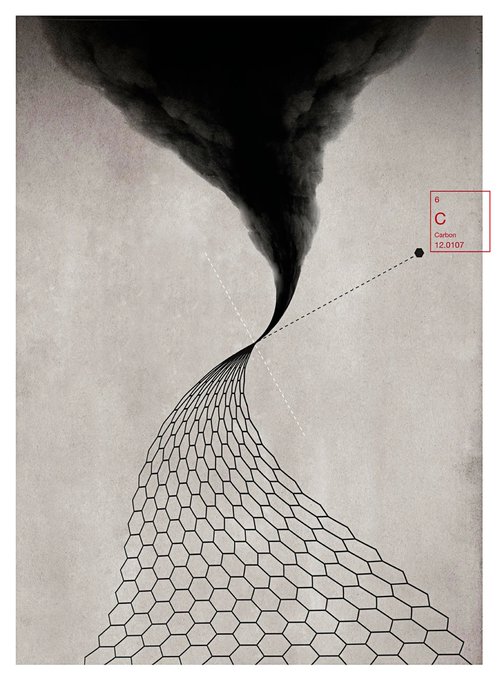
Graphene just broke a fundamental law of physics

Graphene just broke a fundamental law of physics.

Its electrons just did something physicists thought was impossible. For nearly 200 years, metals have obeyed the Wiedemann-Franz law – the rule that electrical conductivity and thermal conductivity always rise and fall together. 

But in ultra-clean graphene, researchers at the Indian Institute of Science found the opposite. As electrical conductivity increased, thermal conductivity dropped, shattering a principle taught in every physics textbook. 

The key lies at the “Dirac point,” a strange electronic tipping point where graphene is neither a metal nor an insulator. Here, electrons stop behaving like individual particles. Instead, they flow collectively as a nearly perfect fluid – a state called a “Dirac fluid.” 

This discovery doesn’t just rewrite the rules for graphene. It provides a tabletop window into extreme physics usually reserved for black holes and high-energy colliders. Scientists say this behavior could help probe mysteries of quantum entanglement, black hole thermodynamics, and the very fabric of matter itself.

 ["Universality in quantum critical flow of charge and heat in ultraclean graphene." Nature Physics, 2025] ...
Individual
|
      INTERPERSONAL    :     SCIENCES               
HUMANISTIC  --------------------------------------  MECHANISTIC      
 SOCIOLOGY  :    POLITICAL 
|
Group
While I can't fully understand this paper (even the abstract!), I realise that it is taking what seems a long time^ for industry and business to understand and realise the potential of graphene in industrial and technological applications. 


Hopefully, applications will emerge, that are beneficial to all. Reducing energy use, improving efficiency, removing pollutants even more effectively, imcreasing the durability and hence lifetime of materials and products, and more.

Also, marvellous to see global collaboration at work, as science continues to asks questions.

^I could have written exploitation there, but could we put the collective and planetary first?


Majumdar, Aniket and Chadha, Nisarg and Pal, Pritam and Gugnani, Akash and Ghawri, Bhaskar and Watanabe, Kenji and Taniguchi, Takashi and Mukerjee, Subroto and Ghosh, Arindam. (2025) Universality in quantum critical flow of charge and heat in ultraclean graphene, Nature Physics. http://dx.doi.org/10.1038/s41567-025-02972-z

My source: https://x.com/Rainmaker1973/status/1966896966316474505

Which includes a video 5m 'Quantum Critical Flow in Graphene: Charge & Heat Dynamics'

https://www.youtube.com/watch?v=LrImy9PAHGk

See also on W2tQ: 'physics : 'women'

Saturday, September 21, 2024

Hybrid: Seminar & Tetralogic Model


individual
|
INTERPERSONAL : SCIENCES
humanistic ------------------------------- mechanistic
SOCIOLOGY : POLITICAL
|
group
my corner 'I'

The person - self
The person's -
mental state, mental capacity
orientation (time, place, person) continuity - 
mental illness
identity
(advanced?) choice ...
my decisions?
PSYCHO-

physical environment
place, time
embodiment - sense of self
deprivation of liberty
anticipated future developments
probability
silk
my body?!
next of kin
family
friends
carers
Social Housing
Community Care
Residential care sector
personal welfare decisions
-POLITICAL

UK - EU Politics
European Convention on Human Rights
Law - Case Law
Solicitors Barristers Silk Judge
Court of Protection
Decisions of the Court
Mental Capacity
Mental Health Law
🌍

My source: https://x.com/hfp91/status/1837526633235833079

Sunday, September 17, 2023

New citation: "Evaluating the Human Rights Perspective on Sustainable Development Goals Accessible Health Coverage"

Just as I write about writing, this morning news of a further citation for Hodges' model via ResearchGate:

"The SDGs, aiming to establish sustainable health coverage systems and uniform condition coverage, can improve by utilizing a universal, generic assessment and evaluation strategy with sufficient theoretical breadth and application [7]."

[7] Jones P, Wirnitzer K. Hodges’ model: the Sustainable Development Goals and public health – universal health coverage demands a universal framework. BMJ Nutrition, Prevention & Health 2022;0:e000254. doi:10.1136/bmjnph-2021-000254

In - 

Evaluating the Human Rights Perspective on
Sustainable Development Goals Accessible Health Coverage

Vijay Shankar Yadav, Brijmohan Singh
ABSTRACT

Objective: Human Rights Law (HRL) relates to effects investing, that strives to produce helpful social and environmental losses with financial gains. The businesses and organizational managers are exploring innovative economic resources and strategies to increase awareness of the global investment markets' ability to support Sustainable Development Goals (SDGs). Health coverage is essential for prospective human development due to that provides either an inherent human right or a necessary source of societal, economic progress. Widening income disparities, food insecurity, climate change, global financial crises, corruption and mismanagement of public funds, violent conflicts, rising unemployment, and various other difficulties point to a collective failure to achieve the right to development.

Method: Hence, HRL-SDGs has been designed for health coverage, including financial risk protection, access to excellent necessary healthcare services, and essential drugs and immunizations that are safe, effective, high quality, and cost-efficient. SDGs are established to be progress that satisfies their demands of the people with jeopardizing future generations'potential to achieve the identical.

Result: SDGs are promoted is a strategy for better satisfying the demands of society, the environment, and the economy. The process is performed through gradually integrating and realizing core human rights and essential economic responsibilities. Human rights and sustainable development improvement humans are interrelated and positively reinforcing ideas.

Conclusion: Human rights-based processes aim to help analyze discriminatory behaviors and imbalanced allocations of strength that establish results in development limitations.

Keywords: human rights law, sustainable development goals, health coverage, economic
Yadav, V. S., & Singh, B. (2023). Evaluating the Human Rights Perspective on Sustainable Development Goals Accessible Health Coverage. Journal of Law and Sustainable Development, 11(6), e1254. https://doi.org/10.55908/sdgs.v11i6.1254

(Checked: https://predatoryreports.org/news/f/predatory-journals-list-2023 ).*

To the authors - thank you. Your paper is listed in the blog's bibliography - sidebar.

*Predatory journals - authors - don't even think about it (Hodges' model has you covered!).

Wednesday, December 07, 2022

Clean Air (Human Rights) Bill passes 3rd reading in House of Lords

Dear Peter

Clean Air (Human Rights) Bill passes 3rd reading in House of Lords!

Green Baroness Jenny Jones' Clean Air (Human Rights) Bill passed its 3rd reading in the House of Lords on Friday 2 December with strong cross-party support! This landmark Bill is also known as Ella's Law in memory of nine-year-old Ella Roberta Adoo Kissi-Debrah, the first person to have air pollution listed by a coroner as a cause of death.


This Green Party achievement could not have come at a more fitting time, as this week (5-9 December) marks the 70th anniversary of the Great Smog of London, which killed up to 12,000 people and led to the first Clean Air Act in 1956. But air pollution still kills around 40,000 people a year in the UK and causes severe ill health for millions more.

Great Smog Week is a great opportunity to highlight the need to bring air quality in our towns and cities to within World Health Organization limits – exactly what Ella's Law is designed to do. Here's how you can help:

💚 Sign the petition here

💚 Share our posts on Twitter, Facebook or Instagram about the Great Smog and Ella's Law
💚 Email your MP to say that you want action to reduce air pollution and ask them to support the Clean Air (Human Rights) Bill when it reaches the House of Commons. There's information on the Bill and why it's so badly needed here

As always, thank you for your support,

In solidarity,

Green Team

See also on W2tQ 'pollution'