Hodges' Model: Welcome to the QUAD: genomics

Hodges' model is a conceptual framework to support reflection and critical thinking. Situated, the model can help integrate all disciplines (academic and professional). Amid news items, are posts that illustrate the scope and application of the model. A bibliography and A4 template are provided in the sidebar. Welcome to the QUAD ...

Showing posts with label genomics. Show all posts

Monday, September 01, 2025

BCS - AI Health 2025 - Artificial Intelligence SG (reminder)

Date and time: Friday 7 November, 9:30am - 4:30pm

Location: BCS, The Chartered Institute for IT, Ground Floor, 25 Copthall Avenue, London, EC2R 7BP

Price: 42 - 108 GBP

Synopsis

BCS-SGAI, the BCS, The Chartered Institute for IT's Specialist Group on Artificial Intelligence, was founded in June 1980. Its mission is: "To foster achievement, capability and awareness in both business and research in Artificial Intelligence, and to promote the interests of the related community". It is one of Europe's longest-established groups working to support the community of artificial intelligence developers and users and is the organiser of one of the longest-running annual series of AI conferences in Europe: the AI-20xx series.

In England, 189 out of 208 (91%) hospital trusts are using electronic health records (EHRs) bringing opportunities and challenges and for Artificial Intelligence (AI). In the morning, there will be a session about EHRs with speakers from UK (animal health records), France (European Health Data Space infrastructure for the use and exchange of EHRs), and Spain (personal health records). Before lunch break, there will be a brief 101 hands-on tutorial about Neuro-Symbolic AI with short exercises. In the afternoon, there will be a session about clinical decision, exemplifying the use of AI-based healthcare technologies. Come along if you are interested in AI and its potential in healthcare.
  • A comparison between open-source biomedical LLMs and general-domain LLMs (e.g. DeepSeek, Gemini, Claude, and ChatGPT-4)
  • How to lower the technical skills overhead (understanding of AI and programming code) needed to use open-source LLMs for content generation and content analysis of text, images and audio
  • Exploring the plausible benefits of neuro-symbolic AI, combining neural AI (to process and extract patterns for health issues from unstructured data) with symbolic AI (explicit representations of background knowledge)
There will be Certificates of Attendance for those who register and attend the event.

We hope that you will come and join us, and that you enjoy this new offering from the BCS SGAI.

Speakers

Programme

More details and registration ...

(I look forward to attending.)

My source: BCS SGAI mail list.

Friday, June 18, 2021

Eroom's Law

Stephanie F. Scholtz
 
individual
|
INTERPERSONAL : SCIENCES
humanistic ----------------------------------------------- mechanistic
SOCIOLOGY : POLITICAL
|
group
digital literacy
health literacy
...


social justice
'laws' translated
social capital


*This is not to underestimate the economic impacts of Moore's law, or in both instances the question of access to digital technology and health care.

Kill or Cure? Technology Quarterly - Personalised Medicine, The Economist, 434: 9185; 14-20 March 2020. pp.9-11.

https://www.stephanie-f-scholz.com/

Saturday, September 07, 2019

Genomics 101 - in Hodges' model

individual
|
INTERPERSONAL : SCIENCES
humanistic ----------------------------------------------- mechanistic
SOCIOLOGY : POLITICAL
|
group - population

Health Professional's Knowledge and Understanding
(Specialised clinical workforce and more generic workforce)

Genomics 101

Public understanding of Science

Managers, Policy Makers, Commissioners ...

My source: RCN Congress 2019 exhibition.

Friday, May 24, 2019

Dear McKinsey and Company, Re. "The era of exponential improvement in healthcare?"

Re. Your article:

The era of exponential improvement in healthcare?

(By Shubham Singhal and Stephanie Carlto)
Technology-driven innovation holds the potential to improve our understanding of patients, enable the delivery of more convenient, individualized care—and create $345 billion to $420 billion in value by 2025.

Healthcare advances have delivered great benefits to society, bringing material improvements in average life spans and quality of life.1 Yet these improvements have come at a cost—an ever-expanding portion of the US GDP is being consumed by healthcare expenses.2 Could technology, enabling delivery of healthcare advances while improving affordability, be part of the solution? We have reviewed the evidence, done the math, and identified technology-enabled use cases that could create between $350 billion and $410 billion in annual value by 2025 (out of the $5.34 trillion in healthcare spending projected for that year3 ).
Read more ...
<>

But how would we recognise the era of exponential improvement in healthcare?


SELF - individual
|
INTERPERSONAL : SCIENCES
humanistic ----------------------------------------------- mechanistic
SOCIOLOGY : POLITICAL
|
group - POPULATION
The exponential benefits realised 'elsewhere' in global, local and glocal health and healthcare systems finally sees the achievement of parity of esteem with mental health not only fully funded, but designated as the key that must be turned 4 happiness. Despite the diametrical opposition of this domain to the political domain, there is a breakthrough in policy makers and the body politic prioritising "The Long Now"
"Predictions of an exponential increase in people living with dementia in the coming 30 years require evidence-based strategies for advancing dementia care and maximizing independent living. However, the evidence required to inform priorities for enabling improvements in dementia care is rarely presented in a way that stimulates and sustains political interests."  Martin, O’Connor, & Jackson (2018).


Community-based healthcare becomes
 the norm and the educational,
preventive and sustainable ethos for
health and healthcare systems
is adopted globally.
Look at the readiness and response-to potential epidemic crises, plus
 interventions in population health. 
Exponential benefits are accrued.
Evidence - look at the number of
 (new) hospital beds.
The community IS the market.


Exponential growth in global
healthcare funding, health information
for all, access to universal health care.
 Social Determinants of Health not
just a vision: but enacted and ongoing
#SDoH-X.
Evidence - climate change slowing,
air quality improving -
the 21st Century truly begins ...


Martin, A., O’Connor, S., & Jackson, C. (2018). A scoping review of gaps and priorities in dementia care in Europe. Dementia. https://doi.org/10.1177/1471301218816250

My source:
email - McKinsey Insights

Sunday, March 25, 2018

Somewhere in Between: c/o Wellcome Collection

individual
& INBETWEEN
|
INTERPERSONAL : SCIENCES
humanistic & INBETWEEN ---------------------- mechanistic & INBETWEEN
SOCIOLOGY : POLITICAL
|
group
& INBETWEEN 
thoughts

feelings


wellbeing

Somewhere in Between c/o Wellcome Collection
Somewhere in Between


society
collaboration scientists & artists

art as:
genetic engineering;
HIV medicine;
 free diving;
mirror-touch synaesthenia.


My source: Moulton, N. (2018) We are all scientists now, FT Weekend, Life&Arts, 3-4 March. p.4.

Friday, March 28, 2014

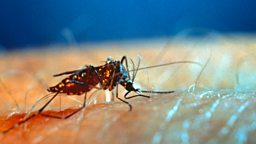
Five Fever Tales: Fact-based dramas about malaria, one of the oldest human diseases

The following radio broadcasts may be of interest:

Five Fever Tales by Lavinia Greenlaw

http://www.bbc.co.uk/programmes/b03yzlhk

Five Fever Tales by Lavinia Greenlaw


These brief plays are very interesting as they present history in a docu-drama approach. The science behind the discovery of what the 'fever' was/is and the challenge for those who first saw new 'living' things through the microscope and then convincing the scientific establishment is quite fascinating.


The economic incentives to solving the 'fever' are also salutary and give pause for thought in considering global health today (and tomorrow - global warning) as is recognition of resistance and current genetic research programmes.

I believe these programmes are freely accessible worldwide, for a limited time period.

Also posted on HIFA2015 c/o the moderator.


Tuesday, November 12, 2013

TO: EU -omics research community; if you are seeking a holistic approach for personalised medicine...

The relevance of Hodges' model as a resource in 21st century health care and research can be found within personalised medicine.

This is in addition to the need to assure holistic bandwidth within existing health care delivery, when it is person centered care that is the concern. Personalised medicine brings with it further challenges as it emphasizes the scientific, the inevitable reductionist work can potentially increase the distance between the humanistic and the mechanistic. The working document from the European Commission -

Brussels, 25.10.2013 SWD(2013) 436 final COMMISSION STAFF WORKING DOCUMENT. Use of '-omics' technologies in the development of personalised medicine
http://ec.europa.eu/health/files/latest_news/2013-10_personalised_medicine_en.pdf

on page 7 we read:

The figure is instructive as it shows that a holistic approach is needed to fully appreciate the challenges and opportunities presented by personalised medicine. 
'Holistic' is a much maligned word, with its fuzzy, new age connotations. Especially when the word count = '1'. Another related document also picks up the holistic call:
IMI2 will deliver tools, methods and prevention and treatment options (directly or indirectly) that will progress the vision of personalised medicine and prevention. Through providing the framework required to support collaboration between scientists, regulators, HTAs, patients and healthcare providers, IMI2 will ensure that research is translated into implementable solutions to current healthcare challenges. Solutions that are not purely focussed on the development of new medicines, but that provide a holistic personalised healthcare package as well as maintain people healthy and productive through out their lifetime. Reclassification of diseases based on their root cause and not symptoms will help addressing unmet needs even in areas where a range of options exist but patients do not respond, because their symptoms are misleading therapy choices.
[ IMI - Innovative Medicines Initiative ]

Outline Strategic Research Agenda for a biomedical research public private partnership under Horizon 2020: (draft) The right prevention and treatment for the right patient at the right time. 08 July 2013. (pdf link removed file not readable)

On page 10:
A sustainable healthcare system is a holistic one in which the patients are responsible for their wellness and quality of life; physicians, therapists, nutritionists, community carers, and all other actors in the value chain are motivated to this goal; delivery of care takes into account patient beliefs, values and both rational and irrational behaviors; the care is affordable to both public and private payers and promotes health; sustainable businesses can thrive; and the education, prevention and management of chronic conditions are aligned to achieve this goal.
The focus of these documents is -omics and the development of new medicines. By its very nature this research, data and knowledge lies deep within many sciences: new sciences no less. This recognition of the need for holistic approaches and perspectives is still very encouraging. As the first document on personalised medicine notes, future treatments must be from "bench to bedside". We can equate this as "mechanistic to humanistic", but only as long as the patient in that bed is a person and not just viewed as a diagnosis with an associated -omic profile.

Have a look also at the figure on page 7, the medical innovation cycle. As discussed previously on W2tQ patient safety needs situated awareness and holistic perspectives.

My original (and seemingly incomplete) source:
http://www.researchresearch.com/index.php?option=com_news&template=rr_2col&view=article&articleId=1339313 [no longer available]