Hodges' Model: Welcome to the QUAD: Search results for cogeography

Hodges' model is a conceptual framework to support reflection and critical thinking. Situated, the model can help integrate all disciplines (academic and professional). Amid news items, are posts that illustrate the scope and application of the model. A bibliography and A4 template are provided in the sidebar. Welcome to the QUAD ...

Showing posts sorted by relevance for query cogeography. Sort by date Show all posts

Monday, July 20, 2009

NHS data breaches: the 'cogeography' of who and where?

Computing this past week featured an item (extract below with link) -

Five more NHS trusts involved in serious data breaches
Written by Tom Young
Computing, 17 Jul 2009

Privacy watchdog the Information Commissioner's Office (ICO) has found five more NHS organisations in breach of the Data Protection Act.
The Royal Free Hampstead NHS Trust reported the loss of an unencrypted CD initially thought to contain medical treatment details of 20,000 patients from the hospital’s cardiology department.
Chelsea and Westminster Hospital Foundation Trust reported the theft of an unencrypted memory stick containing 143 patient details including sensitive medical information.
And Epsom and St Helier University Hospital NHS Foundation Trust has been storing hospital records insecurely for nearly two years following data being transferred between hospitals. ...

Straight away reading this I thought of my previous post about cogeography and commented accordingly (which registered twice - oops!). In light of the previous post here's that comment with some additions....
Such events merely (without trivializing) highlight the human capacity to ERR big(gish) time. Is it not possible for tech to help? If info systems through to mobile devices had a sense of where they are and their status as carrying sensitive data recognised through digital IDs - plus additional meta-dynamic data, then 'cogeographic awareness' might result?

I blogged about this with ref to conceptual spaces.

This would be an artificial example and would make it possible for data previously designated as confidential, sensitive, - HOT data if you will - to self-destruct, 'e-vaporate' if it found itself beyond a given combined virtual or physical environment be that hospital, Trust boundary, SHA, or National border...? This capability already exists no doubt in the security services (although sometimes you wonder) or as suggested in the realms of 'MI' and '007'.

Cogeographic or (cogneographic) may be a neologism and seeks to conjoin the cognitive (cognition) involved in defining, representing and using concepts in conceptual spaces; AND the finding that knowledge is invariably situated - that is knowledge has a geography.

Copies of NHS and social care
data could - should - MUST
have a geography too...?

Another comment rightly questioned the ability to put personal data on
CDs and other media in the first place. Amid the emergence
of renewed debate about the future of e-health
records, clinicians may have a professional
duty to demand cogeographic
properties no
less ...?

Image source: http://www.tapintoquality.com/facts/glossary-d.html

Happy Anniversary 20th July!

Thursday, July 17, 2025

Ryle's 'logical geography'

I like the way Ryle apparently analogised philosophy to cartography.*

'Similarly, Ryle advocated that philosophy should chart the 'logical geography' of our concepts. In The Concept of Mind he argued that the Cartesian dualism of mind and body results from 'category-mistakes': it treats mental concepts which signify behavioural dispositions as if they referred to processes that are just like physical ones, only more ethereal. Ryle rejected Wittgenstein's therapeutic image according to which 'the philosopher treats a question like a disease' (1953: §255). Yet he accepted that philosophy is a meta-discipline which does not 'talk sense with concepts' but tries to 'talk sense about concepts' (1949: 9-10). The paradox of analysis disappears since the task is not to provide novel information about a realm extrinsic to us. According to Wittgenstein, philosophy reminds us of rules that we have mastered in practice but which mislead us in the course of philosophical reflections. According to Ryle, it takes us from the knowledge how to use words to an explicit knowledge that they are used according to certain rules. Either way, analysis is not a trivial pursuit, because the explanation of philosophically interesting concepts is complex and rich, especially when it places these concepts in their diverse contexts (everyday, scientific, philosophical).' p.43.
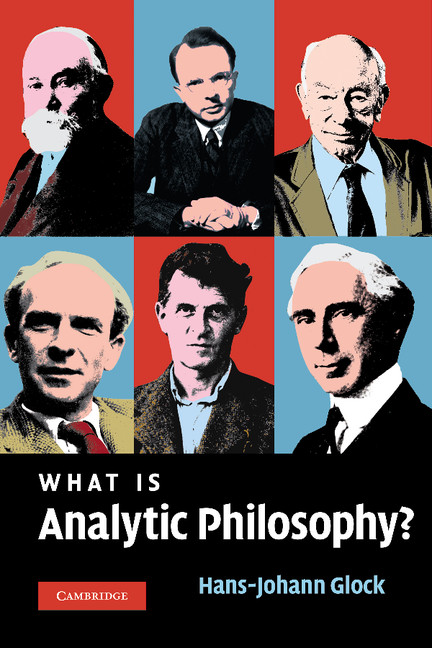
Hans-Johann Glock. 2008. What is analytic philosophy? Chapter 2. Historical survey. pp.21-60. CUP. Pb. 
https://www.cambridge.org/us/universitypress/subjects/philosophy/philosophy-general-interest/what-analytic-philosophy

* 'Ryle analogises philosophy to cartography. Competent speakers of a language, Ryle believes, are to a philosopher what ordinary villagers are to a mapmaker: the ordinary villager has a competent grasp of his village, and is familiar with its inhabitants and geography. But when asked to interpret a map of that knowledge, the villager will have difficulty until he is able to translate his practical knowledge into universal cartographic terms. The villager thinks of the village in personal and practical terms, while the mapmaker thinks of the village in neutral, public, cartographic terms.[20]: 440–2 '. https://en.wikipedia.org/wiki/Gilbert_Ryle

I've wondered about 'cogeography' - combining cognition and geography, even care cartography. There is also of course psycho-politics, geo-psychiatry and psycho-geography ...

Hopefully a more current text would be more diverse.^

Saturday, June 29, 2024

Book for review: iv "Philosophy of Care - New Approaches to Vulnerability, Otherness and Therapy"

Don't worry this is not a chapter-by-chapter review. Having cast the stone that is Hodges' model we will skip a few times.

The use of footnotes varies from chapter to chapter. They inform the text, in several instances being quite illuminating. Beside the footnote (1/3 of a page) I noted - 'baby, cacophony, perception - brain - not overwhelmed but can't ignore' (p.41). Stoicism is the focus in chapter 3; perception, fields, manifold, circles of care, self, time, situation! We have field, subfields, domains.
"Perception is always about a diagnosis of the situation in which the living being finds itself. ...

... perception is always about finding one's "whereabouts" or one's "location" in life's journey." p.42.

On the features of perception, 4/4: "might be termed the breadth or width of the perceptual field." p.42. 

"As pointed out above, all perception has the structure of a compact, continuous, and uninterrupted manifold. In other words, it forms what we have termed a field. But the perceptual field  could contain nothing but the "bare bones" of "inert" qualia, (a manifold of simple qualities impinging themselves upon the perceiver)." p.42. 

The author, Jorge de Carvalho continues another view of qualities that take place in "each given moment". This is the challenge of salience, what is significant? How to 'read' in care: the spoken, the unspoken? 

Developing notes on Hodges' model as a mathematical object, Hodges' model in its basic form as a template, I'm proposing as an empty set. The structure of Hodges' model, its two axes instantiate the "bare bones". In programming/instruction terms ... Hodges' model provides INITIALISATION. A reset. This can act as a prompt for learners to acknowledge the person - the other and consider 'unconditional positive regard'. There's polarity too (p.46) and each living being lives in its own global field, in its own global 'map' - in its own geography" (p.49). Physical geography and the change 'there' is giving rise to cogeographical (a neologism?) disruption - eco-anxiety and climate-angst. 

Psycho-geography: the polarity of our times?

Another note, amongst Hierocles' circles is 'reflex arc'. So many feedback loops, cascades to worry about. 

As Jorge de Carvalho writes: 'what we are talking about is a very complex field of fields. ... described both as a compass rose and as a framework of concentric circles" (p.51). [There's a relay race, a torch relay in ancient terms p.54. Care is the object that is passed on. I've a dual-shaped baton to pass on.]

Care is more than perception (p.52), care presupposes a degree of activity or action. I like the acknowledgement of 'vigilant waiting' too. For me this draws in the importance of communication; Watzlawick's Five Axioms of Communication. After all, what happens to all these perceptions? There's vulnerability, fragility and care for the sheer existence and the whole content of a given being (p.56). Jorge de Carvalho, deploys a series of numbered points which helps reading. Page 60's footnote had me drawing circles, unborn at the centre: as one. But the collective unborn in another rough circle. Eachtimeness: I like this Stoic formulation through circles. Fourthly, we arrive at pure care. I'm still pondering on ".. there is no absolute either/or dichotomy between care and its opposite" (p.61). Integration is also here, an issue for modern times, a legacy problem from ancient times?

Luis Mendes's chapter I must read again. The abstract includes:
"Three fundamental aspects will be identified: (a) the need to consider self-existence from a global point of view; (b) the need for an axis for that life-view; (c) the need for correspondence between self-existence and life-view. Apparently, this structure is formal and arbitrary. Secondly, I will analyse the structure of despair. Three fundamental aspects will be analysed: (α) the requirement for a life-view which can be applied to the totality of subjective existence; (β) the requirement for an unconditioned instance of meaning; (γ) the requirement for the exclusion of the possibility of failure." p.79.
I'm sure Kierkegaard has featured in Philosophy Now, and The Philosophers' Magazine. Mendes' focus is arbitrariness. The hypothesis is well explained (p.80) structure of care. There's much for me here: care, life-view (health career - life chances), "a global understanding maps the world" (p.81), existential map, fulfilment, meaning (of course!). Reading -
"So, a life-view needs to be stabilized, to have unity. It needs an instance that works as an axis and as a point of support. We need something to support our life" (p.83).
I could have jumped up, waved and shouted "OVER HERE!" Would Kierkegaard have been pleased? Perhaps I should have read Kierkegaard, not Michel Serres (please see bibliography in the sidebar)? Still time (fingers x'd); especially if there's any interest in the form of co-author(s)? Care is full of ideals. Mendes through Kierkegaard gives my  project encouragement: "Truth is to live for an idea." p.84. Not necessarily truth but the idealism in care, including identity. It is helpful in care to be reminded of the ideal as a calling, hence motivation (intrinsic and extrinsic) is still key. If you're intrinsically motivated, devoted to your chosen vocation, is your pay that important - to the government/organisation that employs you? A shame this is so often lost to political leaders; who, given their chosen vocation, exhibit a markedly short memory.

Braga, J. & Santiago de Carvalho, M. (Eds.), (2021) Philosophy of care: New approaches to vulnerability, otherness therapy. Springer. 

Many thanks again to Springer for my copy, especially given a follow-up request, well post-publication date.

Individual
|
      INTERPERSONAL    :     SCIENCES                   
HUMANISTIC  --------------------------------------  MECHANISTIC      
 SOCIOLOGY  :    POLITICAL 
|
Group

personal courage

relational - (emotional) care

despair - fulfilment

motivation

ideals

unity - stability

maps

compass - orientation

models - frameworks

geography

life as a whole

society - community of practice

external validation

extrnisic motivation


sustainable development goals

policy

accountability

failure (courage here - political convictions?)


See also:

body & soul - Book: Philosophy of care: New approaches to vulnerability, otherness therapy


Book for review: iii "Philosophy of Care - New Approaches to Vulnerability, Otherness and Therapy"

Sunday, February 15, 2026

vii Book: Bill Ross - 'Order and the Virtual'

'The Philosophy and Science of Deleuzian Cosmology'

On the publisher's site, the content listing is limited to the chapter (section) titles (as shared in iii). 

There is also one review:

'In classical physics and its mechanical paradigm, events are stories about fundamental objects. In quantum physics, it is the objects that are the stories by which we understand physical systems in their most fundamental form--as histories of events. In Order and the Virtual, Bill Ross makes a compelling case that the event-ontological philosophies of Deleuze and Whitehead will become for the new physics what the philosophies of Newton and Locke were for the old.'

 Michael Epperson, Research Professor and Director, California State University, Sacramento
[ https://edinburghuniversitypress.com/book-order-and-the-virtual.html ] 

It is worth listing the content details in full:

Series Editor's Preface vii
Preface by Robin Durie and David Webb ix
Abbreviations xii

Chaos I
Chaos and Complexity Theory I
Nietzschean Chaos and the Superior Principle of Sufficient Reason 5
The Eternal Return and the Disparity of Forces 8
Ergodicity and Infinite Duration 10
Post-Classical Physics and the Question of Entropy 15

2. Entropy and the Complete Concept in Leibniz and Deleuze 24
Dissymmetry, Energy Gradients and the Ultimate Origination of Things 29
On the Ultimate Origination of Things 30
From Many Worlds to Chaosmos 34
The Calculating God 36
Mathematical Thought, the Problem and the Cosmos 38
The Compete Concept and Disjunctive Synthesis in Sufficient Reason 44
Physical Systems, Disparity and Disjunctive Synthesis 50
Chaosmos as Cosmology 56
Absolute Zero, Limits and the Infinite 60
Simple Order 68

3. Order 71
Mechanism and Vitalism, Order and Complexity 73
The Game Analogy #I: Leibniz and Kant 81
The Game Analogy #2: Claude Shannon and Michel Serres 83
Game #2.1: Claudo Shannon's 'A Mathematical Theory of Communication' 86
Game #2.2: Michel Serres The Birth of Physics 94
Game #3.0: Deleuze's Ideal Game 98

4. Order as Complexity 109
Complexity as Principle 122
Limits without Negation 127

5. Sufficient Reason as Dissymmetry and the Evolutionary Paradigm 131
Limits and Non-Locality 135
A Network Paradigm: Loop Quantum Gravity 150
A Holographic Paradigm: David Bohm's Implicate Order I54
Evolutionary Expansiveness 161

Conclusion 175
Notes 182
Bibliography 207
Index 217

I can see why my reading of OatV is not at the usual 21st century pace. 'Section 2. Entropy and the Complete Concept in Leibniz and Deleuze', pp.24-68, as already noted, is a real melange of ideas from several sources. As noted already, you have to unpick Deleuze, Simondon and Ross's guiding thought. your reading and purpose also matters however; an amazing gift of texts like this.

'CHAOSMOS AS COSMOLOGY

If energy gradients are the sufficient reason of all that appears for ther- modynamics, symmetry is to most intents and purposes the sufficient reason from which modern physics draws its rationale. Mathematical relations of symmetry have come to take the place of 'law` in classical physics: where there is symmetry, science identifies an underlying order, As we shall see, however the point of contention between Deleuze and the prevailing scientific consensus is by no means so black and white. and far from universally upheld among the scientific community. Once again, it is in the particularities of this tension that productive exchange may be found.' p.56.

Leibniz's 'individual' (and monads) differs from that in Hodges' model, but there is the question of time and scale (at both ends of the vertical axis in Hodges' model):
'Each individual is in contact with, expresses, all individuals in the world, but obscurely, again, as with Leibniz, through infinitely ramifying lines of divergence.' p.54.

'Each individual, then, remains necessarily the sum of all its predicates, but in the same sense as a singularity contains its own power of expressing innumerable contradictions; here is Deleuze's 'object = x', the concept which overcomes the idea of world understood merely as a circle of convergence.' p.55.

We often speak in terms of 'take-aways'. Ross provides a packed (yet nutritious!)  lunch and really useful snippets:

'Disjunction becomes a relation' (p.49).

Identity runs through section 2. Difficulties of orientation are noted. I wondered about a symbol for singularity, but I cannot find one(?). Ross, himself, describes as dense, Leibniz's essay on 'Origination'.

Is the nursing process, predicated up Aristotlean 'hylomorphism' (p.50)? To capture the (cognitive) orientation of an individual, do we locate the basis for the immanence of nursing, in problems that are potential, or actual?

Amongst, particle physics, absolute zero, a two-dimensional plane, and 'symmetry'; I found 'ill health'. At least, I did in a spontaneous pencilled note. And, nearby: 'Symmetry is Law'; (p.59)'.

There is grist-for-the-mill in producing new formulations for Hodges' model. Do 'non-commutative relationships, and vectorial transformations abound? (p.60)

Health and ill-health break symmetry (which Deleuze resists), and do so within and across all the domains of Hodges' model.

Ross quotes in Section 3 'Order', page 73 in Bergson's Creative Evolution (236): '[The mechanistic order] may be defined as geometry which is its extreme limit; more generally, it is that kind of order that is concerned, whenever a relation of necessary determination is found between causes and effects'. I could go on ... but scribbled 'cogeography/cogeographical'.

Many thanks to Edinburgh University Press for my review copy.

More to follow here ...

Bill Ross (2024) Order and the Virtual: The Philosophy and Science of Deleuzian Cosmology. Edinburgh: Edinburgh University Press.
https://edinburghuniversitypress.com/book-order-and-the-virtual.html

Thursday, January 07, 2010

Comment on Paul Roemer's "EHR market is ripe for the taking by Google, Microsoft, Oracle"

I read with great interest Paul Roemer's post last month -

EHR market is ripe for the taking by Google, Microsoft, Oracle

I've a lot of respect for the people working at that other sharp end of health. There are times when they are where I would like to be: not the bleeding edge, but the business edge:

Paul is a healthcare strategist and the managing partner of Healthcare IT Strategy, which helps health care providers solve business problems using EHR, workflow improvement, and change management.

Mr Roemer is out there among the corporations, the deals, the media frenzy and the stock market's take on health care AND health IT. He is addressing specific audiences and over here in the UK we can hear the debate raging. My problem is that working for the NHS all my career I have been and am cocooned. Even though I try to venture out and get involved, this is the very powerful criticism of long-term public sector employees. While far from totally sheltered from economical and political climate change, we are protected from the worst of the business elements. Despite this, seeing the title of Paul's post and his two rules:
Rule No. 1: Content is king. In cable, it is channels such as HBO and Discovery. In healthcare it is data--patient data, effectiveness data, disease data.
Rule No. 2: The cable/telco model values the businesses based on the number of assets (subscribers--you and me). Each body adds somewhere between $5,000 and $10,000 to the valuation model of a Comcast or a Verizon. Downstream, some valuation will be placed on each PHR subscriber.
- two additional rules sprang instantly to mind. ...

Rule 3: Beware low hanging fruit

I posted in April 2009 Data sharing, privacy, health, citizenry.... "Database State" expressing concern that the sanctity of personal data is being eroded bit-by-bit in the mind of the general public by the media and the sheer ubiquity of information and technology. Peaches, plums, pears are delicious when ripe, but as such they need to be handled very carefully. So too does the Personalised health record amid a variety of threats - the worst of which are often internal. In health care the patient data that Paul identifies in his Rule 1 is central, and a key issue is the demarcation of individual and anonymised aggregated data. Hence, Paul quite rightly points to a regulated market. Personal data can be far more valuable in terms of direct marketing and so the temptations for misuse are profound.

In the UK an NHS consultation has addressed the additional uses of patient data. This concerned the research capability programme and provision of a health research support service; with events to present proposals and debate the various issues that include information governance....

Information governance is not fixed, nor should it ever be.

In Paul's rule 1 content is king and content=data - in this case:
  • patient data;
  • effectiveness data;
  • disease data.
This list of data would surely qualify as being 'broad spectrum' in nature. If its circulation is not very tightly controlled it can damage the (care) environment. If not managed effectively across multifold 'borders' - national, regional/state, corporate, systems, organisations, users, testing, interfaces, legislative, public bodies - this data can mutate markedly despite the insistence upon standards. You see although Google, Microsoft and Oracle may take that ripe fruit, as they pick it they come across -


Rule 4: Whenever and wherever picked,
fruit can be tainted

This might include the odd bug, or one or two tainted fruit items perhaps? It could be problems in the form of parts of the EHR that are difficult to incorporate, with questions of shared access and ownership? If the fruit is indeed pristine, no blemish, no chemicals, no truly-devoted-insect-kisses: what are the overheads with this particular harvest?

If Google, Microsoft and Oracle believe they can do an Indiana Jones and just shoot to solve the problem because, as Paul suggests, they have the 'numerics' in the cable/telco model, then they need to take care (even if only improvising).

Microsoft, CSC and many other corporations already know of the complexity that reigns (pours in fact!) from their experience in health IT. Paul highlights Google as a new kid in town. Maybe acquisition does obviate the need to learn quickly (let others learn the lessons). But whatever the point of entry: health care (IT) remains a cussed business. And the future mix demands (begs!) the integrated addition of social care, but how and to what level?

It is not enough to counter "let's attack this complexity with simplicity." Health and social care are metronomic. They alternate between complex - simple descriptions (one of which is re-organisation). Plus, that metronome may as well be in a closed box:

Its owner is one Mr Schrodinger.
Care to gamble?

Paul's post is also fascinating since predictions about subscription numbers do count and speak volumes (sorry - but they really do). They will not only reach shareholder's ears, but when the model takes off - the general public's too. This could help erode the cherished sanctity of my personal data. So am I saying that some of the giants of corporative intelligence turn and run screaming, arms raised like surprised Martians in alien territory? No.

Maybe, as I have found -

the real low hanging fruit is the m+del.

Is it as ripe and appropriate in this market as it seems?
Or is it past its sell by date?
Time as ever will tell.

Additional link: NHS data breaches: the 'cogeography' of who and where?

Image source:
LowHangFruit.com

=============== Paul's Post Follows ==============

December 17th, 2009
by Paul Roemer
The national EHR market is ripe for the taking by a big three like Microsoft, Google and Oracle. Heck, I'll even go so far as to suggest that when the dust settles in about five or seven years, the National Health Information Network will be a regulated combination of a handful of those firms.

As for the other firms offering or planning to offer PHRs, permit me to suggest the following scenario: Let's say I am in charge of Google's somewhat non-existent healthcare line of business. One of my goals would be to have more users of my PHR than any other firm.
Why does this model make sense? Two ways, both of which come from the cable/telco business model.
Rule No. 1: Content is king. In cable, it is channels such as HBO and Discovery. In healthcare it is data--patient data, effectiveness data, disease data.
Rule No. 2: The cable/telco model values the businesses based on the number of assets (subscribers--you and me). Each body adds somewhere between $5,000 and $10,000 to the valuation model of a Comcast or a Verizon. Downstream, some valuation will be placed on each PHR subscriber.
So, back to the example of me running Google's healthcare offering. (If you don't like Google as an example, insert your favorite firm.) If I'm Google, am I troubled by the fact that other firms are building their own solutions? No, because the difficult part of the business model is adding users, adding subscribers. Why not let a bunch of firms do the business development work for me, do the dirty work to get the users, and then just devour those firms? Once I own them, I convert them to my platform. Do I then get some 'ownership' or right to use the data? That would certainly be the business goal.
One million users valued at $5,000 adds $5 billion in valuation. Ten million adds $50 billion. Ten billion is about 2.5 percent of the U.S. market. Do I stop at the border? Of course not.
By the way, while all this is going on, Google, Microsoft, or some other company will also be creating standards and building or buying up EHR firms.

Sunday, January 18, 2015

Book Review: Illness


As mentioned on W2tQ before this book has been feigning illness for over a year, sitting static on the bookshelf. Brushing it off has brought great reward that was quickly delivered as the book is just 160 pages plus references and index. My review copy is the revised edition from 2013.

The book is well structured with five chapters, that tread a consistent path through what is a very objective-subjective landscape. The author's aim and orientation is clear from the beginning. Each chapter provides a phenomenological account of how illness affects the life of individual. The shadow that is death is also an important thread throughout the book, culminating in the final chapter. Havi Carel describes the book as neither a personal story nor a purely philosophical reflection on illness. It is both, we are told (p.15).


The introduction lays out the disciplinary, experiential and perspectival divide that the book seeks to address, broadly normativist and naturalistic approaches to health and illness [presented using h2cm]. I say consistent above as you can see the personal story and philosophical aspects, but amid this 'illness' Lymphangioleiomyomatosis (LAM) a balanced gait between the personal account and philosophical dimensions is maintained. According to the text and Foundation: LAM is a progressive lung disease that usually strikes women during their childbearing years. The introduction and chapter 1 provides the narrative to the discovery of having LAM. This demonstrates the rather frequently haphazard, deferred, denial-oriented way in which people seek medical help. Given the apparent severity of the symptoms you might expect that help was sought sooner. I thought that was a male phenomena? This is one of several 'what ifs'... Havi expresses later.

Others reviews (yes I read one) remark on Carel's candidness and honesty. The book is courageous too, engaging the reader as an interviwer-interviewee; some questions are answered in the next paragraph, others left for the reader. Yet privacy, dignity and self-respect of the author foremost and people (family, friends, professionals) involved is preserved.

The philosophical discussion is not very technical, accessible it draws upon ancient Greek philosophers, notably Epicurus and the phenomenological school of Heidegger, Merleau-Ponty. Further reading is listed and related to the book's themes. Critics of the book as Mikey Burley describes, see too many emotion-laden autobiographical anecdotes. The appeal for me of this book and the achievement of the author is to stress how the humanistic is still so frequently lost. The mechanistic stamps on communication, compassion, effective and person-centred care. Recourse to anecdotes is inevitable if we are to integrate an individual's experience and what the sciences can offer. Not just knowledge in all its forms, but seeking 'truth' - or its best approximation. Is the battle the individual Vs. the disciplines? Psychology is well established as a discipline and yet its early beginnings in Wundtian introspection were found wanting. We are still seeking balance.

The book is neither a treatise nor a tractatus, but it does seek to gain traction on meaning within health theory, practice. This is not armchair philosophy, it is everyday philosophy as might now be found in some pubs (public houses), it is trying to move towards philosophical therapy. Havi Carel addresses the way that health is taken for granted: we notice when there is a problem, functionality is curtailed. Contemplation of decline, mortality and death is not for the everyday, it is for the aged, Havi's students: Havi and many others who are touched by illness.

The body and mind feature large as would be expected, embodiment and agency. "We are our bodies; consciousness is not separate from the body" (p.16). What stands out for me is Havi Carel's call for a deeper conceptual shift since physiological accounts are insufficient to represent the personhood of illness. Actually, I know we keep saying 'deeper' but taken literally that might be reduction's way. The dichotomies here: objective-subjective, physical-mental health, internal-external (p.70), social model-medical model, self-other, health-disease and others ... seem to demand conceptual outreach. 'Meta' is everywhere these days, is this the case as Carel writes, with habit or pre-reflective: something for me to explore (p.27)?

Carel states what we know, but needs to be flagged. What does a walking stick represent, a zimmer frame, a wheelchair? In the same way that time can be compressed and extended so too can distance: it is not objective (p.16). As a former cross country runner that lesson was learnt quite a while ago, running diagonally across a ploughed field on a hill in February: oxygen debt. Once paid I recovered, but with a diagnosis like LAM and other rare diseases. I realise another definition of the individual-group axes within Hodges' model: a small group can become and act as one through activism.

Havi writes of mentally recording things, to remember abilities that will be lost, as adaptation and adjustment blur past and present. Experience of nursing people with dementia has prompted me to try to do this. Carel's hiking, swimming desire to push the envelope is universal. I can still remember the path running through Crompton's Woods, the trees, the turns the ups and downs. Reading Illness I recalled my brother vaulting over the back fence, we would land already halfway down the embankment the dust caught in the summer sun. We flew then. The woods for decades now a housing estate. Remember.

While reading was there was a coincidence in the media, the news of disease, cancer, life choices and bad luck (p.37). I suppose it is down to luck who deals with us a patient-client. I've always viewed an accepting, positive, open and caring attitude as fundamental for health and social care practitioners. Carel encounters care professionals who should be doing other things. Chapter two 'The social world of illness' begins with a single word: empathy. Regardless of ongoing austerity - Carel's story begins in 2004-2006 - empathy is the emotion in shortest supply. This really hurts. I am still trying to find a name for the professional who fails to be human, preoccupied with the mechanics of illness (p.47).

We have digital humanities and as noted in W2tQ medical sociology boasts an established literature. The medical humanities and philosophy of medicine are seeing to extend our understanding of health and illness (p.51). I am encouraged in the need for holistic views and approaches, conceptual and cultural frameworks (p.53). The counterpoint to unprofessional, negligent, disrespectful professionals is the need to learn to be rude, in order to cope generally (p.55). Some sentences are definitive. On well-being: "Well-being is the invisible context enabling us to pursue possibilities and engage in projects" (p.64). If I ever write another paper on information I will reference page 70, as I continue to reflect. Is technology, data - big and small and the quantified self the whole answer to healthcare's challenges?

Page 80 invites a philosophical discussion on personal identity, dementia and existence, to which we could also add sense-making and grief. The impact of illness is well made, as is the explanatory power of Heidegger. There is a mental exercise - imagining health within illness. I can extend this:
  • Apply the concept of health to the domains of Hodges' model?
  • Apply the concept of illness to the domains of Hodges' model?
  • Apply the concept of health within illness to the domains of Hodges' model?
Page 81's focus on being, ability and dichotomies is very supportive of my studies. I'm not sure if the irony in mention of Stephen Hawking and a contracted horizon is intentional, but it made me smile. Page 87 reminded me of my hackneyed thoughts about cogeography - a cognitive geography of concepts for healthcare (and more); something beyond a classification system or nomenclature. An architecture that encompasses the dichotomies, disciplines and experiences mentioned above and in the book. Page 90's note of the apparent deficit perspective of medicine towards the lived body, might also emphasize the assumption of deficit in knowledge and the rise of the expert patient, student-centered learning also.

I have many more notes from chapters 4-5 and at least one more blog post to follow. Other questions arose from chapter 5. Will people be referred to mental health services in future because they are deemed suicidal as they decline their personalised genomic treatment (Kim Stanley Robinson's, Red Mars)? Chapter 5 Living in the Present had me thinking about Plato's Philosopher Kings (p.148). At the end of the day we must rule ourselves even in the darkest of circumstances, but this takes wisdom and philosophy. This is a much needed book and I have only scratched the surface. I will let you learn of the book's full title and the significance of the same. A great read, despite the subject.

BURLEY, M. (2011), EMOTION AND ANECDOTE IN PHILOSOPHICAL ARGUMENT: THE CASE OF HAVI CAREL'S ILLNESS. Metaphilosophy, 42: 33–48. doi:10.1111/j.1467-9973.2010.01675.x

Many thanks to Katharine Green, Editorial Assistant, Acumen Publishing for my copy.

Additional link:
BBC Radio 4: In Our Time, Phenomenology