Hodges' Model: Welcome to the QUAD: Search results for group

Hodges' model is a conceptual framework to support reflection and critical thinking. Situated, the model can help integrate all disciplines (academic and professional). Amid news items, are posts that illustrate the scope and application of the model. A bibliography and A4 template are provided in the sidebar. Welcome to the QUAD ...

Showing posts sorted by relevance for query group. Sort by date Show all posts

Tuesday, December 10, 2019

Global Health Literacy Summit 2020

SAVE THE DATE: 26 - 28 October 2020

Where: Kaohsiung Taiwan
Why: To unite people all over the world, foster knowledge exchange, and promote action to advance health literacy
How:  IHLA Interest Group call for abstracts open now.  General call for abstracts opens soon.

Dear HIFA,

The International Health Literacy Association (IHLA) is a non-profit, member-based organization dedicated to the professional development of its members and the continued growth and development of the health literacy field. IHLA was formed in 2016, incorporated in 2017, launched a website and published its first member newsletter in 2018. IHLA now has more than 1,000 members in 80+ countries. Membership is FREE!

To become a member go to http://www.i-hla.org

In spring 2019, the IHLA Executive Board issued a call for proposals to co-host the first
 IHLA Global Health Literacy Summit 2020
http://www.i-hla.org/summit-2020

After a careful review of five EXCELLENT proposals, E-DA Healthcare Group, I-Shou University in Kaohsiung Taiwan earned the honor to host the meeting. In 10 months, IHLA members from around the world will meet in person, share their work, and learn from others locally and globally.

An immediate way to tailor the association to meet your needs is to join an IHLA Interest Group. Interest groups are run by and for members; they emerge and dissolve as health literacy topics and pursuits become relevant. In this way, IHLA Interest Groups keep the organization enduring and relevant. Interest groups (as described in IHLA's Constitution and Bylaw) have programming rights at the Global Health Literacy Summit and play a vital role in shaping the organization at large.

Here are the next steps for IHLA Interest Groups and the Global Health Literacy Summit 2020.
  • Encourage Interest Group members to plan and submit research, practice, policy-oriented panels or workshop proposals for the 2020 Global Health Literacy Summit
  • Interest Group Chairs and Co-chairs create a peer review process/subcommittee to screen proposals
  • Interest Groups select proposals to forward to the Global Health Literacy Summit 2020 Program Committee by February 27, 2020
  • Starting in March, the Summit Program Committee conducts a peer review process and either accepts proposals as submitted, or suggests changes
  • The IHLA Program Committee has an open call for other proposals, which may lead to an opportunity to supplement interest group sessions - if needed.
For more information, please view this video:  https://youtu.be/RLKlkGPdhHo
Or contact Interest Group Chairs directly via email:  See list of Interest Groups, Chairs/Co-chairs, and email addresses<http://www.i-hla.org/about/interest-groups/

Also, please see below the Global Health Literacy Summit 2020 Principles of Participation, which apply to all IHLA Interest Groups and Members.
  1. Interest group proposals must be peer reviewed by a subcommittee of 2-4 interest group members appointed by interest group chairs.
  2. All interest group members should have an opportunity to be considered as a reviewer.
  3. Reviewer names must be disclosed to interest group members.
  4. Presenters in selected sessions must commit to attend the IHLA Global Health Literacy Summit 2020 prior to submission to the Summit Program Committee.
  5. Each interest group is encouraged to use a template developed by the IHLA Summit Program Committee to review submission abstracts.
  6. It is unethical to charge or receive money as well as in-kind contributions for abstract submissions and peer review.
  7. It is unethical to lobby or influence the members of peer review subcommittees regarding the status of any abstract submission.
  8. Research submissions must be original research. In addition, accepted submissions will be retracted if found to be plagiarized.
  9. Discrimination is prohibited based on national origin, religion, ethnicity, gender, or any other socio-demographic variable.
  10. Interest group sessions are open to all attendees.  As such, interest group sessions should be as welcoming as possible to all IHLA Global Health Literacy Summit 2020 attendees.
Sincerely,

Teresa Wagner  Teresa.wagner AT unthc.edu
Rob Logan  logrob AT gmail.com
Sabrina Kurtz-Rossi  sabrina.kurtz_rossi AT tufts.edu

Friday, August 21, 2020

Allport's Scale of Prejudice - 1 to 5

individual
|
INTERPERSONAL : SCIENCES
humanistic ----------------------------------------------- mechanistic
SOCIOLOGY : POLITICAL
|
group - population
? ?
?
  1. Antilocution: Antilocution occurs when an in-group freely purports negative images of an out-group. Hate speech is included in this stage. Although antilocution itself may not be harmful, it could set the stage for more severe outlets for prejudice (see also ethnic joke).
  2. Avoidance: Members of the in-group actively avoid people in the out-group. No direct harm may be intended, but psychological harm often results through isolation (see also social exclusion).
  3. Discrimination: The out-group is discriminated against by denying them opportunities and services, putting prejudice into action. Behaviors have the intention of disadvantaging the out-group by preventing them from achieving goals, getting education or jobs, etc. Examples include Jim Crow laws in the US, the Statute of Kilkenny in British Ireland, Apartheid in South Africa, the Nuremberg Laws in 1930's Germany and antisemitic laws in the Middle East.
  4. Physical Attack: The in-group vandalizes, burns, or otherwise destroys out-group property and carries out violent attacks on individuals or groups. Physical harm is done to members of the out-group. Examples include pogroms against Jews in Europe, the lynchings of blacks and Italians in the US, ongoing violence against Hindus in Pakistan and Muslims in India.
  5. Extermination: The in-group seeks extermination or removal of the out-group. They attempt to eliminate either the entirety or a large fraction of the undesired group of people. Examples include the Cambodian genocide, the Final Solution in Nazi Germany, the Rwandan genocide, the Armenian Genocide, the Genocide of the Hellenes and ethnic cleansing in the Bosnian War. 
Source: https://en.wikipedia.org/wiki/Allport%27s_Scale


Gravells, A., Simpson, S. (2009) Equality and Diversity in the Lifelong Learning Sector, Exeter: Learning Matters Ltd. pp.65-66.

See also: 

IMPACT: Prejudice and Discrimination i

Allport, Gordon (1954). The Nature of Prejudice. Cambridge, Mass. Addison-Wesley.


Sunday, December 18, 2022

CLOSE(D) CARE: Group climate in a secure forensic setting for individuals with mild intellectual disability

This morning ResearchGate alerted me to a new paper/thesis citing Hodges' model. 

I will add this to the bibliography and post again in the new year, relating selected conceptual content of Elien's thesis to Hodges' model.

Background

CLOSE(D) CARE
CLOSE(D) CARE
This study examines associations between group climate, aggressive incidents and coercive measures in adults with mild intellectual disability or borderline intellectual functioning (MID‐BIF) of a secure forensic setting.

Method Participants (N = 248) were interviewed about their perception of group climate utilizing the Group Climate Instrument. Data on aggressive incidents and coercive measures were retrieved from the facilities’ electronic database. A multilevel structural equation model was fitted in which variability in perception of group climate within and between living groups was examined.

Results An open and therapeutic group climate was associated with lower levels of aggression within and between groups. A higher number of aggressive incidents were significantly associated with a higher number of coercive measures.

Conclusions The findings have implications for the understanding of how group climate may play a role in reducing aggressive incidents at the living group in treatment of individuals with MID‐BIF in secure forensic settings.


Elien G Neimeijer (2021) "CLOSE(D) CARE: Group climate in a secure forensic setting for individuals with mild intellectual disability." Radboud University, ISBN: 978-94-6416-713-9
https://www.trajectum.nl/sites/default/files/proefschrift_e._neimeijer_pdf.pdf

Friday, July 30, 2010

New challenging behaviour charter launched

I noticed the item below (with links and images added here) on the Foundation for People with Learning Disabilities Forum. It makes a very important point:

"The label 'challenging behaviour', has become misused over time."
My worry is that this finding is not just relevant to individuals with learning disability and their families, but other groups.

People with dementia, especially in the latter stages can present with behaviour that is increasingly described as 'challenging'. Care facilities are being commissioned and designed with the requisite care, staffing and environment to provide care for people in an effort to provide the highest quality and standard of nursing care.

To some extent these are distinct groups with specific needs. So the use of 'challenging' in one context obviously has a different currency and meaning in another. Whilst the practise and care environments may be separate, is there no place where cross-over may occur? I remember a local RCN meeting presentation that highlighted the demographic trend of dementia within the learning disability population.

To start a painting we often start with a wash:
efficiency - puts a broad brush in the hand.

As we aspire to provide person-centred care
what type of brush do you hold?

We paint with the words we use - take care.


The Challenging Behaviour - National Strategy Group has launched a charter to promote the human rights of individuals with learning disabilities who are perceived as challenging.

Up to 27,000 people with learning disabilities in the UK may have been given a label of challenging behavior, resulting in this group of people being - stigmatised and socially excluded denied the right to ordinary lives in the community, to education, recreation and employment placed in institutional settings a long way from home and families.

The label challenging behaviour, has become misused over time. Rather than being used as a term to encourage carers and professionals to understand the underlying reasons for a person's behaviour, 'challenging behaviour' has been used as a diagnostic label, viewed as being intrinsic to the person.

The Challenging Behaviour - National Strategy Group want people (and organisations) to sign up to the charter to register their support for the principles it contains and to commit to action to improve the lives of children and adults who are labelled as challenging. We need as many people as possible to support us, so please ask your friends and family to sign up too.

To read the charter, including an easy read version visit:

http://www.challengingbehaviour.org.uk/


ENDS

What is the Challenging Behaviour - National Strategy Group?

The Challenging Behaviour - National Strategy Group (CB-NSG) was launched on November 7th 2008. The CB-NSG is a key national group to address the needs of children, young people and adults with learning disabilities whose behaviour is perceived as challenging.

Members of the CB-NSG include family carers, representatives from the Department of Health, Royal College of Psychiatrists, British Psychological Society, Royal College of GP's, NHS Trusts, researchers, service providers and a range of practitioners, regulators, commissioners and third sector representatives. The group is action and outcome focused and comes together twice a year to monitor progress, share best practice and develop coordinated action plans.

What is challenging behaviour?
"Behaviour can be described as challenging when it is of such an intensity, frequency, or duration as to threaten the quality of life and/or the physical safety of the individual or others and it is likely to lead to responses that are restrictive, aversive or result in exclusion." (Challenging behaviour - a unified approach; RCPsych, BPS, RCSLT, 2007)
Challenging behaviour is things like hitting your own head against a wall, pulling curtains down or pulling someone's hair. Often people do this because they cannot communicate with words and they have little or no choice and control over what is happening to them. How do I find out more?

To find out more about the Challenging Behaviour National Strategy Group, please refer to 'All change' the Summer issue of 'Challenge' today. This issue focuses on the work of the National Strategy Group and includes articles from Dr Roger Banks (Consultant in the Psychiatry of Learning Disabilities), Jackie Edwards (Family carer) and Bob Tindall (United Response).


'Challenge' is the newsletter of the Challenging Behaviour Foundation and is available free of charge by emailing: info at thecbf.org.uk or downloading from www.challengingbehaviour.org.uk

Helen Marron
The Challenging Behaviour Foundation
Email: info at thecbf.org.uk

Sunday, January 22, 2023

Philosophy in Pubs - Liverpool Weds 25th Jan 7.30pm

Subscribed to Philosophy in Pubs for many years, I've posted to the list also in the distant past, but I've never attended a meeting. This past week I noticed a message about a new subgroup - Young Philosophers - in Liverpool from Mike (phone numbers removed). Below, I've posted some of the online chat:

On Saturday, 14 January 2023 at 14:38:50 GMT, <info AT philosophyinpubs.co.uk> wrote:
Hi everybody,
 
Its Mike from the Keith's PIP and the young philosophers group.
I am currently re-launching the latter as a new PIP group at
Thomas Rigby's in town
(23-25 Dale St, Liverpool L2 2EZ)
 
The first meeting of the Philosophy group will be
Wednesday evening the 25th January at 7.30pm.
Please come along, all welcome, all ages.
 
If you need anymore  information, please email me (email below) or call me on ...
 
Thanks
Mike Green.
michaelljohngreen AT gmail.com 

This piqued my interest, given my love of Liverpool (born in Walton) and the question of at what age can younger people - children be introduced to Hodges' model?

I replied expressing interest in the possibility of contributing, once the group is established, or as a 'starter for 10', seeking critique as to what sense young philosophers would make of the model.

Responding with an introduction to Hodges' model, and expression of interest, Paul and Rob replied as per below, to which I've tried to add some clarification.

Rob's thoughts are very helpful. The upshot is, I'm looking f/w to a full day in Liverpool this Wednesday, meeting Mike, Paul, Rob and possibly others before the meeting starts at 7.30pm.

Paul's message (intended for me):

info AT philosophyinpubs.co.uk
Sunday, 15 January 2023 at 13:00:12 GMT
Subject:
Re: New PIP group!

Hi Mike, Peter

Yes, you seem to be part of quite a sizeable group of people on our general members/mailing list that have not gotten round to attending one of the groups yet. But that's okay, absolutely no need for apologies, your interest is appreciated anyway.

I've had a quick glance at your attachments; found what I read very interesting and would like to know more. I don't think I've heard of the Hodges' model, or at least not in relation to what we generally practice (Community of Enquiry method).

It's great that you would like to contribute or provide a session regarding the Hodges' model, but I'm not sure if doing that would fit well with this particular opening meeting of a new PIP group. Having said that, I could be very mistaken, and an introduction in the manner you mention, might be a great way to get people thinking and herald a fruitful meeting. The meeting is due to start at 7.30pm - (meetings usually take one and a half to two hours), but if you like I could meet you there half an hour earlier. Let me know.

We have something called the Enquiry Development Series (EDS) running at the moment. It's a monthly Online event which is run for PIP members and others to learn/refresh their undertanding and practices. You would be most welcome to attend.

Best regards,

Paul ...

PS: I have cc'd some members of the EDS in with this reply.

From Rob:

On 2023-01-16 12:44, fappyhealing02 AT yahoo.co.uk wrote:

Hi Everyone,

From my very limited reading on Hodge's model. It seems to be concerned with very similar issues to those of PIPs and the CofE community, which is an expression of prior analysis, critique and reflection coming from people like Dewey, Postman, Freire, Lipman and so on. I have a basic grasp of the model as a conceptual framework and a means to better care and understanding across society. What I don't seem to have picked up so much is a more fully developed methodology rooted in practice and realisation of these ideas.

This leads me wonder whether this model/framework is mainly conceptual, with limited  methodological guidance towards how the ideas in the framework are to be expressed and realised. PIPs is at the stage where it has a very successful methodology which realises and expresses in practice the ideas that Hodge points to, along with the philosophy of education eluded to earlier and various other frameworks such as the Paul and Elder model of critical thinking.

So, we have the history and philosophical education from Socrates onwards, the comes a distillation of these ideas into a framework or model, which is where we find Piaget, Bloom, Paul and Elder, along with Hodge and others. These models then have to be cashed out in practice. At this point, we are now thinking about methodology, there is of course connection, influence and overlap with the history, philosophy and subsequent frameworks. Methodologies vary from being barely formed to being well formed and robust. I would say PIPs and CofE have a well formed and somewhat robust methodological practice. It has been well tested and critiqued for over 40 years in different countries, communities and contexts. It has stood the test of time with a good pedigree. Matt Lipman was a key figure in developing a methodology out of his research into philosophy of education and various frameworks/models. However the methodology he produced to deliver in practice was something of a prototype rather than the more fully formed, finished article. Through time and careful reflection people like R Sutcliffe and Karin Muris took Lipman's methods improved and polished them into the practice we see and use 40 years later. This is of course still developing along democratic and dialogic lines.

In the case of Edward De Bonno, Paul and Elder, Illich and Dewey we find some powerful insights, some partially formed models and some fully formed models but not that much guidance on how to implement these ideas. Yes, they provide some ideas and pointers on how to go about the realisation of these things in practice but methodology on the whole is pretty sparse. I guess it's a case of focussing on a specific group of concerns comes at the cost of other concerns, though, I don't want to take this too far and slip into zero-sum thinking. Anyway, based on limited understandings I'd provisionally put Hodge in this category of well formed model, limited methodology in terms of the nuts and bolts of how to best realise the model in practice.

Questions I'm left with:

Is the distinction between model and methodology a significant and useful one here - why? Yes/No, because...?

Given our current point of development and understanding, by doing what we do, are we already cashing out a good deal of the key ideas in Hodge's model?

Could we just clarify what Hodge's model is a model of?

Do I need some help in understanding Hodge better in terms of both 'model' and 'methodology'?

This isn't to say we should not draw inspiration and ideas or take time to explore and experiment with Hodge's model, just that I need to be clearer about what it is, what it's trying to do, how it is going to do it. Once more secure with this, I feel I'd be in a better position to make more competent judgements and recommendations about its uses and benefits.

Best wishes,

Rob

My reply:

Subject: Re: New PIP group!

Thanks for the messages - just caught up I think...

I wondered originally Mike - about your young philosopher's group and once established asking the group the questions that Rob has posed and responded to.

I'm seeking critique, not proposing that Hodges' model is adopted by PIP.

The questions posed by the model - might gainfully exercise younger minds, and provide me with some pointers - which I would make clear (from ethics / consent perspective).

I greatly appreciate Rob's thoughts*.

A question I have educationally is from what age (literacy level) which Hodges' model #h2cm might be taught (discovered?).

I'd be pleased to come through on the 25th Mike and Paul, arriving a bit earlier.

I'll get to Liverpool early a.m. train and make a day of it.

As per Rob, I'm still asking these questions of the model and enjoying the journey ... so, briefly in response:

There is no methodology associated with the model, it is 'agnostic' (whatever that means).

The model is situated - so clinically, the way the model is used is influenced by the patient, client, carer, student, manager ...

The model can provide a relational ontology - it incorporates several polarities, dichotomies, oppositions and instrumentally can facilitate dialectic engagement.

It can be applied (imho) for a variety of research and philosophical stances, standpoints - Qual , Quant, Mixed-methods ... all the -isms?

As you will no doubt appreciate, in education and health care (especially) we need *evidence-based* interventions.

In seeking possible theoretical underpinnings for #h2cm think (as Rob suggests) of the model as a giant conceptual corpus (drawing from Tim Berners-Lee's giant global graph).

The axes of the model represent the (conceptual) holistic bandwidth of the situation.

The model can wax and wane as per the context (scale, scope). In a reductive sense I see the four (care) knowledge domains as four 'conceptual spaces' (Gärdenfors).

h2cm can also find a 'home' in the semantic web and in education - the idea of 'threshold concepts' (Meyer and Land).

There is another tool, but this calls for a logician - if not a totally erroneous idea?

[ Note diametric oppositions in the model: e.g.
  • public understanding of science;
  • the extent of visualization in the humanities;
  • mental health (the self) and the State (politics, law) current Psycho-Economic crisis. ]
*ROB - and all - I'd be pleased to post your thoughts / response on the blog, if this is appropriate with links and text on PIPs.

I hope this helps and look f/w to next week - thanks for your interest too.

Best to all.

Peter
====

Clearly not the last word. Look f/w to Wednesday and learning more.

Wednesday, February 02, 2022

Carvalho - "The Paths to Narrow Identities" 2021

"The Dasgupta-Goyal Model of Narrow Identities"

Seeking the logic(s) in the 'health career' model


 Self - Individual - Person
|

 INTERPERSONAL    :     SCIENCES               
HUMANISTIC ----------------------------------  MECHANISTIC
SOCIOLOGY  :   POLITICAL 
|
Community - Group - Population


"DG recognize that narrow identities form through social interactions and that groups play an important role in this process. This is a major advance. Because narrow identities are an equilibrium phenomenon they cannot be undone through individual will and right thinking alone. Specifically, DG’s model consists of a finite population of individuals, N, and two groups, A and B. Individuals and groups are ex ante identical. Individuals can choose to join one or both of the groups. Only the extensive margin (membership) is considered, not the time or effort devoted to each group. The payoff from joining group k ∈{A, B} is increasing in the size of group k and is also a function of the size of the other group k′ ≠ k. An individual i is said to have a narrow identity if i joins only one of the groups. Society can be said to have narrow identities when each individual i ∈ N joins exactly one group. Note that narrow identities can exist in a monomorphic equilibrium (where all individuals join one group) or a polymorphic equilibrium (where different individuals join different groups)." p.79.


Jean-Paul Carvalho. The Paths to Narrow Identities. Erasmus Journal for Philosophy and Economics,Volume 14, Issue 2,Winter 2021, pp. 77–86. https://doi.org/10.23941/ejpe.v14i2.615 

The above paper is part of an "ARTICLE SYMPOSIUM on “Narrow Identities”.

'health career' - life chances. 

My source: @PhilosL @LiverpoolPhilos


Friday, December 27, 2019

The gravitas of Groups - and inertia

INDIVIDUAL
|
INTER-PERSONAL : SCIENCES
HUMANISTIC -------------------------------------------------- MECHANISTIC
SOCIOLOGY : POLITICAL
|
 GROUP 
talk green
walk the talk


'X'
marks the spot
the impact of inertia elsewhere


Group of Twenty

Group of Eight
Group of Seven


the G20 and other G's
despite their nomenclature
do they recognise the gravity of the situation?

the road is long
time is short
life is the essence
and the 'road' part of the problem ...


On Wikipedia:
Group of Seven
Group of Eight
Group of Twenty


Friday, October 30, 2020

'Proof' of the Four Quadrants

As I have read (and 'reviewed')  Lowy and Hood's (2004) The Power of the 2 x 2 Matrix in applying a matrix, it first has to be created and the process includes identifying and naming the quadrants of concern. The final step is similar to what I see as a key function of Hodges' model: assurance. They refer to proof, being finalising the matrix asking the question are these quadrants real. Are they correct in this (business, industry and commercial) context?

For Hodges' model the quadrants are predetermined. They are 'fixed' but in a way to reassure both those on clinical ethics committees and involved in corporate governance. Although fixed -

individual
|
INTERPERSONAL : SCIENCES
humanistic ----------------------------------------------- mechanistic
SOCIOLOGY : POLITICAL
|
group - population
INTERPERSONAL
SCIENCES
SOCIOLOGY
POLITICAL

 - the terms used can vary as below:

individual
|
INTERPERSONAL : SCIENCES
humanistic ----------------------------------------------- mechanistic
SOCIOLOGY : POLITICAL
|
group - population
MENTAL HEALTH
PHYSICAL HEALTH
CULTURE & SOCIETY
POLITICAL


 'Culture and Society' was a suggestion and I've often wondered about the (meaning) scale and semantic synergy across the terms. Sociology is an academic discipline. As students 'produce' the model, I invariably have them wander about the library with Dewey. 'Politics' maybe a subject of study, but not 'Political'. The context for Hodges' model, however, is the situation in which the patient, nurse, carer, doctor, social worker, occupational therapist, physio ... find themselves. What is political about the situation. Even this is not the whole picture quadrant. What politics are evident? What political aspects should (must) be paid attention to? What is missing politically that is (further) injurious to this patient? (This patient (and carer) who is already helpless, hopeless and vulnerable?)

 In terms of proof, this is of course very important within healthcare. In mental health we often adopt a psycho-social approach and in psychological therapies from counselling to cognitive and gestalt forms in Hodges' model we can distinguish between one-to-one and individual psychology and group therapies and the psychology of a group. As soon as 'self' considers 'other' we also conjoin the model's vertical axis.


individual
|
INTERPERSONAL : SCIENCES
humanistic ----------------------------------------------- mechanistic
SOCIOLOGY : POLITICAL
|
group - population

individual
PSYCHOLOGY


SCIENCES
group
PSYCHOLOGY


POLITICAL


When I write 'sciences' I'm looking at my school time-table (yes - really!). The sciences for me back then were biology, chemistry and physics (which had to include astronomy). Today, we refer to STEM:


individual
|
INTERPERSONAL : SCIENCES
humanistic ----------------------------------------------- mechanistic
SOCIOLOGY : POLITICAL
|
group - population
INTERPERSONAL
Science, Technology, Engineering, Mathematics
SOCIOLOGY
POLITICAL
 
 
In the summer on twitter ComplexWales asked a question and made a suggestion (I must find and copy the tweet). This set me to task to write during lockdown: so I've a good outline of a short manual for Hodges' model.

In the last post, this is why I'm grateful to Lowy and Hood. I can now also factor this into the manual,  future presentations and workshops.
 
Real proof as an evidence-base goes far beyond this. I can see an exercise with the above components, the axes, the domains and the research subjects being invited to construct something. Amid the quest for data and theory there should be a space for pragmatics too.

Finally, I will leave it to you to reflect on -

Personal, social, health and economic (PSHE) education
 
- in relation to Hodges' model ...
 
More to follow ('care architecture' still) ...

Alex Lowy, Phil Hood (2004) The Power of the 2 x 2 Matrix: Using 2 x 2 Thinking to Solve Business Problems and Make Better Decisions, San Francisco, CA: Jossey-Bass ISBN: 978-1-118-00879-9


Saturday, December 07, 2024

Multicultural Group (NWMG) NW Region - RCN


There is a group that that may be of interest, even if you are not located in the NW of England. If located elsewhere, perhaps you can help start a group in your respective region, and together mobilise and liaise with groups internationally. The group is also on WhatsApp, and Facebook; the website's introduction begins ...


The RCN North West Multicultural Group (NWMG) creates a community for members across the region from multicultural ethnic backgrounds to connect with each other, share their lived experience, knowledge and diverse ideas that help drive change around racism to ensure that their various organisations is the best place to work.

Membership is open to RCN members of Royal College of Nursing from multicultural backgrounds and their allies.

Mission statement: 

The aim of the North West Multicultural Group is to stand against racism and discrimination by using members lived experiences, encouraging organisations to be anti-racist and with the support of allies.  ...


Source and continued... https://www.rcn.org.uk/northwest/Get-Involved/NW-Multicultural-Group

Thursday, August 11, 2022

True (group) therapy for the masses ...

Draft thoughts ...

 INDIVIDUAL
|

   INTERPERSONAL    :     SCIENCES               
HUMANISTIC --------------------------------------  MECHANISTIC      
SOCIOLOGY  :   POLITICAL 
|
GROUP
 
 SPIRITUAL

MENTAL MAPS

PSYCHO-THERAPIES


MAPS

PHYSICAL-THERAPIES


SOCIAL
THERAPY?


POLITICAL
THERAPY?

SITUATED - META-COGNITION

'Social therapy' is very much a thing - an invaluable therapy and intervention for patients / clients and  option for the multidisciplinary team. In form it may differ from the social therapy, industrial therapy encountered in 1977, with occupational therapy. Today, can I suggest that it has been diminished? Even as (in the UK) we have social prescribing, and very welcome it is too.

I still wonder if social therapy has been tainted politically, by its proximity to community?

Back in the 80s ... 90s ... I remember the mini-bus arriving with day care patients, people who had attended for years. Dependency was often a fact of life, for them, their family, or the choices were stark. and I've seen hints of dependency again. Psychological therapies were not offered as readily back then, and lack of engagement would have been the gate-keeper then and for many patients now. Day care is much diminished now, if provided at all. As a response to dependency, stasis this may not be a 'bad' thing, but what replaced it? How and where did people move on to?

Community, the original home and origin of the forum, the market place, and town crier has been left by successive governments to market forces. Now the High Street footfall is a sepia-coloured snapshot. Passers-by now, can read 'for sale' signs, 'units to let', see shutters, litter, pigeons on their break from 'being' online. The Ubers and e-food delivery enterprises now clog the roads, previously trodden by the clogs themselves (I've been told you could here them outside).

I realise there is a continuum at work here (and as 'group' in h2cm suggests - it does its work). A crossroads, hamlet, village, town, community, neighbourhood - with the exact position of some terms - 'community'  (on the IND-GRP axis) for example, subject to debate. 

The post back in May, concerning an individual therapy - New book: "Talking with a Map"

- has me thinking about the GROUP related domains of SOCIOLOGY and POLITICAL. 

About therapy not individually, but a need to address the idea of therapy at the community level. You might call this a 'root and branch' review, and yes, this is the sentiment. 

It is clearly more than 'levelling up'.

Stepping outside of the boxes (outside of #h2cm - the clinical context ...); this isn't a person with an illness. Neither is it an effort to instantaneously medicalise society (that's another post). The community (UK*) is also not best placed to self-care, to prosper - which would be quite a feat if it were possible.

Back in June, I saw tweet about WHO and the need to strengthen primary care; and the global role for primary care was highlighted in the previous post. I can't find the tweet now, but I think it was a global health call, as so many nations are still developing, even creating primary care.

Here in the UK (USA?) - like the longevity stats - we appear to be going backwards. Therapy here is not going to improve access to primary care, or correct the dental desertification the UK NHS is experiencing.

If I am true to the model - #h2cm - here as displayed above, then there must be group therapy equivalents. Not group therapy in the usual - psychological / psychotherapy - sense, but a real transition from the individual to the group as found in social and political terms. Perhaps, this can be summed up as the need to revisit and re-negotiate the social contract - if it were ever agreed? This is were healthcare and time must coalesce: the past, present and future. Our health systems need to change.

I need to work on this muddle!

*If I may be so bold.

The model is encompassed within situated cognition - meta-cognition and the spiritual.

Sunday, July 30, 2023

Individual - Group and Rights: c/o Bond (1996)

INDIVIDUAL
|
     INTERPERSONAL    :     SCIENCES               
HUMANISTIC --------------------------------------  MECHANISTIC      
SOCIOLOGY  :   POLITICAL 
|
GROUP

"What this means is that it is necessary, or perceived as necessary, for each individual to protect his or her interests against the incursion of others, and the same for each group. Now this would not be possible if each individual did not have his or her own private or personal interests, and if each group did not have its own group interests, and that is undeniably true. Both individuals and groups are undeniably separate and different. Nevertheless, there is a common human interest in individuals and groups being decent to one another and respecting one another, and it would be better for every individual and every group if fear and adversarial competition could be eliminated. It is only because these things can never be completely eliminated, that universal solidarity can never be achieved, that we need the protection of rights, which, as has already been said (p.202 above), are always rights against. ...


SOCIETY - COMMUNITY

SOCIAL JUSTICE

sense of - SOLIDARITY

Rights are always adversarial, and provide deontic moral grounds for preventing actions or inactions that are contrary to the interests of the person or group whose rights they are. They are needed because such a danger will always continue to exist. This does not mean, of course, that universal solidarity, however unachievable, is not the ideal, for the closer we can get to it the better the interests of all individuals and all groups are served." pp.202-203.


Bond, E.J. (1996). Ethics and Human Well-Being: An Introduction to Moral Philosophy. Cambridge, Mass.: Wiley-Blackwell. p.202-203.


Thursday, September 11, 2014

Technologies for Development: Project - founding ideas

Reading the website of this project I noticed that their founding ideas can be mapped to Hodges' model. As depicted below some are pretty obvious, notably the POLITICAL domain and the SOCIOLOGICAL.

Their first founding idea is placed in the interpersonal domain. This is very subjective exercise - literally playing with words - but here I am prioritizing individual cognitive access above physical access. I am thinking of individual participants and how a person even as part of cohorts, communities and groups can be marginalised. Mental health, also 'found' in this domain is a key example. As Nanotechnologies for Development state the first idea also focuses on countries - the group. So maybe I am wrong, if there is a wrong when using models - idealisations - in this way?

Staying with the group, access and participation are also a crucial matter of human rights - education, health information, health and social care, employment, freedoms, and security - freedom from violence, unlawful imprisonment...

These founding ideas clearly denote underpinning values, note in-particular the way risks and benefits are included at the individual and the group level.

In the SCIENCES domain from the beginning acknowledges time, process, project management. Nanotechnology needs to be understood in terms of the environments we inhabit. Not just us, now; but grandchildren... too. Not just the physical environment, but that embodied under and within this other divide: skin.

Within the mechanistic domains how will consultation about benefits and risks be negotiated and communicated to the humanistic domains?

How will the individual - group : community - commercial enterprise and innovation be squared?
 
This individual-group distinction is becoming ever more significant - of which more to follow.

individual
INTERPERSONAL : SCIENCES
humanistic ------------------------------------------- mechanistic
SOCIOLOGY : POLITICAL
group
The first founding idea of this project is that developing countries should not be denied participation in advanced modern technologies.The third core idea is that such developments entail risks and benefits that need to be addressed from the beginning.
The second that they should do that in their own culturally-specific ways. Our approach rejects any a priori distinction between traditional and modern technologies, but rather seeks innovative ways to connect indigenous and globalized knowledge and practices.
The fourth founding idea is that choices about those benefits and risks need to be made in a democratic way.

Source: Technologies for Development: Project Founding ideas

Monday, October 15, 2018

Primary Care and the GP crisis: Individual - Group [Consultations]

individual
|
INTERPERSONAL : SCIENCES
humanistic ----------------------------------------------- mechanistic
SOCIOLOGY : POLITICAL
|
group

Mental health (use of groups)

One-to-One
Interpersonal skills
Psychological therapies
PURPOSE
Psychotherapy
Time, Place
Efficiency
Cost-effectiveness
Evidence-based
same conditions
PROCESS

Group Consultations
Group Therapy -
an established therapeutic modality
Group CBT for Older Adults
PRACTICE

POLICY
Treatment
Therapy
Education
Doctor or Nurse led
other disciplines too...


My source:
The Telegraph, GPs to see patients in groups of 15

@weGPNS - text corrected from original.

Friday, May 23, 2025

RCN Congress 2025 ii - Losing direct nursing skills

No longer an issue for me, but in the mix of careers: health, education, work - professional; employees often find that they are pulled away from what originally brought them to their chosen career. "I want to help people, care for them, make them better." Especially, if they are ambitious, seek better pay and prospects, for themselves and (a) their family. 

This was an issue and tension for discussion at the RCN Congress:

'Climbing the ladder often means leaving the “bedside”, this is something that can leave mixed emotions for the individual. As a result, we are losing years of clinical experience and expertise which could impact on the future training and on-the-job development for early career or inexperienced colleagues.

The secondary issue that arises with nurses leaving the bedside is skill decay, where a person loses the skills developed in the clinical area through lack of everyday practice. This is being increasingly acknowledged in health care literature (Maehle, 2017). However, the biggest barrier is the resulting lack of confidence in personal skills and ability, particularly where someone is now seen as a senior colleague by those at the bedside.' cont. ...

Discussion - Losing direct nursing skills

I didn't make notes but reflected on how your 'basic training' (for me ...) registered mental nurse (RMN) and state registered nurse (SRN) provides the foundation for professional (and lifelong?) learning? This is, after all, what continuing professional development and post-registration refer to. I did realise that in returning to mental health nursing after qualifying as a SRN, I would surrender much learning - instead of consolidating.

Lecture 101, sets in train the scope of your theory and practice. This is why, and where I see Hodges' model having a role at this point in our professional education, whatever the discipline, or profession. Congress included a resolution for debate: Physician associates. 

We really do need to get this right. Get it wrong, and the quality of care and safety of the public are threatened. If existing standards and professional relationships are perturbed, the effects can be long-lasting and (grossly) injurious. Especially at a time of increasing demographic pressures globally for health systems and services.

individual
|
INTERPERSONAL : SCIENCES
humanistic ------------------------------- mechanistic
SOCIOLOGY : POLITICAL
|
group

1. Is the divide represented by parity of esteem in healthcare MIND :: BODY associated with the fact that in mental illness patients do not ordinarily need to be nursed, cared for in bed?
png image from pngtree.com
2. But, wait! What does history, medical sociology have to say?

3. Is the 'bed' the signifier of instititionalised care? It appears to be.

The pejorative term 'big bins' seems to epitomise the mechanisation of care. In prisons do they throw away the key? 


Previously: 'RCN' : 'skills' : 'beds'.

Also at Congress was the RCN Northwest Multicultural Group, which may be of interest if you are UK based (and not just in the NW). The following is edited from an email ...

Dear All,

I would like to congratulate everyone for an amazing Congress 2025 and take this opportunity to welcome the new members. It was really lovely to meet all of you in person.

Please see below the link to the webpage of multicultural group:

https://www.rcn.org.uk/northwest/Get-Involved/NW-Multicultural-Group

I will be sharing the details of the next meeting and other information via the group and email.

Kind regards,

Olanike Babalola (She/Her/Hers)
Chair/Cofounder RCN Northwest Multicultural Group
Email: olanike.babalola AT reps.rcn.org.uk

Friday, January 17, 2025

"AI & Health: Seminars 2025" - Current topics in AI in medicine and health informatics ...

Dear Madam/Sir,

This is to officially announce the FIRST seminar of the "AI & Health: Seminars 2025" series as hosted by HC@AIxIA, i.e., the "Artificial Intelligence for Healthcare" working group of the Italian Association for Artificial Intelligence.

*** Save the date: 22 JANUARY 2025. 3:30 CET ***

We hope you will attend and participate in the discussion on the relevant topics that will be presented and by our speakers. Feel free to share this with those potentially interested.

Please find some details below, and a poster attached. All directions for participating are available at https://aixia.it/en/gruppi/hc/.

2024 January 22 - 3:30PM CET

Mor Peleg, PhD, Professor of Information Systems, University of Haifa (HAifa, Israel), EIC of Journal of Biomedical Informatics

Title: 
Current topics in AI in medicine and health informatics: 
current challenges and a look ahead

Abstract: In this talk I will review current challenges, current work by the biomedical informatics community, and future topics related to AI. I draw the information from a paper[1] that a group of informatics editors and other respected members of the community co-authored and published in 2023 in the Journal of Healthcare Informatics Research. There, we identified focus areas that should be addressed in the next ten years, specifically learning from new challenges that emerged in the Covid-19 epidemic. I will also present my analysis of current and emerging topics of papers published in the Journal of Biomedical Informatics (JBI) in the past two years, and current calls for special issue papers. I will also touch upon the role of international collaboration in emerging research areas (in JBI).
[1] Combi C, Facelli JC, Haddawy P, Holmes JH, Koch S, Liu H, Meyer J, Peleg M, Pozzi G, Stiglic G, Veltri P. The IHI Rochester report 2022 on healthcare informatics research: Resuming after the covid-19. Journal of healthcare informatics research. 2023 Jun;7(2):169-202.
Short Bio: Mor Peleg is Full Professor of information systems and Founding Director of the University of Haifa’s Data Science Research Center, former Chair of the Data Science BSc program of the University of Haifa, and former Chair of the Department of Information Systems. She is Editor-in-Chief of the Journal of Biomedical Informatics, which focuses on novel biomedical informatics methods. Mor's BSc and MSc degrees in biology and her PhD in Information Systems – are from the Technion -- Israel Institute of Technology, and her 4-year postdoc was at Stanford University's Center for Biomedical Informatics Research. Mor’s research focuses on clinical guideline-based decision support systems (CDSS) for patients and physicians. She led the large-scale European project MobiGuide and was a PI in the CAncer PAtients Better Life Experience ( CAPABLE project https://capable-project.eu/). There she uses machine learning methods to personalize triggers for health behavior change, utilizing behavioral theories. Web-site: https://mpeleg.hevra.haifa.ac.il/

Flyer: https://drive.google.com/open?id=1pYIdbkk63mS52wRbOiiEpwaDJmsraZJL&usp=drive_fs

Link to participate: https://unimib.webex.com/unimib/j.php?MTID=m8e6e76b39cc5aa47f15922dddb167a25

(PLEASE CHECK the site https://aixia.it/en/gruppi/hc/ for any changes or updates)
====
Some notes
Serving as coordinators of the working group on AI for Healthcare of the Italian Association of Artificial Intelligence (AIxIA, see: https://aixia.it/en/gruppi/hc/), part of our commitment consists of fostering contamination and collaboration between AI researchers and experts and operators in Medicine and Healthcare; in particular, we aim to contribute in building a two-way road for informing healthcare operators about AI results and opportunities, while also raising awareness among AI researchers about challenges and problems in medicine and healthcare.
Therefore, the 2025 seminar series, in the trail of the 2024 edition, will feature a number of experts presenting research results, projects, best practices, ideas, and more to a mixed audience of AI researchers and healthcare operators.

== Are you interested in Joining the group? ==
Please head to https://aixia.it/en/gruppi/hc/ fo find out how. Do not hesitate to contact us at
  hc-aixia AT googlegroups.com for any information or clarification.

Thank you for your interest in the AI & Health seminar series and the HC@AIxIA working group, and see you soon!

Sincerely,
Francesco Calimeri, Mauro Dragoni, Fabio Stella
(coordinators of the HC@AIxIA working group)
(and my source)

Wednesday, October 23, 2019

Commentary: Global health journals need to address equity, diversity and inclusion c/o BMJ Global Health

HICs: high-income countries
LMICs: low-income and middle-income countries


individual
|
INTERPERSONAL : SCIENCES
humanistic ----------------------------------------------- mechanistic
SOCIOLOGY : POLITICAL
|
group - population

Individual experience

&

values

Leader


Task - EDITING - Process

< PARACHUTE >
----------------
RESEARCH

LOCATION
 global south

Leadership

Roles

INCLUSION - DIVERSITY

Community of Practice

Collective Values

Values

LMIC - expertise HIC

Colonialism
Figure 1
Global health editors and editorial board members according to location, gender and group. Group 1 included editors-in-chief, or those in leadership roles; group 2 included senior, deputy or associate editors; and group 3 included editorial board or advisory board members. HICs, high-income countries; LMICs, low-income and middle-income countries.


Nafade V, Sen P, Pai M. Global health journals need to address equity, diversity and inclusion. BMJ Global Health 2019;4:e002018

Monday, August 17, 2020

Expression of Interest to Join the Global Planning Committee


Expression of Interest to Join the Global Planning Committee

Unlocking Potential: Prioritizing Child & Adolescent Health and Well-Being in the New Decade

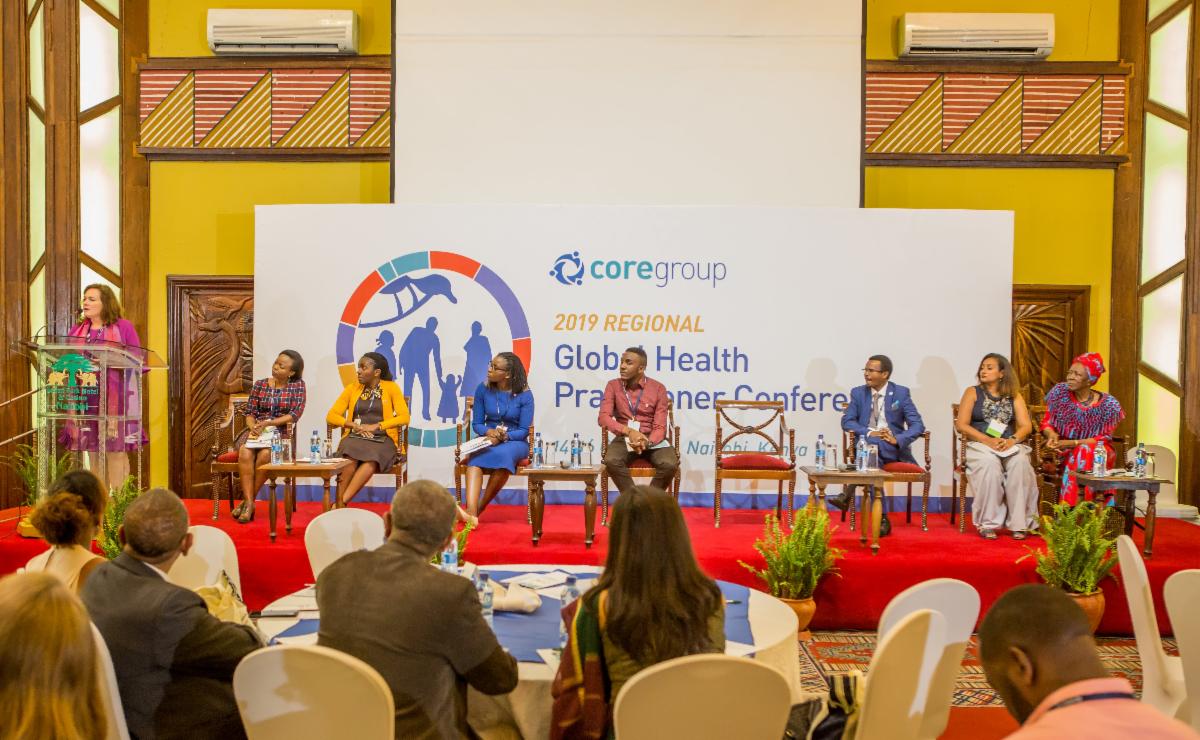
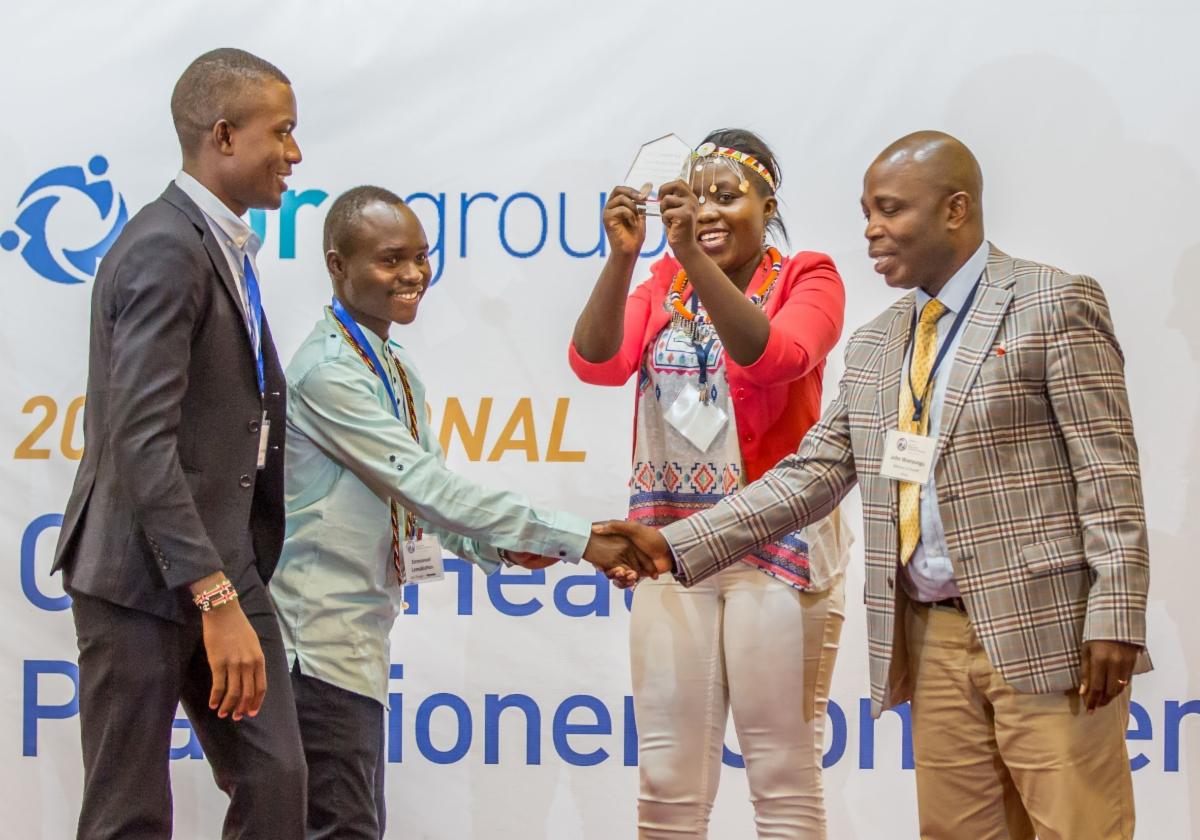
CORE Group Global Health Practitioner Conference (GHPC)

For over two decades, CORE Group has hosted a Global Health Practitioner Conference featuring skills-building sessions, recent evidence on cross-sectoral technical areas, and dialogue on community health. We have a unique opportunity this year to connect even more organizations and professionals around the world with our new digital format, and this year is particularly important as we set the stage for future investment and innovation in child and adolescent health and well-being.

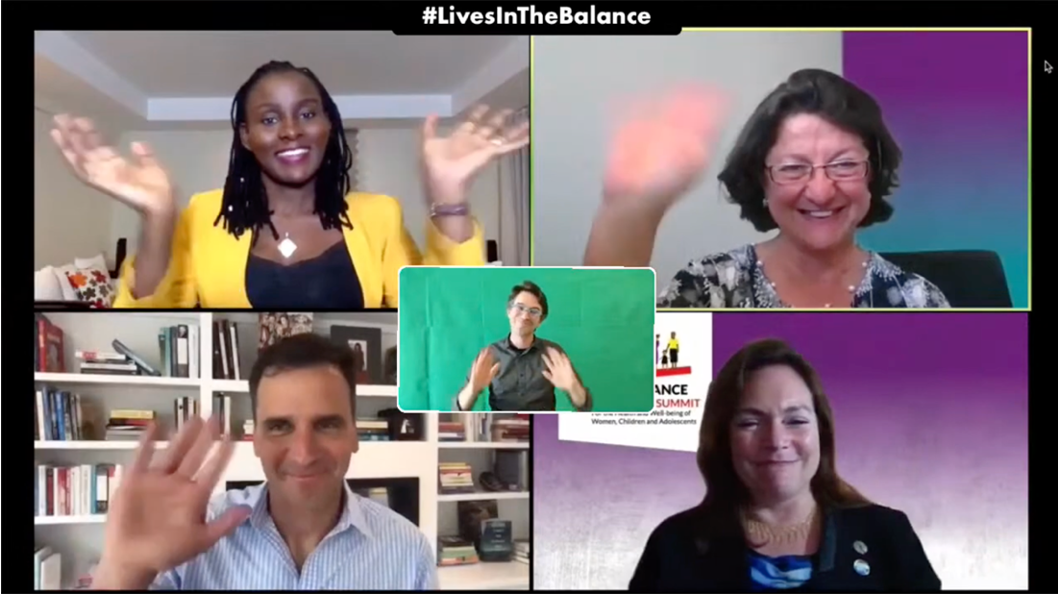
CORE Group and its membership will engage government, ministries of health, policymakers, practitioners, academia, civil society, private sector, global and local organizations in this virtual conference on December 8-10, 2020.

This Conference positions itself as a sharing platform for promising practices and innovations, ongoing challenges, and lessons learned in child and adolescent health and well-being worldwide; and as a convening space for various stakeholders - from community health workers who perform work on the ground to government policymakers who draft national policies - to discuss current opportunities and challenges for policy making, implementation, and partnership and draw consensus on key steps to move the needle forward.

CORE Group is convening a Global Planning Committee with various interested stakeholders to provide input on conference themes and objectives and to support the creation of a multi-day, interactive agenda. Being a committee member is a volunteer position* and will require up to 6 hours per month in planning calls and agenda input, outreach to speakers, and more.

If interested in participating in the Global Planning Committee, please complete the form below by Friday, August 21, 2020, COB.

*A stipend will be provided to young people in the committee, CORE Group is committed to meaningful youth engagement and aims to include 50% of young leaders in this committee. 


My source: Ados May, hss AT lists.coregroup.org