Hodges' Model: Welcome to the QUAD: Search results for axes

Hodges' model is a conceptual framework to support reflection and critical thinking. Situated, the model can help integrate all disciplines (academic and professional). Amid news items, are posts that illustrate the scope and application of the model. A bibliography and A4 template are provided in the sidebar. Welcome to the QUAD ...

Showing posts sorted by relevance for query axes. Sort by date Show all posts

Wednesday, December 18, 2024

Hornberger (1989) 'Continua of Biliteracy'. Review of Educational Research

The axes of Hodges' model present a problem in:

  • theory
  • practice
  • evidence - research terms (data!).

The easiest to resolve is practice, which is were Hodges' model can lay claim to being a pragmatic solution. Of course, it isn't the axes that are the difficulty, it is the labels that Brian Hodges originally applied in the early-mid 1980's, followed by other users of the model since. From:

INDIVIDUAL <> GROUP - variations here in 'Welcome to the QUAD' [W2tQ] Patient <> Carer - Family : Client <> Health professional. You can progress to the "patient zero" and a population in an pandemic.

These are fundamental elements in clinical encounters, whether face-to-face, online, and across settings.

The same applies to the horizontal axis: HUMANISTIC <> MECHANISTIC.

As presented - in the sidebar, and the two-by-two table found in many posts - the model has a distinct dichotomous quality. It seems to set up, or invite opposition, or polarities. Sometimes I've viewed the axes as continua, but they are not graduated, incremental in a quantitative sense.

Do the axes of Hodges' model serve a need (do their work) by allowing the user to differentiate through opposition and relational appraisal (testing)? Perhaps, qualified in a respective profession / subject area, the user of Hodges' is employing other axes?

This brings us to intersectionality and the cognitive work of placing the person (couple, family, community ... biosphere) at the centre of our deliberations.

In biliteracy studies, Hornberger (1989) is perhaps more accurate in seeing a series of multidimensional and interrelated continua (p.273) which form a framework.

There are three figures in this paper and many other points of use:

"Contexts of biliteracy are defined, then, by these three continua. Any particular instance of biliteracy is located at a point of intersection among the three." p.280.

In health care this is readily understood given the varied contexts of the centre, the nexus of Hodges' model. When we say Hodges' model is situated, the centre of the model is the sweet and sour spot. For Hornberger, the context determines the use and significance of the continua.

This opens up Hodges' model as a potential tool to better understand the dimensions of diversity, inclusion and intersectionality.

Hornberger, N. H. (1989). Continua of Biliteracy. Review of Educational Research, 59(3), 271–296. https://doi.org/10.2307/1170183

No! This post hasn't been in draft since 1990. ;-)

Wednesday, January 06, 2016

Dualistic- thinking checks and balances [II]

Continuing from Thinking checks and balances [I] how can Hodges' model help us understand and provide ready access to three forms of thought: these being -

  1. Dualist
  2. Multiplistic
  3. and Relativistic thinking?
To recap, resort to dualist thinking might be a pathway to evidence for Hodges' model building the case for the model in education, healthcare theory, practice and policy making ... Taking each form of thinking in turn, dualist thinking in Hodges' model can be identified in six ways. Before discussing these, there are some general observations to make.

The axes provide an initial compass for differentiation.
The model is first situated (as per B.E. Hodges).
Situation precedes person but should not subvert the latter when the model is applied.
Upon arrival in any context it is what we draw in the sand.

The most obvious influence on thinking is in what the model gives to us through its structure - the two axes. Firstly, the individual - group axis can stand for the many variations of self and other: from patient - health care team; patient - family; citizen - civil society; person - friends (work colleagues); child - parents (or guardian - a status vested legally by others); clinical case - demographic (world) population. This might be considered a compound view, potentially incorporating scope and roles (as per the context).

Secondly, the individual aspect of the vertical axis also serves the reductive requirement of movement between many-one. Reductivism is a fundamental approach in scientific enquiry and quantitative research. There is in the above the reduction to the individual in the intra- interpersonal domain. Reductive descriptions and phenomena from the sciences can then be ascribed to the individual as per the conceptual content of the sciences domain.

The third factor is derived from the first and is evolutionary and developmental. It has a certain irony in also being a child's developmental milestone - the so-called 'terrible twos'. Whatever age an infant starts to assert their independence, establishing, coming to terms with their difference from the adult figures in their lives - this is a pivotal moment. As they set out to become them-selves, we can say that developmentally they, this nascent individual is drawn out of this particular axis. The axis is first of all then not dualist. The self is always a product of the group (even if the latter is absent). The individual, the self emerges from the other. This is an extended dynamic action, through our first 2-3 years. Self flows from otherness.

Illness, disease disruptions what should be the expected relation, crises whether of temperature or emotion places self-other in contention on a temporary or more permanent basis. The ‘health career’ in the full title of Hodges’ model is also pertinent, as this refers to life chances and the life course.

Perhaps, to borrow a term from genetics / chemistry the vertical axis represents a bivalent quality? The vertical axis has that telescopic property. The vertical axis is reflective the individual sees the group; the group sees the individual. Even as we contemplate the patient in person-centred care, what, who are we - the observers?

The fourth cognitive prompt utilises the model's horizontal axis which spans dualist thinking defined by the categories of humanistic and mechanistic. This can also be viewed as human - machine. This axis also gives an indication for the final, fourth type of dualistic thought. Since the 1960s this axis can also be described as the social - technical, or socio-technical (Baxter and Sommerville, 2011). The notion of machine logic then suggests objectivity and the contrast with subjective types of knowledge. This is a fundamental dualism that is debated by philosophers.

The fifth type a dualistic thinking could be described as replacing the axes above and inviting a free-for-all. Is this where creativity and innovation lie? Does this dualistic form open up conceptual probes and avenues to insight (association and relation)? There are a great many dualities, dichotomies, polarities that can (literally) be shot through the model. Through the centre, between adjacent care domains, within domains: consider, for example; demand-supply, mind-body, public sector-private sector-third sector and voluntary admission-sectioned.

Finally and sixth there is a translation, a progression from the axial duality to the epistemological background of the care domains. This can be constructed from the founding (root) disciplines of Hodges' model:
  • Psycho-Social
  • Psycho-Somatic
  • Physico-Political
  • Socio-Political
Superimposed on Hodges' model there is then another set of axes. This could be a means to explain Hodges' model. These trace out the domains of Hodges' model. Is this self-referential quality a coincidence or evidential towards making the case for Hodges' model? These axes act as either, or both a bridge and a brace. Since structure is all about geometry we can close at this point by noting that the strength of the triangle. In Hodges' model there are several diametrical dualities (oppositions), for example:

medicine - society*
individual - political involvement
a society's engagement in - the sciences
individual (demand) Political - health services (supply)
the individual who is mentally ill and the State, Mental Health Act legislation

As we see in this post in addressing dualities Hodges' model is concerned with DISCIP-LINES.


*Medicine and society represent a duality and an established discipline in medical sociology? Socio-technical is not a discipline in this sense and might provide a theoretical contrast - marker?

(The above and posts to follow are a work in progress and will form a larger - referenced - whole in terms of studies.)

Baxter, G. Sommerville, I. (2011) Socio-technical systems: From design methods to systems engineering. Interacting with Computers, 23 (1): 4-17 doi:10.1016/j.intcom.2010.07.003
http://iwc.oxfordjournals.org/content/23/1/4.full

Saturday, November 21, 2020

Self-Care Week c/o Herakut

If, when you see, or hear of Hodges' model, you think 'Oh, that's about dividing the world up, putting things - including people! - into boxes.'; I'd request you to please reconsider?

Hodges' model, the two axes, the four care - knowledge domains or quadrants can be thought of as a temporary home. It's like a tent. No, it's actually more simplified than that. More like a bivouac. A shelter that needs to be constructed not with ready-to-hand materials and terrain, but what can be - ready-to-mind.

This construction makes use of two 'sticks' to form the model's axes. A key element too are the dichotomies - polarities - oppositions - continua that the model can reveal with a situated search. This search can variously be local, regional, global, or glocal (as I explained earlier this week - to follow).

This past week has been Self Care Week and the resulting bivouac is an idea-l-isation; a temporary home for a person and a group.

On twitter @SelfCareForum featured the 'continuum of self care':

The Self Care Continuum

Using Hodges' model, reflection on the above picture soon demonstrates the scope of the model. You can navigate the full range of care displayed above. There is however much more to discover.

Amid the ongoing pandemic, we've recognised anew, or afresh, the importance and value of the outdoors, nature and the environment in all its forms. Recently, I've had to take walks with patients/clients in the community, being unable to take in the aspect of assessment that stepping indoors usually provides.

Personally, for many of us, self care is predicated on the care of others: children, older parents, friends, colleagues and the community. A parent you haven't hugged, or kissed since March 2020.

Infants and children are missing out on truly formative years of schooling and teenagers on socialisation. Apparently, among the young, eco-anxiety is a real phenomena, whether it is debated as an unsurprising fact of 21st century life, or a medical problem.

Hodges' model is much more than axes, continua and boxes. While as shown on this blog (since 2006) Hodges' model is made up of several axes and dichotomies, the model's boxes provide the means to weigh the evidence. The model can help that a given situation and context is considered holistically (parity of esteem in physical and mental health) and in a person-centred way. Then, having fulfilled their purpose, we can collapse the boxes, the bivouac and carry forward the conceptually integrated care.

To deal with eco-anxiety, we need tangible signs of social and political progress, as action is taken to tackle the climate crisis. Physical evidence is the best emotional therapy of all. Just imagine when the news media reports that CO2 has decreased, sea-level rise is slowing, plastic and air pollution are reducing.

When will that be?

I'm not sure and as with COVID-19, the uncertainty is a collective and protracted pain.

As the arts continue to inspire us, there is no doubt that caring for self and all are now inextricably linked: from self-care to planetary health.

What do you think - Self Care Tree Girl?

 
 individual 
|
INTERPERSONAL : SCIENCES
humanistic ----------------------------------------------- mechanistic
SOCIOLOGY : POLITICAL
|
group


My sources: And with many thanks.

Herakut

Self Care Forum


See also:

Thursday, January 07, 2016

Dualistic- thinking checks and balances [III] (or: The-hyphen)

While dualistic thinking is positive as a means to explain Hodges' model, if a form of thinking (reasoning as ego-defence) is relied upon to excess and not balanced by other evidence then this can contribute to psychological problems. As Johnson (1994) also indicates, the three forms of thinking we are discussing in this series of posts are progressive. Compared to dualistic, Johnson states that multiplistic and relativistic thinking represent a more complex level. Appreciating that there are other sources for answers, possibly more than one answer and a need to relate things together.

Dualistic thinking epitomizes the categorical invitation that Hodges' model affords. In its most primitive form it has to be ready to hand and with the mind in an instant it is: the duality of fight or flight. A reflex arc circumvents the dualistic in an effort of instant reduction to survival.

Of course, the model is not intended to encourage thinking in extremes, polarised and absolutist. This property*, however, affirms the model's potential as a health promoting, educational and self-care resource.

There is another form of dualism that is given to us by life not model. It is the dichotomous variety that often influences and shapes attitudes to others, discourse and debate within our many cultures, politics and religious affairs.

The additional set of axes related to disciplines, for example, psych-social - referred to in the previous post [II] tempers the risks above in two ways:

  1. by virtue of the learner expanding their knowledge and hence the number of concepts they understand and in-form their community of practice.
  2. there is a space between the disciplines and concepts that might further support the structure, content and utility of Hodges' model.
The space lies in the '-', the hyphen, which can represent a middle ground (Assad, 1999). The axes of Hodges' model could be said to present a continuous hyphen. A cognitive pause (check): a token to collect as we reflect, especially if we cross disciplinary thresholds consciously or unconsciously. This can counter the aforementioned excesses of dualistic thinking with the addition of assessment and supervision.

I started these posts with what Hodges' model declares from the outset. This is the model's structure, the configuration of the axes the appearance of the (empty) quadrants. But as experience is gathered so the axes fade into the distance. They become grey and blue as in a background, a template we start to take for granted and work around, with and within. Content in the form of concepts and associated meaning can then populate the foreground that holds the promise of becoming increasingly more integrated which is stimulated by a shift from dualistic thinking to more pluralistic thought.

Assad, M.L. (1999). Reading with Michel Serres: An Encounter with Time. Albany, NY: State University of New York Press.

Johnson, D.D. (1994) Dualistic, Multiplistic, and Relativistic Thinking as it Relates to a Psychology Major. Honors Theses. Paper 202.
http://opensiuc.lib.siu.edu/uhp_theses/202/

*There are many tools that permit us to compare another duality: the binary. The presence or absence of phenomena, for example, a bone injury, or a new star, comet or asteroid.

See previous posts: Michel Serres

See also bibliography item:

Jones, P. (2008) Exploring Serres’ Atlas, Hodges’ Knowledge Domains and the Fusion of Informatics and Cultural Horizons, IN Kidd, T., Chen, I. (Eds.) Social Information Technology Connecting Society and Cultural Issues, Idea Group Publishing, Inc. Chap. 7, pp. 96-109.

Thursday, April 23, 2026

Picking up sticks: when axes matter ii

This past week at WCCS26, I've put Hodges' model itself on the work-, or more properly the inspection bench. Now, referring back to the - 'Our broken sticks' c/o Roger Lewin "Complexity: life at the edge of chaos" post, perhaps a theatre table is required. That is, as I try to examine the model, take it apart, have a look at the bits - as far as they are. And, what about the question posed in the above post?

'If we take the axes of Hodges' model, and break them at twenty-five points, I wonder what we end-up (or start) with?'

If there are twenty-six sticks, well, amongst other things - we've made quite a mess. But, there's more going on.

There may be some kind of idealised symmetry, or is it equality between the necessary, or projected length of the I-G axis. That is, as it extends for the INTERPERSONAL and SOCIOLOGICAL domains. But is there equivalence, in a default sense, for the SCIENCE and POLITICAL domains? Or am I (once again) overthinking? If medicine, health and by implication social care are bio-psycho-social, then surely we have a structural problem? Not only that, but we see a boundary, partition ... axis - in action. In Hodges' model the axes have two parts, two sides, so they are in effect composite. If the bio-psycho-social model is true, in whatever senses we wish to declare, derive or pursue in research (the literature, logic, practice, political expediency, or realism ...), then the group axis is incomplete. 

Hodges' model: Structure and Content - Axes and Domains

Is this literally why health care systems are so difficult to design, develop, establish and sustain? Think about that too, please. Is this why we as individuals rely on a functioning (caring) society and political systems? Is this why health care systems can suddenly be faced with collapse, as geopolitics has revealed. Vulnerability, becomes more than an individual characteristic and experience; when nations are dependent upon others for their funding, organisation, logistics, personnel, continuity and more. As a result, many understandably want to break with this socio-political and coloanial legacy.

Is there something in the sentence above in italics, that we can actually utilise to help define the foundation of Hodges' model? Again, not wanting to sound grandiose, but is there an axiom hidden in there? Even as 'health' is the inevitable election issue. The irony of this! Even if the politics of health and health in politics is not so much hidden as often denied. History reveals the influence of triage on the battlefield on the emergence of medicine and surgery. The future is here now. There is a political fight to follow for health in all its manifest forms. So here is another post to return to.

Tuesday, March 20, 2007

What Complex Threads We Weave

Hodges model axes and domainsTwo thoughts spring to mind when I look at h2cm's axes - INDIVIDUAL-GROUP and HUMANISTIC-MECHANISTIC. I wonder where they end and what does where mean exactly?

These questions prompted the combination of the model's axes and the care domains into a 5th domain: the spiritual. Could there be another view of this? Is it sensible to consider that a care concept lies at certain point on the individual axis for example? How does this relate to the mechanistic axis? Maybe this asks too much of what is a model to simplify complexity? Do these axes run-off forever? Do they join up at infinity?

Analemma image: Source Anthony AyiomamitisWhen we think of 'where' we tend to think in concrete (literally) terms. But where are you on this image?

Although this marvellous picture of the analemma helps extend our (physical) notions of where, this photo has its limits in that it captures the view from a certain latitude (a specific context). There are others. Our Earth bound sense of place takes on S-N-E-W, but if we travel far enough ....?

The mobius strip is an object of delight.

Perhaps unknowingly we are all topologists...

Happy equinox! WherEVER you are.

(Holistic care 2 will follow - time wise having to rely on draft post bank)
Analemma image credit: Anthony Ayiomamitis

Thursday, February 15, 2024

Questions in eclipse

 Last Friday 9th I had a Zoom chat for 30 mins, regards Hodges' model with faculty in the USA.

We touched upon:

  • background to Hodges' model
  • courses taught across the water and interests
  • overlaps, inc. person-centered care - socio-technical
  • informatics & literacies
  • maths/logic

As an outcome it was suggested I forward some questions I'm currently of Hodges' model. Questions that for me, are challenging, put me in the dark, and may not even be valid?

Going through my draft notes I picked out 20, beginning with the working title:

Hodges’ Model as a mathematical object and relational ontology:
category theory or category mistake?

  1. Can it be argued there is what amounts to a care locus - that can 'locate' person-centredness?

  2. Can the model's domains be seen as functions?

  3. Are the domains placeholders?

  4. Is there a case to test, and if logical implement co-domains (e.g. parity of esteem)?

  5. Are there other 'structures' in Hodges' model,  for example L-shaped forms, that is relations that involve three domains and (seemingly) omit one?

  6. Are there practical - case studies - that can be associated with such structures?

  7. Can Hodges' model be considered as a single conceptual space (Gärdenfors), or a series of four? (blog posts)

  8. Can Hodges' model be used to identify and apply threshold concepts (Meyer & Land)? (blog posts)

  9. Can we argue that the structure of Hodges’ model as defined by the axes extent, provides and invites inverse relations?

  10. Is Hodges' model as a structure only (a template) equivalent to an empty set (empty set as an initial object)?
  11. Is this a mathematical analogue (being neutral) to a practitioner's unconditional positive regard?

  12. Taking its axes and four (care/knowledge) domains can Hodges' model be reduced to a graph?

  13. If Hodges' model acknowledges/incorporates Cartesian duality, are there Cartesian products?

  14. In these Cartesian products are critical operations, e.g. relating to psychotropics - physical health; eating disorder - physical/mental health; complex emotional needs - policy (evidence-based care)?

  15. If the model is inverted, mirrored ... what follows: is the structure - function - consistency retained?

  16. Is Hodges' model 'closed' in comparison with Buzan's (open?) approach to mind-mapping?

  17. There is an 'equation of time': is there an 'equation of care'?

  18. Thought experiments: (semantic distance... cognitive linguistics)

    Which concept (INTERPERSONAL :: SCIENCES) is closer to the ‘INDIVIDUAL’ axes; which is closest to the ‘GROUP’ (SOCIOLOGY :: POLITICAL)?

    Which concept (SOCIOLOGY :: INTERPERSONAL) is closer to the HUMANISTIC axes; which is closest to the MECHANISTIC (SCIENCES :: POLITICAL)?

  19. Role of 'types' in Hodges' model - that is, patient / model as a whole as objects (with identity)?

  20. What significance can be gleaned given commonality between several mathematical terms, e.g. group, object, (co-)domain and Hodges' model?

I can no doubt structure - group these questions, and I've not picked out many concerned with Hodges' model as a set, or, as yet, those venturing into category theory. I am wondering, what the commutative law might tell us about holistic, integrated care, and parity of esteem when applied through Hodges' model? Also refining 3-4 case examples to explore and illustrate the same?

While it is maths that prompts this diversion, perhaps ultimately health care disciplines can determine its own formal approach that can produce its own context-sensitive rules, that straddle mathematics/logic and the humanities?

In initial emails, I'd noted the forthcoming eclipse across the USA. Checking, my interlocutor is just N of the path of totality (I wish!) for April's total eclipse. I'm enjoying the darkness here too.

https://science.nasa.gov/eclipses/future-eclipses/eclipse-2024/where-when/

#TotalEclipse2024 #SolarEclipse2024

Tuesday, May 05, 2026

iii Picking up sticks: when axes matter

It is one thing for us to break the stick, but quite another from a concept's perspective. They are accustomed to the dynamics at work, when as search terms they are exploded, or not. And, not just any concept but one that can be unique. Consider the concept, and how or where it finds itself [ in Hodges' or another model ]? Let us use the intra-INTERPERSONAL domain, as an example, and ask:

  1. Is 'mood' fixed by the I-axis alone?
  2. Does the humanistic axis have a role in where in the doomain the user of Hodges' model places 'mood'?
  3. Acknowledging person-centredness, if the patient/client had a view, to what extent would this agree (with annonymity assured) with the professional's judgement, or a relatives / guardian?
  4. What is as a result, 'mood' has become 'very low mood'? (To continue in this vein , invites complication, but we will continue.)
  5. Introducing the 'Other' whatever their role and relationship, pushes us to the humanistic, but whether this is achieved in a person-centred manner (triage excluded) is a matter of opinion and judgement (evaluation).

If mood is fixed by the I-axis then if we determine the issue is 'low mood' are we introducing a combined quantitative and qualitative dimension, a continuum, at the selected point in the interpersonal domain? Writing previously about threshold concepts, I wondered, and proposed compound threshold concepts. There is a progression from the patient's subjective self-assessment, to in all likelihood of an objective measure being introduced, so spanning two domains. Definition of 'compound' aside; there is a compound structure at work.

What points 1-5 above reveal is triangulation. When it is argued that Hodges' model facilitates navigation as per my presentation on 21st April, this is a strategy from mixed-methods research in practice. Many years ago, Hodges' model was described as a 'cognitive periplus', reflecting the way ancient mariners initially charted the coastlines creating the first map, as per their culture and dispora. In the west more recently the value of social approaches and activities, especially in mental health. Care navigation is a role. Literally sign-posting to individually suited (which must be stressed) activities, resources, and agencies. So, in Hodges' model what are our three triangulation points? They are:

  1. Axial;
  2. Intra- InterDomain; 
  3. Person-centred. 

Perhaps, we can describe 1-2 as conceptual anchors at least when dealing with a concept, while #3 is more about approach, values and philosophy. So, there is something of a 'cheat' going on, because each one is compound:

1. Axial: The axial is comprised of four points. The axes create a Cartesian plane (figure). And, as far as a patient is concerned, they mark off a point on the respective Individual and Humanistic-Sciences parts of the axes. This form of triangulation point can claim a general conceptual precision (language) in the applied terminal labels; but what happens in-between can be patently fuzzy. A mix of what may be objective and subjective.

2. Intra- Interdomain: This may be the most imprecise triangulation point. It appears the axes of Hodges' model are composite (figure). They have two-sides as a boundary. To be pedantic, in our example, one plays to the interpersonal domain, the other the sciences.

[The relationship between the axis and the domains in Hodges' model, is far from unique; but I wonder if there is something else here?]

2. Person-Centred: There is a paradoxical nature to person-centred(ness). It is also nebulous in nature, and yet in care it is definitive in practice (safety, purposes, values, professionalism, competency, ...).  It forms locus which can also be classed as a traingulation point, at the centre of the model. This is the point around which Hodges' model is built. This captures the individual's (life, care) context and situation, all influenced by their life chances as consequent health - and other - careers. Salience and our attention^ is key. Is it possible to frame our purpose(s)?

^A focus for [N] autumn.

Marrakech, Le Jardin Secret. 24th April. 1000-1830.

Wednesday, April 26, 2023

Life, Literacy, Oppositions, Complexity and Information

Literacy in Traditional Societies


"Durkheim's work on primitive classification is being applied to societies within the orbit of major civilizations. The polarities and oppositions of la pensée sauvage turn up in ancient Greece, and tools developed in the study of the narratives of American societies are applied to the Oedipus story, the Book of Genesis and even contemporary literature, with little sense of the basic incongruity involved.

Polarities of some sort are of course present in all societies; their significance, however, varies widely. Aristotle describes one Pythagorean theory in the following terms:


Others of this same school say that there are ten principles, which they arrange in ten columns, namely:

limit unlimited
odd even
one plurality
right left
male female
at rest moving
straight crooked
light darkness
good bad
square oblong

. . . How these principles maybe brought into line with the causes we have mentioned is not clearly explained to them [quoted Guthrie 1962: 1, 245]."


Goody, J. (1968) Literacy in Traditional Societies, Cambridge: CUP. pp.10-11.


Taking each of these in-turn as may relate to Hodges' model (I may update/edit these):

limit  unlimited

As a template the model invites both a limit (boundaries) and some-thing unlimited.

odd  even

There is a symmetry - evenness to the model, but the invitation noted above is also a prospect for odd-ness. This may extend to the frustration experienced when a phenomena, account (patient's narrative . . .) defies explanation and classification.

one  plurality

This polarity is key in Hodges' model. 'One' refers to the person, patient, carer, any - individual who the model is applied to. In respect of plurality this can include the dyad of patient - nurse, couple, family, team, community, national or global population (and Biosphere).
 
right  left
 
The horizontal axis is not the last word in Hodges' model, as intra-domain we also find right and left. Of course, the vertical axis (indeed, the whole model if required?) can also be repeated in a domain.
 
male  female
 
You quickly recognise the potential for disagreement* which is fundamental in dichotomous situations, a point further reinforced below.

at rest  moving
 
The model is 'at rest' as a snap-shot, but as a frame it can represent the change over time and so has its own dynamic potential.
 
straight  crooked
 
The axes as continua are 'straight' but this distinction (as noted above) has distinct psycho-socio-political connotations. In the model, line-of-sight is acknowledged, while 'crooked' might suggest what is uncertain, and unseen?
 
light  darkness & good  bad
 
Again, these two oppositions seem 'loaded': especially socially - politically.

Tread carefully. If you have light, that's good, but if lost: bad.
 
square  oblong
 
Viewed as containers, or sets the model's domains can be represented as several shapes, as long as the axes are retained as part of the structure. The adopted rectilinear form is an affordance of the (underlying) HTML, and the traditional (paper-based) tabular format. From the domains being of equal area, the point where the axes intersect could be shifted, such that a single domain is enlarged (prioritised?), at the expense of another.

*Incredible harmony too!

Then prior to an anticipated move, and sorting through books and papers:

Complexity:
Life on the edge of chaos
“The discovery that universal computation is poised between order and chaos in dynamical systems was important in itself, with its analogies to phase transitions in the physical world. It would be interesting enough if adaptive complex systems inescapably were located at the edge of chaos, the place of maximum capacity for information computation. The world could then be seen to be exploiting the creative dynamics of complex systems, but with no choice in the matter. But what if such systems actually got themselves to the edge of chaos, moved in parameter space to the place of maximum information processing?” p.54.


Lewin, R. (1993) Complexity: Life on the edge of chaos. London: Phoenix.

The conclusion? 

Perhaps, the ubiquity of polarity, opposition and dichotomy is that they anticipate and presage an increase in information processing (for good or ill: there we go again!). 

This is also a ( the ) function of Hodges' model.

Previously:

Opposition  . . . See also - Polarity , Dichotomy , Literacy . . .

Tuesday, August 02, 2011

The Longitude and Latitude of health c/o BBC [ and h2cm? ]

The axes of Hodges' model, the bisection of HUMANISTIC ----- MECHANISTIC by INDIVIDUAL----GROUP provides a location in the sense of 'x' marks the spot. The axes form a reticle a cross hair scale from which things might be identified and located.

You could say that the axes lay out conceptual and contextual lines of longitude and latitude. Just to recap the full title of the model is:

Hodges' health career 
- care domains - model

The operative word here is 'career' referring to life chances. Like the global map with its universal application, h2cm can be used from birth, teens, adulthood and seniority.  H2CM can capture snapshots of an individual's life - (w)rite up to end of life: whatever the conceptual resolution. Think of a stacked series of H2CM frames.

A lifetime view of health is what researchers pursue in longitudinal research studies. There was a programme on Radio 4 this a.m. which I've just enjoyed Science: From Cradle to Grave with Ben Goldacre and there's the prospect of more to follow (Generations Apart).


Since the still ongoing 1946 cohort study there have been several others with the recruitment of parents and children for a 2012 cohort to be commenced. What I found particularly interesting is the way the emphasis of the cohorts in-between has emphasized medicine then shifted towards the needs of the social scientists. The programme highlights how given the increasing complexity of cause and effect, rapid developments in genetics, and the environment ... striking a balance is very important.

It certainly is - across the spectrum of individual health, community, population and ultimately global health.

Addendum (c/o Catherine Coleman LinkedIn):
Harvard researchers recruiting 100,000 nurses!

RNs and LPNs (US and Canada only) age 22-45 join Harvard researchers in the largest, longest study of women's health.

The Nurses Health Study (no longer) invites you to become part of its newest group. Participation only requires one online survey a year.

Since 1976, more than 200,000 US women in Nurses Health Study 1&2 have influenced what we know about cancer, diet, heart disease, and hormones.

In only an hour a year, you will be able to make a difference for your colleagues and for future generations!

Additional links:

UK Longitudinal Studies Centre (ULSC)

Understanding Society: Early findings from the first wave of the UK’s household longitudinal study

ESRC: The future of longitudinal studies
Lifelong Health & Ageing: LHA

National Survey of Health and Development: NSHD

Globe image source: http://www.worldatlas.com/aatlas/imageg.htm

Tuesday, July 29, 2025

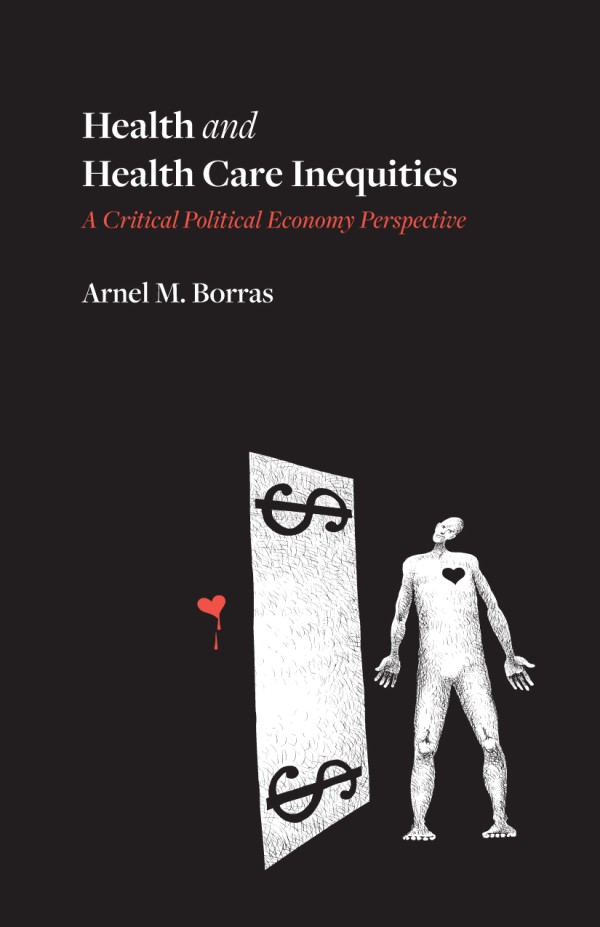
Book: iii 'Health and Health Care Inequities'


This book, or similar should be read by 3rd year student nurses and other healthcare learners. I wondered if, for students, a brief glossary might be useful. But key terms are explained and clearly, with typologies numbered and expanded when needed. There seems an aversion in nursing academia to avoid the acutely 'political'. Even though of course in psychiatry, the need for considersation of human rights, consent, capacity, law, personal and public safety, risk is inevitable. Should we only learn of the politics of our role on a post-registration/license course of learning? As mentioned in post i, Borras duly notes the asymmetric impact COVID. The disproportinate deaths of frontline healthcare workers from ethnic minority groups (UK). A sign of the impact, is reflected in COVID recurring through the text.

The device of using axes, e.g. Class-Gender-Health (p.11) rightly draws in commentary on nutrition, pay gaps - heterosexual white men, terms of employment, and design and occupational health for woman. Gender politics is also reflected in the text. The relational dimensions of this discussion also stands out. The Class-Race-Health axis (had me return to the question of parity, but beyond the mental - physical divide. 

These axes employed by Borras seemingly traverse a path and are extensible (across pages). Briefly, in Hodges' model the domains and axes act as stepping stones: 

We can ‘walk’ the model:

Humanistic INTERPERSONAL Individual SCIENCES Mechanistic: adding - Humanistic SOCIOLOGY Group POLITICAL Mechanistic 

A global perspective is matained, even though the focus is Canadian health, government, policy and policy. The press have often highlighted the global nature of the housing crisis. Canada is not immune; as discussed in chapter 2. For what is in many nations a 'housing disaster', Borras covers the history too. Reflecting on: 
'Around the world, neoliberal programs have resulted in over a billion people living in slums (Davis 2017, 23). In wealthier countries, there was rampant privatization of social housing units.' p.25. 
- you feel like a nodding dog toy. Where is the leadership, the strategy and integrity to provide housing for all? Arnel also stresses the link between mental health status and housing. The SDGs place emphasis on security (yes, at the level of what is happening in Ukraine, Gaza, South Sudan...), then housing follows. And with climate refugees to follow ...! I have seen gentrification, and listened to an account in 2007 as Manchester started to experience high-rise growth. I used to try to walk to community visits with students when possible. Observational skills come in many forms, safety still depends upon them. With no place to call home, safety and security is a stark issue for people. A foundation for health, wellbeing and ironically productivity. The rise of foodbanks is also damning. 

Gambling is not indexed, but there appears a denial in the UK government, with other nations 'folding' to the influence of lobbying and corporate influence reducing or removing restrictions in gambling and crucially: advertising. What's the denial you say? Yes, well governments seem to be in denial that there are vulnerable groups in their respective populations. It is laudable that they bestow upon the citizenry the freedom of choice, but that can spell trouble.

If Canada - Ontario has its housing scandal:
'Housing insecurity and homelessness occur because the state and its goencies support real estate and banking corporations that continuously increase housing prices. This setup is a huge problem because these enti- ties focus on generating profit and capital accumulation. The Greenbelt Scandal in Ontario revealed how the government made decisions that served the interests of big companies instead of the public (McGrath 2023; Office of the Auditor General of Ontario 2023). This scandal is an example of neoliberalism and a corrupt style of governance (Moscrop 2023). We need to stop using neoliberal strategies and focus on socialized housing.' p.27.

So does the UK: Grenfell Tower Inquiry No doubt, other nations have their tragic examples. It seems 'international Standards', quality, integrity can never be taken for quality. They too are precarious, vulnerable. Borras's work in chapter 2 on housing security, and differenciation of core housing need is laudable, informative and welcome. Re-reading Arnel's point: 'There is no doubt that housing insecurity affects health'. p.28. His book as a whole makes the point that of course more evidence will always be needed. In healthcare for decades the basics of public health have been identified, studied, established, placed in models and frameworks. Yet we find we are found wanting (UK - Awaab's Law) dragged back to the first steps; and despite the urgent issues we now face.

"Universal health care" is not exactly new:

The Canadian Association of Social Workers. (1961). The Social Worker, Volume 29, Numbers 1 to 2. 29(1to2), 1to78. The Canadian Association of Social Workers. The Social Worker - Le travailleur social. Canadian Association of Social Workers. https://jstor.org/stable/community.39672572.

Borras is correct to write of 'The Continuing Private War against Universal Health Care' (p.36). Looking at NGRAM it appears the private sector has been winning in recent decades. Working previously as a community mental health nurse for older adults, chapter 3 explores Canada's health care systems. Table 3.1 compares the ownership of long-term care homes in figures. The discussion deals with the quality of care and variation. Policy intentions, plans, research and what follows in practice is also debated. Is there any comfort  in learning that Canada is not alone in being skilled at kicking-can-down-the-road. To be fair many developed nations face the same demographic cliff (whichever way you it!), just one of the urgent issues noted above. The contribution of informal carers is also highlighted.

Here in the UK the commissioner - provider split and models of care at the finance level are a maze: amazing in their bureaucracy. Borras does a marvellous job, in providing enough detail without weighing the narrative flow, and losing the reader. The close of chapter 3 offers hope that Hodges' model will continue to be found:
'Therefore, shifting away from neoliberalism toward a new societal system where health care is seen as a fundamental human need and a universal right, not a profit-driven commodity, is crucial. This alternative system requires a new societal framework built on solidarity, fairness, and humanity, prioritizing health over financial and personal gain.' p.50.
See also: Post i : Post ii : Post iv : Post v (to follow)

Arnel M. Borras. (2025) Health and Health Care Inequities - A Critical Political Economy Perspective. Fernwood Publishing.

In addition:

Messing, K., & de Grosbois, S. (2001). Women Workers Confront One-Eyed Science: Building Alliances to Improve Women’s Occupational Health. Women & Health, 33(1–2), 125–141. https://doi.org/10.1300/J013v33n01_08  (Borras - pp.11-12).

https://nhsrho.org/news/tender-maternal-and-neonatal-image-library/

Tuesday, March 11, 2025

Joint-carving - 'The First Cut is the Deepest' c/o Traldi

Last Friday I joined in another online session of the Argumentation network c/o Andrew Aberdein and Kat Stevens. 

The subject was “The Epistemology and Politics of Redefinition” by Oliver Traldi.

As ever, it was interesting, technical, relevant and a prompt to concepts new, briefly encountered previously. I can't remember if in the talk, or Q&A, but mention was made of 'joint-carving' but I checked some sources:
'Because properties are so abundant, they are undiscriminating. Any two things share infinitely many properties, and fail to share infinitely many others. That is so whether the two things are perfect duplicates or utterly dissimilar. Thus properties do nothing to capture facts of resemblance. That is work more suited to the sparse universals. Likewise, properties do nothing to capture the causal powers of things. Almost all properties are causally irrelevant, and there is nothing to make the relevant ones stand out from the crowd. Properties carve reality at the joints -- and everywhere else as well. If it's distinctions we want, too much structure is no better than none.' p.346.
Lewis, D. 1983. New Work for a Theory of Universals, Australasian Journal of Philosophy, 61(4): 343–377. doi:10.1080/00048408312341131

'Though the facts or truths that the realist judges mind-independent are most commonly put in terms of a kind’s ‘naturalness’ (or lack thereof), they may be formulated in alternative locutions, such as the ‘reality,’ ‘non-reality,’ or ‘artificiality’ of a kind or kinds. For example, that human races are not real, or that protons form a natural kind, both express such facts. Equivalently, Plato’s famous carving metaphor may be used to do so, as when it is asserted that the classifications of the DSM-5 do not carve nature at the joints. For the sake of expository simplicity I will exclusively use the language of ‘naturalness’ here, but translations into alternative terminology are straightforward.'
Franklin-Hall, L. 2015. Natural kinds as categorical bottlenecks. Philosophical Studies 172 (4):925-948.


Further, Sass writes:
'The goal is to have a consistent and informative test for what counts
as a realist versus an anti-realist view about natural kinds. Bird’s(2018) taxonomy,
building on Hawley and Bird(2011), focuses on the questions of whether natural
kinds exist, and if so, what sort of entity kinds are. Franklin-Hall’s (2015) taxonomy
focuses instead on whether kinds are individuated by a mind-independent principle,
or whether kinds “carve at the joints”.1 This paper focuses mainly on the issues raised
by Bird’s (2018) taxonomy.' p.11862.
Sass, R. 2021. An ontology of weak entity realism for HPC kinds. Synthese, 198(12), 11861–11880. https://www.jstor.org/stable/48692794 [ homeostatic property cluster (HPC) theories of kinds ].

In the past, I've written about the (nursing, IT, psychological...) models muddle. At the risk of adding to my muddle, Traldi's presentation is a timely prompt. Timely, because trying to looking at Hodges' model as a mathematical object, it needs to be stripped down to its bare components (and purposes?). Is redefinition the order of the day? I will leave defining the components to one-side at present (in drafted notes). But even from Hodges' model as a template, with its (two) axes and (four) domains we can (must) consider:

1. The two axes taken as a whole - do they intersect, or not?*

Relationally, the axis between:

INTERPERSONAL | SCIENCES
SOCIOLOGY | POLITICAL
INTERPERSONAL - SOCIOLOGY
SCIENCES - POLITICAL

2. Each axis (treated independently) to the centre of Hodges' model. (See 1.)

The conjoining of axes (do they?):

The INDIVIDUAL - HUMANISTIC and INDIVIDUAL - MECHANISTIC.

The HUMANISTIC - GROUP and GROUP - MECHANISTIC.
                                
Hodges' model
I won't continue now, but I have wondered if one axis is primary? Which one comes first? Faced with a blank piece of paper, or flipchart ... which axis gets drawn first?

In guided discovery workshops, teaching sessions I have been directed by the context and duty of care. Given that this is clinical then the I-G is where I start, or lead the discussion.

Perhaps, (as per the previous post) there is a safety dividend in having to consider this question more formally (forcibly)?


I remember Rod Stewart's rendition of  'The First Cut is the Deepest' - even as governments work to make this cut as shallow as possible.

The INDIVIDUAL - GROUP cut: has it every time.

Previously: 'argumentation'

Friday, February 20, 2009

Reprise: Hodges' model introduction

Developed in the UK during the early 1980s, Hodges’ model (h2cm) is a conceptual framework that is person-centered and situation based. In structure it combines two axes to create four care (knowledge) domains (as illustrated on the website). Academics and practitioners in many fields create models that help support theory and practice (Wilber, 2000). Models act as a memory jogger and guide. In health care generic models can encourage holistic practice directing the user to consider the patient as a whole person and not merely as a diagnosis derived from physical investigations? Exposure of h2cm is limited to a small (yet growing) cadre of practitioners; several published articles (Hinchcliffe, 1989; Adams, 1987; please see the bibliography on this blog). In addition to a website (Jones, 1998) there is a blog and an audio presentation both first published in 2006.

The best way to explain h2cm is to review the questions Hodges originally posed....

To begin, who are the recipients of care?

Well, first and foremost individuals of all ages, races and creed, but also groups of people, families, communities and populations. In this way the potential scope of Hodges' model is personal and global.

Then Brian Hodges asked: what types of activities - tasks, duties, and treatments - do nurses carry out?

They must always act professionally, but frequently according to strict rules and policies, their actions often dictated by specific treatments including drugs, investigations, and minor surgery. Users who adopt Hodges' model find that the model transcends the purely task-based perspectives of care and intervention. Hodges' model also encompasses beliefs, attitudes, motivation, self-awareness, and values. Nurses do many things by routine according to precise procedures, the stereotypical matron - machine-like efficiency? If these are classed as mechanistic, they contrast with times when healthcare workers give of themselves to reassure, comfort, develop rapport and engage therapeutically. This is opposite to mechanistic tasks and is described as humanistic; what the public usually think of as the caring nurse. In use this framework prompts the user to consider four major subject headings or care domains of knowledge. Namely, what knowledge is needed to care for individuals - groups and undertake humanistic - mechanistic activities?

Through these questions Hodges’ derived the model depicted on the website.

Initial study of h2cm on the website has related Hodges’ model to the multicontextual nature of health, informatics, consilience (Wilson, 1998), interdisciplinarity, and visualization. H2cm says nothing about the study of knowledge, but a great deal about the nature of knowledge is implied in the models structure and knowledge domains. This prompted two web pages devoted to the structural and theoretical assumptions of h2cm. Although the axes of h2cm are dichotomous, they also represent continua. This duality is important as for example an individual’s mental health status is situated on a continuum spanning excellent to extremely unwell. There are various states in-between affected by an individual’s beliefs, response to stress, coping strategies, epigenetic and other influences. H2cm was created to meet four educational objectives:

1. To produce a curriculum development tool.
2. Help ensure holistic assessment and evaluation.
3. To support reflective practice.
4. To reduce the theory-practice gap.

Since h2cm’s formulation these objectives have grown in relevance. The 1980s may seem remote, but these problems are far from archaic as expansion of points 1-4 reveals. Education is now preparation for life-long learning. Curricula are under constant pressure. Despite decades of policy declarations, truly holistic care (combining physical, mental and pastoral care) remains elusive. The concept and practice of reflection swings like a metronome, one second seemingly de rigour, the next moment the subject of web based polls. H2cm can be used in interviews, outlining discussion and actions to pursue, an agenda - agreed and shared at the end of a session. The model is equally at home on paper, blackboard, flipchart and interactive whiteboard. Finally, technology is often seen as a way to make knowledge available to all; the means to bridge theory-practice gap through activities such as e-learning, governance and knowledge management. The digital divide cannot be bridged by idealism alone.

The axes within h2cm create a cognitive space; a third axis projecting through the page can represent history; be that an educational, health or other ‘career’. It is ironic, that an act of partition can simultaneously represent reductionism and holism. Reductionism has a pivotal role to play, which h2cm acknowledges in the sciences domain. What h2cm can do is prompt the user that there are three other pages to reflect and write upon.

Should you be interested I can f/w two papers on Hodges' model published 2008 and 2009: please contact me at h2cmng at yahoo.co.uk. Much of the material on the website is in need of update, or removal - if you would like to help please let me know. The time for partnership in spreading Hodges' model is now....

REFERENCES:

Adams, T. (1987). Dementia is a Family Affair. Community Outlook, Feb, pp. 7-8.
Hodges E. Brian (1989). Hodges health Career Model, IN, Hinchcliffe, S.M. (Ed.). Nursing Practice and Health Care, [1st Edition only], London, Edward Arnold.
Wilber, K. (2000). Integral Psychology: Consciousness, Spirit, Psychology, Therapy. Shambhala Publications.
Wilson, E.O. (1998). Consilience: The Unity of Knowledge, Abacus.

See this blog's bibliography for references and the blog labels (tags) for additional resources.

Tuesday, December 18, 2007

Two UK conferences 2008

Here are two conferences - flyers with the Health Service Journal:

Patient Safety Congress 2008

and

Integrating the Primary and Secondary Care Interface

Why bother to single (double!) these out? I've been fascinated for ages by the primary-secondary care interface at the level of mental health and the health of our notions of holistic care. Safety is ever paramount across the b-(B)oard.

It's well recognised that junctions, transitions, information interchange - INTERFACES in short - between people, technology (hard/soft) and organisations are an invitation for things to go awry. They are also an opportunity to learn.

How many axes are there in Hodges' model?

On paper the answer is two: INDIVIDUAL-GROUP and HUMANISTIC-MECHANISTIC
It could be argued there are four.

They meet at the centre of the model.

I believe there are many more.

Although simplistic and static in appearance the axes are dynamic and compound in the imagination. The situations you care to throw at Hodges' model stress the framework and so stress the axes. They partially give way. Stress fractures. Across the interfaces that result meaning can be found if we care to look and listen (with all our senses).

Learning heals people and organisations too.


Wednesday, September 02, 2020

Q. What is Hodges' model? A. It is NOT a 2x2 matrix.

Regular visitors / readers of W2tQ will be familiar with this rendering of Hodges' model:
 
individual
|
INTERPERSONAL : SCIENCES
humanistic ----------------------------------------------- mechanistic
SOCIOLOGY : POLITICAL
|
group - population


The separation of axes and domains above is contrived to overcome some of the limitations of HTML.

An image can re-solve and integrate to show the model as intended:

Hodges' model: The axes and domains


 Moving on to read and review Lowy and Hood's book on The Power of the 2x2 Matrix two chapters in there are already (yet again) rich rewards and two questions I ask myself...


1. On their own what exactly are the axes? 


individual
|
INTERPERSONAL : SCIENCES
humanistic ----------------------------------------------- mechanistic
SOCIOLOGY : POLITICAL
|
group - population


2. The same question can be asked of the care (knowledge) domains as labelled: what are they? 


INTRA- INTERPERSONAL
SCIENCES
SOCIOLOGY
POLITICAL


More to follow ...

Alex Lowy, Phil Hood (2004) The Power of the 2 x 2 Matrix: Using 2 x 2 Thinking to Solve Business Problems and Make Better Decisions, San Francisco, CA: Jossey-Bass ISBN: 978-1-118-00879-9


Monday, August 17, 2009

Combining h2cm, Informing Science and informatics on the Rainbow Bridge

Thor
As a boy one of my favourite superheroes and subjects of myth was Thor and his retinue - Loki, Odin, The Rainbow Bridge. These remain tantalizing escapes for young minds should a corner shop sell comics.

As I mentioned previously in posting about the informing science journal, a paper currently in preparation makes use of holistic bridges and I have had in mind Thor and his ilk and Rainbow Bridge between worlds. In Hodges' conceptual framework the domains of knowledge that make up the model could almost be disparate worlds. This disciplinary repulsion presents several challenges at a time when disciplinary in-fusion is needed (demanded by our problems):

Integration of health and social care in the form of:
  • physical - emotional health;
  • applied socio-technical informatics
  • personalised and service centred care
Academic cross-disciplinary working, e.g. informatics -
  • clinical
  • urban
  • e-governance
Last summer I posted a suitably colourful mix of holistic bridges that included the image below. These hyphenated cross-disciplines conjoin the four care or knowledge domains of Hodges' model.

My interest in ICT began with the ZX81 in 1981 and ever since I've been intrigued as to how we can integrate the above. Why does this matter? It matters not just because of the complexity of the problems we face in in our work and home lives. The real challenge lies in communication.

To take one problem the application of ICT in health care. Here the technical world, the mechanistic butts up against - clashes with - the humanistic. The paper published in spring focused upon socio-technical structure in nursing informatics.
Structure whether virtual, conceptual framework, mythical rainbow is one thing; but what purposes can arise from structure?

In highlighting communication (critical in health care) our purpose is -

using information technology to help convey
the meaning of information in order to inform.

The two axes (or hammers?) in Hodges' model are:

HUMANISTIC - MECHANISTIC [H-M]
and
INDIVIDUAL - GROUP [i-g]

These axes provide the bridge to link informing science and Hodges' model. In the act of communicating, imparting information we may be concerned with the concept of information from its mathematical formulation, the channel, noise through to the semantics and meaning from a sociocultural perspective. This seems to match with the (horizontal) axis [H-M], while the task of informing is concerned with the agents that is the (vertical) axis [i-g].

So what is the relevance of Thor? Well that role of engaging clients (patients, carers, managers, service users....) in communication sees a group communicate with an individual and vice-versa. The processes involved are not necessarily discrete as might be captured 'on paper'. The axes of Hodges' model labelled 'information' and 'informing' become blurred.

We are constantly reminded of the multi-contextual nature of healthcare. Now, I don't know if care is suddenly more complex on a Thursday, I just figure that when Thor starts to swing his hammer there is suddenly not one axis, but a great many. We are not just aware of multiple contexts we are forced to consider the multi-dimensional too.

Additional links:

Informing Science Journal

Thor image and interesting discussion:
http://afewshotstoshaman.blogspot.com/search?q=thor

Thor - movie 2011?

Wednesday, December 17, 2025

'Connected Knowledge' - 4MAT

'Very different is the 4MAT system, which classifies students along two axes according to their answers to a multiple-choice questionaire. One axis measures the student's preference for acquiring knowledge concretely versus abstractly, and the other measures his preference for applying knowledge concretely versus abstractly (McCarthy, 1980). His scores on these axes places the student into one of the four quadrants: 

1. Innovative Learners (acquire concretely, apply abstractly); 
2. Analvtic Learners (acquire abstractly, apply abstractly; 
3. Common Sense Learners (acquire abstractly, apply concretely);
4. Dynamic Learners (acquire concretely, apply concretely). 

Each of these quadrants is divided again, according to whether the student prefers processing information analytically (left-brain mode) or holistically (right-brain mode). The 4MAT System trains teachers to write lesson plans that cycle through all eight learning styles and brain modes.

Such more-or-less arbitrary classification schemes abound in the social sciences. They are easy to dream up, and virtually impossible to validate (Wilkerson and White, 1988). This doesn't mean that they're totally useless. ...' pp.63-64. 
(Edited 1-4 for readability.)

Individual
|
      INTERPERSONAL    :     SCIENCES               
HUMANISTIC  --------------------------------------  MECHANISTIC      
 SOCIOLOGY  :    POLITICAL 
|
Group
Abstract
 
Personhood

Concrete

Objecthood


The notion of 'learning styles' is sticky: especially when you look back several decades to the literature?

Cromer, A. (1997) Connected Knowledge: Science, Philosophy, and Education, Oxford: Oxford University Press.

McCarthy, B. (2000). About Teaching: 4MAT® in the Classroom. Wauconda, IL: About Learning, Inc.

McCarthy, B. (1980). The 4MAT® System: Teaching to Learning Styles with Right/Left Mode Techniques. Barrington, IL: EXCEL, Inc.

Wilkerson, R. and White, K. (1988). Effects of the 4MAT system of instruction on students' achievement, retention, and attitudes. Elementary School Journal 88, pp.257 - 368.

Saturday, June 14, 2008

Holistic Care: Squaring the Wheel of Disciplinary Domains

Over the past two years on W2tQ, I've defined h2cm in several ways, covering the model's axes and care domains, houses and sailing....

In January (2008) a dialogue was posted with Barbara Rylko-Bauer who shared some very helpful thoughts and suggestions on the model's name and the incorporation of culture and economics into the title of the respective SOCIOLOGY and POLITICAL care domains.

Thinking around this and my still limited (frustrated) reading of Michel Serres' and others I realised that the axes can be replaced with hyphens. This subtraction results in an interesting addition to the model's structure, perceived and potential content (domains).

Around the time the links page content were justified (or not) I also posted about the INTERPERSONAL domain and how this domain is more accurately described as the INTRAPERSONAL. That particular point was about a domain, but Barbara's point invited much more. Four hyphens certainly don't deliver, but the focus here has shifted:

the scope is not 90° but 180°

The hyphen forces contemplation of two domains and the axis in-between. See what you think:

Although hardly novel to geographers and those of a political bent 'PHYSIO-POLITICAL' is perhaps the most unfamiliar of these terms to people in health and social care - outside of public (mental) health - about which more to follow. ...