Hodges' Model: Welcome to the QUAD: Search results for medicine

Hodges' model is a conceptual framework to support reflection and critical thinking. Situated, the model can help integrate all disciplines (academic and professional). Amid news items, are posts that illustrate the scope and application of the model. A bibliography and A4 template are provided in the sidebar. Welcome to the QUAD ...

Showing posts sorted by relevance for query medicine. Sort by date Show all posts

Saturday, July 18, 2026

Hodges' conceptual framework: A model for Narrative Medicine ...

Abstract

The effective practice of medicine requires narrative competence, that is, the ability to acknowledge, absorb, interpret, and act on the stories and plights of others. Medicine practiced with narrative competence, called narrative medicine, is proposed as a model for humane and effective medical practice. Adopting methods such as close reading of literature and reflective writing allows narrative medicine to examine and illuminate 4 of medicine's central narrative situations: physician and patient, physician and self, physician and colleagues, and physicians and society. With narrative competence, physicians can reach and join their patients in illness, recognize their own personal journeys through medicine, acknowledge kinship with and duties toward other health care professionals, and inaugurate consequential discourse with the public about health care. By bridging the divides that separate physicians from patients, themselves, colleagues, and society, narrative medicine offers fresh opportunities for respectful, empathic, and nourishing medical care. ...


Charon R. Narrative Medicine: A Model for Empathy, Reflection, Profession, and Trust. JAMA. 2001;286(15):1897–1902. doi:10.1001/jama.286.15.1897 

With my emphasis.

#Identity #Group #Individual #Collective #Mind #Body #TheOdysseyHasBegun

Wednesday, December 24, 2025

Person-centredness, Holistic approach, Prevention c/o Hippocrates

“It is more important to know what sort of person 
has a disease than to know 
what sort of disease a person has.” 
Hippocrates

 
Individual
|
      INTERPERSONAL    :     SCIENCES               
HUMANISTIC  --------------------------------------  MECHANISTIC      
 SOCIOLOGY  :    POLITICAL 
|
Group
To say that Hippocrates was ahead of his time is a gross understatement. Hippocrates recognised the importance of person-centredness and prevention, and contributed to the emergence of several medical specialties. (Kostakopoulos, et al., 2024). 


'Holistic Approach

One of the most significant innovations of the founding father of clinical medicine was the holistic approach for the diagnosis and treatment of disease. This approach is based on the assumption that the human body is a sum of many parts that function in harmony and that if one part is ill, the balance will be affected and the whole person will suffer. Hippocrates considered that patients consisted of body, mind, and spirit and this is also the modern physicians' approach when treating a disease [2].'
 

Health and social care are still playing catch-up. The vitriolic 'debate' on X over psychiatry - anti-psychiatry and DSM-X. The total inability now to shift to preventive healthcare due to the perverse, entrenched economic incentives, which facilitate increasing inequity, inequality.

Whichever Government does switch to preventive medicine, perhaps other governments had better take note? 

I think Hippocrates would have approved - wholeheartedly - of Hodges' model. 


'Prevention of Disease

Another important aspect of Hippocrates' works that is widely applied in 21st-century medicine is the prevention of disease. The phrase “Κάλλιον το προλαμβάνειν του θεραπεύειν,” which means that it is better to prevent than to treat a disease, was the cornerstone of his teachings and is based on the observation that healthy Mediterranean diet and daily moderate physical activity can prevent disease. The ancient Greeks believed that all maladies started from the gut and that walking was the best available medicine [2].'


Kostakopoulos NA, Bellos TC, Katsimperis S, Tzelves L. Hippocrates of Kos (460-377 BC): The Founder and Pioneer of Clinical Medicine. Cureus. 2024 Oct 1;16(10):e70602. doi: 10.7759/cureus.70602. PMID: 39483540; PMCID: PMC11526839.

Gabbard, G. The Person with the Diagnosis. Psychiatric News. 49;6. 19 March 2014. 
https://doi.org/10.1176/appi.pn.2014.3b19.

Brigić, A., Hasanović, M., Pajević, I., Aljukić, N., Hamidović, J., & Jakovljević, M. (2021). Principles of Hippocratic Medicine from the Perspective of Modern Medicine. Psychiatria Danubina, 33(Suppl 4), 1210–1217. 

See also: 'medicine' : 'person' : 'diagnosis' : 'prevention'

Friday, February 09, 2024

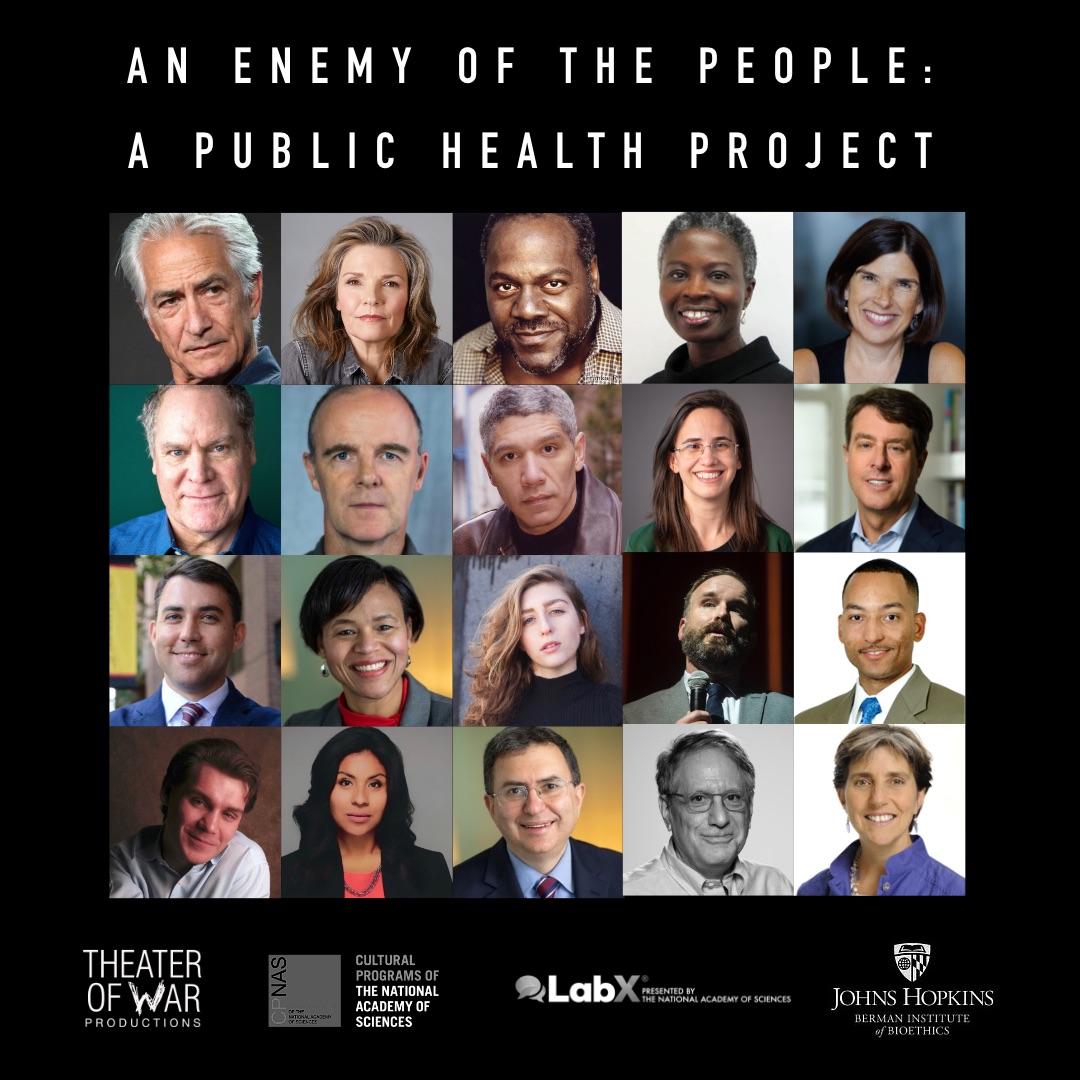
Theater of War Productions - An Enemy of The People Feb 22 + 24

Cast Update! 

We are thrilled to announce that Kathryn ErbeFrankie Faison, and Peter Francis James have joined the cast of An Enemy of the People on February 22 and 24, alongside David Strathairn, Francis Collins, Vivian Pinn, Victor Dzau, Brían F. O’Byrne, Jay O. Sanders, Keshia Pollack Porter, Gloria Addo-Ayensu, and many more! The project will present live dramatic readings of scenes from Henrik Ibsen’s 1882 play An Enemy of the People to frame powerful audience discussions about the challenges to public in our culture today. Register below to attend in person or online! Check individual listings for confirmed cast members each night, as casts will vary and are subject to change.

An Enemy of the People: A Public Health Project
Thursday, February 22, 2024
7:00 pm - 9:30pm EST

Johns Hopkins University Bloomberg Center
555 Pennsylvania Avenue NW
Washington, DC 20001

Featuring performances by David Strathairn (Nomadland), Frankie Faison (The Wire), Kathryn Erbe (Law & Order: Criminal Intent), Peter Francis James (Oz), Jay O. Sanders (True Detective), Brían F. O'Byrne (The Wonder), Marjolaine Goldsmith (Company Manager of Theater of War Productions), Monica Feit (Executive Director, Health and Medicine Division, National Academies of Sciences, Engineering, and Medicine), Jeffrey Kahn (Director, Johns Hopkins Berman Institute of Bioethics), Keshia Pollack Porter (Chair, Department of Health Policy and Management, Johns Hopkins Bloomberg School of Public Health), Tshaka Cunningham (Chief Scientific Officer, Polaris Genomics), Gloria Addo-Ayensu (Director of Health, Fairfax County Health Department), Emily Packard Dawson (Program Officer, National Academies of Sciences, Engineering, and Medicine), Nancy Kass (Deputy Director for Public Health, Berman Institute of Bioethics), Graham Sack (Filmmaker, Dracopoulos-Bloomberg iDeas Lab Fellow), Grelia Steele (Global Continuity and Crisis Manager, Guidehouse), Peter Marks (Former Chief Theater Critic, The Washington Post), Matthew Frieman (Viral Pathogen Research Professor of Microbiology & Immunology, University of Maryland School of Medicine), and Joshua M. Sharfstein (Vice Dean for Public Health Practice and Community Engagement at the Johns Hopkins Bloomberg School of Public Health).

Register to attend in person or online

An Enemy of the People: A Public Health Project
Saturday, February 24, 2024
7:00 pm - 9:30pm EST

National Academy of Sciences 
2101 Constitution Ave, NW
Washington, DC 20418

Featuring performances by David Strathairn (Nomadland), Frankie Faison (The Wire), Kathryn Erbe (Law & Order: Criminal Intent), Peter Francis James (Oz)Jay O. Sanders (True Detective), Brían F. O'Byrne (The Wonder), Francis Collins (Former Director, National Institutes of Health), Monica Feit (Executive Director, Health and Medicine Division, National Academies of Sciences, Engineering, and Medicine), Jeffrey Kahn (Director, Johns Hopkins Berman Institute of Bioethics), Keshia Pollack Porter (Chair, Department of Health Policy and Management, Johns Hopkins Bloomberg School of Public Health), Victor Dzau (President, National Academy of Medicine), Vivian Pinn (Senior Scientist Emerita at the NIH Fogarty International Center), Ruth Faden (Berman Institute Founder; Philip Franklin Wagley Professor of Biomedical Ethics), Grelia Steele (Global Continuity and Crisis Manager, Guidehouse), Peter Marks (former chief theater critic, The Washington Post), Gloria Addo-Ayensu (Director of Health, Fairfax County Health Department), Graham Sack (Filmmaker, Dracopoulos-Bloomberg iDeas Lab Fellow), Nancy Kass (Deputy Director for Public Health, Berman Institute of Bioethics), Joshua M. Sharfstein (Vice Dean for Public Health Practice and Community Engagement at the Johns Hopkins Bloomberg School of Public Health), Marjolaine Goldsmith (Company Manager, Theater of War Productions), and Emily Packard Dawson (Program Officer, National Academies of Sciences, Engineering, and Medicine).


Register to attend online


I will register have registered (online). There is a production of An Enemy of the People in London, but it is expensive from NW England.

This afternoon I enjoyed a delayed appointment with DUNE 2021 Part 1 IMAX, a brilliant cinematic experience that includes a performance by Oscar Isaac as Duke Leto Atreides.

See also: Ibsen , theatre ...

Friday, February 01, 2013

HealthTap: Invited to add their widget... I asked a question...

No doubt it was a bulk email, but I received an invitation from HealthTap to add their widget here on W2tQ. The widget provides the means to access their service, that of putting questions to medical experts.

I have minimized the side bar content, stripping out buttons and other media paraphernalia and yet suitably intrigued I asked a question - ;-)

Q. Is there a conceptual framework that can help
 assure holistic (physical - mental, social) and integrated care 
that is also person-centered? 

Fourteen hours later an answer duly arrived by email:

I believe that Holistic Medicine, when properly practiced, assures all of that. For the principles delineated by the American Holistic Medical Association see http://www.holisticmedicine.org/content.asp?pl=2&sl=22&contentid=22
Also see http://www.abihm.org/general-public Holistic Medicine
I believe that Holistic Medicine, when properly practiced, assures all of that. For the principles delineated by the American Holistic Medical Association see ...

Also see ...


I greatly appreciate Dr. Randy S. Baker's response and the above links. This is helpful in several respects despite not exactly being the answer I was hoping for.

The answer is itself holistic in a sense in wrapping the question up in an organisational wrapper. That's a safe response, with medicine in there for wholistic measure. Who ever said medicine is reductionist! Judging from his profile holistic medicine is Dr Baker's forte.

Also interesting in the answer is the way the hook in the question was deemed to be the reference to 'holistic' and not the conceptual framework element.

Another point in Dr Baker's reply that reflects on Hodges' model and the health news media in England (UK) next week* is the bit about when properly practiced.

The adoption of Hodges' model is no guarantee of 
person-centered, 
integrated, 
holistic care.

Although the term conceptual framework (Hodge's model !) is not given in the answer: assure is.

What ever conceptual framework (care model, care philosophy...) is adopted to deliver health care, they must contribute towards the assurance of high quality care - that which ultimately positively engages the patient, carer, family and communities.

My question still remains and is usefully extended, passed to the above organisations.

So does the AHMA and the American Board of Integrative Holistic Medicine have a conceptual framework that helps support their holistic objectives and assurance of care? I will contact them to see if I can obtain a further response.

Thanks again to Dr Baker and HealthTap.

* The Francis Inquiry Report is anticipated on Wednesday.

Tuesday, November 12, 2013

TO: EU -omics research community; if you are seeking a holistic approach for personalised medicine...

The relevance of Hodges' model as a resource in 21st century health care and research can be found within personalised medicine.

This is in addition to the need to assure holistic bandwidth within existing health care delivery, when it is person centered care that is the concern. Personalised medicine brings with it further challenges as it emphasizes the scientific, the inevitable reductionist work can potentially increase the distance between the humanistic and the mechanistic. The working document from the European Commission -

Brussels, 25.10.2013 SWD(2013) 436 final COMMISSION STAFF WORKING DOCUMENT. Use of '-omics' technologies in the development of personalised medicine
http://ec.europa.eu/health/files/latest_news/2013-10_personalised_medicine_en.pdf

on page 7 we read:

The figure is instructive as it shows that a holistic approach is needed to fully appreciate the challenges and opportunities presented by personalised medicine. 
'Holistic' is a much maligned word, with its fuzzy, new age connotations. Especially when the word count = '1'. Another related document also picks up the holistic call:
IMI2 will deliver tools, methods and prevention and treatment options (directly or indirectly) that will progress the vision of personalised medicine and prevention. Through providing the framework required to support collaboration between scientists, regulators, HTAs, patients and healthcare providers, IMI2 will ensure that research is translated into implementable solutions to current healthcare challenges. Solutions that are not purely focussed on the development of new medicines, but that provide a holistic personalised healthcare package as well as maintain people healthy and productive through out their lifetime. Reclassification of diseases based on their root cause and not symptoms will help addressing unmet needs even in areas where a range of options exist but patients do not respond, because their symptoms are misleading therapy choices.
[ IMI - Innovative Medicines Initiative ]

Outline Strategic Research Agenda for a biomedical research public private partnership under Horizon 2020: (draft) The right prevention and treatment for the right patient at the right time. 08 July 2013. (pdf link removed file not readable)

On page 10:
A sustainable healthcare system is a holistic one in which the patients are responsible for their wellness and quality of life; physicians, therapists, nutritionists, community carers, and all other actors in the value chain are motivated to this goal; delivery of care takes into account patient beliefs, values and both rational and irrational behaviors; the care is affordable to both public and private payers and promotes health; sustainable businesses can thrive; and the education, prevention and management of chronic conditions are aligned to achieve this goal.
The focus of these documents is -omics and the development of new medicines. By its very nature this research, data and knowledge lies deep within many sciences: new sciences no less. This recognition of the need for holistic approaches and perspectives is still very encouraging. As the first document on personalised medicine notes, future treatments must be from "bench to bedside". We can equate this as "mechanistic to humanistic", but only as long as the patient in that bed is a person and not just viewed as a diagnosis with an associated -omic profile.

Have a look also at the figure on page 7, the medical innovation cycle. As discussed previously on W2tQ patient safety needs situated awareness and holistic perspectives.

My original (and seemingly incomplete) source:
http://www.researchresearch.com/index.php?option=com_news&template=rr_2col&view=article&articleId=1339313 [no longer available]

Wednesday, September 04, 2024

Laughter and Medicine Conference

Manon, Laughing Gas, 2019, installation, Kunsthaus Zürich
photographer: Franca Candrian, 2022.

British Academy/Wellcome Trust Conferences bring together scholars and specialists from around the world to explore themes related to health and wellbeing.

'Connecting knowledge across the disciplines, this conference will put practicing doctors in direct dialogue with researchers in the humanities – especially scholars of literature, cinema and cultural history. Together, they will seek to understand the social, diagnostic, therapeutic and physiological implications of laughter, inside and outside the clinic. Laughter is not always the 'best medicine', nor is it linked only to comedy and enjoyment. 'Healing laughter' differs markedly from pathological laughter, hysterical laughter, forced or bitter laughter, laughter aimed at mitigating awkwardness in unsuccessful communication, laughter intended to deceive, or laughter signifying fear, discomfort or aggression. Irony and other double-coded signifiers that abound in comic and parodic representations of medical practitioners and their patients often reveal medicine’s paradoxical place in various cultural imaginaries and in individual and collective experience.

This conference will study the diverse forms of laughter occurring around medicine in particular eras and cultural environments alongside comparative analysis of patterns and problematics over the long history of Western medicine and its representations.'

         https://www.thebritishacademy.ac.uk/events/british-academy-conferences/laughter-and-medicine/

individual
|
INTERPERSONAL : SCIENCES
humanistic ------------------------------- mechanistic
SOCIOLOGY : POLITICAL
|
group

I don't find this funny!


 I laughed so much it hurt! 


"All the world's a stage"

Politics is a running joke - that's never funny.

The human epic of triumph and tragedy.

Previously (with overlap):

arts :: drama :: poetry :: literature :: narrative

Wednesday, December 20, 2023

'Mechanical medicine' is a thing ...

Planet Medicine

"Mechanical Medicine: Ancient surgery, poultices; some herbal medicine and bodywork; all Western technological medicine. 

Since healing occurs in the physical world, all medicines must have some substance, if only the substance from which a potency is derived or the bodies of the participants. The acupuncture needles are not pure energy, and the herbs of the Ayurvedic or Basque doctor grow from real soil; even the mind has the external properties of the brain. The San Pedro cactus of Peru which, according to Eduardo Calderon, transfers its light and vibration to the patient and locks with his aura to drive all physical and mental aspects of alienation to the surface, originates in the physical properties of the desert." p.374.


Grossinger, R. (1982) Planet Medicine - from stone age shamanism to post-industrial healing, London: Shambala Publications Inc.

Book cover: Ebay.

Monday, August 03, 2020

Call for papers - Rivista Italiana di Filosofia del Linguaggio - Rhetoric and Health

Call for papers - Rivista Italiana di Filosofia del Linguaggio www.rifl.unical.it

Vol. 15, N. 1/2021 Rhetoric and health

Edited by Maria Grazia Rossi

Deadline: 20.01.2021

Words can act as a pharmakon, becoming a remedy or a poison. Considering both theoretical tenets and empirical findings, we have convincing evidence on the power of language and words in changing minds and fostering behavioural change.

In the context of health, it has been underlined how the quality of communication affect (clinical) outcomes, at the individual level (on patients) and the collective or societal level (on citizens). During the current COVID-19 pandemic, it has become even more clear that such communication effect is indirect and mediated by factors such as understanding, motivation, social assistance, trust in the system, etc. Words that are well-spoken but also, obviously, well understood can have a strong impact on the quality of our lives, concerning the clinical, emotional and social spheres. This is why the proper and effective use of words should be considered as a common ethical responsibility: it is an ethical responsibility for healthcare providers that directly take care of patients, but it is also a responsibility of public and private institutions working to promote behaviours favouring the adoption of a healthier life and the building of healthier societies, respectful of other people and more environmentally friendly. What happened from a communicative point of view to justify the need to activate a state of emergency and maintain lockdown restrictions is exemplary in this respect, also to discuss the conflict between values that is pervasive in our complex and interconnected societies. Even beyond the pandemic, many examples can be mentioned to discuss the importance of both the effectiveness and quality of communication. Take as examples social campaigns and/or advertisements on health issues related to cases such as the public debate on vaccination or antibiotic resistance, the social campaigns to combat pollution or against smoking in public spaces.

However, it is not obvious to find a consensual framework to define what counts as communication of quality, even if rhetoricians investigated heavily on this issue. Not necessarily a successful communication is also desirable from an ethical perspective. Obtaining persuasion – to be able to change attitudes and/or behaviours, it is not necessarily equivalent to do it in an ethically way. For example, implicit persuasion strategies often (but not always) can be described in terms of manipulation tools attempting to manipulate people and to change their habits. Again, this applies at the individual level within the interactions between patients and healthcare providers, with therapeutic recommendations described as genuine persuasive acts. At the collective level, it also applies to public communication, including the communication made on social networks, where fake news and misinformation spread even more quickly.

The links between rhetoric and health can be therefore analysed from two different points of view. From a linguistic point of view, the main problem is to figure out which communicative strategies are effective to persuade patients (and citizens) in changing a given behaviour and/or accepting the treatment more appropriate to a specific medical condition. From an ethical point of view, the main problem is to figure out which effective communicative strategies are legitimate, meaning they respect values defining both the patient (citizen) agenda and the doctor (political/health system) agenda. The discussions concerning the frameworks of value-based medicine and patient-centered medicine fit in this context, as well as fall in this debate the current attention given to the frameworks of narrative medicine and persuasive technology (applied to telemedicine, mobile apps, social networks, etc.).

Vol. 15, N. 1/2021 of RIFL expects to explore the links between rhetoric and health, accepting papers aim at considering the role of communication in the context of health, and papers considering persuasion from an ethical point of view – at the individual level (between patients and providers) and the collective/societal one (between institutions and citizens, between media and citizens).

Papers should be theoretical or empirical. All fields will be considered (Philosophy of Language, Classic studies, Literary studies, Linguistics, Psychology, etc.) if they are relevant to discuss the persuasive and/or the ethical dimension of communication in the context of health. Papers exploring the following areas are very welcome:

  • Words and language as pharmakon
  • Communicating science, communicating the COVID-19 pandemic
  • Doctor-patient communication
  • Persuasion, argumentation and manipulation in the context of health
  • Ethic of the medical discourse and ethics for health
  • Ethical relevance and effectiveness of narrative medicine
  • Shared decision-making between patients and providers
  • Social campaigns and advertisement for health
  • Persuasive technology and health
  • Social networks and seeking information on the web
  • Value-based medicine
  • Patient-based medicine
  • Public opinion and health
  • Visual persuasion and the role of images in the context of health
  • Linguistic strategies developed for healthcare providers
  • Emotions and interpersonal relations in the context of health
  • Language and placebo effect

We call for articles in Italian, English and Portuguese. All manuscripts must be accompanied by an abstract (max 250 words), a title and 5 keywords in English.

The manuscript must be prepared using the journal template Download template. All submissions must be prepared by the author for anonymous evaluation. The name, affiliation to an institution and title of the contribution should be indicated in a file different from that which contains the text. The contribution must be sent in electronic format .doc or .rtf to segreteria.rifl AT gmail.com.

Instructions for authors:

Maximum contribution length:

40000 characters (including spaces) for articles (including bibliography and endnotes).

Deadline 20.01.2021

Publication: June 2021

CFP Full text: http://rifl.unical.it/index.php/rifl/announcement/view/23

My source:

Philos-L "The Liverpool List" is run by the Department of Philosophy, University of Liverpool https://www.liverpool.ac.uk/philosophy/philos-l/ Messages to the list are archived at http://listserv.liv.ac.uk/archives/philos-l.html. Recent posts can also be read in a Facebook group: https://www.facebook.com/PhilosL/ Follow the list on Twitter @PhilosL. Follow the Department of Philosophy @LiverpoolPhilos

Monday, January 19, 2009

Centre for Evidence-Based Medicine invites applications for bursary places 15th Oxford Workshop on Teaching Evidence-Based Health Care

The Centre for Evidence-Based Medicine invites applications for bursary places on the 15th Oxford Workshop on Teaching Evidence-Based Health Care.

This workshop will take place
7th - 11th September 2009
at
St. Hugh's College, Oxford, UK.

Applications for bursary places should enclose a CV plus a letter detailing their current involvement in evidence-based practice and outlining what they would do with the knowledge gained on the workshop.

The workshop is aimed at clinicians and other health care professionals, including those involved in mental health, who already have some knowledge of critical appraisal and experience in the practice of evidence-based health care and who want to explore issues around teaching evidence-based medicine. The workshop is NOT intended to serve as an introduction to evidence-based medicine itself.

There will be two main themes running throughout the workshop:

Teaching will be addressed through the exploration of difference educational models for teaching evidence-based practice and identification and discussion of issues of pedagogy, curriculum design development and maintenance. The aim will be to promote the teaching of evidence-based health care at your home institution.

Personal Development will be addressed by offering guidance and help in extending and advancing participants’ existing critical appraisal and teaching skills.

All bursary applications will be considered at the end of March.

The bursary will cover the complete workshop fees, but applicants will need to obtain their own funding for accommodation and travel.

All good wishes,

Olive

CEBMH bannerOlive Goddard
Centre and Editorial Manager
Centre for Evidence-Based Medicine
Department of Primary Health Care
Old Road Campus, Headington
Oxford, OX3 7LF

Saturday, August 30, 2025

Revisiting "patient career"

Almost a decade ago I posted:

Medical Sociology: The Importance of 1894....2015 patient career - health career

- which was prompted by:

McKinlay, J.B. (1971) The concept “patient career” as a heuristic device for making medical sociology relevant to medical students. Social Science and Medicine, 5(5), 441-460.
https://pubmed.ncbi.nlm.nih.gov/5160599/

McKinlay's abstract reads:
Abstract

Increasingly it is being suggested that the behavioural sciences can contribute to medical education and should be incorporated into the medical curriculum. Evidence for the development of this view in Great Britain can be found in the recommendations of the recent Royal Commission on Medical Education and the submissions of various bodies to it. Given that the behavioural sciences in general and medical sociology in particular, can contribute in a positive way to the medical curriculum this paper attempts to: (a) draw together and crystallize some of the major problems inherent in past attempts to organize and include the behavioural sciences in the medical curriculum; (b) devise some criteria for determining the behavioural science content of the medical curriculum; (c) outline and discuss one possible course in medical sociology utilizing, as an organizing framework, the concept “patient career”.
Brian Hodges created his eponymous model with curriculum planning, design and development as a key purpose. In the early-mid 1980s nursing was looking forward to becoming a degree, undergraduate course of study.

McKinlay's use of 'patient career' (and others) can obviously be associated with the impact of life chances upon a person's health career

Individual
|
      INTERPERSONAL    :     SCIENCES               
HUMANISTIC  --------------------------------------  MECHANISTIC      
 SOCIOLOGY  :    POLITICAL 
|
Group


'While discussing the relationship between the medical and social sciences, and the role of the social scientist in teaching and research in medicine, Butler groups the range of medical topics which have been studied sociologically into four main categories [l4]. These are,

the sociology of illness,
the sociology of health,
the sociology of medical care
and the sociology of healing.' p.443.^


McKinlay sees these categories as too comprehensive. Although within the SOCIOLOGICAL domain of Hodges' model this is a 'start'? McKinlay proceeds to identify specific difficulties presented to educators, which include (in summary and with my emphasis):
'(a) The failure to identify needs, specify objectives and devise criteria
(b) The failure to distinguish between perspectives

'Very generally, the behavioural sciences can be said to be conccrned with the description and explanation of the health and illness behaviour of groups and social categories, whilst medicine (especially clinical medicine) aims at the understanding and successful treatment of individual patient cases. By working exclusively on the basis of (or failing to take account of) these separate perspectives, meaningful dialogue between behavioural scientists and medical students has been made extremely difficult.'

(c) The failure to distinguish the audience
(d) The failure to take account of temporal location
(e) The failure to provide a conceptual framework

Most courses in the behavioural sciences either offered or proposed, to a greater or lesser extent, tend to ressemble a sort of shopping list. For example, the courses offered by Badgley, Martin et al., and those proposed by the Society for Social Medicine and the Royal Commission all reflect this "'shopping list" charactcristic. After working down the list it is assumed that students will have the technical goods required. It is, of course, difficult for students undertaking these "shopping list" courses to reflect on where they have been, appraise their current position, or consider where they may be going.
Two further general problems seem to be inherent in many of the attempts to systematize the field of medical sociology, and to some extent are associated with some of the problems already outlined. 
(f) The problem of trying to cover too much [Which lists 18 topics for 2nd year students.]
 (g) The problem of omitting important areas' pp.443-445.
McKinlay then, is similarly preoccupied with the curriculum (for medical students):
'This section is concerned primarily with devising criteria which, given the finite amount of teaching time available, will offer some guidance in determining what aspects or areas of medical sociology should be given priority for teaching in the medical curriculum.' p.445.
This work from the 1970s surely invites reflection upon the meaning of 'progress'? 

^My formatting.

More to follow...?

Sunday, May 03, 2026

Global Experts call for Paradigm Shift in Medicine, Health and Education to Save Lives and Fight escalating Health Crisis

ACCESS NEWS WIRE – for PRESS RELEASE on Tuesday, 28. April 2026

A global consortium of 64 experts (72 entities, 5 continents) unveiled two coordinated consensus plus policy brief reports, outlining a science‑driven roadmap to confront escalating health crises and to tackle the growing burden of noncommunicable diseases (NCDs—including cardiovascular diseases, cancer, diabetes, etc.: 75% of global deaths; 82% in low-/middle income countries; 90% of all death in European region).

The centerpiece is HEAL—Healthy Eating & Active Living, ideally whole‑food plant‑predominant/vegetarian-vegan diets & daily exercise outdoors/active mobility—as the minimum, first‑line standard in health and care. The authors urge immediate action on Prevention-over-Treatment and reforming education and human‑relevant science (drug failure rate from animal studies is 90-95%, and as high as 99.6% for Alzheimer disease), with a rapid shift from disease‑centered reaction to person‑centered, lifestyle‑first cure and care.


Figure 1. HEAL means choosing a whole-food, plant-predominant (ideally vegan) diets coupled with daily exercise outdoors/in nature to kick-start better health. Credit: iStock/LightFieldStudios.


Sustainable health is for free but cannot be downloaded or prescribed—it must be lived daily and earned across lifetime through informed lifestyle choices, with HEAL as starting point. As childhood-entrenched health literacy lasts a lifetime; embedding HEAL from primary to tertiary education is the policy priority of our generation.” —Lead author Katharina Wirnitzer | PHT, University of Innsbruck & CCCTIM


Foto 2. Katharina Wirnitzer/Keynote on Vegan Diet in Sports. Credit: ©Katharina Wirnitzer.

Why change is imperative.

  • The paradox: Despite rising health spending and scientific advances, public health gains lag while ever-growing NCDs. The expert panel offers 101 consensus statements and a 10‑step policy roadmap to act across the lifespan—from individual behavior to population‑level change.

  • Why HEAL, and why now: HEAL combines Healthy Eating (whole‑food, plant‑predominant; preferably vegetarian/vegan) with Active Living (regular, ideally daily, including outdoor activity and active mobility). Evidence shows synergistic benefits beyond either alone, reducing reliance on drugs and surgery while improving resilience and sustainability of health systems.

  • Prevention-First (3:1): The reports recommend prioritizing prevention, health maintenance, and health promotion over treatment by 3:1 (Figure 3), making healthy choices the easy, first‑line intervention and reserving medicalized treatment for specific indications.

  • Education and workforce: Embed HEAL from primary through tertiary education and continuously upskill healthcare and education professionals to deliver evidence‑based lifestyle counseling, routine assessment, and monitoring. Improve meal standards and support active mobility in schools and public spaces.

  • Human‑relevant science: Accelerate the transition to non‑animal, human‑relevant methods for basic and preclinical research and for efficacy, safety and toxicity testing through funding priorities, validation, and regulatory adoption.

  • Policy roadmap: Apply Health in All Policies (HiAP) to link individual choices with systemic supports (Figure 4); invest in supportive defaults (healthy public catering, active transport, public‑space design, community HEAL programs); embed HEAL in curricula; and track outcomes with robust evaluation to scale what works.


Every dollar/euro invested in evidence-based prevention saves multiples in treatment. HEAL is the smartest first investment a health system can make.” —Bernd Haditsch | ÖGK – Austrian Health Insurance Fund, Prevention Unit
Obesity is a disease with powerful drivers. HEAL gives every patient a proven, first-line foundation to reclaim their health.” Fatima Cody Stanford | Harvard Medical School & MGH
A doctor who cannot counsel patients on the Power of Lifestyle, especially on food and movement, is only half-equipped. Lifestyle education in medical school is the missing foundation of modern medicine. Helping our patients to eat a more plant-strong diet is the most powerful healing medicine we can prescribe.”
Michael Klaper | Moving Medicine Forward
Plant-forward diets provide a powerful opportunity to concurrently improve health and wellbeing for people, farmed animals and the environment.“ Andrew Knight | Griffith University


Figure 3. Four areas-of-action, balanced 3:1, to achieve lifelong health. Credit: ©Katharina Wirnitzer.


Given its cost-effectiveness, Traditional, Integrative, and Complementary Medicine will be the evidence-based mainstream of tomorrow’s global healthcare.” Tomáš Pfeiffer | ITCIM & SANATOR
Treatment alone will not sustain health systems. HEAL connects prevention, lifestyle medicine and integrative care to advance salutogenesis on a planetary scale. We must invest far more in creating health.” 
—Georg Seifert |
WHO CC & CCCTIM, Charité Universitätsmedizin Berlin

The science clearly shows that, when it comes to human health, animal protection is a win-win.
Given human health’s complexity, and
since animal testing virtually fails to cure human diseases, human-relevant methods already outperform animal experimentation and must therefore be implemented with priority in science, with funds going to human-focused research.
Citizens in the EU and US have spoken clearly in favor of this transition.
HEAL can prevent many diseases, avoiding the need for animal studies altogether
.“
Merel Ritskes-Hoitinga | Universities Aarhus & Utrecht; Doris Wilflingseder | Vetmed Uni Vienna, Aysha Akhtar | Center for Contemporary Sciences, Corina Gericke & Gaby Neumann | Doctors Against Animal Experiments


Figure 4. Systemic application of HEAL to reach target groups and improve personal and public health across micro (individuals/families), meso (communities), and macro (state/government/federal policy) levels, ensuring optimal vertical and horizontal permeability and integration. Credit: ©Katharina Wirnitzer.

Key Actions at a Glance.

  • Make HEAL the universal starting point and minimum, first‑line prevention standard.

  • Implement lifestyle‑first counseling before routine prescriptions.

  • Prioritize Prevention-over-Treatment with an 3:1 balance.

  • Mandate lifestyle education in schools; embed HEAL across tertiary programs.

  • Continuously upskill professionals for evidence‑based lifestyle counseling and monitoring.

  • Accelerate adoption of human‑relevant methods to end animal experiments in research, education and regulatory testing.


Figure 5. The Power of Lifestyle: Start with the dual HEAL approach across 6 interconnected areas to improve health and well-being. Credit: ©ACLM. Graphic modification: ©Katharina Wirnitzer (permission: 24.11.2021).


Contact for further information

Katharina C. WirnitzerProfessor for Sports Public Health with a special focus on Child Public Health

Email: katharina@wirnitzer.at | Cell: +43 (650) 5901794

University College of Teacher Education Tyrol (PHT), Innsbruck, Austria

Monday, November 17, 2014

Response to: Pros and cons of pulling behavioral and social data into EHRs [Government Health IT]

Mike Miliard Editor of Healthcare IT News posted an item:

Pros and cons of pulling behavioral and social data into EHRs

To put my reply in context here is the start of Mike's post:
Should more types of health data figure into electronic health records?

On the one hand, the Institute of Medicine put out a call for doing just that on the grounds that behavioral and social data can benefit population health practices to ultimately improve the care of individual patients. For physicians who already complain that EHRs are burdensome and distract from care delivery, on the other hand, the idea of making electronic records more complex, perhaps even cluttered, will inevitably be unwelcome news. ...

Talk about a work in progress? How long does it take to get this right? Of course health and social care data is always ongoing, as governments change, policy, medicine, local government, social care, technology and society too.

As Mike notes for many physicians the EHR is already burdensome. My context is quite different being nursing, mental health, and crisis-oriented in the community. I've defined small research-based datasets in the past and it is a fascinating pursuit. Trying to have the data defined and reporting ready before the 'door opens'. Doing this retrospectively is no fun at all.

At work when I visit someone in a residential care or nursing home, do I record this as 'home', or 'community' in the absence of the aforementioned categories? Is this ageism?

Is there a digital dividend to come to the physician's aid? Surely increasingly the physical measurements and observations in medicine, surgical... can be automatically captured, disseminated and presented accordingly? Surely, it is possible today to bring in other data as the context changes? If we can autofill on words, we should be able to auto-fill the dataset as context shifts? There are many algorithms out there already 'alive and countin-the-clickin'  in the milliseconds.

It seems Mr Miliard is writing about one way to define 'integrated care'?

It isn't just 'public health' though;
it must combine, be inclusive of - 'public mental health'.

The focus of the article is the Institute of Medicine's report:

Capturing Social and Behavioral Domains and Measures in Electronic Health Records: Phase 2

Mike lists eight domains from the report and these are mapped to Hodges' model below:

individual
INTERPERSONAL : SCIENCES
humanistic ------------------------------------------- mechanistic
SOCIOLOGY : POLITICAL
group
educational attainment, stress, depression
physical activity, stress

social isolation, intimate partner violence (for women of reproductive age)

financial resource strain,
neighborhood median household income

I've included stress twice as there are at least two forms: anxiety - internal; and environmental - external.