Hodges' Model: Welcome to the QUAD: disruption

Hodges' model is a conceptual framework to support reflection and critical thinking. Situated, the model can help integrate all disciplines (academic and professional). Amid news items, are posts that illustrate the scope and application of the model. A bibliography and A4 template are provided in the sidebar. Welcome to the QUAD ...

Showing posts with label disruption. Show all posts

Friday, August 28, 2026

Disciplines in Disarray - Scope of Practice, Disciplinary boundaries

To be in a state of disarray, is to be disarmed, without access to resources, or at least having an impaired ability to organise strategically for reasons of defence, disputation or argument. Constructive debate will be hard to achieve and so the confusion continues.

Prior to 2013 ideas for a paper with a would-be co-author began. Early that year there were 5000 words. There's probably mention of (another!) project on these pages – somewhere/when? The focus was using Hodges' model to explore 'scope of practice' in nursing. As the conceptual gift that keeps giving, Hodges' model can encompass all health disciplines, curricula, and professions, informal caring and social care too.

This post is prompt-ed (human ‘intelligence’ needs a nudge too) by ‘discussion’ on what was twitter, and currently on ‘X’. So in turn I can reflect on how relevant this paper would be today.

I still have that draft of over 5000 words. It is now woefully out-of-date. Out-of-date? Well the available job postings across the health and care sectors, have always changed. If you scan the paper copies of  Nursing Times, Nursing Standard, Nursing Mirror (anyone?) and the BMJ, The Lancet, Health Service Journal over three-four decades the evidence is clear. Then try the e-media, (and with it AI!)?

Now, for several years the impacts of  policy and change in advanced nursing practice, plus associate roles, that have also been applied in medical training and education are coming home to roost. Depending on your corner, and position in the debate there's a position called 'Noctor' (Vaughan and Kar, 2026).

I find it regrettable that consultants and 'senior' nurses have taken corners, as policy results in grossly negative examples with potentially safety consequences. There has always been a 'distance' to be bridged between health disciplines. In the past any sense of competition was usually, and so constructively patient-centred - grounded in the delivery and quality of care. The contest was tempered through mutual respect and dignity, and recognition of respective roles, knowledge, abilities and contribution to what is (and remains?) the multidisciplinary team?

Now with technology and AI in the mix, maintaining goodwill, common-sense and keeping the patient, public and future generations in sight will need a degree of diplomacy as yet not called-upon.

This made me think of the unions in the 1970s and more recent examples of work-to-rule. 

As health professionals argue between themselves, what is the cost of distraction?

Yes, that paper using Hodges' model on 'scope of practice (and theory!)' would be timely now.
In fact, it is urgently needed.

Vaughan L, Kar P. Vexatious complaints are being weaponised to discourage debate BMJ 2026; 394 :e100697 doi:10.1136/bmj-2026-100697 

Previously: 'scope' : 'publications'
Sunday, November 06, 2016

Reply to: [HIFA] Self-care could cut need for millions of GP visits (4)

The following is a reply to a thread on HIFA - Healthcare Information For All:

Dear Lucie, Thelma and All,

The Austrian economist Joseph Schumpeter (1883-1950) defined a dynamic economy as that which is in equal parts destructive and constructive (Abbott and Ryan, 2000).

As Lucie points out in the NHS we are set-fast in ill-health delivery, curricula and workforce planning. Breaking this demand-supply is to try to stop a runaway process that has spawned many other processes: specialties, disciplines, treatments...

Policy makers repeatedly place the solution in reducing demand by eliminating - providing cures for diseases and through technology.

Innovation through technology is still sold as a (the) solution (2002.. NPfIT - currently NHS Digital). Technology has a role to play. The benefits however must be Socio-Technical.

We can readily see the connection between Schumpeter's definition and our present preoccupation with innovation and technology driven disruption?

Talk abounds of the healthcare system / market / economy being disrupted (as per HIFA and this thread!).

Innovation is often stimulated through seed funding.

In computing a runaway process may need to be 'Killed'. Clearly and despite the resultant irony, we cannot do this to our respective healthcare systems (whatever their constitution and ideology).

We cannot Kill the NHS, private and 3rd sector systems we have at present and have them newly reconfigured on 31 December 2016, 23:59:60 UTC to be primarily:

HEALTH PROMOTING, PREVENTIVE - Self-caring and with a health literate populous

Even with the addition of a leap second; this would be a leap too far.

Change of our health care systems will need to be 'seeded'.

Many small gains can be compounded, the seeds must be broadcast across the domains of Hodges' model:

  • INTRA- INTERPERSONAL
  • SOCIALLY
  • the SCIENCES
  • POLITICALLY
  • SPIRITUALLY
Abbott, J. & Ryan, T. (2000). The Unfinished Revolution: Learning, Human Behavior, Community, and Political Paradox, Stafford, UK: Network Educational Press. p.162.

Kind regards,

Peter Jones


Monday, February 15, 2016

[Business] Domains of extraordinary Disruption ?

individual
|
INTERPERSONAL : SCIENCES
humanistic ---------------------------------------  mechanistic
SOCIOLOGY : POLITICAL
|
group

Creative: In this case the organisation itself is the disruptor. For instance, when new start-ups disrupt established players.


Transformational: These disruptions are planned and internal. An example would be a company turnaround.


Reputational: These disruptions are unplanned and internal. Examples include fraud cases, misconduct, management conflict and product safety problems.

Hostile: These disruptions come from an external source. Examples include cyberattacks, activist investors and hostile bids.

"Large disruptions can move from one category to another. Each type of disruption will require a different style of leadership."

Source: Boards in Challenging Times: Extraordinary Disruptions.

My source:
Chynoweth, C. Crisis? No, it's an opportunity, Business, Sunday Times, 7 February 2016, p.12.

Friday, October 13, 2006

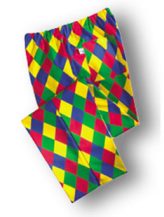
Hodges' model - it's all pants really!

It's no use - I have a confession to make.

After all these years of trying to publicise Hodges’ model, in practice, on paper, through the website. I’ve realised it really is a load of pants. Absolutely, definitely, no counter argument it is:

Harlequin pants

Utter pants.

Let me explain….

On the site you will find Brian’s notes and various additions that state what h2cm is, including a conceptual framework, holistic model, cognitive space and so on…

Beyond this though what is Hodges' model trying to say? Cruising down the centre of a one-way street if it were a street sign what would it stand for? There is this word ‘essence’ and in philosophy like many words it metamorphoses and starts to play trick or treat. So what is the essence of h2cm?

Whether you loosen your belt or tighten it at this point is of course entirely up to you, but here is my two cents worth.

Firstly, h2cm signifies the debate about parts and wholes.

Secondly, it represents pants – well ok - pantology to be specific.

Here's a definition:

Pan`tol´o`gy
n. 1.
A systematic view of all branches of human knowledge; a work of universal information.

Is there another beyond - beyond the beyond? Because the corpus of knowledge is so extensive and growing by the second if measured by published media could it be that h2cm provides a space where several pantologies can exist and co-exist? This must be the case because if pantologists exist then they must produce pantologies? What do you think? Is that what the internet is, or will become - a conglomeration of integrated pantologies?

So you see Hodges' model really is pants. Would you like to be a pantologist? Living in the 21st century and being a life-long learner by default it looks like there is no choice….

Meanwhile if you happen to live in a galaxy far, far away....
