Hodges' Model: Welcome to the QUAD: Search results for capital

Hodges' model is a conceptual framework to support reflection and critical thinking. Situated, the model can help integrate all disciplines (academic and professional). Amid news items, are posts that illustrate the scope and application of the model. A bibliography and A4 template are provided in the sidebar. Welcome to the QUAD ...

Showing posts sorted by relevance for query capital. Sort by date Show all posts

Sunday, February 02, 2025

Social Capital - related to Hodges' model: c/o Andy Haldane FT

'The world is more diverse and interwoven than ever before - economically, culturally, ethnically, generationally. This is largely the result of the postwar explosion in cross-border flows of:'
ME
|
      INTERPERSONAL    :     SCIENCES               
HUMANISTIC  --------------------------------------  MECHANISTIC      
 SOCIOLOGY  :    POLITICAL 
|
WE

INFORMATION*

GOODS

PEOPLE

MONEY

 *Here I am treating information as analog - attached to meaning and sense-making, human reasoning - thought; information is of course also digital and an economy in itself.

'There is no ecosystem on the planet that is not enriched by increased diversity. The complexity of rainforests and oceans explains their abundance. In social systems, the cross-pollination of ideas, cultures and practices in diverse communities has been a driver of innovation and dynamism for millennia.
Yet this is a double-edged sword. A rainforest or an ocean are vulnerable to antagonistic arrivals such as humans seeking timber or fish. If cultures clash rather than cohere, diverse communities exhibit similar fragility.
Every complex system faces this balancing act, but it can be improved by strengthening ties and trust - what Harvard political scientist Robert Putnam calls social capital. The depletion of social capital over the past half-century, documented by Putnam, has tilted the scales decisively towards fragility. Today's open, connected economies are nested in brittle, disconnected societies. Neither can flourish like this.
One policy response is to reverse economic course, tightening restrictions on cross-border flows of people, goods, technologies and information. While economists (like me) tell us that doing so would diminish economic dynamism, given these policies address the insecurities felt by many at source, it is no surprise they are gaining support - especially on immigration and trade.' 

ME
|
      INTERPERSONAL    :     SCIENCES               
HUMANISTIC  --------------------------------------  MECHANISTIC      
 SOCIOLOGY  :    POLITICAL 
|
Group

My - sense of security
My - trust

 (AFTER) -
FORETHOUGHT


... Rainforest : Ocean
Wetlands : Kelp forests ...^

Maps of Social Capital1

Spatial planning


Social capital
Social mobility
Sociable housing2
Social cohesion

Social -

Policy
Curricula
Governance, Citizen Trust
Nat. Strategy for social connection3

Capitalism

'An Office of the President or Prime Minister, charged with lacing social cohesion through policy, should be hard-wired into the machinery of governments.'

(Here, here!).

1. Raj Chetty - Social Capital Atlas: https://www.socialcapital.org/
2. Richard Sennett
3. Chris Murphy

^Sometimes perhaps the map is the territory? Discuss.

With thanks to:
Andy Haldane, How to get from the me to the we society. Opinion: FT Weekend, 14/15 December 2024, p.12.

Upswing image: 
https://www.allenandunwin.com/browse/book/Robert-D.-Putnam-and-Shaylyn-Romney-Garrett-Upswing-9781800750371

Thursday, June 25, 2015

Capital 'p': Patient, Person, Person-centred, Personhood

individual
|
INTERPERSONAL : SCIENCES
humanistic --------------------------------------- mechanistic
SOCIOLOGY : POLITICAL
|
group


capital Patient


Patient capital


Whenever financial markets get hyperactive - the norm rather than exception over the past three decades - we hear calls for "patient capital" that can fund long-term investment in the productive capabilities that are essential for a prosperous economy. ...
The problem is not just "short-termism" but more fundamentally value extraction that far outstrips contributions to value creation, with financial interests, including top executives, reaping gains that should go to taxpayers and workers.
For the sake of stable and equitable growth, it is time that these real patient capitalists lose their political patience, and demand fundamental economic reform. p.24.

Source:
Lazonick, W. Why patient capital is running thin, Armchair Alphaville, FTMoney. July 26/July 27 2014: p.24

Tuesday, October 08, 2024

Capital -ism in Hodges' model

The New Nature of Business
'In The New Nature of Business, Luc's son André, now vice-chair of Roche, and co-author Peter Vanham lay out how to bring these parallel tracks together. "The business of business isn't just m of business," they write. "The business of business is to at least preserve and where possible expand the world's human, social, environmental and financial capital." 

 The book makes the familiar case that maximising short-term profit leads to long-term destruction of value. But it also suggests that a "narrow focus on [reducing] carbon emissions" could have dangerous unintended consequences. Those four "capitals" depend on one another, write Hoffmann and Vanham. They call for nothing less than a systemic change to a "sustainable, inclusive form of capitalism, with new principles, and new practices".

The most interesting parts of the book describe Hoffmann's path to the realisation in the early 2000s that the profit- making power of business should be harnessed in the quest for sustainability.' (My emphasis with some re-formatting.)

Hill, A. (2024) The sweeter pill, FTWeekend, Life&Arts, 28-29 September. p.11. 


individual
|
INTERPERSONAL : SCIENCES
humanistic ------------------------------- mechanistic
SOCIOLOGY : POLITICAL
|
group
HUMAN

ENVIRONMENTAL

the new nature
SOCIALof business

FINANCIAL


Andre Hoffmann, Peter Vanham (2024) The New Nature of Business: The Path to Prosperity and Sustainability. London: Wiley. ISBN: 978-1-394-25754-6

Previously: 'capital' e.g. 'Capital Patient' :: 'Patient capital'.

Sunday, June 28, 2015

Non-Cartesian points, opposing corners and capital redux

individual
|
INTERPERSONAL : SCIENCES
humanistic --------------------------------------- mechanistic
SOCIOLOGY : POLITICAL
|
group
"I felt


capital Patient?


Patient capital?

like
 the
 mad
man
 in the corner,"


senior NHS figure said of recent top level meetings discussing the financial travails and sliding performance of the provider sector. ... The delineation between these two camps is becoming clearer. ... p.3 


Source: McLellan, A. (2015) Leader: Modernisers must cut the deficit to keep their side of the deal. Health Service Journal, 3 June. 125;6449:p.3.

See also:
Capital 'p': Patient, Person, Person-centred, Personhood

Friday, August 19, 2016

Human Capital & backseat passengers

individual
|
INTERPERSONAL : SCIENCES
humanistic -------------------------------------------  mechanistic
SOCIOLOGY : POLITICAL
|
group-population

"The average employed person
had a "human capital stock"
of £471,000 at the
end of last year..."

The average wealth per
person
rose by
£87,000 to £135,000."

Picture taken August 17, 2016. REUTERS/Mahmoud Rslan


"The value of the UK's
 human capital increased
by £890 billion
to £19.2 trillion
 last year."


Knock! Knock!
... ... ... ...
Knock!! Knock!!
... ... ... ...
What do you want!

"Oh... hello. Is this the domain for justice?

"NO, you won't find justice here"
?


Office for National Statistics: Human capital estimates Articles

Knowles, T. (2016). Get ready to push the boat out - you're worth £135,000. The Times, 19 August, p.33.

Photograph source:  The Peninsula Qatar
Five-year-old Omran Daqneesh, with bloodied face, sits with his sister inside an ambulance after they were rescued following an airstrike in the rebel-held al-Qaterji neighbourhood of Aleppo, Syria August 17, 2016. Picture taken August 17, 2016. REUTERS/Mahmoud Rslan
http://www.thepeninsulaqatar.com/news/middle-east/389598/syria-photographer-captures-image-of-dazed-bloodied-boy


Saturday, January 03, 2026

Universal Basic [Income and Capital] c/o N. Berggruen

Individual
|
     INTERPERSONAL    :     SCIENCES               
HUMANISTIC  --------------------------------------  MECHANISTIC      
 SOCIOLOGY  :    POLITICAL 
|
Group
AI ..

Pope Leo XIV - 'Distributional justice'
Pope Leo XIII "Rerum Novarum" 1891?^
 
 *Ethics - see below.

Baby bond schemes -
Australia Superannuation programme
USA MAGA accounts
Proposed European Sovereignty Fund?
UK?

Globally? "We're in this together, remember"


UNIVERSAL BASIC INCOME
UNIVERSAL BASIC CAPITAL 
 
PREDISTRIBUTION not
REDISTRIBUTION

^History: Impact of the industrial revolution
 

.. ECONOMY

  Diminishing value of labour
 Global wealth inequality
 US: top 10% own 93% of all equities
Europe: .. nearly 60% of all wealth.
Bottom 50% owns just 5%
 

*The ecological and ethical impacts from the energy demands of AI still need to be addressed. Financial 'rewards' for the masses, must not become the 'cake' - the bribe for the public to enter into a conspiratorial dyad with technology. PJ

Source: N. Berggruen, Universal basic capital would create a fair AI economy, Opinion, FTWeekend, 1-2 November. 2025, p.13. https://berggruen.org/eu

https://www.ft.com/content/9b93e02a-c693-4070-9094-a2f532dfa929

See also: 'economics' : 'poverty' : 'AI' : 'inequality' : 'universal'

Sunday, September 06, 2020

Lifelong learning in Hodges' model

I've lost count of the visits to Hay-on-Wye, most recently last week. Sadly none have coincided with the literature festival (thus far). Three full days arriving at 0815, a coffee at Angie's cafe to start. 

In searching for 'evidence' to support Hodges' model I am clearly biased in terms of what I will find. Brent Hayward's paper and exchanges on twitter prompt the realisation there is much to define. The axes, the respective care - knowledge domains, career, health career, the center of the model, education and more. I have 6,000 words on what could be thought of as a 'manual'. Nobody, can say "Read the ****** manual!" if none exists, beyond Brian Hodges' course notes. 

So I've been picking up a few textbooks. Despite being a little dated (and so familiar) I'm sure these sources can help place Hodges' model on a more concrete footing. At least reveal what schools of thoughts and ideas Hodges' model can claim as a foundation and support. The shelves of several shops were well served with lifelong learning and so here are some points of note, beginning with interpretations of 'learning'.

  • Behaviourist approach
  • Gestalt
  • Cognitive - constructivist 
  • Humanist

The plastic space that it is, Hodges' model can be used with any of these, as with proposals for pedagogy and andragogy (chap. 2) and the identities associated with the social nature of 'learner identity' in education.

individual
|
INTERPERSONAL : SCIENCES
humanistic ----------------------------------------------- mechanistic
SOCIOLOGY : POLITICAL
|
group - population
Situational awareness:
1. the safety perspective
2. the personal perspective of knowing what learning opportunities are available. p.56.
Continuous professional development
intrinsic-extrinsic motivation, p.84.
'Sociological imagination' pp.19-21.

Use of Hodges' model allied with multiple literacies to further lifelong and personalised learning (tertiary+)?
Definition of lifelong learning is, arguably, impossible. p.9.
Learning activity through life. p.10
Relation of: concept of 'career'
Health career as Life chances
Age as chronology and pathology
Primary Courseware - created to present subject matter. Subject matter experts (content) design and programmed by courseware specialists.
Secondary Courseware - describes the environment and set of tools by which the learner performs learning tasks, and the tasks (and task materials) themselves. p.138.
History of lifelong learning 18th century (Yeaxlee, 1929).
2nd chance learning
Lifelong learning for social change.
Age as a social construct
Bourdieu 'capital' power (chap. 3)
Social and Cultural (capital)

Teriary Courseware - material prodcued by learners, p.138.
"Lifelong learning has experienced a political transformation from one that held a humanistic radical approach to education to one with a focus upon economy, skills and and vocationalism, and this transformation can be seen in the policy discourse associated with lifelong learning." p.9.
Lifelong learning "a means of achieving instrumental (economic) values..." p.9.
Continuous professional development (governance of..)
Economic or Human (capital)
identity narratives and identity politics - caring relations, p.19


O'Grady, A. (2013) Lifelong Learning in the UK, London: Routledge

Morgan-Klein, B., & Osborne, M. (2007). The Concepts and Practices of Lifelong Learning. London: Routledge. (chapter 2, Learning through the life course ...)

Sunday, January 26, 2020

Books: Technology, Capital and Ideology - captured in h2cm...

individual
|
INTERPERSONAL : SCIENCES
humanistic ----------------------------------------------- mechanistic
SOCIOLOGY : POLITICAL
|
group - population


My sources:
The Times and FT Weekend.

Saturday, September 12, 2020

Bourdieu*: habitus, field, horizons and careers

"For Bourdieu, structure is not only objective in a Levi-Straussian sense. 
Structures can also be highly subjective." p.13.
 
"In one sense, habitus is social inheritance ... but it also implies habit, or unthinking-ness in actions, and 'disposition'. Some dispositions are transferable; fort example, a practical taxonomy can be utilized to find relevance in a new situation." p.14
 
"If habitus brings into focus the subjective end of the equation, field focuses on the objective:" p.15.

"Field is therefore a structured system of social relations at a micro and macro level." p.16.
 
"Education is a field, made up of identifiable interconnecting relations." p.20.
 
"Young people make career decisions within what we refer to as horizons for action. The horizons are the perspectives on and possibilities for action given in any field or intersection of fields." p.97.
 
 
individual
|
INTERPERSONAL : SCIENCES
humanistic ----------------------------------------------- mechanistic
SOCIOLOGY : POLITICAL
|
group - population
subjective
objective
culture, linguistic market, upbringing
cultural and social capital
class, institutions, education
career guidance
economic capital


Grenfell, M., James, D. (1998) Bourdieu and Education: Acts of Practical Theory. London: Falmer Press.

Career progression: Moving beyond Bourdieu pp.100-103.

and Chapter 9, Theory as Method pp.152-178. diagrams. 


The 4P's in Hodges' model

PURPOSE
PROCESS
PRACTICE*
POLICY


Always conscious of how Hodges' model, like many other 'models' is an idealisation. As such we routinely refer to 'social action', 'political process' and 'social process'. 

I have, I suppose, allocated the four P's to the respective domains on a primary context - primary domain basis.^ So 'process' as per time, events, sequence, algorithm, logic, cause-effect.

^first come, first served?

Wednesday, August 28, 2019

Environment, Social, Governance [ESG]

As Greeta Thunberg arrives in New York for the:

CLIMATE ACTION SUMMIT, 23 SEPTEMBER 2019

... it is interesting to consider not just where 'health' sits within business and commerce, but the themes and issues that it has reached. Now, we are more aware of the dependencies, for example air quality, physical and mental health, but we are still to finish the chapter titled: "The Damage Done".

'Capitalism' remains rapacious in terms of resource use (ironically if the market and prices are cyclical) and we must acknowledge all of economics, from stock exchanges, to cities, to villages in developing countries, but the challenge remains to transform the geometry of our economics to that of a sustainable circle. As per the climate debate, in some instances, we might close certain industries and leave some classes of minerals, elements, fossil fuels in the ground. We should accept that while some economies are more circular than others, sometimes you cannot circle a square?

Below is an investment hierarchy in which I have highlighted health. Education, literacy and environmental awareness are, if not issues (which they are, especially their respective economics) they are much needed individual actions to achieve progress.

The media notes that next month's summit will include 'world leaders'. I wonder how many business leaders will be present? This would be an indicator of corporate social responsibility, looking very positive in the annual report (even if the self-regulation has not yet achieved homeostatis). If you can advise with figures, or if I find the information later next month I will post here.

MSCI ESG Key Issue Hierarchy

3 Pillars 


10 Themes


37 ESG Key Issues

Environment    Climate change
Carbon emissions  Product carbon footprint 
Financing environmental impact
Climate change vulnerability
Natural resources 
Water stress  Biodiversity & land use 
Raw material sourcing
Pollution & waste 
Toxic emissions & waste   Electronic waste Packaging 
Material & Waste
Environmental opportunities
Clean tech 
Green building   Renewable energy
Social    Human capital
Labor management   Health & safety
Human capital development Supply chain labor standards
Product liability 
Product safety & quality  Chemical safety
Financial product safety  Privacy & data security 
Responsible investment  Health & demographic risk
Stakeholder opposition
Controversial Sourcing
Social opportunities 
Access to communications  Access to Health care
Access to finance   Nutrition Health
Governance  Corporate governance*
Board* Pay* Ownership* Accounting*
Corporate behavior 
Business ethics Anti-competitive practices
Tax transparency Corruption & instability
Financial system instability
* Corporate Governance Theme carries weight in the ESG Rating model for all companies. In 2018, we introduce subscores for each of the four underlying issues: Board, Pay, Ownership, and Accounting. https://www.msci.com/documents/10199/123a2b2b-1395-4aa2-a121-ea14de6d708a


My source (MSCI ESG Key Issue Hierarchy p.27):
Norrington, J. (2019) Future Proof Investments, Investors Chronicle, 18-25 April. pp.24-28.

Thursday, January 08, 2026

Hodges' model: An algebra for care - seeking axioms?

Although Oliver had been brought up by philosophers, he was not theoretically acquainted with the beautiful axiom that self-preservation is the first law of nature.
                                                                                    
- Charles Dickens, Oliver Twist

Coady, C. A. J. (1990). Hobbes and “The Beautiful Axiom.” Philosophy, 65(251), 5–17. 
http://www.jstor.org/stable/3751240

"It is an axiom in therapeutics that the more remedies there are proposed for a disease the less likely is any of them to be effective."

[- William Osler]

Mountin, J. W. (1943). Nursing: A Critical Analysis. The American Journal of Nursing, 43(1), 29–34. https://doi.org/10.2307/3416264

Individual
|
     INTERPERSONAL    :     SCIENCES               
HUMANISTIC  --------------------------------------  MECHANISTIC      
 SOCIOLOGY  :    POLITICAL 
|
Group
 
'One of the core tenets of pragmatism, despite its various formulations by William James, Jane Addams, John Dewey, and neo-pragmatists like Rorty, Habermas, and Putnam, is an epistemological axiom first formulated in 1868 by Charles Sanders Peirce. This maxim, often dubbed the pragmatic maxim, states that the meaning of our ideas is best expounded when we can spell out the implications or the effects of these ideas in real-world experience and practice (Peirce 1878).' pp.105-106.
(Racine, 2024).

physical - SELF - My body[?]


'The lack of consideration of downside risks applies to all COVID-19 countermeasures, including mass-masking (e.g. the social and psychological consequences of mask-wearing for all kinds of social interaction, most notably in educational and childcare settings) and to the accelerated approval of vaccines. The latter is particularly noteworthy because the need for rigorous testing of new medications to guard against the risk of side effects is a standard axiom of contemporary ethical medical practice. Given that the vaccines in question employed novel mechanisms, not testing them sufficiently to assure their longer term safety was stratospherically risky: it meant that the possibility that this vaccination programme would do more harm than good could not be excluded. Yet, the medical establishment stood foursquare behind it, insisting on the safety and efficacy of the vaccines and pillorying any, including those within it, who demurred.' p.55. (Kelly, 2023).


'“Never have we been so free. Never have we felt so powerless”: this, according to Bauman, is the paradox of our time. Verhaeghe writes with a variant: “Never before have we in the West had it so good, and never have we felt so bad.”33 Because neoliberal axioms determine the standards of what is healthy and normal, society sees those who do not want to participate as sick or abnormal.' pp.97-98. (Vanheste, 2023).
 

My emphasis

Racine, E. (2024). What Participatory Research and Methods Bring To Ethics: Insights From Pragmatism, Social Science, and Psychology. Kennedy Institute of Ethics Journal 34(1), 99-134. 
 https://dx.doi.org/10.1353/ken.2024.a943431.

Kelly, M.G.E. (2023). Securing the Pandemic: Biopolitics, Capital, and COVID-19. Foucault Studies 35, 46-69. https://muse.jhu.edu/article/940834.

Vanheste, J. (2023). Half a Century of Exhaustion and Madness: The Fiftieth Anniversary of Pink Floyd's The Dark Side of the Moon. Soundings: An Interdisciplinary Journal 106(1), 87-109. 
https://muse.jhu.edu/article/950363.

See also: 'axiom' : 'algebra' : 'pragmatism'

Person-centred care = care axiomatics at a collective and individual level?

The first rule (axiom?) of first aid is...?

Thursday, February 28, 2019

Capital letter. Start of Sentence.

Prison, Offenders, Release ... in h2cm


individual
|
INTERPERSONAL : SCIENCES
humanistic ----------------------------------------------- mechanistic
SOCIOLOGY : POLITICAL
|
group

Mental Health Assessment - diagnosis?
Learning disability
Ongoing counselling, legacy issues PTSD?
Addiction services
Custody Liaison Mental Health Nurses
Understanding of – my [care] plan,
stress & vulnerability, relapse signature
Literacies, writing, numeracy
Life chances
Key skills:
interviews, exams, assertiveness, strengths ...


Medication: prescribing, compliance,
concordance, safe prescribing
Addiction, Substance misuse

Assurance of physical health, exercise

Location – familiar with the area?
Logistics – transport
Technology*
Treatment for Offenders

Sentence length

Re-integration into society
Social attitudes
Sex Offenders

Role of family
Relationships (Legacy issues - 'resolve'?)
(Re-)Housing
The social network they may return to
Contact with a  support group*
Having a ‘buddy’ when available

Determinate Sentence (half)

Policy (integration?) and Funding
Offender Assessment System
Rehabilitation of offenders
Employment – work
Opportunities for training - education
Allocation to a GP and other health services
Organisation of State Benefits
Probation services, Charities
Statutory supervision
Mental Health Act
Community assignment


Once we have sufficiently addressed what is identified using Hodges' model, we can can stand together in the center with an improved chance of achieving person-centred care and Recycling Lives?

 
If you can suggest changes, additions, please get in touch h2cmng AT yahoo.co.uk

Tuesday, December 10, 2024

Webinar: 11 December - Universal Health Coverage (UHC) Day 2024

"The UHC Compass and Social Participation:
empowering patient organisations to hold governments
 accountable for universal health coverage"

Register for the UHC Compass launch!

To mark Universal Health Coverage (UHC) Day 2024, IAPO will officially launch the UHC Compass at an exciting webinar titled "The UHC Compass and Social Participation: empowering patient organisations to hold governments accountable for universal health coverage" on 11 December 2024, from 11:30 to 13:00 GMT via Zoom.

The webinar will be conducted in English with simultaneous interpretation into Spanish.

Panellists include:
  • Dani Mothci – International Alliance of Patients’ Organizations (IAPO) 
  • Dr Pamela Cipriano – UHC2030 & International Council of Nurses
  • Lara Brearley – Special Programme on Primary Health Care Universal Health Coverage - Life Course, World Health Organization
  • Dumiso Gatsha – Success Capital NGO & Civil Society Engagement Mechanism for UHC2030 (CSEM)
  • Nicola Bedlington – Global Patient Think Tank & Millwater Partners
  • Smitha Sadasivan – Global Patient Think Tank, Inclusive Health Policy, Disability Rights India Foundation & CSEM 
  • Paul Mendoza – Psoriasis Philippines and Psoriasis Asia Pacific & IAPO
The UHC Compass is a dynamic tool created by patients for patients, empowering local leaders and communities to advance universal health coverage (UHC). In the context of the World Health Assembly resolution on social participation and UHC Day 2024, this session will explore how the Compass can serve as a tool to hold governments accountable for investing in UHC.

Co-created by the Global Patient Think Tank (GPTT), a diverse group amplifying the patient voice in the UHC movement, the Compass is proudly hosted by IAPO. Our mission is to ensure this resource reaches and benefits our global network of patient organisations.

Join us to discover how the UHC Compass can help make UHC a reality for everyone!

Learn more & register [https://www.iapo.org.uk/node/15686] Share https://iapo.cmail19.com/t/d-fb-sfiudt-iuqjytrli-o/ Tweet https://iapo.cmail19.com/t/d-tw-sfiudt-iuqjytrli-b/ Share [https://iapo.cmail19.com/t/d-li-sfiudt-iuqjytrli-h/]

[http://www.iapo.org.uk]

The International Alliance of Patients’ Organizations is registered in England and Wales as charity no.1155577 and company limited by guarantee no.08495711.

Registered office: Hounslow House, 7 Bath Road, Hounslow TW3 3EB, UK.

It is also the IAPO's 25th Anniversary.
More details at:

https://www.iapo.org.uk/node/15687

I will post again in the New Year.

My source: HIFA

Previously: compass : UHC : patients

Wednesday, January 29, 2014

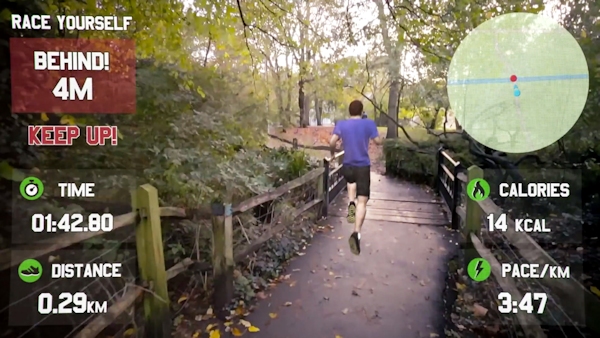
Race Yourself for Google Glass transforms exercise

From ISPR - my source:
http://ispr.info/2014/01/27/race-yourself-for-google-glass-transforms-exercise/?utm_source=rss&utm_medium=rss&utm_campaign=race-yourself-for-google-glass-transforms-exercise

Get Fit This Year by Fleeing From Augmented Reality Zombies: Race Yourself Transforms Exercise Into a Game on Google Glass

Race Yourself is a New Fitness Startup for Google Glass, Aiming to Turn Exercise Into a Game.  By Racing Against a Virtual Projection of Yourself, Attaining Personal Bests, and Burning Calories, You Can Unlock New Game Modes Such as Running Away from Giant Rolling Boulders. Race Yourself has Already Raised £200,000 from Investors Lead by DN Capital, and is Now Launching a Crowd-Funding Campaign Via Their Website, www.raceyourself.com on the 8th January.  ...


http://ispr.info/

INTERPERSONAL : SCIENCES
humanistic ------------------------------------------- mechanistic
SOCIOLOGY : POLITICAL

individual
Am I dreaming?

http://ispr.info/2014/01/27/race-yourself-for-google-glass-transforms-exercise/?utm_source=rss&utm_medium=rss&utm_campaign=race-yourself-for-google-glass-transforms-exercise
technology    virtual reality    physical health


Dreams of Peace
group - population

Friday, June 26, 2026

World Justice Report: a Plan for Equality and Prosperity Within Planetary Boundaries

Box 1: Combining Global Equality and Planetary Habitability

The Global Justice Report describes desirable future scenarios combining two key goals: socioeconomic equality (including full equality between countries, full gender equality in labour hours and pay, sharp compression of within country income and wealth scales, combined with fair access to education, health and political voice), and planetary habitability (aligning global resource use within ecological boundaries, including a limitation of global temperature rise below 2°C). 

To avoid climate catastrophes, we show that sufficiency is required: a structural transformation of the economy involving shorter working hours, a lower material footprint, a shift from material-intensive sectors toward relatively immaterial sectors such as education and health, and major changes in food systems and land use. Rapid decarbonization of energy systems is also necessary, as is the sharp compression of income and wealth inequality. This compression is both a social justice objective and a condition for financing necessary climate investment and human capital expenditure and for sustaining political support from bottom- and middle-income classes in both the North and the South. 

Box 2: Material and Monetary Accounting for Democratic Debate

Economy and ecology cannot be debated apart: every economic activity has a material footprint, every ecological policy shapes incomes and wealth. To make these links visible, the Global Justice Report uses multidimensional social progress indicators. We set quantitative targets for global socioeconomic justice by combining two complementary languages: material accounting (work hours, sectoral shares, education and health, energy systems, GHG emissions, land use, forest cover, temperature levels) and monetary accounting (income and wealth scales between and within countries, progressive tax rates). The report draws on two centuries of historical data on global inequality and resource use, and on the recent literature on social progress, climate and colonial reparations. 

The Global Justice Report proposes a quantitatively and institutionally grounded step toward global justice. It does not seek to close the debate: it offers a transparent basis on which citizens, unions, parliaments, and international bodies can debate, contest, and decide the course of the coming decades.

...

Chancel, L., Dietrich, J., Mohren, C., Moshrif, R., Odersky, M., Piketty, T., Somanchi, A., et al. (2026), The Global Justice Report: A Plan for Equality & Prosperity Within Planetary Boundaries, World Inequality Lab (gjp.wid.world).

individual
|
INTERPERSONAL
: SCIENCES             
humanistic ------------------------------- mechanistic
SOCIOLOGY : POLITICAL   
|
group 


SOCIAL JUSTICE


Previously: 'wealth' : 'poverty' : 'social justice'

 My source: BBC Radio 4 World at One.


Friday, February 08, 2019

c/o The King's Fund: Making sense of integrated care systems, integrated care partnerships and accountable care organisations in the NHS in England

When I see a 'model' I ask myself; what does this mean in itself? What is its purpose? I also (invariably) ask how does it relate to, or how might it support the theory and application that might underpin h2cm?

In February 2018 The King's Fund posted this item on integrated care systems. It wasn't just the 2x2 figure that caught my eye, but the axes and the additional amber tab (figure 1). Pondering for a time I have transposed this to Hodges' model below figure 1. Beneath that, I've provided an explanation for the altered schematic; recognising that as with h2cm such models are idealised representations.

c/o The King's Fund


individual
|
INTERPERSONAL : SCIENCES
humanistic ----------------------------------------------- mechanistic
SOCIOLOGY : POLITICAL
|
group
Individual care management

Care for patients presenting with illness or for those at high risk of requiring care services

Population Health (systems)

Improving health outcomes across whole populations including the distribution of health outcomes

[Improving population health outcomes requires multiple interventions across systems]


'Making every contact count'

Active health promotion when individuals come into contact with health and care services


Integrated care models

Co-ordination of care services for defined groups of people (eg. older people and those with complex needs)


INTRA- INTERPERSONAL:
Individual care management has been changed from care services and individuals to this domain, which conceptually preserves the original placement. In h2cm as can be seen the interpersonal domain combines the individual and humanistic. In the 4Ps this domain also includes 'purpose'. Whenever possible it here (individual motivation) that self-care and self-efficacy and staying as well as possible relies on the patient's awareness and education about their condition and level of health literacy. There is recognition now that children need some awareness of mental health issues and the law needs to protect what images and content youngsters are exposed to on social media. So, ultimately 'how I manage myself' has a major bearing on the 'whole care management enterprise.' The focus on 'high risk' also denotes a need for an assessment and one that is part of the move to parity of esteem in respect of physical and mental health.

SCIENCES:
I have shifted Population Health (systems)from population to this (physical) individual domain, on the basis that our research, as in, quantitative and qualitative, needs to be synthesized and then ultimately generalised - across populations. While complex systems cannot be taken apart it is from the sciences (including social sciences) that evidence-based practice flows. There should be a feedback loop here, research that also takes into account the multiple interventions across systems (the amber tab in figure 1) and the outcomes achieved.

POLITICAL:
The King's Fund's figure 1 stands as it is of course, but I have 'moved' Integrated care models most radically. If there is no organisation, rules, order, policy, procedures ... then things will NOT happen (as they should). Agreement is also needed on definitions for reasons of standards, measures and accountability. Such matters are political (even if ignored - kicked in the long-grass). For services that are evidence-based (as just mentioned in SCIENCES) we need when possible for health and social care policies to also be evidence-based (for reasons of efficiency, equity, effectiveness and equality). While we cannot 'break' complex systems we can break models; 'health care systems' need to break ("be broken whilst still in flight") in order to be transformed for the 21st century.

SOCIOLOGY:
Making every contact count I have placed in the h2cm's Sociology domain. To me this initiative remains with care services, but I have switched this from individual to group-population within h2cm. Health care education places constant emphasis (research, CPD, mandatory training) upon interpersonal - communication skills and this is where clinical and social care interactions and interactions ultimately count. It is here that trust, the 6Cs, unconditional positive regard ... are 'counted' in qualitative terms. If the psychological represents the theory of psych-social intervention, it is in the social outcomes and benefits were the practice is (truly) delivered. It is also here that partnerships are forged and social capital found.

In social care as an example, the integrated care model should politically permit - allow for a sufficiently skilled and remunerated work-force (socially valued?) with sufficient time to ensure that every contact really does count.

<>

Forty years in the NHS suggests that when ever 'integrated care' is being written and even spoken about, then the context should be indicated at the same time; so at least - integrated care1-5 as above?

'integrated' as in -
  • philosophy (ethics, morality, values)
  • spiritual (values) (and part-whole of 1-5)
  • political - policy, government funding
  • economically - commissioning (models of care, sustainability)
  • management
  • care delivery
  • team organisation
  • community involvement
  • patient involvement
  • health literacy, health promoting
...?

Accessibility: apologies that there is no equivalent text to figure 1.

My source: https://twitter.com/TheKingsFund/status/1093556280248147969

Saturday, May 12, 2012

[HIFA2015] International Nurses Day, May 12 "Closing the gap: From evidence to action"

Dear Colleagues / collaborators,

Nurses worldwide under the umbrella of the International Council of Nurses celebrates the International Nurses Day yearly on May 12. This is to pay tribute to the millions of men and women who put their lives to the service of humanity, in accordance with convention 149 of the ILO (Nursing Personnel Convention) passed in 1997. This celebration however has not yet gained the recognition it should, for how can one explain the fact that this day may even go by unnoticed in some countries, or are we therefore saying it is not worth it and why is this day not even a public holiday like for other professional groups.

I find it hard to believe that until now on this forum no one could think of it, when the celebration is due in barely 36 hours. I understand the delicate nature of health jobs, but this should not be an excuse for not paying tribute where is it due. I know this day should be meant for reflection among nurses and seeking for ways to improve nursing services. This will not happen in isolation, for nurses need the political will and inter sectoral collaboration to do their job effectively, shape a better future for the next generation of nurses consonant with current stakes.

This year, nurses are deliberating on the theme 'closing the gap: From evidence to action'. This topic is quite elaborate and needs lots of considerations both within and without the influence of nurses. Understanding evidence-based practice, seeking for sources of evidence, making the appropriate case for change and moving from evidence to action is the cycle in which nurses hope to reflect as they celebrate this year. Nurses will need new skills and expertise to deal with their clients in today's changing and challenging health environment. This is why this forum is of vital importance and I will continue to thank the team behind it. Nursing training programs may be subject to revision, expanding the legal and professional limits of practice while maintaining strict regulatory sanctions. This increased autonomy will enable nurses take up new functions within the confines of their practice and help in meeting the health needs of our population and not acting as physician substitutes or mini-doctors.

Therefore, I wish all nurses a happy celebration, calling on them to use the very rich celebration kit from the ICN, easily downloadable from their website, www.icn.ch, and share among themselves in all settings where nurses live and work. It is our day and we should be happy and honoured for the services we offer to the six billion people on earth, since nurses form the bulk of health care providers and work in remote areas in all countries.

In Cameroon, thousands of nurses from all the ten regions, shall be meeting in the economic capital Douala between June 14 to 16, to brainstorm on the activities. This event is usually opened by the Minister of Public health or his representative, various scientific presentations, round table conferences and other important activities grace the event and concluded by a closing ceremony during which important decisions taken are communicated to participants.

Tita Pale Isa Ndognjem, BSc, RN
Public Relation officer, Cameroon Nurses Association
2012 Fellow, Commonwealth Nurses Federation
paleisa AT yahoo.com 

Additional link:

C149 Nursing Personnel Convention, 1977
Convention concerning Employment and Conditions of Work and Life of Nursing Personnel (Note: Date of coming into force: 11:07:1979.) 
 
My source: HIFA2015

Monday, October 06, 2008

Death in Birth By Vivienne Walt/Freetown Thursday, Sep. 18, 2008

An excerpt from an article in TIME magazine is posted below by Patti Abbott, Co-Director of the PAHO/WHO Collaborating Center for Nursing Knowledge, Information Management and Sharing (KIMS), Johns Hopkins University School of Nursing.

The entire article can be found at: http://content.time.com/time/magazine/article/0,9171,1842278,00.html

“In a hospital ward in Freetown, the capital of Sierra Leone, Fatmata Conteh, 26, lay on a bed, having just given birth to her second child. She had started bleeding from a tear in her cervix, the blood forming a pool on the floor below. Two doctors ran in and stitched her up, relatives found blood supplies, and nurses struggled to connect a generator to the oxygen tank. One nurse jammed an intravenous needle into Conteh's arm, while another hooked a bag of blood to a rusted stand, and a third slapped an oxygen mask over her face. In the corner of the room, a tiny baby--3 hours old--lay on a bed, wailing, swaddled in bright-colored African fabric. "Listen! You must feel happy to hear your baby cry," said a nurse, pleading with Conteh to find strength. Three visiting members of a neighborhood church began chanting over Conteh: "Jesus, put blood into this woman! Thank you, Lord!" But as their chants grew louder, the nurses stepped back from the bed. Conteh was dead.
Some version of that scene is repeated around the world about once a minute. Death in childbirth is not just something you find in a Victorian novel. Every year, about 536,000 women die giving birth. In some poor nations, dying in childbirth is so common that almost everyone has known a victim. Take Sierra Leone, a West African nation with just 6.3 million people: women there have a 1 in 8 chance of dying in childbirth during their lifetime. The same miserable odds apply in Afghanistan. In the U.S., by contrast, the lifetime chance that a woman will die in childbirth is about 1 in 4,800; in Britain, 1 in 8,200; and in Sweden, 1 in 17,400. Deaths are heavily weighted to the poorest and most isolated in each country, which means that many politicians remain largely ignorant of the scale of the tragedy. "Often the people in the cities do not know what is happening in their own rural areas," says Sarah Brown, wife of British Prime Minister Gordon Brown and patron of the White Ribbon Alliance, a global advocacy organization that works with governments to lower maternal mortality rates. Brown--who lost a baby 10 days after giving birth in 2001--says that when she tells heads of state and their spouses how many women die in childbirth, "they are aghast."

The Gains Not Made
They have reason to be. For here is the truly ghastly reality of maternal mortality: in 20 years--two decades that have seen spectacular medical breakthroughs--the ratio of maternal deaths to babies born has barely budged in poor countries. To be sure, maternal health has seen advances, with new drugs to treat deadly postpartum bleeding and pregnancy-related anemia. But in many places, such gains are dwarfed by a multitude of problems: scattershot care, low pay for health workers and a scarcity of midwives and doctors. In Mozambique, where women have a 1 in 45 lifetime chance of dying in childbirth, there are just 3 doctors per 100,000 people; in all of Sierra Leone, there are 64 government doctors, only five of whom are gynecologists. Millions of families have never seen a doctor or nurse and give birth at home with traditional birthing helpers, while those who make it to a clinic--some being carried on bicycles or in hammocks--often find patchy electricity, dirty water and few drugs or nurses. Explaining the task of reducing maternal deaths, Sierra Leone's Minister of Health, Saccoh Alex Kabia, who returned home last year after decades of working as a surgeon in Atlanta, says, "The whole health sector is in a shambles."

The article goes on to say:
“When world leaders gather in New York City this month to take stock of the MDGS, their speeches are likely to tout the many achievements since 2000: millions more African children now attend school and sleep under mosquito nets; thousands of new water wells have been dug. Yet though maternal health care underpins many other development goals (healthy mothers are more likely to ensure that their children are well fed and educated), the total number of women dying in childbirth has remained virtually unchanged in eight years. Why? Health officials are clear in their answers. Aside from lack of money and political will, they also face entrenched traditions and fatalistic attitudes to maternal mortality, especially in very poor communities. "People think that dying in childbirth is not preventable," says Nadira Hayat, Afghanistan's Deputy Minister of Health. "They say it is up to God."
~~~~~~~~~~~~~~~~~~~~~~~~~~~~~~~~~~

I think they need knowledge, a nurse, a midwife.

Patti
Patricia A. Abbott, PhD, RN, FAAN
Co-Director of the PAHO/WHO Collaborating Center for Nursing Knowledge, Information Management and Sharing (KIMS), Johns Hopkins University School of Nursing
___________________
Visit web site:
http://my.ibpinitiative.org/GANM/NMmakingpregnancysafer/

My source: posted by Jody Lori: [Nursing and Midwifery for Making Pregnancy Safer: Discussion] link to article in Time Magazine.

Additional links:

http://www.unicef.org/infobycountry/sierraleone.html

http://www.unicef.org/infobycountry/sierraleone_statistics.html

Thursday, September 05, 2019

Reflection on the Political (Domain) in Hodges' model

individual
|
INTERPERSONAL : SCIENCES
humanistic ----------------------------------------------- mechanistic
SOCIOLOGY : POLITICAL
|
group - population

Individual
Person

(Emotional Intelligence)

Process
Planning
Demand, Supply - Logistics
Just-in Time Delivery
"Shelf-Life"
Use by Date?
Best Before End?


Reputation

Social Epidemiology
Population Health
Public Mental Health
Public Health

(Scope of 'Practice'?
[See the domain to the right for guidance?])

Social Capital
LIFE
Social Life
Social Care

Letter: Chief Medical Officer Prof Dame Sally Davies to Rt Hon Jacob Rees-Mogg MP


My source:

Update:
https://twitter.com/BBCJayneMcC/status/1169727346481520641?s=20


Accessibility issue acknowledged.

Thursday, April 22, 2010

A call for applications for the 3rd phase of Lifelong Health and Wellbeing (LLHW)


Advanced Notice

A call for applications for the third phase of Lifelong Health and Wellbeing (LLHW) will be announced in early May 2010.

Lifelong Health and Wellbeing is a major cross-council initiative involving AHRC, BBSRC, EPSRC, ESRC and MRC in partnership with the UK health departments. LLHW supports multi-disciplinary research addressing factors across the life course that influence healthy ageing and wellbeing in later life.

The initiative aims to lead to improvements in health and quality of life in later life, inform policy and practice and increase capacity building in ageing related research.

Phase 3 will invite high-quality innovative multidisciplinary applications that focus on major ageing-related challenges faced by the UK in the 21st century. Proposals will be welcome from multidisciplinary teams in the areas of, but not restricted to the following:

  • Mental Health and Wellbeing including quality of life, preserving cognitive function and exploiting mental capital
  • Resilience for successful ageing: from cell to society including life course influences, markers for ageing and processes of ageing
  • Age-related conditions, including frailty and interventions to promote independence in later life.
Structure of the call
Funds will be available through two modes of support:

LLHW Research Grants - up to £10m will be available for multi-disciplinary research awards from £300k up to £2.5m over three to five years.

LLHW Pilot Studies - a total of £2.5m to fund up to 10 pilot or feasibility studies for a maximum of two years, aimed at informing the development of future cross-disciplinary research proposals.

Selection Criteria
Successful proposals will be of strategic importance, be truly multi-disciplinary, encompassing the remits of more than one Research Council, and have clearly articulated and robust methodology and design.

Further information
Updates and further information about phase 3 can be found on the website:
https://mrc.ukri.org/research/initiatives/lifelong-health-wellbeing/

My source:
Charlotte Jones
NDA Programme Secretary
The University of Sheffield
Department of Sociological Studies
Elmfield, Northumberland Road
Sheffield, S10 2TU, UK