Hodges' Model: Welcome to the QUAD: Search results for parity of esteem

Hodges' model is a conceptual framework to support reflection and critical thinking. Situated, the model can help integrate all disciplines (academic and professional). Amid news items, are posts that illustrate the scope and application of the model. A bibliography and A4 template are provided in the sidebar. Welcome to the QUAD ...

Showing posts sorted by relevance for query parity of esteem. Sort by date Show all posts

Thursday, September 18, 2025

Nurses - Ask 5 complimentary questions

I received an email from RCNi subject heading - 'Q. What questions are nurses asking?'

An invitation to sign-up and ask five free questions: https://rcni.com/ask 

Question 1

Is there a model of care, or nursing that encompasses the sciences, mental health, sociology and political domains of care?

Several models of care and nursing frameworks integrate diverse domains beyond purely biological aspects, encompassing scientific, mental health, sociological, and even political dimensions. These models emphasise a holistic approach to patient well-being, recognising the complex interplay of various factors in health outcomes.

  • Social Model of Health: This model focuses on salutogenesis, examining what contributes to health rather than just illness, by considering broad social, economic, environmental, and cultural influences on an individual's well-being .
  • Person-Centred Nursing Framework: This framework extends beyond individual biological health to include the person's intricate cultural context, family, spirituality, and life experiences, defining health as encompassing intellectual, social, and spiritual dimensions .
  • Biopsychosocial Model of Care: This approach integrates biological, psychological, and social factors to address a patient's holistic needs, moving beyond the biomedical model's sole focus on physical illness .
  • Dual Registration Degrees: Educational programmes for nurses and social workers combine life sciences with social work principles, law, and policy, preparing professionals to understand factors influencing health, social justice, structural inequalities, and anti-discriminatory practises .
  • Multidisciplinary Team (MDT) Care Model: While not a nursing model itself, the MDT approach enhances patient care by integrating expertise from various professionals, including specialist doctors, nurses, psychology counsellors, dietitians, and pharmacists, to deliver individualised treatment plans and coordinate care .
Modern healthcare increasingly recognises the necessity of comprehensive care models that extend beyond traditional medical approaches. These integrated frameworks, including the social model of health, person-centred nursing, and the biopsychosocial model, provide a foundation for understanding and addressing the multifaceted nature of health, incorporating scientific, mental health, sociological, and policy-related aspects to improve patient outcomes. [Five references provided - hence poor formatting in transfer.]

Question 2

What model of care has the conceptual scope to critique parity of esteem in mental health nursing?

Critiquing the concept of parity of esteem in mental health nursing requires models that move beyond a purely biomedical focus to embrace holistic, person-centred, and culturally sensitive approaches. These models emphasise equality, social justice, and comprehensive care, addressing the historical imbalance between physical and mental health provision.

  • Biopsychosocial Model: This model offers a conceptual framework to critique parity of esteem by considering biological, psychological, and social factors in a patient's health, aiming for holistic needs rather than just biological ones . It contrasts with the biomedical model, which has historically led to paternalistic decision-making in healthcare .
  • Culturally Sensitive and Competent Care: Essential for critiquing parity of esteem, culturally sensitive care requires nurses to appreciate diverse cultures and adopt personalised, flexible approaches to mental health support . Culturally competent care, underpinned by equality and diversity principles, involves behaviours and attitudes that value patients' diverse backgrounds, improving satisfaction and outcomes .
  • Person Centred Care: This approach is crucial for addressing the historical paternalism in healthcare, ensuring patients participate in decisions about their care and re viewed as individuals with unique experiences rather than just labels or symptoms . Recent mental health reforms, such as the Mental Health Bill 2025, aim to embed person-centred and equitable care further .
  • Holistic Care: The Nursing and Midwifery Council (2024) emphasises assessing spiritual needs to provide effective holistic care, recognising that "seeing the whole person supports better care" . This aligns with the biopsychosocial model's aim to meet holistic needs and challenges the organisational and practice divisions between mental and physical healthcare .
Effective critique of parity of esteem in mental health nursing necessitates a shift towards models that integrate biopsychosocial, culturally sensitive, and person-centred approaches. These frameworks are vital for fostering equality, social justice, and comprehensive care, moving beyond traditional biomedical limitations to address the full spectrum of patient needs. [Eight references.]

I'll leave it there. I think. PJ
<>

My emphasis: In the spring I tried to engage and see if I could write a short article about Hodges' model for RCNi. After an online chat and following up by email, Hodges' model isn't for them apparently. It was kindly suggested that I try another journal.

I must improve my prompt writing.
Nurse, you must improve your prompt writing ...

Wednesday, November 13, 2013

Held in equal esteem: Physical health and Mental health

As a mental health nurse you are familiar with concept of ‘esteem’. Self-esteem is central within assessments of clients, central to all care workers as safe and effective practitioners; and self esteem tests carers in those people for whom their condition means self-esteem is something attributed by proxy.

I noticed just recently use of the term esteem applied to the disparity between physical health and mental health. The two upper-most domains in Hodges' model (interpersonal and sciences) draw attention to the historical duality of mind and body. To integrate the two means acknowledging differences and this is acute in terms of finance, research and treatment plus many other measures.

The limitations of my emphasis in a series of previous posts on holism, holistic care, holistic approaches become apparent as long as the political domain is not addressed. You can be as holistic as you like, identifying, processing and integrating the full remit of health care concepts relevant in a case. If esteem is not achieved then the benefits of being holistic must be severely damaged. They may even be considered futile politically (speaking - just a whisper)?

Through the links below this post demonstrates that esteem is stirring in the political, policy and legislative domain and is being addressed, even if a solution will not arrive overnight.

My original sources: New Scientist, the HSJ and BBC.

Nick Craddock (2013) Opinion: Where's our Higgs? New Scientist, 27 April, 2914; pp.30-31.
Psychiatry needs the star quality of physics to help recruit top academics and fight the scourge of mental illness - this opinion piece concludes:

So, in 2013, psychiatry has powerful scientific tools and a developing narrative that already points to strong theoretical bases. Yet, in the UK research into mental illness is stalled at around 5 per cent of the annual medical research budget, and the picture is similar in other rich countries. That will have to change – and governments and funders are starting to see this. The door is open: all that is needed is for more of the best to come in and find out just how hot psychiatry really is.

‘Esteem gap’ between mental and physical health remains
10 October, 2013 | By Alastair McLellan
The government knows the challenges the facing mental health sector, but without radical solutions the goal of treating mental and physical health service users on an equal footing seems as far away as ever.
http://www.hsj.co.uk/opinion/leader/esteem-gap-between-mental-and-physical-health-remains/5064120.article

Debate on 10 October: Parity of Esteem for Mental and Physical Health - Lords Library Note
http://www.parliament.uk/briefing-papers/lln-2013-024/debate-on-10-october-parity-of-esteem-for-mental-and-physical-health

Lords debate – Parliament TV:
http://www.parliamentlive.tv/Main/Player.aspx?meetingId=13879&st=11:51:20

Royal College of Psychiatrists: OP88. Whole-person Care: from rhetoric to reality (Achieving parity between mental and physical health)
https://core.ac.uk/download/pdf/34719468.pdf

Sunday, February 17, 2019

Waste not - Want not: An Item for Discussion (to refine) ...

Proposed item for discussion:

That this meeting reflect on the need and case for a generic and foundational conceptual framework across health and social care disciplines. This will help all (lifelong) learners to develop as reflective practitioners and critical thinkers to better support integrated and person-centred care, to appreciate and achieve parity of esteem and the leadership required to further high quality healthcare outcomes, health promotion and self-care.

Many nurses, including students, will no doubt have heard the words of wisdom: “Things go round in big-big circles, some of them decades long. You'll see!” We realise there are problems that seem perpetual. Health care seems to have its share of legacy issues, that is, problems that stretch across the decades and confound successive generations of practitioners, managers and policy makers. These issues are ongoing subjects for discussion and debate like this proposal. Nursing is a vibrant profession, things, including 'us' change. There are theories and practises that (thankfully) fall out of fashion. Nurse education is no exception with its own approaches. Some are permanent becoming accepted fixtures, while others wax and wane. Respective examples are educational technology, a fixture whether on the desk, one's lap, in the hand or simulation lab; nursing theory and models of nursing had their moment several decades ago as now they struggle for attention. To a degree this is understandable; curricula are over-crowded, practice must be evidence-based, healthcare is multidisciplinary, nursing is person, patient and carer-centred. Society also 'moves on'. Crucially, however; we must remember that to nurse - is to be a reflective practitioner and critical thinker.

Mention of models and theories of nursing may reveal something of the proposer. Much has changed for the profession since the late 1970s. Nursing [UK] has been challenged both publicly and from within; culminating in serious individual and organisational failures. Such incidents, plus associated reports and recommendations, called into question the quality of nurse education, nursing and care. No system is 100% effective in terms of checks and balances: to err is human. In nursing, however, our constant aspiration should be to disprove this fact of human frailty. In healthcare and nursing so much of what we do is predicated on the quality of our communications. Demographic trends impose pressure on proportionally fewer staff. There are more patients and carers who need reassurance, explanation, time and attention. How can nursing solve the ongoing productivity conundrum?

While communication is the common factor for all health disciplines and the essence of humanity, there is no accepted overarching theory of health communication. Although this may seem an academic question, in healthcare it is paramount. Poor communication can undermine shared awareness, responsibilities, understanding and is a constant factor in patient safety. Now, we must also recognise the patient as expert and raise the level of health literacy of the public. While there is progress in overcoming stigma within mental health, public mental health remains lost within public health. The issue of parity of esteem, extends beyond the much debated and still to be reconciled fields of physical and mental health care.

In response, this discussion calls for a generic, foundational conceptual framework across all fields of nursing, including midwifery, learning disability, mental health, veterans and prison services and end of life. If more argument is needed then without such a generic framework, the health and social care goal of our times - that of truly 'integrated care' - will just be (circular?) hyperbole. For the people who are self-caring and those in our care, the empathy and rapport they experience will more likely be process-driven, our patient-carer-public-centred care invariably off-target.

Supporting information: (links deactivated and may no longer work)

Francis Report
https://researchbriefings.parliament.uk/ResearchBriefing/Summary/SN06690

NMC Code
https://www.nmc.org.uk/standards/code/read-the-code-online/#fourth

NMC Revalidation
http://revalidation.nmc.org.uk/what-you-need-to-do/reflective-discussion.html

RCN: Revalidation
https://www.rcn.org.uk/professional-development/revalidation/reflection-and-reflective-discussion

NICE: Reflection and reflective practice
https://www.evidence.nhs.uk/search?q=reflection+OR+%22reflective+practice

HSJ: The importance of reflective practices
https://www.hsj.co.uk/workforce/the-importance-of-reflective-practices/5048994.article

The King's Fund: Integrated Care
https://www.kingsfund.org.uk/publications/making-sense-integrated-care-systems

The King's Fund: Shared responsibility for Health
https://www.kingsfund.org.uk/publications/shared-responsibility-health

Health and Social Care Act 2012
http://www.legislation.gov.uk/ukpga/2012/7/contents/enacted

Monday, May 08, 2017

Hodges' model: Parity of Esteem - ic ic ic Integrated Care

individual
|
INTERPERSONAL : SCIENCES
humanistic --------------------------------------- mechanistic
SOCIOLOGY : POLITICAL
|
group

Mental Health Care


Parity of
Esteem

ic


Physical Care


ic


ic


My source:
Log-in or Institutional access required to access the paper.

Mitchell, A.J., Hardy, S. & Shiers, D. (2017). Parity of esteem: addressing the inequalities between mental and physical healthcare. BJPsych Advances, May 2017, 23 (3) 196-205;
DOI: 10.1192/apt.bp.114.014266


Thursday, September 04, 2025

Parity of Esteem: It's all smoke and mirrors ...

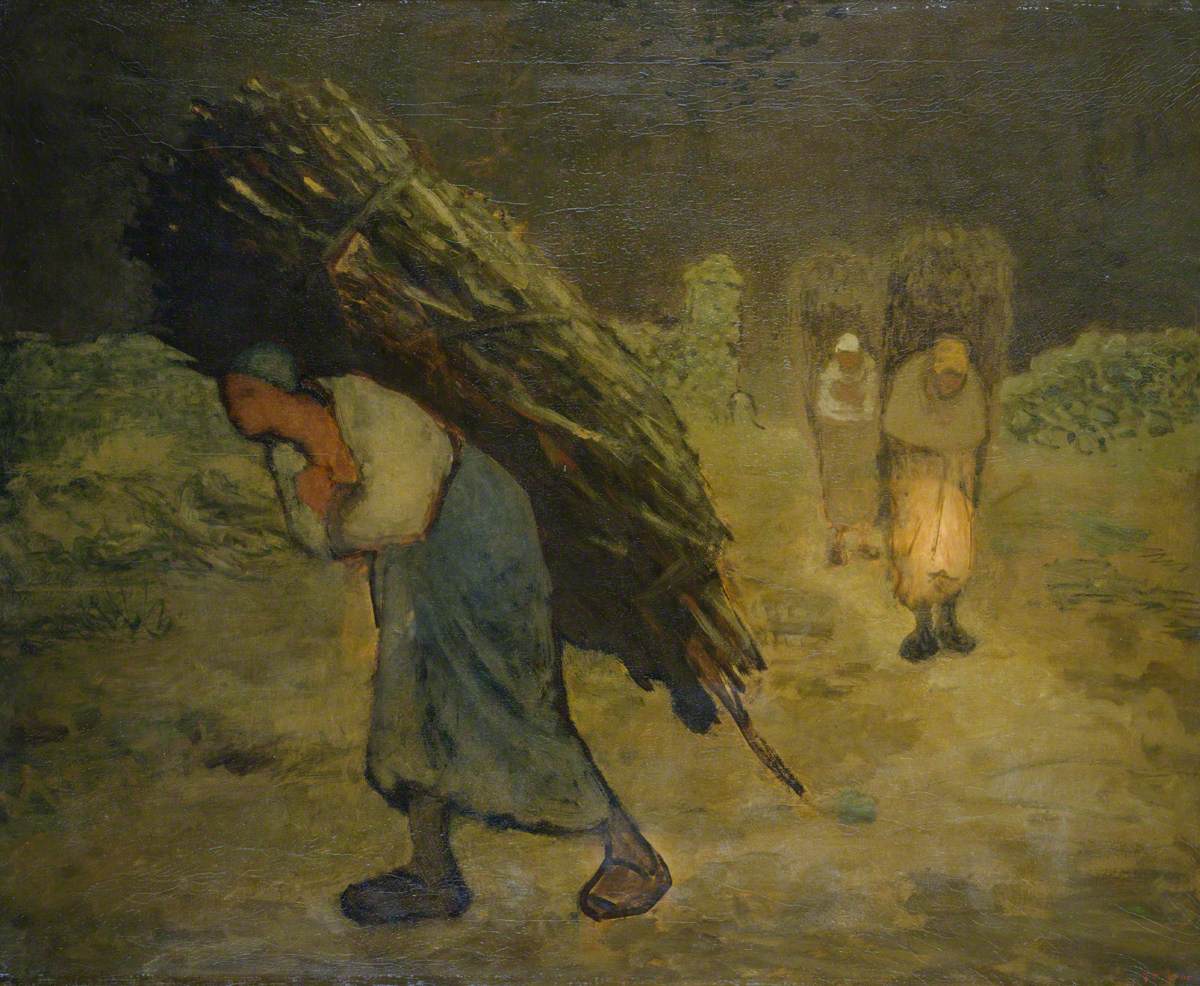
Having just visited the National Gallery and an exhibition on Millet:

https://www.nationalgallery.org.uk/exhibitions/millet-life-on-the-land

Dr Sanil Rege on twitter provided:


Seeing, and reading (again?) about 'The Faggot Gatherers' I couldn't help but see socio-economic history enacted:

'Two women are taking a short rest from gathering tree branches for sale as firewood. The older woman’s hunched back and clawed hands betray a lifetime of physical toil. The setting is the forest of Fontainebleau, south of Paris, close to the village of Barbizon. Millet was an exponent of Realism, a movement that rejected historical art and idealisation in favour of a truthful view of contemporary reality.'

Text: https://www.nationalgalleries.org/art-and-artists/232271
Winter, The Faggot Gatherers Jean-François Millet (1814–1875) National Museum Cardiff

The National Gallery's accompanying text reads:

'Three women are on their way home trom the forest of Fontainebleau. One of its entrances, the Porte aux Vaches, is visible at the back right. The staggering scale of their loads threatens to overwhelm them in their stumble homewards. The scene evokes Millet's 1851 letter to his biographer Alfred Sensier, in which he described how seeing 'a poor figure laden with a faggot reminded him of the constant fatigue of people's lives.
While the painting is unfinished, the elemental figures are typical of Millet's vork. The extreme simplification of their forms results in austere silhouettes.'

Mental illness has always been a facet of humanity, evidence of trephination from prehistoric times and across cultures and geographies bears testimony to the mind - body divide. Life was brutish physically too. What chance did the weakest stand? If, that is a broken bone: you could be left behind? But perhaps we underestimate the knowledge and experience of our ancient ancestors. Knowledge gained and passed orally, culturally, even before written history. Perhaps too, we struggle to understand how early humanity expressed itself beyond the big-stick of nature and the struggle for survival as the hominids that led to 'us' were winnowed down?

Even as recent as the 19th century life was hard. As the notes above attest, Millet's work seeks to record the sheer physicality of labour, even as the industrial age emerged. The advent of the industrial revolution brought its own pressures and privations, as pastoral life is replaced with change work at home (spinning cotton) to urban and factory growth. 

Severe mental illness would have been institutionalised in poor houses, religious and charitable organisations. Parity of esteem is grounded, to some extent in the questions: "What happened to you?", or "How are you feeling today?" In Millet's work the physical cost and strain stands out. While in the L'Angelus there is debate about prayer, or grief. What is visible usually speaks first, and stands for itself. This is why self-awareness, reflection, critical thinking, observational and interpersonal skills are important; and why mental health nursing calls for specific knowledge and skills. And, in psychiatry too, even when the same is contested.

Image source: Oil on carvas Lent by Amgueddfa Cymry - Museum Wales. Bequeathed by Gwendoline Davies in 1952.

Friday, October 16, 2026

Mental Health and Physical Activity

You know you're on the right (running) track when there is a journal that seeks to address the fundamentals of parity of esteem that is mental and physical health:

Robertson, R., Robertson, A., Jepson, R., and Maxwell, M. (2012) Walking for depression or depressive symptoms: A systematic review and meta-analysis, Mental Health and Physical Activity, 5, 1, 66-75. ISSN 1755-2966 https://doi.org/10.1016/j.mhpa.2012.03.002.

Sometimes, geography matters too in terms of intervention choices and the population of a study:

Moran, R., Sperandei, S., Peel, N., Gray, T., and Reis, A. (2024) The long-term effect of surf therapy on posttraumatic stress, depression, and anxiety symptomology among current and former Australian defence force members - A nonrandomised controlled longitudinal study in a community setting. Mental Health and Physical Activity, 27, 100629, ISSN 1755-2966. https://doi.org/10.1016/j.mhpa.2024.100629.

While researchers seek an holistic view -

Ciaccioni, S. et al. (2026) Modifiable determinants of adolescents’ physical activity and sedentary behaviour in school, home and mixed settings: A DE-PASS systematic review and meta-analysis of self-reported data with a holistic analysis. Mental Health and Physical Activity, 31. 100803,
ISSN 1755-2966, https://doi.org/10.1016/j.mhpa.2026.100803.

- and the above journal 'Supports open access', I do not believe my individual circumstances would qualify for differential treatment of fees:
'Article Publishing Charge (APC): USD 3,190 (excluding taxes). Actual APCs may differ based on individual author circumstances.'

This is a pity, as surprisingly thus far, the journal does not appear to have explicitly referred to 'parity of esteem'? Clearly a soapbox for me, there is plenty of room for others to join in the debate. To acknowledge, however, severe mental illness is well represented.

Given the holistic scope of Hodges' model the lack of inclusion in such literature is a shame. 

Acutely so, as Hodges' model begs (demands!?) consideration of holistic bandwidth. The matter of exercise and activity as a therapeutic option in mental health care quickly gets intense and heated (even if the interlocutors are recumbent). Social prescribing seems well established. On social media ['X' still for me] voicing the benefits of exercise does not always go down well. 

Fabiano N, Puder D, Stubbs B. Could not prescribing exercise for depression be psychiatric malpractice?

Ironically given the limitations of the bio-psycho-social model, the 'barricades' don't go up they are a permanent feature. As soon as we need to consider the political dimensions of health care, legal and professional accountability, policy, funding, accessibility, the minutiae of human rights (individual instances). Plus, in the UK the welfare benefits bill, the struggles of young adults not in employment, education or training; then division and oppositions are all that is. And, what can be individual and collective opportunities are missed.

My source:  https://x.com/NTFabiano/status/2103876655366521278?s=20

Thursday, January 16, 2020

Social Care: in the round and square c/o King's Fund

Simon Bottery's Long Read -

What’s your problem, social care? The eight key areas for reform

- and listed below, have been mapped to Hodges' model. The full article and comments are well worth reading and may help readers discern the relationships between the key areas identified.
  1. Means testing: it’s not like the NHS 
  2. Catastrophic costs: selling homes to pay for care 
  3. Unmet need: people going without the care and support they need 
  4. Quality of care: 15-minute care visits and neglect 
  5. Workforce pay and conditions: underpaid, overworked staff 
  6. Market fragility: care home companies going out of business 
  7. Disjointed care: delayed transfers of care and lack of integration with health 
  8. The postcode lottery: unwarranted variation in access and performance

I have associated each with the respective knowledge (care) domain in which they are placed:


individual
|
INTERPERSONAL : SCIENCES
humanistic ----------------------------------------------- mechanistic
SOCIOLOGY : POLITICAL
|
group - population
1. Parity of Esteem in Means Testing
2. (Catastrophic) Cost to me, anxiety, depression, stress
3. Unmet need (mental health, counselling ...)
4. Quality of Care (Mental Health, Well-Being..)
5. Workforce (values, person-centred, self-esteem, job-well-done, BE the Difference?)
6. Market fragility (attractiveness as career pathway, having a leader)
7. Disjointed care (number of carers, lived experience...)
8. Postcode (I thought this had been addressed?)
(postcode? - a remote 'thing' outside through the window and (summer) garden]


1. Parity of Esteem in Means Testing
2. (Catastrophic) Cost to NHS - innovation, change, prevention, transformation
3. Unmet need (physical, access ...)
4. Quality of Care (Time, Logistics)
5. Workforce (tasks, scheduling, physically reasonable?)
6. Market fragility (scale, bed occupancy, local demographics...)
7. Disjointed care (geography, transfers, A&E admissions...)
8. Postcode ('literally') North, West, East, South,
Regions, London, Urban, Rural ...

1. What is your
Parity across

2. (Catastrophic) Cost to my family.
3. Unmet need (socialising, access, carer ..)
4. Quality of Care (Relationships, Belonging, Communication, Family Groups..)
5. Workforce (job satisfaction, status, social worth ..)
6. Market fragility (Public perception, marketing, negativity bias - local news, time for outreach, intergenerational engagement...)
7. Disjointed care (input of family, local provisions, self-funding - budgets...)
8. Postcode (pre-social care, pre-lottery?)


Means (let's Test that.)
here too?

 2. (Catastrophic) Cost to the State?
3. Unmet need (my choices, informal carer ...)
 4. Quality of Care (Value for £, Measures, Inspection, safety..)
5. Workforce (pay and conditions, minimum wage?, Unions, contracts, training, BREXIT ..)
6. Market fragility (FUNDING settlements, estate, investment, staff turnover, Qualified staff, commercial history, profit, governance..)
7. Disjointed care (commissioning, ...)
8. Postcode (local policy, funding, protocols ..)


Saturday, June 24, 2017

Evidence for simplicity, genericity, openness and holistic competence

N-th mover to Integrated, Person-Centered and Holistic Care

walk the talk, sour grapes, or holistic humbug?

Although, sadly (and all down to me) I stepped off the PhD programme with an MRes, the intention was not to bring my journey with Hodges' model to a close. The joke of course with this model is that you are always presented with a crossroads. As I've written previously (even in draft!) this model is a baton to pass on to others. If the workforce of the 1970s to date evaluates its contribution to health care change and progress, then while the achievements speak for themselves, the challenges* that remain still shout out:
  1. parity of esteem 
  2. integrated - co-ordinated and collaborative care
This week I received an email, purely as a list member I must add:
NHS Innovation Accelerator 
Applications for the 2017 NHS Innovation Accelerator (NIA) are now open. For 2017, the NIA is seeking local, national and international innovations that address the following NHS priorities:

·         Mental Health
·         Urgent and Emergency Care
·         Primary Care

The above is now closed but I immediately thought about Hodges' model, given that from the information provided mental health is a priority and a top priority for citizens. Plus, the things that can make a difference to problems:
  • Suicide and relapse prevention
  • Access and availability with a focus on perinatal, children and young people, dementia and psychological therapies
  • Early identification and intervention to minimise the impact on a person’s life, the likelihood of escalation and, in some cases, the chances of survival
  • Care closer to home including self-care and access to services at home, in a primary or community setting
  • Holistic care of both mental and physical health needs including prevention, screening and treatment for those at greatest risk of poor physical health   
"There are many innovations available to improve mental health services, however they are not always used..."

There are however a series of requirements, which present a stumbling block as high impact evidence is lacking.

The purpose of NHS Innovation Accelerator lies in the name. The target is established initiatives and projects that would benefit the NHS and others from a boost of further momentum and leadership support including funding and mentoring. Hodges' model is far from this, but the call is interesting nonetheless.

Reading the details I can argue, for example, that Hodges' model is immediately applicable across the life-span. The model is already designed, but in use the model could be said to meet the requirement of being co-designed with people (including carers, where appropriate). I have used the model with patients and carers (young and adult) who have lived experience of mental illness. With some consideration of the patient, carer, as I have stressed here before on W2tQ the model is accessible to a diverse population. Critically, the delivery of the most significant benefit in terms of outcomes and cost savings needs proof.

It seems that many of the world's problems could be ameliorated through education. This has been evidenced for decades and yet globally there are those who politicise their respective educational system, or even worse deny sections of a society access to education.

In healthcare how can we demonstrate the effectiveness of what is basically a back-of-an-envelope tool? While not a solution Hodges' model helps us to resolve the constituents of healthcare demand and supply, to critically analyse and synthesize - what is going on? I'm sure Hodges' model is just one of many local 'innovations' (in this case created in NW England) that are not evidenced and are therefore missed. Why is this? It may be that the model needs to be re-discovered since being invented somewhere else, by somebody else makes it a non-starter. Similarly, reading the information 'model of care' always grabs my attention:

Your innovation can be a device, digital app or platform, 
a service, process, pathway or model of care. 

But as is often the case, this is framed in service commissioning, funding, delivery and yes patient outcomes terms. Devices, apps, platforms and services can be specified to a high degree. This is essential to success in research (as is dissemination). Aims and objectives can then be clearly defined, outcomes can be recognised and measured. Processes and pathways are perhaps more fuzzy? These are all important tools, aspects and contexts in health care.

My frustration is that this and similar research formulations seem to exclude tools and resources that are by their nature intentionally simple, holistic, generic and cognitive-reflective. The "model of care" is broken. A whole systems approach# is needed that incorporates education and with it prevention and staying well; plus caring for those affected by illness and disease. We have to honour the legacy problems that the political, education and health systems have 'delivered'. Even if not broken the model of care is missing its twin, the model of life-style choices'.

I still believe there is a model - a conceptual framework - that must precede the (politicised?) model of care, if health and social care are to be truly transformed. Without this, well yes the NHS can accelerate, staff have demonstrated this repeatedly while negotiating all sorts of obstacles. The line of travel will however be circular; circular, but without the discoveries and change gifted to the particle physicists.

individual
|
INTERPERSONAL : SCIENCES
humanistic ----------------------------------------- mechanistic
SOCIOLOGY : POLITICAL
|
group - population

education

mental health

cognitive access

benefits - outcomes

subjective

Evidence

process

primary care, accident and emergency

physical access

objective
qualitative

home

social care

co-design

public engagement


quantitative

strategy

'model of care'

education system

citizens

cost savings

My source: 
Irina Johnston
CHAIN Administrative Assistant

If you wish to publicise information on the CHAIN Network please email your request to: enquiries AT chain-network.org.uk

CHAIN - Contact, Help, Advice and Information Network – is an online international network for people working in health and social care. For more information on CHAIN and joining the network please visit website: www.chain-network.org.uk

*
  1. parity of esteem (a very broad interpretation - the comparison and contrasts between mental health and physical care on several levels - demand, supply, funding, research, integration, staffing, policy, outcomes, evidence-base, social determinants...)
  2. integrated - co-ordinated and collaborative care (this is not one thing, but several. These terms are sometimes used interchangeably. Care that is truly integrated will also be co-ordinated and collaborative.
# This is not recourse to jargon, Hodges' model implies several systems from the outset.

Thursday, September 17, 2020

The Pain of Parity of Esteem

"Chronic pain is defined as pain that lasts more than 12 weeks or persists beyond the usual healing time (Treed et al., 2015)."
individual
|
INTERPERSONAL : SCIENCES
humanistic ----------------------------------------------- mechanistic
SOCIOLOGY : POLITICAL
|
group - population

"Functional magnetic resonance imaging studies of the brain have shown that emotional pain stimulates the somatic pain system, and the somatic pain system activates the nuclear accumbens and ventral tegmental areas, which are the seats of emotion and reward pathways (O'Connor et al., 2008). This biological evidence underscores the complex and bidirectional association between physical and emotional pain." (p.14).

12 weeks

"the mesocortico-limbic dopaminergic pathway and endogenous opioid system"


Majeed MH, Naveed S. Chronic Pain in Youth: Can Mental Health Services Provide Relief?. J Psychosoc Nurs Ment Health Serv. 2018;56(11):13-16. doi:10.3928/02793695-20181012-03

See also:

Morton, J., & O’Reilly, M. (2019). Mental health, big data and research ethics: Parity of esteem in mental health research from a UK perspective. Clinical Ethics, 14(4), 165–172.

https://doi.org/10.1177/1477750919876243
 

RCN: Parity of Esteem – Delivering Physical Health Equality for those with Serious Mental Health Needs

https://www.rcn.org.uk/professional-development/publications/pub-007618

Monday, January 19, 2026

iv Book: Bill Ross - 'Order and the Virtual'

'The Philosophy and Science of Deleuzian Cosmology'

Systemists will find much here: 'principle of least action', 'principle of least resistance', equilibrium, open / closed systems, and entropy. A useful question is posed: 'Is complexity increasing? Is that average complexity across the universe; or the complexity of the most complex object? Deleuzes's Difference and Repetition is quoted:

'The values of implication are centres of envelopment. These centres  are not the intensive individuating factors themselves, but they are their representatives within a complex whole in the process of explication. ...' (p.255-6)'

Reading this I immediately thought of Bohm, who followed shortly after (still in Chapter 1!). In chapter 1, 'Chaos' could be read as Cosmos, hence the term rolling them together - chaosmos. This is the tract from which existence and becoming arise (re-reading). Deleuze's awareness of physics and quantum theory and its influence on his work is discussed, with chapter 2 providing continuity reaching to Leibniz (and 'The Calculating God'), also contributing is 'the complete concept', 'principle of sufficient reason', 'intensive individuating factors' and 'principle of identity of indiscernibles', for example. Even while the context is metaphysics (and it is not!), (for me) this seemingly presages a comprehensive health assessment:

'The necessity in question is the necessary inclusion of all predicates pertaining to an individual in the complete concept of that individual.' p.24.

There are several 'completes' to be unwound, and so better understood. Ross provides a key. This isn't a book to read and pass-on to a student, second-hand bookshop. It really deserves re-reading, mandatory here - to get hold of the ideas and interplay of Deleuze, Ross's understanding and it must be said interpretation, that also calls upon Dan Smith's Essays on Deleuze, (EUP) and directly Leibniz's work. 

'The complete concept idea of predication is furnished to map faithfully onto these principles concerning the nature of things.' p.26.

The expanse of thought and literature from across the channel, 'French Theory' has long tempted, teased and taunted (not-quite as severely as mathematics!). At least here you can get a sense of the traffic in thought and ideas. Deleuze is difficult (in-/compossibilities, kuklos exothen ...), until you relate: becoming over being, difference over identity, and creation over representation. Order and the Virtual helps in this task. Delueze is 'embedded' in the mechanics of complexity, and mathematics, but Deleuze and Ross can see - across - to the humanities (virtual and actual). 

'Lastly, while mathematical concepts are frequently adopted to illuminate Deleuze's argument, they should not be taken as metaphorically representative of processes in the world; this would be to ignore the broadside and extended attack on representation as a mode of thinking as such which occupies so much of Difference and Repetition. Rather, they serve as a particularly direct example of the differential processes to which all phenomena - natural, social, psychological are subject. In an unambiguous sense, it is eminently possible for problems prompting a mathematical response to express themselves in altogether different domains - natural, social, etc. The problem is, so to speak, a common root of all domains.' p.39.

Still grappling, I noted integration, actualization, parity of esteem, maths - the linear and non-linear. It seems Deleuze was challenged by the question of integration. Leibniz's contribution of the calculus is acknowledged. History and even the present remain preoccupied with finding boxes. Ross explains how for Deleuze, we should not discount turbulent phenomena that cannot be simply integrated, written off as random disorder.

If we associate complication, with implication and explication, do we invite two-fold (as a minimal - keyhole) 'surgery': (re-)constructive and destructive? Thank you Mr Ross. I see now, how the (infinity →) continuum will not be exhausted. Exploring axioms for Hodges' model, and what is axiomatic, I must check Albert Lautman's model of dynamic structuration, especially when set (against / with?) the problematic mode:

'The two modes relate to each other dialectically - a period of exploration followed by the resulting period of axiomatisation. Deleuze recognises both modes and their respective utility, but for his philosophy the problematic mode is by far the more important.' p.41.

Do our boxes still have a purpose? To tame the situation - at hand/mind/virtual?

More to follow here ...

Bill Ross (2024) Order and the Virtual: The Philosophy and Science of Deleuzian Cosmology. Edinburgh: Edinburgh University Press. 
https://edinburghuniversitypress.com/book-order-and-the-virtual.html

Thursday, July 29, 2021

Review: iii Fundamentals of Person-Centred Healthcare Practice


Previously, I recognised the many links throughout the book and on p.54 there are five relating to professional standards. These reflect the book's international scope and multidisciplinary relevance. Those on page 54 do work and support the text. One of them I was presented not with the expected page and missed the outcome of the 'click'. I wasn't going to re-type but found the page through the site's menu. Some links are long, as I found, whether permalinks [usually shorter] or fallback search text might improve link-longevity I'm not sure.

As a reassurance the contrast issue black-text-on-dark-green is limited to one figure.

The book is well referenced with an additional reading list. I've been made aware through plagiarism detectors (one paper) which - it appears - have 'read' an introductory section to Hodges' model as self-plagiarism. I wondered if in comprising a community of practice the references here maybe somewhat insular. I've no analysis to support this and the same no doubt may apply to other to emergent ideas, including threshold concepts. You have to start somewhere. At fear of contradiction there are many theories called upon and referenced.

Students may find the more attention to the position and specificity of references useful p.75 "we cannot not communicate." How times, chapters (8 - Communicating and Relating Effectively), theory, practice and management are challenged. The art of  'sympathetic presencing' working on the phone triaging acute community mental health referrals, 'Being kind and warm'.

For a text on person-centredness the book is imho mental illness-health light, but then as noted what is the book about? Am I suggesting that such books should attend to disciplinary equality? That said if there is a test for parity of esteem here, what do you conclude from one dedicated chapter? I was surprised, but is there a dilemma here? Beside 'Trust in self and others' I made a note, 'intuition'. Is person-centredness and being person-centred taken for granted within mental health practice? Research suggests not. 

Reading the table of contents you will find:

Chapter 18: Being person-centred in the acute hospital setting
Chapter 19: Person-Centred Rehabilitation
Chapter 20: Being person-centred in community and ambulatory services
Chapter 21: Experiencing person-centredness in long-term care
Chapter 22: Being person-centred in mental health services
Chapter 23: Person-centred support for people with learning disabilities
Chapter 24: Being Person-centred in Maternity Services
Chapter 25: Being person-centred in children’s services
Chapter 26: Being person-centred when working with people living with long-term conditions
Chapter 27: Palliative and end of life care services

I had a sense that the chapters were not sufficiently differentiated despite the titles. This may say more about my reading and the (editor's achieved) coherence of the book overall. Perhaps also for me, person-centredness is realised in-situ with personalised details. Not just vignettes (which are used) but the detailed intra- interpersonal, social, physical, political and spiritual choreography that is person-centred care: whether or not there is engagement (a dance).

Dementia is represented but the context appears to be residential care. You will find challenging / courageous conversations, but not challenging behaviour in situations that test interpersonal skills and person-centredness especially for staff, students, carers and families (dementia in general hospitals - despite numerous initiatives). Trauma has its place in the mental health chapter (and in current literature), but again the challenge of psychoses, anorexia are missed opportunities to reveal the potential and delivery of the Person-Centered Practice Framework.

Since the book's publication with its stress on the welfare and well-being of staff and educators too, the need to make explicit the politics in health is even more extreme. The need to protect the title of 'nurse'; mis-information generally and relating to COVID. Person-centred decision making and shared decision making are described as systems. Perhaps this misses the nuances of a health care professional, the team and family working with a person were they are making an unwise decision (pp.83-92). Another chapter indicates the need and utility of disciplinary bridges:

Chapter 17: Socio-political context in Person-centred Practice

 
individual - PERSON - patient
|
INTERPERSONAL : SCIENCES
humanistic ----------------------------------------------- mechanistic
SOCIOLOGY : POLITICAL
|
family - group - population
MIND :: Parity -

 - of esteem :: BODY

Culture
Child - Parent - Guardian
FAMILY


SOCIO -
 Refugees Homeless
title of 'nurse'*
mis-information

Organisational culture?

- POLITICAL

One more to follow with many thanks to the publisher for the review copy.

Review i

Review ii

Review iv

Fundamentals of Person-Centred Healthcare Practice,  McCormack, B., McCance, T., Bulley, C., Brown, D., McMillan, A, Martin,S. (Eds.). ISBN: 978-1-119-53308-5 February 2021 Wiley-Blackwell.

* https://twitter.com/hashtag/ProtectNurse?src=hashtag_click


Friday, July 03, 2015

Vulnerability: In Art and Care (Ack: Benedict Rubbra)

individual
|
INTERPERSONAL : SCIENCES
humanistic --------------------------------------- mechanistic
SOCIOLOGY : POLITICAL
|
group
'Vulnerability' by Benedict Rubbra (with permission)


Last weekend I helped my eldest son with some driving SW to Exeter in Devon. While he disappeared to help make a couple's wedding day special (which I understand it was), I spent Saturday morning at Royal Albert Memorial Museum.*

Serendipity soon arrived as one of the exhibitions was Benedict Rubbra: Eye to Image. I'm very grateful to the artist for being able to display 'Vulnerability' to help illustrate Hodges' model, taking the title literally here; that is, vulnerability within the mental health context plus vulnerable people in society and care.

I had never heard of Mr Rubbra, but I'm glad that I now know not just his work, but his way of working. The video 2/4 below explains the artist's technique:


There are actually several paintings that I could relate to h2cm and travels:

Singing Blackbird
A Wave in Summer
Tranquility
Pantheon (I waited for a plane...)
work that references Fra Angelico

Singing Blackbird and A Wave in Summer are not exhibited at RAMM but are illustrated in: 
Benedict Rubbra: point of balance || Jenny Pery

I've some new draft notes introducing Hodges' model:

The idealised nature of the model is obvious even upon brief examination. How are we intended to navigate the model's axes? Are both similar in this respect? Taking the individual-group axis first, we can see where the idealisation of person-centred care might be located. This is not just by virtue of labelling ('individual'), but is associated with the knowledge that it invites around it. The two upper domains of interpersonal and sciences represent the two forms of nursing care upon which all nursing is based; and around which a parity of esteem debate still rages (Millard and Wessely, 2014). These are mental healthcare (interpersonal) and physical care (the sciences). 

Within these domains we can conceptualise the various activities that make up being human and doing nursing. 

In addition the model as a whole can also be considered, according to need, as being found within a spiritual domain.


Millard, C., Wessely, S., (2014) Parity of esteem between mental and physical health. BMJ 349, g6821–g6821. doi:10.1136/bmj.g6821

*I did my general nurse training at Royal Albert Edward Infirmary - Wigan.

Tuesday, June 16, 2026

vi Book: 'Complexity in Health Care - A Paradigm Shift for Clinical Practice'

The rest of the book is practice-based which is a strength. Chapter 18 has three clinical illustrations, were reflection and self-reflection is brought to fore. Especially so, as it pointed out that the 'clinical situation/encounter' introduces its own 'vagaries', or noise which can impact the 'quality of the bond between clinician and patient'. Rapport is the key. 

I was still missing 'complexity' and its dynamics, but I'm sure of the following:

If this was discussed - could be represented then the book would be theory-laden and I and other would-be readers would not be able to understand.

I still think Hodges' model can help, and in chapter 19 picked out 'manifold' (p.113), as if doing so, manifests something more esoteric. There is something here, the author noting the need to shift from individual to group perspectives. So, yes I think we can do more than embrace 'complexity' (p.114).

On page 116 there is discussion of the sometimes sudden path to recovery, 'probably common but often not comprehended'. Please pardon the naivety, but I scribbled 'hidden in complexity, what would (say) the three(?) equations be?'. For a book published in 2023 'artificial intelligence' is not indexed. This might be one area that AI could assist, given the progress in formal mathematics (but see below p.183!)? Algorithm is mentioned throughout the book. Further reading here, informed me that engaging with a reading group on 'Philosophical Counselling' is worthwhile. It is!

Part IX had me wondering if the debate about typical and complex cases, there is a slight of perspective going on? You can end up with paradoxes in terms of an individual's needs, criteria, risk, 'need for admission'. Which I must think about! Chapter 20 has three further reading texts on abductive reasoning. There's an appeal(?) on page 129 for an appropriate treatment model, well that is my take. Collaborative care and stepped care models are suggested. But with acknowledgement that:

'In truth, all models currently available may involve a defect in continuity within or between systems'. p.129.

I beg to differ. A role of Hodges' model is to help frame aspects of care through time, to facilitate and assure continuity.

Part X tackles the required precision in assessment, hence recourse to mathematics and statistics. The next two chapters may be useful for early career researchers and yet looking over our shoulders what is ai offering here? In Case 1 I was impressed by the suggestion of a health record that is over 70 years old. Not impossible of course, but I thought of the Lloyd George envelopes, their hospital equivalents, other paper sources and inevitable scanning this would entail here in the UK? Of interest to research is the creation and validation of complexity profiling inventories (tools) not just that, but their self-assessment form of delivery. And, yes in summary chapter 24:

'We are still left with the challenge of rating the patients' severely compromised health situations where "health" includes social, emotional, and financial well-being.' p.143.

'How do you factor this interpersonal situation into your complexity equation?' p.144.

Yes, how indeed? 

The realities of research of dealt with - funding for the development of tools a problem universally. The references here concern biopsychosocial complexity. Chapter 25 describes abstraction, and hiding detail, which is of great interest here. DSM-5 criteria for major depressive disorder are listed (DSM-6 may be released in 2029?). 

In chapter 25 the authors are once stymied by 'how to include (integrate? PJ) four dimensions, three time periods,and assorted assessment items in a single assessment.' 

As noted the four domains are here again (p.151): medical, psychological, social and care delivery and on page 153, introducing chapter 26, limitations of complexity assessment tools. Parity as in 'parity of esteem' is not indexed and I don't recall having read this, but this is well represented in later deliberations on variables #2. You will find psychosis, but not in depth or severity.

 In 'Creation of a New Model for Clinical Practice' (Chapter 31) identity is stressed, as a prompt to encompass those variables that contribute to preserving the person - what is humanistic. Allied with manifold, identity is a 'coi' for me, concept of interest - for this same reason. On page 172: the authors observe they 'are left with the question of whether there are acceptably accurate clinical models that are simpler and more straightforward than ours? We believe the answer is no!'. I believe there is a way, and a model to help 'keep the life in clinical work' - not take it out. There is a sense that Chapter 32 seeks what I was looking for above: as they explore random variable and 'sample spaces' descriptively - over a page.

Ah! 'Artificial intelligence' is found in text p.183. I'm surprised an editor, proofreader aloud the following sentence to go unchallenged?

'But, as will be discussed, these computer techniques have their limitations based on their lack of flexibility.' 

I was genuinely surprised to read this. Plus, again on ai on page 185: 'Making inferences is not reliably their domain.' I think I would look more at the human-ai interface. And the status of ai within psychiatry as opposed to medicine, but that is also another (parity - divide) debate. Things really are complex now on so many fronts: ethics especially.

Perhaps I am looking for the cookbook formula as introduced for chapter 35 clinical judgement. The further reading is combined with critical thinking. More detail on the empirical-collaborative method is welcome. When I read 'illustrated' I take this literally. Again I can disagree twice on page 220. I know Hodges' model is not validated, but it can - with practice(?) - do this light (simple) or heavy (complex) lifting. 

The warning about dogma needs to be repeated regularly. It is rather like the need for nurses to revisit their profession, role and work as relates to the law. Is Hodges' model an over-valued idea? Am I guilty of thinking I'm an expert? A problem with that view is that any assumed expertise is stretched across the whole model. So if anything there is a shallowness, but this means that I see my particular scope of practice, as other colleagues / professions see theirs. Here in the UK of late, this seems to have become rather blurred. 

In closing with this and achieving a "real-life" understanding of a case, with synthesis - path analysis diagram, the author's underline the value of their book which I have enjoyed and informed my preparation for WCCS26 (more to follow there). The authors can perhaps be reassured that all practitioners have a means to achieve their paradigm shift as described here - with added value and values.

There is a missed word: "of the situation ['with'?] him" on page 114. And revision needed re. text beginning with 'his boyish Paul McCartney "mop-top" ... on page 214. Spelling error on 216 'retu(r)ning'. 

Thanks again to Daniela and colleagues at SpringerNature for the review copy.

Steven A. Frankel, Steven D. Thurber, James A. Bourgeois (2023) Complexity in Health Care: A Paradigm Shift for Clinical Practice. Cham. Switzerland: Springer. ISBN: 978303114948.