Hodges' Model: Welcome to the QUAD: Search results for embodied

Hodges' model is a conceptual framework to support reflection and critical thinking. Situated, the model can help integrate all disciplines (academic and professional). Amid news items, are posts that illustrate the scope and application of the model. A bibliography and A4 template are provided in the sidebar. Welcome to the QUAD ...

Showing posts sorted by relevance for query embodied. Sort by date Show all posts

Tuesday, September 06, 2022

Book review iii "Human Landscapes: Contributions to a pragmatist anthropology"

 
Human Landscapes

As per previous 'reviews', this reader can get lost in the Introduction.

Discussing - "interactions, and loop effects within the organic-environmental system" - there is emergentism, causality, teleology, and supervenience with argument about definitions and word-use through the historical development of pragmatism and understanding of human behaviour individually, collectively and as a culture.

 A close reading can help, is called for here ...


What is of interest to me at present is the non-surprising mention of logic, Dreon points to the many problems that Dewey and pragmatic and other philosophers encountered from the introduction of subjective-objective dichotomies. 

For a mental health nurse the intra- interpersonal is your 'bread and butter' so to speak. Dreon has you reflecting on your professional field, by raising the dichotomy of feelings and cognition, the psychical and the physical aspects of emotions, language and experience. (Interesting, does a pragmatic approach foster identification of dichotomy or continuity?)

For a moment on page 66 I thought we were still on the introduction: 

"The final chapter of this volume will be devoted to the development of a qualitatively richer conception of human linguistic experience conceived as continuous, rather than as opposed to sensibility."
But this is fine and is a statement of Dreon's argument, its depth in dealing with the thought of Dewey, James and others (e.g. Mead). This is dense, and yet detailed, when it is not your field, but you can - begin, at least - to see how the historical development of pragmatism (schools of philosophy), psychology and sociology create so many dilemmas and debates:

"In my opinion, some of the Classical Pragmatists’ insights should
be brought to a coherent conclusion by basically working on two sides,
in order to avoid a foundational conception of language, while at the
same time gaining a more rounded view on sensibility, as it unfolds in
our ordinary lives. As already hinted at in response to Dreyfus, I endorse
a more complex conception of language as primarily consisting in fully
embodied and socially shared linguistic practices that have a variety
of different ends in view and are largely regulated by an affectively or
qualitatively oriented mutual sensibility." p.66.

The book is also 'developmental' too:

"Those practices—from so-called motherese to lullabies, nursery rhymes, and storytelling—are often specifically directed at eliciting responses from the baby and catching attention. The baby’s behaviors—shaking the arms, keeping the eyes wide open,
squealing—are strongly embodied, even when they are vocal; but they are also affectively based and oriented responses to cultural-linguistic stimulations on the part of its caregivers." p.67.
All this shouted emergence to me (and as above), and Dreon rewards this reading. 

Thinking about the 'logic' (if any) in Hodges' model, this stood out:

"The point is to change our approach and to adopt the point of view of the
shared social context in which an individual’s first perceptions occur,
rather than the still monological perspective of an isolated individual
as the primary starting point of experience." p.67.
With more to follow ... I know now why I saved this:

embodied nature

an interactive installation to nurture
our sensibility to the living world


Dreon R. (2022) Human landscapes. Contributions to a pragmatist anthropology. Suny Press, Albany.

https://sunypress.edu/Books/H/Human-Landscapes

Video: Roux, Caroline, Design Miami: Tangled up in the natural world. FT Weekend, Collecting, 27-28 November 2021, p.3.

https://mischertraxler.com/projects/embodied-nature/

Sunday, March 22, 2026

Slingshot AI? Meet the Earthshot (Prize ...!)

Slingshot AI

Ash
"the first AI designed for therapy"
 

'In January 2024, we set out to build a 
foundation model for psychology. 

The mental health crisis sweeping across 
our communities isn’t going anywhere, 
and what we’re doing clearly isn’t enough. 
Therapists have one of the hardest jobs in the world,
and there just aren't enough people 
or resources to help everyone in need.
And we all know in our hearts that everyone 
could use some help with their mental health. ...'

'We need a foundation model for psychology.'
 
🔷 
 
Plus a bit more ...? 
 
INDIVIDUAL
|
    INTERPERSONAL    :     SCIENCES               
HUMANISTIC --------------------------------------  MECHANISTIC      
SOCIOLOGY  :   POLITICAL 
|
GROUP

The four primary therapeutic approaches used by Ash are:
  1. Cognitive Behavioral Therapy (CBT): Focuses on identifying and modifying dysfunctional thoughts, emotions, and behaviors.
  2. Dialectical Behavior Therapy (DBT): Teaches skills for emotion regulation, distress tolerance, and interpersonal effectiveness.
  3. Acceptance and Commitment Therapy (ACT): Focuses on accepting difficult emotions while committing to actions that align with personal values.
  4. Psychodynamic Therapy: Explores unconscious patterns and early life experiences to understand current behaviors. [ Google AI Overview* ]
?

?

?


Our 'Intelligence' is embodied.
The whole of Hodges' model is / can be 
embodied - embedded within the SPIRITUAL.

My source: Electronic therapy - Machines of loving grace, The Economist, November 15th-21st, 2025. Vol. 457: #9474. pp.72-73.

 *"slingshot ai - what are the four therapeutic approaches used by ash?"

 
Previously: 'health' : 'ai' : 'parity of esteem' : 'foundation' : 'language' : 'embodied'

Sunday, September 15, 2013

Book review "Clinical Intuition in Psychotherapy: The Neurobiology of Embodied Response"

Clinical intuition is something that in formal learning terms is intangible, but in practice is earned and relied upon as a gift of experience. When I first received this book from the author Terry Marks-Tarlow, leafing through I thought the emphasis was on the neurobiology presaging a rather technical read. The references to brain structures, neocortex, brain waves ... seemed to suggest a reductive approach, remote from my conception of intuition in clinical practice. I need not have worried, the initial discussion on the brain and evolutionary development is not just a foundation for what follows but as the title suggests underpins and integrates the whole text. Despite the title and as the foreward advises you do not have to be a psychotherapist to read and appreciate this book. The stall is set from the outset in the introduction which explains that chapter one defines clinical intuition:

Clinical intuition is defined from a neurobiological perspective as a right-brain, fully embodied mode of perceiving, relating, and responding to the ongoing flows and changing dynamics of psychotherapy. (p.3)

The introductory material here is essential foundation reading for people starting a career in psychology and mental health related disciplines. The evolutionary development of the brain from reptile through to the mammalian brain is invaluable. Tying this to specific brain functions and circuits - care, fear, panic, play, lust, rage and seeking - helps integrate brain anatomy, perception, emotion, and behaviour. The advances in neurobiology to follow will no doubt demand that we all extend our understanding of this interdisciplinary fusion.

Clinical Intuition in Psychothreapy
The book itself (hardback edition) is very well produced, the type face easy to read and the book well structured and with a well balanced mix of illustrations and photographs. The reference listing at the end runs over thirteen pages and is well grounded historically and in having regard to ongoing research. The index is comprehensive (fourteen pages) and a resource itself providing a look-up approach. The book's use of case studies, thirteen in total informs the text and provides some continuity through the book. Dialogue between therapist and client is easy to follow and illustrations are provided with ample explanation in situ. The references also utilize web-based resources.

I recall intuition coming up as a thread on several occasions on the psychiatric-nursing list especially between 1998 and 2004. Intuition is a central quality for all personnel working in health and social care. We must also recognise intuition as a human trait as when non-health professionals exercise the judgement that: "Wait a minute, we need a clinical opinion here." Self-care is also discussed. I had a Pythonesque moment - "Is this the right room for an argument?" - considering psychotherapy as a therapeutic modality within therapies as a whole. Here in the UK (and no doubt elsewhere) self, brief and solution based therapies rule economically. Even though the shortage of psychological intervention is recognised in the UK through IAPT improving access to psychological therapies, we need to ask: how does psychotherapy fare in the current (austerity) climate? To what extent can clinicians exercise intuition? Therapy relies on caseness, relationships and narrative, but to what extent can these be acknowledged and delivered within the economical time frames that frequently operate? 

Although there's no specific chapter on training for clinical intuition, Marks-Tarlow provides a list of how researchers have characterized clinical intuition (more recently in the 1980-1990s); five characteristics are proposed:
  • Sudden recognition;
  • Immediate knowledge;
  • Emergent awareness;
  • Non-verbal insight; and 
  • Holistic integrative sensibilities. (pp.42-43).
 Of the first two sudden recognition and immediate knowledge, I thought of the intuitive sense that is applied upon receiving a referral. That is the assumptions (not always helpful) that arise from the information provided (and missing) and where this leads you? But of course, is this clinical intuition? Intuition as the author makes clear (p.3 and) throughout the book is in psychotherapy. Intuition here (and for me) depends on interpersonal - therapeutic - interaction. What precedes is something else (data integration, hypothesizing, reasoning...?). I can however still see explanatory avenues in the above that can help us travel from the conceptual (reduced) to a holistic whole. I did wonder about the role of intuition in suicidal ideation and risk management, but this is also a question of referral criteria and caseness.

I would very much like to write myself about information and complexity and these themes recur in the text, especially the latter. Several 'spaces' are discussed too: social, physical and spatial schemas. The work of Buzsáki on the hippocampus, navigation and maps - landmark navigation - is fascinating in chapter 7 Navigating the Seas. I have likened Hodges' model to a cognitive periplus - an ancient maritime map. Over the next few months I'll post some quotes from the book.

This is an excellent book that I heartily recommend. The discussion of what is implicit in the brain and so in therapy, what is embodied and wisdom in mentoring invites re-reading. Finally but vitally there is much humour and humanity here too.

Many thanks to Terry Marks-Tarlow for the review copy.

Thursday, August 13, 2026

Call for Papers: Bioethics and Philosophical Health - JECP

Submission Deadline: Thursday, 31 December 2026

Contemporary bioethics has developed sophisticated tools for ethical decision-making. Yet it often operates within assumptions that reduce life to physiological viability. Ethical questions are frequently treated as matters of procedure and consent. Meanwhile, patients and clinicians face questions that exceed these frameworks. What makes a life worth living? How does illness disrupt or reveal meaning? What forms of care support not just survival but existential coherence? These questions call for a deeper engagement between bioethics and the philosophy of existence.

Despite growing interest in person-centred care, conceptual tools for clinical evaluation remain limited. Frameworks for assessing philosophical sense-making and existential orientation are underdeveloped. The Philosophical Health perspective addresses this gap by going beyond physical and psychological health. It asks how we cultivate meaningful lives through bodily experience, self-understanding, relational belonging, engagement with possibility, purposeful action, and philosophical reflection. The concept draws on the ancient tradition of bios philosophikos. It proposes that healthcare should attend not only to pathology but to the philosophical dimensions of human existence.

This special issue creates space for exploring how philosophical health can deepen bioethical inquiry as an embodied ethics of the good life. It challenges reductive assumptions and fosters practices that support purpose and meaning in lives, even when disrupted by health challenges. We welcome transdisciplinary contributions from philosophers, bioethicists, clinicians, medical humanists, and social scientists. Topics include how philosophical frameworks enrich clinical practice, how healthcare shapes existential experience, how the 4E cognitive approach may inform bioethical theory, and how dialogical methodologies can be integrated into institutional contexts. The issue aims to rediscover bioethics as a genuinely philosophical and existential enterprise, that is as bios ethikos.

Topics of interest for this call for papers include but are not restricted to:

  • Philosophical frameworks for enriching or transforming bioethical practice and clinical evaluation;
  • Philosophical dimensions of clinical encounters: embodiment, selfhood, temporality, and meaning-making;
  • Critiques of the reduction of ethical deliberation to procedure, regulation, or risk management;
  • How healthcare practices shape or constrain the philosophical dimensions of human existence;
  • The 4E cognitive approach (embodied, extended, enactive, embedded) applied to bioethical theory and practice;
  • Integration of philosophical inquiry and dialogical methods into clinical or institutional contexts;
  • Empirical and conceptual engagement with the Philosophical Health methodology, including SMILE_PH;
  • Cross-cultural and planetary perspectives on philosophical health and the good life;
  • Methodological innovations in clinical philosophy, philosophical counselling, and reflective practice.
More details here: https://onlinelibrary.wiley.com/page/journal/13652753/call-for-papers/si-2026-000772


_______

Dr Luis de Miranda
Associate Professor (Docent) in Bioethics, Uppsala University
Marie Skłodowska-Curie Fellow, Turku Institute for Advanced Studies
Associated Researcher, Centre for Research Ethics and Bioethics,
Department of Public Health and Caring Sciences, Uppsala University
https://www.luisdemiranda.com/

My source: Philos-L "The Liverpool List" is run by the Department of Philosophy, University of Liverpool https://www.liverpool.ac.uk/philosophy/philos-l/ Messages to the list are archived at http://listserv.liv.ac.uk/archives/philos-l.html. Follow the list on Twitter @PhilosL. Follow the Department of Philosophy @LiverpoolPhilos

Sunday, January 03, 2021

Deep *and* Broad ... Hodges' model is no blank slate ...

"Beyond deep learning

Steeper than expected
Different researchers have different ideas about how to try to improve things. One idea is to widen the scope, rather than the volume, of what machines are taught. Christopher Manning, of Stanford University's AI Lab, points out that biological brains learn from far richer data-sets than machines. Artificial language models are trained solely on large quantities of text or speech. But a baby, he says, can rely on sounds, tone of voice or tracking what its parents are looking at, as well as a rich physical environment to help it anchor abstract concepts in the real world. This shades into an old idea in AI research called "embodied cognition", which holds that if minds are to understand the world properly, they need to be fully embodied in it, not confined to an abstracted existence as pulses of electricity in a data-centre.

Biology offers other ideas, too. Dr Brooks argues that the current generation of AI researchers "fetishise" models that begin as blank slates, with no hand-crafted hints built in by their creators. But "all animals are born with structure in their brains," he says. 'That's where you get instincts from.'" p.11.


The Economist, Technology Quarterly: Artificial intelligence and its limits. The Economist, June 13 2020, 435:9198. [and image source].

'Deep and Broad' - as required.


Thursday, September 11, 2014

Technologies for Development: Project - founding ideas

Reading the website of this project I noticed that their founding ideas can be mapped to Hodges' model. As depicted below some are pretty obvious, notably the POLITICAL domain and the SOCIOLOGICAL.

Their first founding idea is placed in the interpersonal domain. This is very subjective exercise - literally playing with words - but here I am prioritizing individual cognitive access above physical access. I am thinking of individual participants and how a person even as part of cohorts, communities and groups can be marginalised. Mental health, also 'found' in this domain is a key example. As Nanotechnologies for Development state the first idea also focuses on countries - the group. So maybe I am wrong, if there is a wrong when using models - idealisations - in this way?

Staying with the group, access and participation are also a crucial matter of human rights - education, health information, health and social care, employment, freedoms, and security - freedom from violence, unlawful imprisonment...

These founding ideas clearly denote underpinning values, note in-particular the way risks and benefits are included at the individual and the group level.

In the SCIENCES domain from the beginning acknowledges time, process, project management. Nanotechnology needs to be understood in terms of the environments we inhabit. Not just us, now; but grandchildren... too. Not just the physical environment, but that embodied under and within this other divide: skin.

Within the mechanistic domains how will consultation about benefits and risks be negotiated and communicated to the humanistic domains?

How will the individual - group : community - commercial enterprise and innovation be squared?
 
This individual-group distinction is becoming ever more significant - of which more to follow.

individual
INTERPERSONAL : SCIENCES
humanistic ------------------------------------------- mechanistic
SOCIOLOGY : POLITICAL
group
The first founding idea of this project is that developing countries should not be denied participation in advanced modern technologies.The third core idea is that such developments entail risks and benefits that need to be addressed from the beginning.
The second that they should do that in their own culturally-specific ways. Our approach rejects any a priori distinction between traditional and modern technologies, but rather seeks innovative ways to connect indigenous and globalized knowledge and practices.
The fourth founding idea is that choices about those benefits and risks need to be made in a democratic way.

Source: Technologies for Development: Project Founding ideas

Saturday, November 15, 2025

Subjective-Objective: Thinking of Holistic Cake and Eating it

'Our natural awareness of our own activities is holistic. We experience ourselves as embodied beings, complete organisms, directly perceiving physical objects, making choices, engaging in conversation with other people. The attempt to split the human being into a combination of immaterial self and physical body makes a coherent account of these processes impossible. As Heidegger says, “The ‘scandal of philosophy’ is not that this proof has yet to be given, but that such proofs are expected and attempted again and again.”35 Given the Cartesian conception of the “real world”, organisms are “really” mechanisms, while “choices” and “actions” have no place in a world where there are only events, subject to the laws of mechanistic cause and effect. The whole person becomes a metaphysical oddity, straddling two incompatible metaphysical realms.

A theoretical framework that renders the previously straightforward inherently problematic is by no means an unequivocal advance. Materialist authors have attempted to “solve” this problem by denying the reality of the subjective side of the Cartesian picture, replacing his dualism with radical metaphysical reductionism.36 Such authors insist that the “objective” world (still understood as something devoid of phenomenal properties, containing only causes and effects as understood in reductionist science) is all there really is. On this view, we do not have to bridge the gap generated by Descartes, between the subjective and the objective features of human life, because the objective features are the only ones that exist.' p.20.

individual
|
INTERPERSONAL : SCIENCES
humanistic -------------------------------------------  mechanistic
SOCIOLOGY : POLITICAL
|
group-population

My Mind
Subjective

My Body
Objective


Mitchell, D., Loughlin, M. (2023) The philosophy of person-centred healthcare, Cambridge: Cambridge Scholars Publishing. https://cambridgescholars.com/product/978-1-5275-9058-8/


Previously: 'Descartes' : 'mind' : 'body'

Sunday, August 28, 2022

Book review ii "Human Landscapes: Contributions to a pragmatist anthropology"

When I have a book to review I need a hard copy - too much screen already - and while I hope the review is worth the author's and publisher's kind engagement my purpose includes gathering insights and evidence to support the project here.

Back in July I lost this book (OK I fessed up). I've searched ... and must have left it somewhere! This is a great loss.*

Human Landscapes

Thankfully, Roberta forwarded an early pdf, and I'm enjoying an informed and challenging read:

The author's task:

"... only a few scholars have sought to outline a philosophical anthropology through a pragmatist lens." p.8.

Distracted, as ever, I'm making progress and can see an author who is:

- embodied, embedded, enacted, and extended (p.7) - in this subject matter.

I'm going backwards from post i, but I commented on this:

"Even if Michael Quante’s proposal is not grounded in Pragmatism, I agree with his claim that, in order to be pragmatistic, a philosophical anthropology should assume that each concept or theory requires questions like: “How is this related to human action? What place does it have in the context of our
actions? (2018, 22)." p.15.

In the context here, this is precisely the role of Hodges' model, at the conceptual level - placement in the care domains, and in theory, care approach (context), philosophy. I like Dreon's focus on evaluation too, and the fact that an example is the impact of COVID on education and the resort and reliance of online learning.

Dreon concentrates on the organism and the environment (a key debate) from across the literature, and discusses concepts that are notoriously problematic, terms like, sensibility, and human nature.

"The situation is particularly complex because, evidently, this is not a merely
theoretical issue; rather, it has serious existential implications, both moral
and political." p.17.

Reading, I instantly thought of the social determinants of health [SDoH], moving away from reductive explanations. But the SDoH are precarious in the extent to which they will affect policy, and give rise to specific metrics - similarly to the sustainable development goals [SDGs]. These have a pragmatic and clearly anthropocentric quality about them. As Dreon notes the oppositions and dichotomies (very quickly as per post i) these policies 'light up' the humanistic domains. As health professionals and educators we can shout, warm, warmer, colder ... to the policy makers (and currently the 'purse' holders).

A 'good' book reassures you about what you've read - Whorf, time, Hopi; but also points to what you might like to read:

"In his entry for the Encyclopaedia, Dewey claims that isolating
the allegedly native and original constitution of human nature is possible
only through the assumption of a static point of view on it, for example,
by privileging features at birth over traits characterizing the intrauterine
past or the organism’s future development and adulthood." p.19.

Bubbles: Spheres I by Peter Sloterdijk, Wieland Hoban (Translator) - my emphasis above.

My .pdf copy is littered with comments where I (inevitably) read evidence in support of h2cm. I don't want to dilute Dreon's purpose, which is comprehensive (for me) in referencing and critical analysis of the latest thought. But if Roberta and Suny Press will (please) forgive me for losing the hard-copy hopefully they can see why I draw attention to the following:

"Grene was very careful to avoid reducing the relationship between biological factors and culture to causal dependence: she preferred to speak of a widespread dependence of sociocultural life on biophysical reality and to consider the relation as an “anthropological circle” (Peterson 2010)." p.24.

 INDIVIDUAL
|
 INTERPERSONAL    :     SCIENCES               
HUMANISTIC --------------------------------------  MECHANISTIC      
SOCIOLOGY  :   POLITICAL 
|
GROUP

sustainable mindset
(volunteered - incentivised)


"biophysical reality"

"sociocultural life"

circular economy


There are many circles, not just at work, but circles that need to work.

More to follow - as I pick up speed ...

Dreon R. (2022) Human landscapes. Contributions to a pragmatist anthropology. Suny Press, Albany.

https://sunypress.edu/Books/H/Human-Landscapes

*Looking at the photo, the table looks like a Booths cafe? I have phoned them and elsewhere - no joy. :-(

Sunday, February 22, 2026

BCS SPECIALIST GROUP ON ARTIFICIAL INTELLIGENCE: Virtual seminar 'Generative AI'

BCS SPECIALIST GROUP ON ARTIFICIAL INTELLIGENCE (SGAI)

The next in our series of free evening virtual seminars will be on Wednesday March 11th from 6 p.m. to 7.30 p.m. (UK time). The topic will be Generative AI.

Synopsis
Generative AI is rapidly reshaping the landscape of intelligent systems. This virtual seminar covers cutting-edge research and visionary perspectives on the design, deployment, and governance of generative models. It explores how generative models are enabling adaptive control, task planning, and embodied intelligence in dynamic environments. It also addresses GenAI robustness, interpretability, and alignment which are critical pillars for deploying generative systems in high-stakes domains.

The speakers will be Dr Mark Post (University of York) on 'Safety, Trust, and Perception of Generative AI: Is it deceiving us, or are we deceiving ourselves?' and Dr Erfu Yang (University of Strathclyde) on 'Generative AI in Robotics and Automation: Applications, Advancements and Challenges'.
The virtual seminar series is free and open to all. For further details and for the zoom link to use go to http://https://bcs-sgai.org/seminars/2026-03-11/.

Details of future SGAI events will be placed on the website at https://bcs-sgai.org as they become available. To register to be sent information about future SGAI events by email go to https://www.bcs-sgai.org/register/.

Max Bramer
Chair, BCS SGAI
----------------------------------------------------
Chair, British Computer Society Specialist Group on Artificial Intelligence
Emeritus Professor, School of Computing, University of Portsmouth, UK
http://www.maxbramer.org

My source: BCS-AI mail list.

Saturday, August 10, 2013

Papers in process, book reviews and volcanoes

There are three papers currently in process. There is some good and bad news; plus some similarity with volcanoes. This is in the sense of active, dormant and extinct.

The papers are - with no prizes for guessing the common feature:

  1. The Scope of Nursing and Hodges' model
  2. Case Formulation (Conceptualization), Diagrams and Hodges' model
  3. Recovery and Hodges' model
Two papers are active, that's Case Formulation and Recovery. On the stove is Recovery and it's cookin. I've two co-authors providing invaluable input.

I've just read Terry Marks-Tarlow's Clinical Intuition in Psychotherapy The Neurobiology of Embodied Response and a review will follow my recommending this book right now.

There's a review copy of another book in the post that I believe can inform the recovery paper:

Values-Based Commissioning of Health and Social Care (thanks CUP)

I'm sure the concept of values-based commissioning is a gift to Hodges' model and the recovery paper. A theme to return to on W2tQ. The paper includes the Recovery STAR and relates this to Hodges' model.

The case formulation effort is with my co-author, and after a meeting in Manchester one early evening may incorporate risk formulation too.

The good news is none of these projects are extinct. The first nursing scope paper was rejected. The nursing scope paper is dormant, but is stirring following the symposium on person centredness in nursing early in May 2013.

There are two other books to get to grips with and a project that is in danger of extinction. The sight of Vesuvius next month may help: shift matters.

Wednesday, February 12, 2025

Book review #3: Handbook on the Ethics of AI

I've started several 'gap' lists, including a draft post or two. Seeking to help bridge the theory-practice gap is an original purpose for Hodges' model.

Friedman's chapter 5 Responding to the (techno) Responsibility Gap(s). It is almost as if Friedman's title is parameterised. We could insert the domains of Hodges' model (plus, spiritual - safeguarding!) in there. Then there is the magic of languages, for responsibility substitute accountability and do a deep-dive applying Hodges' model in a specific domain. Friedman notes it is not entirely accurate to talk of a single "responsibility gap". Can this provide evidence for the situated potentiality of Hodges' model's and role in fostering situational awareness? Although there is an ongoing roll-back of CSR - corporate social responsibility, I scribbled in the margin:

INDIVIDUAL
|
      INTERPERSONAL    :     SCIENCES               
HUMANISTIC  --------------------------------------  MECHANISTIC      
 SOCIOLOGY  :    POLITICAL 
|
GROUP
user
user
user
corporate

Of course, 'user' still applies in the political domain, as we are all citizens; users of the State (note also the socio-technical utility of keeping the 'user' in sight). There is also personal ethics, and the legal duty of care - as a nurse (in my case) and for a member of the public. Discussion on notions of responsibility, in light of AI, especially self-driving vehicles, and autonomous machines (weapons) is much needed. Regulatory gaps are recognised; amid current news of debate on the degree of regulation of national and international financial systems. Nyholm's four-fold formulation on responsibility is invaluable as examples are provided. There is a reference to nine notions of responsibility, and the link to accountability and retribution.  I like Friedman's  discussion of responses to responsibility gaps as; optimists - technological approach; human-centred and hybrid approaches; plus pessimists (4.3). The latter includes debate and campaigns to 'stop the killer robots'. Did this chapter, have a positive effect in extending thoughts about events in the middle east? There are two points here I will return to in the final post.

For students, Schwarz's chapter 6 takes readers back to a literally pivotal development in ethical thought and debate: Trolleyology, with the addition of algorithms and killer robots. What Searle's Chinese Room (noted p.276 here) argument is to AI; so trolley-based dilemmas are to ethics. A point made by Schwarz, referring to the development of subsequent variations. (Following on from #2, Brian Magee's interviews with John Searle on philosophy of language and Wittgenstein are also well worth a listen.) Schwarz's chapter (and the whole book) could be read in preparation for an undergraduate course: computing, law, policy, philosophy, and ethics, for example. The challenge of determining responsibility and accountability "the problem of many hands" (p.71), is not limited to AI. This is a global issue in achieving justice for many previously healthy, competent, quite 'ordinary' people.

The question posed above, applies "equally"(!) here too: 3. mathematical morality for war. Ever since reading of argumentation through the Open University and other sources, I'm sure this is applicable to Hodges' model (with its 'own' algebra)? I'm no mathematician but the book provoked excitement rather than anxiety as I read: 'Principle of Permissible Harm (PPH) and probabilistic reasoning - with formulae (pp.88-89). There are some important (imho) 'take-away' messages here, but I don't want to spoil things. Nurses need mathematical skills, in drug calculations and are assessed on the same. Statistics are used in research, of course but maths is hardly the primary motivation for entry into the care professions: 
'Designing technologies in a way that takes into account broader human-centric values is an important and laudable approach to responding to new and emerging technologies in any arena. It cannot, however, serve as a substitute for moral deliberation and the act of taking moral responsibility for harmful acts, especially when lives are at stake. Reducing this to a mathematical problem ignores everything that cannot be captured in discrete numerical terms or as data points. And in situations where people and their lives become nothing more than data points, non-computational aspects, such as relational or embodied dimensions of human life, are marginalized if not entirely obscured. The real world is not reducible to binary logic, it is rife with contested, contradictory, and clashing values that might all be equally relevant It is complex in ways that cannot always be neatly captured or mathematically modeled. In other words, ethics cannot be "solved."' p.91.
More to follow ...

Handbook on the Ethics of Artificial Intelligence. David J. Gunkel (ed.). Cheltenham, UK: Edward Elgar Publishing Ltd. ISBN: 978 1 80392 671 1245

https://www.e-elgar.com/shop/gbp/handbook-on-the-ethics-of-artificial-intelligence-9781803926711.html


Related previous posts: 'general + AI'

Tuesday, October 01, 2024

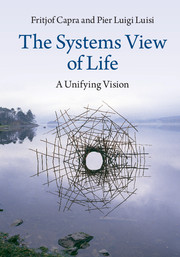
[iv] Book: The Systems View of Life - A Unifying Vision

The Systems View of Life -
A Unifying Vision


If you are about to start studying biology, Part 3 'A new conception of life'  is an excellent introduction to some broad and yet pivotal concepts. I haven't checked the 'current' curricula for biology or human biology, but I suspect there is content provided that may be missing? How are biology curricula characterised? If the 'subject' is comprehensively covered at school - college, there may still be value in the way in which they are presented in TSVoL. And, yes the book is a decade old. There's a step-wise development, that is coherent and fascinating.

The opening sentences to chapter 7, which asks 'What is Life?' :

'7.1 How to characterize the living

It is a common understanding that it is impossible to provide a scientific definition of life which is universally accepted. This stems from the fact that the background of scientists dealing with the question - biologists, chemists. computer scientists, philosophers, astro-biologists, engineers, theologians, social scientists, ecologists differs considerably from one another, depending on one's conceptual framework. In this book, we will not dwell so much on the question of a unique definition of life a single sentence catching all the various aspects of life - but rather, we will consider the more general question: what are the essential characteristics of a living system?' p.129.

- for some reason puts me in Plato's Cave? Maturana and Varela would (and do) have very broad shoulders by now. Autopoiesis is described with structure, systems (of course), self-maintenance, nonlocalization, coupling, and emergent properties. 'Life is a factory that makes itself from within'. p.132. Well that will do me. Even though we talk of political, social and psychological processes, I've always associated the SCIENCES domain of Hodges' model with processes. This includes whether the processes are biological, manufactured by human hand/intellect, such as, industrial working, project management and planning.

For life, initial descriptions concern the cell, DNA, RNA, cell walls and the cellular logic of life. Key is life's interaction with the environment. This is emphasised 7.2.4 and 7.4. I gained a lot of encouragement from:

'According to Maturana and Varela (1980, 1998), the organism interacts with the environment in a "cognitive" way whereby the organism "creates" its own environment and the environment permits the actualization of the organism.' p.134.

It is not just mind - but 'embodied mind'. The joy (for Hodges' model) continues with the impact of social autopoiesis in the social sciences.  

'While behaviour in the physical domain is governed by the "laws of nature,' behavior in the social domain is governed by rules generated in the social system itself.
Thus, two questions arise: is it meaningful to apply the concept of autopoiesis to these domains at all, and, if so, to which domain should it be applied?' pp.136-37.

It's almost like Descartes has taken on a quantum property. We don't know when life is physical (time, space, velocity) and when it is mental - cognitive? Contemplating life, death is never far behind (taxes p.419 if you're wondering). The ethics of death and dying are acknowledged in medical intervention (or not) and religious beliefs and edicts. Again the figures are helpful, illustrating the dynamic modes of an autopoietic unit: homeostasis, reproduction, and death of a cell (p.138). The trilogy of life then is also illustrated as environment, cognition, and autopoietic unit (p.142). When it comes to knowledge domains (social science & ecology) are clearly ubiquitous too.

Concepts of Modern Mathematics
Ian Stewart, 1975

It is Chapter 8 that delivers the biological goods. Beginning with a fascinating account of molecular, or prebiotic evolution, giving rise to biological structures and the interplay of soaps and lipids - "amphiphilic" substances, with molecules that contain a hydrophilic (water loving) head group, and long hydrophobic (water-hating) chains. Well illustrated too, box 8.1 describes 'Surfactants, lipids, and liposomes'. Self-organization, emergence are skillfully threaded together and with creativity - the generation of new forms. Unsurprisingly, Gaia is highlighted 8.3.3 and in a guest essay 'Daisyworld' by Stephen Harding of Schumacher College; which also reminded me of the 1970's BBC drama 'Edge of Darkness'. Maths has another turn in the text; a chiral one. Biomathematics is posited as a new mathematics frontier: here - the numerology of plant growth, the golden section (there's one primary context?), nature's spirals, and symmetry breaking. This helps my current return to maths (the struggle!) trying to get to grips with basic concepts. Ian Stewart is cited, later work than 1975's 'Concepts' I must seek out the 'Mathematics of Life' 2011/12.

Darwin, the resulting biological revolution, history, polymers, peptides and proteins plus DNA and RNA continue a suitably in-depth treatment of 'life' in chapter 9. The conclusion on Darwinism today and the status of genes in science and relation to our identity, being and the effect of chance and contingency is worth being reminded of. In mental illness - psychiatry and psychology a sometimes vitriolic debate continues.  Commercial realities are also apparent, the extent of their influence described: the race to map the human genome. In the text protein folding has advanced markedly since the book's original publication. Now new commercial pressures allied with artificial intelligence make you wonder how the author's would deal with this new 'content'? Exobiologists will enjoy chapter 10 as the focus is planetary: the origins of life on Earth. Useful, basic chemistry figures here - informational and functional (concentration). The notion of 'cognitive' is raised again - information carrying. 

While we are concerned for all life, chapter 11 takes in the human adventure, including the determinants of being human. 'Determinants' have taken on more import today. Chapter 12 in addressing 'Mind and consciousness' is helpful in the approach, the easy and hard problems of consciousness, types of consciousness, schools study. There is another guest essay. Chapters 13-15 deal with spirituality (inc. eco-literacy); life mind and society (I wonder if topology does have a role in the mental realm? (p.311). Chapter 15 is a gift for healthcare professionals - 'The systems view of health' with the question, 'What is health?'. Not to diminish this statement, but I will return to this subsequently; whether in the closing post for this 'review,' or afterwards. This completes part III of what is a great read.

Many thanks again to CUP for the paperback copy, much easier on the eyes. While this copy is new, I do make extensive use of secondhand books.

Fritjof Capra and Pier Luigi Luisi (2014) The Systems View of Life - A Unifying Vision. Cambridge: Cambridge University Press.

https://www.cambridge.org/gb/universitypress/subjects/life-sciences/genomics-bioinformatics-and-systems-biology/systems-view-life-unifying-vision?format=HB&isbn=9781107011366


Sunday, July 23, 2023

Book: The Future of Social Care [open access]

"This is an open access title available under the terms of a CC BY-NC-ND 4.0 License. It is free to read, download and share on Elgaronline.com. Foreword by David Brindle In the face of major global demographic change, social care policy and practice are in urgent need of radical reform and reassessment. Rising poverty, inequality and pressure on local communities internationally, are also increasing the urgent need for reform. Drawing on the crisis-ridden UK experience as a case-study, this highly original book identifies the limits of the traditional welfare state in taking forward policy for the twenty-first century. The proposals amount to a renewed approach to social care, based on the philosophy of independent living as originally developed by the international disabled people’s movement and subsequently embodied in a United Nations treaty applicable to all in need of care and support. Despite wide international sign up since adoption in 2008 there is little evidence of any nation successfully delivering. For the first time, this book offers both a blueprint for an environmentally sustainable, rights-based approach to social care and a practical route to achieving it."

INDIVIDUAL
|
INTERPERSONAL    :     SCIENCES               
HUMANISTIC --------------------------------------  MECHANISTIC      
SOCIOLOGY  :   POLITICAL 
|
GROUP


Beresford, P., & Slasberg, C. (2023). The Future of Social Care. Cheltenham, UK: Edward Elgar Publishing. Retrieved Jul 22, 2023, from https://doi.org/10.4337/9781803923017

Saturday, October 03, 2026

World Health Congress 2027 Prague - 20-22 August

Dear Friends,

The World Health Congress 2027 Prague is a global professional gathering focused on traditional, complementary, and integrative medicine (TCIM/CAM) and evidence-based medicine (EBM).

Under the motto “Health Knows No Boundaries – Let Us Seek a Common Path,” the congress provides a platform for professionals to come together, share knowledge and experience, engage in professional dialogue, and foster international cooperation in healthcare.

The previous congress attracted more than 1,000 participants from 50 countries worldwide and brought together prominent experts and organizations.

If you are considering actively participating in the 5th World Health Congress 2027 Prague, to be held from 20–22 August 2027, and are planning to submit an abstract for your presentation, please give some thought to the following four questions. They reflect the direction envisioned for the upcoming Congress. This direction will also be embodied in the Congress’s concluding document, the Prague Declaration.

  1. How can we build bridges between TCIM and EBM in healthcare?
  2. How does your contribution help advance TCIM?
  3. If you have participated in one of our previous congresses, what new perspectives does your presentation offer compared with your previous presentation?
  4. What is the future of TCIM, and what strategies would you propose for the way forward?

Abstract submissions are now open. You can submit your abstract here:

ABSTRACTS

Warm greetings from Prague,

Tomas Pfeiffer
President of the 5th World Health Congress 2027 Prague
Soukenicka 21, 110 00 Prague 1
Czech Republic
www.whc2027prague.com 

Director
Institute for TCIM/CAM 

e-mail: info AT itcim.org
www.itcim.org

n.b. I have had some problems accessing the site - 'new domain'.

Sunday, January 01, 2023

Art as 'social media' 1923

Agnes Savill (Agnes Forbes Blackadder), Music, Health and Character, London: Bodley Head Limited. 1923. (Book cover: AbeBooks)
Music, Health and Character
"The varied picture presented by life is viewed by each individual through the transforming medium of his own private consciousness. Our judgements are biased, being coloured, inevitably, by our personal  interests, occupation and experience. To the physician has been entrusted the health of the body; his outlook upon the world is tinged by his desire to prevent disease by eliminating abnormal predisposing causes. So close and so intricate is the union of mind and body that modern medicine recognizes the necessity of right thinking and right conduct for the highest development of the body. Hence, from his unique corner of advantage, that of the sympathetic confidant of innumerable life tragedies, the physician views with dismay the ruin of individuals, and the disaster brought on families and entire communities by frequent contact with the morbid, even at times the depraved teaching which is embodied in many branches of art with lighthearted irresponsibility. More and more profoundly are the medical psychologists impressed by the creative and the destructive power of such intangible forces as ideas. More and more urgently, therefore, does modern medicine plead, in its capacity as guardian of the public health, for the improvement of mental and moral conditions. With wiser education people will demand that Art shall be pure, sincere and life-giving, and that artists shall value seriously their responsibility and their power to mould the character of the community. The true artist always aims high and discourages the association of art with all that is trivial, insincere and debasing." p.225-226.

Agnes Savill (Agnes Forbes Blackadder), Music, Health and Character, London: Bodley Head Limited. 1923.
(Book cover: AbeBooks)

Saturday, April 11, 2026

'Sociological Theory in Transition' (always ..?)

Conclusion: Sociology as a Skin Trade

In other writings (O'Neill, 1972, 1985) I have set out a rival conception of the embodied subject who suffers the hopes and defeats of what I have called 'sociology as a skin trade'. At the same time I began to renovate the imagery of society as a body-politic, to differentiate the levels of the bio-body, the productive body and the libidinal body as sites where human beings pursue the relevant knowledge and values of health, work and happiness. Each level of discourse requires he formulation of relevant technical knowledge (medicine, political economy, sociology and psychoanalysis) and each level has its own emancipatory discourse about health creativity and self-expression. Because each of these discursive interests is likely to be articulated by professional social scientists and therapists, it is necessary to require the institutionalization of mechanisms of political and ethical accountability to laypersons' common-sense knowledge and values regarding their bodies, their families, their work and their souls. Medical and sociological nemesis is not the result of a therapeutic conspiracy against society. It belongs to the radical technological a priori of Western knowledge whose ambition is fundamentally bio-technological. The sin of Adam and Eve was the best humankind could manage at the time. In today's laboratory Adam and Eve can be bypassed and life can be set in motion according to the best genetic formulas. Huge legal, ethical and sociological problems are simultaneously generated. And thus we step into a new 'crisis of opportunity` for which very few social scientists are prepared - whether by training or morals.' p.35.
INDIVIDUAL
|
     INTERPERSONAL    :     SCIENCES               
HUMANISTIC --------------------------------------  MECHANISTIC      
SOCIOLOGY  :   POLITICAL 
|
GROUP
psychoanalysis

body as a machine
bio-technological

body-
bio-

sociology

-politic

bio-politics of the population


'In concrete terms, starting in the seventeenth century, this power over life evolved in two basic forms ... One of these poles - the first to be formed, it seems - centered on the body as a machine: its disciplining, the optimisation of its capabilities, the extortion of its forces, the parallel increase of its usefulness and docility, its integration into systems of efficient and economic controls, all this was ensured by the procedures of power that characterised the disciplines: an anatomo-politics of the human body.
The second, formed somewhat later, focussed on the species body, the body imbued with the mechanics of life and serving as the basis of the biological processes: propagation, births and mortality, the level of health, life expectancy and longevity, with all the conditions that can cause them to vary. Their supervision was effected through an entire series of interventions and regulatory controls: a bio-politics of the  population. (Foucault, 1980a, p. 139; altered for my emphasis)' p.24.
'Bio-power regulates bodies individually, as in the clinical model. and collectively, as on the model of social medicine. The two strategies are combined to produce the most complete system of discipline ever known in the history of power. Disciplinary power works in hospitals. schools, prisons, armies, factories and bureaucracies. It is compatible with shifting vocabularies of rights, reform and welfare. It is intimate and collective; it is obeyed not because of its power over death but because of its power over life. It is this shift in emphasis that is the source of the expansion of bio-power whose corresponding apparatus we may call the therapeutic state.' p.25.
 
O’Neill, J. Sociological Nemesis: Parsons and Foucault on the Therapeutic Disciplines, Chapter 1 (pp.21-35). In. Wardell, M.L. and Turner, S. (Eds.). (1986) Sociological Theory in Transition. London: Allen & Unwin, Inc. https://digitalcommons.usf.edu/phi_facpub/86

Previously: 'sociology' : 'power' : 'body'

Thursday, April 28, 2022

Review i - "Brainscapes: The Warped, Wondrous Maps Written in Your Brain―And How They Guide You"

Brainscapes


A marvellous cover (US too), a fascinating, clearly written and hence readable book. As expected today the layout, print size and design add enjoyment to the time invested.

As a nurse with an interest in science you are aware of much of the content in broad terms but 'Brainscapes' provides more detail and made me wonder about the prospects to follow from improvements in brain imaging, The Connectome, new technologies and techniques. Rebecca maintains the focus throughout.

I'm pleased to add this to my CPD reading list.

Nature and science are humbling. It is still quite recent that we realised the milky way is one of billions of galaxies. Now we can appreciate not only the complexity of the brain, but how it is embodied in mind, body and our experience of reality.

There is history here to begin. Russia and Japan were at war in 1904. Russia had a new high-velocity rifle with smaller bullets, 7.6mm reaching speeds of 620 meters per second. Whether co-incidence, and/or ironic, there are of course many brains trying to make sense of the current conflict in Eastern Europe. A change in injuries followed with these bullets capable of passing straight through the skull, sparing the life of the soldier and yet with life altering injuries. 

As triage was founded on the battle-ground. So aftercare is grounded in the journey back 'home' for those who can make it and the extent to which 'veterans' and their families are recognised.* This lead to investigations (Inouye, see below) as soldiers experienced localised damage to the brain. Soldiers suffered scotomas affecting their vision, stimulating research and new approaches, devices 'cranio-coordinometer'. There are illustrations and some photographs throughout, the illustrator Paul Kim, adding to the text.

In 'Maps of You' maps are everywhere especially on screens, and yet as Schwarzlose notes the map's materials matter little. On p.17 "All I need is a pen and a scrap paper" I smiled - given the 'map' that Hodges' model provides, on paper, sand, black/whiteboard and mind's eye. Mental imagery is there too. Salience, figures early p.19 and with brain maps, visual maps and where we direct our gaze prompts more detailed consideration of context. The explanations of the sensory brain maps is fascinating, especially how the brain has evolved to deal with constraints of space, energy, distance and organisation. At the fovea in the eye, the map is magnified. 

Perhaps in Hodges' model there are two fovea? One is the center of the model, the person-centred nexus an assurance function/correction as the fovea that is context shifts and jumps in response to the dynamics of the situation. Reading about the audio map, p.73 I thought about the 'timbre of care' (Yes, I've a bad case of h2cm-meme-mapitis). As a further sign of the times, chapter 5 (A Body Under Siege) on taste and smell and the protective function of what we do or don't ingest, I travelled from the individual to the national and the binary choices (yes or no) being exercised right now.

More to follow ...

Alexander P. Leff (2015) Tatsuji Inouye (1881–1976), Discovery UCL.
https://discovery.ucl.ac.uk/id/eprint/1491645/1/Leff_tatsuji_inouye_1881-1976.pdf

Many thanks to Rebecca Schwarzlose and Profile Books for my review copy.

*Apologies for digression...