Hodges' Model: Welcome to the QUAD: Search results for Descartes

Hodges' model is a conceptual framework to support reflection and critical thinking. Situated, the model can help integrate all disciplines (academic and professional). Amid news items, are posts that illustrate the scope and application of the model. A bibliography and A4 template are provided in the sidebar. Welcome to the QUAD ...

Showing posts sorted by relevance for query Descartes. Sort by date Show all posts

Friday, October 21, 2022

Mathesis Universalis - Caresis Universalis ..?

Frontispiece of Operum Mathematicorum Pars Prima (1657)
by John Wallis, the first volume of Opera Mathematica
including a chapter entitled Mathesis Universalis


"Mathesis universalis (from Greek: μάθησις, mathesis "science or learning", and Latin: universalis "universal") is a hypothetical universal science modelled on mathematics envisaged by Descartes and Leibniz, among a number of other 16th- and 17th-century philosophers and mathematicians. For Leibniz, it would be supported by a calculus ratiocinator. John Wallis invokes the name as title in his Opera Mathematica, a textbook on arithmetic, algebra, and Cartesian geometry"


 INDIVIDUAL
|
 INTERPERSONAL    :     SCIENCES               
HUMANISTIC --------------------------------------  MECHANISTIC      
SOCIOLOGY  :   POLITICAL 
|
GROUP

progress?

progress?

progress?

[PROGRESS?]

Also from: https://en.wikipedia.org/wiki/Mathesis_universalis

René Descartes

In Descartes' corpus the term mathesis universalis appears only in the Rules for the Direction of the Mind.[1] In the discussion of Rule Four, Descartes' provides his clearest description of mathesis universalis:

Rule Four
We need a method if we are to investigate the truth of things.

[...] I began my investigation by inquiring what exactly is generally meant by the term 'mathematics' and why it is that, in addition to arithmetic and geometry, sciences such as astronomy, music, optics, mechanics, among others, are called branches of mathematics. [...] This made me realize that there must be a general science which explains all the points that can be raised concerning order and measure irrespective of the subject-matter, and that this science should be termed mathesis universalis — a venerable term with a well-established meaning — for it covers everything that entitles these other sciences to be called branches of mathematics. [...]

— René Descartes, Rules for the Direction of the Mind; translated by John Cottingham[4]

Saturday, November 15, 2025

Subjective-Objective: Thinking of Holistic Cake and Eating it

'Our natural awareness of our own activities is holistic. We experience ourselves as embodied beings, complete organisms, directly perceiving physical objects, making choices, engaging in conversation with other people. The attempt to split the human being into a combination of immaterial self and physical body makes a coherent account of these processes impossible. As Heidegger says, “The ‘scandal of philosophy’ is not that this proof has yet to be given, but that such proofs are expected and attempted again and again.”35 Given the Cartesian conception of the “real world”, organisms are “really” mechanisms, while “choices” and “actions” have no place in a world where there are only events, subject to the laws of mechanistic cause and effect. The whole person becomes a metaphysical oddity, straddling two incompatible metaphysical realms.

A theoretical framework that renders the previously straightforward inherently problematic is by no means an unequivocal advance. Materialist authors have attempted to “solve” this problem by denying the reality of the subjective side of the Cartesian picture, replacing his dualism with radical metaphysical reductionism.36 Such authors insist that the “objective” world (still understood as something devoid of phenomenal properties, containing only causes and effects as understood in reductionist science) is all there really is. On this view, we do not have to bridge the gap generated by Descartes, between the subjective and the objective features of human life, because the objective features are the only ones that exist.' p.20.

individual
|
INTERPERSONAL : SCIENCES
humanistic -------------------------------------------  mechanistic
SOCIOLOGY : POLITICAL
|
group-population

My Mind
Subjective

My Body
Objective


Mitchell, D., Loughlin, M. (2023) The philosophy of person-centred healthcare, Cambridge: Cambridge Scholars Publishing. https://cambridgescholars.com/product/978-1-5275-9058-8/


Previously: 'Descartes' : 'mind' : 'body'

Thursday, May 09, 2024

Being constantly rational - in pursuit of evidence . . .


. . . while being chased by the absurd . . .


Individual
|
      INTERPERSONAL    :     SCIENCES               
HUMANISTIC  --------------------------------------  MECHANISTIC      
 SOCIOLOGY  :    POLITICAL 
|
Group
Descartes’ - cogito ergo sum^

A psychological case formulation for ...?

(Being constantly …) rational^

... in pursuit of evidence


Drama: A case formulation for the audience.


Absurd: When £££$$$ meets health 

- the where of when the audience aren't interested in the how, and why of the case formulation.


The theatre of the absurd does not need language.
Hodges' model?
In absurd terms the structure must go! No ifs ands or buts ...
Replace the intellectual concepts with poetic images
 but before you do optimise for distance from sense. 

"In the Theatre of the Absurd, the audience is confronted with actions that lack apparent motivation, characters that are in constant flux, and often happenings that are clearly outside the realm of rational* experience. Here, too, the audience can ask 'What is going to happen next?' But then anything may happen next, so that the answer to this question cannot be worked out according to the rules of ordinary probability based on motives and characterizations that will remain constant throughout the play. The relevant question here is not so much what is going to happen next but what is happening? 'What does the action of the play represent?'" Esslin. (p.416).

*and relational?

^D’ANDREA, F. (2017). BEING HUMAN. A FEW REMARKS ABOUT DESCARTES’ COGITO ERGO SUM. Studi Di Sociologia, 55(2), 135–146. https://www.jstor.org/stable/26479662

Esslin, Martin. Chapter 8 The Significance of the Absurd. The Theatre of the Absurd. London: Pelican, 1982. (3rd Ed.).

Previously: relational - rational

Friday, October 24, 2025

Come on Healthcare: catch up will you!

Within philosophy it is recognised that Immanuel Kant provided a means by which the rationalists and empricists can be reconciled. Some background:

In philosophy, rationalism is the epistemological view that "regards reason as the chief source and test of knowledge"[1] or "the position that reason has precedence over other ways of acquiring knowledge",[2] often in contrast to other possible sources of knowledge such as faith, tradition, or sensory experience. More formally, rationalism is defined as a methodology or a theory "in which the criterion of truth is not sensory but intellectual and deductive".[3]  https://en.wikipedia.org/wiki/Rationalism
In philosophy, empiricism is an epistemological view which holds that true knowledge or justification comes only or primarily from sensory experience and empirical evidence.[1] It is one of several competing views within epistemology, along with rationalism and skepticism. Empiricists argue that empiricism is a more reliable method of finding the truth than purely using logical reasoning, because humans have cognitive biases and limitations which lead to errors of judgement.[2] Empiricism emphasizes the central role of empirical evidence in the formation of ideas, rather than innate ideas or traditions.[3] Empiricists may argue that traditions (or customs) arise due to relations of previous sensory experiences.[4]

Historically, empiricism was associated with the "blank slate" concept (tabula rasa), according to which the human mind is "blank" at birth and develops its thoughts only through later experience.[5] https://en.wikipedia.org/wiki/Empiricism

If health and social care, must be evidence-based, then as far as Hodges' model is concerned we are then duty-bound to use the most readily available 'evidence' to us, including (while taking liberties?):

  • The structure of national health and social care organisations (NHS, DHSS ...)
  • Physical infrastructure
  • Human Resources Organisation
  • Unions and Labour relations
  • Texbooks, journal papers, conferences
  • Organisational structures from the regional to the local
  • Professional bodies and governance of licensing/registration
  • Curricula that students follow^
  • Models, frameworks, teaching and learning tools and methods
  • Data, statistics, information and reporting (national, international)
  • Research projects ongoing (whatever scale, methods, methodology)
  • Accounts from lived experience of patients, carers and public (^and students)
  • Policy
  • Funding
  • Law relating to Health and Social Care
  • Public (Mental) Health? Discuss
  • Media (Social) Control, Advertising
  • . . .

Hodges' model: Structure and Content


Using this evidence, we still see the Cartesian divide, the mind-body distinction writ large in health and social care. The continuing impact is evident in theory, practice, (hence) lived experience, policy and managment. Since its creation in the 1980s, Hodges' model mirrors (literally) this philosophical, epistemological and ontological legacy, thereby acknowledging the ancient history of medicine, and 'modern' development of healthcare and nursing. Through this device, Hodges' model can facilitate debate, critique, reflection, and critical thinking; to encourage progress in our thought, motivations, action and subsequent evaluation.


This explains the structure of Hodges' model and predicts the range (contextual signature) of content when the model is applied.

Evidence permitting of course!

See also: BBC The Great Philosophers:

Series 1: 4. Descartes

Series 1: 5. Spinoza and Leibniz

Series 1: 8. Kant

n.b. I video taped this marvellous series when first screened. When studying for my BA(Hons), audio taped, they also provided a great learning resource in the car. The programmes are on BBC 4 (UK) once again, but are readily accessible.

Tuesday, November 04, 2025

Descartes - alive and well ...

... within the Incident Reporting System

'Policy guidance on recording patient safety events and levels of harm 
This guidance is for users of the new Learn from Patient Safety Events (LFPSE) service, to provide context and guidance on selection of appropriate categories when recording incidents. It focuses on which Event Type is appropriate for different circumstances, and how to select the most appropriate options for the Levels of Harm categorisation required within Patient Safety Incidents.'

Previous harm grades

No harm
Low harm
Moderate harm
Severe harm
Death


individual
|
INTERPERSONAL : SCIENCES
humanistic -------------------------------------------  mechanistic
SOCIOLOGY : POLITICAL
|
group-population
New psychological harm grades

No psychological harm
Low psychological harm
 Moderate psychological harm
Severe psychological harm
n/a

New physical harm grades

No physical harm
Low physical harm
Moderate physical harm
Severe physical harm
Fatal


Q. 'n/a'. Discuss.

CPD reading.                      

Monday, February 10, 2025

Book review: Handbook on the Ethics of AI #2

Well, I am sold. So, encouraging again to read 'reflect -ion' on the first page and throughout chapter 1:

'... why the very idea of AI gives rise to (or should give rise to) ethical reflection.' (p.21), and I'm sure the book as a whole.

Most readers may pass this by, but to me this matters. Ethics scholars however will see how important and conjoint reflection is to deliberation and argumentation of ethics. Especially, as noted in post #1 the five part division of the text Foundations and Context; Responsibilities; Rights; Politics and Power; and Thinking Otherwise. 

Tables break up and inform the text. I like the way for many tables the source is: Author's own elaboration.
Given the subject matter, yes, the authors have the literature but they are also formulating their chosen theme against the present, near future, socio-political scenarios and much more. So, reflection - this should be expected. With Hodges' model I'm often asked why are those concepts placed in that particular domain? Perhaps that is a question for general artificial intelligence? Subjectivity is a key challenge, and its effective communication.

If I say, chapter 1 is a great primer on What Is This Thing Called the Ethics of AI and What Calls for It? I'd sell the book short, the whole text fulfills this purpose. The definitions and responses to What is A.I. are very helpful, taking into account ancient to more recent history. I've a book in a box by David Chalmers (sorry Prof.) - one day - which helps here discussing intelligence and consciousness.

I'm primed to pick up on 'gaps' (Theory-Practice) and in human experience they are inevitably legion. The responsibility gap (and meaningfulness!) c/o Sven Nyholm is a place to return to, to debate why A.I. raises such a broad range of ethical issues. Patiency is never far away. Here, the patient is stark: in  moral agents and moral patients (p.20 and 89). This blog is littered with posts on Drupal, which to date I have never mastered. I remember sitting in DrupalCon presentations, in the midst very skilled professional coders. A member of the community stood at the podium recounting their lived experience of impostor syndrome. In November with a presentation of my own, I had my own encounter. Well into reading this book, it really did help. The conclusion of chapter 1 contrasts the frequent need for a big-picture overview and reflection on more specific issues. That's quite fitting for me.

I am biased in the encouraging kernels I find: as seek them I do. Yes, as chapter 2 AI Ethics before Frankenstein begins: 'there remains work to be done in charting the long-range conceptual development of  AI in the history of political thought.' (p.27, my emphasis). And much more I hope. Chapter 2 combines literature, myth and I enjoyed the discussion on techne, Prometheus, Hobbes, the interdisciplinary bridge of techno-politics and articulating the mechanistic in our lives. Focussed recently on thresholds and threshold concepts in revising two papers: Hunt writes, 'Frankenstein is a "threshold" text for "modern political science fiction" (p.31). 

This  resonated - especially 'for its prediction that the nascent Enlightenment-era sciences of chemistry, anatomy, and electricity could be used to artificially make a human being' (p.31). The exploration of bad education and bad governance through Shelley and social history is other-worldly in itself. Hunt's conclusion which includes 'Wollstonecraft was the pivotal figure in the process of refracting ideas of AI from Hobbes to Shelley, ...' left me wondering about the refactoring of code. 

Chapter 3, Smith's Faith, Tech, and Ethics of AI brings more reflect -ion with the bonus for me of Descartes. On faith, the human situation is also repeatedly stressed. Delving into creation too, this is detailed on forms of theology - Augustine, Bede, for example, and philosophy Bacon, Hume, Kant and their role in diminishing the influence of religious thought and epistemology (p.39). How long a push was that? Surely it is ongoing - in some quarters? Medieval thought is discussed, and I recall this broad period also being regarded as misunderstood [Medieval Philosophy - Bryan Magee & Anthony Kenny (1987)] . 

On a personal level, I've always placed belief in the intra- interpersonal domain of Hodges' model. In psychosis, depression, anxiety, phobias in short mental health, beliefs can be disrupted, and influenced of course when all is well. Religion I have framed at the individual and socio-political level. Clinically, it is the individual patient's beliefs, if they follow a particular religion that we also need to be cognizant of as health personnel. Machine, or human; object or being as Smith asks:

SELF / INDIVIDUAL  -  OBJECT / THING
|
      INTERPERSONAL    :     SCIENCES               
HUMANISTIC  --------------------------------------  MECHANISTIC      
 SOCIOLOGY  :    POLITICAL 
|
GROUP

the human -

the machine -


- can become machine

- can become human


socio-


-political

There is depth of discussion too: in AI and Power; a Christian response to AI ethics. This handbook is not just for quick reference. There is indeed redemption (p.43) to be found:

'It is easier to cover a blemish than examine why it resulted in the first place: genetics, diet, stress, or lack of self-care.'

I argue for Hodges' model as a tool to identify, (re)present, and relate the determinants of health: all of them. The points and paragraphs on theology, mind, body and self are well worth revisiting.

Johnson's chapter 4, What are Responsible AI researchers really arguing about? provides support for my ongoing belief in the value of sociotechnical theories and approaches, and another book on enactivism. Given the ethics of the global south (and technological/electronic colonialism) more could perhaps be made of LMIC, but the point is made in Table 4.1 (Examples of functionalist evaluations of AI models, p.52). Constructivism 2.2 is a rich seam for me. Table 4.2 touches on medical diagnosis and socio-technical. Johnson notes that in seeking answers to AI ethics problems, scientists see constructivist approaches and '.. constructivism as a metaethic, holding a rich space for more research into pluralistic AI-Alignment', (p.53). And, the potential for much more. This is suggested (for me) in reference to the need for a holistic view of AI model's genesis, and 'two sides of one coin' - dichotomy, polarity, oppositions, binary reductions ... ? 

Johnson's conclusion is an indirect thumbs up (cue Arnie style - of course) to Hodges' model as a project. Conceptual frameworks can indeed:
'... offer unique perspectives on the methods commonly employed and to understand and mitigate the risks and dangers of AI.' (p.62).
If ethics gets 'technical' then the book's full title is well-earned. Two case studies demonstrate functionalist and constructivist debates in responsible AI. I don't remember Capt. Kirk et al. stating to a malign alien 'intelligence' "The trophy doesn't fit in the suitcase because it's too large (small)," (p.58). The writer's put other solutions to the characters lips. Spock, however, would find the discussion here on 'Artificial General Intelligence, 4E Cognition and Enactivism' - "Fascinating!"

Much more to follow ...

Handbook on the Ethics of Artificial Intelligence. David J. Gunkel (ed.). Cheltenham, UK: Edward Elgar Publishing Ltd. ISBN: 978 1 80392 671 1245
https://www.e-elgar.com/shop/gbp/handbook-on-the-ethics-of-artificial-intelligence-9781803926711.html


Related previous posts: 'general + AI'

Saturday, January 31, 2026

International Conference: the Concept of Attention - IEF

Filosofia na Agenda

international conference
the concept of attention

Theme and Objectives

Attention constitutes one of the most fundamental yet under-theorized dimensions of human experience. Despite its centrality to perception, cognition, action, and intersubjectivity, the philosophical investigation of attention as a concept in its own right remains surprisingly underdeveloped. This international conference represents the first major initiative of a four-year research program (2025-2029) dedicated to establishing the philosophy of attention as a major field of contemporary philosophical inquiry.

The philosophical engagement with attention has deep historical roots. Already in ancient Greek thought, we find attention implicitly at stake in the Socratic contrast between an 'examined' and an 'unexamined' life and in the dialectical reform of ordinary reason pursued throughout Plato's dialogues. Medieval philosophy anticipates later developments through its emphasis on representation and intentionality (intentio), particularly in the works of Augustin, Aquinas and Duns Scotus. Yet it is only with Descartes's Meditations that attention receives explicit philosophical treatment, emerging as the crucial mediating link between radical doubt and epistemic certainty. This Cartesian innovation opens a rich trajectory of reflection, pursued by thinkers as diverse as Malebranche, Berkeley, Locke, and Wolff.

The scope of philosophical inquiry into attention expands dramatically from the late 18th century onwards. No longer confined to epistemological questions, attention becomes central to investigating the fundamental structures of subjectivity itself. French spiritualism, phenomenology, and philosophies of existence explore how attention relates to apperception, sensation, emotion, and volition—a trajectory that runs from Maine de Biran and Bergson through the phenomenological movement, encompassing figures from Paul Ricoeur to Michel Henry. Meanwhile, William James's psychological and philosophical investigations, along with later thinkers like Merleau-Ponty, Simone Weil, and Iris Murdoch, demonstrate attention's significance across multiple philosophical domains.

Indeed, contemporary philosophy recognizes attention as fundamental to a remarkable range of inquiries. In ethics, attention emerges as an essential vehicle for exercising personal and collective virtues. Aesthetics invokes attention in debates about the nature of beauty and our engagement with works of art—their creation, appreciation, and critique. Social and political philosophy identifies attention as a central component of the modern media landscape, where it functions as a valuable and increasingly contested economic resource. Environmental philosophy calls upon attention to help conceptualize our evolving and often precarious relationship with the natural world. Across these diverse contexts, attention appears as a fundamental human capacity whose nature and quality largely determine the kinds of bonds we can establish with each other and our surrounding world.

This conference seeks to bring these rich historical engagements into systematic dialogue with contemporary philosophy. We welcome contributions from all philosophical traditions and approaches, including but not limited to: the reflexive tradition, hermeneutics, phenomenology, empiricist and analytic philosophy, philosophy of mind, cognitive science, pragmatism, and non-Western philosophical traditions. We aim to explore how different philosophical frameworks have conceptualized attention's structure, dynamics, and normative dimensions, and how these varied perspectives can illuminate both historical debates and current research.

Full details: international conference: the concept of attention

Image: https://www.wikiart.org/en/theo-van-doesburg/heroic-movement-1916

Friday, September 20, 2024

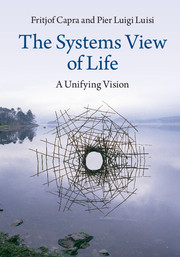
Book: [ii] 'The Systems View of Life - A Unifying Vision'

The introduction highlights the oscillation through history between reductivism, holistic and integrative perspectives; the relationship between theology and the claims for and crystallisation of knowledge and the sciences. The development of cybernetics and systems theory in the 1950s and 1960s does not have it all its own way: 

'The eclipse of systems thinking from pure science had become so complete that it was not considered a viable alternative. In fact, systems theory began to be seen as an intellectual failure in several critical essays. One reason for this harsh assessment was that Ludwig von Bertalanffy (1968) had announced in a rather grandiose manner that his goal was to develop general systems theory into "'a mathematical discipline, in itself purely formal but applicable to the various empirical sciences.'' He could never achieve this ambitious goal because in his time no mathematical techniques were available to deal with the enormous complexity of living systems.' p.11.

(With Zeeman's book on Catastrophe Theory on-loan at present the above is helpful.)

I've picked up a book of Arne Naess's, put it down again: or did I buy 'The Ecology of Wisdom'? I can't check at present (the books I've left are all boxed / created), but Naess sets the scene for the mechanistic worldview.

'Care flows naturally if the 'self" is widened and deepened so that protection of free Nature is felt and conceived as protection of ourselves. .. Just as we need no morals to make us breathe... [so] if your "self" in the wide sense embraces another being, you need no moral exhortation to show care.. . You care for yourself without feeling any moral pressure to do it. (quoted by Fox, 1990, p. 217)
'What this implies, according to the eco-philosopher Warwick Fox (1990), is that the connection between an ecological perception of the world and corresponding behavior is not a logical but a psychological connection. Logic does not lead us from the fact that we are an integral part of the web of life to certain norms of how we should live.' p.14.
Science fiction gives you an appreciate of 'deep', even if not initially the philosophical connotations. Deep space, A.C. Clarke's Deep Range, and more recently deep time brought me to consider deep care on the old website and here on W2tQ with Hodges' model a means of navigation. Naess refers to shallow and deep ecology. Now we also have deepfakes, although the climate change deniers may struggle to believe their deepfake - that is: reality.  Although the book was published pre-sustainable development goals, sustainable development is discussed in detail. For me, the climate change and the SDGs demand we consider ecology, ecosystems, life, and the Earth across the domains of Hodges' model and the spiritual explored in chapter 13.
 
individual
|
INTERPERSONAL : SCIENCES
humanistic ------------------------------- mechanistic
SOCIOLOGY : POLITICAL
|
group


shallow
|
DEEP


A table on page 13 contrasts several opposites across thinking and values:


As usual, I can't shift beyond the book's introduction, but these points for me underscore the value of the book and Hodges' model. Throughout the blog and papers various dichotomies, polarities, oppositions arise. The structure of Hodges' model lends itself to this, and consequently finding the middle. All the above can be reflected upon in relation to Hodges' model, and also searched.

Chapter 1 explains how the discoveries of Galileo, Descartes, Bacon, Newton and Darwin contributed to the world and life - in biology being viewed mechanistically. The focus of the book is 'Western' and the developed nations; as the main contributor to the current state of the planet. The Cartesian divide - mind & matter/body distinction (p.24) is implicit within Hodges' model:

individual
|
INTERPERSONAL : SCIENCES
humanistic ------------------------------- mechanistic
SOCIOLOGY : POLITICAL
|
group

res cogitans


res extensa


Newton's work is described and the limitations of Newtonian physics - the social sciences presented a challenge(!). Thermodynamics is introduced helpful for subsequent chapters.

For general science students the book provides a historical primer, and even an introduction to the philosophy of science. Chapter 2 is short but conjoins cells, molecules, genes (Mendel, Watson & Crick; Franklin & Wilkins, and others), and mechanistic medicine. 

'This will not change until medical science relates its study of the biological aspects of illness to the general physical and psychological condition of the human organism and its environment, The conceptual problem at the center of contemporary healthcare is the confusion between disease processes and disease origins. Instead of asking why an illness occurs and trying to remove the conditions that led to it, medical researchers try to understand the mechanisms through which the disease operates, so that they can then interfere with them. These mechanisms, rather than the true origins, are seen as the causes of disease in current medical thinking. In the process of reducing illness to disease, the attention of Physicians has moved away from the patient as a whole person.' p.43.

Thinking about this in basic instrumentalist terms the reliance on optics, the craft of telescopes and microscopes to discover the very large (our Milky Way as 'a' galaxy) and the invisible - germs, bacteria must have been a profound factor.

If you are selecting subjects for age 16 exams, do not underestimate the value of SOCIO-ECONOMIC history. It has helped me as a community mental health nurse. Especially in light of austerity (UK), the cost of living and energy crisis and the 'housing disaster' (book 2024 with) posts to follow. Chapter 3 uses b&w illustrations of key figures, such as, Locke, Adams, and Marx. I remember in the media, economics education being questioned. That is part 1: concise (p.59!) and yet still relevant today.

Many thanks again to CUP for the pb copy.

Fritjof Capra and Pier Luigi Luisi (2014) The Systems View of Life - A Unifying Vision. Cambridge: Cambridge University Press.

https://www.cambridge.org/gb/universitypress/subjects/life-sciences/genomics-bioinformatics-and-systems-biology/systems-view-life-unifying-vision?format=HB&isbn=9781107011366

Saturday, March 28, 2026

Jürgen Habermas RIP: 'Synthetic abilities - Synthetic thinking'

'Jürgen Habermas is recognized for his immense
synthetic ability, integrating diverse cognitive domains—philosophy, sociology, linguistics, and psychology—to develop a cohesive theory of communicative action and social critique. His synthetic thinking aims to bridge modern rationalism with normative concerns, creating an interdisciplinary framework that addresses the complexities of modern society.
Google AI Overview: https://share.google/aimode/Tev1Ip96TMCMcEgdF 

'It is true that the sciences are increasingly interconnected with the development of productivity by way of technical progress; however, technical progress is not the only branch of science in the line of instrumental rationality defenders from Descartes and Bacon's scientific method. This is what distinguishes the Newtonian science from the second group of considerations: Darwinian science and contemporary systems theory (as Habermas, 1984 puts it). The latter do invite us to see the science as “an organism, population, or system [that] maintains itself through demarcation from and adaptation to a changeable, hypercomplex environment” (Habermas, 1984, p. 388). Also, the classical philosophical tradition, insofar that it suggests the possibility of a worldview, has become questionable:

Philosophy can no longer refer to the whole of the world, of nature, of history, of society, in the sense of a totalizing knowledge. Theoretical surrogates for worldviews have been devalued, not only by the factual advance of empirical science but even more by the reflective consciousness accompanying it. (Habermas, 1984, p. 1)'

Mejía Fernández, R. & Romero, J. (2022) Social Evolution in Jürgen Habermas: Towards a Weak Anthropological Naturalism between Kant and Darwin. Theoria, 88(3), 607–628. Available from: https://doi.org/10.1111/theo.12383

'According to Habermas, the self of the ethical life stage embodies a basis for a postmetaphysical grounding of the good life:

'Rather, all his attention is on the structure of the ability to be oneself, that is, on the form of an ethical self-reflection and self-choice that is determined by the infinite interest in the success of one’s own life-project. With a view toward future possibilities of action, the individual self-critically appropriates the past of her factually given, concretely re-presented life history. Only then does she make herself into a person who speaks for herself, an irreplaceable individual.'30 

Viertbauer, Jürgen HKlaus (2019) Habermas on the Way to a Postmetaphysical Reading of Kierkegaard.
European Journal for Philosophy of Religion 11 (4): 137-162. (p.145).

My source: Nick Pearce, Philosopher who fought the slide towards illiberalism, Jürgen Habermas Obituary. FTWeekend, 21-22 March 2026. p.9.

Tuesday, October 01, 2024

[iv] Book: The Systems View of Life - A Unifying Vision

The Systems View of Life -
A Unifying Vision


If you are about to start studying biology, Part 3 'A new conception of life'  is an excellent introduction to some broad and yet pivotal concepts. I haven't checked the 'current' curricula for biology or human biology, but I suspect there is content provided that may be missing? How are biology curricula characterised? If the 'subject' is comprehensively covered at school - college, there may still be value in the way in which they are presented in TSVoL. And, yes the book is a decade old. There's a step-wise development, that is coherent and fascinating.

The opening sentences to chapter 7, which asks 'What is Life?' :

'7.1 How to characterize the living

It is a common understanding that it is impossible to provide a scientific definition of life which is universally accepted. This stems from the fact that the background of scientists dealing with the question - biologists, chemists. computer scientists, philosophers, astro-biologists, engineers, theologians, social scientists, ecologists differs considerably from one another, depending on one's conceptual framework. In this book, we will not dwell so much on the question of a unique definition of life a single sentence catching all the various aspects of life - but rather, we will consider the more general question: what are the essential characteristics of a living system?' p.129.

- for some reason puts me in Plato's Cave? Maturana and Varela would (and do) have very broad shoulders by now. Autopoiesis is described with structure, systems (of course), self-maintenance, nonlocalization, coupling, and emergent properties. 'Life is a factory that makes itself from within'. p.132. Well that will do me. Even though we talk of political, social and psychological processes, I've always associated the SCIENCES domain of Hodges' model with processes. This includes whether the processes are biological, manufactured by human hand/intellect, such as, industrial working, project management and planning.

For life, initial descriptions concern the cell, DNA, RNA, cell walls and the cellular logic of life. Key is life's interaction with the environment. This is emphasised 7.2.4 and 7.4. I gained a lot of encouragement from:

'According to Maturana and Varela (1980, 1998), the organism interacts with the environment in a "cognitive" way whereby the organism "creates" its own environment and the environment permits the actualization of the organism.' p.134.

It is not just mind - but 'embodied mind'. The joy (for Hodges' model) continues with the impact of social autopoiesis in the social sciences.  

'While behaviour in the physical domain is governed by the "laws of nature,' behavior in the social domain is governed by rules generated in the social system itself.
Thus, two questions arise: is it meaningful to apply the concept of autopoiesis to these domains at all, and, if so, to which domain should it be applied?' pp.136-37.

It's almost like Descartes has taken on a quantum property. We don't know when life is physical (time, space, velocity) and when it is mental - cognitive? Contemplating life, death is never far behind (taxes p.419 if you're wondering). The ethics of death and dying are acknowledged in medical intervention (or not) and religious beliefs and edicts. Again the figures are helpful, illustrating the dynamic modes of an autopoietic unit: homeostasis, reproduction, and death of a cell (p.138). The trilogy of life then is also illustrated as environment, cognition, and autopoietic unit (p.142). When it comes to knowledge domains (social science & ecology) are clearly ubiquitous too.

Concepts of Modern Mathematics
Ian Stewart, 1975

It is Chapter 8 that delivers the biological goods. Beginning with a fascinating account of molecular, or prebiotic evolution, giving rise to biological structures and the interplay of soaps and lipids - "amphiphilic" substances, with molecules that contain a hydrophilic (water loving) head group, and long hydrophobic (water-hating) chains. Well illustrated too, box 8.1 describes 'Surfactants, lipids, and liposomes'. Self-organization, emergence are skillfully threaded together and with creativity - the generation of new forms. Unsurprisingly, Gaia is highlighted 8.3.3 and in a guest essay 'Daisyworld' by Stephen Harding of Schumacher College; which also reminded me of the 1970's BBC drama 'Edge of Darkness'. Maths has another turn in the text; a chiral one. Biomathematics is posited as a new mathematics frontier: here - the numerology of plant growth, the golden section (there's one primary context?), nature's spirals, and symmetry breaking. This helps my current return to maths (the struggle!) trying to get to grips with basic concepts. Ian Stewart is cited, later work than 1975's 'Concepts' I must seek out the 'Mathematics of Life' 2011/12.

Darwin, the resulting biological revolution, history, polymers, peptides and proteins plus DNA and RNA continue a suitably in-depth treatment of 'life' in chapter 9. The conclusion on Darwinism today and the status of genes in science and relation to our identity, being and the effect of chance and contingency is worth being reminded of. In mental illness - psychiatry and psychology a sometimes vitriolic debate continues.  Commercial realities are also apparent, the extent of their influence described: the race to map the human genome. In the text protein folding has advanced markedly since the book's original publication. Now new commercial pressures allied with artificial intelligence make you wonder how the author's would deal with this new 'content'? Exobiologists will enjoy chapter 10 as the focus is planetary: the origins of life on Earth. Useful, basic chemistry figures here - informational and functional (concentration). The notion of 'cognitive' is raised again - information carrying. 

While we are concerned for all life, chapter 11 takes in the human adventure, including the determinants of being human. 'Determinants' have taken on more import today. Chapter 12 in addressing 'Mind and consciousness' is helpful in the approach, the easy and hard problems of consciousness, types of consciousness, schools study. There is another guest essay. Chapters 13-15 deal with spirituality (inc. eco-literacy); life mind and society (I wonder if topology does have a role in the mental realm? (p.311). Chapter 15 is a gift for healthcare professionals - 'The systems view of health' with the question, 'What is health?'. Not to diminish this statement, but I will return to this subsequently; whether in the closing post for this 'review,' or afterwards. This completes part III of what is a great read.

Many thanks again to CUP for the paperback copy, much easier on the eyes. While this copy is new, I do make extensive use of secondhand books.

Fritjof Capra and Pier Luigi Luisi (2014) The Systems View of Life - A Unifying Vision. Cambridge: Cambridge University Press.

https://www.cambridge.org/gb/universitypress/subjects/life-sciences/genomics-bioinformatics-and-systems-biology/systems-view-life-unifying-vision?format=HB&isbn=9781107011366


Friday, March 11, 2022

Descartes' asunder c/o Intima: A Journal of Narrative Medicine

 I THINK therefore I AM       
INDIVIDUAL
|
 INTERPERSONAL    :     SCIENCES               
HUMANISTIC --------------------------------------  MECHANISTIC      
SOCIOLOGY  :   POLITICAL 
|
GROUP


Original image: MindBody

© Pain Scale for Chronic Patients ‘MindBody’ by Sal Marx Fall 2021

In Intima: A Journal of Narrative Medicine
Copyright ©2022  ISSN 2766-628X

Previously: 'Cartesian'


Friday, September 18, 2026

Euclidean or Projective Care?

How many dimensions does a written - narrative record have?

Sketching out some ideas, I asked the question on Google and as usual an AI Overview response followed - snippet:
AI Overview

A physical written record has two primary spatial dimensions (length and breadth/width) as a flat document, or three dimensions (including thickness or depth/height) when considering its physical form or binding. [1, 2]

In archival and Records Continuum theory, a written record exists dynamically across four conceptual dimensions: [1, 2].

I put the question to the Records Management list with the above snippet and received several useful suggestions and sources. Perhaps I can share that at a future point? 

Acutely aware of not pursuing maths and category theory for its own sake, the query was driven by an attempt to look at Hodges' model in mathematical terms. Starting, rather obviously with the models structure and axes. When the model is assembled, as per many posts, the vertical axis:

INDIVIDUAL
|
GROUP

- shouts out the issue of parity and the distinction between mind and body. It does this at the individual and collective level. If we were to draw a silo, a cylinder springs to mind, and there are specific reasons for silos adopting this shape. Descartes gives us the perfect excuse, in the ongoing legacy. 

     Mathematical Visions

The question above came up from Joan L. Richards book 'Mathematical Visions' (c/o Lancaster Univ. library). Euclidean and the emergence of projective geometry is described. There is an interplay between 2D and 3D representation, that made me think about the health record and its dimensions. Not in a dataset sense (multi-dimensional), more generally and concretely(?). A patient's record on paper has physical dimensions (A4), there is a flow. An EHR has its virtual dimensions (discuss!). Abstractly the content is a time machine. At some point in a health encounter it is a literal 'history', the level of detail in accord with the context. The record might present the problem, premorbid situation, diagnosis, current state, observations and prognosis and much more.

I can revisit this, Richards provides a series of figures. We progress from two distinct circles (my silos) through to examples with a discussion of continuity and projection that sees the circles touching, then intersecting. This is a radical axis.

Richards, Joan L. (1988), Mathematical Visions: The Pursuit of Geometry in Victorian England, Boston: Academic Press, ISBN0-12-587445

Book cover: Amazon.

Tuesday, June 25, 2024

Book for review: iii "Philosophy of Care - New Approaches to Vulnerability, Otherness and Therapy"


Before moving beyond Pierron's 1st chapter (the whole book is very worth reading), there is much that reminds me of institutional care:

https://winwickremembered.org.uk/

Recognition of the sub-standard cockroach 'co-habiting' environment away from the entrance corridor, quality of life, task oriented, de-personalising, stagnant, passive, pervasive sense of hopelessness and helplessness. There was a chink of light. 

As registered mental health student's we were on a crusade. Carrying a torch, lit outside in the community to help open the doors to community care.

 On trips outside, gradually the institutional skin sloughed off, to reveal the person - the individual came alive (even through medication). 

'Bill' had a sense of humour, a lovely smile. He'd had the prospect of another life. So many people there for so long: too long. Potential unrealised?

"To be in contact with the other in care is not to exercise a hold over them." p.16. 

The problem is - within institutions this can be forgotten and lost:
"To suspect a substituting mode of solicitude (cf. Heidegger) of being a highhanded charitable hold over someone invites one to consider the ethical and political fecundity of a solicitude which looks ahead. To think through this alternative would amount to unmasking the mechanisms of domination, whether voluntary and involuntary - naturalisation of roles, masculine domination, organisational violence, etc, - at work in care. Doing so politicizes care, enabling it to overcome that democratic optimism which doesn't want to recognize that violence is part of human history (Merleau-Ponty 1996: 124-125), that violence insinuates^ itself into care relations, and, as such, comes under the sway of what Merleau-Ponty called the 'maleficence of living among many' (maléfice de la vie à plusieurs)." p.16. 

^The need to be aware of subtle abuse? 

My notes for chapter 2 'From an Anthropology of Vulnerability to the Ethics of Care' by João Maria André, reflects a lot on relationality, and maps which I've drawn: "(identity is always dialogical identity)" and "how we map ourselves". Again this helps my (other) current reading and draft work. There's time here, plus "there is no such thing as abstract vulnerability - vulnerability is necessarily concrete". p.25. I don't think André mentions future generations but I've added a note; 'I-we' too. There's a triple axis, and more encouragement as Tronto and Gilligan feature. Heidegger's reference to Hyginus' Fable 220 (in which Care moulds man out of clay, Jove grants it spirit, and Earth gives him body, with Care being assigned the task of keeping him alive." (Gaia?) p.26.

As in chapter 1, and previously reviewed text 'General Psychotherapy', the term 'constellation' appears. In chapter 2 it is expanded (with reference to Corine Pelluchon); leading us to "appreciation of the world, and self-care as care for the world" p.29. So, planetary health too. With Hodges' model purposed (1/4) to help bridge the theory - practice gap; this perennial problem exhibits existential relevance here (p.27). We by-passed biopolitics on page 17, but  the interrelation of psychosocial and other examples informs the text (philosophy). As I scribbled, Hodges' model is simultaneously a space for resonance and unconditional positive regard (pp.30-31). Authors inevitably find themselves deliberating upon dualisms, Descartes of course, plus Spinoza and others. Entralgo is nails the duality: "the aim of caring is to lead the I from being 'a body that says I' to a learning how to progressively become, and define itself as, 'a body that says we'". p.35.

Braga, J. & Santiago de Carvalho, M. (Eds.), Philosophy of care: New approaches to vulnerability, otherness therapy. Springer. 

Many thanks again to Springer for my copy.

Individual
|
      INTERPERSONAL    :     SCIENCES                   
HUMANISTIC  --------------------------------------  MECHANISTIC      
 SOCIOLOGY  :    POLITICAL 
|
Group

relational

'I' - mind 

individual vulnerability

intention

affection - as movement


climate change

'I' - body

maps - cartography

Planetary Health

action - movement


We

context

equity - equality

social vulnerability


We

policy

bio-POLITICS

accountability of government(s)


See also:
body & soul - Book: Philosophy of care: New approaches to vulnerability, otherness therapy

Sunday, February 16, 2025

Book review: #4 - Handbook on the Ethics of AI

Chapter 7 is no doubt one of the engine rooms of this book. In AI Ethics and Machine Ethics, John-Stewart Gordon follows preceding authors citing Nyholm and others. This probably helps the overall coherence of the book, and underlines what is a dynamic and emerging field. Reading 'What is AI ethics?' (p.98), I made a note about our humanity's cognitive house-keeping (and other life-forms?) executed through sleep, the ability to unlearn, and forget. Efforts to mitigate machine bias are provided in a list 1-5 (p.100). As observed previously, this author is also thinking on their feet (and very well too) with 'Source: Author's own' in a figure for the systemic place of machine ethics and another (table) 7.1 'Four approaches to machine ethics'.

3.4 considers the challenges involved in developing ethical AI systems. As in healthcare, we see where the (problem of) 'many hands' emerges from:
'Developing ethical AI systems requires collaboration between computer scientists, ethicists, and other stakeholders, which can be challenging due to differences in expertise, terminology, and perspectives. Computer scientists bring technical expertise to the table, while ethicists provide insights on moral principles and values that should guide AI behavior. However, these experts often operate within their own domains and may lack a common language to effectively communicate and collaborate. 
Other stakeholders, such as policymakers, industry professionals, and end-users, also play vital roles in shaping the ethical development of AI systems. They bring diverse perspectives, needs and expectations that need to be considered and balanced during the design, implementation, and regulation of AI technologies. For instance, policymakers are responsible for creating guidelines and regulations that ensure the safe and responsible use of AI, while industry professionals must adhere to these standards and navigate the practical challenges of integrating ethical considerations into their AI-driven products and services.' p.104.
The solution includes having interdisciplinary and ethnically diverse teams, cross-disciplinary training, and a more holistic and comprehensive approach to AI development. Unintended consequences (a news item today (13th Feb 2025) are discussed, the dual-use nature of AI and technological 'delivery' surveillance acting for good and potentially ill (China's - Social Credit Point System).

AI ethics is also itself apparently a conceptual framework (p. 99,107).

What is permitted by law in a State clearly varies. Chapter 8 deals with From Ethics to Law: Why, When, and How to Regulate AI. Collingridge is another recurring citation, and presents a dilemma no-less (Section 3. p.116); one to follow up  (Coeckelbergh too, chap 9). I've always felt that some knowledge of social and economic history is a good foundation. History is reflected here in resort to 'masterly inactivity' (p.118) and regulatory approaches - as debated this past week at an AI Action Summit in France. 

I can still recall the sense of competition in having time in the sandpit at infants school.* Software developers will use sandboxes to develop and revise code in an isolated environment, before it goes live, or wild. With AI the book refers to mishaps, projects that have gone wrong. We need to take care regards the nature of the 'sandboxes' that are used. In a way this speaks to the utility of Hodges' model as a resource for lifelong learning, a learner being fully socialised into a profession and its evolving disciplines:

INDIVIDUAL
|
      INTERPERSONAL    :     SCIENCES               
HUMANISTIC  --------------------------------------  MECHANISTIC      
 SOCIOLOGY  :    POLITICAL 
|
GROUP
box
sand-
box
box

I had to look up the CREEPER (Curbing Realistic Exploitative Electronic Pedophilic Robots) ACT (p.121). We are accustomed to outsourcing, and its perverse effects facilitated through globalisation, with nations transferring their pollution - plastics, and e-wastes. There are efforts as Chesterman writes to limit outsourcing to AI in terms of the decisions (pp.122-123). I enjoyed the nods to Isaac Asimov too. 

Gellers in chapter 9 AI, Design, and More-than-Human Justice provides another cylinder to drive the text not just forward but acknowledges the future for all: organic and inorganic. Gellers is argues for attention to AI and justice, not merely the moral and legal status of AI. Reading of  'communities of justice' (p.128) the established notion of 'communities of practice' or the collective of users - socio-technically. Gellers highlights our being in the anthropocene and how the environment and nature is figuring in law. So, not just legal questions for humans but natural 'things' and entities also (posted previously: Person & Sense of Place: A River runs through it ...).


INDIVIDUAL
|
      INTERPERSONAL    :     SCIENCES               
HUMANISTIC  --------------------------------------  MECHANISTIC      
 SOCIOLOGY  :    POLITICAL 
|
GROUP
person-
[what >]
'Who'
-hood (p.129)

algorithmic
collective

communities of practice
justice

communities of justice

I don't think we are there yet? Even, accepting that built-in obsolescence is an established and legal thing. But AI could turn materialism on its head. Looking at the materials, metals, rare earth elements ... that goes in how long do they last and how are the materials recovered? AI, computing desperately needs the doughnut economy, must epitomize the doughnut. Looking for a place to live, you notice the way probably quite serviceable bathrooms and kitchens are ripped out. The suites on a skip. That is quite a scene on the rubbish tip in the film: 'A.I. Artificial Intelligence'. The amount of energy in total production and materials is still not wholly valued, even before other values are 'added'? The focus on design here is integral to such questions. It has brought me to care design, and care architecture. Socio-technical aspects are highlighted again by Gellers (for me, as noted on W2tQ, that hyphen matters). 

Unsurprisingly, Descartes also figures in this chapter, section -Technology in the anthropocene:

'First, for philosophers of technology, the Anthropocene obliterates the nature/culture divide intrinsic to Cartesian thinking (Conty, 2017) that altered the course of history by rebranding technical objects as artificial and thus divorced from nature (Hui, 2017).' p.131.
It is encouraging that there is now recognition that 'we are nature too'. While we can record thought - brain activity on an EEG, from the outset (school studies of biology, then human biology) I've always associated intelligence, mind, thought, emotion, hope, dreams and cognition .. with the intra- interpersonal domain. If you adopt a socio-technical approach (overview - mindset) then invariably the technosphere will straddle the HUMANISTIC <-> MECHANISTIC axis of Hodges' model:
'So far, I hope to have established that technology plays a prominent, if complicated, role in the Anthropocene. But how does this relate to justice? Technology's relationship to ecological systems holds important implications for determining who belongs to communities of justice. To begin, the Earth system consists of interrelated biological, physical, and mental "worlds" (Kotzé, 2020, p. 80). The mental world, also referred to as the "technosphere," is an autonomous amalgamation of energy, communication, transportation, and financial systems, along with cities, governments, factories, farms, and other built systems and their constituent parts (Haff, 2014, P. 127). Technological artifacts such as AI are therefore part of the technosphere.' p.132.

Hodges' model: axes and care domains

We read of robots-in-ecology and robots-for-ecology. I was reminded of the SF film 'Silent Running' here. The real merit and encouragement for me in Geller's contribution, is section 4 which compares how we can approach more-than-human justice. Total eclipses are supposed to be rare, irrespective of what they might portend, now AI, the climate and life on Earth keep eclipsing each other: thus far partially. 4.1 Multispecies justice - Peter Singer really is ahead of his time (chapter 11 - here!); following socio-ecological justice 4.2, we arrive at planetary justice. Note (in Hodges' model) the 'distance' of what is generally deemed social and where the ecological in reality - physically resides. In the margin I'd scribbled 'Less a case of "take me to your leader" and more a case of "show me all your cards!"'. The synthesis and closing section on the design of robots specifically for more-than-human-justice helps here by including relationality, intersectionality and and contexts. 'Design justice' is something the book prompts me to carry forward (p.137).

One final post on HEoAI to follow ...

Handbook on the Ethics of Artificial Intelligence. David J. Gunkel (ed.). Cheltenham, UK: Edward Elgar Publishing Ltd. ISBN: 978 1 80392 671 1245
https://www.e-elgar.com/shop/gbp/handbook-on-the-ethics-of-artificial-intelligence-9781803926711.html

Related previous posts: 'general + AI'

*That early streak of competitiveness was clearly educated out of me.