Hodges' Model: Welcome to the QUAD: Search results for foundation

Hodges' model is a conceptual framework to support reflection and critical thinking. Situated, the model can help integrate all disciplines (academic and professional). Amid news items, are posts that illustrate the scope and application of the model. A bibliography and A4 template are provided in the sidebar. Welcome to the QUAD ...

Showing posts sorted by relevance for query foundation. Sort by date Show all posts

Monday, June 01, 2009

Patiala Health Foundation Launches SevaMobile Trauma Initiative

FOR IMMEDIATE RELEASE: Organization focuses on ways to combat traffic and provide critical and emergency trauma care to those in need.

(Weirton, WV / Patiala Punjab India) - The Patiala Health Foundation, a registered 501-C3 non-profit based in the United States, has started its second phase of providing critical health care services to those in need. Today the organization is announcing the launch of three “SevaMobiles”, or charity vehicles, that will bring trauma care to injured people instead of waiting for them to get to hospitals.

The SevaMobile Initiative is a major innovation in Indian healthcare because it will shorten the time from emergency call to treatment by 50 percent. For many, these precious minutes can be the difference between life and death. Traffic in major metropolitan areas is a two-pronged danger in India. Firstly, many trauma deaths are caused by automobile accidents and secondly, the traffic itself slows down the ability for care professionals to reach victims and transport them to hospitals.

Trauma-related deaths occur every 1.9 minutes in India, according to a 2004 report in the Indian Journal of Critical Care Medicine [IJCCM]. With traffic increasing, trauma will move from its current ninth position to become India’s third leading cause of death by 2020. The 10 percent increase in deaths from injuries in Punjab between 1983 and 1992 demonstrates the urgent need for trauma facilities in the region.

The SevaMobile Initiative will consist of a fully functional mobile trauma unit that also provides emergency critical care on site. In addition to this ambulance, two SevaMobile motorcycles will also be able to navigate through traffic and narrow roads to provide first response immediate care and stabilization. This first level of care will allow for victims to be quickly treated while more comprehensive care, via an ambulance, is on its way. The service will be offered free to those who cannot afford medical services and will be funded by the Patiala Health Foundation.

"In our analysis of urban healthcare, we found that there were many efforts underway to build new structures and hospitals, but there was still a real need to reach victims faster," said Patiala Health Foundation's Dr. Amrik S. Chattha. "We believe the SevaMobile Initiative will be a major innovation, impacting the lives of people by treating them quickly and more efficiently. We also believe that pre-hospital care, such as that offered by the SevaMobile, should be a right to all injured victims."

The organization is currently planning to partner with public and private hospitals in the area to transport patients to larger treatments centers. Patients who cannot afford the medical fees will be treated free of charge courtesy of the Patiala Health Foundation. Those who can afford the service will pay for their care, enabling the program to partially fund itself, while also creating a longer sustainability of operations.

"We want to help those in need, but also build a system that supports itself," noted Dr. Harish Sood, another Patiala Health Foundation board member who is spearheading the SevaMobile effort on the ground in India with a collection of local trustees. Additionally, fifteen retired alumni of Patiala Medical College are volunteering their services and time to assist with the project.

SevaMobiles are planning to commence operations this winter. The project is funded by the Patiala Health Foundation whose funds have been raised by Indian-Americans across the United States through six benefit events in Ohio, California, North Carolina, New York and, most recently, Virginia. The organization is also actively looking for additional donors, corporate partners and grant giving organizations interested in improving health care for low-income citizens within India.

For more information on the Patiala Health Foundation please contact:

Patiala Health Foundation at 304-723-4151 or amrikchattha AT yahoo.com.

Image source (Courtesy of Getty Images)
http://www.vscconsulting.com/dev/clients/MediaCenters/8/Ambulance%20Image_motorcycle.jpg


My source: Vijay Chattha, PHF PR Contact

Additional links:

Ideas Factory posts

DoH (2005). Taking healthcare to the patient: Transforming NHS ambulance services.

Friday, April 09, 2010

Development of a robotic health assistant to the management of malaria among nomads

The following very interesting item was posted on the Healthcare Information For All by 2015 [HIFA2015] list (I have added some formatting and links).

Dear All,

We received a Grand Challenges Exploration grant (a Gates Foundation initiative) for the development of a robotic health assistant to the management of malaria among nomads whose access to health service has always posed a concern. A robotic health assistant was constructed using aluminum casing. The device has three components: an interactive non-replaceable section that processes information and provides output. A replaceable laboratory containing supplies for qualitatively distinguishing between fevers associated with malaria and those that are non-malaria and a second replaceable component, a dispensary containing analgesics, ant malaria [*] and antibiotics for treating different types of fevers. The user communicates with the device using three buttons and receives fe
edback in Fulfude the nomadic Fulani language. The device interviews the user, processes the user’s responses and gives instructions. The accuracy of the information provided by the patient (user), and the ability of the user to carry out the instructions are critical to illness outcome. The device is solar-powered, is able to repeat previous instructions as many times as the patient desires, and provides referral.

Ten such robotic health assistants (ROBODOCs) were deployed among two main groups of nomads (those with previous experience using communication devices such as handheld mobile phones and those without such experience). The volunteer user was given basic information on the use, the switch-ON button, charging the device, and replacing the components. The user contacts a Field Assistant with hand-held mobile phone who in turn alerts the Research Supervisor whenever a case is managed. The Supervisor holds a phone interview with user and beneficiary patient at the end of the consultation with Robodoc as part of the quality assurance.

Robodoc was withdrawn after three months of deployment. Members of the community, beneficiaries and users were interviewed. Each device was examined for durability in the field. The ten units managed more than 80 cases of fever and appropriately diagnosed and treated 90% of them. Previous experience with using a modern communication device was not an important factor in the use of the Robodoc. The nomads found the device very useful and made suggestions on how it may be used for the management of several other health problems besides fevers.

We are keen to publish the findings from testing the device in a peer-reviewed journal. Does anyone have an idea of any journal that may be interested in this sort of research?

Oladele Akogun

HIFA2015 profile: Oladele Akogun is a professor of public health parasitology at the Federal University of Technology, Yola, Nigeria and Principal Scientist at the Common Heritage Foundation/Nigeria.
He has spent over 24 years carrying out research and community service on access of community populations to health care delivery among marginalized populations. He is a pioneer researcher and contributor to the development of the community directed intervention approach to health service delivery now used in onchocerciasis control in Africa. With a Grand Challenges exploration (GCE) grant from The Gates Foundation, he is leading a team to develop a robotic health assistant for the management of malaria among nomads. He sits on two committees of the WHO/African region and on 5 committees at the Federal Ministry of Health, Nigeria. He has worked at various times as consultant to Constella-Futures, Africare and WHO where he worked for a year as Technical Adviser. He has made presentations to the African Regional Ministers forum on Primary Health, the US Congressional subcommittee on international aid and PAHO. He holds a PhD (1991) from the University of Jos and a Master of Public Health (2008) from the University of the Western Cape, South Africa. Some of his views are expressed in http://blog4globalhealth.wordpress.com/bios/akogun1/
akoguno AT yahoo.com


[*Notes from HIFA2015 moderator:
1. I think this should read 'antimalarials'.
2. A picture of the device in action is available on the Gates Foundation website at:
http://www.gatesfoundation.org/global-health/Pages/grand-challenges-explorations.aspx
'Oladele Akogun of the Common Heritage Foundation in Nigeria is testing a 'fever kit' for use among nomadic populations. The device is equipped with simple diagnostic tools and prerecorded treatment instructions in the native language to help nomadic caregivers accurately diagnose and treat fevers in a way that reduces mortality and drug resistance.' Thanks, Neil PW]

(In re-posting I have added the image at left.)

Tuesday, June 17, 2008

2009 March Manchester, UK: 4th Oekonux Conference - Free Software and Beyond...

Call for Contribution - to the 4th Oekonux Conference in collaboration with P2P Foundation

During the past decade the phenomenon of Free Software has become successful and well-known. It is still amazing how in the realm of software the creativity of so many volunteers leads to products which are useful for the whole mankind. In 1999 the Oekonux Project [http://www.oekonux.org/] started with analyzing this phenomenon and trying to understand the special features of Free Software as a social and political enterprise.

Today, beyond the Free Software world, projects based on a similar approach of peer production are rapidly emerging, including Wikipedia and many more. It is time to look at peer production from a broader perspective.

This is the goal of the 4th Oekonux conference [http://www.oekonux-conference.org/] which is done in collaboration with the P2P Foundation [http://p2pfoundation.net/]. Under the title

Free Software and Beyond The World of Peer Production - we are planning a conference where

o researchers and activists meet
o intensive discussions are possible
o experiences can be shared and learned.


We are calling for contributions about the big world of peer production.
Possible themes include (but not limited to):

o Reports from peer production projects such as -

o Wikipedia
o Blogosphere
o Design communities
o OpenAccess movement
o Open Music
o Free Culture
o Sharing platforms like Flickr and YouTube
o Free Software


o Peer production and capitalism

o Theoretical approaches on their relationship
o Peer production and commercial interests
o Peer production and the state
o Peer production and political approaches of the past


o Peer governance

o Theoretical approaches to governance in peer production
o Peer ownership
o Maintainership and conflict resolution


o Material peer production

o Existing projects
o Theoretical approaches


If you want to - give a talk - prepare a workshop - moderate a round table discussion

Please submit a short outline of your idea (~300 words) together with a short bio to projekt AT oekonux DOT de. (Mails to this address are archived on the web. Please ask there if this is a problem for you.) If you want to add some other kind of contribution or have other questions please also don't hesitate to contact this address.

About Project Oekonux: In Project Oekonux different people with different opinions and different methods study the economic and political forms of Free Software and other peer production phenomenons. An important question is, whether the principles of peer production may be the foundation of a new economy which may be the base for a new society.

About P2P Foundation: The Foundation for Peer to Peer Alternatives researches, documents and promotes P2P practices in every domain of social life. It's a global cyber-collective and aims to be a knowledge and internetworking platform for open/free, participatory, and commons-oriented initiatives on a global scale.


Wednesday, November 10, 2010

Grand Challenges for Global Health: 15th - access to clean, clear, knowledge

Dear HIFA2015 colleagues,

The news item below is forwarded from the Global Health Council, which reports the mHealth Summit taking place this week in Washington DC. It is especially good to see that Bill Gates is giving a keynote address. This suggests that the Gates Foundation may be poised to address the 15th Grand Challenge for Global Health, as proposed by international health leaders in The Lancet:

"The Gates Foundation identified fourteen challenges [Grand Challenges for Global Health] but a fifteenth challenge stares us plainly in the face: The 15th challenge is to ensure that everyone in the world can have access to clean, clear, knowledge - a basic human right, and a public health need as important as access to clean, clear, water, and much more easily achievable."
Tikki Pang (WHO), Muir Gray (NHS, UK), and Tim Evans (WHO): 'A 15th grand challenge for global public health.' The Lancet 2006; 367:284-286.
http://www.thelancet.com/journals/lancet/article/PIIS0140673606680501/fulltext

When HIFA was in planning back in 2006, the lead author of the above paper, Dr Tikki Pang (Director of Research policy and Cooperation at WHO) said: 'HIFA2015 is an ambitious goal but it can be achieved if all stakeholders work together'. Bill and Melinda Gates are critical stakeholders. I look forward to see Bill Gates' presentation. Will the Gates Foundation take up the 15th Challenge? Will the Gates Foundation prioritise the challenge of health information for all by 2015?

Bill Gates keynote yesterday is not yet available on the web, but it will be soon at: http://mhealthsummit.org/conference/live-webcast

I hope that Bill Gates will use this opportunity to articulate a clear and specific vision from the Gates Foundation: a vision of a world where people are no longer dying for lack of access to appropriate, reliable healthcare information. With their support, there is no doubt this vision can and will be realised.

With best wishes,
Neil

HIFA2015 profile: Neil Pakenham-Walsh is the coordinator of the HIFA2015 campaign and co-director of the Global Healthcare Information Network. He started his career as a hospital doctor in the UK, and has clinical experience in rural Ecuador and Peru.  For the last 20 years he has been committed to improving the availability of healthcare information for health workers in developing countries. He has worked with the World Health Organization, the Wellcome Trust, Medicine Digest and INASP (International Network for the Availability of Scientific Publications). www.hifa.org  neil.pakenham-walsh AT ghi-net.org

My source:  www.hifa2015.org

Monday, December 27, 2010

Musings... building models, health & safety, group and individual

....

Basic foundations and minimal defaults
[Accounting for the I-G (individual-group) axis]

Since nurses and technologists are concerned with communication then the foundation from which they begin to (build and model their) work is of fundamental importance. The foundation needs to be generic in the first instance. Generic in the sense of the commonality that language instills, enables and facilitates within and between communities. Not only that, but if we take the property of 'generic' to its extreme then the foundation must be stripped down to the barest of defaults: there are no 'types'.

To use the safety analogy we need to risk assess the extent of our model building activities.

We can do this by asking: is this a one, or at most two dimensional venture; such that we can rest secure on terra firma? Or are we above 'ground' floor and immediately required to address health and safety legislation?

Since medicine and nursing are concerned with safety and so must be evidence based, there is an immediate vertical challenge in the hierarchies inherent in the sciences and the structure of knowledge.

Science is not the only influence here. The foundation of what we are modelling and building must reflect the ultimate subjects (the person - patients, carers, communities, whole populations) must incorporate the individual and collective nature of our activities. So, the individual (whose very safety is our concern!) must be factored in and the public's health. Systems of assurance are then needed and founded in human rights. This in turn is a measure of the level of social coherence, coherence through a level of social and political organisation that allows leaders to effect positive change and betterment. The person, the individual is built not upon the shoulders of giants, but ordinary people - our ancestors and peers. ...

Axes in hand and mind
...
PJ Dec 2010

Saturday, June 29, 2019

The Adrian Piper Foundation Berlin Multi-Disciplinary Fellowship 2020 ...


individual - self
|
INTERPERSONAL : SCIENCES
humanistic ----------------------------------------------- mechanistic
SOCIOLOGY : POLITICAL
|
group- population

"The APRA Foundation Berlin Multi-
Disciplinary Fellowship has the purpose 
of promoting research on the conception, 
constitution and structure of the self,

surviving and flourishing
 in a global environment; and

with the educational goals of (i) increasing knowledge and public awareness of individual and societal strategies for 


(ii) discovering, identifying and promoting the cross-disciplinary and cross-cultural flexibility through which these strategies are expressed."
Text: http://www.adrianpiper.com/foundation/M-DFellowshipMission&Guidelines.shtml


http://www.adrianpiper.com/index.html

http://adrianpiper.com/foundation/M-DFellowshipMission&Guidelines.shtml#guidelines

Friday, November 28, 2008

The Gretta Foundation - Increasing the Global Nurseforce

I was asked recently if I could assist a nurse in Tanzania regards training in the UK. As ever things are not straight forward in terms of funding and opportunities for overseas students. Several UK university schools did kindly respond with information about the current situation. Not unrelated then, I noticed this announcement on the GANM (Global Alliance for Nursing and Midwifery) list:


I wanted to distribute the link to the Gretta Foundation to the GANM membership.

As you all know, one of the biggest requests that we get in the GANM are those that involve education. This includes not only requests for online continuing education, but also opportunities for nurses to obtain advanced nursing degrees without leaving their countries, their families and their communities.

Gretta Styles

I came across this today on the web and I forward on to all of you. The Gretta Foundation (named after Gretta Styles) has - as its mission -

"Our mission is to increase the global “Nurseforce” by providing full nursing scholarships to impoverished persons living in disease-burdened nations.

Nursing scholarship recipients, or Gretta Scholars, attend in-country nursing programs. In repayment for the scholarship assistance, graduating scholars serve for a predetermined period of time in their country’s clinics and hospitals."

For more information, visit: http://grettafoundation.org

My source: GANM - Global Alliance for Nursing and Midwifery list; images from Gretta Foundation.

Saturday, January 02, 2010

Sun Microsystems blog: Pretty good example* of a Strategic (Design) Brief

http://www.mindful-leadership.com/Strategy%20Facilitation.htm
The Sun Microsystems site includes a blog (Martin Hardee) with an article entitled as above that poses eight questions. These questions can greatly inform the process of creating a strategic brief (which is also provided for download). Although the item is from 2005 and the context differs - contrast a corporate website design and a future website for Hodges' model - there is value for me in answering the questions. So here goes... starting with the opening paragraph from the original blog post then the questions in bold, interspersed with my responses:

As I've mentioned in previous postings, the most important single step you can take in designing anything for the web is to create a strategic brief. This should be done early in the discovery phase of any design project. The reason it's so important is that it will make you focus and it will provide a guide map for whoever is creating and implementing your design. To write a strategic brief, you'll need to know a lot of important but oft-ignored basics such as:
A) Why are you embarking on this design (or new web site, or whatever), anyway?

The existing website was created in 1997 using Hot Metal Pro and written in HTML. The site was built as a personal and spare time project around the original course notes of Brian Hodges. These were in the form of Word files produced with secretarial support as part of a Post Graduate Certificate of Eduction project. As a result the current website has developed in a rather ad-hoc manner, with the addition of pages on informatics and information. The home page was re-designed in 2005 using Fireworks (Adobe) reflecting the model for which it is 'home'. At no point thus far has the website provided a community for users of Hodges' model. The site is currently static, without a database to support dynamic content development and a community of users.

Use of Drupal will provide a (truly) dynamic lever by potentiating the following:
  1. sheer unadulterated enthusiasm and fun (lifelong learning - literacy skills);
  2. a more professional footing (hosting...);
  3. international customisation (multiple languages);
  4. ultimately address several audiences (health, education, informatics and public);
  5. find out what would-be users of the model want;
  6. create some consistent styling;
  7. provide an archive;
  8. building on the foundation provided by the website and this blog W2tQ;
  9. provide a foundation for future research (by producing my 1st Drupal site - a beta);
  10. (As already noted I have wondered about linking this project to a research course, but at the moment I ask myself what's the point...?)

B) What are your business objectives and how would you measure success?

There are no 'business objectives' as such, but if this blog and a future site can generate some revenue to support purchase of hardware, (some) software and services then "that's about time". General objectives are to generate critical thinking and decisions on:
  • content types to support the use of Hodges' model;
  • phased development;
  • interface design - use of Ajax, jQuery.
Ultimate (reach for the stars...) objectives:
  • to invite users to contribute to the model's development;
  • reopen the question of visualization in the social sciences;
  • to learn of other conceptual frameworks that might also support 'global health for all';
  • to produce a virtual learning environment that conjoins health, informatics and education;
  • to influence nursing curricula development;
  • to create a self-sustaining global community of users
  • to cover some costs and let go. ....

C) Who are your various audiences or customer segments and what are their objectives (often different from your business objectives, btw)


+ students (health and social care);
students (generic - PSHE);
+
all qualified care professionals
+ lecturers

The objectives here are diverse, but include completion of learning and course tasks, including essays and case studies, tools to support and demonstrate reflection and holistic / integrated care in theory and practice. Lesson plans and means of assessment are also essential, to what extent can students and professionals - indeed all users of a conceptual framework demonstrate - competency? This has to be through specific assignments and marked assessment which could include:
  1. essay;
  2. case study;
  3. oral presentations, audio, video podcasts;
  4. quizzes, e.g., multiple choice;
  5. and possibly specific 'roles' through the Drupal site.
The politics of the educational establishment include that tools should be evidenced, safe, fit for purpose. There may also be a requirement to dovetail with use of dedicated learning management systems and standards such as SCORM. As such a new site should seek to incorporate such standards - through Drupal - in so far as they do not affect innovation and projecting the model into the future.

+ patients and carers

Patients and carers would often benefit from a means to facilitate dialogue with their keyworkers and the associated health and social care team. Hodges' model can help provide a schema, portal and media form for such dialogues. This dialogue can potentially act as:
  • an aide-mémoire for the patient during a Consultant appointment (maximising the time available for both parties);
  • a means for educational engagement (medication concordance, relapse prevention....).
+ policy makers and care commissioners
+ managers

These stakeholders are concerned with metrics, outcomes, quality and evidence.

+ information and communication technology staff

In addition to project management tools ICT staff would benefit from tools that support socio-technical perspectives.

For all the would-be users of Hodges' model the critical question is evidence. The new site should provide a foundation for research in Hodges' model and other conceptual frameworks.


D) What's the scope: How much are you going to tackle at once?


By using a content management system Drupal provides a means to be more productive (once sufficiently skilled!) in terms of addressing the objectives and scope delineated above.

This is the key question!

I need to acknowledge advice already provided from friends at the Drupal NW England group and Ruby community. Basically - do what you need to to get a site out of the door. What I must identify is the baseline functionality and design that will provide the foundation for a site. The baseline must include:
  • roles and access rules;
  • at least one specific content type (whether existing or new) for Hodges' model;
  • RDF;
  • accessibility.

E) What sort of constraints do you have in terms of product, business process, technology, or budget?


Hodges' model is nebulous and grand in its potential scope so it is vital that constraints are imposed on the project. A new PC and software will prove a great advantage leaving behind a trusted 7 year old machine. There is a no dedicated budget for the project.

The biggest constraint is time. This is non trivial and has already impacted this blog in that the comments are disabled. Early on the comments facility invited spam.

F) What existing projects and groups does this project need to coordinate with in order to avoid a train wreck?


None. The only legacy commitment are to move the existing pages to an archive that is readily accessible and signposted.

There are however two considerations:

1. Since first identifying Drupal as the platform to adopt, it was at version 4.7. It is now on the brink of version 7.0. This dynamic development environment presents challenges of its own.

2. As already highlighted if the new site is to reach the educational community it will be necessary to take heed of existing Drupal modules and resources, e.g. the DrupalEd distribution, The Scientific Collaboration Framework and assess their suitability - 'off the shelf'.


G) What kind of market and "voice of customer" research (including site metrics) do you already have?


In ten years with the existing site evidence shows that people do not have time to 'get in touch'; more needs to be offered. The existing website is 'failing' in terms of:
  • as stated its dated design;
  • site metrics - hits;
  • publishing standards (academic, relevance, timeliness and currency, referencing, styling, semantic markup);
  • and user engagement.
Despite the non-trivial constraint of time and website 'stasis' this blog is an emerging as a potential channel of engagement. The clustermaps and recently added 'flags of the world' demonstrate the global appeal of the content here and hopefully the model. Since there is little time for analysis of Google analytics data, the new site will utilise core statistic functionality and contributed modules as available (and proven).


H) What are the roles on the project? For instance, if you're engaging a design vendor what are they delivering vs. what are you delivering to the final mix?


As per the existing site and given budget constraints (i.e. there is none) there are no 'roles' on the project. All are up for grabs and presently rest with me. Hence the appeal of a content management system (Drupal) to ease the design and development burden.

Additional links:

Sun Microsystems blog post:
http://blogs.sun.com/MartinHardee/entry/pretty_good_example_of_a

Drupal

* The good example here is the title of the Sun Microsystems article and not necessarily my answers to the questions.

Image sources:
Drupal Groups
Chess piece:
http://www.mindful-leadership.com/Strategy%20Facilitation.htm

Wednesday, January 01, 2014

Book review: "Nursing Informatics and the Foundation of Knowledge" (long book - long review)

Happy New Year to everyone!

Last spring I requested a book for review and received three c/o and with thanks to Jones & Bartlett Learning Nursing. Finally, I've picked up the second - and about time it seems - as on this first day of 2014 the publishers are planning the 3rd edition. This book provided a break from virtual matters being a door-stop of a book; 538 pages, excluding abbreviations, glossary and index. In addition to this physical rendering the publishers emphasize an online presence for this and other books. Inside the cover there is a card with an access code to unlock the companion website for online resources for readers, students and lecturers. The account setup is straightforward and there are additional student exercises beyond those in the book.

Informatics is by definition a challenge for authors and publishers. Even though published in 2011 - 2012 time is at work. From the outset then the team involved in this text are to be congratulated on what is a monumental task in scale and time.

The foundation of knowledge in the title refers to the adopted conceptual framework - the foundation of knowledge model, which is illustrated at the start of the book's sections and especially section I on the building blocks of nursing informatics.

The foundation of knowledge model was itself quite a hook for me.
The model includes bits, bytes, data and information and from this arise:
  • knowledge acquisition
  • knowledge processing
  • knowledge generation
  • and knowledge dissemination
- with all of these influenced by and influencing feedback (there is an illustration in the sample chapter). The model describes people as information systems. Although the diagram presents a structure for the model, and it fits this informatics context very well and provides a link throughout the book it is not convincing in terms of subjects, agents, and knowledge disciplines. Admittedly the foundation of knowledge model is high level like Hodges’ model. Similarly, it is not prescriptive in terms of how events, phenomena are characterised. Data, information, knowledge and wisdom are however, the most fuzzy of concepts and subject to ongoing philosophical debate. I'll reflect a little more on this later. As already noted the model works here and I see online that a couple of students (and no doubt a great many more) have utilised the model in e-portfolios.

Each chapter has a listing of key terms, which are highlighted in the text. There are reflective questions at the end of each chapters. Chapters are concise, well referenced across various media and are all accessible and evident of a great editorship. There are a couple of longer treatments of certain and well chosen topics. Within chapters there are brief diversions in boxes on a related theme, for example in chapter 3, box 3.2 on ‘storage capacities’. I’d almost forgotten about EPROM and RAM, even though I used to purchase computer programs on EPROMS and ROMS in the 90s. Although abbreviations still abound, these abbreviations have become rather transparent now - and may say more about the generational scope of the authors - including this one? If these are going to be included then where is ‘GPU’, ‘SSD’ …? This is a difficult balance to strike, but mention of these struck me as antiquated and date the text. ('GPU' is hardly new - 1998 c/o Nvidia)

With two major companies referred to early on, open source is explained on page 43 and in the examples of software programs that are listed. The book is courageous in several respects introducing the model, listing software and specific technology examples, some of which can be brief in terms of market longevity. The emergence of the cloud is discussed and provides a current flavour, as with usability (‘UX’). Although the authors are clearly leaders and advocates for nursing informatics and the technologic, the enthusiasm is tempered.

The limits and complexity of AI artificial intelligence are raised in addition to the revolutionary progress. Chapter 4 on cognitive informatics I found personally fascinating, as it reassures me about my interest in the potential of combining conceptual spaces, threshold concepts with Hodges’ model. As a result I previously posted items from the book about cognitive informatics and another relating Beauchamp and Childress’s four principles of health care ethics to Hodges’ model.

Chapter 5 continues the consideration of the limits and challenges posed by technology in exploring the theoretical approaches to health care ethics. The standards for e-health ethics will now be tested with the fate of the .health domain (deliberated online at HIFA2015 to follow...). I wonder if this debate will figure in the 3rd edition? Clearly there are implications for the governance of such a domain. As the chapter points out many ethical e-health standards are voluntary.

As an individual and a reviewer of book with international scope and a discipline with international global aspirations you are acutely aware of your parochial situation. When I look at the UK (Northwest England!) and nursing informatics it seems, with some exceptions to have failed to make a mark in nursing. Yes, colleagues and I use an electronic health record, but there is so much more that could be provided in terms of purposes, functionality and reports. The majority of student nurses I speak to do not seem to be primed let alone tutored for the wider informatics world they will enter as practitioners. So much more that could be done with mobile technology, caseload management tools, research tools. Perhaps this is why as I read of - the use of decision support systems and expert systems (p.77) – I thought “Get real!”. How accessible are such tools to the majority of nurses? Speaking from Wigan Pier at least, if it is 'nursing informatics' you seek then you must be westward bound. It appears there is quite a difference in the esteem of nursing informatics in the USA and UK? - and my review reflects this. Jocularity aside there are two serious points here.

1. The book is clearly USA centric, but it really is relevant to readers elsewhere (I thought there might be a problem registering on the website, but there was no .
2. The other point concerns activism.

When there is an opportunity should we advocate for nursing? Is there scope for this within a nursing informatics text? Even in ‘developed’ nations we should take nothing for granted be that the UK - rickets, TB, sexually transmitted diseases in older adults, obesity; or the United States with the potential impact of climate change and health inequality (MacKenzie, 2013, America's hidden epidemic of tropical diseases). The complexity of nursing and health is also apparent while reading that informatics can serve to check compliance with antibiotic regimes, you simultaneously reflect on the need to reduce the general prescribing of antibiotics and the correct administration and management when they are utilized.

My interest in and exposure to informatics and the humanistic-mechanistic axis within Hodges’ model brought me to the socio-technical literature. Even though socio-technical aspects of nursing and nursing informatics abound implicitly in the book (chapter 6, page 100 and elsewhere – chapter 16) ‘sociotechnical’ or ‘socio-technical’ does not have a place in the index. Although they rarely come across it – hence my thoughts above – I explain something of classification and coding to the student nurses who visit our team. Chapter 7 is a very informative contribution on this subject by one of several international contributors (all listed at the book’s start). How can nursing informatics make an impact if nursing students are not aware of the existence of nursing terminologies and approaches – enumerative and ontological - to the same? Nurses should be aware of the international standards associated with their profession - nursing terminologies included. Chapter 8 on nursing roles, competencies and skills prompted me to wonder about other forms of informatics and to what extent there can (should) be dialogue between these other disciplines?

In, Information and Knowledge needs of nurses in the 21st century (chapter 9), as an individual practitioner you are always situated (p.531) in a local nursing experience. I think this is where the model needs to be extended to facilitate the incorporation of local, global and glocal perspectives. Surely informatic's role as the latest technical means to communicate across a diaspora and it seems create a reverse diaspora through online communities and virtual worlds is worthy of a political stance? Global initiatives such as Health Information for All 2015 (what year is it next and still so much to do...) and other groups (maternal and infant care) need nursing's support and this extended information-informatics awareness (wisdom!) might also pay local and national dividends?

Chapter 10 is lengthy as befits legislative matters which nevertheless maintain the readable tone, clearly there is an ongoing evaluation by systems suppliers and users on the potential of the Cloud (Chapter 17). Chapter 11 was a nice surprise and the impact of which I have already referred to in e-portfolios. Individuals act as their own portal – p.187. This is a subject that (I hope) will occupy me for the next couple of years. The use of e-media by nurses for reflective commentary using web publishing tools is addressed very well. Having just ordered a second hand copy of Etienne Wenger’s book on communities of practice I find this discussed here:
In the future it is hoped that the use of communities of practice in nursing will grow beyond knowledge sharing and promote more knowledge discovery and sense making. p.189.
I’m not sure if e-portfolios have affected the EU populace with the rapidity and extent expected (by 2010), but there is a series of ongoing conferences dedicated to the cause. In the 1990s and early 2000s you could not miss the emphasis on benefits realization. If this concept has had its day what exactly happened? (There is no longer a need to prove the worth, potential of the computer at the bedside, nurses station.) We should still focus on outcomes as noted in several  chapters.

The sections also take on a practical – application focus across administration and nursing functions. Open source is further examined p.212. If SQL is mentioned would it help to acknowledge the development of noSQL approaches? Memory and processing power (for indexing) are less of a constraint on systems now. There is another challenge presented to editors: is 2004 really a ‘recent’ study? ‘Recent’ and its synonyms ‘currently’ need to be checked throughout the book and revised accordingly. The same applies to references to demographics and changes in nursing numbers (p.320-321). The trends in the numbers are established and remain, but perhaps there are more up-to-date sources? Throughout the book there are also case studies and pointers to research that provide practical and personal insights to the subject at hand.

While the context is nursing and informatics I think the discussion on ‘health literacy’ requires a critical review. It seems that health literacy may be being construed as synonymous with health technology literacy, computer and information literacy which are also noted in the text. There is admittedly a great deal of overlap.

‘Health literacy’ needs to be considered before a specific health problem arises – it is too late then. Health literacy does not mean, should not be equated with the deployment and use of e-tech applied to people with diabetes, coronary heart disease. Is this specific health education aimed at self-care, relapse prevention, staying well? Is health literacy concerned with positive health?

I’m sure the authors – editors are only too aware of this but this understanding of the wider context of ‘health literacy’ as a field of research and practice is not conveyed at present. I also don't necessarily see a wiki as a search tool, yes you can search a wiki but it is a type of repository and as such the effectiveness of a search must depend on the contributions made and the preceding searches. Perhaps a dedicated wiki could become a form e-grey literature?

A highpoint for this reviewer was to read: Learning is a multispatial function, … (p.406). It certainly is. The discussion on creating learning resources is an excellent introduction, especially on using the electronic health record as the learning resource.

In considering the future chapter 29 does not explicitly utilize the framework of knowledge. This may provide an opportunity to extend the framework to more readily integrate bio-psychosocial-political and spiritual perspectives through time. The framework of knowledge within informatics is a great resource. As mentioned this drew my interest to the book, in 1996 I sought to relate informatics concepts to nursing and mental health (redundancy, entropy.... see bibliography). Whatever the differences between the USA and UK nursing informatics the framework might benefit from a way to integrate context, specific concepts and practices, self-care, interprofessional education and wisdom.

This is a great book, one that is also courageous in its scope and execution. The third edition will be very well worth not just purchasing, but applying. Thanks again to Jones & Bartlett Learning for this copy.

MacKenzie, D. (2013). America's hidden epidemic of tropical diseases, New Scientist. 11 December 2013, 2947.
http://www.newscientist.com/article/mg22029473.200-americas-hidden-epidemic-of-tropical-diseases.html?full=true
 
McGonigle, D., Mastrian, K.G. (2012) Nursing Informatics and the Foundation of Knowledge, Second Edition. Jones & Bartlett Learning, Burlington, MA.

Tuesday, November 13, 2012

Second Latin American and Caribbean Global Health Conference “Transcending borders for health equity” Santiago, Chile January 9-11, 2013


From PAHO (Ana Luisa!)

Santiago, Chile January 9-11, 2013 - http://www.congresosaludglobal.uchile.cl/

Abstracts should be submitted through the Conference website and received before November 26, 2012 at 12:00pm (Chilean time)
....


Conveners:

The Latin American Alliance for Global Health (ALASAG)
The School of Public Health “Dr. Salvador Allende G.” of the University of Chile
The Latin American Association of Schools of Public Health (ALAESP)

The objective is to share knowledge and strengthen partnerships for education, research and advocacy in Global Health in Latin America and The Caribbean. The conference also seeks to contribute a Latin American outlook to the most pressing issues in the global health and development agenda, such as the impact of the economic crisis, social movements and conflicts and the Millennium Development Goals (MDGs).

The Conference is intended as a forum for discussion and proposal for progress toward achieving greater equity and social justice within and among all countries.

The program is organized under the following thematic areas:

• Migration, violence and population displacements
• Education and Human Resource Development in Global Health
• Health law and human rights
• Nutrition and food security
• Challenges of social movements and social media networks
• Development cooperation and global health, peace, and diplomacy
• Universal coverage and social protection
• Research, innovation and implementation in global health
• Working towards the post Millennium Development Sustainable Goals
• The economic crisis and its impact on public health
• Climate Change, Challenges and Opportunities for Global Health

Speakers

The following speakers have confirmed their attendance
- Sr. Ricardo Lagos Escobar, former President of Chile and Commissioner of the WHO Social Determinants of Health Commission,
- Dr. Jaime Mañalich, Minister of Health, Chile,
- Dr. Ginés Gonzalez, President Emeritus ISalud University, Buenos Aires, Argentina Ambassador to Chile and ex- Minister of Health, Argentina,
- A representative of Dr. Mirta Roses, Regional Director of the Pan American Health Organization (PAHO / WHO),
- Sir Michael Marmot, UCL International Institute for Society and Health;
- Prof. Ronald Labonte, University of Ottawa,
- Dr. Paulo Buss, Fiocruz Foundation,
- Dr. Anvar Velji, Consortium of Universities for Global Health (GHEC-CUGH),
- Prof. Oscar Cabrera, O'Neill Institute for National and Global Health Law at Georgetown University,
- Dr. Pierre Beukens, Tulane University School of Public Health and Tropical Medicine and CUGH,
- Dr. Haile Debas, University of California San Francisco, and CUGH,
- Dr. Wolfgang Munar-Angulo, Gates Foundation,
- Dr. Roger Glass, Fogarty International Center,
- Dr. Jeannette Vega, Rockefeller Foundation,
- Dr. Ilona Kickbusch, The Graduate Institute, Switzerland.

Partners

Many individuals and organizations in Chile, Latin America, the Caribbean, North America and Europe have contributed significant resources to ensure that this second Conference is as successful as the first one. The School of Public Health at the University of Chile, as host of the event, has generously contributed its own resources and from other Chilean funding sources to ensure the success of the Congress. The members of ALASAG in 10 LAC nations are working to promote the conference in their own countries. At the time of this announcement, the following organizations have agreed to partner with ALASAG and the University of Chile to co-sponsor the conference: the Ministry of Health of the Chilean Government, the Pan American Health Organization, Consortium of Universities for Global Health, Columbia University Global Center in Latin America (Santiago), the Fogarty International Center, the O´Neill Institute for National and Global Health Law, Georgetown University, Canadian Society for International Health, Chilean Occupational Health Safety Association (ACHS), Aguas Andinas Corporation, Clínica Las Condes and Pfizer Chile, S.A.

Giorgio Solimano Cantuarias President 2nd Latinamerican and Carribean Global Health Conference
School of Public Health Universidad de Chile
V. Nelly Salgado de Snyder Technical Secretariat Alianza Latinoamericana de Salud Global (ALASAG)
National Institute of Public Health Cuernavaca, México

Spanish:

2º CONGRESO LATINOAMERICANO Y DEL CARIBE SOBRE SALUD GLOBAL
Transcendiendo fronteras para la equidad en salud
Santiago de Chile 9-11 de enero, 2013

Instituciones convocantes:

La Alianza Latinoamericana de Salud Global (ALASAG),

La Escuela de Salud Pública “Dr. Salvador Allende G.” de la Universidad de Chile

Website: http://www.congresosaludglobal.uchile.cl/

Objetivos

Compartir conocimientos y fortalecer alianzas para la educación, investigación y abogacía a favor de la Salud Global en la Región de América Latina y El Caribe.
Aportar la mirada latinoamericana a los temas más candentes de la agenda mundial sobre salud y desarrollo, tales como el impacto de la crisis económica, los movimientos y conflictos sociales y los Objetivos de Desarrollo del Milenio (ODM).
Establecer un Foro de discusión y propuesta para avanzar hacia el logro de mayores niveles de equidad y justicia social dentro y entre todos los países del mundo.

Resúmenes deberan ser enviados a través de la página web del Congreso hasta el día 26 DE NOVIEMBRE A LAS 12:00h

Ejes de trabajo:

- Migración, violencia y desplazamientos poblacionales
- Colaboración internacional para el manejo integral de desastres y epidemias
- Desafíos de los movimientos y las redes sociales
- Mecanismos de cooperación y diplomacia para la salud global
- Cobertura universal y protección social
- Investigación, innovación e implementación en salud global
- Hacia los nuevos Objetivos de Desarrollo del Milenio
- Crisis económica y su impacto en la salud pública
- Cambio climático, desafíos y oportunidades para la Salud Global
- Cooperación para el desarrollo y diplomacia en Salud Global

Giorgio Solimano Cantuarias -Presidente 2º Congreso Latinoamericano y del Caribe sobre Salud Global
Escuela de Salud Pública Universidad de Chile
V. Nelly Salgado de Snyder - Secretaría Técnica Alianza Latinoamericana de Salud Global (ALASAG)
Instituto Nacional de Salud Pública - Cuernavaca, México

Please visit the GANM webpage at: http://knowledge-gateway.org/ganm/

My source: GANM c/o Patricia Abbott.

Wednesday, June 13, 2012

What is the foundation of h2cm? Gabora & Aerts 2009

I've described h2cm as a foundation, a substrate for the health and social care assessments that follow. And that's the question: what is there before the conceptual framework is populated? As a foundation the model is initially empty, void, null. In terms of theory, practice, values and judgements there are none. The piece of paper is blank. So is the screen. Once (quickly) learned, the professionals have the conceptual framework in mind (ready to call upon), but it is not exercised. Until they encounter a patient, client, carer amid a situation, the conceptual space is empty.

Lund, Hobykrok B&B in the distance - the farm track
If we allow for the structure to permanently reside what then? Does this situation produce an array of potential? An array of potential concepts? Nurses are used to potential and actual problems (often re-framed as strengths). It seems this is the case with language, the amazing compositional scope of different words to produce sentences and meanings.

In a way I don't want to venture into this space. There are monsters there. I know the above is far removed from nursing. Where is  compassion, dignity, respect, plans and empathy in all this? ... Once the care concepts are realised then: yes - do lead the way. But before the light is turned on: no.

No: but there is no choice. The question needs to be asked and settled.

Liane Gabora gave a talk at Conceptual Spaces At Work. Checking back on her previous work I found this (SCOP: State COntext Property theory of concepts):
An important notion in SCOP is the ground state of a concept, denoted p. This is the ‘raw’ or ‘undisturbed’ state of a concept; the state it is in when it is not being evoked or thought about, not participating in the structuring of a conscious experience (such as, most likely, the concept ZEBRA when you began reading this paper). The ground state is the state of being not disturbed at all by the context. One never experiences a concept in its ground state; it is always evoked in some context. The notion of ground state is somewhat similar to the notion of prototype. The ground state is a theoretical construct; it cannot be observed directly but only indirectly through how the concept interacts with various contexts (which may include other concepts). p. 436.

Gabora, L., Aerts, D. (2009) A model of the emergence and evolution of integrated worldviews, Journal of Mathematical Psychology. 53, 434–451.

Wednesday, October 12, 2011

Report - Guiding patients through complexity: Modern medical generalism RCGP & The Health Foundation

Evaluation report

PUBLISHED: October 2011

Report of an independent commission for the Royal College of General Practitioners and the Health Foundation


An independent commission, chaired by Baroness Finlay, has concluded that more of the most talented doctors must be encouraged to make careers as generalists rather than specialists to meet people’s changing health needs.

The Commission was set up by the Royal College of General Practitioners and the Health Foundation to examine the state of general medicine. It had the following terms of reference:

  • Define medical generalism, with particular reference to general practice;
  • Explore the intrinsic values of medical generalism;
  • Define the role and value of medical generalism in contemporary clinical practice.
  • Formulate a description of the medical generalist that:
    • Is widely recognised
    • Defines what patients and the public should be able to expect
    • Clarifies how the medical generalist interfaces with other health care professionals
  • Make recommendations about the future development of medical generalism.
Understanding and developing the role of the generalist alongside specialists is important for the quality of patient care, particularly ensuring the health service provides patient centred care and supports people with co-morbidities well.

Sunday, March 22, 2026

Slingshot AI? Meet the Earthshot (Prize ...!)

Slingshot AI

Ash
"the first AI designed for therapy"
 

'In January 2024, we set out to build a 
foundation model for psychology. 

The mental health crisis sweeping across 
our communities isn’t going anywhere, 
and what we’re doing clearly isn’t enough. 
Therapists have one of the hardest jobs in the world,
and there just aren't enough people 
or resources to help everyone in need.
And we all know in our hearts that everyone 
could use some help with their mental health. ...'

'We need a foundation model for psychology.'
 
🔷 
 
Plus a bit more ...? 
 
INDIVIDUAL
|
    INTERPERSONAL    :     SCIENCES               
HUMANISTIC --------------------------------------  MECHANISTIC      
SOCIOLOGY  :   POLITICAL 
|
GROUP

The four primary therapeutic approaches used by Ash are:
  1. Cognitive Behavioral Therapy (CBT): Focuses on identifying and modifying dysfunctional thoughts, emotions, and behaviors.
  2. Dialectical Behavior Therapy (DBT): Teaches skills for emotion regulation, distress tolerance, and interpersonal effectiveness.
  3. Acceptance and Commitment Therapy (ACT): Focuses on accepting difficult emotions while committing to actions that align with personal values.
  4. Psychodynamic Therapy: Explores unconscious patterns and early life experiences to understand current behaviors. [ Google AI Overview* ]
?

?

?


Our 'Intelligence' is embodied.
The whole of Hodges' model is / can be 
embodied - embedded within the SPIRITUAL.

My source: Electronic therapy - Machines of loving grace, The Economist, November 15th-21st, 2025. Vol. 457: #9474. pp.72-73.

 *"slingshot ai - what are the four therapeutic approaches used by ash?"

 
Previously: 'health' : 'ai' : 'parity of esteem' : 'foundation' : 'language' : 'embodied'

Thursday, October 01, 2026

Paper - 'Women's voices in rural Malawi: antenatal care research and community learning'

Dear HIFA colleagues,

My friend, Ted Lankester, suggested I share my recently published research with this community.

The paper, published in PLOS Global Public Health, explores women’s perceptions of pregnancy and antenatal care in Chizenga village, Chikwawa, Malawi. It arose from my MSc dissertation at the Liverpool School of Tropical Medicine, with co-authors Deborah Nyirenda and Terry Kana.

Through interviews with 14 pregnant women, we explored how understanding of antenatal care interacts with transport costs, distance, nutritional constraints, gender dynamics and experiences of respectful and disrespectful care. Women also expressed a desire for more community-based education and outreach.

The full open-access paper is available here: https://doi.org/10.1371/journal.pgph.0005515

Layton H, Nyirenda D, Kana T (2026) A qualitative study to explore women’s perceptions of pregnancy and antenatal care in Chizenga village, Chikwawa, Malawi. PLOS Glob Public Health 6(9): e0005515. https://doi.org/10.1371/journal.pgph.0005515

Their accounts inspired me to develop the Sangalala Maternal Health Partnership Programme with local partners, through The Reach Foundation UK. Our first cohort (39 women and 1 man) has recently completed the programme in Uganda, and we are now learning from participants’ experiences to strengthen it.

I would welcome members’ experiences of making maternal health information accessible and useful in rural communities, particularly where information needs sit alongside practical barriers to accessing care.

I promised the women who participated that I would help raise their voices. Sharing their perspectives and learning from this community is one way I hope to honour that promise.

Best Wishes,

Helen

HIFA profile [and my source]: Helen Layton is a Nurse and Global Health Consultant; Founder & Clinical Director, The Marula Institute; Co-founder & Executive Director, The Reach Foundation UK/Spain. My professional interests include maternal and child health, global health equity, respectful maternity care, community-led health education, and translating research into practice. As Co-founder and Executive Director of The Reach Foundation UK and Founder and Clinical Director of The Marula Institute, I am particularly interested in strengthening health systems, workforce education, safe care for children with complex needs, and ensuring women’s and families’ voices inform care. 
Helen AT cathcom.org

Friday, May 08, 2015

'How to Build a New Global Health Framework': Gostin & Friedman in The Lancet

http://us5.campaign-archive1.com/?u=5556647df8c0be7cf0da07db2&id=2fa83f37fc&e=2b5ede61fe

http://www.law.georgetown.edu

May 7, 2015 - Can a true, robust global health framework be created to help prevent tragedies like Ebola while at the same time allow countries to meet everyday health needs?

Georgetown University global health and law experts say it can be done, and in a special issue of “The Lancet” focusing on global health security, they propose specific priorities to transform a fragmented health system into a “purposeful, organized” framework with national health systems at its foundation and an empowered World Health Organization at its apex.

“The Ebola epidemic in west Africa raised the critical question of who is in charge,” says Lawrence O. Gostin, JD (http://www.law.georgetown.edu/oneillinstitute/faculty/Lawrence-Gostin.cfm) , faculty director of the O’Neill Institute for National and Global Health Law (...) at Georgetown University Law Center (http://www.law.georgetown.edu/) . He and his O’Neill Institute colleague, Eric A. Friedman, JD (...) , published an analysis of global health security today in The Lancet (“A retrospective and prospective analysis of the west African Ebola virus disease epidemic: robust national health systems at the foundation and an empowered WHO at the apex.” (https://www.thelancet.com/journals/lancet/article/PIIS0140-6736(15)60644-4/fulltext) )

“The world is ill-prepared for the next epidemic,” Gostin says. “The need for advance funding, planning and coordination from the national health system up to WHO is at the heart of preparedness, not only for epidemic disease, but also naturally occurring disasters such as the crisis precipitated by the Nepal earthquake.”

In their review, Gostin and Friedman offer a retrospective analysis of the recent Ebola outbreak and the “profound harms posed by fragile national health systems.”

In creating a new framework, the authors say, “The scope of the reforms should address failures in the Ebola response, and entrenched weaknesses that enabled the epidemic to reach its heights.”

They propose a new global health framework that has national health systems as its foundation and an empowered WHO as the “global health leader envisaged at its creation.”

To reach the goal of having an empowered WHO to lead a global health framework, Gostin and Friedman outline priorities for reform:

  • Funding: commensurate with global mandate under WHO Director-General’s control,
  • Technical excellence: diverse staff with multisectoral capabilities,
  • Operational capacities: rapid deployment of economic and human resources,
  • Normative standards: setting priorities and ensuring compliance,
  • Regional offices: regional knowledge and consistency with headquarters, and
  • Engaging non-state parties: harnessing the potential of civil society.
Gostin and Friedman say another critical component to a global health framework are key stakeholders such as the United Nations, The World Bank and NGOs. “In a well functioning global health system, all parties would perform functions suited to their mandate, working cooperatively, and supporting national ownership.”

In addition, the authors point out the need for a strong legal framework to enforce international health regulations: “International law and national implementing legislation can be powerful means for a more effective global health system,” Gostin and Friedman write.

Another key component to a global health framework is to shore up the national health capacities in preparation for a crisis that would better ensure health security, regionally and globally.

“Planning for rapid mobilization should be combined with strengthening health systems to build country capacity,” they say and propose reforms including a global health workforce reserve, and emergency contingency fund, a pandemic emergency facility (like that suggested by The World Bank) and an international health system fund.

“Action now on WHO and other reforms to the global health system is crucial, before the political moment passes,” Gostin and Friedman conclude.  “These reforms would not only keep populations secure against pandemic threats, but would also ensure health and safety for all needs through rights-based universal health coverage.  This is a global health framework that is achievable in the aftermath of a tragic epidemic that needlessly took 10,000 lives in one of the world’s poorest regions.”

About the O’Neill Institute for National & Global Health Law

The generous philanthropy of Linda and Timothy O’Neill established the O’Neill Institute in 2007 to respond to the need for innovative new solutions to the most pressing national and international health concerns. Housed at Georgetown University Law Center in Washington D.C., the O’Neill Institute reflects the importance of public and private law in health policy analysis. The O’Neill Institute draws upon the University’s considerable intellectual resources, including the School of Nursing & Health Studies, the School of Medicine, the McCourt School of Public Policy, and the Kennedy Institute of Ethics.

http://www.oneillinstituteblog.org/ 

http://www.twitter.com/oneillinstitute 
====
Copyright © 2015 The O’Neill Institute for National and Global Health Law at Georgetown University. All rights reserved.


My source: O’Neill Institute for National and Global Health Law via HIFA2015

Below I have related the above to Hodges' model:

individual
INTERPERSONAL : SCIENCES
humanistic ------------------------------------------- mechanistic
SOCIOLOGY : POLITICAL
group
Concepts - Understanding
Global Health Conceptual Framework,
Beliefs, Belief systems,
Education,
Individual Action
Critical Thinking
Access to Health Information
Impact of disease/disaster on survivors
Psychological health needs
Pre-vent
Ebola..., Epidemic - Pandemic,
Natural disasters
Emergency response,
Critical Action
Timeliness - Surveillance, Readiness,
(National-) capacity,
Physical health needs,
Health systems, (Infra)Structures,
Technical, Operational, Processes,
Coordination, Mobilisation
Scales: Local, Regional, National, Global
Social Empowerment, Engagement
Poverty
Communities
Critical Communications
Concordance
Local Leadership, Cooperation
Behaviour of groups amid Fear / Uncertainty
Socio-Technical
Community-Social-Urban... Informatics
Pre-empt
UN, World Bank, WHO, NGOs,
Reform, Policy, Standards
Rights-Based Universal Health
Global Health Framework
Funding, Law, Legislation
Priorities, Compliance, 'HQ'
Critical Governance & Assurance
Civil Society, Citizenry

Tuesday, March 15, 2022

PhD Opportunity: An Atlas of Health and Social Inequalities


Excited to announce that we have funding for a +3 studentship in the UCL Department of Geography for the project “An Atlas of Health and Social Inequalities”. The research will be carried out in association with the Health Foundation and will comprise the creation of a range of innovative datasets presented through a series of ground-breaking maps and graphics. The project will centre on the Health Foundation’s Social and Economic Value of Health: Place programme, which is designed to generate new knowledge about the ways in which the physical and mental health of a population shapes their social and economic outcomes. The Health Foundation have funded a number of research projects already that focus on understanding the relationship between a given population’s health and the health of individuals within that population.

The PhD will benefit from insights from these projects and focus on the creation of a nationwide atlas to demonstrate the social and economic value of health. It will produce a series of research-led maps created from innovative and granular datasets to demonstrate the new ways that health data can be visualised. These will convey a range of variables including health metrics such as mortality, self-reported health, prevalence of specific health conditions, and social and economic outcomes including employment, pay, structural changes to industrial sector composition and social fragmentation.

The work will be supervised by myself (James.Cheshire AT ucl.ac.uk) and Dr Anwar Musah (a.musah AT ucl.ac.uk), to whom enquiries may be directed. The successful applicant will hold a First or Upper Second Class honours degree in a quantitative social science or computer science discipline and/or similar Masters qualification.

For further details on eligibility etc please see here.

CLICK HERE TO APPLY (Deadline 4th April)


My source: Spirit of 1848

Friday, July 04, 2025

Diagrams - AMO/OMA at Prada Foundation Venice

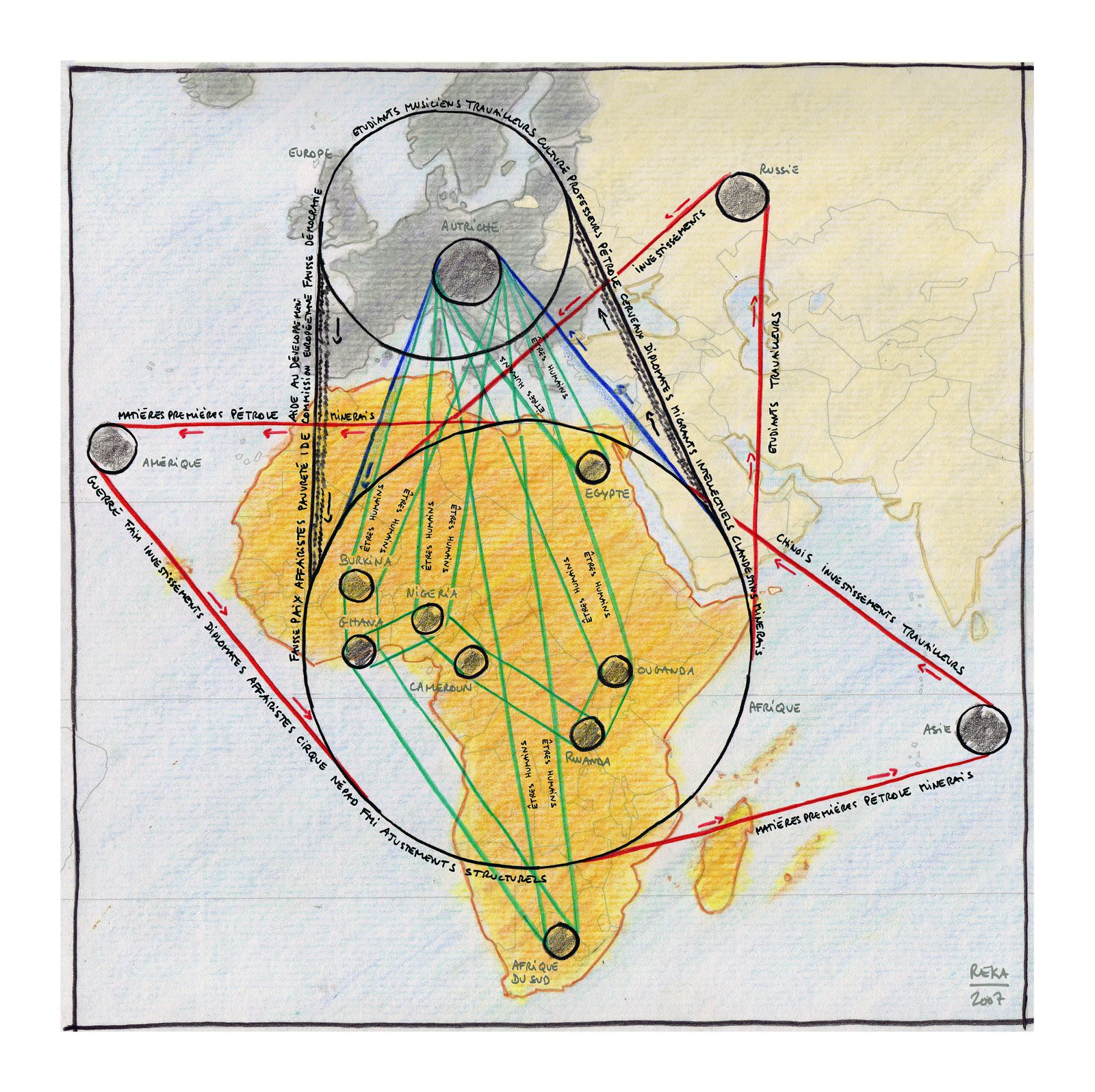
"There is no such thing as an innocent map, observes Philippe Rekacewicz in his catalogue essay that accompanies Diagrams, a new exhibition at the Prada Foundation in Venice.

A renowned cartographer, the Paris-born Rekacewicz is well aware of his medium's capacity to transform narratives for good and ill. His own work includes maps that illustrate the deaths of migrants as they bid for new lives in Europe. "A map," Rekacewicz continues, "is above all a social and political act - and therefore inherently subjective."' p.5.

Individual
|
      INTERPERSONAL    :     SCIENCES               
HUMANISTIC  --------------------------------------  MECHANISTIC      
 SOCIOLOGY  :    POLITICAL 
|
Group
Am I Free?

My history ...
Philippe Rekacewicz / The African big wheel, 2007
The wheel symbolizes permanence and continuity in the context of a profoundly unequal exchange, drawing, color pencil and ink, exhibition copy.
Courtesy Philippe Rekacewicz
(Image credit: Philippe Rekacewicz)

SOCIETY

... is our history ...

Freedom

National & International Law

Justice


'Other pictures are equally revealing for what they conceal. Consider the diagram entitled "Universal commercial history", a visual analysis drawn up by the Scottish engineer William Playfair in 1805 which traces the rise and fall of global wealth since 1500 BC against what he terms "Remarkable Events Relative to Commerce". Playfair, who is said to have invented the pie chart, includes moments such as "Rome founded" "Mahomet's Flight" and "America discovered". He never mentions slavery.

With such a broad-brush approach, lacunae are inevitable. It is a shame that the work of Viennese social scientist Otto Neurath - who, along with his wife Marie and colleague Gerd Arntz, invented the Isotype (International System of Typographic Picture Education) - is not on show. Based on pictograms, Neurath's Isotypes are an lmportant forerunner to the digital vernacular (from emojis to icons) so familiar to us today. Nor does the exhibition include maps of the devastation of Gaza since October 2023, such as those made by investigative research agency Forensic Architecture, which are proving among the most critical diagrams of our time.' p.5.

Philippe Rekacewicz - https://www.grida.no/resources/10988

My source:
Rachel Spence. Hidden truths in the best laid plans. Diagrams | What charts, maps and graphics can - and can't - tell us. Collecting, FTWeekend. 26-27 April 2025. p.5. 
With many thanks acknowledging length of quotation.

Image source:
https://www.wallpaper.com/architecture/oma-amo-diagrams-prada-foundation-venice

See also: 'icon' : 'symbols' : 'diagram' : 'map' : 'Forensic Architecture'

Archived listing Links II Sciences - inc. 'Diagrams' & 'Visualization I' and 'II': 

Thursday, February 10, 2011

OERU / OERF / UNESCO Press release: Towards an OER university - Free learning for all students worldwide

Please circulate: Joint OER Foundation / UNESCO press release.

The Open Education Resource (OER) Foundation is to host a strategic international meeting in Dunedin on 23 February, to commence planning for the provision of free learning to all students worldwide. Support from the United Nations Science and Education Organisation (UNESCO) to stream the meeting on the internet will allow the participation of education leaders and interested persons from around the globe.
Join the meeting as a virtual participant and help make OER futures happen.

Read more.


(If you blog about this important meeting -- please use the #OERU tag).

2011 will be a quantum shift year for the mainstream adoption of OER.

Cheers
Wayne
Wayne Mackintosh , Ph.D.
Director OER Foundation
Director, International Centre for Open Education,
Otago Polytechnic, New Zealand.
Founder and elected Community Council Member, Wikieducator
Skype: WGMNZ1
identi.ca