Hodges' Model: Welcome to the QUAD: sex

Hodges' model is a conceptual framework to support reflection and critical thinking. Situated, the model can help integrate all disciplines (academic and professional). Amid news items, are posts that illustrate the scope and application of the model. A bibliography and A4 template are provided in the sidebar. Welcome to the QUAD ...

Showing posts with label sex. Show all posts

Sunday, October 04, 2026

Living and Loving Dangerously

individual
|
INTERPERSONAL
: SCIENCES             
humanistic ------------------------------- mechanistic
SOCIOLOGY : POLITICAL   
|
group

identity - choices
 
Memory - Cognition
DEMENTIA - Early onset

Inability to consent
 
inhibition-disinhibition 

mental capacity


My liberty, my choices

"What! I'm married to you? Oh!"

Treatment - medication 

'Secure (safe)' environment

'Holistic assessment'?


Marital/Initimate Relationships
Social (our) identity

Existing relational behaviours

Interrelational needs
Interpersonal grief

Social identity/expectations

Yes, but we're married ... had 40 years together ...

Family bias, prejudices..
A 'new' step-parent ...

Access to support: 
relational - mutual vulnerability


Informed consent
Assumed consent

Rape, Sexual abuse, crime

Capacity to give consent

Consistency in decisions

Lasting power of attorney -
finance; health

External safeguards

Human rights

Access to supervision -
clinical & management


Prompts:

Previously post: Living and Caring Dangerously

Danny Leigh. Critic's choice - Films on release: Queen at Sea. Life&Arts, FTWeekend, 19/20 September, 2026, p.18.

https://depijp.rialtofilm.nl/en/films/queen-at-sea

So many difficult conversations. All on their own unique continuum in terms of sense-making for all concerned. 

A 'new' diagnosis at age 60; versus one at 44. Families seeking to control disclosure of the diagnosis from the patient. Clinical and family debate about this.

Finding a person locked-in the house, while their partner 'nips' to the shops. A person having their freedom to go out, on their regular walk  -despite acknowledged risks. (When they are known by people on their route - community care in action. Receiving a call from a neighbour; or the neighbour who knows where you park and can intercept you, on arrival or departure to express concerns. Or, even as you venture out for a walk with their neighbour of many a year. Categorise them as you will: [nosey, caring, concerned, public spirited, neighbourly, or (healthily) curious]?

Other discussions of grief at the loss of a person they have loved - in every way. A grief that presents new dark dimensions to what has gone before. Complicated by a state of early onset of memory loss. An ongoing disintegration of personhood and identity. An inability to consistently express thoughts, wishes, and choices. An inability to give informed consent. A loss taunted by retained physical desirability. What does love, sex, compassion mean now? What is the sum now, of love expressed over 'x' years? Hearts hollowed out, of what can be so important to a couple. Not vital to all. But for others, a source of conjoined affirmation, joy, warmth, companionship, a celebration of life and being human.

How to share that grief even amid close friends and family, who cannot cope themselves and withdraw? What of the preparedness of professions to manage such situations? What structures are in-place for team meetings, clinical supervision and inclusion in training, especially safeguarding?

From the bibliography (lower sidebar):

Hodges, B.E. (1989) The Health Career Model, IN, Hinchcliffe, S.M. (et al.) 1989 Nursing Practice and Health Care, 1st Edition only, London, Edward Arnold.

Adams, T. (1987) Dementia is a family affair. Community Outlook, Feb, 7-8.

Merritt MK, Procter N. Conceptualising the functional role of mental health consultation-liaison nurse in multi-morbidity, using Peplau's nursing theory. Contemp Nurse. 2010 Feb-Mar;34(2):158-66. doi: 10.5172/conu.2010.34.2.158. PMID: 20509800.

Murphy, K., Welford C. (2012) Agenda for the future: enhancing autonomy for older people in residential care.International Journal of Older People Nursing. 7, 75–80.

Kernohan, W. G., & Jones, P. (2023). Hodges’ Health Care Model as a Framework for Quality. Paper presented at Interprofessional work: developing oral care and the health workforce for the future, Brescia, Italy.
https://pure.ulster.ac.uk/en/publications/hodges-health-care-model-as-a-framework-for-quality

Jones, P. (2025). A Conceptual Mapping Exercise of Deprivation of Liberty Safeguards in Residential & Community Care Using Hodges' Model and Threshold Concepts. Journal of Evaluation in Clinical Practice, 31: e70085. https://doi.org/10.1111/jep.70085

Jones, P. (2025), A Generic Model and Conceptual Framework to Prime Curiosity Across Health and Social Care Disciplines to Facilitate Lifelong Learning. Journal of Evaluation in Clinical Practice, 31: e70252. https://doi.org/10.1111/jep.70252

Previously: 'capacity' : 'consent' : 'law' : 'safeguarding'

Tuesday, May 06, 2025

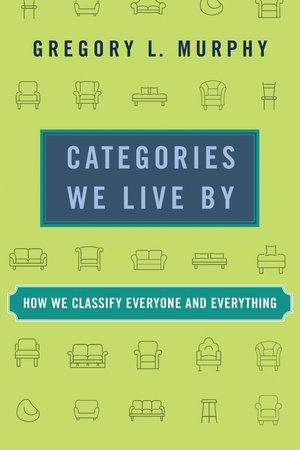
Book review iv: 'Categories we live by'

The introduction to part ii 'Case Studies' is quite prescient: 'Categories have consequences'. p.75.

Certainly timely in the UK as Prof. Murphy returns to gender and birth sex his first example at the book's start. 

Coincidental or not, categories do change. As we try to understand them it is vital we don't mess them up. Consequences follow for people who are subjected to the categorisation. People use them for stability, predictability, so change can be fraught for all. Personal and group identities can all be affected, and (recently) provisions in how 'spaces' are allocated and regulated - controlled.

At infant - junior school I remember the lack of awareness, understanding and empathy for peers affected by epilepsy, stigma was a thing then that wandered the classroom and playground. Through my career I've heard many clients recount experiences pointing to stigma and exclusion.

Of the case studies Murphy writes:
'Each chapter is a more-or-less self-contained case study (including other similar examples), except that chapter 7 is a more general meditation on how determining categories is used in the exercise of power. Some of the case studies get into the weeds, and if you find yourself not that interested in how species are defined, for example, you can skip ahead to the next chapter without losing much. Following part II will be a conclusion, which attempts to summarize some of the lessons learned from all these examples.' p.77.
Murphy's style is accessible, and the case studies are informative. The author is also accessible and responsive I must add. I prefer and need a physical copy of books to reduce screen time, but e-books have their uses. I'm sure I read a short sentence in the case studies that essentially contrasted the individual and collective in sociology. Can I find that word? No luck thus far. I may be mistaken but appreciate Prof. Murphy's reply and thoughts.

There's another 'news' coincidence on p.80 (Chapter 5 'Legal Categories'): are Santa Claus costumes 'clothing' and so subject to tariffs (also referenced)? Every person worldwide, has no doubt pondered on their marked grade in a test or exam - and 'where' this places them?
'In her review of a book about rules, Rivka Galchen (2022) admits to feeling a bit of despair in the end: "Rules that leave a ruler, Or a judge, in charge of interpreting them feel at once humanized and corruptible. Rules that allow no exception seem free of human frailty but alien, and unable to admit properly of complexity." It is very easy to point at what went wrong with an overly strict rule or with a judge who seems biased, but less easy to devise a system of categories that avoids every problem.' p.83.
I often frame the conjunction of the mechanistic axis and the group in Hodges' model in terms of what do need, or get when you have large groups of people? The political domain, including law and disorder is critical of course. Is 'utopia' the perfect system by definition? I like the way even prior to reference to Galchen, Murphy states how 'the precise borders between categories can be essentially arbitrary, and there is no way to avoid that arbitrariness if you insist on dividing things into categories.'. p.83. 

If this book was a BASIC computer program, the first command for Chapter 6 Psychodiagnostic Categories. might well be a 'GOTO' statement: Chapter 7 Categories and Power.

More to follow and nearly there - sadly.

Previously: identity : space : categories

Murphy, Gregory L. Categories we live by: how we classify everyone and everything. Cambridge, MA: The MIT Press, 2024.

Many thanks to MIT Press for the review copy - and the dose of serendipity:

Wednesday, March 26, 2025

Objectify me by Nicola L.

Individual
|
      INTERPERSONAL    :     SCIENCES               
HUMANISTIC  --------------------------------------  MECHANISTIC      
 SOCIOLOGY  :    POLITICAL 
|
Group
'You can touch
my breasts,
caress my stomach,
my sex.
But, I repeat it,
it is the last time,'

- read a note
L. left in a drawer.


Nicola L.
 'La Femme Commode' (1969)


My source: Stoppard, L. Objectify me, House&Home, FTWeekend, 5-6 October 2024, pp.1-2.

Friday, September 13, 2024

ROBOTPOLITICS

26 – 27 September, 2024 
UNIVERSIDADE ABERTA LISBON, PORTUGAL


The program includes:
  • The house is on fire, but this is fine: the incoming tsunami of disinformation 
  • Encrypted subjectivity in digital space 
  • You are (not) your avatar: personhood, personal identity and legal issues in mind uploading 
  • On Techno Dharma: Neurofeedback-assisted meditation as an enhanced technology of the self 
  • Mapped in real time: Affective technologies and the post-human subjectivity 
  • Does social bots rely on beliefs to communicate the science: An implication for misinformation. 
  • The Paradox of Information Abundance: Homogenization of Political Thought in the World of Social Media 
  • The main problems of Robotpolitics. Hints for their resolutions 
  • « Smart city » / Intelligent Citizen 
  • Smart Cities and Sustainability: Malthusian Sexual Robots 
  • Sex-Bots: Friend or Foe to Human Relationships? 
  • Towards Digital Platonism 
  • Autonomous weapons systems in armed conflicts: ethical and legal implications 

See also - The Jena Declaration: https://thejenadeclaration.org 

Previously on W2tQ robots

Monday, February 14, 2022

"Being Horizontal: Vulnerability, Interdependence and Resistance" c/o Confabulations

The title of this event last week struck a cord ...

 
From the website with some additions:


  Self - INDIVIDUAL - Person
|
 INTERPERSONAL    :     SCIENCES               
HUMANISTIC -----------------------------------  MECHANISTIC      
SOCIOLOGY  :   POLITICAL 
|
Community - Group - Population
sleep* ('in dreams')

(found) un-consciousness
(beware - risk?)

intent

non-verbal

psychoanalysis patient

personal vulnerability

gravity
collapse
position - posture
horizontal - vertical
human body, form
3D
mobility, movement
above - below
look up/down
angle - inclination
clinical positions
'other' positions - sex
birth, rest, deceased
reclined nude

"recline -


The 'games that people play', especially those seeking / in power.

social customs

dance - history - culture

social hierarchies
 is often associated with
feminised and/or racialised
powerlessness."


fallen soldier (civilian?)

choice*: of position

look up/down to

"Deliberately assuming a horizontal position in front of others can also, as the complex works grouped in this project reveal, challenge, subvert, and politicise dynamics of vulnerability and power."


Saturday, April 17, 2021

Editorial: Sex, gender and nursing

individual
|
INTERPERSONAL : SCIENCES
humanistic ----------------------------------------------- mechanistic
SOCIOLOGY : POLITICAL
|
group

Distinct concepts:

personhood
Gender identity
Personal ethics/values
Self‐identified gender
Conflates sex and gender. The individual—not external others—identifies their gender identity/sex ... on the basis of subjective experience in which the person determines their identity as a man or woman on the basis of how they feel...
Individual dignity
Natal sex, gender, transgender
Informed decisions
My understanding/stance on sex - gender
Young people who express feelings of gender dysphoria
Biological sex—once one of the most solid and indisputable of ‘facts’ in healthcare

Academics and Researchers

Sex is taken to refer to a biological reality which is observed at birth and distinguishes between male and female—normally on the basis of external genitalia
|
polarized discussion
|
Also determined at biochemical and chromosomal level and basis of internal and external organs

Anatomy and physiology texts?
Intersex?
Binary: MALE :: FEMALE
Biological essentialism
Sex identity of the baby
Documentation
Puberty blockers for young people
- a social construction
Evidence of ideological custom and practice
Gendered Familial Care Work*
Nurse clinicians (practice) and Researchers
Cultural & social values and attitudes
Gender: Feminism and women's studies
Stereotypical behaviours and roles; male and female behaviour—the masculine and feminine
Domestic abuse and sexual violence
Social media debate
Gender theorists -
socially constructed ways of being

Dignity in Human Rights
[SDGs]
Gender inequality, Law
‘chestfeeding’ and ‘birthing partner’
Sex‐based rights
Policy makers
Activism, Protest movement
'Woke' movement
Polarised DEBATE:NO debate
GC Academia Network
Implications for nursing
Data? Service delivery and planning?

 My source:

Ion, R., Patrick, L., Hayter, M. and Jackson, D. (2021), Sex, gender and nursing. J Adv Nurs. https://doi.org/10.1111/jan.14843 

I am emphasising the distinction between quantitative and qualitative research, mixed methods also acknowledged.

The first section for me is supportive of a conceptual framework.

The SDGs are added as this debate must simultaneously address sex and gender from within nursing and as nursing is theorised and practised on an individual and population (collective) basis.

*See also: [c/o HIFA]

https://web.uri.edu/research-admin/gendered-familial-care-work-and-public-health-crises-conference/

Sunday, August 05, 2018

Distant Constellation: @HOME

individual
|
INTERPERSONAL : SCIENCES
humanistic ----------------------------------------------- mechanistic
SOCIOLOGY : POLITICAL
|
group

"Distant


CONSTELLATION"

https://homemcr.org/film/distant-constellation/
@ HOME 
(preferably!)

https://grasshopperfilm.com/film/distant-constellation/
