Hodges' Model: Welcome to the QUAD: personhood

Hodges' model is a conceptual framework to support reflection and critical thinking. Situated, the model can help integrate all disciplines (academic and professional). Amid news items, are posts that illustrate the scope and application of the model. A bibliography and A4 template are provided in the sidebar. Welcome to the QUAD ...

Showing posts with label personhood. Show all posts

Sunday, October 04, 2026

Living and Loving Dangerously

individual
|
INTERPERSONAL
: SCIENCES             
humanistic ------------------------------- mechanistic
SOCIOLOGY : POLITICAL   
|
group

identity - choices
 
Memory - Cognition
DEMENTIA - Early onset

Inability to consent
 
inhibition-disinhibition 

mental capacity


My liberty, my choices

"What! I'm married to you? Oh!"

Treatment - medication 

'Secure (safe)' environment

'Holistic assessment'?


Marital/Initimate Relationships
Social (our) identity

Existing relational behaviours

Interrelational needs
Interpersonal grief

Social identity/expectations

Yes, but we're married ... had 40 years together ...

Family bias, prejudices..
A 'new' step-parent ...

Access to support: 
relational - mutual vulnerability


Informed consent
Assumed consent

Rape, Sexual abuse, crime

Capacity to give consent

Consistency in decisions

Lasting power of attorney -
finance; health

External safeguards

Human rights

Access to supervision -
clinical & management


Prompts:

Previously post: Living and Caring Dangerously

Danny Leigh. Critic's choice - Films on release: Queen at Sea. Life&Arts, FTWeekend, 19/20 September, 2026, p.18.

https://depijp.rialtofilm.nl/en/films/queen-at-sea

So many difficult conversations. All on their own unique continuum in terms of sense-making for all concerned. 

A 'new' diagnosis at age 60; versus one at 44. Families seeking to control disclosure of the diagnosis from the patient. Clinical and family debate about this.

Finding a person locked-in the house, while their partner 'nips' to the shops. A person having their freedom to go out, on their regular walk  -despite acknowledged risks. (When they are known by people on their route - community care in action. Receiving a call from a neighbour; or the neighbour who knows where you park and can intercept you, on arrival or departure to express concerns. Or, even as you venture out for a walk with their neighbour of many a year. Categorise them as you will: [nosey, caring, concerned, public spirited, neighbourly, or (healthily) curious]?

Other discussions of grief at the loss of a person they have loved - in every way. A grief that presents new dark dimensions to what has gone before. Complicated by a state of early onset of memory loss. An ongoing disintegration of personhood and identity. An inability to consistently express thoughts, wishes, and choices. An inability to give informed consent. A loss taunted by retained physical desirability. What does love, sex, compassion mean now? What is the sum now, of love expressed over 'x' years? Hearts hollowed out, of what can be so important to a couple. Not vital to all. But for others, a source of conjoined affirmation, joy, warmth, companionship, a celebration of life and being human.

How to share that grief even amid close friends and family, who cannot cope themselves and withdraw? What of the preparedness of professions to manage such situations? What structures are in-place for team meetings, clinical supervision and inclusion in training, especially safeguarding?

From the bibliography (lower sidebar):

Hodges, B.E. (1989) The Health Career Model, IN, Hinchcliffe, S.M. (et al.) 1989 Nursing Practice and Health Care, 1st Edition only, London, Edward Arnold.

Adams, T. (1987) Dementia is a family affair. Community Outlook, Feb, 7-8.

Merritt MK, Procter N. Conceptualising the functional role of mental health consultation-liaison nurse in multi-morbidity, using Peplau's nursing theory. Contemp Nurse. 2010 Feb-Mar;34(2):158-66. doi: 10.5172/conu.2010.34.2.158. PMID: 20509800.

Murphy, K., Welford C. (2012) Agenda for the future: enhancing autonomy for older people in residential care.International Journal of Older People Nursing. 7, 75–80.

Kernohan, W. G., & Jones, P. (2023). Hodges’ Health Care Model as a Framework for Quality. Paper presented at Interprofessional work: developing oral care and the health workforce for the future, Brescia, Italy.
https://pure.ulster.ac.uk/en/publications/hodges-health-care-model-as-a-framework-for-quality

Jones, P. (2025). A Conceptual Mapping Exercise of Deprivation of Liberty Safeguards in Residential & Community Care Using Hodges' Model and Threshold Concepts. Journal of Evaluation in Clinical Practice, 31: e70085. https://doi.org/10.1111/jep.70085

Jones, P. (2025), A Generic Model and Conceptual Framework to Prime Curiosity Across Health and Social Care Disciplines to Facilitate Lifelong Learning. Journal of Evaluation in Clinical Practice, 31: e70252. https://doi.org/10.1111/jep.70252

Previously: 'capacity' : 'consent' : 'law' : 'safeguarding'


Saturday, September 26, 2026

15th Panhellenic Conference on Alzheimer’s Disease (P.I.C.A.D.)

15th Panhellenic Conference on Alzheimer’s Disease (P.I.C.A.D.) 
& 7th Mediterranean Conference on Neurodegenerative Diseases (Me.Co.N.D.)

24–28 February 2027 | KEDEA – Aristotle University of Thessaloniki
Thessaloniki, Greece

The Countdown Begins!

From 24 to 28 February 2027, Thessaloniki will host the 15th Panhellenic Conference on Alzheimer’s Disease (P.I.C.A.D.) and the 7th Mediterranean Conference on Neurodegenerative Diseases (Me.Co.N.D.), at the KE.D.E.A. (Aristotle University Research Dissemination Center) – Aristotle University of Thessaloniki (AUTH).

This important scientific meeting will bring together healthcare professionals, researchers, academics, and experts in the field of Alzheimer’s disease and neurodegenerative disorders, providing an opportunity to:

  • present the latest scientific findings and emerging data;
  • exchange knowledge, experience, and best practices;
  • discuss current developments and challenges in the field; and
  • foster new scientific collaborations and professional networks.

The Conference is jointly organised by the Panhellenic Institute of Neurodegenerative Diseases, the 1st Propedeutic Department of Internal Medicine of AHEPA University Hospital, Aristotle University of Thessaloniki, and the Panhellenic Federation of Alzheimer’s Disease and Related Disorders.

The Conference will be held in a hybrid format, offering participants the opportunity to attend either in person or online.

Secure Your Participation

We invite you to register and join us in Thessaloniki for this important scientific event.
REGISTER NOW

Would You Like to Present Your Work?
Submit your abstract and contribute to the scientific programme of the Conference. This is an excellent opportunity to present your research, share your findings with the scientific community, and engage with colleagues from Greece and the wider Mediterranean region.

SUBMIT YOUR ABSTRACT

Save the Important Dates
Please plan ahead and make sure to complete your registration and, if you wish to present your work, your abstract submission within the relevant deadlines.

Timely compliance with the Conference schedule is essential for the effective organisation of the event and will contribute to the smooth preparation of both speakers and participants.

IMPORTANT DATES
For registration deadlines, abstract submission, programme updates, and all other Conference information:

For detailed information, please visit the OFFICIAL CONFERENCE WEBSITE

We look forward to welcoming you to Thessaloniki, 24–28 February 2027, and to an engaging and productive scientific meeting.

The Organising Committee


n.b. I enjoyed taking part in 2025 virtually. Blog post to follow re. 'Propedeutic' above. PJ

Saturday, November 15, 2025

Subjective-Objective: Thinking of Holistic Cake and Eating it

'Our natural awareness of our own activities is holistic. We experience ourselves as embodied beings, complete organisms, directly perceiving physical objects, making choices, engaging in conversation with other people. The attempt to split the human being into a combination of immaterial self and physical body makes a coherent account of these processes impossible. As Heidegger says, “The ‘scandal of philosophy’ is not that this proof has yet to be given, but that such proofs are expected and attempted again and again.”35 Given the Cartesian conception of the “real world”, organisms are “really” mechanisms, while “choices” and “actions” have no place in a world where there are only events, subject to the laws of mechanistic cause and effect. The whole person becomes a metaphysical oddity, straddling two incompatible metaphysical realms.

A theoretical framework that renders the previously straightforward inherently problematic is by no means an unequivocal advance. Materialist authors have attempted to “solve” this problem by denying the reality of the subjective side of the Cartesian picture, replacing his dualism with radical metaphysical reductionism.36 Such authors insist that the “objective” world (still understood as something devoid of phenomenal properties, containing only causes and effects as understood in reductionist science) is all there really is. On this view, we do not have to bridge the gap generated by Descartes, between the subjective and the objective features of human life, because the objective features are the only ones that exist.' p.20.

individual
|
INTERPERSONAL : SCIENCES
humanistic -------------------------------------------  mechanistic
SOCIOLOGY : POLITICAL
|
group-population

My Mind
Subjective

My Body
Objective


Mitchell, D., Loughlin, M. (2023) The philosophy of person-centred healthcare, Cambridge: Cambridge Scholars Publishing. https://cambridgescholars.com/product/978-1-5275-9058-8/


Previously: 'Descartes' : 'mind' : 'body'

Monday, September 22, 2025

A paper of special note: 'The Relational Care Framework ...'

Doing a search on 'person-centered care' the following paper was listed. It is useful too in contrasting personhood, and selfhood in relation to dementia, through 'The Relational Care Framework'

Abstract

We argue that contemporary conceptualizations of “persons” have failed to achieve the moral goals of “person-centred care” (PCC, a model of dementia care developed by Tom Kitwood) and that they are detrimental to those receiving care, their families, and practitioners of care. We draw a distinction between personhood and selfhood, pointing out that continuity or maintenance of the latter is what is really at stake in dementia care. We then demonstrate how our conceptualization, which is one that privileges the lived experiences of people with dementia, and understands selfhood as formed relationally in connection with carers and the care environment, best captures Kitwood’s original idea. This conceptualization is also flexible enough to be applicable to the practice of caring for people at different stages of their dementia. Application of this conceptualization into PCC will best promote the well-being of people with dementia, while also encouraging respect and dignity in the care environment.


Matthew Tieu, Steve Matthews, The Relational Care Framework: Promoting Continuity or Maintenance of Selfhood in Person-Centered Care, The Journal of Medicine and Philosophy: A Forum for Bioethics and Philosophy of Medicine, Volume 49, Issue 1, February 2024, 85–101, https://doi.org/10.1093/jmp/jhad044


The authors may find Hodges' model of relevance.

See also: 'subject' : 'object' : 'relational' : 'objective' : 'subjective' : 'personhood' : 'self' : 'identity'

Friday, August 29, 2025

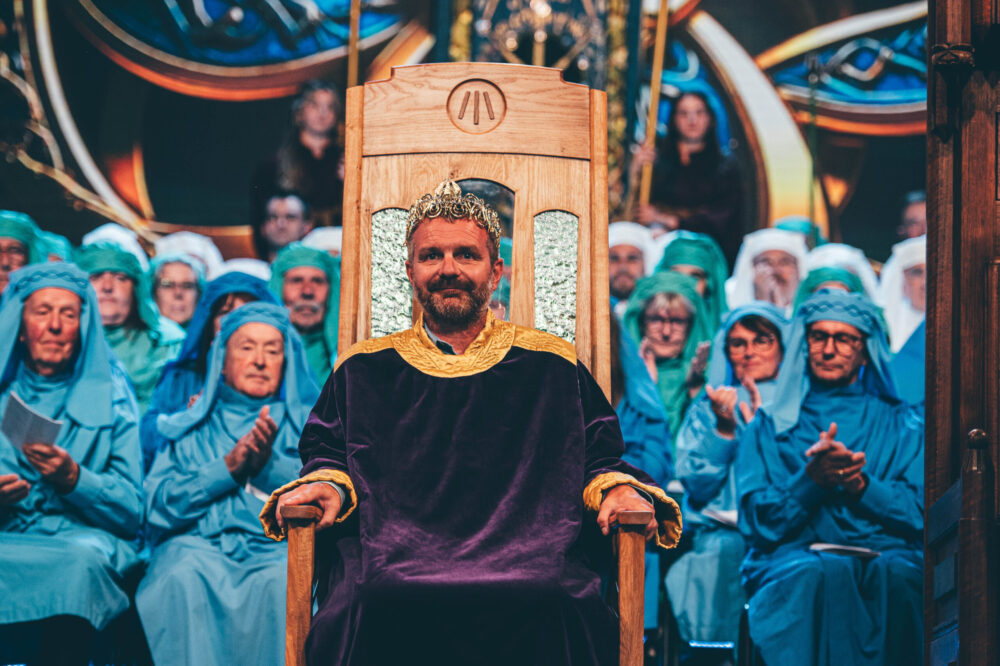
Winner of Wrecsam National Eisteddfod crown - 4th Aug.

Crown winner Owain Rhys
Image: 
https://nation.cymru/culture/winner-of-wrecsam-national-eisteddfod-crown-announced/

Owain Rhys is the winner of the Wrecsam National Eisteddfod crown for his poems about living with a loved one who is suffering with dementia.

The crown – sponsored by Elin Haf Davies – and a cash prize of £750 was presented to Owain in north Wales on Monday (August 4) by Prydwen Elfed Owens.

The prize was awarded for a “pryddest” or collection of poems not in the traditional Welsh style cynghanedd, of no more than 250 lines, on the theme of “Adfeilion” or ruins.

The adjudicators were Ifor ap Glyn, Gwyneth Lewis and Siôn Aled.

The crown was designed and produced by Neil Rayment and Elan Rowlands.

The pair previously created the impressive crown for the Rhondda Cynon Taf Eisteddfod in 2024 – won by Gwynfor Dafydd for his series of poems on “Atgof” – or remembrance.

Head judge Ifor ap Glyn said: “Llif 2 opens with the simple couplet ‘When you forget / every day as you wake’ – and it discusses living with someone suffering from dementia, namely the poet’s mother.

“It’s a quiet and sensitive treatment of what must be done to help the mother continue to live with dignity as her memory deteriorates.

“The collection presents a tender picture of a difficult situation faced by so many families today, and we sense the depth of the poet’s feelings toward his mother and her former strength.”

Text: https://nation.cymru/culture/winner-of-wrecsam-national-eisteddfod-crown-announced/

See also: https://eisteddfod.wales

My Source: BBC Four Episode 1 - 15mins
https://www.bbc.co.uk/iplayer/episode/m002gwyq/eisteddfod-eisteddfod-2025-with-huw-stephens-episode-1

Tuesday, August 19, 2025

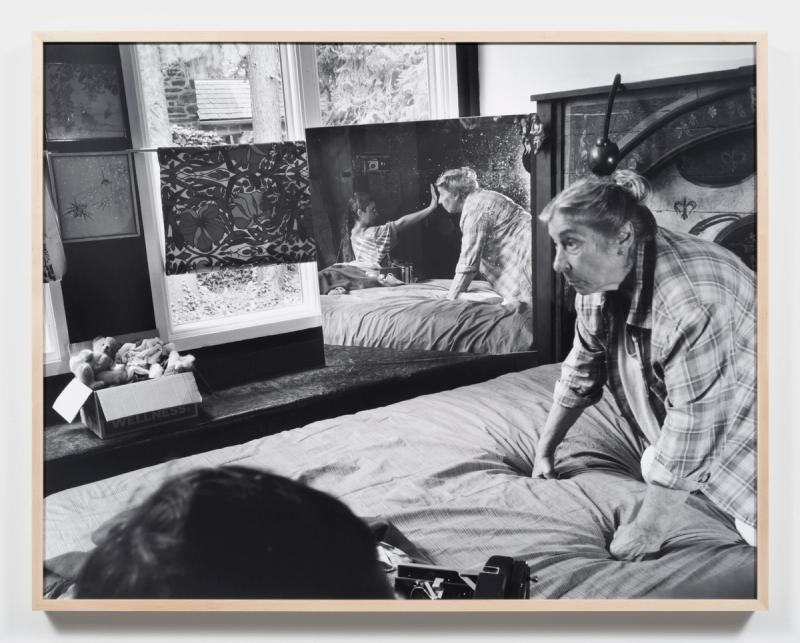
Dementia in 4x5 by Katherine Hubbard

"The American interdisciplinary artist Katherine Hubbard has spent the past five years documenting her relationship with her ageing mother, Antonette Berger, who in 2020 began exhibiting the first signs of memory loss. Her book The Great Room, set between the four walls of Berger's home in Philadelphia, is a culmination of grief and intimacy, as Hubbard steps into her role as caregiver. Using two large- format 4x5 cameras (which she is both behind and in front of) and drawing on her background n performance art, Hubbard transforms the once safe, domestic space into a psychological playground as the pair navigate their new reality. ...
In this portrait, Hubbard sits with her mother on her bed. Their bodies are reflected in a square nirror offset by a series of other square and rectangular objects (picture frames, windows, the headboard) which fragment the viewer's gaze. "This photograph was taken before she had a diagnosis,' Hubbard tells me. "It was a very confusing time, with a lot of uncertainty and frustration between us. ... 
"І am using the camera as а means of creating time with my mom apart from the brutal task of managing her," Hubbard writes. And to the woman who gave her life: "You might like to know that, when І think of you and see you, it's as a whole person."  
Inès Cross. FTMagazine. 

Individual
|
      INTERPERSONAL    :     SCIENCES               
HUMANISTIC  --------------------------------------  MECHANISTIC      
 SOCIOLOGY  :    POLITICAL 
|
Group
one fifty one (hand to face), 2021. Silver gelatin photograph

'The
Great
Room'


Collaboration

Care in the Community

Direction

Gaze


Book: 
h290 x w219 mm. 88 pages
Text by Katherine Hubbard. Hardback. £46.00

https://loosejoints.biz/collections/current-titles/products/the-great-room

Photograph: https://companygallery.us/ - https://companygallery.us/exhibitions/the-great-room

Book cover: Amazon
https://www.amazon.co.uk/Katherine-Hubbard-Great-Room/dp/191271969X


My source:
Inès Cross. Katherine Hubbard, FTMagazine. August 9th 2025, #1137. pp.10-11.
Ack. Antonette Berger (mother ...).

Saturday, July 19, 2025

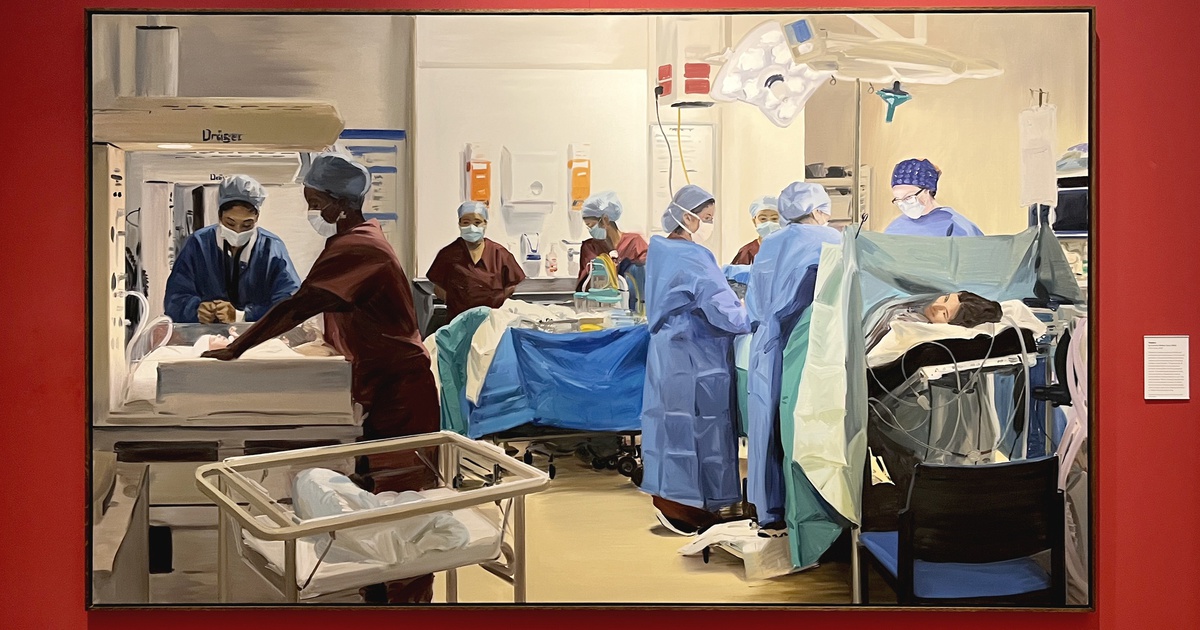
'Theatre' by Caroline Walker

Individual
|
      INTERPERSONAL    :     SCIENCES               
HUMANISTIC  --------------------------------------  MECHANISTIC      
 SOCIOLOGY  :    POLITICAL 
|


Image source: 
https://www.inglebygallery.com/news/7465-caroline-walker-the-scottish-national-portrait-gallery-theatre/

line of sight (seeing is believing) : 'care' : 'community' : 'theatre'

My source:
Harriet Baker, PAINT, FEED & PLAY, FT Weekend, Magazine. July 12 2025.  #1,133, pp.46-52.
https://www.ft.com/content/6e50181b-689e-4cd5-b084-37b311446e94

Great read too. The exhibition moves to Pallant House Gallery, Chichester from November 22nd.

Wednesday, February 19, 2025

Frayn's - shared 'Home Address'

Frequently I've made the point that 'person-centred' means placing the individual, patient, carer ... whatever the context, at the centre of Hodges' model. At the same time this is of course an idealisation:

individual
|
INTERPERSONAL : SCIENCES
humanistic ------------------------------- mechanistic
SOCIOLOGY : POLITICAL
|
group

What is your
'home' address?


'Science, it turns out, is in this respect simply an extension of all the other means we have found of representing the world. As with pictures and narratives, the world is unimaginable without the focus of a viewpoint. To understand the world in any way whatsoever scientifically, historically, artistically, anecdotally, imaginatively we find ourselves compelled to assume a potential point of convergence from which everything is  viewed, measured, and recounted. About the entity that defines this point we know only that it is by definition invisible to us. And since the instruments of science, of logic and mathematics, and of art, are all products of this invisible entity, they will not serve to represent or explain it to us. Anything in the world, or out of it, can be perceived or thought about, or both, and represented in our various codes. The only thing that systematically eludes us, whichever way we turn, is the something upon which everything else depends. The conscious subject that gives meaning to the objective universe cannot give meaning to itself. Without it nothing can be understood; about it nothing can be said. 
'The point of convergence . . .' And already we've gone wrong. The self isn't a point, in any remotely geometrical sense, but a complex organisation; and the consciousness that it generates, and by which it is animated, is a complex phenomenon.' pp.401-402. (my emphasis)


Frayn, Michael (2006). The human touch: our part in the creation of a universe. 'Home Address', Chapter 5. London: Faber & Faber. 

A final post from my paperback copy, next - off to a good secondhand home. Previously: 'Frayn'.

Friday, September 13, 2024

ROBOTPOLITICS

26 – 27 September, 2024 
UNIVERSIDADE ABERTA LISBON, PORTUGAL


The program includes:
  • The house is on fire, but this is fine: the incoming tsunami of disinformation 
  • Encrypted subjectivity in digital space 
  • You are (not) your avatar: personhood, personal identity and legal issues in mind uploading 
  • On Techno Dharma: Neurofeedback-assisted meditation as an enhanced technology of the self 
  • Mapped in real time: Affective technologies and the post-human subjectivity 
  • Does social bots rely on beliefs to communicate the science: An implication for misinformation. 
  • The Paradox of Information Abundance: Homogenization of Political Thought in the World of Social Media 
  • The main problems of Robotpolitics. Hints for their resolutions 
  • « Smart city » / Intelligent Citizen 
  • Smart Cities and Sustainability: Malthusian Sexual Robots 
  • Sex-Bots: Friend or Foe to Human Relationships? 
  • Towards Digital Platonism 
  • Autonomous weapons systems in armed conflicts: ethical and legal implications 

See also - The Jena Declaration: https://thejenadeclaration.org 

Previously on W2tQ robots

Tuesday, February 22, 2022

Book: "A Theory of Legal Personhood"


     Self - INDIVIDUAL - Person

|
 INTERPERSONAL    :     SCIENCES               
HUMANISTIC -----------------------------------  MECHANISTIC      
SOCIOLOGY  :   POLITICAL 
|
Community - GROUP - Population   

person
personhood (clinical / legal)

Reflective Equilibrium
extensional beliefs
definitions


interest [theory]
will [theory]


responsibility
[mental] capacity


objects
nature / natural

'West' - 'East' legal systems


[ More to follow FROM here
Re. BIOSPHERE
ECOCIDE
... ]


Whanganui River -
newborn children
adults of sound mind
slaves
corporations

foetuses
nonhuman animals

Orthodox View

west - culture - east

Social contract
agreement

Legal personhood

Jurist

Hohfeldian understanding of rights
(non-Hohfeldian?)

non-incorporated organizations

Corporation as artificial person


See also:

Law 'in' Hodges' model (Discuss?)

My source: @OUPAcademic


Sunday, January 17, 2021

"Supernova" squared* ...?

PERSON identity MEMORY
|
INTERPERSONAL : SCIENCES
humanistic ----------------------------------------------- mechanistic
SOCIOLOGY : POLITICAL
|
DYAD - FAMILY -  COMMUNITY - POPULATION


[eventual]
Supernova


*or rectangled?


Tuesday, November 03, 2020

Migrants, Picnic across the border c/o JR

individual
|
INTERPERSONAL : SCIENCES
humanistic ----------------------------------------------- mechanistic
SOCIOLOGY : POLITICAL
|
group - population


Migrants, Picnic across the border


My source:

Harvey, C. 'At first, they used to arrest me...'. The Daily Telegraph, Review, 31 October, 2020, pp.4-5.

See also:

JR: Chronicles

https://www.saatchigallery.com/art/jr_chronicles.php


Sunday, October 25, 2020

Orchestrating the Four Notes

individual
|
INTERPERSONAL : SCIENCES
humanistic ----------------------------------------------- mechanistic
SOCIOLOGY : POLITICAL
|
group - population

F

A

D

B


More to follow ... next month!

See also:

'dementia'

'music'


My source:

Various: BBC Radio 4, Times Radio, World Service


Monday, December 30, 2019

Beautiful thought & Houses - Ruskin

individual
|
INTERPERSONAL : SCIENCES
humanistic ----------------------------------------------- mechanistic
SOCIOLOGY : POLITICAL
|
group - population


"There are two ways of getting it, if you do want it. The first is wholly in your own power; to make yourselves nests of pleasant thoughts. Those are nests on the sea indeed, but safe beyond all others; only they need much art in the building. None of us yet know, for none of us have yet been taught, what fairy palaces we may build of beautiful thought – proof against all adversity. Bright fancies, satisfied memories, noble histories, faithful sayings, treasure-houses of precious and restful thoughts, which care cannot disturb, nor pain make gloomy, nor poverty take away from us – houses,- built without hands, for our souls to live in" - Ruskin.


THE WORKS OF JOHN RUSKIN, 
HONORARY STUDENT OF CHRISTCHURCH, OXFORD. 
VOLUME IV. 
THE EAGLES NEST. IX. — THE STORY OF THE HALCYON. I99.
LONDON : PRINTED FOR THE AUTHOR BY SMITH, ELDER & CO., 15, WATERLOO PLACE; 
AND SOLD BY MR. G. ALLEN, HEATHFIELD COTTAGE, KESTON, KENT. 
1872.

My source:
The Ruskin Library, Lancaster University.

Thursday, June 14, 2018

Wellcome Collection: Handle with Care


Health care is complex
because
care delivery
involves the
handling
of a variety of forms of
knowledge, information and data. 


individual
|
INTERPERSONAL : SCIENCES
humanistic ---------------- ...WHAT IT MEANS ... ------------------ mechanistic
SOCIOLOGY : POLITICAL
|
group

to be cared for


to be caring


to care


to be a carer


The handling becomes specialised 
because of those
be's
the 'patient', the 'nurse', the 'carer'...
identities
loved, lost, earned and learned ...
The integration of all this 
can be summarised as so many forms of 'why'
often described as the spiritual -
Let us handle the Planet With Care.


Monday, August 07, 2017

How do you define person-centredness? Editorial c/o Dewing & McCormack

individual
|
INTERPERSONAL : SCIENCES
humanistic --------------------------------------- mechanistic
SOCIOLOGY : POLITICAL
|
group
Individual values, choices and preferences*

What matters to the patient.


person-centredness = hard to define?

compassion (the 6Cs)


PERSON-

"We believe that a focus on person-centredness provides an opportunity for nursing to rise above particular theoretical 'fan clubs' and work within a coherent set of principles that are multivariate, context nonspecific and trans-specialist." Dewing & McCormack (2017).


measures?
measures?


A certain type (quality)
of nurse-patient relationship


Community of Practice

Culture - isolating?


-CENTREDNESS


*You can - as a nurse - ask the questions about the above, but how you advocate, realise this in nursing is very complex and challenging.

policy

Services (workplace)?

Organisational memory=Organisational respect?


"An example is needed and will be provided next. The intention is to demonstrate the potential utility of Hodges' model to conjoin ipseity, that is; the self, individual identity and personhood with the group and population. Further studies will seek to establish how Hodges’ model can be used in case formulation not just at an individual level – were social factors inform assessments and evaluations – but in community and global health development. Hodges’ model is further suited to this task as the model supports precontextualisation by helping us to anticipate the future and recontextualization in seeking to make sense of the past. Overarching this temporal dimension is the fact that Hodges’ model by being so general and independent of any particular discipline the model is transtheoretical. There is no single theory that can explain, predict or account for the validity of Hodges’ model."
[Draft notes for an editorial that might follow? PJ ]

As the editorial describes, amid women-centred, child-centred and family centred care in Hodges' model we can place whatever the situation, or context demands at the center of Hodges' model and thereby at the focus of our care deliberations whether reflective, theoretical or practice based.


My source:


http://onlinelibrary.wiley.com/doi/10.1111/jocn.13681/epdf

Dewing, J. and McCormack, B. (2017), Editorial: Tell me, how do you define person-centredness?. J Clin Nurs, 26: 2509–2510. doi:10.1111/jocn.13681

Thursday, April 13, 2017

Wednesday, January 11, 2017

Person & Sense of Place: A River runs through it ...

individual
|
INTERPERSONAL : SCIENCES
humanistic -------------------------------------------  mechanistic
SOCIOLOGY : POLITICAL
|
group-population
Personhood Personality Identity

Philosophy

Ethics

Panpsychism

Whanganui River

Nature

Environment

Human Ecology

History - Heritage

Indigenous Peoples

Legal personhood

Rights of Nature


My source: Moses, K. (2017) New Zealand River Granted Legal Personhood, Resurgence & Ecologist, Jan / Feb 2017. Issue 300: p.5.

NZHerald Agreement entitles Whanganui River to legal identity http://nzh.tw/10830586 via @nzherald

The Rights of Nature

Saturday, September 24, 2016

Bedlam exhibition and Nijinsky's Mask, 1919

individual
|
INTERPERSONAL : SCIENCES
humanistic -------------------------------------------  mechanistic
SOCIOLOGY : POLITICAL
|
group-population


It is still surprising how often you are led to wonder: 'Will the real Mr - Ms X, Y please stand up?' So many people are still reliant, dependent upon psychotropic medication to the extent that they too acknowledge that to a lesser or greater degree they do not know themselves. Ordinarily, we take for granted the various roles and personas, yes: the masks that we adopt unconsciously in the course of the day. Reducing this medication, assisting in the removal of the mask can be a great challenge especially in a community setting. When the combined services of primary care, community mental health team work with patients and carers this brings its own rewards. From behind the mask a new voice emerges: independence, understanding, motivation, spontaneity, tangible happiness - contentedness. ... Before that though we still need to maintain and teach the skills to really attend and listen, to see the person behind the mask...


Bedlam: the asylum and beyond


Image source: In the Frame for December 2013 Vaslav Nijinsky's 'The Mask'

My source: Wesseley, S. (2016). Inside Bedlam, England's first mental institution, The Times, Arts. 14 September, 8-9.

Wednesday, July 20, 2016

A Checklist for Personhood

individual
|
INTERPERSONAL : SCIENCES
humanistic ---------------------------------------  mechanistic
SOCIOLOGY : POLITICAL
|
group

"Philosophers disagree on exactly what it would 
take for an animal to qualify as a person. 
Kristin Andrews at York University in Toronto, Canada, 
suggests searching for the six attributes listed here." p.17


SUBJECTIVITY
(REASONING) --------------

PERSONALITY

NARRATIVE SELF

AUTONOMY

(OBJECTIVITY)
--------------- RATIONALITY


RELATIONSHIPS


HI Peter,

Oh, that's interesting! I'd move Rationality to objectivity/science, though, as it refers to the ability to engage in logical reasoning, solve problems, etc. There's been a lot of interest recently on the logical abilities of babies (Sue Carey's team) and chimpanzees (e.g. Josep Call's team) and they both seem to be able to engage in exclusion reasoning (i.e. disjunctive syllogism).  I discuss animal rationality in my book The Animal Mind. 

Rationality isn't consciousness; I could add consciousness to the list, but it's there already, just subsumed by narrative self and relationships too.

cheers,
Kristin

___________________________________________________________
Kristin Andrews
Associate Professor
Philosophy/Cognitive Science
York University
4700 Keele St.
Toronto, ON M3J 1P3
CANADA

www.yorku.ca/andrewsk

Rutkin, A. (2016). Almost human? New Scientist, 2 July. 231:3080. 16-17.

Additional link:
BBC Future: 'Wisdom of the crowd'; The Myths and Realities