Hodges' Model: Welcome to the QUAD: assessment

Hodges' model is a conceptual framework to support reflection and critical thinking. Situated, the model can help integrate all disciplines (academic and professional). Amid news items, are posts that illustrate the scope and application of the model. A bibliography and A4 template are provided in the sidebar. Welcome to the QUAD ...

Showing posts with label assessment. Show all posts

Wednesday, August 26, 2026

South Sudan Medical Journal - August 2026


Dear Reader,

The August 2026 issue is online here; we thank all the copyeditors and reviewers who helped prepare these papers. If you are submitting a manuscript, remember to read our Author’s Guidelines first.

We are looking for volunteers to join the Editorial team. Email us if you have time and editing skills.

Editorial

Can the Ebola Zaire vaccine stop Bundigunyo virus? Edward Kenyi


RESEARCH ARTICLES
Assessment of airborne fungi in the emergency and traumatology departments of University Hospital Centre, Sidi Bel-Abbes, Algeria Derouicha Matmour, Samia Merad, Yassine Merad, Achwak Bendouida, Zoubir Belmokhtar, Zakaria Merad, Mohamed Amine Boumelik, Benali Beghdadli, Othmane Ghomari 

Maternal and nutritional factors associated with early childhood development in rural Indonesia Hadi Ashar, Mohammad Zen Rahfiludin, Sri Achadi Nugraheni, Dwi Hapsari Tjandrarini

Observed outcomes and costs of laparoscopic versus open cholecystectomy in Juba, South Sudan Mayen Achiek, Jingo Faride, Mohamed Ibrahim, Abraham Mafair Kezekia, Chep C. Chep, Garang D. Nyuol, Ajak M. Dhel, George Lefteri

Stakeholders’ perspectives on determinants of health financing in South Sudan: a qualitative assessment Jonathan Majok, Gabriel Loi, Solomon Dut, Aluel Ayom, Thiey Kuethpiny, David Ngor, Sarah Nyannyot

Predictors of unsuccessful treatment outcomes among adults with pulmonary tuberculosis in a resource-limited setting Tri Agus Yuarsa, Malehah Mohd Noh, Richard Avoi, Meryl Grace Lansing, Putra Agina Widyaswara Suwaryo 

Assessment of the understanding of evidence-based medicine among undergraduate medical students in Gadarif University, Sudan Khalid Mohammed Ali, Ozaz Yagoub, Inshirah Mustafa, Tarig Fadelelmoula
 
Environmental health risks associated with open dumping practices in Central Kalimantan, Indonesia: an observational study Nawan, Septi Handayani 

Assessing the quality of health facilities providing antenatal care services in Bor, South Sudan John Thon Pandak Kuot, Shalini Ninan Cherian

Prostate cancer awareness and factors influencing screening among men at St. Francis Referral Hospital, Tanzania Theresia A. Karuhanga, Zeinabu Awardh Sharif, Antony Magoda, Philbert Madoshi 

CASE REPORTS 
Long-standing aspirated foreign body in a child complicated by pneumothorax and empyema Gawar Gel, Juma Deng, Justin Rubena

Clinical rabies in an HIV-positive pregnant mother with surviving newborn Ayol Mac Ayol

BACKCOVER: WHO: Guidelines for the management of pregnant and breastfeeding women in the context of Ebola virus disease

FRONT COVER IMAGE: The grown fungal colonies on SDA media collected from different types of samples. (Article on page 149)

Thanks to everyone who supports SSMJ. Tell your colleagues they can join our mailing list here.

The SSMJ team

Email: southsudanmedicaljournal AT gmail.com
Website: http://www.southsudanmedicaljournal.com
Follow us on X: @SSMedJournal and our Facebook Group.

Our mailing address is:

South Sudan Medical Journal
Health and Social Sciences Research Institute, Juba
South Sudan
Copyright (C) 2026 South Sudan Medical Journal All rights reserved.

Tuesday, August 04, 2026

Brief introduction to Hodges' model

Hodges’ model is a conceptual framework of universal value in theoretical work, practice, policy and care management. While this model is a product of the health-education sector, it is global in scope, taking in the current situation, history and future as complicated by scientific, socio-political, technology and climate change. Practice-based, Hodges’ model is a tool simple in form and yet powerful in terms of how it can help users frame the problems and opportunities of the 21st century. The model was originally taught in studies for the post-registration certificate of care of the mentally ill in the community and other courses. Student assessment included the completion of a case study (vignette), demonstrating competence in application of the model and its embedded (implicit) values.

Access to education, especially early years, is emphasised as foundational for personal and community growth and development. For individuals this can set the course for lifelong learning and an ability to contribute to society and the economy. Given this primary challenge, global institutions and policy makers point to the need for curricula that are relevant. In turn employers and industry leaders need a (global) workforce who are: 

  • reflective practitioners;
  • critical thinkers;
  • able to see the ‘big-picture’; and focus on detail and priorities when needed (risk and triage);
  • decompose a problem, but also integrate (care);
  • work as team-members;
  • and extend across several literacies.
These challenges are ongoing for education (being health literate, so as to address personal, social, health and economic education, and the sustainable development goals), and increasingly climate impacts.

Sunday, July 26, 2026

The Line(s)

Foresight, hindsight, sight itself and that illusory association with the line of time is a fascination for us all. No doubt, as a result of the hardwired analogue found in the lifeline and our ultimate fate. Hodges' model acknowledges all these lines; concrete and abstract. The work and health careers, an individual's education career (where accessible / permitted) now lifelong learning.

Abstract things seem tenuous, indistinct, maybe lost somewhere in theory. Concrete on the other hand, is physical, tangible. 

Hodges' model can cover paper with lines, two of them ideally. The model can then be applied in practice.

There is then an interplay between abstract and concrete; between which data, information and knowledge flows, uncertainty reduced. Scope and scale become clearer once assessment, planning, intervention and evaluation are concurrent.

This applies to all lines, if they are not destined to be covered in sand.

My source:  
End of The Line: how Saudi Arabia’s Neom dream unravelled, FTWeekend: 
https://ig.ft.com/saudi-neom-line/
 
See also: 'design' : 'architecture' : 'line'

Friday, June 19, 2026

'Curiosity': child safety and safeguarding c/o BBC News

'Teacher who killed his adopted son given whole life prison sentence

14:30 18 June

That concludes our live coverage of the sentencing hearing.

To recap what happened at Preston Crown Court earlier: A teacher who sexually abused and murdered the 13-month-old baby boy he adopted with his partner has been told he will spend the rest of his life in prison.

Preston Davey died in July 2023 at the hands of Jamie Varley, 37, who subjected the child to physical, sexual and emotional abuse during the final four months of his life.

Varley, from Blackpool, told police Preston had accidentally drowned in a bath, but a post-mortem examination discovered the child had suffered 40 injuries.'

Continued ...

◇

individual
|
INTERPERSONAL
: SCIENCES             
humanistic ------------------------------- mechanistic
SOCIOLOGY : POLITICAL   
|
group
 
curiosity


PROFESSIONAL
CURIOSITY


Source (Various): BBC Live News https://www.bbc.co.uk/news/live/c4gyrewq8xkt

 Previously: 'curiosity' : 'risk'

Thursday, June 11, 2026

NHS Corridor Care – Urgent and Emergency Care Daily Situation Reports

If politicians & policymakers regularly 'walked'
 all the corridors of Hodges' model -
 they would see the false economy 
of their combined incremental works.

Incremental? Yes, in first being a 'temporary measure', then having a deleterious impact as the duration per patient and number of patients on corridors increased.

Now to the situation when the standard of care is unsafe, sub-standard, and denigrates the NHS as a social institution.

The fact of insufficient beds and its effect on care (pathways) and patient (and family) experiences severely affects staff morale, as they recognise subtle abuse, a precursor to structural and attitudinal changes that foster, encourage and establish institutionalised harm.

Staff also realise that they risk being de-skilled, 're-educated' -
becoming less compassionate ... (a 'lesser Nurse') as corridor care 
and its consequences are normalised.

Ignoring demographic trends and without an alternative concerted 
preventive/health education and health promoting plan, this is the result 
of the health and social care funding and policy
of successive governments, enacted by NHS management.

NHS England: Corridor Care – Urgent and Emergency Care Daily Situation Reports
https://www.england.nhs.uk/statistics/statistical-work-areas/corridor-care-urgent-and-emergency-care-daily-situation-reports/

Monday, May 25, 2026

ii Book: 'Complexity in Health Care - A Paradigm Shift for Clinical Practice'

I didn't have time to finish reading Frankel et al. before WCCS26. This book has an index which was very useful, to efficiently check certain points. It is amazing the number of books without an index.

Chapter 1 is 'Guiding Principles' and links really well with the index. At two pages it is brief and yet also constitutes Part 1. 

Part II The Clinical Situation, continues an introductory thread. Chapter 2 The “Clinical Situation”: An Introduction to Its Structure and Complexity is what attracted me to the book. At five pages, there was more in this vein. I looked ahead and found that the chapters all seemed short. Checking the book's web page, 50 chapters in 270 pages, so just over 5 pages and well referenced too.

Initially, you might feel short-changed, of course, I didn't with a review copy. But don't worry. You are in patient- person-centred hands here. Sometimes content matters. The three authors work and are researchers in psychiatry. For me, the guiding principles and part II provide a handshake with the index. The person here then, is given a literary hug. Immediately, there is a link between the variables of care and the structure of a case (or caseness). 

'But importantly that "structure" is dynamic changing over time. We classify variables as "clinical" as they are brought into play for the purpose of treatment, i.e., the goal of healing.

The clinician is not just challenged to unravel this complicated situation but also to represent the patient accurately, including his or her "human" elements as represented by temperament and personal attitudes. What are the patient's essential needs. tolerances, preferences? Yet, there is even more to know about each patient. Does she have children? What is her financial status, her ethnicity? What are her attitudes about medical professionals. Does she believe in medicine, or even in science?

Beware! None of these factors are dispensable when trying to understand a patient. Just try to leave out a few and you are left with a gutted rendering of that person, not a living human being.' p.7. 

(and continued in fragmented form below ...)

individual
|
INTERPERSONAL : SCIENCES
humanistic ------------------------------- mechanistic
SOCIOLOGY : POLITICAL
|
group
'The result even when this level of detail, is available may still be an anemic version of the patient. 
 
Traditionally a medical patient is subjected to an extensive workup that includes a mental status examination, in addition to a detailed past and present history, ... 

... and an extensive "review of (organ) systems.

Now add the multiplicity of problems, psychiatric and systemic medical, from which the patient suffers. ...

Multiplicity may include systemic medical, psychiatric, social, financial, and lack of access to health providers.' p.7.


'From this description it seems logical that complex patients presenting with mixed medical-psychiatric disorders be managed with an ongoing collaborative approach delivered by a multispecialty team. Included may be a primary care physician, psychiatrist, and/or psychotherapists. One or more of the collaborating professionals may be a nurse practitioner and/or a physician's assistant.' p.7
I will return to the 'logical' in the final quoted paragraph above. The author's declare their intent from the outset, and by the literature-to-date they achieve this (may I please add? 'in spades!').
 
Over the years and as raised on W2tQ, several colleagues and contacts have asked "Where is the book on Hodges' model?" Not to sound weird, but this book asks that same question through some challenges to the usual 'medical' text. There are several lessons to take away here, even if only to keep a dream alive. While the physical size of a textbook, its practical appeal and stance makes it appear as something to pop in your top shirt/jacket pocket. A pocket guide: quite an impression just 10-20 pages in, and in this digital age.
 
As you would expect from mental health practitioners - psychiatrists - psychotherapists, interpersonal, subjective-objective and intersubjective factors are integral to how complexity is defined and measured. In Chapter 2, pp.11-12 there is mention and reference to the Value-Based Integrated Case Management Complexity Assessment Grid:
Specker, S., Andrew, R., Drexler, E., Koithan, E., Thurber, S., & Frankel, S. (2026). Development of the Self-Administered Health Complexity Screening Instrument. Professional case management, 31(2), 81–89. https://doi.org/10.1097/NCM.0000000000000845
I will check this instrument as I complete this review. As noted on April 9th this book was published in 2023, so I remain grateful to Daniela and colleagues at SpringerNature for the review copy (which also enjoyed WCCS!).

More to follow ...

Steven A. Frankel, Steven D. Thurber, James A. Bourgeois (2023) Complexity in Health Care: A Paradigm Shift for Clinical Practice. Cham. Switzerland: Springer. ISBN: 978303114948.

Tuesday, May 05, 2026

iii Picking up sticks: when axes matter

It is one thing for us to break the stick, but quite another from a concept's perspective. They are accustomed to the dynamics at work, when as search terms they are exploded, or not. And, not just any concept but one that can be unique. Consider the concept, and how or where it finds itself [ in Hodges' or another model ]? Let us use the intra-INTERPERSONAL domain, as an example, and ask:

  1. Is 'mood' fixed by the I-axis alone?
  2. Does the humanistic axis have a role in where in the doomain the user of Hodges' model places 'mood'?
  3. Acknowledging person-centredness, if the patient/client had a view, to what extent would this agree (with annonymity assured) with the professional's judgement, or a relatives / guardian?
  4. What is as a result, 'mood' has become 'very low mood'? (To continue in this vein , invites complication, but we will continue.)
  5. Introducing the 'Other' whatever their role and relationship, pushes us to the humanistic, but whether this is achieved in a person-centred manner (triage excluded) is a matter of opinion and judgement (evaluation).

If mood is fixed by the I-axis then if we determine the issue is 'low mood' are we introducing a combined quantitative and qualitative dimension, a continuum, at the selected point in the interpersonal domain? Writing previously about threshold concepts, I wondered, and proposed compound threshold concepts. There is a progression from the patient's subjective self-assessment, to in all likelihood of an objective measure being introduced, so spanning two domains. Definition of 'compound' aside; there is a compound structure at work.

What points 1-5 above reveal is triangulation. When it is argued that Hodges' model facilitates navigation as per my presentation on 21st April, this is a strategy from mixed-methods research in practice. Many years ago, Hodges' model was described as a 'cognitive periplus', reflecting the way ancient mariners initially charted the coastlines creating the first map, as per their culture and dispora. In the west more recently the value of social approaches and activities, especially in mental health. Care navigation is a role. Literally sign-posting to individually suited (which must be stressed) activities, resources, and agencies. So, in Hodges' model what are our three triangulation points? They are:

  1. Axial;
  2. Intra- InterDomain; 
  3. Person-centred. 

Perhaps, we can describe 1-2 as conceptual anchors at least when dealing with a concept, while #3 is more about approach, values and philosophy. So, there is something of a 'cheat' going on, because each one is compound:

1. Axial: The axial is comprised of four points. The axes create a Cartesian plane (figure). And, as far as a patient is concerned, they mark off a point on the respective Individual and Humanistic-Sciences parts of the axes. This form of triangulation point can claim a general conceptual precision (language) in the applied terminal labels; but what happens in-between can be patently fuzzy. A mix of what may be objective and subjective.

2. Intra- Interdomain: This may be the most imprecise triangulation point. It appears the axes of Hodges' model are composite (figure). They have two-sides as a boundary. To be pedantic, in our example, one plays to the interpersonal domain, the other the sciences.

[The relationship between the axis and the domains in Hodges' model, is far from unique; but I wonder if there is something else here?]

2. Person-Centred: There is a paradoxical nature to person-centred(ness). It is also nebulous in nature, and yet in care it is definitive in practice (safety, purposes, values, professionalism, competency, ...).  It forms locus which can also be classed as a traingulation point, at the centre of the model. This is the point around which Hodges' model is built. This captures the individual's (life, care) context and situation, all influenced by their life chances as consequent health - and other - careers. Salience and our attention^ is key. Is it possible to frame our purpose(s)?

^A focus for [N] autumn.

Marrakech, Le Jardin Secret. 24th April. 1000-1830.

Thursday, January 22, 2026

NANDA-I Newsletter - theme of clinical reasoning


'This month at NANDA-I, we have been exploring the theme of clinical reasoning.


Clinical reasoning is at the heart of nursing; it’s how nurses make sense of complex patient information and choose the best path forward. While many nurses think of diagnosis as the centerpiece, it’s really the thinking that leads up to it, gathering cues, interpreting what matters most, and then safely determining goals and actions, that makes all the difference in outcomes. Strong reasoning helps nurses notice subtle changes and act with confidence.


As healthcare grows more complex, understanding how nurses think, not just what tools they use, helps elevate care for every patient. We’ll be sharing insights throughout the year to help you stay connected to nursing knowledge and its impact on care delivery and education.'


Teaching Tip: Clinical Reasoning in Practice

Start With Assessment to Improve Reasoning

When nurses work with standardized languages and clinical judgment tools, it’s tempting to dive right into diagnosis. But the most accurate and useful nursing judgments always come from strong, systematic assessment first. Quality assessment supports better interpretation of patient needs and more precise identification of nursing responses.


Quick Tip: Use a flexible assessment framework, whether it’s a conceptual model or a tool like functional health patterns, to make sure you’re capturing the data that matters most first. When you build a solid foundation with assessment, everything that follows (including diagnostic thinking) becomes clearer and more grounded.  


My source: 'Friends of NANDA®-I Newsletter' subscription (with my emphasis).

See also:
https://nanda.org/2025/12/nanda-360-for-educators-and-researchers-strengthening-nursing-knowledge-through-diagnosis-centered-reasoning/

Assessment, plus planning, implementation - action, evaluation (plus, formulation).

Functional and cognitive [Health, Illness, Climate, Poverty, Political, Security, Prevention, Self-care, ...] patterns.

'... make sure you’re capturing the data that matters most first' - Situated, Context, Salience.

For a competent practitioner an assessment can also be 'therapeutic' for the patient.

Previously: 'classification' : 'diagnosis' : 'NANDA' : 'ICD'

Wednesday, December 17, 2025

'Connected Knowledge' - 4MAT

'Very different is the 4MAT system, which classifies students along two axes according to their answers to a multiple-choice questionaire. One axis measures the student's preference for acquiring knowledge concretely versus abstractly, and the other measures his preference for applying knowledge concretely versus abstractly (McCarthy, 1980). His scores on these axes places the student into one of the four quadrants: 

1. Innovative Learners (acquire concretely, apply abstractly); 
2. Analvtic Learners (acquire abstractly, apply abstractly; 
3. Common Sense Learners (acquire abstractly, apply concretely);
4. Dynamic Learners (acquire concretely, apply concretely). 

Each of these quadrants is divided again, according to whether the student prefers processing information analytically (left-brain mode) or holistically (right-brain mode). The 4MAT System trains teachers to write lesson plans that cycle through all eight learning styles and brain modes.

Such more-or-less arbitrary classification schemes abound in the social sciences. They are easy to dream up, and virtually impossible to validate (Wilkerson and White, 1988). This doesn't mean that they're totally useless. ...' pp.63-64. 
(Edited 1-4 for readability.)

Individual
|
      INTERPERSONAL    :     SCIENCES               
HUMANISTIC  --------------------------------------  MECHANISTIC      
 SOCIOLOGY  :    POLITICAL 
|
Group
Abstract
 
Personhood

Concrete

Objecthood


The notion of 'learning styles' is sticky: especially when you look back several decades to the literature?

Cromer, A. (1997) Connected Knowledge: Science, Philosophy, and Education, Oxford: Oxford University Press.

McCarthy, B. (2000). About Teaching: 4MAT® in the Classroom. Wauconda, IL: About Learning, Inc.

McCarthy, B. (1980). The 4MAT® System: Teaching to Learning Styles with Right/Left Mode Techniques. Barrington, IL: EXCEL, Inc.

Wilkerson, R. and White, K. (1988). Effects of the 4MAT system of instruction on students' achievement, retention, and attitudes. Elementary School Journal 88, pp.257 - 368.

Friday, November 14, 2025

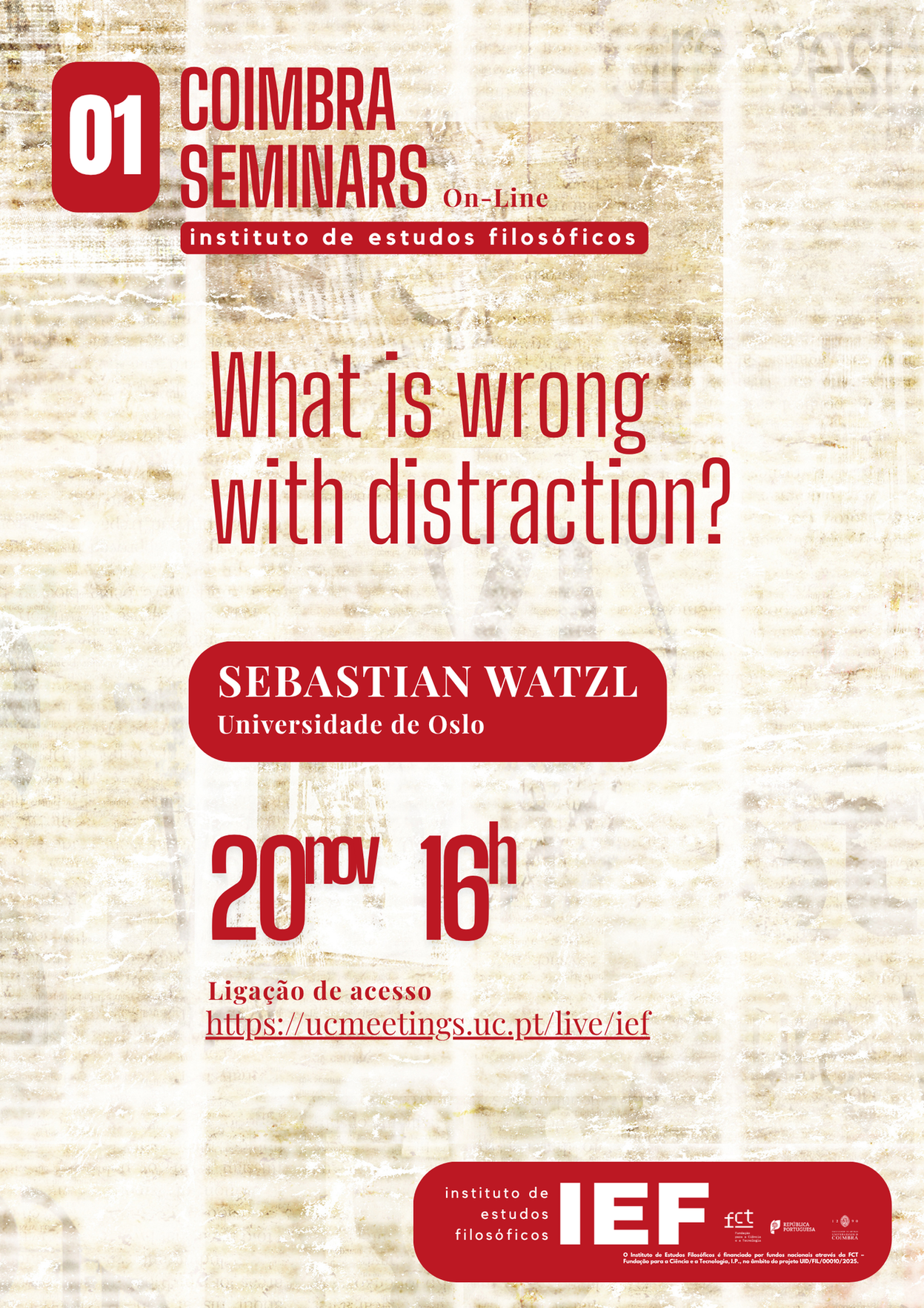
Filosofia - What is wrong with distraction? Sebastian Watzl c/o IEF


'Sebastian Watzl is a professor of philosophy at the University of Oslo (Norway). He specializes in philosophical issues about attention. He is the author of Structuring Mind (OUP), and recipient of an ERC grant on GoodAttention.

His research investigates the nature of attention, how it shapes consciousness, and the normative role and assessment of attention. Some of his current work is on the ethics of attention, the commodification of attention and its ethical assessment, the epistemic role of attention, and the use of attention as a political weapon.'

Sebastian Watzl - UoO Norway


Website: https://www.uc.pt/fluc/ief/agenda/coimbra-seminars-01/
LinkedIn: https://www.linkedin.com/posts/iestudosfilosoficos_ief-filosofia-philosophy-activity-7394448924947779584-fLSV
Instagram: https://www.instagram.com/p/DQ96aNVka0A/?igsh=MXJsejg0ZWE4bnBvZw==
Facebook: https://www.facebook.com/share/p/16uSVu9mNK/?mibextid=wwXIfr


individual
|
INTERPERSONAL : SCIENCES
humanistic -------------------------------------------  mechanistic
SOCIOLOGY : POLITICAL
|
group-population

My Mind
My Attention
My choice(s)?

Sources of distraction
Devices - access
Exposure - time
Social media
Assessment of attention
Children's education

Corporate Ethics of Attention
'Attention economy'
Policymakers & Policy
Attention as a political weapon


C/o IEF and thanks to Marta Santos (Secretariat).

Saturday, October 18, 2025

Just imagine ... caseloads, payloads and careloads

Just imagine ... no, not like that - really imagine!

You are in a situation. Unsurprisingly, let's say it's in health, or social care. We find ourselves in a care or nursing home, on a ward, or in the individual's home, even if the patient does not currently recognise it as such.

The patient is mobile. That is, and isn't a problem.

Physically, apart from thoughts about a chest, or urine infection, yes they are mobile, but they're also confused - disoriented.

We are concerned about their safety. 

Noisy, increasingly agitated, they are making it clear they want to leave.

Their carer, family, or staff are trying to limit the patient / resident's access to the exits, be that the front, or back door, the spare room, their room, or main entrance. They are not in agreement about where they need to be. Persuasion and distraction aren't working either. They appear to lack the level of mental capacity required to decide for themselves what needs to happen.

It is one thing to have this assessment of the situation running through one's mind; but quite another to 'pick up' a care concept mentally and carry it over the care (knowledge) domains of Hodges' model.

Hodges' Health Career - Care Domains - Model
Try it for yourself ...

Have a think about the following care concepts: mobility, capacity, consent, confusion, mobility, liberty, a locked-door while spouse/partner goes shopping, and safeguarding? 

As we engage in critical thinking, these concepts have a literal payload. They carry varying degrees of informational value, salience that helps us prioritise, what else do we need to factor in, what help is needed, and when; how do we  decide what to do?

As a concept is evaluated against Hodges' model, it changes. It is as if it morphs subtely, or starkly as other concepts, by association, are brought into play.

This process is influenced in so many ways; our training to date, our prior experience, biases and cultural baggage we might also carry, who else is present (this is of course potentially both a positive and negative), past and current role-models, our (team's) preparedness - what to do if .., teamwork, access to leadership (who is 'duty'?), and our confidence in them (Oh no!). And, them in us.*

Vitally, there is the small matter of our understanding, attititude and response to the person in-front of us. 

The delivery of healthcare is often stressed as emotional labour. Whether we use Hodges' model or not, perhaps the labour, the physical and psychological work involved, is experienced through carrying and feeling the careload. A reason too for supervision.

*Do seek help - advice if needed.

Further reading [ please contact me if needed - h2cmng AT yahoo.co.uk ]:

Jones, P. (2025), A Generic Model and Conceptual Framework to Prime Curiosity Across Health and Social Care Disciplines to Facilitate Lifelong Learning. Journal of Evaluation in Clinical Practice, 31: e70252. https://doi.org/10.1111/jep.70252

Jones, P. (2025). A Conceptual Mapping Exercise of Deprivation of Liberty Safeguards in Residential & Community Care Using Hodges' Model and Threshold Concepts. Journal of Evaluation in Clinical Practice, 31: e70085. https://doi.org/10.1111/jep.70085

Tuesday, September 16, 2025

Chatbot therapists c/o The Sunday Times

It wasn't that long along ago, I tweeted about the prospect of our clinical information systems 'listening' and autotranscribing one-to-one clinical contacts and even formal psychotherapy sessions. How time flies!


Individual
|
      INTERPERSONAL    :     SCIENCES               
HUMANISTIC  --------------------------------------  MECHANISTIC      
 SOCIOLOGY  :    POLITICAL 
|
Group

AI therapy chatbots

'Conventional' 
Counselling / Psychotherapies

Mental health - illness

Issue of: 'Titles'
I can call myself ...
therapist, nurse ...


(New) Evidence-based

Workflow:
intake, assesses needs,
booking into care,
offers CBT based on guidelines.

Uses a person's details,
asks questions to identify
the likely problem ...

clinical
Empathy: Human - Machine

Public safety

DEMAND <-> supply

Access to Therapy: Untreated?

Other AI solutions -

validation

Regulatory approval


unvalidated 'solutions'

risk of a huge industry setback


My source: Danny Fortson, Chatbot therapists are here. But who's keeping them in line? The Sunday Times, August 17, 2025, p.4.

The online article is behind a paywall, but there is a related podcast (with advertising):


See also: 'AI' : 'ethics' : 'expert system, language'

Monday, September 08, 2025

Online: Artificial Intelligence (AI) in Healthcare - Weds 17th Sept 2025 BCS Coventry Branch

Online event organised by British Computer Society (BCS)

Full details: 
https://www.bcs.org/events-calendar/2025/september/webinar-ai-in-healthcare-neural-ai-v-symbolic-ai-why-we-need-neuro-symbolic-ai/

*** Agenda (UK time) *** 

18:30 - Meeting opens
Welcome and Introductions
18:40 - Hand-over to speaker
19:30 - Questions
20:30 - End

Scope of workshop

This is to support you in putting together your application for the FEDIP application and the workshop will focus on:

  • What level you should apply for
  • How to work with the Standard
  • How to map your evidence
  • Putting together context
  • Preparing your evidence in the best way 
  • What the assessors will look for
Free-of-charge registration to obtain the Zoom link

https://www.eventbrite.co.uk/e/ai-in-healthcare-neural-ai-v-symbolic-ai-why-we-need-neuro-symbolic-ai-registration-1383661000299?aff=oddtdtcreator
___________________________

My source: Dr Mercedes Arguello Casteleiro.

FEDIP: https://www.fedip.org/

Wednesday, September 03, 2025

TEL us a story ... Hard, Soft and being Smart

Sorting papers I'd saved I came across -

David Mossley and Clare Saunders: A revolution in philosophy teaching? from the The Philosophy Magazine. 3rd quarter. 2013. pp. 40-45. 

Checking back, I see I posted and cited this item in 2013:


In the decade-plus since, how things have changed in tech, education and philosophy!

The story is ... that around this time I needed a new website and in the past I practised computer aided learning. Or should I say mCAL, microcomputer aided learning on the ZX81 and BBC Micro (related citations below). In 2013-2014, I started a PhD (as noted elsewhere) thinking I could recover and update some IT skills. Could I recapture the CAL days, by picking up TEL - technology enhanced learning? I stepped outside healthcare, and nursing specifically. I see now this was an error, but of course I still venture off-piste. The latest detour is even more extreme? On a personal - psychological level I'm visiting a subject maths - formal methods that simultaneously fills me with wonder (recognising its power and utility) and yet terrifies me with its complexity, made me feel sick at school, as a pre-teen and after.

My 'research question' was poorly formulated - which I did recognise. Two years were not wasted, far from it. The journey then was also driven by personal circumstances, married with events in 2007, 2010 and then 2015. 
 
Sticking with the current conference theme, I noticed a call for the 7th International Soft Computing and Engineering Applications Conference. Selected themes from track #4 include:


Track 4: Soft Computing for Smart Sustainable World

Smart agriculture and aquaculture
Smart cities
Smart communication
Smart disaster monitoring and management
Smart earth system
Smart education
Smart elderly care
Smart environment and ecosystems
Smart governance
Smart healthcare
Smart homes and buildings
Smart learning
Smart living
Smart machines and robots
Smart materials and fabric
Smart medicine
Smart social services
Smart villages
Smart wearables and implants

Amid all the (understandable) emphasis on 'smart' we need to retain a place for the human. That's the challenge in simultaneously considering the hard and soft of today's and tomorrow's world.

Citations

1982 CAPA: COMPUTER AIDED PATIENT ASSESSMENT, Sinclair ZX81, advertised in Nursing Mirror (see below) provided on audio cassette tape.

1983 THE NURSING PROCESS – Computer Aided Learning program, BBC Micro, published by Open Software Limited (OSL)

1984 HAEM. Blood Groups Computer Aided Learning program, BBC Micro – (OSL).

1989 SHADES OF GREY, Computer Aided Learning program, BBC Micro. Simulation of nuclear weapons, Based on Fanchi, J. Local effects of nuclear weapons, BYTE, Volume 11. Issue 13. Dec., pp. 143–155. Computer Aided Learning program, BBC Micro, published by Open Software Limited..

Jones, P. (1986) Computing in Nursing NEWS. Computerised Patient Assessment. Nursing Times. 85: 5. Sep 3-9;82(36):63-5. PMID: 3532039 (Describes 'CAPA', a BBC microcomputer program for student nurses.)

Jones P. 1988 Thunderbirds are Go? (Impact of technology in society, disasters, macro-engineering). Popular Computing Weekly.

Jones, P. (1989) Computers in Nursing NEWS. Creating a Program. Nursing Times. Feb 1-7;85(5):66-8. PMID: 2648342 (Describes 'HAEM', a BBC microcomputer program for student nurses on blood and blood groups.)

Jones, P. (1989) Information Technology is Good For You! (Effects of information technology) IT in Nursing, BCS-Nurs. Specialist Group. 1,1

Jones, P. (1990) Creating a Community Mental Health IS (Creation of a community mental health resource centre - a multidisciplinary research project). IT in Nursing and Paper at BCS NSG Conference. 2,4.

Jones, P., & Beckingham, D. (1991) The Ins and Outs of a small mental health Information System. Healthcare Computing 91 Conference Paper.

Jones, P. (1992) Nursing: All in the mind and machine? (Models of nursing and computing). British Computer Society -Nursing Specialist Group Conference Paper

Tuesday, August 26, 2025

BBC Radio 'File on Four' - DASH to Instrumentalise

Of course, I'd like to see Hodges' model applied to many purposes.

As probably posted at some point, the thought of Hodges' model being instrumentalised goes back a long way. To the time of microcomputers in fact and 'CAPA' which stood for 'Computer-Aided Patient Assessment':

Jones, P. (1986) Computing in Nursing NEWS. Computerised Patient Assessment. Nursing Times. 85: 5. Sep 3-9;82(36):63-5. PMID: 3532039

[Describes 'CAPA', a BBC BASIC microcomputer program for student nurses.]

Even before discovering Hodges' model in the late 1980s, I was sensitive about being seen to mechanise nursing and care delivery. Nursing was still preoccupied with the nursing process and individualised care. The last thing I would want is to be seen as supporting the processing of patients. The person, their social context and identity becoming lost. It was a long-term and ongoing co-author who drew my attention to Hodges' model as an instrument. Which I've considered for each and across the care domains. CAPA was simplistic, even beyond the programming language employed. A dependency score from 1-5 was allocated (it's a long time ago!) to each of the activities of daily living for a patient:

Roper, N., Logan, W., & Tierney, A. J. (2000). The Roper-Logan-Tierney model of nursing: Based on activities of living. Churchill Livingstone.

In healthcare we are trained and become accustomed to the use of many assessment tools, checklists; this includes mental health nursing and specific therapies. Emphasis, is rightly placed upon the safety, validity and hence testing of tools. Some are 'broad brushes'. Others are specific - outcomes, anger, a carer's knowledge, conviction of belief, mood, impulsivity and many more. Drift away from the original goal and purpose and problems can (predictably) ensue. Training will and must be updated, but do all assessment tools have a 'Use By' date? Hopefully there is ongoing development, version control and sustained trials and testing of the instruments themselves.


'File on Four' BBC Radio 4 this evening concerns DASH, which stands for "Domestic Abuse, Stalking and ‘Honour’- based abuse".

Saturday, March 08, 2025

AI, Nursing, Safety and presentation - 1st Aug 2-3pm

Hodges' model was not created primarily as a safety tool. It cannot claim to achieve or adhere to an ISO standard. ISO 45001 - health and safety management standard, for example. There is however a relation to clinical risk across healthcare professions, disciplines and clinical fields, including community and public (mental) health. To which of course we must now add planetary health. That said, the question of ISO safety and quality standards for Hodges' model has not been assessed. What exactly would certification entail? Would this process be appropriate for what is a generic - foundational tool?

What this means, however, is that as a situated model for reflection, reflective practice and critical thinking Hodges' model constitutes a deliberative step in the right (formal) direction. As noted previously, in template form, Hodges' model acknowledges the initial personal, professional and organisational standards that (must) shape our clinical encounters. That is, if assessed (as students - and our peers clearly are, and you would expect to be), unconditional positive regard would be observed, supported by the required standards of professional behaviour. 

There is another step here. The ethical and legal edict of 'do no harm' must also be central to care delivery, outcomes and evaluation. So from the outset, implicit in Hodges' model is the (NON-LEGAL) statement:

You, the practitioner - agent (student - and your mentor/supervisor) will not knowingly, or through professional ignorance, or neglect  cause physical, psychological, social (cultural), political (power), or spiritual harm to the patient - subject (or their carer - guardian/proxy).

There is no escape from AI and Large Language Models as I noticed in FTWeekend:

'Jilin University Hospital in the eastern city of Changchun has rolled out a diagnostic tool it claims can produce treatment plans through DeepSeek consulting the hospital's database, medical guidelines and drug efficacy results. Jinxin Women and Children's Hospital in south-western China said it had a tool for patients to track their ovulation cycles, with test results combined with the hospital's patient data to produce personalised fertility plans.

One doctor at public hospital in Hubei province in central China said the institution's leadership had issued a directive that DeepSeek should be used as a third-party arbiter if two doctors have differing views on treatment.
 
There have been rollouts in public hospitals in Chengdu, Hangzhou and Wuhan for less complex applications, such as digital nurses directing patients to the right consulting room or explaining complicated medical reports.
 
Several industry insiders warned against taking all the announcements at face value, as some companies were trying to capture investor enthusiasm around DeepSeek without meaningfully deploying its models. Meanwhile, government bodies are also under political pressure to be seen as aligned with China's AI darling.
 
The SOE tech supplier said "much work still needs to be done to make these models useful" for more complex work such as medical diagnosis. "It must be trained on enough medical data to produce good results. This will take time and needs collaboration from leading AI companies. It is not something hospitals can buld on their own."

Another doctor described a move to deploy DeepSeek last week at a hospital in eastern Zhejiang as a "publicity stunt".

Even if some announcements should be treated with scepticism, experts say the willingness to test out its models still marks a step change.'
Edited for formatting, some text is emphasised. A vast array of conditions can be substituted (parametrised) for 'fertility'. While nursing is mentioned there is little on testing, but for 'plans' we can read nursing assessment, plans, and evaluations. 

Returning to safety. Following an online chat yesterday, I've an online presentation to the Patient Safety Management Network [Patient Safety Hub] pencilled in for 1st August 2-3pm. Comprised of 40 minutes with questions following - I will, as discussed - focus upon:
  • Introduction to the model
  • How it can be applied in different situations – safety/risk/improvement
  • Examples of its use
This is progress - a step to develop Hodges' model and reveal the limits of the bio-psycho-social model.

^soe - state-owned enterprises.

Olcott, E., Ding, W. AI challenger DeepSeek spreads rapidly across China with the blessing of Beijing, FTWeekend, 1-2 March, 2025. p.13.

Friday, December 20, 2024

New citations - Practice Without Theory: A Philosophical Inquiry into Contemporary Nursing in South Asia

It is always welcome news when I learn of a paper (Asmat, 2024) recognising and citing Hodges' model from the nursing and wider literature. In this case an educational journal, focussed upon health and social care:

Kainat Asmat (2024). Practice Without Theory: A Philosophical Inquiry into Contemporary Nursing in South Asia: Nursing Practice without Theory. International Journal of Practice-based Learning in Health and Social Care. 12. 125-131. 10.18552/ijpblhsc.v12i2.1068. 

I have quoted at length, but it is good to have a different 'excuse' (not just extending the tail of a relevant book, or paper). ... 

'Similarly, Hodges' Health Career Model exemplifies its use as a tool for reflection during clinical assessments, care planning, and decision-making processes (Doyle & Jones, 2013). The model encourages nurses to reflect on their practice through multiple lenses, ensuring a comprehensive understanding of patient needs and care strategies. The Interpersonal domain emphasizes the relational aspects of nursing, including communication and empathy. The Sociological domain highlights the impact of societal factors and social determinants on health. The Scientific domain focuses on evidence-based practice and the integration of scientific knowledge into care. Finally, the Political domain addresses the influence of healthcare policies and organizational structures on contemporary nursing practice. In contemporary nursing practice, a nurse might use Hodges’ model to provide holistic and personalized care by considering the patient's social background, the scientific basis of their care, interpersonal dynamics, and relevant political or policy-related factors. According to Jones (2017), using conceptual models like Hodges' can greatly enhance nurses' critical thinking, fostering a reflective and engaged nursing workforce.' p.126.

'Collectively, nursing theory remains a cornerstone of contemporary nursing practice, providing an essential framework that guides clinical decision-making, promotes critical thinking, and supports reflective practice. Peter Jones, in his seminal works, underscores the critical role of theoretical models in enhancing nursing practice. His insights provide compelling evidence for the continued relevance of theory in contemporary practice. In "Humans, Information, and Science", Jones (1996a), articulates the interrelationship between human factors, informational processes, and scientific principles in healthcare. He argues that nursing, as a discipline, uniquely integrates these elements to form a comprehensive approach to patient care. This integration is fundamental in moving beyond task-oriented care towards a practice that is reflective and evidence-based. Jones emphasizes that without a theoretical foundation, contemporary nursing practice risks becoming fragmented and superficial, lacking the depth required for truly effective patient care. Similarly, in "An Overarching Theory of Health Communication",  Jones (1996b) explores the necessity of robust communication theories in healthcare. He posits that effective communication is not merely a skill but a complex process grounded in theoretical understanding. This perspective is particularly relevant to nursing, where communication is pivotal in patient interactions, interdisciplinary collaboration, and health education. Jones’ work illustrates that theoretical frameworks in communication enhance nurses' ability to engage with patients and colleagues thoughtfully and effectively, fostering better health outcomes and professional practice. Jones’ analyses reinforce the argument that nursing theory is indispensable in contemporary practice. Likewise, McEwen and Wills (2021) also highlight that nursing theory is integral to the development of nursing as a discipline. They assert that without the theoretical underpinnings, nursing risks regressing to a technical occupation devoid of critical thinking and judgment that characterize nursing professional practice. Thus, the survival and progression of nursing as a distinct profession depend on the continued integration and application of theory in contemporary nursing practice.' p.127.

In addition, the short conclusion is supportive and encouraging for ongoing efforts. As with all discovered citations thus far, I'm not sure of how Kainat Asmat located the publications on Hodges' model? A literature search - no doubt, or perhaps the blog's sidebar listing? The selection made, fits the author's purpose. 

Over the years, I've tried to indicate the scope and scale that Hodges' model can 'reach'. Especially in self-care, family, local, global and planetary health. Now, c/o Asmat (2024), Hodges' model has a much valued connection with South Asia. The required scope of Hodges' model (its inter- and transdisciplinary potential^) is also conceptual, referred to previously as holistic bandwidth. Hence the model's relevance and potential in theory and practice.

Many thanks to Kainat Asmat and the journal's editorial team.*

I will read again and return to the paper in our New Year.

Listed in the bibliography:

Doyle, M., Jones, P. (2013). Hodges’ Health Career Model and its role and potential application in forensic mental health nursing. Journal of Psychiatric and Mental Health Nursing. 20, 7, 631-640.
http://onlinelibrary.wiley.com/doi/10.1111/j.1365-2850.2012.01961.x/abstract

Jones, P. (1996a) Humans, Information, and Science, Journal of Advanced Nursing, 24(3),591-598. https://onlinelibrary.wiley.com/doi/abs/10.1046/j.1365-2648.1996.23321.x

Jones, P. (1996b) An overarching theory of health communication? Health Informatics Journal,2,1,28-34.

Where I have now added this paper.

^Still on the agenda as a paper; as with 'revisiting' 1996a. Happy to support others in referencing, or writing more specifically about Hodges' model (a case study, mapping exercise?); especially student nurses, carers and personnel in social care and early career researchers. To which, I'd better add later career nurses, allied disciplines, nurses returning to practice (surely a UK and global policy focus?) and proof of reading (your choice of course on the paper, chapter, book...); and reflection for continuing professional development (CPD). If you're still unsure, it was a relief to put the 'pen' down, well writing is still a major challenge (and pain) here. 

*And, of course - Brian E. Hodges RIP - too.
https://hodges-model.blogspot.com/2023/08/brian-e-hodges-r-i-p.html

Monday, September 16, 2024

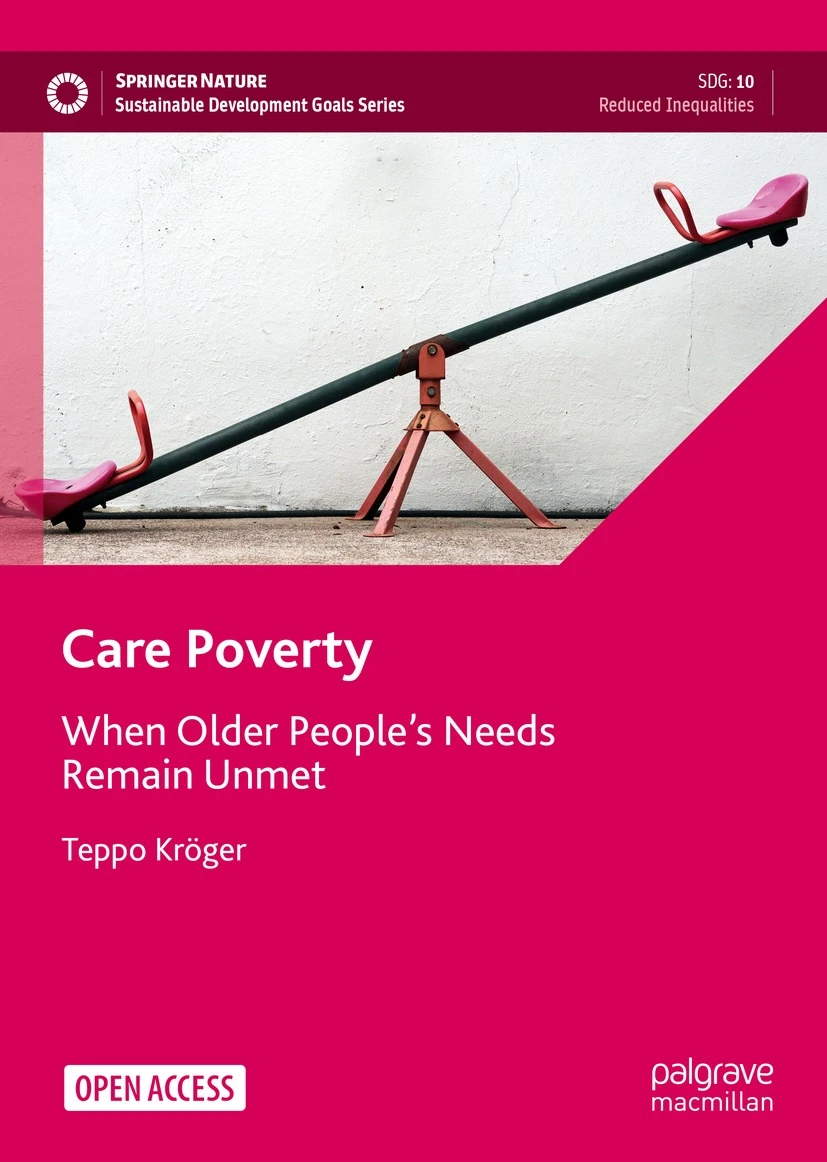
Book: Care Poverty - When Older People’s Needs Remain Unmet

CARE POVERTY
'This open access book turns the research attention of social policy scholars and long-term care researchers from comparative descriptions of care systems, focusing mostly on expenditures and volumes of long-term care services, to outcomes, and in particular to the question whether older people really receive the support that they need. Without knowledge about which needs and which social groups are currently inadequately covered, it is impossible to guide policy development.

The book puts forward a novel theoretical framework to guide future research work and public discussion on the issue of unmet long-term care needs, by broadening the current discussion so that inadequate care is seen in its societal and policy contexts, taking structural issues and policy designs into account. Kröger outlines three different domains of care poverty (personal care poverty, practical care poverty and socio-emotional care poverty) and differentiates between main methods how unmet needs are measured.' [my emphasis]

In psychiatry and psychiatric nursing, a person may be assessed to display poverty of thought, ideas or speech. As an exercise it may be useful to invert the rendering below in Hodges' model, and  consider Kröger's forms of poverty and possibly others that arise from your critique, reflections and life experience to date. Clearly, another book to add to the list!
 
individual
|
INTERPERSONAL : SCIENCES
humanistic ------------------------------- mechanistic
SOCIOLOGY : POLITICAL
|
group

CARE


CARE

CARE

POVERTY


Previously on W2tQ - (unmet) 'needs'

Kröger, T. (2022) Care Poverty - When Older People’s Needs Remain Unmet. Cham: Palgrave Macmillan. https://link.springer.com/book/10.1007/978-3-030-97243-1#about-this-book

Will check on a related title too.