Hodges' Model: Welcome to the QUAD: journal

Hodges' model is a conceptual framework to support reflection and critical thinking. Situated, the model can help integrate all disciplines (academic and professional). Amid news items, are posts that illustrate the scope and application of the model. A bibliography and A4 template are provided in the sidebar. Welcome to the QUAD ...

Showing posts with label journal. Show all posts

Friday, October 09, 2026

POISONING THE WELL AND SILENCING IN ARGUMENTATION: ONLINE WORKSHOP - Student Commentators Needed!

WE ARE LOOKING FOR STUDENT COMMENTATORS FOR THE ONLINE WORKSHOP ON POISONING THE WELL AND SILENCING IN ARGUMENTATION.

The expressions of interest from student commentators deadline is November 15th (the submission deadline for the associated 
Topoi issue is 15th February) PLEASE SEE BELOW FOR DETAILS!


What is this about?

Among the fallacies traditionally regarded as particularly dangerous, poisoning the well stands out. The literature describes poisoning the well as an argumentative move that consists in providing information about an interlocutor to diminish the credibility of what they have already said, or will say, thereby “poisoning” their ability to contribute - silencing them. Despite the fallacy’s importance, work on it and on silencing in argumentation is limited. 


The Poisoning the Well and Silencing in Argumentation Online Workshop (and the associated call for papers at Topoi) will contribute to filling this gap.


Student Commentators Needed!

We are now looking for student commentators! Student commentators will receive the paper they comment on two weeks before the workshop. Commentaries will be ten minutes long.


Look here (scroll down a little) to find the papers that will be presented at the workshop: 
Critical Thinking and Civic Engagement Lab
.


If you are interested in commenting, please contact Amalia Haro Marchal/Katharina Stevens under 
ahmarchal AT fcsh.unl.pt and katharina.stevens AT uleth.ca by November 15th!


Make sure to state your first, second and third choice for papers to comment on with a short explanation, we will assign based on interest and compatibility!


My source (and via KS): Philos-L "The Liverpool List" is run by the Department of Philosophy, University of Liverpool https://www.liverpool.ac.uk/philosophy/philos-l/ Messages to the list are archived at http://listserv.liv.ac.uk/archives/philos-l.html.

Wednesday, September 30, 2026

cfp Special issue: Int. Journal of Social Robotics "Towards Ethical Deception in HRI"

Dear colleagues, 

We would like to invite you to submit your works at the special issue on "Towards Ethical Deception in HRI" in International Journal of Social Robotics whose submission deadline is 19 December 2026. 

The special issue explores the design and ethical implications of robot deception in human–robot interaction, emphasising autonomy, well-being, and the protection of vulnerable populations. 

Read below further information, and please do not hesitate to contact us if you have any questions. 

Kind regards,
Alessandra Rossi 

Alessandra Rossi, PhD 
Assistant Professor Fellow of the Higher Education Academy Department of Electrical Engineering and Information Technologies - D.I.E.T.I. 
University of Naples Federico II Via Claudio, 21, 80125 - Naples, Italy 

w-page: https://alessandrarossi.net 
e-mail address: alessandra.rossi @ unina.it 
e-mail address: a.rossi @ herts.ac.uk

This Topical Collection focuses on deception in human-robot interaction and its ethical implications. In particular, robot deception is a complex yet potentially beneficial strategy. Intentional behaviours such as white lies or deliberate errors can foster trust, reduce distress, and improve therapeutic or educational outcomes. Robots may strategically omit information to maintain psychological stability or simulate imperfections to appear more relatable. While deception in human–robot interaction remains ethically controversial, its applications can enhance empathy, engagement, and learning. Ultimately, the capacity for controlled, prosocial deception highlights the need to reconsider moral frameworks governing social robotics, emphasizing the potential for nuanced, emotionally adaptive interactions.

This collection aims at exploring a design-centred and ethical-centred development of robotic deceptive behaviours for a successful human-robot interaction that, at the same time, is ethically acceptable and respect the autonomy and well-being of population, specially vulnerable individuals such as older people, patients and children. This Topical Collection is open to a broad audience from academia and industry researching social robotics, robot ethics, cognitive science, psychology, and philosophy of technology. It aims to attract an interdisciplinary audience that includes academics, industry researchers, designers, and policy-makers interested in exploring the integration of deceptive techniques in designed-centred and ethics-centred HRI. By collecting works addressing disciplinary and methodological boundaries, this collection seeks to promote a shared understanding of how social robots might responsibly employ complex behavioural strategies in human-centred contexts, such as education, healthcare and service.

Submission guidelines

All papers must be prepared in accordance with the Submission Guidelines. Articles for this Topical Collection should be submitted via our submission system, Editorial Manager. During the submission process you will be asked whether you are submitting to a Collection, please select "Towards Ethical Deception in HRI" from the dropdown menu.

Submitted papers should present original, unpublished work, relevant to one of the topics of the Topical Collection. All papers will be evaluated on the basis of relevance, significance of contribution, technical quality, scholarship, and quality of presentation by at least two reviewers. It is the policy of the journal that no submission, or substantially overlapping submission, be published or be under review at another journal or conference at any time during the review process. Final decisions on all papers are made by the Editors-in-Chief.

My source: https://www.bcs-sgai.org/?section=server

Wednesday, September 23, 2026

'Compositionality' - Journal

'Compositionality is a diamond open-access journal for research using compositional ideas, most notably of a category-theoretic origin, in any discipline. Compositionality describes and quantifies how complex things can be assembled out of simpler parts. Topics may concern foundational structures, an organizing principle, or a powerful tool. Example areas include but are not limited to: mathematics, computation, logic, physics, chemistry, engineering, linguistics, and cognition.

Compositionality is free of cost for both readers and authors (diamond open access). You can find our editorial policies here. Our first issue was published, under ISSN 2631-4444, in December 2019.'

Continued ... 

Sunday, September 06, 2026

Socialism & Adult Education - Historical perspectives for a revived lifelong learning

Call for Papers

How important has socialism been to adult education? For most of history, adult education – structured learning, involving organised study and usually teaching – was restricted largely to social and religious elites. During the nineteenth century, however, as the industrial revolution tore apart the bonds of ‘traditional’ economies and societies, propelled migrants to towns and foreign lands, and demanded mastery of new skills, new popular democratic movements arose – most profoundly, the socialist movement.

In Britain, prior to the Elementary Education Act 1870, few working-class people had any formal education; even after that opportunities were limited. In response, a diverse range of non-statutory voluntary adult education organisations emerged. These included the Mutual Improvement Societies, the Young Adult Schools, the Education Settlements, the Mechanics’ Institutes, the Working Men’s College, University Extension, Co-operative Education, the Workers’ Educational Association (WEA), and Independent Working Class Education and the Labour College Movement. Some were deeply linked with socialism – others more tenuously, if at all – but together they made adult education in literacy, technical skills and knowledge, the liberals arts and politics accessible to many adults.

Through the twentieth century, at least until the neo-liberal era, the influence of socialist ideas and movements on adult education was deep. In the 21st century, however, the forces of global capitalism have systematically sought to marginalise socialist (and democratic) thought. As jobs, and much work that rewards the human spirit, are threatened by the advance of Artificial Intelligence, adult education is more and more expected to meet the objectives of “the economy” and the labour market. Wider educational purpose is ignored.

How have we come to this? The marginalisation of socialist perspectives is by no means confined to adult education. Yet so central was adult education to the emergence and growth of socialism – and the reverse is also true – as to pose essential and urgent questions. In what ways did adult education contribute to the development of socialism? Why did socialist perspectives play so central a role in the practice of adult education – and did they enrich or constrain it? What can we learn from examining the part that socialism, and socialists, played in adult education’s rich history?

We aim to revisit the topic of adult education and socialism in Britain in the 21st century through a special issue of the journal Socialist History. It seeks to revive the field of study, and to explore the idea to meet the diverse needs of a multi-cultural society more – rather than less – adult education is needed – and that the adult education needed should be broad rather than narrowly job-related. This is especially relevant to consider in connection with the new Lifelong Learning Entitlement which has the potential to transform how post-18 students fund and approach their studies throughout the course of their lifetimes.

What new research perspectives can academics – and scholar-practitioners and activists – from all disciplines bring to the history of adult education, and to the understanding of socialist approaches to improving economic, social and cultural welfare?

We invite submission of abstracts of approx. 300 words. They may explore any aspect of the interlinked history of adult education and socialism. We welcome contributions relating not only to Britain, but to Europe (western, central and eastern) and other locations around the world. Topics may include (but are not limited to):

  • The experience of tutors and students of different forms of adult education
  • The politics of adult education
  • Organisations that provided adult education
  • The impact of adult education on socialist ideology and movements
  • Key figures in the adult education movement – tutors, students and organisers
  • Gendered perspectives of adult education
  • The buildings and spaces of adult education
  • The organisation and delivery of adult education
  • The content and curriculum of different forms of adult education
  • Biographical and autobiographical accounts of adult education
  • Local and regional case studies of adult education
  • The consuming of adult education
  • The role of socialism in colonial adult education
  • The financing of adult education initiatives
  • State support for adult education
  • Local government and adult education provision

Please email abstracts with your affiliation, a short biography and contact information to:
john.holford AT nottingham.ac.uk and p.kumbhat AT staff.newman.ac.uk. 

The deadline for submission of abstracts is Friday 30th October 2026.

We hope to convene a symposium on this theme on Wednesday 7th April 2027 at Birmingham Newman University, where contributors can discuss their draft papers and ideas. The symposium will provide an opportunity to share work in progress, receive feedback, and develop papers to be considered for publication in the Socialist History special issue in autumn 2027. The April symposium will be an in-person event, although authors based outside the UK will have the option of presenting remotely via Microsoft Teams.

My source: Bob Foster, Admin: https://www.raymondwilliamsfoundation.org.uk/

Friday, September 04, 2026

Call for Submissions: Fall-Winter 2026 Intima Journal of Narrative Medicine


OUR CALL FOR SUBMISSIONS  FOR OUR FALL-WINTER 2026
JOURNAL IS OPEN. SUBMIT YOUR WORK TODAY.


Intima: A Journal of Narrative Medicine
is a literary journal dedicated to promoting the theory and practice of narrative medicine, an interdisciplinary field that enhances healthcare through the effective communication, empathy and understanding between clinicians, caregivers and patients. Our name Intima has a specific resonance in the field: For us, narrative involves the intimate interface between people, who yield and gain from the experience of stories involving the clinical encounter.

 The word itself has an anatomical reality: intima is  the thin layer lining a blood vessel, speeding blood to the heart and brain, an apt analogy for the kind of narratives we publish that speak to the emotions and the intellect, the feelings and facts that engage the senses in stories with meaning and impact..


individual
|
INTERPERSONAL
: SCIENCES             
humanistic ------------------------------- mechanistic
SOCIOLOGY : POLITICAL   
|
group


©The Art of Anatomy by Khalil Harbie.
Intima, Fall 2013


Art - https://www.theintima.org/missionandvison also reminded of Escher and Byte Magazine.

My source: Intima list

Previously: 'creativity' : 'crossroads' : 'narrative'

Thursday, September 03, 2026

Social Inclusion: Transnational Organization of Labour, Mobility, and Senior Care in Central and Eastern Europe

Dear colleagues,

Social Inclusion has just released a new issue, fully open access, and all articles are free for you and others to read, download and share.

Transnational Organization of Labour, Mobility, and Senior Care in Central and Eastern Europe (2026, Volume 14)

Edited by Ewa Palenga-Möllenbeck, Dóra Gábriel, Olena Fedyuk and Kristine Krause

Complete issue: https://doi.org/10.17645/si.i533

Table of Contents:

Transnational Organization of Labour, Mobility, and Senior Care in Central and Eastern Europe
https://doi.org/10.17645/si.13078
By Ewa Palenga-Möllenbeck, Dóra Gábriel, Olena Fedyuk and Kristine Krause

Migrant Live‐In Care Workers in the Global Care Chain: Results From an Online Survey
https://doi.org/10.17645/si.11728
By Silvia Wojczewski, Simona Ďurišová, Sabine Pleschberger, Anna Ernst, Rojin Bagheri, Kathryn Hoffmann and Viktoria Adler

Selling Care Skills? The Multiple Meanings of Training for Polish Live‐In Care Workers in Germany
https://doi.org/10.17645/si.11909
By Roxana Fiebig-Spindler

The Invisible Hand of Care: A Typology of Brokerage Actors in Migrant Care Labour
https://doi.org/10.17645/si.11953
By Ewa Palenga-Möllenbeck, Ivanna Kyliushyk and Roxana Fiebig-Spindler

Care Extractivism Beyond Households: Migration and Care for Older People in the Post‐Yugoslav Semi‐Periphery
https://doi.org/10.17645/si.11975
By Majda Hrženjak

Caring Communities in Urban Hungary: A Civil Society Perspective
https://doi.org/10.17645/si.12023
By Dóra Gábriel, Bettina Török and Noémi Katona

Care Under Constraint: Unmet Care Needs Among Older Adults in Romania
https://doi.org/10.17645/si.12028
By Mihaela Hărăguș and Ionuț Földes

Skill Construction and Challenges of Professionalization in the Hungarian Home Care Market
https://doi.org/10.17645/si.12029
By Noemi Katona and Dóra Gábriel

The Right to Care and Support: From Care Theory to Human Rights Law
https://doi.org/10.17645/si.12056
By Maroš Matiaško

Senior Care in Wartime Ukraine: A Fragmented Continuum of Arrangements Inside an “Unpromising Sector”
https://doi.org/10.17645/si.12060
By Oksana Dutchak, Olena Fedyuk and Anna Oksiutovych

Bounded Transport, Mobility Justice, and Claims for Recognition Among Live‐in Care Workers
https://doi.org/10.17645/si.12191
By Petra Ezzedine

In Times of the Market and Community Shift: On Live‐In Care and Caring Communities
https://doi.org/10.17645/si.12295
By Brigitte Aulenbacher, Klaus Wegleitner, Jonas Hagedorn and Bernhard Emunds

Care Outsourcing From Germany to Central and Eastern Europe
https://doi.org/10.17645/si.12319
By Kristine Krause, Veronika Prieler, Hanna Horváth, Matouš Jelínek, Mariusz Sapieha, Zuzana Sekeráková Búriková, Petra Ezzeddine and Luise Schurian‐Dąbrowska

Imagining Care: Transnational Inequality and Older Age Prospects for Ukrainian Caregivers in Italy
https://doi.org/10.17645/si.12324
By Oksana Dutchak, Olena Fedyuk and Anna Oksiutovych

The Winding Road to Professionalisation: Care Work in Romanian Nursing Homes
https://doi.org/10.17645/si.12326
By Neda Deneva, Ionuț Földes, Denisa Ursu and Mihaela Hărăguş

The Limits of State Control in Regulating Live‐In Care Work in The Netherlands
https://doi.org/10.17645/si.12375
By Siënna Hernandez, Kristína Bartošová and Franca van Hooren

Home Care for Sale: Marketisation and Social Change
https://doi.org/10.17645/si.12737
By Attila Melegh

Kind regards,

Mariana Pires
Cogitatio Press, Portugal
si AT cogitatiopress.com
Social Inclusion
https://www.cogitatiopress.com/socialinclusion

My source: COMPLEXITY-PRIMARY-CARE list

Wednesday, August 26, 2026

South Sudan Medical Journal - August 2026


Dear Reader,

The August 2026 issue is online here; we thank all the copyeditors and reviewers who helped prepare these papers. If you are submitting a manuscript, remember to read our Author’s Guidelines first.

We are looking for volunteers to join the Editorial team. Email us if you have time and editing skills.

Editorial

Can the Ebola Zaire vaccine stop Bundigunyo virus? Edward Kenyi


RESEARCH ARTICLES
Assessment of airborne fungi in the emergency and traumatology departments of University Hospital Centre, Sidi Bel-Abbes, Algeria Derouicha Matmour, Samia Merad, Yassine Merad, Achwak Bendouida, Zoubir Belmokhtar, Zakaria Merad, Mohamed Amine Boumelik, Benali Beghdadli, Othmane Ghomari 

Maternal and nutritional factors associated with early childhood development in rural Indonesia Hadi Ashar, Mohammad Zen Rahfiludin, Sri Achadi Nugraheni, Dwi Hapsari Tjandrarini

Observed outcomes and costs of laparoscopic versus open cholecystectomy in Juba, South Sudan Mayen Achiek, Jingo Faride, Mohamed Ibrahim, Abraham Mafair Kezekia, Chep C. Chep, Garang D. Nyuol, Ajak M. Dhel, George Lefteri

Stakeholders’ perspectives on determinants of health financing in South Sudan: a qualitative assessment Jonathan Majok, Gabriel Loi, Solomon Dut, Aluel Ayom, Thiey Kuethpiny, David Ngor, Sarah Nyannyot

Predictors of unsuccessful treatment outcomes among adults with pulmonary tuberculosis in a resource-limited setting Tri Agus Yuarsa, Malehah Mohd Noh, Richard Avoi, Meryl Grace Lansing, Putra Agina Widyaswara Suwaryo 

Assessment of the understanding of evidence-based medicine among undergraduate medical students in Gadarif University, Sudan Khalid Mohammed Ali, Ozaz Yagoub, Inshirah Mustafa, Tarig Fadelelmoula
 
Environmental health risks associated with open dumping practices in Central Kalimantan, Indonesia: an observational study Nawan, Septi Handayani 

Assessing the quality of health facilities providing antenatal care services in Bor, South Sudan John Thon Pandak Kuot, Shalini Ninan Cherian

Prostate cancer awareness and factors influencing screening among men at St. Francis Referral Hospital, Tanzania Theresia A. Karuhanga, Zeinabu Awardh Sharif, Antony Magoda, Philbert Madoshi 

CASE REPORTS 
Long-standing aspirated foreign body in a child complicated by pneumothorax and empyema Gawar Gel, Juma Deng, Justin Rubena

Clinical rabies in an HIV-positive pregnant mother with surviving newborn Ayol Mac Ayol

BACKCOVER: WHO: Guidelines for the management of pregnant and breastfeeding women in the context of Ebola virus disease

FRONT COVER IMAGE: The grown fungal colonies on SDA media collected from different types of samples. (Article on page 149)

Thanks to everyone who supports SSMJ. Tell your colleagues they can join our mailing list here.

The SSMJ team

Email: southsudanmedicaljournal AT gmail.com
Website: http://www.southsudanmedicaljournal.com
Follow us on X: @SSMedJournal and our Facebook Group.

Our mailing address is:

South Sudan Medical Journal
Health and Social Sciences Research Institute, Juba
South Sudan
Copyright (C) 2026 South Sudan Medical Journal All rights reserved.

Sunday, August 23, 2026

Measuring Behavior 2027

The next Measuring Behavior conference will take place from 28 to 30 April, 2027, in Düsseldorf, Germany. Düsseldorf is in a region with a high concentration of behavioral research across a variety of fields both in universities and industry. It is easy to reach by international trains and flights. It is a city combining innovative modern architecture with a historic city centre. The conference will take place in the Clayton Hotel, which is in the Little Tokyo region of Düsseldorf, with its distinctive Japanese flavor. We will be hosted by the Heinrich Heine Medical University and the location is within easy walking distance of the central station.

The Scientific Program Committee invites you to submit proposals for oral presentations and posters at Measuring Behavior 2027 (Düsseldorf, 28-30 April).

All papers will be refereed through double-blind peer review and the proceedings will be published by the conference (with ISBN and DOI) and available online after the conference. In addition, selected papers will be invited to submit for a special edition of a journal.

Submissions for oral presentations and posters must be written in English following the style guide for Measuring Behavior 2027 publications. Due to the multidisciplinary nature of the conference, we are flexible about the submission length. We accept submissions from at least one to maximum seven pages long for oral papers and about one page for posters. You also need to prepare a short (maximum 1000 characters, preferably shorter) abstract for the website.  
You can submit from the Submission page of the website. The deadline is 6th November 2026.

Tutorials and Demonstration Showcase submissions are free format and also have a later deadline (4 February 2027).

The
Call for Symposia is open until October 9th should you want to organise a series of presentations or an interactive workshop.

If you think a colleague might be interested in this Call for Symposia, you can also send them this PDF.

On behalf of the Measuring Behavior 2027 conference chairs,


Sabine Bischoff, Irena Krüger and Antonella Pomè (Heinrich-Heine-University), Gernot Riedel (University of Aberdeen) & Andrew Spink (Noldus Information Technology).

n.b. Early days, but I hope to attend and participate with a co-presenter.
Please do visit their site for full details. PJ

Thursday, July 23, 2026

Call for submissions for good practices c/o HIFA

Share your good practice and help strengthen the health system

The Health Systems Trust (HST) invites submissions of good practices for inclusion in the Good Practices Repository. Healthcare workers, programme managers, districts, facilities, academic institutions, non-governmental organisations (NGOs), private-sector partners, industry partners and community organisations are implementing effective solutions to address health system challenges and improve health outcomes. Many of these valuable experiences remain undocumented and are therefore not widely shared or adapted by others facing similar challenges. The Good Practices Repository has been established to identify, document, and share effective practices that can support learning, adaptation, and health system improvement across the country. Most importantly, the real value of sharing good practices lies in its potential to create an exponential effect across the health system. When successful approaches are documented and shared, they can be adapted and implemented in multiple settings thereby extending their impact far beyond the original site. In this way a single innovation or improvement can catalyse widespread change which can accelerate learning and drive improvements in the health space across the country.

What is a Good Practice?

A good practice describes an intervention, programme, service, innovation, policy or approach that has demonstrated effectiveness in addressing health challenges and improving outcomes. Good practices are typically evidence-informed, make use of available resources and has the potential to be adapted, scaled or replicated in other settings.

Submissions may relate to one or more of the following areas:

  • Health priorities
  • Maternal, newborn, child and adolescent health
  • HIV, TB and sexually transmitted infections
  • Non-communicable diseases
  • Mental health
  • Environmental health and climate change
  • One Health
  • Antimicrobial Resistance
  • Health system strengthening
  • Leadership and governance
  • Health financing
  • Digital health and health information systems
  • Human resources for health
  • Service delivery and quality improvement
  • Emergency and disaster preparedness
  • Environmental health and climate change
  • Antimicrobial resistance
  • Medicines, technologies and supply chain management
  • Community and implementation approaches
  • Community engagement and participation
  • Health promotion and disease prevention
  • Multisectoral collaboration and partnerships
  • Knowledge translation and evidence use
  • Equity-focused and people-centred approaches
  • Other Areas
  • Other initiatives that contribute to improved health system performance, health outcomes, or population wellbeing.

Who can submit?

Submissions are welcome from organisations, institutions, programmes, and partnerships involved in the planning, delivery, management, evaluation, or support of health services, including:

  • National, sub-national, regional, district, and local health authorities
  • Public sector programmes and units
  • Non-governmental, civil society and community-based organisations
  • Academic and research institutions
  • Professional bodies and associations
  • Private-sector organisations and industry partners contributing to health system strengthening, service delivery, innovation, or public health programmes
  • Multi-sectoral partnerships and collaborative initiatives
  • Development partners, multilateral agencies, and international organisations

Assessment criteria

  • Submissions will be assessed against an adapted World Health Organization (WHO) Good Practice criteria, including:Demonstrated effectiveness
  • Efficient use of resources
  • Relevance to a priority health system challenge
  • Sustainability
  • Ethical soundness
  • Potential for adaptation or replication
  • Innovation (optional but desirable)

Why submit?

  • Selected practices will:Be featured in the Good Practices Repository
  • Contribute to shared learning
  • Receive national visibility and recognition
  • Support evidence-informed policy and programme development
  • Provide opportunities for replication and scale-up
  • Showcase the achievements of health system implementers and partners
  • Contribute to sustained efforts at improving various tiers of the health system

Submission requirements

Complete submission template including the following information:

  • Executive summary
  • Background: Description of the challenge addressed
  • Intervention: Description of the intervention or practice
  • Approach: Implementation process
  • Key achievements: Results and outcomes achieved (describe outcome measures and metrics for success of the programme/intervention/tool)
  • Lessons learnt: Description of lessons learnt which can inform replication in other contexts
  • Sustainability considerations
  • Supporting materials, where available
  • Only complete submissions containing sufficient information for assessment will be reviewed.

Submissions are accepted on a rolling basis. Feel free to submit throughout the year.

How to submit: Submissions can be completed online through the Good Practices Repository submission portal:

https://www.goodpractices.hst.org.za/for-authors

[n.b. PJ - The link supplied does not appear to work, there is a submit option through the above page.]

For further information, please contact: GoodPractices AT hst.org.za

HIFA profile: Maryam Rumaney currently works as a freelance scientific and English language editor. In addition, she offers consulting services to the laboratory industry. mbrumaney AT gmail.com

HIFA - Healthcare Information For All

View this contribution on the web site

Sunday, May 24, 2026

South Sudan Medical Journal Vol 19 No 2 May 2026


Dear Reader,

The May 2026 issue is online here; we thank all the copyeditors and reviewers who helped prepare these papers. SSMJ is indexed by African Journals Online (AJOL) – go here to see who reads us.


Editorial 

  • Ebola: The Bundibugyo virus is back Edward Eremugo Kenyi

RESEARCH ARTICLES

  • Risk factors in glaucoma: Insights from a prospective case–control study, Belagavi, India Asawari Kabure, Bhushan Kulkarni, Shilpa Kodkany, Murigendra Hiremath
  • OV16 antibody seropositivity reveals persistent onchocerciasis transmission and cross-border risk in Magwi County, South Sudan: a population-based survey Ezbon WApary, Yak Yak, Benson Ojara, Wilson Ladu, David Oguttu, Ian Hennessee, Pita Jane, Johan Willems, Thok Chol, Kamulete Horasio, Okot William, Amanya Jacob
  • Prevalence of urinary schistosomiasis in communities along the River Niger Basin areas, North-Central Nigeria Nyamngee Amase, Ikpe Raphael Terlumun, Kayode Yusuf Abel, Sulaiman Mariam Kehinde, Akanbi II Aliu Ajibola
  • Developing a communicable and infectious diseases research agenda in South Sudan: A multi-stakeholder prioritisation approach Amanya Jacob, Ezbon WApary, Dhieu Daniel, Atemthi Dau, Matur T. Tieng, John Rumunu, Cicilia Konga, Bol Atem, Betty Eyobo, Robert Napoleon, Joseph Panyuon, Kenneth L Sube, Kon Alier, Joseph Lako, John Suraj, Abuelguasim M. Hassan, Mapuor Areu, Lazarus Atem, Aja Kuol, Pizzi Wilson, Achcer Adup Mou
  • Determinants of disaster preparedness among public health facilities in Juba City, South Sudan Dumba Samuel Kenyi, Muthoni Mwangi Eunice, Musa Olouch
  • Evaluating the role of the health information system infrastructure in enhancing data quality in Central Equatoria State, South Sudan Matur T. Tieng, Karani Magutah, Joseph Muchiri
  • Impact of developmental stimulation education on maternal knowledge and caregiving practices in stunting: a longitudinal study Ning Iswati, Azizan Omar, Sukhbeer Kaur Darsin Singh, Putra Agina Widyaswara Suwaryo 
  • Holding the line: lived experiences of mental health, moral injury, and organizational support among public-health professionals in the Rohingya Camp, Bangladesh — phenomenological study Md. Ruhul Amin
CASE REPORTS 
  • Endoscopic endonasal repair of post-traumatic sphenoid sinus cerebrospinal fluid leak with encephalocele Justin Rubena, Khalid Coco, Francis Swaka, Othwonh Twong 
  • A rare pathological feature of portal vein thrombosis complicated by portal hypertension and haematemesis Hamidine Illa, Ganiou Tidjani Kabirou, Amadou Magagi Mahamane Ibrahim, Maman Brah Moustapha, Soumaila Abdou, Habou Garba Abdoul Malik, Adamou Harissou

REVIEW ARTICLE

  • Interpersonal and community-level factors influencing intimate partner violence in South Sudan: a literature review Nyinypiu Tong Chol Adong 

SHORT COMMUNICATIONS

  • Letter to the Editor J. Clarke McIntosh
  • Letter to the Editor Eluzai A. Hakim
  • News from the Gordon Memorial College Trust Fund Eluzai A. Hakim

BACKCOVER: CDC Poster: Flu or Ebola? 

Thanks to everyone who supports SSMJ. Tell your colleagues they can join our mailing list here.

The SSMJ team
Email: southsudanmedicaljournal AT gmail.com
Website: http://www.southsudanmedicaljournal.com
Follow us on X: @SSMedJournal and our Facebook Group,

Thursday, February 26, 2026

New Journal Alert - Philosophy and Urban Affairs

Dear Philosophers,

I'm pleased to announce that Philosophy and Urban Affairs is now operational. Below is a description.

Philosophy and Urban Affairs is a peer-reviewed journal that explores the ethical, political, epistemological, metaphysical, and social dimensions of cities. Articles may be theoretical, applied, or both, provided they illustrate how philosophical investigation can elucidate, critique, or inform city living.
Unsolicited manuscripts are not accepted. Instead, the journal solicits submissions through public calls on emerging topics or through invitations to scholars working on specific themes. On occasion, a focus article will be published to prompt response papers and foster sustained scholarly dialogue.
Philosophy and Urban Affairs is fully open access and charges no fees of any kind.
Check out the first CFP, Philosophical Perspectives on Coastal and Island Cities. 

All the best - Shane

Associate Professor of Philosophy
Missouri University of Science and Technology

Shane Epting, in Creating Future Cities, insightfully analyzes complex normative challenges in urban planning and design—from organizing urban residents' political power to building for resilience—and passionately argues that citizens of cities must fight for their cities and their futures. - Ronald R. Sundstrom, University of San Francisco, USA

My source:

Philos-L "The Liverpool List" is run by the Department of Philosophy, University of Liverpool https://www.liverpool.ac.uk/philosophy/philos-l/ Messages to the list are archived at http://listserv.liv.ac.uk/archives/philos-l.html. Recent posts can also be read in a Facebook group: https://www.facebook.com/PhilosL/ Follow the list on Twitter @PhilosL. Follow the Department of Philosophy @LiverpoolPhilos 

Monday, February 16, 2026

The UK Dementia Awards 2026

Dear CHAIN member,

We would like to draw your attention to the following opportunity. Please pass on as appropriate. Thank you.

Dementia Community

The UK Dementia Awards 2026

The awards are judged by a panel of dementia experts, including people with lived experience, ensuring that every nomination is seen, valued, and understood.

Whether nominating a colleague, a team, a service, or someone whose quiet dedication deserves the spotlight, this is the chance to say: you matter, and your work matters too.

Friday 27 February 2026, 5pm: Nominations Close.

For more details please see: https://journalofdementiacare.co.uk/awards/listings
Regards,

Irina Johnston

CHAIN Administrative Assistant


If you wish to publicise information on the CHAIN Network please email your request to: enquiries AT chain-network.org.uk


CHAIN - Contact, Help, Advice and Information Network – is an online international network for people working in health and social care. For more information on CHAIN and joining the network please visit website: www.chain-network.org.uk


Follow CHAIN on X: @CHAIN_Network ; Connect with CHAIN on LinkedIn

Previously: 'dementia' : 'carer'

Monday, December 22, 2025

Contexto Int. [Newsletter] - Special Issue 47.2 Where is the Sea in Int. Relations?

Dear Colleagues,

We hope this correspondence finds you well.

We are delighted to formally announce the publication of the latest special issue of Contexto Internacional, entitled "Where is the Sea in IR?," which I had the distinct honour of co-editing with Dr Flavia Guerra (Federal University of Rio de Janeiro).

The overarching objective of this Special Issue is to address a central scholarly lacuna within International Relations (IR) scholarship: the historical and theoretical marginalisation of the oceanic domain. In pursuing this fundamental inquiry—why and how does the ocean recede from scholarly and political attention?—the assembled contributions collectively prompt a sustained, rigorous examination of two key analytical challenges:

  1. The specific mechanisms through which IR has historically relegated the oceanic domain to the periphery of its dominant analytical frameworks.
  2. The subsequent broader political and theoretical implications that stem from this systematic exclusion.

The volume is structurally organised around three distinct, yet interconnected, thematic axes, each seeking to contribute to a deeper engagement with the marine sphere:

  1. The Marginalisation of the Ocean in IR: Conceptual and empirical explorations of how the sea is actively rendered absent or subordinate within core theoretical debates.
  2. Complex Entanglements between the Ocean and Ontological Security: Analyses focusing on the relationship between maritime spaces, existential anxieties, and state identity formation.
  3. Ocean Governance as Regulatory Mechanism and Platform for Political Discourse: Critical assessments of regulatory frameworks and their role in structuring political contestation over the maritime commons.

We sincerely hope that you find the contributions within this volume to be a compelling and theoretically relevant read that stimulates further research and critical reflection within the discipline.

Special Issue: Where is the Sea in IR?

Where is the Sea in International Relations?
  Francisco Eduardo Lemos de Matos; Flávia Guerra Cavalcanti

Abstract | Full text

Table of Contents: https://www.scielo.br/j/cint/i/2025.v47n2/

Includes - Addressing 'Maritime Aphasia' in International Relations
  Bruno Sowden-Carvalho; Marcelo M. Valença

Between Nuclear Tests and Rising Sea Levels
  Beatriz Rodrigues Bessa Mattos

Carl Schmitt on the Move: Spatial Politics and the (political) Sacrifice of the Sea
  Francisco Eduardo Lemos de Matos

Thinking Ontological (In)Security with Water: The Place of the Ocean in Boat Migration
  Flávia Guerra Cavalcanti

What is the Place of Mar de Timor in Timorese Geopolitics, Culture and Education?
  Silvia Garcia Nogueira; Betina Lopes; Ângelo Ferreira; Samuel de Souza Freitas

Fluid Boundaries: Reassessing Maritime Spaces and Nomadic Waves in International Relations Theory
  Henrique Campos de Oliveira

The Third Bank of the Sea: Maritime Traces of Constitutive Outside(r)s and International Ontopolitical Lines
  Roberto Vilchez Yamato; Gustavo Alvim de Góes

Ocean Governance, Maritime Security, and International Relations
  Daniele Dionisio da Silva; Gilberto Carvalho Oliveira

Sailing on Waves beyond National Sovereign Land Borders: On the Crossroads between International Ocean Relations and the Blue Economy
  Thauan Santos

Regards,
chico

Francisco Eduardo Lemos de Matos
Doutor em Relações Internacionais pelo IRI/PUC-RIO.
Pesquisador de Pós-Doutorado em Relações Internacionais no IRI/PUC-RIO pela FAPERJ.

Rede IPS Brasil - https://www.ipsbrasil.com/
Lattes: https://lattes.cnpq.br/9338374067089166
Orcid: https://orcid.org/0000-0003-4214-5382

My source: DOINGIPS list - https://www.doingips.org/

Thursday, November 20, 2025

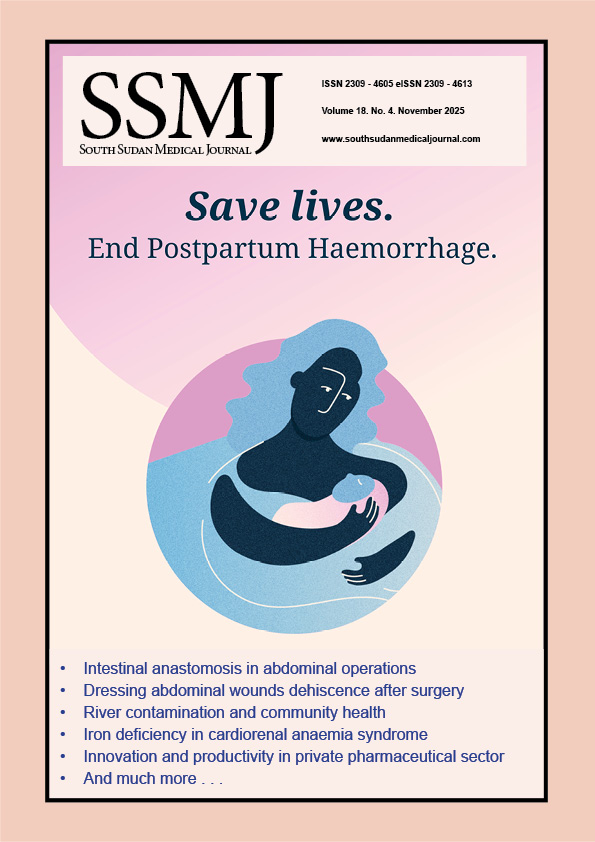
South Sudan Medical Journal - November 2025

SSMJ Vol 18 No 4 November 2025

 Dear reader,

The full issue of our November 2025 issue is now online; this is a bumper issue featuring 14 full articles and other news items, listed below. We thank the copyeditors and reviewers who helped prepare these papers. Let us know if you would like to join the Editorial team. We need you if you have time and editing skills.
 
Editorial

Research Articles

  • Comparative study between classical two-layer and one-layer extra-mucosal intestinal anastomosis in elective and emergency abdominal operations. John Chol Ajack, Galal Abouelnagah, Haytham Fayed
  • Comparison of improvised negative pressure wound therapy and conventional wound dressing in abdominal wounds dehiscence after surgery. Nasra Lichika, Edward Ketson Msokwa, Alphonce Chandika
  • River contamination and community health: mining impacts in rural central Kalimantan, Indonesia. Nawan, Septi Handayani, Agnes I. Toemon, Hepryandi L. D. Usup, Seth Miko, Joni Rusmanto
  • Iron deficiency in cardiorenal anaemia syndrome in Dodoma, Tanzania Gidion Edwin
  • Guerrilla investors: Firm-level innovation and productivity in South Sudan’s private pharmaceutical sector Garang M. Dut
  • Paediatric deaths at Al-Sabbah Children’s Hospital, Juba, South Sudan – an audit Zechariah J. Malel, Garang Dakjur Lueth, Mary Poni Jackson, Nicolas Kazimiro Sasa
  • Prevalence of anaemia among pregnant women attending the antenatal clinic at Bor State Referral Hospital. Mark Kuoi Jongkuch Kuoi and Shalini Ninan Cherian
  • The impact of dietary compliance on diabetic foot ulcer healing: A cross-sectional study. Dadi Santoso, Rajesh Kumar Muniandy, Putra Agina Widyaswara Suwaryo

Review Articles

  • Personal determinants of gender-based violence: a review of intimate partner violence in South Sudan. Nyinypiu Adong
  • Misdiagnosing Muslims: The hidden risk of using the CAGE questionnaire in some Islamic contexts. Anas Ibn Auf and Sayed Halaly
  • Impact of healthcare worker training on paediatric tuberculosis detection and reporting: A systematic review. Suryanti Chan, Hamzah Hamzah, Miftahul Falah

Case Reports

  • Lupus nephritis overlap syndrome in a male with albinism: A case report. Adam Gidion Edwin, Baraka Alphonce, Sabina Mmbali, Alfred Meremo
  • Rare isolation of Pseudomonas mendocina from a postoperative wound in a diabetic patient: A case report. Vimal Kumar Karnaker, Asem Ali Ashraf, Bhadra Jyothikumar

Short Communications

  • News: Physicians Association of South Sudan and Association of Gynecologists and Obstetricians of South Sudan. Sudan

Back Page: Supporting Wet Nursing During Emergencies
 
Articles in SSMJ are indexed by Scopus, African Journals Online (AJOL), and the Directory of Open Access Journals (DOAJ), and as well as being on our website. SSMJ is included in the EBSCO scientific research collection.
 
Thanks to everyone who supports SSMJ. Tell your colleagues they can join our mailing list here.
 
The SSMJ team
Email: southsudanmedicaljournal AT gmail.com
Website: http://www.southsudanmedicaljournal.com