Hodges' Model: Welcome to the QUAD: logic

Hodges' model is a conceptual framework to support reflection and critical thinking. Situated, the model can help integrate all disciplines (academic and professional). Amid news items, are posts that illustrate the scope and application of the model. A bibliography and A4 template are provided in the sidebar. Welcome to the QUAD ...

Showing posts with label logic. Show all posts

Wednesday, September 23, 2026

'Compositionality' - Journal

'Compositionality is a diamond open-access journal for research using compositional ideas, most notably of a category-theoretic origin, in any discipline. Compositionality describes and quantifies how complex things can be assembled out of simpler parts. Topics may concern foundational structures, an organizing principle, or a powerful tool. Example areas include but are not limited to: mathematics, computation, logic, physics, chemistry, engineering, linguistics, and cognition.

Compositionality is free of cost for both readers and authors (diamond open access). You can find our editorial policies here. Our first issue was published, under ISSN 2631-4444, in December 2019.'

Continued ... 

Tuesday, August 25, 2026

Medicine - Mathematics & History

'We now come to the input of mathematics into medical history, and to the related questions of arithmetic and quantification, ratio and proportion, geometrical argument and diagrams, and probability. Mathematics (consisting in arithmetic, geometry, astrology and music) had an established place in the quadrivium of the medieval arts course; its application to medicine is demonstrated in such textbooks as the Articella, which include treatises on weights and measures, and in studies of proportion and ratio such as those of the medieval Oxford calculators which Italian doctors among others caused to be revived at the beginning of our period. In the sixteenth century, it was a vigorously debated subject; there is a well-documented discussion of the certainty of mathematics, concerning its status in respect to the logical adequacy of its proofs, in which some natural philosophers and doctors (notably Cardano) take part. It will come therefore as no surprise that it was prescribed for doctors by most Renaissance pedagogical writers;  this prescription is often specifically linked to Galen's geometrical (axiomatic) method whose operations are the constitution of objects from elements, the comparison of existing objects and their reduction into their constitutive elements.

Associated with mathematics are diagrams, that is, abstract quantified spatial representations. There is a modern debate about the contribution of technical innovations in illustration in the Renaissance (most notably perspective) to the scientific revolution: this is only relevant here insofar as some participants in this debate argue for the importance of diagrammatic symbolisation of mental abstractions above those, like perspective, which are still representations of the real world, and see the former as a step on the path to full algebraic notation of geometry. Not all Renaissance thinkers were persuaded of their usefulness: Argenterio describes the diagrams of Manardo and Akakia reproduced below as 'vain and false tables and figures'; but I shall argue here that they were related to the uptake of doctors from the arts course insofar as well-known logical diagrams reproduced above (4.3:3) were adapted by them for their own purposes.' pp.171-172.

Maclean, Ian. 2002. Chapter 5, Beyond logic: geometry, proportion, quantity. In Logic, Signs, and Nature in the Renaissance: The Case of Learned Medicine. Cambridge/New York: Cambridge University Press.

Related to ongoing reading, Maclean provides two (among several) historical illustrations (with apologies for the quality) on pp.174-175, the first is from the Wellcome Collection:

Dubois, Jacques, 1478-1555 (Boe͏̈, Jacques, Bois, J. d., Boë, J., del, Boë, J., Del Boë, J., DelBoe͏̈, J., . . . Sylvius/de Bois). (1548). Methodus sex librorum galeni in differentiis et causis morborum et symptomatum in tabellas sex ordine suo conjecta paulo fusius ne brevitas obscura lectorem remoretur & fallat. de signis omnibus medicis, hoc est salubribus, insalubribus, & neutris, commentarius / ... per jacobum sylvium ..Paris: Retrieved from https://www.proquest.com/books/methodus-sex-librorum-galeni-differentiis-et/docview/2090356749/se-2

Jacobus Sylvius, 1539

Which Maclean then translates / interprets (p.174):

Maclean. Figure 5.1, p.174.

'Manardo goes further, and causes and symptoms adapts the square of contraries to represent not only all the possible combinations of temperaments (combinations of cold and hot and wet and dry are cleverly excluded) but also inserts a mediate point to represent the absolutely temperate body: see fig. 5.2.
This adaptation of the square of contraries (which has precedents in the medieval period) shows the appropriation for their own use by doctors of the logical instruments at their disposal.

As we have seen, it is a feature of medical thinking to take into account many circumstantiae or variables, and, over time, the numbers of variables taken into consideration increases.' p.174-175.

Figure 5.2 Giovanni Manardo, p.175.

individual
|
INTERPERSONAL
: SCIENCES             
humanistic ------------------------------- mechanistic
SOCIOLOGY : POLITICAL   
|
group

quality

logic

quantity
past - present - future
diagrams

symptoms - signs


subjective

objective

Previously: 'medicine' : 'history' : 'diagram'

Monday, June 29, 2026

Where is the Centeredness of Care?

In trying to see Hodges' model anew, which is quite a challenge after four decades; what of the model's structure?

It is easy to get carried away with mathematical terminology:

One line, add another, and they intersect, at a 90 degree right angle. So is centeredness to be found at the intersection point? 

If I'm tying myself up in knots well there's another possibility! 😉 

As a whole it appears the axes of the model are a manifold and not - in the center?

What do you think?


See also: 'What Is a Manifold?'

https://www.quantamagazine.org/what-is-a-manifold-20251103/

Monday, May 18, 2026

CfP: Nonsense in Language and Thought

CFP: Nonsense in Language and Thought

Guest editor: 
Krystian Bogucki (Polish Academy of Sciences)

Deadline for submissions: 
the 31st of July 2026 

Description:

Studia Semiotyczne (Semiotic Studies) invites submissions for a special issue of the journal. Papers should be written in English and prepared for blind review. 

An interest in nonsense was a hallmark of the early analytic philosophy. Bertrand Russell (1908) thought that a theory of nonsense could help us avoid some daunting paradoxes in logic. Ludwig Wittgenstein (1922, 1953) and Rudolf Carnap (1931) recognised nonsense as a fundamental concept for philosophical criticism. They claimed that much of philosophical discourse is defective in the most fundamental way: it is neither true nor false, it does not consist of thoughts and propositions ? it is nonsense. According to the early Wittgenstein, philosophers want to describe the nature of the world, thought, language and ethics, but they unwittingly fall into nonsense. The Tractatus was supposed to free us from this troublesome position by presenting a perspicuous notation. On the other hand, the later Wittgenstein claimed that we should compare deceptive philosophical images with our ordinary ways of thinking and speaking in order to avoid nonsense. Philosophical problems arise when language goes on holiday, so we must always remember the everyday use of concepts. For Carnap, propositions should be reducible to sense data and constructed according to the rules of logical syntax in order to be meaningful. 

Later, the topic of nonsense was discussed by Alfred Ayer, Gilbert Ryle, Willard V. O. Quine, Arthur Prior, Richard Routley and Georg H. von Wright, among others. Since the late 1970s, however, the interest in nonsense has faded. Only recently, some important works have been published. The first important stimulus came from foundational works on theories of nonsense (Cappelen 2012, 2013; Camp 2004; Glock 2015; Magidor 2009, 2013). The second source of the revival of interest in nonsense was Wittgenstein scholarship on the austere and substantial conceptions of nonsense (Conant 2001; Diamond 1995, 2005; Glock 2004; Hacker 2003; Moore 2003; Sullivan 2003). Some works also examined the relation of nonsense to other phenomena (Gotham 2017, Keller and Keller 2021, Shaw 2015, Sorensen 2003). 

The important questions to be addressed in the forthcoming volume are (to name but a few):

  • What are the sources of nonsense? 
  • Are some parts of philosophical and non-philosophical discourse nonsense?
  • What is the relation between nonsense and figurative speech?
  • Is it at all possible to be wrong whether our own thoughts are meaningful? 

We hope that the special issue of Studia Semiotyczne will further strengthen and deepen the scholarly interest in nonsense. 

Possible topics include, but are not limited to:

Theories of nonsense
Nonsense and logical syntax
Nonsense and category mistakes
Nonsense and figurative speech (e.g. metaphor, metonymy)

Nonsense and fiction
History of the concept of nonsense (in particular Wittgenstein's and the Vienna Circle's views on nonsense)
Nonsense and understanding
Nonsense and illusions of sense
Nonsense and quantification
Nonsense and linguistics
Nonsense and ineffability
Nonsense, knowledge-how and knowledge-that
Logics of nonsense

Nonsense and semantic paradoxes
How to diagnose philosophical nonsense?
Metaphilosophical and methodological issues concerning nonsense
In order to submit the paper one is kindly asked to submit the manuscript by sending it to:
krystian.bogucki AT ifispan.edu.pl and studiasemiotyczne AT pts.edu.pl 

All submitted papers will be double-blind peer-reviewed.

My source (and emphasis):
Philos-L "The Liverpool List" is run by the Department of Philosophy, University of Liverpool 
https://www.liverpool.ac.uk/philosophy/philos-l/

Sunday, May 17, 2026

Wittgenstein's - Tractatus

Apparently, Wittgenstein walked away from philosophy after publication of the Tractatus. He thought he had solved the problems of philosophy, logic and reality.

In trying to ‘see’ Hodges’ model, in mathematical terms, there may be lessons in Wittegenstein’s approach, both in content and style. Of course, as a non-mathematician, I probably should leave well-alone; and stick to nursing. But that is the problem: from 1987-88 there is a need for a different perspective, even if this is a personal challenge. As with many ‘reviews’ here, we can look at Wittengenstein’s work, reflect upon it, and consider how it relates to the purposes, structures and content of Hodges’ model.

The Tractatus’s first line then, offers a warm welcome.

‘The world is everything that is the case.’ [I]

Making the decision to become a nurse and enrolling as a student makes you an educational and workforce demographic case.

Once a student in the university lecture theatre, you hopefully whether consciously, or not are exposed to the theory – practice gap; as you yearn to be on your first placement. Now it you who is seeking ‘cases’. As we live, and statistics roll and tally, the question of caseness (and categories) is key, one that is carried around even if not always active, recognised as such.

As noted in the previous post, we can for Hodges’ model (and other models, frameworks it must be said) think of ‘case’ as a, or the situation. 

A mathematical approach to Hodges’ model involves looking at things, concepts, people as objects. This includes patients and carers. In terms of a project worthy of pursuing in nursing and other disciplines involved in healthcare, this mathematization presents a non-trivial challenge. A fully-deserved response would be: 'What have you done to the aptitude for care and caring attitude? You've cancelled - subtracted it!' Humour aside:

'In order to know an object, I must know not its external but all its internal qualities.' [2.01231] 

Is this equivalent to us getting to know our patient / client and their socio-political context? 

‘The way in which objects hang together in the atomic fact is the structure of the atomic fact.’ [2.032] 

It is a help that Wittgenstein points to structure (crumbs of understanding are welcome here, as incremental steps). In formulating Hodges’ model we first identify the axes. It is the axes that then provide a space, four domains in total, to frame the objects that we decide; or, as the situation dictates, what concepts are placed in the domains of Hodges' model.

There is a successive series that follows, combining place, space and logic: ‘The proposition determines a place in logical space: the existence of this logical place is guaranteed by the existence of the constituent parts alone, by the existence of the significant proposition.’ [3.4]

‘The propositional sign and the logical coordinates : that is the logical place.’ [3.41]

‘The geometrical and the logical place agree in that each is the possibility of an existence.’ [3.411]

‘Although a proposition may only determine one place in logical space, the whole logical space must already be given by it.
(Otherwise denial, the logical sum, the logical product. etc., would always introduce new elements -in co-ordination.) 
(The logical scaffolding round the picture determines the logical space. The proposition reaches through the whole logical space.)' [3.42]

While Wittgenstein came to view ‘the picture theory of meaning’ as incorrect, as a conceptual framework and diagrammatic resource Hodges’ model is closely tied to this form of representation.

Of course, the logic at work here, is far from mathematical, but there is surely a logic.

'Formal concepts cannot, like proper concepts, be presented by a function.' [4.126]

'There is therefore really a sense in which in philosophy we can talk of a non-psychological I.
The I occurs in philosophy through the fact that the "world is my world'".
The philosophical I is not the man, not the human body or the human soul of which psychology treats, but the metaphysical subject, the limit - not a part of the world.' [5.641] 

'Although the spots in our picture are geometrical figures, geometry can obviously say nothing about their actual form and position. But the network is purely geometrical, and all its properties can be given a priori.

Laws, like the law of causation, etc., treat of the network and not of what the network describes.' [6.35]

There is much more in this work, and much that remains a challenge. Many commentators have written and said in interviews that the Tractatus rewards re-reading and some sentences stay with you for life (The Great Philosophers BBC TV). 

I'm still seeking mine.

https://www.gutenberg.org/files/5740/5740-pdf.pdf

Wednesday, April 15, 2026

Book: 'Logic on the Track of Social Change'

When I walked into Lancaster Univ. library in February, I had no idea I was being followed.

From the maths shelves, the lights switching on as you progress, I decided to walk across to the more familiar realm of sociology. Looking for something, it was nice to see the parity in lighting, even as my struggle for mathematical enlightenment continues.

Logic on the Track of Social Change    

I do use the e-library, and other e-resources, but sometimes real shelves and varying levels of mustiness (remember the 'new acquisitions' - fewer these days?) invite a bit of serendipity. Suddenly, over my shoulders, the stranger,  pointed (with four arms of course). Was it my shadow? Or, was it my unconscious that 'read': LOGIC and TRACK and SOCIAL CHANGE, on the spine of -

David Braybrooke, Bryson Brown & Peter K. Schotch (eds.), Logic on the Track of Social Change, Oxford University Press. 1995?

In the early decades of health informatics, there was much talk - and still is(?) - of  'languages for health', even languages for nursing. Coding and classification systems were constantly developing, as posted here, but while physical diagnoses were the driver, the psychosocial dimensions of person - patienthood proved more nebulous. DSM is still subject much debate.

 Chapter 8 in Braybrook et al. is brilliant: A Rules-Analysis, Following Foucault, of the Birth of Clinical Medicine.

I've been in situations when surgery is suggested for an older person, and family, friends wonder is this really necessary? This chapter literally brings the history home, and not only that, but the emergence of the hospital system, versus care at home, in the community. The social determinants of health have been ever-present. This is essential reading for students, with the history of ICD, and the history of medicine. There are insights too into public attitudes and expectations to health services and provision here in the UK and in France.

For me, and Hodges' model, the significance of Braybrook, Brown, Schotch and Byrne is that it precedes:

Sallach, D.L. Categorical Social Science: Theory, Methodology and Design. September 2012
Conference: Fourth World Congress on Social Simulation. Taipei, Taiwan.
https://www2.econ.iastate.edu/tesfatsi/Sallach2012CategoricalSoSci4.WCSS-SS.pdf

And so, I do need my own secondhand copy of  Logic on the Track of Social Change. More to follow (indeed)! ... and help still welcome and needed.
 

Monday, April 06, 2026

What! Nursing reduced to objects! Do you realise what you're saying?

Wittgenstein to the rescue?

Revisting a theme, and while it is not new - as in use of objected oriented approaches in health informatics; as a nurse, to suggest there's a need to view the elements of care systems as a series of objects surely runs counter to nursing's theory, practice, professional standing and values.

Or, does Wittgenstein come to the rescue in his 'Tractatus Logico-Philosophicus'?

'2.01231 In order to know an object, I must know not its external but all its internal qualities'.

[My emphasis - and as ever high degree of selectivity.] 

In reading 'internal qualities' I can equate internal with a person; and qualities with subjectivism, what is inherently seen as humanistic, a set of characteristics, and properties. Can it be argued that in the context of healthcare and person-centredness we can also take 'internal' as potentially referring to what happens in the mind, an individual's mental life, for example? This can be applied physically too. To bodily properties, which ultimately are internal genetically, and influenced by - expressed in-part - by the external environment.

While I sort books, creating space, there is the small matter that Wittgenstein walked away from philosophy after the Tractatus was published. Then, realising he had not answered the questions concerning human language and reality, he returned to Cambridge and his studies, with Philosophical Investigations published after his death.

Does this invalidate the thoughts above?

Another post to follow drawing from the Tractatus. 

Previous posts:

Reflection: programming and caring II

Abstract [working] Hodges’ model as a mathematical object, a lens for social care and inclusion: category theory or category mistake?

Person to object: Surely you're joking* ...!

Thursday, December 11, 2025

Bourdieu: systems, axes, maps, practical logics

I have checked these quotes and am fairly sure they are accurate. The first, I feel, improves with re-reading, and presents a clearing at the end? 

The clearing could be a template, and as per the second it may be old; but retains its practical function.

'Intellectualism is inscribed in the fact of introducing into the object the intellectual relation to the object, of substituting the observer's relation to practice for the practical relation to practice. Anthropologists would be able to escape from all their metaphysical questioning about the ontological status or even the 'site' of culture only if they were to objectify their relation to the object, that of the outsider who has to procure a substitute for practical mastery in the form of an objectified model. Genealogies and other models are to the social orientation which makes possible the relation of immediate immanence to the familiar world, as a map, an abstract mode of all possible routes, is to the practical sense of space, a "system of axes linked unalterably to our bodies, which we carry about with us wherever we go", as Poincaré put it.' p.34.
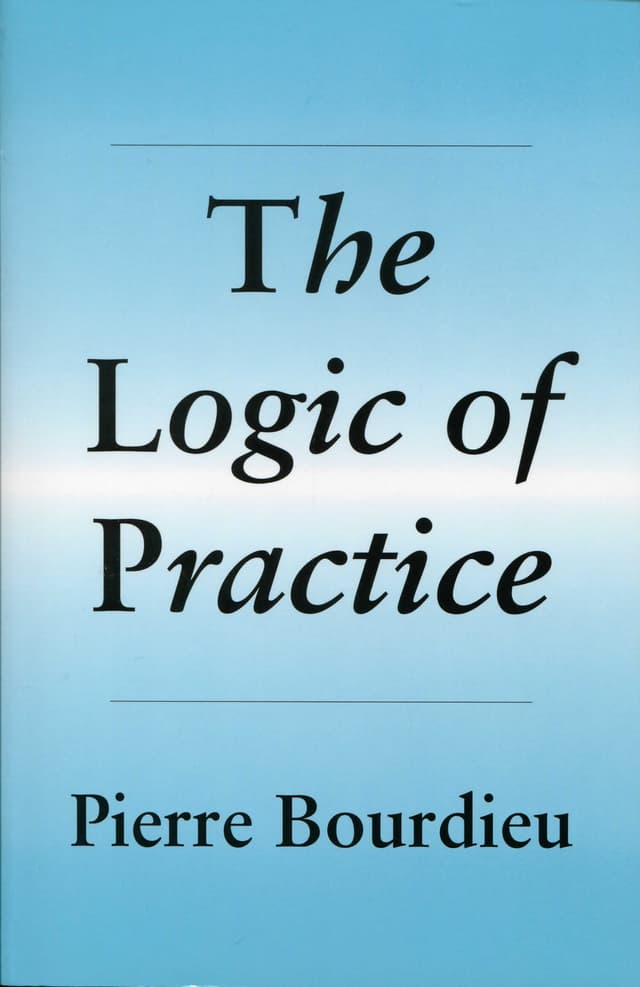
The Logic of Practice
'The logical [kinship] relations he constructs are to 'practical' relations - practical because continuously practised, kept up and cultivated - as the geometrical space of a map, a representation of all possible routes for all possible subjects, is to the network of pathways that are really maintained and used, 'beaten tracks' that are really practicable for a particular agent. The family tree, a spatial diagram that can be taken in at a glance, uno intuitu and scanned indifferently in any direction from any point, causes the complete network of kinship relations over several generations to exist in the mode of temporal existence which is that of theoretical objects, that is, tota simul, as a totality in simultaneity. It puts on the same footing official relationships, which, for lack of regular maintenance, tend to become what they are for the genealogist, that is, theoretical relationships, like abandoned roads on an old map; and practical relationships which really function because they fulfil practical functions.' p.35.


My source:
Bourdieu, P. (1990). The Logic of Practice. Stanford University Press. https://doi.org/10.1515/9781503621749 [and image source].

Bourdieu, Pierre, "The Logic of Practice (1990)" (1990). eTextbooks for Students. 875.
https://stars.library.ucf.edu/etextbooks/875

See also: https://hodges-model.blogspot.com/search?q=bourdieu

Tuesday, December 09, 2025

In search of socio-political logics

'The logic of appropriateness refers to actions which members of an institution take to conform to its norms. For example, a head of state will perform ceremonial duties because it is an official obligation. By contrast, the logic of consequences denotes behaviour directed at achieving an individual goal such as promotion or re-election.' p.87.

individual
|
INTERPERSONAL : SCIENCES
humanistic -------------------------------------------  mechanistic
SOCIOLOGY : POLITICAL
|
group-population


'Institutions are far more than the theatre within which the political drama unfolds; they also shape the script (Peters, 1999). This emphasis within the institutional framework on the symbolic or ritual aspect of political behaviour contrasts with the view of politicians and bureaucrats as rational, instrumental actors who define their own goals independently of the organization they represent.' p.87.


'Further, institutions bring forth activity which takes place simply because it is expected, not because it has any deeper political motive. When a legislative committee holds hearings on a topic, it may be more concerned to be seen to be doing its job than to probe the topic itself. Much political action is best understood by reference to this 
logic of appropriateness rather than a logic of consequences. For instance, when a president visits an area devastated by floods, he is not necessarily seeking to direct relief operations or to achieve any purpose other than to be seen to be performing his duty of showing concern. In itself, the tour achieves the goal of meeting expectations arising from the actor's institutional position. "Don't just do something, stand there", said Ronald Reagan, a president with a fine grasp of the logic of appropriateness.' pp.86-87.


See also: 'drama' : 'bridges'

Hague, R., & Harrop, M. (2007). Comparative Government and Politics (7th ed.). New York, NY: Palgrave Macmillan.

Peters, B. Guy. (1999). Institutional theory in political science: the new institutionalism. London: Pinter.

Thursday, October 30, 2025

In Browder, 'care' is mentioned over 150 times!

OK - so now you're teasing ...

'Surgery theory investigates the homotopy types of manifolds, using a combination of algebra and topology. It is the aim of these notes to provide an introduction to the more algebraic aspects of the theory, without losing sight of the geometric motivation.' Ranicki, 2001. 
'IV. Surgery and the Fundamental Theorem

In this chapter we develop the techniques of surgery for constructing normal cobordisms and use them to prove the Fundamental Theorem. The ideas of surgery have their origins in the theory of 2-manifolds, in the process of "cutting off handles", and in general, in the theory of Marston Morse of non-degenerate critical points of differentiable functions.' Browder, 1972.

In Browder, care is mentioned over 150 times!

'Poincaré' that is.

individual
|
INTERPERSONAL : SCIENCES
humanistic -------------------------------------------  mechanistic
SOCIOLOGY : POLITICAL
|
group-population


'The Classifying Spaces for Surgery
and Cobordism of Manifolds'

Try to - follow the language* ...

"Follow the money!"


Ranicki, A. (2001) An introduction to algebraic surgery. Surveys on Surgery Theory, Volume 2, edited by Sylvain Cappell, Andrew Ranicki and Jonathan Rosenberg, Princeton: Princeton University Press, 2001, pp. 81-164. https://doi.org/10.1515/9781400865215-005

Browder, W. (1972) Surgery and the Fundamental Theorem. In: Surgery on Simply-Connected Manifolds. Ergebnisse der Mathematik und ihrer Grenzgebiete, vol 65. Springer, Berlin, Heidelberg.
https://doi.org/10.1007/978-3-642-50020-6_4

Madsen, I. H., and Milgram, R.J., (1979) The Classifying Spaces for Surgery and Cobordism of Manifolds. Princeton University Press.

Image: https://m.media-amazon.com/images/I/41THEeVvpdL.jpg

*concepts!

Sunday, October 26, 2025

'Politics as a science' ...

'The science of politics is the oldest of the social sciences but still perhaps the most dependent: it derives much of its methodology from statistics (the science of the state turned into the science of numerical data), from economics and from sociology and it steals much of its substance from anthropology, from history and from law. Yet there is little doubt about the core of the subject: it focuses on the ways in which decisions are taken by men acting within territorially or functionally defined networks and constellations of organizations. And the hallmark of the discipline is 'its systematic analysis', whether couched in verbal and literary terms or in the formalized language of statistics or of mathematical logic.' Preface vii
Hayward R. Alker, Karl W. Deutsch, Antoine H. Stoetzel (eds.), Mathematical Approaches to Politics, Amsterdam, Elsevier, 1973, pp. 475.

Saturday, October 04, 2025

Argumentation - Journal: Informal Logic

Early evening (UK) yesterday, I joined a further webinar on argumentation. Through the speaker, and discussion, I was led to a journal

INFORMAL LOGIC

It is in informal logic that I see a role for Hodges' model. The model's structure providing a universal foundation of knowledge domains to be applied in practice. The bonus of this journal, is its being open access, a search revealed the following paper:

Mark Weinstein. Towards a Research Agenda for Informal Logic and Critical Thinking. XII.3, Fall 1990.
https://ojs.uwindsor.ca/index.php/informal_logic/article/view/2609

'This paper recommends that the recent concern with informal logic and critical thinking be redirected from its general philosophical focus and towards a greater appreciation of the particulars of practice in the various domains of human understanding. The redirection recommended is prompted by the central role that critical thinking and informal logic can be seen to play in meaningful educational reform, especially at the undergraduate level.' 

'Critical thinking, similarly, should be redirected from concerns typical of philosophers and towards issues and approaches more representative of critical thinking both within and across the wide range of disciplines represented by the course of undergraduate studies.' p.121.

'The sense that there is an internal relationship between arguments, argumentation and domains of knowledge persists despite attempts to show relevant and useful notions of critical thinking that are generally available for instruction and neutral in respect of the disciplines. The resolution of the issues generated by these competing views, requires that reflective practitioners of the disciplines, students of the history of ideas, methodologists and specialists in teaching increasingly engage in the task of generating and organizing the data upon which an informed and adequate notion of critical thinking across the disciplines must be based.' p.125.

I believe that the structure of Hodges' model provides a basis for Weinstein's ordinary argumentation and stylized argumentation.

For me (at present) ordinary argumentation, is 'open' argumentation. That is, without differentiation in (using) Hodges' model. I might (well, I would) have Hodges' model in mind, but choose not to apply it. As per the paper, stylized argumentation is using Hodges' model and doing so in a multidisciplinary manner - within my discipline. 

The problem and challenge for nurses and other health professionals is the need, if:

  • person/patient-centred;
  • integrated;
  • and holistic - having regard for parity of esteem (mind - body)

- not to stray, extend the disciplinary scope, while working within one's professional scope.

In highly effective multidiscioplinary teams that touch on being transdisciplinary (hybrid?), can experienced team members have insight into the stylized argumentation of their colleagues?

Ack. ​Argumentation network of the AMERICAS - https://www.argnet.org/ethics-of-arg.html

Previously: 'critical thinking'

Sunday, August 03, 2025

The compact: a knowledge project

Some things don't change . . .

 'Doctor Faustus'

'FAUSTUS discovered in his study.7

     FAUSTUS. Settle thy studies, Faustus, and begin
     To sound the depth of that thou wilt profess:
     Having commenc’d, be a divine in shew,
     Yet level at the end of every art,
     And live and die in Aristotle’s works.
     Sweet Analytics, ’tis thou8 hast ravish’d me!
     Bene disserere est finis logices.
     Is, to dispute well, logic’s chiefest end?
     Affords this art no greater miracle?
     Then read no more; thou hast attain’d that9 end:
     A greater subject fitteth Faustus’ wit:
     Bid Economy10 farewell, and11 Galen come,
     Seeing, Ubi desinit philosophus, ibi incipit medicus:
     Be a physician, Faustus; heap up gold,
     And be eterniz’d for some wondrous cure:
     Summum bonum medicinae sanitas,
     The end of physic is our body’s health.
     Why, Faustus, hast thou not attain’d that end?
     Is not thy common talk found aphorisms?
     Are not thy bills hung up as monuments,
     Whereby whole cities have escap’d the plague,
     And thousand desperate maladies been eas’d?
     Yet art thou still but Faustus, and a man.
        ...'

THE TRAGICAL HISTORY OF DOCTOR FAUSTUS
By Christopher Marlowe
From The Quarto of 1604
Edited by The Rev. Alexander Dyce


'AI' - Humanity's Faustian compact?

#individual #collective #power #safety #governance #ethics #morality

Sunday, July 20, 2025

Infracare - Hodges' Health Career - Care Domains - Model

Trying to sort papers again, I'd saved the article by Floridi (below) the title having caught my attention.

If Hodges' model has a meta-function, there is also a role in the infrastructure of care.

There is an opportunity for me to do the proverbial '360' exercise, visit each of the care domains in turn and literally throw in the kitchen sink:

Individual
|
      INTERPERSONAL    :     SCIENCES               
HUMANISTIC  --------------------------------------  MECHANISTIC      
 SOCIOLOGY  :    POLITICAL 
|
Group

I see you! Who you are.

 person-centred  care 

IDENTITY (identities)

A model of care -

A theory of (health) communication

Information theoretic, information disorder 
 and relational studies


 person-centred care 

I see you! Who you are.

identity - (IDENTITIES)

- addressing Parity of Esteem in -

- Practice & Research

Information theoretic, information disorder 
 and relational studies

NHS and Social  Care

Community Care as a resource

Self care education and health promotion built in to education system

Value Social Capital
Law and Justice to
protect and secure Peoples & Populations

Policy - National & Global
that supports health and health promotion

Declared integrated care
care philosophy

Adopted generic model for self, national and global and planetary health


Infraethics, Luciano Floridi. January 2013. The Philosophers Magazine. DOI: 10.5840/tpm20136010

Thursday, July 17, 2025

Ryle's 'logical geography'

I like the way Ryle apparently analogised philosophy to cartography.*

'Similarly, Ryle advocated that philosophy should chart the 'logical geography' of our concepts. In The Concept of Mind he argued that the Cartesian dualism of mind and body results from 'category-mistakes': it treats mental concepts which signify behavioural dispositions as if they referred to processes that are just like physical ones, only more ethereal. Ryle rejected Wittgenstein's therapeutic image according to which 'the philosopher treats a question like a disease' (1953: §255). Yet he accepted that philosophy is a meta-discipline which does not 'talk sense with concepts' but tries to 'talk sense about concepts' (1949: 9-10). The paradox of analysis disappears since the task is not to provide novel information about a realm extrinsic to us. According to Wittgenstein, philosophy reminds us of rules that we have mastered in practice but which mislead us in the course of philosophical reflections. According to Ryle, it takes us from the knowledge how to use words to an explicit knowledge that they are used according to certain rules. Either way, analysis is not a trivial pursuit, because the explanation of philosophically interesting concepts is complex and rich, especially when it places these concepts in their diverse contexts (everyday, scientific, philosophical).' p.43.
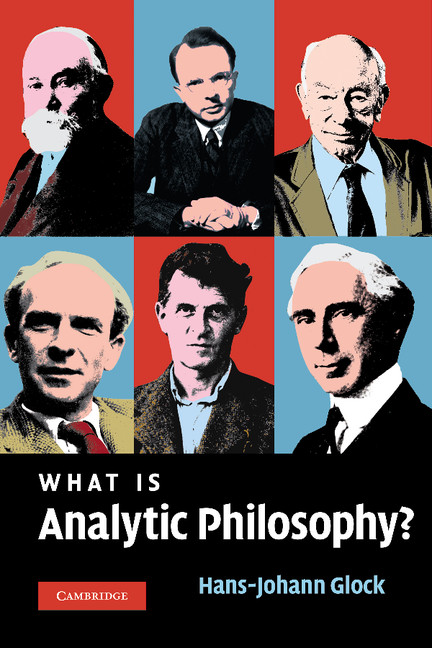
Hans-Johann Glock. 2008. What is analytic philosophy? Chapter 2. Historical survey. pp.21-60. CUP. Pb. 
https://www.cambridge.org/us/universitypress/subjects/philosophy/philosophy-general-interest/what-analytic-philosophy

* 'Ryle analogises philosophy to cartography. Competent speakers of a language, Ryle believes, are to a philosopher what ordinary villagers are to a mapmaker: the ordinary villager has a competent grasp of his village, and is familiar with its inhabitants and geography. But when asked to interpret a map of that knowledge, the villager will have difficulty until he is able to translate his practical knowledge into universal cartographic terms. The villager thinks of the village in personal and practical terms, while the mapmaker thinks of the village in neutral, public, cartographic terms.[20]: 440–2 '. https://en.wikipedia.org/wiki/Gilbert_Ryle

I've wondered about 'cogeography' - combining cognition and geography, even care cartography. There is also of course psycho-politics, geo-psychiatry and psycho-geography ...

Hopefully a more current text would be more diverse.^

Sunday, July 06, 2025

Int. Joint Workshop of AI for Healthcare (HC@AIxIA) and HYbrid Models for Coupling Deductive and Inductive ReAsoning (HYDRA)

From: Francesco Calimeri, Mauro Dragoni, Fabio Stella on behalf of the
HC@AIxIA – Working Group on Artificial Intelligence for Healthcare 

HC@AIxIA + HYDRA 2025 

International Joint Workshop of Artificial Intelligence for Healthcare (HC@AIxIA) and HYbrid Models for Coupling Deductive and Inductive ReAsoning (HYDRA)

Bologna, Italy, 25-26 October 2025

CALL for PAPERS

The workshop welcomes original research contributions, summaries of recent work, and work-in-progress studies on frameworks, applications, and methodologies for combining deductive and inductive approaches. It invites a wide multidisciplinary spectrum of researchers, industrialists, entrepreneurs, and healthcare practitioners: submissions are welcome from a range of stakeholders, including Computer scientists, health informaticians, and emergency medicine experts; Public health experts, epidemiologists, clinicians, etc.; National and international public health agencies; Epidemic intelligence systems providers; NGOs and Agencies; Industry and startups. Collaborations across disciplines will bridge the gap between theory and practice and foster actionable AI-driven solutions across diverse domains. 
Continued ...

Saturday, July 05, 2025

'Axiomatic' - according to Simondon

Glossary:

Fifty Key Terms in the Works of Gilbert Simondon, pp.203-231.
Jean-Hugues Barthélémy, translated by Arne De Boever. 
In. De Boever A, Murray A, Roffe J, eds. Gilbert Simondon: Being and Technology. Edinburgh University Press; 2012.
'Axiomatic
In Simondon, this notion does not designate a formal system as in the case of logico-mathematical axiomatics, but simply a set of principles, or first propositions, that enable the linking fundamental concepts. It is in this sense that Simondon, in IPC in general and more specifically in FIP, struggles to work out a 'common axiomatic' (FIP, in IPC 35 or ILFI 533) for the human sciences - which enables the unification of psychology and sociology.' p.208.


Simondon holds hope for me (I think) in terms of the extent of formality I (and others) might seek for Hodges' model. Is there a set of principles - and simple at that? The structure of Hodges' model 'places' the knowledge (care) domains of psychology (intrapersonal & interpersonal) and sociology next to each other, as if to encourage unification. The bridge: psycho-social and a great many others, are there, to take walk and reflect on what we find there. If we choose to. ...

I'll check on the abbreviations. 

FIP : « Forme, information, potentiel » (conférence datant de 1960, ajoutée par l’éditeur), in Simondon, ILFI et IPC (voir ci-dessous).

ILFI : L’individuation à la lumière des notions de forme et d’information, Grenoble, Éditions Jérôme Millon, 2005 (Thèse principale de Simondon pour le Doctorat d’État, écrite de 1954 à 1958). 

IPC : L’individuation psychique et collective, Paris, Aubier, 1989 et 2007 (cet ouvrage contient le dernier tiers d’ILFI, ainsi que son Introduction et sa Conclusion).

https://journals.openedition.org/appareil/2253

Friday, May 02, 2025

Book review iii: 'Categories we live by'

In thinking about (with?) Hodges' model, I often feel there is a flip-flop nature to where exactly concepts sit; or more accurately the perspective (care/knowledge domain) from which they are viewed.

Murphy introduces dual-character concepts, 'which are things that have both a prototype (or rule) and an ideal.' p.30. and quotes from:

Knobe J, Prasada S, Newman GE. Dual character concepts and the normative dimension of conceptual representation. Cognition. 2013 May;127(2):242-57. doi: 10.1016/j.cognition.2013.01.005. Epub 2013 Mar 1. PMID: 23454798.
Do dual character concepts operate at varied levels, and in their association (semantic) proximity - relationship to other concepts? All this changing according to context.

Murphy explores the dual category nature of people who claim to be scientists, but are really following a hobbyhorse. That is not lost on me. Others, a baker is following scientific principles while not technically being a scientist p.31. The discussion on art - artists is also informative; turn the page, and that on RINOs - Republican In Name Only - is very timely! There are the problems that science itself can contribute. If you don't know your oxeye daisy from osedaxes you can find out here: fascinating. 

'Health' is dual category in a great many respects (and with a chapter to follow). Many have been and will continue to be discussed here:
  • person :: service-centredness
  • parity of esteem (mental - physical)
  • confusion - dementia :: delirium (infection, dehydration)
  • mental capacity :: best interests
  • community care :: 'in care'
  • clinical risk - positive risk taking
  • healthcare :: social care
There's a need for careful deliberation too as does this apply to any situation in which there is a smell of  dichotomy: good, or bad?

Chapter 3 'Categories in the World and in the Head' helps straight away - declaring a false dichotomy. For me, it's worth revisiting natural categories, natural kinds and essential categories and psychological essentialism. Get these right and surely that's a useful toolkit, or more accurately - first aid kit?

I'm grateful for the placeholder essence (p.46) from:
Medin, D. L., & Ortony, A. (1989). Psychological essentialism. In S. Vosniadou & A. Ortony (Eds.), Similarity and analogical reasoning (pp. 179–195). Cambridge University Press. https://doi.org/10.1017/CBO9780511529863.009
'Psychological essentialism should not be equated with the classical view that concepts are representations of classes of objects that have singly necessary and jointly sufficient conditions for membership. ... More generally, we propose that the knowledge representations people have for concepts may contain what might be called an essence placeholder. There are several possibilities for what is in such placeholder. In some cases, but by no means in all, it might be filled with beliefs about what properties are necessary and sufficient for the thing to be what it is. In other cases it might be filled with a more complex, and possibly more inchoate, "theory" of what makes the thing the thing that it is (see Murphy & Medin,1985). It might, additionally, contain the belief (or a representation of the belief) that there are people, experts, who really know what makes the thing the thing that it is, or scholars who are trying to figure out exactly what it is. Just as with theories, what the placeholder contains may change, but the placeholder remains.' pp.184-185.
Hodges' model provides four placeholders. In reading and watching videos on category theory, it appears there is a role for 'placeholders'. I realise the applications - contexts differ, but analogies are powerful too.

Regards, classification as an exercise in convenience, despite the emphasis upon evidence, how often even in clinical matters does it come down to convenience? More to follow on this.

I've never wanted Hodges' model to be a grab-bag for keywords, concepts - categories! So it helps ease that concern, in chapter 4 to see words and categories contrasted. I always wondered about the media's preoccupation with the Inuit and 'snow'. 'Salient' is here as expected in 'Language, Culture and Categories' and with the Sapir-Whorf hypothesis p.53. And, of course, nursing and everything else relies on language p.57. Prof. Murphy's mention of children figuring out when it comes to language, and adults just how crazy it - the rules - can seem. While impossible, by definition, I had this thought of toddlers instigating a class action to get things put right. I like the way Murphy reaches across cultures for answers, highlighting the field of ethnobiology p.61. The appeal of this is exaggerated as it stretches across Hodges' model diametrically [sociology - sciences]. I'm still on the look out for models possessed of an 'otherness', that retain legitimacy, validity where and for whom they are employed. (There is much to debate there still.) The objective and subjective dimensions also loom large. I remember a meeting concerned with nursing terminology 1990s, with reflection on the terms used for injection across the UK. That in itself demonstrated wide regional variations that also give pause for thought.

More to follow, with Part 2 'case studies'.

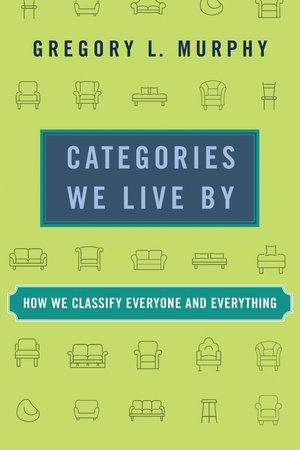
Murphy, Gregory L. Categories we live by: how we classify everyone and everything. Cambridge, MA: The MIT Press, 2024.

Many thanks to MIT Press for the review copy.

See also:

Categories are destiny' Freud p.6. of 'Categories we live by'


Monday, April 28, 2025

Book review: 'Categories we live by' ii

In that first post I felt a bit guilty getting bogged down in the introduction, and not really saying much about the book itself.

Well, Chapter 1 is the 'Introduction' so that is great, and as you may be I am swept up by what's between the covers. Speaking of which, this is an effective design, and green colour; especially for a northern reading in March - May.

The book is slim considering the topic, 164 pages, plus just over a page of notes, four and a half of references and an index. It is, I think a slightly larger format paperback but fits well in the hands for outdoors reading. The fonts and layout are clear.

Murphy's style is straightforward and readable. It is not technical, but includes terms such as classification, nomenclature, and domain [ ;-) ]. The division into two parts, lends itself to a wide readership, the second part providing case studies giving the book a pragmatic, practical emphasis. I'll post again about chapters 6 & 7 on Psychodiagnostic Categories; and Categories and Power respectively (brief, but a joy!).


Before moving on from the Intro, Murphy explains how the same category may be thought of in different ways at different times' and encourages us to be 'critical of our categories'. p.12. This stands out for me. Especially being suitably equipped to critique our categories as we use them.

Chapter 2 on The Classical Tradition, has a natural starting point; describing Aristotle (with his book Categories), essences, definitions with properties that are necessary and sufficient p.14-15.
'Necessity: If it's in the category, it has the features,
Sufficiency: If it has the features, it's in the category.' p.15.

I was prompted to reflect on relations and identities here. While I suggested the book is not technical, there is a important point about dictionaries and the definitions we seek there. We should remember that many members of the public would still rely on what is the classical way to create, confirm category membership: there must be a rule.

Wittgenstein follows pp.17-20, but I took note of:
'The problem is that necessity and sufficiency are in tension with each
other. As you make the list of properties longer and longer, it's more likely
to be sufficient but less likely to be necessary. Forming a list of features that
are both necessary and sufficient is usually impossible.' p.19.
I pencilled in (Eleanor) Rosch on p.13, and on page 21 her contribution to the destruction of the classical world is described; with other researchers. The book is well referenced, without being intrusive. Murphy provides specific pointers, suggesting further reading and skipping a chapter. Helpful, given how precious time is these days.

There is a critical invitation on page 13: 

'Want to start an argument with someone? Ask them whether a stove is a kitchen utensil or nursing is a science.'

I wonder if nursing theory colleagues in the United States and globally have already responded?

More to follow - surely!

Murphy, Gregory L. Categories we live by: how we classify everyone and everything. Cambridge, MA: The MIT Press, 2024.

Many thanks to MIT Press for the review copy.

Thursday, March 20, 2025

A short & sweet tweet/X for . . .

         ... the challenge of a lifetime ...

    ... for several researchers mathematicians?


This thread, also written - copied out beforehand provides the basis for an enlarged post to follow.