Hodges' Model: Welcome to the QUAD: hospital

Hodges' model is a conceptual framework to support reflection and critical thinking. Situated, the model can help integrate all disciplines (academic and professional). Amid news items, are posts that illustrate the scope and application of the model. A bibliography and A4 template are provided in the sidebar. Welcome to the QUAD ...

Showing posts with label hospital. Show all posts

Sunday, September 20, 2026

'Shattered' by Hanif Kureishi

Cathleen Schine, Ungovernable, Capricious Life, The New York Review of Books, April 10, 2025, Volume LXXII, Number 6, pp.15-16.

Shattered by Hanif Kureishi. Ecco, 328 pp., $28.00

'Shattered' c/o Penguin  

'Hanif Kureishi, the English playwright, screenwriter, and novelist, posted these words on his Substack in January 2023: 

  On Boxing Day, in Rome, after taking a comfortable walk to the Piazza del Popolo, followed by a stroll through the Villa Borghese, and then back to the apartment, I had a fall.

I had been following Kureishi's Substack for a while out of admiration, curiosity, and loyalty-though Id met him only once, briefly. His dispatches were warm and entertaining, often about the writer's life. But this one was shocking: 

   I cannot move my arms and legs. I cannot scratch my nose, make a phone call or feed myself. As you can imagine, this is both humiliating, degrading and a burden for others. 

According to his hospital report, his fall resulted in neck hyperextension and immediate tetraplegia. An MRI scan showed a severe stenosis of the vertebral canal with signs of spinal cord injury from c3 to C5. It was unclear, he said, whether he would be able to walk again "or whether I'll ever be able to hold a pen." He was speaking these words through Isabella, who was slowly typing them into her iPad.' p.15.

individual
|
INTERPERSONAL
: SCIENCES             
humanistic ------------------------------- mechanistic
SOCIOLOGY : POLITICAL   
|
group
shattered

SHATTERED

SHATTERED

shattered


'A hospital is the place from which modesty and dignity disappear, desert you, seemingly forever, as soon as you cross the threshold. Kureishi, a reliably sexy, unrestricted writer, presents the physical deterioration and indignities he undergoes with his usual wit. The sense of vulnerability is crushing, but it is also one of the characteristics Kureishi reveals about himself that makes him so likable here, and the writing so intimate. The tone is remarkable: even the self-pity has no self-pity. One way he achieves this is by sprinkling punch lines throughout:

I woke up and started to cry. When you cry you must wipe away your tears, which is something I'm unable to do. So my eyes filled with bitter salty water and I got into a panic and thought I might lose my eyesight along with everything else. Finally, a kind nurse came into my room and downed me with a good dose of Lorazepam, then she touched me on my cheek and said, "It's not so bad, at least you're not in a coma."' pp.15-16.

Monday, September 07, 2026

Host|Guest by Hospital Rooms

To mark its 10-year anniversary, arts and mental health charity Hospital Rooms presents a major exhibition at Victoria Miro this September.

Bringing together leading contemporary artists from across the Hospital Rooms programme, the exhibition features re-creations of monumental new artworks created for hospitals this year, alongside artists the organisation has collaborated with over the past decade. It reflects on the impact of transforming NHS mental health environments through art, while looking ahead to expanding access to creative programmes nationwide.

Host|Guest


My source: Ellee Su, Gallery, HOSPITAL ROOMS, FT Weekend Magazine, Number 1,192. 5 September 2026, pp.10-11.

Wednesday, July 15, 2026

Project 2000: The Judge Report 1985

Somehow, or perhaps that is being kind, I have a feeling that sources on the history of 'recent' nurse education may come to the fore. It is interesting that the guest editorial below reflects itself on the preceding 25 years. Not just several cohorts of students, careers, but a whole life-time. 

We must hope today, that British nurse educators can find more security, if not the contentedness described by Rye in 1985 ...

'The main principles for policy change contained in the commission's report are as follows.

1 The uncoupling of education from service. Students should no longer be employees of the National Health Service. Nursing education should now be part of the main-stream of higher education, students being financed through a suggested bursary system.

2 A single level of basic nurse qualification leading to registration.

3 Curriculum development (as discussed in chapter 4 of the report) must take into account the need to retain certain speciality options, and prepare students for practice both in hospital and community settings. It creates the possibility of direct entry into district nursing, health visiting and midwifery. 

This 3-year course would have educational credibility as it will be at diploma level, the first year being a foundation programme, furnishing a basis for informed choice later. The second year would contain practical placements (in the community, adult nursing and mental health). It would consist of three modules, the first to be based in a community setting, the second (focused upon the nursing of adults) in a hospital setting, and the third in a variety of environments related to mental health. Roughly 30% of the time will be dedicated to carefully supervised practice in clinical settings. The final year will be characterized by increased specialization. The opportunity to make a selection from a number of available modules will equip each successful student to become registered and to take up work either in an institutional or non-institutional setting. The academic award will be that of Diploma in Nursing Studies. 
...
This new approach to nursing education will not create a 'generic' nurse, but will prepare students to work in their chosen speciality in hospital or in the community. If nurses are to respond to the changing patterns of health care, it is critical for future development that preparation for working in the community takes place in the basic diploma programmes. This may be seen as one of the more controversial implications of the report, but the profession must address itself now to these matters, as nursing education must become more flexible and capable of change to meet the needs of clients.'

See also: #RCN26 RCN Congress - Nurse Education 

Rye, D.H. (1985), THE EDUCATION OF NURSES: A NEW DISPENSATION. THE REPORT OF THE RCN COMMISSION ON NURSING EDUCATION. Journal of Advanced Nursing, 10: 505-506. 
https://doi.org/10.1111/j.1365-2648.1985.tb00540.x

Royal College of Nursing (Great Britain)., & Judge, H. G. (1985). The education of nurses : a new dispensation. Royal College of Nursing. (Classed as a Book.)

See also: https://wellcomecollection.org/works/p889dx97

https://eprints.hud.ac.uk/id/eprint/10084/1/ouseycontent_9838.pdf

Wednesday, April 15, 2026

Book: 'Logic on the Track of Social Change'

When I walked into Lancaster Univ. library in February, I had no idea I was being followed.

From the maths shelves, the lights switching on as you progress, I decided to walk across to the more familiar realm of sociology. Looking for something, it was nice to see the parity in lighting, even as my struggle for mathematical enlightenment continues.

Logic on the Track of Social Change    

I do use the e-library, and other e-resources, but sometimes real shelves and varying levels of mustiness (remember the 'new acquisitions' - fewer these days?) invite a bit of serendipity. Suddenly, over my shoulders, the stranger,  pointed (with four arms of course). Was it my shadow? Or, was it my unconscious that 'read': LOGIC and TRACK and SOCIAL CHANGE, on the spine of -

David Braybrooke, Bryson Brown & Peter K. Schotch (eds.), Logic on the Track of Social Change, Oxford University Press. 1995?

In the early decades of health informatics, there was much talk - and still is(?) - of  'languages for health', even languages for nursing. Coding and classification systems were constantly developing, as posted here, but while physical diagnoses were the driver, the psychosocial dimensions of person - patienthood proved more nebulous. DSM is still subject much debate.

 Chapter 8 in Braybrook et al. is brilliant: A Rules-Analysis, Following Foucault, of the Birth of Clinical Medicine.

I've been in situations when surgery is suggested for an older person, and family, friends wonder is this really necessary? This chapter literally brings the history home, and not only that, but the emergence of the hospital system, versus care at home, in the community. The social determinants of health have been ever-present. This is essential reading for students, with the history of ICD, and the history of medicine. There are insights too into public attitudes and expectations to health services and provision here in the UK and in France.

For me, and Hodges' model, the significance of Braybrook, Brown, Schotch and Byrne is that it precedes:

Sallach, D.L. Categorical Social Science: Theory, Methodology and Design. September 2012
Conference: Fourth World Congress on Social Simulation. Taipei, Taiwan.
https://www2.econ.iastate.edu/tesfatsi/Sallach2012CategoricalSoSci4.WCSS-SS.pdf

And so, I do need my own secondhand copy of  Logic on the Track of Social Change. More to follow (indeed)! ... and help still welcome and needed.
 

Saturday, February 21, 2026

London: 'The Weight of Being: Vulnerability, Resilience and Mental Health in Art'

In London currently, 20th - 23rd I was on my way to Bankside Gallery and walking by Temple Place, #2 to be precise, on a board outside I read:

'The Weight of Being: Vulnerability, Resilience and Mental Health in Art'

Taking in the mental health and illness of artists, gender, domesticity, industrial and political struggle, COVID, and Gaza I spent and enjoyed a two hour detour. The building is also amazing. The exhibition is on until 19 April 2026, closed on Monday's and today 21st February. Before I share some text from their website, the interior of the building was a 'virtual' experience, but without the technology. Helpfully, the exhibition is spread across several rooms.

'Curated by Angela Thomas, this new exhibition explores artistic expression and mental health. Through depictions of deeply personal and collective experiences, it examines the powerful ways in which artists capture vulnerability, resilience, and their search for solace.

Including the work of a diverse range of twentieth century and contemporary artists and their varying perspectives, The Weight of Being showcases how artists have captured the psychological and emotional impact of societal pressures, resilience in the face of adversity, and existential uncertainty.

Alongside dozens of artworks drawn from galleries and collections across the UK, the portraits, landscapes, and figurative studies of the lesser-known artist John Wilson McCracken (1936–1982) are woven throughout. Denied the opportunity to return to the Slade School of Art following a period of hospitalisation for mental health reasons, McCracken spent much of his career in Hartlepool, producing work that reflects a profound sensitivity to the emotional and social pressures of his time. Shaped by personal and collective struggles, his art offers a deeply human perspective on the exhibition’s themes, revealing how external forces imprint themselves on the mind, body, and creative spirit.' Continued . . .

The building as a whole - Two Temple Place is owned and run by a registered charity, the Bulldog Trust. 

I will definitely (hopefully!) visit again, on the way or returning from the South Bank of the Thames. The video below presents key aspects of the building's amazing interior and history:

Tuesday, February 03, 2026

Joining the digital dots across primary care and integrated care

My partner and I both received a letter today from our respective GPs. An invitation for a 'FREE LUNG HEALTH CHECK'.

Overleaf is an information sheet in landscape about the health check, plus three more sides of A4, similarly formatted - inviting trifold presentation.

After the 'Re. ......' an opening sentence asks: 'Have you ever been a smoker?'

Suddenly, I was dragged backwards through his-tory (some things don't change); not one history, but several:

INDIVIDUAL
|
    INTERPERSONAL    :     SCIENCES               
HUMANISTIC --------------------------------------  MECHANISTIC      
SOCIOLOGY  :   POLITICAL 
|
GROUP
My personal and life experience 
and not just since my teens . . .

The letter states:
**If you have never smoked, you are not eligible for this service**


My mother and father 
smoked when I was a child and my siblings. 
 
They got the message early 1980s.
  
'Society' smoked back then!  
 
Once old enough, I refused to go to the corner shop.
 
Into the 1990s, patients, smoking (some chain-smoking) on admission, long-stay and other clinical areas. As a community mental health nurse, I learned diplomatic and health promoting skills when in the car, giving a patient a lift to hospital. And, when visiting their home where I was, of course, usually, a guest.


I wondered what has happened to the GP's records? To the primary care clinical record ? The custodians of my health record, that they should need to ask that question? 
 
Or, does confidentiality tie some bureaucratic knots?
 
Where is 'integrated care' and its driver 'clinical informatics'? 
The letter included the NHS Number.
 
 Don't get me wrong, I/we appreciate the obvious effort here, even if the chronology is confusing, or,  speaks of afterthought? The letters are dated 19/06/2025. I must admit I haven't accessed my GP record, checking it for accuracy.
 
If anything, this is a prompt to do so. And seek a general medical. 


Previously: 'smoking' : 'winwick'

Thursday, January 29, 2026

Paper: 'Intra-Personal Compromises'

ARGUMENTA

Issue 21

November 2025

https://www.argumenta.org/issue/issue-21/

Intra-Personal Compromises  

Juha Räikkä

University of Turku 

Abstract

The most usual philosophical questions about compromises have been those related to inter-personal compromises, in which parties are compromising with each other, rather than intra-personal compromises, which are often psychologically demanding. This paper aims to fill the gap in the discussion and briefly analyze the nature of intra-personal compromises. The starting point here is the assumption that inter-personal compromises cannot be made without intra-personal compromises, although intra-personal compromises are common even when they are not linked to inter-personal compromises. The main question addressed in the paper is whether the intra-personal compromises that we accept in all kinds of contexts are similar to those intra-personal compromises that we make when we compromise with others. I argue that they are more or less similar, although there are also some distinctive features in intra-personal compromises that are involved in inter-personal compromises. When a person makes an intra-personal compromise in the context of an inter-personal compromise she is forced to act under uncertainty, as she cannot know beforehand what options are really available. The price of the compromise is known only after the negotiation process. This is a special feature, or so I will claim. 

Keywords: Inter-personal compromise, Intra-personal compromise, Bargaining, Uncertainty. 

Räikkä, R. 2025, “Intra-Personal Compromises”, Argumenta 11, 1, 149–162.
https://www.argumenta.org/wp-content/uploads/2026/01/Argumenta-11-1-Juha-Raikka-Intra-Personal-Compromises.pdf
 

For a long time I have viewed the INTERPERSONAL domain of Hodges' model as being concurrent, interchangable, working as the INTRAPERSONAL domain. This paper is a helpful discovery, c/o Philos-L "The Liverpool List" which is run by the Department of Philosophy, University of Liverpool https://www.liverpool.ac.uk/philosophy/philos-l/

There are several examples/cases discussed. While brief, a HOSPITAL CEO example is relevant to studies for Hodges' model, as with, a CRITICAL CITIZEN:

'The above examples are rather similar but have small differences. In the ‘Judge’ example, the overriding principle is based on the importance of institutional rules. In the ‘Hospital CEO’ example, the main concern and the strongest value is pragmatic. In the ‘Critical Citizen’ example, the question is about omission rather than action.' p.157. 

The observation about the CEO speaks volumes, across public and private health sectors (and social care?). There is no discussion of reflection, reflexivity, or critical thinking explicitly. But individual, and collective distinctions, and impacts are explored, especially responsibility and mutuality. Three arguments precede concluding remarks. Further progress might be made exploring and relating these to the concepts of bargaining, uncertainty and compromise through Hodges' model and identity: both person-al and organisational?

Thursday, October 16, 2025

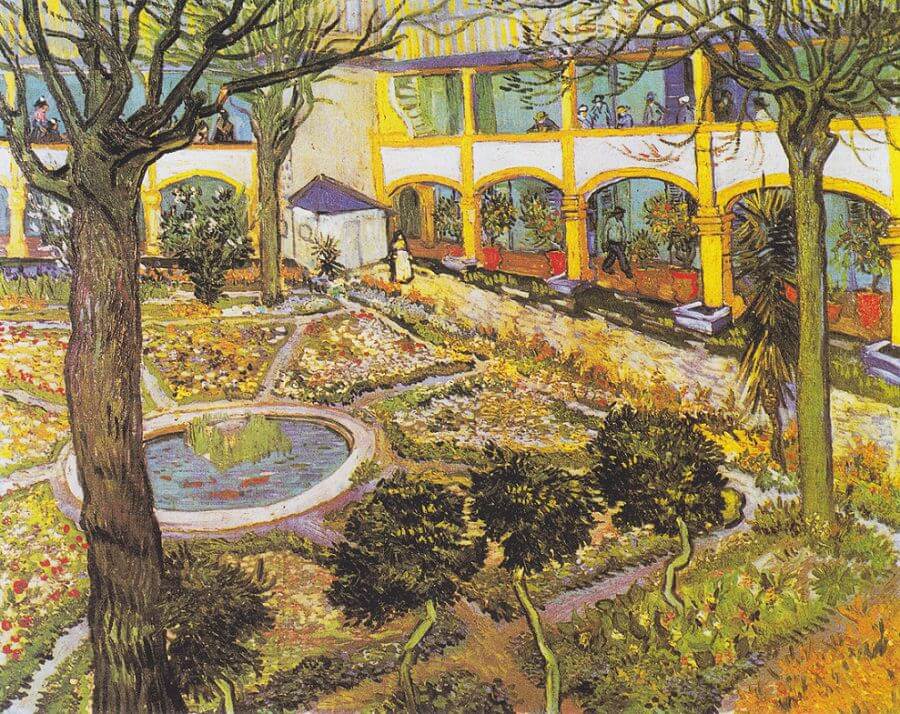
Recovery, Rehabilitation, Reablement by Van Gogh

Individual
|
      INTERPERSONAL    :     SCIENCES               
HUMANISTIC =========================  MECHANISTIC      
 SOCIOLOGY  :    POLITICAL 
|


My source: Van Gogh exhibitions (at least two); and Robin Lane Fox. Two years in Provence, House&Home, FTWeekend, 11/12 January 2025. p.10. 

Image source: https://www.vincentvangogh.org/the-asylum-garden-at-arles.jsp

Friday, September 12, 2025

Report: Hospital at Home for frailty ...

 .... Current situation and future potential

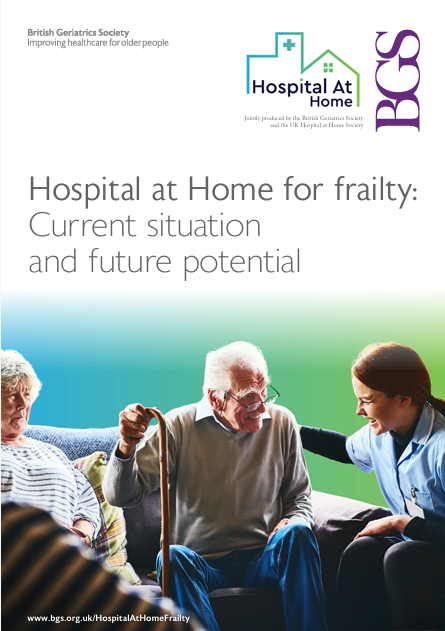
Report: Hospital at Home for frailty
The BGS has produced report on Hospital at Home services for older people. This explains how they are currently provided and how they might develop in the future as a key part of community-based healthcare. The report is endorsed by the UK Hospital at Home Society.

Hospital at Home is a safe and effective alternative to acute hospital bedded care for people who are sick enough to be in hospital.

Hospital-level care provided at home means people living with frailty are not exposed to some of the risks arising from long stays in hospital, such as infections and deconditioning.

There is mounting evidence for the effectiveness of Hospital at Home services, which are greatly valued by those who use them. With 35,000 people a year benefiting from this alternative to hospital in England, further development of Hospital at Home should be encouraged as a key part of the Government’s ‘left shift’ from hospital to community.

continued ...

My source:
https://x.com/GeriSoc/status/1965676874111037547

Thursday, July 10, 2025

ii 'Thinking outside the box ...' by Amber Javis

Second reply to a blog post by Amber Jarvis on The Mental Elf:

Thinking outside the box: alternatives to standard inpatient mental health care

Amber's post considers a study by:

Griffiths, J. L., Baldwin, H., Vasikaran, J., Jarvis, R., Pillutla, R., Saunders, K. R., … & Johnson, S. (2025). Alternative approaches to standard inpatient mental health care: development of a typology of service models. International Journal of Mental Health Systems, 19(1), 1-13: https://pubmed.ncbi.nlm.nih.gov/40247283/

Jarvis highlights concern within inpatient services of:
'use of coercive practices ... (Nyttingnes et al., 2018; Belayneh et al., 2024). These include physical restraint (physically holding a person), seclusion (holding a person in a locked room) and chemical restraint (the use of sedating medication to manage distress or behaviour, sometimes administered “as needed” rather than as part of any planned treatment). Poor relationships between staff and service users have also been noted, ...'
Reflecting since the previous post, I realise that I encountered efforts to prevent admission and treat in the community prior to going part-time. A short stay unit at a general hospital. Being a member of Intermediate Support for older adults; shifts ran 0800-2000 - early or late. Then working part-time, there were short-stay placements in the community that the recovery team would visit providing support.

Mental distress is distressing (a truism of course), both as lived experience (with or without self-awareness in-situ/crisis) and for others in the vicinity. Family, friends - who see a person they thought they knew, perhaps even thought they were a friend, a person who loved them; but now!? They present as distant, aggressive, subdued, agitated, unpredictable, inconsolable and possibly expressing thoughts of self-harm, threats to harm others, or totally bizarre, 'psychotic' ideas. This is not the person they thought they knew. For the person affected, familiars are strangers. A relational breakdown. We forget the severely mentally ill at our peril. A pervasive sense of helplessness is readily transferred: the reflex conclusion that help is needed - and fast.

To say we are creatures of habit, is to also acknowledge that change our environment results in a change in our behaviour. When relatives did arrive on the psychogeriatric ward I mentioned previously, they cried. Apologising for the environment, yes; efforts to reassure ensued and eventually family, friends were won over. They shouldn't have been. Unless we're in a game, play, or movie, who wants to find themselves in a Victorian era institution?

I've posted previously (or is it in draft?) on the importance of design in the design of care environments. It was a relative's visit to a care home, that resulted in a nursing home design business (Sunday Times). 
A person who is severely mentally ill needs service-centred care, not purely person-centred care. Person-centredness is key, but safety of self, and the public soon makes itself known. We also forget this at our peril. The problem is that control, and law literally take over. Plus, it's our place not yours. Loss of power the person struggling, ill, in crisis then follows. Amber continues:
'The concerns described above chime uncomfortably with modern mental health agendas of prioritising autonomy, compassion, trauma-informed and person-centred care. In light of these tensions, and the growing number of crisis alternatives – ranging from crisis cafes to intensive home treatment services – researchers  at the NIHR Policy Research Unit in Mental Health set out to map current alternatives to traditional inpatient care, both nationally and internationally. Griffiths and Baldwin’s findings raise important questions about how mental health services could evolve to better suit people’s needs, providing a valuable starting point for service planners considering developments in care.'
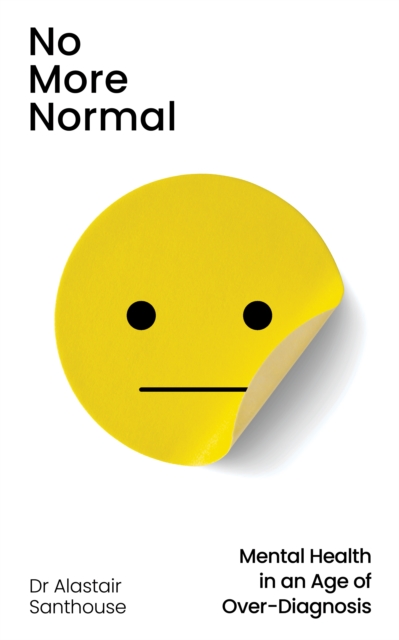
Hodges' model is ideal to help reflect and critique the relation-ship between 'a person' and 'the service'. I passed two gentlemen in London over the weekend. Clearly unkempt, standing but gesticulating, freely verbalising, incoherent on passing. Neither appeared intoxicated ( but I wasn't that close) or 'stoned'. That's the other question; passing-by what was I going to do? Does the 'community' care? On 'X' you encounter the extremes of debate. Anti-psychiatry, resort to and risks of dependence on medication - anti-depressants, anxiolytics; the damage from anti-psychotic drugs and atypical antipsychotics. The continuous debate about ECT. A dizzying stream of texts about mental health, over-diagnosis and wellbeing:


Medical prescribing has a partner. Social prescribing is well established, with organisations, events, publications and research emerging. People, have scoffed at the suggestion that gardening can help; or going for a run. Especially when you can't get out of bed. Chronic fatigue syndrome, long-COVID are seemingly monolithic in their resistance to change. A real challenge and so counter to the person's 'pre-morbid' personality and lifestyle.

For several years the state of mental health nursing as a specialty has been questioned. Is the mental health nursing curriculum being genericised? Enrollment of students nurses in learning disability has also dropped.

Medical prescribing has a partner. Social prescribing is well established, with organisations, events, publications and research emerging. People, have scoffed at the suggestion that gardening can help; or going for a run. Especially when they can't get out of bed. Chronic fatigue syndrome, long-COVID are seemingly monolithic in their resistance to change. A real challenge and so counter to the person's 'pre-morbid' personality and lifestyle. As a conceptual framework Hodges' model is ideal as a semantic net, to reflect and critique concepts that stretch and so disrupt (for a time) out norms. Concepts with a dual character. If social prescribing is one example, take crisis cafe mentioned by Jarvis above. If you think in physical - environmental terms where do you envisage a crisis occuring or playing out? What about a cafe? What is the ambience of these places?

I noticed a little visual game, an animation of characters running, jumping, climbing over an obstacle course. You focus on one figure and follow them for a time. This makes a difference, called distraction. In psychosocial intervention and managment of psychosis and anxiety audio - music, poetry, repetition has also bee used. The essence here must be when the intervention begins. Recognising relapse triggers, requires preparatory work. The Griffith reference is provided, but Jarvis begins to describe the results:
'Researchers identified 65 alternative service models to standard inpatient care. These were organised broadly organised according to the setting (e.g., community-based, hospital-based, or cross-setting) and the target population (e.g., adults versus children). Across these categories, ‘community-based alternatives’ were the most common category of alternative service models, followed by hospital-based and cross-setting approaches. We’ll explore each of these in more detail below.'
In post (i) and here I suppose I am advocating for mental health nursing as a distinct programme of study, practice and proven competence. For several years the state of mental health nursing as a specialty has been questioned. Is the mental health nursing curriculum being genericised? Enrollment of students nurses in learning disability has also dropped. 


There is a saying: 'You get what you pay for'. There is a sense that there are people who would like to ignore, deny, erase 'mental health'. After all, the truth really is that you can 'see' a broken leg. This isn't an issue if you can afford a private psychotherapist, or a psychoanalyst.

The elephant here (well, there always is one) is education and the literacies. For prevention: the ultimate change - this is where we must focus. But of course for the problem at hand - and mind it is too late.

(Post iii likely to follow.)

Individual
|
      INTERPERSONAL    :     SCIENCES               
HUMANISTIC  --------------------------------------  MECHANISTIC      
 SOCIOLOGY  :    POLITICAL 
|
Group
subjectivity         
mental state - crisis - mind
quality
objectivity
hand - physical state - crisis
quantity
Social prescribing
Cafe

Housing - crisis
Cost of living - crisis

See also: 'literacy' : 'prevention' : 'service' : 'severe' : 'change'


Wednesday, July 09, 2025

'Thinking outside the box: alternatives to standard inpatient mental health care' by Amber Jarvis

c/o The Mental Elf on 'X' I came across a blog post by Amber Jarvis:

Thinking outside the box: alternatives to standard inpatient mental health care

Amber's post considers a study by:

Griffiths, J. L., Baldwin, H., Vasikaran, J., Jarvis, R., Pillutla, R., Saunders, K. R., … & Johnson, S. (2025). Alternative approaches to standard inpatient mental health care: development of a typology of service models. International Journal of Mental Health Systems, 19(1), 1-13: https://pubmed.ncbi.nlm.nih.gov/40247283/

At an online meeting this evening, near the close the discussion loosened and alighted on AI. The ability of AI to summarise a large text file, a *.pdf and create discrete web HTML pages. The racial bias 'built-in' by human coders, reflected in outputs; that point to structural racism. 

Finding this paper on X, boxes are the bread and butter of Hodges' model. Not just thinking outside a box, or inside one, but several and with a final twist - to follow. Amber begins:

'Inpatient mental health care involves staying in a hospital or specialised facility to receive intensive, round-the-clock support for serious mental health needs (Staniszewska et al., 2019). Whereas acute inpatient services typically respond to immediate crises, longer-term wards support individuals with more complex needs and a higher level of ongoing risk.

Inpatient services are a core component of our mental health system — whether someone stays for a night, weeks, or even several years. However, inpatient care has recently come under growing scrutiny – and for good reason.'

A Community Mental Health Nurse since 1985, my in-patient experience is a tad misty, but not misty-eyed. As the wards: psychogeriatrics, long-stay, female acute admission were simultaneously challenging, rewarding - in the sense of being able to make a positive difference, changing what were institutionalised practices, no personal clothes, lockers, tea urn, no banking, few visitors (admission wards excepted). It was all very quotidian: check the bath book. Then tell, confirm, assure the patient, 'yes!'. It is your bath day. I've posted previously about critical mental health. You do (should?) quickly learn you are part of a system, a machine; and the distinction between person- patient-centred and service-centred care. The need to do my 'general' quickly emerged too. 

As ever, two words, across Amber's post and Griffith et al's title, stand out; 'map' and 'typology'. I must revisit and post about:

Macduff C. (2007). Typologies in nursing: a review of the literature. Nurse researcher, 14(2), 40–50. https://doi.org/10.7748/nr2007.01.14.2.40.c6020

Part-time work since 2020, in two adult CMHTs and a recovery team, has provided an update. The first as COVID emerged, was a bit of a shock in terms of diagnoses, caseness, the proximity to the law and forensic psychiatry, thresholds for referral, changes to mental health law (that were now more practical) and the management of patient's finances. 

So, to return to last night's brief online discussion, the observation of how racism is ongoing, brought up the fact of racism being structural and institutional (Dean & Thorpe, 2022). The change needed is an intergenerational break, which doesn't bear thinking about. The National HEALTH Service faces the same challenges in the shift to prevention, and addressing racism. Where is the workforce, going to come from, to help recovery, health and related literacies (media, emotional, financial)?

It is easy in boxes like Hodges' model (and others) to be idealistic. Ideally as I learned of Community Psychiatric Nurses being recruited, six of us, we all should have asked:

What is the plan?
What is the model of care?
What characterises 'care in the community'?
How do we prevent relapse, readmission?
Is there a 'halfway house'*?

We did, to an extent. There was great enthusiasm, motivation, idealism, co-ordination, collaboration  (Tyrer & Gelder, 1990) and leadership. 'We' had an association,^ and a journal. Back then the Royal College of Psychiatry produced a report on CPNs. Is there a message in this? Progress was and has been made, but the promise has not been delivered. With care in the community having regressed, an incomplete 'project'.

I will read more and revise this post, or more likely add another: with less 'history' ...

Individual
|
      INTERPERSONAL    :     SCIENCES               
HUMANISTIC  --------------------------------------  MECHANISTIC      
 SOCIOLOGY  :    POLITICAL 
|
Group
Model of Care

Model of care

Model of Care
Care in Community
Children - Schools - Education

Model of care
'Care Leavers'


*'Cross-settings' in Griffith et al.

^https://www.unitetheunion.org/what-we-do/unite-in-your-sector/health-sector/mental-health-nurses-association

Lorraine T Dean, Roland J Thorpe, What Structural Racism Is (or Is Not) and How to Measure It: Clarity for Public Health and Medical Researchers, American Journal of Epidemiology, Volume 191, Issue 9, September 2022, Pages 1521–1526, https://doi.org/10.1093/aje/kwac112

Tyrer P, Gelder M. The future of community psychiatric nursing: some research findings. Psychiatric Bulletin. 1990;14(9):550-551. doi:10.1192/pb.14.9.550

Thursday, April 10, 2025

'Best Interests' - Audio Drama by Sasha Hails


by Sasha Hails


Peter Polycarpou (Read by), Gerard McDermott (Read by), Jonathan Forbes (Read by), James Lailey (Read by), Alex Tregear (Read by), Susie Riddell (Read by), Elaine Caxton (Read by)


A BBC Radio 4 dramatisation


'Two new dramas which get inside the emotional realities of dealing with ethical dilemmas. When a confused young man with no I.D. and a Doctor Who fixation is brought into hospital, the staff have clear rules about how decisions can be made on his behalf. But when he starts to make his own wishes clear, are they right to listen?

Starring Gunnar Cauthery, Clare Perkins, Simon Bubb, and Carl Prekopp. With Peter Polycarpou, Gerard McDermott, Jonathan Forbes, James Lailey, Alex Tregear, Susie Riddell and Elaine Claxton. Script Consultant: Jim Blair, St George's Healthcare NHS Trust. Produced and directed by Jonquil Panting.'


My source: 

Jim Blair @jimgblair - https://x.com/jimgblair/status/1906993515038429252

Monday, December 02, 2024

'Un Caso Clinico' BUZZATI (I906-I972)

Reading The Theatre of the Absurd earlier this year was a very enjoyable and disconcerting experience. In acknowledgement: I have quoted from the book at length below. I do so to better convey the context, and in the hope other people may similarly obtain and enjoy this classic theatrical text.

Reading, I was reminded of starting my career as a nursing assistant and student nurse, and the 'lock-up' wards: male and female. Listening now to the current Reith Lectures I will post regards: 

Gwen Adshead - Four Questions about Violence

https://www.bbc.co.uk/sounds/play/m0025cmg

As a community mental health nurse in community mental health teams and nursing home liaison, residents on the ground floor (of two or three floors - with 'general') 'knew' there were very poorly people on the top floor. In summer, windows open, they could often be heard shouting and in the night. Inside, for staff, family members, friends became advocates expressing concern for a lack of access to fresh air and sunshine. Something, of course, we can all benefit from. For some residents there was an in-house understanding of NOT wanting to be moved 'upstairs'. At times I gather, if a resident 'played up' such re-location (displacement) was used as a threat: a cue for education.^

DINO BUZZATI (I906-I972)
'In Les Bátisseurs d'Empire the flight from death takes the form of trying to escape upwards. The same image appears in the opposite direction in a remarkable play by Dino Buzzati, the eminent Italian novelist and journalist on the staff of the Corriere della Sera in Milan. This play, first performed by the Piccolo Teatro, Milan, in 1953, and in Paris in an adaptation by Camus in 1955, is Un Caso Clinico. In two parts (thirteen scenes), it shows the death of a middle-aged businessman, Giovanni Corte. Busy, overworked, tyrannized but pampered as the family's breadwinner, whose health must be preserved, he is disturbed by hallucinations of a female voice calling him from the distance and by the spectre of a woman that seems to haunt his house. He is persuaded to consult a famous specialist, and goes to see him at his ultra-modern hospital. Before he knows what has happened, he is an inmate of the hospital, about to be operated on. Everybody reassures him - this hospital is organized in the most efficient modern manner; the people who are not really ill, or merely under observation, are on the top floor, the seventh. Those who are slightly less well are on the sixth; those who are ill, but not really badly, are on the fifth; and so on downwards in a descending order to the first floor, which is the antechamber of death.

In a terrifying sequence of scenes, Buzzati shows his hero's descent. At first he is moved to the sixth floor, merely to make room for someone who needs his private ward more than does. Further down, he still hopes that he is merely going down to be near some specialized medical facilities he needs, and before he has fully realized what has happened, he is so far down that there is no hope of escape. He is buried among the outcasts who have already been given up, the lowest class of human beings - the dying. Corte's mother comes to take him home, but it is too late.

Un Caso Clinico is a remarkable and highly original work, a modern miracle play in the tradition of Everyman. It dramatizes the death of a rich man - his delusion that somehow he is in a special class, exempt from the ravages of illness; his gradual loss of contact with reality; and, above all, the imperceptible manner of his descent and its sudden revelation to him. And in the hospital, with its rigid stratification, Buzzati has found a terrifying image of society itself - an impersonal organization that hustles the individual on his way to death, caring for him, providing services, but at the same time distant, rule-ridden, incomprehensible, and cruel.' 
Esslin, Martin. Parallels and Proselytes, The Theatre of the Absurd. London: Pelican, 1982. (3rd Ed.).pp.277-279.

The Bewitched Bourgeois
^Rest assured, there were and are excellent centers of care too.


Update: 11th January 2025: c/o John Self. Meet the forgotten maestro of the ultra-short story. Saturday Review, The Times, p.15.
'One of his most widely published stories, Seven Floors, is set in a hospital where they put the "mildest cases" on the seventh floor, and so on in increasing order of sickness down to the first floor, which is occupied by those who are "beyond hope"'.

Lawrence Venuti. (2025) The Bewitched Bourgeois, New York: NYRB Classics ISBN: 9781681378671.

Cover image: NYRB.

Saturday, March 30, 2024

"Jason and the adventure of 254" c/o Wellcome Collection

"A work by artist Jason Wilsher-Mills is displayed at the Wellcome Collection ahead of the opening of a solo exhibition at the London museum. "Jason and the adventure of 254" reimagines the gallery space as a hospital ward and features huge sculptures, illustrations and interactive dioramas that draw on the artist's experience of becoming disabled at the age of 11.

The exhibition's title alludes to 2.54pm at Pinderfields Hospital, Wakefield, on August 1 1980, when Wilsher-Mills watched from his hospital bed as his parents were told he was suffering from an autoimmune condition brought on by a bout of chicken pox.

The free exhibition opens tomorrow (21st March) and runs until January." p.2.

INDIVIDUAL
|
      INTERPERSONAL    :     SCIENCES               
HUMANISTIC  --------------------------------------  MECHANISTIC      
 SOCIOLOGY  :    POLITICAL 
|
GROUP


'Figure in the bed', 2024, part of Jason and the Adventure of 254, an exhibition by Jason Wilsher-Mills at Wellcome Collection. Gallery Photo: Benjamin Gilbert. Attribution-NonCommercial 4.0 International (CC BY-NC 4.0).


Body of work, Artist relives diagnosis, Financial Times, 20 March 2024, p.2. 

Previously - 'beds'

Sunday, August 06, 2023

"Shift" c/o Jacqui Symons

"Title: Shift
Artist: Jacqui Symons
Medium: Triptych of Artists’ Books
Year: 2020

Presented as a triptych of artist-books, ‘Shift’ explores three nurses’ individual shifts showcasing the sheer length of each working day through to the complexity and constantly shifting demand on their time, energy, experience, knowledge and empathy. In 2019, Jacqui Symons was artist-in-residence at Central Manchester NHS Foundation Trust. As part of her residency, she shadowed three nurses; the ward sister, a junior sister and a staff nurse, during their 12 and a half hour shifts on an older people’s ward within the hospital. These concertina books chart every minute of these three shifts."


INDIVIDUAL
|
 INTERPERSONAL    :     SCIENCES               
HUMANISTIC --------------------------------------  MECHANISTIC      
SOCIOLOGY  :   POLITICAL 
|
GROUP


Shift: 762 Minutes (detail)
Shift: 727 Minutes (detail)
   
 
"When opened, each book is almost 200 metres long - they aim to show the sheer amount of hard work and dedication of each nurse and what they achieved during every moment of their busy shifts.  I found three shifts physically, mentally and emotionally exhausting and I was only observing the nurses' work. The book on the right shows the Ward Sister's - the yellow pages charted breaks for eating, drinking and toilet breaks - less than 30 minutes over the duration of 12 and half hours." p.23.

Shift

My source:

"Shift (727 minutes, 762 minutes and 754 minutes)", Artists' Books. PrintMaking Today, Summer 2023, 32:126. p.23.

https://www.cellopress.co.uk/page/printmaking-today

Image and text: c/o and with thanks - Jacqui Symons

https://jacquisymons.co.uk/