Hodges' Model: Welcome to the QUAD: building

Hodges' model is a conceptual framework to support reflection and critical thinking. Situated, the model can help integrate all disciplines (academic and professional). Amid news items, are posts that illustrate the scope and application of the model. A bibliography and A4 template are provided in the sidebar. Welcome to the QUAD ...

Showing posts with label building. Show all posts

Thursday, July 10, 2025

ii 'Thinking outside the box ...' by Amber Javis

Second reply to a blog post by Amber Jarvis on The Mental Elf:

Thinking outside the box: alternatives to standard inpatient mental health care

Amber's post considers a study by:

Griffiths, J. L., Baldwin, H., Vasikaran, J., Jarvis, R., Pillutla, R., Saunders, K. R., … & Johnson, S. (2025). Alternative approaches to standard inpatient mental health care: development of a typology of service models. International Journal of Mental Health Systems, 19(1), 1-13: https://pubmed.ncbi.nlm.nih.gov/40247283/
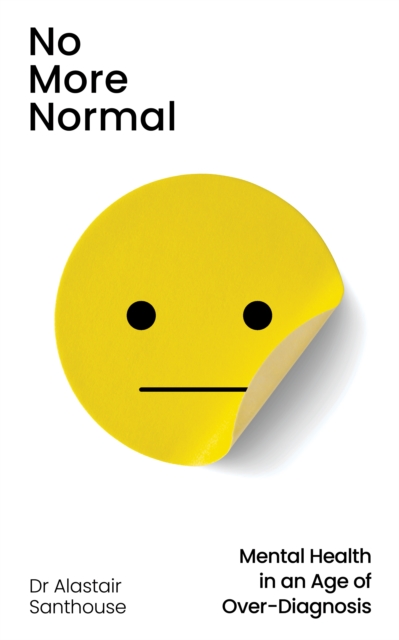
Jarvis highlights concern within inpatient services of:
'use of coercive practices ... (Nyttingnes et al., 2018; Belayneh et al., 2024). These include physical restraint (physically holding a person), seclusion (holding a person in a locked room) and chemical restraint (the use of sedating medication to manage distress or behaviour, sometimes administered “as needed” rather than as part of any planned treatment). Poor relationships between staff and service users have also been noted, ...'
Reflecting since the previous post, I realise that I encountered efforts to prevent admission and treat in the community prior to going part-time. A short stay unit at a general hospital. Being a member of Intermediate Support for older adults; shifts ran 0800-2000 - early or late. Then working part-time, there were short-stay placements in the community that the recovery team would visit providing support.

Mental distress is distressing (a truism of course), both as lived experience (with or without self-awareness in-situ/crisis) and for others in the vicinity. Family, friends - who see a person they thought they knew, perhaps even thought they were a friend, a person who loved them; but now!? They present as distant, aggressive, subdued, agitated, unpredictable, inconsolable and possibly expressing thoughts of self-harm, threats to harm others, or totally bizarre, 'psychotic' ideas. This is not the person they thought they knew. For the person affected, familiars are strangers. A relational breakdown. We forget the severely mentally ill at our peril. A pervasive sense of helplessness is readily transferred: the reflex conclusion that help is needed - and fast.

To say we are creatures of habit, is to also acknowledge that change our environment results in a change in our behaviour. When relatives did arrive on the psychogeriatric ward I mentioned previously, they cried. Apologising for the environment, yes; efforts to reassure ensued and eventually family, friends were won over. They shouldn't have been. Unless we're in a game, play, or movie, who wants to find themselves in a Victorian era institution?

I've posted previously (or is it in draft?) on the importance of design in the design of care environments. It was a relative's visit to a care home, that resulted in a nursing home design business (Sunday Times). 
A person who is severely mentally ill needs service-centred care, not purely person-centred care. Person-centredness is key, but safety of self, and the public soon makes itself known. We also forget this at our peril. The problem is that control, and law literally take over. Plus, it's our place not yours. Loss of power the person struggling, ill, in crisis then follows. Amber continues:
'The concerns described above chime uncomfortably with modern mental health agendas of prioritising autonomy, compassion, trauma-informed and person-centred care. In light of these tensions, and the growing number of crisis alternatives – ranging from crisis cafes to intensive home treatment services – researchers  at the NIHR Policy Research Unit in Mental Health set out to map current alternatives to traditional inpatient care, both nationally and internationally. Griffiths and Baldwin’s findings raise important questions about how mental health services could evolve to better suit people’s needs, providing a valuable starting point for service planners considering developments in care.'
Hodges' model is ideal to help reflect and critique the relation-ship between 'a person' and 'the service'. I passed two gentlemen in London over the weekend. Clearly unkempt, standing but gesticulating, freely verbalising, incoherent on passing. Neither appeared intoxicated ( but I wasn't that close) or 'stoned'. That's the other question; passing-by what was I going to do? Does the 'community' care? On 'X' you encounter the extremes of debate. Anti-psychiatry, resort to and risks of dependence on medication - anti-depressants, anxiolytics; the damage from anti-psychotic drugs and atypical antipsychotics. The continuous debate about ECT. A dizzying stream of texts about mental health, over-diagnosis and wellbeing:
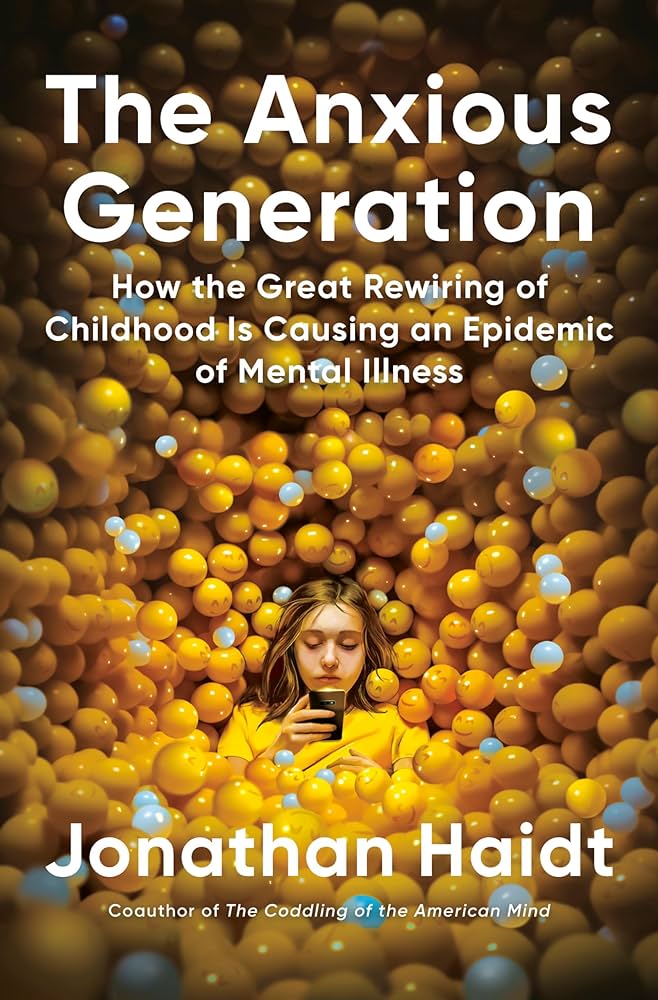


Medical prescribing has a partner. Social prescribing is well established, with organisations, events, publications and research emerging. People, have scoffed at the suggestion that gardening can help; or going for a run. Especially when you can't get out of bed. Chronic fatigue syndrome, long-COVID are seemingly monolithic in their resistance to change. A real challenge and so counter to the person's 'pre-morbid' personality and lifestyle.

For several years the state of mental health nursing as a specialty has been questioned. Is the mental health nursing curriculum being genericised? Enrollment of students nurses in learning disability has also dropped.
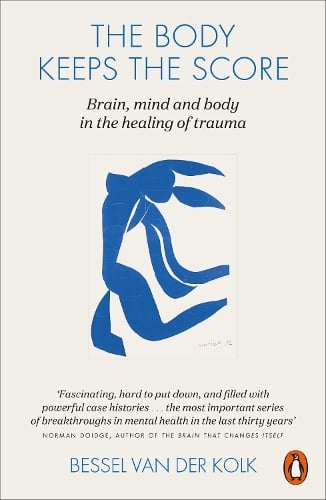
Medical prescribing has a partner. Social prescribing is well established, with organisations, events, publications and research emerging. People, have scoffed at the suggestion that gardening can help; or going for a run. Especially when they can't get out of bed. Chronic fatigue syndrome, long-COVID are seemingly monolithic in their resistance to change. A real challenge and so counter to the person's 'pre-morbid' personality and lifestyle. As a conceptual framework Hodges' model is ideal as a semantic net, to reflect and critique concepts that stretch and so disrupt (for a time) out norms. Concepts with a dual character. If social prescribing is one example, take crisis cafe mentioned by Jarvis above. If you think in physical - environmental terms where do you envisage a crisis occuring or playing out? What about a cafe? What is the ambience of these places?

I noticed a little visual game, an animation of characters running, jumping, climbing over an obstacle course. You focus on one figure and follow them for a time. This makes a difference, called distraction. In psychosocial intervention and managment of psychosis and anxiety audio - music, poetry, repetition has also bee used. The essence here must be when the intervention begins. Recognising relapse triggers, requires preparatory work. The Griffith reference is provided, but Jarvis begins to describe the results:
'Researchers identified 65 alternative service models to standard inpatient care. These were organised broadly organised according to the setting (e.g., community-based, hospital-based, or cross-setting) and the target population (e.g., adults versus children). Across these categories, ‘community-based alternatives’ were the most common category of alternative service models, followed by hospital-based and cross-setting approaches. We’ll explore each of these in more detail below.'
In post (i) and here I suppose I am advocating for mental health nursing as a distinct programme of study, practice and proven competence. For several years the state of mental health nursing as a specialty has been questioned. Is the mental health nursing curriculum being genericised? Enrollment of students nurses in learning disability has also dropped. 


There is a saying: 'You get what you pay for'. There is a sense that there are people who would like to ignore, deny, erase 'mental health'. After all, the truth really is that you can 'see' a broken leg. This isn't an issue if you can afford a private psychotherapist, or a psychoanalyst.

The elephant here (well, there always is one) is education and the literacies. For prevention: the ultimate change - this is where we must focus. But of course for the problem at hand - and mind it is too late.

(Post iii likely to follow.)

Individual
|
      INTERPERSONAL    :     SCIENCES               
HUMANISTIC  --------------------------------------  MECHANISTIC      
 SOCIOLOGY  :    POLITICAL 
|
Group
subjectivity         
mental state - crisis - mind
quality
objectivity
hand - physical state - crisis
quantity
Social prescribing
Cafe

Housing - crisis
Cost of living - crisis

See also: 'literacy' : 'prevention' : 'service' : 'severe' : 'change'

Tuesday, April 01, 2025

c/o A.Word.A.Day: Hodges' model - Walk the (dual!) chalk line

A.Word.A.Day

with Anu Garg

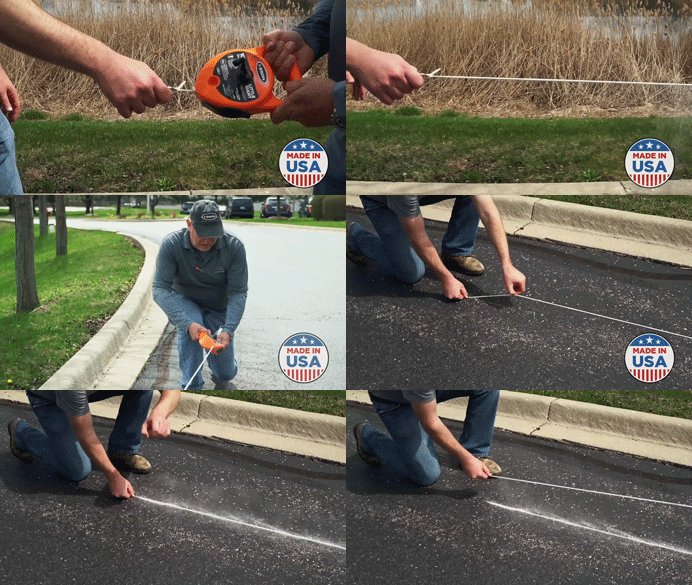
'Having a tool is like having a superpower in your pocket. With the right gadget, you can do much more than what arms and legs alone allow -- build a magnificent pyramid, lift water from deep below, or even predict whether you’ll need an umbrella tomorrow.


And not all tools need wires, batteries, or instruction manuals. Sometimes, a simple device can save labor -- a lever, a pulley, a piece of string dusted with chalk -- can save hours of sweat and toil.'

chalk line


Tuesday, December 03, 2024

'Our Housing Disaster'

Our Housing Disaster

I must finish the spring and summer's reading as pictured, with another two books in the wings. While the smallest text Our Housing Disaster is cheap to buy, an important read and insightful.

Politically, in the UK and many other nations, housing and its opposite -  homelessness, and the supply and cost of housing are ongoing issues.

Julian Richer's book is low cost £4.99 post free with a promo-code; even as I obtained a free copy, learning of the book in Business section of The Sunday Times. 


Our Housing Disaster gets off to a flying start:

'Falling or stagnant house prices are seen as national 'ill' that we must recover from but, in fact, fast-rising house prices and interest rates have proved to be the real ill, destroying the dream of a property-owning democracy that was supposed to benefit all.

Britain's housing policy, such as it is, has failed on its own terms.' p.9.

I remember when Grand Designs appeared on our TVs. Especially the episode with the wood-frame eco-house by Ben Law. This seemed sustainable and time-limited too. Julian Richer really nails the housing problem without delay. Unfortunately, the audience appeal of TV programmes like Grand Designs, Location, ... seem to me symptomatic of the issue Richer raises above. I used to think that the 'middle class' were shooting themselves in the foot; as house prices rose and rose. There was a collapse at one point with the trap of negative equity that my family almost got caught in (had we bought a new home). Richer corrects this view, with a national perspective across ten chapters and 180 pages.

 If the link between health and housing needs to amplified Richer ably achieves this, and quickly:

'Poor housing is harming the nation's health. The housing ombudsman, Richard Blakeway, whose office deals with complaints from social housing tenants about disrepair and mould and damp in their homes, problems recognised now to be a threat to health, has found the situation to be so bad that he has called for a Royal Commission to look at the links between housing, health, and welfare. Too often, the various agencies in housing, health and social care tend not to link up, or even know what the others are doing. which can end up making people's housing situation worse. Someone who has been homeless or who has mental health needs, for example, can require a lot of support once they are housed so that they can pay the rent and maintain the tenancy. If they just get housed and then left to cope on their own, they can struggle, lose the tenancy, become homeless and whole cycle starts again, with all that waste of money and damage to lives.' p.16.
'In addition to the 8m, there must be millions more who are not in crisis, but who have a blight on their future: typically, young, working people, perhaps with children, who are living in private rented accommodation, with a roof over their heads but always worrying they might be evicted. The insecurity and uncertainty that they experience is not good for them or their children. Just as job insecurity makes it hard for people to build a career, housing insecurity makes it hard for people to establish a life.' p.19.
The statistics flow thick and fast but as readable as they are focussed they weave an effective narrative referring to the history of just how we got to this point. The text make stark the dire crisis and need for action and an urgent government response. 

More to follow.

Thursday, July 28, 2022

Seeds in 'architecture' iii

Prof. Younés describes 'three essential dualities': 

  • IMAGE and WORD 
  • TYPE and MODEL
  • IMITATION and INVENTION

IMAGE and WORD 

Nursing has its historical images, that are continually presented, the lamp, hands imbued with care and support and others. The attraction to Hodges' model was through its similarity to mind-mapping, but with offering an foundational structure for reflection and critique (learning). So image has been there from the start.

Younés writes: "Within the dialectic of the visible (objects apprehended by the senses) and the invisible (ideas or forms apprehended by the mind), the image acts as a symbol when it supports the visibility of an idea." ... "Forms can be seen as structural potentials ..." p.238.

Younés classifies images (p.241), or the artistically factual through three divisions:

  1. visual images (that would include icons and interface features)
  2. mental images
  3. verbal images (including metaphors and descriptions).

 "... the mind constructs a world within a world, and then reflects upon its own activity, as well as its own aesthetic appreciation of such activity."
I must stress the Younés context is architecture (and philosophy), but here extending to meaning I'm reminded of the way Hodges' model can span the arts and sciences, and original influences on why this model stood out for me through its facility for mind-mapping.

TYPE and MODEL 

 Here (p.242) Younés returns, not just to the origin, but the concept of origin through Form, the word and the type. Searching for universally shared purposes, within the permanences of human experience  this is health and social care too.

Taking in data, information, knowledge from assessment and other activities, this is usually contextualised - associated with a care domain. A return to the origin (nexus) of Hodges' model, the center is vital to retain balance and provide assurance in what we are doing, or not, and why.

"The architect imitates things as they have essential significance, but he or she does not copy any particular thing. This enables the layered transformation of natural models, without which the column would have always remained a tree. The form of the imitation is always different from that of the model. The roof is different from the forest's canopy. It is here that the pleasure of invention and the evaluation of the new enter, for it is within the recognized distance between the forest's canopy and the roof, that much of art occurs." p.244.
How times change in two decades. So many seek a roof, with architects having a recognized role in providing solutions post-natural disaster and political displacement of people. Not just homelessness, but homes that can cope, adjust to climate change. COVID has reminded us of the rejuvenating properties of nature, of the forest canopy, even that afforded by city centre gardens. 

We now see a roof not merely in physical terms, but social. As the night skies brighten we try to secure the canopy of the stars.

IMITATION and INVENTION 

Have we forgotten the contribution of positive role-models in learning? Imitation is the sincerest form of flattery and this throws up the constant educational dilemma of the theory - practice gap. Should we be exposed to practice without the guiding mentor represented in theory - that is also evidence-based?

There is an interesting exploration of SCOPE, DISCOURSE and NATURE: On Scope

"Thus a theory that is systemic aims at a certain level of completeness for it establishes the internal organization of architecture as a discipline, and it explains its external relations to other arts, to techniques, to social factors. Put differently, the interior individual realm concerns the intellectual freedom, the inner reflection of the architect-maker. The exterior individual pertains to the thoughts resulting from one architect reflecting upon another architect's work, as well as the individual architect's reflections on the suitability of her or his building to a context. The interior collective bears upon the conscious or unconscious content of culture which thrive within the images of of operative myths that inform architectural production. The exterior collective designates that commonly built sense regarding the suitability of architecture (decorum) within its milieu par excellence: the city. The above concerns the scope of an architectural theoretical system, on the urban, architectural, aesthetic, social, and practical levels." p.245-246.

INDIVIDUAL
|
 INTERPERSONAL    :     SCIENCES               
HUMANISTIC --------------------------------------  MECHANISTIC      
SOCIOLOGY  :   POLITICAL 
|
GROUP
interior individualexterior individual
interior collective
exterior collective


I started these three posts noting the addition of 'architecture' to titles, concepts, and 'stretching' disciplines. Also guilty here; in mitigation, I'm aware of how in the mid-late 1970s technical drawing as taught was to change radically in the digital wave.

Hodges' model provides a drawing board, with analogue and digital potential.

I will continue to draw upon the (inspirational) discipline of architecture, it informs and sustains thought, construction, meanings, language use, and effort here.

There is much more to glean from this paper, so I hope to revisit it in the future - with further annotations on my copy.

Over the years I have noted related items in the press (yes, I saved the following):

Designs for life: architecture in the disaster zone, FT Weekend.

and read - A Bed for the Night: Humanitarianism in Crisis

See also: 

Seeds in 'architecture' i 

Seeds in 'architecture' ii

Younés, Samir. “Constructing Architectural Theory.” Philosophy 78, no. 304 (2003): 233–53. http://www.jstor.org/stable/3752046.


Friday, June 24, 2022

ii Seeds in 'architecture'

There is something seductive in architecture, the imagination of ideas on paper, the promise of the cornerstone, the reality of the construction, the space it grasps and the space it bestows.

Arriving at Younés paper, the history and reference to Valéry's Eupalinos ou l'architecte, Socrates and Phaedrus had me captured. 

Healthcare is dialogue. Spoken and unspoken. Discourse. Dialectic. Perspective: One : Shared : (the) Many.

What is said, gestured, and unsaid. Valéry's dialogue sounds worthy of follow-up, appreciating Plato and this form of theatre and learning. There is a latent architect in us all. Patiency too - but not yet - let us build first. Every day and night we construct (hopefully). When necessary we know when to disassemble, de-construct, to initiate change.

Reading Younés I can readily relate the paper to nursing, Hodges' model, and healthcare generally. The paper's three main questions concern (of course) architectural theory:

  1. the causal relation between building and theory;
  2. the necessary mental conditions that precede theory;
  3. a definition of theory in its scope, discourse, and nature.

There are many points of note (reading my yellow highlighter) here. 

'Reflection precedes realization, but theory does not necessarily precede practice'. p.234.

'Theory however, is a systemic elaboration that operates based on definitions and concepts, in the sense that definitions build concepts, and concepts in turn build a theory, but not the reverse of the sequence.'

'Theory, then, comes 'late', only because it is the synthesis of a content that was already present'. It is constructed after a prolonged reflection over many experiences, based on common, comparative, or contrasting sets of criteria.

Younés focus is specific the development of theory in architecture, but as he writes: 'there is some element of reflection which can be termed the building's efficient cause' p.234. I wonder about Nursing Theory and the nurse's theory based on the person - in-person: reflection of care, assessed, planned, delivered, evaluated and recorded. There are nurses still preoccupied with Q.1, even if the (primary) focus is within academia(?).

Q.2 seems an invitation for philosophy (as per the journal's title!). Being non-judgemental, if not starting to build nursing Theory, then especially for the nurse co-constructing, co-designing a theory of care with the patient/family. Hodges' model is not just a series of set squares, facilitating design; it is an empty set. Never completely empty, due to the structure. A structure that contradicts. A structure paradoxical as it constrains and releases, records and forgets.

Q.3? Did someone call - continuity? Yes, (and how!) we can carry on from Q.2. Scope - yes. See the space? Listen to all the dimensions. Reduced to those that count, in discourse and nature, by nature.

Person-centred? New patient. RESET. Re-build - but remember humanistically.

See also:

Seeds in 'architecture' i

Seeds in 'architecture' iii

Younés, Samir. “Constructing Architectural Theory.” Philosophy 78, no. 304 (2003): 233–53. http://www.jstor.org/stable/3752046.


Saturday, June 18, 2022

Seeds in 'architecture' i

For many years I've held a copy of:

Younés, Samir. “Constructing Architectural Theory.” Philosophy 78, no. 304 (2003): 233–53. http://www.jstor.org/stable/3752046.

Previously, missing a few (photocopied) pages, the paper is now complete as I continue to sort and clear 'stuff'.

There is something dynamic, literally world-defining* in architecture, a view that has influenced my thoughts about Hodges' model, and it appears other disciplines.

The source lost, I recall reading somewhere about a trend of  'architecture' being added to titles and disciplines. It may have been in an information technology, programming source, but I'm not sure. The point made, was that when this is the case the result is NOT architecture. If you have a source for such ideas I would love to hear from you.

This statement probably stood out, because I'm guilty too:

'architect-ure' - care architecture, care design ...

Buildings are fascinating, sometimes as important as the art inside, getting from side A to B and so on. If properly curated though the building shouldn't overwhelm the work inside? While I love the arts, drawing and painting, Leonardo's technical work is awesome, as witnessed in Oxford and London, I was never keen on 'technical drawing' at school. It's not in my nature to blame the teacher, but - for once - I was a runner not a footballer. In hindsight, the time was almost up on technical drawing as we were taught in the 1970s and Leonardo, well he is in another class.

In health and social care, we plan and plan again; and resort to design (case formulation) too.

So, models and frameworks - anyone..?

The axes of the model are like a mast.

The care (knowledge) domains - with their nebulous edges - are like sails.

The concepts (data, information, disinformation, uncertainty, null! ...)
caught in the domains are the wind that drives, disrupts, or in its absence bestills us.

The direction of travel the context, the situation - always adjusting.

And often subject to change, misdirection and correction.

ii Seeds in 'architecture'.

*A potential for good or ill.
