Hodges' Model: Welcome to the QUAD: local authority

Hodges' model is a conceptual framework to support reflection and critical thinking. Situated, the model can help integrate all disciplines (academic and professional). Amid news items, are posts that illustrate the scope and application of the model. A bibliography and A4 template are provided in the sidebar. Welcome to the QUAD ...

Showing posts with label local authority. Show all posts

Thursday, December 05, 2024

iii 'Our Housing Disaster'
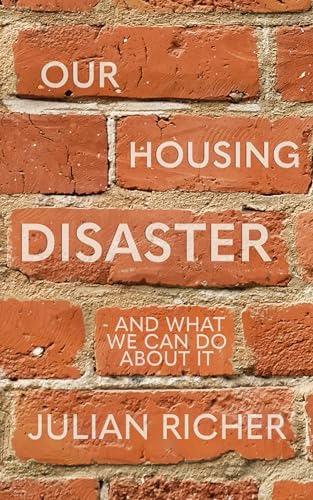
'Our Housing Disaster'
Image: Goodreads

Here on W2tQ many posts have referred to 'common sense' over the years. Apparently, there is no such thing - which may be another blog post).

https://www.psychologytoday.com/gb/blog/too-many-goals/202005/theres-no-such-thing-common-sense

In 'Our Housing Disaster' Julian Richer is simultaneously analytic in identifying problems and potential solutions, logical and to me commonsensical. There is a need for debate and decisions at a political level. Residents, must also be involved, have a say. Chapter 10 lists shorter-term actions and longer-term. 

The history of this disaster is tackled in chapter 3. Chapter 4 links very well explaining the rise of renting. If there was ever to be another edition - which the book and issue well-deserve; it would be good to a nod to evidence-based housing policy? This is suggested, as is integrating the many threads of housing; work, transport, infrastructure, shops, water and services. I've posted here about the number of All-Party Parliamentary Groups and talk of joined-up government. Housing is anything but joined-up. You could argue all MPs and Lords should read this book. 

Overall, the book is well produced, the text very readable, large size and well laid out. The 'references' for each chapter are in the form of links. Needless to say, I have only tried a few. The book seems smaller - narrower than a standard paperback, so may have fewer words / line. For posts i & ii, I extracted text from photos, which is a challenge without stressing the book's spine (as I've written before no doubt, I'm squeamish when it comes to books).

In the UK, the Right to Buy and Help to Buy, have long been a feature of housing policy. Of Help To Buy, it has 'cost taxpayers £29 billion in cash terms by 2023' (p.45) and has additional consequences. Milton Keynes is the 'right-to-buy-to-let' capital of England (2017, p.48). Surely, it is time to move on -  and quickly. The history of how we got here is fascinating, like a slow car-crash with critical events that accelerated the inevitable. Taxpayers and citizens all: we have missed out. There is mention of preventing corruption (but yes, more effort on money-laundering and tax evasion please!). The need for buildings inspection, standards of construction and materials and responding to the climate crisis and high energy costs are also stressed.

Richer's stance is tempered, and sets an effective tone. He is not preaching, even as he points to land owned by the Church of England. I remember the NHS selling estate, and yet there is more. While the book is not long, an index would help. I like the final summarising and concluding sentences for each chapter. Physically, they are bound to be there obviously, but there's a welcome sensible thread to these imho. With an index, perhaps I could check back to look up 'productivity, reduced', a problem that has plagued the UK economy. To what extent does housing contribute to this now; since the 1960s? The King's Fund and many other organisations and commentators advocate daily for social care. While it is acknowledged, social care is not one of the government's 5 key 'missions', and now (5th Dec.) there are milestones. Richer refers to the problem of bed-blocking in the NHS, and the need for suitable future housing so older adults can continue to 'live' in their homes.

So often in health we are taught, and learn to assess, plan, intervene, and evaluate a person-centred set of needs, a patient's needs, and a carer's needs. It is welcome to see a collective - population-based focus on needs. The book delivers on the title. So there are no details of nations (or cities) that have a  much better housing system and controls. Over the years it's been interesting and encouraging to read about Vienna in the FT. Below I have mapped/associated selected concepts to the care / knowledge domains of Hodges' model:

INDIVIDUAL
|
INTERPERSONAL : SCIENCES              
humanistic ------------------------------- mechanistic
SOCIOLOGY : POLITICAL   
|
GROUP
psychological security
mental health
'my' home, my space
identity
peace of mind when costs met
facilitate well-being
memories
LAND - the 'hope' value
sense of continuity / permanence
children being safe making friends
access to 'GREEN' spaces
my life course - personal history
Cognitive assurance: my area -
family & friends / pets /school / work -
attachment

LAND - UK geography
physical shelter
physical health (NO damp, mould, noise...)
House building targets/programmes
my space/room
having an address - identity
displacement
public/environment health
eviction
house building - infrastructure
land - costs
transport links
bed-blocking in hospitals
Climate Change

place to make a home
raise a family
belonging
sense of community
friends & neighbours
 anti-social behaviour by tenants
social care - older adults
social care disabled
access to work, schools
resources to service a community
lack of spare capacity to support people & families in need/crisis

the economy: interest/mortgage rates
indebtedness - poverty
housing POLICY :: COSTS
national housing & land assets
inspection and building standards
forms of tenure: private, rented, housing assoc.
LAW - housing & land legislation
housing rights
migration, refugees
independent advocacy / NGOs
compulsory purchase


Thank you Mr Richer for an excellent read and synopsis. I do hope the government listens! My daughter's partner works in estate agency, so I know where my copy is heading: a new home!


Wednesday, December 04, 2024

'Our Housing Disaster' ii

'Our Housing Disaster'
Image: Goodreads

Late to reading about economics, apart from the 'quality press' and an 'O' level in social history (which has actually been really useful in my nursing career), this book can ground and crystallize 'housing' as heard and viewed in the news.

I've a love for hi-fi that I share with Julian Richer, but my wealth lies elsewhere and is decidedly non-monetary. Reading his column in The Sunday Times, I'm impressed with Mr Richer's insight and the extent of his philanthropy. The book notes several initiatives and collaborations, e.g. TaxWatch -https://www.taxwatchuk.org/

On the news you hear of 'intervention' in the market - usually equity or bonds. You - the government - can intervene, or let the market, a market by implication, look after itself. Markets find their own equilibrium, shift to stability ultimately; and this despite economic crises, billion-busting scandals and political parties totally screwing-up.

So, it appears governments have allowed the housing market, to make its own moves.

It's back to the future, the 18th century of laissez-faire: the market has spoken, and its a utter mess.

The book's contents are well structured and delivered in full.
Introduction
1 Disaster? What Housing Disaster?
2 A Housing Crisis That Harms
3 Where Did Housing Go Wrong?
4 The Rise of Renting
5 The Shrinking of Social Housing
6 Underregulated and Oversubscribed
7 Land and Planning: The Price of Permission
8 Making Better Use of Buildings and Land
9 Building a Solution
10 Time for Action - My Housing Manifesto
Conclusion

OHD covers the population as a whole, but 'health' is very well represented in terms of personnel and the impacts of lack of housing and poor quality, unregulated housing: 

'Inability to afford housing is one of the grievances feeding into strikes by public sector workers - even better-paid ones. A survey by the British Medical Association (BMA) in December 2022 found that nearly half (45.3%) of junior doctors had struggled to afford their rent or mortgage in the past year. To earn more, some were taking on extra shifts and the BMA said this added to its concerns around junior doctor exhaustion and burnout. 

The consequences reach out to the public at large, as housing problems hit staff recruitment in health services, education and so on. The NHS visibly cant cope: basic structures are crumbling.' p.25.
We can imagine the anxiety and depression this might provoke. Even for people you might think (assume) would be ordinarily resilient. These are clearly extraordinary times. An email - RCN Magazine - today supports the same conclusion:


The relationship between health and housing is not limited to chapter 2. In chapter 2 though damp and mould (yes a specific case), unsanitary conditions the loss of environment health officers and skilled personnel, reminded me of decades ago an article in HSJ, or in that 'quality press' about the community health councils - CHCs having their teeth extracted. Public (MENTAL) health has taken a stunning fall and desperately needs to be put back together.

More to follow...

Tuesday, December 03, 2024

'Our Housing Disaster'

Our Housing Disaster

I must finish the spring and summer's reading as pictured, with another two books in the wings. While the smallest text Our Housing Disaster is cheap to buy, an important read and insightful.

Politically, in the UK and many other nations, housing and its opposite -  homelessness, and the supply and cost of housing are ongoing issues.

Julian Richer's book is low cost £4.99 post free with a promo-code; even as I obtained a free copy, learning of the book in Business section of The Sunday Times. 


Our Housing Disaster gets off to a flying start:

'Falling or stagnant house prices are seen as national 'ill' that we must recover from but, in fact, fast-rising house prices and interest rates have proved to be the real ill, destroying the dream of a property-owning democracy that was supposed to benefit all.

Britain's housing policy, such as it is, has failed on its own terms.' p.9.

I remember when Grand Designs appeared on our TVs. Especially the episode with the wood-frame eco-house by Ben Law. This seemed sustainable and time-limited too. Julian Richer really nails the housing problem without delay. Unfortunately, the audience appeal of TV programmes like Grand Designs, Location, ... seem to me symptomatic of the issue Richer raises above. I used to think that the 'middle class' were shooting themselves in the foot; as house prices rose and rose. There was a collapse at one point with the trap of negative equity that my family almost got caught in (had we bought a new home). Richer corrects this view, with a national perspective across ten chapters and 180 pages.

 If the link between health and housing needs to amplified Richer ably achieves this, and quickly:

'Poor housing is harming the nation's health. The housing ombudsman, Richard Blakeway, whose office deals with complaints from social housing tenants about disrepair and mould and damp in their homes, problems recognised now to be a threat to health, has found the situation to be so bad that he has called for a Royal Commission to look at the links between housing, health, and welfare. Too often, the various agencies in housing, health and social care tend not to link up, or even know what the others are doing. which can end up making people's housing situation worse. Someone who has been homeless or who has mental health needs, for example, can require a lot of support once they are housed so that they can pay the rent and maintain the tenancy. If they just get housed and then left to cope on their own, they can struggle, lose the tenancy, become homeless and whole cycle starts again, with all that waste of money and damage to lives.' p.16.
'In addition to the 8m, there must be millions more who are not in crisis, but who have a blight on their future: typically, young, working people, perhaps with children, who are living in private rented accommodation, with a roof over their heads but always worrying they might be evicted. The insecurity and uncertainty that they experience is not good for them or their children. Just as job insecurity makes it hard for people to build a career, housing insecurity makes it hard for people to establish a life.' p.19.
The statistics flow thick and fast but as readable as they are focussed they weave an effective narrative referring to the history of just how we got to this point. The text make stark the dire crisis and need for action and an urgent government response. 

More to follow.

Friday, November 15, 2024

Podcast: Local green spaces and mental health

Dear CHAIN member,

We would like to draw your attention to the following NIHR alert. Please pass on as appropriate. Thank you.

NIHR

Local green spaces are linked with better mental health

Podcast: Local green spaces and mental health

In this podcast, Helen Saul, Editor in Chief of NIHR Evidence, and study author Sarah Rodgers, Professor of Health Informatics, University of  Liverpool, discuss the impact of local green spaces on people's mental health.

Researchers analysed data on more than 2 million people in Wales over 10 years to explore the impact of green spaces on mental health. They linked information about people’s mental health with information about the greenness of their home’s immediate surroundings and how close they lived to green or blue spaces (such as parks, lakes, and beaches). They found that people had a lower risk of anxiety and depression if:

· their home’s immediate surroundings (within 200-300 metres) were greener
· they could access green and blue spaces nearby.

The researchers say that local authorities could improve the mental health of their community by increasing the greenery in their towns and cities and improving access to green and blue spaces.

Read more at: https://evidence.nihr.ac.uk/alert/local-green-spaces-are-linked-with-better-mental-health/?source=chainmail

Regards,

Irina Johnston
CHAIN Administrative Assistant

(and my source.)

Previously: 

Thursday, May 13, 2021

Arts for Brain Health: 'Social Prescribing as Peri-Diagnostic Practice for Dementia'

Thursday and Friday 20-21 May 2021, 9.20 am – 5 pm

D-IAGNOSIS! Arts to Preserve Wellbeing (Jane Frere, 2019, pastel)

An opportunity for GPs, social prescribers, arts and health organisations, educationalists and funders, innovative and creative ageing specialists, local authorities and policy makers to come together and revolutionise the world of social prescribing for brain health.

Cultural and creative activity can be transformational for those at the start of their journey with dementia.

In this conference we explore how social prescribing can unlock access to the arts and dramatically improve wellbeing and brain health.

We look at the impact of engaging in weekly creative and wellbeing activity
and examine the potential for normalising social prescribing as diagnostic practice around the UK

Bringing together leading experts in the fields of arts, culture, health and wellbeing,
this online conference will highlight cross-sector referral and funding partnership practice
for sustainable social prescription programmes,
presenting evidence for creative ageing and debating the way forward.

More info ...

 My source: @Arts4Dementia

Wednesday, December 11, 2019

Poverty on Election Eve: Gross Neglect

INDIVIDUAL
|
INTER-PERSONAL : SCIENCES
HUMANISTIC -------------------------------------------------- MECHANISTIC
SOCIOLOGY : POLITICAL
|
GROUP

POVERTY
in
THOUGHT

Social care
(Displaced demand)
'here'
Social Care
(Supply deficit)
'here'

POVERTY
in
POLICY 
&
LEADERSHIP

Friday, August 30, 2019

What is Population Health? c/o The King's Fund

individual - self - person - citizen
|
INTERPERSONAL : SCIENCES
humanistic ----------------------------------------------- mechanistic
SOCIOLOGY : POLITICAL
|
other - family - community - population

Mental Health & Well-being


Physical Health & Well-being


Local & National
Government, Services


Related posts W2tQ:
https://hodges-model.blogspot.com/search?q=%22population+health%22


Source:
@HICLancaster and @TheKingsFund


Saturday, April 06, 2019

Court of Protection: Supported Decision-Making - case of P

SELF - individual
|
INTERPERSONAL : SCIENCES
humanistic ----------------------------------------------- mechanistic
SOCIOLOGY : POLITICAL
|
group - POPULATION

Decisions on: residence, care,
alcohol consumption, depression

reluctant and distrustful of (statutory) services

Who would P feel she could trust
 to help with decision?

psychological interventions

P. being listened to ...

feel safer, healthier, in control, respected
detox placement

 (identified by LA)

place - area

physical health services

Access to knowledge - local expert - 'signposting'

Asking why and why again ...


distrust of social workers
sister and neice primary people of trust
then GP.

So family and GP became more involved.
engagement
Local Authority [LA]

Social workers and mental health support workers agreed to take a back seat

CRPD Committee
Mental Capacity Act
Judge, Lawyer

option to introduce elements of supported decision-making into the Court of Protection


Sunday, June 04, 2017

A UK Charter for Health

Dear PoHG supporter

A UK Charter for Health

During this election campaign the NHS and its financial cost are quite rightly of enormous significance. People clearly care about the principles on which the NHS is founded – fairness, equity and public provision. It’s time to broaden the debate and apply those principles to the wider social and economic causes of ill health.

Now we have a tool with which you can work to get health equity onto the political agenda during this final week of the election campaign. We are attaching the UK Charter for Health, developed by PoHG, The Equality Trust and Birmingham City University over the last twelve months. Please use it to ask your local candidates to support the goals of this charter and compare their party's manifesto proposals to the policy suggestions in Figure 1.

It is only by shifting policy upstream towards prevention of illness and promotion of health that the financial cost of treatment through the NHS will be brought under control.

But don’t stop when the election is over! Please promote the charter amongst your networks and colleagues – put it up in your workplace, talk about it with your friends and fellow workers, press your local health authorities and councils to adopt it. For our part PoHG will continue to refine, develop and promote the charter nationally.

With best wishes

Sue Laughlin and Alex Scott-Samuel
(Co-chairs of PoHG)

Politics of Health Group Mail List Messages
Visit the PoHG website for lots of interesting links and publications: http://www.pohg.org.uk/
Visit PoHG on Facebook: https://www.facebook.com/282761111845400
Follow us on Twitter: @pohguk
You can subscribe to / unsubscribe from the PoHG mail list here: http://www.jiscmail.ac.uk/POHG

Thursday, January 16, 2014

Book review: Values-Based Commissioning of Health and Social Care

This book was a welcome change from the last review, being quite brief in comparison at 155 pages including the index. This isn't a criticism, it just helps in clearing the decks for other reading and distance learning.

The text is no lightweight, however; and should be mandatory reading for all health and social care personnel. Well maybe not all; but that is part of the problem. The clinical and social care workforce are trained to care. Commissioning (and clinical coding) is something done in another location, by other personnel.

If there is a recurring criticism of public services it is that they are cossetted, protected, removed from many of the financial realities of the world. The book, published in 2012, was written anticipating the structural and financial change brought in by the Coalition government and the need for austerity. Therefore, the public sector and clinical staff are not  immune from the vagaries of finance as might be assumed. For the past couple of years I've witnessed the regular shakes of the sieve and heard of the same within local authorities.

Christopher Heginbotham's book provides the background and tensions of commissioning and delivers much needed insight on several fronts by conjoining what so often seems remote. The lesson of the book for me is how distinct finance and commissioning are. I can sum this up as: if person-centred clinicians are concerned with sense-making for and with patients and their families, then commissioning is the sense-making of the available finance. Viewed this way you see the importance of commissioning.  Clinicians are concerned with evidence-based care, ethics, the health reforms, outcomes, quality, and of course values. Add to this patient involvement and public engagement and you have a read that opens a field that many clinicians dash by (in the public sector?*) as they manage various clinical priorities.

Chapter 1 and 2 set the scene of values-based commissioning, definitions, the fact-value distinction; and the post-Labour NHS. The health reforms (chapter 3) are central to the text, but despite the date of publication which the author acknowledges there is little loss of significance. The health and social care commissioning landscape is still taking shape, outcomes based commissioning (chapter 9) can make the news as implementation is delayed (Williams, 2013). Chapter 4 describes the seven fat years followed by seven lean years; an excellent overview with the major influences at work, The Wanless Reports and Marmot Review for example. It is salutary in these times to see NPfIT as a footnote, with IT benefits still to be accrued (p.32). The need to respond to the public health challenges are noted (chapter 6), as with the potential mental health impact of climate change.

The book's figures and tables are a great asset, very useful to educate student nurses about commissioning, value and values. There are a couple of references to colour (p.72) in what are black and white - grey illustrations. 'Reading' the diagrams you can follow them. The author's background comes across, as with location and mental health experience. The book is I believe relevant to readers across all sectors. Heginbotham also indicates that the book is one of a series by CUP, and points to Fulford et al. as a sibling. There are a couple of repeated words but otherwise the production is excellent.  I was a little surprised to find a catastrophe in the text - catastrophe theory (p.51). It is well deployed in explaining complexity and values. When I say surprised perhaps I would really like to see more on this theme of complexity and emergence, but Mr Heginbotham stays clearly on track.

My bias - Hodges' model - found the following standout points:

http://www.cambridge.org/gb/academic/subjects/medicine/medicine-general-interest/values-based-commissioning-health-and-social-careThe number of sentences and figures that describe the individual, group, community and population (the structure of Hodges' model). The way that values can act as a counterpoint and essential adjunct to evidence (subjective - objective; qualitative - quantitative).

Some situations are more biological than others - in certain sorts of surgery, for example - and some have a much larger values base - such as in psychiatry (p.40).

 Reference to (Cronje and Fullan, 2003):

The medical literature demonstrates an equivocal attitude which suggests a 'collective need to better integrate scientific quantitative data . . . and the art of human judgement . . . into a common definition of "rational" medical practice (p.40).
Figure 7.8 Filtering the evidence through a values-based matrix (values across four care domains?).

The use of models to test the real world and reference to a values space.

I posted previously about the nhm - new holistic model (p.80).
(back to the review..!)

Technical aspects (a law and index) and ethical issues that beset commissioning are introduced (space is limited), and recur helping to integrate the book as a whole. Chapter 5 deals with public involvement and engagement and how it can be enacted. Chapter 7 on integrative commissioning invariably raises patient and service user care pathways.

Is this the Rorschach test for patient, care professional and commissioner: please draw your care pathway? 

The book admirably deals with the ideal and realised in the space available. As such even when there is a linear care pathway it is how it is experienced that counts (values and outcomes...). (It is sadly the person-affirming life-story pathway that is so often lost.) 

Perhaps, this is what I have in mind above in referring to emergence. Despite the existence of care pathways in practice the route in-through health and social care is probably found in a rather chaotic way (sudden care transitions); with delays, placement changes, ward movement(s)-stasis, choices to be taken into account, lack of attendance, missed appointments. ... This is why trying to define pathways may certainly assist, but it is the granularity of those definitions and their experience that snags at our clothes along the way. As Heginbotham advises - care pathways are not something to use in a slavish way. This excellent and well referenced book should provoke and establish interest in this very important health and social care activity. An activity and process that must be informed by the values of the public and those of patients and be more than a process, but realised in shared purposes and practise.

*When we stop and reflect we also recognise ourselves as tax-payers and so seek value-for money, and the other e's of efficiency, effectiveness, efficacy...

Many thanks to CUP for the copy.

Williams, D. Trust forces delay in outcomes based commissioning plan, Health Service Journal, 6 December 2013. p. 4-5.

Heginbotham, C. (2012) Values-Based Commissioning of Health and Social Care. Cambridge, Cambridge University Press.

Sunday, October 30, 2011

Public health: Whole society, whole government - whole medicine

The Health Service Journal isn't cheap so here every issue as a subscriber is a valuable resource.

In a September issue (1st) there were some really good opinion pieces and articles. One by Graham Burgess (p.17) concerned the coherence of public health. He started with the struggle that has been public health in England for the past 50 years; it has failed to define the problem to be solved.

Things may be set to change with the shift to local government that helps define public health on a social level, not just as a medical preoccupation - a distraction in fact from the disease health service perspective.

The word holistic that we all band-about was brought into stark relief by Mr Burgess as he nailed some w-holistic ecologies in referring to the 'whole of society' and 'whole of government' approaches necessary to build on the finding by the National Audit Office that only 15-20% of the inequalities in mortality rates can be directly influenced by health sector interventions.

There is a need to look further field than the supposed macrocosm that is the NHS: physical health - mental health.

Mental health is a whole world so frequently set apart from 'medicine'. Mental health contains a range of services that all shout: 'I am Cinderella!' So, Mr Burgess both frames the public health line up; and as I see it highlights the holistic scope of what are crucial and still emerging concerns. Still emerging ...? Well in the sense of having new - local authority - legs and thus endowed - how much further can public health run - and what tools are needed?

NAO Department of Health:
Tackling inequalities in life expectancy in areas with the worst health and deprivation

Monday, May 05, 2008

IssueLab - where non-profit research is brought into focus

The following resource may be of interest, especially as the rise of the third sector in health and social care plus the drive for social enterprise calls for new approaches to research.

Welcome to IssueLab, where nonprofit research is brought into focus. Each day nonprofits worldwide produce insightful and valuable research on complex social issues. IssueLab makes it easy to locate, access, and engage with this extensive and diverse body of knowledge.

Friday, January 04, 2008

Social Care in the UK BBC Radio 4 - starting Monday

On Monday BBC Radio 4 will begin a special month-long feature on the future of social care.

Two programmes Women's Hour and You and Yours will take what sounds a very in-depth and challenging look at current plus future social care provision and the issues that concern us all. Podcasts will be available.

They are very keen to hear of people's experiences as a carer or people receiving care:

Have you been affected by cuts in care provision?
Have you had to arrange care; what has the experience been like?
Do you have examples of best practice?
Tell us your experiences.


There are also recent reports to listen to:

  • Reform of social care funding
    • The half a billion pound scheme to help people arrange and organise their own social care.
  • Provision is shrinking
    • Councils cutting back on care.
  • The unseen workforce
    • Unpaid carers could save the government £87 billion a year.
  • Transition Care
    • Who pays for a disabled child’s care after 18?
  • The future of social care
    • You and Yours special
Bye for now...

Monday, March 26, 2007

HSJ Editorial 22 March 2007: Finance

Before my son's bike race at Darley Moor on Saturday*, I picked up the latest Health Service Journal and flask of coffee. Reading the editorial I was struck by the sequence of the two items and my experience or lack of it.

The first item 'Consistency and agreement are needed to spread success' concerned the Commons Public Accounts Committee report on financial management and its conclusions. These included the need to share lessons learned from successful financial turnaround programmes plus (paraphrased):

The performance of the finance function is too patchy, inadequate in more than a quarter of organisations. There are recurring problems with recruitment, training and development with the central issue being the role of clinicians in financial management.

The much desired engagement here is between senior clinicians and management. The recent BBC 2 series Can Gerry Robinson Fix The NHS? demonstrated the all-to frequent gulf between managers and senior clinicians.

Returning to the HSJ editorial: payment by results - the much vaunted tipping point for clinical engagement in finance has (thus far) not tipped. For mental health there's still time, but then déjà vu kicked in. Quite a few years ago I remember getting ready to catch micro-commissioning and run with it, but the pass never came. It is happening in some places, with big brother macro-commissioning. I was pleased and yet disappointed. Pleased because at the time I was Team Leader for a Community Mental Health Team for Older People and I - quite typically then and now for such posts - also had a caseload. The disappointment followed from recognition that not only had a learning opportunity been lost, but a management learning opportunity to boot.

Amid the taste of coffee irony filtered through: that missing tipping point, the need for wider cultural changes (service line accounting) and clinically in mental health (and elsewhere) the focus on risk. People 'at risk' must not fall through the net. Well I don't know the details of service line accounting and the like, but I do know that while planting trees provides instant results, it is labour intensive and risky compared with sowing seeds. After all - never rely on one prong when several can help get your point across...

Mr Robinson's series revealed that other clinicians can act as change agents. Shifting the risk context to finance, how many clinicians fall through the management net? OK, hands up, if like me seeing a bottom-line makes you blush? My 1st line management course was some twenty five years ago. Six, or seven years later saw me on a not-quite-a-middle-management-course. Then I listened out for him, but LEO (Leading Empowered Organisations) never knocked on my door. Yes, I could have chased this. ... If clinicians are soft-wired to take detours around financial centers, somebody had better make sure those seeds are carrots.

The second item concerned joint working - asset-sharing between the NHS and local government and the journal's features on patient-public involvement, population health-NHS-Local Authority, joint strategic needs assessments. It just struck me that there's so much we don't understand about the functioning of these distinct organisations. Will integration help, or is it creating another layer of complexity? I'm all for encouraging and nourishing new ideas, but how does your garden grow with too much nitrogen?

Up to a few years ago I had something in common with Alan from TRON:

"I don't even balance my checkbook on downtime."


Finances looked after themselves. Not any more: cue pension wake up call and we are all tax-payers...

Seriously though, where do we want our intelligence to be in 10-20 years time?

Imagine financial reports that also relate to local public (mental) health outcomes. Maybe these exist in some places? Now that's a code disc that really would summon in a new order. Make financial information relevant to the clinical practitioners who make up the [ holistic ;-) ] multidisciplinary team then the trees will start walking.

*Punctured!

Nick Edwards (2007) Comment, HSJ, 22 March, p.3
