Hodges' Model: Welcome to the QUAD: partnership

Hodges' model is a conceptual framework to support reflection and critical thinking. Situated, the model can help integrate all disciplines (academic and professional). Amid news items, are posts that illustrate the scope and application of the model. A bibliography and A4 template are provided in the sidebar. Welcome to the QUAD ...

Showing posts with label partnership. Show all posts

Monday, January 12, 2026

Improving University Teaching - July 2026 Glasgow

Dear Colleagues

A reminder that you are cordially invited to participate in the 52nd International Conference on Improving University Teaching, to be held this year in Glasgow, Scotland. Our conference theme is “Connecting Across Cultures: Collaboration, Compassion, and Creativity,” with a focus on the links that sustain teaching and learning. IUT welcomes proposals in a variety of formats — papers, posters, workshops, and roundtables. More information about theme, subthemes, and presentation formats is available on our website, https://iutconference.com, where you will also find a link for proposal submissions.

This year’s proposal submission deadline is Monday, January 26th.

The dates for IUT 2026 are July 15-17, 2026. Our in-person host is the University of Glasgow in Scotland — the fourth oldest university in the English-speaking world, with a student enrollment of almost 40,000 and a strong tradition of both research and teaching excellence. Once again, this year’s conference will be a hybrid event. We hope many participants will attend the conference in person in Glasgow, but also warmly welcome those who choose to participate remotely.

Whether you prefer to join us online or in person, we hope you will consider a submission. Please contact us at iutconference AT gmail.com with any questions.

With best wishes,

Anne Tierney
President, IUT

Jim Wilkinson
Treasurer, IUT, and President emeritus

Sunday, April 16, 2023

Artificial Intelligence and Data Science for Society and the Public Good: Technologies, Applications, and Governance

Dear CHAIN member,

CHAIN member Laura Brookes would like to draw your attention to the following free event.
Please pass on as appropriate. Thank you.

Artificial Intelligence and Data Science for Society and the Public Good:

Technologies, Applications, and Governance

2nd May 2023 - 3rd May 2023
Wivenhoe House Hotel

University of Essex, Park Road, Wivenhoe, Colchester, Essex, CO4 3SQ

Book your tickets now

Join us as we bring together the brightest minds in data science and AI to showcase the power of data in action for public good and business applications.

Two days of fascinating talks at the prestigious Wivenhoe House Hotel will include interactive workshops, case study presentations to share best practice and an opportunity to form new partnerships across academia, the public sector and industry for more high-impact projects moving forward.

This workshop aims to explore the development and deployment of AI and data science methods in government and the wider public sector, but also businesses and charities. This includes the use of such methods to support the development and implementation of policy and delivering improved services to citizens at the regional and national level, whilst we simultaneously tackle global challenges and the delivery of the sustainable development goals (SDGs).

This workshop is for those inspired to make a difference and for those ready to embrace the revolutionising potential of data science and AI to improve society for all. A cross/interdisciplinary workshop, this event is aimed at researchers, policymakers, practitioners and professionals already working in or interested in exploring this area.

Further information

Complimentary refreshments will be available on both workshop days including a networking lunch.

Guests are welcome to use the free onsite parking for the workshop. Delegates are also eligible for discounts on accommodation at the Wivenhoe House Hotel should they wish to stay overnight. To receive your discount code please contact me directly.

Further information about the event and full agenda can be found on Eventbrite:

https://AIandDataScienceforPublicGood.eventbrite.co.uk

We hope you can join us for this exciting workshop. Please feel free to contact if you wish to discuss any aspect further.

Equally, you are welcome to share this invitation with colleagues and those within your network. ‘

Laura Brookes

Outreach and Publicity Officer
ESRC Business and Local Government Data Research Centre
. . .

Regards,

Wendy Zhou
CHAIN Manager
[ I did attend, and spent the 1st May in Cambridge. PJ ].

Thursday, February 18, 2021

Hodges' model - the pros ...

Having posted the cons, here are the pros with part of the initial twitter thread once again:

If it is not too confusing, by another - Peter Jones @innov8tor3

A further query followed:

The short answer is clearly that Hodges' model isn't the generic conceptual framework, it follows that is not global either. The reasons why are many and I've posted about several over the years, indirectly and more recently in a more direct manner:

My Moon Mission? "The Stack"

Hodges' model and trial by vampires ... 

Continuing the post on 'cons' here are the 'pros' outlined again along the INDIVIDUAL - GROUP axis (some re-ordering may be needed). To state from the outset that research on Hodges' model is limited, but there is hope for a basic resource for all:

INDIVIDUAL
|
INTERPERSONAL : SCIENCES
HUMANISTIC----------------------------------------------- MECHANISTIC
SOCIOLOGY : POLITICAL
|
GROUP - COMMUNITY - POPULATION

h2cm complements mind-mapping 1. -
a cognitive tool: the model has individual utility -
formulating the -
h2cm provides learners with a scaffold -
h2cm can help integrate, understand forms of (health, reflective) literacy/informatics -
overvalued? h2cm can encompass value & values -
seek pilot study res care / student well-being -
ownership: use 'health career model'? -
reflection and critical thinking still vital -
generation of ideas/associations IS the idea -
situation/context bounds model use and scope of inferences -
h2cm can be used for lifelong learning -
h2cm's application changes with user's vocabulary -
Peter's ready to pass this 'baton' -
Yes, Nurse 1st -
- h2cm is easy to explain, best via workshop
- there is a small bibliography [sidebar]
- - 2020 two new independent papers (2. below)
- research question is ongoing
[ dhyb 3.]
- there are ideas/theories h2cm can draw upon
- invented here: NW could celebrate
- literature still reflects on reflection
- student nurses do 'hear of' models & theory
- h2cm: as simple/complicated as needed?
- - measure of holism, integration ...?
- - can encompass all 'spaces'
- h2cm remains a response to legacy issues
- - person-centred care
- - holistic care/ ['holistic bandwidth']
- - integrated care
- 'exposure' to Drupal ongoing - learning+
- - Drupal distributions also an option?
- 'Peter' is in 'Persistence' (Go Perseverance!)*
h2cm can assist in 1-1 collaboration -
care planning - -
case formulation - -
and small group work - -
re. ownership: more 'cost of adoption' not high -
there is interest -
Yes, time to stop blogging/tweeting -
we need a tool to bridge lifespan, healthspan, health career, career span -
many dialogues remain contested, patiency, recovery: try this 'space?' -
h2cm can help represent the 'hidden' value of labour
social, relationships, psychological -
- Safety via Assurance role?
- - Spans Quality::Quantity of Care
- sense of ownership - make it 'yours'
- COVID-19 reveals need & role for h2cm
- the model is CC [power to your elbow?]
- funding for research would be a bonus
- - partnership / studies always welcome
- carry the model f/w to 'LeaveNoOneBehind'
- - address SDGs at 'home' too
- h2cm can also outline the scope of a discipline
- an original purpose was in curriculum design
- h2cm useful in evaluation/regulation
- still seeking benefits: [yes] policy instrument?
- reflection/r. practice stressed for nurse re-validation

Further additions / revisions may follow and to the cons post.

To expand on Drupal: the question of its appropriateness to build a new website/platform is not an omission. Drupal 9.0 - 10.0... appear to make the update process and overall experience for non-developers much more user-friendly. I'm looking f/w to a virtual DrupalCon North America in April.

A co-authored paper is on its third journal transfer. Then to address the two-part draft well advanced, related to a conference in July.

1. 

https://hodges-model.blogspot.com/search?q=mind-mapping

2.

Hayward, B.A. (2020), Mental health nursing in bushfire‐affected communities: An autoethnographic insight. Int J Mental Health Nurs. doi:10.1111/inm.12765

Iris Lohja, Yves Demazeau, Christine Verdier. A multi-agent system approach to dynamic ridesharing for older people: State-of-the-art work and preliminary design. 18èmes Rencontres des Jeunes Chercheurs en Intelligence Artificielle, RJCIA’20, Jun 2020, Angers, France. pp.52-59. ⟨hal-02897446⟩ 

3. Don't hold your breath!

*... and yes, at times my head hurts. 

+ ... I think and yes to be demonstrated. If not, I do have a 'requirement' and there may be value in that..?


Tuesday, February 16, 2021

Hodges' model - the cons ...

Following a thread on twitter:

A further query followed:

The short answer is clearly that Hodges' model isn't the generic conceptual framework, it follows that it is not global either. The reasons why are many and I've posted about several over the years, indirectly and more recently in a more direct manner:

My Moon Mission? "The Stack"

Hodges' model and trial by vampires ... 

I thought it might be useful to outline the reasons here along the INDIVIDUAL - GROUP axis. 


INDIVIDUAL
|
INTERPERSONAL : SCIENCES
HUMANISTIC----------------------------------------------- MECHANISTIC
SOCIOLOGY : POLITICAL
|
GROUP - COMMUNITY - POPULATION

(Peter) overthinking -
h2cm is an overvalued idea -
formulating the -
too much thought not enough action -
sense of ownership (Hodges') not my model -
too many ideas spoils the broth -
is Peter holding on to this...? -
evidence of a personal initiative ? - -
Peter needs a mentor -
calls for reflection/crit. thinking seem rhetorical -
nurse 1st -
- SAFETY:
- - where is the data, evidence, theory, proof?
- 1980s - it is archaic
- research question

- not invented here: city, region, geography
- academia has moved on (models out of fashion)
- it is too simplistic
- it is too complicated
- where's the 'new' website/platform
- how long does it take [former site 1998-2015*]?
- a means to facilitate parity of esteem is missed
- the project's Petered out!
sense of ownership - not our [CoP] model -
not invented here: culturally non-neutral -
rename the domains they're too 'academic'
no interest, partners, collaborators -
Jones needs to stop blogging/tweeting -
it is a waste of time ...
RT - not endorsement :: or even interest -
- sense of ownership - not our model
- not invented here (inst./nationalism/political)
- copyright? It's CC - Oh we see ...
- funding for research / studies
- - (MRES 2017 self-funded)
- what are the benefits (across the model and spiritually)?
- this approach smells of a tick-box approach, a means to a universal multidisciplinary worker?
- Wigan Pier does not have a Jet d'Eau

 CoP - Community of Practice 

*Former website: (Web.archive: https://web.archive.org/web/20110903000318/http://www.p-jones.demon.co.uk/index.htm )


Monday, August 17, 2020

Expression of Interest to Join the Global Planning Committee


Expression of Interest to Join the Global Planning Committee

Unlocking Potential: Prioritizing Child & Adolescent Health and Well-Being in the New Decade

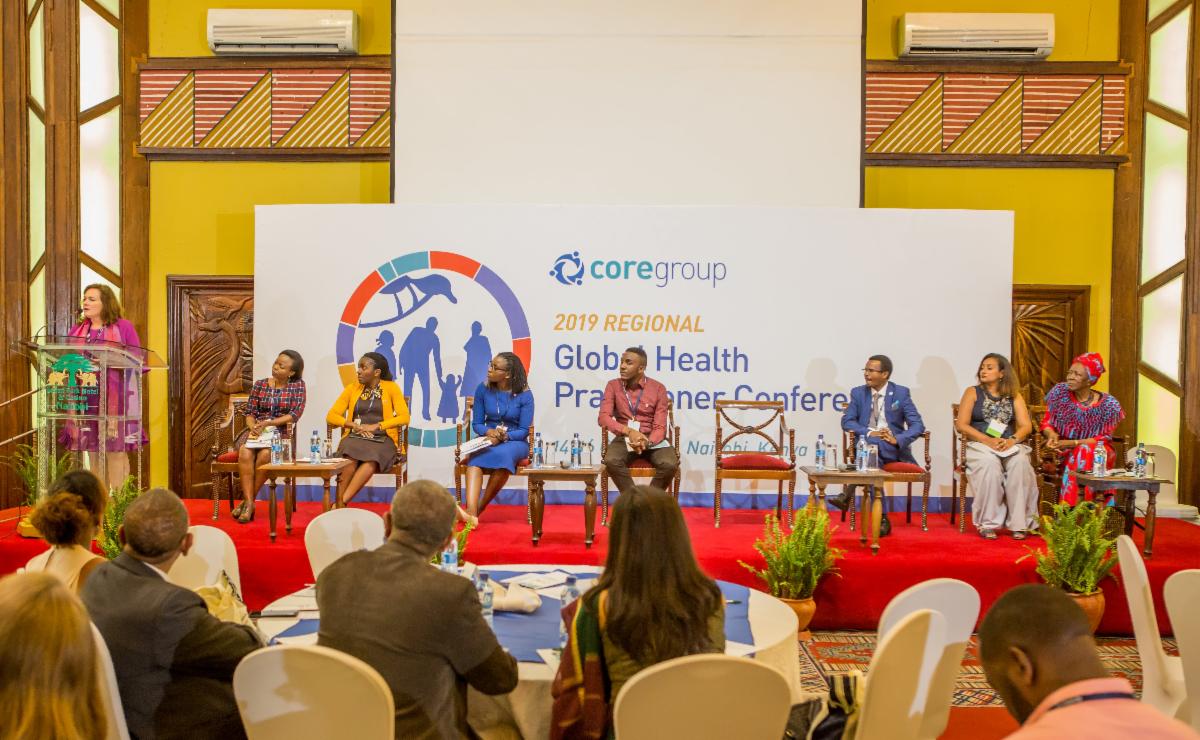
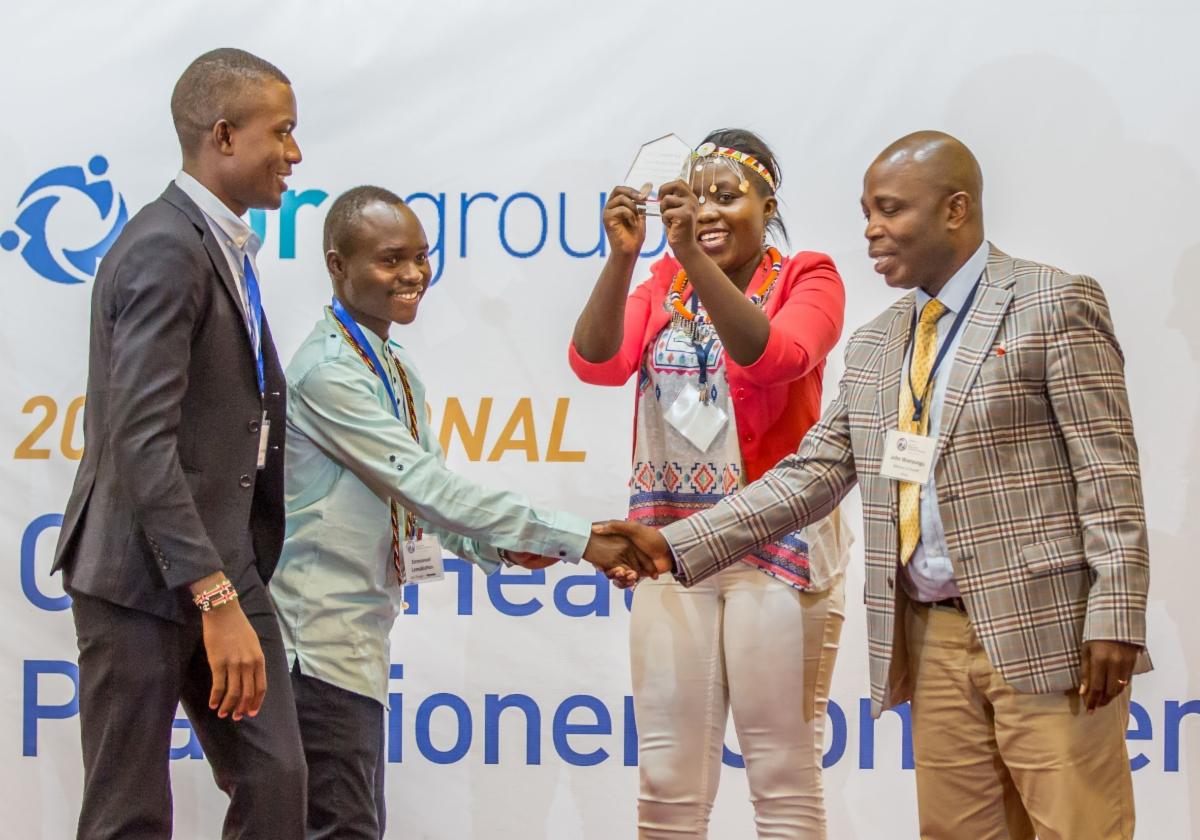
CORE Group Global Health Practitioner Conference (GHPC)

For over two decades, CORE Group has hosted a Global Health Practitioner Conference featuring skills-building sessions, recent evidence on cross-sectoral technical areas, and dialogue on community health. We have a unique opportunity this year to connect even more organizations and professionals around the world with our new digital format, and this year is particularly important as we set the stage for future investment and innovation in child and adolescent health and well-being.

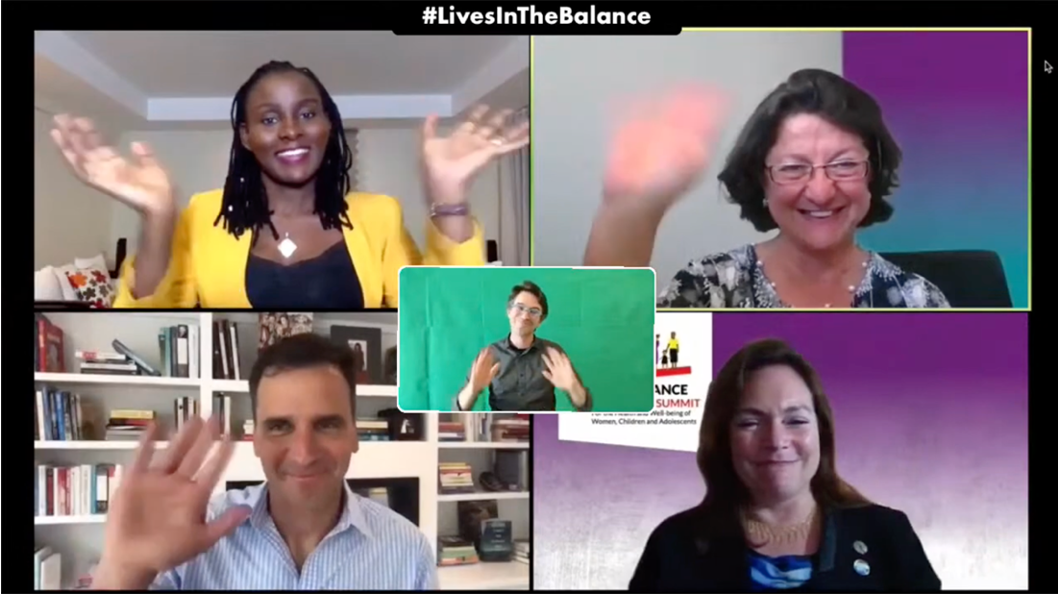
CORE Group and its membership will engage government, ministries of health, policymakers, practitioners, academia, civil society, private sector, global and local organizations in this virtual conference on December 8-10, 2020.

This Conference positions itself as a sharing platform for promising practices and innovations, ongoing challenges, and lessons learned in child and adolescent health and well-being worldwide; and as a convening space for various stakeholders - from community health workers who perform work on the ground to government policymakers who draft national policies - to discuss current opportunities and challenges for policy making, implementation, and partnership and draw consensus on key steps to move the needle forward.

CORE Group is convening a Global Planning Committee with various interested stakeholders to provide input on conference themes and objectives and to support the creation of a multi-day, interactive agenda. Being a committee member is a volunteer position* and will require up to 6 hours per month in planning calls and agenda input, outreach to speakers, and more.

If interested in participating in the Global Planning Committee, please complete the form below by Friday, August 21, 2020, COB.

*A stipend will be provided to young people in the committee, CORE Group is committed to meaningful youth engagement and aims to include 50% of young leaders in this committee. 


My source: Ados May, hss AT lists.coregroup.org

Friday, August 30, 2019

What is Population Health? c/o The King's Fund

individual - self - person - citizen
|
INTERPERSONAL : SCIENCES
humanistic ----------------------------------------------- mechanistic
SOCIOLOGY : POLITICAL
|
other - family - community - population

Mental Health & Well-being


Physical Health & Well-being


Local & National
Government, Services


Related posts W2tQ:
https://hodges-model.blogspot.com/search?q=%22population+health%22


Source:
@HICLancaster and @TheKingsFund


Friday, June 15, 2018

NTU Public Health Conference: Reverse knowledge innovation in global health and development

This conference examines the potential for reversing knowledge transfer and innovation and explore notions of challenging traditional assumptions about the production and flow of knowledge within global health and development studies.

The concept of ‘reverse innovation’ has been gaining traction in global public health and development over the last few years. Increasingly it is an interdisciplinary and multi-contextual concept which deals with knowledge(s) transfer to potentially foster mutual learning between different actors, stakeholders and communities, what Crisp (2010) called ‘Turning the world upside down’. We seek to critically interrogate this emerging concept and its link to knowledge(s) innovation and flows and the cross-cutting social, economic and cultural spaces and practices it inhabits.

We will consider the contribution and role of social sciences in global health and development issues, how partnership models operate this concept and whether this potentially increases sustainability, what new knowledge/perspectives in global health and development are emerging and how these interface with traditional knowledge(s) and practice(s).

We are now accepting Calls for abstracts. Registration for the Conference will open before the end of June 2018.

The objectives of the Conference

  • Extend understanding within social science, emerging perspectives on reverse innovation and knowledge transfer within the context of global health and development.
  • Highlight the research profile and experience of developing countries and their potential contribution to knowledge and practice innovation in developed countries.
  • Showcase the work of students and early career researchers within the sociology of global health and development.
  • Create opportunities for identifying potential international collaborations and networks.

Theme

  • Reverse knowledge innovation in global health and development
Sub-themes
  • Role of social science in global health and development (social theories, political economy).
  • Partnership models: sustainability
  • Emerging knowledge/perspectives in global health and development: methods, commercial determinants of health
  • Traditional knowledge(s) and practice(s)
  • Knowledge translation to practice: (Barriers: lack of preventive measures, funding, prevention vs treatment etc.)
See conference page for more...
https://www.ntu.ac.uk/about-us/events/events/2018/10/public-health-conference

My source: @PublicHealthNTU

Sunday, January 07, 2018

Know: A Journal on the Formation of Knowledge

http://www.journals.uchicago.edu/toc/know/current
The news below (which I have edited slightly) is from a longer message by Willard McCarty and alerted me to a new journal, the strapline speaks volumes here -

Reflections on Disciplinary Knowledge


It is not open access but the contents are listed:

Date: Fri, 29 Dec 2017 11:08:41 +0000
From: Willard McCarty willard.mccarty AT mccarty.org.uk
Subject: Interdisciplinarity and Collaboration

In the leading article of the first issue of Know: A Journal on the Formation of Knowledge
(http://www.journals.uchicago.edu/toc/know/current), Simon Goldhill surveys major problems requiring an interdisciplinary approach then observes that:
When expertise is so hard to attain and fields are developing so rapidly, there are inevitably only a few people who are in themselves genuinely interdisciplinary in the sense of having mastered two or more disciplines in a creatively combinatory fashion. Rather, what most of the major problems I have mentioned do need is collaborative responses. The question of interdisciplinarity, thus, is most insistently a question of how to collaborate.
... Willard also draws attention to the editor's introduction to the first issue.
Humanist Discussion Group, Vol. 31, No. 493.
Department of Digital Humanities, King's College London
www.digitalhumanities.org/humanist

Thursday, December 17, 2015

Workforce: What binds us all together?

individual
|
INTERPERSONAL : SCIENCES
humanistic --------------------------------------- mechanistic
SOCIOLOGY : POLITICAL
|
group

Empathy  Rapport

"The Force is what 
gives a Jedi his power. 
It's an energy field 
created by 
all living things. ...

Dignity   Respect

Emotional Intelligence

Open wonder

PURPOSE

... It surrounds us and penetrates us. 
It binds the galaxy together."
http://www.imdb.com/title/tt0076759/quotes


PROCESS
Shared values

PRACTICE

Communication

Mutuality

Partnership

Collaboration

Caring
Obi Wan: "I FEEL A GREAT DISTURBANCE IN THE WORKFORCE" Illustration credit HSJ cover Malcolm Willett
POLICY

Tuesday, January 13, 2015

Peter's penchant for boxes...?

Although the number of posts using Hodges' model may suggest I'm obsessed with putting things in boxes and I am extolling you to do the same, please note; this is not the case [well not entirely ;-) ].

The model recognises the common need to make sense of things, hence our tendency to dichotomise, categorise, to seek meaning and order. The model makes explicit 'four basic boxes', but then invites us to transcend them by testing each one, subjecting the four domains to reflection. Five domains, taking in the spiritual also.

Given a situation, a context, a patient, or carer, or student ... we can ask what are the facts, what are the issues and how are they linked? Mentally we can consider what important concepts are missing?

It is not for me to provide all these concepts. I may|should|must also listen, observe and liaise in order to identify them. The solution is about teamwork, partnership and collaboration.

Yes, the 'boxes' really are there. The disciplinary divides do still exist. In h2cm they are integral to the structure of the model. But as we progress in applying the model we seek to blur, if not erase the boundaries. To achieve holistic and integrated care we need to collapse the boxes. It seems something more than interdisciplinary and interprofessional is needed to connect and integrate what are frequently neglected knowledge (care) domains and content.

I should be able to explain some of this in my review of Prof. Carel's book 'Illness'.

Wednesday, October 22, 2014

HUMANISTIC-MECHANISTIC: How far can dichotomy travel?

International Space Station STS-127 Wikimedia


Where are the Voyagers Now?

Image source:
http://upload.wikimedia.org/wikipedia/commons/e/ed/ISS_%26_Endeavour_Shadow_STS-127_2.jpg

Wednesday, October 10, 2012

Hello? University of Northumbria at Newcastle - and others ..

Although school terms and university semesters vary especially between the northern and southern hemispheres, I can often tell when a new academic year is upon us again. Not only that, but possibly a new cohort of nursing or other health care related students.

The signal is the visitors to the old website. The past week or so there's been a lot of traffic from University of Northumbria at Newcastle. Only the institution is listed, not individuals. And don't get excited about the numbers: we are talking 10s here not 100s and 1000s.

Those tens (still greatly appreciated!) could be even more significant if I could connect with someone. So if you are revisiting this blog and from UoN or any other institution please get in touch: h2cmng at yahoo.co.uk

I would really help to hear your views on:

What prompted your visit?
Who are you - what's your role, course and stage of learning?
How are you using the site and model (if at all) is it:

  • as part of an exercise merely identifying models of nursing, aspects of nursing theory...?
  • as part of a piece of (reflective) written work?
  • applying the model to a specific context, case study, nursing (or other) discipline?
  • as a critical nursing or informatics exercise?
  • as an initial exercise to help assure holistic care?
  • some other discipline and purpose perhaps?
What would you expect to find, what is missing?
What is useful and should be archived?
What sucks!
Is there something that you could add to a future site?
Do you have work on h2cm that I could highlight here on W2tQ?

There are many rich seams to dig here and if we can work together we might find some light.

There is someone at UoN I will approach if they are still there: quite possibly!

Wednesday, January 21, 2009

First NHS Constitution Launched

FIRST NHS CONSTITUTION LAUNCHED
An historic signing ceremony to mark the launch of the NHS Constitution for England took place at Downing Street today. The Constitution, the first of its kind in the world, was signed by Prime Minister Gordon Brown, Health Secretary Alan Johnson and NHS Chief Executive David Nicholson.
The Constitution will give power to patients and the public by bringing their existing rights together in one place so they know what they are legally entitled to – and how they can exercise their rights as well as understanding their responsibilities. It also contains a range of pledges to patients, public and staff, which the NHS is committed to achieving. For NHS staff, the Constitution will mean an NHS-wide commitment to equipping them with the tools, training and support they need to deliver high quality care for patients.
Lord Darzi’s review of the NHS, High Quality Care for All concluded last summer that there was a case for an NHS Constitution to enshrine the principles and values of the NHS in England. The landmark document will put in one place what patients, staff and the public can expect of the health service. It is designed to safeguard the future of the NHS and renew its core values, making sure it continues to be relevant to the needs of patients, the public and staff in the 21st century.
Health Secretary, Alan Johnson said:
“This is a momentous point in the history of the NHS. Following on from Lord Darzi’s Next Stage Review, the launch of the NHS Constitution shows how its founding principles still endure today and have resonance for staff, patients and public alike. It will ensure that we protect the NHS for generations to come.

“The content of the Constitution is based on discussions with thousands of NHS staff and patients across the country and will form the basis of a new relationship between staff and patients – a relationship based on partnership, respect and shared commitment where everyone knows what they can expect from the NHS and what is expected from them.”
The Constitution is the result of extensive consultation with staff and patients, which was led by strategic health authorities and overseen by independent experts on the Constitutional Advisory Forum (CAF). In response to the consultation and report published by the CAF, the final Constitution includes:
  • A right to makes choices about your care and to information to help exercise that choice;
  • A new legal right to receive the vaccinations that the Joint Committee on Vaccination and Immunisation recommends that you should receive under an NHS-provided national immunisation programme;
  • A right making explicit your entitlement to drugs and treatments that have been recommended by NICE for use in the NHS, if your doctor says they are clinically appropriate for you;
  • A right to expect local decisions on funding of other drugs and treatments to be made rationally following a proper consideration of the evidence;
  • Clear and comprehensive rights to complaint and redress.
David Nicholson, NHS Chief Executive said:
“Ara Darzi asked me in his interim report to lead a work programme exploring the merits of a Constitution for the NHS. This has been a fantastic opportunity to listen to what matters most to our patients, public and staff and to use this to set out clearly the values and purpose of the NHS system.
“It also pulls together in one place what the patients who use the NHS, the public who fund it and the staff who provide it, can expect to receive from the NHS, and the contribution they can make themselves.
“I’m proud to sign off the Constitution today and am sure that it will be a powerful driver of change in the system, and help us to deliver care fit for the 21st century.”
Professor Steve Field, Chairman of the Royal College of [General] Practitioners, said:
"By stating that patients have a responsibility to register with a GP practice, the NHS Constitution reinforces the central role of the GP and the importance of continuity of care in the NHS today and in the future.
"We become GPs because we want to help people improve the quality of their lives through better healthcare. GPs want to provide the solutions and lead improvements and innovations. Having the Constitution in place will help us improve standards and care for all our patients, whoever and wherever they are.
"The new NHS Constitution is something which all GPs, their practice teams and NHS staff can commit to and have confidence in. I'm convinced that it will be an important, defining point in the development of our NHS."
Sally Brearley, Chair of the Patients Forum said:
“The NHS Constitution is a very valuable re-affirmation of the principles and values of the NHS. I was delighted to be involved in the process of drawing it up. It demonstrates the commitment of Government to the NHS, and of the NHS to its patients. We know that the public supports the NHS. The Constitution provides an important opportunity for patients, public and NHS staff to focus on giving our best to the NHS, and getting the best out of it.”
Also published today are the Handbook to the NHS Constitution; a Statement of NHS Accountability; regulations, directions and guidance to support the new rights around choice, vaccines and the funding of drugs and treatments; and our response to the consultation and the CAF’s recommendations.
The Health Bill, published last week, will underpin the new Constitution by creating new legislation to ensure that the Constitution will be reviewed every 10 years and a duty on NHS bodies, as well as independent sector and third sector providers of NHS services, to have regard to the Constitution.
ENDS
My source: COI’s News Distribution Service is the public sector leader in the electronic delivery of news releases and information direct from Whitehall departments, and more than 100 agencies and non-departmental public bodies, to the national, regional and specialist media. COI’s News Distribution Service is the public sector leader in the electronic delivery of news releases and information direct from Whitehall departments, and more than 100 agencies and non-departmental public bodies, to the national, regional and specialist media.


Thursday, October 16, 2008

Chair of Int. Academic Health Science Centre Designation Panel announced [UK]

Dept of Health [UK] logoDated: Wednesday 15 October 2008 10:20

Department of Health (National)

Health Minister, Ben Bradshaw, today announced the appointment of Sir Alan Langlands as Chair of the international panel that is being established to designate Academic Health Science Centres (AHSCs) in England. The international panel will make a recommendation to the Secretary of State for Health about the partnerships that should be awarded AHSC status. The panel will offer a form of "peer review" and will identify the organisations best placed to compete internationally alongside leading AHSCs elsewhere in the world, such as Harvard, Johns Hopkins and the Karolinska Institute.

The NHS Next Stage Review announced the government's commitment to fostering AHSCs in England. The intention is to identify and work with a small number of health and academic partners, who have come together to focus on world-class research, teaching and patient care. These Centres will take new discoveries and promote their application in the NHS and across the world.

Health Minister Ben Bradshaw said:

"I am pleased to announce that Sir Alan Langlands will chair the international panel that we are establishing to designate Academic Health Science Centres in England. Sir Alan brings a wealth of expertise to this role. His experience in health policy and in education means that he is ideally placed to assess the strength of applicants' proposals for bringing together research, education and patient care functions to improve health outcomes."

Sir Alan Langlands said:

"I am delighted to be appointed chair of the international panel. Academic Health Science Centres in England have the potential to improve healthcare services in the NHS and internationally. Improved collaboration between healthcare organisations and Universities has the potential to enable the rapid adoption of new research into clinical practice."

Additional links:
Manchester Academic Health Science Centre


Thursday, September 11, 2008

BBC R4 Today - NHS productivity

Following the post yesterday - Don't waste energy - use a care plugin... - there was an item this morning on BBC R4 Today:

0815
A report published by the Office for National Statistics suggests that NHS productivity has been falling by 2% a year. Martin Weale of the National Institute of Social and Economic Research, and Shadow Health Secretary Andrew Lansley discuss the efficiency of the NHS.
There's no transcript of the interview so maybe I was (still) dreaming? At some stage though this a.m. a point was also made about the public (as tax payers and patients) either wanting to go into hospital to be treated and cured (quickly and efficiently) OR have a 'good' (positive) patient experience.

Why can't the two go hand-in-hand -
especially with all the emphasis on 'partnerships'?

Martin Weale highlighted how efficiency is not everything - people may have other requirements. If a patient is treated very efficiently and quickly - all evidence based, latest and greatest interventions - but their experience is at best neutral, or at worst negative, then how will that experience affect their recovery, staying well - relapse prevention - and any future care episodes and admissions? Complex indeed ...

- and Remembering...