Hodges' Model: Welcome to the QUAD: Scotland

Hodges' model is a conceptual framework to support reflection and critical thinking. Situated, the model can help integrate all disciplines (academic and professional). Amid news items, are posts that illustrate the scope and application of the model. A bibliography and A4 template are provided in the sidebar. Welcome to the QUAD ...

Showing posts with label Scotland. Show all posts

Sunday, August 02, 2026

Study invitation: Examining the Experiences of Black African Nurses in the UK Healthcare System

PARTICIPANT INFORMATION SHEET

Examining the Experiences of Black African Nurses in the UK Healthcare System

You are being invited to take part in a research project exploring the experiences of Black African nurses working in the UK healthcare system.

For the purpose of this study, Black African nurses refers to male and female nurses aged 18 years and above who migrated from an African country to the UK and have worked within the UK healthcare sector for at least one year. This includes nurses who arrived in the UK on a work visa and are currently working in the NHS, care homes, or private healthcare organisations. It does not include individuals who later changed their education or career pathway after settling in the UK. Please read the following information carefully to help you decide if you want to take part. 

What is the purpose of Study?

The purpose of this study is to better understand the experiences of Black African nurses who have migrated from African countries and are working within the UK healthcare system. Research and workforce reports suggest that internationally recruited and racially minoritised nurses may face unique professional and personal challenges, yet their lived experiences are often under-represented in research and policy discussions. This study aims to bring greater awareness to how race, culture, identity, and migration background may interact with workplace environments and organisational systems to shape nurses’ professional experiences and wellbeing. By giving participants the opportunity to share their perspectives in their own words, the research seeks to highlight areas where support, inclusion, and fair practice can be strengthened.

It is hoped that the findings will contribute to improved understanding, inform future policy and workplace practices, and support ongoing efforts toward equity, inclusion, and culturally appropriate support within the UK healthcare workforce.

What will happen if I decide to take part?

If you agree to take part in this study, you will be invited to an online interview using Microsoft Teams at a time that is convenient for you. Before the interview begins, you will have the opportunity to ask any questions about the study before confirming your consent to participate.

During the interview, you will be asked some brief background questions, such as your professional background and migration route. The interview will focus on your experiences of working as a Black African nurse in the UK healthcare system, including workplace experiences, identity, support, challenges, and sources of strength or resilience.

With your permission, the interview will be audio-recorded to ensure your views are captured accurately.

... ... ...

WHO CAN I CONTACT? [... and for the FULL DETAILS ]

This study has been reviewed and approved by the University of Edinburgh Research Ethics Board. 

If you have any questions or concerns about the study, you can contact the researcher:

Oluchi Mellor – O.D.Mellor@sms.ed.ac.uk

My source: Oluchi via RCN NWMG 

https://www.rcn.org.uk/northwest/Get-Involved/NW-Multicultural-Group

Monday, January 12, 2026

Improving University Teaching - July 2026 Glasgow

Dear Colleagues

A reminder that you are cordially invited to participate in the 52nd International Conference on Improving University Teaching, to be held this year in Glasgow, Scotland. Our conference theme is “Connecting Across Cultures: Collaboration, Compassion, and Creativity,” with a focus on the links that sustain teaching and learning. IUT welcomes proposals in a variety of formats — papers, posters, workshops, and roundtables. More information about theme, subthemes, and presentation formats is available on our website, https://iutconference.com, where you will also find a link for proposal submissions.

This year’s proposal submission deadline is Monday, January 26th.

The dates for IUT 2026 are July 15-17, 2026. Our in-person host is the University of Glasgow in Scotland — the fourth oldest university in the English-speaking world, with a student enrollment of almost 40,000 and a strong tradition of both research and teaching excellence. Once again, this year’s conference will be a hybrid event. We hope many participants will attend the conference in person in Glasgow, but also warmly welcome those who choose to participate remotely.

Whether you prefer to join us online or in person, we hope you will consider a submission. Please contact us at iutconference AT gmail.com with any questions.

With best wishes,

Anne Tierney
President, IUT

Jim Wilkinson
Treasurer, IUT, and President emeritus

Saturday, July 19, 2025

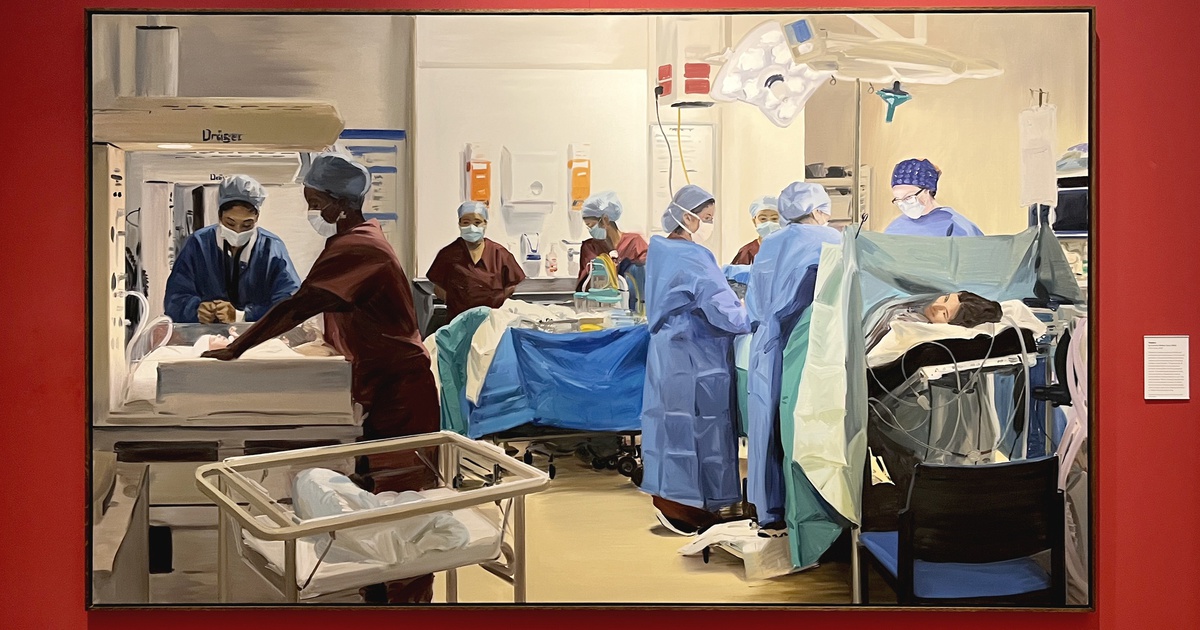
'Theatre' by Caroline Walker

Individual
|
      INTERPERSONAL    :     SCIENCES               
HUMANISTIC  --------------------------------------  MECHANISTIC      
 SOCIOLOGY  :    POLITICAL 
|


Image source: 
https://www.inglebygallery.com/news/7465-caroline-walker-the-scottish-national-portrait-gallery-theatre/

line of sight (seeing is believing) : 'care' : 'community' : 'theatre'

My source:
Harriet Baker, PAINT, FEED & PLAY, FT Weekend, Magazine. July 12 2025.  #1,133, pp.46-52.
https://www.ft.com/content/6e50181b-689e-4cd5-b084-37b311446e94

Great read too. The exhibition moves to Pallant House Gallery, Chichester from November 22nd.

Thursday, March 10, 2022

IRMS Conference 2022 - RESILIENCE RECOVERY RENEWAL


Information & Records Management Society (IRMS)
RESILIENCE RECOVERY RENEWAL

15th-17th May 2022, Glasgow - Doubletree by Hilton

The annual IRMS Conference is *the* go-to event in the information management calendar, bringing together 400 practitioners, compliance managers, senior executives and others from a range of organisations across all industry sectors in the UK and beyond.

Our theme for 2022 is Resilience, Recovery, Renewal, recognising the phases of individuals' and organisations' response to the effects of the global pandemic, and the critical role of information and records management in enabling and supporting business continuity.

More details ... 


n.b. See you on the 17th? PJ

Wednesday, August 07, 2019

One Hundred and Eleven [vertebrae]

individual - self
|
INTERPERSONAL : SCIENCES
humanistic ----------------------------------------------- mechanistic
SOCIOLOGY : POLITICAL
|
group- population


111 + Self-Care = Sustainable Health Care System ?

Sunday, March 10, 2019

'Surgical Procedure' by Hilary Paynter


Social History - Sterile Field


individual
|
INTERPERSONAL : SCIENCES
humanistic ----------------------------------------------- mechanistic
SOCIOLOGY : POLITICAL
|
group


sterile
field


Surgical Procedure by Hilary Paynter


"Road works to widen the airport road near  
Sumburgh Head uncovered a large and 
complex archeological site that had previously
been considered fairly insignificant." p.160-161.
Full Circle (2010)


With thanks to Hilary Paynter for permission and original tif file.
And to the Print Symposium events in Wrexham.

Wednesday, August 15, 2018

The NHS at 70 or on the Fringe(s)?

individual
|
INTERPERSONAL : SCIENCES
humanistic ----------------------------------------------- mechanistic
SOCIOLOGY : POLITICAL
|
group
A Fortunate Man
fringe


fringe
fringe


fringe
After the Cuts


See also: Edinburgh Fringe: A round-up of the NHS themed shows reflecting the chaos of ordinary people's lives

My source: Foyles, London, The Fringe, Free

Sunday, February 25, 2018

2nd Planetary Health Annual Meeting in Edinburgh

Since learning about the 2nd Planetary Health Annual Meeting in Edinburgh late last year, I realise I didn't post the news, which is a gift in terms of the purposes of Hodges' model. So, this post celebrates what is a vital subject and call for action and an invite to present a poster. Unfortunately regards the poster, in my haste I did not check the registration terms and the applicable early bird fee of £250 is too much for me personally. If you are a student, or resident citizen of a low and middle income countries opportunity knocks with a welcome reduced early bird registration fee until 9 March.

The planet and planetary health have featured here on W2tQ, on the now defunct website 1998-2015 and in papers, notably:

Jones, P. (2008) Exploring Serres’ Atlas, Hodges’ Knowledge Domains and the Fusion of Informatics and Cultural Horizons, IN Kidd, T., Chen, I. (Eds.) Social Information Technology Connecting Society and Cultural Issues, Idea Group Publishing, Inc. Chap. 7, pp. 96-109.

 Jones, P. (2012). Exploring several dimensions of local, global and glocal using the generic conceptual framework Hodges's model. The Journal Of Community Informatics. 8(3). Retrieved from http://ci-journal.net/index.php/ciej/article/view/876/

Jones P. Exploring the relationship of threshold concepts and Hodges’ model of care from the individual to populations and global health. Rev Cuid. 2017; 8(3): 1697-720. http://dx.doi.org/10.15649/cuidarte.v8i3.464

Another short paper is under review on Hodges' model and the Sustainable Development Goals.

Amid the embarrassment of having to turn the offer down I will follow developments with keen interest and hope that another opportunity may arise.

Wednesday, December 06, 2017

Out Lines

individual
|
INTERPERSONAL : SCIENCES
humanistic --------------------------------------- mechanistic
SOCIOLOGY : POLITICAL
|
group


Source: The Sunday Times, Culture, On Record, 29 October, 2017. p.22.

Thursday, March 23, 2017

Witness the Land and the Location of Truth

individual
|
INTERPERSONAL : SCIENCES
humanistic --------------------------------------- mechanistic
SOCIOLOGY : POLITICAL
|
group


Lockerbie Witness Box (Exhibition Version), 2003
Nathan Coley, b.1967
Rosewood, laminates, aluminium, steel, carpet, plywood, electrical components and chair


"This work consists of an exact replica of the witness box used at the Lockerbie bombing trial alongside eight of a series of 12 drawings representing evidence presented during the trial. The trial was held in the Netherlands, but for 36 weeks the small area of land where the court stood was temporarily legally Scottish. Coley challenges what we take as 'real', by looking at the arbitrary rules that enable a country to 'appear' somewhere else and the assumption that a person is telling the truth because they are sitting in a certain place." 


My source: Gallery of Modern Art, Royal Exchange Square, Glasgow G1 3AH visited 28 November 2015.

Friday, September 19, 2014

Self-determination: individual - group (high-low) resolution

individual
INTERPERSONAL : SCIENCES
humanistic ------------------------------------------- mechanistic
SOCIOLOGY : POLITICAL
group


Flag of Scotland (Union Jack colours and proportion).png
Border
Binary Decision
magnanimity

Flag of the United Kingdom

Image sources:
"Flag of Scotland (Union Jack colours and proportion)" via Wikimedia Commons.
https://commons.wikimedia.org/wiki/File:Flag_of_the_United_Kingdom.svg

Saturday, April 09, 2011

Nursing ideas somewhere between Drupal & Ruby

It's been a busy week:

  • getting ready for the Scottish Ruby Conference [SRC] three fascinating days 7 - 9 April.
  • checking with the client of the Drupal site, confirming that the following CSS3 adornments are not required: coloured lettering : 3D text : and others. KISS - OK!
SRC started with the charity day a day long tutorial from Chad Fowler author of The Passionate Programmer and Keavy McMinn. They delivered too - indeed it's all great! The venue - The Royal College of Physicians is quite amazing, full of history in its architecture and the portraits of esteemed members. Whether or not I attend a session in there today I must visit the library. The charity day covered:
  • Blocks and bindings
  • The Ruby object model
  • Meta-programming
  • Hooks, callbacks, and reflection.
When it came to the exercises I let the experts do their thing and followed the solutions. I missed last year's Ruby bash so it's good to be back.

Swapping to Ruby while tinkering with Drupal is not a help and yet there is overlap. GIT is the must-do within both communities. PHPNW's meeting on Wednesday on OOP with Lorna Mitchell highlighted some common aspects. I'm probably getting a lot of this (as in 'all' plain) wrong but Lorna's mention of $this and static methods sent me on a reverie. ...

Abstract classes are apparently incomplete and $this is not available to them. Suddenly I'm thinking well that's different. In nursing our abstractions on nursing care are complete - in the idealised sense. It's the concrete / practical (dynamic) delivery that sadly falls short.

PHPNW - the conference in October, a Saturday event in prospect and being here in Edinburgh reminds me I have this itch. Dave Hoover's keynote spoke about his career and finding his technical groove from a therapeutic role as a psychologist.

One thing I do know: from the books he mentioned I ain't got 10,000 hours. That's why I am trying to leverage Drupal and in Ruby - the Rails framework. There's an IDE I have just learned of JetBrain's Ruby Mine.

(Despite that) I'm reading Martin Fowler's book on Domain Specific Languages. Not because I'm going to write one (or like rashes), but because I'm totally intrigued and wondering about a research question. What question(s) can I ask that I might also be able to answer (or not)?

method_missing, meta programming and DSLs are still here in Edinburgh. No longer the latest and greatest (Jim Weirich suggested that was c.2006), but then neither are models of nursing. ;-)

In his book, Fowler identifies 'illustrative programming'. Spreadsheets are the key example and quite remarkable in how they are used and the niche they occupy from a programming, DSL, and an everyday tool perspective.

Hodges' model is a spreadsheet; or a decision table of sorts. Basically, does the patient have a problem in each of the care domains? Fowler writes:
The key benefits of a DSL - greater productivity and communications with domain experts - really kick in when you are using an alternative computational model. Domain experts often think about their problems in a nonimperative way, such as via a decision table. An Adaptive Model allows you allows you capture their way of thinking more directly in a program and the DSL allows you to communicate that representation more clearly to them (and yourself). p.116.
I'm really taking liberties with definitions. My domain experts might actually be student nurses.

I know book titles are intended to sell, but I look at the title of Chad Fowler's book above and wonder about the Compassionate Care Programmer and what alternative computational models may be needed to achieve that?

Fowler, M. (2010) Domain Specific Languages: Addison-Wesley Signature Series, Addison-Wesley Professional.

Saturday, April 18, 2009

Nursing as reverse engineering...

At Scotland on Rails last month one of the sessions included an example of Ruby code outlining a 'morning routine'. It comprised a series of tasks and sub-tasks all of which led to getting to work.

Much of the vital essentials of the code I cannot understand beyond some tentative inklings, but in the hope of learning I've re-hashed the accessible bits and turned it into a NursingRoutine. The output looks like this....

Nursing....
"Non-judgmental attitude"
"Universal positive regard"
"Basic counselling skills"
"Open mind"
"Meet person"
"Receive referral"
"assess person utilizing Hodges model"
"Create care plan"
"Meet physical needs"
"Meet interpersonal needs"
"Meet political care needs"
"Meet social care needs"
"Holistic care"
"Evaluate physical needs"
"Evaluate interpersonal needs"
"Evaluate social care needs"
"Evaluate political care needs"
"Evaluate care"
"caring..."

Something like nursing is obviously a much more complex routine than that implied above - that is because:

  • nursing is not [some - 'thing'];
  • nursing can be represented as a routine BUT;
  • nursing seeks to transcend the routine: emphasizing the personal, unique, the humanistic;
  • nursing is parallel and sequential;
In addition now we are about collaborative, multidisciplinary care that must factor in agreement (the care plan...), and patient reported outcome measures (PROMS). ...

In the meantime I need to exercise care trying to understand the program that produced the output (that could also be easily printed as a list). While this is not an example there is such a thing as obfuscated code, but surely not obfuscated nursing care?

Wednesday, April 01, 2009

Scotland on Rails 2009

1 April mmm... while it is not yet self evident I should by now have an all singing and dancing website. In fact maybe I should have two, since the conference score is currently:

DRUPAL :1 (Drupalcon Szeged 2008) Ruby and Rails :2 (Scotland on Rails 2008 & 2009)

Having just returned from Edinburgh and three days of presentation magic - not only were the speakers experts and leaders they all knew how to present - it's time for me to reflect a little.

Jim WeirichI took something away from ALL the presentations as I attended 'a full stream' mostly the sessions in the main hall. Jim Weirich's session on Building Blocks of Modularity was very interesting informatically, holistically and clinically as he explained and referenced “connascence”:

An examination of the concept of “connascence” and building modular programs.

Connascence: n.
* The common birth of two or more at the same time; production of two or more together.
* That which is born or produced with another.
* The act of growing together.


Connascence: undoubtedly a concept to add to 'consilience'.

Whether using Drupal or Ruby - Rails I'm conscious that you can create a website very quickly. As already ack. here last summer in Hungary Dan and James advised that I get something together and publish the beta. On Saturday Steven A Bristol stressed the same:

  1. Identify the essential thing you have to offer through a website / application;
  2. do not wait until it is 'finished';
  3. - speaking of which are you a techie or designer? Find the partner(s) you need, people are rarely both;
  4. ensure you include a feedback mechanism - not just e-mail;
  5. and 'get it out there'.
In their session Kevin McDonagh and Joseph Wright added that it is a waste of time appealing to the World. Of course Kevin did not realise how painful it was for me to hear that, but since this is certainly true - I have appealed to the world - it was very therapeutic. Unlike Kevin and Joseph's Green Map as a Community Project I'm not sure if whether I can appeal to the local community (despite an interest in ecology).

Dave Thomas of the Pragmatic Programmers by Fraser Spiers at SoR 2009Like Drupal the Ruby community is a terrific group of people - welcoming, supportive, cohesive - a bunch of real humans. The charity tutorial day raised £7,000 for CHAS the Children’s Hospice Association Scotland.

After Dave Thomas presented a fascinating keynote on the Ruby Object Model, Erin Staniland and Tim Harding confirmed I've the basic building blocks in place to create and execute a Rails application on my MacBook.

Peter Jones at SoR March 2009 image by Fraser SpeirsI am hooked on Drupal and Ruby. Some of the keywords and structures in Ruby are dangerous in their appeal - more on this to follow...

Driving (ironically) back to NW England I realised Earth Hour was in progress, hopefully there will be another one. That night Orion was beautiful chasing a fresh smiling new moon along the way...

Images: thanks to SoR site and Fraser Spiers

P.S. Kevin - I owe you a beer towards the taxi Friday night!

Saturday, April 05, 2008

"Great Scot!" Ruby & Rails - Scotland On Rails

Just back from Edinburgh this evening. Took it steady about 60mph, so used just half a tank of fuel - not bad for 400 miles (return). Had to take it easy as it was just above freezing in places and I ended up playing Star Trek. It was snowing for a time North of Penrith. When I was able I put the head lights on full-beam: warp drive!

Scotland On Rails was great - the organisation, speakers, content and company. The sessions I attended included testing, testing testing, migrating to Ruby 1.9, DSLs .... and the last session on JRuby with the announcement of version 1.1 that provoked a round of applause:

JRuby on Rails: Up And Running!

Charles Oliver Nutter and Thomas Enebo

JRuby 1.1 has been released, and is becoming the Rails platform of choice for many Rails shops. In this session, we’ll show how to start from scratch or migrate your existing Rails app to JRuby. We’ll demonstrate the various deployment options on JRuby. We’ll show how to integrate Java libraries into your app. We’ll walk through NetBeans’ Ruby and Rails support and talk about how JRuby has enabled better tools and better solutions for Ruby developers. And we’ll have a conversation with the audience about where JRuby on Rails should go from here. Be prepared to talk shop and see lots of code and demos.
I'd been really looking forward to Joe's presentation on DSLs and was not disappointed. My enthusiasm here is not because Hodges' domains makes a DSL a dead-cert, far from it; it's just that I miss playing with Plasticine:
Domain Specific Languages : Moulding Ruby

Joe O'Brien

Ever wondered what all the fuss is about when it comes to DSL’s and Ruby? It seems to be all we hear about. This talk will peel away the onion and look at what it is about Ruby that makes it the perfect candidate for creating your own languages. I will show you, through examples, how you can create your own languages without the need for compilers and parsers. We will also cover some real world examples in areas of Banking and Medicine where DSL’s have been applied.
Amid the clamour that is Rails, Joe also stressed that people should focus and explore Ruby itself. Something I need to get on with. Paul Dix's talk this afternoon was fascinating in terms of scale, processing, math libraries and mention of clustering:
Collective Intelligence: Leveraging User Data to Create Intelligent Rails Applications
Paul Dix

Take advantage of user data to create intelligent Rails applications! This talk will focus on data mining to create complex application behavior and gain insight into the patterns and habits of your users. Examples of these techniques can be seen with recommendation systems like those created by Amazon, Netflix, last.fm, and others. Additional examples include spam filtering systems for email or comment filtering provided by Akismet.
I will focus on techniques for gathering data, specific gems and plugins for performing various data mining and machine learning tasks, and performance issues like how to distribute the work to separate servers. Theory in this talk will be light and the specific algorithms will only get a mention by name. We’ll be looking at real world Ruby and Rails code examples for building recommendation, ranking, and classification systems.
I wasn't the only Ruby newbie and met a few of my peers, we noticed on the first day the number of sessions on the theme of testing. Last week I'd watched Matz' February talk on Ruby 1.9 and the future which helped me out through the past two days. Last night in The Crags one of the speakers Ritchie (whose session I missed) kindly explained about his conjoint talk and the significance of JRuby, NetBeans IDE and IntelliJ. Given Richie's knowledge, experience and that closing session, I'll definitely investigate these.

There's only one conclusion - totally overwhelming: but totally worth the brain ache.
So great job and many thanks to Alan and the team, plus the luminous speakers and sponsors.

Saturday, March 29, 2008

Week ahead: Ruby/Rails conference and next paper?

It should be a stimulating week ahead as the clocks spring forward (why not two weeks ago?) and I check the schedule for Scotland on Rails and plan the sessions to attend. Now with a new Eee PC I should also have something to write on and connectivity.

Yesterday jQuery in Action arrived. I've started to read it and am finding already that the two CSS books that were until recently just sitting on the shelf are helping me to grasp what jQuery is about. One of those titles - Keith or Cederholm - highlighted that learning CSS helps you to understand and learn other languages and this really does seem to be the case. jQuery in Action will definitely be travelling to Edinburgh. Even though I'm only at chapter 2 it's a good read. There's a Selector Lab a web page to enter jQuery selector strings and see how the code relates to the DOM (document object model).

Over the past week I've been investigating Ruby graphical user interface (GUI) toolkits - specifically Tk (must check version 8.5). Just as with Drupal and settling on a theme, eventually - it seems? - I will have to choose a GUI. For now it's a case of seeing what they offer and how to run them within Eclipse (and without). The jQuery book will help push me with Drupal and enliven what will be essentially be static (archive) content:

  • Archive - Brian's original notes; my introduction
  • Biographies - Brian, myself - and who knows other contributors
  • Chronology
    • - still thinking about other content
      • old - e.g. the informatics pages
      • and new - a h2cm collaborative book.
There is no word as yet about the socio-technical chapter submitted in the new year, which may be good news? Although there's enough going on above, I like to have a paper on slow cook. So, we will see what arises on mapping, concept organisation ... in health care, communication and education. As a starter (c/o free access to SAGE journals) there are several papers on intervention mapping within public health and health promotion that will be essential reading. Another ingredient to (potentially) add to the mix - I've long wondered about case formulation within psychological therapies and Hodges' model. Time to make a start, but real slow like...

Sunday, March 16, 2008

BASIC, Ruby, DATA and Scotland On Rails

This weekend reading more of Hal Fulton's The Ruby Way, there was a blast from the past in the form of '10.1.25 Reading Data Embedded in a Program' and a reminder of all those DATA statements typed in from magazines.

Ruby not only supports the industry database and SQL standards, but other approaches such as embedded data and KirbyBase. Fulton's book is designed for 'random access' and yet I'm reading it through. There are jewels in the texts on Ruby. Sentences that while fairly obvious still serve to catch my breathe '... They differ in the amount of context they copy. ...'

10.4.7 Object-Relational Mappers discusses ActiveRecord and Og (object graph). Apparently Og can generate a database schema from Ruby class definitions (rather than vice-versa). This is a useful and powerful ORM 'especially if you design your database after your objects.' p. 384.OK ....

With all this reading on databases whatever happened to the Associative Data Model? Still alive and very well I believe, yet more Sentences to figure out.

In order to try and make some headway, next month I'm heading for Edinburgh and the Scotland On Rails conference.

I can't attend the full event, but plan to make sure the trip is well worthwhile. While I hope all the speakers stay in fine fettle, there is a speaker for Saturday whom I pray stays in finest lustre - a presentation on DSLs! Just one highlight of what should be a great talk. [Stay well Joe!]