Hodges' Model: Welcome to the QUAD: mapping

Hodges' model is a conceptual framework to support reflection and critical thinking. Situated, the model can help integrate all disciplines (academic and professional). Amid news items, are posts that illustrate the scope and application of the model. A bibliography and A4 template are provided in the sidebar. Welcome to the QUAD ...

Showing posts with label mapping. Show all posts

Monday, February 02, 2026

Bridging Gaps in Oral Health Frameworks: Mapping With Hodges' Health Career - Care Domains - Model

 ABSTRACT

Objectives

Despite decades of national and global strategies, persistent inequities in oral health outcomes, access, and service provision remain. Existing frameworks often fail to integrate clinical and behavioral factors with social, cultural, and political determinants. This study aimed to map and evaluate oral health frameworks using Hodges' Health Career—Care Domains-Model (HCM), a meta-framework that spans clinical, behavioral, sociological, and political domains. The goal was to identify conceptual gaps and opportunities for greater integration.

Methods

A structured scoping review was conducted using MEDLINE, CINAHL, EBSCO, and search engine Google Scholar (1995–2025) to identify oral health-related conceptual frameworks. Frameworks were eligible if they addressed oral health determinants, behaviors, policies, or interventions. Two reviewers independently screened records and analyzed full-text articles. Frameworks were categorized by theoretical orientation and mapped against the four HCM domains to identify patterns of emphasis or omission.

Results

Of 226 identified records, 21 frameworks met inclusion criteria. These were classified into three thematic groups: balanced (addressing all domains), clinically led (focused on clinical/behavioral aspects), and policy/public health-focused (emphasizing sociological/political factors). Seven cross cutting themes emerged, including health promotion, systems integration, social justice, and cultural safety. While many frameworks promoted equity and policy reform, few offered implementation guidance or had been empirically validated.

Conclusions

HCM proved useful for systematically comparing frameworks and revealed consistent underrepresentation of political and structural domains. It offers a practical tool for oral health professionals, educators, and policymakers developing integrated oral health models that align with equity, sustainability, and universal health coverage goals.

S. Bettiol, P. Jones, H. A. Onyedikachi, and W. G. Kernohan, “ Bridging Gaps in Oral Health Frameworks: Mapping With Hodges' Health Career - Care Domains - Model,” Journal of Public Health Dentistry (2026): 1–14, 
https://doi.org/10.1111/jphd.70034

Wednesday, July 09, 2025

'Thinking outside the box: alternatives to standard inpatient mental health care' by Amber Jarvis

c/o The Mental Elf on 'X' I came across a blog post by Amber Jarvis:

Thinking outside the box: alternatives to standard inpatient mental health care

Amber's post considers a study by:

Griffiths, J. L., Baldwin, H., Vasikaran, J., Jarvis, R., Pillutla, R., Saunders, K. R., … & Johnson, S. (2025). Alternative approaches to standard inpatient mental health care: development of a typology of service models. International Journal of Mental Health Systems, 19(1), 1-13: https://pubmed.ncbi.nlm.nih.gov/40247283/

At an online meeting this evening, near the close the discussion loosened and alighted on AI. The ability of AI to summarise a large text file, a *.pdf and create discrete web HTML pages. The racial bias 'built-in' by human coders, reflected in outputs; that point to structural racism. 

Finding this paper on X, boxes are the bread and butter of Hodges' model. Not just thinking outside a box, or inside one, but several and with a final twist - to follow. Amber begins:

'Inpatient mental health care involves staying in a hospital or specialised facility to receive intensive, round-the-clock support for serious mental health needs (Staniszewska et al., 2019). Whereas acute inpatient services typically respond to immediate crises, longer-term wards support individuals with more complex needs and a higher level of ongoing risk.

Inpatient services are a core component of our mental health system — whether someone stays for a night, weeks, or even several years. However, inpatient care has recently come under growing scrutiny – and for good reason.'

A Community Mental Health Nurse since 1985, my in-patient experience is a tad misty, but not misty-eyed. As the wards: psychogeriatrics, long-stay, female acute admission were simultaneously challenging, rewarding - in the sense of being able to make a positive difference, changing what were institutionalised practices, no personal clothes, lockers, tea urn, no banking, few visitors (admission wards excepted). It was all very quotidian: check the bath book. Then tell, confirm, assure the patient, 'yes!'. It is your bath day. I've posted previously about critical mental health. You do (should?) quickly learn you are part of a system, a machine; and the distinction between person- patient-centred and service-centred care. The need to do my 'general' quickly emerged too. 

As ever, two words, across Amber's post and Griffith et al's title, stand out; 'map' and 'typology'. I must revisit and post about:

Macduff C. (2007). Typologies in nursing: a review of the literature. Nurse researcher, 14(2), 40–50. https://doi.org/10.7748/nr2007.01.14.2.40.c6020

Part-time work since 2020, in two adult CMHTs and a recovery team, has provided an update. The first as COVID emerged, was a bit of a shock in terms of diagnoses, caseness, the proximity to the law and forensic psychiatry, thresholds for referral, changes to mental health law (that were now more practical) and the management of patient's finances. 

So, to return to last night's brief online discussion, the observation of how racism is ongoing, brought up the fact of racism being structural and institutional (Dean & Thorpe, 2022). The change needed is an intergenerational break, which doesn't bear thinking about. The National HEALTH Service faces the same challenges in the shift to prevention, and addressing racism. Where is the workforce, going to come from, to help recovery, health and related literacies (media, emotional, financial)?

It is easy in boxes like Hodges' model (and others) to be idealistic. Ideally as I learned of Community Psychiatric Nurses being recruited, six of us, we all should have asked:

What is the plan?
What is the model of care?
What characterises 'care in the community'?
How do we prevent relapse, readmission?
Is there a 'halfway house'*?

We did, to an extent. There was great enthusiasm, motivation, idealism, co-ordination, collaboration  (Tyrer & Gelder, 1990) and leadership. 'We' had an association,^ and a journal. Back then the Royal College of Psychiatry produced a report on CPNs. Is there a message in this? Progress was and has been made, but the promise has not been delivered. With care in the community having regressed, an incomplete 'project'.

I will read more and revise this post, or more likely add another: with less 'history' ...

Individual
|
      INTERPERSONAL    :     SCIENCES               
HUMANISTIC  --------------------------------------  MECHANISTIC      
 SOCIOLOGY  :    POLITICAL 
|
Group
Model of Care

Model of care

Model of Care
Care in Community
Children - Schools - Education

Model of care
'Care Leavers'


*'Cross-settings' in Griffith et al.

^https://www.unitetheunion.org/what-we-do/unite-in-your-sector/health-sector/mental-health-nurses-association

Lorraine T Dean, Roland J Thorpe, What Structural Racism Is (or Is Not) and How to Measure It: Clarity for Public Health and Medical Researchers, American Journal of Epidemiology, Volume 191, Issue 9, September 2022, Pages 1521–1526, https://doi.org/10.1093/aje/kwac112

Tyrer P, Gelder M. The future of community psychiatric nursing: some research findings. Psychiatric Bulletin. 1990;14(9):550-551. doi:10.1192/pb.14.9.550

Thursday, June 26, 2025

You say Hodges' model is a map. What's the scale?

"That's another thing we've learned from your Nation," said Mein Herr, "map-making. But we've carried it much further than you. What do you consider the largest map that would be really useful?"

"About six inches to the mile."

""Only six inches!"exclaimed Mein Herr. "We very soon got to six yards to the mile. Then we tried a hundred yards to the mile. And then came the grandest idea of all! We actually made a map of the country, on the scale of a mile to the mile!"

"Have you used it much?" I enquired.

"It has never been spread out, yet," said Mein Herr: "the farmers objected: they said it would cover the whole country, and shut out the sunlight! So we now use the country itself, as its own map, and I assure you it does nearly as well."
        Lewis Carroll - The Complete Illustrated Works. Gramercy Books, New York (1982). Page 727.


My source
Text: https://people.duke.edu/~ng46/topics/lewis-carroll.htm

Plus a letter in FTWeekend: by Prof. R.T. Harrison. 'Country as its own map served as well' https://www.ft.com/content/2ad8ea16-d27d-11e1-abe7-00144feabdc0 1 Sept. 2012.

Monday, April 21, 2025

Biblio - addition: Conceptual Mapping Exercise of DoLS in Residential & Community Care Using Hodges' Model and Threshold Concepts


After a great many years of on-off effort, radical revisions - from one to two papers - part 1 and part 2; and then finally two standalone papers, I received news this morning from ORCID and Wiley of online publication.

News of the second paper (part 1 - to me) is still to follow.

Many thanks to the individuals who read earlier drafts, the editor and team of JECP.

It is a real delight to add an item to the blog's bibliography in the sidebar.

Apologies in advance, the paper is not open access, I cannot personally cover the fees. Happy to assist with an earlier draft.


Once again, if you can add to the bibliography, or are interested in using Hodges' model please let me know. Or as several researchers have done: 'Just get on with it!'. Learning post-publication of a citation for Hodges' model, is a welcome surprise too.


Jones, P. (2025), A Conceptual Mapping Exercise of Deprivation of Liberty Safeguards in Residential & Community Care Using Hodges' Model and Threshold Concepts. Journal of Evaluation in Clinical Practice, 31: e70085. https://doi.org/10.1111/jep.70085

Thursday, March 27, 2025

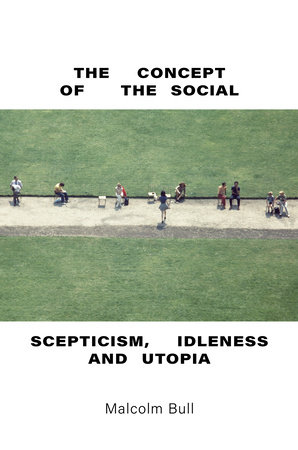
Vectors of the Biopolitical - (Chap. 2) c/o Bull

The Concept of the Social
'From one sentence in Aristotle derive two arresting theoret- ical discourses of the twenty-first century: Michel Foucault's biopolitics, provocatively reformulated by Giorgio Agamben in terms of the relationship between sovereignty and the body, and the capabilities approach developed by Amartya Sen and Martha Nussbaum as a means of evaluating and promoting development, justice and freedom. Both are characterized by deep reflection on the sources of Western political thought, and by urgent engagement with contemporary social and legal problems. Both are in some sense biopolitical in that they are shaped by the interplay of the same Aristotelian categories the human and the animal, politics and nature. But they are on opposite sides of the divide that has opened up in the human sciences since the 1960s, and there currently seems no optic through which they might simultaneously be viewed, no way of integrating or comparing their insights.
 
In part, this reflects a situation in which political debate appears to have fragmented into a multiplicity of single issues. The ancient 'Who will rule?' and the modern 'Who shall have what?' have been supplemented by an array of questions that deal with matters once exclusively cultural, personal or natural. For previous eras, the relative integrity and unmalleability of cultures, bodies and environments rendered such questions redundant. Now they frequently appear unanswerable from within established political traditions, and incommensurable in relation to each other. Within this expanded field, biopolitics and the capabilities approach have unusual salience and potential, for both bundle together issues otherwise assumed to be distinct. If they, in turn, could be coordinated, perhaps we could begin to map the new territory.' p.68.

individual
|
INTERPERSONAL : SCIENCES
humanistic ------------------------------- mechanistic
SOCIOLOGY : POLITICAL
|
group
'Who shall have what?'

nature

human - animal

bio-
culturepolitical

'Who will rule?'


Bull, M. (2021) The Concept of the Social, London: Verso.

Wednesday, February 22, 2023

"In all flat maps (and I am one)" - Donne

'Discordia concors' - 'Concordia discors' ... plus ... 'Site map'*

"Drawing both on the medieval Mappae mundi and the Ptolemaic tradition revived in the Renaissance, the recurrent cartographic motif in John Donne’s poetry well reflects the preoccupations of a revolutionary period in the history of Western cartography. Yet, for all its cosmic magnitude, Donne’s poems, both holy and secular, are turned, not so much towards an exploration of the world as towards an exploration of the Self as the ultimate object of reflection." [Abstract].


Ladan Niayesh, ““All flat maps, and I am one”: Cartographic References in the Poems of John Donne”, Études Épistémè [Online], 10 | 2006, Online since 01 October 2006, connection on 22 February 2023. URL: http://journals.openedition.org/episteme/955; DOI: https://doi.org/10.4000/episteme.955

 INDIVIDUAL
|
 INTERPERSONAL    :     SCIENCES               
HUMANISTIC --------------------------------------  MECHANISTIC   
SOCIOLOGY  :   POLITICAL 
|
GROUP

"Let us take as a first example one of the last poems written by Donne, "Hymn to God my God, in my Sickness", composed either during one of the poet’s serious illnesses in 1623 or alternatively shortly before his death in 1631 ..."


"... Here the poet compares himself, as he lies on his sick-bed, or possibly his death bed, to a flat geographical map studied by his physicians who are compared to cartographers: "my physicians by their love are grown / Cosmographers, and I their map, who lie / Flat on this bed" (ll. 6-8), and later "In all flat maps (and I am one)" (ll. 14)."

The global
Psycho-Social-Geo-Political
legacies and future?


"Yet for all its symbolic Noachid and Christian background, Donne’s cartographic imagery has room for the latest scientific contributions. Newly discovered territories are directly named here: "is the Pacific Sea my home?" (l. 16), "Anyan, and Magellan, and Gibraltar" (l. 18). And if this metaphorical map is a flat one — "In all flat maps (and I am one)" — it is solely for the sake of commodity, as this flat shape actually stands for an acknowledged and accepted spherical reality: "west and east / In all flat maps (...) are one" (ll. 13-14)."


*I found some irony in 'site map' being the final map on the journal's webpage.

Sources:
 
London July 2022 Foyles, Waterstones and other bookshops:
Super-Infinite: The Transformations of John Donne (Hardback)
https://www.faber.co.uk/product/9780571345915-super-infinite/

BBC Radio 4 Super-Infinite by Katherine Rundell [Episode 3]

Previously on W2tQ: 'maps'

Saturday, September 24, 2022

'ABCD' mapped to '1234'*

For context [UK politics and policy] please see below ...

INDIVIDUAL
|
 INTERPERSONAL    :     SCIENCES               
HUMANISTIC --------------------------------------  MECHANISTIC      
SOCIOLOGY  :   POLITICAL 
|
GROUP

BACKLOGS

Person-centred: "Am I there yet?"
Service-centred: "Are we there yet?"


AMBULANCES

'Just in TI:ME' [not]

Hand-me-over-why-don't-you?


(Social) CARE


DOCTORS

DENTISTS


"Sally Warren, director of policy at The King’s Fund,
said that Our Plan for Patients ‘amounts to little more
than tinkering at the edges’ despite containing some
‘sensible’ policies."     https://www.nursinginpractice.com/


Whether tinkering or not, don't forget and do take care around all the edges.
Do 'C' the low-hanging fruit.

[Just to be clear: This isn't about ✔ in boxes.
It's about integrating care, values, quality and safety. ]

https://www.nursinginpractice.com/latest-news/therese-coffeys-plan-for-social-care-only-short-term-solution/

^ and '5' the Spiritual too.

Context:

"Thérèse Anne Coffey is a British politician who has been Deputy Prime Minister of the United Kingdom and Secretary of State for Health and Social Care since 6 September 2022." Wikipedia.

"For Coffey, 'ABCD' stands for ambulances, backlogs, care, doctors and dentists – and rightly so." The Guardian

See also: c/o The Health Foundation

What are the public’s priorities for the NHS? And is the government listening?


Friday, October 01, 2021

Agnotology - (a) space for ignorance?

 Chapter 1 of Agnotology (Proctor, 2008) begins with two quotations:

“We are often unaware of the scope and structure of our ignorance. Ignorance
is not just a blank space on a person's mental map. It has contours and coher-
ence, and for all I know rules of operation as well. So as a corollary to writing
about what we know, maybe we should add getting familiar with our ignorance.”
Thomas Pynchon, 1984


“Doubt is our product.”
Brown & Williamson Tobacco Company, internal memo, 1969


The discovery of this book and its title, was quite an event.

Proctor, Robert N. and Schiebinger, Londa (Eds.). AGNOTOLOGY The Making And Unmaking Of Ignorance. (2008): Stanford University Press, Stanford, California.


Previously on W2tQ:

'ignorance'

'smoking'

Saturday, August 21, 2021

"Mapping Beyond Cartography" - to Situated Cognitive Maps

"... the ‘spatial turn’ in the humanities has been partially overtaken by an ‘object turn’ in which relations between things are not primarily considered in spatial terms." pp. 53-54.


Individual
|

INTERPERSONAL : SCIENCES
humanistic ------------------------------------- mechanistic
SOCIOLOGY : POLITICAL
|
Group

"Tuters (2010), for example, calls for ‘post-locative practices’ that move beyond a ‘mannerist situationism’ to emphasize ‘situated’ rather than located media. This requires replacing ‘the concept of geographic location as the core concept of locativity, with the more relational notion of proximity, not only in relation to place but also in relation to matters-of-concern’ (2012: 275). This shift is advantageous in that it allows that locative media (or some successor form of it) might address relations and phenomena that are not fixed to terra firma, but it also suggests that space has become completely irrelevant, that geographic maps might, as Tuters suggests, be replaced by cognitive maps (2012: 274). p.63.


"... even in a world without the surefooted sense of grip that cartography once provided, I want to suggest that there are other ways by which to find some sense of orientation. In unfamiliar territory and without a map, the wayfarer draws on the tales of travellers who have gone before, surveys the shape of the landscape with an eye for landmarks, builds cairns where there are none, and eventually learns how to triangulate between them and make some kind of map –whether cognitive, sketched or plotted. In a situation in which the maps we increasingly inhabit subject us to a form of colonization, there seems no alternative but to ‘map or be mapped’." p.383.

"For Edward Tufte, computer-generated visualizations of data are simply the latest iteration of a brand of ‘cognitive arts’ that includes maps, alongside mathematical projects, scientific charts and diagrams, and even MRI scans (1990: 40)." P.173.

"Indeed, for Fredric Jameson, post-modernity’s ‘un-map-ability’ is its key defining characteristic: ‘this latest mutation in space—postmodern hyperspace—has finally succeeded in transcending the capacities of the individual human body to locate itself, to organize its immediate surroundings perceptually, and cognitively to map its position in a mappable external world (1991: 83). This crisis of representation in cartography calls for new kinds of maps; for Jameson, a form of ‘cognitive mapping’ that might allow the individual to locate themselves not just spatially, but economically, culturally and politically." p.82.

Daniel James Frodsham, April 2015. Mapping Beyond Cartography:The Experimental Maps of Artists Working with Locative Media. PhD thesis. University of Exeter. https://ore.exeter.ac.uk/repository/bitstream/handle/10871/19185/FrodshamD_TPC.pdf


Wednesday, July 28, 2021

New citation / reference for Hodges' model in J Adv Nurs.


Here is the new reference to Hodges' model which I have added to the bibliography:

Hamilton EAA, Dornan L, Sinclair M, McCoy J, Hanna-Trainor L, Kernohan WG. A scoping review protocol: Mapping the range of policy-related evidence influencing maternal health outcomes in a fragile, low-income country. J Adv Nurs. 2021 Jul 20. doi: 10.1111/jan.14956. Epub ahead of print. PMID: 34288043. 

Whatever your field if you are interested in learning more about Hodges' model I would be pleased to hear from you - whether or not you are in a 'field' and whatever colour it happens to be green, blue, red, black-white.

Ack. Research Gate's alert.

Thursday, January 21, 2021

Book review: iii "Leave No One Behind" #LNOB

Arriving at chapter 4 "No Smallholder Farmer Left Behind" by Jane Nelson,I was acutely aware of the news from India in the (N) autumn. Smallholders and family farmers protested about newly enacted farm laws. The government claimed the changes would protect the farmers from bullying middlemen, while the farmers were afraid of price instability and the rise of corporations*. Even in today's news I note this issue is ongoing. Very quickly any romantic notions of smallholder farmers are challenged reading this book and must be set aside. How can being a farmer (and agricultural laborers) equate with being among the world's poorest and most vulnerable and yet they number an estimated 500 million? There are 200 million smallholders producing food as part of formal supply chains and yet they are in extreme poverty and were circumstances are improved, there is a risk of relapse. 

Leave No One Behind
The talk of public-private partnerships, even if 'new' is disconcerting. This is the 21st C. though as  'inclusive business models' are defined. I was (slightly) shocked at the proximity of businesses and corporations, what choices do 'small-players' have? This is the value of the book, correcting parochial notions from Wigan Pier.

With an eye on the Green agenda though, and reading of the role for technology it still unsettles me thinking about bio-genetics, digital colonialisation when reading of the role of digital technology. With low and high Earth orbits filling up, there should be improved broadband access in remote locations, but I do wonder about choice. This is were the authors and organisations will no doubt push an advocacy role (p.68).

  As I mention orbits and digital technology, mapping is key and to smallholder farmers too:

It is good to hear of development work that is also climate-smart. Leapfrogging is a important idea in the book (to follow) but I hope that as mobile technology has jumped the communications infrastructure of some developed nations that small-holders here can also leapfrog. The book's footnotes do not leapfrog, they are fairly constant and a very rich thread of learning and sources. A key and literal platform for leapfrog is big data and AI (p.70) [ https://www.brookings.edu/research/using-big-data-and-artificial-intelligence-to-accelerate-global-development/ ]. Hopefully, this blog demonstrates my enthusiasm and interest in STEM, again with these influences I can't help recalling my review of Friel's LITTLE-big book on climate change and the people's health in which attention to the nutritional value of food is stressed. When Nelson asks of the poorest farmers "What are they eating?" (p.76) yes, you do have to ask. 

Give me a page of text and certain words standout a kilometer. 'Holistic' is one. So, holistic investment in infrastructure is needed (p.77) and a holistic approach to on- and off-farm interventions. The expertise, experience and political awareness of the development community is evident here in accounts of measures and evaluation. Rurbanomics (p.77) concerns the linkages between rural and urban economies and in policy terms there could be specific mention of the rural phenomena of 'empty villages' (in the EU too?) and the need to better manage the movement of people from rural to urban environments.

The chapter organisation is almost logical moving to refugees and migrants [Chap. 5]. I've posted before on geopsychiatry and it will be interesting to see in coming years if non-refoulement (p.79) routinely enters the news lexicon. At this time, how the majority of us wish we could travel, and p.82 had me wondering about ancient history before 'countries': no nations. Discussion of the definition and its limitations of 'refugee' 1951 is very informative, especially as it relates to the SDGs, which includes migrants. You can see how much crossover there is (and must be - sustainable determinants of health ...) between the SDGs and hence the need for all governments to address this in policy and law. 

Working in healthcare and c/o Brexit and the COVID crisis you are aware of the global nursing and social care workforce.  This is described here in terms of training (p.96) To state the obvious, politically, refugees and migration remain a charged matter. Quite rightly the gains from international refugee and migration flows have a section of their own. Since the 1990s you become ever more aware of remittances sent abroad (and until recently the cost of the same). Talk of seasonal work has an analogue in the seasonal routes that people at great risk whatever their reasons, make from Africa and Asia. I've mapped some content from chapter 5 to Hodges' model:

INDIVIDUAL
|
INTERPERSONAL : SCIENCES
humanistic ----------------------------------------------- mechanistic
SOCIOLOGY : POLITICAL
|
GROUP - COMMUNITY - POPULATION
mental health
post-traumatic stress
knowledge diffusion

access to shelter, water,
health care and sanitation
rural - urban
border regions
cities
social media
social attitudes in receiving nations
sexual and gender-based violence
formal labor market access
informal camp employment?
remittance flows
'mechanism design theory' p.93
land registration
having an 'address'

I learned of What3Words quite a while ago** and the addition of 'having an address' in the POLITICAL domain is an addition. I knew an article in May (FT Magazine, 16-17 May 2020, pp.32-35.) would come in handy:

"Where the streets have no name" by Deirdre Mask - The Address Book. 

An illustration by Andy Robert Davies says it all:

Mask's book points out the obvious that if you are Stateless you are address-less too. The health - political implications here are serious and this problem is not restricted to 'developing' nations. So much is tied to this: track and trace, having a bank account, being able to vote all can depend on this specific information. Without an address, a default - whether acknowledged or not - of 'data missing' in census data gathering follows. For many nations the 'census year' has been disrupted by the pandemic. 

Referring back to migrants, refugees and the recent politicization and nationalistic rhetoric, reading made me wonder about government's ability to envision the positive potential of migration flows and refugees. The statistics are revealing in the impressions provided by social media and news reporting. The problem for (some) policy makers and resident populations given the bias and misinformation of reporting seems to me, extracting individual and family narratives from the collective.

The reader is very well served with the index, if needed, while reading and my writing here. Unless I've missed it, there is a missing reference to 'tax' on page 312, which we'll reach next time. It is an important one.

Homi Kharas, John W. McArthur and Izumi Ohno, (Eds.) 2020. Leave No One Behind: Time for Specifics on the Sustainable Development Goals, Washington D.C.: Brookings Institution Press.  

*https://www.aljazeera.com/economy/2020/12/1/why-are-thousands-of-indian-farmers-protesting

**https://hodges-model.blogspot.com/2016/04/what3words-mapping-globe-hodges-model.html

Wednesday, July 01, 2020

Mutation maps and Genograms in ...

the Health Career Model


individual
|
INTERPERSONAL : SCIENCES
humanistic ----------------------------------------------- mechanistic
SOCIOLOGY : POLITICAL
|
group - population

Mutation map - Ian Bott
Medical Family Genogram - ConceptDraw


Mutation map
Is part of a larger illustration created by Ian Bott for an article in the FT:
Cookson, C. (2020) Mutations map holds key to pandemic fight, FTWeekend, 22 April, p.6.

The full illustration is accessible below:
https://twitter.com/ian_bott_artist/status/1252923754457563136?s=20

Ian's website:
http://www.ianbottillustration.co.uk/
Thank you Ian for your help.

Genogram example:
https://www.pinterest.co.uk/pin/510454939014812330/

Saturday, April 04, 2020

VerbAtlas 1.0 - Semantic Role Labeling and beyond! c/o Roberto Navigli

VerbAtlas 1.0 - Semantic Role Labeling and beyond!

We are proud to announce that VerbAtlas 1.0 (http://verbatlas.org) is finally available for download at http://verbatlas.org/download. Developed in the Sapienza NLP group (http://nlp.uniroma1.it), the multilingual Natural Language Processing research team at the Sapienza University of Rome, VerbAtlas is a novel large-scale manually-crafted semantic resource for wide-coverage, intelligible and scalable Semantic Role Labeling. The goal of VerbAtlas is to manually cluster WordNet synsets that share similar semantics into sets of semantically-coherent frames. The main features are:
  • 466 semantically-coherent frames using 26 cross-frame VerbNet-inspired semantic roles for their argument structure.
  • Available both for download and via RESTful API.
  • Full coverage of WordNet 3.0 verb synsets (13,000+).
  • Complete linkage to BabelNet 4.0, which supports 280+ languages (new version to come later this year!).
  • Manual mapping to PropBank of all CoNLL-2009 and CoNLL-2012 dataset occurrences (5000+ mappings).
  • Selectional preferences: the superconcept most probably associated with a semantic role in a frame (e.g. food for the patient role of the EAT frame).
  • Default/shadow arguments: arguments logically implied or already incorporated into a verb.
  • Implicit arguments: arguments that are implicit in the argument structure of a verb.
And much more! Please check out our EMNLP 2019 paper:

A. Di Fabio, S. Conia, R. Navigli “VerbAtlas: a Novel Large-Scale Verbal Semantic Resource and Its Application to Semantic Role Labeling”, EMNLP-IJCNLP 2019, pp. 627-637

and http://verbatlas.org for more details!

A state-of-the-art span-based SRL system which uses VerbAtlas and PropBank jointly is also available from the same website (just type a sentence!).

VerbAtlas is an output of the MOUSSE ERC Consolidator Grant n. 726487 and the ELEXIS project no.731015. Babelscape proudly developed the online interface and API, provides the infrastructure for maintaining the service and works on the improvement of the resource. 

Enjoy!
The Sapienza NLP group
=====================================
Roberto Navigli
Dipartimento di Informatica
Sapienza University of Rome
Viale Regina Elena 295b (building G, second floor)
00161 Roma Italy
Home Page: http://wwwusers.di.uniroma1.it/~navigli
Sapienza NLP Group: http://nlp.uniroma1.it
My Source:
The Semantic-web list @w3.org


What are / should be the current core verbs allocated to each of the care (knowledge) domains of Hodges' model?


individual
|
INTERPERSONAL : SCIENCES
humanistic ----------------------------------------------- mechanistic
SOCIOLOGY : POLITICAL
|
group - population

*personalise


scientify


socialise

 politicise
*(intra- inter-)personalise?


From above introduction to VerbAtlas:

"A state-of-the-art span-based SRL system which uses VerbAtlas and PropBank jointly is also available from the same website (just type a sentence!)."

Sentence: "Nurses wear certified personal protective equipment to care for patients with Coronavirus." in VerbAtlas 1.0


See also:


Friday, February 07, 2020

Post enigma 2008 ADLS

I've found back in 2008 there is reference to a non-existent post. I'm not sure what happened, but do remember considering this:

https://hodges-model.blogspot.com/2008/09/holistic-care-what-is-holistic.html

Creature of habit and habitat that I am, I also appear to have used the same 'strategy' of mapping concepts to the domains of Hodges' model.

In this case the focus was activities of (daily) living. It is this strategy that is employed in a draft paper still to be revised but on the Sustainable Development Goals. This exercise is not just reflective, there is a reflexive quality to it. The fact that asymmetry is revealed should not be surprising. In this post the clue is in the word 'activities' and ADLs and what is often deemed primary in theory, practice and common-sense.

To be revised ...


Friday, January 10, 2020

Review: vi Kinchin's Visualising Powerful Knowledge to Develop the Expert Student

I have had a look at CMAP Tools over the years. My not actually using this software is an omission I must admit.. This year I will give CMAP a concerted try (and a review)?

My notes at the end of chapter 5 include: from bedside manner to fireside with regard to well-being. I think this was prompted by the conclusion students developing expertise (knowledge structures) not just as part of the curriculum, but motivation to extend their knowledge to "integrate characteristics of their future profession within their current studies" (p.84). My thought points to an increasing challenge to the 'professions' that governing bodies must be acutely mindful of, but also sustains and expands the space for non-professional experts - hence the 'fireside'. In mental health were lived experience continues to be pathologised and governments look to economise (professional rates of pay) this really brings home the future agenda.

Chapter 6 "Embedding Wider Theory" begins with a timeline from the 1960s that identifies key steps in theories, software conferences and journals (p.87).

By default Hodges' model can help transcend differences in terminology and make the links and overlap between the theories of Ausubel (in Psychology) and Bernstein (sociology, p.89). Diagrams being used to depict their respective work and support a more holistic view (my wording). Threshold Concepts are introduced (pp.89-92) and the discussion that follows of semantic gravity is a great insight (pp.93-100) together with the idea of punctuated learning. Perhaps the latter is also assisted by having a conceptual Swiss army knife ready-to-hand for when a burst (a step) of learning is initiated? There are many quotes here that I might return to later in the year.

As a student previously and mentor feedback is central and chapter 7 builds on chapter 6 and continues a call for change in feedback on learning AND teaching. 'Recipience' is stressed with its own section (pp.111-12); students may bemoan a lack of feedback but when provided do they engage with it? The book is rich throughout including this chapter and chapter 8 (final). As already noted an index would help, but I'm still bound to consider the related titles.

These posts have been text heavy, but for illustration purposes, the pièce de résistance is figure 44 on page 124:


Figure 44, page 124

I wonder if there is a common model that can act as a generic structure for readers and students disciplinary AND experiential knowledge structures?


Roland Tormey (2014) The centre cannot hold: untangling two different trajectories of the ‘approaches to learning’ framework, Teaching in Higher Education, 19:1, 1-12.
DOI: 10.1080/13562517.2013.827648

Novak, J.D. and Symington, D.J. (1982) Concept mapping for curriculum development. Victoria Institute for Educational Research Bulletin, 48: 3–11.

Kinchin, I., (2016) Visualising powerful knowledge to develop the expert student. Rotterdam: Sense Publishers.


Many thanks to Brill for the review copy:

https://brill.com/view/title/37823

BRILL  | Plantijnstraat 2 | 2321 JC Leiden | The Netherlands
BRILL  | P.O. Box 9000 | 2300 PA Leiden | The Netherlands


See also:

Intro post

Review One

Two

Three

Four

Five

Saturday, January 04, 2020

Review: v Kinchin's Visualising Powerful Knowledge to Develop the Expert Student

Still just in chapter 4 'Presenting the Curriculum'...

Threshold concepts are mentioned on page 57 but not explained (as yet).

There is interesting discussion of students being able to navigate their subjects. On levels of discourse and the role of textbooks. What do textbooks do? What do they not do?

I know this 'review' is a selective reading with my eye on Hodges' model, but the 'evidence' to support #h2cm really stands out. For example, on page 60, the curriculum as a political currency. So informative that I am looking forward to teaching opportunities in the Spring and the possibility of delivering a workshop in the autumn. Tufte is referenced in discussion on Powerpoint, bullet points and the form of notes. Powerpoint is also contrasted with concept mapping, as an affordance for learning.

At the heart of the book Chapter 5 'The Expert Student' is subtitled 'The Need to Manipulate Knowledge'. This gets to nub of the 'traditional' approach to much teaching, the regurgitation of facts. Figure 28, a concept map (of course), suggests and illustrates the dichotomy between competence (chains) and understanding (nets) but these together can make both learning and teaching a fluid, dynamic and rewarding experience (p.74). This is effectively what follows in models of expertise that also addresses the theory practice gap (p.76).

Kinchin's main point for me and what I've been aware of for too many years on W2tQ is that it is the knowledge connections between concepts that are more important than the concepts themselves (p.77). C/o Elvira et al. (2016), ten interrelated instructional principle for expertise development are listed (pp.76-79) and bear specific analysis here (including the content of Hodges' model within a new web environment - how I wish...!).

There's mention of a 'conceptual spine' which is great to read (p.83) but I think the challenge of education and the 21st Century calls for at least two [ Why settle for one! ;-) ]. The concept of 'resilience' is over-used of late (especially in mental health) and is diminished as a consequence. Perhaps, however a call for conceptual resilience AND assurance is very appropriate (testing this resilience is learning)?

'Moving between knowledge structures', that is, theory and practice should be an inevitable experience for students in their learning. Kinchin writes specifically on this with figures to match. On twitter of late (yes, my @h2cm 'bubble') there have been many tweets expressing concern about not just nurse recruitment and retention but student's too. Kinchin notes: "When students are interested or excited with the curriculum they are more likely to develop other positive emotions." (p.83). As I write this a New Year refresh is upon us. I have a template for Hodges' model pre-populated with content that doubtless needs updating. But with every new situation and patient encounter, there is a refresh, new learning to be sought with the patient/carer.

To be completed (but don't wait for me get your own copy!) ;-)

Roland Tormey (2014) The centre cannot hold: untangling two different trajectories of the ‘approaches to learning’ framework, Teaching in Higher Education, 19:1, 1-12.
DOI: 10.1080/13562517.2013.827648

Novak, J.D. and Symington, D.J. (1982) Concept mapping for curriculum development. Victoria Institute for Educational Research Bulletin, 48: 3–11.

Kinchin, I., (2016) Visualising powerful knowledge to develop the expert student. Rotterdam: Sense Publishers.


See also:

Intro post

Review One

Two

Three

Four

Six

Thanks to Brill for my review copy.

Saturday, December 21, 2019

Review: iv Kinchin's Visualising Powerful Knowledge to Develop the Expert Student

It seems there is no escape from 'learning styles'. Just when you thought they are dated and defunct like a Whac-A-Mole up they pop.

Here on serialists and holist - 'big picture' learners (p.37). Kinchin writes:

"Like the deep-surface binary, the holist-serialist dichotomy covers a diversity of perspectives, details of which can be analysed using concept mapping. Concept maps provide an indicator of a student's learning approach for a given context. Raynor and Riding (1997:21) have speculated that:

"The idea that 'style awareness' may help reach reach the 'hard to reach', and perhaps contribute to reducing failure generally by enhancing the learning process, is an elusive but tantalising prospect which clearly merits further attention.' (p.37)
Kinchin cites research on the influence of existing knowledge on learning. How students may simultaneously hold misconceptions and more acceptable (professional) conceptions. Perhaps a way to resolve the learning styles 'debate' is to have tools that can potentially cater for all learning styles? The chapter heading 'Patterns of Learning' points to other requirements, especially in respect of personal learning journeys. As Kinchin discusses conceptual ecologies. This is a very appropriate description for what Hodges' model provides (p.38); and a gestalt (p.43). The domains encourage 'travel' and exploration, as the student formulates a "cycle of concepts" (within one, or around several domains) a means to help integrate a context or situation. The domains of Hodges' model act as placeholders for several concepts simultaneously, whether contentious or not (p.38) or as a source of  'troublesome knowledge'." (p.37).

I've been drawn to Dewey and pragmatism in educational thought, given the accent on a natural and active approach to learning. Chapter 4 moves to Presenting the Curriculum (subtitle: hiding the discipline from view). This surely speaks to the interdisciplinary, interprofessional nature of education in the 21st Century and even the increasing instances(?) when transdisciplinary approaches are needed? Hodges' model predates Project 2000 and the shift of UK nurse education to degree pathways. Mid 1980s the model was created to facilitate curriculum design and Kinchin sees concept maps as evidencing curriculum design and a means to communicate design, communication and implementation.

Four reasons for use of concept maps in relation to curriculum design - summarised here:

1. Concepts maps support 'big picture thinking'. ...
2. Concept maps are embedded in contructivist learning theory ...
3. Concept maps support collaborative planning ...
4. Concept maps reduce the 'cognitive load' placed on teachers* ... (p.54).

I like to the emphasis in this book on structure. The concept maps - learning patterns and curricula, knowledge and very well referenced. 'Cumulative learning' could refer to cramming, committing facts to memory for regurgitation, but it doesn't. It is about student's "understandings integrate and subsume with previous knowledge, or 'segmented learning' where new ideas or skills are accumulated alongside rather than build on past knowledge." (p.55).

Not quite the center of the book, but page 56 introduces a key concept (in Chapter 7) in semantic gravity.

*This came up a lot generally - students too - within educational technology in MRES studies at University of Lancaster.

to be continued...

Roland Tormey (2014) The centre cannot hold: untangling two different trajectories of the ‘approaches to learning’ framework, Teaching in Higher Education, 19:1, 1-12.
DOI: 10.1080/13562517.2013.827648

Novak, J.D. and Symington, D.J. (1982) Concept mapping for curriculum development. Victoria Institute for Educational Research Bulletin, 48: 3–11.

Kinchin, I., (2016) Visualising powerful knowledge to develop the expert student. Rotterdam: Sense Publishers.


See also:

Intro post

Review One

Two

Three

Five

Six

Thanks to Brill for my review copy.

Monday, December 16, 2019

Review: iii Kinchin's Visualising Powerful Knowledge to Develop the Expert Student


Also aimed at general as well as readers in education, this is an accessible read. The book's compact size, eight chapters across 134 pages invites completion even though I took quite a few weeks.

Book reviews here are a bit 'unconventional' with the two axes I have to grind [ ;-) ]. Returning to chapter 2 momentarily and map topography. Kinchin explains how concept maps of various types can be better understood and evaluated - a process of 'topological normalisation' (p.27). On W2tQ I may sound like 'I have it in' for process and processes. I do, in the importance they seem to assume within project management. I do 'get this'. A focus on processes is inevitable and readily appreciated in Hodges' model.

No process then ... no time, sequences, events, change, movement, spatial references and so on ... Kinchin's inclusion of  'topological normalisation' is very constructive (imho) as it indicates a method (as with measuring concept maps) and suggests something beyond an algorithmic approach.

The phrase (inevitably?) reminded me of database normalization:

".. the process of structuring a relational database."
https://en.wikipedia.org/wiki/Database_normalization

So, topological normalisation and associated structures provides the icing.

Little wonder then that next up in chapter Kinchin's Table 1 lists the characteristics of

'Deep Learning' and 'Shallow Learning'

So cake and icing clearly.

On deep learning the first item is ''Linking new information with prior knowledge'. This is central in Hodges' model and the reflection (individual or group) and critical thinking that the model can help generate. With all the claims for VR AR, this (reflection / reflective practice facilitated by Hodges' model) is conceptually immersive (and a definition of learning?).

From this, another item is realised. As learners engage with content; find, 'own' and sustain their enthusiasm for their learning, understanding and the subjects and parts of the curriculum they find themselves learning within. The sum total is: structured networks of knowledge (p.36).

This gets even better with the subheading: 'Oppositional Binaries'.

Hodges' model provides two binaries - but (apologies - another time!) let's get back to the book.

While 'Deep learning' has its advocates, Kinchin quotes Tormey (2014:4) who warns:

'a framework that is simple enough to be a powerful metaphor may be too simple to adequately account for learning in different contexts' and that its blind acceptance by new entrants to the profession has 'imposed blinkers that make alternative conceptualisations invisible'.
Finding further evidence to support Hodges' model within this debate is invaluable.

to be continued...

Roland Tormey (2014) The centre cannot hold: untangling two different trajectories of the ‘approaches to learning’ framework, Teaching in Higher Education, 19:1, 1-12.
DOI: 10.1080/13562517.2013.827648

Novak, J.D. and Symington, D.J. (1982) Concept mapping for curriculum development. Victoria Institute for Educational Research Bulletin, 48: 3–11.

Kinchin, I., (2016) Visualising powerful knowledge to develop the expert student. Rotterdam: Sense Publishers.


See also:

Intro post

Review One

... Two

... Four

... Five

... Six

Many thanks to Brill for my review copy.