Hodges' Model: Welcome to the QUAD: climate change

Hodges' model is a conceptual framework to support reflection and critical thinking. Situated, the model can help integrate all disciplines (academic and professional). Amid news items, are posts that illustrate the scope and application of the model. A bibliography and A4 template are provided in the sidebar. Welcome to the QUAD ...

Showing posts with label climate change. Show all posts

Tuesday, September 08, 2026

Climate and the Feeling of [Momentarily] Drier Feet: Australia-Tuvalu Falepili Union Treaty

As is oft the case, I recovered a newspaper cutting (or ripping) that made my feet feel drier, for several moments at any rate ...

Reading this really gave me a lift, given the ongoing state of world events then and now:

Australia-Tuvalu Falepili Union treaty

The Australia-Tuvalu Falepili Union treaty was signed on 9 November 2023 and entered into force on 28 August 2024.

As part of the Falepili Union treaty, Australia has:

  • recognised for the first time in a legally binding treaty, Tuvalu's continuing statehood and sovereignty, notwithstanding the impact of climate-change related sea-level rise
  • committed to assist Tuvalu in response to a major natural disaster, health pandemic or military aggression
  • created a special visa pathway to support mobility with dignity, which will enable citizens of Tuvalu to come to Australia to live, work and study.

There are also obligations under the Treaty to ensure Australian interests are protected and to facilitate the smooth operation of the migration pathway and increased security cooperation:

  • Tuvalu is obliged to ensure its immigration, passport, citizenship and border controls are robust and meet international standards for integrity and security
  • Tuvalu will mutually agree with Australia any partnership, arrangement or engagement with any other State or entity on security and defence-related matters in Tuvalu.

Continued ...

My source: Nic Fildes, Migration: Australia offers Tuvalu residents visa to escape climate change. FTWeekend, 11-12 November 2023, p.4.

Wednesday, August 12, 2026

Total eclipse: The terminator moves faster than you think

individual
|
INTERPERSONAL
: SCIENCES             
humanistic ------------------------------- mechanistic
SOCIOLOGY : POLITICAL   
|
group

Between the new and full moon the terminator - the line demarcating what is lit from what is dark changes all the time. This is imperceptible with the naked eye.

A telescope at low magnification reveals the moon in all its glory. At a higher power with manual control you have to keep moving to keep up, as the moon other-worldly slides out of view.

What of the terminator between poverty and wealth; ultrapoverty and ultrawealthy?

It is plain to see and so - easy to deny; but their instruments are hopeless, they watch indoors, fixed on their screens.


Total Solar Eclipse – August 12, 2026

See also: https://en.wikipedia.org/wiki/Terminator_(solar) 

Previously: 'terminator' 

Friday, June 26, 2026

World Justice Report: a Plan for Equality and Prosperity Within Planetary Boundaries

Box 1: Combining Global Equality and Planetary Habitability

The Global Justice Report describes desirable future scenarios combining two key goals: socioeconomic equality (including full equality between countries, full gender equality in labour hours and pay, sharp compression of within country income and wealth scales, combined with fair access to education, health and political voice), and planetary habitability (aligning global resource use within ecological boundaries, including a limitation of global temperature rise below 2°C). 

To avoid climate catastrophes, we show that sufficiency is required: a structural transformation of the economy involving shorter working hours, a lower material footprint, a shift from material-intensive sectors toward relatively immaterial sectors such as education and health, and major changes in food systems and land use. Rapid decarbonization of energy systems is also necessary, as is the sharp compression of income and wealth inequality. This compression is both a social justice objective and a condition for financing necessary climate investment and human capital expenditure and for sustaining political support from bottom- and middle-income classes in both the North and the South. 

Box 2: Material and Monetary Accounting for Democratic Debate

Economy and ecology cannot be debated apart: every economic activity has a material footprint, every ecological policy shapes incomes and wealth. To make these links visible, the Global Justice Report uses multidimensional social progress indicators. We set quantitative targets for global socioeconomic justice by combining two complementary languages: material accounting (work hours, sectoral shares, education and health, energy systems, GHG emissions, land use, forest cover, temperature levels) and monetary accounting (income and wealth scales between and within countries, progressive tax rates). The report draws on two centuries of historical data on global inequality and resource use, and on the recent literature on social progress, climate and colonial reparations. 

The Global Justice Report proposes a quantitatively and institutionally grounded step toward global justice. It does not seek to close the debate: it offers a transparent basis on which citizens, unions, parliaments, and international bodies can debate, contest, and decide the course of the coming decades.

...

Chancel, L., Dietrich, J., Mohren, C., Moshrif, R., Odersky, M., Piketty, T., Somanchi, A., et al. (2026), The Global Justice Report: A Plan for Equality & Prosperity Within Planetary Boundaries, World Inequality Lab (gjp.wid.world).

individual
|
INTERPERSONAL
: SCIENCES             
humanistic ------------------------------- mechanistic
SOCIOLOGY : POLITICAL   
|
group 


SOCIAL JUSTICE


Previously: 'wealth' : 'poverty' : 'social justice'

 My source: BBC Radio 4 World at One.


Thursday, May 21, 2026

June 4-5 'Ecologies of Care' - London, UK

With more to follow from RCN Congress, this morning I received the agenda for next month's conference 'Ecologies of Care'. I am speaking, first session on the Thursday, which is a good to know and see the broad range of presentations. 

The focus on attention, is helpful for a possible further event in October. In the meantime, the Call for Papers began:

Chancellor’s Hall, Senate House London

June 4 & 5, 2026

Keynote lecture by Professor Yves Citton

How do increasing demands on our attention influence what we know, and how we act, in response to climate change? Despite a strong scientific consensus that climate change is ongoing and anthropogenic, political and legal action remains fragmented. Ecologies of Care asks to what extent the environmental crisis is a crisis of attention. Speaking to the dynamics of the attention economy, Yves Citton notes that “the new scarcity is no longer to be situated on the side of material goods to be produced, but on the attention necessary to consume them.” The word ‘attention’ is etymologically linked to the notion of care, or that which one attends to. This relationship (of subject and object) is fundamentally collective, insofar as collective attentional regimes influence what each one of us pays attention to on a daily basis, and how we navigate the barrage of informational flows from popular media.

Terms such as "the Anthropocene" and "planetary boundaries" function both as scientific descriptors and attempts to provoke action commensurate to the urgency that scientists believe their research demonstrates. The recent decision not to formalize the Anthropocene as an official geological unit, for example, highlights growing unease concerning intensifying media attention directed at scientific expertise. Under conditions of increasing disparity between what we know, and how we act, in response to climate change, the role of scientific expertise plays an increasingly normative, and not only informative, function. Scientific expertise attempts to direct what we attend to, and consequently, how (or if) we care. This is a collective practice of narrating and internalizing mythologies, whereby informational flows draw attention to some thing that needs to be cared for: Earth, the planetary, capital, or each other.

Continued ...

 c/o Law and the Environmental Humanities Network

n.b. With little time, I'm not going to transfer the pdf text, but may add here.

Wednesday, March 25, 2026

Call for Submissions: Reimagining the Frontline - The Evolving Roles of Community Health Workers (CHWs) in a Changing World

Dear HIFA Colleagues,

Are you a researcher operating in the community health space?

Sage Health Service Insight Journal, a JCR-ranked, peer-reviewed, fully Open Access journal with an Impact Factor of 2.5. launched a Special Collection focused titled:

Reimagining the Frontline:

The Evolving Roles of Community Health Workers (CHWs) in a Changing World
 https://journals.sagepub.com/topic/collections-his/002164/hisa

Your perspective would be invaluable to this collection, especially at a time when CHWs are at a pivotal crossroad. From navigating funding pressures and the health impacts of climate change to harnessing AI and digital tools, their roles are evolving faster than ever. This collection seeks to capture that transformation through rigorous, forward-looking research.

We welcome research articles and review articles on these topics: 
  • Sustainable financing and economic models in a constrained landscape 
  • Digital transformation: AI, mHealth, and data equity
  • Adapting to emerging health threats and new health conditions 
  • CHW resilience and wellbeing
Submission deadline: 13 July 2026

Additionally, authors may be eligible for APC discount through: Please note that only the highest applicable discount would apply to the standard publication fee, as authors would be unable to stack the discounts.

We deeply appreciate your consideration and would be delighted to feature your work in this Special Collection. Please feel free to reach out if you have any further questions.

Should you have any questions about the Special Collection, please do not hesitate to reach out to the Guest Editors directly: Abimbola.Olaniran AT outlook.com and Roosa.Sofia.Tikkanen AT fhi.no. For journal-related queries, please contact: Katalin.Orosz AT sagepub.co.uk

Thank you so much for considering this invitation. I truly look forward to the possibility of featuring your work.

Best regards,

Drs Abimbola Olaniran & Roosa Sofia Tikkanen Guest Editors, Health Services Insights Special Collection

HIFA profile: Abimbola A. Olaniran (MB;BS, PhD, EMBA) is a physician, researcher, and digital health entrepreneur with over twenty years of experience at the intersection of clinical care, health systems research, and policy in Africa. He continues to collaborate with local and international partners as well as national governments across Africa on health policy, workforce planning, and implementation research. His mission is to ensure that the AI revolution serves the most underserved, building from the continent, for the continent. Abimbola.Olaniran AT outlook.com
 
🔷 

Just to add: In addition, if I can support any CHW's and team colleagues and managers in a contribution using Hodges' model, I would be pleased to do so.

My source: HIFA list

Thursday, January 01, 2026

NEW YEAR: Ongoing support for the 17 SDGs UN

Individual
|
     INTERPERSONAL    :     SCIENCES               
HUMANISTIC  --------------------------------------  MECHANISTIC      
 SOCIOLOGY  :    POLITICAL 
|
Group

security & peace

security & peace
security & peace


See also:
Jones P, Wirnitzer K. Hodges’ model: the Sustainable Development Goals and public health – universal health coverage demands a universal framework. BMJ Nutrition, Prevention & Health 2022;5: doi:10.1136/bmjnph-2021-000254 
https://nutrition.bmj.com/content/5/2/358
 

Source: https://x.com/UNDP/status/2006591346522599746?s=20

See also: 'SDGs' : 'security' : 'poverty' : 'nutrition' : 'water'

Wednesday, December 31, 2025

‘Life & health’: overview of global health, climate crises, SDGs and Africa Agenda 2030

26 December, 2025 

Afrihealth Optonet Association (AHOA) proudly announces its Maiden ‘Life & Health’ Symposium, a landmark convening designed to inspire dialogue, innovation, and collective action around one of the most pressing issues of our time: “Overview of Global Health, Climate Crises, SDGs and Africa Agenda 2030.” This inaugural symposium represents AHOA’s commitment to shaping forward-looking conversations that connect health, environment, and sustainable development across Africa and beyond.

The world is experiencing an unprecedented convergence of health challenges and climate-related crises. Rising temperatures, extreme weather events, environmental degradation, and biodiversity loss are reshaping disease patterns, food systems, water security, and livelihoods. These realities disproportionately affect low- and middle-income countries, particularly in Africa, where fragile health systems and socioeconomic inequalities amplify vulnerability. The ‘Life & Health’ Symposium seeks to interrogate these realities and offer integrated, actionable pathways aligned with the Sustainable Development Goals (SDGs) and Africa Agenda 2030.

At the heart of the symposium is a bold premise: health is both a driver and an outcome of sustainable development. Achieving good health and well-being (SDG 3) is inseparable from progress on climate action (SDG 13), clean water and sanitation (SDG 6), zero hunger (SDG 2), sustainable cities (SDG 11), and reduced inequalities (SDG 10). By convening experts across disciplines, the symposium will explore how these interconnected goals can be pursued through coordinated policies, resilient systems, and inclusive partnerships.

The Maiden ‘Life & Health’ Symposium is designed as a multi-stakeholder platform, bringing together policymakers, health professionals, climate experts, development practitioners, civil society leaders, academics, youth advocates, and the private sector. Participants will engage in high-level discussions, evidence-based presentations, and solution-oriented exchanges that bridge science, policy, and practice. The symposium will also provide a space for emerging voices and community perspectives, ensuring that local realities inform global ambitions.

A key focus of the symposium is Africa’s Agenda 2030, which contextualizes global commitments within the continent’s development aspirations. Africa stands at a pivotal moment: with a rapidly growing youth population, expanding urban centres, and increasing climate exposure, the choices made today will define health and development outcomes for decades. The symposium will highlight opportunities to harness Africa’s demographic dividend, promote climate-resilient health systems, and foster innovation that aligns with the continent’s priorities.

Participants can expect rich thematic sessions addressing:

I. Global health trends and emerging risks in a changing climate;

II. Climate-sensitive diseases and the future of prevention and preparedness;

III. Universal Health Coverage (UHC) in the context of climate resilience;

IV. Policy coherence and governance for integrated SDG implementation;

V. Financing and partnerships for sustainable health and climate action; and

VI. Youth leadership and community engagement as catalysts for Agenda 2030.

Beyond knowledge exchange, the symposium is action-oriented. It aims to catalyze policy-relevant recommendations, foster cross-sector partnerships, and inspire practical initiatives that can be scaled across regions. Afrihealth Optonet Association envisions the symposium as a springboard for sustained collaboration, research, advocacy, and capacity-building that advance health equity and climate justice.

The ‘Life & Health’ Symposium also reflects AHOA’s broader mission to promote evidence-informed decision-making and civil society leadership in health and development. By creating a recurring platform for dialogue and learning through the 52 Sessions in the 2026 ‘Life & Health’ Dialogue Series, AHOA seeks to strengthen the role of civil society in shaping inclusive policies, amplifying marginalized voices, and holding stakeholders accountable to shared commitments.

As the world accelerates toward 2030, time is of the essence. The interlinked crises of health and climate demand urgency, innovation, and solidarity. AHOA’s Maiden ‘Life & Health’ Symposium offers a timely opportunity to rethink silos, align strategies, and recommit to a future where people and planet thrive together, a future that will always seek to ‘Leave No One Behind’.

Afrihealth Optonet Association warmly invites policymakers, practitioners, scholars, development partners, youth leaders, and all stakeholders committed to sustainable development to be part of this historic inaugural symposium, as well as partner with AHOA through the 2026 Dialogue Series. Together, we can deepen understanding, strengthen partnerships, and chart a resilient pathway toward better health outcomes, climate resilience, and the realization of the SDGs and Africa Agenda 2030.

Continued - with links (and my source):

https://www.hifa.org/dgroups-rss/%E2%80%98life-health%E2%80%99-overview-global-health-climate-crises-sdgs-and-africa-agenda-2030

And - Happy New Year to All!

Saturday, November 08, 2025

COP30: Seeking change shopping in the far North & SOUTH

individual
|
INTERPERSONAL : SCIENCES
humanistic -------------------------------------------  mechanistic
SOCIOLOGY : POLITICAL
|
group-population


'John Kørner (born 1967, Danish): Understanding the Impact of Architecture, 12, 2020

Lithograph

Kørner pursues his artistic practice through various media, including painting, printmaking, ceramics, installations, sculpture, videos and theatre work. Throughout his career he has tackled contemporary global issues such as migration, war, and systems of production and consumption. He refers to these as 'Problems' that form an ongoing process of enquiry in his work. In his series of paintings and prints Understanding the Impact of Architecture (begun in 2014) he explores the way architecture influences, impacts and interacts with people and their environment. This print from the series addresses blind consumerism and its effect on the fragile Nordic landscape. It was made at Edition Copenhagen which along with Borch Editions is the other major print workshop in Denmark.

Acquisition supported by AKO Foundation, 2023,7056.2'

Text and my source: British Museum Room 90

Nordic noir
works on paper from Edvard Munch to Mamma Andersson


Exhibition
 / 09 October 2025 – 22 March 2026

See previously: 'care architecture' : 'architecture'

Monday, November 03, 2025

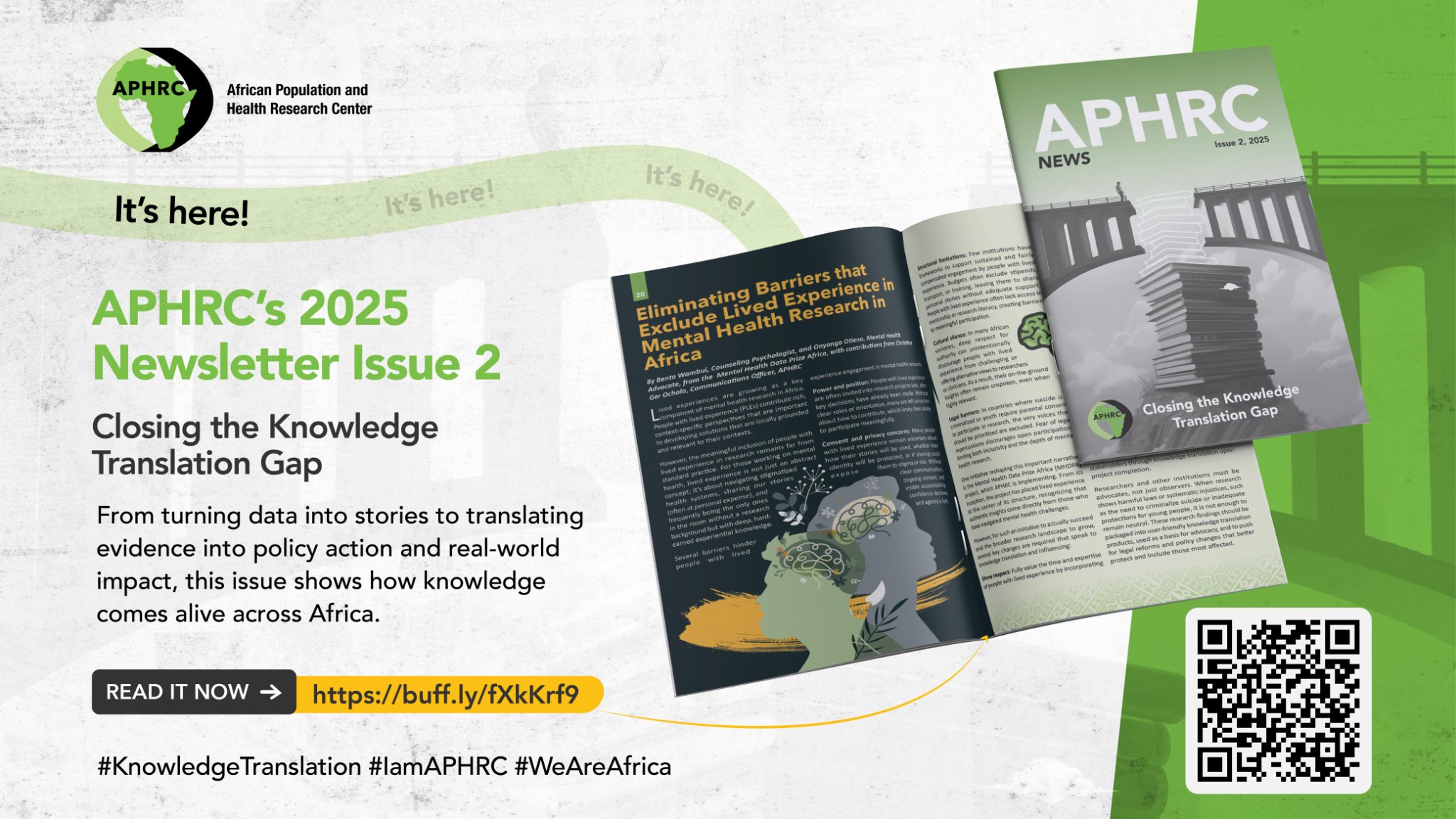
Newsletter: African Population and Health Research Center

APHRC News – Issue 2, 2025

  •  31/10/2025
Welcome to APHRC’s second 2025 newsletter issue! This edition explores how the Center is closing the Knowledge Translation Gap, making research accessible, relatable, and transformative. Dive in to discover stories of change, from climate and health innovations to inclusive education and mental health breakthroughs across Africa.


Wednesday, October 22, 2025

Single, dual aspect in architecture. What of care?

'The challenge of overheating in Britain is our buildings are built to retain heat in our temperate climate. Energy efficiency regulations for new dwellings now require high insulation and few drafts to reduce the need for heating in winter, but broadly make it harder to cool homes in summer. Residents of cities are particularly vulnerable to overheating due to urban heat island effects.

There are two ways buildings can be cooled – mechanical methods (primarily air conditioning) and passive cooling methods that use the design of the building to limit heat gain and retain cooler air inside the dwelling.

Passive cooling is much easier in dual-aspect dwellings with windows on multiple external facades, which as shown in Figure 1, are contrasted to single-aspect flats that face out on to only one external facade. Dual aspect allows breezes to blow through dwellings and easily exchange stuffy indoors air for cooler air from the outdoors. Even if outside temperatures are high, cross-ventilation or overnight air exchange and limits to solar gain (daylight indoors) can keep indoor environments cooler than the outdoors.'

https://www.centreforcities.org/reader/breaking-the-bottlenecks/overheating-and-dual-aspect/


individual
|
INTERPERSONAL : SCIENCES
humanistic -------------------------------------------  mechanistic
SOCIOLOGY : POLITICAL
|
group-population
In Hodges' model at least, we seem to have dual aspect covered. 

That's why we say the model is situated.


Image source: https://www.centreforcities.org/reader/breaking-the-bottlenecks/overheating-and-dual-aspect/

My source:  Plimmer, G., Pickard, J., Steinberg, J., London planning rules face tweak in bid to build more homes. FTWeekend. 18/19 October 2025, p.2.

Previously on W2tQ: 'architecture' : 'situated' : 'housing'

Tuesday, October 21, 2025

The Sveriges Riksbank Prize in Economic Sciences in Memory of Alfred Nobel 2025

individual
|
INTERPERSONAL : SCIENCES
humanistic -------------------------------------------  mechanistic
SOCIOLOGY : POLITICAL
|
group-population


'This year’s prize relates to the explanations for sustained growth based on technological innovation. Economic historian Joel Mokyr is rewarded with one half of the prize for his description of the mecha­nisms that enable scientific breakthroughs and practical applications to enhance each other and create a self-generating process, leading to sustained economic growth. Because this is a process that challenges prevailing interests, he also demonstrates the importance of a society that is open to new ideas and permits change.'

'The other half of the prize is awarded to the economists Philippe Aghion and Peter Howitt. In a joint publica­tion from 1992, they constructed a mathematical model of how companies invest in improved pro­duction processes and new, better-quality prod­ucts, while the companies that previously had the best products are outcompeted. Growth arises through creative destruction. This process is creative because it builds upon innovation, but it is also destructive because older products become obsolete and lose their commercial value.'


'It is apparent that, in the long run, sustained growth does not only have positive consequences for human wellbeing. First, sustained growth is not synonymous with sustainable growth. Innovations can have significant negative side effects. Mokyr argues that such negative effects sometimes initiate processes that uncover solutions to problems, making technological development a self-correcting pro­cess. Clearly, however, this often requires well-designed policies, such as in the areas of climate change, pollution, antibiotic resistance, increasing inequality and the unsustainable use of natural resources.'


Previously on W2tQ: 'Nobel prize' : 'socio-economics'

Wednesday, September 24, 2025

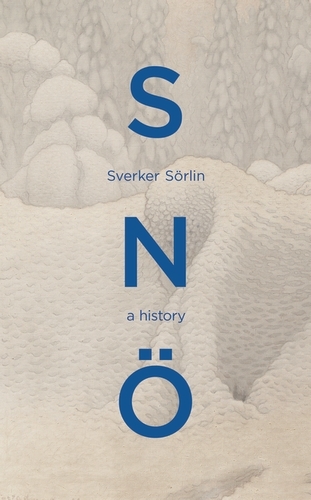
Book: SNÖ

'Snow. A single word, for an infinite variety of water formulations, frozen in air. The study of snow is physics, chemistry, meteorology, anthropology, geography, poetry and art. It is hope – annually renewed. And it is history, too.

Earth saw its first snowfall 2.4 billion years ago. The world's oldest skis, made by hand five thousand four hundred years old, pre-date the pyramids of ancient Egypt. To humanity, snow has variously been an ally and an adversary; an inspiration to countless artists and a place of breathtaking tragedy and survival. But it’s always been there. And now it is melting. 
In 1927, the snow was already more than nine metres deep on Japan's Mount Ibuki when a remarkable 230cm fell in 24 hours, bringing about the greatest depth of snow - 11.82m - ever recorded. Yet it is a fact today that, ironically not only has this mountain's resort been forced to close due to lack of snow, most people in the world have never been near snow: never felt the soft crunch of snow underfoot, never held snow to see it melt in their hands, let alone stood on a pair of skis.'  continued ...
Individual
|
      INTERPERSONAL    :     SCIENCES               
HUMANISTIC  --------------------------------------  MECHANISTIC      
 SOCIOLOGY  :    POLITICAL 
|
Group


compass defined

compass unified

mental expanse

beauty

memory

lived experience

signature of change

sadness

signifier
SNÖ by Sverker Sörlin

culture

poetry - arts

social history

shared loss

recreation - leisure

Two kids.
Uncles! In car, drenching
us driving through slush in the gutter 😎


Sverker Sörlin, Elizabeth DeNoma (Translator) (2025). SNÖ - A History. London: Doubleday.
https://www.penguin.co.uk/books/467833/sno-by-sorlin-sverker/9781529947878


My source: Clark, P. A gear shift to adapt to a warming world. Books. Genre Round-Up, Environment.  Life&Arts. FT Weekend. 23/24 August 2025. p.10.

John Denver - Season Suite (Full) The Suite is in this order:
  1. Summer
  2. Fall
  3. Winter
  4. Late Winter, Early Spring (When Everybody Goes to Mexico)
  5. Spring

Sunday, May 11, 2025

Geneva Health Forum 2025 (May 20-23) - Register Now!

Dear HIFA team

Can you share in your network this information. Thanks for your help

Sincerely

[HIFA profile: Eric Comte is Executive Director, Geneva Health Forum, External Affairs Directorate, Geneva University Hospitals. eric.comte AT unige.ch ]

--------------------------------------------------

Geneva Health Forum 2025 (#GHF2025) is approaching quickly!

Bringing together global health leaders, researchers, frontline practitioners, and policymakers, the annual Geneva Health Forum event serves as a unique platform to exchange knowledge, present innovations, and advance equitable and sustainable solutions to the world’s most pressing health challenges.

We are present every year during the week of the World Health Assembly, at the end of May, to enable academic and civil society players to make their voices heard during the World Health Assembly.

This 2025 edition will focus on four thematic priorities: • Malnutrition • Climate Change and Health • Migration, Health, and Equity • Digital Health

Each theme will be addressed through evidence-based dialogue, multi-sector collaboration, and a strong emphasis on real-world practices with the potential for broader application and impact.

Please note: registration is free but required individually for each session or event. To secure your participation, visit the dedicated page for the event(s) of interest and click on the “Register” button.

To see the program and to register click on this link : https://conference2025.genevahealthforum.com/

We invite you to secure your spot for this important event by registering today!

We look forward to welcoming you to Geneva very soon!

If you have a question, contact us : contact AT genevahealthforum.com

My source: HIFA

Saturday, August 03, 2024

'Science' - Air Pollution

Science

  • Volume 385|
  • Issue 6707|
  • 26 Jul 2024

COVER
"Smoke from wildfires burning in Canada enveloped New York City, New York, in June of 2023, shown here in a photo of the Chrysler Building on 7 June. Wildfire smoke events in the past decade have halted or reversed positive air quality trends in the United States. This special issue considers recent developments in monitoring, health effects, and policy dealing with air pollution. See the section beginning on page 378."

individual
|
INTERPERSONAL : SCIENCES
humanistic ------------------------------- mechanistic
SOCIOLOGY : POLITICAL
|
group

Lyons, S., Nolan, A., Carthy, P. et al. Long-term exposure to PM2.5 air pollution and mental health: a retrospective cohort study in Ireland. Environ Health 23, 54 (2024). https://doi.org/10.1186/s12940-024-01093-z

Ferreira, et al. (2024). Impact of Air Quality on Mental Health of Higher Education Students. In: Galvão, et al. (eds) Proceedings of the 3rd International Conference on Water Energy Food and Sustainability (ICoWEFS 2023). ICoWEFS 2023. Springer Proceedings in Earth and Environmental Sciences. Springer, Cham. https://doi.org/10.1007/978-3-031-48532-9_37

Shaw, S., Kundu, S., Chattopadhyay, A. et al. Indoor air pollution and cognitive function among older adults in India: a multiple mediation approach through depression and sleep disorders. BMC Geriatr 24, 81 (2024). https://doi.org/10.1186/s12877-024-04662-6


Shine, S., Tamirie, M., Kumie, A. et al. Pregnant women’s perception on the health effects of household air pollution in Rural Butajira, Ethiopia: a phenomenological qualitative study. BMC Public Health 23, 1636 (2023). https://doi.org/10.1186/s12889-023-16578-8

Phillip, E., Conroy, R.M., Walsh, A. et al. Using mixed methods and community participation to explore household and ambient air pollution practices in a rural community in Malawi. J Public Health (Berl.) (2023). https://doi.org/10.1007/s10389-023-02008-x


Nakaishi, T., Yoo, S., Kagawa, S. et al. Impact of air pollution on human morality: A multinational perspective. Humanit Soc Sci Commun 11, 991 (2024). https://doi.org/10.1057/s41599-024-03186-z

Wang, K. Is air pollution politics or economics? Evidence from industrial heterogeneity. Environ Sci Pollut Res 30, 24454–24469 (2023). https://doi.org/10.1007/s11356-022-23955-0

Wang, X., Tan, H. & Liu, J. The impact of air pollution on commercial health insurance demand amidst China's green transition. Econ Change Restruct 57, 39 (2024). https://doi.org/10.1007/s10644-024-09623-y


Price, H.D., Bowyer, C.J., Büker, P. et al. From reflection diaries to practical guidance for transdisciplinary research: learnings from a Kenyan air pollution project. Sustain Sci 18, 1429–1444 (2023). https://doi.org/10.1007/s11625-023-01317-0

My source:  https://x.com/DrMariaNeira

https://x.com/DrMariaNeira/status/1819399316735144414

Previously 'pollution'

Tuesday, July 16, 2024

Honouring 'Wheatfield: a Confrontation' by Agnes Denes

"In the summer of 1982, two acres of wheat were planted and harvested by artist Agnes Denes, two blocks from Wall Street and the World Trade Center and facing the Statue of Liberty.

Planting and harvesting a field of wheat on land worth $4.5 billion created a powerful paradox. Wheatfield was a symbol, a universal concept; it represented food, energy, commerce, world trade, and economics. It referred to mismanagement, waste, world hunger and ecological concerns. It called attention to our misplaced priorities.

The harvested grain traveled to twenty-eight cities around the world in an exhibition called “The International Art Show for the End of World Hunger”, organized by the Minnesota Museum of Art (1987-90). The seeds were carried away by people who planted them in many parts of the globe." twistedsifter

Individual
|
         INTERPERSONAL    :     SCIENCES                   
HUMANISTIC  --------------------------------------  MECHANISTIC      
 SOCIOLOGY  :    POLITICAL 
|

http://agnesdenesstudio.com/

'Honouring Wheatfield: a Confrontation' - ArtBasel from June 10:
https://www.artbasel.com/stories/ecology-pioneer-american-artist-agnes-denes-basel-messeplatz-wheat-field-climate-change-awareness

Images: 

In 1982, An Artist Harvested Two Acres of Wheat on Land Worth $4.5 Billion by TwistedSifter

https://twistedsifter.com/2018/03/new-york-city-wheat-field-by-agnes-denes/

Roux, C. Reaping what you sow, Collecting, FTWeekend, 8-9 June 2024, p.4.
https://www.ft.com/content/346ad7e8-9ddf-4802-9658-053d1c5758a8

Wednesday, July 10, 2024

ERCIM News No. 138 Special theme: "Sustainable Cities"

Dear ERCIM News reader,

A new ERCIM News issue (Number 138) is online with a special theme on sustainable cities. This ERCIM News special theme reports on research addressing technologies, systems, applications, and services for sustainable smart cities, showcasing Europe's research ecosystem.
You can access the issue at https://ercim-news.ercim.eu/

This special theme was coordinated by our guest editors German Castignani (Luxembourg Institute of Science and Technology) and Georgios Mylonas (Industrial Systems Institute, Athena Research Center).

Thank you for reading ERCIM News!

Please share this issue with anyone who might find it interesting. You can also support us on Twitter (@ercim_news) and LinkedIn (https://www.linkedin.com/company/ercim). Let's keep the conversation going and share the latest updates together!

Next issue:
No. 139, October 2024
Special Theme: "Software Security". Submissions are welcome! See call for contributions.

Announcements in this issue:

  • Call for Proposals: Dagstuhl Seminars and Perspectives Workshops - Schloss Dagstuhl – Leibniz-Zentrum für Informatik is accepting proposals for scientific seminars/workshops in all areas of computer science.
  • ERCIM "Alain Bensoussan" Fellowship Programme - Postdoctoral fellowships available at leading European research institutions. Simple application procedure. Next application deadline: 30 September 2024.
  • Call for Participation: Forum Beyond Compliance 2024: Research Ethics in the Digital Age
  • Call for Participation: Edge AI Meets Swarm Intelligence - Dubrovnik, Croatia, 18 September 2024
  • SmartEdge & AIoTwin Summer School and Workshop, 16-20 September 2024, Dubrovnik, Croatia
  • Call for Participation: FMICS 2024 - 29th International Conference on Formal Methods for Industrial Critical Systems, co-located with Formal Methods (FM) 2024 in Milan, 9-11 September 2024

ERCIM News is published quarterly by ERCIM, the European Research Consortium for Informatics and Mathematics. With the printed and online edition, ERCIM News reaches more than 10000 readers.
All issues published to date are available online.


About ERCIM

ERCIM - the European Research Consortium for Informatics and Mathematics - aims to foster collaborative work within the European research community and to increase cooperation with European industry. Leading European research institutes are members of ERCIM. ERCIM is the European host of W3C.

Subscribe to the ERCIM News quarterly alert

Peter Kunz*                      	
ERCIM Office
2004, Route des Lucioles
BP93
F-06902 Sophia Antipolis Cedex

https://www.ercim.eu
https://ercim-news.ercim.eu 

*My source via email - many thanks.

n.b. A search did not find 'health', 'well-', 'care', or 'pollution' in this issue.
 
Contrast with (and other previous issues):

ERCIM News No. 98 Special theme: "Smart Cities"

Thursday, June 06, 2024

"Is climate change affecting our mental health?" BBC & OU

"Heat waves and extreme weather aren't just affecting our physical lives, there's growing evidence they're impacting our mental health too."

Produced and directed by Lily Freeston, 29 May 2024

Individual
|
      INTERPERSONAL    :     SCIENCES               
HUMANISTIC  --------------------------------------  MECHANISTIC      
 SOCIOLOGY  :    POLITICAL 
|
Group


Monday, April 22, 2024

Earth Day 2024 - No escape

Individual
|
      INTERPERSONAL    :     SCIENCES               
HUMANISTIC  --------------------------------------  MECHANISTIC      
 SOCIOLOGY  :    POLITICAL 
|
Group
What is that out there?

Bioscape.
Incredible whole
Beautiful mote - in my eye?

Are your - dreamscapes - yours?

Your inscape alone:
mindscape - your inner eye?

Landscapes, seascapes, skyscapes,
spacescapes  speak to us.
Everyone.
Stories of deep time.
Stories of truth and truth emerging.

See both sides of the cloudscape.
Snowscapes in retreat.
Cityscapes on the march.
Yes! No! Yes! No! Yes! ...
Soundscape*


The sums have it.
What tablescape awaits us?


For us - no escape.


*gone quiet.

My prompt:

Esslin, Martin. Chapter 1 Samuel Beckett, The search for the self. 
The Theatre of the Absurd. London: Pelican, 1982. (3rd Ed.). p.84. ('psychological inscape')

  © Peter Jones

Wednesday, April 17, 2024

Policy Dialogue - Water, Conflict and Peace in the Middle East: online

Dear colleagues,

I am delighted to invite you to the next Policy Dialogues from the JHU-UPF Public Policy Center:

Water, Conflict and Peace in the Middle East
Thursday 25th April, 6pm CEST
Online via Zoom (registration required)
Language: English

The Middle East is a region of both severe water problems, and acute political instability. But what is the relationship between these two things? This Policy Dialogue will provide an opportunity to reflect on this question and its implications. It will overview the region’s water problems, and consider how these problems are – or are not – contributing to conflict. It will also examine, conversely, how war and violence are affecting patterns of water resource degradation and water insecurities, and will reflect on opportunities for water-related peace-building, including on how water for peace initiatives might best be pursued.

We are delighted to invite Natasha Carmi (Water Peace Programme Manager at the Geneva Water Hub) and Jan Selby (Professor of International Politics and Climate Change at the University of Leeds, UK) to share their expertise during this session.

We invite you to join us and explore the complexities of this extremely important issue. You can register here. Please also share this invitation within your networks.

Best regards,
Aeve

Aeve Ribbons
she/her

Educational Projects Manager of JHU-UPF Public Policy Center (UPF-BSM)
Managing Editor of the International Journal of Social Determinants of Health and Health Services (IJSDOHS)

My working days are Monday-Thursday / Mis días laborables son de lunes a jueves.

Website: http://www.upf.edu/jhu-ppc/

Twitter: https://twitter.com/pubpolcenter


My source:

Politics of Health Group Mail List Messages

Visit the PoHG website for lots of interesting links and publications: http://www.pohg.org.uk/

Visit PoHG on Facebook: https://www.facebook.com/282761111845400

Follow us on Twitter: @pohguk

Tuesday, April 09, 2024

Historic Climate Ruling: States Must Step up Climate Action to Protect Human Rights

From: Center for International Environmental Law (CIEL) PRESS ROOM ...

STRASBOURG, FRANCE – Today, the European Court of Human Rights issued a groundbreaking ruling in the Verein Klimaseniorinnen Schweiz and Others v. Switzerland climate case. The Court found Switzerland in violation of the European Convention on Human Rights for failing to implement sufficient measures to combat climate change. 

Center for International Environmental Law (CIEL) Senior Attorney Joie Chowdhury issued the following statement in Strasbourg, France:

“We expect this ruling to influence climate action and climate litigation across Europe and far beyond. Today’s historic judgment in Verein Klimaseniorinnen Schweiz and Others v. Switzerland – the first ruling by an international human rights court on the inadequacy of States’ climate action – leaves no doubt: the climate crisis is a human rights crisis, and States have human rights obligations to act urgently and effectively and in line with the best available science to prevent further devastation and harm to people and the environment. The ruling reinforces the vital role of courts – both international and domestic – in holding governments to their legal obligations to protect human rights from environmental harm. It also affirms the power and courage of those who speak out and dare to demand a livable future for all.”

https://www.ciel.org/news/historic-climate-ruling-on-climate-justice/

Individual
|
      INTERPERSONAL    :     SCIENCES               
HUMANISTIC  --------------------------------------  MECHANISTIC      
 SOCIOLOGY  :    POLITICAL 
|
Group

Personal ethics

Envisioning of future lives

Anxiety in the here & now


Switzerland - Europe - The World

Yesterday - Now - Tomorrow

a LIFE TIME :: DEEP TIME


Public action

Vulnerable groups

Public activism


"In a landmark decision on one of three major climate cases, the first such rulings by an international court, the ECHR raised judicial pressure on governments to stop filling the atmosphere with gases that make extreme weather more violent.

The court’s top bench ruled that Switzerland had violated the rights of a group of older Swiss women to family life, but threw out a French mayor’s case against France and that of a group of young Portuguese people against 32 European countries." The Guardian