Hodges' Model: Welcome to the QUAD: childhood

Hodges' model is a conceptual framework to support reflection and critical thinking. Situated, the model can help integrate all disciplines (academic and professional). Amid news items, are posts that illustrate the scope and application of the model. A bibliography and A4 template are provided in the sidebar. Welcome to the QUAD ...

Showing posts with label childhood. Show all posts

Tuesday, February 03, 2026

Joining the digital dots across primary care and integrated care

My partner and I both received a letter today from our respective GPs. An invitation for a 'FREE LUNG HEALTH CHECK'.

Overleaf is an information sheet in landscape about the health check, plus three more sides of A4, similarly formatted - inviting trifold presentation.

After the 'Re. ......' an opening sentence asks: 'Have you ever been a smoker?'

Suddenly, I was dragged backwards through his-tory (some things don't change); not one history, but several:

INDIVIDUAL
|
    INTERPERSONAL    :     SCIENCES               
HUMANISTIC --------------------------------------  MECHANISTIC      
SOCIOLOGY  :   POLITICAL 
|
GROUP
My personal and life experience 
and not just since my teens . . .

The letter states:
**If you have never smoked, you are not eligible for this service**


My mother and father 
smoked when I was a child and my siblings. 
 
They got the message early 1980s.
  
'Society' smoked back then!  
 
Once old enough, I refused to go to the corner shop.
 
Into the 1990s, patients, smoking (some chain-smoking) on admission, long-stay and other clinical areas. As a community mental health nurse, I learned diplomatic and health promoting skills when in the car, giving a patient a lift to hospital. And, when visiting their home where I was, of course, usually, a guest.


I wondered what has happened to the GP's records? To the primary care clinical record ? The custodians of my health record, that they should need to ask that question? 
 
Or, does confidentiality tie some bureaucratic knots?
 
Where is 'integrated care' and its driver 'clinical informatics'? 
The letter included the NHS Number.
 
 Don't get me wrong, I/we appreciate the obvious effort here, even if the chronology is confusing, or,  speaks of afterthought? The letters are dated 19/06/2025. I must admit I haven't accessed my GP record, checking it for accuracy.
 
If anything, this is a prompt to do so. And seek a general medical. 


Previously: 'smoking' : 'winwick'

Wednesday, September 24, 2025

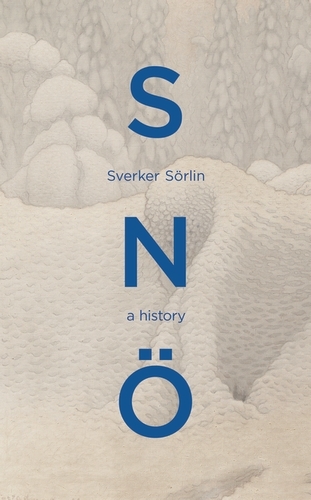
Book: SNÖ

'Snow. A single word, for an infinite variety of water formulations, frozen in air. The study of snow is physics, chemistry, meteorology, anthropology, geography, poetry and art. It is hope – annually renewed. And it is history, too.

Earth saw its first snowfall 2.4 billion years ago. The world's oldest skis, made by hand five thousand four hundred years old, pre-date the pyramids of ancient Egypt. To humanity, snow has variously been an ally and an adversary; an inspiration to countless artists and a place of breathtaking tragedy and survival. But it’s always been there. And now it is melting. 
In 1927, the snow was already more than nine metres deep on Japan's Mount Ibuki when a remarkable 230cm fell in 24 hours, bringing about the greatest depth of snow - 11.82m - ever recorded. Yet it is a fact today that, ironically not only has this mountain's resort been forced to close due to lack of snow, most people in the world have never been near snow: never felt the soft crunch of snow underfoot, never held snow to see it melt in their hands, let alone stood on a pair of skis.'  continued ...
Individual
|
      INTERPERSONAL    :     SCIENCES               
HUMANISTIC  --------------------------------------  MECHANISTIC      
 SOCIOLOGY  :    POLITICAL 
|
Group


compass defined

compass unified

mental expanse

beauty

memory

lived experience

signature of change

sadness

signifier
SNÖ by Sverker Sörlin

culture

poetry - arts

social history

shared loss

recreation - leisure

Two kids.
Uncles! In car, drenching
us driving through slush in the gutter 😎


Sverker Sörlin, Elizabeth DeNoma (Translator) (2025). SNÖ - A History. London: Doubleday.
https://www.penguin.co.uk/books/467833/sno-by-sorlin-sverker/9781529947878


My source: Clark, P. A gear shift to adapt to a warming world. Books. Genre Round-Up, Environment.  Life&Arts. FT Weekend. 23/24 August 2025. p.10.

John Denver - Season Suite (Full) The Suite is in this order:
  1. Summer
  2. Fall
  3. Winter
  4. Late Winter, Early Spring (When Everybody Goes to Mexico)
  5. Spring

Sunday, June 08, 2025

Why in the World do I have to walk this way?

individual
|
INTERPERSONAL : SCIENCES
humanistic ------------------------------- mechanistic
SOCIOLOGY : POLITICAL
|
group

my childhood - memories

my family, community, home, role models, friends from the neibourhood

Why?


Image: https://x.com/Lowkey0nline

Thursday, June 05, 2025

World Happiness Report 2025

WORLD HAPPINESS REPORT 2025


. . . and looking ahead to WHR 2026 . . .


Prof Lord Richard Layard

Editor, World Happiness Report

In World Happiness Report 2024, we presented evidence of a concerning decline in the wellbeing of young people in Western industrialised countries.

Obviously, a child’s wellbeing matters for the same reason that any individual’s wellbeing matters. But wellbeing among children and adolescents is also critical since it is the best predictor of how happy said child will be in their subsequent life – with a higher predictive power than the qualifications which they might obtain.


There has been much debate about the reasons for such a downward trend, with many competing theories and policy recommendations. However, one explanation has captured public and political attention more than any other: social media.


Also in 2024, Jonathan Haidt, a social psychologist at New York University’s Stern School of Business, published The Anxious Generation, arguing that the decline in youth wellbeing is driven by a transition from a play-based childhood to a phone-based childhood. The book has been a best-seller and sparked heated debate, both in academia and the wider world.


As editors of the World Happiness Report, we have followed this debate closely, concerned that rigorous science was being overshadowed by shallow media narratives.


In World Happiness Report 2026, we see an opportunity to bring all sides of the debate together to establish the facts, clarify disagreements, and provide decision-makers with a balanced assessment of what we know, what we don’t know, and what should be done.


We’re encouraging researchers from across the world to submit chapter proposals focusing on the relationship between social media and subjective wellbeing before the deadline of Sunday 15 June. Full details are available on the World Happiness Report website.


My source: Email from info AT worldhappiness.report

Previously: 'happiness'

Wednesday, March 12, 2025

Ambulances, Bikes, Cars and Dennis

There are many rites of passage. Some are universal, others culture specific, or a facet of religious identity. Perhaps there are rites of passage that change over time, or are as yet unclear. When should a young person have their own mobile phone, especially when that phone is 'smart'? Perhaps that is a step too far, to see a phone as a rite of passage? Or, perhaps it signifies an erosion of the human experience of growing-up. 

Mastering a bicycle is, if not a rite of passage, an experience I remember so well. An experience revisited and enjoyed even more as an adult with my own children. It really is something when the hand-lets-go, a signifier of more transitions to follow. 

I learned to ride on two-wheels, in the cobbled backs that ran behind and between the rows of terraced houses. When I was aged 9-10, out on my bike I skidded and came off, trying to stop for a car. It was my fault, the driver was pretty upset too and carried me home. An X-Ray revealed I had hairline fractured of my tibia. I can remember being up so late 'The Untouchables' were on B&W TV. Back then a full-length 'pop' and crutches were required. After the pain subsided, a knitting needle was very useful. The plaster was well-scribed too. I had to attend the fracture clinic at Walton Hospital, Liverpool and still recall Dennis the ambulance gent. He was a great laugh.

I was reminded of this on BBC Radio 4's Today programme, 07:24:35 & 08:55:25, 11 March. Two guests recounted the start of their cycling careers, as adult and a child. British Cycling has started a campaign having found:

Apparently, 97% of children from the richest backgrounds can ride a bike.

While only 86% of children from the poorest backgrounds are able.

This equates to 350,000 children, who would like to ride a bike but can not.


Individual
|
      INTERPERSONAL    :     SCIENCES               
HUMANISTIC  --------------------------------------  MECHANISTIC      
 SOCIOLOGY  :    POLITICAL 
|
Group
Experiences, skills
MENTAL HEALTH
Memory - of 'taking flight'
Life skill: "It's like riding a bike!"
Healthcare role model
Ambulance staff 'Dennis'

Sustainability
PHYSICAL HEALTH
Accessibility
350,000 children
would like to ride a bike.

Fracture clinic Tibia

Childhood - Friends
Adult - Parenthood
Cycling clubs
Socialisation
Social Justice
Engagement - Play


Inequality
97% of children
richest backgrounds can ride a bike.

Only 86% of children from
the poorest backgrounds


When there is a new link I will add it here. In the meantime, can you get on your bike!


Previously: APPG : Cycling : Sport

Saturday, January 04, 2025

Are concepts of adolescence from the Global North appropriate for Africa? A debate

'The proponents for the motion argued that adolescence is indeed a distinct developmental phase when puberty is achieved and the neurocognitive development that occurs shapes behaviours that impact health outcomes. This occurs universally, is marked by cultural rites, and recognised in legal frameworks and therefore geographical distinctions in understanding are unnecessary.'

'The opponents argued that adolescence is more than a biological or legally recognised transition to adulthood: instead, concepts, including that of adolescence, are shaped by beliefs, values and expectations founded within a cultural milieu. The concept is dissonant to Africa as it prioritises individualism over communalism, and attributes gender and social roles as accepted in the Global North.'

'Thus, many interventions targeted at adolescents in Africa have remained ineffective. The notion that the concept of adolescence, which originated in the Global North but is universally applied, is a consequence of colonialism giving less value to the lived realities and understandings of peoples from the Global South.

For achieving both epistemic justice and effective health policy and programmes in global health, acknowledgement and centralisation of context are critical. However, in a more interlinked and open world, there is a massive potential for cross-learning and collaboration across geographies to develop a concerted approach to improve the health of adolescents and for a more equitable global health practice.

However, adolescence is also a social entity shaped by beliefs and values within different cultural contexts. A move away from universal, often western-defined concepts of adolescence, to centring the distinct sociocultural factors that shape adolescence in different societies will enable more effective policies and programming.' (Summary box) 

INDIVIDUAL
|
   INTERPERSONAL : SCIENCES              
humanistic ------------------------------- mechanistic
 SOCIOLOGY : POLITICAL   
|
GROUP
debate (argumentation)


mental space, mindset

my beliefs

values
expectations

ENCULTURATION

Not just NORTH - SOUTH 
but WEST - EAST
philosophy of mind
belief systems

"I DID IT MY WAY"

individualism
[Hodges' model] 'Health career' - 'life chances'

 2018 - scientific symposium
Mwanza, Tanzania

'Adolescence is widely defined as a distinct phase in the life-course during which an individual completes their biological development and transitions from childhood to adulthood.'

Appropriate for Africa - health interventions and global health policy that are shaped by such concepts can be universally applicable and relevant?

geographical distinctions

physical place, space, locale

biology - neurocognitive - puberty
communalism

universal - cultural rites

adolescence - global north culture
but applied universally

'adolescence is also a social entity shaped by beliefs and values within different cultural contexts'

ETHNOLOGY - SOCIO-CULTURAL

Gender - social roles

The rise of POPULAR CULTURE:
Arts - music, film, drama, literature ...
media, technology

"WE DO IT OUR WAY"?!

"Comme d'habitude"

legal - policy

Is there a universal conceptual model to critique*:

UNIVERSALITY
'GLOBAL HEALTH'
UNIVERSAL HEALTH COVERAGE
HEALTH FOR ALL
HEALTH INFORMATION FOR ALL
'COLLECTIVE EMPATHY'
EQUITY - EQUALITY ...?

In policy can you ignore LONG-LAT?

epistemic justice 
effective health policy
programmes in global health
- aimed at adolescents

acknowledgement
centralisation of context 

glocal/global - WHO - national/local


Many thanks to the authors:

Nothando Ngwenya, Chido Dziva Chikwari, Janet Seeley, Rashida Abbas Ferrand - Are concepts of adolescence from the Global North appropriate for Africa? A debate: BMJ Global Health 2023;8:e012614. https://gh.bmj.com/content/8/12/e012614

My source:
https://x.com/chidodc/status/1735564926423277571?s=20

Reminded of 'My Way' :: 'American Graffiti'

*I have long wondered what models of care, models of nursing, nursing and care theories may be found in Africa, across Europe, Asia, South America, Native North America, Australasia and Oceania?  
Is Hodges' model truly global and universal - is it (can a model of care be) culturally neutral? Perhaps, this is another conference debate, or might constitute a special journal issue?

Wednesday, March 23, 2022

"Turning Red"

INDIVIDUAL
|
 INTERPERSONAL    :     SCIENCES               
HUMANISTIC --------------------------------------  MECHANISTIC      
SOCIOLOGY  :   POLITICAL 
|
GROUP


Previously: 'menstruation'

My source: Various


Tuesday, February 01, 2022

Webinar 3 February: An Investment Case to End FGM

  Girl - [Vulnerable ] Individual - Youth, Woman
|

 INTERPERSONAL    :     SCIENCES               
HUMANISTIC  ----------------------------------  MECHANISTIC
SOCIOLOGY  :   POLITICAL 
|
Community - Group - Population


Dear colleagues,

I am pleased to invite you to a webinar to commemorate International Day of Zero Tolerance for Female Genital Mutilation: 

An Investment Case to End Female Genital Mutilation

Thursday 3 February 2022 at 8am EST/2pm CET/4pm EAT 

The webinar will bring together global stakeholders and experts to discuss the economic burden of FGM and the urgent action needed to achieve Sustainable Development Goal target 5.3 on the abandonment of FGM. 

The webinar will coincide with the publication of the “Economic Burden of Female Genital Mutilation in 27 High-Prevalence Countries” by BMJ Global Health, a study, conducted by WHO, in collaboration with Triangulate Health Ltd. 

There will be live interpretation in French and Arabic. You can register here. 

Please join us and please share the link to the event with your networks.

Kind regards, 

Christina

Christina Pallitto, PhD
Scientist
Dept. of Sexual and Reproductive Health and Research

Skype: cpallitto
Mail: pallittoc AT who.int

My source: GANM and IBPnetwork lists (and the images above).


Wednesday, December 15, 2021

Alice ...

Individual
|

INTERPERSONAL : SCIENCES
humanistic ------------------------------------------ mechanistic
SOCIOLOGY : POLITICAL
|
Group
Lewis Carroll’s Illustrations for “Alice’s Adventures Under Ground” (1864)


Women's Rights begin..?


My source: 

Critics' choice, Life&Arts, FTWeekend, 19-20 December 2015. regarding: https://www.bl.uk/alice-in-wonderland

Image: https://publicdomainreview.org/collection/carroll-illustrations-for-alice-undergound


See also:

Butt up against the Boxes...?


Wednesday, May 05, 2021

Thought Press

individual
|
INTERPERSONAL : SCIENCES
humanistic ----------------------------------------------- mechanistic
SOCIOLOGY : POLITICAL
|
group
THOUGHT PRESS


"We are 100 UK printmakers creating prints on the theme of childhood memories and imagination, to be sold in aid of two charities - Mind, supporting mental health issues and awareness, and Heart Felt Tips, providing art materials and enabling creative learning opportunities for disadvantaged children. (For more information about these charities and what they do, please visit www.mind.org.uk and www.heartfelttips.co.uk)

Follow the hashtag #thoughtpressproject on social media to see the project in action and development of designs for final prints! Visit the Shop to order a print.

If you'd simply like to add to the funds raised, please donate here:

https://www.justgiving.com/crowdfunding/thoughtpressprojectdonations

My source: Printmaking Today, Spring 2021, Volume 30, Issue 117, p.7.

Friday, February 14, 2020

'Desk-topping' i [ c/o BBC Radio 4 today 5 Feb. ]

individual
|
INTERPERSONAL : SCIENCES
humanistic ----------------------------------------------- mechanistic
SOCIOLOGY : POLITICAL
|
group - population


'desktop'

Definition #1 below is as obvious as it is brief. A desk might be topped with various things, so-called executive toys (still?), personal affects, or company related branding.
It may have the proverbial in-tray, out-tray (paper still lingers?). The desk may be clear, or cluttered as a workspace. It will be the home of technology, it's PC - desktop - namesake, that shares the floor nearby, wired the sign of connectedness and energy.


'Desk-topping'

To have 'papers' on the desk, might be to denote action of some sort, but how long are those 'papers' held for?
The subjects of the issue at hand could be experiencing a protracted delay. The desktop in this case exemplifies not just bureaucracy, but obfuscation.


desk·top (dĕsk′tŏp′)
n.
1. The top of a desk.
2. Computers
a. The area of a display screen where images, windows, icons and other graphical items appear.
b. A computer that is designed to be used at a desk or table and is not easily moved, in contrast to a laptop or other portable device. Also called desktop computer.

https://www.thefreedictionary.com/desktop

My source:
BBC Radio 4 Today 5 February- discussion regarding historical child abuse in the Church.

Desk-topping or desktopping?

Saturday, March 04, 2017

A Hospital Room with a View

individual
|
INTERPERSONAL : SCIENCES
humanistic -------------------------------------------  mechanistic
SOCIOLOGY : POLITICAL
|
group-population


Lucy
Barton


Photo: Waterstones Tottenham Court Road Window Display 4/3/2017

Book cover: Waterstones

Friday, January 01, 2016

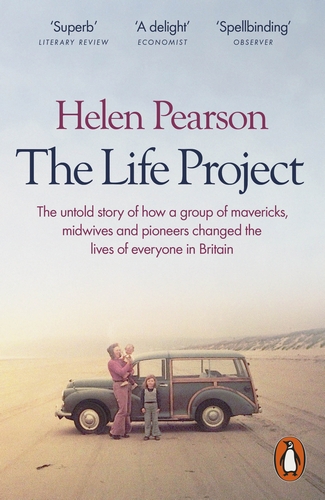
Book: "The Life Project"

The Life Project Helen Pearson


"The remarkable story of a unique series of studies that have touched the lives of almost everyone in Britain today.

On 5th March 1946 a survey began that is, today, the longest-running study of human development in the world, and has grown to encompass six generations of children and over 70,000 people. They have become some of the best-studied people on the planet. The simple act of observing human life has changed the way we are born, schooled, parent and die, and irrevocably altered our understanding of inequality and health. This is the tale of these studies, the scientists who created and sustain them, the discoveries that have come from them. The envy of scientists around the world, they are one of Britain's best-kept secrets."

[Published: 3 March 2016]

(The Life Project? "What's yours?")

Sunday, July 12, 2015

Memory rug

individual
|
INTERPERSONAL : SCIENCES
humanistic --------------------------------------- mechanistic
SOCIOLOGY : POLITICAL
|
group


Source: Baker, H. (2015) A look worth cultivating, Interiors, FTWeekend, 4-5 April. p.9.
Caption: Shelter for Memory rug, price on request, alexkeha.com

Above image original source alexkeha.com