Hodges' Model: Welcome to the QUAD: happiness

Hodges' model is a conceptual framework to support reflection and critical thinking. Situated, the model can help integrate all disciplines (academic and professional). Amid news items, are posts that illustrate the scope and application of the model. A bibliography and A4 template are provided in the sidebar. Welcome to the QUAD ...

Showing posts with label happiness. Show all posts

Thursday, June 05, 2025

World Happiness Report 2025

WORLD HAPPINESS REPORT 2025


. . . and looking ahead to WHR 2026 . . .


Prof Lord Richard Layard

Editor, World Happiness Report

In World Happiness Report 2024, we presented evidence of a concerning decline in the wellbeing of young people in Western industrialised countries.

Obviously, a child’s wellbeing matters for the same reason that any individual’s wellbeing matters. But wellbeing among children and adolescents is also critical since it is the best predictor of how happy said child will be in their subsequent life – with a higher predictive power than the qualifications which they might obtain.


There has been much debate about the reasons for such a downward trend, with many competing theories and policy recommendations. However, one explanation has captured public and political attention more than any other: social media.


Also in 2024, Jonathan Haidt, a social psychologist at New York University’s Stern School of Business, published The Anxious Generation, arguing that the decline in youth wellbeing is driven by a transition from a play-based childhood to a phone-based childhood. The book has been a best-seller and sparked heated debate, both in academia and the wider world.


As editors of the World Happiness Report, we have followed this debate closely, concerned that rigorous science was being overshadowed by shallow media narratives.


In World Happiness Report 2026, we see an opportunity to bring all sides of the debate together to establish the facts, clarify disagreements, and provide decision-makers with a balanced assessment of what we know, what we don’t know, and what should be done.


We’re encouraging researchers from across the world to submit chapter proposals focusing on the relationship between social media and subjective wellbeing before the deadline of Sunday 15 June. Full details are available on the World Happiness Report website.


My source: Email from info AT worldhappiness.report

Previously: 'happiness'

Friday, February 28, 2025

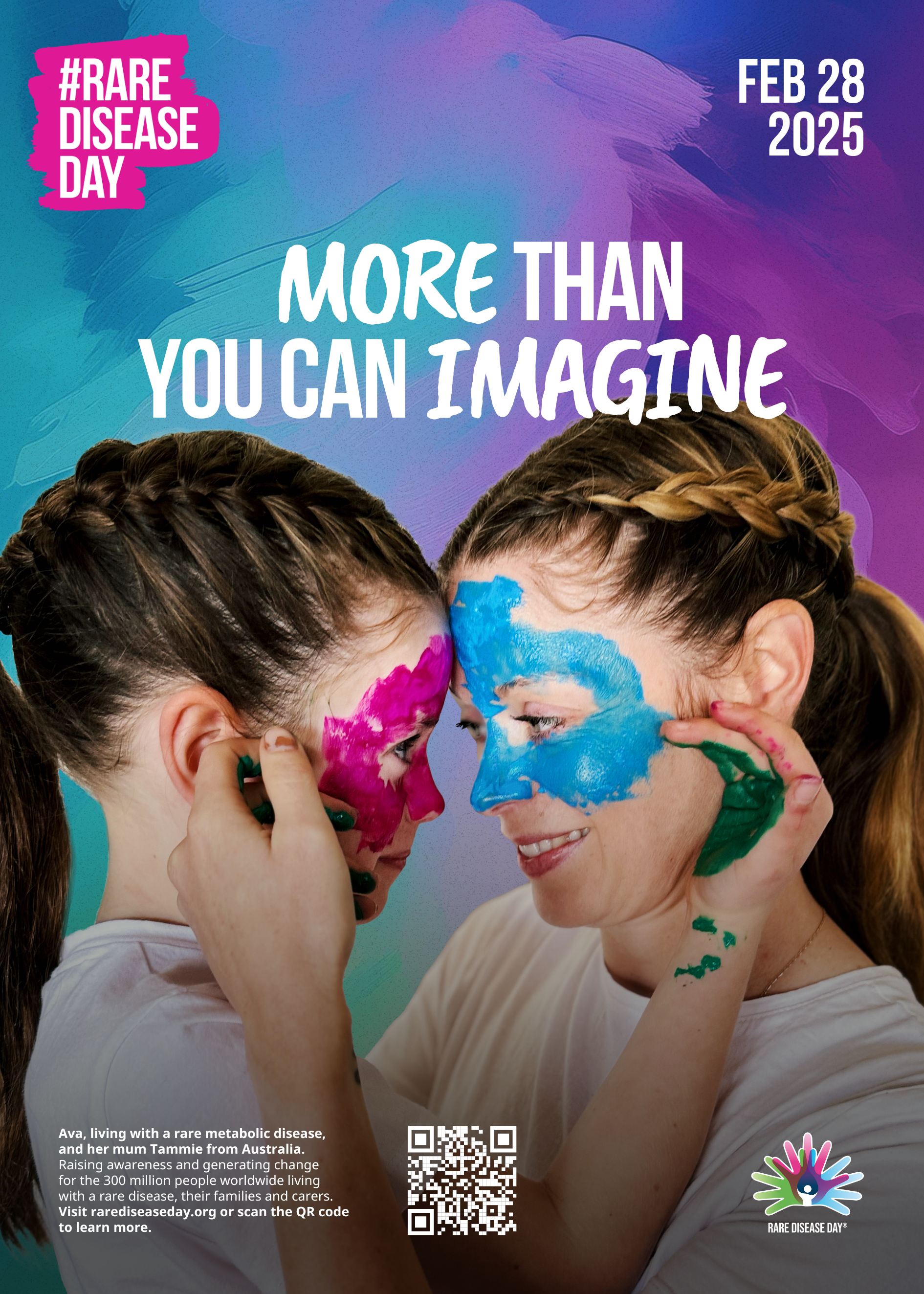
RARE DISEASE DAY FEB 28 2025

Ava and Tammie

Individual
|
      INTERPERSONAL    :     SCIENCES               
HUMANISTIC  --------------------------------------  MECHANISTIC      
 SOCIOLOGY  :    POLITICAL 
|
Group

IMAGINATION
IDENTITY
EXPERIENCE
EXPERTISE


ACTION
RESEARCH -
qualitative - quantitative
ACCESSIBILITY


SUPPORT
AWARENESS
COMPANIONSHIP
SOCIAL NETWORKS
FAMILIES


FUNDING
ACTIVISM
COOPERATION
COLLABORATION
COORDINATION


Previously: 'Rare'

Tuesday, June 01, 2021

Book: Noise

individual
|
 
 INTERPERSONAL : SCIENCES
humanistic ----------------------------------------------- mechanistic
SOCIOLOGY : POLITICAL
|
group
noise?

noise? noise?

Daniel Kahneman, Olivier Sibony, Cass R. Sunstein, Noise: Exclusive Edition (Hardback), HarperCollins Publishers.

Tuesday, January 12, 2021

Book: The Fourfold Remedy

individual
|
INTERPERSONAL : SCIENCES
humanistic ----------------------------------------------- mechanistic
SOCIOLOGY : POLITICAL
|
group - population


My source:

O'Grady, J. (2021) Think yourself better, Reviews. The Daily Telegraph, 9 January. pp.12-13.

Sellars, J. The Fourfold Remedy, London: Allen Lane / Penguin.


Friday, November 27, 2020

Diametros: Invites commentaries on “Setting Health-Care Prorities”

The Editorial Board of Diametros invites commentaries on the recent work “Setting Health-Care Prorities” by Torbjörn Tännsjö as well as independent research articles focused on the problem of resources allocation in healthcare.

All those interested in obtaining a copy of Tännsjö’s book for a review, are asked to send a request via e-mail to the following address: diametros_pl AT uj.edu.pl.

Diametros


We believe that a confrontation of global perspectives with those elaborated by Tännsjö might be of particular interest and importance for the debate on distributive justice in the context of healthcare. The papers may be addressed to different issues, from metaethical ones, through issues associated with general normative theories of justice, and ending with papers addressing particular dilemmas concerning the distribution of healthcare resources in different fields of healthcare. Of special importance is also the discussion of ethical theories such as egalitarianism, prioritarianism, utilitarianism and sufficientarianism. 

The deadline for submission is the 31st of December 2020. Manuscripts (both: commentaries and original research articles) should not exceed 40,000 characters and should be prepared in accordance with our guidelines, which may be found here:


https://www.diametros.iphils.uj.edu.pl/diametros/about/submissions

We are proud to mention that Diametros is the best general philosophy journal in Poland (according to SJR rank), and is also indexed by Web of Science. We publish all articles without charge in open access form.

Dr Piotr Grzegorz Nowak
Diametros Editorial Board

My source:

Philos-L "The Liverpool List"
Department of Philosophy, University of Liverpool 
https://www.liverpool.ac.uk/philosophy/philos-l/

Tuesday, March 19, 2019

c/o R Layard "Enact policies to boost emotional health"

individual
|
INTERPERSONAL : SCIENCES
humanistic ----------------------------------------------- mechanistic
SOCIOLOGY : POLITICAL
|
group
individual well-being
MENTAL HEALTH

"HAPPINESS -
EMOTIONAL HEALTH

"EVIDENCE-BASED"
"overarching criterion for measurement"
processes
- SCIENCES"
PHYSICAL HEALTH


COMMUNITY WELL-BEING

Society
Social values
Social cohesion

POLICIES on -

"schools, mental health, family support,
child support, addiction, social work,
 loneliness, methods of management
and town planning."

"Fortunately more and more governments are beginning to think along these lines."


Prof. Richard Layard* (2019) FT Weekend, 9-10 March. "Enact policies to boost emotional health"
Author of: Happiness - Lessons from a new Science

*Co-director, Well-Being Programme, Centre for Economic Performance, London School of Economics, UK


Wednesday, January 03, 2018

Modelling Scale: Self, Families, Communities, Organisations - a Planet's Health...

Dear HIFA colleagues,

I would like to wish you all a happy new year and to share with you a powerful quote on the front cover of the current print issue of The Lancet:

"Achieving planetary health will require a renaissance in how we define our place in the world. A new narrative will reject the one streaming into our homes — that happiness comes from relentlessly acquiring more things — and embrace what we know: that what truly makes us happy is time spent with those we love, connection to place and community, feeling connected to something greater than ourselves, taking care of each other."
The quote is from a lecture by Samuel Myers, Planetary Health Alliance at Harvard University, USA. The citation is below and the full text is freely available here:
http://www.thelancet.com/journals/lancet/article/PIIS0140-6736(17)32846-5/fulltext

CITATION: Planetary health: protecting human health on a rapidly changing planet
Dr Samuel S Myers
Volume 390, No. 10114, p2860–2868, 23 December 2017
DOI: http://dx.doi.org/10.1016/S0140-6736(17)32846-5

Best wishes, Neil

Let's build a future where people are no longer dying for lack of healthcare information - Join HIFA: www.hifa.org

<->

My additions:

I am always fascinated by the need for such expansive perspectives, the need to simultaneously factor in scale; how for example, do we warn future generations of environmental hazards?

Such questions are also crucial to "how we define our place in the world"?

individual
|
INTERPERSONAL : SCIENCES
humanistic --------------------------------------- mechanistic
SOCIOLOGY : POLITICAL
|
group

The Far Future - BBC Radio 4

The Long Now


Political planning
NHS workforce planning
NHS preparedness for (a?) the (this?) Winter


Source: HIFA Dr Neil Pakenham-Walsh with thanks.

Saturday, November 11, 2017

Happiness! Happiness! ...

individual
|
INTERPERSONAL : SCIENCES
humanistic --------------------------------------- mechanistic
SOCIOLOGY : POLITICAL
|
group

Purpose 
(One of the 4P's in Hodges' model)
Joy
Satisfaction

The Blue Zone


Quality of Life -
4 All?

World Happiness Report 2017

Saturday, September 30, 2017

"Kind of Blue" Balance in all Things?

individual
|
INTERPERSONAL : SCIENCES
humanistic --------------------------------------- mechanistic
SOCIOLOGY : POLITICAL
|
group

Albrecht Dürer, Melencolia I (1514)


"Writing three decades ago about Austrian literature, the German author WG Sebald made a case for melancholia as a form of resistance. It was tempting, he said in Die Beschreibung des Unglücks (“The Description of Disaster”), to see the drive to describe misery as reactionary. But in fact, it could be much more productive and radical: “Melancholia, the contemplation of the dismal plight we are in, has nothing in common with the desire to die . . . Describing the dismal plight we face contains the possibility of overcoming it.”


My source:
Feigel, L. (2017) Kind of blue. FT Weekend, Life&Arts, 23-24 September. p.9.

"Lara Feigel is the curator (with John-Paul Stonard) of ‘Melancholia. A Sebald Variation’, an exhibition that runs in King’s College London’s Inigo Rooms from 21 September - 10 December."

Image:
Albrecht Dürer [Public domain], via Wikimedia Commons
https://commons.wikimedia.org/wiki/File%3AMelencolia_I_(Durero).jpg

Saturday, December 07, 2013

Reading and writing the minutia of locked doors and windows (still a draught)

Couples, married or not, partners are the cards that frequently, if not by definition, lean on each other beyond the pale, to the n-th degree. Witness so many lessons of what love really is.

They bend and flex. Tested by history, timelines entwined, ties-that-bind, trying to persist in the hear and how.

Their psychological union is challenged as memories become eroded and physically frailty takes hold. Usually; mostly, on the one.

Eventually things, established relationships break and one or the other - should we say: finds themselves in - residential care.

Courtship enables us to become socialised to and with each other and respective families and in some instances other cultures and beliefs.

In this crucial transition sometimes there is learning through experience as respite care is sought.

In other cases health services wonder how this relationship has survived for so long. A crisis is a precipice for change. A chaotic invitation. Radical.

A sudden shift from what was home to a new world of corridors, r, ro, roo, room, rooms; my room? New noises and smells and altered routines and jumbled faces, touches, days and nights

The dolls of childhood are left behind, but may be picked up again literally as an emotional comforter. If not this then perhaps a ‘paper clad dol’ that is bound to be - ‘deprivation of liberty’.

In this new home, this person walks the corridor and inspects the minutia of the doors and windows. Staff pass by(e) waving by their walk - "so-busy-look-no-hands" while trying to be butterflies.

Butterflies that cannot say which way is ‘out’.

They are they. Difficult to follow with eye, head and a hand to catch. The individual recognises the whole of the comings and goings, the main thoroughfare. The strategic point, the nexus of comings and goings.

Something's not right though! I need to be somewhere else.

Sadly (or Usually), there is no going back.

Is there a pattern to this confused-coming-to-terms-with?

From asking repeatedly about being elsewhere, especially with the setting of the sun is there a shift in attempted reasoning? So correct, so responsible all those decades ago. Perhaps even months ago...

If no one will listen to me then perhaps if I have my wife/husband with me then they will see the importance of my cause, my mission.

See look - I have my wife, husband, partner with me now: we really need to go!

Can the residential care home support this person? Can they meet their care needs? They say they are ‘struggling’. Will they need to move – again?

How do they work through this transition? What do we know of how individuals negotiate this transition in their lives? How can we try to understand?

How do they make sense of what has happened, and where they now find themselves? Will their level of distress, agitation gradually extinguish as with their efforts to leave?

As they look to the windows, seek to traverse the doorway, cross the foreign threshold and venture to that somewhere that is not here, we know one thing.

Person centredness lies in the minutia of the life once lived through those locked doors and windows.

We can ‘open’ the doors and windows by travelling with them, together, sharing that journey, the sense of those times and upon returning help them adjust to this new listen and how. Clearly, deprivation of liberty is not a punishment here, yet it demands compensation by provision of high quality personalised care.

Sunday, November 06, 2011

Saturday, October 30, 2010

HCI 2011 Health, Wealth and Happiness Call for Papers


The 25th British Conference on Human-Computer Interaction (HCI2011)

July 4th - 8th, 2011 at Northumbria University, Newcastle-upon-Tyne, UK.

The HCI Educators conference, Workshops and Tutorials will be held on 4th and 5th July, 2011 and a Doctorial Consortium on the 5th July. The main conference runs from the 6th-8th July, 2011. HCI 2011 is organised by the PaCT Lab (Northumbria University) in cooperation with the British Computer Society.

This year we will be looking for papers to put in our alt.hci sessions. So if you think your work doesn't usually make it into this conference then maybe this year is your year.

Accepted papers will be published by BCS in the annual conference proceedings, freely available online in BCS Electronic Workshops in Computing (eWiC) and will also be included in the ACM digital library.

Important Dates:
  • Full Paper and Workshop submission: 21st January, 2011
  • Workshop notification of acceptance: 11th February, 2011
  • Work in Progress and alt.chi submission: 18th February, 2011
  • Short and Posters  submission: 18th February, 2011
  • Demos and Experiences submission: 18th February, 2011
  • Doctoral Consortium 18th February, 2011
  • Panels: 18th February, 2011
  • Notification of Acceptance for all other categories: 8th April 2011
  • Camera-ready copy for proceedings required by 6th May 2011
Deadline for author registration: 4th May 2011

Conference: 4th July - 8th July, 2011

Conference Scope and Description:

Human Computer Interaction is a key area of computing. This is the leading conference in the field of Human Computer Interaction in the UK. It covers the design, evaluation and application of techniques and approaches for interacting with devices and services.  HCI is now on its 25th conference and at this anniversary we ask you to reflect on our theme of Health, Wealth and Happiness. Technology is posed to play a growing part in our health and maintaining well being into older age; wealth manifests itself in many ways, many of which we do not always recognise - relationships, richness of life experience, creativity and innovation, knowledge and qualities of character. Lastly is there a relationship between happiness and technology use, will more gadgets increase our well being? And as ever contributions in any aspect of HCI are welcome.

Suggested topics:

We solicit original research and technical papers not published elsewhere including the following topics:
  • Affective interaction
  • Aesthetic interaction
  • Art and interaction
  • Bodily interaction
  • Cyber-relationships, sex and eroticism
  • Design and Evaluation methods
  • Ethnographic and field studies
  • Ethics and HCI
  • Experience Design
  • Fun and Play
  • Health informatics and technology
  • Human values
  • Information visualization and presentation
  • Interaction Criticism
  • Moods, meditation and relaxation
  • Musical and audio interaction
  • Novel interaction techniques and devices
  • Privacy, Security and Trust
  • Social networking
  • Spirituality and Beliefs
  • Sustainability and HCI
  • Ubiquitous, pervasive, and mobile interaction
  • Universal design
  • Usability studies
  • User Experience
  • Wearables and fashion
  • Wellbeing and technology
Keynote Speakers
  • Abigail Sellon, Microsoft Research, UK
  • Gregory Abowd, Georgia Tech, USA
Paper Submission:

Submissions must be in an electronic form as PDF format. All submissions should be formatted to the ACM standard, see http://www.acm.org/sigs/publications/proceedings-templates , and will appear on-line in the BCS EWiCS series and the ACM Digital Library.

Submissions should be made through the EasyChair system, which will open for submissions in November and will be linked from the conference website http://www.hci2011.co.uk/ with detailed instructions. We have put together an international review panel. Submissions will be peer-reviewed by at least 3 peer-reviewers, selected by the appropriate chairs. Additional guidelines can be found on the conference's website.

It is a condition of acceptance that at least one author must register for each accepted paper, no later than the early bird deadline of 4th May 2011.

Sunday, May 18, 2008

The 'whole' Career Model? II

Today I returned to David Bohm's Wholeness and the Implicate Order chapter 1 Fragmentation and Wholeness:

Thus, the Latin 'mederi' meaning 'to cure' (the root of the modern 'medicine') is based on a root meaning 'to measure'. This reflects the view that physical health is to be regarded as the outcome of a state of right inward measure in all parts and processes of the body. Similarly, the word 'moderation' , which describes one of the prime ancient notions of virtue is based on the same root, and this shows that such virtue was regarded as the outcome of a right inner measure underlying man's social actions and behaviour. Again, the word 'meditation', which is based on the same root, implies a kind of weighing, pondering, or measuring of the whole process of thought, which could bring the inner activities of the mind to a state of harmonious measure. So, physically, socially and mentally, awareness of the inner measure of things was seen as the essential key to a healthy, happy, harmonious life. p.26.
