Hodges' Model: Welcome to the QUAD: cognition

Hodges' model is a conceptual framework to support reflection and critical thinking. Situated, the model can help integrate all disciplines (academic and professional). Amid news items, are posts that illustrate the scope and application of the model. A bibliography and A4 template are provided in the sidebar. Welcome to the QUAD ...

Showing posts with label cognition. Show all posts

Sunday, September 27, 2026

Book review: 'Categories: A Study of a Concept in Western Philosophy and Political Thought'

Categories


To - Edinburgh University Press. 

Many thanks for this book -

O’Sullivan L. Categories: A Study of a Concept in Western Philosophy and Political Thought. Edinburgh University Press; 2024.

Requested in May, your response was quick. So, my apologies for the delay in picking this up. In mitigation, what I have been learning since, will help my reading of O'Sullivan's text.

As readers of W2tQ will have realised, there is a built in bias to my reading of any text. In short: It's all about the model. 

Categories was spotted in Foyles on a visit to London. It recommended itself instantly: title, Venn diagrams, sets and all.

A larger format paperback of 335 pages, the print quality, font and design match the values and usual care of the publisher. 

Given the subject, there are appropriately distinct indices of subjects and proper names.

At pages 2-3, I have already succumbed (my emphasis):

'As a result, there is widespread contemporary recognition that categories are both important and problematic. A non-exhaustive list of academic fields and disciplines in which issues to do with categories arise includes anthropology, critical theory, cultural studies, feminist studies, history, linguistics, philosophy, political science, political theory, post-colonial studies, post-modernism, post-humanism, psychoanalysis, psychology, rhetoric and sociology. It is clear, moreover, that this recognition reflects the situation in society at large. Popular authors articulate a pervasive feeling that "Things are in the wrong place. Religion is in the box where science used to be. Politics is on the shelf where you thought you left science the previous afternoon." Categorical worries have penetrated public as well as academic discourse.' pp.2-3.

But how did Luke O'Sullivan know? On page 3 having given us the informal uses of the word 'category':

'These, moreover, are only the informal uses; there are also formal, logical and mathematical, senses which we shall largely have to pass over.'13

For me it is a disappointment that the formal aspects will be passed over. It is also a relief. 

For a model that is situated, as far as nursing theory, and models of nursing/care were concerned in 1997-8; Hodges' model had been left on the shelf - gathering dust.

I recognised a slide from a Youtube video this past week, care of Cheng I think? I'll share soon.

More to follow.

13 Eugenia Cheng, Cakes, Custard, and Category Theory Easy Recipes for Understanding Complex Mathematics (London: Profile Books, 2015) provides an introduction to mathematical category theory.

Friday, September 25, 2026

Living and Caring Dangerously

individual
|
INTERPERSONAL
: SCIENCES             
humanistic ------------------------------- mechanistic
SOCIOLOGY : POLITICAL   
|
group

mental health
 
Cognition

Inability to consent 

mental capacity


My liberty

Locked doors

Treatment - medication 

'Secure (safe)' environment
 

Family - friends

dignity, privacy, respect

vulnerability

Best interest decision


Lasting power of attorney -
finance; health

External safeguards

human rights


Sir Ranulph Fiennes ‘kept unlawfully in care home’ [ The Times ]

The explorer, 82, is being ‘deprived of his liberty’, according to the watchdog, and his wife Louise Millington-Cotes is refusing visitors.

Hannah Crowe. Friday, September 25 2026, 12.41am, The Times

 See also:

Living Dangerously: An Interview with Sir Ranulph Fiennes [Brighton Dome]
Wed 10th Apr 2019

From the bibliography (lower sidebar):

Hodges, B.E. (1989) The Health Career Model, IN, Hinchcliffe, S.M. (et al.) 1989 Nursing Practice and Health Care, 1st Edition only, London, Edward Arnold.

Adams, T. (1987) Dementia is a family affair. Community Outlook, Feb, 7-8.

Merritt MK, Procter N. Conceptualising the functional role of mental health consultation-liaison nurse in multi-morbidity, using Peplau's nursing theory. Contemp Nurse. 2010 Feb-Mar;34(2):158-66. doi: 10.5172/conu.2010.34.2.158. PMID: 20509800.

Murphy, K., Welford C. (2012) Agenda for the future: enhancing autonomy for older people in residential care. International Journal of Older People Nursing. 7, 75–80.

Kernohan, W. G., & Jones, P. (2023). Hodges’ Health Care Model as a Framework for Quality. Paper presented at Interprofessional work: developing oral care and the health workforce for the future, Brescia, Italy.
https://pure.ulster.ac.uk/en/publications/hodges-health-care-model-as-a-framework-for-quality

Jones, P. (2025). A Conceptual Mapping Exercise of Deprivation of Liberty Safeguards in Residential & Community Care Using Hodges' Model and Threshold Concepts. Journal of Evaluation in Clinical Practice, 31: e70085. https://doi.org/10.1111/jep.70085

Jones, P. (2025), A Generic Model and Conceptual Framework to Prime Curiosity Across Health and Social Care Disciplines to Facilitate Lifelong Learning. Journal of Evaluation in Clinical Practice, 31: e70252. https://doi.org/10.1111/jep.70252

Previously: 'capacity' : 'law' : 'safeguarding' : 'health career'

I can't count the number of times in a nursing home, when a visit by a friend has re-ignited the flame of memory, passion and personhood; even if temporary. It was never my place to thank the friends for visiting, but they've made a difference, so crucial to acknowledge the courage on their part. Making the journey, being present and with. So difficult too, for families.

Wednesday, September 23, 2026

'Compositionality' - Journal

'Compositionality is a diamond open-access journal for research using compositional ideas, most notably of a category-theoretic origin, in any discipline. Compositionality describes and quantifies how complex things can be assembled out of simpler parts. Topics may concern foundational structures, an organizing principle, or a powerful tool. Example areas include but are not limited to: mathematics, computation, logic, physics, chemistry, engineering, linguistics, and cognition.

Compositionality is free of cost for both readers and authors (diamond open access). You can find our editorial policies here. Our first issue was published, under ISSN 2631-4444, in December 2019.'

Continued ... 

Thursday, August 06, 2026

Writing - next project - parts 1 & 2 in search of titles

Currently, I'm pulling together what have become two drafts, that consider Hodges' model as a mathematical object. Part 1, put-down in the new year, and picked-up now; a good start as there is more than I thought. There's a cost of that, of course? Part 2 is a gathering of tatters. Well, it is an effort.

As I don't work in academia where connections may more readily follow, can I claim that Hodges' model also does work? That the model can help in finding potential collaborators and co-authors? Once the fundamentals are understood, and again - it's not rocket science - for some people thankfully, something clicks. It clicks absolutely where it is should.

The model can be quite addictive in a positive way, as one of many among the vast array of assessment, evaluation and other tools. It is complementary.

So, with much needed support to follow, including from previous publication (please see the bibliography in the sidebar), plus April's WCCS26 conference, I'm working away to share them in 12 days or so. Then the work really begins as I benefit from collegial input, new perspectives, views, critique and the reward of constructive debate, experience and knowledge of others. I hope the drafts reward the curiosity that's been displayed. It is still quite exciting. Hoping too that students and early career researchers might pick this up ...

Saturday, August 01, 2026

Koln 75

The film Koln 75 was very enjoyable ...
'Brandes quit the music business a few years ago, after a very successful career. Why? "Digital formats were taking over the record industry, which was giving away entire repertoires to companies like Apple with a completely idiotic accounting system in the background, which would never, ever allow for the artists to get properly remunerated for their rights. The whole industry thought that digital would be the biggest portion of whipped cream on top of the cake that they would continue to be eating until the end of all time.'"

Instead, inspired by a 1993 study that found that listening to classical music-specifically Mozart-enhances spatial-temporal reasoning, and by Don Campbell's bestselling 1997 book The Mozart Effect: Tapping the Power of Music to Heal the Body, Strengthen the Mind, and Unlock the Creative Spirit. Brandes studied psychology at university and then, funded by the Austrian Ministry of Culture, established the Research Program for Music-Medicine at the Paracelsus Medical University in Salzburg. "Being a music producer, I dreamt about doing scientific research on the effect of music and trying to figure out what effects music has on us - cognitive, emotional, whatever," she says. "Since then I have developed a method to use music to help people with chronic depression."
individual
|
INTERPERSONAL
: SCIENCES             
humanistic ------------------------------- mechanistic
SOCIOLOGY : POLITICAL   
|
group


cognitive
emotional
chronic depression


Jazz


Stuart Jeffries, How a teenager helped to make jazz history, Life&Arts, FTWeekend, 30/31 May 2026. p.15.

See also: https://www.youtube.com/watch?v=3CrFdGMj4cM

Saturday, July 04, 2026

Tricotyledons, systems and social problems: TAKE ii iii iv

Act I, Scene 3 
'Thomasina What a faint-heart! We must work outward from the middle of the maze. We will start with something simple. (She picks up the apple leaf) I will plot this leaf and deduce its equation. You will be famous for being my tutor when Lord Byron is dead and forgotten.' p.31.

It appears that polycotyledon seed growth beyond tri-form is rare:

https://en.wikipedia.org/w/index.php?title=Cotyledon&oldid=1356872880

We must hope that the four-leaf clover is recognised and not just trampled underfoot.

One of the benefits of a four-leaf conceptual framework is that should you have the germ of an idea, you can reflect in (relative?) safety, exploring the conceptual ecosystem, its cognitive environs and nurture it to realisation.

n.b. In care making a difference, does not mean you have to be exceptional. ...

See post i: Tricotyledons, systems and social problems

https://hodges-model.blogspot.com/2026/07/tricotyledons-systems-humanities.html

Saturday, June 13, 2026

Hodges' model: An antidote to "Cognitive Surrender"*

'The pope's counterpoint that humanity flourishes "not despite limitations but often through them" is one that many people are becoming more aware of in the case of "cognitive surrender": the realisation that making things easier through AI can diminish rather than enhance our abilities. It is in a similar vein that the FT commits to always keeping human judgement at the centre of our journalism.'

* - and burnout?

The FT View, The ethical dilemmas of artificial intelligence. FTWeekend, 6-7 June 2026, p.12.
https://www.ft.com/content/d2c90246-11d7-4169-ac35-988de7fdb2af?syn-25a6b1a6=1

See also: https://www.futureofbeinghuman.com/p/magnifica-humanitas-and-being-human

Previously: 'ai' : 'language'

Saturday, June 06, 2026

"step inside" TO "think outside"

  
individual
|
INTERPERSONAL
: SCIENCES             
humanistic ------------------------------- mechanistic
SOCIOLOGY : POLITICAL   
|
group


             c/o Somerset House, 6th June 2016.

Saturday, March 28, 2026

Jürgen Habermas RIP: 'Synthetic abilities - Synthetic thinking'

'Jürgen Habermas is recognized for his immense
synthetic ability, integrating diverse cognitive domains—philosophy, sociology, linguistics, and psychology—to develop a cohesive theory of communicative action and social critique. His synthetic thinking aims to bridge modern rationalism with normative concerns, creating an interdisciplinary framework that addresses the complexities of modern society.
Google AI Overview: https://share.google/aimode/Tev1Ip96TMCMcEgdF 

'It is true that the sciences are increasingly interconnected with the development of productivity by way of technical progress; however, technical progress is not the only branch of science in the line of instrumental rationality defenders from Descartes and Bacon's scientific method. This is what distinguishes the Newtonian science from the second group of considerations: Darwinian science and contemporary systems theory (as Habermas, 1984 puts it). The latter do invite us to see the science as “an organism, population, or system [that] maintains itself through demarcation from and adaptation to a changeable, hypercomplex environment” (Habermas, 1984, p. 388). Also, the classical philosophical tradition, insofar that it suggests the possibility of a worldview, has become questionable:

Philosophy can no longer refer to the whole of the world, of nature, of history, of society, in the sense of a totalizing knowledge. Theoretical surrogates for worldviews have been devalued, not only by the factual advance of empirical science but even more by the reflective consciousness accompanying it. (Habermas, 1984, p. 1)'

Mejía Fernández, R. & Romero, J. (2022) Social Evolution in Jürgen Habermas: Towards a Weak Anthropological Naturalism between Kant and Darwin. Theoria, 88(3), 607–628. Available from: https://doi.org/10.1111/theo.12383

'According to Habermas, the self of the ethical life stage embodies a basis for a postmetaphysical grounding of the good life:

'Rather, all his attention is on the structure of the ability to be oneself, that is, on the form of an ethical self-reflection and self-choice that is determined by the infinite interest in the success of one’s own life-project. With a view toward future possibilities of action, the individual self-critically appropriates the past of her factually given, concretely re-presented life history. Only then does she make herself into a person who speaks for herself, an irreplaceable individual.'30 

Viertbauer, Jürgen HKlaus (2019) Habermas on the Way to a Postmetaphysical Reading of Kierkegaard.
European Journal for Philosophy of Religion 11 (4): 137-162. (p.145).

My source: Nick Pearce, Philosopher who fought the slide towards illiberalism, Jürgen Habermas Obituary. FTWeekend, 21-22 March 2026. p.9.

Monday, February 23, 2026

Millikan's Unicepts and Unitrackers

An underpinning theory of Hodges' model must help us make sense of what is happening within the care domains, between the domains, and possibly say something about what may be significant relation[s]-ships that are diametric. Arriving at threshold concepts I wondered in Hodges' model about there being compound threshold concepts. Consider, when 2-3 thresholds are (b)reached in one (the sciences) domain? Contrast this then, with 4-5 thresholds across care domains? There may also be care concepts applicable that are for example, person-centred: that is, patient, carer, 'management', or policy defined? These concepts while not threshold related per se, are nonetheless relevant.

I came across the work of Ruth G Millikan in London, several years ago as I followed 'epistemology' around the shop. It is time to pick this up and earlier work:

Millikan, Ruth Garrett. “Biosemantics.” The Journal of Philosophy 86, no. 6 (1989): 281–97. https://doi.org/10.2307/2027123

https://www.researchgate.net/publication/235734046_Biosemantics 

INTRODUCTION TO PART I

0.4 Unicepts and Unitrackers

'Neither the clusters in the world nor their properties are found at the sensory surfaces. The properties characterize distal objects and events. They are manifested in diverse and irregular ways through signs impinging on the sensory surfaces, energy patterns that are contingent on shifting intervening circumstances.' ...

'A unitracker is a mechanism or faculty for same-tracking something, for recognizing when incoming information concerns it, then linking and storing this information together as information about one and the same thing. Only then can it can be brought to bear together on inference and action. The link connecting stored information about the same thing together is a "unicept." The information is recognized, paradigmatically,by the initiation or strengthening of an intentional attitude of credence, which we tentatively model as a temporary or enduring connection between the unicept and unicepts for other things.'

'Both unicepts and unitrackers are particulars. You and I do not have any of the same unicepts or unitrackers. What we have in common is unicepts and unitrackers for many of the same things.' ...

'Unitrackers are same-trackers used for collecting knowledge about their targets.' pp.7-8.

Millikan, Ruth Garrett, Beyond Concepts: Unicepts, Language, and Natural Information (Oxford, 2017; online edn, Oxford Academic, 19 Oct. 2017), https://doi.org/10.1093/oso/9780198717195.001.0001, accessed 16 Feb. 2026.

Saturday, January 31, 2026

International Conference: the Concept of Attention - IEF

Filosofia na Agenda

international conference
the concept of attention

Theme and Objectives

Attention constitutes one of the most fundamental yet under-theorized dimensions of human experience. Despite its centrality to perception, cognition, action, and intersubjectivity, the philosophical investigation of attention as a concept in its own right remains surprisingly underdeveloped. This international conference represents the first major initiative of a four-year research program (2025-2029) dedicated to establishing the philosophy of attention as a major field of contemporary philosophical inquiry.

The philosophical engagement with attention has deep historical roots. Already in ancient Greek thought, we find attention implicitly at stake in the Socratic contrast between an 'examined' and an 'unexamined' life and in the dialectical reform of ordinary reason pursued throughout Plato's dialogues. Medieval philosophy anticipates later developments through its emphasis on representation and intentionality (intentio), particularly in the works of Augustin, Aquinas and Duns Scotus. Yet it is only with Descartes's Meditations that attention receives explicit philosophical treatment, emerging as the crucial mediating link between radical doubt and epistemic certainty. This Cartesian innovation opens a rich trajectory of reflection, pursued by thinkers as diverse as Malebranche, Berkeley, Locke, and Wolff.

The scope of philosophical inquiry into attention expands dramatically from the late 18th century onwards. No longer confined to epistemological questions, attention becomes central to investigating the fundamental structures of subjectivity itself. French spiritualism, phenomenology, and philosophies of existence explore how attention relates to apperception, sensation, emotion, and volition—a trajectory that runs from Maine de Biran and Bergson through the phenomenological movement, encompassing figures from Paul Ricoeur to Michel Henry. Meanwhile, William James's psychological and philosophical investigations, along with later thinkers like Merleau-Ponty, Simone Weil, and Iris Murdoch, demonstrate attention's significance across multiple philosophical domains.

Indeed, contemporary philosophy recognizes attention as fundamental to a remarkable range of inquiries. In ethics, attention emerges as an essential vehicle for exercising personal and collective virtues. Aesthetics invokes attention in debates about the nature of beauty and our engagement with works of art—their creation, appreciation, and critique. Social and political philosophy identifies attention as a central component of the modern media landscape, where it functions as a valuable and increasingly contested economic resource. Environmental philosophy calls upon attention to help conceptualize our evolving and often precarious relationship with the natural world. Across these diverse contexts, attention appears as a fundamental human capacity whose nature and quality largely determine the kinds of bonds we can establish with each other and our surrounding world.

This conference seeks to bring these rich historical engagements into systematic dialogue with contemporary philosophy. We welcome contributions from all philosophical traditions and approaches, including but not limited to: the reflexive tradition, hermeneutics, phenomenology, empiricist and analytic philosophy, philosophy of mind, cognitive science, pragmatism, and non-Western philosophical traditions. We aim to explore how different philosophical frameworks have conceptualized attention's structure, dynamics, and normative dimensions, and how these varied perspectives can illuminate both historical debates and current research.

Full details: international conference: the concept of attention

Image: https://www.wikiart.org/en/theo-van-doesburg/heroic-movement-1916

Friday, January 23, 2026

Optimism - Pessimism c/o Baggini & Macaro

INDIVIDUAL
|
 INTERPERSONAL    :     SCIENCES               
HUMANISTIC --------------------------------------  MECHANISTIC      
SOCIOLOGY  :   POLITICAL 
|
GROUP

Cognitive flaws,
or psychological adaptations?

'Van der Lugt: "reality confound"

... Optimists believe they have more control over what happens than they actually do.'
 
Dunning-Kruger Effect: 
people tend to overestimate their own expertise.

Baumeister: 
"The negativity effect"
 
Norem:
"defensive pessimism"

Optimism and Pessimism are independent scales.

'Age also makes a difference, for the simple reason that life and its potential future vary accordingly.'

'Designated Cassandra'^
Rotation of role.

'When your prospects are bleak, a gloomy outlook is realism, not pessimism.'
'... how optimistic we feel depends not just on us, but on our life circumstances. 

Think about how race, class and social inequality have real impacts on life chances.'

'In western culture, optimism is valorised more than pessimism.'

'To suggest that people struggling in an unequal system should simply adopt a more positive attitude is to turn social and economic problems into psychological ones.'


^With apologies.

Source: J. Baggini, A. Macaro. In defence of pessimism. Or. why optimism is not quite a prerequisite for achieving a valued goal. FT Weekend Magazine, 1131: June 28, 2025, pp.18-20.
https://www.julianbaggini.com/in-defence-of-pessimism/

Books noted in the above article:

Sharot, T. (2011). The optimism bias: A tour of the irrationally positive brain. Pantheon/Random House.

Tierney, J., & Baumeister, R.F. (2019). The power of bad: How the negativity effect rules us — and how we can rule it. New York: Penguin.

Van der Lugt, M. (2025). Hopeful Pessimism. Princeton University Press. https://doi.org/10.2307/jj.17707125

See also:

Baumeister, R. F., Bratslavsky, E., Finkenauer, C., & Vohs, K. D. (2001). Bad is stronger than good. Review of General Psychology, 5(4), 323–370. https://doi.org/10.1037/1089-2680.5.4.323

Monday, December 29, 2025

Factor Analysis - in the Intra- Interpersonal domain

 'Some Limitations of Factor Analysis.
The mistake should not be made of identifying the whole of the psychology of abilities with factor analysis. Vocational and educational selection and guidance must take account not only of personality traits and interests which might profitably be expressed as factors also, but also of relevant experience, home circumstances and the like. And although there is a strong case for substituting objective tests for the subjective judgments of an interviewer, in practice it is seldom possible to carry out such guidance without an interviewer to bring together all the data and to interpret them to the candidates (cf. Vernon and Parry, 1949). Still more mportant for the development of psychological science are experiments on conditions affecting the performance of skills and of mental tasks, for example, investigations of the design of equipment, or studies of the learning process, of concept formation, of physical or mental fatigue and boredom, and so forth. Here factor analysis is largely irrelevant, since it deals only with the end products of human thinking and behaviour, and throws little light on how these products come about in individual human beings. Factors are indeed a kind of blurred average, for though they derive from the common features displayed by a large group of people, they may stem from very diverse mental and physical processes in different people. Analysis does not even usually tell us which factors an individual uses in any given performance, though it probably could do so. Thus one individual may score well at a test through high g, another might get the same score by virtue of some group factor, yet another through specific ability at that particular test.' p.9.


Philip E. Vernon, (C. A. Mace, Ed.). (1971) The Structure of Human Abilities. Methuen's Manuals of Modern Psychology. London: Methuen & Co. Ltd., pp. 208.

See also: 

Seemüller, F., Schennach, R., Musil, R. et al. (2023). A factor analytic comparison of three commonly used depression scales (HAMD, MADRS, BDI) in a large sample of depressed inpatients. BMC Psychiatry 23, 548. https://doi.org/10.1186/s12888-023-05038-7

Bajraktarov, S., Blazhevska Stoilkovska, B., Russo, M., Repišti, S., Maric, N. P., Dzubur Kulenovic, A., Arënliu, A., Stevovic, L. I., Novotni, L., Ribic, E., Konjufca, J., Ristic, I., Novotni, A., & Jovanovic, N. (2023). Factor structure of the brief psychiatric rating scale-expanded among outpatients with psychotic disorders in five Southeast European countries: Evidence for five factors. Frontiers in Psychiatry, Volume 14-2023. https://www.frontiersin.org/journals/psychiatry/articles/10.3389/fpsyt.2023.1207577

Bandalos, D. L. (2018). Measurement theory and applications for the social sciences. New York: Guilford Publications.

Schmitt, T. A. (2011). Current methodological considerations in exploratory and confirmatory factor analysis. Journal of Psychoeducational Assessment, 29(4), 304–321. 
https://doi.org/10.1177/0734282911406653

Friday, November 07, 2025

Half-turns ... to orbit

individual
|
INTERPERSONAL : SCIENCES
humanistic -------------------------------------------  mechanistic
SOCIOLOGY : POLITICAL
|
group-population


 "If you can get your ship into orbit, you're halfway to anywhere."


See: Where did Heinlein say "Once you get to Earth orbit, you're halfway to anywhere in the Solar System"?

Thursday, October 23, 2025

Free online mindfulness programme & ¥3800 (≈ £20) reward - research study

Dear all,

My name is Francesco Saldarini. I am a postdoctoral fellow at Waseda University (Japan) and a visiting researcher at the University of Surrey. My research focuses on investigating the (potential) effects of mind-body practices (e.g., mindfulness and martial arts) on psychology.

I am running a longitudinal intervention study investigating the effects of a digital mindfulness-based programme on a variety of health and cognitive outcomes and I would like to invite you to participate.

The study takes place entirely online and will require you to participate in two or three main experimental sessions, when you will be asked to complete a task and answer some questions. Each session will take approximately 40 minutes to complete. Moreover, you will get to participate in an online NHS-approved mindfulness-based programme! The programme is pre-recorded and you can flexibly choose when to attend a session. I will also reward you ¥3800 (≈ £20) for your participation.

This study was approved by the Waseda University research ethics committee (REF : 2024 - 314).

If you are interested in participating in the study and wish to know more about it, please contact me at:
w.iac23317 AT kurenai.waseda.jp.

Basic inclusion criteria:

- Currently feeling stressed
- Between 18 and 65 years of age
- Willing to complete a screening questionnaire
- No previous mindfulness experience
- Willing to practice mindfulness for minimum 2 hours per week for 4 weeks

Thank you,

Francesco Saldarini

My source: https://www.jiscmail.ac.uk/cgi-bin/webadmin?A0=VIRTUAL-METHODS

Wednesday, October 15, 2025

'New Thoughts on Conceptual Engineering' - Introduction to special issue

 Abstract

Conceptual engineering has emerged in recent times as a significant topic in current philosophical literature. The now vast list of references includes works on more general or conceptual issues, such as describing the nature of conceptual engineering, how we may respond to the different objections to it, how it is related to philosophical analysis or empirical philosophy, or toward which target conceptual engineering should be directed, among others. But research on the topic also includes applications of conceptual engineering to many different areas. This Introduction opens with a short overview of the state of the art on conceptual engineering, aiming to clarify the most important features associated with it. The Introduction moves on to introduce and discuss the eight articles collected here, whose topics range from the nature and the functionality of conceptual engineering to reconstructing the entire conceptual engineering practice. Taken as a whole, this special issue is meant to provide enlightening, informative, and thought-provoking views on the topic, its functions, targets, and challenges.

de Donato-Rodríguez, Xavier. 2025. “ Introduction to the Special Issue New Thoughts on Conceptual Engineering.” Metaphilosophy 56(3-4): 283–293. https://doi.org/10.1111/meta.70007

Monday, September 22, 2025

A paper of special note: 'The Relational Care Framework ...'

Doing a search on 'person-centered care' the following paper was listed. It is useful too in contrasting personhood, and selfhood in relation to dementia, through 'The Relational Care Framework'

Abstract

We argue that contemporary conceptualizations of “persons” have failed to achieve the moral goals of “person-centred care” (PCC, a model of dementia care developed by Tom Kitwood) and that they are detrimental to those receiving care, their families, and practitioners of care. We draw a distinction between personhood and selfhood, pointing out that continuity or maintenance of the latter is what is really at stake in dementia care. We then demonstrate how our conceptualization, which is one that privileges the lived experiences of people with dementia, and understands selfhood as formed relationally in connection with carers and the care environment, best captures Kitwood’s original idea. This conceptualization is also flexible enough to be applicable to the practice of caring for people at different stages of their dementia. Application of this conceptualization into PCC will best promote the well-being of people with dementia, while also encouraging respect and dignity in the care environment.


Matthew Tieu, Steve Matthews, The Relational Care Framework: Promoting Continuity or Maintenance of Selfhood in Person-Centered Care, The Journal of Medicine and Philosophy: A Forum for Bioethics and Philosophy of Medicine, Volume 49, Issue 1, February 2024, 85–101, https://doi.org/10.1093/jmp/jhad044


The authors may find Hodges' model of relevance.

See also: 'subject' : 'object' : 'relational' : 'objective' : 'subjective' : 'personhood' : 'self' : 'identity'

Thursday, July 17, 2025

Ryle's 'logical geography'

I like the way Ryle apparently analogised philosophy to cartography.*

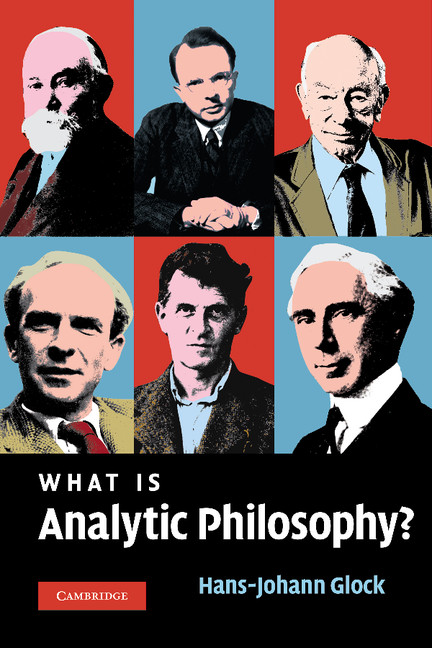
'Similarly, Ryle advocated that philosophy should chart the 'logical geography' of our concepts. In The Concept of Mind he argued that the Cartesian dualism of mind and body results from 'category-mistakes': it treats mental concepts which signify behavioural dispositions as if they referred to processes that are just like physical ones, only more ethereal. Ryle rejected Wittgenstein's therapeutic image according to which 'the philosopher treats a question like a disease' (1953: §255). Yet he accepted that philosophy is a meta-discipline which does not 'talk sense with concepts' but tries to 'talk sense about concepts' (1949: 9-10). The paradox of analysis disappears since the task is not to provide novel information about a realm extrinsic to us. According to Wittgenstein, philosophy reminds us of rules that we have mastered in practice but which mislead us in the course of philosophical reflections. According to Ryle, it takes us from the knowledge how to use words to an explicit knowledge that they are used according to certain rules. Either way, analysis is not a trivial pursuit, because the explanation of philosophically interesting concepts is complex and rich, especially when it places these concepts in their diverse contexts (everyday, scientific, philosophical).' p.43.
Hans-Johann Glock. 2008. What is analytic philosophy? Chapter 2. Historical survey. pp.21-60. CUP. Pb. 
https://www.cambridge.org/us/universitypress/subjects/philosophy/philosophy-general-interest/what-analytic-philosophy

* 'Ryle analogises philosophy to cartography. Competent speakers of a language, Ryle believes, are to a philosopher what ordinary villagers are to a mapmaker: the ordinary villager has a competent grasp of his village, and is familiar with its inhabitants and geography. But when asked to interpret a map of that knowledge, the villager will have difficulty until he is able to translate his practical knowledge into universal cartographic terms. The villager thinks of the village in personal and practical terms, while the mapmaker thinks of the village in neutral, public, cartographic terms.[20]: 440–2 '. https://en.wikipedia.org/wiki/Gilbert_Ryle

I've wondered about 'cogeography' - combining cognition and geography, even care cartography. There is also of course psycho-politics, geo-psychiatry and psycho-geography ...

Hopefully a more current text would be more diverse.^

Tuesday, May 06, 2025

Book review iv: 'Categories we live by'

The introduction to part ii 'Case Studies' is quite prescient: 'Categories have consequences'. p.75.

Certainly timely in the UK as Prof. Murphy returns to gender and birth sex his first example at the book's start. 

Coincidental or not, categories do change. As we try to understand them it is vital we don't mess them up. Consequences follow for people who are subjected to the categorisation. People use them for stability, predictability, so change can be fraught for all. Personal and group identities can all be affected, and (recently) provisions in how 'spaces' are allocated and regulated - controlled.

At infant - junior school I remember the lack of awareness, understanding and empathy for peers affected by epilepsy, stigma was a thing then that wandered the classroom and playground. Through my career I've heard many clients recount experiences pointing to stigma and exclusion.

Of the case studies Murphy writes:
'Each chapter is a more-or-less self-contained case study (including other similar examples), except that chapter 7 is a more general meditation on how determining categories is used in the exercise of power. Some of the case studies get into the weeds, and if you find yourself not that interested in how species are defined, for example, you can skip ahead to the next chapter without losing much. Following part II will be a conclusion, which attempts to summarize some of the lessons learned from all these examples.' p.77.
Murphy's style is accessible, and the case studies are informative. The author is also accessible and responsive I must add. I prefer and need a physical copy of books to reduce screen time, but e-books have their uses. I'm sure I read a short sentence in the case studies that essentially contrasted the individual and collective in sociology. Can I find that word? No luck thus far. I may be mistaken but appreciate Prof. Murphy's reply and thoughts.

There's another 'news' coincidence on p.80 (Chapter 5 'Legal Categories'): are Santa Claus costumes 'clothing' and so subject to tariffs (also referenced)? Every person worldwide, has no doubt pondered on their marked grade in a test or exam - and 'where' this places them?
'In her review of a book about rules, Rivka Galchen (2022) admits to feeling a bit of despair in the end: "Rules that leave a ruler, Or a judge, in charge of interpreting them feel at once humanized and corruptible. Rules that allow no exception seem free of human frailty but alien, and unable to admit properly of complexity." It is very easy to point at what went wrong with an overly strict rule or with a judge who seems biased, but less easy to devise a system of categories that avoids every problem.' p.83.
I often frame the conjunction of the mechanistic axis and the group in Hodges' model in terms of what do need, or get when you have large groups of people? The political domain, including law and disorder is critical of course. Is 'utopia' the perfect system by definition? I like the way even prior to reference to Galchen, Murphy states how 'the precise borders between categories can be essentially arbitrary, and there is no way to avoid that arbitrariness if you insist on dividing things into categories.'. p.83. 

If this book was a BASIC computer program, the first command for Chapter 6 Psychodiagnostic Categories. might well be a 'GOTO' statement: Chapter 7 Categories and Power.

More to follow and nearly there - sadly.

Previously: identity : space : categories

Murphy, Gregory L. Categories we live by: how we classify everyone and everything. Cambridge, MA: The MIT Press, 2024.

Many thanks to MIT Press for the review copy - and the dose of serendipity:

Saturday, April 26, 2025

'Categories are destiny' Freud p.6. of 'Categories we live by'


Reading and enjoying for review:

Murphy, Gregory L. Categories we live by: how we classify everyone and everything. Cambridge, MA: The MIT Press, 2024.

Let's start at the beginning -
'Nowadays we are suspicious of categories, especially categories of people. Gender, ethnic, racial, and class categories are seen as a source of discrimination and inequity. If we saw each person as a unique individual, perhaps we wouldn't have all the problems caused by racism, sexism, and all the other -isms that afflict society.
In spite of these problems, I will argue that we cannot get rid of categories in general. They simplify and distract us from individual identities, which can be bad, yet if we didn't have them, we would find it impossible to navigate the world and deal with its incredible diversity.' p.7.


Reading what follows also from the book's introduction, I thought about public sector funded (socialist)  healthcare and the private provision:

'So, my sweater and my hair might both be brown, so we can say that they are both in the category of brown things. They are equivalent in the sense that I call both of them "brown." However, the category of brown things is not very interesting. When you know that something is in that category, you know exactly one thing about it-its color. There's nothing else to be known. Maybe the brown thing is alive or maybe it's inanimate; maybe its microscopic or maybe it's as big as a planet; maybe it moos or maybe it sings oI maybe it is silent. The category doesn't tell you any of those things These single-criterion categories are kind of degenerate. Yes, items that share the criterion (brownness, being three inches long, taking at least half an hour, or whatever) are equivalent, but only in the one property that defines the category. Indeed, you can define trivial categories that only have one ridiculous feature in common, like things that you have touched in the last forty-nine seconds, or objects that are exactly fifteen miles from Cincinnati. Those are not categories that people form, because they are not useful.' p.11.
There is much ongoing debate about parts of the UK's NHS being 'sold-off' - taken-over by private companies with consequences for the quality of care, e.g. cataract services:

https://www.theguardian.com/society/article/2024/jul/10/eye-doctors-say-private-cataract-operations-have-hurt-the-nhs?CMP=share_btn_url

Having worked for the NHS - now NHS Professionals since 1977, the current problems faced by the service and experienced by some patients, carers, friends and family members is upsetting.

Murphy's observation contrasting the utility of categories at the individual and collective level is a great opener. Especially for the basic structure of Hodges' model and the vertical axis.

I've written previously(?) how I think that it is true, throughout my career even as a ward manager (there were some exceptions!) and community MH nurse, I/we have been cocooned from having to be concerned about the budget. When you stop and think about it, how do the 'things' in the category of economics impinge on the biomedical, biopsychosocial model? The ward was a mechanism; it kind-of run itself, which for change agents (those who use the word transformation a lot) is an ongoing issue. The two categories that matter - even as they are global - are illness and prevention. The NHS puts supertankers to shame, in its inability to pivot - turn.

At the end of the day (and night - 24/7/365!) though healthcare must be paid for.

Murphy's explanation about degenerate categories is fascinating too (and this is just the intro!). It sees me (in danger of making a category mistake) as I think about singletons, and 'degenerate' as applies in mathematics, and the debate of finance. The tension of seeing the individual as a unique being, in order to be person-centred, but the service, the system would place them in all in the category of 'payer'.

Viewed across the funding divide, is the other inevitably viewed as degenerate? On page 80 now. More to follow. I'm still kicking all this around; while the government kicks the 'can' of social care down the road.

Many thanks to MIT Press for the review copy.