Hodges' Model: Welcome to the QUAD: exclusion

Hodges' model is a conceptual framework to support reflection and critical thinking. Situated, the model can help integrate all disciplines (academic and professional). Amid news items, are posts that illustrate the scope and application of the model. A bibliography and A4 template are provided in the sidebar. Welcome to the QUAD ...

Showing posts with label exclusion. Show all posts

Friday, July 31, 2026

10 years of Money and Mental Health

An update from Helen Undy OBE - Chief Executive of Money and Mental Health.

Marking a full decade since we were founded, we've put together a short film summarising who we are, what we do, how we put lived experience at the heart of our work and our impact so far. We're particularly grateful to the members of our Research Community - Suzanne, Rob and Catherine - for giving up their time to appear in this film. If you're interested, please watch below. And please do feel free to share with friends or colleagues who might be interested in learning more about our work.


Sometimes the most basic of formulations speaks volumes and distances ...


individual
|
INTERPERSONAL
: SCIENCES             
humanistic ------------------------------- mechanistic
SOCIOLOGY : POLITICAL   
|
group

Mental health


Money

Monday, December 22, 2025

Contexto Int. [Newsletter] - Special Issue 47.2 Where is the Sea in Int. Relations?

Dear Colleagues,

We hope this correspondence finds you well.

We are delighted to formally announce the publication of the latest special issue of Contexto Internacional, entitled "Where is the Sea in IR?," which I had the distinct honour of co-editing with Dr Flavia Guerra (Federal University of Rio de Janeiro).

The overarching objective of this Special Issue is to address a central scholarly lacuna within International Relations (IR) scholarship: the historical and theoretical marginalisation of the oceanic domain. In pursuing this fundamental inquiry—why and how does the ocean recede from scholarly and political attention?—the assembled contributions collectively prompt a sustained, rigorous examination of two key analytical challenges:

  1. The specific mechanisms through which IR has historically relegated the oceanic domain to the periphery of its dominant analytical frameworks.
  2. The subsequent broader political and theoretical implications that stem from this systematic exclusion.

The volume is structurally organised around three distinct, yet interconnected, thematic axes, each seeking to contribute to a deeper engagement with the marine sphere:

  1. The Marginalisation of the Ocean in IR: Conceptual and empirical explorations of how the sea is actively rendered absent or subordinate within core theoretical debates.
  2. Complex Entanglements between the Ocean and Ontological Security: Analyses focusing on the relationship between maritime spaces, existential anxieties, and state identity formation.
  3. Ocean Governance as Regulatory Mechanism and Platform for Political Discourse: Critical assessments of regulatory frameworks and their role in structuring political contestation over the maritime commons.

We sincerely hope that you find the contributions within this volume to be a compelling and theoretically relevant read that stimulates further research and critical reflection within the discipline.

Special Issue: Where is the Sea in IR?

Where is the Sea in International Relations?
  Francisco Eduardo Lemos de Matos; Flávia Guerra Cavalcanti

Abstract | Full text

Table of Contents: https://www.scielo.br/j/cint/i/2025.v47n2/

Includes - Addressing 'Maritime Aphasia' in International Relations
  Bruno Sowden-Carvalho; Marcelo M. Valença

Between Nuclear Tests and Rising Sea Levels
  Beatriz Rodrigues Bessa Mattos

Carl Schmitt on the Move: Spatial Politics and the (political) Sacrifice of the Sea
  Francisco Eduardo Lemos de Matos

Thinking Ontological (In)Security with Water: The Place of the Ocean in Boat Migration
  Flávia Guerra Cavalcanti

What is the Place of Mar de Timor in Timorese Geopolitics, Culture and Education?
  Silvia Garcia Nogueira; Betina Lopes; Ângelo Ferreira; Samuel de Souza Freitas

Fluid Boundaries: Reassessing Maritime Spaces and Nomadic Waves in International Relations Theory
  Henrique Campos de Oliveira

The Third Bank of the Sea: Maritime Traces of Constitutive Outside(r)s and International Ontopolitical Lines
  Roberto Vilchez Yamato; Gustavo Alvim de Góes

Ocean Governance, Maritime Security, and International Relations
  Daniele Dionisio da Silva; Gilberto Carvalho Oliveira

Sailing on Waves beyond National Sovereign Land Borders: On the Crossroads between International Ocean Relations and the Blue Economy
  Thauan Santos

Regards,
chico

Francisco Eduardo Lemos de Matos
Doutor em Relações Internacionais pelo IRI/PUC-RIO.
Pesquisador de Pós-Doutorado em Relações Internacionais no IRI/PUC-RIO pela FAPERJ.

Rede IPS Brasil - https://www.ipsbrasil.com/
Lattes: https://lattes.cnpq.br/9338374067089166
Orcid: https://orcid.org/0000-0003-4214-5382

My source: DOINGIPS list - https://www.doingips.org/

Saturday, May 10, 2025

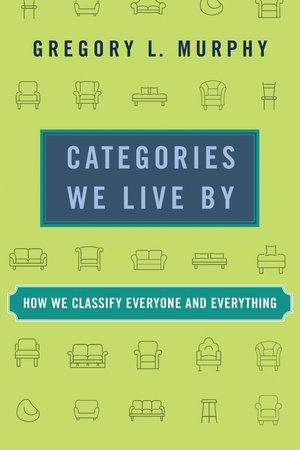
v Book review: 'Categories we live by'

Our lives and careers (hopefully) are full of bridges, some recognised, but not taken, others passed-by on our way (and unseen). Before I completed my training as a student mental health nurse beginning in 1977, I saw a critical bridge between the knowledge and skills on mental health nursing and general nursing. Crossing this bridge was essential (for me) to being a registered 'nurse'.

Chapter 6 on Psychodiagnostic Categories is a gift therefore. It's a gift because another bridge emerged in 1980-1981 with the Sinclair microcomputers and advent of 'home computing'. With a ZX81 there was going to be a need to navigate this space between the what is human and what is machine. Two categories that remain key concerns today.

The DSM (Diagnostic and Statistical Manual of Mental Disorders - published by the American Psychiatric Association [APA] ) is on the chapter's first page, plus the patient, researchers, psychiatrists and the conditions learned during their medical education, contrasted with individual psychiatrist's clinical encounters with patients. 

Very quickly (the next page p.86) Murphy identifies the 'circumstantial factors' that cause mental illness. This is very positive as acknowledging the determinants across health is key, however framed, e.g. social determinants, economic, educational we must take into account all of them. Otherwise our assessment must be considered as incomplete, or at least lacking?

The utility of Prof. Murphy's short book is in how prior to the case studies we see the problem of definitions. And how what is determined is often a matter of convenience. This is a non-trivial matter - especially in health, economics, sciences, politics, future and peace studies: you get the idea...

Of immediate relevance in the USA is the need for categories for insurance purposes. It is an industry. Yes, indeed: 'The truth is that psychiatric patients vary in every possible way', p.86. Computers of course are well-equipped to help us in the creation, revision and publication - access to categories; with classification, taxonomy, nomenclature ... also in the mix. I was reminded of WHO's history of classification (see below) which I point students and colleagues to.

The way DSM is applied is explained and the politics duly noted (especially in Chap. 7). Resort to 'miscellaneous' is described as a sign that 'the categories are not necessarily picking out 'natural kinds'. I remember in the 90s, our PICK database on a community mental health project had Murphy's 'X' not otherwise specified. I don't think I read the word 'caseness', but there is a lot 'inside'!? References are ongoing. I wondered if there could be more recent examples, but perhaps this is in turn symptomatic of categorisation tending to be the rear car? Fuzziness is discussed. Plus, the observation that 'a few psychiatric categories may be true natural kinds, like gold or rainbow trout.' p.89. 

'Change' is a mantra for all disciplines in the NHS and global healthcare. So pragmatic to see how revision and change in the DSM can be used by - dare I mention - anti-psychiatry advocates and clinicians as to what change represents to these respective interest groups? At a time when research is experiencing funding changes, Murphy contrasts how DSM was developed for the use of clinicians to identify people with similar profiles, but they were not developed to identify (research - Nat. Inst. for Mental Health) underlying causes. Raising the determinants once again, p.91.

It is obvious but as personnel and Brits may look at private medicine with coding purposed for insurance purposes; there is within the NHS (public-funded healthcare) and psychiatry (a single domain too) within and the need by patients for diagnosis, and the welfare system. Here in the UK the rise of mental health in young adults, autism and waiting lists for assessment for ADHD are a moot point.  

Through Hodges' model we some possibly fascinating bridges, that are much less-travelled these days? In many cultures, even if we do not need permission to be sick, it needs to be recognised socially - and so politically. Society needs to deal with individuals who are ill, infirm, disabled. It's interesting then to reflect on this issue and phenomena through the lens of anthropology and medical sociology. Murphy warns to of the dangers 'of thinking of something as being the category'. In medicine a new approach is needed, as Murphy also notes. A nice bridge to chapter 7 Categories and Power.
'The case studies discussed in the previous chapters remind us that categories can be political and social tools. An old department chair of mine had the saying, "She who sets the agenda controls the meeting." We might coin a new one, "Those who make the categories control the outcomes." If your psychodiagnostic categories are made by working therapists and physicians, they might facilitate treatment- -and also benefit those practitioners. If they are made by researchers, they might not be very useful for treatment at all. And if they are made by insurance companies, all bets are off.' p.95.
Trying to take my attempts to find theoretical underpinning (category 'trying to clever') I've a diagram scribbled here. Nearby, p.100, I picked up on 'the cost of losing information or distorting reality to some degree.' Murphy picks up on the ICD Int. Classification of Diseases here. Twitter is still twitter here - thumbs up for that! There is a useful example of the impact of categories in age, pregnancy and medical attention provided.

From Chapter 8, I picked out: Naming Nature: The Clash Between Instinct and Science, by Carol Kaesuk Yoon. W. W. Norton: 2009. 352 pp. £19.99/$27.95 9780393061970 | ISBN: 978-0-3930-6197-0; and checking, I remember the book's cover. Murphy's book overall highlights the convenience of our categories, the ongoing challenges and everyday conundrums they present though the remaining chapters on Species (8); Peanut Butter, Potato Chips, Almond Milk... (9); Racial Categories (10). These all contribute, still building a coherent picture, chapter 10 vital among them with a url provided (which may have changed):

https://anthropology-tutorials-nggs7.kinsta.page/adapt/adapt_4.htm


The one-drop rule (David, 1991) on p.126, is deeply troubling. Especially so given some examples of human reasoning even today. Medicine, by way of blood tests, features again. I smiled wryly reading how people from different countries have different rates of disease, e.g. 'heart disease in Scotland'. Instantly, and crackling - a deep-fried Mars bar popped into my mind. 

The things people do. You - really could read this book! 

Murphy, Gregory L. Categories we live by: how we classify everyone and everything. Cambridge, MA: The MIT Press, 2024.

Many thanks again to MIT Press for the review copy and Prof Murphy for a great read.
Previously: DSM : fuzzy : categories

Tuesday, May 06, 2025

Book review iv: 'Categories we live by'

The introduction to part ii 'Case Studies' is quite prescient: 'Categories have consequences'. p.75.

Certainly timely in the UK as Prof. Murphy returns to gender and birth sex his first example at the book's start. 

Coincidental or not, categories do change. As we try to understand them it is vital we don't mess them up. Consequences follow for people who are subjected to the categorisation. People use them for stability, predictability, so change can be fraught for all. Personal and group identities can all be affected, and (recently) provisions in how 'spaces' are allocated and regulated - controlled.

At infant - junior school I remember the lack of awareness, understanding and empathy for peers affected by epilepsy, stigma was a thing then that wandered the classroom and playground. Through my career I've heard many clients recount experiences pointing to stigma and exclusion.

Of the case studies Murphy writes:
'Each chapter is a more-or-less self-contained case study (including other similar examples), except that chapter 7 is a more general meditation on how determining categories is used in the exercise of power. Some of the case studies get into the weeds, and if you find yourself not that interested in how species are defined, for example, you can skip ahead to the next chapter without losing much. Following part II will be a conclusion, which attempts to summarize some of the lessons learned from all these examples.' p.77.
Murphy's style is accessible, and the case studies are informative. The author is also accessible and responsive I must add. I prefer and need a physical copy of books to reduce screen time, but e-books have their uses. I'm sure I read a short sentence in the case studies that essentially contrasted the individual and collective in sociology. Can I find that word? No luck thus far. I may be mistaken but appreciate Prof. Murphy's reply and thoughts.

There's another 'news' coincidence on p.80 (Chapter 5 'Legal Categories'): are Santa Claus costumes 'clothing' and so subject to tariffs (also referenced)? Every person worldwide, has no doubt pondered on their marked grade in a test or exam - and 'where' this places them?
'In her review of a book about rules, Rivka Galchen (2022) admits to feeling a bit of despair in the end: "Rules that leave a ruler, Or a judge, in charge of interpreting them feel at once humanized and corruptible. Rules that allow no exception seem free of human frailty but alien, and unable to admit properly of complexity." It is very easy to point at what went wrong with an overly strict rule or with a judge who seems biased, but less easy to devise a system of categories that avoids every problem.' p.83.
I often frame the conjunction of the mechanistic axis and the group in Hodges' model in terms of what do need, or get when you have large groups of people? The political domain, including law and disorder is critical of course. Is 'utopia' the perfect system by definition? I like the way even prior to reference to Galchen, Murphy states how 'the precise borders between categories can be essentially arbitrary, and there is no way to avoid that arbitrariness if you insist on dividing things into categories.'. p.83. 

If this book was a BASIC computer program, the first command for Chapter 6 Psychodiagnostic Categories. might well be a 'GOTO' statement: Chapter 7 Categories and Power.

More to follow and nearly there - sadly.

Previously: identity : space : categories

Murphy, Gregory L. Categories we live by: how we classify everyone and everything. Cambridge, MA: The MIT Press, 2024.

Many thanks to MIT Press for the review copy - and the dose of serendipity:

Monday, December 02, 2024

'Un Caso Clinico' BUZZATI (I906-I972)

Reading The Theatre of the Absurd earlier this year was a very enjoyable and disconcerting experience. In acknowledgement: I have quoted from the book at length below. I do so to better convey the context, and in the hope other people may similarly obtain and enjoy this classic theatrical text.

Reading, I was reminded of starting my career as a nursing assistant and student nurse, and the 'lock-up' wards: male and female. Listening now to the current Reith Lectures I will post regards: 

Gwen Adshead - Four Questions about Violence

https://www.bbc.co.uk/sounds/play/m0025cmg

As a community mental health nurse in community mental health teams and nursing home liaison, residents on the ground floor (of two or three floors - with 'general') 'knew' there were very poorly people on the top floor. In summer, windows open, they could often be heard shouting and in the night. Inside, for staff, family members, friends became advocates expressing concern for a lack of access to fresh air and sunshine. Something, of course, we can all benefit from. For some residents there was an in-house understanding of NOT wanting to be moved 'upstairs'. At times I gather, if a resident 'played up' such re-location (displacement) was used as a threat: a cue for education.^

DINO BUZZATI (I906-I972)
'In Les Bátisseurs d'Empire the flight from death takes the form of trying to escape upwards. The same image appears in the opposite direction in a remarkable play by Dino Buzzati, the eminent Italian novelist and journalist on the staff of the Corriere della Sera in Milan. This play, first performed by the Piccolo Teatro, Milan, in 1953, and in Paris in an adaptation by Camus in 1955, is Un Caso Clinico. In two parts (thirteen scenes), it shows the death of a middle-aged businessman, Giovanni Corte. Busy, overworked, tyrannized but pampered as the family's breadwinner, whose health must be preserved, he is disturbed by hallucinations of a female voice calling him from the distance and by the spectre of a woman that seems to haunt his house. He is persuaded to consult a famous specialist, and goes to see him at his ultra-modern hospital. Before he knows what has happened, he is an inmate of the hospital, about to be operated on. Everybody reassures him - this hospital is organized in the most efficient modern manner; the people who are not really ill, or merely under observation, are on the top floor, the seventh. Those who are slightly less well are on the sixth; those who are ill, but not really badly, are on the fifth; and so on downwards in a descending order to the first floor, which is the antechamber of death.

In a terrifying sequence of scenes, Buzzati shows his hero's descent. At first he is moved to the sixth floor, merely to make room for someone who needs his private ward more than does. Further down, he still hopes that he is merely going down to be near some specialized medical facilities he needs, and before he has fully realized what has happened, he is so far down that there is no hope of escape. He is buried among the outcasts who have already been given up, the lowest class of human beings - the dying. Corte's mother comes to take him home, but it is too late.

Un Caso Clinico is a remarkable and highly original work, a modern miracle play in the tradition of Everyman. It dramatizes the death of a rich man - his delusion that somehow he is in a special class, exempt from the ravages of illness; his gradual loss of contact with reality; and, above all, the imperceptible manner of his descent and its sudden revelation to him. And in the hospital, with its rigid stratification, Buzzati has found a terrifying image of society itself - an impersonal organization that hustles the individual on his way to death, caring for him, providing services, but at the same time distant, rule-ridden, incomprehensible, and cruel.' 
Esslin, Martin. Parallels and Proselytes, The Theatre of the Absurd. London: Pelican, 1982. (3rd Ed.).pp.277-279.

The Bewitched Bourgeois
^Rest assured, there were and are excellent centers of care too.


Update: 11th January 2025: c/o John Self. Meet the forgotten maestro of the ultra-short story. Saturday Review, The Times, p.15.
'One of his most widely published stories, Seven Floors, is set in a hospital where they put the "mildest cases" on the seventh floor, and so on in increasing order of sickness down to the first floor, which is occupied by those who are "beyond hope"'.

Lawrence Venuti. (2025) The Bewitched Bourgeois, New York: NYRB Classics ISBN: 9781681378671.

Cover image: NYRB.

Monday, July 15, 2024

FT: "Nearly 3mn people fell into financial difficulty last year"

Access to credit and illegal lending


Individual
|
      INTERPERSONAL    :     SCIENCES                   
HUMANISTIC  --------------------------------------  MECHANISTIC      
 SOCIOLOGY  :    POLITICAL 
|
Group

study included an online survey 3,101
 financially vulnerable people
+
nationally representative online study
with a sample of 1,500 people


>20mn classed as vulnerable

'44% of the UK adult population'


exclusion from financial services

'People with flaws in their credit scores,
risk being excluded from affordable
financial services, being forced to
rely on subprime lenders.'


"the poverty premium costing the country
a staggering £2.8bn per year."

economic determinants of health

'We need to view financial inclusion
as a key enabler of growth.'


Hickey, S. Nearly 3mn people fell into financial difficulty last year, Money, FTWeekend, 13 July, 2024. p.2. https://www.ft.com/content/9fa98712-b73e-4eac-ba5f-71d3bad13fa7


Thursday, February 10, 2022

6th International Conference on Disability and Development: Disability and COVID-19


We invite you to join the 6th International Conference on Disability and Development

The Conference will be hosted by the International Centre for Evidence in Disability

Date: 14 - 17 March 2022
Time: 10am – 12pm GMT each day
Venue: Virtual

COVID-19 has dominated global discourse for the last 18 months as the pandemic impacts everyone, everywhere. There is growing evidence that people with disabilities and their families are particularly at risk during the pandemic, in terms of:

1. Increased risk of death and hospitalization;
2. Exclusion from the COVID-19 response actions (e.g. information, vaccination);
3. Adverse consequences of COVID-19 control activities (e.g. lockdown and social distancing);
4. Negative impacts on health (e.g. reduction in rehabilitation care).

The Conference seeks to bring together people to discuss and debate Disability and COVID-19. The focus will be on new research findings, methodologies and tools and implications of evidence for policy and practice. The focus will include both low-, middle- and high-income settings as well as humanitarian contexts.

Who should attend? All those with a strong interest in disability and COVID-19 are very welcome to attend, and this may include researchers, policy activists, decision- makers and practitioners. People with disabilities are particularly encouraged to submit abstracts and attend.

Please visit our event page for more information 
and for more details about abstract submission.

Deadline for submissions: 10th February 2022

International sign language interpreters and live captioning will be available at the event. 

If other access needs are required, please email disabilitycentre AT lshtm.ac.uk.


Sunday, April 04, 2021

The Times: Education Commission

"An education commission is being set up by The Times that could lead to radical change across schools and universities.

It brings together experts including senior MPs, head teachers, academics, vice-chancellors and a children’s author who will work on the year-long project that is expected to inform government policy. They say school closures during the pandemic and the resulting surge in online learning have provided the perfect opportunity for an overhaul of the system to be considered."

individual
|
INTERPERSONAL : SCIENCES
humanistic ----------------------------------------------- mechanistic
SOCIOLOGY : POLITICAL
|
group

Lifelong Learning
(Attitude (cognitive access))
Knowledge & Skills
(Purpose of education)
Critical thinking, Problem Solving, Reflection

Curriculum
New Technology
(Anticipating AI & Robotic Process Automation)
Lifelong Learning
(Physical access, Technology Enhanced Learning)

Lifelong Learning
Social mobility (Social access)
Exclusions
Social skills
How many forms of 'literacy'?
Team work / Collaboration
Challenge social gender stereotypes

Lifelong Learning (Policy, Economic access)
Government policy - Work creation
University entrants - nos.
Exams?
Curriculum 21st Century
Qualifications
Still the 'Two Cultures'?

My source:

Woolcock, N. (2021) Push to give children a better start, The Times, March 24, p.4; The pandemic has exposed weaknesses in education, leading article, p. 27.

https://www.thetimes.co.uk/article/the-times-education-commission-children-better-start-lockdown-5bvf2bhwm

Saturday, April 18, 2020

the What, When, Where, Why of online healthcare information exclusion

individual
|
INTERPERSONAL : SCIENCES
humanistic ----------------------------------------------- mechanistic
SOCIOLOGY : POLITICAL
|
group - population

Mental Health factors

Lack of confidence in device usage

Self-exclusion due to lack of motivation (sense of information overload, trust); or multiple illiteracies: 3Rs, health, IT, information.

Articulation of MY 
health information needs

Health literacy (and others) still 
emerging as a discipline

Lack of time to focus on 'my' health due to other constraints 
and social pressures: duties / work

Ethics: Primacy of message?
My health or forest logging, 
over-fishing, selling x,y,z ?
Physical health factors
 (mobility, senses, ableness ...
Inverse Care Law)

Geographic issues - 
terrain remoteness
 
Non-existent or 
poor broadband services

No access to energy supply

Quality and safety concerns

Need for more research 
- change studies, innovation.
Media modalities: paper->digital, speech (theatre?)->digital ...
Design, Usability
Grammatical/reading age checks

Individual's understanding 
of the benefits of
 online healthcare information.

No spare - individual - income 
for online services due to
 family welfare - food ...

Languages not available

Cultural factors, negative attitudes

Personal space in group settings
(privacy, concentration, engagement)

Articulation of MY 
family's health information needs
 
Availability of Community initiatives
shared access schemes?

Policies / Funding 
of telecoms infrastructure:
community - industry - gov 
collaboration & partnership*

'Market' conditions - governance

Being 'permitted' to have access, 
use of devices - girls/women.

Being voluntarily displaced
from local community by work (continuity)

Government control of access to services - 
political fire-walls ('noise'?)
Use of pay-walls

Incarceration

Loss/Dispossession:
Refugees - Disasters

Deliberate publication of
 fake-(health) news.
Gov & Corp. 
control of this and advertising.


Open to suggestions for any additions ...?


Prompt: HIFA message.

*See also previous post:
https://hodges-model.blogspot.com/2020/04/book-third-pillar.html

Friday, August 21, 2009

'Relative' poverty (4) - sociology

[The introduction is repeated across these posts: intrapersonal, political, sciences]
There are many paradoxes in life and many of these are concentrated in the realm of health and medicine (a major sub-division of life and death).

For decades the link between poverty and standards and quality of health has been recognized and politicized in the media and policy. In June there was news of a Bill to make the eradication of child poverty a legal obligation not something that can be the political objective at the start of a Government and then cast aside.

Many things are relative and poverty is often described in this way applying to individuals, social classes, communities, regions and whole nations. Using the domains of Hodges' model what reflections does this prompt? Let us see:

SOCIOLOGY: A key resource we all ordinarily rely upon is that of family, friends and community. While a source of stress at times as in you can choose your friends, but you can't choose your family..., and then there's the history of psychosocial intervention; the family is nonetheless usually seen as the asset.
Social poverty - having no (immediate, accessible) next of kin, friends or social network has been identified as a key deficit that may result in negative outcomes and problems in rehabilitation, recovery and staying well. There is an expanding literature on the role of social networks. Despite the current emphasis on e-social networks the interpersonal form of social network remains pivotal as a key strength for people to deal with major challenges to their health, social care and well-being.

The socio-economic contribution of informal carers is well recognized (Carers UK) and vital in the management of long term medical conditions ('self-care by proxy'?). 'Caring' and carers predates what we today call 'nursing'. Carers shoulder a care burden saving the State an enormous sum of money. Within Hodges' model this domain - the SOCIOLOGICAL - may be a remote cousin, far from the sciences, but the fuzzy logic here is predicated on families and relationships.

In the social domain the whole community can act as a pool of kinetic and potential energy, a resource - locking up wealth in knowledge and skills that can counter social poverty and periods of self-neglect should this occur. The future health and social care agenda depends upon the workforce being able not only to create this social wealth, but ensuring people are able to release this knowledge. Physics, energy, time - there is no escape. Perhaps assumptions as per this quote* also have a role to play -

‘‘Of all the self-fulfilling prophecies in our culture, the assumption that ageing means
decline and poor health is probably the deadliest.’’
Marilyn Ferguson,
The Aquarian Conspiracy, 1980

Additional links:

Relative poverty, absolute poverty and Social exclusion - poverty.org.uk

World Poverty - Social Poverty

'Poverty' on W2tQ

Sociology care (knowledge) domain links resource

Biblio:

*Sirven, N., Debrand, T. (2008) Social participation and healthy ageing: An international comparison using SHARE data, Social Science & Medicine, 67, 12, 2017-2026.

Mitchinson, A.R., Kim, H.M., Geisser, M., Rosenberg, J.M., Hinshaw, D.B. (2008) Social Connectedness and Patient Recovery after Major Operations, Journal of the American College of Surgeons, 206, 2, 292-300.