Hodges' Model: Welcome to the QUAD: ageing

Hodges' model is a conceptual framework to support reflection and critical thinking. Situated, the model can help integrate all disciplines (academic and professional). Amid news items, are posts that illustrate the scope and application of the model. A bibliography and A4 template are provided in the sidebar. Welcome to the QUAD ...

Showing posts with label ageing. Show all posts

Thursday, May 21, 2026

RCN Congress: The Systems Table and the Missing Cog

Across two maillists: SDOH Social Determinants of Health and POHG Politics of Health Group a discussion and debate regards public health, longevity and policy, was provoked by a study:

'At least 80% responsibility for ill health in old age down to individual'

https://www.theguardian.com/society/2026/may/20/responsibility-ill-health-old-age-oxford-longevity-project-study

'... Individuals bear at least 80% of the responsibility for their ill health in old age, according to a report aimed at challenging the belief that physical decline is either inevitable or primarily the responsibility of the state.

The report, launched at the Smart Ageing Summit in Oxford last week, argues that individuals have far greater control over their longevity than is commonly understood. The authors call on the government to take legislative action on alcohol comparable to restrictions on smoking.

Living Longer, Better – the Oxford Longevity Project’s first Age-less report – was co-authored by an interdisciplinary panel of UK-based experts in medicine, physiology, ageing and education policy. It was sponsored by Oxford Healthspan.

The report’s authors, Sir Christopher Ball, Sir Muir Gray, Dr Paul Ch’en, Leslie Kenny and Prof Denis Noble, present the figure of 80% as a conservative estimate.

Ball, a 91-year-old former Parachute regiment officer who intends to reach 100, said: “Some have gone higher and said it’s approaching 90%. But I think 80% seems about fair.”The claim, however, has been described as simplistic and said to neglect wider arguments about whether people are genuinely in control of individual choices when it comes to issues including poverty, pollution and healthcare access.

Nancy Krieger, professor of social epidemiology at Harvard TH Chan school of public health, said: “The report is to be commended for rejecting genetic determinism but it problematically avoids engaging with the societal determination of health and health inequities; the role of work, economic deprivation and government policies that give corporations free rein to sell unhealthy products.”

Steven Woolf, professor of family medicine and population health and director of the Virginia Commonwealth University Center on Society and Health, agreed, saying the paper “ignores and oversimplifies the actual, multilayered root causes of the conditions that foster poor health in a population”.

Woolf added: “There are factors affecting health that are beyond personal choice. So while it’s good to give people clear guidance on how their choices affect their health, it’s taking policymakers and others off the hook.” ...'


This provides me with evidence (well it would - wouldn't it^) on the need for, the purposes, and applications of Hodges' model.

More philosophically (perhaps), I'm reminded of the work of several academics - thinkers, Michel Serres stands out for me. Serres felt that positional adverbs were important, e.g. between, above, and under.

He also wrote of life (as per many philosophers), and the universe e.g. his writings on Physics and Lucretius - as flow - a river.

For new life, the options are seemingly infinite, far, far upstream: at source - not recognisable even as a trickle... but soon a rivulet, a stream, a river of so many tributaries.

As we grow older we get closer to the sea (of the 'eternal'), the options open to us shrink gradually, but ultimately radically - inevitably.

But looking back the turbulence, uncertainty, unpredictability (trauma and joy), all contribute, not just to where we end (up) but how this came about.

Life's signature at death.

In "Hodges' Health Career Model" 'health career' refers specifically to the idea of life chances (of course) and how other careers, education, work, retirement, caring (self - others - planet) .. are impacted through life and death's course.

This morning at RCN Congress, Liverpool (the home of District Nursing) there was discussion re. nurses being engaged in preparation for the next pandemic.

So often 'Nursing' is absent from the POLITICAL / POLICY table:

Speaking for myself, nursing is not interested in the four-course meal, but being involved and engaged in the after dinner discourse can be critical.

Politicians, policy makers, business, management consultants and lobbyists are so quick to point to and extol the 'SYSTEMS' perspective, and the need for 'systems thinking'.

Guilty of systemic neglect, they clearly have no idea of what a system is, an inability to appreciate and apprehend scope, scale and the 'whole'.

In mitigation (or not), for all groups: voice matters. Especially the voices of foresight, balance, advocacy, Their ability to ascend always proves an issue. 

Related papers listed in the sidebar:

Jones, P. (2008) Exploring Serres’ Atlas, Hodges’ Knowledge Domains and the Fusion of Informatics and Cultural Horizons, IN Kidd, T., Chen, I. (Eds.) Social Information Technology Connecting Society and Cultural Issues, Idea Group Publishing, Inc. Chap. 7, pp. 96-109.

Jones, P. (2009) Socio-Technical Structures, the Scope of Informatics and Hodges’ model, IN, Staudinger, R., Ostermann, H., Bettina Staudinger, B. (Eds.), Handbook of Research in Nursing Informatics and Socio-Technical Structures, Idea Group Publishing, Inc. Chap. 11, pp. 160-174.

Jones, P. (2012). Exploring several dimensions of local, global and glocal using the generic conceptual framework Hodges's model. The Journal Of Community Informatics. 8(3). Retrieved from https://www.academia.edu/3794699/Reflecting_on_the_glocal_through_the_conceptual_framework_of_Hodges_s_model

^Because these days you need to make every kernel - found or created on the continuum of evidence - count.

Previously: 'life chances' : 'health career' : 'Serres' : 'APPGs'

Liverpool, UK. RCN Congress 2026 - 
n.b. See you in Liverpool 2027?
Tuesday, November 11, 2025

RCN Older People's Forum “Frailty & Falls – A holistic approach to safer mobility and reablement"

Dear Colleagues,

The Royal College of Nursing Older People's Forum is hosting an online webinar, “Frailty & Falls – A holistic approach to safer mobility and reablement,” on 12th November 2025, 12:30–14:00.

This webinar explores frailty, ageing, and falls from a multidisciplinary perspective, with speakers from occupational therapy, older-people nursing, and orthopaedic care. It’s a great opportunity to update knowledge and share good practice in fall prevention and reablement.

You can find full details and register here:
https://www.rcn.org.uk/news-and-events/events/frailty-and-falls


Kind regards,

Steph Craig
RCN OPF Chair


Apologies for short-notice. PJ

Monday, November 03, 2025

Newsletter: African Population and Health Research Center

APHRC News – Issue 2, 2025

  •  31/10/2025
Welcome to APHRC’s second 2025 newsletter issue! This edition explores how the Center is closing the Knowledge Translation Gap, making research accessible, relatable, and transformative. Dive in to discover stories of change, from climate and health innovations to inclusive education and mental health breakthroughs across Africa.


Friday, October 03, 2025

'National Care Service' - Casey Commission

'Casey Commission tasked with producing plan for ‘national care service’ by 2026

Government remit also asks independent commission to consider services for older people and disabled adults separately and to ensure recommendations stick to government spending settlement

By Mithran Samuel on May 2, 2025 in Adults, Social work leaders

The Casey Commission has been tasked with producing a plan next year for delivering a “national care service” over the course of a decade.

The 2026 report will be followed by a further report, due by 2028, setting out longer-term recommendations for the sector, according to the Department of Health and Social Care’s (DHSC) terms of reference for the commission, published today.

The Independent Commission into Adult Social Care, headed by crossbench peer and renowned government troubleshooter Baroness (Louise) Casey, started its work this week.

The plan to set up the commission sparked criticism from social care organisations, after it was announced in January, due to its three-year timeframe being seen as far too long to develop a plan for a sector under under severe immediate pressures and facing significant future challenges.' 
continued...
https://www.communitycare.co.uk/2025/05/02/casey-commission-tasked-with-producing-plan-for-national-care-service-by-2026/

The Casey Commission


... so many people ...

Individual
|
      INTERPERSONAL    :     SCIENCES               
HUMANISTIC  --------------------------------------  MECHANISTIC      
 SOCIOLOGY  :    POLITICAL 
|
Group


 ... watching this space.


My prompt: Letters to the Editor, The Sunday Times. 12th January 20025. p.22.

https://www.thetimes.com/comment/letters-to-editor/article/sunday-times-letters-labours-national-care-service-proposal-ghx22kzt2

Wednesday, September 24, 2025

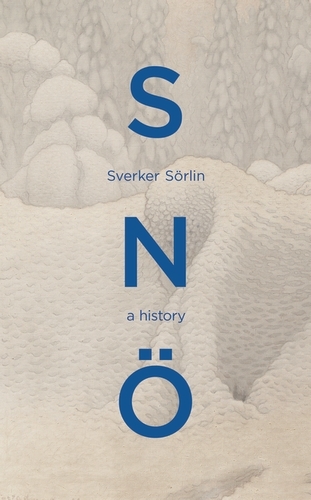
Book: SNÖ

'Snow. A single word, for an infinite variety of water formulations, frozen in air. The study of snow is physics, chemistry, meteorology, anthropology, geography, poetry and art. It is hope – annually renewed. And it is history, too.

Earth saw its first snowfall 2.4 billion years ago. The world's oldest skis, made by hand five thousand four hundred years old, pre-date the pyramids of ancient Egypt. To humanity, snow has variously been an ally and an adversary; an inspiration to countless artists and a place of breathtaking tragedy and survival. But it’s always been there. And now it is melting. 
In 1927, the snow was already more than nine metres deep on Japan's Mount Ibuki when a remarkable 230cm fell in 24 hours, bringing about the greatest depth of snow - 11.82m - ever recorded. Yet it is a fact today that, ironically not only has this mountain's resort been forced to close due to lack of snow, most people in the world have never been near snow: never felt the soft crunch of snow underfoot, never held snow to see it melt in their hands, let alone stood on a pair of skis.'  continued ...
Individual
|
      INTERPERSONAL    :     SCIENCES               
HUMANISTIC  --------------------------------------  MECHANISTIC      
 SOCIOLOGY  :    POLITICAL 
|
Group


compass defined

compass unified

mental expanse

beauty

memory

lived experience

signature of change

sadness

signifier
SNÖ by Sverker Sörlin

culture

poetry - arts

social history

shared loss

recreation - leisure

Two kids.
Uncles! In car, drenching
us driving through slush in the gutter 😎


Sverker Sörlin, Elizabeth DeNoma (Translator) (2025). SNÖ - A History. London: Doubleday.
https://www.penguin.co.uk/books/467833/sno-by-sorlin-sverker/9781529947878


My source: Clark, P. A gear shift to adapt to a warming world. Books. Genre Round-Up, Environment.  Life&Arts. FT Weekend. 23/24 August 2025. p.10.

John Denver - Season Suite (Full) The Suite is in this order:
  1. Summer
  2. Fall
  3. Winter
  4. Late Winter, Early Spring (When Everybody Goes to Mexico)
  5. Spring

Friday, September 19, 2025

'Recall Me Maybe' | FT Drama

Stephen Fry and Gemma Whelan star in a new FT drama written by David Baddiel, exploring AI, memory and truth. Fry plays a grandfather with dementia who uses AI to fill in gaps in his memory. While reviewing the archive of his life his family makes a shocking discovery. Which memories are really true? And how AI is defining who we are?

See also: FT Standpoint unveils David Baddiel digital-first drama about AI and dementia -https://www.dropmedia.co.uk/ft-standpoint-unveils-david-baddiel-digital-first-drama-about-ai-and-dementia/

My source: Times Radio. Dom Joly in for Ayesha Hazarika. 1300-1600 BST From 1405-21.
https://www.thetimes.com/radio/show/20250919-32052/2025-09-19

I still need to catch up with last weekend's FT.
https://www.ft.com/video/a4d2ba19-051e-47c5-98ae-c27c59f1b3f0

Tuesday, August 05, 2025

Collective loneliness

Individual
|
      INTERPERSONAL    :     SCIENCES               
HUMANISTIC  --------------------------------------  MECHANISTIC      
 SOCIOLOGY  :    POLITICAL 
|
Group
loneliness

depopulation
demographics

Japan

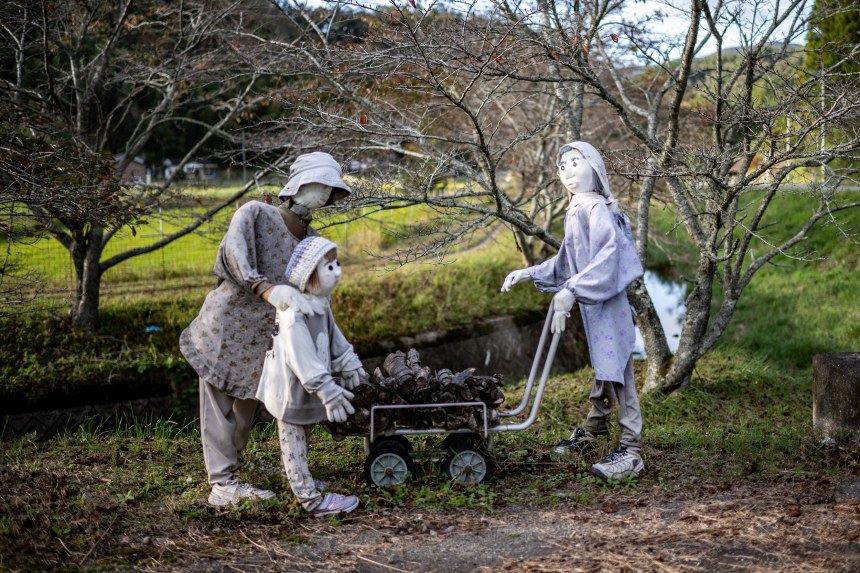
 A family of puppets collects wood in 
 the Japanese village of Ichinono.
 Philip Fong / AFP - Getty Images 
'Stop the boats'

'global trends'


My source: Sam Freedman. The truth about migrant workers: demonised but in demand, and few of us can live without them. The Observer, 03.08.25. pp.12-13.
https://observer.co.uk/news/national/article/sam-freedman-demonising-migrants-wont-fill-jobs-or-boost-falling-populations

Image and context:
'Outnumbered by puppets': Depopulated village in Japan crafts dolls for sense of life
https://www.nbcnews.com/news/world/outnumbered-puppets-depopulated-village-japan-crafts-dolls-sense-life-rcna177216

Saturday, March 29, 2025

Disability and the rise of 'mental health', or something else?


individual
|
INTERPERSONAL : SCIENCES
humanistic ------------------------------- mechanistic
SOCIOLOGY : POLITICAL
|
group
mental DISABILITY

physical DISABILITY

social DISABILITY
The Times 28 March 2025, p.1.

POLITICAL disability^


Chris Smyth, One in four Britons claim they have a disability, The Times, 28 March 2025, p.1.

https://www.thetimes.com/profile/chris-smyth

See also - (not reliable however):

Google Ngrams: mental illness, mental health, well being, mindfulness, 1800-2022

https://books.google.com/ngrams/graph?content=mental+illness,+mental+health,+well+being,+mindfulness&year_start=1800&year_end=2022&corpus=en&smoothing=3

^The Government are deploying AI to figure out:

  • how to raise an army, air force, navy, space and cyber force?
  • how to fight a war?
  • how to sustain a workforce, to support an ageing population.
An improbable response:

Robots, drones, tech-enhanced machines with AI.

Tuesday, February 25, 2025

So, I can proceed, fall flat on my face - [ concepts-maths iii/iii ]

- and utilise the inevitable!

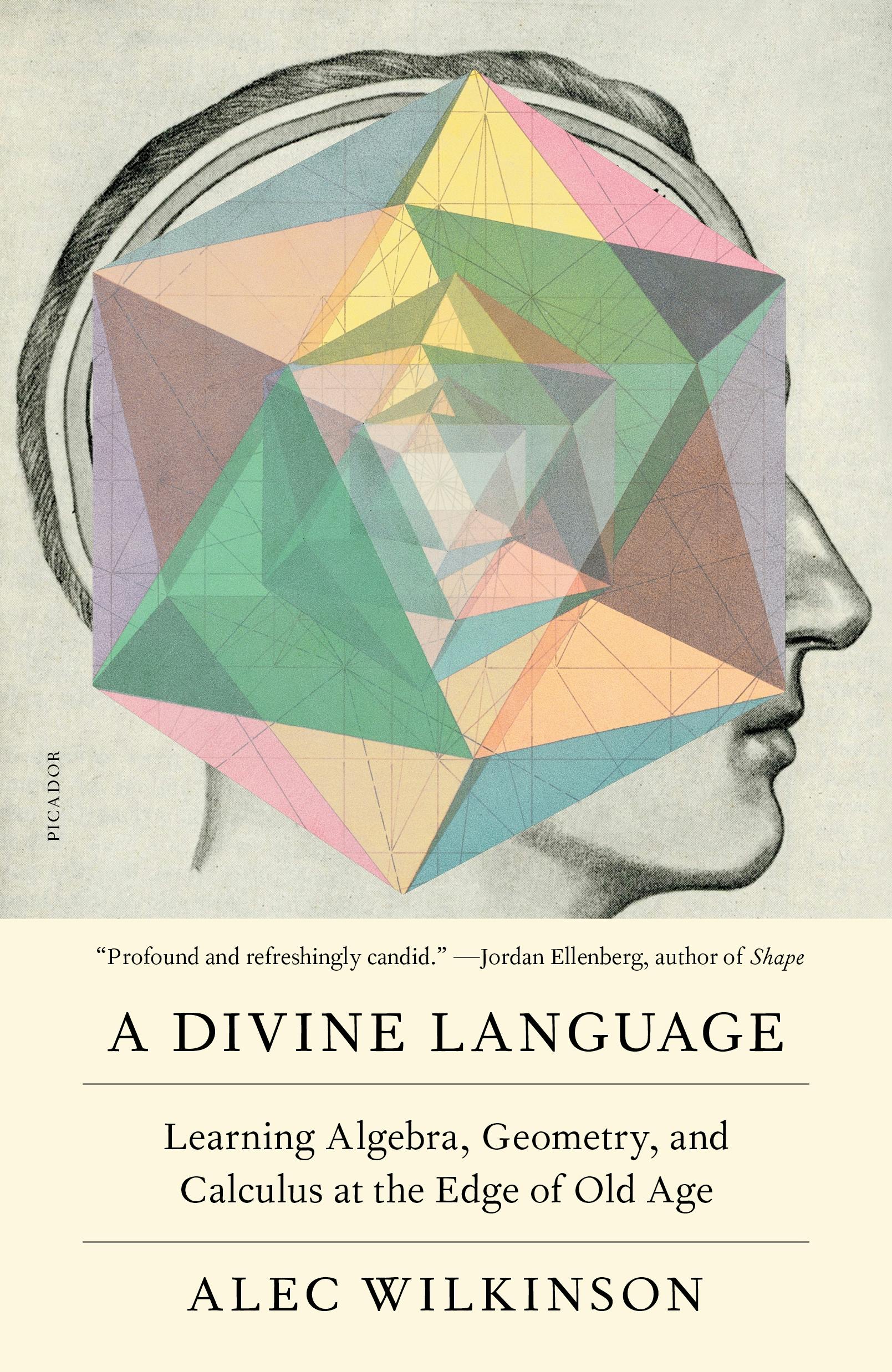
'Decades after struggling to understand math as a boy, Alec Wilkinson decides to embark on a journey to learn it as a middle-aged man. What begins as a personal challenge—and it's challenging—soon transforms into something greater than a belabored effort to learn math. Despite his incompetence, Wilkinson encounters a universe of unexpected mysteries in his pursuit of mathematical knowledge and quickly becomes fascinated; soon, his exercise in personal growth (and torture) morphs into an intellectually expansive exploration.' 
https://us.macmillan.com/books/9781250168580/adivinelanguage/


A Divine Language

As observed many times in the literature and here on W2tQ writing about Hodges' model, healthcare - medicine and nursing are both a science and art. Hodges' model is an invitation to the arts in liberal form, with an emphasis on practice: social sciences, humanities, physical sciences and even mathematics. 

There is now quite a bank of posts on W2tQ tagged art/arts and more specifically prints. I still plan to attend a workshop on printing. As ever, in my head, my mind's eye - I've an amazing, brilliant .. (!?) arts project, just waiting to be released. A true collage of the care concepts.

If Hodges' model is 'simple' in its basic form, then it is clearly possible for other people to create their own artistic impressions, interpretation of Hodges' model. My effort would of course be unique, as would theirs. There could be a competition and I end-up missing out. Not even short-listed for a prize; a victm of familiarity perhaps? 

Quite 'naturally' in a way, or at least by way of childhood experiences, a need for therapy and validation; I have also arrived at a belief that there is a mathematical project here (Oh, for goodness sake! Is there no end to this?). 

As posted before, like Alec Wilkinson I am no mathematician. Embarrased, shamed to a husk at school on many occasions, I encountered math teachers who must have empathised. Well, that's one way to explain the appreciation of maths I have always felt. Or more accurately, a love of knowledge; of which maths and logic are a part? Since I can hardly understand, I am more in love with the idea of maths, than mathematics itself. I have always been in awe of maths and people who 'get it', even if that is only  mastery of the high school mathematics curriculum.

Convinced that there is more to Hodges' model than meets the eye, I have thought of following Wilkinson - who tries to be systematic - to underpin a book - back into the nightmare lands of my youth. Should I retake GCSE maths? 'There be dragons', without a doubt. The heat can be recalled, like it was yesterday. This isn't just a dragon, it is a chimera. At times it wants to be a friend, providing familiar terms, domain, set, and group. Wilkinson's quest is structured and seeks a reasoned and disciplined approach. Why am I bothering? I have a choice surely? Nursing, health, global health can all collectively furnish many items of epistemological fruit. No need for calculative flagellation. Through Hodges' model you can productively span the disciplinary bridges once again: call in - sociology, economics, policy and more. How many Königsberg bridges do you need?

While the artist in me, might waste time. In pointing to Hodges' model as a potential mathematical object, this little seed might fall on fertile and (much) more capable ground(?), as Wilkinson describes:

'Mathematics might be the only creative pursuit in which inevitability figures. Other artists might be defeated by a task beyond their capabilities, but they do not live with knowing that sooner or later, if their work is consequential, someone will do what they haven't been able to do. Mathematicians work within a discipline in which, so long as their suppositions are correct, there is always a precise and irrefutable answer, even if they can't find it.' p.135.

I can hope for this at least.

Alec Wilkinson. (2022) A Divine Language. Learning Algebra, Geometry, and Calculus at the Edge of Old Age. New York: Farrar, Straus and Giroux. https://us.macmillan.com/books/9781250168580/adivinelanguage/

Previously: How 'divine' is the language of care?

n.b. At some point I will go though all the posts and unpublish/delete items that add little to the core.

Saturday, December 28, 2024

Master Philosophy in Biology and Medicine (for Sept 1, 2025)

The Master Philosophy in Biology and Medicine at Bordeaux is looking for interested candidates for the next academic year (starting September 1, 2025).

This program (presented here: www.philinbiomed.org/teaching) is aimed at philosophy students who have a strong interest in working with scientists, or scientists who have a strong interest in working with philosophers, especially - but not exclusively - in the fields of cancer, immunology, microbiota, systems biology, nutrition, neuroscience and aging. Students will have the opportunity to be involved in research in scientific labs and to be integrated into a very dynamic international community of philosophers and scientists.

Please keep in mind that the Master's program is exceptionally inexpensive but very competitive (as we only recruit 5 students per year). The program is 100% in English.

A letter of motivation, CV, and a writing sample (~10 pages) concerning a relevant topic should be sent to mael.lemoine AT u-bordeaux.fr by March 24, 2025. Late applications may be accepted but will not be eligible for regular consideration.

Shortlisted candidates will be offered Zoom interviews during the month after the deadline.

Candidates will be informed of their acceptance by May 28th 2025 at the latest.

Interested students can contact us from now on or at their earliest convenience, using the following address: mael.lemoine AT u-bordeaux.fr.

Thanks for forwarding this information to anyone you think might be interested, and thanks again to those who have already done so!

Best wishes,

Université de Bordeaux

Fridolin GROSS
fridolin.gross AT u-bordeaux.fr
Maître de conférences (associate professor)
Laboratoire IMMUNOCONCEPT
Bâtiment Bordeaux Biologie Santé
2, Rue Dr Hoffmann Martinot

https://www.u-bordeaux.fr

My source:
Philos-L "The Liverpool List" is run by the Department of Philosophy, University of Liverpool https://www.liverpool.ac.uk/philosophy/philos-l/ Messages to the list are archived at http://listserv.liv.ac.uk/archives/philos-l.html.

Follow the list on Twitter @PhilosL. Follow the Department of Philosophy @LiverpoolPhilos 

Monday, December 23, 2024

Comment: Menopause - a global health and wellbeing issue that needs urgent attention

On 'X', I noticed a comment piece from the Lancet:


Menopause: a global health and wellbeing issue that needs urgent attention
Gayathri Delanerolle, Peter Phiri, Sohier Elneil, et al. The Lancet Global Health, Volume 0, Issue 0.
Publication History: Published December 18, 2024 
DOI: 10.1016/S2214-109X(24)00528-X

As usual I searched 'Welcome to the QUAD' [W2tQ] for previous posts tagged 'menopause'. The result '0' was a surprise, as there are several posts re.'menstruation' 

https://hodges-model.blogspot.com/search?q=menstruation

And many tagged 'women':

https://hodges-model.blogspot.com/search?q=women 

And this despite, a partner and family members experiencing the effects and impact of menopause. I was also asked in the summer to sort a list of signs & symptoms for menopause that can be associated with mental health nursing.

Interesting to see reference to the Roy Adaptation Model in the paper:
Klotzbaugh R, Fawcett J. Gender minority persons’ perceptions of peer-led support groups: a Roy Adaptation Model interpretation. ANS Adv Nurs Sci 2023; 46: 59–74.
And to address the global health extent and context of menopause:
'The stigma is such that open dialogue is inhibited in the majority of LMICs and the first-generation migrants from these LMICs to high-income countries (HICs); the paucity of broader understanding and acceptance in society exacerbates the mental and emotional strain of menopause and can lead to social isolation, particularly in these stigmatised contexts.' [my emphasis]
If needed there may be a CPD exercise for student nurses, or those qualified with revalidation pending? Hodges' model (the template) can help in achieving a broader understanding of menopause, and women's health to include menstruation and social attitudes, beliefs and attitudes. The paper does not refer to shame, and self-stigma, which may prevent a person from seeking help? So, there is a reflective exercise in reading the text and mapping the recommendations in the paper:

Panel - Recommendations to improve health outcomes for individuals with menopause 
  • Lifestyle modifications 
  • Mental health support
  • Holistic approaches
  • Culturally competent care 
  • Personalisation of hormone replacement therapy care 
  • Peer support groups or social prescribing 
  • Conduct comprehensive research 
  • Improve accessibility
  • Understanding various risk factors, such as lifestyles, environment, and climate
If anyone has events, journal special issues for 2025 ... I can help publicise, please let me know.

Ack. https://x.com/raj_psyc

See also:
Delanerolle, Gayathri & Forbes, Anna & Cavalini, Heitor & Taylor, Julie & Riach, Kathleen & Hinchliff, Sharron & Atkinson, Carol & Potočnik, Kristina & Briggs, Paula & Kurmi, Om & Talaulikar, Vikram & van Vlymen, Jeremy & Shetty, Ashish & Irfan, Muhammad & Kareem, Rabia & Kemp, Helen & Palo, Subrata & Rathnayake, Nirmala. (2024). An Exploration of the Mental Health Impact Among Menopausal Women: The MARIE Project Protocol (UK arm). American Journal of Biomedical Science & Research. 22. 10.34297/AJBSR.2024.22.002992. 

Monday, December 02, 2024

'Un Caso Clinico' BUZZATI (I906-I972)

Reading The Theatre of the Absurd earlier this year was a very enjoyable and disconcerting experience. In acknowledgement: I have quoted from the book at length below. I do so to better convey the context, and in the hope other people may similarly obtain and enjoy this classic theatrical text.

Reading, I was reminded of starting my career as a nursing assistant and student nurse, and the 'lock-up' wards: male and female. Listening now to the current Reith Lectures I will post regards: 

Gwen Adshead - Four Questions about Violence

https://www.bbc.co.uk/sounds/play/m0025cmg

As a community mental health nurse in community mental health teams and nursing home liaison, residents on the ground floor (of two or three floors - with 'general') 'knew' there were very poorly people on the top floor. In summer, windows open, they could often be heard shouting and in the night. Inside, for staff, family members, friends became advocates expressing concern for a lack of access to fresh air and sunshine. Something, of course, we can all benefit from. For some residents there was an in-house understanding of NOT wanting to be moved 'upstairs'. At times I gather, if a resident 'played up' such re-location (displacement) was used as a threat: a cue for education.^

DINO BUZZATI (I906-I972)
'In Les Bátisseurs d'Empire the flight from death takes the form of trying to escape upwards. The same image appears in the opposite direction in a remarkable play by Dino Buzzati, the eminent Italian novelist and journalist on the staff of the Corriere della Sera in Milan. This play, first performed by the Piccolo Teatro, Milan, in 1953, and in Paris in an adaptation by Camus in 1955, is Un Caso Clinico. In two parts (thirteen scenes), it shows the death of a middle-aged businessman, Giovanni Corte. Busy, overworked, tyrannized but pampered as the family's breadwinner, whose health must be preserved, he is disturbed by hallucinations of a female voice calling him from the distance and by the spectre of a woman that seems to haunt his house. He is persuaded to consult a famous specialist, and goes to see him at his ultra-modern hospital. Before he knows what has happened, he is an inmate of the hospital, about to be operated on. Everybody reassures him - this hospital is organized in the most efficient modern manner; the people who are not really ill, or merely under observation, are on the top floor, the seventh. Those who are slightly less well are on the sixth; those who are ill, but not really badly, are on the fifth; and so on downwards in a descending order to the first floor, which is the antechamber of death.

In a terrifying sequence of scenes, Buzzati shows his hero's descent. At first he is moved to the sixth floor, merely to make room for someone who needs his private ward more than does. Further down, he still hopes that he is merely going down to be near some specialized medical facilities he needs, and before he has fully realized what has happened, he is so far down that there is no hope of escape. He is buried among the outcasts who have already been given up, the lowest class of human beings - the dying. Corte's mother comes to take him home, but it is too late.

Un Caso Clinico is a remarkable and highly original work, a modern miracle play in the tradition of Everyman. It dramatizes the death of a rich man - his delusion that somehow he is in a special class, exempt from the ravages of illness; his gradual loss of contact with reality; and, above all, the imperceptible manner of his descent and its sudden revelation to him. And in the hospital, with its rigid stratification, Buzzati has found a terrifying image of society itself - an impersonal organization that hustles the individual on his way to death, caring for him, providing services, but at the same time distant, rule-ridden, incomprehensible, and cruel.' 
Esslin, Martin. Parallels and Proselytes, The Theatre of the Absurd. London: Pelican, 1982. (3rd Ed.).pp.277-279.

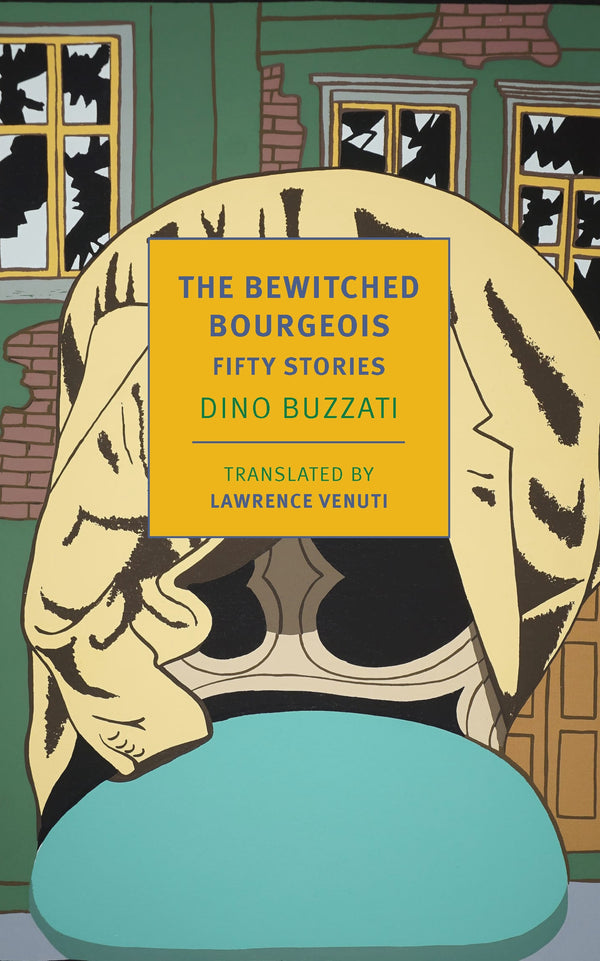
The Bewitched Bourgeois
^Rest assured, there were and are excellent centers of care too.


Update: 11th January 2025: c/o John Self. Meet the forgotten maestro of the ultra-short story. Saturday Review, The Times, p.15.
'One of his most widely published stories, Seven Floors, is set in a hospital where they put the "mildest cases" on the seventh floor, and so on in increasing order of sickness down to the first floor, which is occupied by those who are "beyond hope"'.

Lawrence Venuti. (2025) The Bewitched Bourgeois, New York: NYRB Classics ISBN: 9781681378671.

Cover image: NYRB.

Friday, April 22, 2022

Ageing with Smartphones in Urban Brazil

UCL Press is delighted to announce the publication of a new open access book that may be of interest to list subscribers: Ageing with Smartphones in Urban Brazil, by Marília Duque.

Download it free: https://bit.ly/3MhgteU

*************************************************

Ageing with Smartphones in Urban Brazil

By Marília Duque

*************************************************

With people living longer all over the world, ageing has been framed as a socio-economic problem. In Brazil, older people are expected to remain healthy and autonomous while actively participating in society. Based on ethnographic research in São Paulo, Ageing with Smartphones in Urban Brazil shows how older people in a middle-class neighbourhood conciliate these expectations with the freedom and pleasures reserved for the Third Age. Work is what bonds this community together, providing a sense of dignity and citizenship.

Smartphones have become of great importance to the residents as they search for and engage in new forms of work and hobbies. Connected by a digital network, they work as content curators, sharing activities that fill their schedule. Managing multiple WhatsApp groups is a job in itself, as well as a source of solidarity and hope. Friendship groups help each to download new apps, search for medical information and guidance, and navigate the city. Together, they are reinventing themselves as volunteers, entrepreneurs and influencers, or they are finding a new interest that gives their later life a purpose. The smartphone, which enables the residents to share and discuss their busy lives, is also helping them, and us, to rethink the very representation of ageing.


Free download: https://bit.ly/3MhgteU

----------------------
uclpress.co.uk | @uclpress

My source: Alison Major 
 
VIRTUAL-METHODS list - www.jiscmail.ac.uk/VIRTUAL-METHODS
 
(It appears there is a series of related texts. PJ)

Saturday, January 15, 2022

£62.5k Funding opportunity for researchers interested in healthy ageing

£62.5k Funding opportunity for researchers interested in healthy ageing
UKRI and Zinc have announced the 3rd funding round for the Healthy Ageing Catalyst Awards. Researchers are encouraged to apply for this £62,500 (fEC) grant from UKRI and 9-month structured programme of support from Zinc, to translate their research into impactful and scalable products, services, and interventions that add quality to later life.

The call for expressions of interest opens on 1st February and closes on 22nd February 2022. You can access the expression of interest guidance, plus further resources here. If you have any questions, please visit zinc.vc/catalyst or email the team at catalyst AT zinc.vc

My source:

Wendy Zhou, CHAIN Manager

CHAIN - Contact, Help, Advice and Information Network – is an online international network for people working in health and social care. For more information on CHAIN and joining the network please visit website: www.chain-network.org.uk


Thursday, May 13, 2021

Arts for Brain Health: 'Social Prescribing as Peri-Diagnostic Practice for Dementia'

Thursday and Friday 20-21 May 2021, 9.20 am – 5 pm

D-IAGNOSIS! Arts to Preserve Wellbeing (Jane Frere, 2019, pastel)

An opportunity for GPs, social prescribers, arts and health organisations, educationalists and funders, innovative and creative ageing specialists, local authorities and policy makers to come together and revolutionise the world of social prescribing for brain health.

Cultural and creative activity can be transformational for those at the start of their journey with dementia.

In this conference we explore how social prescribing can unlock access to the arts and dramatically improve wellbeing and brain health.

We look at the impact of engaging in weekly creative and wellbeing activity
and examine the potential for normalising social prescribing as diagnostic practice around the UK

Bringing together leading experts in the fields of arts, culture, health and wellbeing,
this online conference will highlight cross-sector referral and funding partnership practice
for sustainable social prescription programmes,
presenting evidence for creative ageing and debating the way forward.

More info ...

 My source: @Arts4Dementia

Wednesday, October 09, 2019

ERCIM News No. 119 Special theme "Smart Things Everywhere"

Dear ERCIM News Reader,

https://ercim-news.ercim.eu/images/stories/EN119/EN119-web.pdf
ERCIM News 119
ERCIM News No. 119 has just been published at https://ercim-news.ercim.eu/

Smart applications in several domains, the technological aspects and security and quality issues are the focus of the special theme of this issue.

Guest editors: Margarete Hälker-Küsters (Fraunhofer AISEC) and Erwin Schoitsch (AIT)

This issue is also available for download in pdf and ePub.

Thank you for your interest in ERCIM News. Feel free to forward this message to anyone who might be interested.

Next issue:
No. 120, January 2020
Special Theme: Educational Technology

Peter Kunz
ERCIM Office
2004, Route des Lucioles
BP93
(My source)

F-06902 Sophia Antipolis Cedex
https://www.ercim.eu
--------------------------------
@ercim_news
http://twitter.com/ercim_news

join the ERCIM Linkedin Group
http://www.linkedin.com/groups/ERCIM-81390


The next issue sounds very promising and I look f/w to receiving news of this and possibly reflecting on the content using Hodges' model. The 'Research and Innovation' section is always interesting as in this issue, even while the focus of #119 is as per the title. In addition on page 33:
"Case Case 2 – Smart Health Care: This use case employs the SEMIoTICS technologies to develop an Information and Communication Technology (ICT) solution aimed at sustained independence and preserved quality of life for elders with mild cognitive impairment or mild Alzheimer’s dis-ease, with the overall goal of delaying institutionalisation: supporting both “aging in place” (individuals remain in the home of choice as long as possible) and “community care” (long-term care for people who are mentally ill, elderly, or disabled provided within the community rather than in hospitals or institutions)".

Thursday, July 18, 2019

ERCIM News No. 118 Special theme "Digital Health"

ERCIM News No. 118 has just been published at https://ercim-news.ercim.eu/

Dear ERCIM News Reader,

ERCIM News 118

This issue features a special theme that provides a vibrant illustration of a sample of the multi-disciplinary research activities which underpin the upcoming revolution of digital health.

Guest editors: Sara Colantonio (ISTI-CNR) and Nicholas Ayache (Inria).

This issue is also available for download in pdf and ePub.

Thank you for your interest in ERCIM News. Feel free to forward this message to anyone who might be interested.

This issue includes:

SmartWork: Supporting Active and Healthy Ageing at Work for office Workers

"“Work ability” has been developed as an important multi-factorial concept that can be used to identify workers at risk of an imbalance between health, personal resources and work demands[2]. An individual’s work ability is determined by his or her perception of the demands at work and their ability to cope with them. The current challenge in using the concept is to establish adequate tools to evaluate and measure work ability continuously, in order to capture the changing and evolving functional and cognitive capacities of the worker in various contexts.  ...

The holistic approach for work ability modelling captures the attitudes and abilities of the ageing worker and enables decision support for personalised interventions for maintenance/improvement of work abilities. ...
The modelling of work ability will consider:

• generic user models (groups ofusers),
• personalised patient models,
• personalised emotion and stress models of the office worker,
• personalised cognitive models,
• contextual work tasks modelling,
• work motivation and values." p.35-36.

WellCo: Wellbeing and Health virtual Coach

"The WellCo European H2020 project (2017-2021), delivers a radical new information and communication technologies (ICT) based solution in the pro-vision of personalised advice, guidance,and follow-up for its users. Its goal is to encourage people to adopt healthier habits that help them maintain or improve their physical, cognitive, mental, and social well-being for as long as possible. Advice is given through behaviour change interventions tailored explicitly to each user. These interventions range from setting social goals to recommending activities around the seven areas defined in WellCo: cognitive stimulation, leisure and entertainment, supporting groups, physical activity, health status, nutrition, and tips (Figure 1). The behaviour change concept leverages the Behaviour Change Wheel model [2]." p.37.

Research and Innovation: A Language for Graphs of Interlinked Arguments

Next issue:
No. 119,  October 2019
Special Theme: Smart Things Everywhere


Peter Kunz
ERCIM Office
2004, Route des Lucioles
BP93
F-06902 Sophia Antipolis Cedex
 
Thank you to ERCIM and Peter Kunz.

[WellCo reminds me of the efforts of the AffecTech initiative.]

Saturday, August 19, 2017

Every Third Thought

individual
|
INTERPERSONAL : SCIENCES
humanistic --------------------------------------- mechanistic
SOCIOLOGY : POLITICAL
|
group
Every Third Thought


First ...


Fourth.


Second ...


My source: Lewis, R. (2017) An immense personal insult - how the baby boomers see death. Saturday Review, The Times. p.13.

Thursday, May 01, 2014

Wellbeing: A Complete Reference Guide

Several years ago well-being was everywhere so it seemed. I even blogged about this wondering about the professional side of caring and the care professions:

Well-being and the dilution of 'caring'

What triggered the reflections above in 2010 was the appearance of the British Journal of Wellbeing (BJW). I subsequently learned that the journal launched in April 2010 was published until the end of 2011; the publisher (MA Healthcare) then launched a new journal the British Journal of Mental Health Nursing (BJMHN). I was also advised that although BJMHN has some similarities to BJW, it has more of a nursing focus. 

So, perhaps there was some merit in my thoughts back in 2010 and yet well-being (or wellbeing) is a central discussion point. It has to be if we are to conjoin:

health education : health care 
'being' - 'well' (physically, mentally, ....)
self care : care services
health literate - health 'expert' / professional
.....

I now wonder if the scope of the volumes in a complete reference guide on wellbeing as indicated below, might benefit from an overarching conceptual framework?
This reference set comprises six volumes that focus on the ways wellbeing has been studied and can be applied across different aspects of the life course.
  • The first multi-volume examination of all elements of wellbeing.
  • Volumes cover children and families; the workplace; the environment; aging and later life; economics; and policies of wellbeing
  • Each volume brings together leaders of their respective fields in an edited volume of original articles
  • Presents a synthesis of the latest research on this growing and interdisciplinary area of study
Wellbeing: A Complete Reference Guide
Edited by Cary L. Cooper, CBE
Distinguished Professor of Organizational Psychology and Health at Lancaster University, UK
Now available in print and online
6 volumes • 3,000 pages • Hardcover
Print Edition ISBN: 978-1-118-53882-1

* 
Personal communication: Sam Gournay
Sent: Wednesday, 20 March 2013, 11:30
Subject: FW: Message from MA Healthcare website

Tuesday, November 19, 2013

Immortality, the matrix and Hodges' model

The 5th care - knowledge - domain is the Spiritual

INTERPERSONAL : SCIENCES
SOCIOLOGY : POLITICAL
individual

floating off as souls
not dying


coming back to life
living on through legacy


group - population


My source: FT Weekend March 31 - April 1 2012, Memento mori, Book review by Julian Baggani of Stephen Cave's Immortality: The Quest to Live Forever and How It Drives Civilization.