Hodges' Model: Welcome to the QUAD: synthesis

Hodges' model is a conceptual framework to support reflection and critical thinking. Situated, the model can help integrate all disciplines (academic and professional). Amid news items, are posts that illustrate the scope and application of the model. A bibliography and A4 template are provided in the sidebar. Welcome to the QUAD ...

Showing posts with label synthesis. Show all posts

Friday, March 20, 2026

Florence Nightingale Commemoration Service

Supporting nurses and midwives to promote health, improve care and save lives Florence Nightingale Commemoration Service

The second group of public tickets for the Florence Nightingale Commemoration Service will be available at 13:00 GMT on 24 March. Click the button below as soon as possible after this time, to complete the form to apply. 

You will be able to request a maximum of 2 tickets and you will need to complete the form with your name and email address. If you are requesting two tickets you will also need to give the name and email address of the second person. 

Please note that if you provide guest details they will then receive an email with an invitation and will need to RSVP themselves in order to secure their ticket. 

If you have further queries please visit our Frequently Asked Question page.

🔷

INDIVIDUAL
|
    INTERPERSONAL    :     SCIENCES               
HUMANISTIC --------------------------------------  MECHANISTIC      
SOCIOLOGY  :   POLITICAL 
|
GROUP
On Wednesday in Waterstones, Deansgate, Manchester, I spotted this book. Opening it randomly - I kid you not - it fell to pp.204-205, and Florence Nightingale's contribution.


'At that time, the idea of visualizing data in order to make its messages clearer to non-mathematicians (including politicians) in order to change minds and inform opinions had started to gain traction in Europe but was not common in England. Nightingale continued to use statistical diagrams to communicate stories hidden in data, and while this clearly contributed to improvements in health and mortality in British military encampments at home and abroad (and by extension in the population in general), it is also undoubtedly the case that she helped to popularize the use of appropriate data visualization methods to expand the reach of statistical information beyond specialist audiences. A testament to the influence of her work is that the Royal Statistical Society had the honour of accepting Florence Nightingale as their first female member in 1859.' p.204.


Thomas K. Briggs. (2025) The Mathematicians' Library The books that unlocked the power of numbers Hardback. Part of the Libri Historici series. Ivy Press.
 
Previously: 'Nightingale' : 'math' 

My source: Waterstone, Deansgate, Manchester and email Florence Nightingale Foundation.

Sunday, March 15, 2026

viii Book: Bill Ross - 'Order and the Virtual'

 'The Philosophy and Science of Deleuzian Cosmology'

So much of what we experience is nuanced. What was conscious thought, becomes tacit knowledge and unconscious. Is that consciousness nullified as Ross writes on page 76? I wrote a note 'reflection as hesitation'; also prompted to think about intution (p.83) and our word uses in 'retardation' (which here is no problem at all - in physics and complex sciences/systems. Again the 'principle of least action' arises (p.82). With more physics and cosmology to follow, it helps a little that 'manifold' has landed begging to be understood across the contexts. Bill Ross notes how Delueze and Michel Serres used the game metaphor [Game analogy #1]. Again, lifting this to a scribble 'Health-Illness is quite a game'! This will be the subject of a post soon. In England at least the law and manifold on health (being productive) and illness has been utterly disrupted. The game-table has been kicked over, by those in society who still able? New spaces, and canvases are needed. Kantian thought and interpretations are added to Leibniz. A heady mix but clearly essential as Bill Ross's critique is developed. 
 
The book was a must-read, as in the contents: Complexity (with a presentation next month), cosmology, Serres, and Claude Shannon. In Game Analogy #2, "Communication is understood here to encompass much more than meaningful exchange; all phenomena 'communicate'". p.85. I couldn't agree more with with these 'games', this thought being 'situated within the purchase of information theory' (p.86). Bizarrely (or not), in the same year two papers:
Jones, P. (1996) Humans, Information, and Science, Journal of Advanced Nursing, 24(3),591-598.

Jones, P. (1996) An overarching theory of health communication? Health Informatics Journal,2,1,28-34. 
Ross explains the global view of Michel Serres when it comes to 'information'. This entranced me, and I only scratched the skin:
Jones, P. (2008) Exploring Serres’ Atlas, Hodges’ Knowledge Domains and the Fusion of Informatics and Cultural Horizons, IN Kidd, T., Chen, I. (Eds.) Social Information Technology Connecting Society and Cultural Issues, Idea Group Publishing, Inc. Chap. 7, pp. 96-109.
Here there's a pointer to the cosmology to follow - Ross is true to the title. I have let most of the Astronomy Yearbooks go, but retain a few. Not just for key birth-years, but articles that are well written and researched historical snapshots. Here, Bill Ross discusses the game of Cepheid variables and their significance in mapping the universe. Truly, fascinating. Weaver's three levels of salient action are listed. Threads are tied too, with conclusions offered. These rules are reappraised, physics ever present. In light of one of the above papers I should revisit Serres, and Leibniz; the search for 'overarching explanatory power' (p.91) is ongoing. This game draws on Serres invitation to imagine a diagram, a network of nodes, channels, and propositions. This tabular formulation and its relations for me, spans the history of economics (Quesnay's tableau), the current state of economics (human values), and next (mathematical?) steps for Hodges' model. So many questions here: surely node  can't be an axis? I felt like Hansel, picking up sweets, Cartesian lines, scalene forms, thresholds, coming across hoops to jump through through to terminal equilibri. As you walk the sound of the thalweg, downstream... where Bergson features once again.
 
Reading Ross, over several months coincided with several key themes gaining in personal coherence. Bayesian ideas as might be applied to Hodges' model, even if in a naïve way (c/o feedback on draft notes). The remainder of chapter 3 includes time (thought), percept (space), to close with Deleuze's Ideal Game. I looked up Cortázarian Hopscotch https://en.wikipedia.org/wiki/Hopscotch_(Cort%C3%A1zar_novel), as the preface is titled. Ross reflects on the Ideal Game (does it exist, for Deleuze, only in thought?), and the distinction between 'domestic' chance (Baysian) and radical contingency belonging to the clinamen. In response to 'physical action and and the thought being on the same continuum', don't ask (please!), but I scribbled: 'corridor care' - a dangerous game, far from ideal. Plus, bird's using quantum entanglement to navigate. 'Kant's chaotic manifold', I will also investigate for next month(?).
Chapter 4 'Order as Complexity' proved most relevant. Every page is touched by graphite.

Deleuze has a 'blind spot' (p.111), something that Hodges' model seeks to ameloirate. But then of course at the model's center (nexus - as noted) that decussation of the axes invites a darkness of its own. If Hodges' model assists forethought and foresight  While inviting complexity, this interdisciplinary palette can also facilitate trandiscipinary sense-making. 'Magnitudes of intensity' reminded me of logarithmic thresholds within our perceptual apparatus. This is like reading Serres. A flow of punctum, simultaneity, delay (again) but its contribution to causal series, and Aionic time. I was taken (frequently)  to plane, person, personhood, chronicity, scales, local to global to glocal.

There is a 'corner' amid those thousand plateaus. n.b. to self - 'triangulation always needs one other'. I cannot resolve the frameworks as yet, scientific - otherwise or otherwhere; but you can take flight from here. Physics takes it place as 'complexity begets complexity'. Bill Ross utilises well-recognized sources, Penrose, Kauffman, Kolmogorov and Bohm.

As with the frameworks internal and external complexity must be untangled 1-4 (p.124?). I can laugh now, did I really try to marry up Order  - Disorder :: Simple - Complex (complicated?) to the domains of Hodges' model? So often reading philosophy, you feel an imposter playing games with words, as in: 'different similarities' and 'similar differences' (p.125). But of course, this is serious scholarship. Especially, when it involves lines, a rough circle, segments and dimensions: disorder becomes different degrees of order. Page 126 delivers Deleuze in spades, Ross pulls his thoughts together. It is fitting for me that Ross closes chapter 4 with a nod to transdisciplinarity.
Chapter 5 deals with symmetry and disymmetry; indifference and difference; limits and non-locality. There is an argument to follow (p.133). With 'group theory' mentioned on p.131, I've a lot of things to 'look up' [topology too]. Despite appearances I recognise the lack of symmetry in Hodges' model. This is what the situation does (practice) and means (theory): 'There is no reason under the sun which can rely on perfect symmetry' (p.135).  Where do/can we locate 'spooky action at a distance' in Hodges' model (p.140)? 

The Higgs role! Who knew? 'the speed of light. It represents a retardation.' Thanks Bill Ross, fascinating pp. 135-174. Plus, axes too. Note to self: when we die do we 'simply' set sail on the Dirac Sea? Attending the Bill Ross Memorial Workshop – BSP Special Event 2025 last September:

https://hodges-model.blogspot.com/2025/09/bill-ross-memorial-workshop.html

the esteem .. and love .. that Bill Ross engendered in the people that knew him. The preface refers to chats in university cafes. How I wish. I wonder what Bill would have made of Hodges' model and the ongoing project here? Vitally, I get a distinct sense that he would have found time to listen ... 
'Bill Ross (1964 – 2022) had interests ranging widely across contemporary philosophy and culture, with a particular interest in the relations between science and philosophy. As managing editor, he was the driving force behind Clinamen Press, which in the early 2000s published new works by contemporary philosophers, and English translation of important works by continental philosophers such as Henri Bergson, Gaston Bachelard and Michel Serres. He completed his PhD in philosophy at Staffordshire University, where he taught on the MA in the Philosophy of Nature, Information, and Technology. Bill had a lifelong passion for the connections between science and philosophy, on which he had published several important articles. Bill was working on a monograph on the philosophy and science of Deleuzian cosmology, which was has been posthumously published by Edinburgh University Press. This event is to celebrate Bill’s book and his life, and to allow his friends, his colleagues, and anyone interested in his work or the topics and issues addressed by his work to continue the conversation that Bill’s work inspires.'
https://www.thebsp.org.uk/bill-ross-memorial-workshop-deleuzian-cosmologies/
 
Many thanks again to Edinburgh University Press for my copy - a keeper! Bill Ross RIP.
 
Bill Ross (2024) Order and the Virtual: The Philosophy and Science of Deleuzian Cosmology. Edinburgh: Edinburgh University Press.
https://edinburghuniversitypress.com/book-order-and-the-virtual.html

Friday, February 21, 2025

Rediscovering nursing ...? [ concepts-maths i/iii ]

   Individuals


'In the Introduction to his landmark book, Individuals Peter Strawson talked of the “massive central core” of human thinking that has no history … categories and concepts which, in their most fundamental character, change not at all”.'

'Strawson’s central core revolved around the need for us to identify persistent objects in a unified framework of space and time. He was not troubled that with the arrival of special and general relativity our concepts of space and time had changed, nor that our concept of middle-sized dry goods had changed to accommodate what we suppose to be their constitution by quantum particles.'


Blackburn, S. Rediscovering the Past, The Philosopher's Magazine, 1st Quarter 2018. 80: 72-73. 
https://archive.philosophersmag.com/rediscovering-the-past/

Strawson, P.F. (1964). Individuals (1st ed.). Routledge. https://doi.org/10.4324/9780203221303

https://www.taylorfrancis.com/books/mono/10.4324/9780203221303/individuals-strawson

See also:

How 'divine' is the language of care?


Thursday, November 03, 2022

Award: h2cm #1 Framework ... #2 and #3?


"Elden and Levin (1991) suggest distinguishing between insider and outsider frameworks. A framework is described as a way of understanding. Insiders are the project workers or programme staff who have first-hand experience of the situation. They have their views about programme goals and problem solutions. The outsiders are the external researchers, the social scientists, who bring a battery of research skills and a wealth of theoretical ideas: 'The richness and quality of the research depends on the ability of the insiders to play their different frameworks and expertise against each other to create a new, third explanatory framework." (1991: 132). p.28.

 INDIVIDUAL
|
 INTERPERSONAL    :     SCIENCES               
HUMANISTIC --------------------------------------  MECHANISTIC      
SOCIOLOGY  :   POLITICAL 
|
GROUP

outsider

new

insider

outsider

new

insider

insider

new

outsider


insider

new

outsider


Nurses, and nursing encompass all three, but (should - must) realise they are also part of the 'system', together with their colleagues in the multidisciplinary team. 

In grounded theory, participatory - ethnological and other qualitative approaches, we need to ensure the 'ground' to inhabit is sufficiently accessible. Hodges' model can assist in scoping a project; what is the perspective, standpoint, or positioning? While the health, or social care staff are the insider's and conceptually at the center of the model, the aim is to place the patient, carer at the center, with the situation we collectively encounter. The model's subjective - objective duality can also act as a regulator to assure overall balance.

Elden, M., & Levin, M. (1991). Cogenerative Learning. Bringing Participation Interaction Research. In W. F. Whyte (Ed.), Participatory Action Research (pp. 127-142). Newbury Park, CA: Sage Publications.

Clarke, A. (1999). Evaluation research. SAGE Publications Ltd,
https://dx.doi.org/10.4135/9781849209113 

[Clarke, again: p.174]

"Carol Weiss (1988a), one of the foremost writers on the impact research findings on policy, describes four ways in which evaluation information is used in the decision-making process. First, the information provided by evaluators can serve as a warning that that something is going wrong. For example, if early research findings suggest that some groups are not receiving the designated services, or intermediate outcome measures are not being achieved, then corrective action can be taken before the situation worsens. Second, evaluation findings can provide guidance for improving a programme. ... A third contribution evaluation can make is by way of offering a new way of looking at a familiar problem; Weiss refers to this as 'reconceptualization'. Finally, evaluation can be used to mobilize support for a project or programme." p.174.
Weiss, C.H. (1988a) 'Evaluation for decisions: Is anybody there? Does anybody care?', Evaluation Practice, 9 (1):5-19.

n.b. When on the PhD programme [MRes], I looked at evaluation and design-based research as potential research methods.

Thursday, March 25, 2021

Anticipatory Prescribing as part of Anticipatory Care

This post is derived from a selection of the main concepts found within three papers (references listed below) on 'anticipatory prescribing'. Some explanation may assist. I have duplicated 1. What is current practice? across the domains to suggest that the question needs to be answered for each of the care (knowledge) domains. The same principle applies to the repetition of the attitudinal questions at the individual and group (sociological) level. Person-centredness demands that the patient's views are paramount plus the aggregated responses of the group as a whole.

Perhaps there is a 'drug TIME' too, which operates across all the domains once more, and each variously weighted objectively and subjectively? The concept of control and assessment of control is also critical.

I've placed GP decision-making across both 'individual' domains described as it is as a 'process' and for the patient as 'bedside manner', as also reflected in the GP and healthcare professional's communication with the family.

Clinical effectiveness and observations are likewise span the interpersonal and sciences domains. This is to denote the need to achieve and sustain parity of esteem and integrate physical and mental health care - pastoral and spiritual also.

'Cost' is anchored in the political domain, but clearly there are much wider economic ramifications, both in quality of life, quality of death and the way 'cost' is determined, measured, analysed, evaluated and reported.

For me nursing, medicine, healthcare are most effective when they are anticipatory. Observation, reflection and critical thinking are key. In a way for an individual to be health literate is a preparation for self-care. Although clearly in a general sense of health and well-being; not necessarily being literate with respect to a long-term medical condition.

Hodges' model is an idealisation and the detail is obviously described in the papers listed. The intention below is for readers to gain an appreciation of anticipatory prescribing and the application and scope of Hodges' model.

 Taking a larger perspective anticipatory prescribing is part of anticipatory care.

@GeriSoc https://twitter.com/GeriSoc/status/1374716732120645632?s=20


individual
|
INTERPERSONAL : SCIENCES
humanistic ----------------------------------------------- mechanistic
SOCIOLOGY : POLITICAL
|
group

Anticipatory Prescribing

Reassurance for patient, family &  friends
clinical effectiveness
subjective TIME
observation
agitation, distress (mood, anxiety, orientation, communication, identity - self, fear, understanding, mental capacity...)

The patient's spiritual well-being needs are met*.

1. What is current practice?

2. What are the attitudes of patients?
3. What are the attitudes of family carers?
4. What are the attitudes of community healthcare professionals?
[as individuals]


GPs’ discussion with patients

(Advanced care planning - choices)

5. What is its impact on patient comfort and symptom control?

Anticipatory Prescribing

Physical access to medication and treatment is assured.
clinical effectiveness
objective TIME
observation
remote anticipatory prescribing increased 24 hours availability
(out-of-hours)


The intervention seeks to improve [my] symptom control

pain, nausea and vomiting, agitation, and respiratory secretions.

The Covid-19 pandemic has accelerated the practice of Anticipatory Prescribing; more terminally ill patients are having end-of-life care at home and in care homes.

1. What is current practice?

New routes of administration

injection, oral, sublingual, or rectal

5. What is its impact on patient comfort and symptom control?
GPs’ decision-making processes
Research:
Systematic review and narrative synthesis
Semi-structured interviews
Web-based survey
An important intervention in supporting patients and families who wish to have last days of life care at home.

1. What is current practice?

2. What are the attitudes of patients?
3. What are the attitudes of family carers?
4. What are the attitudes of community healthcare professionals?
[collectively]

5. What is its impact on patient comfort and symptom control?
Patient and families’ well-being throughout the end-of-life journey

*There is concord and respect regards patient's spiritual well-being needs.

GPs’ discussion with family

family caregiver administration

The Independent Review of the Liverpool Care Pathway found that the use of Anticipatory Prescribing without adequate explanation or justification led to families being concerned about over-sedation and the medication hastening death.

1. What is current practice?

5. What is its impact on patient comfort and symptom control?

6. Is it cost-effective?

Revise pharmaceutical regulations to permit repurposing of anticipatory prescribing medications in care homes, wider community drug access, and recycling unused medications returned to pharmacies.
Address stock shortages.


Bowers B, Ryan R, Kuhn I, Barclay S (2019) Anticipatory prescribing of injectable medications for adults at the end of life in the community: A systematic literature review and narrative synthesis. Palliative Medicine 33(2): 160-177 https://doi.org/10.1177/0269216318815796

Antunes B, Bowers B, Winterburn I, Kelly MP, Brodrick R, Pollock K, Majumder M, Spathis A, Lawrie I, George R, Ryan R, Barclay S. (2020) Anticipatory prescribing in community end-of-life care in the UK and Ireland during the COVID-19 pandemic: online survey. BMJ Supportive & Palliative Care; http://dx.doi.org/10.1136/bmjspcare-2020-002394

Bowers B, Barclay SS, Pollock K, Barclay S (2020) General Practitioners’ decisions about prescribing end-of-life anticipatory medications: a qualitative study. British Journal of General Practice; 70(699) e731-739 https://doi.org/10.3399/bjgp20X712625 


Wednesday, December 09, 2020

Action Brief: WHO COVID-19 Health Services Learning Hub (HLH)

 Online call for submissions

Thank you for your interest in contributing to an action brief for the WHO COVID-19 Health Services Learning Hub (HLH). Please find below an overview of the HLH and further information on how to submit your action brief. If you have further questions, please contact us at hlh AT who.int.

Overview

Since the beginning of the COVID-19 pandemic, countries have requested urgent support from WHO to maintain their health services whilst mounting their pandemic response.
 
The WHO COVID19: Health Services Learning Hub is a dynamic new web-based platform that will allow the critical sharing of experiences and learning from innovative practices to inform the collective global response in real time. This will include action briefs on promising examples of innovation to maintain essential health services, synthesis briefs on key emerging learning needs, dynamic learning labs to solve common challenges and a ‘one stop shop’ for up to date information from WHO and partners.


The learning hub will be based on WHO’s Operational guidance for maintaining essential health services during an outbreak, which provides a set of targeted actions countries should take at national, regional, and local levels to reorganize and maintain access to essential quality health services for all.  

The immediate focus of the learning hub will be on maintaining essential health services during the outbreak. In the medium to longer term the hub will focus on health service recovery in the post-acute phase of the pandemic and health services strengthening in the post-pandemic phase.

Action Briefs ... continued


Thanks to Jagoda - HLH 


Saturday, October 12, 2019

"Ecoliteracy and the trouble with reading" by Code JM.

From:
Jonathan M. Code (2019) Ecoliteracy and the trouble with reading: ecoliteracy considered in terms of Goethe’s ‘delicate empiricism’ and the potential for reading in the book of nature, Environmental Education Research, DOI: 10.1080/13504622.2018.1558438

"Literacy in the context of health literacy—another type of literacy given distinct status in recent times—is defined as the ability to use information about health in a meaningful way (Velardo 2015)". ...

 individual
|
INTERPERSONAL : SCIENCES
humanistic ----------------------------------------------- mechanistic
SOCIOLOGY : POLITICAL
|
group - population
... "To be health literate is to have access and understanding of the knowledge, motivational factors, and competencies for appraising and applying health information so that decisions and judgements can be made about healthcare, disease prevention and health promotion in everyday life (Sorensen et al. 2012)".


"Perhaps one of the greatest oversights in terms of most ecological, scientific accounts of ecoliteracy is that science has yet to adequately address the mystery of life (a point raised by many authors and succinctly argued by Schumacher (2011)[1977] already several decades ago). This oversight has led to the tendency to approach ‘the book of nature’ in materialistic and mechanistic terms whereas the challenge that emerges through critical considerations raised by Kuhlewind and others is that it is a living book that we—as readers—can potentially participate in if we develop ways of knowing adequate (Schumacher 2011[1977]) to the task".


Wither "The Book of Nature" / "The Book of Science"?

Jonathan gave a presentation at Threshold Concepts Conference in Dundee which I attended. This reminded me of how I have been wanting to re-read Bortoft and related texts, especially Schumacher.

Monday, September 09, 2019

Paper: "Comprehensive Geriatric Assessment (CGA) in Healthcare of older people in UK care homes"

When something is described as 'comprehensive' this might suggest the need for an aide-mémoire?

"Rubenstein et al defined CGA as a ’multidisciplinary diagnostic process intended to determine a frail older person’s medical, psychosocial and functional capabilities and limitations in order to develop an overall plan for treatment and long-term follow-up’. CGA has been shown to improve outcomes for older people in hospital and community settings. It encompasses health and social care needs and facilitates multidisciplinary working. However, evidence regarding its effectiveness in care homes is limited, and there are limited data describing what needs to be in place for uptake and sustained implementation in this setting."

individual
|
INTERPERSONAL : SCIENCES
humanistic ----------------------------------------------- mechanistic
SOCIOLOGY : POLITICAL
|
group - population
Care home
(Lived experience?)
PURPOSEs
 (synergy across the multidisciplinary team,
consistency - communication)
Resident access to expertise

Ethics - PEACH project

Individual reasoning

[ What about the "Health Career" of residents?
FROM: date of admission TO: date now.
Residents who can perceive 'continuity of care' more likely to be assessed as having mental capacity. What of others? ]

Care home
425 000 people live in care homes
Comprehensive assessment
Realism, The situation, Context as it is
(and across all the domains; e.g. all health care currently conducted amid Brexit uncertainty).
Context-Mechanism-Outcome (CMO) configurations
Coding NVIVO - reasoning & resource components
Health-related Quality of Life (HRQoL)
Programme theory (development)
Frail
Basic and personal care needs
PROCESS
Causes, Synthesis
.Physical access

Care Homes
PRACTICE
Patient Public Involvement
Proxy, Next of Kin

Care plan
Group reasoning

"Mechanism reasoning developing a unified view and shared aims and goals for the resident."

Care Homes

"Mechanism reasoning: delegation from the multidisciplinary team to care home staff provides authority to deliver care according to the care plan."

POLICY
Outcomes: Quality, Safety
(Do see Conclusion of Paper)


The review sought papers on "multi-domain assessment".

"The practices and processes of assessment inform the whole CGA ... . Assessment of many domains of health status and impairments was represented as crucial in building a picture of an individual’s complex needs and views about their personal priorities and goals. Unlike discipline-specific needs assessment that may focus on a particular syndrome or care pathway, structured comprehensive assessment requires an overview of all domains."

Figure 2: Nested arrangement of  Context-Mechanism-Outcome (CMO) configurations


Ref.
Chadborn NH, Goodman C, Zubair M, et al Role of comprehensive geriatric assessment in healthcare of older people in UK care homes: realist review BMJ Open 2019;9:e026921. doi: 10.1136/bmjopen-2018-026921

Tuesday, August 13, 2019

Individual & Group process - Collective Intelligence [CI] c/o Radcliffe, et al. (2019)

No explanation is needed as to why this paper caught my attention in a tweet that featured the figure [2] below? The context is medical, not nursing and the extended multidisciplinary team, but as per the threshold concepts post the focus is decision making.

From a nursing perspective and using Hodges' model the 'individual processes' would include data gathering, patient assessment, liaison with relatives and colleagues and reflection to integrate information. Evidence-based sources will also be involved depending on the reason for referral, the patients (relatives) account, and the status of the diagnosis. Information technology input will be through the electronic health record that should also provide a history of previous episodes of care and the conclusions reached.

Within Hodges' model below I have added socio-technical and governance. Perhaps, as a systematic scoping review and applied to a specific healthcare profession there is less emphasis on the 'political' dimensions of decision making (management, policy, rules, reporting, targets). Equally from a nursing perspective there is the 'data cleaning' within the research process but then also nurses, and students in particular not being negatively impacted by comments about a forthcoming clinical placement, or a patient / client who has been referred (or referred) to the service / team.


individual - self
|
INTERPERSONAL : SCIENCES
humanistic ----------------------------------------------- mechanistic
SOCIOLOGY : POLITICAL
|
group- population

individual as subject of mental health Dx

Individual knowledge and experience
Reflection
Learning and decision-making styles and bias
(positive and negative?)
Feedback from Collective Intelligence?


individual as subject of physical Dx


Analysis
Individual Input
Group Input
Synthesis

Information Technology

Collaborative working
Clinical Teams

Level of SOCIO-technical
integration
outcomes
Studies were:
 individual or group process
several a combination.

governance


My source:

Radcliffe, K., Lyson, H. C., Barr-Walker, J., & Sarkar, U. (2019). Collective intelligence in medical decision-making: A systematic scoping review. BMC Medical Informatics and Decision Making, 19(1), 158. https://doi.org/10.1186/s12911-019-0882-0

Tuesday, May 07, 2019

The Fourth Quadrant - Johnson (2010)

For anyone who has read Steven Johnson's Where Good Ideas Come From, you might appreciate that for me it was a case of take-two from the previous post 'The adjacent possible'. How could I not include the chapter "The Fourth Quadrant" especially as the book's 'Conclusion'?

If title was one take, the other was "Oh! How does this relate to h2cm?" After reading and reflecting things fell into place. Johnson wants to represent the history of innovation (no less) using roughly two hundred of the most important innovations and scientific breakthroughs from the past six hundred years, starting with Gutenberg's press, Einstein's theory of relativity, the invention of air conditioning through to the birth of world wide web (pp.218-219).

There are three figures in the chapter spanning 1400-1600; 1600-1800; 1800-present. Johnson's diagram for 1800-present (p.229) is in-part 'mapped' to Hodges' model below.

A few insights into my reasoning. In the Interpersonal domain I am emphasising an individual's primary (and original) motivation for their work and what follows. In the sciences - here PROCESSES are central. As with all models this is an idealisation, so there is a lot of overlap.

Individual
|
INTERPERSONAL : SCIENCES
humanistic / non-market ------------------------------- mechanistic / market
SOCIOLOGY : POLITICAL
|
Network

3. Non-Market/Individual

Not devised for fiscal gain, individually devised .. amateur scientist, or hobbyist.

Spectroscope           Hormones
Bunsen Burner             E - mc2
Rechargable Battery      Special Relativity
Nitroglycerine        Earth's Core
Cell Nucleus          World Wide Web
Stethescope         CT Scan
...

1. Market/Individual

Devised for fiscal gain, individually devised i.e. Air Conditioner

Mason Jar
Tesla Coil
Gatling Gun
Nylon
Vulcanized Rubber

Programmable Computer
Transistor
...


4. Non-Market/Network

Not devised for fiscal gain, collectively devised.
Open source envirnoment or academia.


Braille      Periodic Table     RNA Splicing
Chloroform        EKG    Aspirin
Cell Division    Global Warming
Benzene Structure        Continental Drift
Hereditary       Superconductors
... 


2. Market/Network

Devised for fiscal gain, collectively devised, multiple firms interact

Airplane    Lightbulb    Steel   Automobile
Induction Motor      Radio 

Contact Lenses    Welding Machine
Moving Assembly Line   Motion Picture Camera
Locomotive     Vacuum Cleaner
Electric Motor     Washing machine
Refrigerator      Vacuum Tube
Telegraph      Helicopter
...


Johnson, Steven (2010) Where Good Ideas Come From, London: Allen Lane.

Monday, May 06, 2019

The adjacent possible

"The adjacent possible is a kind of shadow future, hovering on the edges of the present state of things, a map of all the ways in which the present can reinvent itself." p.31.

SELF - individual
|
INTERPERSONAL : SCIENCES
humanistic ----------------------------------------------- mechanistic
SOCIOLOGY : POLITICAL
|
group - POPULATION


"The strange and beautiful truth about the adjacent possible is that its boundaries grow as you explore those boundaries. Each new combination ushers new combinations into the adjacent possible. Think of it as a house that magically expands with each door you open. You begin in a room with four doors, each leading to a new room that you haven't visited yet. Those four rooms are the adjacent possible. But once you open one of those doors and stroll into that room, three new doors appear, each leading to a brand-new room that you couldn't have reached from your original starting point. Keep opening the doors and eventually you'll have built a palace." p.31.

Johnson, Steven (2010) Where Good Ideas Come From, London: Allen Lane.

Monday, April 08, 2019

Multivariate Testing - meet - Multivariate Care ...

aka: socio-technical?


SELF - individual
|
INTERPERSONAL : SCIENCES
humanistic ----------------------------------------------- mechanistic
SOCIOLOGY : POLITICAL
|
group - POPULATION
creativity
MULTIVARIATE TESTING


The human side of data


"Data testing more or less works from a mathematical base using dichotomy and statistical averages. So it trends towards value. but this just promotes uniformity and means it will become a struggle to differentiate yourself,"p.3


[ ... and a way to define what person-centredness is not in a big-data world? ]

Charles Orton-Jones, Uncovering the human side of data, Raconteur, Future of Data, (Distributed with The Times) 26/03/19.

Friday, April 20, 2018

Digital health interventions: How might we measure “meaningful engagement”?


I admit I am struggling to stop blogging, even as the pull of Drupal and a new site will (must) win-out. The above tweet prompts these thoughts ...

A key point from Kathleen Ryan's blog post reads:

"The design process* needs to be reflective..."

I wholeheartedly agree - it is the way that we reflect to achieve a socio-technical synergy that counts. Even with the socio-technical bases covered there are other factors too:

individual
|
INTERPERSONAL : SCIENCES
humanistic ----------------------------------- mechanistic
SOCIOLOGY : POLITICAL
|
group
Person-related issues
(e.g. their beliefs, cognitions and values).

What 'x' means to me.
"... attention, interest and how the person feels and thinks about the intervention (where more attention / affect / enjoyment = more engagement)."

Patient (Person?) Activation measures?

Yes - 'person-centredness' is 'up-here' according to the axes of the model, BUT we must take into account the social and political milieu of the individual concerned.

*design purposes
subjective
diseases
Technology-related issues

"No matter how well-crafted and evidence-based the intervention, active ingredients proven to effect health behaviour change simply cannot work if the technological components that house them are not accessed by participants. As such, lack of adequate engagement with DHIs poses a barrier to evaluating the effectiveness of these interventions."
*design process
‘Law of Attrition’
Usage metrics:
statistics, logs, frequency, totals

e-health and m-health
objective
prevention & treatment of -
'lifestyle diseases'

social incentives
socialisation
'health seeking behaviour'
Health literacy

 "human contacts can allow for “supportive accountability” via remotely delivered prompts, social support and encouragement."

*design practices

National use of 'Patient activation'?
(Forms of profiling)
Incentives - health policy
Nudge - behaviour change?
Health insurance/credits

HEALTH meaning within? SYSTEMS
 paternalistic--'degrees of freedom'?--autonomy
ADVERTISING
'The Market'

*design policy


Perhaps, future measures need to simultaneously combine analysis AND synthesis - the subjective AND objective... a job for AI ..?

Thanks to Kathleen Ryan
https://twitter.com/kathleen_ryan33

Ack. This week learned of 'Patient activation' attending a Best Practice Meeting.

 *The 4Ps within Hodges' model. 

What is meant by 'universal' design?

Yes, there is an ironic element to this post and recent others in respect of 'meaningful engagement' and 'the meaning of evidence'? Do people recognise 'evidence'?

Friday, February 16, 2018

Common Sense..? c/o Santayana

individual
|
INTERPERSONAL : SCIENCES
humanistic --------------------------------------- mechanistic
SOCIOLOGY : POLITICAL
|
group

"Santayana departs from the British school, however, in insisting that a common sense philosophy cannot itself be adequately defended by common sense." p.63.

common sense
?
common sense
?

common sense
?


O'Sullivan, N. (1992) Santayana. St Albans: The Claridge Press.

Friday, February 24, 2017

Inner model II: Hodges' model - helping to locate Social Sciences...

individual
|
INTERPERSONAL : SCIENCES
humanistic -------------------------------------------  mechanistic
SOCIOLOGY : POLITICAL
|
group-population


subjective


objective


A scheme for analysing assumptions about 
the nature of the social sciences, 
The subjective-objective dimension

The Subjectivist            The Objectivist
Nominalism          ontology        Realism
Anti-positivism    epistemology  Positivism
Voluntarism       human nature  Determinism
Ideographic        methodology   Nomothetic


Burrell, G., and Morgan, G. Sociological Paradigms and Organizational Analysis. London: Heinemann, p.3.

My source: Table 1.1 A scheme for analysing assumptions about the nature of the social sciences, The subjective-objective dimension, Tudor, K. (1996). Mental Health Promotion, Paradigms and practice, London: Routledge, p.30.

Related link: http://faculty.babson.edu/krollag/org_site/org_theory/Scott_articles/burrell_morgan.html

Tuesday, July 26, 2016

Data visualisation: Contributions to evidence-based decision-making

A SciDev.Net Learning Report

"Data visualisation – the visual representation of data in charts and graphs – has grown in popularity in recent years. Media outlets and research communication organisations alike have invested in the production of data visualisation, committing to the belief that visualisation is an effective form of communication.

In this report, Chapter 1 contextualises the rise of data visualisation and its purported potential to stimulate a 'data revolution' in development. The specific contributions of data visualisation to research communication goals are discussed in Chapter 2. Chapter 3 explores instances in which data visualisation is an appropriate form of research communication, recognising that it is not a ‘magic bullet’ solution to the need for more evidence informed decision-making, but should instead be used selectively. Chapter 4 discusses ways to enhance the effectiveness of data visualisation. Lastly, Chapter 5, provides concluding remarks and highlights areas in which further research and discussion are required so data visualisations can be used to the greatest effect in the research communication sector.

While a number of claims have been made around the potential of data visualisation as a communication tool, there has been a relative lack of informed discussion around the role that data visualisation can play in the research communication sector.

This report builds on our experiences of producing data visualisations and in data journalism more broadly, and brings together the lessons we have learned with insights from the broader sector of research communication. What follows will help researchers, research communication managers and journalists to make more informed decisions about when to invest in data visualisations in order to meet research communication goals."


...

My source: SciDev.net on twitter

Tuesday, March 29, 2016

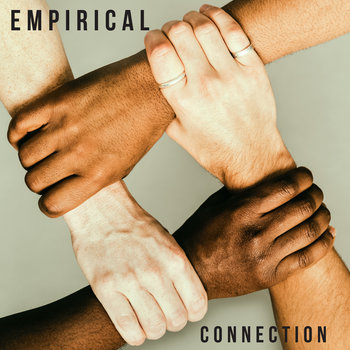
Empirical(?) - Connection

individual
|
INTERPERSONAL : SCIENCES
humanistic ---------------------------------------  mechanistic
SOCIOLOGY : POLITICAL
|
group


Empirical by Connection


Connection by Empirical


Image source and link:
https://cuneiformrecords.bandcamp.com/album/connection

My source: Hobart, M. (2016) Critics' choice, FT Weekend, 12-13 March. p.18.


Sunday, March 20, 2016

Reading: Design of a Community-Engaged Health Informatics Platform with an Architecture of Participation

Abstract

Community-engaged health informatics (CEHI) applies information technology and participatory approaches to improve the health of communities. Our objective was to translate the concept of CEHI into a usable and replicable informatics platform that will facilitate community-engaged practice and research. The setting is a diverse urban neighborhood in New York City. The methods included community asset mapping, stakeholder interviews, logic modeling, analysis of affordances in open-source tools, elicitation of use cases and requirements, and a survey of early adopters. Based on synthesis of data collected, GetHealthyHeigths.org (GHH) was developed using opensource LAMP stack and Drupal content management software. Drupal’s organic groups module was used for novel participatory functionality, along with detailed user roles and permissions. Future work includes evaluation of GHH and its impact on agency and service networks. We plan to expand GHH with additional functionality to further support CEHI by combining informatics solutions with community engagement to improve health.

Get Healthy Heights (misspelt above)

Millery, M., Ramos, W., Lien, C., Aguirre, A. N., & Kukafka, R. (2015). Design of a Community-Engaged Health Informatics Platform with an Architecture of Participation. AMIA Annual Symposium Proceedings, 2015, 905–914.
http://www.ncbi.nlm.nih.gov/pmc/articles/PMC4765661/

Thanks to Michael Gurstein - ciresearchers AT vancouvercommunity.net


Wednesday, June 24, 2015

GRADE CERQual, Reflection, Mixed Methods and Threshold Concepts

On leave this week and as per a previous post I attended the GRADE CERQual workshop last  afternoon. It was a very helpful exercise, a presentation and some group work. ...

I've now 5000 exploratory words on Threshold Concepts with Hodges' model and bringing in prospective research methodologies. The final module of Part 1 beckons (reading, reading...) and this work will help and might be worthy of publication. I'm just adding some other points from the following sources:

Knight, S. (2015) Realising the benefits of reflective practice. Nursing Times; 111: 23/24, 17-19.

I can cite the above as reflection is never far away in theory, practice and students on placement. Is there is a role for Hodges' model? I believe there is and Collins et al further demonstrate the need as nurses evidence reflection on their professional reading for revalidation from April 2016. Collins writes (my emphasis):

Reflection should be undertaken using a recognised model as this adds structure and provides direction. The model used should be chosen by the individual and influenced by a number of factors such as ease of use, understanding and ease of flow when writing. Models without these elements will give the writer a negative experience of the reflection process (p.14).
Collins, G. et al (2015) Using reflection on reading for revalidation. Nursing Times; 111: 23/24, 14-16.

The final paper for now:

Evans, B., Coon, D., & Ume, E. (2011) Use of Theoretical Frameworks as a Pragmatic Guide for Mixed Methods Studies. Journal of Mixed Methods Research, 5(4), 276-292.
DOI: 10.1177/1558689811412972

- begins with a quotation:
A mixed methods way of thinking is an orientation toward social inquiry that actively invites us to participate in dialogue about multiple ways of seeing and hearing, multiple ways of making sense of the social world, and multiple standpoints on what is important and to be valued and cherished.
—Greene (2008, p. 20)

The paper refers to maps, conceptual and theoretical frameworks. H2cm is a map and a conceptual framework, but not a theoretical framework; unless theory is implied (instantiated) in its structure?

Evans, Coon, and Ume (2011) write:
Clearly, such frameworks could assist with navigation in mixed methods studies consisting of concurrent or sequential investigations, facilitate integration of methods in at least one phase of the inquiry, and provide a map for combining the what with the why to gain a multidimensional understanding of causal mechanisms. Utilization of such frameworks could, then, fit snugly into Tashakkori and Creswell’s (2007) recent definition of mixed methods: “Research in which the investigator collects and analyses the data, integrates the findings, and draws inferences using both qualitative and quantitative approaches or methods in a single study or program of inquiry” (p. 4). (Evans et al. p.278)

Researcher's are by definition forced to adopt a methodological position and argue it; defend it too! I'm not advocating for something else, but for Hodges' model this is akin to being pressed to hear the Song of the Sirens and suffer the consequences. This model does not want to be tied to the mast.

It is the mast and sail.

Hodges' is mixed methods incarnate - out of the box, in and between them:

Demand-Supply
Service Centered-Person Centered
Self-Other
Health-Well Being-Disease
Individual-Population
Qualitative-Quantitative
Objective-Subjective
Socio-Technical
Mind-Body
....
...
..
.
     Past-NOW-Future

Thursday, March 19, 2015

Reading between the lines...


n.b. This post my not display in some browsers, older versions of IE - please upgrade if needed.