Hodges' Model: Welcome to the QUAD: big data

Hodges' model is a conceptual framework to support reflection and critical thinking. Situated, the model can help integrate all disciplines (academic and professional). Amid news items, are posts that illustrate the scope and application of the model. A bibliography and A4 template are provided in the sidebar. Welcome to the QUAD ...

Showing posts with label big data. Show all posts

Wednesday, December 27, 2023

The conjunction of reality and simulation?


 "Models are approximations of reality, constructed by scientists to address specific questions of natural phenomena using the language of mathematics. Mathematical equations allow the practitioner to decide the level of abstraction needed to tackle a given problem, thus transcending the 'billiard ball' approach." p.198.


INDIVIDUAL
  |
     INTERPERSONAL    :     SCIENCES               
HUMANISTIC --------------------------------------  MECHANISTIC      
SOCIOLOGY  :   POLITICAL 
|
GROUP


"In practice, simulations are often limited by a dynamic range problem, meaning that one runs out of computing power to simulate behavior at all scales. The discretization of mathematical equations in order to program them into a computer introduces subtleties such as numerical dissipation - an artificial side effect of differential equation calculations that does not arise from physics. It is also likely that one needs different numerical methods to simulate behavior on different scales, and a single method may be insufficient for all spatial scales. Perhaps the advent of AI will allow us to overcome some of these limitations, but for now emulations remain an aspiration." p.199.
 " 

"Generally, examining the microscopic components of a complex system in order to understand how macroscopic behaviour emerges falls short - think biology and economics. Implicitly, this brute-force approach suggests that one may study complex systems without having a scientific question in mind, and if enough computing power is deployed then insight naturally emerges. The billion-euro Human Brain Project is a spectacular example of the limitations of such an approach. Essentially, their  simulations have failed to replace laboratory experiments.
As has been noted by climate scientist Isaac Held, there is a tension between simulation and understanding.  We simulate in order to mimic as much of an observed phenomenon as possible. But we achieve understanding by using idealized models to capture the essence of the phenomenon. By design, idealized models necessarily employ assumptions." p.198.


Heng, K., Approximating Reality, American Scientist - Special Issue: Scientific Modelling, July-August 2023. 111:4,198-199.

Saturday, April 09, 2022

NHS Independent Report: "Better, broader, safer: using health data for research and analysis"

"Professor Ben Goldacre’s review into how the efficient and safe use of health data for research and analysis can benefit patients and the healthcare sector."
 
 
INDIVIDUAL
|
 INTERPERSONAL    :     SCIENCES               
HUMANISTIC --------------------------------------  MECHANISTIC      
SOCIOLOGY  :   POLITICAL 
|
GROUP
"Better, broader, safer: using health data for research and analysis"


"Raw data - such as NHS patients’ electronic health records - is prepared, analysed, and visualised by writing code that issues instructions to computers.

Data preparation and analysis are hugely complex technical tasks."


PUBLIC
:
Safety
Privacy
Accountability [inc. Value for Money]
Benefits
Trust
Literacy
Awareness / Understanding of Science(s)
Self-care, Care of family and Social Care

(Inoculation: Fake news, Dis-, Mis-, Malinformation)?

'Broader' (a further post ...?)


“Nobody wants to work in an NHS trust on NHS data, it’s a nightmare and we can't pay people appropriately.”


-
Interviewee


Department of Health & Social Care, Independent report. "Better, broader, safer: using health data for research and analysis". Published 7 April 2022.
 
My source: 
Trevor Peacock, Head of Governance, Risk & Compliance, Information Security Group, Information Services Division University College London 
 

Friday, April 02, 2021

ERCIM News No. 125 Special theme: "Brain-inspired Computing"

Dear ERCIM News reader,

ERCIM News No. 125 has just been published at https://ercim-news.ercim.eu/

The Special Theme of this issue highlights ongoing brain-inspired computing research with contributions from some of the leading academic and industrial research laboratories in Europe, coordinated by our guest editors Robert Haas (IBM Research Europe) and Michael Pfeiffer (Bosch Center for Artificial Intelligence).

Thank you for your interest in ERCIM News. Feel free to forward this message to anyone who might be interested.

Next issue:
No. 126,  July 2021
Special Theme: "Privacy-preserving computation"

Announcements in this issue:


Call for Proposals: Dagstuhl Seminars and Perspectives Workshops
Schloss Dagstuhl – Leibniz-Zentrum für Informatik is accepting proposals for scientific seminars/workshops in all areas of computer science, in particular also in connection with other fields. https://www.dagstuhl.de/dsproposal

ERCIM "Alain Bensoussan" Fellowship Programme - postdoctoral fellowships available at leading European research institutions.
Simple application procedure. Next application deadline: 30 April 2021
https://fellowship.ercim.eu/


ERCIM News
is published quarterly by ERCIM, the European Research Consortium for Informatics and Mathematics.
With the printed and online edition, ERCIM News reaches more than 10000 readers.

About ERCIM
ERCIM - the European Research Consortium for Informatics and Mathematics - aims to foster collaborative work within the European research community and to increase co-operation with European industry. Leading European research institutes are members of ERCIM. ERCIM is the European host of W3C.
https://www.ercim.eu/
https://twitter.com/ercim_news 
ERCIM LinkedIn Group
------------------------------------------------------------------------
Peter Kunz*                  	
ERCIM Office
2004, Route des Lucioles
BP93
F-06902 Sophia Antipolis Cedex 
*With many thanks.
Includes: 
 
Higher Cognitive Functions in Bio-Inspired Artificial Intelligence 
by Frédéric Alexandre, Xavier Hinaut, Nicolas Rougier and Thierry Viéville (Inria) 
"From a modelling point of view, this organisation of architecturally similar loops is very interesting because it implies that similar computing principles (implemented in the circuitry of cortico-basal loops) are exploited on different kinds of information to implement different kinds of behaviour (reflexive and reflective)." p.20.
http://www.imn-bordeaux.org/en/teams/mnemosyne-mnemonic-synergy/ 
 

Wednesday, March 17, 2021

Does “#AI” stand for Augmenting Inequality in the era of Covid-19 healthcare? c/o BMJ

Fig 1 Cascading effects of health inequality and discrimination manifest in the design and use of artificial intelligence (AI) systems [BMJ]


Original graphic surgically re-rendered as per the knowledge (care) domains of Hodges' model:

individual
|
INTERPERSONAL : SCIENCES
humanistic ----------------------------------------------- mechanistic
SOCIOLOGY : POLITICAL
|
group

My source:

Wednesday, February 10, 2021

data-verse 1 by Ryoji Ikeda

INDIVIDUAL
|
INTERPERSONAL : SCIENCES
HUMANISTIC----------------------------------------------- MECHANISTIC
SOCIOLOGY : POLITICAL
|
GROUP - COMMUNITY - POPULATION


My source: Ings, S. Sublime numbers, FTWeekend, Life&Arts, 30 Nov-1 Dec 2019, p.15.

Saturday, November 09, 2019

Mercury: Care in Transit or Transformation?

INDIVIDUAL
|
INTRA- INTER-PERSONAL : SCIENCES
HUMANISTIC -------------------------------------------------- MECHANISTIC
SOCIOLOGY : POLITICAL
|
GROUP
Hermes (Mercury) - the messenger
Mercury Abducting Psyche
© Musée du Louvre/P Philibert.


Public understanding of Science
Social Media (or Political)?
Patient engagement
in clinical records

Data, Information, Knowledge
(Wisdom)?
Data, Information Law & Regulation
Information Governance & Accountability


How to Safely Observe the Sun (Infographic)
https://www.space.com/15614-sun-observing-safety-tips-infographic.html


See also:

https://www.nationalgeographic.com/science/2019/11/last-transit-of-mercury-until-2032-how-to-watch-livestream/

Jones, P. (2008) Exploring Serres’ Atlas, Hodges’ Knowledge Domains and the Fusion of Informatics and Cultural Horizons, IN Kidd, T., Chen, I. (Eds.) Social Information Technology Connecting Society and Cultural Issues, Idea Group Publishing, Inc. Chap. 7, pp. 96-109.

Monday, April 08, 2019

Multivariate Testing - meet - Multivariate Care ...

aka: socio-technical?


SELF - individual
|
INTERPERSONAL : SCIENCES
humanistic ----------------------------------------------- mechanistic
SOCIOLOGY : POLITICAL
|
group - POPULATION
creativity
MULTIVARIATE TESTING


The human side of data


"Data testing more or less works from a mathematical base using dichotomy and statistical averages. So it trends towards value. but this just promotes uniformity and means it will become a struggle to differentiate yourself,"p.3


[ ... and a way to define what person-centredness is not in a big-data world? ]

Charles Orton-Jones, Uncovering the human side of data, Raconteur, Future of Data, (Distributed with The Times) 26/03/19.

Tuesday, February 05, 2019

Book: The Age of Surveillance Capitalism - The Fight for the Future at the New Frontier of Power


individual
|
INTERPERSONAL : SCIENCES
humanistic ----------------------------------------------- mechanistic
SOCIOLOGY : POLITICAL
|
group


https://www.publicaffairsbooks.com/titles/shoshana-zuboff/the-age-of-surveillance-capitalism/9781610395694/
The Age of Surveillance Capitalism


My source: The Times, January 19th, 2019.

Cover image: http://www.shoshanazuboff.com/

Sunday, February 03, 2019

Theory on Demand #29 Good Data

http://networkcultures.org/blog/publication/tod-29-good-data/
GOOD DATA
"Data can have power in numbers. Not only in the literal sense, rather, just as repeat - ability is important, so aggregation and meta-analysis of repeated and comparable studies acts to reduce the uncertainty of individual studies. Cochrane reviews in medical research carry a good deal of weight for this reason and are considered 'gold standard'.33 These reviews reduce the influence of individual companies or vested interests, and lead to more informed health policy." (p.48).
"Those questions underpin a consideration of contemporary genomic initiatives, particularly those that are marketed as 'recreational genomics', and gene patents such as those held by Myriad Inc. More broadly they underpin thought about population-scale health data initiatives such as the UK care.data program that, as discussed below, encountered fundamental difficulties because bureaucratic indifference to consent eroded its perceived legitimacy."54 (p.144).

See other TOD titles c/o The Institute of Network Cultures (INC)


individual
|
INTERPERSONAL : SCIENCES
humanistic ----------------------------------------------- mechanistic
SOCIOLOGY : POLITICAL
|
group

Something you know

values
value

personal ethics

('good' data = 'here'?)


biometrics:

Something you are
Something you have 

(proximity = 'are' + 'have')?

'open data index'

social activism
social assets
social capital
social data
social ends
social (collective) ethics
social good
social justice
social media(?)
social science

data: "power in numbers"

values
value

bureaucratic ethics
audit
records
security
corruption


My source: https://twitter.com/ArnaldoPellini/status/1089196464310501377

Friday, February 01, 2019

Book: Digital Objects, Digital Subjects: Interdisciplinary Perspectives on Capitalism, Labour and Politics in the Age of Big Data

individual
|
INTERPERSONAL : SCIENCES
humanistic ----------------------------------------------- mechanistic
SOCIOLOGY : POLITICAL
|
group

Digital Objects Digital Subjects
DIGITAL OBJECTS


DIGITAL SUBJECTS


Capitalism, Labour, Politics


My source: EUROPEAN-SOCIOLOGIST list

Cover image: Amazon

Monday, September 05, 2016

Editorial: Assuring the Capture of Standardized Nursing Data... Ponte, Somerville & Adams (2016)

In their editorial Ponte, Somerville and Adams (2016) focus on the US nursing care situation and contrast with the UK experience from the outset:

As the U.S. health system moves toward value-based care, chief nursing officers (CNOs) are pressured as never before to demonstrate nursing’s contributions to improving the cost, quality, and efficiency of care, key elements of the value equation. The shift from fee-for-service to value-based care and reimbursement has been made possible through the implementation of electronic health records (EHRs), and the emergence of Big Data analytics, in which payers and healthcare organizations mine the streams of data produced by clinical and administrative systems to understand and evaluate care inputs, processes, and outcomes (Westra, Clancy, et al., 2015).
The contrast is implicit and is not the purpose of the editorial: Assuring the Capture of Standardized Nursing Data: A Call to Action for Chief Nursing Officers. From a still summery Lancashire the above really does seem a continent away, if not a world. It should not be this way. Questions of value for money, the quality of nursing care and outcomes are also central here and digital aspirations are ongoing: NHS Digital.

Perhaps Hodges' model lacks appeal not just because of its historical (mid-1980s) qualities, but a 4x4 checkbox appearance that seeks to standardize care concepts and the nurse's approach? Not only that but maybe the model dictates where they should be placed? The push for data to 'let the light in' and make nursing visible, can also seem a major, externally driven and intrusive distraction from nursing care. That is, doing the job, being a nurse, nursing delivery, caring ...

That Assuring in the title is important. It is the kernel of recursion, the crucial check that is governance and engaged management. Not remote via a screen - dashboard, but in-process - in-situ assuring that the nursing role can and is delivering. In the dash to data vision can become blurred. Socio-technical perspectives are skewed, what might be termed holistic bandwidth is constrained as per the system.
Ensuring that standardized, encoded nursing data are captured in EHRs is critical if nursing is to realize the potential of big data analytics. Having nursing data available for analysis will allow us to gain a better understanding of nursing practice, demonstrate nursing’s contributions to patient care and outcomes, and facilitate evidence-based practice and nursing research. Indeed, we will no longer be driving blind. Rather, we will be driving smart.
Somewhere in this big data lies person centered, holistic and integrated care. This needs to be transformed to self-care. Can these incremental positive changes be captured (once debated and defined)? Will nurses be empowered with access to this data: the big, little and what lies between? Where are the analysts? Who makes the decisions based on this data? Is transparency assured?

As technology advances we have much to do in the UK, lest we nurses find ourselves sat in what has suddenly become a self-driving vehicle that is bound who knows where....


Ponte, P. R., Somerville, J. G., & Adams, J. M. (2016). Assuring the Capture of Standardized Nursing Data: A Call to Action for Chief Nursing Officers. International Journal of Nursing Knowledge, 27(3), 127.

Tuesday, July 26, 2016

Data visualisation: Contributions to evidence-based decision-making

A SciDev.Net Learning Report

"Data visualisation – the visual representation of data in charts and graphs – has grown in popularity in recent years. Media outlets and research communication organisations alike have invested in the production of data visualisation, committing to the belief that visualisation is an effective form of communication.

In this report, Chapter 1 contextualises the rise of data visualisation and its purported potential to stimulate a 'data revolution' in development. The specific contributions of data visualisation to research communication goals are discussed in Chapter 2. Chapter 3 explores instances in which data visualisation is an appropriate form of research communication, recognising that it is not a ‘magic bullet’ solution to the need for more evidence informed decision-making, but should instead be used selectively. Chapter 4 discusses ways to enhance the effectiveness of data visualisation. Lastly, Chapter 5, provides concluding remarks and highlights areas in which further research and discussion are required so data visualisations can be used to the greatest effect in the research communication sector.

While a number of claims have been made around the potential of data visualisation as a communication tool, there has been a relative lack of informed discussion around the role that data visualisation can play in the research communication sector.

This report builds on our experiences of producing data visualisations and in data journalism more broadly, and brings together the lessons we have learned with insights from the broader sector of research communication. What follows will help researchers, research communication managers and journalists to make more informed decisions about when to invest in data visualisations in order to meet research communication goals."


...

My source: SciDev.net on twitter

Monday, January 18, 2016

ERCIM News No. 104 Special theme: "Tackling Big Data in the Life Sciences"

Dear ERCIM News Reader,

ERCIM News No. 104 has just been published at http://ercim-news.ercim.eu/en104

This issue features a special theme on "Tackling Big Data in the Life Sciences"
coordinated by the guest editors Roeland Merks (CWI) and Marie-France Sagot (Inria) and a section "research and society" about "Women in ICT Research and Education", coordinated by Lynda Hardman (CWI)

This issue is also available for download in pdf and EPUB.

Thank you for your interest in ERCIM News. Feel free to forward this message to others who might be interested.

Next issue: No. 105, April 2016 - Special Theme: "Planning and Logistics" (see Call for contributions)

Best regards,
Peter Kunz
ERCIM News central editor

Sunday, January 03, 2016

Autonomy Cube(d)

OBSERVATION
|
INTERPERSONAL : SCIENCES
OBSERVATION  ---------------------------------------  OBSERVATION
SOCIOLOGY : POLITICAL
|
OBSERVATION


Rosa Menkman from amsterdam, Netherlands, CC BY 2.0 <https://creativecommons.org/licenses/by/2.0>, via Wikimedia Commons

"When installed in a gallery, the cube creates an open Wifi hotspot that uses the alternative Tor network to anonymise internet use."
Jobey, L., (2016)  Trevor Paglen What Lies Beneath, FT Magazine, 2-3 January. p.20.

Trevor Paglen: Autonomy Cube (2014)

Whitechapel Gallery, London, January 29 to May 15.

Photo source: e-flux - Edith-Russ-Haus for Media Art


                             Autonomy-Advocacy Cubed?
     Late 1970s                      1980s-1990s                         2000s...
   Nurse Advocate                 Nurse as Advocate?             Independent Advocacy
                           
             Ongoing nurse advocacy role amid the politics of healthcare...

Thursday, July 02, 2015

ERCIM News No. 102 Special Theme: "Trustworthy Systems of Systems"

Dear ERCIM News Reader,

ERCIM News No. 102 has just been published at http://ercim-news.ercim.eu/en102

Special Theme: "Trustworthy Systems of Systems"
Guest editors: Poul Heegaard, NTNU and Erwin Schoitsch, Austrian Institute of Technology
http://ercim-news.ercim.eu/en102/special

Keynote by Werner Steinhögl, Programme Officer at the European Commission, Components and Systems, Directorate General CONNECT: "Trustworthy Systems of Systems – A Prerequisite for the Digitalization of Industry"  
http://ercim-news.ercim.eu/en102/keynote

Invited contribution by Andreas Wild, Executive Director of the ECSEL Joint Undertaking: "ECSEL JU Launches Research and Innovation Actions Strengthening European Competitiveness"
http://ercim-news.ercim.eu/en102/special/ecsel-ju-launches-research-and-innovation-actions-strengthening-european-competitiveness

This issue is also available for download in pdf and ebpub    

Next issue: No. 103, October 2015 - Special Theme: "Augmented Reality"
(see Call for articles at http://ercim-news.ercim.eu/call)

Thank you for your interest in ERCIM News. Feel free to forward this message to others who might be interested.

Best regards,
Peter Kunz
ERCIM News central editor

Tuesday, March 17, 2015

Healthcare: theDataMap [subjects, agents & agencies] c/o Harvard University

individual
INTERPERSONAL : SCIENCES
humanistic ------------------------------------------- mechanistic
SOCIOLOGY : POLITICAL
group

*person*
patient, self, client

physician, nurse, allied health professional, social worker...
(experiential) 
public health, 
carers

payer, insurer, provider, government, tax payer,
(corporate social responsibility)


http://thedatamap.org/
theDataMap - Copyright © 2012-2013 President and Fellows Harvard University

Sunday, January 04, 2015

Reflecting on Nortin Hadler's "Missing the Forest For the Granularity"

I read Nortin Hadler's Missing the Forest For the Granularity (July, 2014) on The Health Care Blog with great interest. The article draws attention yet again to the risks and preoccupation with processes and systems. This provides me with another opportunity to highlight the 4P's within Hodges' model: Process, Policy, Practice and Purpose and add some of the points that Dr Hadler addresses.

The 4Ps by themselves might have meaning but they can't do work. For that we need a context and several perspectives. As Dr Hadler points out big data intrudes on the clinical encounter determining not just what is collected, but how it is captured and structured.

There are frequently two datasets at the practitioner level: one is administrative and managerial in form and purpose; the other is clinical - patient, person centered. Effective communication already presents a challenge. On top of that then how relevant are the IT systems. The holy grail of IT systems still seems to be benefits for clinicians and patients - the public. Until then will the IT continue to push the patient-clinical relationship as if it is some wobbly toy? You bet it will!

Where exactly should the “Physician’s Dashboard” reside? Is it a case of "the ayes have it" but only on the right?

Nortin also refers to the United States postponing ICD-10. From Wigan Pier I clearly do not understand the issue, but this seems from here more like a very prolonged delay. A delay that perhaps says more; not just about the healthcare 'system(s)', but the many interfaces to be found there.

Many thanks to Dr - Prof. Hadler for his article:
https://thehealthcareblog.com/blog/2014/07/11/missing-the-forest-for-the-granularity/

individual
INTERPERSONAL : SCIENCES
humanistic ------------------------------------------- mechanistic
SOCIOLOGY : POLITICAL
group
“cognitive” specialists, the care of the patient revolves around the “granularity” of the narrative.
PURPOSE
individual attention and focus
ability to share purposes
 Using individual differences and idiosyncrasies

patients as widgets (here)?
Can you see the dashboard here?
PROCESS
 data gathering
big data, ICD-10
Electronic Medical Record -
 templates and “smart sets”
PRACTICE

Patient - BIG DATA - Doctor
relationship
 empathy 'NOISE' empathy
life-course (“social”) epidemiology
POLICY
Europe, health care systems, United States, health economists, hospital administrators, patients as “units of care”, physicians as “providers”, clinical demand = “throughput.”
common denominators
invoicing


Saturday, April 19, 2014

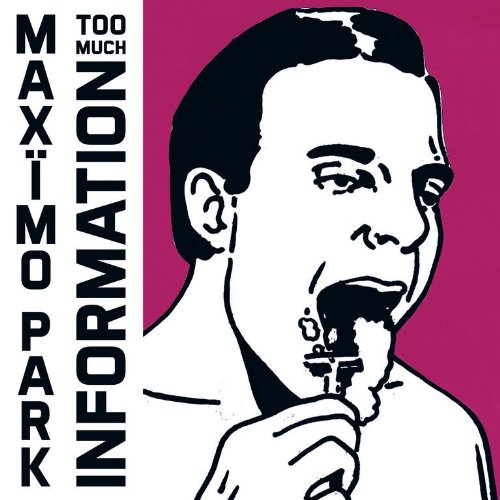
care.data: too much information?

individual
INTERPERSONAL : SCIENCES
humanistic ------------------------------------------- mechanistic
SOCIOLOGY : POLITICAL
group

individual - person
ethics
'personal'
My identity:
 lost in numbers Vs. specificity of patterns
*my attitude to my 'sensitive' information
health literacy
personal responsibility, self care, quantified self
my understanding of care.data
Trust


datasets, BIG data
hospital episodes, treatments
research
privacy research
 anonymising process for nhs data
*care.data is a natural step towards personalised medicine?
axon - neurobiology
Axon - data warehouse
statistics
service development and innovation

Too Much Information
data security, law, information governance
NHS
commercial, contract
potential for abuse - assumptions
public mental health
public health
policy, consultation
policy communication
public engagement, primary care
informed consent, opt-out
data definitions, standards
ISO27001
population, insurance


Additional link:
Allyson Pollock - Protecting confidential patient information and promoting public health research. Three proposed amendments to the Care Bill

Image source:
http://cdn2.thelineofbestfit.com/media/2014/01/Maximo-Park-Too-Much-Information.jpg

Saturday, April 12, 2014

ERCIM News No. 97 Special theme: "Cyber-Physical Systems"

Dear ERCIM News Reader,

ERCIM News No. 97 has just been published at http://ercim-news.ercim.eu/en97

Special theme: "Cyber-Physical Systems"
http://ercim-news.ercim.eu/en97/special/

Guest editors
:
- Maria Domenica Di Benedetto, University of L’Aquila, Center of Excellence DEWS
- Françoise Lamnabhi-Lagarrigue, CNRS, Laboratoire des Signaux et Systèmes
- Erwin Schoitsch, AIT Austrian Institute of Technology/AARIT.

http://ercim-news.ercim.eu/en97Keynote: "The Importance of Cyber-Physical Systems for Industry" by Clas Jacobson, Chief Scientist for United Technologies Systems & Controls Engineering, USA

This issue is also available for download as:
pdf
:  http://ercim-news.ercim.eu/images/stories/EN97/EN97-web.pdf
epub: http://ercim-news.ercim.eu/images/stories/EN97/EN97.epub

Next issue: No. 98, July 2014 - Special Theme: "Smart Cities"
(the call will be published shortly at http://ercim-news.ercim.eu/call)

Thank you for your interest in ERCIM News.
Feel free to forward this message to others who might be interested.

Best regards,
Peter Kunz
ERCIM News central editor

Includes:
Optogenetics to Unravel the Mechanisms of Parkinsonian Symptoms
Big Data in Healthcare: Intensive Care Units as a Case Study
SEMEOTICONS: Face Reading to Help People stay Healthy


Saturday, March 01, 2014

Drupalcamp London 2014: The Government Digital Service, Drupal 8 Multilingual features, Twig

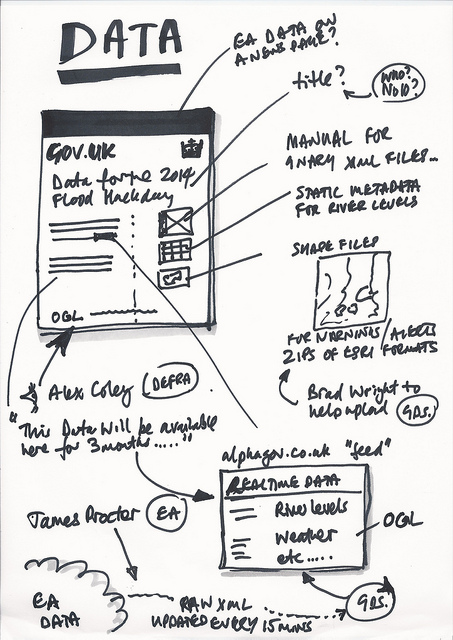
https://gds.blog.gov.uk/2014/02/23/flood-hack-developing-solutions/
Flood hack
DrupalCamp London today got underway with a keynote Delivering User-centred Digital Services by Mark O'Neill from the UK Government Digital Service.

Given the record of public and private sector led IT projects it was refreshing to hear of the GDS's approach being user-centred, the extension of 7 design principles and Mark's previous experience. It's clearly too late for the health care sector to coin and create the Needotron - GDS beat us to it.

Drupal 8 is looking formidable both in its potential and the (learning) stack it presents. Another great session to pick out was - A whole new world for multilingual sites in Drupal 8 by Gábor Hojtsy. The progress here is phenomenal and even though incomplete it is a major achievement and a credit to the Drupal community.

It's humbling as it reminds me to post some introductions to Hodges' model on W2tQ in several languages.

As to being user-centred, the Harmony Forum is a real tease. I know a forum will not moderate itself (is that the new Sorcerer's Apprentice?) and yet time is of the essence. Harmony is one for me to watch - so I'm signed up for the newsletter. Two sessions on Twig and Entities rounded up a busy few days.

This began on Thursday with Cutty Sark, the Royal Greenwich Observatory (learned much from their interactive designs) Turner and the Sea, The British Library - Beautiful Science (60-90 mins ample), and Ibsen's Ghosts at Trafalgar Studios.

I was also able to visit a university yesterday and meet a member of faculty who used Hodges' model many years ago. Here's hoping that some of the materials can be retrieved even though it seems unlikely. I hope to keep in touch with this nursing contact (and not just for the dinner!). I've met several other people here, the Drupal community is another great asset - and with thanks to the sponsors who make these events feasible for many of us.

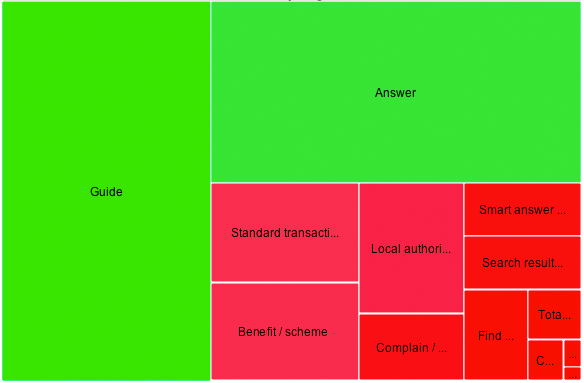
Output from Needotron


I'll end this post back with Mr O'Neill and the GDS.

I wonder to what extent healthcare figured in the flood deliberations?

It seems that an output from the Needotron may not be so far removed from h2cm?

Happy St David's Day too - in the closing minutes here!