Hodges' Model: Welcome to the QUAD: energy

Hodges' model is a conceptual framework to support reflection and critical thinking. Situated, the model can help integrate all disciplines (academic and professional). Amid news items, are posts that illustrate the scope and application of the model. A bibliography and A4 template are provided in the sidebar. Welcome to the QUAD ...

Showing posts with label energy. Show all posts

Monday, May 18, 2026

Call for Abstracts: Prototypes for Humanity - Submission Deadline 22 May 2026

Dear Colleagues, 

I am pleased to invite the submission of abstracts to the Prototypes for Humanity 2026 Short Papers Platform. 

Abstract Submission Deadline: 22nd May 2026
Invitations to Successful Authors: 8th July 2026
Conference Dates: 15th - 19th November, Dubai, UAE 

** Description **

The Short Papers Platform provides a forum for professors to share their research and engage in interdisciplinary dialogue, fostering global collaboration and knowledge exchange, with a focus on driving real-world impact through academic research.

For 2026, Prototypes for Humanity is delighted to announce the launch of a strategic partnership with the Investment Corporation of Dubai (ICD), for the Short Papers Platform. This joint effort reinforces the programme’s commitment to advancing impactful innovation through collaboration between academia and industry, focusing on the key sectors and themes that reflect international research priorities and that are relevant to the city and to the fund. 

Themes 
  • Wellbeing and Human Performance
  • Infrastructures and Cities
  • Autonomous Systems and Advanced Manufacturing
  • Environment, Sustainability and Energy
  • Mobility and Logistics
  • Socio-Economic Empowerment, Digital Economies and Future Markets
  • Open and Speculative
Awards

As part of the programme’s ongoing commitment to research translation, ICD will award a $50,000 prize to one of the short papers presented at the conference. The award recognises academic work with strong potential for practical application, identified through engagement with ICD industry experts, and will support the winning project’s next stage of development towards implementation.

Submissions

Full details can be found at: https://www.prototypesforhumanity.com/press-releases/stories/Call_For_Abstracts_2026

Apply here: https://form.jotform.com/260705028532451?source=https://www.jisc.ac.uk

Deadline for abstract submission: 22 May, 2026

We strongly encourage you to apply where your interests and research aligns with the programme’s thematic areas.

If you have any questions, please contact us at professors AT prototypesforhumanity.com

Sarah Ward
University Relations Manager
Prototypes for Humanity

E: sarah.ward AT prototypesforhumanity.com

My source: Email - https://www.bcs-sgai.org/
Friday, January 30, 2026

ERCIM News No. 143 Special theme: "AI for Science"

 
Dear ERCIM News reader,

ERCIM News 143 is now online! The articles in this special theme show that AI is no longer a peripheral tool in science, but a central part of research practice across disciplines. AI for Science is reshaping how research is organised, understood, and conducted, while also raising important questions about trust, transparency, energy use, and the evolving role of human expertise.

Read the January 2026 Issue


This issue in PDF


This special theme was coordinated by our guest editors Edina Nemeth (SZTAKI) and Alexandre Termier (University of Rennes – Inria/IRISA).


My source:
Peter Kunz ERCIM https://www.ercim.eu https://ercim-news.ercim.eu

Wednesday, January 07, 2026

Healthcare Evolution through AI and Digital twins - HEAD 2026

Dear colleagues,

We do hope this Call for Papers may be of your interest.
We do apologize if this CfP reaches you more than once.

Yours sincerely
HEAD Organizers

=========================================================

Healthcare Evolution through AI and Digital twins - HEAD 2026

18 - 21 May, 2026 - Sydney, Australia

https://www.head.icar.cnr.it/

- in conjunction with the 26th IEEE International Symposium on Cluster, Cloud and Internet Computing (CCGrid 2026) and in-cooperation with ACM SIGHPC

Submit your paper by using the link:

https://easychair.org/conferences/submission_new?a=35863199

=======================================================

MISSION:
------------

All over the world, the number of investments in Information and Communication Technology (ICT) for healthcare and wellbeing (eHealth) is rapidly increasing. GLOBE NEWSWIRE has predicted that the Global eHealth market is expected to reach $123.78 billion by 2030. This means that digital health is of considerable interest worldwide, as it has the potential to improve both the quality of services and users’ access to health information, while also saving time and reducing the workload and associated costs for health service providers in the long term.

In this context, an increasing interest is growing around eHealth and ICT technologies, such as Artificial Intelligence (AI), Digital Twins, Cloud computing, Edge and Fog computing, and Internet of Things (IoT),

which are at the basis of revolutionising healthcare by bringing innovative network applications and services. In fact, modern healthcare applications are becoming increasingly dependent on heterogeneous infrastructures, including IoT and edge medical devices, as well as High-Performance Computing (HPC) backends, to support the execution of AI-driven models and patient-specific Digital Twins.

The HEAD workshop would explore the open challenges and current issues surrounding the application of these technologies, while bridging the gap between healthcare innovation and the hardware and software systems that support scalable and reliable computing. HEAD aims to encourage interdisciplinary discussion about how technologies such as HPC, distributed systems and performance optimisation can facilitate the deployment of reliable and scalable Digital Twins for healthcare. The workshop will highlight the role of computing infrastructures as key enablers of future digital medicine by linking algorithmic advances with architectural and systems-level innovations.


TOPICS:
----------

■ AI Algorithms and Learning Frameworks for Healthcare
■ Modeling and Simulation Methodologies for Healthcare
■ Programming Techniques and Architectures for Healthcare
■ Data Management, Analytics, and Knowledge Extraction
■ ICT Infrastructure and Tools for Healthcare Digital Twins
■ Cloud Computing, Edge and Fog Computing for Healthcare
■ Internet of Things (IoT), Big Data, and Wearable Devices for Healthcare
■ Ethical, Legal, and Societal Implications of ICT for Healthcare
■ Accelerator-based architectures (GPUs, NPUs, FPGAs and DPUs) for Healthcare
■ Parallel and Distributed Training and Multi-GPU/Multi-Node Execution for Healthcare Applications
■ Energy-Efficient, Sustainable, and Optimization-Oriented Computing for AI in Healthcare


IMPORTANT DATES:
--------------------------

• Submission deadline: February 01, 2026
• Notification of paper acceptance: February 28, 2026
• Submission of camera-ready papers: March 15, 2026
• Registration: March 15, 2026


PAPER SUBMISSION:
---------------------------

Manuscripts should describe original work and should be formatted according to the IEEE conference proceedings format. 

Papers will be submitted through the CCGrid 2026 submission system.

Submit your paper here:

https://easychair.org/conferences/submission_new?a=35863199

All submissions will undergo a rigorous peer-review process. Each paper will be reviewed by at least three members of the Technical Program Committee. Reviews will be double-blind.

Accepted papers will be published in the CCGrid 2026 workshop proceedings and will be submitted for inclusion in IEEE Xplore.


BEST PAPER AWARD:
---------------------------

A Best Paper Award certificate will be conferred on the author(s) of a paper presented at the workshop, selected by the Chairs based on scientific significance, originality, and technical quality, as evaluated by the Program Committee.

Please visit https://www.head.icar.cnr.it/  for more information and if you have any questions kindly get back to us by sending an email

Kind regards,
HEAD 2026 Organizers

My source: Dr. Giovanna Sannino

Friday, November 07, 2025

Half-turns ... to orbit

individual
|
INTERPERSONAL : SCIENCES
humanistic -------------------------------------------  mechanistic
SOCIOLOGY : POLITICAL
|
group-population


 "If you can get your ship into orbit, you're halfway to anywhere."


See: Where did Heinlein say "Once you get to Earth orbit, you're halfway to anywhere in the Solar System"?

Friday, October 24, 2025

Come on Healthcare: catch up will you!

Within philosophy it is recognised that Immanuel Kant provided a means by which the rationalists and empricists can be reconciled. Some background:

In philosophy, rationalism is the epistemological view that "regards reason as the chief source and test of knowledge"[1] or "the position that reason has precedence over other ways of acquiring knowledge",[2] often in contrast to other possible sources of knowledge such as faith, tradition, or sensory experience. More formally, rationalism is defined as a methodology or a theory "in which the criterion of truth is not sensory but intellectual and deductive".[3]  https://en.wikipedia.org/wiki/Rationalism
In philosophy, empiricism is an epistemological view which holds that true knowledge or justification comes only or primarily from sensory experience and empirical evidence.[1] It is one of several competing views within epistemology, along with rationalism and skepticism. Empiricists argue that empiricism is a more reliable method of finding the truth than purely using logical reasoning, because humans have cognitive biases and limitations which lead to errors of judgement.[2] Empiricism emphasizes the central role of empirical evidence in the formation of ideas, rather than innate ideas or traditions.[3] Empiricists may argue that traditions (or customs) arise due to relations of previous sensory experiences.[4]

Historically, empiricism was associated with the "blank slate" concept (tabula rasa), according to which the human mind is "blank" at birth and develops its thoughts only through later experience.[5] https://en.wikipedia.org/wiki/Empiricism

If health and social care, must be evidence-based, then as far as Hodges' model is concerned we are then duty-bound to use the most readily available 'evidence' to us, including (while taking liberties?):

  • The structure of national health and social care organisations (NHS, DHSS ...)
  • Physical infrastructure
  • Human Resources Organisation
  • Unions and Labour relations
  • Texbooks, journal papers, conferences
  • Organisational structures from the regional to the local
  • Professional bodies and governance of licensing/registration
  • Curricula that students follow^
  • Models, frameworks, teaching and learning tools and methods
  • Data, statistics, information and reporting (national, international)
  • Research projects ongoing (whatever scale, methods, methodology)
  • Accounts from lived experience of patients, carers and public (^and students)
  • Policy
  • Funding
  • Law relating to Health and Social Care
  • Public (Mental) Health? Discuss
  • Media (Social) Control, Advertising
  • . . .

Hodges' model: Structure and Content


Using this evidence, we still see the Cartesian divide, the mind-body distinction writ large in health and social care. The continuing impact is evident in theory, practice, (hence) lived experience, policy and managment. Since its creation in the 1980s, Hodges' model mirrors (literally) this philosophical, epistemological and ontological legacy, thereby acknowledging the ancient history of medicine, and 'modern' development of healthcare and nursing. Through this device, Hodges' model can facilitate debate, critique, reflection, and critical thinking; to encourage progress in our thought, motivations, action and subsequent evaluation.


This explains the structure of Hodges' model and predicts the range (contextual signature) of content when the model is applied.

Evidence permitting of course!

See also: BBC The Great Philosophers:

Series 1: 4. Descartes

Series 1: 5. Spinoza and Leibniz

Series 1: 8. Kant

n.b. I video taped this marvellous series when first screened. When studying for my BA(Hons), audio taped, they also provided a great learning resource in the car. The programmes are on BBC 4 (UK) once again, but are readily accessible.

Sunday, September 14, 2025

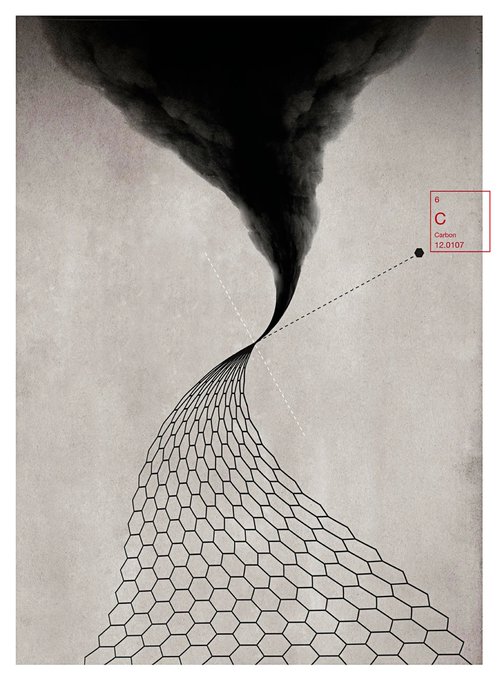
Graphene just broke a fundamental law of physics

Graphene just broke a fundamental law of physics.

Its electrons just did something physicists thought was impossible. For nearly 200 years, metals have obeyed the Wiedemann-Franz law – the rule that electrical conductivity and thermal conductivity always rise and fall together. 

But in ultra-clean graphene, researchers at the Indian Institute of Science found the opposite. As electrical conductivity increased, thermal conductivity dropped, shattering a principle taught in every physics textbook. 

The key lies at the “Dirac point,” a strange electronic tipping point where graphene is neither a metal nor an insulator. Here, electrons stop behaving like individual particles. Instead, they flow collectively as a nearly perfect fluid – a state called a “Dirac fluid.” 

This discovery doesn’t just rewrite the rules for graphene. It provides a tabletop window into extreme physics usually reserved for black holes and high-energy colliders. Scientists say this behavior could help probe mysteries of quantum entanglement, black hole thermodynamics, and the very fabric of matter itself.

 ["Universality in quantum critical flow of charge and heat in ultraclean graphene." Nature Physics, 2025] ...
Individual
|
      INTERPERSONAL    :     SCIENCES               
HUMANISTIC  --------------------------------------  MECHANISTIC      
 SOCIOLOGY  :    POLITICAL 
|
Group
While I can't fully understand this paper (even the abstract!), I realise that it is taking what seems a long time^ for industry and business to understand and realise the potential of graphene in industrial and technological applications. 


Hopefully, applications will emerge, that are beneficial to all. Reducing energy use, improving efficiency, removing pollutants even more effectively, imcreasing the durability and hence lifetime of materials and products, and more.

Also, marvellous to see global collaboration at work, as science continues to asks questions.

^I could have written exploitation there, but could we put the collective and planetary first?


Majumdar, Aniket and Chadha, Nisarg and Pal, Pritam and Gugnani, Akash and Ghawri, Bhaskar and Watanabe, Kenji and Taniguchi, Takashi and Mukerjee, Subroto and Ghosh, Arindam. (2025) Universality in quantum critical flow of charge and heat in ultraclean graphene, Nature Physics. http://dx.doi.org/10.1038/s41567-025-02972-z

My source: https://x.com/Rainmaker1973/status/1966896966316474505

Which includes a video 5m 'Quantum Critical Flow in Graphene: Charge & Heat Dynamics'

https://www.youtube.com/watch?v=LrImy9PAHGk

See also on W2tQ: 'physics : 'women'

Friday, January 24, 2025

ERCIM News No. 140 Special theme: "Large-Scale Data Analytics"

Dear ERCIM News reader,

ERCIM NEWS #140
The January 2025 issue of ERCIM News (Number 140) is online with a special theme on Large-Scale Data Analytics. This issue features a Special Theme that highlights the diverse applications of large-scale data analytics across Europe. The advancements are achieved through close collaboration with European data spaces and open science platforms.

You can access the issue at https://ercim-news.ercim.eu/

This special theme was coordinated by our guest editors Andras Benczur (HUN-REN SZTAKI) and Dominik Ślęzak (University of Warsaw).

===
Note PJ: Includes: 
Breaking the Silence: Brain-to-Speech Innovations. p.36
Data Visualisation for Big Data: Digital Epidemiology. p.39.

CWI Research Semester Programme. Truth is in the Eyes of the Machines Amsterdam, 8-9 May 2025.
https://kwz.me/hF1
===

Thank you for reading ERCIM News! Please share this issue with anyone who might find it interesting. You can also support us on LinkedIn. Let's keep the conversation going and share the latest updates together!

Next issue: No. 141, April 2025
Special Theme: "Cultural AI". Submissions are welcome! See preliminary call for contributions.


ERCIM News is published quarterly by ERCIM, the European Research Consortium for Informatics and Mathematics. With the printed and online edition, ERCIM News reaches more than 10000 readers.
All issues published to date are available online.


About ERCIM

ERCIM - the European Research Consortium for Informatics and Mathematics - aims to foster collaborative work within the European research community and to increase cooperation with European industry. Leading European research institutes are members of ERCIM. ERCIM is the European host of W3C.

https://x.com/ercim_news
ERCIM LinkedIn Group
ERCIM LinkedIn Page

Peter Kunz                      	
ERCIM Office
2004, Route des Lucioles
BP93
F-06902 Sophia Antipolis Cedex

Wednesday, October 16, 2024

2025 6th edition of "Seed Projects for Interdisciplinary Research"

Para quem possa ter interesse. / To whom it may concern.

Caros/as Coordenadores/as das Unidades I&D da UC,  

Caros/as Gestores/as de Ciência, 


A pedido do Vice-reitor para a Investigação e Diretor do Instituto de Investigação Interdisciplinar (IIIUC), Professor João Ramalho-Santos, i
nformamos que estão abertas as candidaturas para a 6ª Edição de financiamento dos "Projetos Semente de Investigação Interdisciplinar", com o apoio da Fundação Santander, promovido pelo Núcleo das Áreas Estratégicas da UC (NAE), em colaboração com o Instituto de Investigação Interdisciplinar (IIIUC). 


Com este concurso, a UC pretende continuar a apoiar o desenvolvimento inicial de projetos de investigação originais e interdisciplinares com um financiamento semente que permita aos investigadores e às investigadoras da UC tornarem as suas propostas científicas mais robustas, de forma a assegurar financiamento competitivo no futuro e o desenvolvimento de novas linhas de investigação que cruzam áreas do saber na Universidade de Coimbra.


Irão ser financiados até cinco projetos de investigação interdisciplinar, uma em cada Área Estratégica da Universidade de Coimbra:  Saúde; Clima, Energia e Mobilidade; Recursos Naturais, Agroalimentar e Ambiente; Digital, Indústria e Espaço; Património, Cultura e Sociedade Inclusiva.


Poderão concorrer a este financiamento investigadores/as integrados/as nas Unidades I&D (ou noutras estruturas da Universidade de Coimbra) que desenvolvam investigação na UC e que obtiveram o doutoramento após 1 outubro de 2014. A equipa do projeto deve incluir de três a seis Investigadores/as da UC, de pelo menos duas Unidades I&D de
domínios científicos distintos. 


As candidaturas podem ser submetidas até 6 de dezembro de 2024, às 17h na página web do concurso:
 

https://www.uc.pt/iii/iiiuc-apoia/seedprojects-uc/edicao-2025/  


Estão disponíveis nesta página as normas do concurso, modelo para submissão de candidatura e a lista de júri nomeado para esta edição.


Atenciosamente,
 

O Núcleo das Áreas Estratégicas 


Isabel Neves 
 

Maria João Neves   

Natacha Leite   

Shiva Saadatian   


*******************

On behalf of the Vice-rector for Research and Director of the Institute for Interdisciplinary Research (IIIUC), Professor João Ramalho-Santos, we would like to inform you that applications are now open for the 6th edition of "Seed Projects for Interdisciplinary Research", with the support of Santander Foundation, promoted by the UC Strategic Areas Unit (NAE), in collaboration with the Institute for Interdisciplinary Research (IIIUC).  


Through this call, the UC intends to provide support for the initial development of original and interdisciplinary research projects with seed funding that will allow UC researchers to make their scientific proposals more robust, ensuring competitive funding in the future and the development of new research lines that cross areas of knowledge at the University of Coimbra. 


There will be funding for up to five interdisciplinary research projects, one in each of the UC Strategic Areas: Health; Climate, Energy and Mobility; Natural Resources, Agri-food and Environment; Digital, Industry and Space; Heritage, Culture and Inclusive Society. 


Researchers of the R&D Units (or other structures of the University of Coimbra), who carry out research at the UC and who obtained their doctorate after 1 October 2014 are eligible to apply for this funding. The project team must include three to six researchers from the UC, from at least two R&D Units in
different scientific fields.  


The applications can be submitted until 6 December 2024 at 5pm on the call website: 
 

https://www.uc.pt/en/iii/iiiuc-supports/seedprojects-uc/2025-edition/  


The call guidelines, proposal template and the list of juries appointed for this edition are available on this page. 


Yours sincerely,  

Strategic Areas Unit 


Isabel Neves   

Maria João Neves    

Natacha Leite    

Shiva Saadatian 

Universidade de Coimbra • Reitoria • Administração | University of Coimbra • Rectory • Administration

Serviço de Promoção e Gestão da Investigação | Research Management Service

Núcleo das Áreas Estratégicas | Strategic Areas Unit

Polo I | Rua Larga • Edifício da FMUC (1º piso) • 3004-504 COIMBRA • PORTUGAL

Polo II | Casa Costa Alemão • Rua Dom Francisco de Lemos • 3030-789 COIMBRA • PORTUGAL

https://www.uc.pt/spgi/nae/ 

Sunday, September 01, 2024

British Computer Society: Real AI 2024 -::- AI for One Health and Planetary Health

In July I posted news of this month's Real AI event 27th September. Plans are in place to attend.

In November, London beckons again:

Friday November 8th 2024

Even as I look forward to September's trip; I'm pinching myself. 

Following a BCS event last year, Hodges' model has been recognised. A video chat and many email exchanges has revealed there is a model possessed with the necessary holistic bandwidth. Hodges' model has the conceptual scope to encompass intelligence(s), One Health and planetary health. 

This also fits with current reading - interrupted by Hardy's A Mathematician's Apology (£2.00) - with posts to follow that will also inform November's co-presentation.

More to follow and clearly I have learned a great deal from engaging with the BCS. While my affiliate  membership has lapsed now, since the early 1990s the Society's publications, specialist groups: medical informatics, nursing, methods, security, expert systems, and now AI have proved well worth getting involved!

I am also hoping for some part-time tutoring at Bolton University in the new academic year.

Wednesday, July 10, 2024

ERCIM News No. 138 Special theme: "Sustainable Cities"

Dear ERCIM News reader,

A new ERCIM News issue (Number 138) is online with a special theme on sustainable cities. This ERCIM News special theme reports on research addressing technologies, systems, applications, and services for sustainable smart cities, showcasing Europe's research ecosystem.
You can access the issue at https://ercim-news.ercim.eu/

This special theme was coordinated by our guest editors German Castignani (Luxembourg Institute of Science and Technology) and Georgios Mylonas (Industrial Systems Institute, Athena Research Center).

Thank you for reading ERCIM News!

Please share this issue with anyone who might find it interesting. You can also support us on Twitter (@ercim_news) and LinkedIn (https://www.linkedin.com/company/ercim). Let's keep the conversation going and share the latest updates together!

Next issue:
No. 139, October 2024
Special Theme: "Software Security". Submissions are welcome! See call for contributions.

Announcements in this issue:

  • Call for Proposals: Dagstuhl Seminars and Perspectives Workshops - Schloss Dagstuhl – Leibniz-Zentrum für Informatik is accepting proposals for scientific seminars/workshops in all areas of computer science.
  • ERCIM "Alain Bensoussan" Fellowship Programme - Postdoctoral fellowships available at leading European research institutions. Simple application procedure. Next application deadline: 30 September 2024.
  • Call for Participation: Forum Beyond Compliance 2024: Research Ethics in the Digital Age
  • Call for Participation: Edge AI Meets Swarm Intelligence - Dubrovnik, Croatia, 18 September 2024
  • SmartEdge & AIoTwin Summer School and Workshop, 16-20 September 2024, Dubrovnik, Croatia
  • Call for Participation: FMICS 2024 - 29th International Conference on Formal Methods for Industrial Critical Systems, co-located with Formal Methods (FM) 2024 in Milan, 9-11 September 2024

ERCIM News is published quarterly by ERCIM, the European Research Consortium for Informatics and Mathematics. With the printed and online edition, ERCIM News reaches more than 10000 readers.
All issues published to date are available online.


About ERCIM

ERCIM - the European Research Consortium for Informatics and Mathematics - aims to foster collaborative work within the European research community and to increase cooperation with European industry. Leading European research institutes are members of ERCIM. ERCIM is the European host of W3C.

Subscribe to the ERCIM News quarterly alert

Peter Kunz*                      	
ERCIM Office
2004, Route des Lucioles
BP93
F-06902 Sophia Antipolis Cedex

https://www.ercim.eu
https://ercim-news.ercim.eu 

*My source via email - many thanks.

n.b. A search did not find 'health', 'well-', 'care', or 'pollution' in this issue.
 
Contrast with (and other previous issues):

ERCIM News No. 98 Special theme: "Smart Cities"

Monday, July 01, 2024

Real AI 2024 - Sept 27th BCS-SGAI

Real Artificial Intelligence 2024

A special event showcasing
Practical Applications of Artificial Intelligence

Friday 27th September 2024

At the BCS London Office
Ground Floor, 25 Copthall Avenue, London, EC2R 7BP
(near Moorgate underground)

Organised by BCS-SGAI


BCS-SGAI, the British Computer Society Specialist Group on Artificial Intelligence, is the organiser of one of the longest running annual series of AI conferences in Europe: the AI-20xx series. In 
recent years we have seen a rise in popularity of one aspect of the conference: the industry case studies. These have presented AI as it is actually implemented out there in the real world, with all the triumphs and challenges that brings. 

Building on this success, we are pleased to present Real Artificial Intelligence, a series of meetings showcasing practical applications of AI.

We have aimed the event less at deep AI specialists and more at those who may be interested in understanding what AI can offer, and what it is doing right now. The event will feature talks from leading exponents and case studies outlining practical applications of AI from a wide range of application domains. Plenty of time has been allowed in the programme for discussion.

We hope that you will come and join us, and that you enjoy this new offering from the BCS SGAI.

Full details are available at http://www.bcs-sgai.org/realai2024

---------------------------------------------------------------
Prof. Max Bramer
Chair, BCS Specialist Group on Artificial Intelligence
bcs-sgai.org

n.b. I plan to attend.

Monday, April 22, 2024

Earth Day 2024 - No escape

Individual
|
      INTERPERSONAL    :     SCIENCES               
HUMANISTIC  --------------------------------------  MECHANISTIC      
 SOCIOLOGY  :    POLITICAL 
|
Group
What is that out there?

Bioscape.
Incredible whole
Beautiful mote - in my eye?

Are your - dreamscapes - yours?

Your inscape alone:
mindscape - your inner eye?

Landscapes, seascapes, skyscapes,
spacescapes  speak to us.
Everyone.
Stories of deep time.
Stories of truth and truth emerging.

See both sides of the cloudscape.
Snowscapes in retreat.
Cityscapes on the march.
Yes! No! Yes! No! Yes! ...
Soundscape*


The sums have it.
What tablescape awaits us?


For us - no escape.


*gone quiet.

My prompt:

Esslin, Martin. Chapter 1 Samuel Beckett, The search for the self. 
The Theatre of the Absurd. London: Pelican, 1982. (3rd Ed.). p.84. ('psychological inscape')

  © Peter Jones

Wednesday, December 20, 2023

'Mechanical medicine' is a thing ...

Planet Medicine

"Mechanical Medicine: Ancient surgery, poultices; some herbal medicine and bodywork; all Western technological medicine. 

Since healing occurs in the physical world, all medicines must have some substance, if only the substance from which a potency is derived or the bodies of the participants. The acupuncture needles are not pure energy, and the herbs of the Ayurvedic or Basque doctor grow from real soil; even the mind has the external properties of the brain. The San Pedro cactus of Peru which, according to Eduardo Calderon, transfers its light and vibration to the patient and locks with his aura to drive all physical and mental aspects of alienation to the surface, originates in the physical properties of the desert." p.374.


Grossinger, R. (1982) Planet Medicine - from stone age shamanism to post-industrial healing, London: Shambala Publications Inc.

Book cover: Ebay.

Sunday, August 06, 2023

"Shift" c/o Jacqui Symons

"Title: Shift
Artist: Jacqui Symons
Medium: Triptych of Artists’ Books
Year: 2020

Presented as a triptych of artist-books, ‘Shift’ explores three nurses’ individual shifts showcasing the sheer length of each working day through to the complexity and constantly shifting demand on their time, energy, experience, knowledge and empathy. In 2019, Jacqui Symons was artist-in-residence at Central Manchester NHS Foundation Trust. As part of her residency, she shadowed three nurses; the ward sister, a junior sister and a staff nurse, during their 12 and a half hour shifts on an older people’s ward within the hospital. These concertina books chart every minute of these three shifts."


INDIVIDUAL
|
 INTERPERSONAL    :     SCIENCES               
HUMANISTIC --------------------------------------  MECHANISTIC      
SOCIOLOGY  :   POLITICAL 
|
GROUP


Shift: 762 Minutes (detail)
Shift: 727 Minutes (detail)
   
 
"When opened, each book is almost 200 metres long - they aim to show the sheer amount of hard work and dedication of each nurse and what they achieved during every moment of their busy shifts.  I found three shifts physically, mentally and emotionally exhausting and I was only observing the nurses' work. The book on the right shows the Ward Sister's - the yellow pages charted breaks for eating, drinking and toilet breaks - less than 30 minutes over the duration of 12 and half hours." p.23.

Shift

My source:

"Shift (727 minutes, 762 minutes and 754 minutes)", Artists' Books. PrintMaking Today, Summer 2023, 32:126. p.23.

https://www.cellopress.co.uk/page/printmaking-today

Image and text: c/o and with thanks - Jacqui Symons

https://jacquisymons.co.uk/