Hodges' Model: Welcome to the QUAD: gaps

Hodges' model is a conceptual framework to support reflection and critical thinking. Situated, the model can help integrate all disciplines (academic and professional). Amid news items, are posts that illustrate the scope and application of the model. A bibliography and A4 template are provided in the sidebar. Welcome to the QUAD ...

Showing posts with label gaps. Show all posts

Friday, October 09, 2026

POISONING THE WELL AND SILENCING IN ARGUMENTATION: ONLINE WORKSHOP - Student Commentators Needed!

WE ARE LOOKING FOR STUDENT COMMENTATORS FOR THE ONLINE WORKSHOP ON POISONING THE WELL AND SILENCING IN ARGUMENTATION.

The expressions of interest from student commentators deadline is November 15th (the submission deadline for the associated 
Topoi issue is 15th February) PLEASE SEE BELOW FOR DETAILS!


What is this about?

Among the fallacies traditionally regarded as particularly dangerous, poisoning the well stands out. The literature describes poisoning the well as an argumentative move that consists in providing information about an interlocutor to diminish the credibility of what they have already said, or will say, thereby “poisoning” their ability to contribute - silencing them. Despite the fallacy’s importance, work on it and on silencing in argumentation is limited. 


The Poisoning the Well and Silencing in Argumentation Online Workshop (and the associated call for papers at Topoi) will contribute to filling this gap.


Student Commentators Needed!

We are now looking for student commentators! Student commentators will receive the paper they comment on two weeks before the workshop. Commentaries will be ten minutes long.


Look here (scroll down a little) to find the papers that will be presented at the workshop: 
Critical Thinking and Civic Engagement Lab
.


If you are interested in commenting, please contact Amalia Haro Marchal/Katharina Stevens under 
ahmarchal AT fcsh.unl.pt and katharina.stevens AT uleth.ca by November 15th!


Make sure to state your first, second and third choice for papers to comment on with a short explanation, we will assign based on interest and compatibility!


My source (and via KS): Philos-L "The Liverpool List" is run by the Department of Philosophy, University of Liverpool https://www.liverpool.ac.uk/philosophy/philos-l/ Messages to the list are archived at http://listserv.liv.ac.uk/archives/philos-l.html.

Friday, October 02, 2026

Gaps and Legacy Issues in Health and Education

 ... and across the Professions and Disciplines

I've just revised what may be table 1 of an exploratory paper. The table's role is to inform the motivation, scope and overall purpose within the introduction. The aim is to outline the gaps and legacies in health and education. Is this the combined inheritance of life chances, health and work career: gaps?

  1. Theory-Practice gap

    A. Research in Practice – Translational Research;
     B. Education/Training: University – Apprenticeship (see 4.B);

  1. There is no research-based conceptual framework taught and applied across health and social care systems and services.

  2. Individual – Collective (Population) Health

  3. Legacies of:
      A. Integrated care (global: funding / philosophy / location / disciplines / academic …);
      B. Parity of Esteem
           i   Mind - Body – Cartesian dualism;
           ii  Funding of Health Services [mental health - general];
           iii Research funding; Policy & Education);

C. Person-Centred Care – Service-Centred Care;

D. NHS - Social care;

  1. (Ill-Health-Disease, see 4.B.ii) Treatment versus Prevention first 

  2. Long-term policy Vs Short-termism

  3. Personal, Local, Global: Developed – Developing Health Systems & Services 

  4. Determinants of Health (Schrecker and Bambra, 2025)

Any thoughts, key sources ... are most welcome, e.g. should there be a place for sustainability, self-care, the literacies and the basis of funding public, private, or charitable (mixed)? h2cmng AT yahoo.co.uk
 

Schrecker, T., Bambra, C. (2025). ‘Lethal But Legal’: The Corporate Connections (Commercial Determinants of Health). In: How Politics Makes Us Sick. Palgrave Macmillan, London. 
https://doi.org/10.1057/978-1-349-96127-6_7

Wednesday, September 16, 2026

Philosophical Counselling Reading Group [and Hodges' model]

The discovery of a reading group on philosophical counselling (PC), through University of Liverpool, continues to prove helpful; to utilise professional experience, that included counselling, family therapy, cognitive therapy in psychoses, and practical experience as a mental health nurse (in-patient and community). There is overlap with Hodges' model, but it's fascinating and rewarding to listen and learn from practitioners of PC. As noted before, I was aware of PC through two popular philosophy magazines. This time around we read:

Ran Lahav, “Philosophical Counseling and Self-Transformation,” in Philosophy, Counseling, and Psychotherapy, eds. Elliot D. Cohen & S. Samuel Zinaich, Jr. (Newcastle upon Tyne: Cambridge Scholars Publishing, 2013), 82.

Abstract

This paper presents my approach to philosophical counseling, which is geared towards self-transformation, and is inspired by important thinkers throughout the history of Western philosophy whom I call transformational thinkers. I take from these thinkers the realization that our daily life is normally confined to rigid and superficial attitudes towards ourselves and our world. This is because individuals’ everyday attitudes are based on limited understandings of life, which form what I call the person’s perimeter, or perimetral worldview. The goal of philosophical counseling, as I see it, is to help counselees transcend their constricted perimetral worldview, or in the language of Plato – to realize that they are imprisoned in a “cave,” and then to step out of it towards a fuller reality. A case study is presented to illustrate the two main stages of the counseling process. 

I know there is the (biblical) phrase 'Seek and you will find'; but there is also the notion of seeing only what you seek, and missing other content - contexts. This is marked in beliefs and the development of delusional ideas. 

Of interest to me, Lahav discusses (as indicated above) a person’s perimeter, or perimetral worldview. 

We still hear how difficult it is for people to access help. I wondered (again) about referral pathways for PC? The nature of the person's problems that prompts them to seek help? Lahav acknowledges the complexity here. Speaking of 'prompt', of course now there is AI in the mix. Lahav points out how PC does not quite have the foundation and hence theoretical impetus (and rigour?) that Freud provided to psychoanalysis and psychotherapy. 

PC is, however, to some extent a broad field: '... philosophical practice has come to include several different formats in which it is practiced: one-time workshops for the general public, philosophical retreats, long-term self-reflection groups, the philosophical café, and of course philosophical counseling'. 

I wonder if philosophical counsellor's could have a role, post AI / agentic ai interventions. This could provide a step-down assurance, and be rolled into 'treatment / intervention programmes'. This could help retain the humanistic element of duty of care, underscore the person_al in care architectures/systems and provide a step-down - just in-case AI has missed, or upset something? The acknowledged strength of AI in not being subjective is balanced. Although evidence also points to misogynistic responses derived through what can be biased, and prejudiced learning sources: thus a reflection of 'society'.

In the introduction, more encouragement with reference to situated, a general map, and basic - fundamental aspects. There are (at least) two domains: 'the domain of philosophical discourse and the domain of everyday life and predicaments'. 

Hodges' model was created to facilitate the FIRST approach in PC, the Critical Thinking Approach, with an associated subtype of Problem-Solving Approach. 

It was also designed to help with the theory-practice gap. Lahav describes this in the how and what of philosophy and PC itself. I wondered to what extent if the approach of PC 'leave out the more important “what” of great philosophies.' then would a counselee be denied avenues to learning, as we may be drawn to specific philosophical schools of thought, and crucially reasoning?

The SECOND approach to PC is the Edification Approach. The author has adopted this second approach in practice.

Guess what? Yes, you've got it. Hodges' model can actually close a circle here. Or, more accurately help sustain the reflective, reflexive, recursive ... reasoning loop as needed. Another objective of Hodges' model is to produce reflective practitioners, critical thinkers and lifelong learners.

A take-away for me is the 'perimeter and the perimetral worldview'. A search for 'perimeter' here on W2tQ is null.^ I'm also wondering about transformation (in the title) and throughout the paper.

There may be an example here were a domain of Hodges' model can itself reflect the model, as in the Intra- Interpersonal domain below.

Lahav employs a case study to illustrate his thought and practice. The discussion really helped improve my reading and understanding of this.

individual
|
INTERPERSONAL
: SCIENCES             
humanistic ------------------------------- mechanistic
SOCIOLOGY : POLITICAL   
|
group

Psychology   | Philosophy(-isms)
________________________________
Psycho-Social|  Psychotherapies 

basic - fundamental

general map


case study

referral pathways

^'Peripheral' does feature in posts.

Monday, February 02, 2026

Bridging Gaps in Oral Health Frameworks: Mapping With Hodges' Health Career - Care Domains - Model

 ABSTRACT

Objectives

Despite decades of national and global strategies, persistent inequities in oral health outcomes, access, and service provision remain. Existing frameworks often fail to integrate clinical and behavioral factors with social, cultural, and political determinants. This study aimed to map and evaluate oral health frameworks using Hodges' Health Career—Care Domains-Model (HCM), a meta-framework that spans clinical, behavioral, sociological, and political domains. The goal was to identify conceptual gaps and opportunities for greater integration.

Methods

A structured scoping review was conducted using MEDLINE, CINAHL, EBSCO, and search engine Google Scholar (1995–2025) to identify oral health-related conceptual frameworks. Frameworks were eligible if they addressed oral health determinants, behaviors, policies, or interventions. Two reviewers independently screened records and analyzed full-text articles. Frameworks were categorized by theoretical orientation and mapped against the four HCM domains to identify patterns of emphasis or omission.

Results

Of 226 identified records, 21 frameworks met inclusion criteria. These were classified into three thematic groups: balanced (addressing all domains), clinically led (focused on clinical/behavioral aspects), and policy/public health-focused (emphasizing sociological/political factors). Seven cross cutting themes emerged, including health promotion, systems integration, social justice, and cultural safety. While many frameworks promoted equity and policy reform, few offered implementation guidance or had been empirically validated.

Conclusions

HCM proved useful for systematically comparing frameworks and revealed consistent underrepresentation of political and structural domains. It offers a practical tool for oral health professionals, educators, and policymakers developing integrated oral health models that align with equity, sustainability, and universal health coverage goals.

S. Bettiol, P. Jones, H. A. Onyedikachi, and W. G. Kernohan, “ Bridging Gaps in Oral Health Frameworks: Mapping With Hodges' Health Career - Care Domains - Model,” Journal of Public Health Dentistry (2026): 1–14, 
https://doi.org/10.1111/jphd.70034

Saturday, January 17, 2026

European Character and Virtue Association (ECVA) Conference 2026

Theme: Bridging the Knowledge – Action Gap in Character Development

Re: invitation to the ECVA 2026 conference: reminder ...

Established in 2022, the European Character and Virtue Association offers a forum for promoting research, training and networking in the field of character education. We bring together educational institutions in Europe and scholars from around the world, providing unrivalled opportunities for members to share best practices and shape European policies affecting higher education and research. 

The 2026 conference of ECVA will take place in Trnava University, Slovakia, in cooperation with the Jubilee Centre for Character and Virtues, University of Birmingham, the Private University College of Teacher Education of Christian Churches, and the Virtues and Values Education Center of Francisco de Vitoria University. 

The Executive Board of the European Character and Virtue Association (ECVA) cordially invites you to attend the 2026 ECVA Conference in Trnava, Slovakia. 

  • President: Prof. Dr. James Arthur (Harvard University)
  • Vice President: Prof. Dr. Verónica (Francisco de Vitoria University Madrid)
  • Secretary: Prof. Dr. Tom Harrison (Jubilee Centre for Character and Virtues, University of Birmingham)
  • Treasurer: Prof. Dr. Roland Bernhard (University of Teacher Education of Christian Churches Austria)

Conference Information Trnava, Slovakia, 2026, 24th to 26th of June 

We expect more than: 📍100+ researchers 🏫 40+ universities 🌍 20+ countries 🎤 60+ presentations & keynote addresses 

📝 Submit your abstract and find all conference details at the link below:

👉 https://ecva-character.org/ecva-conference-2026

Deadline for Abstract Submission: 31st of January, 2026.

All abstracts will undergo a review process over the course of the following month. Once your proposal has been accepted, you will receive detailed information about registration, conference fee (275,- EUR) processing, accommodation options, and other necessary information.

Notification of Acceptance: 1st of March 2026.

Contributions that demonstrate high quality and close relevance to the main theme of the conference will be accepted for review in preparation for the next scientific monograph produced by the ECVA.

Warm regards,

Dr. Martin Brestovanský
(Trnava University, Slovakia)

on behalf of the ECVA Steering Group

Prof. James Arthur (Harvard University)
Prof. Verónica Fernández (Universidad Francisco de Vitoria, Madrid)
Prof. Tom Harrison (Jubilee Centre for Character and Virtue, University of Birmingham)
Prof. Roland Bernhard (University of Teacher Education of Christian Churches, Vienna)
Prof. Claudia Navarini (Università degli Studi Europea di Roma)
Prof. Ines Weber (Paris Lodron Universität Salzburg)

Conference description 

Bridging the Knowledge – Action Gap in Character Development 

Moral education often assumes that ethical knowledge or cognitive competence alone will result in moral behaviour. Yet lived experience, philosophical reflection, and empirical research consistently show otherwise. A persistent gap exists between what individuals know is right and what they actually do—a phenomenon recognized since antiquity. 

Aristotle observed that “we reason here not to know what virtue is, but to become good” (Nicomachean Ethics, 1103b), highlighting that moral reasoning is directed toward formation, not just information. Immanuel Kant similarly acknowledged that a person may clearly understand moral duty and yet lack the will to act accordingly, pointing to the human struggle between reason and inclination. 

David Hume went further, arguing that “reason is, and ought only to be the slave of the passions,” insisting that moral knowledge without rightly ordered desires lacks the power to move us to action. And Martin Buber wittily adds: “The worst notorious liar in the classroom will write a brilliant treatise on the destructive power of falsehood”. 

This enduring challenge – now referred to as the knowledge–action gap – remains a pressing concern across education, psychology, and the social sciences. Scholars have described related phenomena in various conceptualizations, such as the reason–action gap, attitude–behaviour gap, intention–behaviour gap, or the knowledge–attitudes–practice (KAP) gap. Each term reflects a common concern: knowing what is right does not reliably lead to doing what is right. 

Bridging this divide is a complex task, compounded by the dynamic, deeply personal, and context-sensitive nature of character formation. Educational and behavioural sciences are increasingly turning to integrative approaches that go beyond cognitive instruction. Interventions such as moral sensitization, dramatization, habit training, and reflective practice are being explored to enhance the coherence between values and actions. 

There is growing consensus that this so-called “gappiness problem” cannot be resolved through one-size-fits-all solutions (e.g., moral emotions alone or identity-based interventions). Instead, promising “multi-component” models are emerging that draw on diverse disciplines and methodologies to address the challenge. 

Conference Goals 

By bringing together interdisciplinary perspectives and diverse methodologies, the ECVA 2026 conference aims to deepen our understanding of the knowledge–action gap and to promote innovative, research-informed strategies for strengthening moral coherence and character development in real-world settings. 

We look forward to welcoming those committed to advancing theory-informed practice and practice-informed theory in the service of ethical integrity and flourishing lives.

Previously: 'character' 

Wednesday, January 07, 2026

Healthcare Evolution through AI and Digital twins - HEAD 2026

Dear colleagues,

We do hope this Call for Papers may be of your interest.
We do apologize if this CfP reaches you more than once.

Yours sincerely
HEAD Organizers

=========================================================

Healthcare Evolution through AI and Digital twins - HEAD 2026

18 - 21 May, 2026 - Sydney, Australia

https://www.head.icar.cnr.it/

- in conjunction with the 26th IEEE International Symposium on Cluster, Cloud and Internet Computing (CCGrid 2026) and in-cooperation with ACM SIGHPC

Submit your paper by using the link:

https://easychair.org/conferences/submission_new?a=35863199

=======================================================

MISSION:
------------

All over the world, the number of investments in Information and Communication Technology (ICT) for healthcare and wellbeing (eHealth) is rapidly increasing. GLOBE NEWSWIRE has predicted that the Global eHealth market is expected to reach $123.78 billion by 2030. This means that digital health is of considerable interest worldwide, as it has the potential to improve both the quality of services and users’ access to health information, while also saving time and reducing the workload and associated costs for health service providers in the long term.

In this context, an increasing interest is growing around eHealth and ICT technologies, such as Artificial Intelligence (AI), Digital Twins, Cloud computing, Edge and Fog computing, and Internet of Things (IoT),

which are at the basis of revolutionising healthcare by bringing innovative network applications and services. In fact, modern healthcare applications are becoming increasingly dependent on heterogeneous infrastructures, including IoT and edge medical devices, as well as High-Performance Computing (HPC) backends, to support the execution of AI-driven models and patient-specific Digital Twins.

The HEAD workshop would explore the open challenges and current issues surrounding the application of these technologies, while bridging the gap between healthcare innovation and the hardware and software systems that support scalable and reliable computing. HEAD aims to encourage interdisciplinary discussion about how technologies such as HPC, distributed systems and performance optimisation can facilitate the deployment of reliable and scalable Digital Twins for healthcare. The workshop will highlight the role of computing infrastructures as key enablers of future digital medicine by linking algorithmic advances with architectural and systems-level innovations.


TOPICS:
----------

■ AI Algorithms and Learning Frameworks for Healthcare
■ Modeling and Simulation Methodologies for Healthcare
■ Programming Techniques and Architectures for Healthcare
■ Data Management, Analytics, and Knowledge Extraction
■ ICT Infrastructure and Tools for Healthcare Digital Twins
■ Cloud Computing, Edge and Fog Computing for Healthcare
■ Internet of Things (IoT), Big Data, and Wearable Devices for Healthcare
■ Ethical, Legal, and Societal Implications of ICT for Healthcare
■ Accelerator-based architectures (GPUs, NPUs, FPGAs and DPUs) for Healthcare
■ Parallel and Distributed Training and Multi-GPU/Multi-Node Execution for Healthcare Applications
■ Energy-Efficient, Sustainable, and Optimization-Oriented Computing for AI in Healthcare


IMPORTANT DATES:
--------------------------

• Submission deadline: February 01, 2026
• Notification of paper acceptance: February 28, 2026
• Submission of camera-ready papers: March 15, 2026
• Registration: March 15, 2026


PAPER SUBMISSION:
---------------------------

Manuscripts should describe original work and should be formatted according to the IEEE conference proceedings format. 

Papers will be submitted through the CCGrid 2026 submission system.

Submit your paper here:

https://easychair.org/conferences/submission_new?a=35863199

All submissions will undergo a rigorous peer-review process. Each paper will be reviewed by at least three members of the Technical Program Committee. Reviews will be double-blind.

Accepted papers will be published in the CCGrid 2026 workshop proceedings and will be submitted for inclusion in IEEE Xplore.


BEST PAPER AWARD:
---------------------------

A Best Paper Award certificate will be conferred on the author(s) of a paper presented at the workshop, selected by the Chairs based on scientific significance, originality, and technical quality, as evaluated by the Program Committee.

Please visit https://www.head.icar.cnr.it/  for more information and if you have any questions kindly get back to us by sending an email

Kind regards,
HEAD 2026 Organizers

My source: Dr. Giovanna Sannino

Friday, November 28, 2025

The Silent Pandemic? The Global Rise of Early-Onset Colorectal Cancer - via HIFA

Last year, a team at The Christie NHS Foundation Trust in Manchester, UK published a real-world analysis of 203 patients with early-onset colorectal cancer (eoCRC). The study showed a dramatic surge in cases over a short period, with over half of patients presenting with metastatic disease, predominantly left-sided tumours, and a median symptom duration of just 3 months before diagnosis. The authors warned that eoCRC could represent an "evolving pandemic." 


See - http://doi.org/10.1093/oncolo/oyae239

Since then, incidence continues to rise across all continents, with similar patterns emerging in multiple national and international datasets.

Why This Matters for the HIFA community
  • eoCRC is rising rapidly among people in their 20s, 30s, and early 40s.
  • Most cases are sporadic, suggesting major gaps in understanding modifiable and early-life risk factors.
  • Awareness among young adults and clinicians remains limited, contributing to delayed presentation.
  • Meanwhile, short-form social media (e.g. TikTok reels) and AI-driven content are now the dominant information sources for young people - creating both opportunities and risks for public health.
Introducing Our Upcoming Initiative

We, the Special Interest Group in Digital Health & AI at WHO/Europe Youth4Health network, are launching a global project to develop evidence-based communication guidance for raising eoCRC prevention and awareness among young adults. The project will:
  • Convene clinical specialists, youth advocates, communication scientists, social-media creators, and digital-health experts.
  • Identify which prevention and awareness messages should be prioritised for youth.
  • Define how these messages can be adapted effectively for short-form platforms such as TikTok and Instagram Reels.
  • Examine how generative AI can support safe, accurate, and engaging content creation.
  • Co-design prototype posts to illustrate how the consensus messages can be translated into youth-appropriate communication
  • Our aim is to bridge the gap between emerging science, behavioural insights, and contemporary digital communication channels.
Why We're Sharing This Here

As we shape this work, we're keen to learn from the HIFA community:
  • What approaches have you seen succeed in raising awareness of cancer symptoms among younger populations?
  • Are there youth-driven or co-designed campaigns that we should look to as models?
  • What are the risks you foresee when using short-form social media or AI tools for public-health communication?
  • What considerations are especially important in LMIC contexts?
  • How can we strike the right balance between urgency and fear-avoidance when communicating about cancer to young adults?
eoCRC incidence is increasing rapidly and globally. Communication strategies - particularly those targeting young people - have not kept pace with this trend. We would greatly value your insight and experience as we develop this work.

HIFA profile: Kathleen Guan is a multidisciplinary researcher passionate about all things digital behavioral health and (global) community engagement. Her PhD research focuses on involving young people in the co-design of personalized AI and emerging technologies, including adaptive mobile apps, LLMs, neurotechnology, and social media reels. By developing novel participatory approaches with a focus on preventative and precision health, Kathleen aims to inform how digital tools can meaningfully enhance everyday life and help reduce mental health challenges alongside chronic disease risks. To achieve this, she prioritizes community-based implementation by working closely with stakeholders across healthcare, engineering, policy, industry, education, and the arts.

Kathleen previously studied human rights and developmental neuroscience (BSFS, Georgetown; MRes, UCL) and has experience in public health and digital innovation (with WHO, Johns Hopkins, Yale, Qatar Computing Research Institute, various early-stage digital health start-ups) as a research collaborator and advisor. She chairs the Special Interest Group in Digital Health & AI within WHO Europe's Youth4Health Network. Kathleen has resided in 7 countries and worked in diverse settings across Asia, North America, and Europe, fostering her deep commitment to global health equity. She is always open to collaboration for social impact and can be found at https://www.linkedin.com/in/kathleenwguan/.

Tuesday, November 18, 2025

'Nurses and Nursing's Issues' ...

1975 .. plus ça change, plus c'est la même chose .. 2025
"The question I ask myself all the time is not can we close the gaps in practice and administration, but, more importantly, can we develop a nursing system, not the profession of nursing, but a nursing system which will weave together all practitioners with what-ever skills they bring to the system" Jessie Scott, p.1854. 

 
Nurses and Nursing's Issues. The American Journal of Nursing, Vol. 75, No. 10, 75th Anniversary Issue (Oct.,1975), pp. 1848-1859. Stable URL: https://www.jstor.org/stable/3423579

Now, in 2025 we can make an impression - not just on the nursing profession, but in how all the health professions work, learn and relate to each other and social care colleagues too.

https://en.wikipedia.org/wiki/Jessie_M._Scott

https://en.wiktionary.org/wiki/plus_%C3%A7a_change,_plus_c%27est_la_m%C3%AAme_chose

Monday, October 06, 2025

On models, gaps, deficits, neglect

This a.m. I responded to an email from -

the SDOH Listserv at https://listserv.yorku.ca/cgi-bin/wa?SUBED1=SDOH&A=1

- about a forthcoming book (news to follow). 

I replied, with thoughts (edited) that link to the post earlier today:

On the 'front' - or behind the line(s)?

As a community mental health nurse, I've always recognised (as best I can) the critical, power relation of psychiatry.

This is why I study - champion Hodges' model, because the -
  • medical model
  • bio-medical
  • bio-psycho-social models 
- are all inadequate (in the 21st C. and supposedly post-Institutional care?).*

Inclusion of the 'Political' domain in Hodges' model, is critical in the negotiation between the person and collective.

This is what opens up the wide, expansive 'front' in Hodges' model, where relations can be explored in abstract and concrete terms.

A point I'm currently working through (post - paper?): is it ironic that that education and health have acknowledged and try to mitigate(?) the 'deficit model', but in the very conceptual frameworks / models that these disciplines & professions deploy (esp. medicine?), there is a deficit* - manifest in were we are and how we Care today and tomorrow. This is further aggrevated as capitalism clearly has its way (counter-lobbying the health and care professions)?

*tantamount to neglect?

Despite the pioneering efforts and work of several leaders e.g. Virchow, and fields of medical sociology and public (mental) health.

See also - Joe Wicks: Licensed to Kill Channel 4 UK. 2000hrs 6th October 2025.

'Cereal'

Friday, September 19, 2025

'Recall Me Maybe' | FT Drama

Stephen Fry and Gemma Whelan star in a new FT drama written by David Baddiel, exploring AI, memory and truth. Fry plays a grandfather with dementia who uses AI to fill in gaps in his memory. While reviewing the archive of his life his family makes a shocking discovery. Which memories are really true? And how AI is defining who we are?

See also: FT Standpoint unveils David Baddiel digital-first drama about AI and dementia -https://www.dropmedia.co.uk/ft-standpoint-unveils-david-baddiel-digital-first-drama-about-ai-and-dementia/

My source: Times Radio. Dom Joly in for Ayesha Hazarika. 1300-1600 BST From 1405-21.
https://www.thetimes.com/radio/show/20250919-32052/2025-09-19

I still need to catch up with last weekend's FT.
https://www.ft.com/video/a4d2ba19-051e-47c5-98ae-c27c59f1b3f0

Tuesday, September 02, 2025

12TH ANNUAL TANZANIA HEALTH SUMMIT 2025 (reminder)

THEME: "Harnessing Data Utilization and Technologies to Accelerate Universal Health Coverage"

INTRODUCTION 

Healthcare systems are evolving worldwide through the integration of health data and technologies. This integration is crucial for advancing Universal Health Coverage (UHC), particularly in developing nations. Data forms the foundation, encompassing patient information, treatments, and outcomes. Technologies on the other hand serve as tools like cloud storage, IoT devices, and blockchain that enable efficient data collection and processing. AI, a subset of digital technologies, then transforms this data into actionable insights through machine learning and predictive analytics, improving healthcare delivery and decision-making. The healthcare AI market's projected growth of 36.8% CAGR from 2025 to 2030 (Matsukatov, 2024) reflects its potential to revolutionize healthcare delivery, from diagnosis to resource allocation. Tanzania exemplifies how this integration impacts developing healthcare systems - with its UHC service coverage index expected to exceed 48% by 2025, the country is working to bridge healthcare access and quality gaps (WHO, 2025). The upcoming 12th Tanzania Health Summit will address how these components work together in low-resource settings. The focus will be on practical applications: health technology platforms for data management, technology infrastructure for connectivity, and AI-driven analysis for disease prediction. This integrated approach shows how developing nations can leverage technologies to accelerate progress toward comprehensive healthcare coverage despite the current resource constraints. 

CONTEXT 

Tanzania's healthcare system exemplifies both the challenges and opportunities in leveraging digital technology to achieve Universal Health Coverage in sub-Saharan Africa. With a doctor-to-patient ratio of 1.3:10,000 (against WHO's recommended 1:1,000), the country has strategically embraced digital innovation to bridge critical healthcare gaps (WHO, 2025). The Tanzania Digital Health Strategy (2019-2024) serves as the blueprint for this digital transformation, focusing on three key areas: health information systems, electronic medical records (EMRs), and data-driven decision-making (Ministry of Health, Tanzania Digital Health Strategy; 2019-2024). This initiative has shown measurable progress, with EMR deployment reaching 66.57% of healthcare facilities nationwide (PORALG, 2025). The implementation of DHIS2 (District Health Information System 2) has enhanced national health data collection and analysis, notably improving disease outbreak response capabilities.

Conference details 
Text: Concept note

Sunday, April 27, 2025

Citation of Hodges' model: 'Sustainable Health Model: Increasing Universal Access to Health Services in Remote Areas'

News received of another citation to add to the bibliography. It's just a sentence, but always welcome.

Noting the journal's title, Hodges' model incorporates a person's, family's, population's health career which is invariably impacted by a cascade of life chances. H2cm can also be applied temporally, longitudinally; taking in the past, current situation and future.

Good to see researchers discovering Hodges' model and considering it in respect of global health and sustainability also. If your purpose is to identify gaps, seek to reduce them, critique and evaluate change then again Hodges' model with the bridges it affords is an effective resource.

It's disappointing to see the journal - JoWFMHN list only the first author of referenced work. I must look at open access in the future, and remain grateful to Dr Wirnitzer - co-author in the cited paper - for assistance with writing and final publication, whose work includes:

The NURMI-Study (NURMI – Nutrition and Running high Mileage)
https://www.nurmi-study.com/en

Science 2 School: Nachhaltig gesund – bewegt & veggie
https://www.science2.school/

Abstract

Access to healthcare services in remote areas remains a significant global challenge, with many populations experiencing disparities in healthcare availability, quality, and affordability. Sustainable health models that ensure universal access to health services are essential for improving public health outcomes in underserved areas. This study investigates the potential for sustainable health models to increase healthcare access in remote regions, focusing on the role of telemedicine, mobile health clinics, and community health workers. The research employs a mixed-methods approach, combining qualitative interviews with healthcare professionals and quantitative data on healthcare access and outcomes in remote communities. The findings indicate that telemedicine platforms have improved healthcare delivery by 40%, while mobile health clinics and trained community health workers have expanded service reach, particularly in geographically isolated areas. Furthermore, community-based health interventions have led to a 30% reduction in preventable diseases in these regions. The study concludes that integrating technology with community-based solutions offers a scalable and effective approach to achieving universal health access in remote areas. However, challenges such as technology infrastructure, resource allocation, and healthcare workforce training need to be addressed to ensure the sustainability of these models.

Ardenny Ardenny, Le Hoang Nam, Pham Anh Tu (2025). Sustainable Health Model: Increasing Universal Access to Health Services in Remote Areas. Journal of World Future Medicine, Health and Nursing. 3. DOI: 10.70177/health.v3i1.1907

Thursday, April 03, 2025

Survey: Identifying and Fixing Undesirable Behaviors Across Software Versions

Hello,

As part of my PhD at the University of Lille, I am currently conducting a study on how developers handle certain bug scenarios. 
The goal is to better understand current practices, the tools used, and developers' needs regarding debugging in a specific scenario. 

You can find the survey at the following address:
Your participation in this short questionnaire (5 - 10 minutes) would greatly help us analyze existing methods and identify potential gaps in the available solutions. 
This survey will be open for 6 weeks (until May 15th, 2025). The responses will be analyzed and included in a scientific publication. The results will be available here.

If you can, please feel free to share this questionnaire with other developers who might be interested. 
Every response counts and will contribute to a better understanding of the community's practices! 


A big thank you for your help and time. 


Best regards, 
Rémi Dufloer
PhD Student, University of Lille 

---------------------------------------------------------------------------------------------------------------------------


Bonjour,

Dans le cadre de ma thèse à l’Université de Lille, je mène actuellement une étude sur la manière dont les développeurs gèrent certains scénarios de bugs.
L’objectif est de mieux comprendre les pratiques actuelles, les outils utilisés et les besoins des développeurs en matière de debugging sur un scénario précis.

Voici le lien du questionnaire:


https://sondages.inria.fr/index.php/462191?lang=en


Votre participation à ce court questionnaire (5 - 10 minutes) nous aiderait énormément à analyser les méthodes existantes et à identifier les éventuelles lacunes dans les solutions disponibles.
Ce survey est ouvert durant 6 semaines (fermeture le15 mai 2025).Les réponses obtenues seront analysées et feront l'objet d'une publication scientifique.Les résultats seront publiésici.

Si vous le pouvez, n’hésitez pas à partager ce questionnaire avec d’autres développeurs susceptibles d’être intéressés.
Chaque réponse compte et contribuera à une meilleure compréhension des pratiques de la communauté !

Un grand merci pour votre aide et votre temps.

Bien cordialement,

Dufloer Rémi
Doctorant, Université de Lille


________________
My source: Esug-list mailing list & checking with Rémi.

Tuesday, November 05, 2024

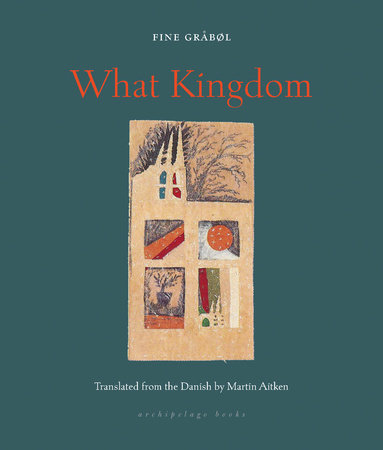
'What Kingdom' by Fine Gråbøl

client - person - individual - self - patient
|
INTERPERSONAL : SCIENCES
humanistic ------------------------------- mechanistic
SOCIOLOGY : POLITICAL
|
group
What Kingdom

'Gråbøl was lucky. Eventually she started seeing a new psychiatrist, who looked at that record "and was like, "Wow, you receive So much more medicine than all the other people who live there. Why is that?'" She didn't know. Gradually, though, she was able to come off the drugs; and two doctors decided that
she didn't, in fact, have borderline personality and bipolar disorders, removing the diagnoses that had shaped her sense of her self. In time, she left the unit and rebuilt her life.

She's no longer on medication today, but the ghosts of her past diagnoses haunt her. She wonders whether the conditions are merely in hibernation and she'll wake up one day and enter another depressive episode. She doesn't wish she'd never been diagnosed, but does feel that her doctors underestimated the effect those labels would have on her development.

At 17, she points out - the age she was diagnosed as bipolar - most teenagers don't yet know who they are. "You want to find a box or language to define yourself, so that you can close yourself in. And one way of getting that sense is getting into the psychiatric system." Since returning to "normal" life, she has also struggled with survivor's guilt: the feeling that while she made it out of the system, others did not.


'Above all, she wishes that the emphasis would shift away from the suffering individual and onto their broader context. We need to become better, as a society, at making room for people who aren't fully functional citizens. Gråbøl's narrator phrases it as a question: "Could we not imagine treatments that are instead externally directed involving the outside world gearing itself towards a wider and more comprehensive emotional spectrum?" Gråbøl's answer, though, is the same as my own: "I don't know."'

the system

citizens?


My source:
Leaf Arbuthnot, Interview. We need to make room for the mentally ill. Review, The Daily Telegraph, 21 September 2024, pp.8-9.

Image:
https://images3.penguinrandomhouse.com/cover/9781953861849

Wednesday, July 31, 2024

WHO online survey on maternal well-being framework - ENG, FR and SPA translations available

 ------- ENGLISH ------

Dear colleague,

You are invited to participate in the development of the World Health Organization (WHO) maternal well-being framework through an online survey. 

This consultation is one step in a broader process led by the WHO Department of Maternal, Newborn, Child and Adolescent Health and Ageing (MCA) towards creating a comprehensive framework that supports maternal well-being across diverse environments and cultures. Based on the results of a scoping review of the literature and an expert consultation held in May 2023, a preliminary framework has been developed including a definition, domains and subdomains. WHO/MCA is now organizing multiple consultations which objectives are listed below. 

What is the purpose of the survey?

  • Ensure comprehensive coverage of all critical elements of the framework and identify potential gaps in the definition, domains and framework of maternal well-being.
  • Evaluate the framework’s applicability across various settings and cultures.
  • Foster collective agreement and consensus among key stakeholders.

Who can take part to this survey?

Any individual or organization who has interest in maternal health and well-being. This includes, but is not limited to:

  • Representatives of women's groups
  • Health workers (midwives, OBGYN, nurses, neonatal nurses, paediatricians, psychiatrists, psychologists, community health workers...)
  • Experts in human and sexual and reproductive rights, public health, health promotion, gender, mental health, economics, humanitarian, etc.
  • Academics and researchers 
  • Government organizations
  • National civil society organizations / NGOs
  • International agencies / UN agencies
  • Private sector

How to participate in this survey?

Please click on the following link: Survey Link

We expect this survey will not take longer than 15 minutes to complete. It is available in English. 

The survey will be open until 17 August 2024. 

We would be grateful for your response to this survey and your kind help in circulating to your colleagues and networks.

Please reach out to Justine Le Lez - lejus AT who.int with any further questions. 

Best regards,

On the behalf of the Department of Maternal, Newborn, Child and Adolescent Health and Ageing (WHO/MCA)


------- FRENCH / FRANCAIS ------


Bonjour,

Vous êtes invité·e à participer à l'élaboration du cadre conceptuel du bien-être maternel de l'Organisation mondiale de la santé (OMS). 

Cette enquête est une étape d'un processus plus large dirigé par le Département de la santé maternelle, néonatale, infantile et de l'adolescent et du vieillissement (MCA) de l'OMS, visant à créer un cadre conceptuel exhaustif soutenant le bien-être maternel dans divers environnements et cultures.

Sur la base des résultats d’une revue de la littérature et d’une consultation d’experts tenue en mai 2023, un cadre conceptuel préliminaire a été élaboré, comprenant une définition, des domaines et sous-domaines. L’OMS/MCA organise actuellement plusieurs consultations, dont les objectifs sont énumérés ci-dessous.

Quel est l’objectif de l’enquête ? 

  • Assurer une couverture exhaustive et identifier d'éventuelles lacunes dans le cadre actuellement proposé.
  • Évaluer l'applicabilité universelle et l'adaptation du cadre conceptuel à divers contextes et cultures.
  • Favoriser un consensus collectif afin que le cadre conceptuel reflète reflètent une large gamme de perspectives et d'idées

Qui peut participer à cette enquête ? 

Toute personne ou organisation intéressée par la santé maternelle et le bien-être. Cela inclut, sans s’y limiter :

  • Des représentants de groupes de femmes
  • Des professionnels de santé (sages-femmes, gynécologues-obstétriciens, infirmières, infirmières puéricultrices, pédiatres, psychiatres, psychologues, agents de santé communautaires…)
  • Des experts en droits humains, droits sexuels et reproductifs, santé publique, promotion de la santé, genre, santé mentale, économie, santé humanitaire, etc.
  • Des universitaires et chercheurs
  • Des organismes gouvernementaux
  • Des organisations nationales de la société civile / des ONG
  • Des agences internationales / agences des Nations unies
  • Le secteur privé

Comment participer à cette enquête ? 

Veuillez cliquer sur le lien suivant : Lien vers l’enquête

Nous estimons que cette enquête ne prendra pas plus de 15 minutes à compléter.  

L’enquête sera ouverte jusqu’au 25 août 2024.

Nous vous serions reconnaissants de bien vouloir y répondre et de la diffuser auprès de vos collègues et réseaux.

Pour toute question, n'hésitez pas à contacter Justine Le Lez.


Cordialement,

Au nom du Département de la santé maternelle, néonatale, infantile et des adolescents et du vieillissement (OMS/MCA)


------- SPANISH / ESPANOL -----

Está invitado a participar en la elaboración del marco conceptual del bienestar materno de la Organización Mundial de la Salud (OMS). 


Se le invita a participar en el desarrollo del marco de bienestar materno de la Organización Mundial de la Salud (OMS). Esta encuesta es un paso en un proceso más amplio liderado por el Departamento de Salud Materna, del Recién Nacido, del Niño, del Adolescente y del Envejecimiento (MCA) de la OMS hacia la creación de un marco integral que apoye el bienestar materno en diversos entornos y culturas.

Con base en los resultados de una revisión de la literatura y una consulta de expertos realizada en 2023, se ha desarrollado un marco preliminar que incluye una definición, dominios y subdominios del bienestar materno.  La OMS/MCA está organizando actualmente varias consultas, cuyos objetivos se enumeran a continuación. 


¿Cuál es el objetivo de la encuesta? 

· Garantizar una cobertura exhaustiva e identificar posibles brechas en el marco propuesto actualmente. 

· Evaluar la aplicabilidad universal y la adaptación del marco conceptual a diversos contextos y culturas. 

· Fomentar un acuerdo colectivo para que el marco conceptual refleje una amplia gama de perspectivas e conocimientos. 

¿Quién puede participar en esta encuesta? 


Cualquier persona u organización interesada en la salud materna y el bienestar. Esto incluye, sin limitarse a: 

·  Representantes de grupos de mujeres

· Profesionales de la salud: matronas (parteras profesionales/obstetras/obstetricias/comadronas), ginecólogos-obstetras, enfermeras, enfermeras pediátricas, pediatras, psiquiatras, psicólogos, agentes de salud comunitarios…

· Expertos en derechos humanos, derechos sexuales y reproductivos, salud pública, promoción de la salud, género, salud mental, economía, salud humanitaria, etc.

· Académicos e investigadores

· Organismos gubernamentales

· Organizaciones nacionales de la sociedad civil / ONGs

· Agencias internacionales / agencias de las Naciones Unidas

·  El sector privado

¿Cómo participar en esta encuesta?

 Por favor, haga clic en el siguiente enlace: enlace a la encuesta

Estimamos que esta encuesta no tomará más de 15 minutos para completar. 

La encuesta estará abierta hasta el 25 de agosto de 2024.


Le agradeceríamos que respondiera y difundiera la encuesta entre sus colegas y redes.

Para cualquier pregunta, no dude en ponerse en contacto con Justine Le Lez.


Atentamente, 

En nombre del Departamento de Salud Materna, Neonatal, Infantil y del Adolescente y del Envejecimiento (OMS/MCA)